






Are sprung slats better than rigid slats?
 2 answers
 0 comments
Hi,
I am looking for advice on sprung vs solid bed slats.
I previously had a double mattress with my old bedframe (sprung slatted base) and it was super comfortable. We wanted more room and bought the same mattress in super king, and bought a beautiful solid oak bed, which has solid wooden slats.
But I'm finding the mattress really uncomfortable (hard) and am waking with backache every morning. Given that the mattress is the same, my only conclusion is that this is a result of the solid slats, does this sound likely??
Thanks, Eva

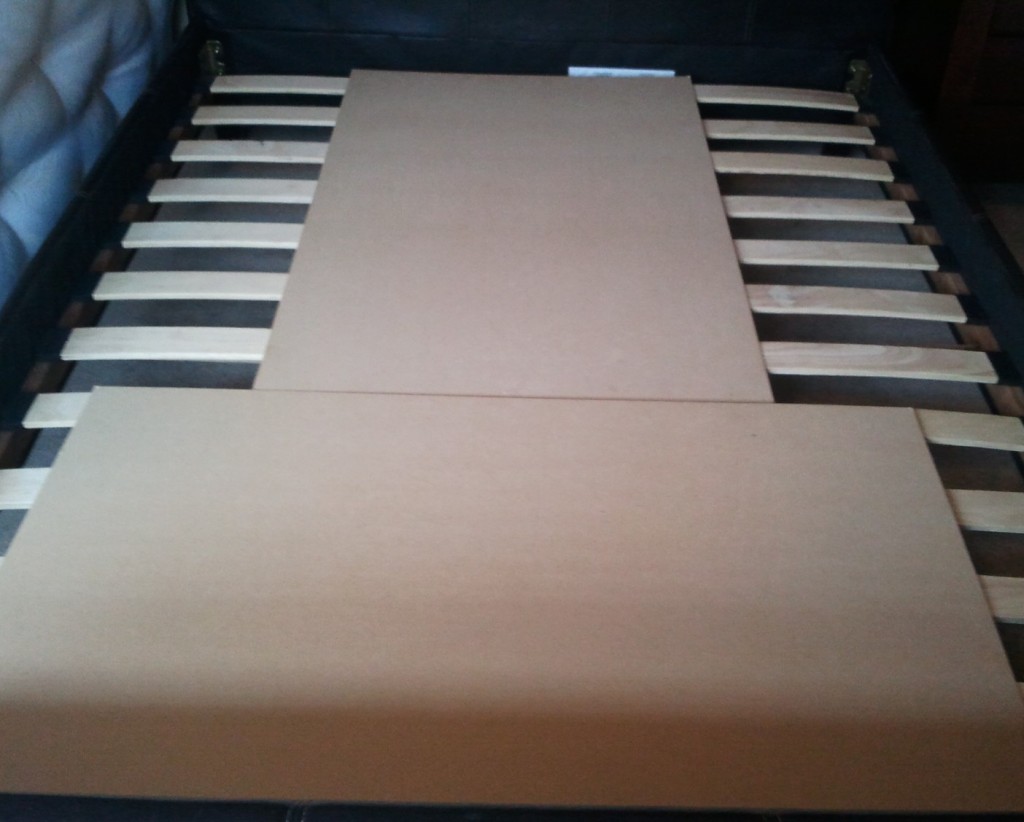
The lumps and bumps created in your mattress could have been caused by the gaps in the base being too wide apart. We would normally advise that the gaps should not be any more than 3 inches apart otherwise the mattress can start to form between the gaps in those slats. I would suggest checking the gap between the slats and if they are quite wide apart, you would be better to board the base over with 3mm-5mm MDF or Hardboard and hopefully this will rectify the problem you are having.
The direct answer: for pocket sprung mattresses, rigid flat slats are the better foundation
Sprung slats are marketed as a premium feature and the implication is that the flexing action they provide makes them a more sophisticated and comfortable base than flat rigid slats. For memory foam mattresses and some foam hybrids, there is an argument for this. For quality two-sided pocket sprung mattresses that need to be turned regularly, flat rigid slats with gaps of no more than 7.5cm (3 inches) are consistently the better choice.
Why sprung slats cause problems for pocket sprung mattresses
The flexing of curved sprung slats is uneven across the width of the bed. When two sleepers use a king or super king size mattress, their combined weight falls on the left and right thirds of the surface. The slats beneath those areas compress under load. The slats in the central third of the bed, between the two sleeping positions, carry very little weight and do not compress to the same degree. This creates a progressive arch in the mattress, with the sleeping zones sitting lower than the unsupported centre. Sleepers roll toward each other in the night. When the mattress is turned, as it should be every one to three months on a two-sided mattress, the underside has taken on the same arched shape from prolonged contact with the base, and that shape is now the sleeping surface. This is the hump-back bridge effect.
For a single sleeper the effect is less pronounced but still present, because the sleeper tends to occupy one consistent area rather than distributing load evenly across the full width of the slats.
Slats are probably the least preferable base type when it comes to mattresses as they can create a host of problems with your mattress. Some retailers tell you their mattresses can't be used with slats and you must buy a divan. However, this is usually false. All mattresses, like our range here, can be used with slats. You just need to make a few tweaks to sort out the problems they can cause. Make sure slats are no more than 3 inches between them. Board over slats with either MDF or plywood to ensure an even surface. Use a cheap duvet on top to stop slats or the boards from nipping and damaging the mattress. It may be worth investigating if you can buy sprung slats to fit your current base to try and soften the base if it's really causing you issues. If not, the other alternative is to purchase another base either one with sprung slats or a sprung edge divan.
When sprung slats are less problematic
Sprung slats cause fewer issues under memory foam mattresses and single-sided foam hybrids, because these mattresses are never turned. The foam conforms to whatever base surface it sits on, and the progressive arching is less severe for a single sleeper than for two. They are also less problematic under single beds, where the load is more consistently centred.
For a two-sided pocket sprung mattress with natural fibre upholstery, the regular turning schedule means any shape the base imposes on the underside of the mattress will eventually become the sleeping surface. This makes base evenness considerably more important than it is for a one-sided foam mattress.
What flat rigid slats need to work correctly
Flat rigid slats perform well under a pocket sprung mattress provided two conditions are met. The first is that the gaps between slats do not exceed 7.5cm (3 inches). Wider gaps allow the springs at the base of the mattress to gradually settle into the spaces, which causes ridging on the underside and, once the mattress is turned, on the sleeping surface. The second is that the slats are adequately supported across their span and do not flex or bow under the combined weight of two sleepers.
If your flat slats have gaps wider than 7.5cm, board over them with 3 to 5mm MDF cut to the internal dimensions of the frame. This is a quick and inexpensive fix that turns the slatted base into a surface comparable to a platform top divan in terms of evenness and consistency.
It's a shame that when you purchased your new bed frame you were not advised that the solid slats will make any mattress placed on it firmer than it might have been on any previous sprung slats. We don't sell any slatted mattress bases as they can nip and damage a mattress and also are inferior in terms of quality compared to a platform or sprung edge divan. We have a full critique of mattress bases that you can read here which explains it all. If you have any other questions please contact us on 0161 437 4419. Please see our office opening time here. Where our small friendly team of mattress geeks can help you further.
The effect of each slat type on how a mattress feels
Sprung slats add a small amount of softness to the overall feel of a mattress by introducing a layer of flex beneath the spring unit. Flat rigid slats provide a firmer, more supportive overall feel because there is no give below the mattress. For a sleeper who finds their current mattress slightly too firm and is looking to soften the feel without buying a new mattress, adding sprung slats is one option. However, the more reliable and less problematic way to achieve a softer feel is to add a natural fibre topper to the mattress surface itself, which gives you control over the degree of softness without introducing the uneven support issues that sprung slats bring.
What the best mattress manufacturers use and why
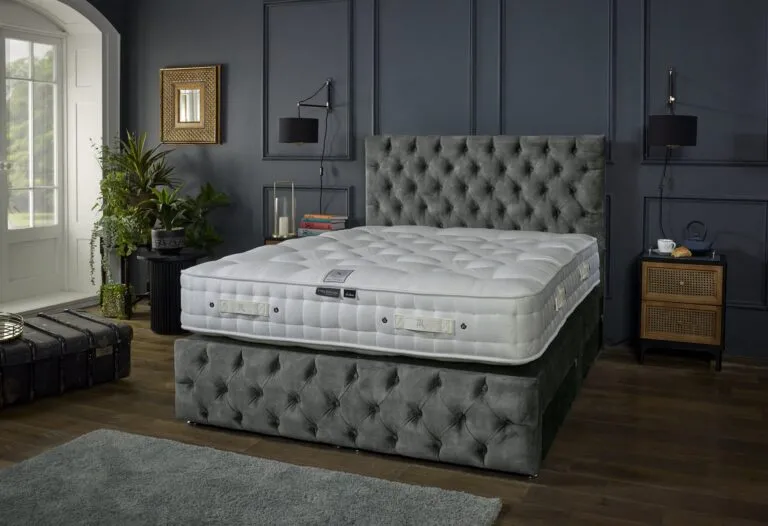
Vispring, Savoir, Hastens and Harrisons all pair their high-end pocket sprung mattresses with sprung edge divan bases. A sprung edge divan provides a flat, consistent surface with a secondary layer of suspension built into the base, achieved through a proper spring unit rather than the on-or-off flex of a curved wooden slat. The suspension qualities of a sprung edge divan are what sprung slats are attempting to replicate, but without the engineering precision that makes a proper spring unit work correctly across the full width of the base. For anyone who wants a slatted bedstead frame, proper boarding over the slats is the most effective way to get a consistent sleeping surface from that type of base.
We have a full article on slats here and the disadvantages of them. Sprung slats have more give and are usually a higher quality and better spaced than rigid wooden slats. Though you're usually better off with a divan.
Our full guide to mattresses for slatted bed bases explains the differences in detail and covers what specifications to look for in any slatted base. Our answers to do curved sprung slats make your bed dip and how to stop a bed bowing in the middle cover the practical fixes for the most common sprung slat problems.
Please call us on 0161 437 4419 if you would like to discuss your specific setup. Our office hours are here.
Kind regards, Gary
Dreaming of the perfect nights sleep?

Hi Eva,
Thanks for your question, we often get asked about sprung vs solid slats.
The reason for your discomfort is that the solid slats are not as forgiving as sprung slats making the feel of your mattress firmer. We have a full article on slats here and the disadvantages of them.
Sprung slats have more give and are usually a higher quality and better spaced than rigid wooden slats. Though you're usually better off with a divan. Our mattresses are all suitable for slatted bases.
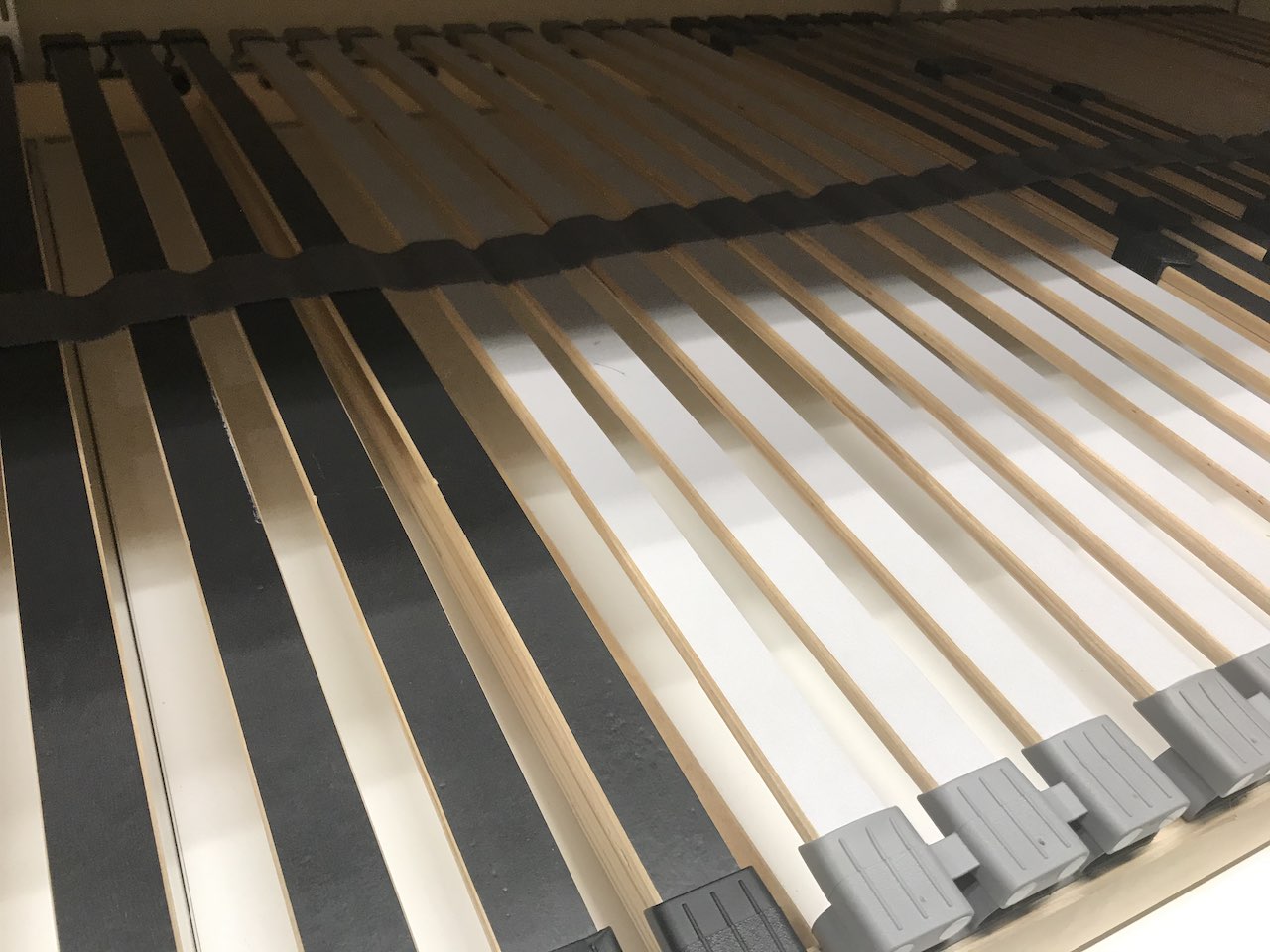
Slats are probably the least preferable base type when it comes to mattresses as they can create a host of problems with your mattress. Some retailers tell you their mattresses can't be used with slats and you must buy a divan. However, this is usually false. All mattresses, like our range here, can be used with slats. You just need to make a few tweaks to sort out the problems they can cause.
- Make sure slats are no more than 3 inches between them.
- Board over slats with either MDF or plywood to ensure an even surface
- Use a cheap duvet on top to stop slats or the boards from nipping and damaging the mattress.
It may be worth investigating if you can buy sprung slats to fit your current base to try and soften the base if it's really causing you issues.
If not, the other alternative is to purchase another base either one with sprung slats or a sprung edge divan.
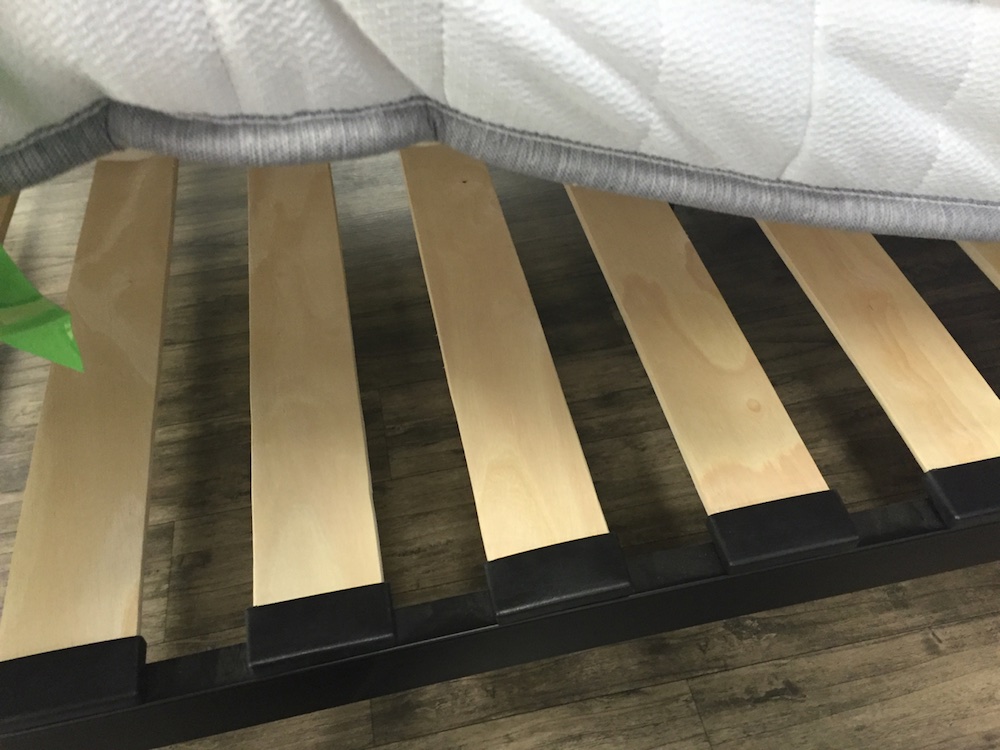
It's a shame that when you purchased your new bed frame you were not advised that the solid slats will make any mattress placed on it firmer than it might have been on any previous sprung slats.
We don't sell any slatted mattress bases as they can nip and damage a mattress and also are inferior in terms of quality compared to a platform or sprung edge divan. We have a full critique of mattress bases that you can read here which explains it all!
If you have any other questions please contact us on 0161 437 4419 Please see our office opening time here. Where our small friendly team of mattress geeks can help you further.
Kind Regards Gary
Dreaming of the perfect nights sleep?
Leave a Reply
Newsletter
Enter your email to join our newsletter. We’ll send you occasional news and mattress expertise.