







Sleep & Well Being
February 2026Bedtime Routine For Adults: 5 Things To Do For A Restful Sleep
After 25 years of making mattresses in the UK and speaking to thousands of customers about their sleep problems, we’ve learned something important: most people focus on how long they sleep whilst completely ignoring how they prepare for it. You can own the finest mattress in Britain, but if you’re doom-scrolling Instagram at 11:45 pm with all the lights blazing, you’re sabotaging yourself before your head hits the pillow.
The bedtime routine isn’t just for children. Adults need structure too, perhaps even more so given the stress, screens, and demands that fill our waking hours.
Your brain doesn’t have an off switch.
It needs signals, cues, and time to transition from the alert state required for work and family responsibilities to the calm state necessary for restorative sleep.
This comprehensive guide examines what actually works for adults creating an effective bedtime routine, drawing on sleep science research and two decades of customer feedback. We’ll cover the essential elements that prepare your body and mind for sleep, the common mistakes that keep you wired when you should be winding down, realistic timing for implementing each component, and honest recommendations about what matters versus what’s just wellness industry noise.
The five essential components of an adult bedtime routine
Based on sleep science research and 25 years of customer feedback, these five elements form the foundation of an effective adult bedtime routine. You don’t need to implement all of them immediately. Start with one or two, maintain them for a fortnight, then add another. Gradual implementation produces lasting habits, whereas attempting wholesale lifestyle changes overnight often fails.
1. Controlled breathing and meditation: calming the nervous system
One of the most powerful sleep tools is also the simplest: deliberate breathing. Your breath is the only aspect of your nervous system you can consciously control, and controlling it directly influences your stress response. When you’re anxious or alert, your breathing becomes shallow and rapid. When you’re relaxed, breathing deepens and slows. By deliberately slowing your breathing, you trick your nervous system into relaxing.
The 4-7-8 breathing technique is particularly effective for sleep preparation. Breathe in through your nose for 4 seconds, hold for 7 seconds, and exhale through your mouth for 8 seconds. The extended exhale activates your parasympathetic nervous system, the “rest and digest” mode that opposes the “fight or flight” stress response. Repeat this cycle 4-8 times as part of your wind-down routine.
If you’re new to breathwork, start by focusing on breathing deeply into your belly rather than your chest, and count to 4 on the inhale and 6 on the exhale. The counting gives your mind something to focus on besides your racing thoughts, whilst the deep breathing physiologically calms your nervous system.

Meditation before bed
This doesn’t require sitting cross-legged or emptying your mind (which is impossible anyway).
For sleep purposes, meditation means deliberately shifting your attention away from daytime concerns toward present-moment awareness. This might be a body scan, where you mentally check in with each part of your body from toes to head, or a focused attention practice on your breath without trying to control it.
Guided meditation apps can help initially, but avoid anything that involves screens unless you’re using an e-ink display or listening with your eyes closed. The screen itself counteracts the relaxation benefits. Audio-only guided meditations work better for bedtime routines. Even 5-10 minutes makes a measurable difference in how quickly you fall asleep.
The key with breathwork and meditation is consistency. Your brain responds to patterns. If you perform these activities at the same point in your bedtime routine each night, they become conditioned triggers for sleepiness. After a fortnight, starting your breathing exercises will itself make you feel drowsy because your brain has learned these signals approaching sleep.
2. Reading: the screen-free wind-down activity
Reading before bed serves multiple functions for sleep preparation.
It occupies your mind with a narrative that isn’t your own anxieties about tomorrow; it’s typically performed in dim lighting, which signals approaching sleep to your brain; it’s a sedentary activity that doesn’t elevate heart rate, and it creates a clear boundary between “active day” and “rest time” when performed consistently.
Research from the University of Sussex found that reading for just six minutes reduced stress levels by 68%, more than listening to music (61%), having a cup of tea (54%), or taking a walk (42%). The cognitive engagement required to follow a narrative essentially crowds out stress-inducing thoughts, whilst the passive physical state allows your body to begin its wind-down process.
However, not all reading material works equally well for bedtime. Thrillers, horror, suspenseful mysteries, or anything that keeps you in a state of anticipation can backfire by keeping your mind too engaged. You want to be absorbed enough that your mind stops worrying about tomorrow’s presentation, but not so gripped that you’re still reading at 2 a.m., desperate to know whodunnit.

Ideal bedtime reading includes gentle fiction with predictable plots, nature writing, essays, poetry, travel writing, or memoirs. Re-reading familiar books often works brilliantly because you’re not compulsively turning pages to discover what happens; you’re simply enjoying language and familiar comfort. Many people have a rotation of 4-5 books they re-read specifically for bedtime because they produce the right state of relaxed attention.
The format matters as much as the content. Physical books work best because they don’t emit light. E-readers with e-ink displays (Kindle Paperwhite, Kobo, etc.) are acceptable because e-ink doesn’t produce light, though you’ll need a reading light.
Backlit tablets and phones should be avoided; the light exposure counteracts the relaxation benefits regardless of blue light filters.
Where you read also influences effectiveness. Reading in another room (the living room or a spare bedroom), then transitioning to your bedroom for sleep, works better for many people than reading in bed. It reinforces the association between your bedroom and sleep rather than activities. If you do read in bed, sit propped up rather than lying flat, then put the book away and lie down only when genuinely ready to sleep.
How long to read?
Aim for 15-30 minutes during your wind-down hour. If you find yourself reading the same paragraph repeatedly without absorbing it, that’s your signal that drowsiness has arrived. Put the book down immediately and go to sleep rather than pushing through to finish the chapter.
3. Digital sunset: managing technology before sleep
This is where most adults struggle. The evening is when we finally have time to catch up on messages, scroll social media, watch videos, or finish work. Telling people to eliminate screens from their bedtime routine is like telling them to stop breathing. So let’s be realistic about technology use whilst still prioritising sleep quality.

Why screens disrupt sleep
It’s not just blue light, though that matters. The real problem is that screen use keeps your brain in an active, alert mode. Checking work emails activates stress responses. Social media triggers comparison and emotional reactions. Videos and games provide stimulation when you need the opposite. Even passive scrolling keeps your brain engaged and attentive when it should be winding down.
The blue light component works like this: light in the 450-480 nanometre wavelength (blue spectrum) suppresses melatonin production by signalling to your suprachiasmatic nucleus (your brain’s master clock) that it’s daytime.
Phones, tablets, computers, and televisions all emit substantial blue light. Even with blue light filters or “night mode” enabled, these devices still interfere with sleep preparation; they’re just slightly less disruptive.
Practical compromises for the digitally dependent:
If you absolutely must use screens in the evening, implement these harm-reduction strategies. Enable night mode or blue light filters on all devices starting at sunset, not just at bedtime. Set brightness to 30-50% or lower in the evening. Hold phones and tablets at arm’s length rather than close to your face to reduce the amount of light reaching your eyes.
Set strict cutoff times, ideally 90 minutes before bed, but a minimum of 30 minutes, and actually enforce them using app timers or device downtime features.
Avoid stimulating content in the evening regardless of screen use. Work emails, news, social media arguments, action films, horror, or anything that elevates your emotional state should be consumed earlier in the day, if at all. If you’re watching television before bed, choose gentle content: nature documentaries, cooking shows, familiar comedies you’ve seen before, or slow-paced dramas.
The bedroom device policy
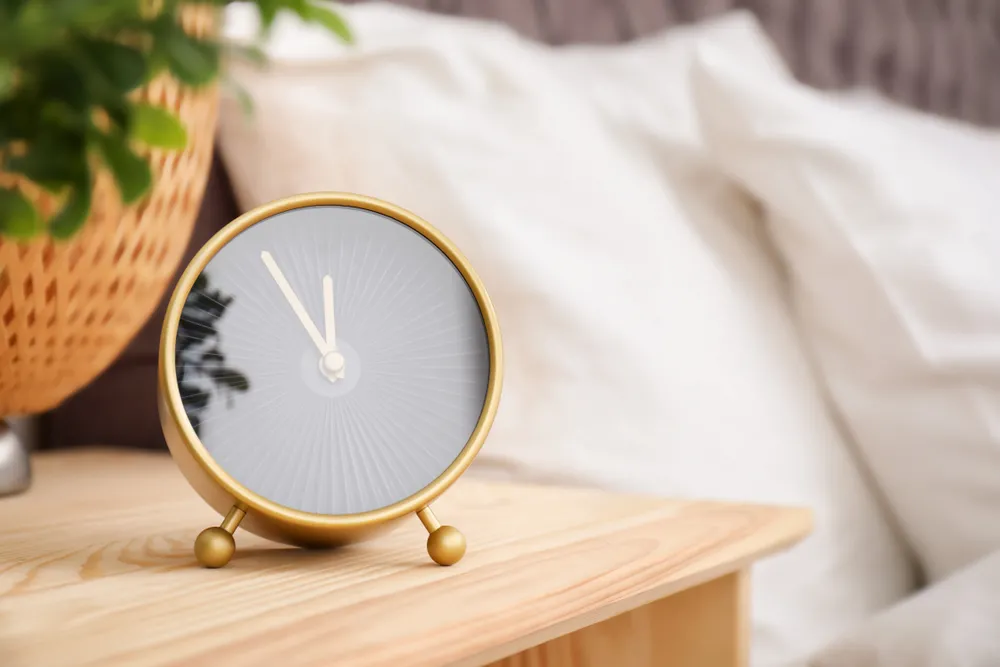
Your bedroom should not contain televisions, computers, tablets, or ideally even phones. Smartphones are particularly problematic because they’re designed to capture attention through notifications, alerts, and the potential for endless scrolling. If you use your phone as an alarm, buy a dedicated alarm clock (they cost £10-20) and leave your phone charging in another room overnight.
For those who protest, they might miss important calls or messages overnight: you won’t. Genuinely urgent matters are extraordinarily rare, and the sleep quality loss from having your phone accessible vastly outweighs the infinitesimal chance of missing something critical. If you’re genuinely on-call for work or family emergencies, enable “Do Not Disturb” mode with exceptions only for specific critical contacts.
Alternatives to screen time that still provide evening relaxation include podcasts or audiobooks (listening without looking at the device), music, radio programmes, physical books or magazines, conversation with household members, journaling or creative writing, puzzle books or crosswords, craft activities, or simply sitting quietly with your thoughts for 10-15 minutes.
The goal isn’t puritanical elimination of all technology. The goal is to recognise that your brain cannot transition directly from active digital engagement to sleep. You need buffer time between screens and sleep for your nervous system to wind down and melatonin production to begin.
4. The brain dump: writing tomorrow’s tasks before sleep
How many times have you lain in bed mentally running through tomorrow’s to-do list, worried you’ll forget something important? This “cognitive arousal” is one of the most common sleep disruptors for adults, particularly those with demanding jobs, family responsibilities, or simply active minds.
The solution is deceptively simple: write it down before you get into bed.
Spend 10-15 minutes (as part of your wind-down hour) making tomorrow’s to-do list, noting anything you need to remember, and briefly planningtomorrow’ss schedule. Once it’s on paper or in a task app, your brain can let it go. You’ve captured the information externally, so internal rehearsal is no longer necessary.

This technique, sometimes called a “brain dump” or “worry time,” is supported by research from psychology professor Michael Scullin at Baylor University. His studies found that people who spent five minutes writing a specific to-do list before bed fell asleep significantly faster than those who wrote about completed activities.
The key was specificity: vague journaling (“tomorrow will be busy”) provided no benefit, but concrete task listing (“email Sarah about project deadline, call dentist to reschedule, buy milk”) allowed the brain to categorise tasks as “handled” and release them.
How to implement effective pre-sleep task listing
Do this 30-60 minutes before bed, not right before sleep. Timing matters because writing tasks can initially increase stress as you confront everything needing attention. You need buffer time for that arousal to dissipate. Use a physical notebook rather than a phone or computer. The physical act of writing engages your brain differently from typing, and it helps you avoid screens before bed.
Be specific rather than vague. “Work on presentation” is less effective than “Draft slides 5-10 for client presentation, find 2023 sales figures for slide 7, email Mark for budget approval.” Specific tasks feel more manageable and allow your brain to genuinely release them rather than continuing to process “work on presentation” as an undefined problem.
Include both tasks and concerns. If you’re worried about something that isn’t actionable (a relationship issue, an upcoming event), write that down too. “Worried about Mum’s hospital appointment on Friday” or “Concerned about the budget review meeting.” Naming concerns reduces their power. What lurks vaguely in your mind as generalised anxiety becomes specific, contained problems once written down.
Review and prioritise briefly. Put an asterisk or “1” next to tomorrow’s absolute must-dos, then close the notebook. This signals completion. The list exists, priorities are identified, and you’re done thinking about it until morning—no further mental processing required.
Some people find benefit in “worry time” scheduling: if anxieties arise during your wind-down, tell yourself “I’ll think about that during worry time tomorrow” and add it to your list. This technique, used in cognitive behavioural therapy for insomnia, trains your brain to compartmentalise worries rather than allowing them to intrude during sleep preparation.
5. Warm bath or shower: the thermal transition to sleep
Taking a warm bath or shower 60-90 minutes before bed is one of the most scientifically validated sleep preparation strategies. The effectiveness relates to your body’s core temperature regulation and its role in circadian rhythm.
How temperature affects sleep onset
Your body temperature follows a 24-hour cycle, rising during the day and falling at night. The drop in core temperature signals to your brain that sleep time is approaching. Falling asleep requires your core temperature to drop approximately 1°C from daytime levels. Anything that interferes with this temperature drop (overheated bedrooms, heavy bedding, vigorous exercise too close to bedtime) makes sleep onset difficult.

A warm bath deliberately exploits this mechanism. When you immerse yourself in warm water (around 40-42°C), your core temperature rises. After you exit the bath, your body cools down by dilating blood vessels near your skin and radiating heat. This post-bath cooling period mimics and enhances the natural temperature drop that facilitates sleep.
A University of Texas review of 5,322 studies on bathing and sleep found that bathing 60-90 minutes before bed in water at 40-43°C shortened time to fall asleep by an average of 10 minutes. The timing matters because you need the cooling period. Bathing right before bed leaves you too warm to fall asleep.
Bath versus shower for sleep preparation
Full-body immersion in a bath provides the most pronounced warming and subsequent cooling effect. The hydrostatic pressure from water immersion also promotes relaxation. However, showers still provide benefit, particularly if you focus warm water on tension-holding areas like shoulders and neck. A 10-115-minute warm shower produces measurable sleep-promoting effects, though not as strong as a bath.
For shower-takers, the technique called “contrast showering” can enhance the effect: finish with 30-60 seconds of cooler water. This kickstarts the cooling process whilst still providing the relaxation benefits of warm water on tense muscles. Start warm, end cool, and the temperature transition mimics what your body needs for sleep.

Enhancing the bath experience can make it more effective. Dim bathroom lighting or use candles to signal to your brain that it’s time for bed. Add Epsom salts (magnesium sulphate),e) which may enhance muscle relaxation, though evidence is mixed. Essential oils like lavender, chamomile, and sandalwood offer aromatherapy benefits, provided you find their scents pleasant. Avoid using this time for screen use; the whole point is relaxation.
If evening bathing isn’t feasible (shared bathrooms, limited hot water, time constraints), morning bathing works too, just without the sleep-specific benefits. The critical pre-sleep temperature component can be achieved through other means: keeping your bedroom cool (16-18°C), using lighter bedding, wearing light sleepwear, and avoiding exercise within 2-3 hours of bed.
Your mattress: the foundation of sleep quality
We make mattresses, so you’d expect us to say your mattress matters. But it genuinely does, more than most people realise until they’ve slept on a truly supportive mattress for the first time in years. A mattress that’s too soft allows your spine to sag out of alignment. A mattress that’s too firm creates pressure points on the shoulders and hips. A mattress with worn-out comfort layers provides neither proper support nor pressure relief.
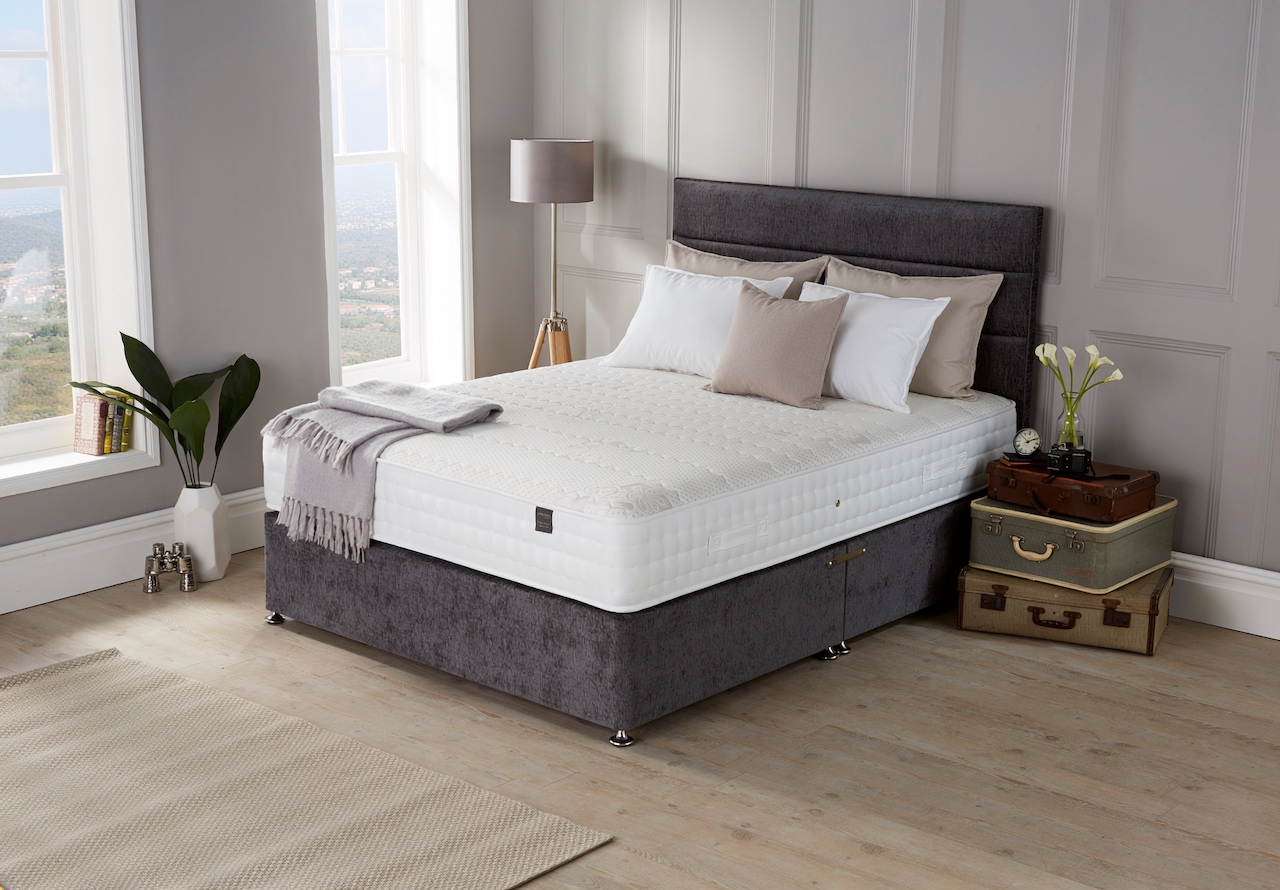
The bedtime routine helps you fall asleep. The mattress determines whether you stay asleep and wake refreshed. If you’re implementing all these routine strategies but still waking with aches, tossing and turning throughout the night, or feeling unrested despite 8 hours in bed, your mattress has likely failed.
Signs your mattress is undermining your bedtime routine
A) You fall asleep reasonably well (the routine is working) but wake frequently during the night.
This typically indicates pressure-point discomfort or inadequate support, causing your body to shift constantly in search of comfort. Your mattress should maintain spinal alignment without creating pressure, allowing you to remain in position comfortably throughout sleep cycles.
B) You wake with aches or stiffness that improve during the day.
Morning pain that disappears by mid-morning points directly to inadequate support during sleep. Your mattress is forcing your muscles to work overnight, keeping them from fully relaxing.

C) You sleep better in hotels or when staying elsewhere.
If a budget hotel mattress feels better than your home mattress, yours has failed. Hotel chains replace mattresses every 5-7 years precisely because they understand fresh, supportive mattresses directly impact customer satisfaction. Your 10-year-old mattress at home has degraded significantly, even if you haven’t noticed, because the decline happens gradually.
D) You and your partner roll toward the middle of the bed or feel each other’s movements.
This indicates the mattress has developed a central valley from years of combined weight, or that motion isolation has failed. Pocket spring mattresses, particularly those with higher spring counts and proper construction, should isolate movement between sleepers.
Choosing a mattress that supports your bedtime routine
We’re not going to use this article to hard-sell you our entire range. That’s not helpful. We will explain how to evaluate whether your current mattress deserves the sleep you’re working so hard to achieve through your bedtime routine.
Age and construction type matter more than brand names.
A memory Foam mattress over 6-7 years old has likely degraded significantly because Foam breaks down faster than springs and natural fibres. One-sided pocket spring mattresses (the vast majority sold today) typically last 6-8 years. Two-sided natural fibre mattresses with proper maintenance last 12-15+ years.
If your mattress is approaching these age thresholds and showing any signs of failure (sagging, body impressions, reduced comfort, increased partner disturbance), replacement should be your priority before investing in blackout curtains or white noise machines. The mattress provides the foundation. Everything else is optimisation.
For hot sleepers specifically
Memory Foam retains heat regardless of gel infusions or cooling covers. The dense cellular structure traps heat. Natural materials (wool, Cotton, horsehair, Latex) breathe far more effectively. Our natural fibre mattresses, made with British wool, mohair, and Cotton, provide substantially better temperature regulation than any synthetic Foam alternative.
The Artisan Naturals at £2,180 for a King size contains 3,950 GSM of upholstery, 85% of which is natural fibres (1,200 GSM British fleece wool, 1,500 GSM mohair, and rebound Cotton layers). Wool naturally wicks moisture and regulates temperature. Mohair provides exceptional comfort and breathability. This matters enormously if you’re someone who wakes overheated despite following temperature advice about cool bedrooms.
Couples with different comfort preferences or significant weight differences
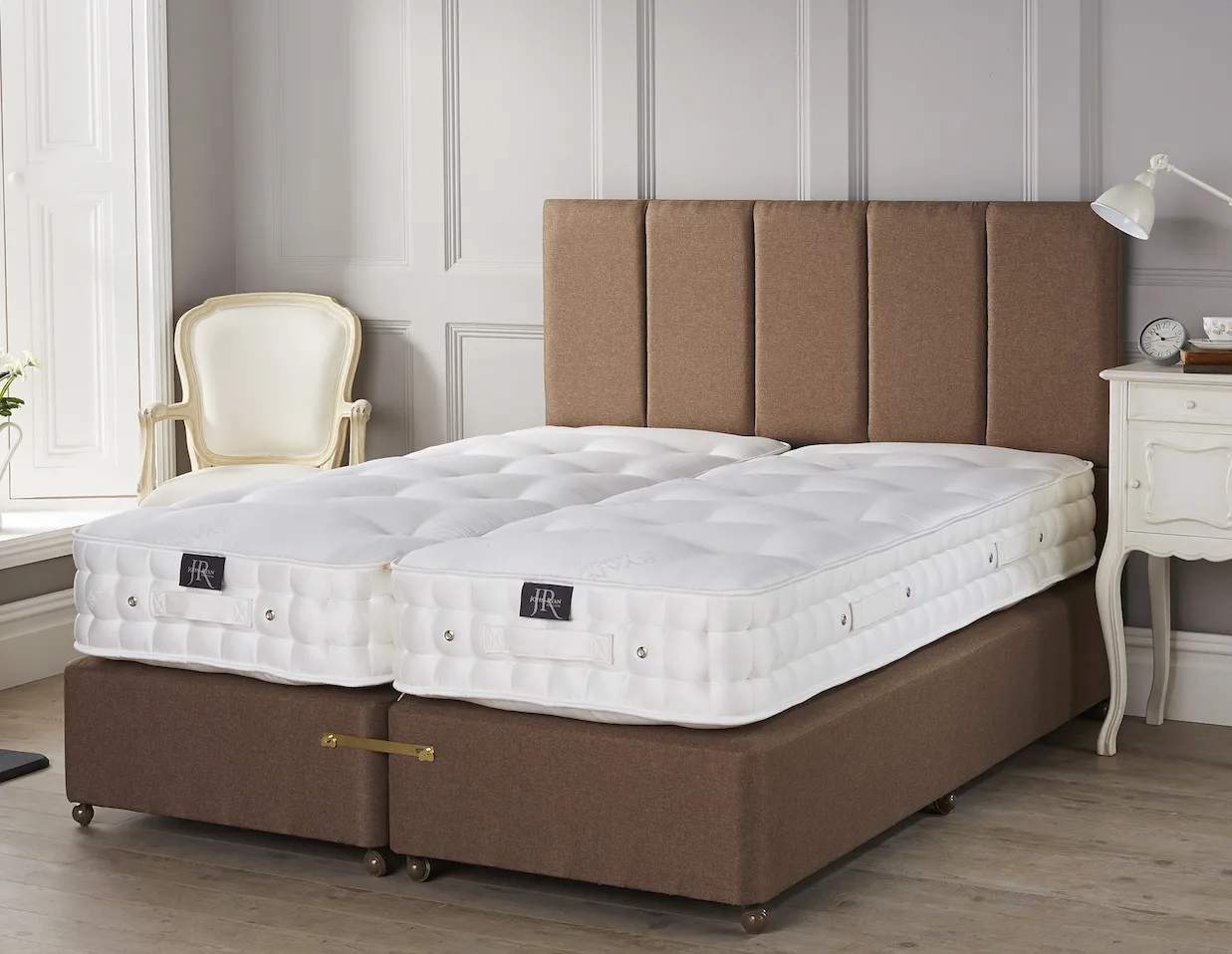
Our zip & link options allow each side to have independent spring tensions matched to body weight, whilst still sleeping on what appears to be a single mattress. This addresses the common problem where one partner needs firm support whilst the other requires softer cushioning. Split tensions mean both people get proper support rather than compromising on a medium that satisfies neither.
Budget-conscious options
That still provides proper support, including our Origins range. The Origins Pocket 1500 at £1,050 King size offers 1,500 pocket springs and two-sided construction (crucial for longevity) with 1,550 GSM total upholstery. It’s not trying to compete with premium natural fibre mattresses, but it massively outperforms the £700-900 one-sided mattresses from high-street retailers that dominate the market.
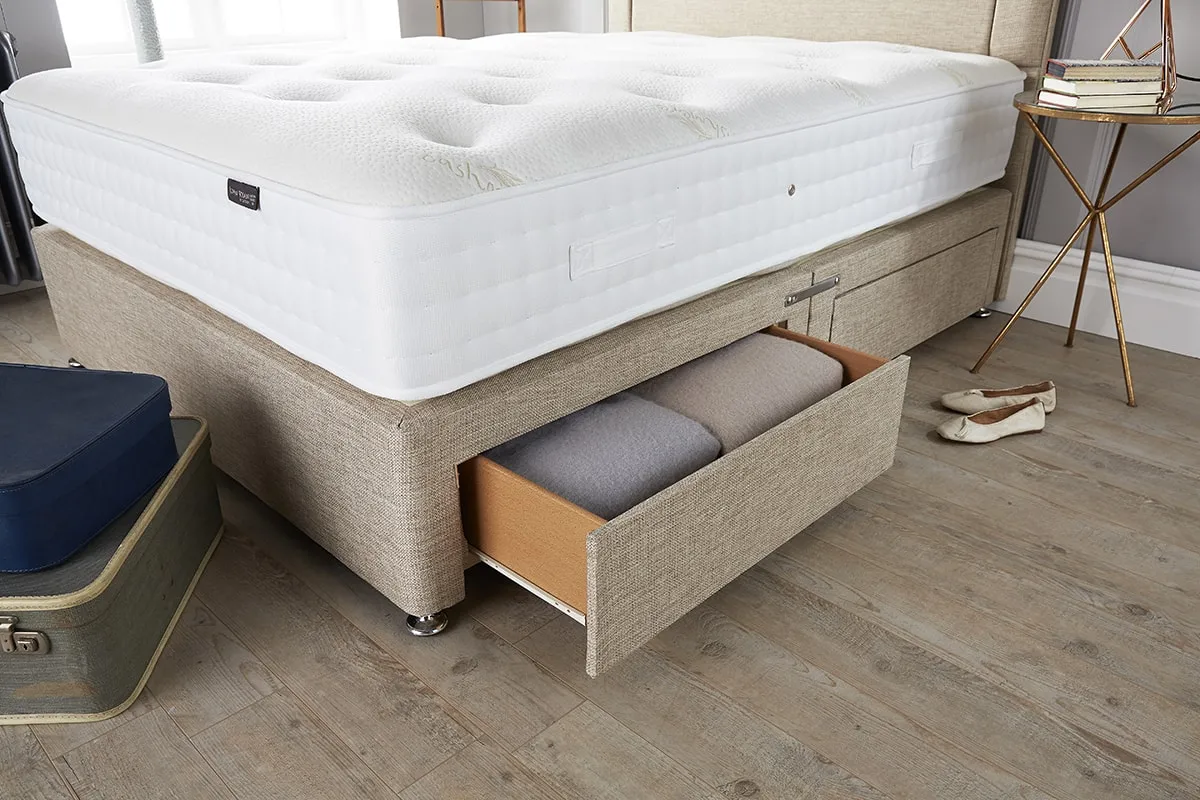
The two-sided construction alone justifies the price. You can flip this monthly, distributing wear across both surfaces and realistically extending the usable lifespan to 10-12 years. Compared to a £750 one-sided mattress from Dreams or M&S lasting 5-6 years, the Origins costs less per year whilst providing better support throughout.
For side sleepers
Those who need pressure relief on their shoulders and hips, cushioning matters as much as support. The Artisan Bespoke 004 King size at £2,860 provides 3,600 GSM of 100% natural fibres, including Horsetail, wool, and Bamboo layers. The combination of calico pocket springs (which contour precisely to body shape) and substantial natural fibre cushioning prevents pressure points without sacrificing support.

Horsetail (the tail hair from horses) is extraordinarily resilient and provides firm, supportive characteristics that prevent excessive sinking whilst maintaining comfort. It’s been used in premium upholstery for centuries because it simply doesn’t break down like synthetic polyester. This mattress competes with Vispring’s £4,675 Regal Superb on specifications, whilst costing 40% less.
Monitoring progress: how to know if your routine is working
Sleep quality is somewhat subjective, but certain markers indicate whether your bedtime routine is actually improving your rest or just adding extra steps to your evening.
Falling asleep faster
The primary indicator of effective routine implementation is reduced sleep latency (time to fall asleep). If you’re currently lying awake for 45-60 minutes after getting into bed, and after two weeks of consistent routine,e you’re falling asleep within 20-30 minutes, the routine is working.
Don’t expect instant results. The first few nights might not show improvement because your brain hasn’t yet learned to associate the routine with sleep. After 7-10 nights of consistency, you should notice changes. After two weeks, the routine should reliably induce drowsiness at bedtime.
Fewer night wakings
Brief wakings are normal, but if you’re waking 4-5 times per night and struggling to return to sleep, something needs to be addressed. A successful bedtime routine, combined with a proper sleep environment, should reduce wakings to 1-2 brief episodes that you barely remember.
If night wakings persist despite improved sleep onset, your mattress might be the culprit. Pain, pressure points, or partner disturbance causes wakings that no bedtime routine can prevent. Address the sleep surface itself.

Waking more refreshed
The ultimate test is how you feel upon waking. If you’re still hitting snooze repeatedly, dragging yourself out of bed, and feeling foggy-headed for the first hour, you’re not achieving restorative sleep regardless of how many hours you spend in bed.
Proper sleep (achieved through both effective routine and supportive sleep environment) means waking naturally near your alarm time, feeling reasonably alert within 10-15 minutes, and experiencing mental clarity rather than grogginess. You shouldn’t need 45 minutes and three coffees to feel human.
When professional help becomes necessary
Bedtime routines improve sleep quality for most people with typical sleep challenges. However, they don’t address clinical sleep disorders. If you’ve implemented a consistent routine for 4-6 weeks and still experience significant sleep problems, you may need a medical evaluation.
Signs that warrant GP consultation
Taking over an hour to fall asleep most nights despite following sleep hygiene principles. Waking repeatedly during the night (more than 2-3 times) and struggling to return to sleep. Experiencing excessive daytime sleepiness, falling asleep during conversations or whilst driving. Loud snoring with observed breathing pauses during sleep (possible sleep apnoea). Jerking leg movements during sleep that disturb your partner (possible restless leg syndrome). Waking with gasping or choking sensations.
These symptoms might indicate conditions requiring medical treatment rather than lifestyle modifications. Sleep apnoea, restless leg syndrome, narcolepsy, and clinical insomnia all require professional diagnosis and treatment. A bedtime routine won’t resolve medical conditions, but it complements medical treatment once a diagnosis is made.
Summary
Here’s what we’ve learned from 25 years of customer conversations: the people who sleep best aren’t necessarily the ones with perfect routines. They’re the ones who’ve found what actually works for them and do it consistently. A simple routine performed every night beats a complex routine performed occasionally.
Start with one change. Make it habitual. Add another. Within a month, you’ll have a functional bedtime routine that genuinely improves your sleep quality without feeling like a second job. The breathing exercises, the screen cutoff, the brain dump, the warm shower, they all work. But only if you actually do them, and you’ll only do them if implementation feels manageable rather than overwhelming.
Your mattress provides the foundation for sleep quality. Your bedtime routine prepares you to make use of that foundation. If you’re implementing all these strategies but still waking unrested, call us on 0161 437 4419 to discuss whether your mattress might be the limiting factor. We’re not going to pressure you into our most expensive option. We’re going to ask about your sleep position, any aches or pains, your budget, and recommend what actually works.
Twenty-five years of making mattresses in Yorkshire has taught us that honesty builds better relationships than sales pressure ever could—your sleep matters. Don’t settle for less than you deserve.
Related sleep resources from our knowledge hub
If you’ve found this bedtime routine guide helpful, these related articles provide additional context for improving your sleep quality:
- Sleep hygiene: how to sleep better – Our comprehensive guide to the broader habits and environmental factors that influence sleep quality beyond just bedtime routines.
- 8 tips to get to sleep fast – Specific techniques for reducing sleep latency when you’re struggling to fall asleep despite following your routine.
- What’s the best way to get a comfortable night’s sleep? – Our expert advice on optimising bedroom environment, temperature, and bedding for maximum comfort.
- 10 healthy sleep habits to boost your mood – Evidence-based guidance on how proper sleep affects mental health and daily functioning.
- What’s the best spring tension for my mattress? – Essential guidance for matching mattress support to your body weight, crucial for achieving proper spinal alignment during sleep.

Dreaming of the perfect nights sleep?

Ask us a question
There are over 6000 questions and answers submitted by you on all questions about mattresses and bed problems. Enter a keyword such as Vi Spring, John Lewis beds, bad back or Memory Foam and see if your question has already been answered.
If you can’t find an answer in knowledge hub, ask a new question. We aim to respond to all questions within one working day.
Newsletter
Enter your email to join our newsletter. We’ll send you occasional news and mattress expertise.