







Mattress Construction
February 2026How much should a new mattress cost?
At John Ryan By Design we make mattresses here in the UK. We don’t retail through anyone else, and we publish every layer, every GSM weight, and every spring count. So when we tell you what a particular budget will actually buy in 2026, we’re not guessing — we know exactly what these things cost to make.
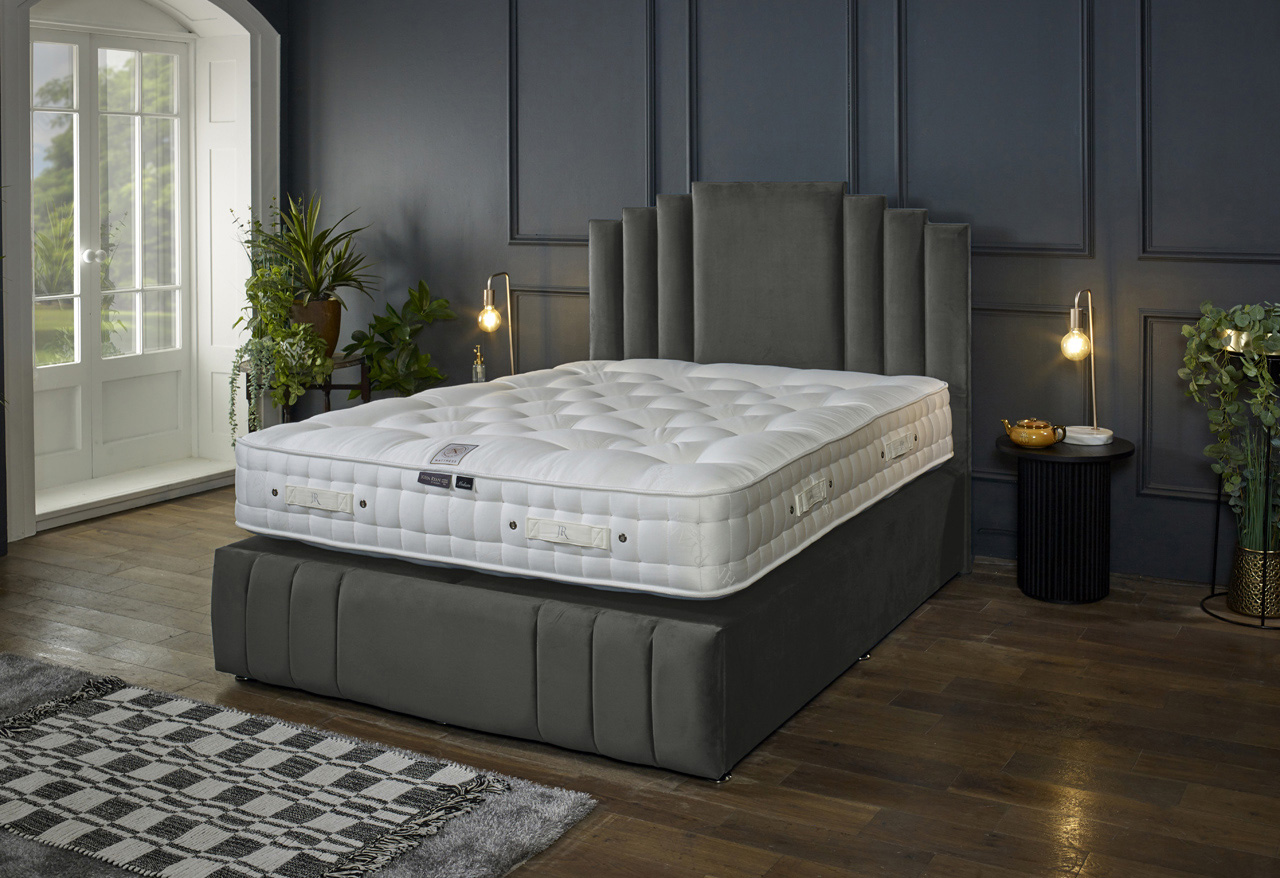
This guide covers the entire UK market from £300 upwards, using king size as the standard benchmark throughout. It covers the spring types and counts, the upholstery materials, the expected lifespan, and the environmental reality of cheap synthetic mattresses versus their natural fibre counterparts. It is the most honest guide of its kind you’ll find.
Why mattress price matters more than ever in 2026
The UK mattress market has become increasingly polarised. On one side you have a tsunami of compressed foam mattresses sold online with inflated “was” prices and 100-night trial periods. On the other you have traditional bed retailers selling aggressively discounted pocket spring mattresses with little to no specification disclosure. In the middle, thousands of shoppers are trying to work out whether the £799 mattress they’re looking at is actually worth £799, or whether they’re paying mostly for the television advertising campaign.

In 2026, inflation has pushed the raw cost of materials — steel for springs, natural Wool, Cotton, and Horsehair — noticeably higher than they were five years ago. Honest, specification-transparent manufacturers have had to adjust prices to reflect this. The brands that haven’t adjusted prices have simply reduced what’s inside the mattress without saying so. This is why knowing what you’re looking for at each price point matters so much right now.
The other thing that has changed is consumer awareness of sustainability. The UK throws away approximately 7 million mattresses every year, and around 75% of them go to landfill. Synthetic foam and polyester mattresses take 80 to 120 years to decompose. Natural fibre mattresses built on proper spring units can last 10 to 15 years before needing replacement, and when they do, the materials largely biodegrade. That gap in environmental impact is enormous, and it ought to factor into every buying decision.
What actually drives the cost of a mattress
Understanding why one mattress costs £500 and another costs £3,000 begins with the raw materials and the way they’re assembled. The four main cost drivers are the spring unit, the upholstery layers, the cover fabric, and the labour involved in putting it all together.
The spring unit is the foundation of any sprung mattress and is the most important structural component. Open coil springs — where all the springs are wired together in a grid — are cheap to produce but transfer movement across the entire surface. Pocket springs, where each spring is individually encased in a fabric pocket, are more expensive because each spring works independently. The count matters (more springs generally means finer support), but so does the wire gauge (thicker gauge is firmer, thinner gauge is softer and more expensive to calibrate) and the depth of the spring. Calico-encased pocket springs, where the pocket fabric is natural cotton rather than synthetic spunbond, are significantly more expensive and are associated with premium handmade mattresses. Two-tier or double-layer spring systems add another level of cost but dramatically increase responsiveness and lifespan.
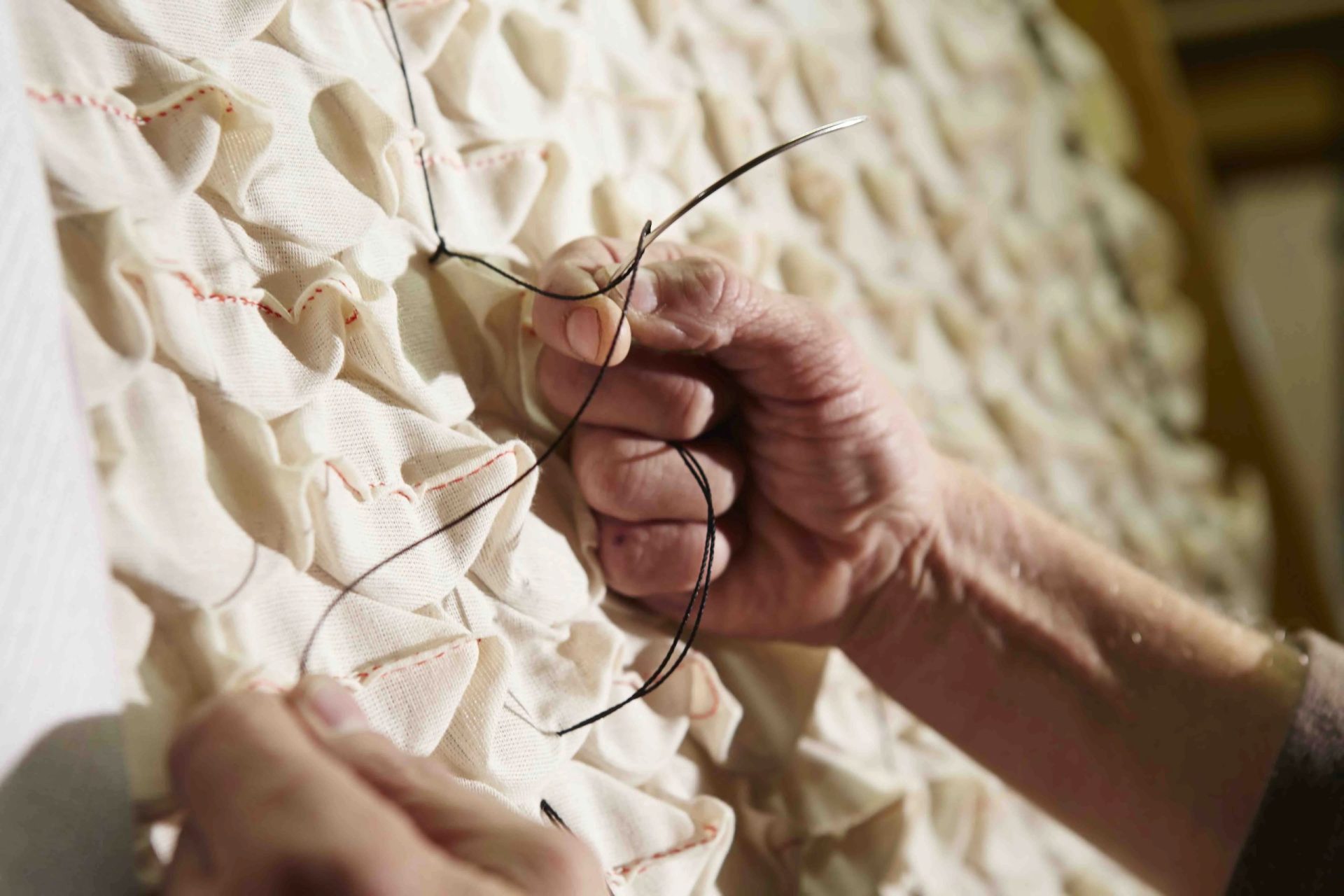
The upholstery layers sit above the spring unit and account for the majority of comfort-related cost differences. Synthetic polyester wadding is the cheapest option and degrades quickly. Rebound foam is durable but synthetic. Natural fibres — British Wool, Cotton, Horsehair, Horsetail, Mohair, Cashmere, Alpaca, Silk, Bamboo, and Flax — each have different properties and different price points. Horsehair and Horsetail are among the most expensive natural upholstery materials in the world and are associated with the finest handmade mattresses. The total weight of upholstery is measured in GSM (grams per square metre): a budget mattress might have 1,200–1,500 GSM of cheap polyester, while a luxury natural fibre mattress will have 4,000–6,000 GSM of materials like Wool, Horsehair, and Cashmere.
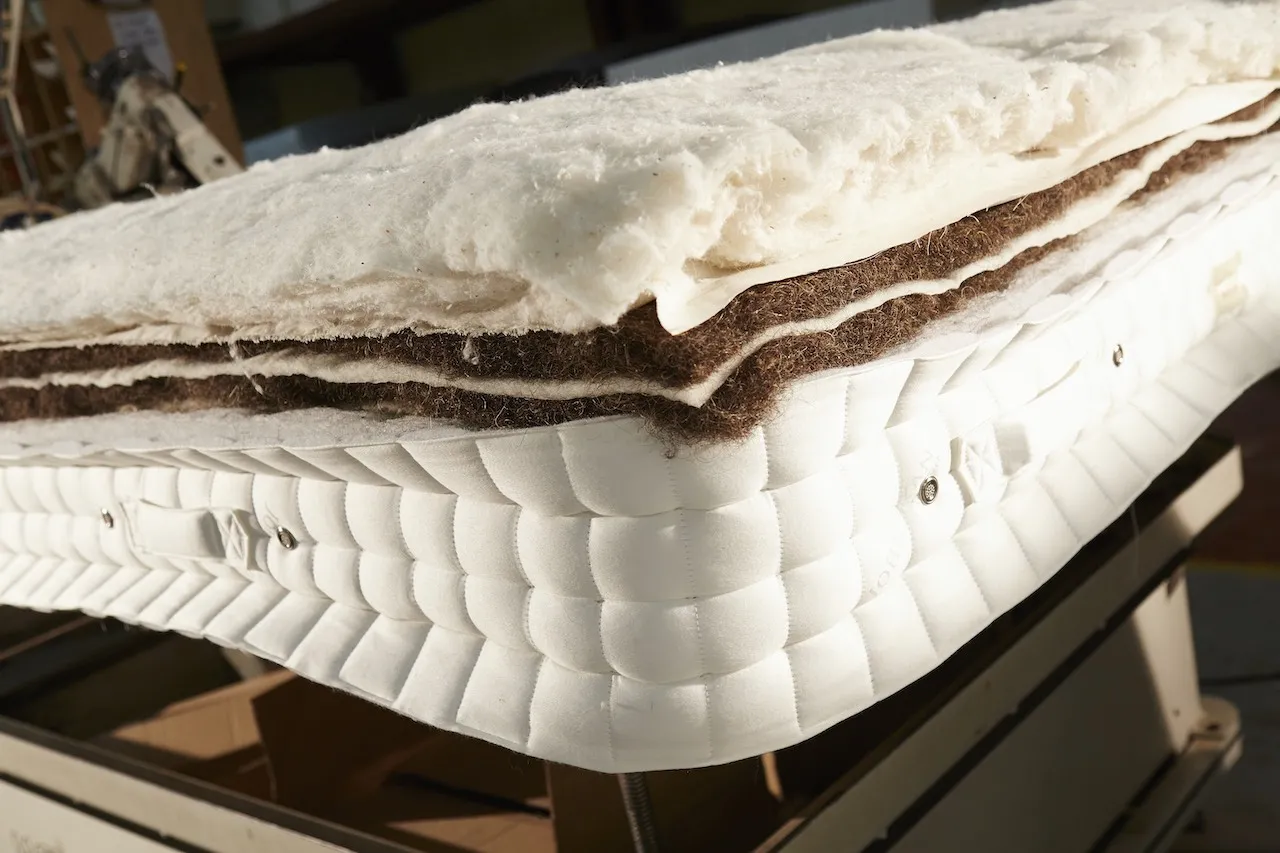
The cover plays a more important role than people assume. A Belgian damask cover, or a soft knitted ticking with a natural fibre content, breathes differently to a tightly woven polyester cover. The better the cover fabric, the better the overall sleep environment.
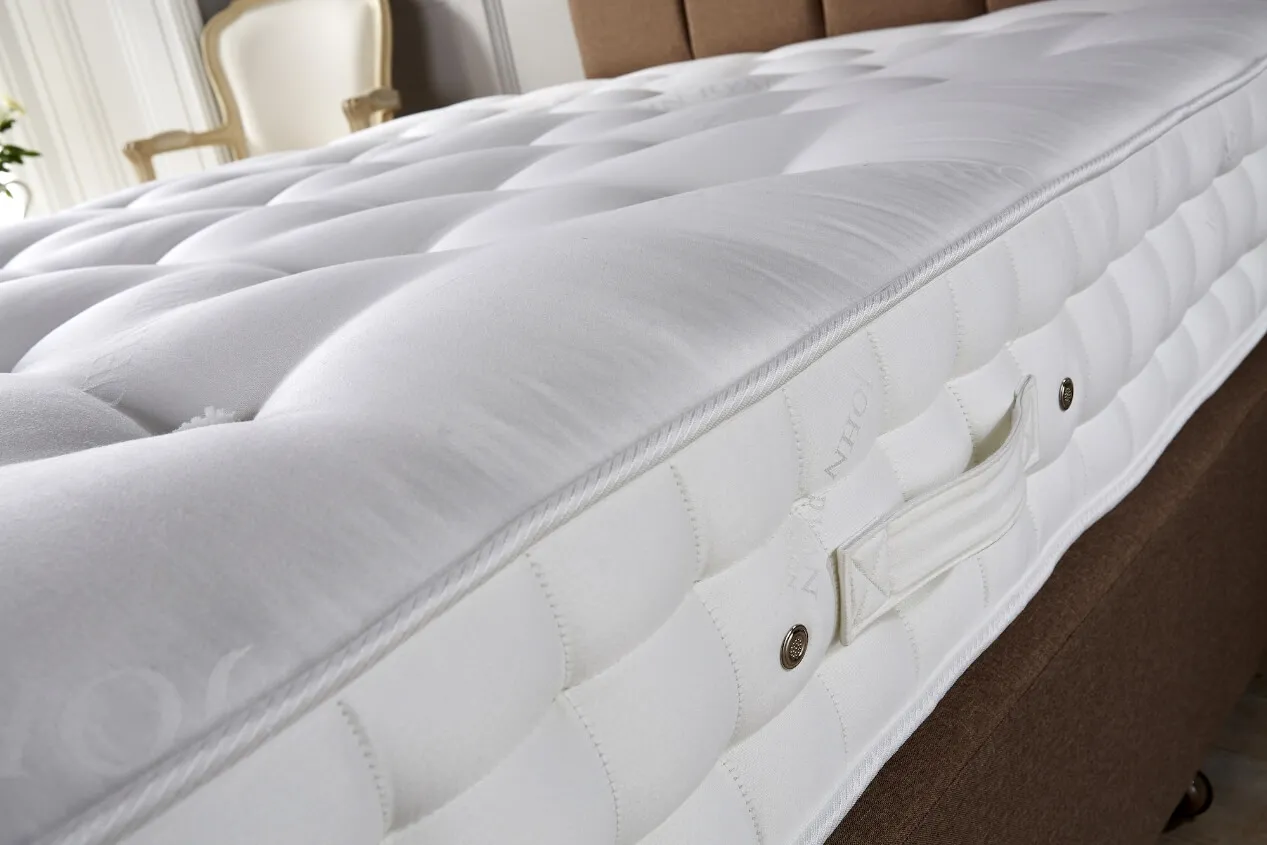
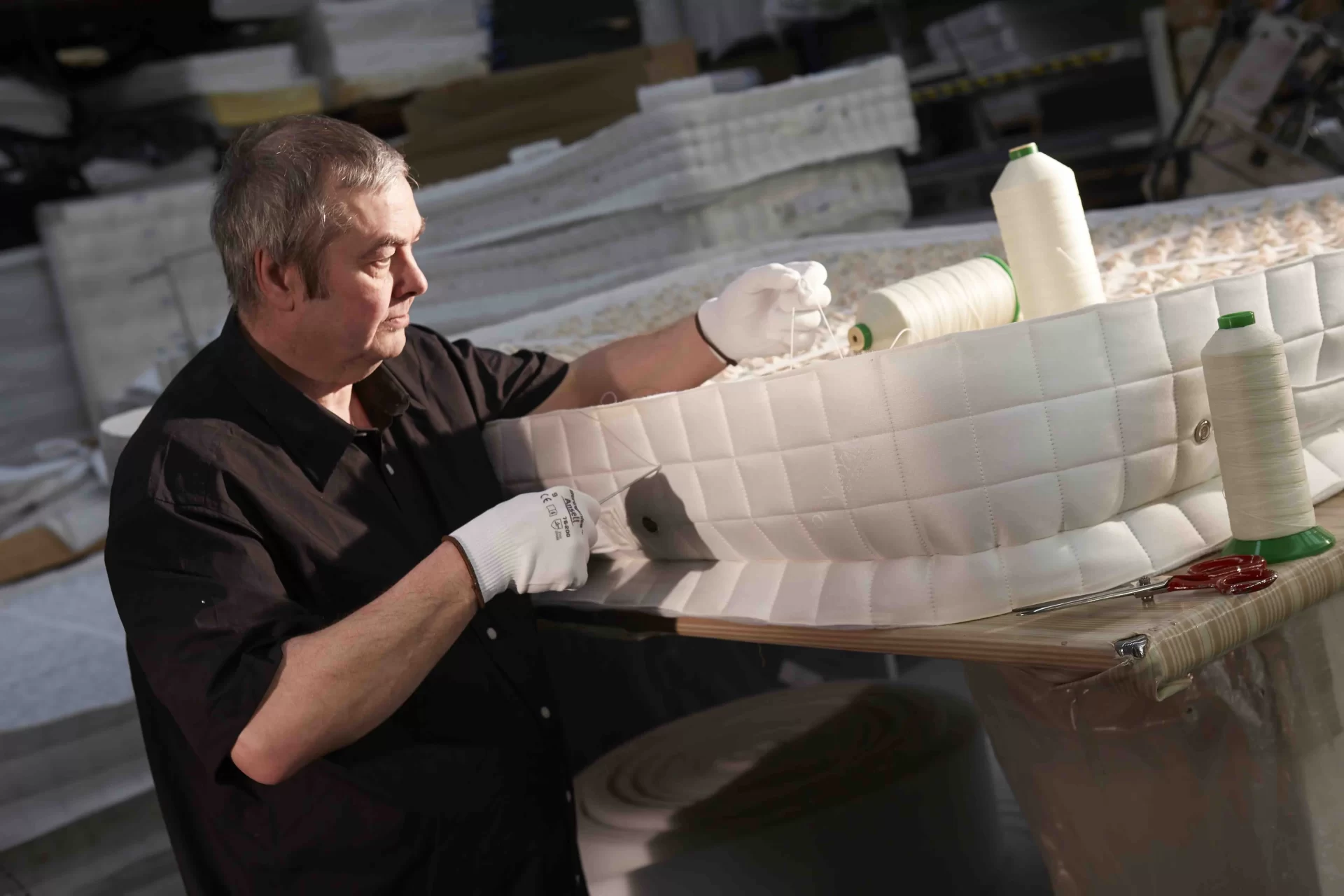
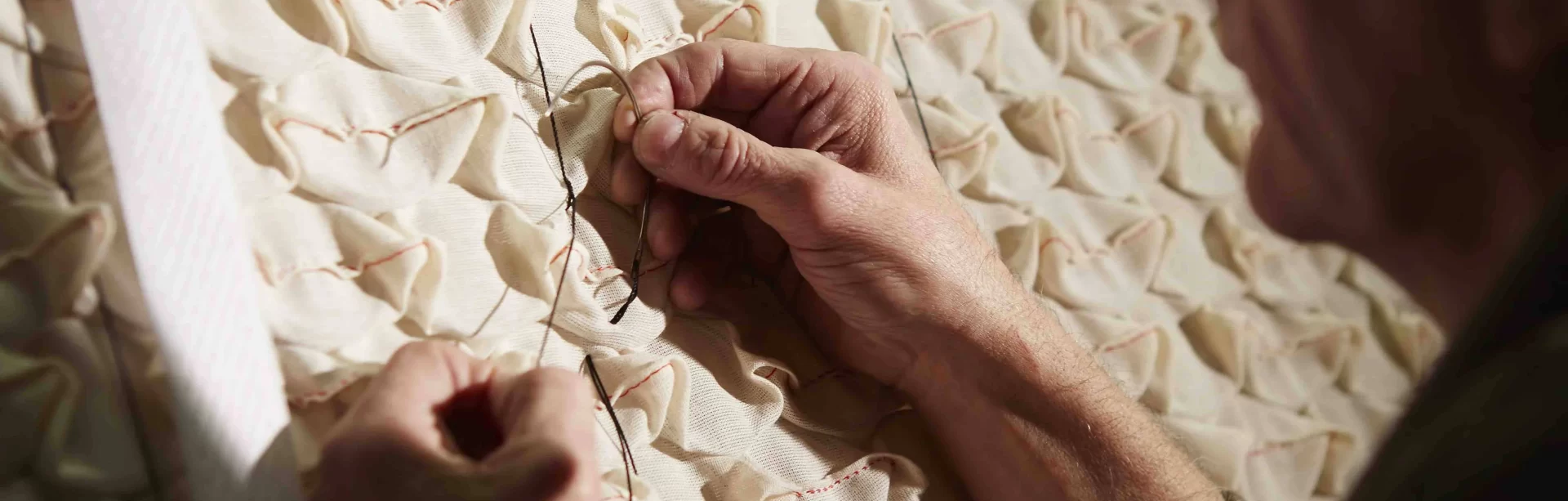
Labour is the factor that separates mass-produced mattresses from handmade ones. A handmade mattress with traditional side stitching and hand-tufting can take six to eight hours to complete. A machine-made mattress made in a factory producing thousands per week takes a fraction of that time. As a direct manufacturer, John Ryan’s customers are not paying for a retailer’s margin, a national showroom estate, or a television advertising budget. They are paying for the mattress.
£300–£500: The budget tier (King size)
This is the entry-level zone of the UK mattress market, and it’s dominated by open coil spring mattresses, compressed foam mattresses, and low-specification pocket spring mattresses. For a king size, you’re looking at the bottom of the quality scale — and that’s not a judgement, it’s just an honest description of what the money buys.
What you’ll typically find at this price point: an open coil spring system or a bonnel coil unit (where all springs share a border wire and move as one), topped with a layer of reflex foam or basic polyester wadding totalling 1,000–1,500 GSM. The covers are almost always polyester ticking. Spring counts for pocket spring options in this bracket run from around 800 to 1,200 in a king size, with synthetic spunbond spring pockets. Memory foam mattresses in this range use low-density foam (2–3 lb density) that will develop body impressions within two to four years.
What to expect in terms of brands and products: IKEA’s Hövåg and Morgedal sit in this range at around £350–£400 for a king. Budget lines from Silentnight, Sealy, and Sleepeezee exist here too, though their flagship ranges start significantly higher. Many compressed foam-in-a-box products sit at the lower end of this bracket.
Estimated lifespan: three to five years for regular nightly use. Open coil mattresses and low-density foam mattresses simply aren’t built to last. The springs sag, the foam compresses, and the mattress loses its structural integrity relatively quickly. For a guest bedroom used occasionally, this may be acceptable. As a primary sleeping surface it represents poor value over time.
Suitability: guest bedrooms, children’s mattresses being slept on for a few years before upgrading, temporary accommodation. Not recommended as a primary mattress for adults in regular use.
John Ryan alternative at this price point: Our range begins at slightly above this bracket for a king size, because we don’t manufacture to a price point that requires us to use materials we wouldn’t be comfortable disclosing. The closest entry into our range is the Origins Comfort at £890 king size — significantly more, but with disclosed specifications and a genuine warranty.
h2 id=”500-800″>£500–£800: The mid-range tier (King size)
This is where the majority of UK consumers land when buying a new mattress, and it’s where the market is most competitive. The good news is that a decent pocket spring mattress with better upholstery is genuinely achievable here. The bad news is that the range in quality within this bracket is enormous, and marketing spend often obscures the differences.
What you’ll typically find at this price point: pocket spring counts of 1,000–2,000 in a king, with spunbond synthetic pockets and steel wire gauges generally between 1.4mm and 1.6mm. Upholstery is most commonly polyester with perhaps a thin layer of Wool on top, totalling 1,500–2,500 GSM. Memory foam hybrid mattresses from direct-to-consumer brands like Emma, Simba, and Eve sit heavily in this range, combining a foam upper layer with a basic pocket spring base. The Simba Hybrid Essential and Emma Original sit around £600–£700 for a king.
Traditional retailers like Dreams, Bensons for Beds, and John Lewis sell mid-range lines from Sealy, Silentnight, and Hypnos in this bracket, typically pocket sprung with 1,000–2,000 springs and a combination of polyester and minimal natural fibre upholstery. The Silentnight Miracoil 3 Comfort and the Sealy Posturepedic Essentials are typical examples — adequate support, modest natural fibre content, and lifespan of five to seven years.

What to look for at this price point: avoid any mattress where the manufacturer won’t disclose the upholstery GSM breakdown. A mattress claiming 1,500 GSM of upholstery could mean 1,500 GSM of cheap polyester wadding — which is a very different thing to 1,500 GSM of blended Wool and Cotton. The label matters, and vague descriptions like “comfort layers” or “luxurious fillings” without weight disclosure are a warning sign.
Spring count, at this level, is often used as a marketing metric more than a quality indicator. A mattress with 2,000 micro pocket springs is not necessarily better than one with 1,200 standard pocket springs — it depends on the wire gauge, spring depth, and whether the pocket fabric is synthetic or natural. Ask for specifics.
Estimated lifespan: five to seven years for regular nightly use. Significantly better than the budget tier, but still limited by synthetic upholstery layers that compress over time rather than recovering their original profile.
John Ryan alternative at this price point: The Origins range begins here and offers complete specification transparency that the brands listed above typically don’t provide.
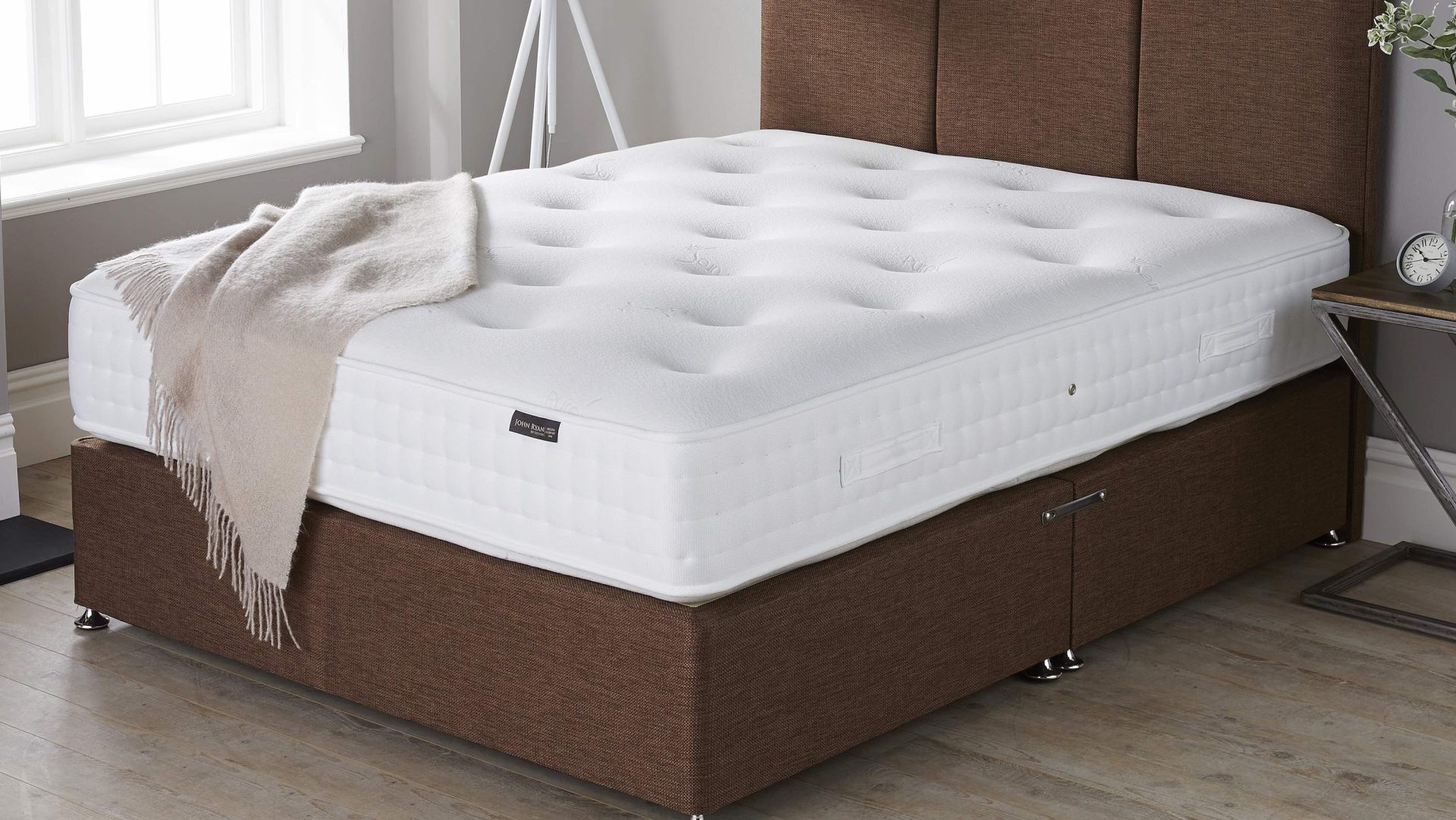
The Origins 1500 is available at £1,050 king size — with 1,500 spunbond pocket springs, 300 GSM Wool, 750 GSM soft polyester, and a 500 GSM polyester pad. It’s more than a mid-market mattress from a high street retailer, but with full disclosure and a genuine two-sided construction that extends the usable life significantly.
£800–£1,200: The quality tier (King size)
This is where the market starts to differentiate meaningfully in terms of construction quality, and where buyers who are serious about sleep quality and longevity should begin their search. At this price point you can reasonably expect a proper pocket spring unit — 1,200 to 2,000 springs in a king — with a higher proportion of natural fibre upholstery and better cover fabrics.
What you’ll typically find at this price point: retailers such as Dreams, John Lewis, and Bensons will be selling mid-to-upper lines from their house brands or the larger manufacturers. Hypnos, who supply the royal household, have entry models in this range. The Sleepeezee Perfectly British Mayfair, Sleepeezee Jessica 1800, and similar models sit around £900–£1,100 king size. Spring counts typically run from 1,500 to 2,500, with some Wool upholstery (often 300–500 GSM), better cover fabrics, and hand tufted finishes on higher-specification models.

This is also where Casper, Leesa, and the upper tiers of online foam and hybrid brands compete, but before you jump for joy, maybe check out why bed-in-a-box is struggling first. The Casper Element and mid-range Simba Hybrid sit around £900–£1,100 for a king. These use higher-density foam layers (typically 4 lb density for the comfort layer), which is meaningfully better than the budget tier, but they remain predominantly synthetic in material composition.
What to watch for: at this price point in a high street environment, you are often paying for the retailer’s showroom floor space, sales commission, and the brand’s advertising budget as much as you’re paying for materials. A £1,000 mattress from a major retailer frequently has a manufacturing cost of £250–£350. That’s not a criticism of the retailer’s business model, it’s simply the reality of how traditional retail operates, and it explains why a smaller direct manufacturer can offer noticeably more material for the same money.
Estimated lifespan: six to nine years for regular nightly use. Natural fibre content and better spring construction extend the useful life beyond the mid-range tier, but one-sided construction — the industry norm — limits longevity. A one-sided mattress cannot be fully rotated, which means one surface absorbs all the wear.
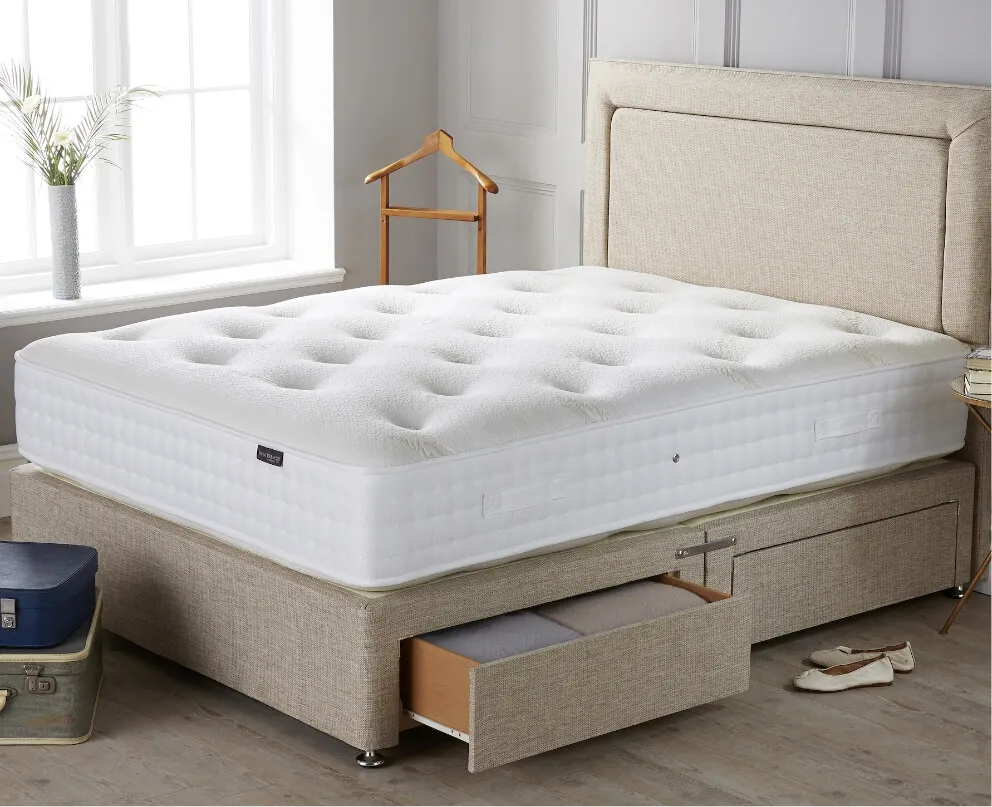
John Ryan alternative at this price point: The Origins Natural Comfort and Origins Natural Support sit at £1,500 king size and represent the best value for money in natural fibre pocket spring mattresses at this level in the UK market. At this price we’re offering 2,550 GSM of upholstery including Cotton, British Wool, Cashmere, Silk, and Rebound Polycotton, on a 1,000 spunbond pocket spring unit, with two-sided construction for extended life. The Origins Latex models at £1,825 king size add a layer of 60/40 natural Latex — genuinely supportive, naturally hypoallergenic, and significantly more durable than memory foam.

£1,200–£2,000: Premium natural fibre (King size)
This is where the shift to predominantly natural fibre construction becomes both realistic and, frankly, where you start to get something genuinely exceptional for your money — particularly from manufacturers who sell direct and can pass the margin back to you in better materials.
What the wider market offers at this price point: the upper ranges from Dreams and John Lewis — their own-brand Combination and Comfort ranges — alongside entry-level models from Vispring, Hästens, and Harrison Spinks. A Vispring Herald Superb sits around £1,800–£2,000 king size (Vispring prices fluctuate; always verify directly) and includes pocket springs wrapped in real wool fleece, with natural fibre upholstery. Harrison Spinks’ £1,500–£2,000 range incorporates their farm-grown Hemp alongside other natural materials and their own-production spring systems.
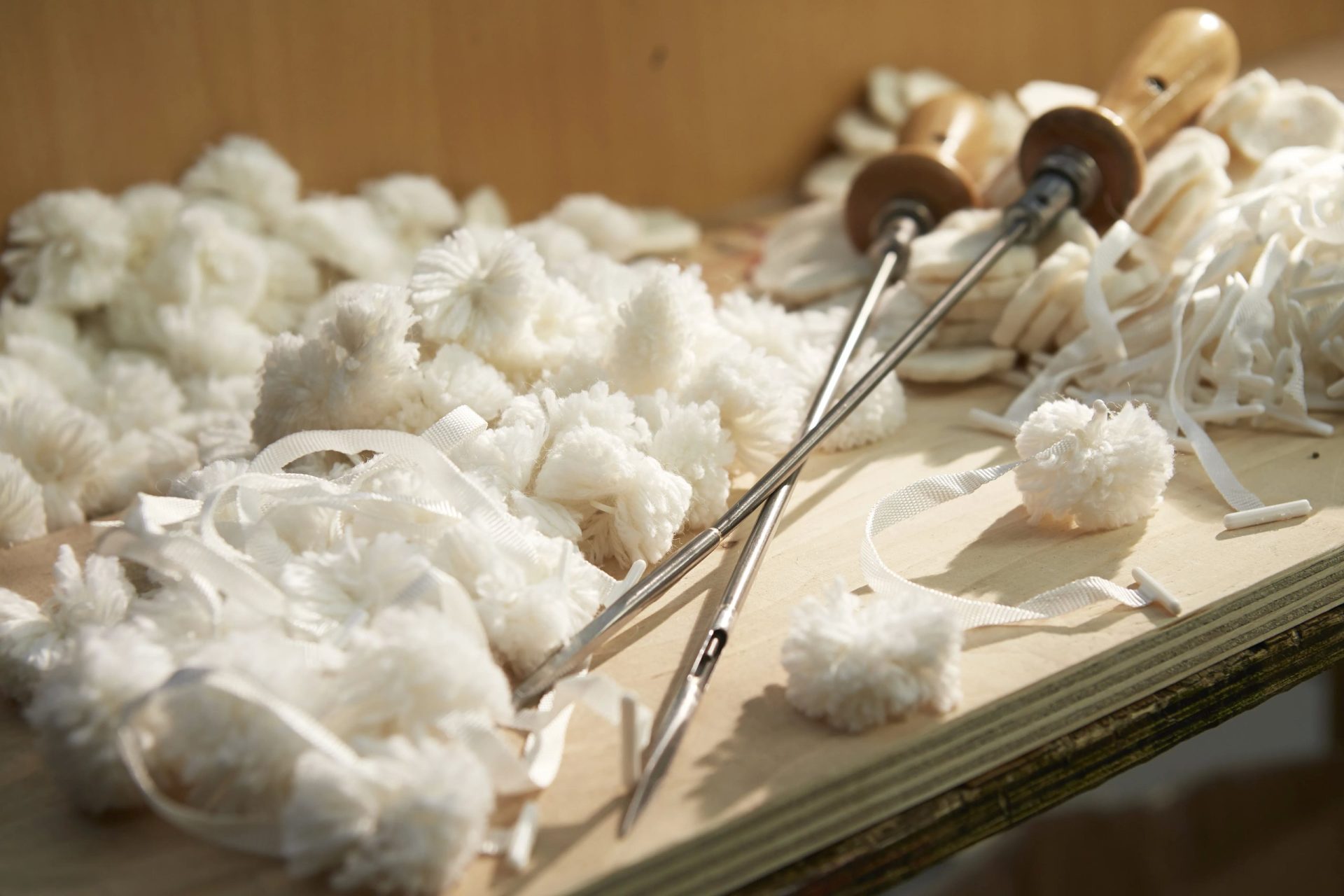
Hypnos Wool Origins and the Hypnos Pillow Top Sublime sit around £1,500–£1,800 king and include meaningful quantities of Wool and Cotton upholstery on their signature pocket spring systems. Hypnos are NBF members and uses natural fibres more extensively than the mainstream market, which makes them a credible option at this price point even though they sell through retailers rather than direct.
What you should be asking for at this budget: full upholstery GSM disclosure by layer, confirmation of whether the mattress is one-sided or two-sided, the spring count and gauge in the king size specifically, and what the guarantee covers and for how long. If a retailer or manufacturer can’t or won’t provide these details, that tells you something important.
Estimated lifespan: eight to twelve years with two-sided construction and natural fibre upholstery. Natural fibres like Wool and Horsehair don’t compress in the same way as synthetic materials — they retain their loft and resilience over time. This is the range where cost-per-night calculations start to make the economics genuinely compelling.
John Ryan at this price point: The Artisan 1500 at £1,920 king size is our entry into the fully handmade Artisan range. It uses 1,500 spunbond pocket springs, 500 GSM Wool, 600 GSM Rebound Polycotton, 700 GSM Polyester, and a 1,200 GSM Cashmere Hair pad as insulator — 4,300 GSM total, two-sided, handmade in Manchester, and with our full specification disclosed to the GSM layer. The Artisan Tailored Pocket 2000 at £2,290 king size steps up to 2,000 double-tier pocket springs with 1,200 GSM blended Wool and Cotton, Mohair (1,500 GSM), and a Polycotton insulator — 3,950 GSM total. Both are two-sided and come with our 60-day 100% money-back guarantee.
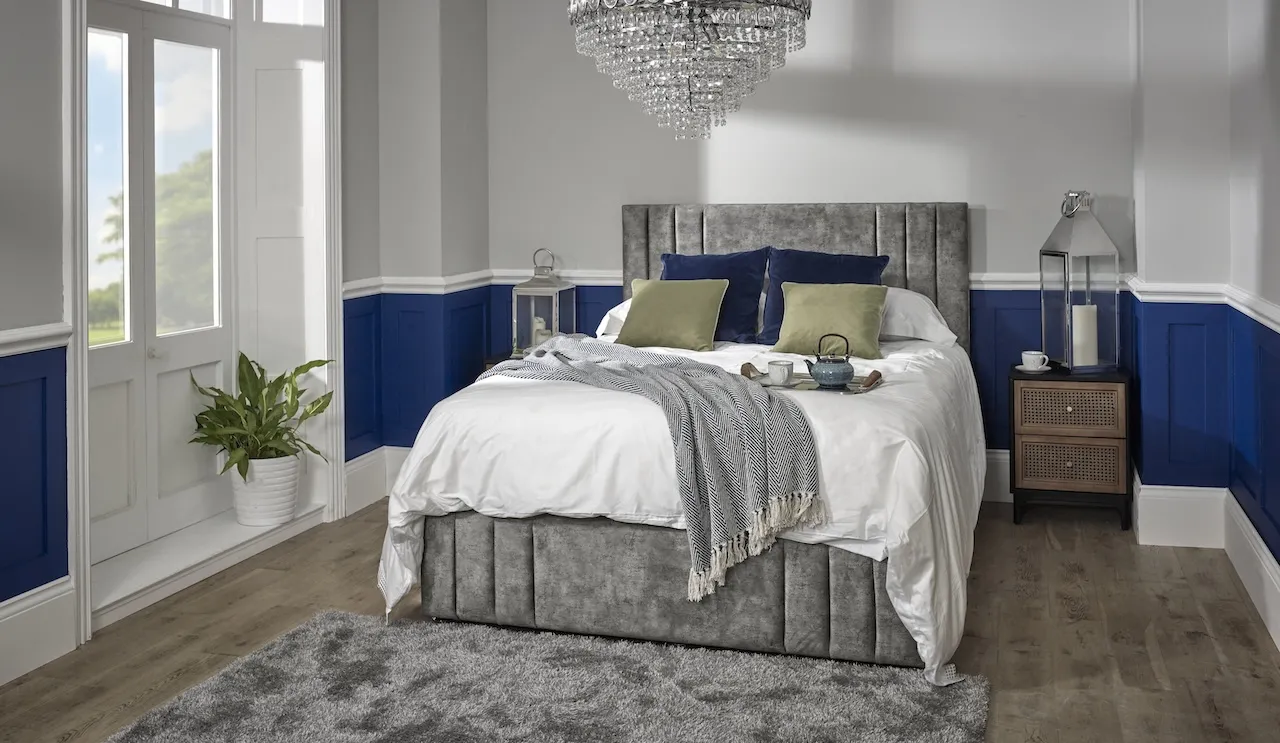
£2,000–£3,500: Luxury handmade natural fibre (King size)
At this level, you are entering the territory of genuinely exceptional mattresses — handmade, predominantly natural fibre, with calico-encased spring systems, hand tufting, and construction methods that haven’t changed in over a century because they don’t need to. This is also where the difference between buying direct from a manufacturer and buying through a retailer becomes most financially significant.
What the wider market offers at this price point: Vispring’s Shetland Superb and Devon range sit around £2,500–£3,500 king size, using their own pocket springs wrapped in Shetland Wool fleece, with upholstery combining British Wool, Cotton, and Horsetail. These are handmade in Plymouth and represent the older end of the luxury market. Hästens mattresses begin to enter this range on their entry models and use horsehair as a core material — though their pricing model is heavily influenced by their Swedish heritage and retail showroom network.
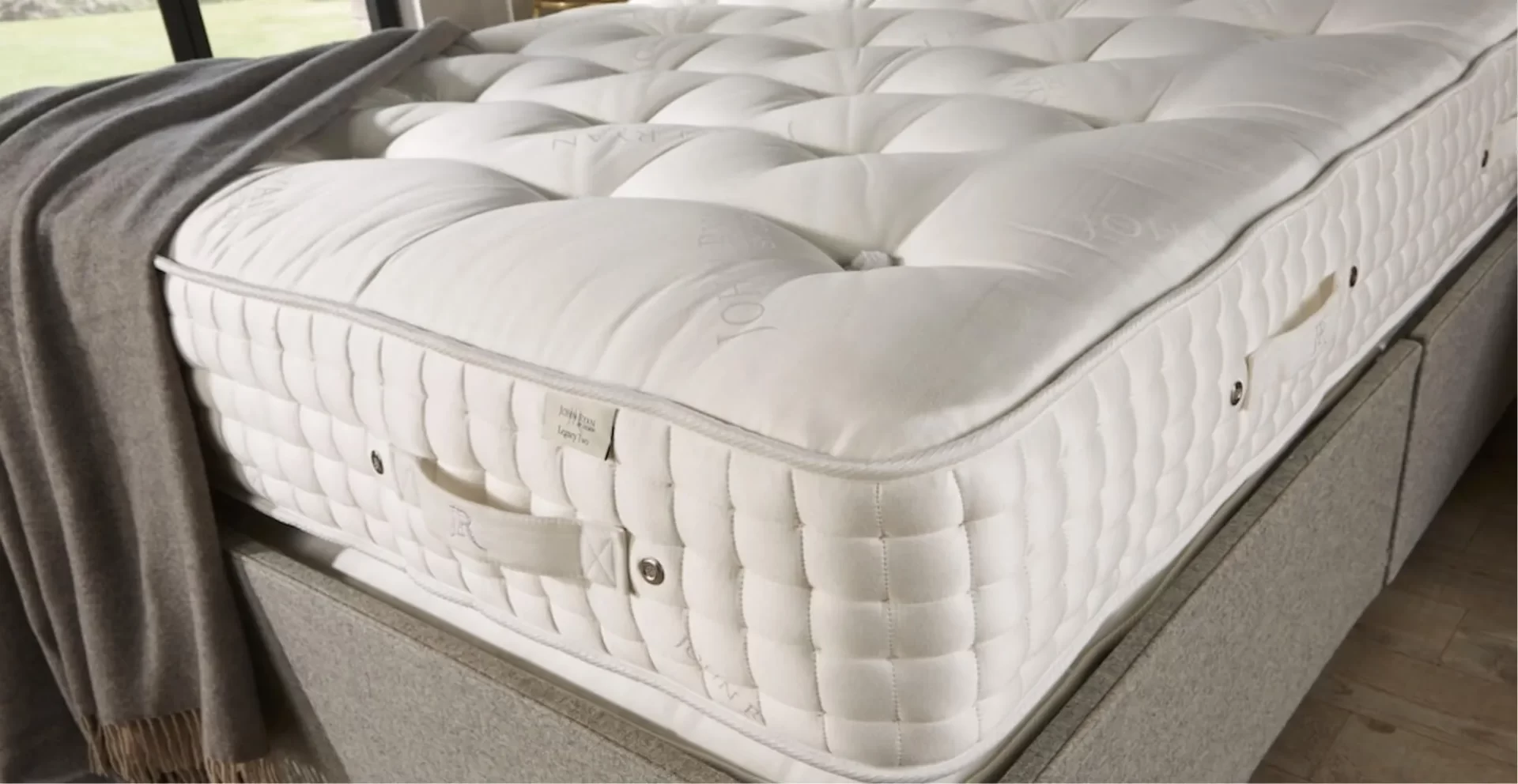
Harrison Spinks at this level use their multi-tier spring systems (sometimes four layers of springs in a single mattress) with Hemp, Flax, and British Wool grown on their own farms — a model of vertical integration that is genuinely unusual and allows them strong environmental credentials. Their mid-range models sit around £2,500–£3,500 king.
What you should have at this price point: calico or natural-fabric pocket spring encasing, hand side stitching or tufting through natural fibres, upholstery GSM of at least 3,500 GSM of natural materials, and a guarantee that means something. The spring unit should be a genuine calico-encased pocket — not spunbond synthetic pockets — because that is what separates a truly luxury spring system from a better-than-average commercial one.
John Ryan at this price point: The Artisan Naturals at £2,590 king size is our most popular mattress by a significant margin. It features 1,600 calico-encased pocket springs (49mm, 1.28mm gauge), 1,200 GSM blended Wool and Cotton, a hairproof cambric cover, 1,250 GSM Rebound Polycotton, and 1,500 GSM of pure 100% Mohair — a total of 3,950 GSM with 85% natural fibre content. It is two-sided, handmade in the UK, and at its price point is simply unmatched for specification.
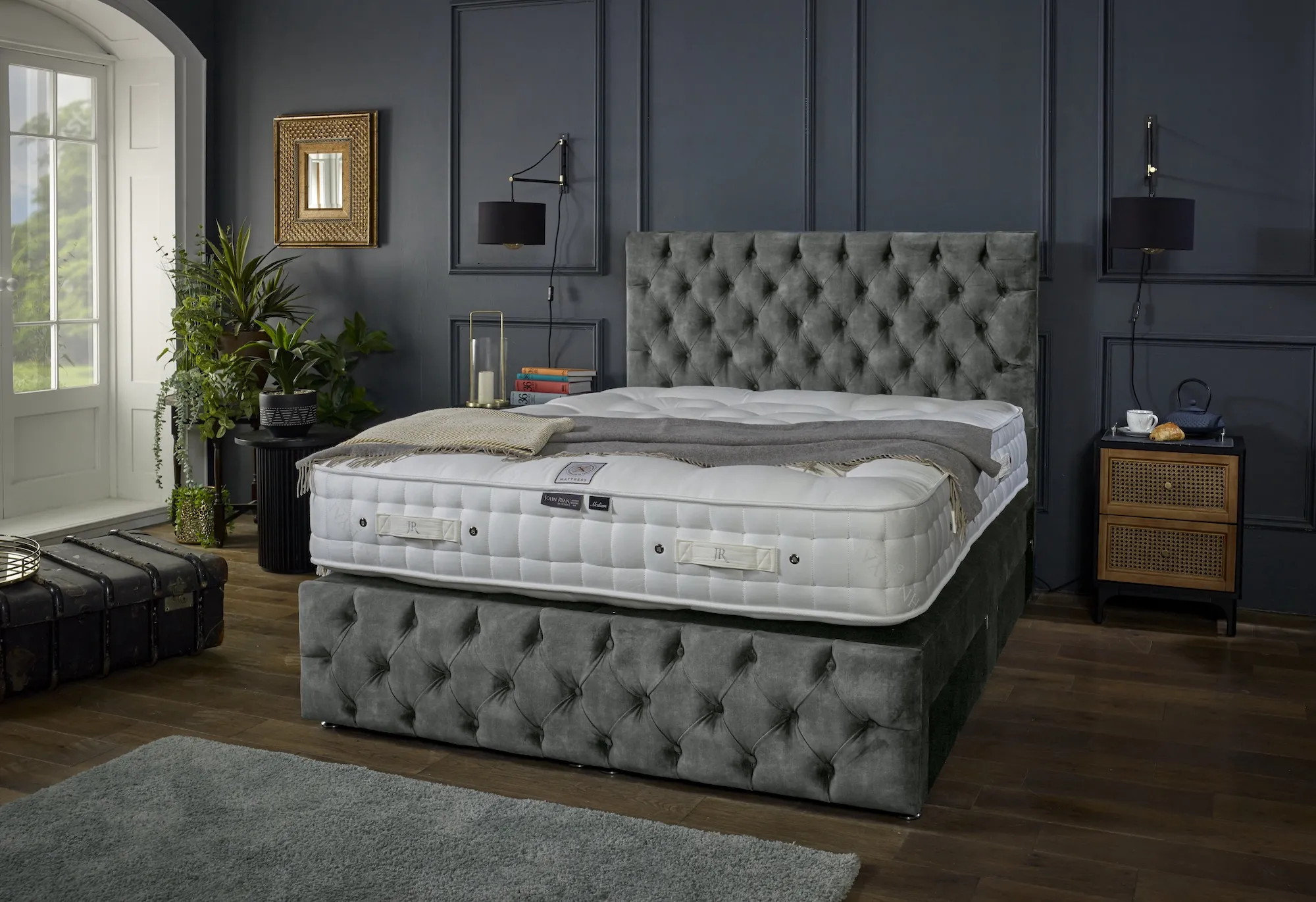
The Artisan Bespoke 004 at £3,145 king size uses the same core structure but replaces the Mohair with Horsehair and Horsetail alongside a Wool and Cotton blend — 3,600 GSM of the finest natural upholstery materials available, on 1,600 calico pocket springs. The Artisan Luxury at £3,420 king size is our softest handmade model at this level, featuring 4,600 GSM of layered Wool, Cotton, Bamboo, and Horsetail on 1,476 calico pocket springs.
£3,500 and above: True bespoke craftsmanship (King size)
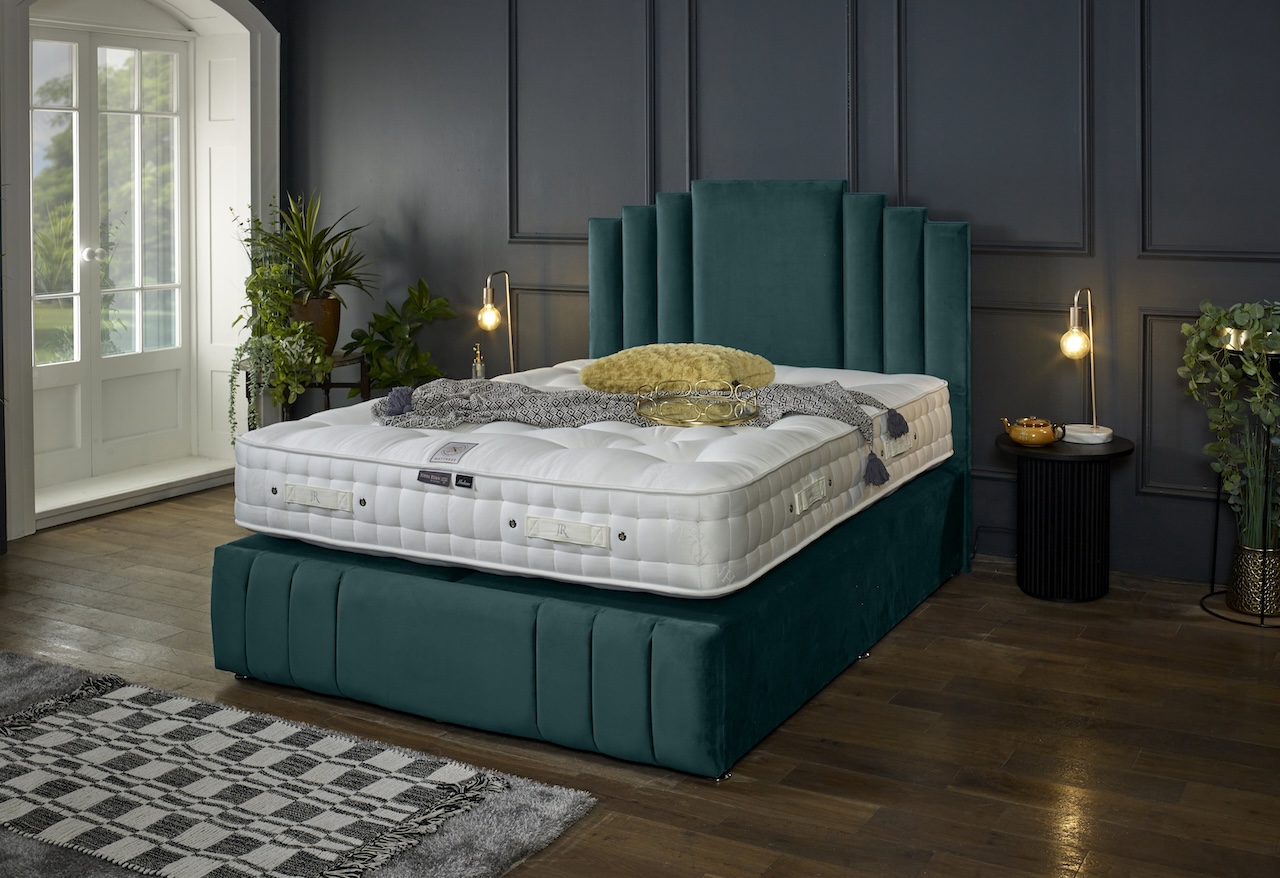
Above £3,500 you are in the world of the finest handmade mattresses available anywhere — not just in the UK, but globally. The materials at this level are extraordinary: Alpaca from South American high-altitude herds, British Horsehair, Organic Flax, Swaledale Wool from the Yorkshire Dales, and double-tier calico pocket spring systems using two full layers of individually encased springs in a single mattress.
What the wider market offers at this price point: Vispring’s Masterpiece Superb, Diamond Majesty, and Royal Sovereign range begin around £4,000–£8,000 king size and extend well beyond that for their finest models. These use British Wool, Horsetail, and Shetland Wool in combination with their calico-encased pocket springs and are made entirely by hand in their Plymouth factory.
The NBF Bed of the Year category is regularly won by models in this range. Hästens at this level uses multiple layers of Horsehair within their signature blue-check ticking, with a price premium that in part reflects their brand heritage and Scandinavian retail network rather than solely the materials cost.
Savoir Beds, made in London, compete at the very top of this market with fully bespoke models. Naturalmat, based in Devon, offers models around £3,500–£5,000 using Organic Wool and Coir.
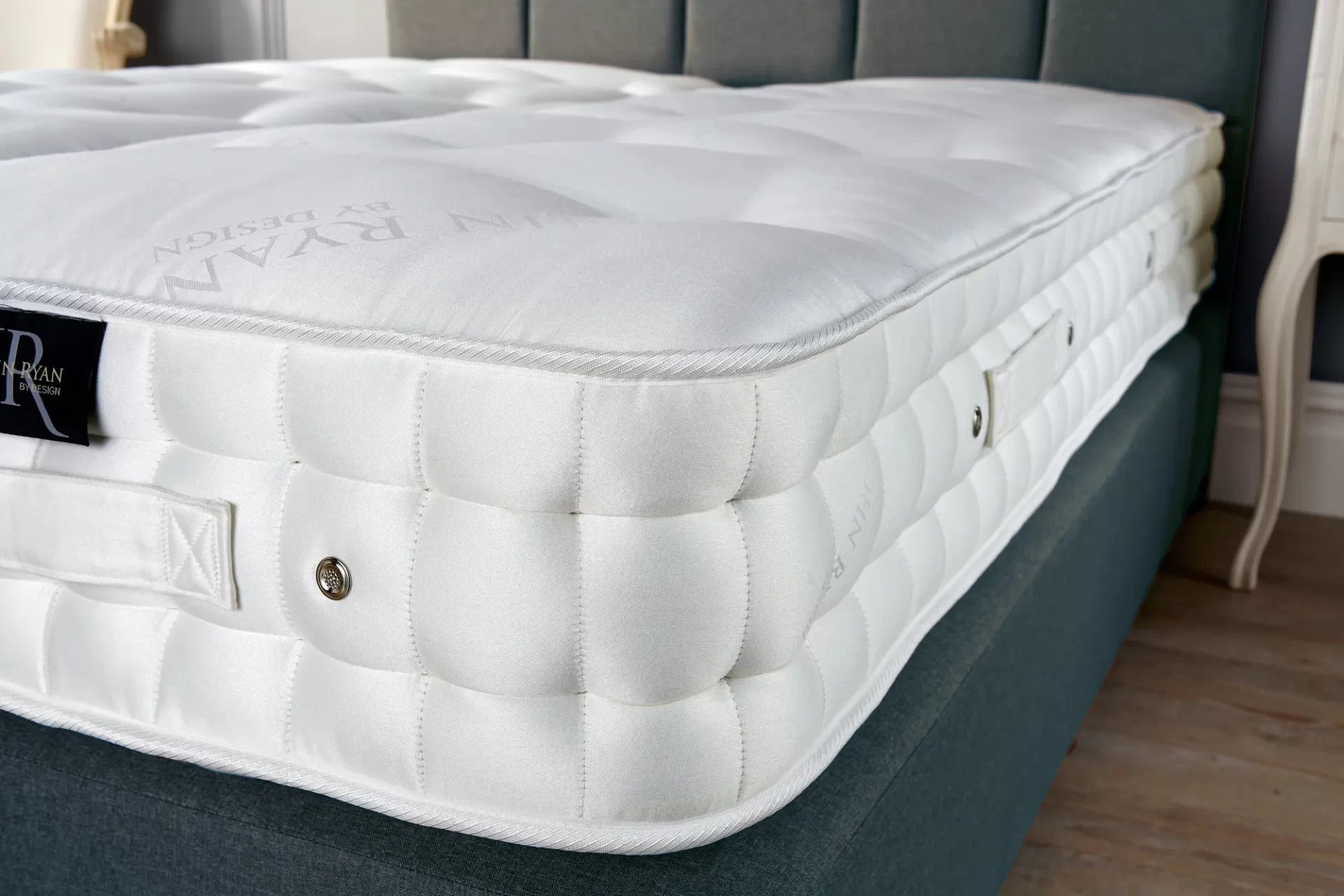
John Ryan at this price point: The Artisan Bespoke at £3,765 king size contains 5,100 GSM of natural materials — Wool, Horsehair, Horsetail, and Cashmere — on 1,600 calico pocket springs in a two-sided, hand-tufted construction.
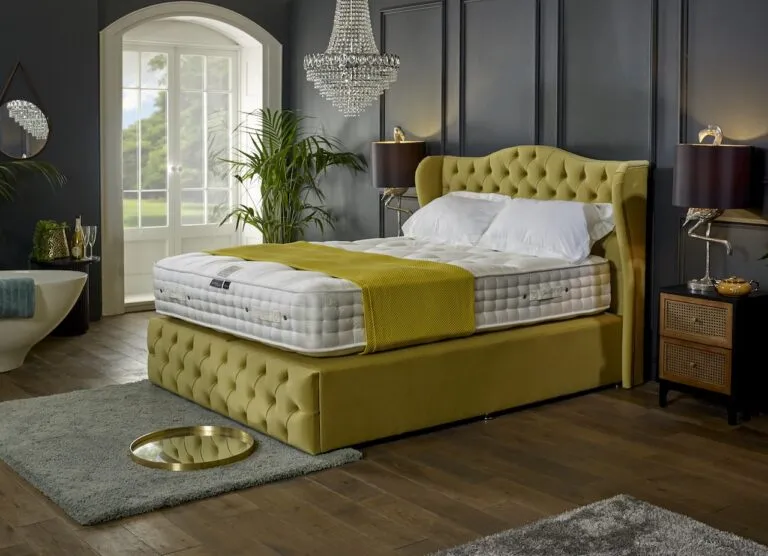
The Artisan Bespoke 002 at £4,125 king size uses 3,600 GSM of Wool, Cotton, Bamboo, and Horsetail on 2,508 double-tier calico pocket springs at 56mm depth — the double-tier system provides a profoundly different support response that single-tier mattresses cannot replicate. The Artisan Bespoke 003 at £5,485 king size reaches 5,600 GSM of Alpaca, Wool, Cotton, Bamboo, Horsetail, and Coconut Fibre Coir on the 2,508 double-tier calico system.
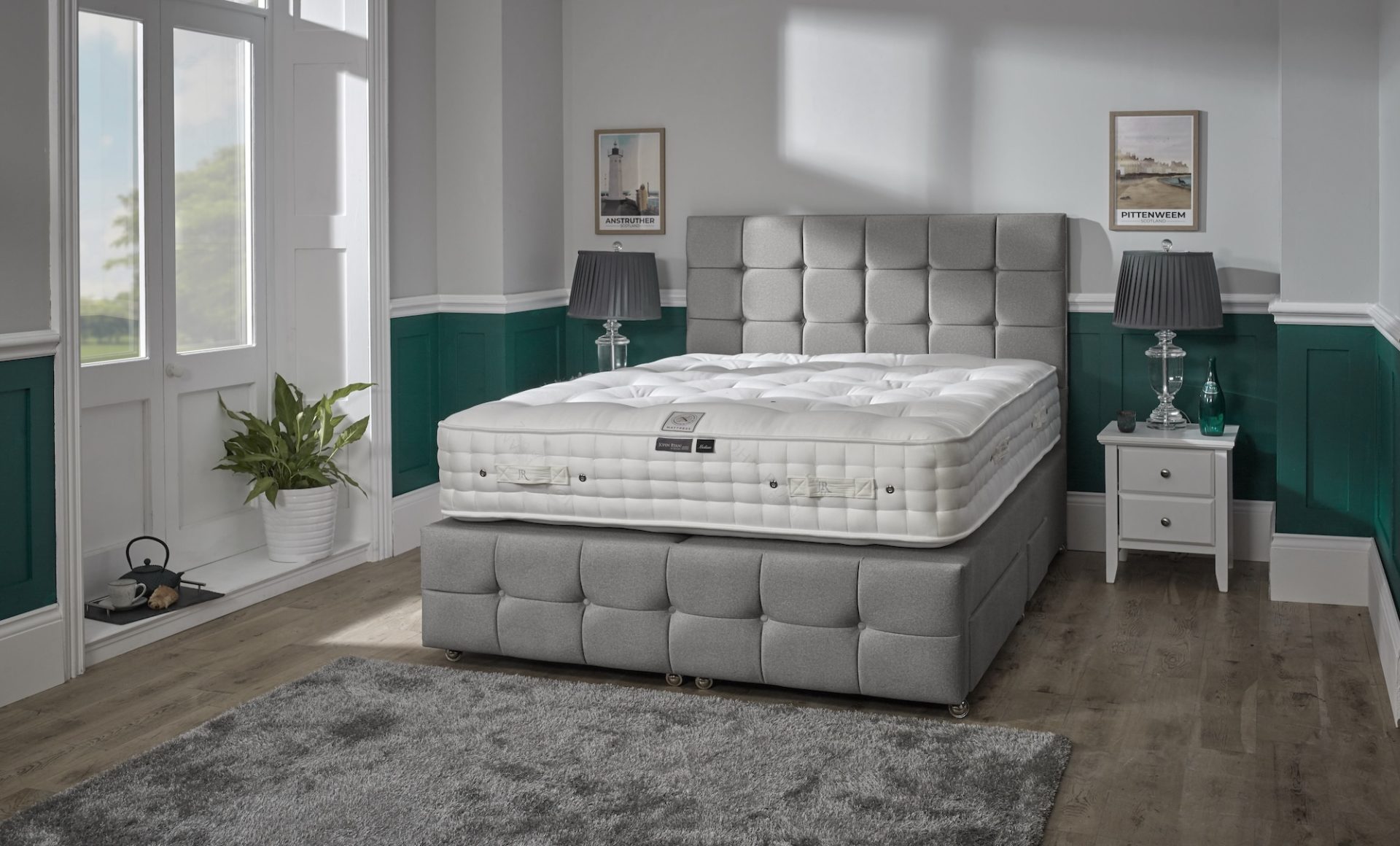
The Artisan Sublime at £6,085 king size includes Bamboo, Alpaca, Horsetail, Organic Flax, and Coconut Coir at 5,400 GSM total on double-tier calico springs, while the Legacy Two at £6,500 king size is our finest model — Alpaca, Swaledale Wool, Horsetail, and Organic Flax at 5,400 GSM on a two-tier, 2,508 calico spring system, 30–33cm in depth, and built to last a minimum of 15 years.
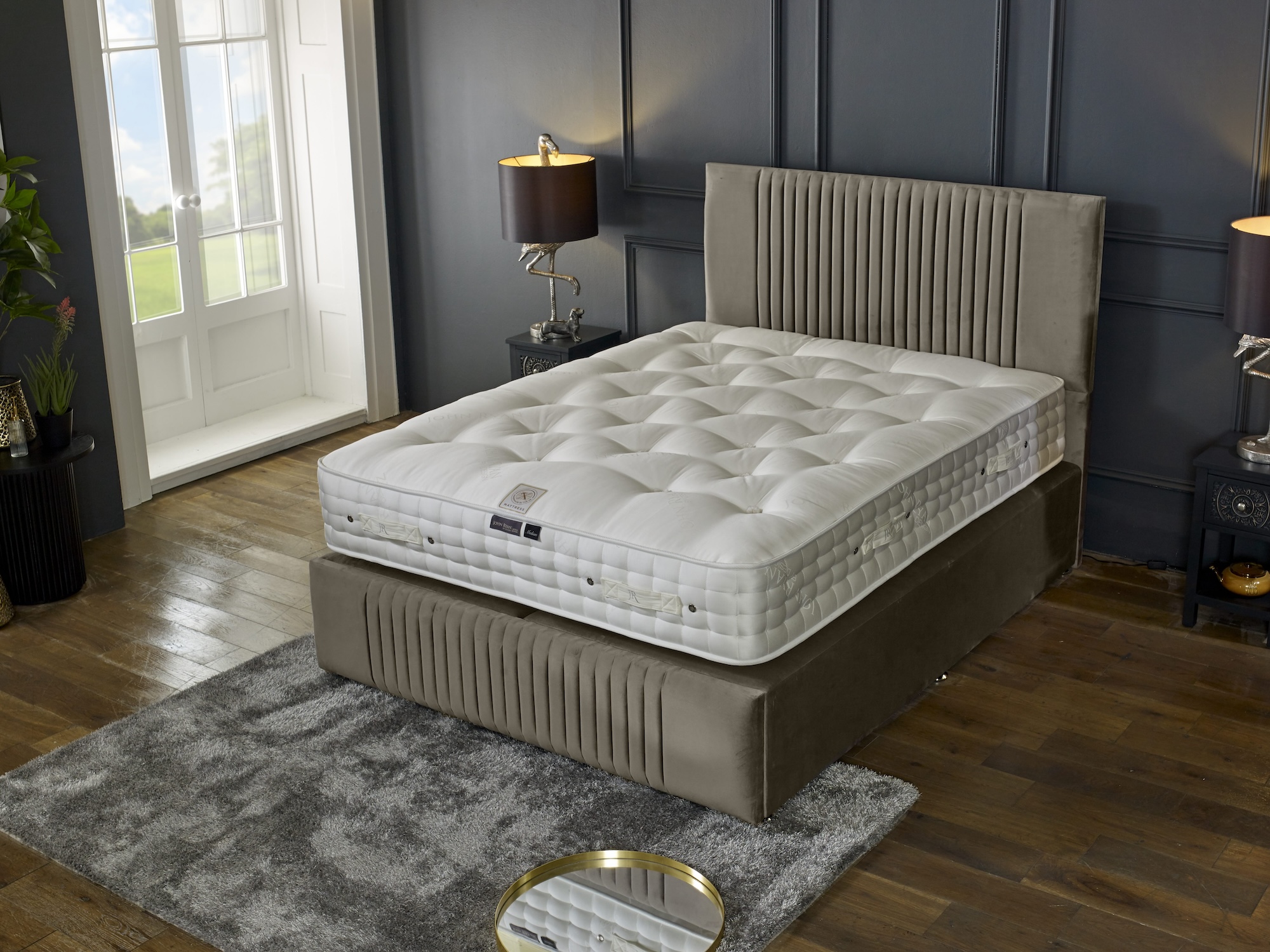
At this level, the mathematics of cost-per-night become almost incomprehensible in their favourability. A £6,000 mattress used nightly for 15 years costs approximately £1.09 per night. A £600 mattress replaced every five years costs £0.33 per night — but you’ll buy it three times, meaning the total expenditure over the same period is £1,800, and you’ve sent three synthetic mattresses to landfill in the process.
Mattress lifespan by price bracket
The mattress industry recommends replacing your mattress every seven years. What they don’t tend to highlight is that this recommendation is based on the average quality of mass-market mattresses — not on what a properly constructed, two-sided, natural fibre mattress is capable of. The table below gives honest estimates for each tier based on construction type and materials, with two-sided construction noted separately because it makes a significant difference to longevity.
| Price bracket (King) | Construction type | Upholstery | Estimated lifespan |
|---|---|---|---|
| £300–£500 | Open coil / basic pocket / compressed foam | Polyester / memory foam | 3–5 years |
| £500–£800 | Pocket spring (synthetic pockets) / foam hybrid | Polyester with minimal Wool | 5–7 years |
| £800–£1,200 | Pocket spring (synthetic), one-sided | Wool / Cotton blend + polyester | 6–9 years |
| £1,200–£2,000 | Pocket spring, two-sided (direct manufacturers) | Natural fibre blend 2,500–4,000 GSM | 8–12 years |
| £2,000–£3,500 | Calico pocket spring, handmade, two-sided | Mohair, Horsehair, Wool 3,500–5,000 GSM | 10–15 years |
| £3,500+ | Double-tier calico pocket, handmade, two-sided | Alpaca, Horsetail, Swaledale Wool 5,000+ GSM | 15–20+ years |
Two-sided construction is worth emphasising separately because the industry moved away from it around 2007, and many consumers don’t realise it’s no longer standard. A two-sided mattress can be fully flipped and rotated, distributing body weight evenly across both surfaces and dramatically extending the usable life. At John Ryan, all our mattresses are two-sided. At most high street retailers, the mattresses are one-sided — meaning you’re compressing the same surface every night and the upholstery layers are wearing from one direction only.
The landfill problem nobody talks about
The UK throws away approximately 7 million mattresses every year. Wembley Stadium holds around 90,000 people — those discarded mattresses would fill it more than five times over, every single year. Of those 7 million mattresses, roughly 75% go directly to landfill. The National Bed Federation has a target of diverting 75% from landfill by 2028, and their own reports acknowledge that target is at serious risk of being missed.
The scale of the environmental problem is difficult to overstate, and it connects directly to the question of how much to spend on a mattress. Here is what happens to a cheap synthetic mattress when it’s discarded.
A synthetic polyurethane foam mattress — the kind in millions of budget and mid-range beds — takes between 80 and 120 years to decompose in landfill. That’s not 80 to 120 years until it’s gone; that’s 80 to 120 years of slow release of methane (a greenhouse gas 28 to 34 times more potent than carbon dioxide), flame retardant chemicals, formaldehyde, and synthetic dyes leaching into the surrounding soil and groundwater. A £400 mattress thrown away after four years creates an environmental liability that will outlast everyone alive today reading this guide.
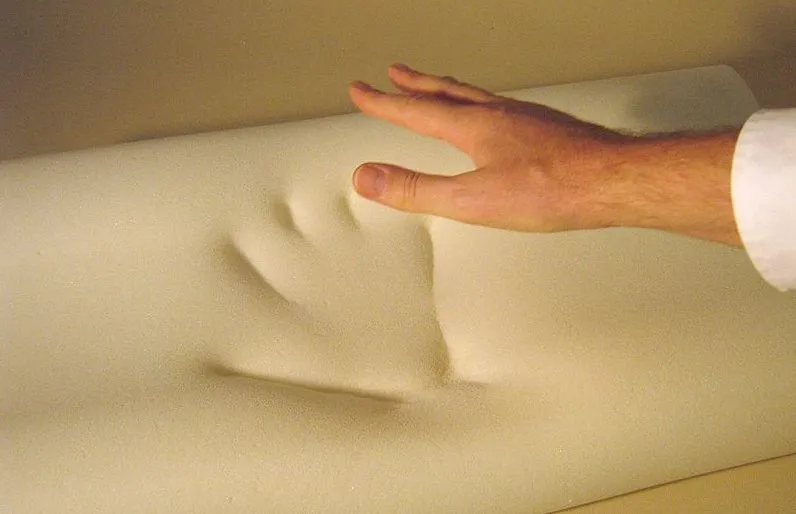
The recycling picture is complicated too. Although mattress recycling infrastructure exists in the UK — the springs can be melted down, and synthetic foam can be reprocessed into carpet underlay — the combination of materials in a synthetic mattress makes full recycling technically difficult and economically unattractive. The adhesives used to bond layers, the synthetic flame retardant treatments, and the mixed composition of covers and foams all create problems for recyclers. A survey by the North London Waste Authority found that 36% of UK adults didn’t even know mattress recycling was possible.
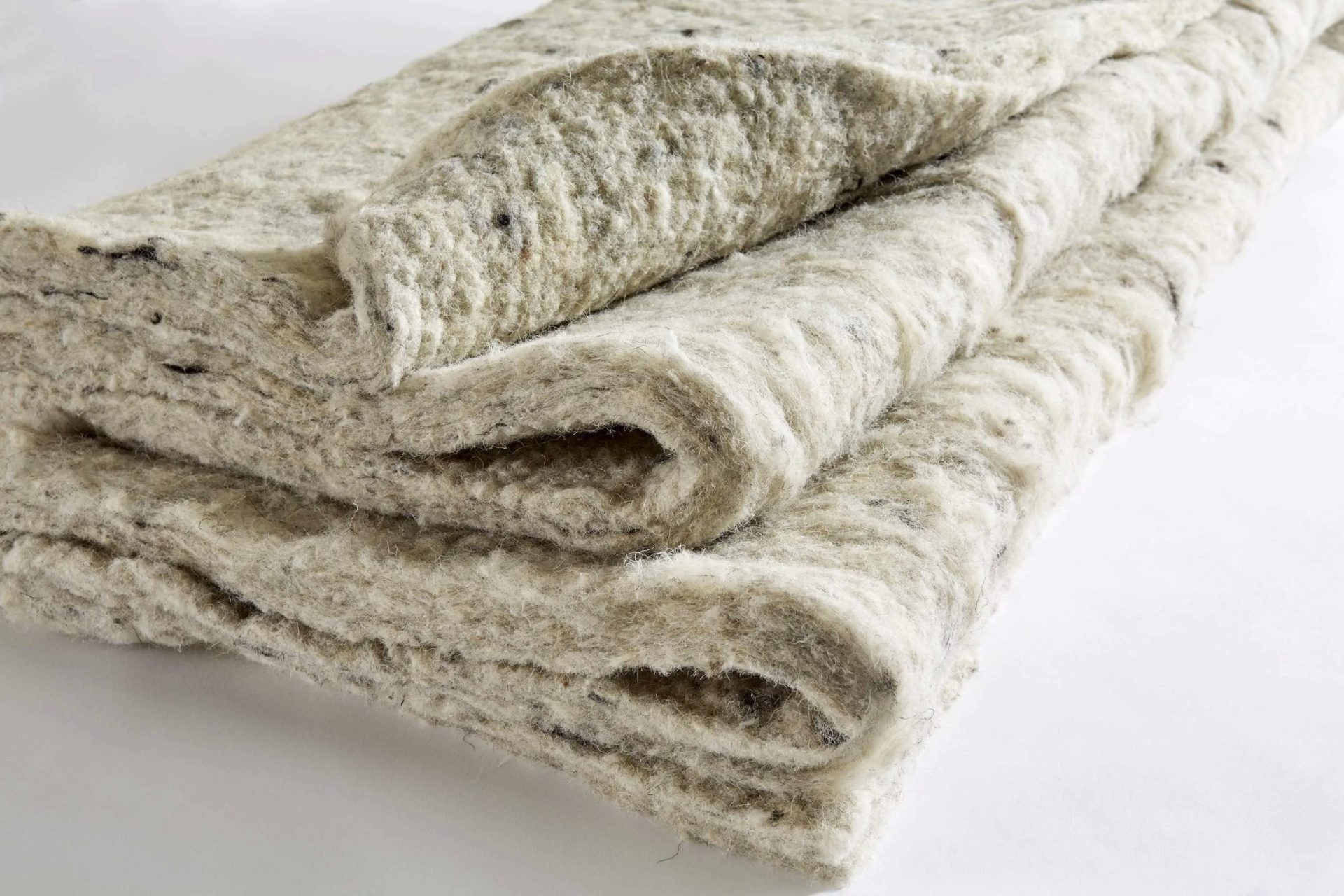
Natural fibre mattresses present a fundamentally different end-of-life picture. Wool, as the Woolroom and others have noted, takes approximately 6 to 12 months to biodegrade naturally into nitrogen-rich compost. Cotton, Flax, and Horsehair are similarly biodegradable within a few years. A mattress built on a steel calico pocket spring unit with natural fibre upholstery can be disassembled relatively simply — the steel springs are easily recycled, and the natural fibre layers can go to industrial composting. Some specialist recyclers accept mattresses of this type for near-complete material recovery.

The practical conclusion is this: every time someone replaces a cheap synthetic mattress after four or five years, they are creating an environmental burden that will persist for a century. Every time someone invests in a natural fibre mattress that lasts 12 to 15 years, they are reducing their personal contribution to the UK’s landfill problem by a factor of two or three — and they’re creating a mattress that can be disposed of responsibly at the end of its life.
This isn’t a niche concern. Research published in 2023 by the National Bed Federation found that 73% of UK consumers said they would pay more for a mattress that was easy to recycle. The appetite for doing the right thing is there. The mattress industry just needs to make it easier to act on it — which begins with manufacturing mattresses from materials that can actually be recovered at end of life.
Cost per night: the calculation that changes everything
Most people think about mattress prices in terms of the upfront cost, which is understandable but misleading. The meaningful number is the cost per night of sleep — which you get by dividing the purchase price by the total number of nights you’ll sleep on the mattress before it needs replacing.
| King size price | Estimated lifespan | Total nights | Cost per night | 15-year total spend |
|---|---|---|---|---|
| £400 | 4 years | 1,460 | 27p | £1,500 (over 3.75 mattresses) |
| £700 | 6 years | 2,190 | 32p | £1,750 (over 2.5 mattresses) |
| £1,500 | 10 years | 3,650 | 41p | £2,250 (over 1.5 mattresses) |
| £2,590 | 12 years | 4,380 | 59p | £3,235 (1.25 mattresses) |
| £6,500 | 18 years | 6,570 | 99p | £6,500 (one mattress, ever) |
The counterintuitive truth revealed by this calculation is that the cheapest mattresses are frequently the most expensive over time. Buying a £400 synthetic mattress every four years costs you £1,500 over 15 years and sends three or four mattresses to landfill in the process. Buying our Artisan Naturals at £2,590 and keeping it for 12 years costs you less in total, and the single mattress — built with predominantly natural fibres on a calico spring system — presents a far more manageable end-of-life story. Buying the Legacy Two at £6,500 and sleeping on it for 18 years works out at less than a pound a night for the best night’s sleep money can buy, with no replacements and no landfill disposal in that period.
We’re not suggesting everyone should spend £6,500. We are suggesting that the conversation about how much a mattress costs should always include how long it will last and what it will leave behind when it’s done.
Frequently asked questions
How much should I spend on a mattress in 2026?
As a primary sleeping surface used nightly by one or two adults, we’d suggest a minimum budget of £1,000 king size for something built to last more than six or seven years. Below that threshold you’re largely in synthetic upholstery territory where the materials compress quickly and the lifespan is limited. If your budget allows £1,500 to £2,000, you can access natural fibre upholstery and calico pocket spring construction that will serve you for 10 years or more. Spend as much as you genuinely can afford — the cost per night maths almost always favour the better mattress.
What is the difference between open coil and pocket springs?
An open coil spring system connects all the springs together in a continuous wire grid. When one spring moves, the others are affected — a “roll-together” effect that most couples find disruptive. Pocket springs are individually encased in fabric pockets, so each spring responds independently to the weight above it. This means better motion separation and more precise support contouring. Calico-encased pocket springs use natural cotton fabric for the individual pockets and are associated with premium handmade mattresses; spunbond pocket springs use synthetic fabric and are the standard in commercial production.
Is a higher spring count always better?
Not necessarily. A mattress with 2,000 micro pocket springs (each spring is tiny, often 6cm in diameter) is not automatically superior to one with 1,400 standard calico pocket springs. The wire gauge, spring depth, and pocket material all matter as much as the count. At John Ryan we use spring counts ranging from 1,000 to 2,508, with different gauges for different firmness levels, and we publish all of these specifications. The key question is not how many springs, but what kind of springs in what configuration.
 What does GSM mean on a mattress?
GSM stands for grams per square metre. It’s the standard measurement for the weight — and therefore the density and depth — of upholstery layers in a mattress. A higher GSM means more material, which in turn generally means more cushioning and greater durability, provided the material itself is of good quality. A budget mattress might have 1,200 GSM of cheap polyester wadding. Our Artisan Naturals has 3,950 GSM split across Wool, Cotton, and Mohair. The difference in feel, support, and longevity is significant. Be cautious of any mattress where the manufacturer won’t disclose GSM figures — it often means they have something to hide.
Are natural fibre mattresses better for the environment?
In almost every measurable respect, yes. Natural fibres like Wool, Cotton, Horsehair, and Flax biodegrade within months to a few years when properly composted, compared to 80 to 120 years for synthetic polyurethane foam. Natural fibre mattresses also tend to last significantly longer because the fibres retain their loft and resilience more effectively than synthetic alternatives — meaning fewer mattresses need to be manufactured and disposed of over a lifetime. The steel springs in a calico pocket spring mattress are readily recyclable. At John Ryan we are members of the National Bed Federation, which is actively working on a UK-wide mattress recycling programme.
What is the difference between a one-sided and two-sided mattress?
A one-sided mattress can only be rotated head to foot — you cannot flip it because it has a designated sleep surface and a base. A two-sided mattress can be both rotated and flipped, meaning you get four different positions in the first year alone. This distributes body weight across both surfaces, dramatically reducing the rate of compression in any one area and extending the useful life of the mattress. The industry largely moved away from two-sided construction in the 2000s because it reduced mattress replacement rates. At John Ryan, every mattress we make is two-sided.
Do cheap mattresses really end up in landfill?
The UK discards around 7 million mattresses per year and approximately 75% of those go to landfill. Research from the North London Waste Authority found that 22 million people throw their mattress away in under seven years — and nearly one in four people do so in under four years. The reason cheap synthetic mattresses are replaced so quickly is that they lose structural integrity rapidly. Every replacement is another synthetic mattress taking 80 to 120 years to decompose. Buying a more durable, natural fibre mattress that lasts twice as long and can be composted or recycled at end of life is one of the most environmentally meaningful consumer decisions most people can make.
Is John Ryan more expensive than the high street?
For an equivalent specification, John Ryan is typically less expensive than buying through a traditional retailer because we sell direct from our Manchester workshop, removing the retailer’s margin. A mattress at a high street retailer with a £1,500 price tag might have a manufacturing cost of £300–£400. Our £1,500 mattress has a manufacturing cost that’s a significantly higher proportion of the retail price — because we’re not paying for showroom floor space, sales commissions, or national advertising. We tell you exactly what’s inside every mattress. We think that’s how it should work.
Not sure where to start? Talk to someone who actually makes mattresses.
Our team in Manchester are available Monday to Friday, 9am to 5pm. They have made thousands of mattresses and can give you honest, specification-based advice based on your weight, sleep position, and preferences — with no commission motive. Call us on 0161 437 4419 or use the mattress finder to get a personalised recommendation.

Dreaming of the perfect nights sleep?

Ask us a question
There are over 6000 questions and answers submitted by you on all questions about mattresses and bed problems. Enter a keyword such as Vi Spring, John Lewis beds, bad back or Memory Foam and see if your question has already been answered.
If you can’t find an answer in knowledge hub, ask a new question. We aim to respond to all questions within one working day.
Newsletter
Enter your email to join our newsletter. We’ll send you occasional news and mattress expertise.