






Mattress Construction, Memory Foam & Hybrid Foam
March 2026Are Nectar Mattresses Any Good? An Honest 2026 Review
This guide covers what Nectar mattresses actually are, who owns the brand today, what the current UK range looks like, what buyers genuinely report about longevity and comfort, and what the Forever Warranty actually covers in practice. We also compare the Nectar range directly with handmade pocket sprung alternatives at similar price points, so you have everything you need to make a properly informed decision.
In this guide
- What is a Nectar mattress?
- Who owns Nectar now?
- The current UK Nectar mattress range
- What is inside a Nectar mattress?
- Common Nectar mattress problems
- What our community says about Nectar mattresses
- The Forever Warranty: what it actually covers
- The 365-night trial: what to know
- Who does a Nectar mattress suit?
- Nectar alternatives at every price point
- Head to head: Nectar vs handmade pocket sprung
- Our honest verdict
- Frequently asked questions
What is a Nectar mattress?
Nectar Sleep launched in 2016 as a direct-to-consumer memory foam mattress brand, built on the same bed-in-a-box model that was disrupting the US mattress market at the time. The proposition was straightforward: one medium-firm foam mattress, compressed and rolled into a box, delivered free with a lengthy home trial and a warranty promise that no traditional mattress manufacturer could match on paper.
The brand grew rapidly. By the time it was acquired by its parent company Resident Home in 2019, Nectar had become one of the fastest-growing consumer brands in the United States, generating over $300 million in annual revenue. The UK operation followed the same playbook, and Nectar’s aggressive digital advertising made it one of the most visible mattress names in British search results within a few years of launch.

Today, Nectar sells four mattress models in the UK, all medium-firm, all one-sided, all delivered rolled in a box. The brand’s marketing continues to centre on the 365-night trial and the Forever Warranty. What that warranty actually covers in practice is rather more limited than the headline suggests, and understanding the detail matters before you spend anything.
Who owns Nectar now?
Nectar was founded in 2016 and is operated in the UK by Nectar Sleep Ltd, registered at 1 Bow Churchyard, London EC4M 9DQ. The brand sits within Resident Home, the US parent company that also owns DreamCloud, Awara, and Siena. Resident Home was itself founded in 2019 specifically to consolidate these direct-to-consumer mattress brands under a single corporate umbrella.
In March 2024, Ashley Home, an affiliate of Ashley Global Retail, acquired Resident Home in a transaction described at the time as the most successful direct-to-consumer mattress exit in history. Ashley is one of the largest furniture retailers in the world, operating over 1,125 stores across 67 countries. The acquisition gave Ashley direct ownership of Nectar, DreamCloud, Awara, and Siena.

Nectar’s parent company has also accumulated a notable regulatory history in the United States. Resident Home was fined by the US Federal Trade Commission on multiple occasions between 2018 and 2023 for falsely claiming its Chinese-manufactured mattresses were assembled in the USA, making it an official repeat offender under Made in USA labelling rules. This history does not directly affect UK products, but it is relevant context when evaluating how much weight to place on the brand’s marketing claims. The UK Nectar mattress does not carry CertiPUR-US foam certification, and the UK product specification differs from the US version reviewed by many American comparison sites.
The current UK Nectar mattress range
The UK range currently comprises four models: the Classic Memory Foam, the Premier Memory Foam, the Classic Hybrid, and the Premier Hybrid. A Kids mattress is also available. All adult models are described as medium-firm, all are one-sided, and all are delivered rolled in a box. None offers a choice of spring tension matched to your body weight.
Nectar’s pricing is subject to almost constant promotional discounting, which makes stated full prices largely theoretical. The prices below reflect typical sale prices at the time of writing, though Nectar frequently adjusts these.
| Model | Type | Depth | Approx. king size price | Trial |
|---|---|---|---|---|
| Classic Memory Foam | Foam only | 25cm | From approx. £449 to £599 | 365 nights |
| Premier Memory Foam | Foam only | 28cm | From approx. £599 to £849 | 365 nights |
| Classic Hybrid | Foam and pocket springs | 25cm | From approx. £549 to £699 | 365 nights |
| Premier Hybrid | Foam, micro springs and pocket springs | 28cm | From approx. £699 to £999 | 365 nights |
Nectar does not publish foam density figures, spring wire gauges, upholstery GSM weights, or any layer-by-layer specification for any of its UK models. The brand uses proprietary names for its foam layers, such as “dynamic support layer” and “pressure-relieving memory foam,” but provides no data that would allow a buyer to compare the actual materials against any competitor. This is a pattern consistent across the bed-in-a-box sector and worth noting when evaluating the brand’s quality claims.

What is inside a Nectar mattress?
The Classic Memory Foam is a layered foam-only mattress with a breathable cooling cover, a comfort layer of memory foam, a transitional support foam, and a base foam layer. The Premier Memory Foam adds further depth and a honeycomb-structured memory foam layer that Nectar claims provides seven zones of targeted support, though no independent verification of this zoning claim is available.
The Classic Hybrid adds individually wrapped pocket springs beneath the foam comfort layers, and the Premier Hybrid extends this further with a layer of micro springs above a deeper pocket spring unit, giving it the most responsive feel in the range. The Premier Hybrid is the model most likely to appeal to buyers moving away from pure foam, though it remains fundamentally foam-dominant in its comfort layers.
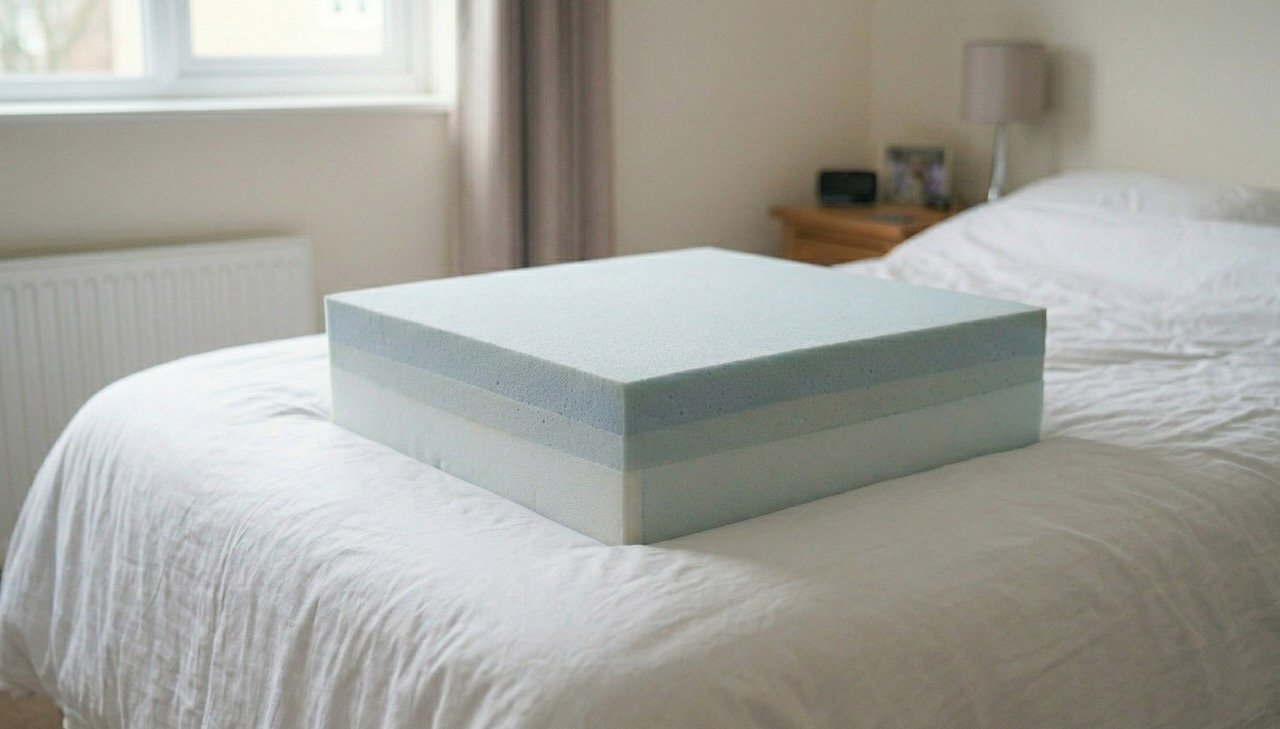
All Nectar UK mattresses share the same fundamental construction characteristics: one-sided design, no option to choose spring tension by body weight, no natural fibre upholstery, and delivery by rolling and compression. Removing the cover from any Nectar mattress voids the Forever Warranty entirely, which means the inside of the mattress is effectively inaccessible to the owner and cannot be independently inspected.
One point worth noting for buyers used to pocket sprung mattresses: the spring units in the Nectar hybrid models cannot be independently assessed for wire gauge or spring type, as Nectar does not publish these specifications for the UK market. The Premier Hybrid description refers to “up to 800 individually wrapped pocket springs” in the spring base, which is a relatively low count for a king size mattress. For context, John Ryan’s entry-level Origins Pocket 1500 has 1,500 pocket springs at £1,050.
Common Nectar mattress problems
The recurring complaints about Nectar mattresses follow a consistent pattern across Trustpilot, Reddit, and mattress comparison forums. These are not universal experiences, and a significant proportion of buyers report satisfaction with their purchase, particularly in the first year or two of use. However, the following issues appear frequently enough to be worth examining carefully before buying.
Sagging and body impressions
Sagging is the most consistently reported complaint about Nectar mattresses, with a significant volume of reviews describing visible dips and body impressions developing within 18 months to three years of purchase. The complaints are particularly concentrated among heavier sleepers and couples sharing a bed, where the heavier partner’s side compresses more quickly than the other.
The warranty threshold for sagging in the UK is a visible indentation greater than 4cm when the mattress is unoccupied and unloaded. This is a high bar. Most buyers who find their mattress uncomfortable due to body impressions will find the impression measures less than 4cm when measured without their body weight pressing on it, placing the complaint outside the scope of warranty coverage. A mattress can be measurably uncomfortable to sleep on long before it technically qualifies for a warranty claim under Nectar’s definition of a defect.

This is not unique to Nectar. It is a structural issue with all foam mattresses, which are one-sided and cannot be turned or flipped to distribute wear across both faces. The result is that all compression occurs in the same layers, night after night, with no corrective rotation available. On a traditionally made two-sided pocket sprung mattress, you turn it each month to even out settlement across both faces. Foam mattresses have no equivalent mechanism.
Heat retention
Heat complaints are present across all Nectar models, though they are less pronounced in the hybrid range than in the foam-only versions. Nectar’s marketing emphasises cooling covers, breathable foam structures, and airflow technology, and the hybrid models do benefit from the natural ventilation that springs provide compared to dense all-foam construction.
However, the comfort layers in every Nectar model remain synthetic foam throughout. Memory foam retains body heat as part of its fundamental mechanism of action: it requires heat to soften and mould around you. No cooling cover or foam additive fully resolves this characteristic, and buyers who already know they sleep hot consistently find that natural fibre upholstery, particularly Wool and Horsehair, provides temperature regulation that synthetic foam cannot replicate.

Off-gassing
A number of Nectar buyers report a chemical smell on unpacking, which is standard for any synthetic foam mattress and typically resolves within a few days of ventilation in a well-aired room. However, some buyers report the smell persisting for longer, and buyers with sensitivities to synthetic off-gassing or volatile organic compounds should allow the mattress to air thoroughly before the first night’s sleep.

The one-size construction and body weight mismatch
Every Nectar mattress is medium-firm across the entire range. There is no option to specify a softer or firmer tension based on your body weight, and no zip-and-link or split-tension variant available. This means a person weighing 8 stone and a person weighing 16 stone will both receive the same foam density and the same support profile from a Nectar mattress.
The consequence of this is predictable and well-documented in our community forum. Lighter sleepers and side sleepers frequently find Nectar too firm, reporting hip and shoulder pressure that does not resolve over time. Heavier sleepers sometimes find the foam compresses too quickly. Neither group can address the problem within the Nectar range, because there is no tension option to move to.
What our community says about Nectar mattresses
Our Ask the Community forum has received a significant number of questions from buyers who purchased Nectar mattresses and encountered problems. The themes that come up repeatedly tell a consistent story about where the one-size foam model falls short.
“I tried Nectar and it was too hard, then tried Emma and that was worse”
In one of the most instructive forum threads on this topic, a buyer described returning both a Nectar and an Emma mattress after each caused significant back pain and hip discomfort. She was a side sleeper and lighter than average build. Our response explained exactly why the one-size model fails this type of buyer: because these mattresses use a fixed medium-firm foam density calibrated for a broad average weight range, they effectively hedge their bets on comfort. Anyone who falls outside that average, whether lighter, heavier, or sleeping in a position that demands more pressure relief, will find the mattress working against them rather than for them. We noted that the Nectar mattress, like the Emma, does not provide the information a buyer needs to assess suitability before purchase, with no GSM data, no foam density figures, and no specification of the hardness ratings used in any layer.
“I’ve had a Nectar for four years and I’m replacing it”
A separate forum inquiry came from a buyer who had owned a Nectar for approximately four years and was looking to replace it, having experienced consistent morning back pain throughout the ownership period. He was a heavier, taller sleeper on an adjustable base. Our response addressed a point that applies to all foam mattresses equally: the reason one-sided foam mattresses develop dips and become uncomfortable is directly related to their inability to be turned. Every night of sleep happens in the same area of the same side, and once foam compresses in that position it does not meaningfully recover. The longevity claims associated with the Forever Warranty assume the mattress retains its support properties, but a mattress can lose its functional support long before it develops an indentation large enough to qualify as a warranty defect.
“I like my Nectar but my husband says it’s too soft and has made his back worse”
A buyer in another community thread described finding her Nectar comfortable while her husband with an existing back condition found it too soft, causing him to wake with pain. She came to us asking about dual tension options. This is one of the most common enquiries we receive from couples who have tried a bed-in-a-box brand. The fundamental problem is that a single foam density cannot serve two sleepers with different weights, different pain profiles, and different sensitivity levels. A zip-and-link or split-tension pocket sprung mattress, where each side is independently specified by the weight of the person sleeping on it, addresses this directly. Foam mattresses, including the entire Nectar range, have no mechanism for this kind of individualisation.
If you have a question about a Nectar mattress you are considering or already own, our community forum is free to use and every question receives a direct response. You can also contact the team directly here.
The Forever Warranty: what it actually covers
The Forever Warranty is central to Nectar’s marketing and is described on the brand’s website as the strongest and longest warranty in the business. Understanding what it actually covers, and what it specifically excludes, is essential before purchasing.
The warranty is structured in two phases. For the first ten years of ownership, Nectar will replace the mattress with a new one at no charge if it is found to be defective in workmanship or materials. From year eleven onwards, Nectar will repair and re-cover the mattress rather than replace it, waiving transport costs if a manufacturing defect is confirmed. An additional “Choice Option” allows the owner to instead purchase a replacement mattress at 50% of the original price paid, while keeping the original.
The warranty covers sagging only where a visible indentation exceeds 4cm when the mattress is unoccupied. This is a significant threshold. Independent assessment of any warranty claim requires an inspection by the Emmiera Assessment Service, which Nectar appoints itself. The inspector cannot assess a mattress on the floor; it must be on a supported bed frame throughout the entire period of ownership.
The following conditions void the warranty entirely:
- Removing the cover for any reason
- Any staining of any kind, regardless of cause, including normal discolouration from use
- Burns, cuts, tears, or liquid damage to the cover or mattress
- Use on a slatted base where slat gaps exceed 9cm or individual slats are narrower than 5cm
- Placing the mattress on the floor at any point during ownership
- Selling or transferring ownership of the mattress: the warranty is entirely non-transferable and ends immediately upon change of ownership
- Any reduction in comfort that Nectar classifies as “comfort preference” rather than a structural defect

The “comfort preference” exclusion is particularly significant. If your mattress has become uncomfortable to sleep on but has not developed a measurable indentation exceeding 4cm when unloaded, Nectar can classify the complaint as comfort preference and decline to act under the warranty. Multiple buyers in forum discussions and review threads describe this exact experience: a mattress that felt increasingly unsupportive but did not produce an indentation large enough to trigger a warranty claim.
Nectar’s warranty documentation is governed by English law and is issued by Nectar Sleep Ltd. By contrast, at John Ryan By Design every mattress is guaranteed by the same small team in Manchester that made it. There is no third-party inspection service, no comfort preference exclusion, and no administration history. If something goes wrong, you speak directly to the people who built your mattress.
The 365-night trial: what to know
The 365-night trial is genuinely industry-leading. It is approximately double the length of most competitors’ trials, and it gives buyers who are unsure about foam a meaningful amount of time to assess whether the feel suits them across different seasons and positions. Returns within the trial period are free, and the mattress does not need to be returned in its original packaging.
Nectar recommends allowing at least 30 nights before making a return decision, as the brand notes that bodies can take time to adjust to a new mattress. A stained mattress cannot be returned under the trial, which is why Nectar consistently recommends purchasing a mattress protector at the same time as the mattress, noting that staining will also void the Forever Warranty.
The trial and warranty are separate commitments. A mattress returned under the 365-night trial generates a full refund. A mattress kept beyond the trial relies entirely on the warranty for any future recourse, at which point the conditions described above apply.
Who does a Nectar mattress suit?
A Nectar mattress is most likely to work well for buyers who are comfortable with a medium-firm foam feel, who weigh between roughly 11 and 16 stone, who sleep mainly on their back, and who want a long trial period and a relatively straightforward purchase process. The hybrid models offer better breathability and a more responsive feel than the foam-only versions and are worth considering for buyers who have found all-foam mattresses too warm or too static in the past.

A Nectar mattress is less likely to suit lighter sleepers, side sleepers who need a softer pressure-relieving surface, buyers who sleep hot and want the temperature regulation of natural fibre, couples with a significant weight difference between them, or buyers who want a mattress that can be turned and maintained over a working life of ten years or more. It is also less suitable for anyone who places significant weight on warranty continuity, since the Forever Warranty contains structural exclusions that mean many of the most common foam mattress problems fall outside its scope.
Nectar alternatives at every price point
The buyers most likely to be researching Nectar are typically looking at a king size in the £500 to £1,000 range and want reassurance about longevity and support. At that price point, the question worth asking is not just how a mattress feels in the first month, but what it will look like in year four or five, and what recourse exists if it develops problems.
John Ryan By Design makes every mattress by hand in Manchester and publishes the full layer-by-layer specification for every model, including the GSM weight of every upholstery layer and the wire gauge of the spring unit. There are no proprietary foam names, no hidden specifications, and no comfort preference exclusions.
Origins Pocket 1500: the entry-level pocket sprung alternative
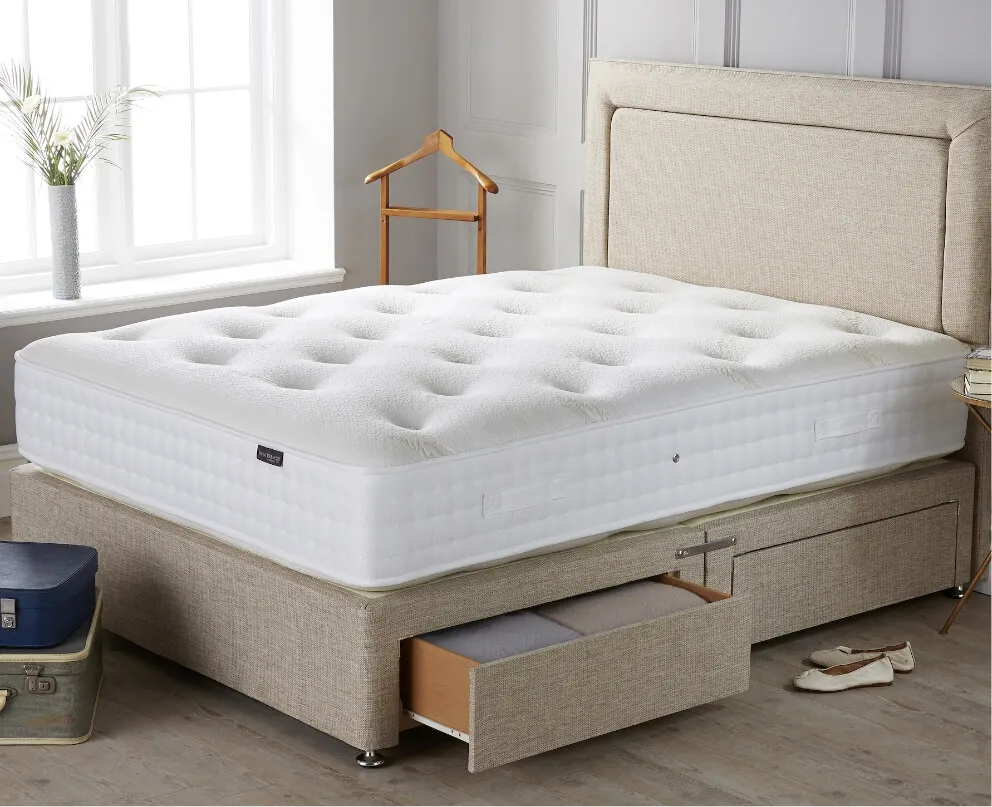
At £1,050 for a king size, the Origins Pocket 1500 sits at a modest premium to a mid-range Nectar. It is a handmade pocket sprung mattress built on 1,500 spun-bond pocket springs with 1,550gsm of upholstery including a 300gsm Wool layer. It is genuinely two-sided and available in soft, medium, or firm tension based on body weight. It does not contain memory foam, cannot off-gas, and can be maintained by turning for a working life significantly longer than any foam mattress.
| Specification | Origins Pocket 1500 | Nectar Premier Hybrid (approx. equiv. price) |
|---|---|---|
| King size price | £1,050 | Approx. £699 to £999 (frequent promotions) |
| Construction | Pocket sprung, two-sided | Foam and springs, one-sided |
| Spring count (king) | 1,500 | Up to 800 (UK spec) |
| Upholstery | 300gsm Wool, polyester | Memory foam layers, synthetic throughout |
| Total upholstery GSM | 1,550gsm (published) | Not disclosed |
| Spring tension options | Soft, medium or firm by body weight | Medium-firm only, no choice |
| Trial period | 60 days | 365 nights |
| Warranty issued by | John Ryan By Design directly | Nectar Sleep Ltd |
| Made in | Manchester, UK | Not disclosed (rolled, imported) |
Artisan Express: the step up into fully natural upholstery
At £1,295 for a king size, the Artisan Express is the entry point into the Artisan range and the first model in John Ryan’s lineup to use exclusively natural fibre upholstery throughout. It is hand-built in Manchester on calico-encased vanadium-coated pocket springs and is available in soft, medium, or firm tension. It is a genuinely two-sided mattress.
At roughly the same price as a full-price Nectar Premier Hybrid, the Artisan Express offers natural fibre temperature regulation, a weight-specific spring tension, and a two-sided construction that can be maintained over many years. The gap in specification between the two is not close, and the cost per year of use over a ten-year lifespan is demonstrably lower on the Artisan Express than on any Nectar model.
Artisan Naturals: the most popular natural fibre option
At £2,180 for a king size, the Artisan Naturals is John Ryan’s most popular mattress and the most direct counterpoint to the Nectar range at a higher price point. It is built on 1,600 calico encased vanadium-coated pocket springs with 3,950gsm of upholstery across five layers, including 1,200gsm of blended British Fleece Wool and Cotton and 1,500gsm of 100% pure Mohair. It is hand-tufted and two-sided.
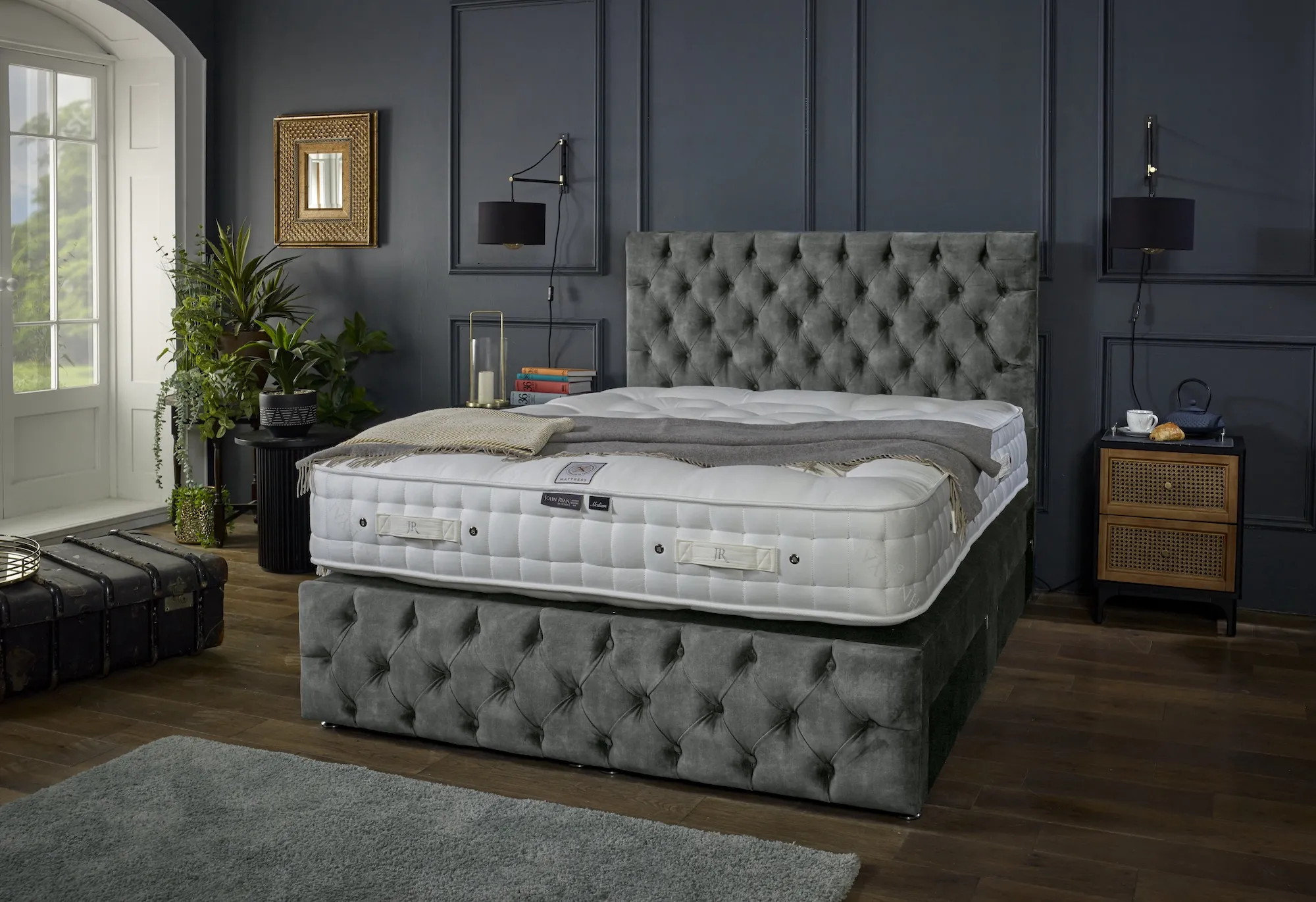
The Artisan Naturals costs more than twice a mid-range Nectar. But it will also last significantly longer: a natural fibre pocket sprung mattress from John Ryan typically has a working life of ten to fifteen years with regular turning, compared to five to seven years for a one-sided foam hybrid. When you calculate the cost per year of use, the comparison looks rather different from the headline prices.
Head to head: Nectar vs handmade pocket sprung
| Feature | Nectar (current UK range) | John Ryan By Design |
|---|---|---|
| Manufacturing | Factory-made, rolled and boxed | Handmade in Manchester, UK |
| Upholstery materials | Memory foam and synthetic foam throughout | Wool, Cotton, Horsehair, Mohair, Horsetail |
| GSM disclosed? | No | Yes, every layer published |
| Foam density published? | No | N/A: natural fibre, not foam |
| Two-sided construction? | No, one-sided throughout | Yes, genuinely two-sided |
| Spring tension by body weight? | No, medium-firm fixed for all | Soft, medium, firm matched to your weight |
| Warranty sagging threshold | 4cm visible indentation (unoccupied) | No arbitrary threshold |
| Warranty transferable? | No, voids on change of ownership | Yes |
| Cover removal | Voids warranty entirely | N/A: tufted construction |
| Sleep trial | 365 nights | 60 days |
| Price range (king size) | Approx. £449 to £999 (sale prices) | £890 to £5,550 |
Our honest verdict on Nectar mattresses
Nectar makes a competent range of foam and foam-hybrid mattresses at prices that sit comfortably within the bed-in-a-box category. The 365-night trial is the most generous in the sector and gives buyers a meaningful window to assess whether foam suits them. The Premier Hybrid is a more thoughtful product than the foam-only models, and buyers who already know they sleep well on foam will find it a reasonable purchase for the price.
There are things worth weighing honestly, though. The Forever Warranty is marketed as an unconditional lifetime guarantee, but its actual terms contain an exclusion for “comfort preference” that covers most of the situations where buyers find their mattress has become uncomfortable. The 4cm sagging threshold means many real-world complaints fall outside warranty coverage, and the requirement for third-party Emmiera inspection adds friction to any claim. Removing the cover voids the warranty, which means a buyer can never independently inspect what is inside their mattress or verify the specification they were sold.
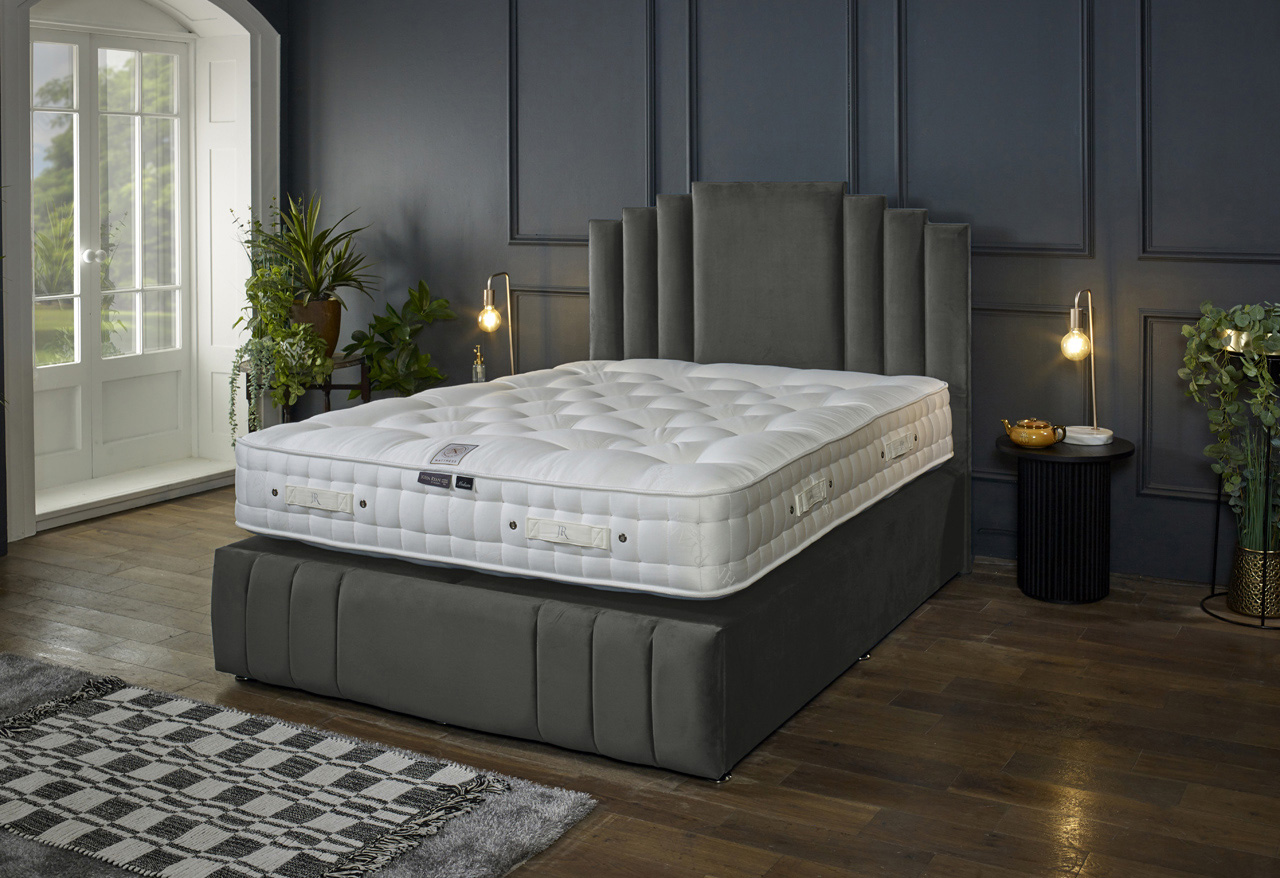
The construction of all Nectar models is fundamentally foam-led, with no natural fibre upholstery, no option to match spring tension to body weight, and no ability to turn and maintain the mattress over time. The one-size approach may suit buyers in an average weight range who are not particularly sensitive to temperature or pressure points. It will not suit lighter sleepers, side sleepers with joint sensitivity, or buyers who want a mattress that can be cared for and maintained over a ten to fifteen year working life.
If your priorities are a long trial period, a straightforward online purchase, and a foam feel at a mid-market price, Nectar is a reasonable choice in its category. If your priorities are natural fibre breathability, a spring tension matched to your body weight, transparent specifications, a genuinely two-sided construction, and a guarantee from a manufacturer with an unbroken track record, a handmade pocket sprung mattress is worth the additional investment.
We are happy to help you work out which of our models best matches your weight, sleeping position, and budget. There is no sales pressure and no commission structure. Call us on 0161 437 4419 or contact the team directly here.
Frequently asked questions about Nectar mattresses
Are Nectar mattresses any good?
Nectar mattresses are competent foam and foam-hybrid mattresses in the mid-market price bracket. They suit buyers who prefer a medium-firm foam feel and want a lengthy trial period. Recurring complaints include sagging within two to four years, heat retention, and difficulty making successful warranty claims because the 4cm indentation threshold excludes many real-world comfort failures. Buyers who sleep hot, sleep on their side, or weigh significantly less than average typically find the one-size construction unsuitable.
Who owns Nectar mattresses?
Nectar is owned by Resident Home, which was acquired by Ashley Home, an affiliate of Ashley Global Retail, in March 2024. Ashley is one of the largest furniture retailers in the world. The UK entity is Nectar Sleep Ltd, registered at 1 Bow Churchyard, London EC4M 9DQ. Resident Home, the parent company, is an official repeat offender under US Federal Trade Commission rules for misleading Made in USA labelling claims, though this history relates to US regulatory matters and does not directly affect the UK product.
What is the Nectar Forever Warranty?
The Forever Warranty is a lifetime guarantee that covers manufacturing defects in materials and workmanship. For the first ten years, Nectar will replace a defective mattress free of charge. From year eleven onwards, Nectar will repair and re-cover the mattress. Sagging is only covered if the visible indentation exceeds 4cm when the mattress is unoccupied. The warranty is entirely non-transferable, voids immediately if the cover is removed for any reason, and does not cover any complaint Nectar classifies as comfort preference. An Emmiera inspection is required to substantiate any warranty claim.
How long do Nectar mattresses last?
Nectar claims a working life of ten to fifteen years, but independent reviews and forum feedback consistently suggest five to seven years is more realistic before significant comfort loss occurs in regular use. This is consistent with industry averages for one-sided synthetic foam mattresses. Because Nectar mattresses cannot be turned or rotated to distribute wear, all compression occurs in the same layers throughout the entire ownership period, which accelerates the settlement timeline compared to a two-sided mattress.
What are the best alternatives to a Nectar mattress?
For buyers stepping away from foam who want a handmade alternative at a realistic price, the Origins Pocket 1500 at £1,050 king size is the most direct comparison. It uses 1,500 pocket springs and 1,550gsm of upholstery including a Wool layer, is available in soft, medium, or firm tension by body weight, and is a genuinely two-sided mattress. The Artisan Express at £1,295 king size is the entry point into fully natural fibre upholstery.
Does the Nectar warranty cover sagging?
The UK warranty covers sagging only if the visible indentation exceeds 4cm when the mattress is unoccupied and unloaded. Sagging below this threshold is classified as normal wear and is not covered. The mattress must have been used on a supported bed frame throughout its entire life, with slatted bases requiring slats at least 5cm wide and no more than 9cm apart. Any staining of the cover, regardless of cause, also voids the warranty and would prevent a sagging claim from being processed.
Can a Nectar mattress be used on a slatted base?
Yes, but with specific requirements. Individual slats must be at least 5cm wide, and the gap between slats must not exceed 9cm. If these dimensions are not met, using the mattress on that base voids the Forever Warranty. The mattress must never be placed on the floor, as this also voids warranty coverage.

Dreaming of the perfect nights sleep?
Ask us a question
There are over 6000 questions and answers submitted by you on all questions about mattresses and bed problems. Enter a keyword such as Vi Spring, John Lewis beds, bad back or Memory Foam and see if your question has already been answered.
If you can’t find an answer in knowledge hub, ask a new question. We aim to respond to all questions within one working day.
Newsletter
Enter your email to join our newsletter. We’ll send you occasional news and mattress expertise.