






Can a mattress topper firm up a bed thats too soft?
 1 answers
 0 comments
I bought a pocket sprung mattress recently (at a 3 comfort rating, 1 is soft and 5 very firm). I find that during the night I 'sink' into it and have mild lower back pain as a result.
I have tried various 'solutions' including putting plywood boards below mattress, but this has not worked. Some websites advise using a firm mattress topper and perhaps a Dunlop firm tension latex topper would help, but I am not sure.
Is this correct and do you have any toppers that might help? I am of slim build and a side sleeper.

Thanks for getting in touch with us about your mattress problems. Sorry to hear you're sinking too far during the night into the mattress. It sounds very much like you've got too soft a comfort layer in your mattress. This is when the upholstery layers are too forgiving without enough support layers.
The direct answer: toppers soften, they cannot firm up
Unfortunately, mattress toppers will only ever soften the comfort layers of a mattress. Putting a firm layer on the top won't have any real impact as this will conform to the softer layers below. Mattress upholstery needs to be layered up firmest layers first to the softest for a mattress to react properly. Like you've already said, our advice would be to put a layer of plyboard under the mattress on top of the base which can to a degree firm up a mattress slightly. You're never going to be able to completely change a mattress's comfort layer if you, unfortunately, end up with the wrong comfort layers.

Why a firm topper on a soft mattress does not work
This is one of the most common misconceptions in mattress care and it is easy to understand why people try it. The logic seems sound: if a soft mattress is the problem, add something firm on top. In practice, any topper placed on top of a soft mattress will simply compress into the softness beneath it. The load of the sleeper passes through the topper and into the soft layers below, so the topper changes nothing meaningful about the level of support you receive. It just adds another soft layer above the existing soft ones.
Mattress construction is layered in a deliberate order: the firmest, most supportive layers sit closest to the spring unit at the base, and the softest, most comfortable layers sit at the top surface. This graduated structure is what allows a mattress to be both supportive and comfortable simultaneously. A topper can only add softness to the top of this structure. It cannot introduce firmness to layers below it, and it cannot change the behaviour of the spring unit beneath.
What the plywood fix does and how to do it correctly
Adding a layer of plywood or MDF on top of your base, between the base and the mattress, does have a meaningful firming effect because it changes the surface the spring unit is sitting on. A pocket sprung mattress placed on a sprung edge divan base will feel slightly softer overall because the base springs add a second layer of give below the mattress springs. Moving the mattress to a platform top or boarding over the springs with 3 to 5mm MDF removes that secondary give and firms up the spring unit's response. This is the one legitimate way to firm a mattress up without replacing it.
This is most effective when the mattress is on a sprung edge divan base. If your mattress is already on a platform top divan or a solid-surface slatted base, boarding will have limited additional effect because there is no spring layer beneath to remove.
The three most likely causes of sinking too far, and the right fix for each
Before deciding on a course of action it is worth identifying which of the three causes applies to your situation, as the solutions are different for each.
The first cause is the wrong spring tension for your bodyweight. Spring tension, meaning the gauge of wire used in the pocket springs, determines how much resistance the spring provides before it compresses. A soft spring tension is calibrated for lighter sleepers, typically under 11 stone. A medium tension suits 11 to 16 stone, and a firm tension is for 16 stone and above. If you chose your mattress based on how it felt in a showroom rather than on your bodyweight, there is a real chance the spring unit is too soft for you. No topper or base adjustment will correct this. The only resolution is a mattress with the correct spring tension for your weight. As a slim-build side sleeper, this is worth checking: soft spring tensions are surprisingly common in mattresses marketed as medium, particularly in the budget-to-mid-range market.
The second cause is a comfort layer that is too deep or too soft for your sleeping position and bodyweight. A side sleeper of slim build, say under 9 or 10 stone, needs a comfort layer that yields to relatively low pressure at the shoulder and hip. But very deep, very soft upholstery can allow someone lightweight to sink past the comfort layers and into the spring unit, losing the supportive cushioning effect. In this case the mattress has too much upholstery of the wrong composition rather than the wrong springs. Again, a topper on top cannot address this because the problem is below the surface you sleep on.
The third cause is settlement over time. A mattress that once felt fine but has gradually become too soft in the sleeping zones has simply had its upholstery layers compress under repeated use in the same position. This is natural and expected, and the way to address it is correct turning and rotation from day one, which distributes the load across the full surface rather than concentrating it in one area. If the mattress is single-sided and cannot be turned, this will worsen faster.
When a topper does make sense on a mattress that is too firm
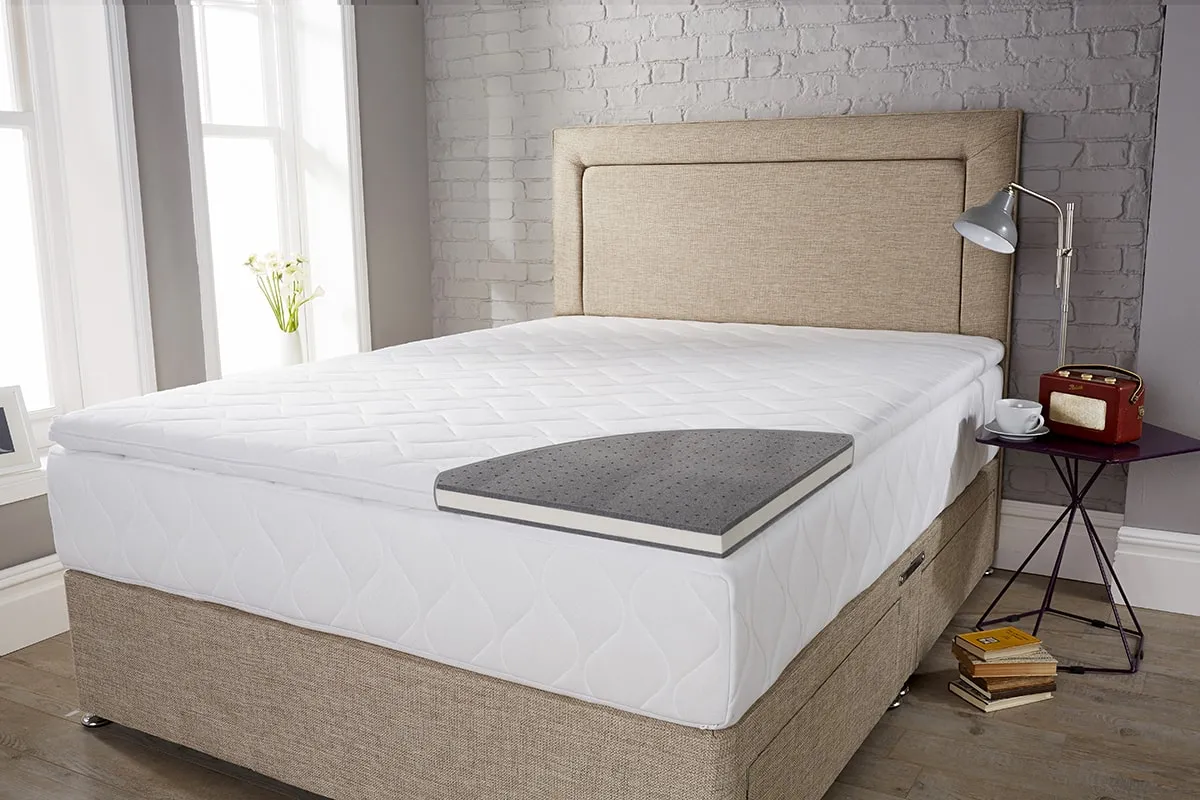
Toppers do have a genuine and valuable role to play, just not in the scenario described. If your mattress is slightly too firm for your bodyweight or sleeping position, a natural latex or natural fibre topper adds a softer comfort layer at the surface and gives the mattress a more forgiving feel. Our 100% natural latex toppers are available in 5cm and 7cm depths and provide a responsive, breathable comfort layer that does not trap heat the way memory foam toppers do. They are also considerably more durable than synthetic alternatives. A latex topper on a correctly tensioned mattress is a very effective way to tweak the comfort level without changing the mattress itself.
What to do if the mattress is genuinely the wrong mattress for you
We hope that helps and gives you further mattress buying guidance. If you have any more mattress related questions please get back in touch on our contact page or 0161 437 4419.
If after trying the plywood fix the mattress still feels too soft, the most likely explanation is that the spring tension is wrong for your bodyweight, and the honest solution is a replacement mattress with the correct specification. Our guide to soft, medium and firm mattress tensions explains how spring gauge relates to bodyweight and will help you identify the correct specification for your weight and sleeping position. Our how to choose a mattress guide walks through both spring tension and upholstery selection in full.
If you would like to talk through your specific situation and bodyweight before making a decision, please call us on 0161 437 4419. Our office hours are here.
Kind regards, Lee

Dreaming of the perfect nights sleep?
Newsletter
Enter your email to join our newsletter. We’ll send you occasional news and mattress expertise.