






Mattress Science
May 2026Best Mattress for Sciatica UK 2026: Honest Advice from the Makers
We have been making mattresses here in Manchester for over 25 years, and sciatica is one of the conditions our team discusses most regularly with customers. Not because we are medical professionals, but because we speak every week to people who have been struggling to sleep properly for months and who have often tried two or three mattresses without understanding why none of them helped.
This guide explains what sciatica actually is, how your mattress interacts with the sciatic nerve during sleep, what the clinical evidence says about firmness and support, and which of our mattresses are most likely to help.
If you are in significant pain right now, your first call should be to your GP. The NHS sciatica page has full guidance on when to seek urgent help and when to seek emergency care. This guide is specifically about what happens during the eight hours you spend lying on your mattress, and how to make those eight hours work for you rather than against you.
What is sciatica and why does sleep make it worse
Sciatica is not a diagnosis in itself but a description of symptoms caused by irritation or compression of the sciatic nerve, the longest nerve in the human body. It runs from the lower spine, through the buttocks, and down each leg to the foot. When something presses against it, whether a herniated disc, a narrowed spinal canal, or a tight piriformis muscle in the buttock, the result is a distinctive pattern of pain, tingling, numbness or burning that travels along the path of the nerve.
The sciatic nerve roots emerge from the spine at the L4, L5 and S1 vertebrae in the lower back. This is the lumbar region, the section of your spine that naturally curves inward when you are standing upright. When you lie down, what happens to that lumbar curve is what determines whether your sleep helps or hinders recovery.
South Tees Hospitals NHS notes that sciatica is most commonly seen in people in their forties and fifties, and that pain is usually worst in the first few weeks, with roughly half of people improving significantly by twelve weeks. Cambridge University Hospitals NHS notes that around 90% of people with sciatica recover within three months. That recovery timeline matters because it means the choices you make about your sleep setup during those months can significantly affect how quickly and how comfortably you get through them.
The reason sleep is often when sciatica feels worst is straightforward. Inflammation accumulates throughout the day, so by bedtime the nerve is already more sensitised than it was in the morning.
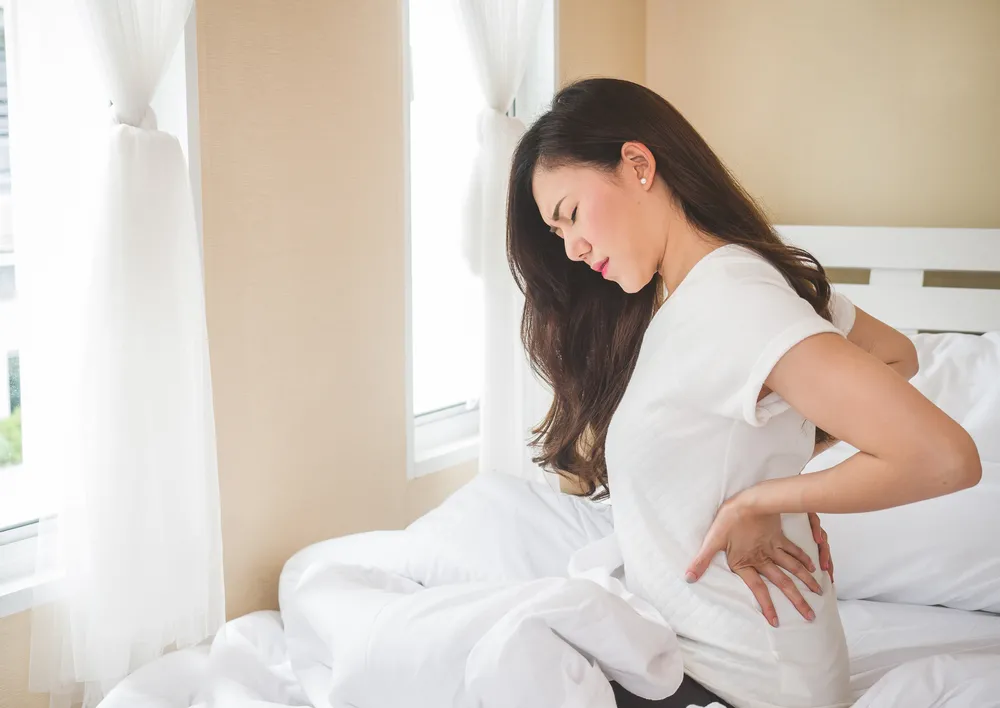
When you then lie in a position that places sustained pressure on the lumbar region or compresses one hip for several hours, you are holding the nerve under conditions that aggravate it, with no ability to shift position every few minutes as you would if you were sitting or standing.
How your mattress affects sciatica
The relationship between your mattress and your sciatica comes down to one central principle: spinal alignment during sleep. When your spine is in its natural neutral position throughout the night, the pressure on the lumbar nerve roots is minimised.
When your spine is out of alignment, either because the mattress is too soft and allows your heavier parts to sag, or because the mattress is too firm and pushes back against your body’s natural curves, that pressure increases and the sciatic nerve is more likely to be irritated.
A 2022 study published in Sleep Science and Practice examined the effect of mattress support on sleeping position and lower back pain, measuring pain on rising, stiffness, sleep quality, and mattress comfort across different mattress types. The research confirmed what spine specialists have observed clinically for years: the mattress surface has a measurable and significant effect on the degree of spinal curvature during sleep, which in turn directly affects how much pressure is placed on the structures surrounding the sciatic nerve.
Harley Street Specialist Hospital summarises the clinical picture clearly in their sleep guidance for sciatica patients: many studies have shown that a medium-firm mattress is the best option for providing adequate spinal support and relieving lower back pain. A soft mattress does not hold the spine straight, allowing it to sink to an unnatural position that increases sciatic pain. A very firm mattress, meanwhile, does not allow the hips and shoulders to sink at all, which creates its own misalignment from the opposite direction.
The pocket spring system is particularly relevant here. Because each spring in a pocket spring mattress operates independently, responding only to the weight directly above it, the mattress can contour to your body’s shape rather than apply uniform resistance across its entire surface. For a sciatica sufferer, this means the lumbar region can be supported at its natural inward curve while the hips and shoulders can settle slightly without the rest of the body following them down.
What firmness is best for sciatica
The clinical consensus, supported by multiple systematic reviews of controlled trials, is that medium-firm is the appropriate starting point for most people with sciatica. This gives enough resistance to support the lumbar curve, while allowing the hips and shoulders to drop sufficiently to keep the spine level rather than held at an angle.
However, medium-firm as a concept only makes sense once you understand that spring tension and upholstery feel are two separate things.
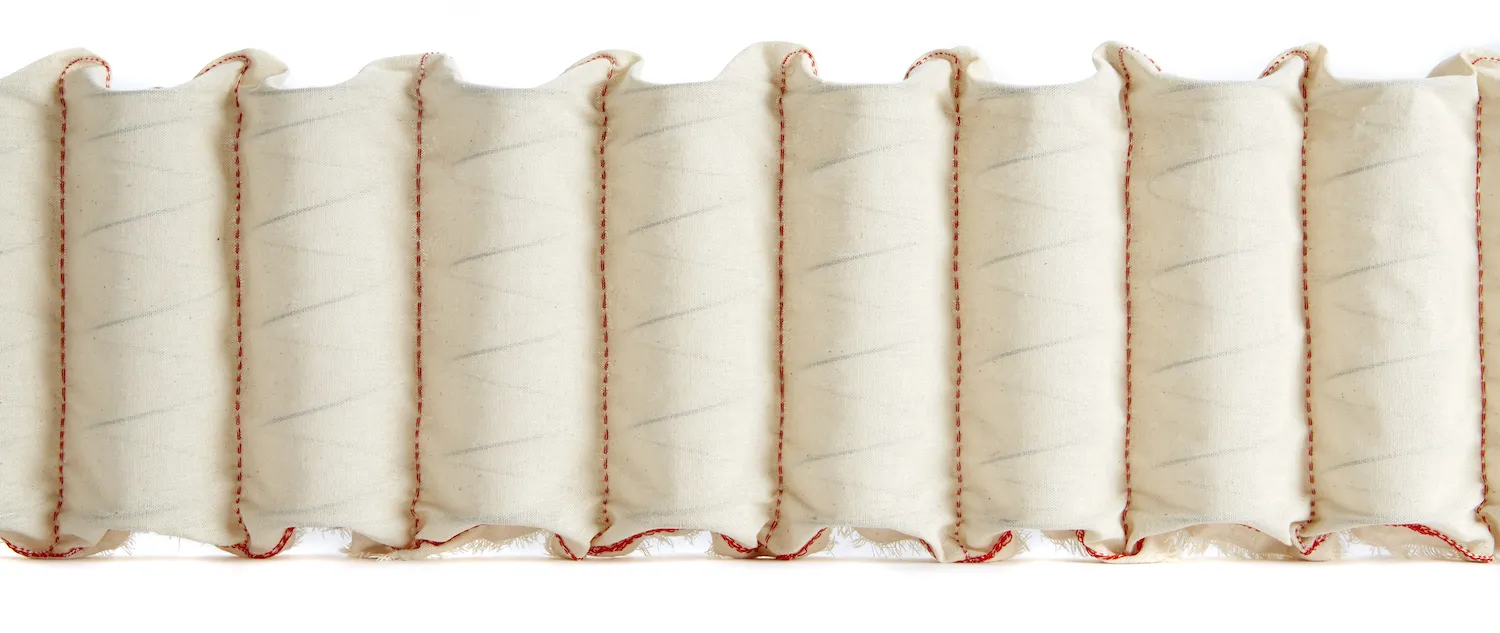
The spring tension should be matched to your body weight, not your preference. The upholstery feel on top of the spring unit is what determines whether the surface feels soft, medium or firm to you when you lie on it. Getting both right is the difference between a mattress that genuinely helps and one that feels roughly appropriate but does not perform over a full night’s sleep.
For sciatica specifically, we generally find that:
- Side sleepers with sciatica need enough give at the shoulder and hip to prevent the spine from angling laterally, which can increase pressure on the lumbar nerve roots. A medium feel with the correct spring tension for their weight is usually most effective.
- Back sleepers with sciatica need the lumbar region to be actively supported rather than left to sag into the mattress. A medium to firm upholstery feel with appropriate spring tension works best.
- Front sleepers with sciatica face the most difficult challenge because stomach sleeping naturally pushes the lumbar spine into extension, which can directly aggravate the nerve. If you sleep on your front and have sciatica, a firmer surface that prevents the abdomen from sinking is the most protective choice, though switching to side sleeping is worth attempting if the pain is severe.

Best sleeping positions for sciatica
The position you sleep in matters as much as the mattress itself. Spine specialists and clinical guidance consistently recommend three positions for sciatica sufferers, in rough order of effectiveness.
Side sleeping with a pillow between the knees is the most widely recommended position. Sleeping on your side with a pillow between the knees keeps the pelvis in a neutral position, prevents the top leg from rotating forward and pulling the lumbar spine out of alignment, and reduces the twisting pressure on the sciatic nerve roots. Where possible, sleep on the side that is not affected by your sciatica, as this places less direct pressure on the irritated nerve.
Back sleeping with a pillow under the knees is the second most commonly recommended position. Lying on your back with a pillow or rolled towel under the knees gently flexes the hips, which reduces the lumbar lordosis (the inward curve) and takes pressure off the L4-S1 area where the sciatic nerve originates. This position requires a mattress that actively supports the lower back rather than allowing it to sag, which is why mattress choice matters particularly for back sleepers with sciatica.
Stomach sleeping is best avoided when you have sciatica. Lying on your front pushes the lumbar spine into hyperextension, which compresses the posterior elements of the spine and can directly worsen sciatic nerve irritation. If you are a habitual front sleeper, placing a firm pillow under the lower abdomen can reduce the degree of lumbar extension, but switching to a side position is a more effective long-term strategy.
What to avoid in a mattress if you have sciatica
Understanding what to avoid is as useful as knowing what to look for. These are the mattress characteristics most likely to make sciatica worse rather than better.
A mattress that is too soft for your body weight. If your hips sink faster than your shoulders, your spine will angle towards the mattress rather than remaining level. For side sleepers this creates a lateral curve at the lumbar spine. For back sleepers it causes the lower back to sag. Both place sustained pressure on the sciatic nerve roots throughout the night. This is not about the mattress feeling soft to the touch. It is about whether the spring unit can support your weight correctly.
A pillow-top mattress. Pillow-top construction adds a thick sewn-on pad to one side of the mattress that compresses permanently over time and cannot be flipped. For a sciatica sufferer this creates a progressive problem: as the topper compresses unevenly, the surface becomes increasingly irregular, and spinal alignment gets worse month by month rather than better. We cover this in detail in our guide to pillow-top mattresses.
A one-sided mattress. A mattress you cannot flip will develop body impressions on one side only, gradually creating a hollowed surface that holds your body in a fixed position rather than allowing you to find the most comfortable posture. Two-sided construction means you can flip the mattress regularly and maintain an even, consistent surface throughout its lifespan. All John Ryan mattresses are two-sided.
Memory foam as the primary support layer. Memory foam conforms closely to body shape, which can feel initially comfortable, but it does so by allowing the body to sink into it. For sciatica sufferers, this deep conforming can allow the hips to drop too far, creating the lumbar misalignment that aggravates the nerve. Memory foam also retains heat, which can increase inflammation overnight. Natural fibre comfort layers are more resilient and breathable. We cover this in our pocket spring versus memory foam comparison.
Our mattress recommendations for sciatica
Every mattress below uses independently pocketed springs, is handmade here in Manchester, contains no memory foam, and is built as a two-sided mattress that can be flipped regularly. All prices are for king size. Spring tension is selected at the point of order based on your body weight, which is the single most important variable for sciatica sufferers and something we will always discuss with you before you buy.
Artisan Naturals (King Size: £2,180) — Medium feel, our most recommended for sciatica
The Artisan Naturals is the mattress we most frequently recommend to customers with sciatica, and it is our bestselling model for good reason. It uses 3,950GSM of natural upholstery including Mohair, Wool, and Cotton across multiple layers, sitting over 1,600 individually calico-encased pocket springs.
The medium feel places it squarely in the range clinical evidence identifies as most appropriate for sciatica: enough surface give to relieve pressure at the shoulder and hip for side sleepers, with a spring unit that provides meaningful lumbar support rather than allowing the lower back to sag.
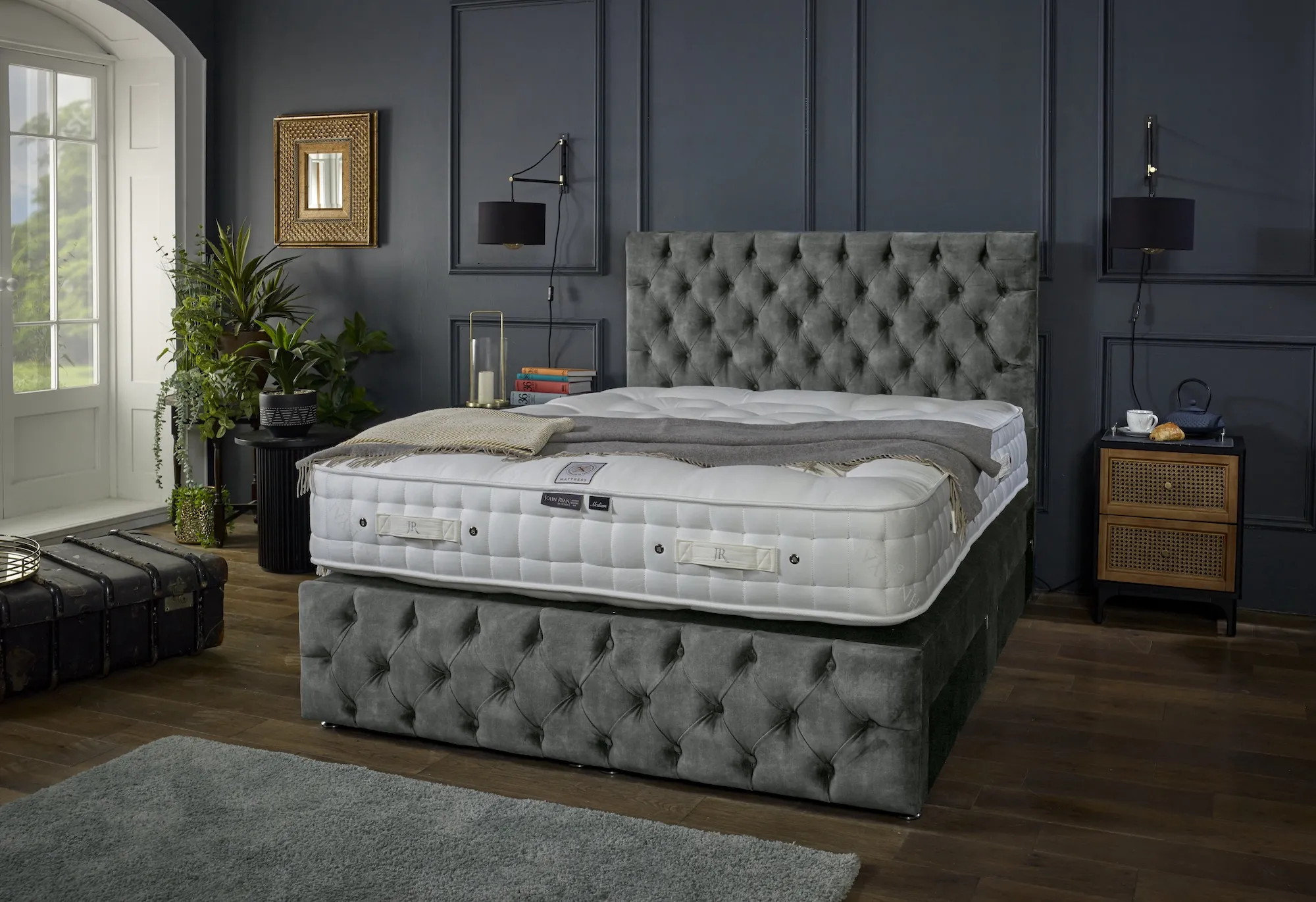
The Mohair in the comfort layer is particularly relevant for sciatica sufferers. Mohair is a resilient, naturally springy fibre that provides immediate response rather than the deep conforming of synthetic foam. It cushions pressure points without letting the body sink too far, which is precisely the balance the sciatic nerve needs. The Artisan Naturals is available in soft, medium, or firm spring tension to match your body weight, and as a zip and link if you and your partner need different tensions.
Artisan Bespoke 004 (King Size: £2,860) — Medium feel, for those needing more precise lumbar support
The Artisan Bespoke 004 is the step above the Naturals and uses 3,600GSM of 100% natural upholstery, including Horsetail and Wool, over 1,600 calico-encased pocket springs with a slightly tighter spring geometry. The tighter geometry means each spring responds more precisely to localised weight, which translates to more accurate support at the lumbar region.
Back sleepers with sciatica, in particular, tend to find this mattress very effective because the spring unit actively pushes back against the lower back rather than simply not allowing it to sink.
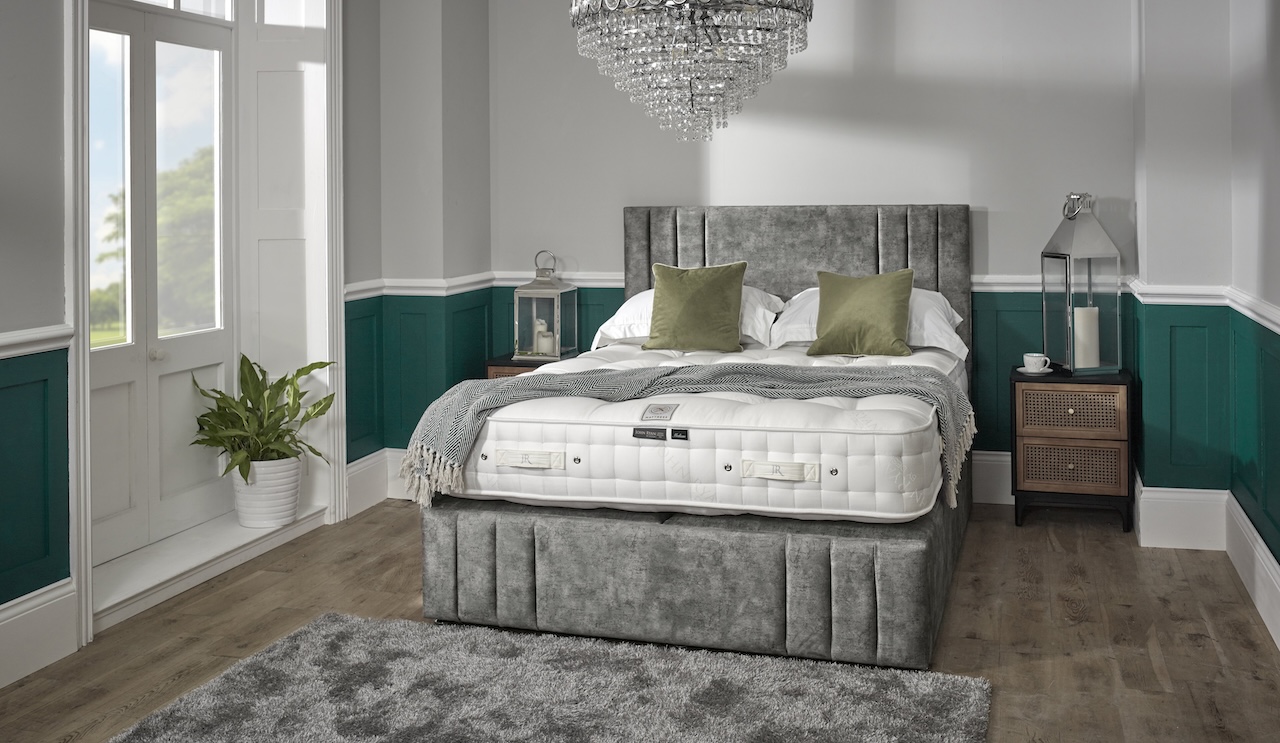 Horsetail is one of the most resilient natural fibres used in mattress upholstery, providing a firmer, crisper feel in the comfort layer that prevents the surface from conforming too deeply. For sciatica sufferers who have found medium feel mattresses marginally too soft, this is usually the right next step before moving to an outright firm specification.
Artisan Latex (King Size: £2,250) — Medium feel, for pressure relief with responsiveness
Natural Latex behaves differently to any other comfort material in mattress construction. It compresses under load and returns immediately to its original shape, providing pressure relief without the sinkage that characterises memory foam or very soft natural fibre upholstery.
For sciatica sufferers who are side sleepers and need genuine pressure relief at the hip and shoulder without sacrificing lumbar support, a Latex comfort layer is worth serious consideration.
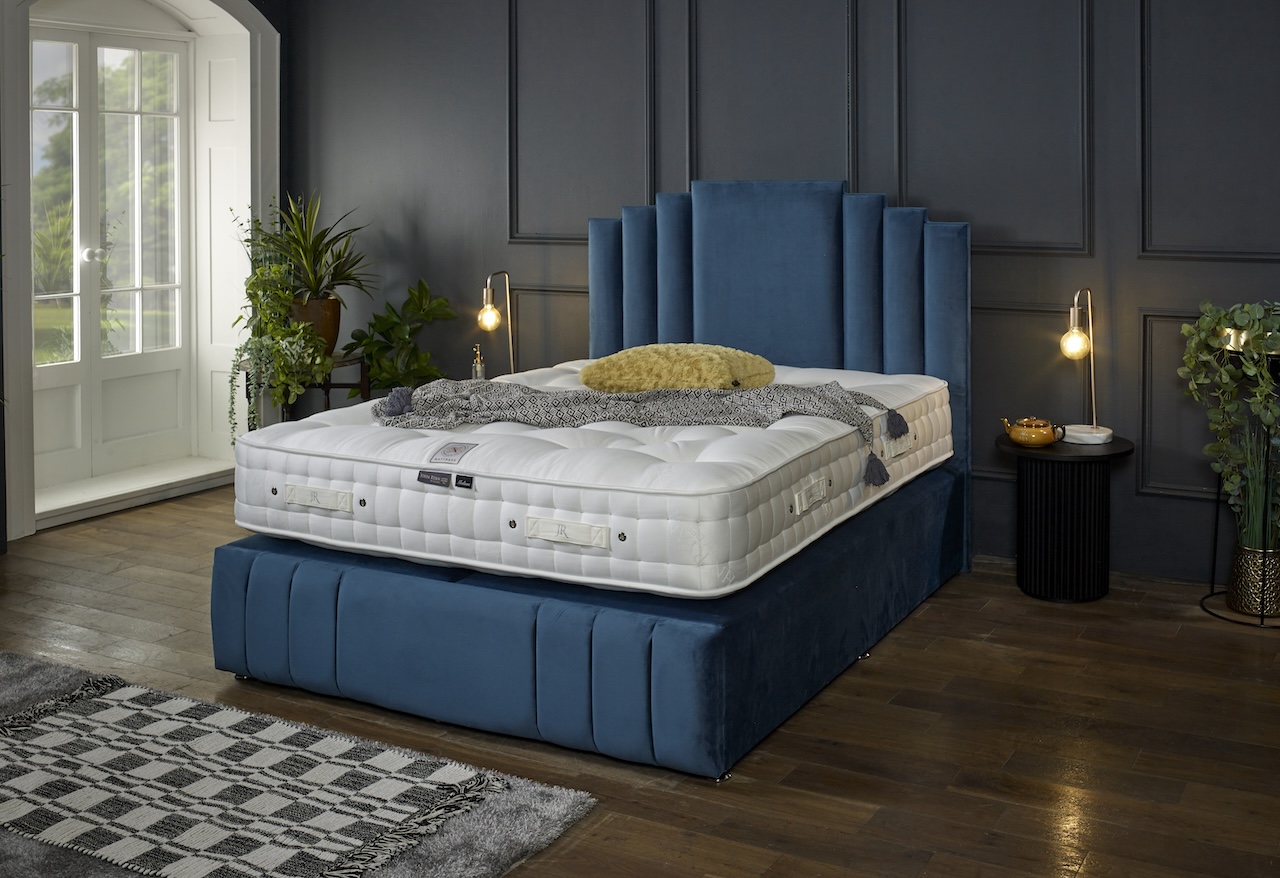 The Artisan Latex uses a layer of natural Latex within its upholstery specification over 1,600 calico-encased pocket springs. The Latex cushions the pressure points while the spring unit beneath provides the structural lumbar support. It is also naturally breathable and does not retain body heat, which is relevant given that inflammation is a component of sciatic pain. You can read more in our dedicated guide to Latex as a comfort layer.
Origins Natural Comfort (King Size: £1,300) — Medium feel, for those with a lower budget
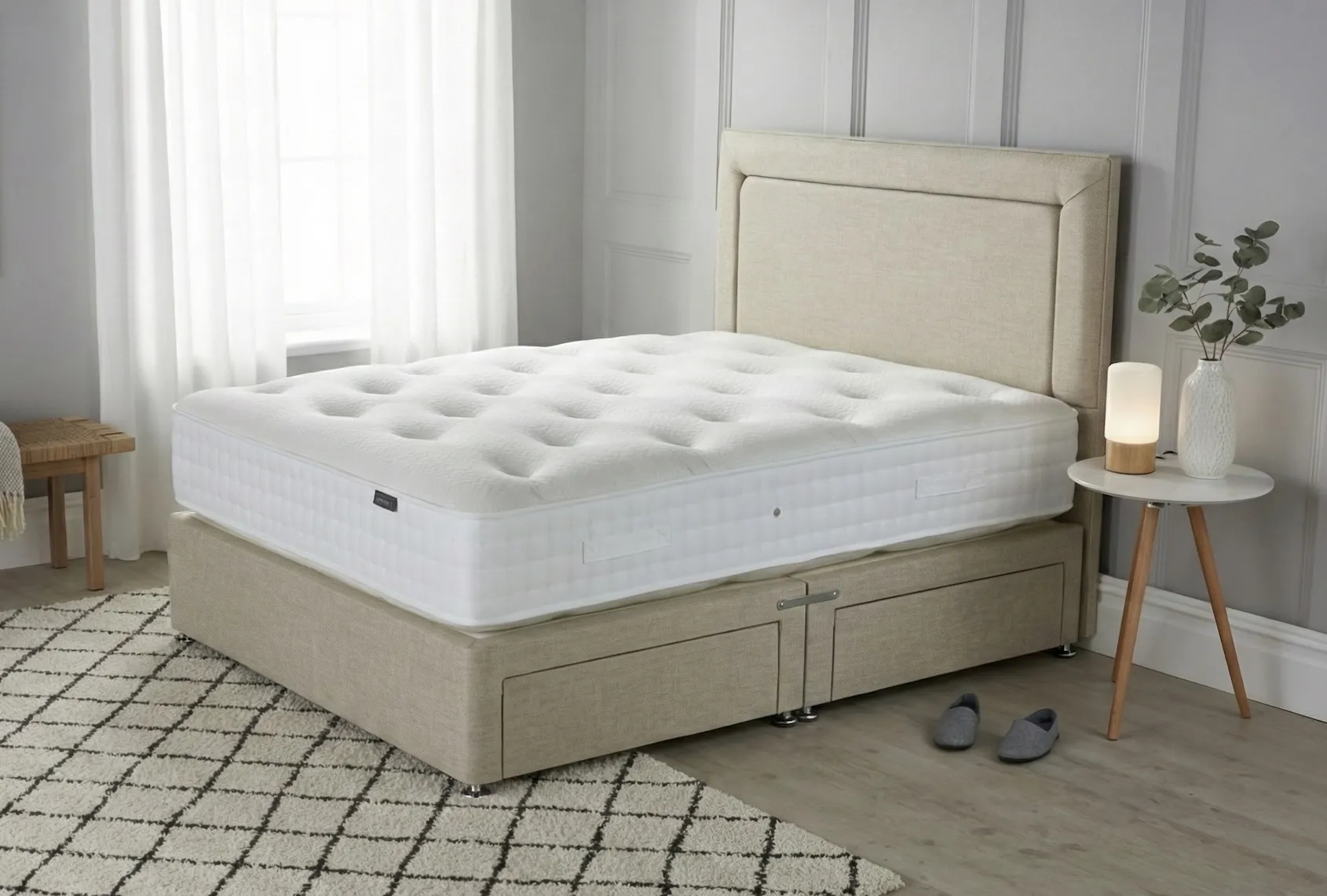
If the Artisan range is outside your budget, the Origins Natural Comfort is the most appropriate alternative for sciatica sufferers. It contains British Wool, Cotton, Cashmere and Silk over 1,000 pocket springs with a medium feel.
The natural fibre comfort layer is shallower than the Artisan models, but it follows the same principle: a resilient, breathable surface that prevents the body from sinking in, while the pocket spring unit supports the lumbar curve. It is a significantly better choice for sciatica than any foam-based mattress at the same or higher price point.
At a glance
| Mattress | Feel | King Size Price | Best For |
|---|---|---|---|
| Artisan Naturals | Medium | £2,180 | Most sciatica sufferers, side and back sleepers |
| Artisan Bespoke 004 | Medium | £2,860 | Back sleepers needing precise lumbar support |
| Artisan Latex | Medium | £2,250 | Side sleepers needing pressure relief with responsiveness |
| Origins Natural Comfort | Medium | £1,300 | Budget-conscious buyers, natural fibre entry point |
What our customers tell us
We hear from customers with sciatica regularly, and one conversation in particular stays with us because they illustrate the most common scenarios we encounter.
A customer from Cheshire contacted us after sleeping on a well-known memory foam mattress for three years. She had been diagnosed with L5-S1 sciatica following a disc herniation and had found that her pain was consistently worst on waking, improving as the morning progressed. Her physiotherapist had suggested her sleep surface might be contributing. After a conversation with our team about her weight, her sleeping position (side sleeper, predominantly on her left), and her current mattress, it became clear that the memory foam was allowing her hip to sink too deeply, pulling her lumbar spine into a lateral curve throughout the night.
She moved to an Artisan Naturals in a medium spring tension. She contacted us six weeks later to let us know that her morning pain had reduced significantly and that she was sleeping through the night for the first time in over a year. She was clear that the mattress was not a cure for her sciatica, but that removing the overnight aggravation had allowed her physiotherapy to work much more effectively.
Body weight and spring tension for sciatica sufferers
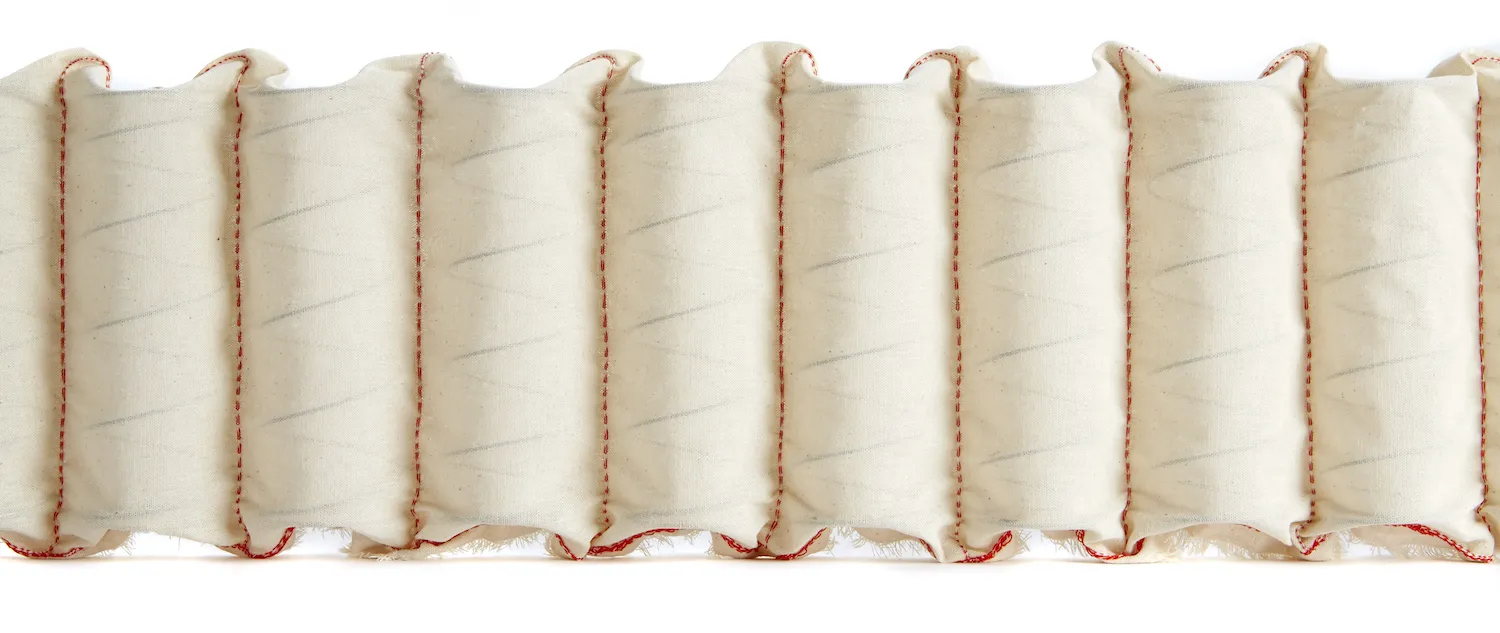
We cover this in detail in our spring tension and body weight guide, but it is worth restating here because it is particularly important for sciatica sufferers. The spring tension is the gauge of the wire used to make each pocket spring, and it determines how much weight is needed to compress the spring. Choosing the wrong tension means the spring unit is working against you, regardless of how good the mattress is in every other respect.

| Body Weight | Recommended Tension | Wire Gauge |
|---|---|---|
| Up to 10 stone (64kg) | Soft | 1.2mm |
| 10 to 16 stone (64 to 101kg) | Medium | 1.4mm |
| 16 stone and above (101kg+) | Firm | 1.6mm |
If you have sciatica and are unsure which tension is right for you, please call us on 0161 437 4419 before ordering. It is a short conversation and it removes the most common source of mattress-related disappointment for people buying to manage a specific pain condition. We would far rather spend ten minutes on the phone getting this right than have a customer receive a mattress that is not quite suited to them.
Frequently asked questions
Is a firm or soft mattress better for sciatica?
Neither extreme is appropriate. Clinical evidence consistently supports a medium-firm feel as the most beneficial for sciatica, providing enough support to maintain the lumbar curve without the rigidity that prevents the hips and shoulders from settling. The exact point within that range depends on your sleeping position and body weight. Side sleepers tend to do best at the softer end of medium. Back sleepers tend to do better at the firmer end. Your spring tension should be matched to your body weight separately from this choice.
Can a bad mattress cause sciatica?
A mattress does not cause sciatica, which originates from a physical issue in the lumbar spine such as a herniated disc or spinal stenosis. However, a mattress that places the lumbar spine in poor alignment for eight hours every night can significantly aggravate existing sciatic pain and slow recovery. The NHS recommends maintaining good sleep posture as part of sciatica management, and the mattress is the foundation of that posture.
What sleeping position is best for sciatica?
Side sleeping with a pillow between the knees is the most widely recommended position for sciatica. It keeps the pelvis neutral and prevents the lumbar spine from twisting. Back sleeping with a pillow under the knees is the second most effective option. Stomach sleeping is best avoided as it pushes the lumbar spine into extension and can directly worsen sciatic nerve compression.
How long does it take for a new mattress to help sciatica?
Most people notice a difference within two to four weeks of switching to a correctly specified mattress, though this varies depending on the severity of the condition and whether they are receiving other treatment. South Tees NHS notes that sciatica tends to improve most rapidly in the first few months. A mattress change made during this window, when the body is already in a recovery phase, is likely to have the most noticeable impact.
Should I choose a different mattress firmness if I have sciatica on one side only?
If your sciatica affects only one side, the recommendation is to sleep with the unaffected side down when lying on your side. This places less direct pressure on the irritated nerve. The firmness recommendation does not change based on which side is affected, but the pillow between the knees becomes even more important for maintaining pelvic neutrality and preventing the affected hip from rotating forward during the night.
Can a zip and link mattress help if my partner and I need different tensions?
Yes. If you and your partner have significantly different body weights, a zip and link mattress allows each half to be specified with a different spring tension. This is a genuinely practical solution that avoids the compromise of a single tension that suits neither person quite correctly. All John Ryan Artisan and Origins mattresses are available as zip and link at no additional cost over the combined price of the two halves.
Is memory foam bad for sciatica?
Memory foam is not universally bad, but its characteristics make it a poor choice for many sciatica sufferers. Its defining feature is deep conforming, which allows the body to sink into it. For a side sleeper with sciatica this can cause the hip to drop further than the shoulder, angling the lumbar spine and increasing pressure on the nerve roots. Memory foam also retains heat, which can increase inflammation. A pocket spring mattress with a natural fibre comfort layer provides the balance of support and pressure relief that clinical guidance identifies as most beneficial.
Need help choosing the right mattress for sciatica?
Choosing a mattress when you are managing sciatica is not something you should have to guess at. The wrong decision can genuinely set back your recovery, and the right one can make a measurable difference to how you feel each morning. We have been making mattresses here in Manchester for over 25 years, and our team speaks to customers managing sciatica, back pain, and other conditions every single week.
If you are unsure which mattress or spring tension is right for your body weight and sleeping position, please call us before you order. It is a short conversation and it removes the guesswork entirely.
Call us on 0161 437 4419 Monday to Friday, or use the contact form below and we will get back to you promptly.
Dreaming of the perfect nights sleep?
Ask us a question
There are over 6000 questions and answers submitted by you on all questions about mattresses and bed problems. Enter a keyword such as Vi Spring, John Lewis beds, bad back or Memory Foam and see if your question has already been answered.
If you can’t find an answer in knowledge hub, ask a new question. We aim to respond to all questions within one working day.
Newsletter
Enter your email to join our newsletter. We’ll send you occasional news and mattress expertise.