






Mattress Science
September 2026Fibreglass & Off-Gassing in Mattresses: What's Normal
2026: We’ve all seen those videos of white powder and plastic over fibreglass fibres being found in USA mattresses. I mean, let’s be honest, you don’t want to be sleeping and inhaling that during the night, do you?! This guide sets out what fibreglass in mattresses actually is, why it’s a genuine problem in some markets and barely appears in others (luckily not so much here in the UK unless you’ve imported your mattress), and what the smell is really about once you’ve unwrapped a new mattress.
We’ve also put together comparison tables showing exactly what goes into our own mattresses, since the best way to judge whether a mattress is worth trusting is to see the full ingredient list rather than take a manufacturer’s word for it.
What Is Fibreglass Doing in a Mattress in the First Place?
Every mattress in the UK (sold legally) must pass fire safety testing, and the materials used to help it pass that test vary widely among manufacturers. For most UK mattresses chemical sprays, covers, impregnanted polyester covers or more natural wool options are used frequently. However, there is a new dubious fire retardant method being used in some mattress manufacturing.
Fibreglass is one option, woven into a fire sock layer that sits just inside the outer cover, chosen because it’s cheap, heat-resistant, and works well at mass-production scale. It’s recently become a huge issue in the USA, as it’s not exactly a great material to break down into particulates. We can’t think of anything worse than lying on fibreglass and having it anywhere near your lungs. And for the record, we never have, nor ever will, use this as a fire-retardant method, especially since our entire Artisan mattress range uses our plant-based fire retardant instead! Totally natural!
When the cover stays sealed, the fibreglass generally stays where it’s meant to (though we know restless sleepers and movement could cause it to break down, and small particulates could escape and be breathed in. The problem starts if the cover is removed, washed, or torn, since fibreglass particles are fine enough to become airborne, spread through fabric and carpet, and cause real skin and respiratory irritation that can be difficult to fully clear from a room.
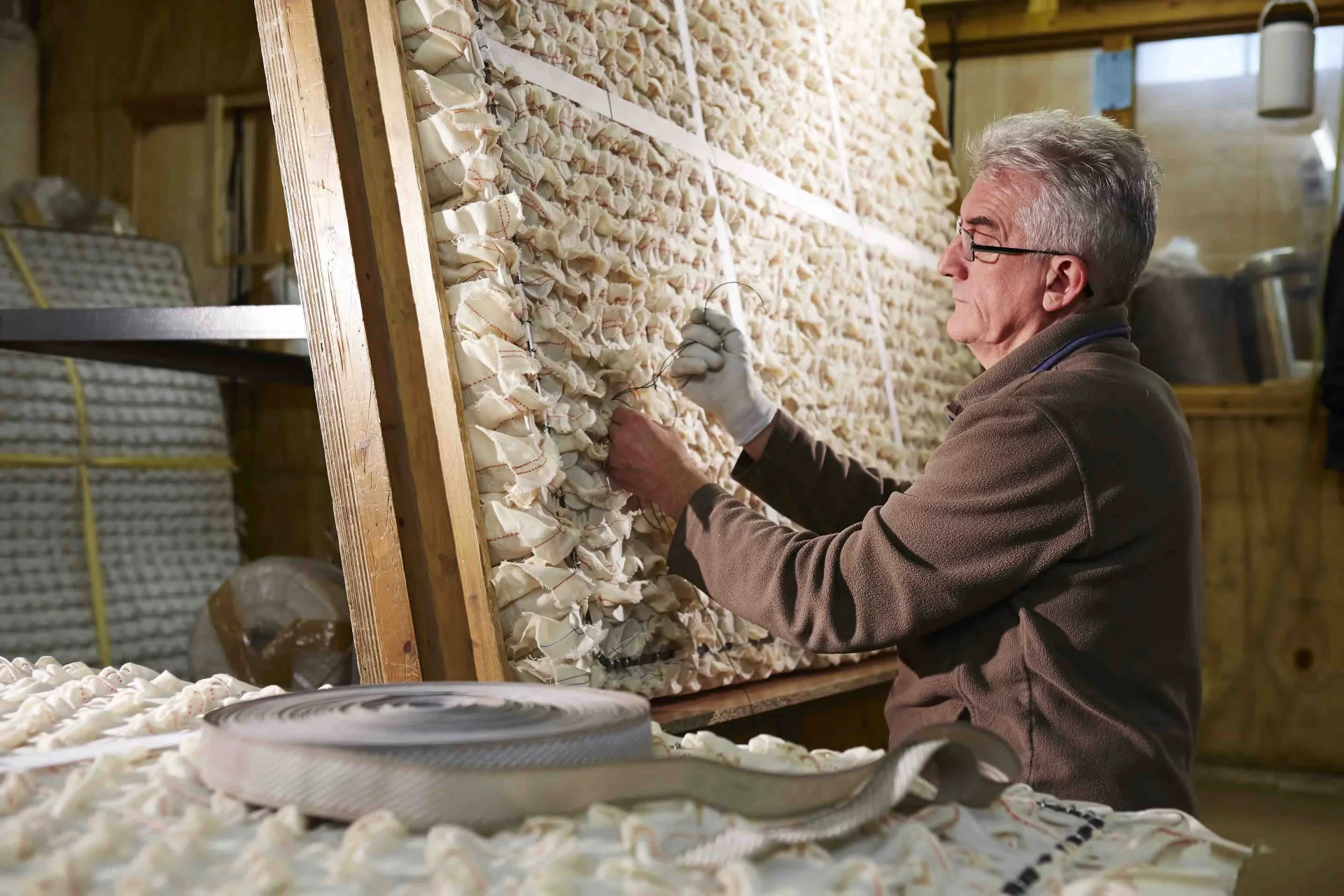 This has become a well-documented issue in the United States, where a wave of viral videos and a lawsuit against a major mattress brand brought it into the open, and where California has passed a ban on fibreglass in mattresses and furniture that comes into force from 1 January 2027.
Is This a UK Problem Too?
Less so, and it’s worth understanding why. UK mattresses have to meet the Furniture and Furnishings (Fire)(Safety) Regulations 1988, updated by amendment in 2025, which set fire performance tests a mattress has to pass, most notably a smouldering cigarette test, rather than approving a specific list of named materials.
That’s a different regulatory approach to the US, where fibreglass fire socks became a common low-cost route to passing flammability standards. The race to the bottom if you will.
In practice, fibreglass fire barriers are rare in mattresses built and sold in the UK. Manufacturers here more commonly meet the fire safety requirements with a chemically treated barrier fabric or with a natural option such as Wool, which chars rather than burns and is used precisely because it eliminates the need for a synthetic barrier layer.
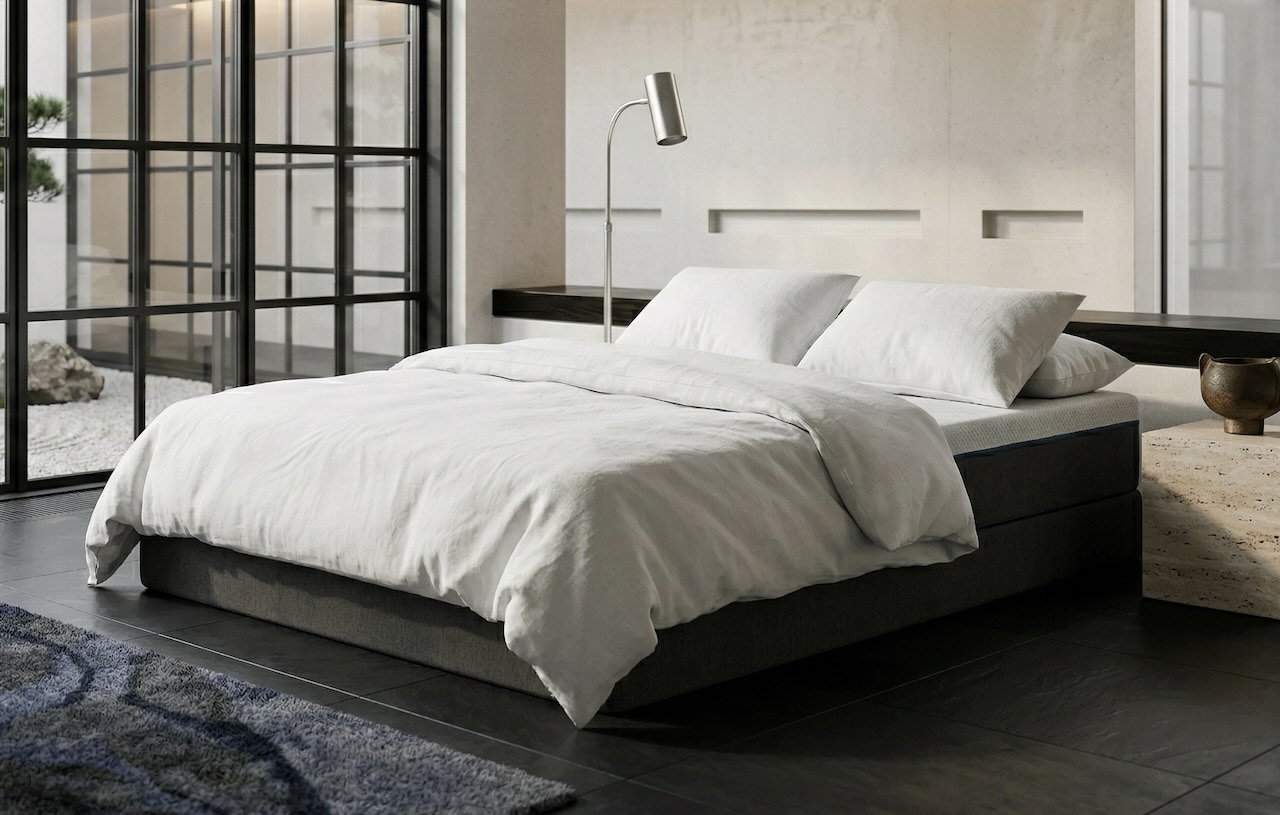
We use a plant based flame retardant treatment across our Artisan and Origins Naturals ranges for exactly this reason, to meet the legal requirement while keeping the mattress as free from synthetic chemical treatment as we reasonably can.
If you want to check a specific mattress, the safest approach is to ask the manufacturer directly what material sits behind the fire safety compliance, rather than relying on a general assumption either way. A care label that says the cover must never be removed or washed is worth taking seriously and is a reasonable prompt to ask the question.
What About the Smell When You First Unwrap a Mattress?
This is separate from fibreglass; it’s a normal, expected part of owning a new mattress. The smell itself comes from volatile organic compounds VOCs for short) evaporating out of the foam, adhesives and some synthetic fabrics used in manufacturing. The specific compounds involved can include benzene, toluene and formaldehyde, all trace amounts left over from how polyurethane foam and spray adhesives are made.
It’s worth understanding why this sounds more alarming than usual. Formaldehyde is classified as a known carcinogen, and seeing that word next to something you’re about to sleep on for eight hours a night is naturally unsettling. The context that gets lost is the dose.
Independent testing under standards such as CertiPUR-US requires formaldehyde levels below 0.1 parts per million and total VOC emissions below 0.5 parts per million after the first 24 hours, thresholds set well under the level where irritation typically starts. Most manufacturers also won’t disclose the exact chemical makeup of their foam, which is part of why the topic generates so much anxious searching online, there’s very little to actually check against.
On timing, be wary of anyone who tells you it’s simply gone within a couple of days. Emissions peak in the first 24 to 72 hours and the smell usually fades noticeably within a week of airing the room, but the underlying VOC release tapers off gradually over several weeks rather than stopping outright the moment the smell disappears.

A fading smell is a reasonable sign things are settling down, not proof that emissions have stopped entirely. If a strong smell is still present after several weeks, or it brings on headaches or eye irritation, that’s a fair reason to contact the retailer rather than assume it will keep improving on its own.
This is where natural fibre construction makes a real, practical difference rather than just a marketing one. Wool, Cotton and natural Latex don’t rely on polyurethane foam or the spray adhesives used to bond synthetic foam layers together, both major sources of VOC emission.
A mattress built from natural fillings, sewn ahand-stitchedhed together rather than glued, simply has far fewer synthetic compounds present to off-gas in the first place. It’s not that natural fibre mattresses are somehow immune to any smell at all, wool has its own faint natural scent when new, but the chemical load behind that smell is a different and much smaller thing entirely.
What’s Actually Inside a Natural Fibre Mattress
Rather than ask you to take our word for it, here’s exactly what goes into two of our best selling mattresses, layer by layer, so you can see precisely what you’d be sleeping on.
| Layer | Artisan Naturals | Origins Naturals Comfort |
|---|---|---|
| Comfort layer 1 | 1,200gsm Blended British Fleece Wool and Cotton | 600gsm Layered Cotton Rebound Pad |
| Comfort layer 2 | Hairproof Cambric Cover | 500gsm British Wool |
| Comfort layer 3 | 1,250gsm Rebound Poly Cotton | 600gsm Rebound Polycotton Pad |
| Comfort layer 4 | 1,500gsm 100% Pure Mohair | 600gsm Rebound Polycotton Pad |
| Comfort layer 5 | 250gsm Wool, Cashmere, Silk and Cotton | |
| Spring unit | 1,600 Calico encased pocket springs (49mm, 1.28mm) | 1,000 spun bond pocket springs |
| Total upholstery | 3,950gsm | 2,550gsm |
| Depth | 27 to 30cm | 30 to 33cm |
| Feel | Medium | Medium |
| Cover | Chemical free | Chemical free |
| King size price | £2,180 | £1,300 |
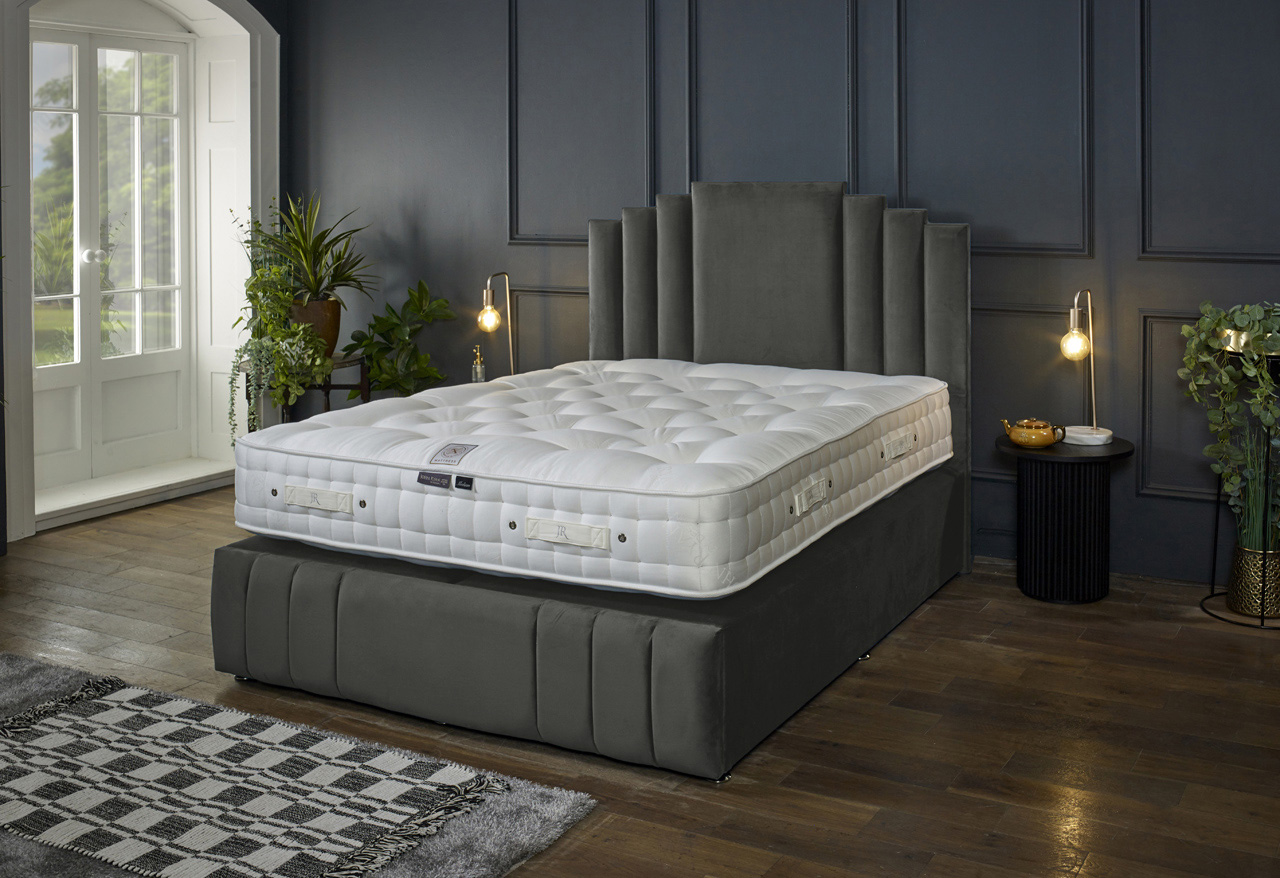
Both mattresses are two-sided and fully turnable, handmade here in the UK, with a chemical-free cover and a plant-based flame retardant treatment rather than a synthetic spray or fibreglass fire sock.
The difference between them comes down to spring count anupholsteryhe depry, which is why Artisan Naturals sits at a higher price point than Origins Naturals Comfort, not a difference in how honestly either one is built.
Bedding to Match a Natural Fibre Mattress
It’s worth thinking about what goes on top of a natural fibre mattress too, since synthetic sheets and a synthetic duvet somewhat undo the point of choosing a chemical free mattress underneath them.
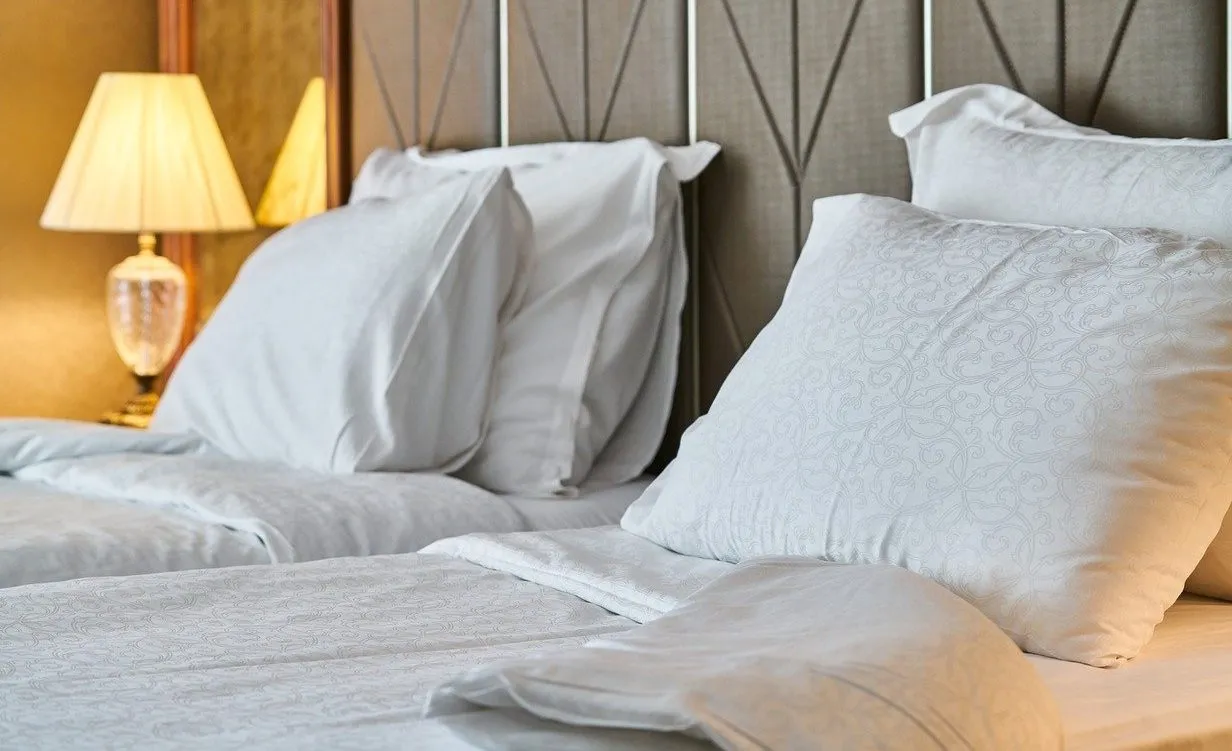
Our extra deep fitted Pima Cotton sheets are cut to fit the depth of these mattresses properly rather than pulling at the corners, and a 100% natural duck down duvet keeps the whole bed breathable rather than trapping heat the way a synthetic filling can.
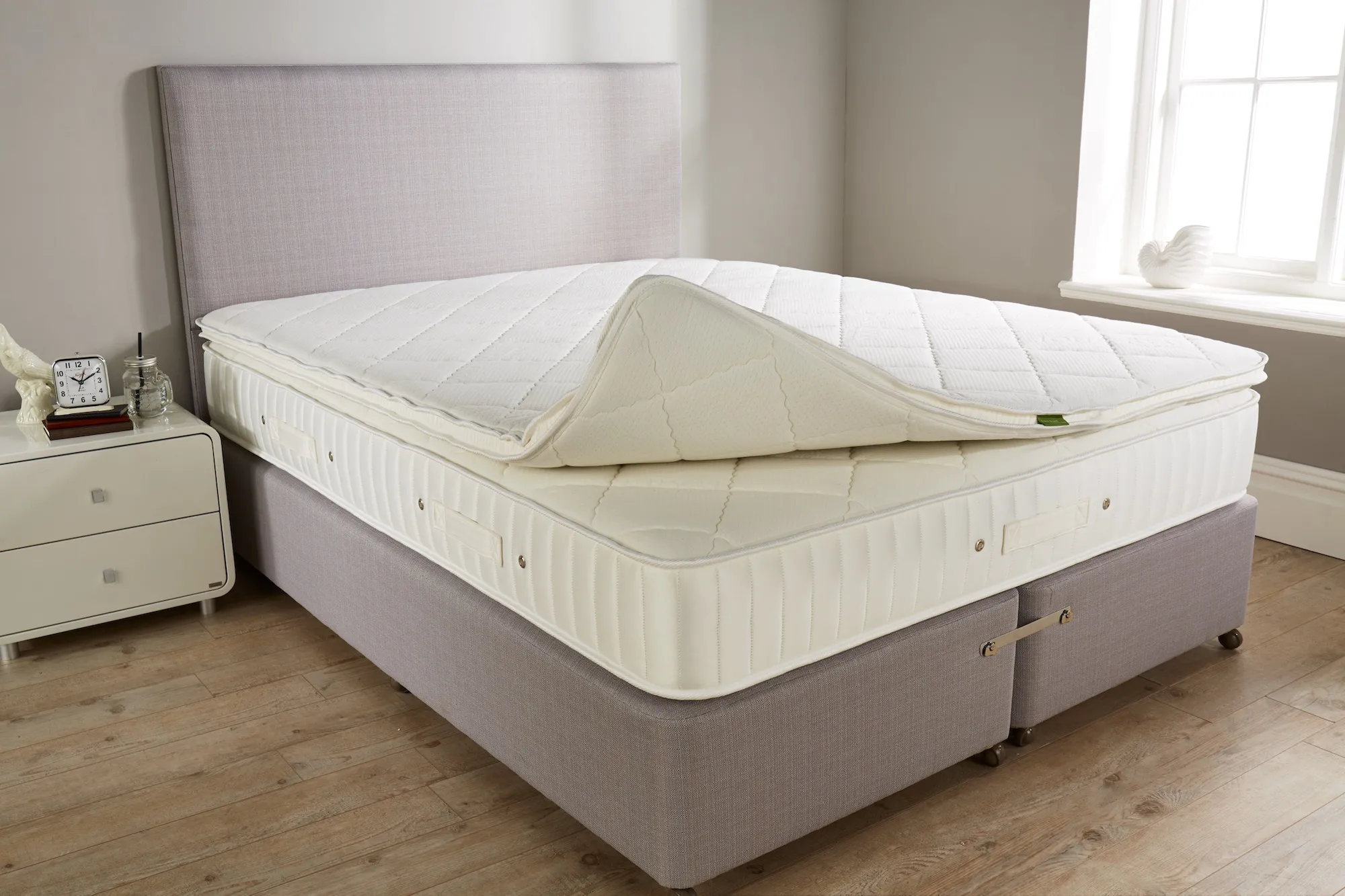
A 100% Cotton quilted mattress protector is worth adding from day one too, both to protect the investment and to avoid introducing a synthetic barrier layer directly against the mattress surface.
What to Look for If You’d Rather Avoid Both
If either fibreglass or persistent off gassing has put you off a particular mattress, the most reliable route is a natural fibre build with a disclosed fire safety treatment rather than an undisclosed synthetic barrier.
Ask what the fire barrier is made from, ask whether the cover is washable or removable, and be wary of any brand that won’t answer plainly. A two-sided, handmade mattress built from Wool, Cotton or natural Latex, with the flame retardant treatment stated clearly rather than buried in small print, is about as far from the fibreglass fire sock problem as you can get.
Frequently Asked Questions
Do UK mattresses contain fibreglass?
It’s uncommon. UK fire safety regulations test for performance rather than approving named materials, and UK manufacturers more typically use a chemically treated barrier fabric or a natural fibre such as Wool to meet the requirement.
Fibreglass fire socks are far more associated with the US market, where a number of well publicised cases have brought the issue to light.
How can I tell if my mattress has fibreglass in it?
Check the care label first, a warning never to remove or wash the cover is a reasonable prompt to ask the manufacturer directly what the fire barrier is made from.
If you’re at all unsure, contacting the retailer is more reliable than guessing from the price or the description alone.
Is the smell from a new mattress dangerous?
Not usually, though it’s worth understanding what’s actually happening rather than just accepting the smell. It comes from volatile organic compounds such as benzene, toluene and formaldehyde evaporating out of foam and adhesives, and independent standards such as CertiPUR-US cap formaldehyde and total VOC levels well below where irritation typically starts.
The smell itself usually fades within a week of airing the room, though the underlying emissions taper off more gradually over several weeks. It’s only worth treating as a genuine concern if a strong smell persists for weeks, or if it brings on symptoms such as headaches or eye irritation.
What does John Ryan use instead of fibreglass or synthetic barriers?
Our Artisan and Origins Naturals ranges use a plant based flame retardant treatment rather than a synthetic chemical spray or a fibreglass fire sock, keeping the build as close to fully natural as the legal fire safety requirements allow.
Summary
Fibreglass in mattresses is a real problem, but it’s overwhelmingly a US one, driven by cheap fire socks that UK manufacturers rarely rely on given a different regulatory approach and a stronger tradition of natural fibre construction.
The smell from a new mattress is a separate, almost always harmless process that settles within a week. If either concern has you rethinking what you sleep on, asking directly what a mattress uses to meet fire safety requirements is the most reliable way to know what you’re actually buying, and the comparison table above is exactly that answer for two of our own ranges.
Our small team is happy to answer any specific questions about how our mattresses meet fire safety requirement;, call us on 0161 437 4419.

Dreaming of the perfect nights sleep?
Ask us a question
There are over 6000 questions and answers submitted by you on all questions about mattresses and bed problems. Enter a keyword such as Vi Spring, John Lewis beds, bad back or Memory Foam and see if your question has already been answered.
If you can’t find an answer in knowledge hub, ask a new question. We aim to respond to all questions within one working day.
Newsletter
Enter your email to join our newsletter. We’ll send you occasional news and mattress expertise.