







Mattress Toppers
December 2025How to Choose the Best Mattress Topper for Your Needs & Budget
Understanding what makes a genuinely good topper, why materials matter more than marketing claims, and how to match toppers to your specific needs transforms this confusing purchase into an informed investment.
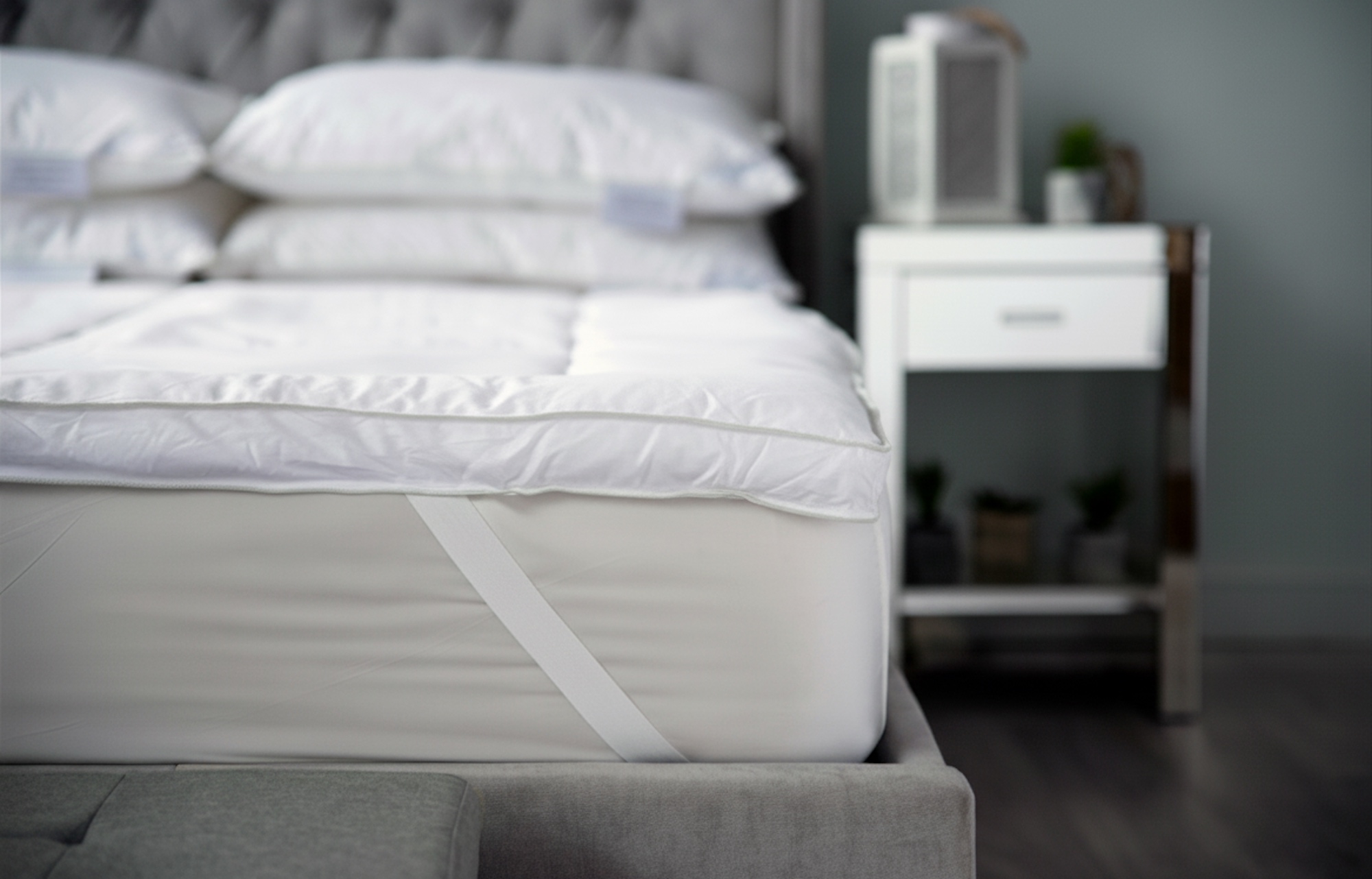
Why Mattress Toppers Exist: Understanding Their Purpose
Mattress toppers serve three distinct functions, and understanding which you need determines the type you should buy.
1. The first purpose is to add comfort to a mattress that feels too firm.
Perhaps you’ve purchased a mattress with appropriate support but find the surface too hard for comfortable sleep. A quality topper adds a cushioning layer that reduces pressure on shoulders, hips, and other contact points without compromising the underlying support structure.
2. The second purpose is to extend the mattress’s lifespan.
Your mattress represents a significant investment, often £1000 or more for quality construction. A topper acts as a sacrificial layer, absorbing the wear, body oils, sweat, and skin cells that would otherwise penetrate your mattress surface. When the topper shows wear after years of use, you replace it at far less expense than replacing the entire mattress.
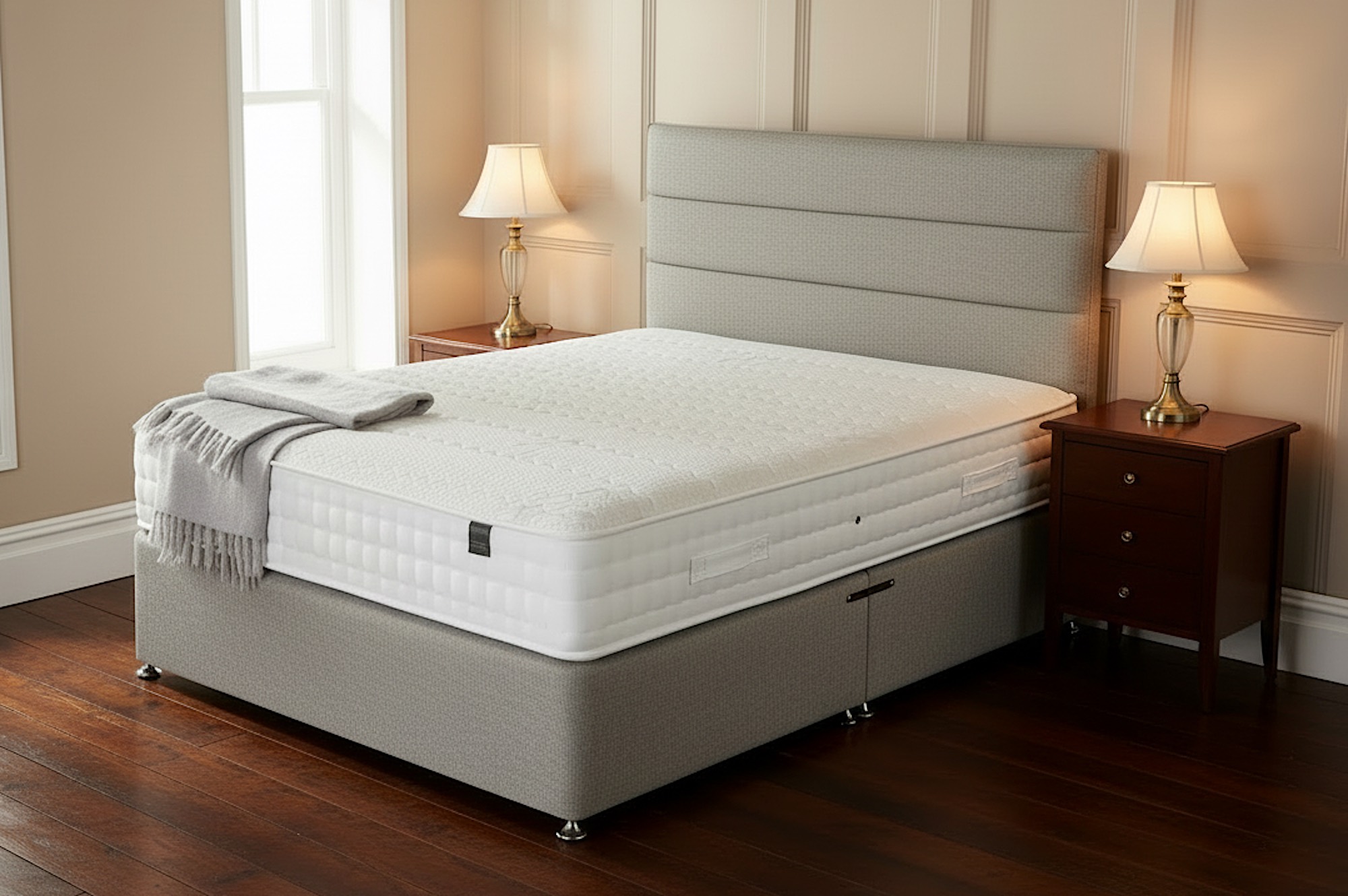
3. The third purpose is to refresh an older mattress
Usually, an old bed that has lost some loft but retains adequate support. If your mattress feels slightly compressed but isn’t sagging or causing pain, a topper can restore that “like new” feel without the expense of complete replacement.
Understanding which function you need guides material selection. Adding comfort requires different properties than extending lifespan or refreshing an older bed. The marketing materials from mass market retailers deliberately conflate these purposes, suggesting a single £40 memory foam topper solves all problems. It doesn’t.
The Memory Foam Problem: Heat Retention, Restricted Movement & Environmental Damage
Memory foam toppers dominate retail displays and online marketplaces because they offer high profit margins whilst appearing innovative and modern. Understanding their fundamental limitations explains why natural alternatives prove superior for most sleepers.
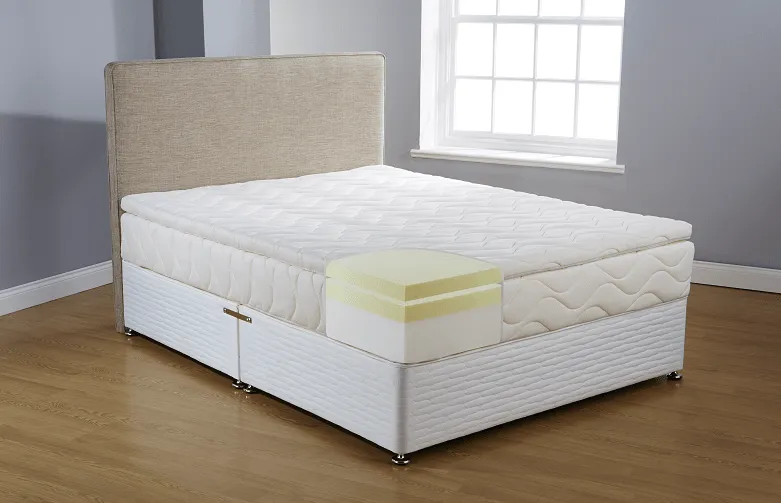
A) Heat Retention: The Science Behind the Sweat
Memory foam’s dense cellular structure traps heat by design. The material works by softening in response to body heat, allowing it to mould around your contours. This temperature sensitivity, marketed as a feature, actually creates the primary problem: once warm, the foam holds that heat against your body throughout the night.
Research from textile specialists demonstrates that traditional memory foam has significantly reduced breathability compared to natural materials. The tightly packed cell structure prevents air circulation, meaning the approximately 200ml of moisture your body releases during sleep has nowhere to go. This moisture becomes trapped between you and the foam surface, creating that clammy, sticky sensation that disrupts sleep cycles.
Manufacturers attempt to address this with “cooling gel” infusions, but these represent temporary delays rather than solutions. The gel initially feels cooler to touch, but after sustained contact with your 37°C body temperature, it simply accumulates the same heat. You’re still sleeping on a heat trap; it just takes slightly longer to become uncomfortable.
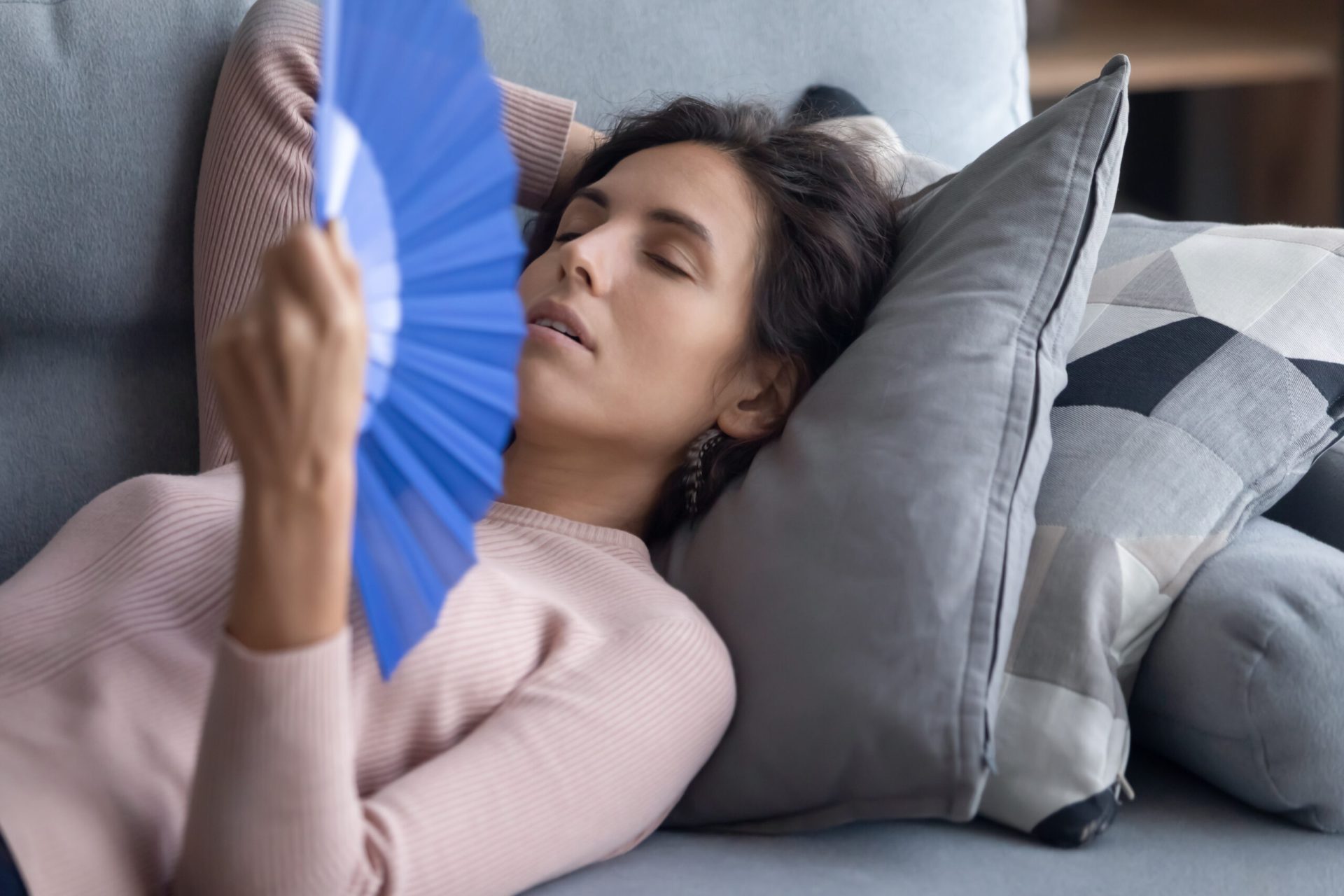
The problem compounds in UK bedrooms during the summer months or for anyone who naturally sleeps warm. Hot sleepers, those experiencing night sweats, and women going through menopause find memory foam toppers exacerbate rather than solve temperature issues.
Yet retailers continue pushing these products because profit margins exceed those of natural alternatives requiring genuine quality materials.
B) Restricted Movement and the “Stuck” Sensation
Memory foam’s slow response time, whilst marketed as “contouring support,” creates genuine practical problems during sleep. When you need to change position, memory foam resists movement rather than facilitating it. The material takes time to reform after compression, meaning you must physically push yourself out of the body impression before repositioning.

Natural latex and wool toppers respond instantly to movement. When you shift position, these materials spring back immediately, allowing easy repositioning without the sensation of being trapped. This instant response proves particularly important for combination sleepers who change positions multiple times during the night, or for anyone with mobility concerns who needs to move freely.
The restriction memory foam creates doesn’t just feel uncomfortable; it potentially affects sleep quality by making natural position changes more effortful. Research indicates we change position numerous times during the night to prevent pressure point discomfort and maintain circulation. Materials that resist this natural movement may contribute to disrupted sleep even when you don’t consciously wake.
C) Environmental Impact: The Petroleum Problem
Memory foam production relies entirely on petroleum-derived polyurethane, a non-renewable resource with significant environmental costs. Studies examining the lifecycle of memory foam products reveal global warming potentials of 3 to 3.5 kg CO2 equivalent per kilogram of foam produced, with manufacturing and chemical processing accounting for 93% of emissions.
The production process releases volatile organic compounds (VOCs) including formaldehyde, benzene, and toluene into the atmosphere. Research published in environmental journals found one memory foam sample emitted 61 different VOCs, including known carcinogens. Whilst these emissions decrease over time through “off-gassing,” some compounds continue releasing for months or even years after purchase.
The end-of-life problems prove equally concerning. Conventional memory foam doesn’t biodegrade, persisting in landfills for potentially 1000 years. Unlike natural materials that decompose and return nutrients to soil, petroleum-based foams simply accumulate as permanent waste. Current UK recycling infrastructure handles very few memory foam products, meaning most end up in landfill or, worse, illegally dumped.
Every washing cycle releases microplastics into water systems. As synthetic foam breaks down through use and cleaning, tiny plastic particles shed into drainage, eventually contaminating marine environments. Research from Plymouth University found each wash cycle can release over 500,000 plastic fibres into the environment. These microplastics have been discovered in over 100 marine species, from zooplankton to whales, carrying toxic pollutants that bioaccumulate through food chains.
D) Rapid Deterioration and False Economy
Memory foam toppers typically last 2-4 years before compression and breakdown necessitate replacement. The foam loses its ability to spring back, developing permanent body impressions that negate the comfort benefits. Lower density foams, common in budget options, deteriorate even faster, sometimes within 6-12 months.
Compare this to quality natural fibre or latex toppers lasting 5-10 years or more with proper care. The apparent savings from a £50 memory foam topper evaporate when you’re replacing it every two years, whilst a £450 latex topper lasting a decade costs less annually and provides superior performance throughout its lifespan.
Natural Latex: The Premium Performance Alternative
Natural latex represents the gold standard for pressure-relieving toppers that maintain breathability and responsiveness. Understanding what makes latex exceptional helps justify the higher initial investment.

i) What Natural Latex Actually Is
Natural latex derives from the sap of rubber trees (Hevea brasiliensis), making it genuinely renewable rather than petroleum-based. The liquid sap is collected, processed using either Dunlop or Talalay methods, then formed into foam structures with remarkable properties. This isn’t synthetic latex (made from petrochemicals) or blended latex (combining natural and synthetic), but 100% natural material with fundamentally different characteristics from artificial alternatives.
ii) The Breathability Advantage
Natural latex features an interconnected open-cell structure that allows air circulation throughout the material. Unlike memory foam’s closed cells that trap heat, latex cells connect to each other, permitting airflow that dissipates heat and moisture. This explains why latex toppers sleep significantly cooler than memory foam despite providing similar pressure relief.
The cellular structure also means latex doesn’t rely on your body heat to soften. It responds instantly to pressure through compression rather than temperature-dependent phase changes. You get the contouring comfort without the heat accumulation that makes memory foam uncomfortable for warm sleepers.
Research comparing temperature regulation across foam types consistently demonstrates that natural latex maintains lower surface temperatures than memory foam. For UK sleepers dealing with variable bedroom temperatures throughout seasons, this breathability proves invaluable.
iii) Durability and Longevity
Quality natural latex toppers maintain their properties for 10-15 years with proper care. The material doesn’t break down like synthetic foams; it retains elasticity, support, and comfort characteristics throughout its lifespan. This exceptional durability comes from latex’s natural resilience and the manufacturing processes that cross-link the rubber particles into stable structures.
The initial higher cost (our 100% Natural Latex Topper starts at £450) reflects genuine material quality rather than marketing premium. When you divide that cost across a decade of use, the annual expense proves lower than replacing budget synthetic toppers every 2-3 years. More importantly, you enjoy consistent superior performance rather than gradually deteriorating comfort.
iv) Hypoallergenic and Chemical-Free
Natural latex is inherently hypoallergenic without requiring chemical treatments. The material doesn’t provide the environment dust mites need to thrive (they require humidity and organic matter), meaning latex toppers naturally resist these common allergens. This contrasts sharply with memory foam, which can harbour dust mites despite marketing claims about hypoallergenic properties.
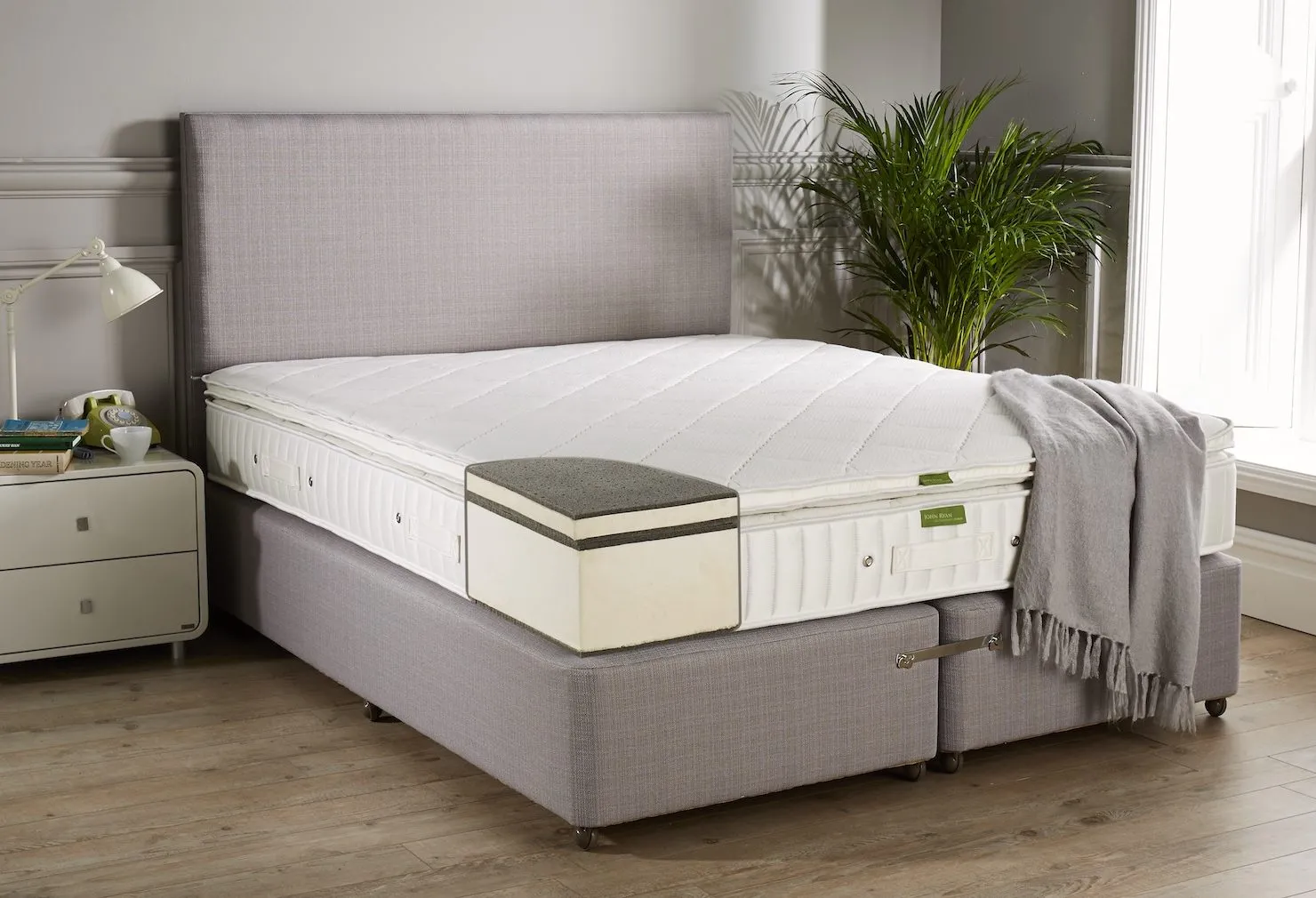
Our latex toppers use graphite latex layers to meet fire retardancy regulations rather than chemical flame retardants. This means no toxic chemicals off-gassing into your sleeping environment, unlike many synthetic alternatives treated with brominated flame retardants linked to health concerns.
The John Ryan 100% Natural Latex Topper
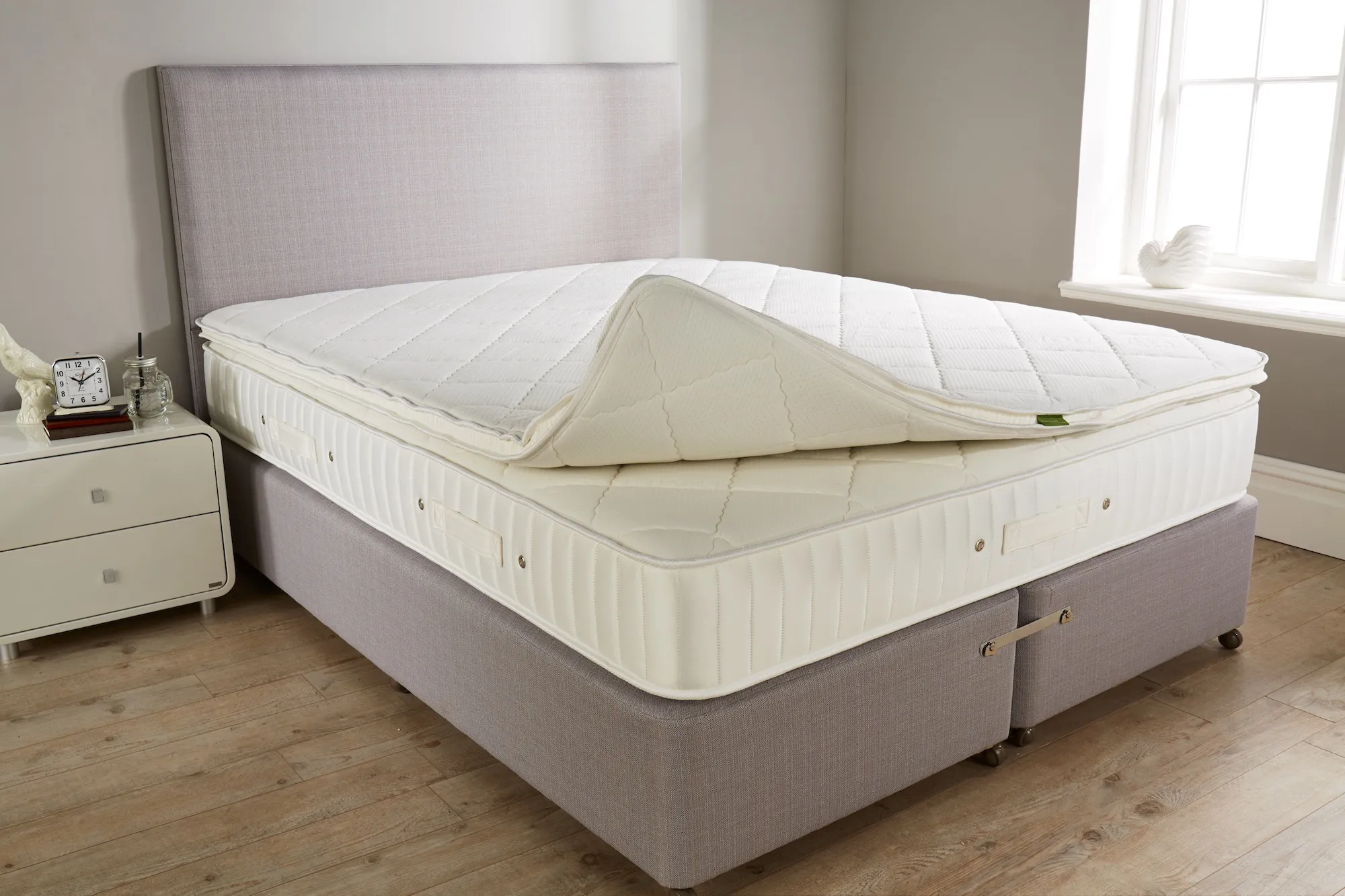
Our premium topper features 5cm of 100% natural Dunlop latex at 70kg density, providing plush yet firm comfort that moulds to your body whilst remaining supportive. The construction includes 1cm graphite latex layers on either side for fire retardancy compliance, and the entire topper is fully turnable to maximise longevity and reduce compression.
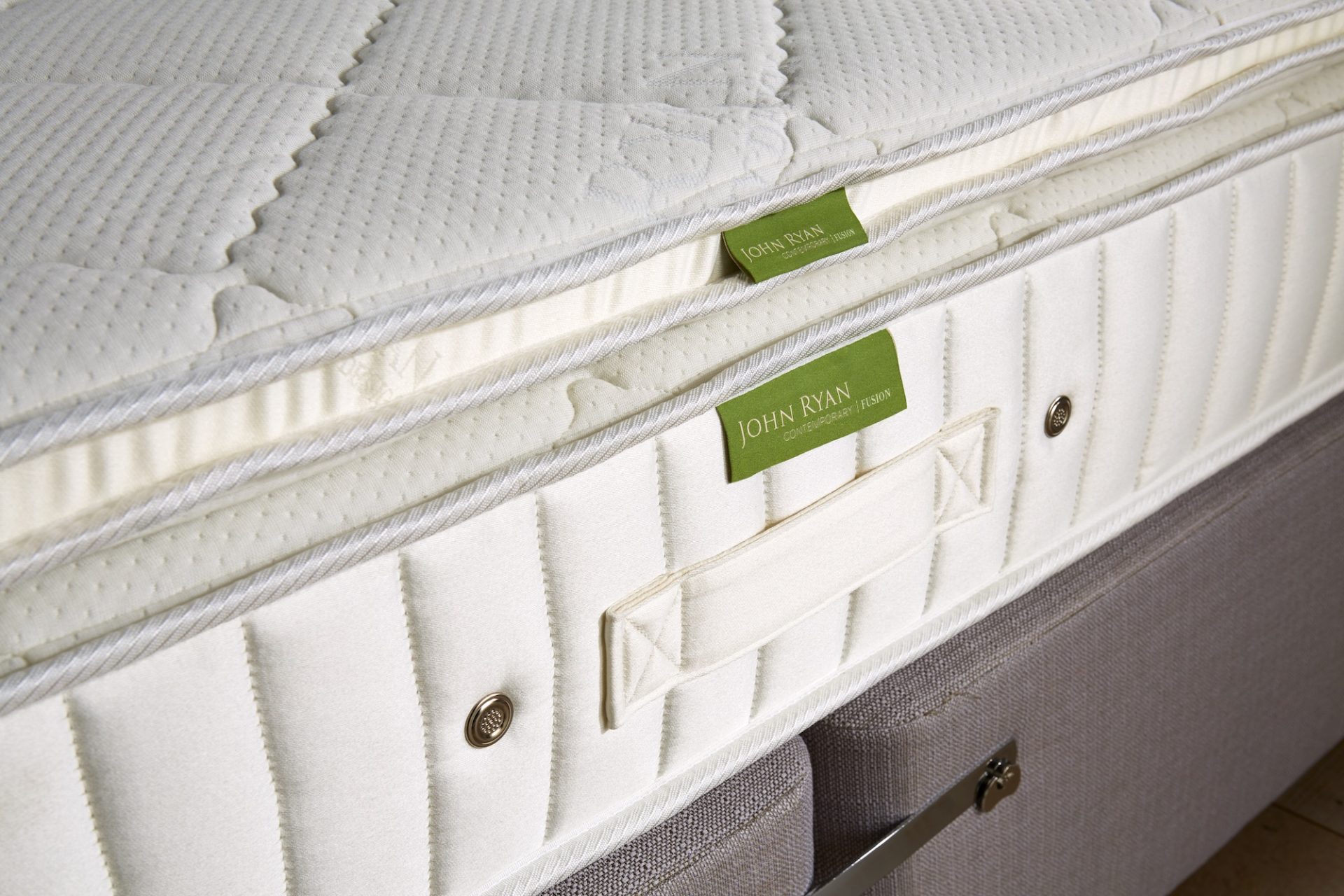
The tape-edged construction mirrors quality mattress finishing, ensuring the topper maintains its shape and edges over years of use. This attention to detail costs more to manufacture but prevents the edge collapse and deformation common in cheaper toppers using simple covers.
The 70kg density represents the optimal balance for topper applications. Softer latex (lower density) feels initially luxurious but compresses more quickly and provides less support. Firmer latex (higher density) offers maximum support but feels too hard for topper comfort purposes. Our 70kg density provides that sweet spot where pressure relief and support coexist.
Hybrid Foam Alternatives: Laygel and Coolblue
For customers seeking pressure relief without natural latex investment, our hybrid foam toppers offer middle-ground solutions that significantly outperform memory foam whilst remaining more affordable than 100% natural latex.
Laygel Hybrid Topper: Gel-Infused Comfort
The Laygel topper incorporates gel throughout the foam structure, providing super-soft support that’s notably less heat-retentive than traditional memory foam. The gel particles help dissipate heat more effectively than standard memory foam, whilst maintaining the contouring comfort people seek.
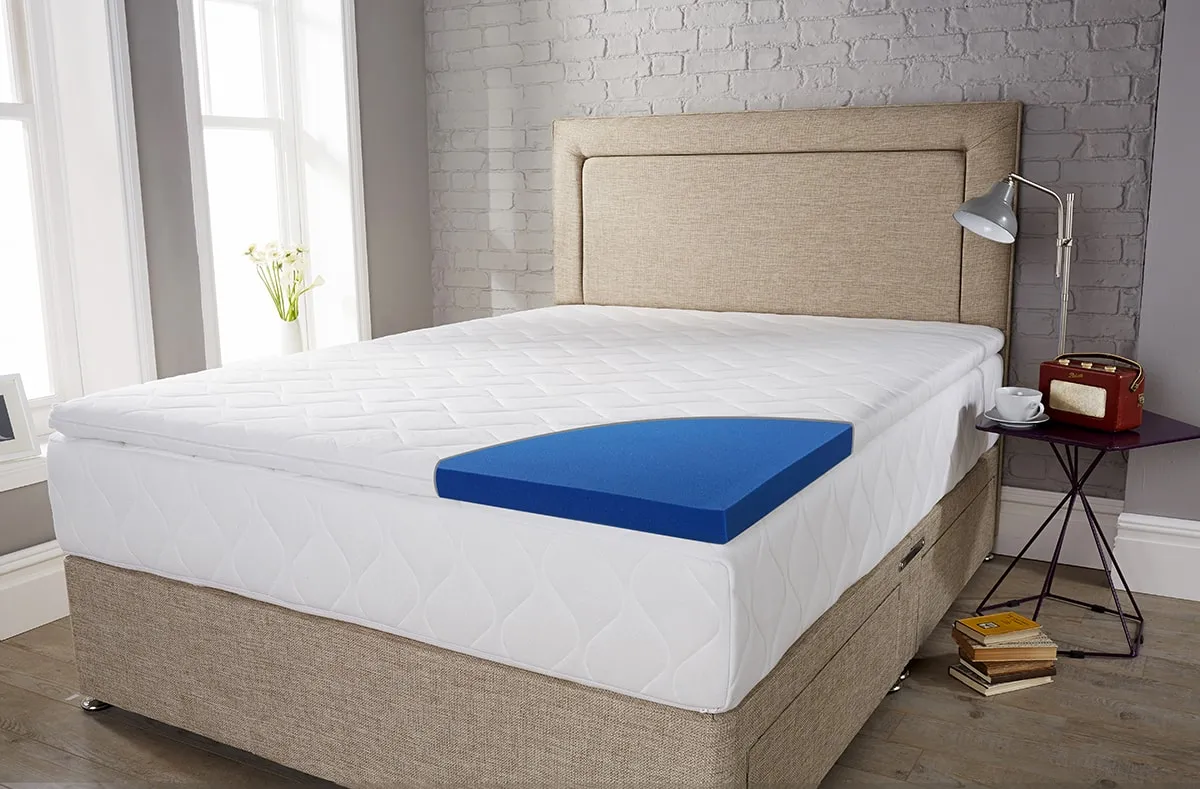
Starting from £240, Laygel represents accessible pressure relief for those unable or unwilling to invest in natural latex. The gel infusion genuinely improves temperature regulation compared to standard memory foam, though it cannot match natural latex’s breathability. For budget-conscious customers who primarily sleep cool and want pressure relief without premium pricing, Laygel provides a reasonable compromise.
The topper works particularly well for lighter-weight sleepers who don’t generate as much body heat, or for those who use toppers primarily in cooler months. It’s worth noting that whilst Laygel improves upon memory foam, it remains a synthetic petroleum-based product with associated environmental concerns.
Coolblue Hybrid Topper: Firm Pressure Relief
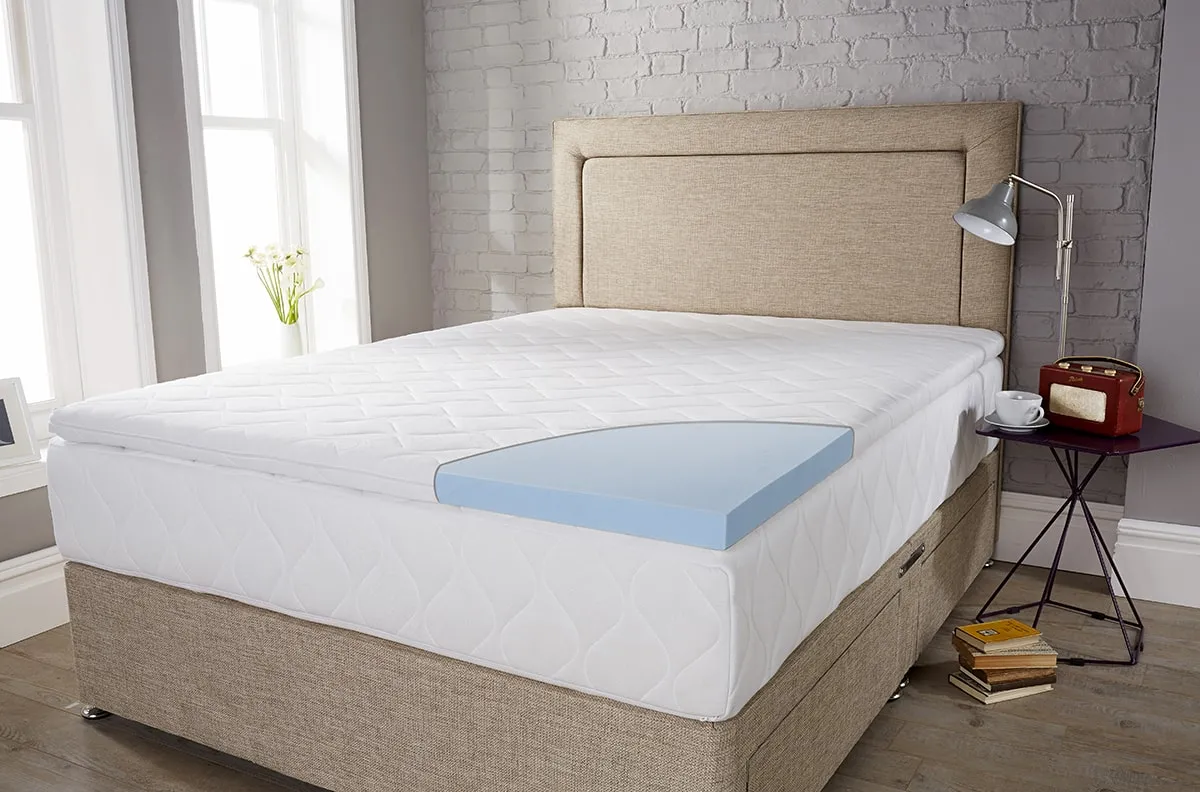
Our Coolblue option comes in 70kg density like our latex topper, providing plush yet firm comfort that’s fully turnable for extended longevity. Starting from £285, Coolblue offers firmer support than Laygel whilst maintaining pressure-relieving properties.
This topper suits sleepers who want the contouring benefits of foam toppers but prefer firmer support rather than the deep sink-in sensation memory foam provides. The 70kg density ensures the topper maintains its shape and support characteristics longer than lower density alternatives.
Premium Synthetic Construction: Engineered Comfort Solutions
Alongside our latex and foam options, we’ve developed three toppers that demonstrate what’s possible when both natural fibre and synthetic materials are properly constructed. These aren’t the thin, quickly-flattening polyester toppers you’ll find everywhere else—we’ve applied the same manufacturing standards we use across our entire range to create synthetic toppers that actually perform.
Synthetic materials offer particular advantages in specific situations. They’re hypoallergenic by nature, making them ideal for allergy sufferers who react to natural fibres. They’re also easier to care for, with straightforward washing requirements compared to the specialist cleaning some natural materials demand. For those seeking immediate plushness or advanced temperature technologies at accessible price points, modern synthetic construction delivers genuine comfort improvements to your existing mattress.
Silk Blend Topper: Natural Benefits with Synthetic Support
Our silk-blend topper combines 20% natural Mulberry silk with 80% conjugated polyester, creating a hybrid that captures some natural material benefits whilst remaining affordable. Priced from £155 to £275, this topper offers a middle ground between fully synthetic and fully natural options.
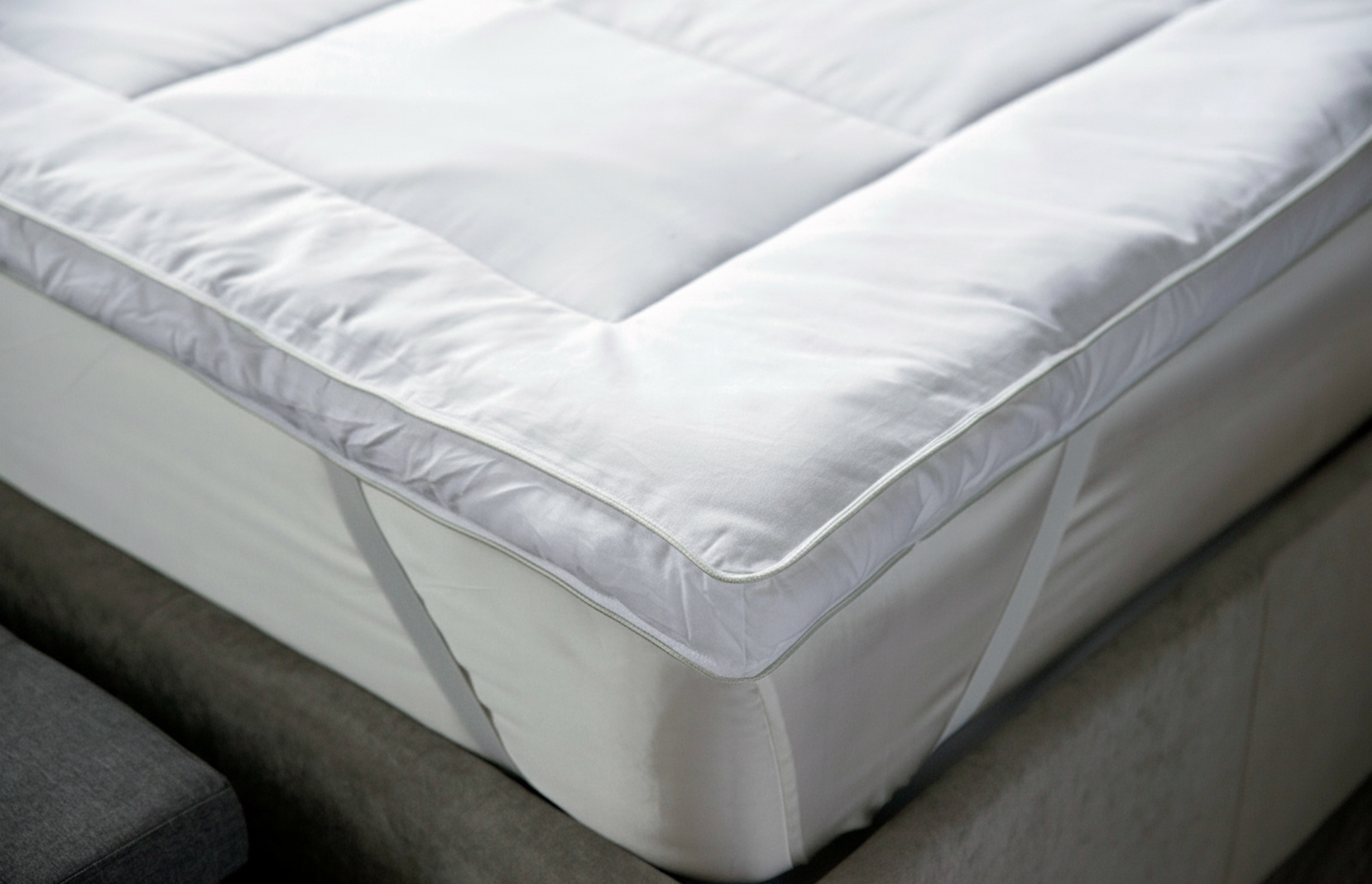
The natural silk component provides genuine benefits beyond marketing claims. Silk’s natural sericin protein actively repels dust mites whilst resisting mould and mildew growth. This creates a more hygienic sleeping surface than pure synthetic alternatives without requiring chemical treatments. The silk fibres also contribute to temperature regulation, though the 80% polyester content limits this benefit compared to 100% natural options.
The conjugated (twisted) polyester fibres provide greater resilience and bounce than standard polyester. This treatment improves the topper’s ability to spring back after compression, extending its lifespan beyond that of basic synthetic alternatives. The approximately 6cm depth provides meaningful comfort enhancement, whilst the 100% cotton soft twill casing feels pleasant against the skin and breathes better than synthetic covers.
The medium to firm support level with luxurious surface softness suits those wanting substantial cushioning without excessive sink-in sensation. Four corner elastic straps secure the topper to mattresses up to 15 inches deep, and the silk blend offers decent temperature regulation, performing reasonably warm in winter and acceptably cool in summer.
Microfibre Topper: Maximum Budget Comfort
Priced from £75 to £120, our microfibre topper represents the most accessible option for customers needing immediate comfort improvement on strict budgets. We include this knowing it embodies everything we’ve criticised about synthetic bedding, but recognising that not everyone can immediately invest £450 in natural latex.
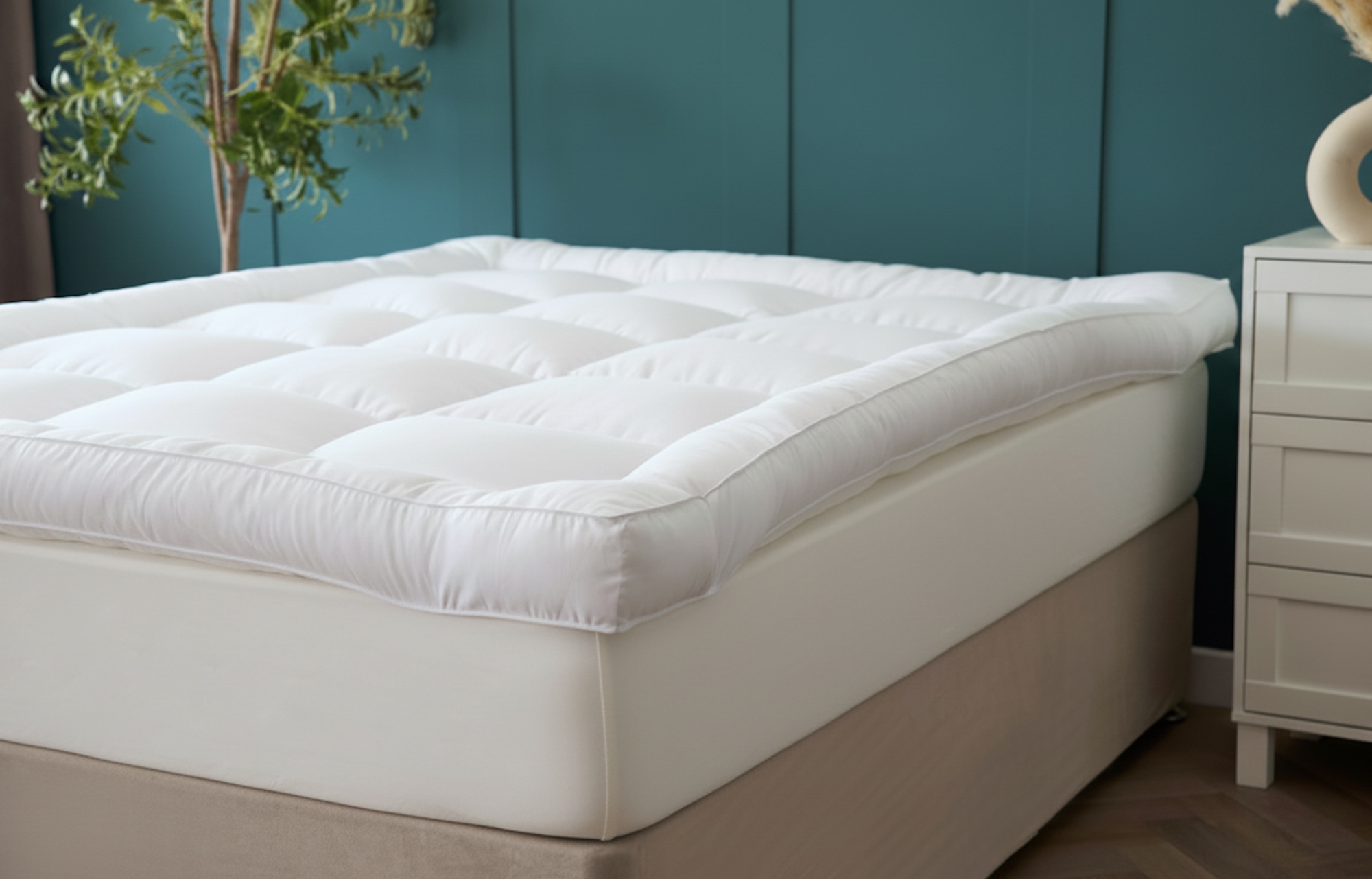
The 1200gsm fill weight provides generous filling for substantial plumpness, creating that cloud-like softness many customers seek. The 10cm gusset depth (approximately 4 inches) offers significant cushioning, making this one of our deeper toppers. The hypoallergenic microfibre resists allergens better than untreated synthetics, though it cannot match natural materials’ inherent resistance.
Practical features include elasticated corner straps for secure fitting and machine washability for easy care. The smooth microfibre casing with piped edging provides durability and presentable appearance at this price point.
Dual Layer Polyester Topper: Engineered Comfort
Our dual-layer polyester topper employs clever construction to maximise comfort from synthetic materials. The two-layer design separates a supportive base from a comfort top, with polyester cluster ball fibre engineered to mimic down’s soft feel. Priced from £95 to £155, this sits between our basic microfibre and silk blend options.
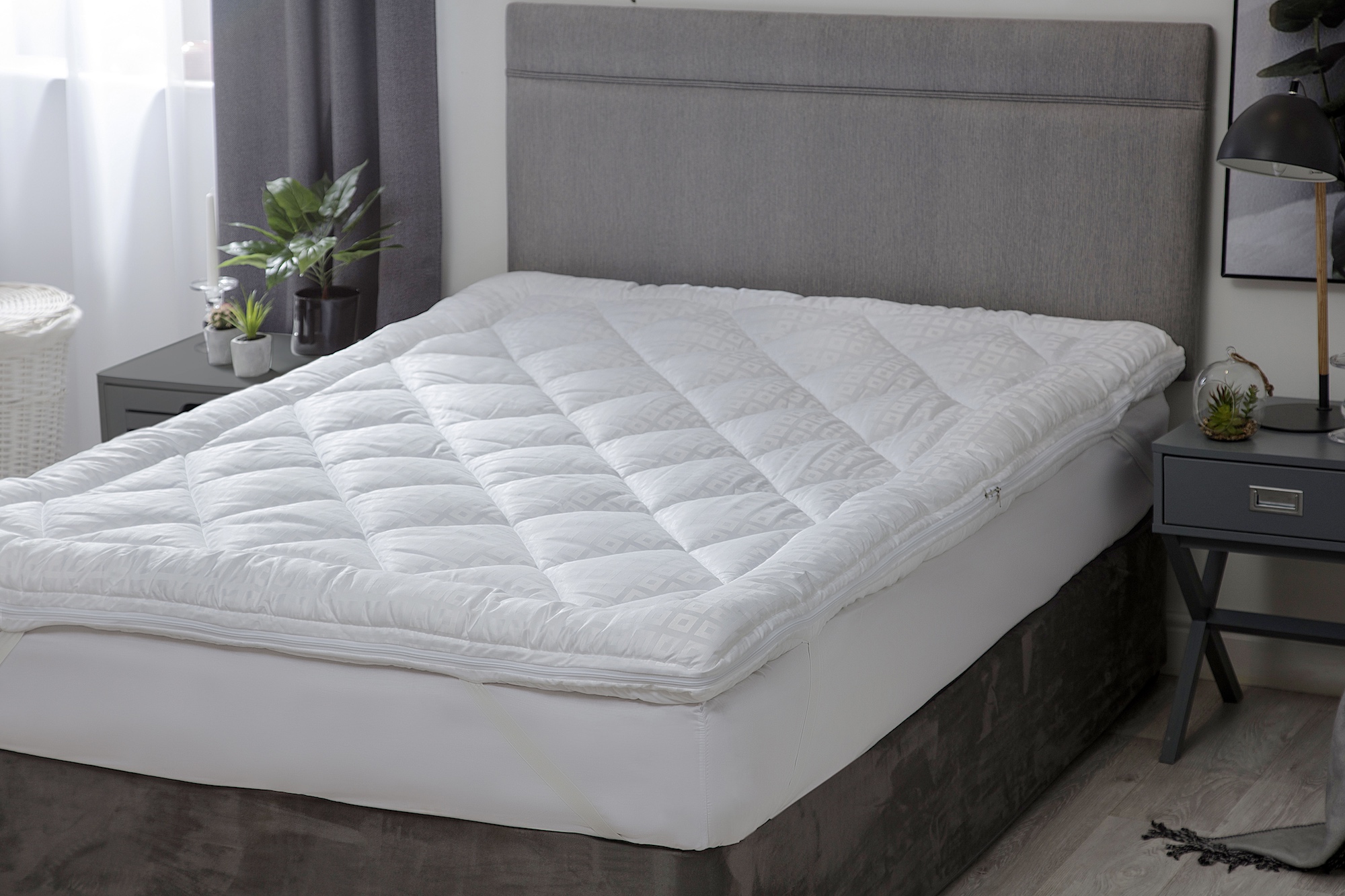
The 100gsm fill weight provides substantial filling for lasting plumpness, whilst approximately 9cm depth (3.5 inches) offers meaningful cushioning. The 233 thread count polycotton percale cover provides a smoother feel than basic microfibre whilst remaining budget-friendly. Boxed stitching prevents fill migration, addressing a common problem in cheap toppers, where filling bunches and creates uneven surfaces.
Particularly practical features include generous 35cm straps fitting mattresses or bases up to 22 inches deep – useful for those with deep mattresses or divan bases. The innovative separable design via zipper allows washing layers individually, making care easier and potentially extending lifespan by reducing wear from frequent complete washing.
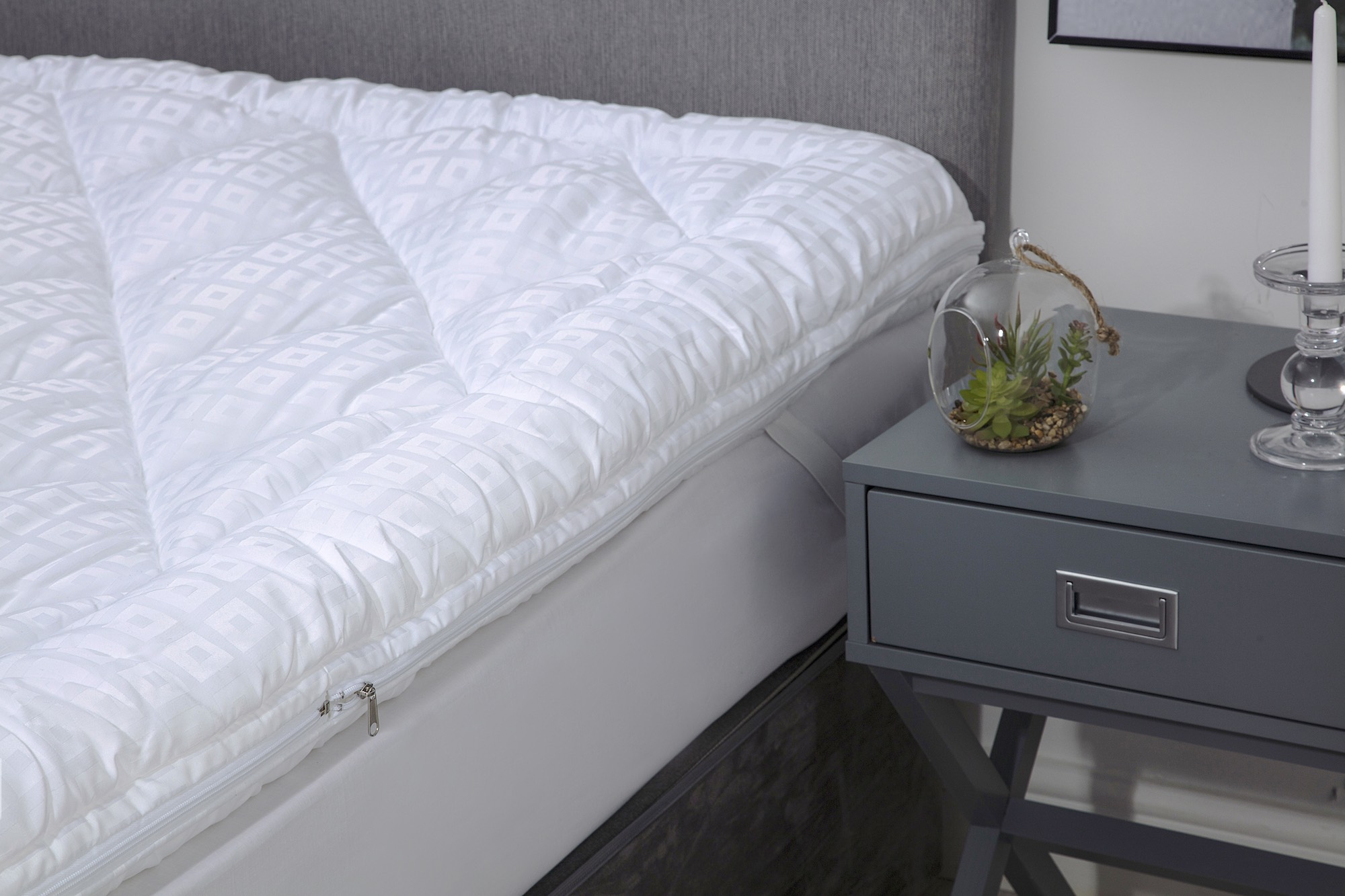
Machine washable at 40°C in domestic machines means you don’t need commercial cleaning services. The dual layer construction provides more sophisticated support than single-layer alternatives at this price point.
The honest limitations remain identical to other synthetic options: heat retention compared to natural materials, environmental concerns from petroleum-based production, microplastic shedding, and finite lifespan before compression and deterioration necessitate replacement. The engineering is clever, the construction is quality for the price point, but fundamental material limitations cannot be engineered away.
Sizing Considerations and Practical Details
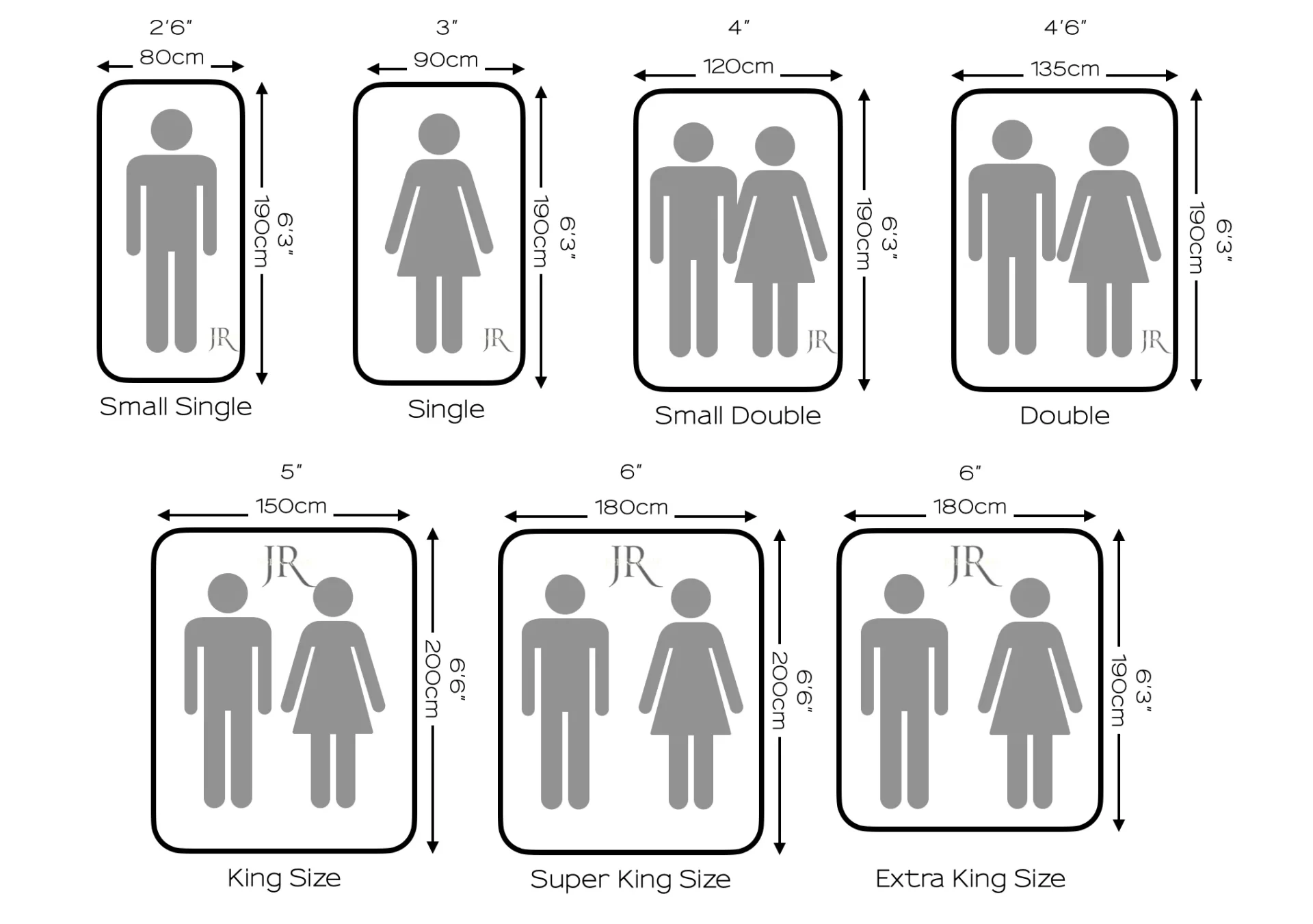
All our toppers come in standard UK mattress sizes from Single through Super King. The 5cm depth provides meaningful comfort enhancement without being so thick it creates fitted sheet challenges (though you should ensure your fitted sheets accommodate the additional depth).
Toppers require turning regularly, just like mattresses. Our latex and Coolblue toppers are fully turnable, meaning you can flip them over and rotate them head-to-foot. This distributes wear evenly and prevents permanent body impressions from developing. Aim to turn your topper every 2-3 months for optimal longevity.
Protection matters too. Use a quality mattress protector over your topper to shield it from body oils, sweat, and spills. This dramatically extends topper lifespan by preventing moisture penetration that can break down materials over time. Wash the protector regularly (every 1-2 months) whilst spot-cleaning the topper as needed.
When NOT to Buy a Topper
Honesty compels us to note situations where toppers cannot solve underlying problems. If your mattress has developed permanent body impressions (sagging exceeding 1 inch), a topper won’t address the core structural failure. You’re essentially putting expensive plaster over a broken foundation. The topper might feel better initially, but it will quickly conform to the existing sag, leaving you in the same depressed sleeping position.
Similarly, if your mattress causes genuine pain (beyond minor pressure point discomfort), the problem likely stems from inappropriate support rather than inadequate surface comfort. Adding a topper may actually worsen matters by further reducing support. In these situations, consult with mattress specialists about proper mattress selection rather than attempting topper band-aids.
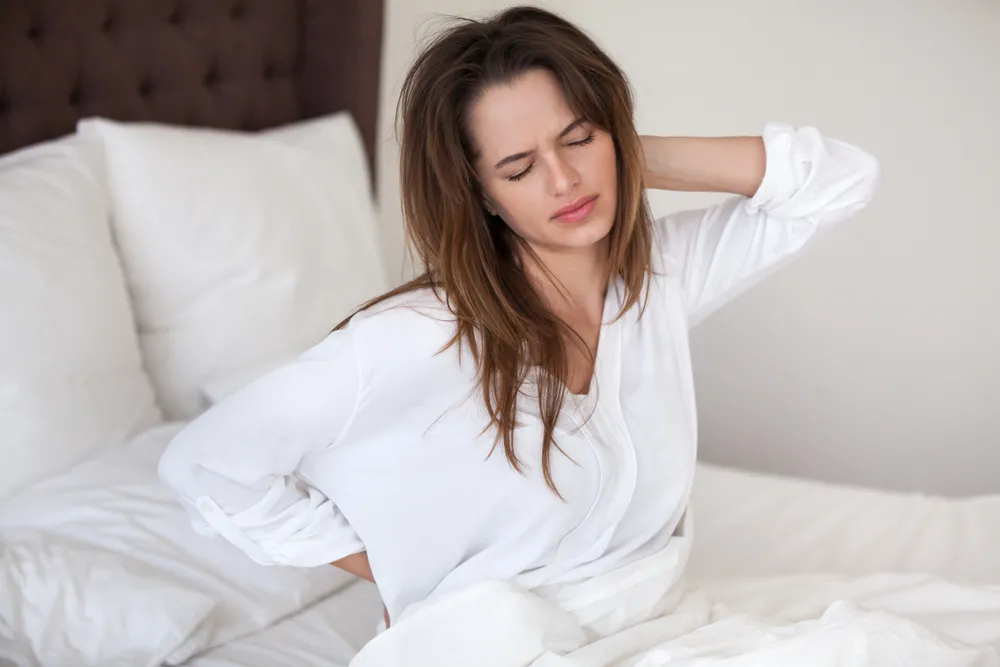
Toppers also cannot address hygiene issues in old mattresses. If your mattress smells musty, shows visible staining, or harbours dust mites despite protector use, no topper can remediate the underlying contamination. Replacement becomes necessary for health and hygiene rather than just comfort.
Making Your Decision
Your ideal topper depends on several factors working together:
Budget Tiers:
- £450+: Our 100% Natural Latex Topper provides the best long-term value and performance
- £240-£285: Laygel and Coolblue hybrids offer genuine improvements over basic memory foam with acceptable compromises
- £155-£275: Silk Blend captures some natural material benefits whilst remaining accessible
- £95-£155: Dual Layer Polyester provides engineered comfort at modest pricing
- £75-£120: Microfibre represents absolute minimum budget option for immediate comfort needs
Sleep Temperature: Hot sleepers should strongly prioritise natural latex for maximum breathability. The superior temperature regulation justifies the investment through dramatically improved sleep quality. If latex proves unaffordable, the silk blend’s 20% natural content provides better temperature regulation than pure synthetics. Avoid microfibre and basic memory foam entirely if you sleep warm.
Longevity Requirements: Planning to keep your mattress 10+ years? Only natural latex makes sense economically. The 10-15 year lifespan means you buy once. Budget synthetics require replacement every 2-4 years, creating ongoing costs and hassle. Hybrids and silk blend fall in the middle at 3-5 years.
Mattress Type: Match your topper to your mattress construction as detailed above. Pairing incompatible types creates disappointing results regardless of topper quality.
Comparison Table: Topper Options at a Glance
| Topper Type | Best For | Key Drawbacks |
|---|---|---|
| 100% Natural Latex (from £450) | Hot sleepers, allergy sufferers, those prioritising durability and environmental responsibility, pressure relief seekers who want breathability | Higher initial investment, slightly warmer than wool (though cooler than all foams) |
| Coolblue Hybrid (from £285) | Those wanting firmer pressure relief, customers seeking middle-ground pricing, sleepers who prefer less sink-in sensation than memory foam | Petroleum-based, synthetic materials, cannot match natural latex breathability, environmental impact |
| Laygel Hybrid (from £240) | Budget-conscious customers seeking pressure relief, cooler sleepers, those wanting improvement over memory foam without premium investment | Petroleum-based, limited longevity (3-5 years), less breathable than natural latex, environmental concerns |
| Silk Blend (20% Silk/80% Polyester) (£155-£275) | Those wanting some natural material benefits at accessible pricing, sleepers seeking dust mite resistance without chemicals, medium budget customers | Predominantly synthetic (80%), environmental concerns from polyester content, not as breathable as natural latex or wool |
| Dual Layer Polyester (£95-£155) | Budget-conscious seeking engineered comfort, those needing deep mattress straps (up to 22″), customers wanting separable layers for easier washing | Petroleum-based, heat retention, microplastic shedding, 3-5 year lifespan, all synthetic material limitations |
| Microfibre (£75-£120) | Strictest budgets requiring immediate comfort improvement, temporary solutions whilst saving for quality alternatives | Significant heat retention, shortest lifespan (2-4 years), maximum environmental impact, poorest breathability, treats symptoms not causes |
| Memory Foam (NOT recommended) | None—we don’t stock these | Severe heat retention, restricted movement, rapid deterioration, environmental damage, VOC emissions, microplastic pollution |
| Wool Toppers (not currently stocked) | Hot/cold sleepers needing active temperature regulation, allergy sufferers, those extending mattress life rather than seeking pressure relief | Less pressure point relief than latex/foam, different feel may not suit those expecting contouring sensation |
Our Guarantee and Expert Support
Our team of mattress specialists remains available on 0161 437 4419, Monday to Friday 8am-8pm and weekends 10am-4pm. We’re genuine experts who understand how toppers interact with different mattress types, and we’ll never pressure you toward products unsuited to your needs. If we believe a topper cannot solve your specific situation, we’ll tell you honestly rather than taking your money for something that won’t work.
Choose quality materials that respect your sleep, your health, and the environment. Choose performance that lasts years rather than months. Choose transparency over marketing deception. Choose natural alternatives that work with your body rather than against it.
Dreaming of the perfect nights sleep?
Ask us a question
There are over 6000 questions and answers submitted by you on all questions about mattresses and bed problems. Enter a keyword such as Vi Spring, John Lewis beds, bad back or Memory Foam and see if your question has already been answered.
If you can’t find an answer in knowledge hub, ask a new question. We aim to respond to all questions within one working day.
Newsletter
Enter your email to join our newsletter. We’ll send you occasional news and mattress expertise.