






Mattress Tips
October 2026How to Spot a Quality Mattress
Updated 2026: We’ve been making mattresses here in the UK for over 25 years, so we know exactly where the money goes in a mattress, and where it doesn’t. We’ll show you the five things that decide quality, the numbers to ask for, the marketing words that mean nothing, and what we’d buy if it were our money.
A good quality mattress in short
You’re looking for pocket springs with the wire gauge and tension stated, and fillings listed layer by layer with their weight in grams per square metre (GSM). You want a construction that holds those fillings in place, ideally hand-tufted and hand-side-stitched, and a mattress you can turn. Your retailer should be able to tell you every one of those details without going off to ask someone.
If a retailer can’t tell you what’s inside a mattress, you can’t judge its quality, and you’re buying a label. Price, brand names and how it felt during a five-minute lie-down in a showroom don’t tell you much at all.
What this guide covers
- Why price isn’t a reliable sign of quality
- The springs: what a quality spring unit looks like
- The fillings: why GSM is the number to ask for
- Construction: tufting, hand side stitching and edges
- The cover: what the ticking tells you
- Two sided or one sided?
- What weight and depth tell you
- Red flags in a mattress description
- How to check a mattress yourself
- Trials and guarantees
- Who made it, and where?
- What a good quality mattress costs
- What does hotel quality really mean?
- Your quality checklist
- Good quality mattress FAQs
Why price isn’t a reliable sign of quality
You’d think the more you spend, the better the mattress. Broadly, that’s true, because natural fibres and calico pocket springs cost more to buy and take longer to work with. The trouble is that plenty of retailers know you think that, and price their mattresses accordingly.
We see mattresses with “was” prices that have never been charged, and half price sales that somehow never end (funny that). A price tag tells you what someone wants for a mattress. It doesn’t tell you what they’ve put in it.
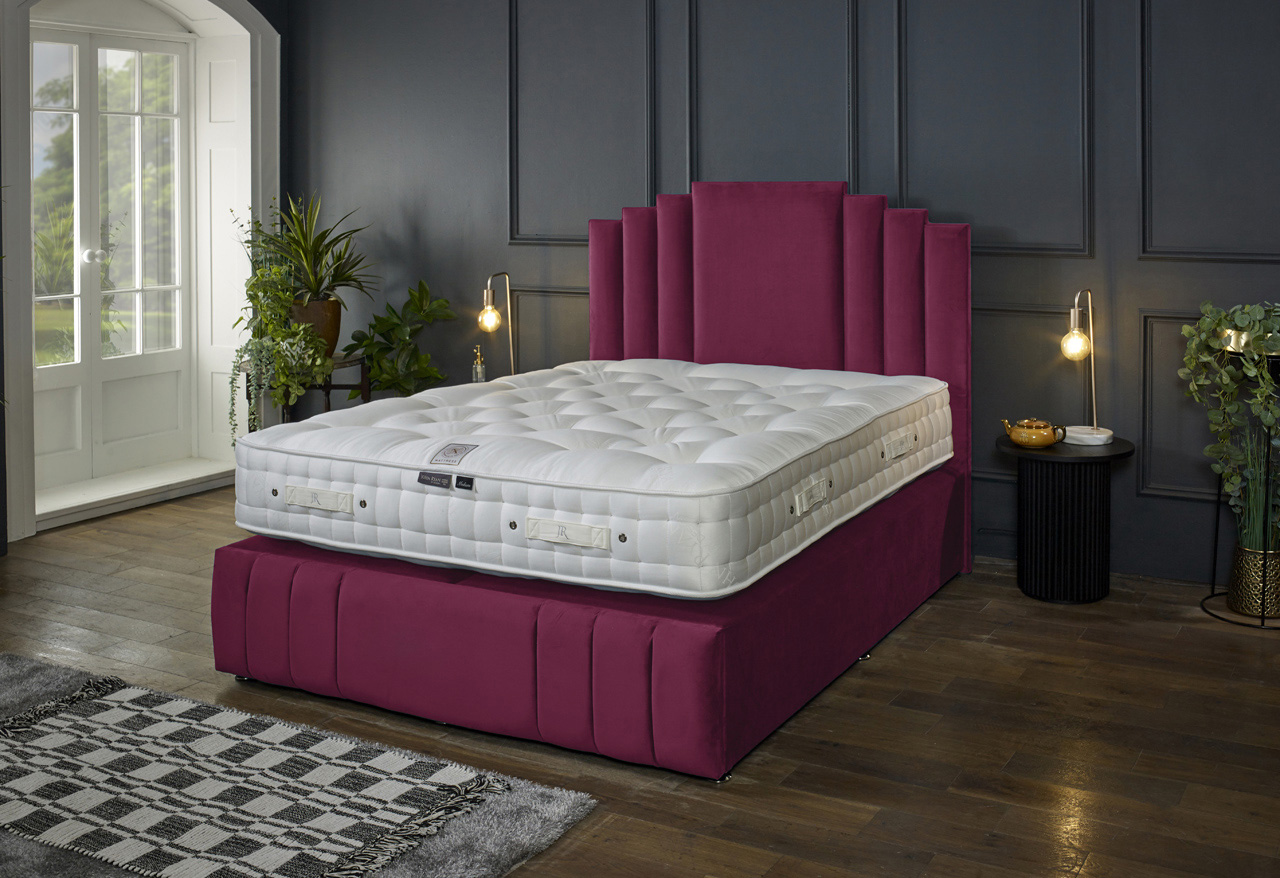
So what does? Well, five things, and every one of them can be checked if the retailer is willing to tell you. We’ve written more on how much to set aside in our guide to how much you should spend on a mattress, but first, let’s look at what you’re actually paying for.
The springs: what a quality spring unit looks like
The springs do the supporting. Get them wrong, and no amount of lovely Wool on top will fix it, which is why spring tension is the first thing we ask about when you ring us!
Pocket springs or open coil?
Cheaper mattresses use open coil springs, where every spring is wired to its neighbours in one big connected unit. Push down in one spot and the whole thing moves, which is why you end up rolling towards your partner in the middle of the night. We cover these in our guide to open coil and continuous coil mattresses.
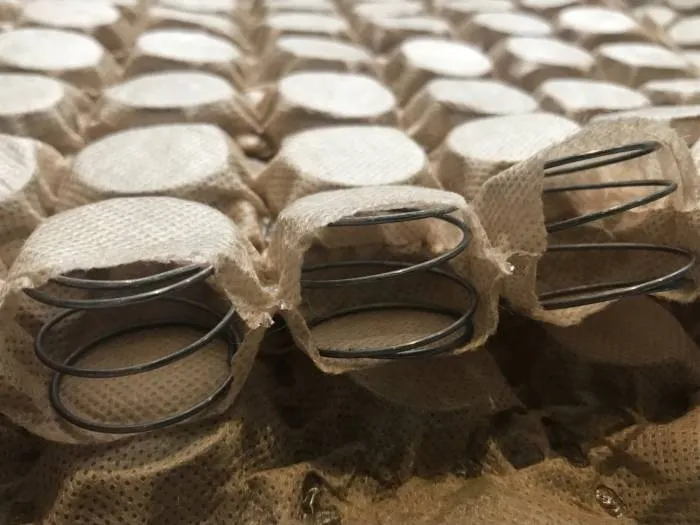
Pocket springs sit in their own individual fabric pockets, so each one moves on its own and supports the part of you directly above it. If you want a good quality mattress, we’d always tell you to go for pocket springs.
Calico or spun bond pockets?
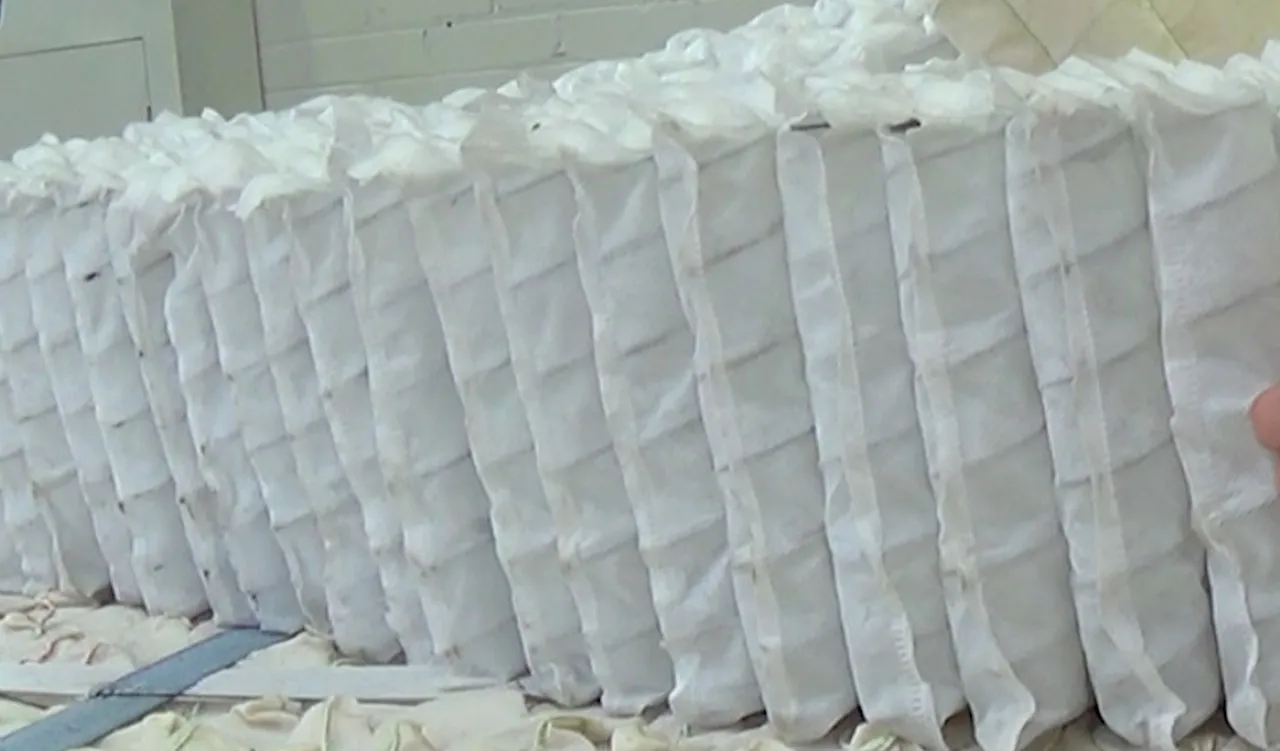
This is where most guides stop, and where the real difference starts. The pocket around each spring is made either of calico, a woven Cotton fabric, or spun bond, a synthetic non woven fabric that’s cheaper and quicker to machine.
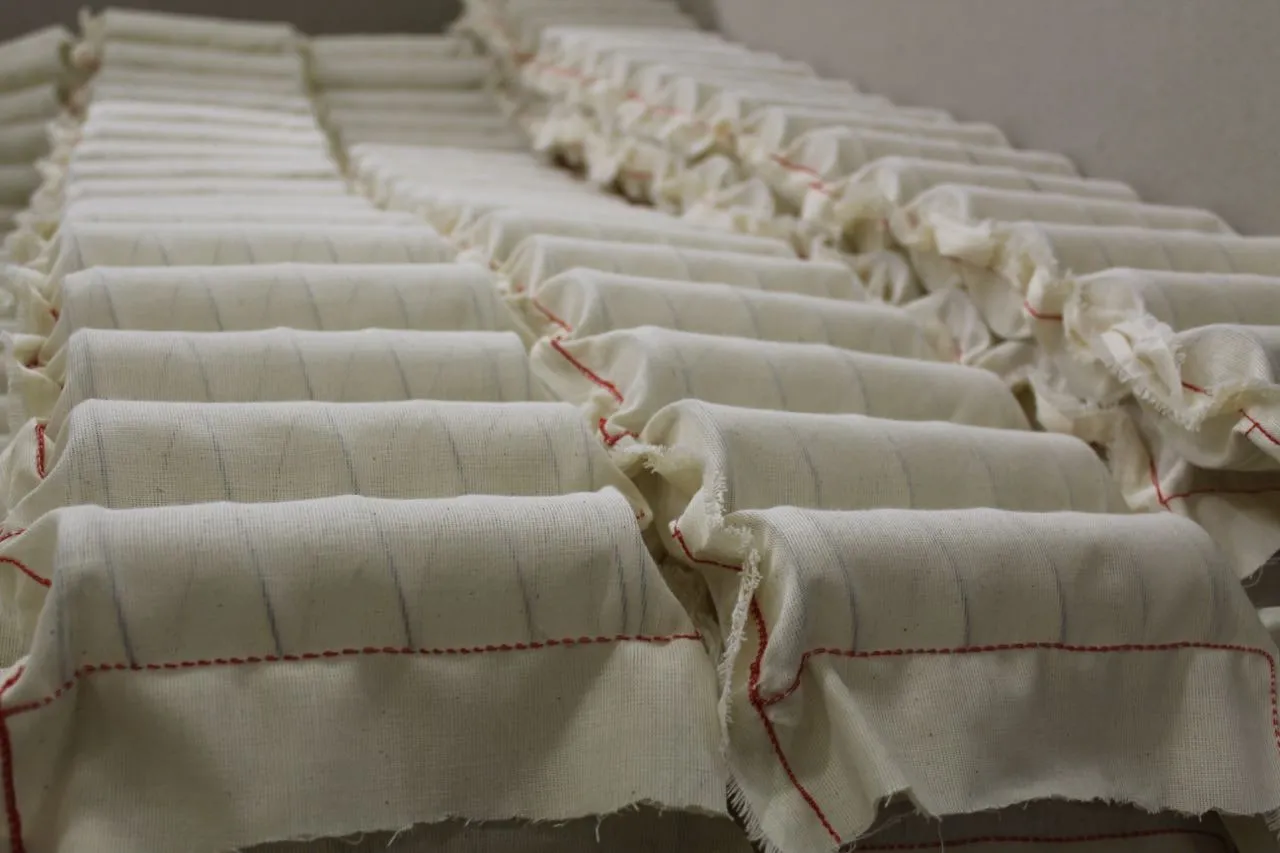
We’ll be straight with you here. Most of our Origins range and the Artisan 1500 use spun bond pocket springs, and they’re perfectly good springs for the money.
Our more expensive Artisan mattresses use calico encased springs, which in our view breathe better and are a proper step up in quality. That’s part of what you’re paying for as you move up a range, ours or anyone else’s, so it’s worth asking which you’re getting.
Wire gauge and tension
The thickness of the spring wire, its gauge, determines how soft or firm a spring feels under you. Thicker wire makes a firmer spring. Any maker worth your money will tell you the gauge when you ask, because it determines how the mattress supports you.
We quote ours on every Artisan product page. The Artisan Naturals uses 1,600 calico springs in 1.28mm wire, the Artisan Bespoke 004 uses 1.4mm, and the Artisan Luxury uses 1.42mm. If a retailer can only tell you “medium”, ask them what that means in millimetres.
Do more springs mean better quality?
Not on their own. A spring count is only useful if you know what kind of springs they’re counting, and that’s where the numbers can get a little creative.
Many very high spring counts include micro springs, which are small springs only a few centimetres tall, set in a layer above the main spring unit. A king size can hold thousands of them, which is how you end up with five-figure spring counts on a label.
Micro springs can make a mattress feel softer and more responsive on the surface, and used well they have their place. What they don’t do is replace a decent main spring unit underneath you. So when you see a five-figure spring count, ask how many of those are full-height pocket springs, and what’s in the upholstery on top.
Our pocket spring mattress guide goes into spring counts in much more detail, including how many we’d look for in each size.
The fillings: why GSM is the number to ask for
The fillings, or upholstery, sit between you and the springs. They decide how comfortable you’ll be, how hot you’ll get and how long your mattress lasts. They’re also where cheaper mattresses cut the most corners, because you can’t see them.
What GSM tells you
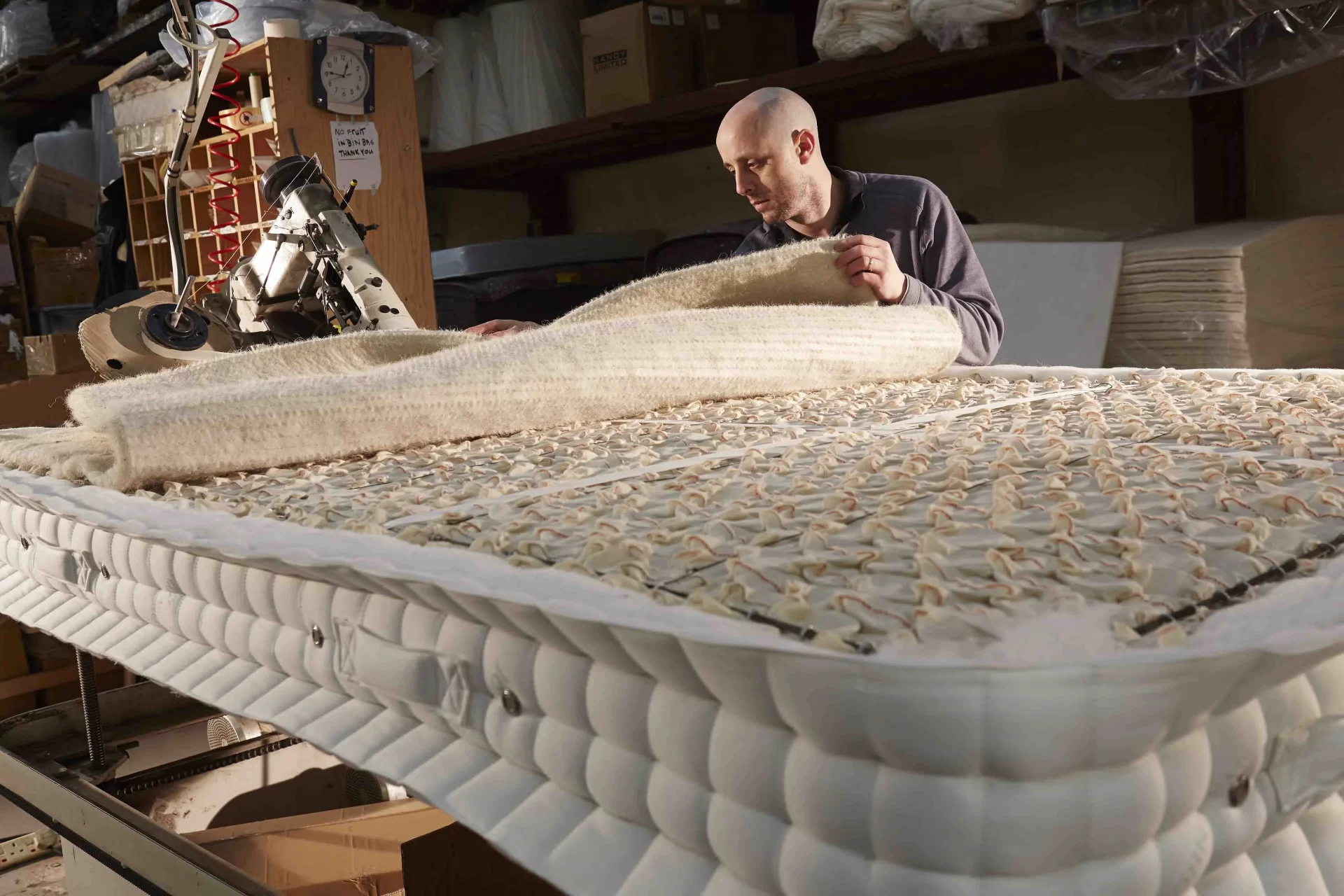
GSM stands for grams per square metre. It tells you how much of each filling is in the mattress, so 1,200gsm of Wool means 1.2kg of Wool in every square metre of mattress. Without it, “Wool” on a label could mean a thick fleece or a thin sprinkling, and you’d have no way of knowing which.
A quality mattress will list every layer with its GSM, from the top down to the springs, so you can see exactly what you’re paying for. If you only get a list of fibre names, or a “total comfort layer” depth in centimetres, you’re not getting the full picture. Our GSM guide explains how to read a spec sheet in more detail.
Why we list the GSM of every layer
We started listing GSM because we found the bed industry far too secretive. Think about it. You wouldn’t buy a new car without knowing the engine size, whether it runs on petrol or electric, and how fast it’ll go.
With beds, the trade expects you to buy on the look, the price or a quick bounce in a showroom. That’s why so many disappointed people end up on unsuitable mattresses every day in the UK. So we put every layer and its weight on every product page, and we’d love the rest of the industry to do the same.
It’s what the grams are made of
Here’s the bit people miss. GSM on its own isn’t enough, because a gram of polyester costs a fraction of a gram of Horsetail or Mohair.
You can see it in our own range. The Artisan 1500 has 4,300gsm of fillings, but only 53% of that is natural fibre, with two 700gsm layers of polyester in the mix.
The Artisan 1500 is £1,755 in king size. The Artisan Naturals has slightly less at 3,950gsm, but 85% of it is natural, including 1,500gsm of pure Mohair, and it’s £2,180.
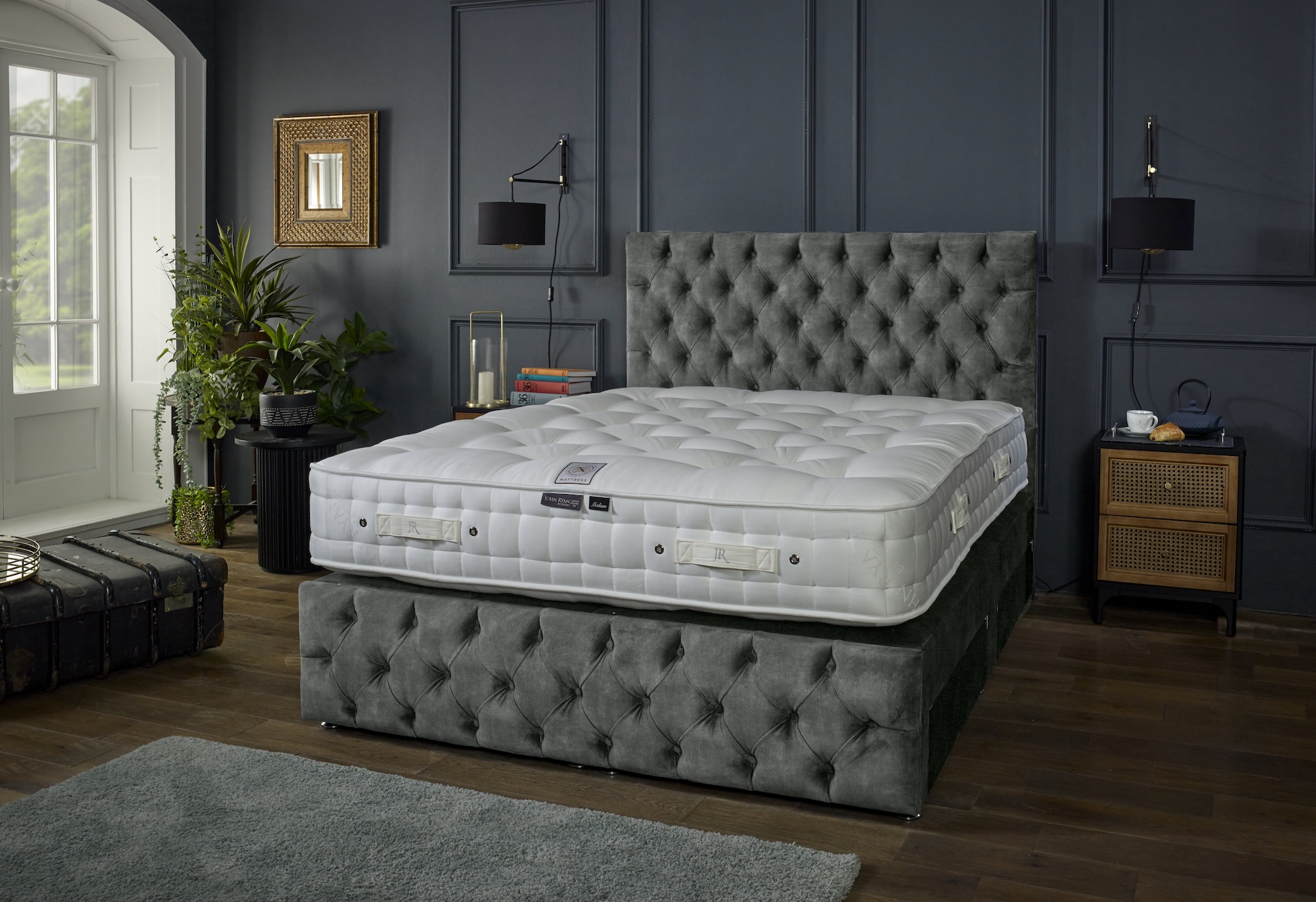
Both are honest mattresses, and you can see exactly what you’re getting with each. They’re just built from different ingredients, so they cost different amounts and they’ll feel and wear differently under you.
Natural or synthetic fillings?
In our view, natural fibres are the clearest sign of a quality mattress. Wool, Cotton, Horsetail, Horsehair, Mohair, and Alpaca breathe, wick moisture away, and spring back into shape far better than polyester, which flattens and traps your body heat. If you’re a hot sleeper, you’ll notice the difference within a week.
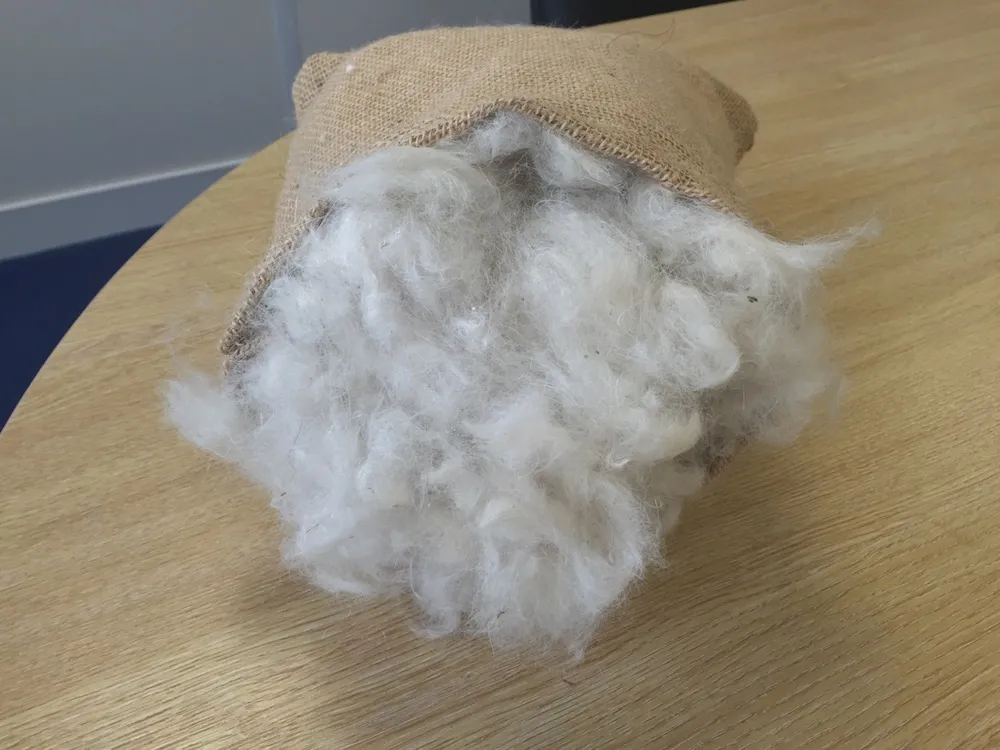
Here’s how the common fillings compare on feel and price.
| Upholstery Layer | Fibre Type | How it will feel? | Price Point |
|---|---|---|---|
| Polyester | Synthetic | Soft | Cheap |
| White Fibre | Synthetic | Soft/Medium | Cheap |
| Recycled Fibre / Eco Fibre | Synthetic | Medium | Cheap |
| Memory Foam | Synthetic | Medium/Firm | Mid Price |
| Igel / Hybrid Foam | Synthetic | Medium/Firm | Mid Price |
| Polycotton | Synthetic/Natural Blend | Soft/Medium | Mid Price |
| Linen | Synthetic/Natural Blend | Medium | Mid Price |
| Wool (Pure) | Natural | Soft/Medium | High-End |
| Cotton (Pure) | Natural | Soft | High-End |
| Silk | Natural | Soft | Expensive |
| Horsehair | Natural | Medium | High-End |
| Mohair | Natural | Medium/Firm | High-End |
| Hemp | Natural | Medium | High-End |
| Latex (100% Natural) | Natural | Medium/Firm | High-End |
| Coir | Natural | Firm | High-End |
| Flax | Natural | Firm | High-End |
| Coarse Cashmere | Natural | Firm | High-End |
| Bamboo | Natural | Super Soft | Expensive / Exclusive |
| Horsetail | Natural | Firm | Expensive / Exclusive |
| Alpaca | Natural | Soft | Expensive / Exclusive |
| Cashmere (Pure) | Natural | Soft | Expensive / Exclusive |
| Vicuna | Natural | Super Soft | Expensive / Exclusive |
Watch out for how natural fibres are named, too. A “Cashmere” or “Silk” mattress may only have a few grams of either blended into another layer.
We had a customer ring us who was about to buy a “natural fibre” mattress from one of the leading retailers. When we looked at the specification with her, it had just 250gsm of Wool, and every other layer was polyester. That’s not a natural-fibre mattress in any sense we’d recognise, and she’d been paying for a label.
Our own Origins Naturals has a 250gsm blend of Wool, Cashmere, Silk and Cotton too, and we tell you exactly that, alongside the 500gsm of British Wool and the polycotton layers. If a fibre is in the name, ask for its GSM and its percentage. There’s much more on each fibre in our A to Z of natural fibres.
Look for the foam they don’t mention
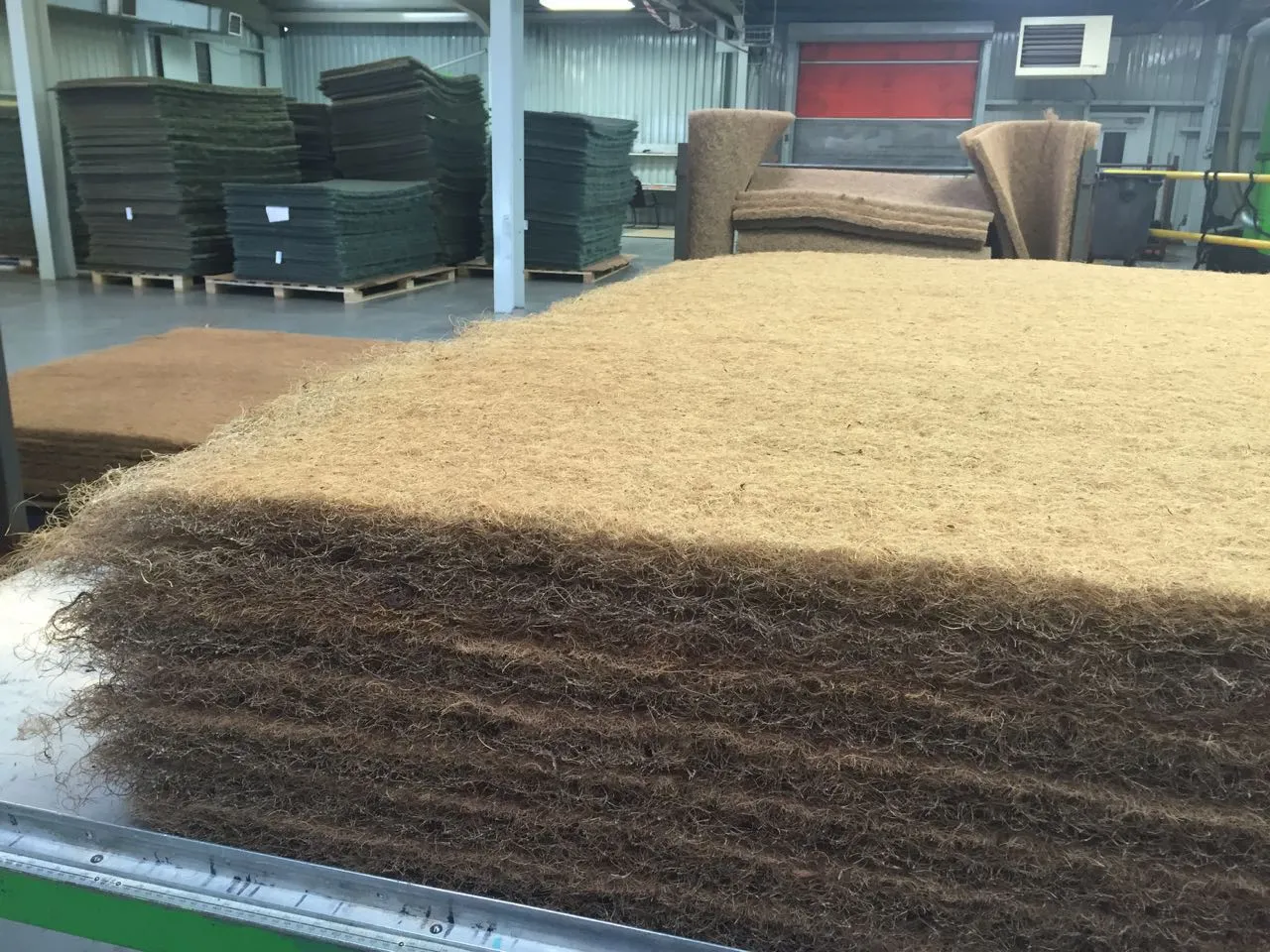
A lot of “natural” mattresses have a layer of foam hiding somewhere in the middle, usually as an insulator over the springs. That’s not always a disaster, and we’ll be honest that our entry level Origins Comfort 1000 has a 1 inch foam insulator. But you deserve to know it’s there before you buy.
When we’ve cut open memory foam mattresses on our YouTube channel, much of the height turned out to be wadding and polyester. If a layer list skips straight from a natural fibre to the springs, ask what’s in between.
Construction: tufting, hand side stitching and edges
You can have the best fillings in the world, but if they’re not held in place, they’ll shift, clump and leave you with lumps and dips. This is where handmade construction earns its keep, and where you can check quality with your own eyes.
Hand tufting
Tufting means passing strong tapes right through the mattress, from top to bottom, and fixing them with tufts on each side. It compresses the fillings and locks every layer to the springs, so nothing can wander.
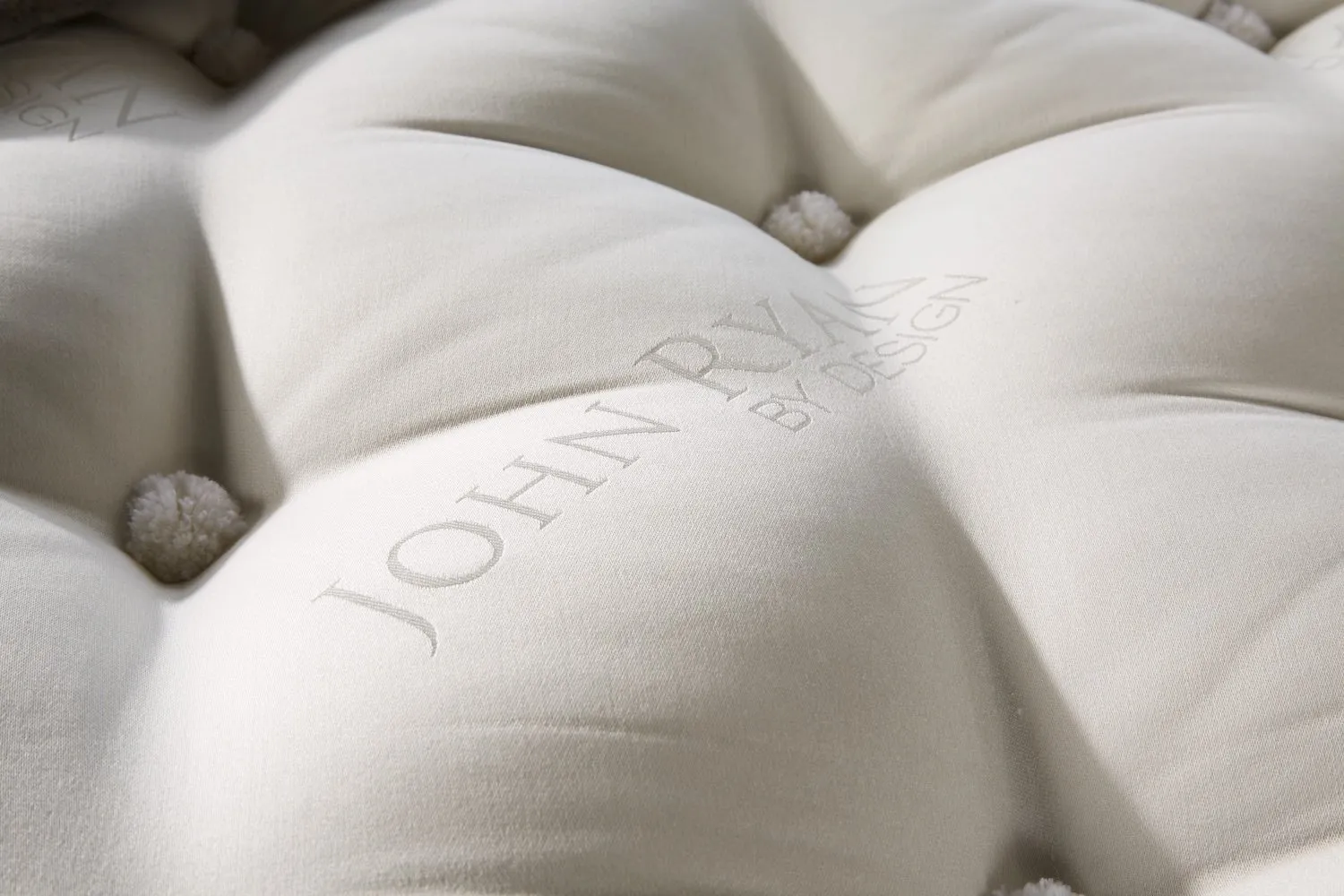
Quilting is the cheaper alternative, where the cover is stitched to the top layers only. It looks neat in the showroom, but it doesn’t hold the deeper layers together.
When you’re looking at a mattress, check that the tufts go all the way through and show on both sides. Our guide to mattress tufting explains why it matters so much.
Hand side stitching
Look at the side of a quality mattress, and you’ll see rows of stitching running along the border. On a handmade mattress, these are done by hand, joining the edge of the spring unit to the fillings and the side panel so the edge stays firm and doesn’t roll.
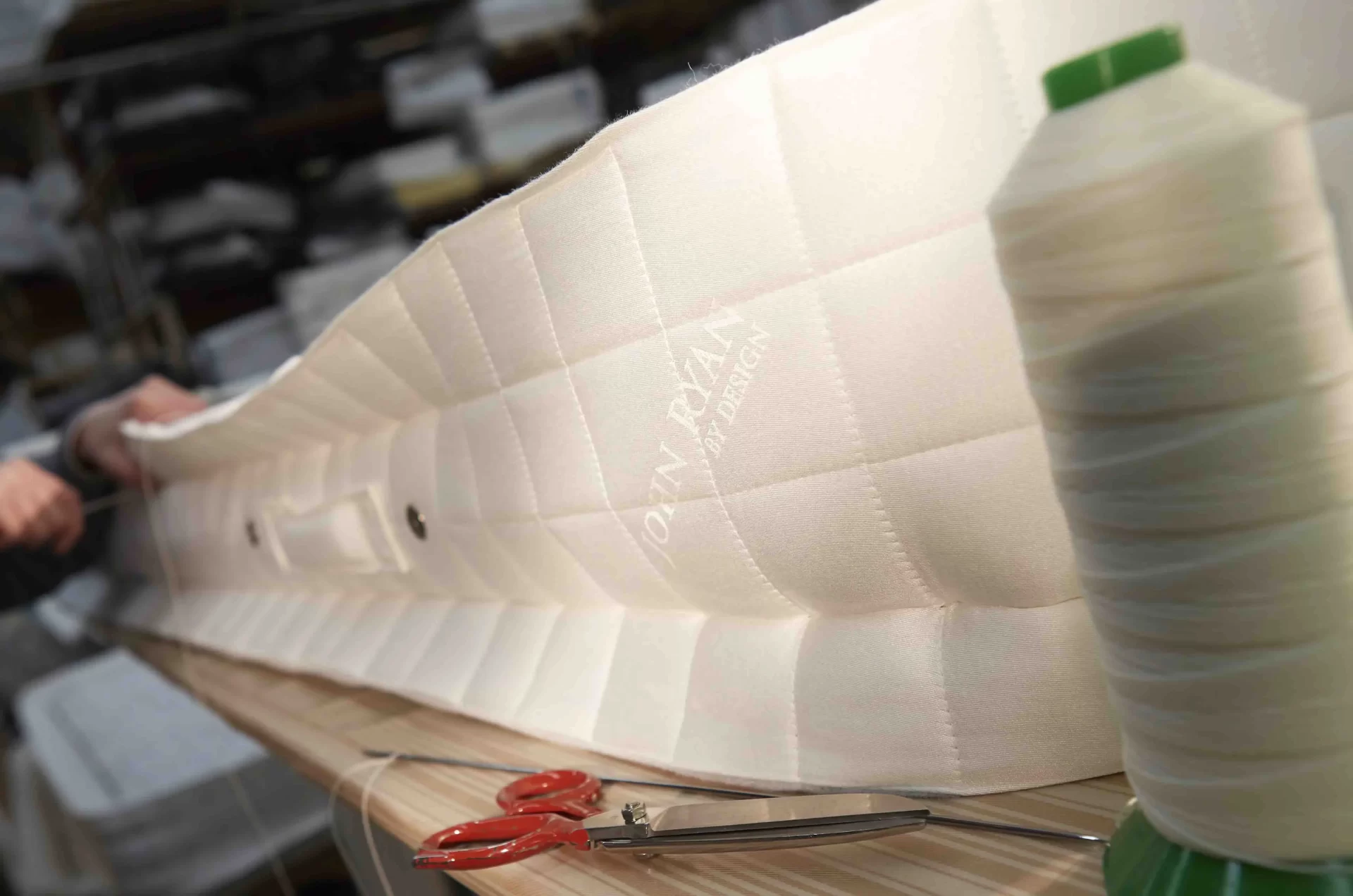
Many machine-made mattresses have a row of decorative stitching that imitates this, but it doesn’t reach the springs.
Here’s your test. Sit on the edge and push down. If it collapses under you, the stitching is just for show!
Our guide to mattress side stitching shows how to tell the two apart.
Doing it properly takes about half a day on a single mattress, and it’s a real skill. Very few hand side stitchers remain in the UK, which is why so many mattresses now use a machine-stitched imitation instead.
Tape edges and handles
Two small details will tell you a lot. A hand-applied tape edge around the top and bottom borders makes a tougher finish than a quilted, turned edge, and you’ll spot it in seconds in a shop.
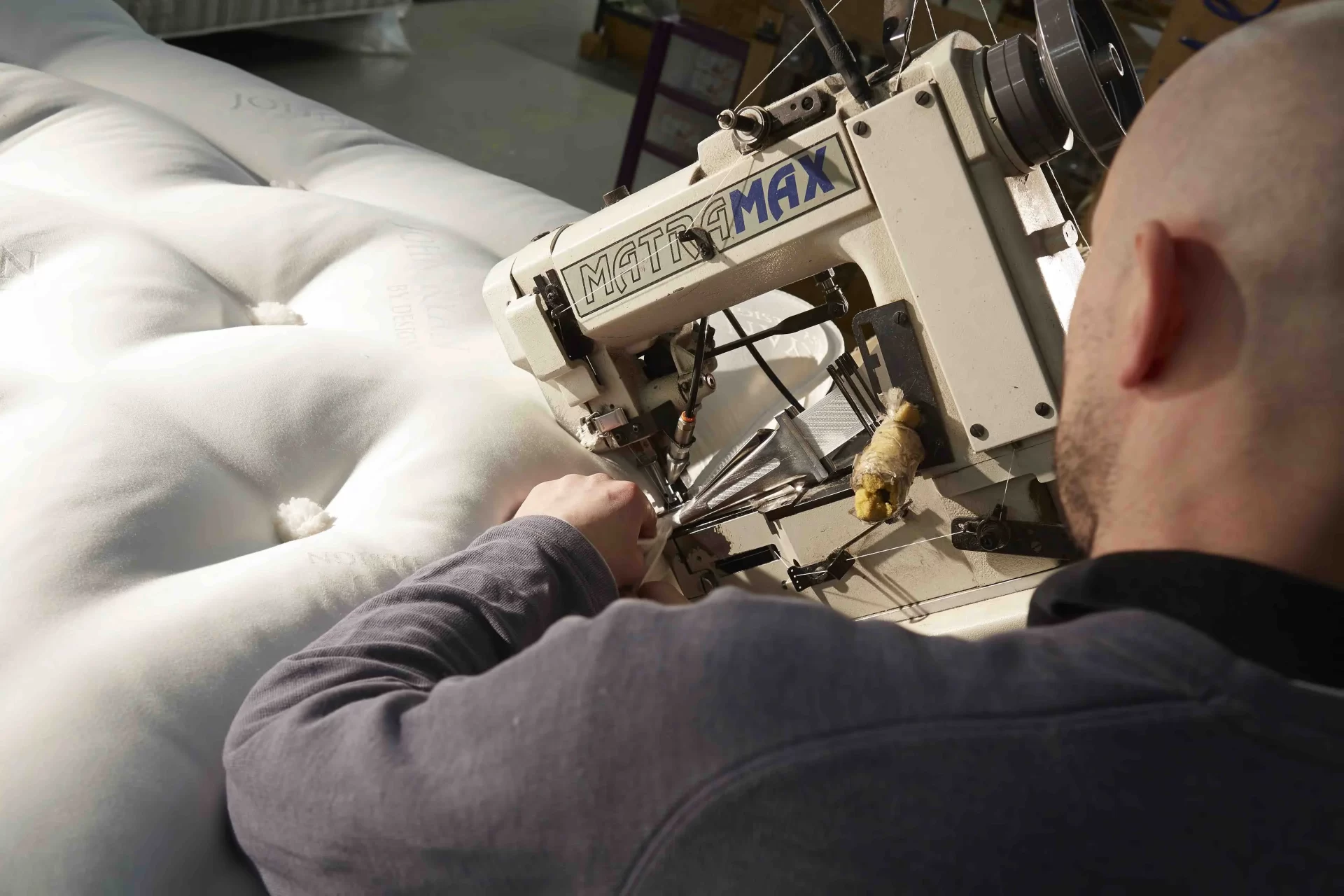
Then there are the handles. A two sided mattress needs proper stitched handles so you can turn it. If you can’t find any handles, or they’re flimsy ones that are only for show, it’s a fair bet you’re looking at a one sided mattress.
The cover: what the ticking tells you
The ticking is the fabric cover, the bit you actually lie on. A good one is tightly woven so fibres can’t poke through at you, it breathes, and it lasts. Woven damask and Cotton tickings are the quality choice.
Cheaper mattresses often use a shiny stretch-knit polyester cover that feels soft in the shop but traps heat at night. Some are sold as “cooling” (they won’t be, not with polyester fillings underneath). Our guide to mattress fabric coverings covers this in more detail.
The cover is also where most fire retardant treatments sit. Every Artisan mattress we make has a chemical-free cover with plant-based fire retardancy, and we explain the regulations properly in our honest guide to chemical-free mattresses.
Two sided or one sided?
If we could only give you one quality check, it would be this one. A two-sided mattress has fillings on both sides, so you can turn it and share the wear between them, and your mattress lasts far longer. There are very few exceptions with one sided mattresses, such as latex.
A one-sided mattress only has comfort layers on top. You’ll wear through them in a few years, while the bottom you paid for never gets touched. “No turn” is sold as a convenience, but it’s really a cheaper way to build a mattress, which we explain in the no turn mattress scam.
This is where we see people caught out most. They only realise they can sleep on one side when the mattress settles and they go to turn it, and find the underside is either a bare spring unit with no upholstery or a slab of firm reflex foam. Understandably, they feel ripped off by the big retailers who sold it to them.
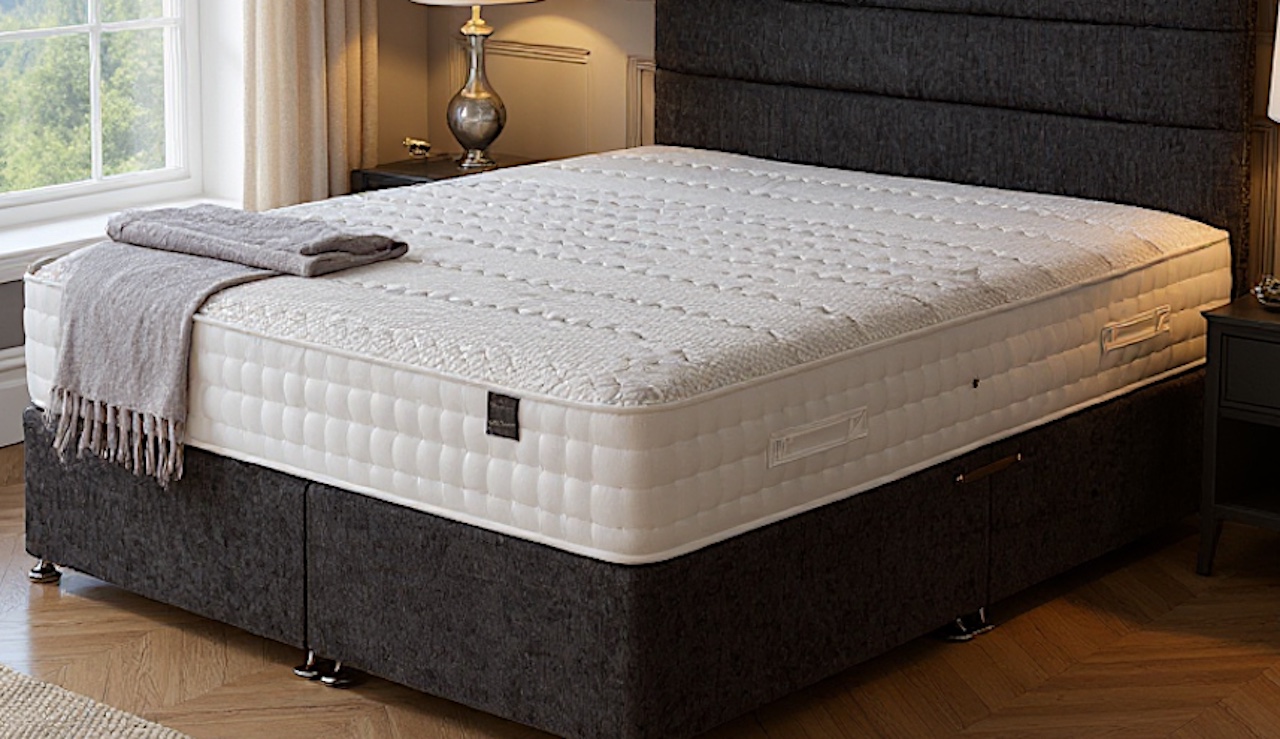
Here’s roughly how long we’d expect each type of mattress to last before dips start, if it isn’t looked after. The longest lasting are all ones you can turn.
| Mattress Type | Fibre Type | Expected Lifespan before potential dips if not maintained | Can the settlement be prevented? |
|---|---|---|---|
| Open Coil / Traditional Bonnell Spring Mattress | Synthetic | 2-3 Years | Partly with the addition of a topper and turning monthly |
| Memory Foam / Mattress in a box Mattress | Synthetic | 3-4 years | Not usually - they are one sided so can only be rotated |
| Hybrid Foam Mattresses | Synthetic | 5-6 years | Not usually unless 2-sided |
| Latex Foam Mattresses | Synthetic/Natural | 8-10 years | Yes turning and rotating |
| Synthetic Pocket Spring Mattresses | Synthetic | 8-10 years | Yes by turning & rotating |
| Natural Fibre Pocket Spring Mattresses | Natural | 10 Years + | Yes by turning & rotating |
Pillowtop mattresses are the worst offenders here, because once the pillowtop flattens there’s no way to fix it.
What weight and depth tell you
Want a quick test? Try lifting the corner (bend your knees!). A heavier mattress usually has more fillings and a better spring unit inside it, because natural fibres and calico springs are heavy.
Our king size mattresses weigh from around 40kg for the Origins Comfort to 58kg for the Artisan Naturals and 72kg for our heaviest. You’ll find the figure for every model on our mattress sizes and weights page.
Depth is less reliable. A very deep mattress can be padded out with foam, a pillowtop or thick quilting, while a tightly tufted natural fibre mattress packs more in.
So don’t let depth fool you. Our Artisan mattresses are 27 to 30cm deep and hold up to 4,600gsm. There’s more on this in our mattress depth guide.
Red flags in a mattress description
After 25 years in this trade, we can spot a vague description from across the room. These are the phrases and gaps that make us wary, and what you should ask instead.
- No GSM anywhere, only fibre names or a depth in centimetres. Ask for the weight of each layer.
- A spring count with no type, gauge or pocket fabric. Ask how many are full height pocket springs.
- “Luxury”, “orthopaedic” or “hotel quality” with nothing to back them up. None of these terms has an agreed meaning.
- A fibre in the product name, such as Cashmere or Silk, with no GSM next to it.
- “No turn”, one sided or pillowtop construction.
- A permanent sale, or a “was” price that never seems to end.
- A long guarantee on a one sided mattress. Read what it covers, because dips under a certain depth are often excluded.
How to check a mattress yourself
You don’t need to be a mattress maker to judge quality. You just need to know where to look, and to be a little bit nosey.
In a showroom
Don’t just lie on it for two minutes in your coat. Lift the corner to feel the weight, look along the side for hand stitching, and check the tufts go right through to the other side.
Then sit on the edge and see if it rolls under you. Look for turning handles and flip up the corner to see if the underside has the same fillings as the top.
If the sales assistant can’t answer your questions about GSM or spring gauge, ask them to find out. If nobody can, you’ve learnt something useful.
Ask what base it’s sitting on, too. A showroom mattress on a sprung divan can feel very different to the same mattress on your slatted frame at home, and a mattress that’s had hundreds of people sitting on it won’t feel like a new one.

Online
Online, you can actually do a better job, because a good retailer puts the full specification on the product page for you. Look for the spring count, pocket fabric and gauge, then every layer with its GSM.
If you can only find a list of comfort words and a depth in centimetres, email or ring and ask. A maker who’s proud of what’s inside will happily tell you. A retailer who changes the subject is telling you something too.
Trials and guarantees: what they tell you about quality
A long guarantee sounds reassuring, but read the small print before you let it sway you. Many only cover dips deeper than a set depth, and some are void if you haven’t rotated the mattress or used the right base.
A trial period tells you more, because it lets you sleep on the mattress in your own bed before you decide. Ours is the 60 day Love It or Return It guarantee, and we explain how to get the most from it in our guide to the 60 day guarantee. Do give yourself a few weeks, though, because any new mattress takes time to get used to.
Who made it, and where?
It’s worth knowing who actually made your mattress. Many high street brands are owned by the same handful of companies, which we’ve untangled in who owns what mattress brand.
We make every mattress by hand here in the UK, and we’re a National Bed Federation Premier Retail Champion. The NBF is the trade body for UK bed makers, so if you’re buying from someone you’ve never heard of, check whether they’re members.
What a good quality mattress costs
So how much do you need to spend? We’ll use our own range to show you, because we can tell you exactly what’s in every one, and you can check it on each product page. Here’s how the specification changes as the king size price goes up.
| Mattress | King size | Springs | Fillings | Natural fibre |
|---|---|---|---|---|
| Origins Comfort 1000 | £890 | 1,000 spun bond | 1,250gsm | Synthetic |
| Origins Naturals Comfort | £1,300 | 1,000 spun bond (2,000 firm) | 2,550gsm | 65% |
| Artisan 1500 | £1,755 | 1,500 spun bond | 4,300gsm | 53% |
| Artisan Naturals | £2,180 | 1,600 calico, 1.28mm | 3,950gsm | 85% |
| Artisan Bespoke 004 | £2,860 | 1,600 calico, 1.4mm | 3,600gsm | 100% |
| Artisan Luxury | £2,955 | 1,476 calico, 1.42mm | 4,600gsm | 100% |
If it were our money, we’d look for at least a two sided pocket spring mattress with real Wool in it, which is where our Origins Naturals Comfort sits at £1,300 in king size, with 500gsm of British Wool. For calico springs and mostly natural fibre, the Artisan Naturals at £2,180 is where we think the value is.
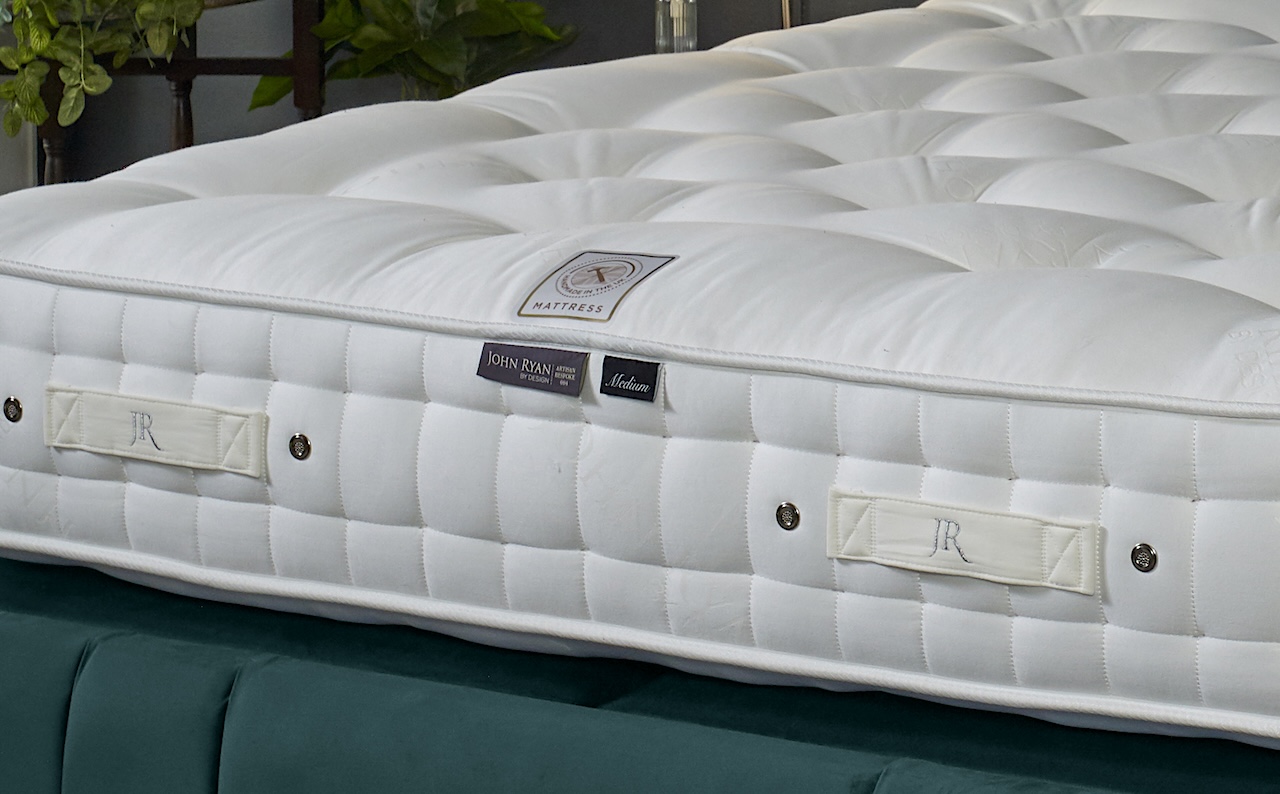
For 100% natural fibre, the Artisan Bespoke 004 at £2,860 uses Wool, Cotton, Bamboo and 1,200gsm of pure Horsetail. The Artisan Luxury at £2,955 is our softest, with Horsehair, Horsetail and Wool.
Think in cost per night
A good mattress costs more up front and less over its life. Let’s do the sums. The Artisan Naturals at £2,180, turned and looked after for ten years, works out at about 60p a night (£2,180 divided by 3,650 nights).
A £900 one sided mattress that needs replacing after four years comes to about 62p a night, and you’ll have spent the last year or so sleeping in a dip.
These are estimates, of course, because how long any mattress lasts depends on how you look after it. But the sums are why we think cheap mattresses are rarely the bargain they look. We’ve gone into this in why a cheap mattress isn’t worth it.
Ten years is us being cautious, too, and you could well get more. We have customers still sleeping on Artisan mattresses after 16 years, going strong, who come back to us to upgrade their bedding to our 100% Pima Cotton range to go with them.
If that’s you, our Artisan Cotton Bedding Pack is £150 in king size. Over 16 years, an Artisan Naturals works out at under 40p a night.
What does hotel quality really mean?
“Hotel quality” is one of the most searched mattress phrases in the UK, and one of the least defined. Some hotel mattresses are very good. Others are built to survive thousands of different guests, which isn’t the same as being right for you every night.
If you loved a hotel bed, ask the hotel who made it and which model, then look up its spec the same way you would any other mattress. We’ve done exactly that for one of the best known in our Premier Inn mattress review, and there are more ideas in bringing that hotel feeling into your bedroom.
Your quality checklist
Take this with you, or keep it open on your phone while you compare mattresses online. A good quality mattress should tick every box for you.
- Pocket springs, with the pocket fabric (calico or spun bond) and wire gauge stated.
- Every filling layer listed with its GSM, and a clear natural fibre percentage.
- Hand tufting that goes right through, and hand side stitching that keeps the edge firm.
- Two sided, with proper turning handles.
- A woven cover, with the fire retardancy method explained.
- A real trial period, so you can sleep on it at home before you decide.
Our seven questions to ask before buying a mattress will help you put these to any retailer. And if you’re still choosing a firmness or type, start with our full guide to how to choose a mattress.
Good quality mattress FAQs
What makes a good quality mattress?
A good quality mattress has pocket springs with a stated gauge, natural fibre fillings listed with their GSM, hand tufting and hand side stitching to hold everything in place, and two sided construction so it can be turned. The retailer should be able to tell you all of this.
How can you tell if a mattress is good quality?
Ask for the full specification: spring type, pocket fabric and wire gauge, plus every filling layer with its GSM. Then check for tufts that go right through, firm hand stitched edges, turning handles and a woven cover. If the retailer can’t give you the details, treat that as a warning sign.
How many springs should a good quality mattress have?
There’s no single magic number, because a spring count tells you little until you know what type of springs are being counted. Many very high counts include small micro springs. Ask how many are full height pocket springs, what gauge they are and whether they’re in calico or spun bond pockets.
What GSM should a good quality mattress have?
Our entry level Origins Comfort 1000 has 1,250gsm, and our natural fibre Artisan mattresses have between 3,600gsm and 4,600gsm. Look at what the GSM is made of as well as the total, because natural fibres cost far more per gram than polyester.
Are expensive mattresses always better quality?
No. Expensive mattresses usually use better materials, but some are priced high with little inside to justify it. The only reliable way to judge is to compare specifications, especially spring type and GSM.
How long should a good quality mattress last?
A two sided natural fibre pocket spring mattress that’s turned and rotated regularly can last ten years or more, and we have customers on Artisan mattresses after 16 years. One sided and foam mattresses tend to develop dips much sooner because they can’t be turned.
Is a heavier mattress better quality?
Usually, yes. Natural fibres and calico pocket springs are heavy, so a heavier mattress tends to have more inside it. Our king size mattresses weigh between about 40kg and 72kg depending on the model.
Is hand side stitching better than machine stitching?
Yes. Hand side stitching joins the edge of the spring unit to the fillings and the side panel, which keeps the edge firm. Machine stitching on many mattresses is decorative and doesn’t reach the springs, so the edge can roll over time.
Should a good quality mattress be two sided?
In our view, yes. A two sided mattress can be turned to spread the wear across both sides, so it lasts longer. One sided mattresses are cheaper to make and wear out faster.
Our final thoughts on mattress quality
A good quality mattress isn’t a mystery, and it isn’t about a brand or a price tag. It’s springs you can describe, fillings you can weigh and a construction that holds them in place for years. If a retailer can show you all three, you can judge it for yourself.
If you’d like us to look over a spec sheet for you, or talk through which of our mattresses would suit you, give our small, friendly team a call on 0161 437 4419 or drop us a message below. We’re always happy to help, even if you don’t buy from us.

Dreaming of the perfect nights sleep?

Ask us a question
There are over 6000 questions and answers submitted by you on all questions about mattresses and bed problems. Enter a keyword such as Vi Spring, John Lewis beds, bad back or Memory Foam and see if your question has already been answered.
If you can’t find an answer in knowledge hub, ask a new question. We aim to respond to all questions within one working day.
Newsletter
Enter your email to join our newsletter. We’ll send you occasional news and mattress expertise.