






Mattress Construction, Mattress Toppers
March 2026What is a pillow top mattress? Why you should avoid pillow top beds
The problem with pillow-top mattresses is one we hear about every single day. Once the permanently attached comfort layer compresses, that’s it, you’re stuck with it, and the only solution is replacing the entire mattress. Read on to find out how to avoid pillowtop problems and make a better choice from the start.
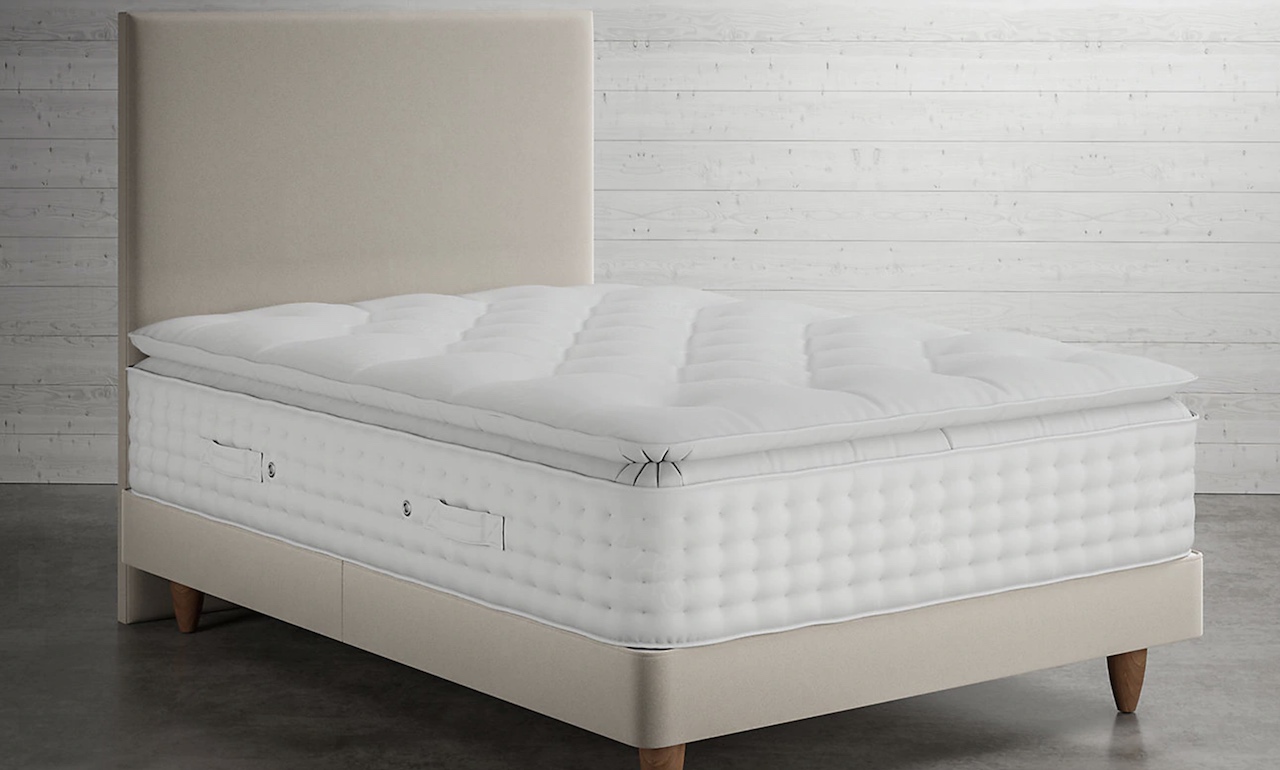
Pillowtop Mattresses Reviewed
We’re going to detail why you should avoid pillow-top mattresses and help you steer clear of the many problems we hear about every day from customers with failing pillow-top beds. Let’s take a closer look.
- What is a pillowtop mattress?
- Are pillowtop mattresses any good?
- How are pillowtop mattresses made?
- What is wrong with pillowtop mattresses?
- How long does a pillowtop mattress last?
- Pillowtop vs two-sided mattress: a direct comparison
- What is the difference between a pillowtop and a euro top mattress?
- Do pillowtop mattresses cause back pain?
- How does a pillowtop mattress affect different sleeping positions?
- Does your weight affect how quickly a pillowtop mattress wears out?
- Pillowtop mattress warranties: what they actually cover
- The better alternative: John Ryan mattress toppers
- What is the best alternative to a pillowtop mattress?
- Can I fix a failed pillowtop mattress?
What is a pillowtop mattress?
A pillowtop mattress is a bed with a mattress topper permanently adhered, stitched, or glued to the top of the mattress, making the mattress one-sided and prone to serious sagging flaws.
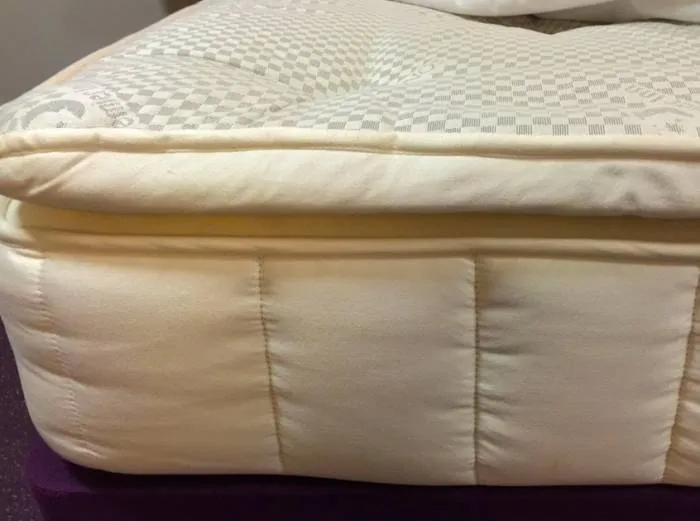
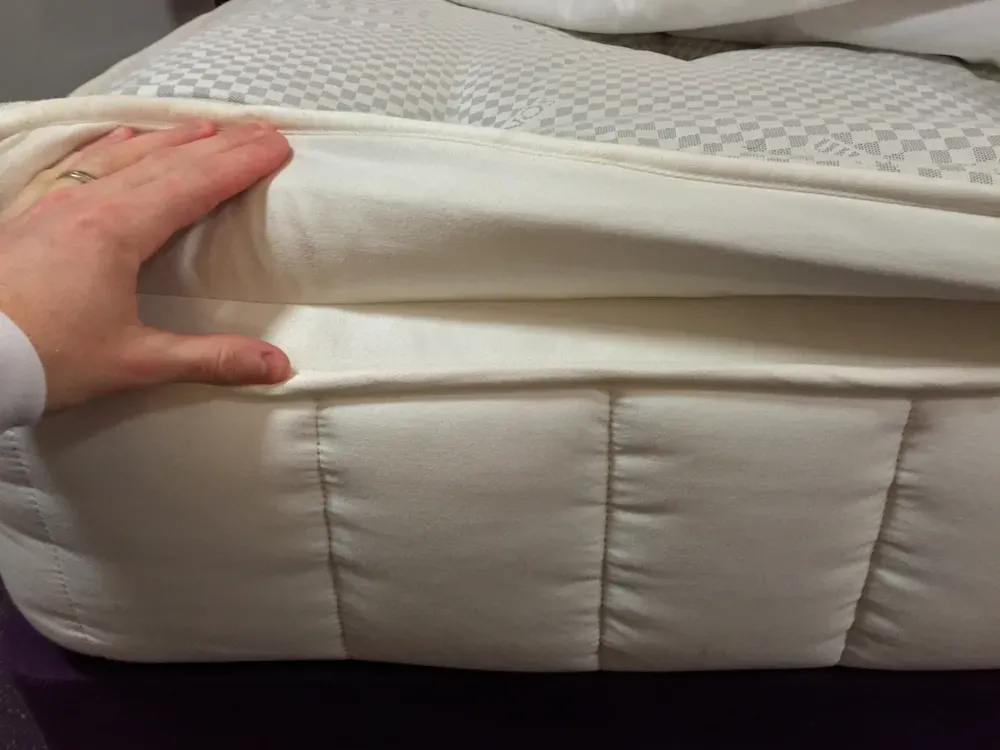
Pillowtop mattresses have become more common in bed showrooms, offering the allure of super-soft sleeping comfort. It is a construction method in which a layer of sumptuous upholstery is permanently stitched onto the mattress, giving the illusion of a deep, fluffy topper sitting on top of the core mattress. The Premier Inn uses a Hypnos pillowtop mattress, which we have reviewed here. If you can grab the top layer of a mattress in your hand and separate it slightly from the core mattress, you are looking at a pillowtop.
These mattresses are invariably always going to be one-sided, invariably high-loft at 28 to 35cm, and they invariably look absolutely glorious in the showroom. It is only once they are in your home and the compression begins that the reality becomes clear.
Are pillowtop mattresses any good?
In reality, pillowtop mattresses serve very little benefit beyond initial comfort. They give the impression of a sumptuous soft topper but are permanently stuck to your mattress either by glue or machine stitching, meaning you are stuck with them, especially when they settle, as all new mattresses will do to some degree.
We genuinely struggle to find any solid argument for fixed pillowtops. One could argue they prevent toppers from sliding off for very restless sleepers, or perhaps on a boat in choppy seas, but as a reason to build a mattress this way, it is a fairly thin justification. We can find no practical use for pillowtops in any type of mattress construction other than to look inviting in showrooms.
If you like the initial plush feel of a pillowtop but want a solution that actually lasts, a removable luxury mattress topper offers the same comfort without any of the long-term drawbacks. Unlike fixed pillowtops, high-quality toppers can be turned, rotated and replaced independently, helping maintain comfort while protecting the mattress beneath.
For sleepers who like a plush surface but want proper long-term support and breathability, natural fibre pocket sprung mattresses offer a far more durable alternative. Instead of relying on a fixed pillowtop layer, they use responsive pocket springs and breathable natural fillings to deliver comfort without the premature settlement issues.
How are pillowtop mattresses made?
Let us start with the construction method of pillowtop mattresses. A pillowtop is built in two parts.
1. The support section
The pillowtop is stitched directly to the top of the support unit, creating a two-tier mattress. Up to this point, there is really nothing wrong with this — all you have is a fancy one-sided mattress. The support part of the mattress can be any type of pocket springs, foam, suspension springs or cage springs.
2. The pillowtop section
The pillowtop itself can be comprised of anything from polyester, memory foam, latex or Wool. This is usually a super-soft layer to give that immediate sink-in feeling. More often than not this pillowtop is not tufted, which leads to fibres migrating and leaving a lumpy, uneven sleep surface over time.
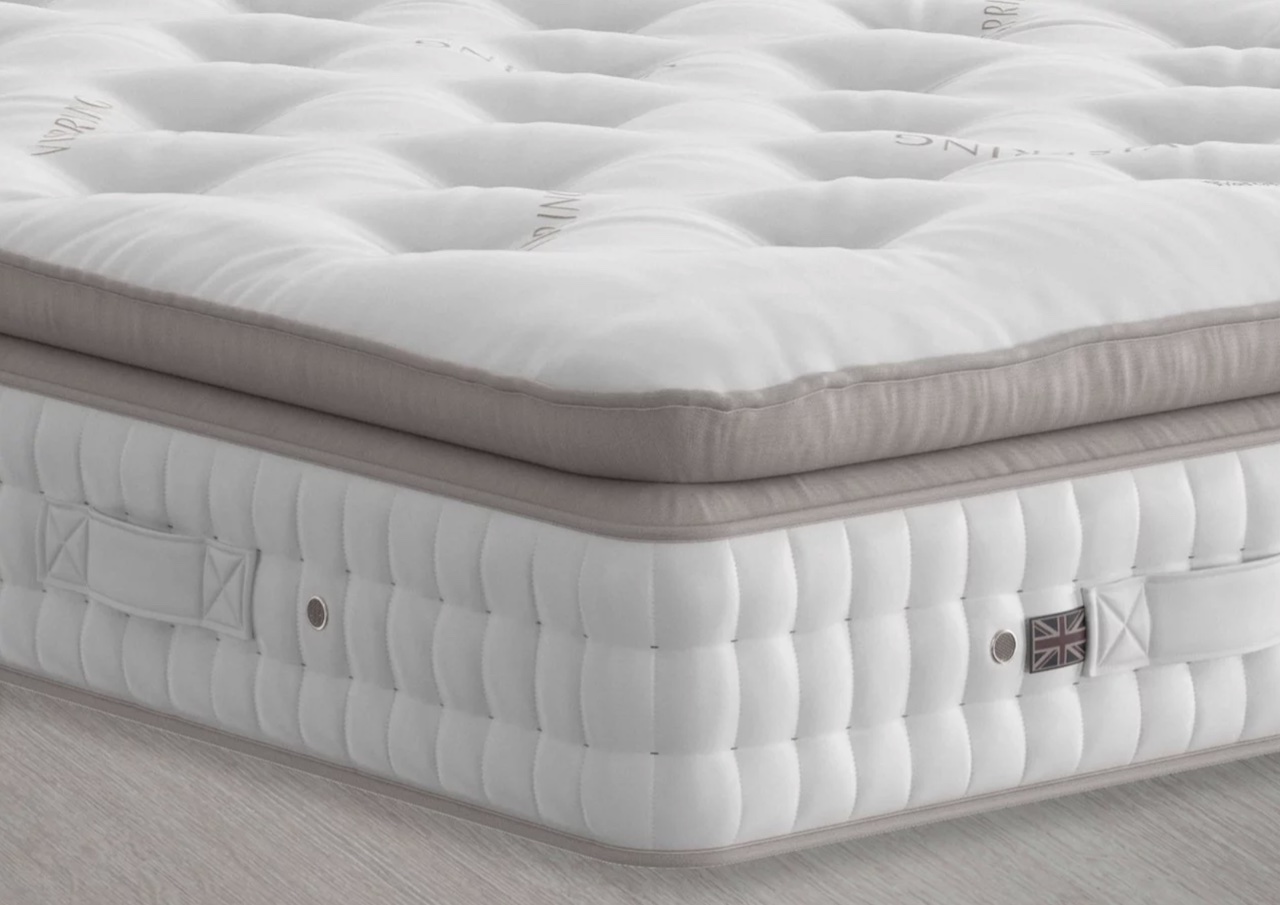
Image from https://www.vispring.com/en-uk/
What is wrong with pillowtop mattresses?
The main objection to pillowtops comes down to what you are expected to pay for them versus the lifespan you actually get out of them. Just like a no-turn mattress, you will be unable to flip it. When the pillowtop layer becomes indented and worn, you will eventually have to replace the entire mattress, even though the spring support beneath may still be perfectly serviceable.
At this point, we should be fair and note that pillowtops with a natural latex comfort layer are a partial exception to this argument, as latex is far more resilient than polyester or foam. However, you will be expected to pay a significant premium for this version, and even then, you still cannot turn the mattress, which remains a fundamental design compromise.
Here is a summary of the key problems with pillowtop mattresses:
- Cannot be turned or flipped — the fixed top layer makes the mattress permanently one-sided, accelerating wear in the areas you sleep on most
- Fibres migrate without tufting — most pillowtops are not tufted, meaning the filling shifts and creates lumps and dips over time
- Cannot remove or replace the top layer — when it compresses, you are replacing the whole mattress, even if the springs are fine
- Heat retention is worse — pillowtop beds, especially those with memory foam, are at least twice as likely to sleep hot as non-pillowtop beds
- Allergen and hygiene problems — the fixed top layer cannot be removed and washed, meaning dust, sweat and allergens accumulate within the structure
- Higher cost for lower longevity — pillowtops are priced at a premium but deliver a fraction of the lifespan of a quality two-sided mattress
How long does a pillowtop mattress last?
This is perhaps the most important question anyone buying a pillowtop mattress should ask, yet it is rarely discussed honestly in showrooms. The answer is not encouraging.
The fixed pillowtop layer itself typically lasts between two and five years before significant compression and sagging occur. The innerspring or foam core beneath may theoretically last longer, but once the top layer has gone, the mattress is effectively finished because you cannot remove or replace it. Independent research suggests that at least 30% of pillowtop mattress owners report significant sagging or compression within the first three years, regardless of their body weight.
A well-made two-sided natural fibre pocket sprung mattress, by contrast, can last anywhere from 10 to 15 years with proper turning and rotation. When you look at the numbers, the cost per night of a pillowtop versus a quality two-sided mattress tells a very different story from the showroom price tag.
| Mattress Type | Typical Lifespan | Can It Be Flipped? | Top Layer Replaceable? | Cost Per Night (estimate) |
|---|---|---|---|---|
| Pillowtop (polyester/foam top) | 3 to 5 years | No | No | Higher (short lifespan) |
| Pillowtop (latex top) | 5 to 8 years | No | No | High (premium price, still one-sided) |
| One-sided pocket sprung (no turn) | 5 to 7 years | No | No | Moderate |
| Two-sided natural fibre pocket sprung | 10 to 15 years | Yes | Yes (separate topper) | Lower over the mattress lifetime |
The maths is straightforward: a pillowtop that costs £1,000 and lasts four years works out at roughly 68p per night. A quality two-sided mattress at £1,295 that lasts 12 years works out at around 30p per night. The showroom price tells you nothing; the cost per night tells you everything.
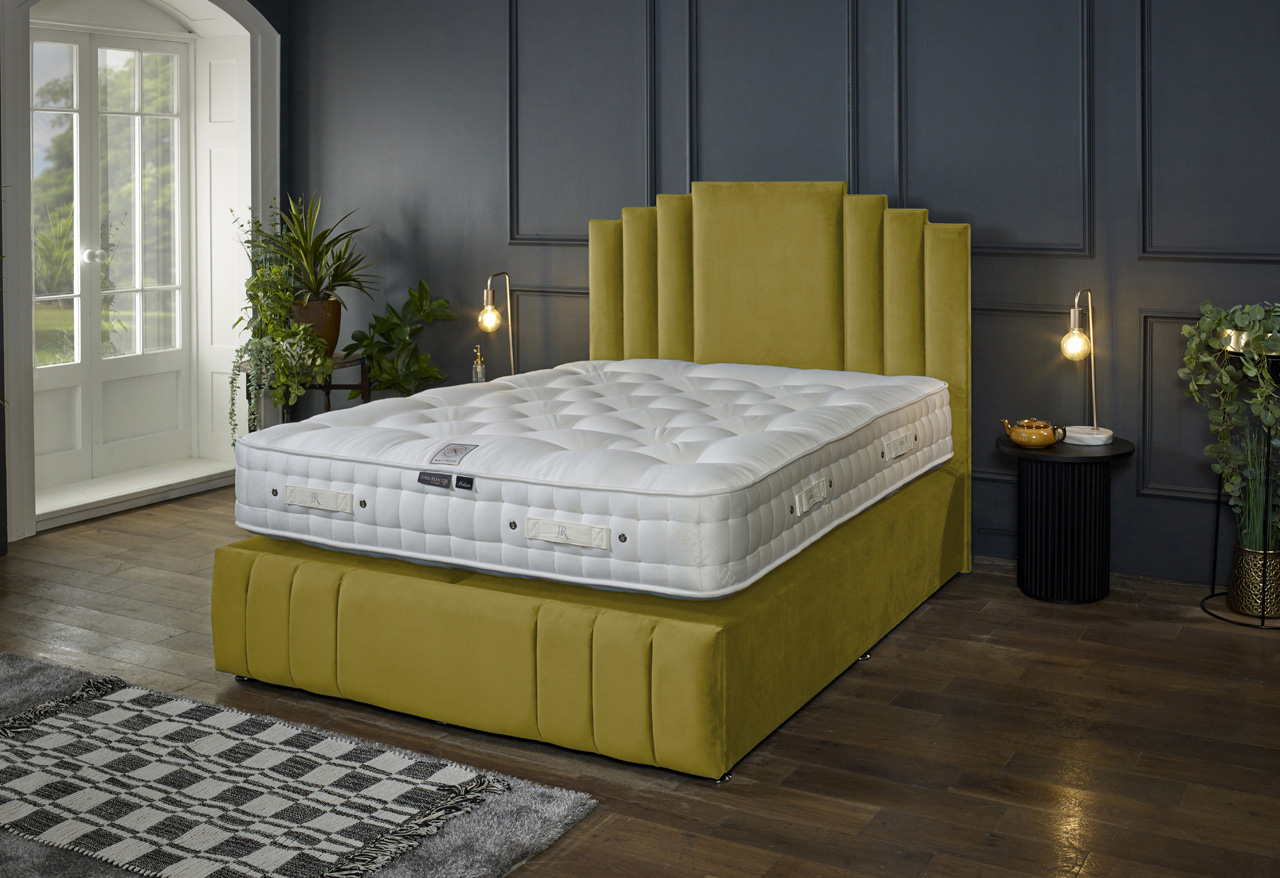
Pillowtop vs two-sided mattress: a direct comparison
To understand exactly why we advise against pillowtop mattresses, it helps to compare the two construction methods side by side across the factors that actually matter for long-term sleep quality.
| Feature | Pillowtop Mattress | Two-Sided Natural Fibre Mattress |
|---|---|---|
| Can be turned and flipped | No — permanently one-sided | Yes — four sleeping surfaces when combined with a topper |
| Comfort layer replacement | Impossible without replacing the whole mattress | Topper replaced independently at a fraction of the cost |
| Settlement and sagging | Rapid — no remedy once it occurs | Managed through turning and rotation |
| Temperature regulation | Poor — foam and fixed synthetic layers trap heat | Excellent — natural fibres actively regulate temperature |
| Hygiene | Poor — top layer cannot be removed or washed | Good — topper and protector can be washed and replaced |
| Allergen management | Difficult — trapped allergens in fixed layer | Better — removable, washable layers |
| Typical lifespan | 3 to 5 years (top layer) | 10 to 15 years with maintenance |
| Value over time | Poor | Excellent |
What is the difference between a pillowtop and a euro top mattress?
If you have spent any time researching mattresses, you have almost certainly encountered both terms and wondered whether they describe the same thing or something meaningfully different. Retailers frequently use them interchangeably, which adds to the confusion, so it is worth being clear about what each one actually means.
A standard pillowtop is sewn visibly onto the top surface of the mattress, with a small but noticeable gap between the soft top layer and the mattress body beneath. This gap is what gives a pillowtop its characteristic rounded, cushion-like appearance. Because it sits on top rather than within the mattress structure, the edges of the pillowtop do not align flush with the sides of the bed, which also means edge support tends to be softer and less defined.
A euro top is technically a type of pillowtop, but with the comfort layer stitched beneath the mattress cover rather than on top of it. The result is a cleaner, flatter appearance with no visible gap and edges that sit flush with the rest of the mattress. Euro tops tend to use slightly denser materials than standard pillowtops, which gives them a modest durability advantage and better edge support. In feel, a euro top is typically firmer around the perimeter and plushest in the centre, whereas a standard pillowtop has a more consistent softness across the whole surface.
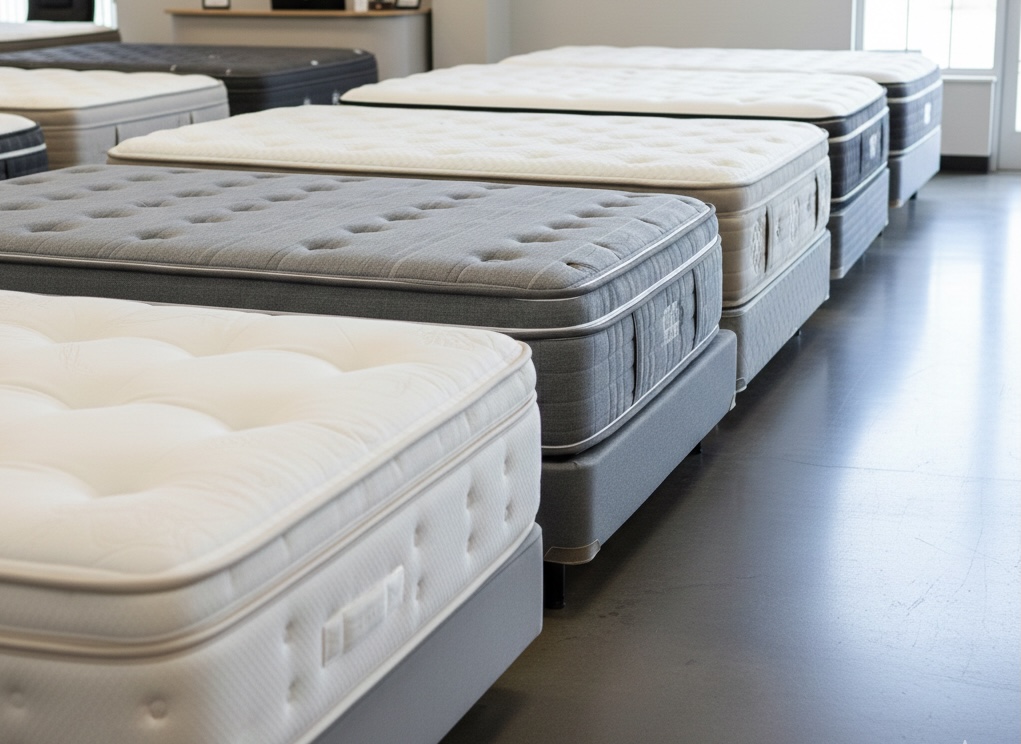
Here is where we need to be direct with you, because showrooms rarely are: for all practical purposes, both a pillowtop and a euro top share exactly the same fundamental flaws. Neither can be flipped. Neither has a removable comfort layer. Both will compress and sag over time, and when they do, you are replacing the entire mattress regardless of whether the spring unit beneath is still performing well. The euro top compresses slightly more slowly in most cases, but the outcome is the same.
| Feature | Pillowtop | Euro Top | Separate Removable Topper |
|---|---|---|---|
| Appearance | Visible raised layer with gap at edges | Flush with mattress edges, neater look | Sits on top, fully removable |
| Edge support | Softer, less defined | Better, firmer at perimeter | Determined by the mattress beneath |
| Can be removed? | No | No | Yes |
| Can be flipped? | No | No | Yes |
| Typical comfort layer lifespan | 2 to 4 years | 3 to 5 years | 5 to 10 years with rotation |
| Replaceable without changing the whole mattress? | No | No | Yes |
| Long-term value | Poor | Modest improvement | Excellent |
The euro top is a slightly better-engineered version of a flawed concept. If someone is trying to sell you a euro top as if it solves the problems associated with a pillowtop, it does not. The only construction that genuinely solves the problem is a two-sided mattress with a separate, removable and replaceable topper. That way, your comfort layer and your support unit can each be maintained and replaced independently, giving you far more control over the long-term performance of your bed.
Do pillowtop mattresses cause back pain?
This is a question we get asked frequently, and the honest answer is: not immediately, but quite possibly over time. When a pillowtop mattress is new, the extra comfort layer can actually feel very supportive and pressure-relieving. The problems tend to emerge as that top layer compresses, which can happen within months depending on the materials used.
Once the pillowtop layer sags, it creates an uneven sleep surface that causes your spine to fall out of alignment. This uneven support means your muscles and joints are working to compensate throughout the night, often resulting in back pain, hip pain or shoulder soreness that you may initially attribute to anything other than your mattress. The fact that compression tends to be heaviest where you sleep most — under your hips and shoulders — makes spinal alignment worse over time, not better.

A mattress that sags under your heaviest points is effectively bending your spine into a curved position for seven to nine hours each night. The cumulative effect of this on your back and posture can be significant. If you are waking up with back pain that eases during the day, your mattress’s inability to provide consistent support is the most likely culprit.
How does a pillowtop mattress affect different sleeping positions?
One of the more misleading things about pillowtop mattresses in showrooms is that they feel excellent to almost everyone who lies on them for a few minutes, regardless of sleeping position. The reality of living with one for months and years is quite different, and the problems tend to be position-specific.
Side sleepers are the most commonly cited beneficiaries of a pillowtop, and that’s not wrong initially. The extra comfort layer does provide meaningful pressure relief at the hip and shoulder for side sleepers, which are the two points where bodyweight is most concentrated in this position. The problem is that these are also the exact areas where compression occurs fastest, because they bear the most weight night after night. A side sleeper on a pillowtop will often find that within 12 to 24 months, the very areas that initially felt so comfortable have developed the deepest dips, creating a valley shape that pushes the spine into lateral curvature rather than keeping it neutral.

Back sleepers fare slightly better in the short term because their body weight is distributed more evenly across the mattress surface, and no single point bears the same concentrated pressure as the hip of a side sleeper. However, as the pillowtop compresses in the lumbar region over time, back sleepers tend to lose the support that keeps the lower back in its natural curve. The mattress begins to feel as though it is pulling the lower back downward rather than gently supporting it, and morning stiffness in the lumbar area is one of the most common complaints we hear from back sleepers who have had a pillowtop for two or more years.
Stomach sleepers are probably the worst served by a pillowtop, even when it is brand new. In the stomach sleeping position, the hips are the heaviest part of the body and sink deepest into any soft surface. On a pillowtop, this creates a pronounced dip at the pelvis, tilting the spine into an arched position that places significant strain on the lower back over the course of a night. For stomach sleepers, a firmer, flatter sleep surface is almost always the better choice, and a plush pillowtop moves in exactly the wrong direction.

Combination sleepers, who move between positions during the night, tend to notice the uneven wear of a pillowtop more acutely than anyone else, because they are using a wider area of the mattress surface and the compression pattern becomes irregular more quickly. An uneven sleep surface is considerably more disruptive to someone who moves around than to someone who sleeps predominantly in one position.
The common thread across all sleeping positions is that a separate topper on a supportive two-sided mattress can be matched to your specific position and body type, then rotated and eventually replaced when needed — none of which is possible with a fixed pillowtop.
Does your weight affect how quickly a pillowtop mattress wears out?
This is one of the most common misconceptions around pillowtop mattresses, and it is worth addressing directly. Many people assume that sagging and compression are problems primarily for heavier sleepers, and that a lighter person will get many more years from a pillowtop before problems develop. The data does not support this.
Research into owner experiences across hundreds of pillowtop mattresses consistently shows that significant sagging and compression within the first three years of ownership is reported by around 30% of pillowtop owners, regardless of body weight, including those weighing well under 11 stone. The primary driver of compression is not how heavy you are but rather the quality and density of the materials used in the pillowtop layer, and whether or not the layer is tufted to keep the filling evenly distributed.
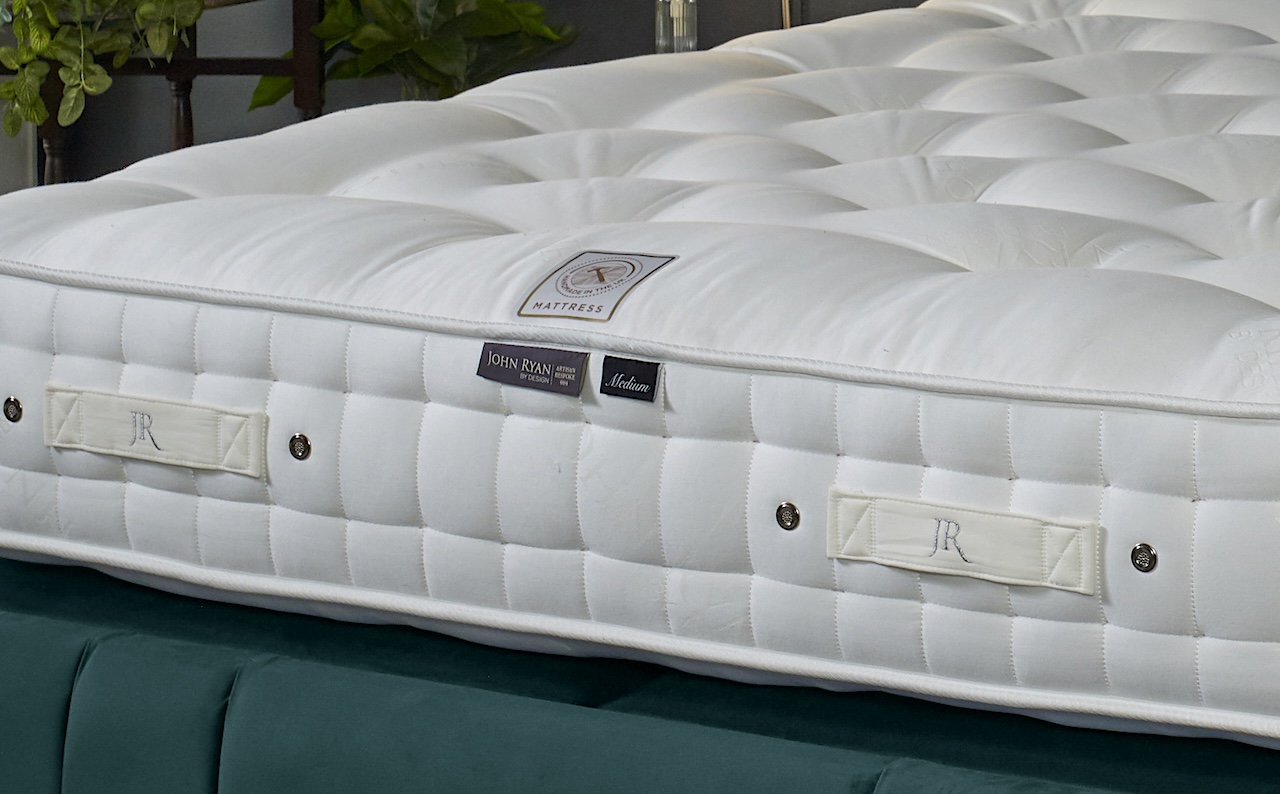
A pillowtop filled with low-density polyester or foam will compress relatively quickly at any body weight because the fibres or cells within the material simply break down under repeated pressure and do not recover their original loft. A heavier person will accelerate this process somewhat, but a lighter person will still experience the same outcome, just perhaps a year or two later.
Without tufting to anchor the filling in place, the materials also migrate toward the edges of the mattress over time, creating a lumpy, uneven surface that has nothing to do with the sleeper’s weight at all.
Where body weight does genuinely matter is in the choice of spring tension and support unit within the mattress core itself. A heavier sleeper needs a firmer, more supportive spring unit to maintain correct spinal alignment and prevent the spring core from sagging. But this is an argument for choosing the correct firmness of a good two-sided mattress rather than for or against a pillowtop specifically.
If a salesperson tells you that a pillowtop will last longer because you are a lighter sleeper, treat this with scepticism. It will last somewhat longer, but the fundamental limitation of a fixed, non-turnable comfort layer remains the same regardless of your build.
Pillowtop mattress warranties: what they actually cover
This is something retailers very rarely discuss at the point of sale, and it catches a significant number of customers out when they try to make a claim. Understanding how mattress warranties treat compression and sagging before you buy a pillowtop is genuinely important, because the warranty terms and the reality of how these mattresses perform do not always align as neatly as you might hope.
Most pillowtop mattress warranties from major UK and international retailers cover what is called a manufacturing defect, which typically includes things like broken springs, faulty stitching or structural failure of the core.
What most warranties do not cover, or cover only in limited circumstances, is the normal compression of the comfort layer. This is usually addressed in the small print through a clause specifying that only indentations or sags exceeding a certain depth will be considered a warranty claim.

That threshold matters a great deal. Many warranties set the minimum claimable indentation at 38mm (approximately an inch and a half) or even 50mm (two inches). In practice, a pillowtop comfort layer that has compressed by 25mm (one inch) can already feel significantly different from when it was new and may already be disrupting your sleep and spinal alignment. Because it has not yet reached the warranty threshold, the manufacturer has no obligation to replace or repair it, leaving you sleeping on a mattress that is noticeably worse than what you paid for, with no recourse.
The measurement method used to assess warranty claims also tends to work against the customer. Most manufacturers measure indentation with no weight on the mattress and without bedding, using a straight edge across the sleep surface. The compression that occurs when a person of a specific weight lies in a habitual sleeping position is not captured by this measurement, which means real-world sagging is routinely worse than the warranty measurement suggests.
Before purchasing any pillowtop mattress, it is worth asking the retailer directly: what is the minimum indentation depth your warranty covers, and how is it measured? If the answer is anything greater than 25mm, factor that into your assessment of the mattress’s real-world lifespan and value. A two-sided mattress with a separate replaceable topper sidesteps this issue entirely, because the topper is a separate product with its own simpler replacement pathway, and the mattress beneath it is protected from compression in the first place.
A Pillowtop mattress means you can’t turn your mattress
You’re better off with a removable topper and 2-sided mattress, so you can turn both.
The better alternative: John Ryan mattress toppers
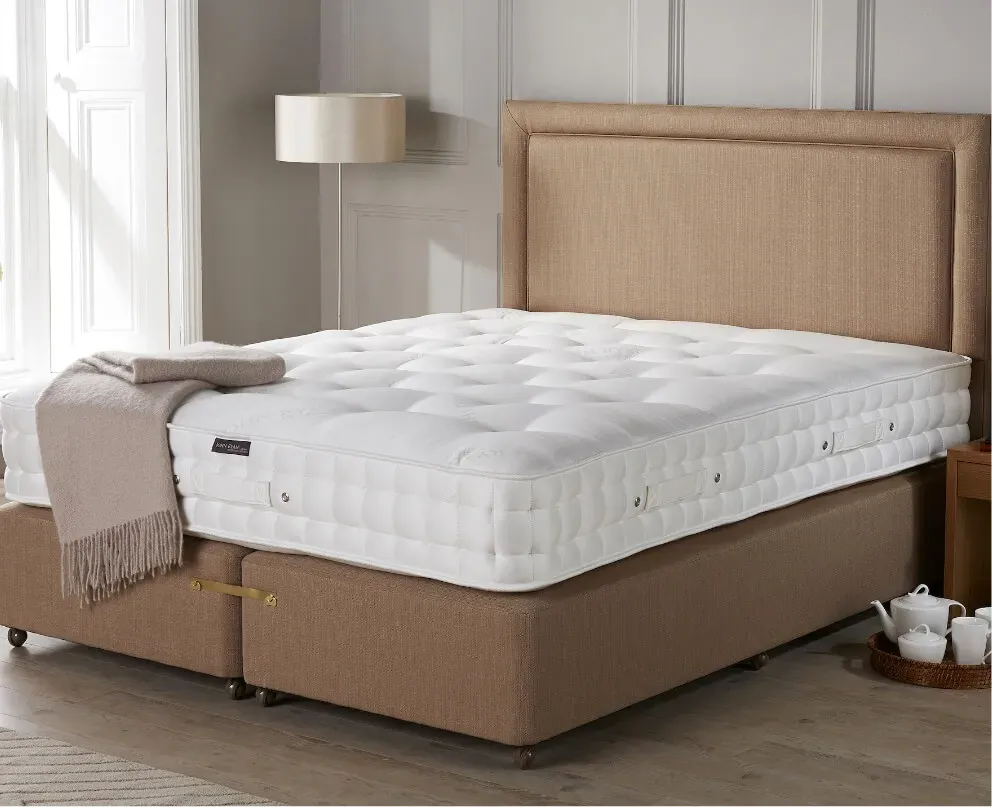
Rather than a fixed pillowtop that you cannot remove, turn or replace, we make separate mattress toppers here in the UK that give you all of the initial plush comfort of a pillowtop with none of the permanent drawbacks. You can turn them, rotate them, remove them for cleaning, and replace just the topper rather than the entire mattress when the time eventually comes.
Our topper range uses natural fibres rather than the polyester or memory foam found in most fixed pillowtops, which means better breathability, better temperature regulation and a comfort layer that behaves very differently from a synthetic alternative.
| Topper | Depth | Key Material | King Size Price | Best For |
|---|---|---|---|---|
| Mulberry Silk Topper | 6cm | 100% Mulberry Silk | £240 | Temperature regulation, light plush feel, hot sleepers |
| Hotel Quality Dual Layer Topper | 9cm | Dual layer construction | £145 | Generous depth, good all-round comfort upgrade |
| Microfibre Topper | 10cm | Microfibre | £110 | Budget-friendly softness, good depth |
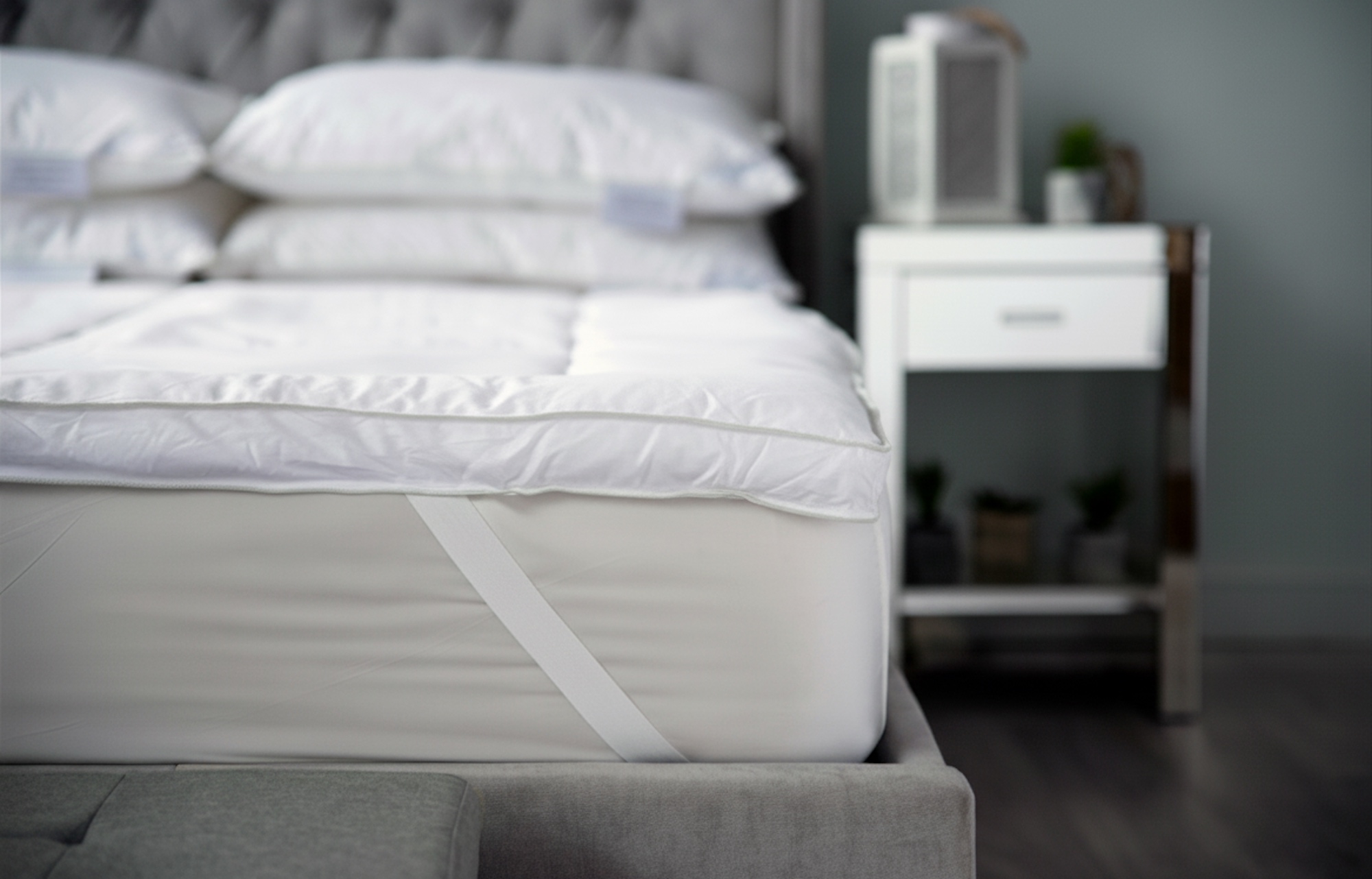
The key difference between these and a fixed pillowtop is that every single one of them can be removed, turned and rotated. When they eventually need replacing — which will be years down the line with proper care — you replace only the topper, not the entire mattress beneath it. This is exactly how a quality sleep setup should work.
Pair any of our toppers with a quality two-sided pocket sprung mattress and a 100% Cotton quilted mattress protector (£55 king size) to act as a hygienic barrier, and you have a sleep system that is genuinely maintainable rather than a disposable one-sided product.
What is the best alternative to a pillowtop mattress?
We would always advise buying a separate topper that can be turned and rotated, combined with a decent handmade two-sided mattress that can also be flipped. This method gives you all the benefits of a pillowtop with none of the drawbacks. The separate topper can be turned and rotated like a regular mattress, and when it eventually does need replacing, only the topper needs to go — not the whole bed.
None of our mattress range uses pillowtops, because they are a serious design flaw when it comes to making a quality mattress that lasts. Where we do use toppers, you can completely remove, turn and rotate them. None of our mattresses are one-sided, because we believe a mattress you cannot flip is half the mattress it should be for the money.
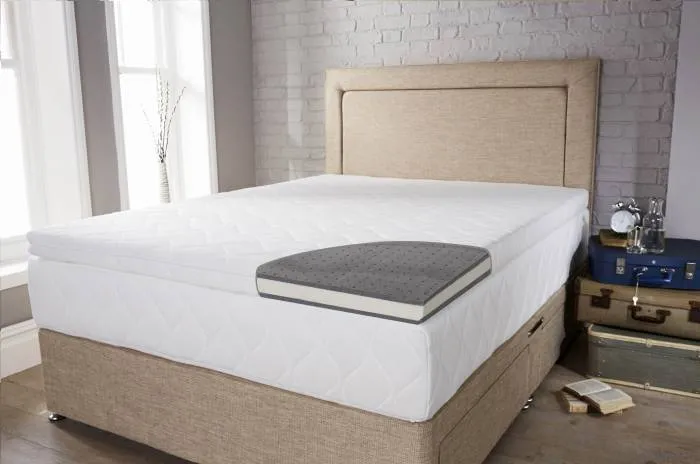
Our recommended starting point for most customers looking for a pillowtop alternative is the Artisan Express at £1,295 king size, a two-sided pocket sprung mattress made here in the UK with natural fibres. Add one of our removable toppers on top and you have a combination that outperforms any fixed pillowtop at a comparable price, and will keep performing long after a pillowtop has been sent to landfill.
Can I fix a failed pillowtop mattress?
Unfortunately, in most cases, the answer is no. You cannot fix a failed or sagged pillowtop mattress in any meaningful way. The pillowtop is usually permanently glued and stitched to the top of the regular mattress, and whilst you could attempt to cut it away, the results are unpredictable, and you risk compromising the integrity of the core mattress and cover in the process.
Some people try placing a mattress topper over a sagging pillowtop to mask the problem, and this can provide some short-term relief. However, you are essentially sleeping on an uneven base, and the topper will begin to mirror the dips beneath it over time. The most effective solution when a pillowtop mattress fails is to replace the mattress, which is exactly what manufacturers know will happen and why they sell these products in the first place.
The best way to fix a pillowtop mattress problem is to avoid them entirely.
Summary
Our advice on pillowtop mattresses is simple: buy a decent two-sided pocket-sprung mattress and add a separate, removable topper to suit your comfort preferences. A mattress protector will keep the two together cleanly and hygienically. You can then turn and rotate both the mattress and the topper independently, getting maximum use out of both and extending the life of your sleep setup significantly beyond what any pillowtop can offer.
The topper will naturally wear out before the mattress, but the replacement cost of a topper alone is a fraction of what you would spend replacing an entire failed pillowtop mattress. A well-maintained two-sided mattress combined with a quality topper will outlast two or three pillowtop replacements — and cost considerably less over the years. If you would like tailored advice, call our small, friendly team of experts on 0161 437 4419.
Dreaming of the perfect nights sleep?
Ask us a question
There are over 6000 questions and answers submitted by you on all questions about mattresses and bed problems. Enter a keyword such as Vi Spring, John Lewis beds, bad back or Memory Foam and see if your question has already been answered.
If you can’t find an answer in knowledge hub, ask a new question. We aim to respond to all questions within one working day.
Newsletter
Enter your email to join our newsletter. We’ll send you occasional news and mattress expertise.