






Mattress Help
April 2026Sleep Hygiene: how to sleep better
Everyone understands that relaxed, refreshed feeling after a long, deep night of sleep. When your sleep cycle is regularly disturbed, that feeling can seem almost out of reach. Poor sleep affects far more than your mood. It affects concentration, decision-making, physical recovery, and long-term health. Sleep hygiene is the term used for the daily habits and routines that set you up for consistently good sleep. Think of it as a toolkit you build around yourself, covering everything from what you eat and drink during the day to the environment you sleep in at night.

This guide covers the full picture: what sleep hygiene actually means, how much sleep adults actually need, the habits that make the biggest difference, and why your sleeping environment, including your mattress, matters more than most people give it credit for.
- What is sleep hygiene?
- How much sleep do adults need?
- Sleep hygiene tips: how to sleep better at night
- Keep a consistent sleep schedule
- Your bedroom environment matters
- Caffeine, alcohol, nicotine and what you eat
- Warm drinks before bed
- Screens, blue light and natural light
- Building a wind-down routine
- Exercise and sleep
- Is your mattress affecting your sleep?
- When sleep hygiene is not enough
- Summary
What is sleep hygiene?
Sleep hygiene is a term used to describe the collection of habits, routines and environmental conditions that support a good night’s sleep. It covers what you do during the day as much as what you do in the hour before bed. The NHS, the Sleep Charity and sleep medicine specialists all broadly agree on the same core principles, because the underlying science is consistent: your body runs on an internal clock called the circadian rhythm, and sleep hygiene is largely about keeping that clock well-calibrated.
The term sometimes gets dismissed as obvious advice, but the reality is that most adults are consistently breaking at least two or three of the core rules without realising it, and those small daily habits compound over time into genuine sleep debt and fatigue.
Sleep hygiene will not cure clinical insomnia or sleep disorders. If your sleep problems are severe and persistent, your GP is the right starting point. But for the majority of people experiencing poor quality sleep, disrupted nights or difficulty switching off, improving sleep hygiene is the single most effective change you can make without any medical intervention.
How much sleep do adults need?
Before working on the habits that shape your sleep, it helps to understand what you are aiming for. Most adults need between seven and nine hours of sleep per night, and this figure is consistent across the NHS, the National Sleep Foundation, and the American Academy of Sleep Medicine. The right amount for you personally will sit somewhere in that range and is largely determined by genetics rather than lifestyle.
A useful rule of thumb: if you regularly wake up feeling rested without an alarm, and you do not feel drowsy during the day, you are getting enough sleep. If you rely heavily on an alarm, feel foggy in the morning, or find yourself struggling to concentrate by mid-afternoon, you probably are not. These signals matter because the habits below are only worthwhile if you are also giving yourself enough time in bed for sleep to actually occur.
Sleep hygiene tips: how to sleep better at night
The tips below are grounded in current sleep science guidance and reflect the guidelines recommended by Professor Jason Ellis of Northumbria University, published by the Sleep Charity as the definitive UK best-practice framework. None of them require any special equipment or significant lifestyle overhaul. They do require consistency, because that is the key word in sleep hygiene. A single good night is not the goal. A reliable pattern of good nights is.
1. Keep a consistent sleep schedule
This is the single most important principle in sleep hygiene. Going to bed and waking up at the same time every day, including weekends, reinforces your circadian rhythm. Your body learns to expect sleep at a certain time and begins preparing for it in advance, releasing melatonin and reducing core body temperature in anticipation.
When your schedule shifts around, the body’s internal clock falls out of sync. This is exactly what causes that groggy, jet-lagged feeling after a weekend of late nights, even if you technically slept for eight hours.
The most important anchor is your wake-up time. Fix it and keep it consistent. Your sleep onset will gradually stabilise around it. If you find yourself unable to fall asleep within about twenty minutes of going to bed, get up rather than lying there becoming increasingly frustrated. Do something calm in low light and return to bed when you feel genuinely tired. Frustration in bed creates a negative association that makes the problem worse over time.
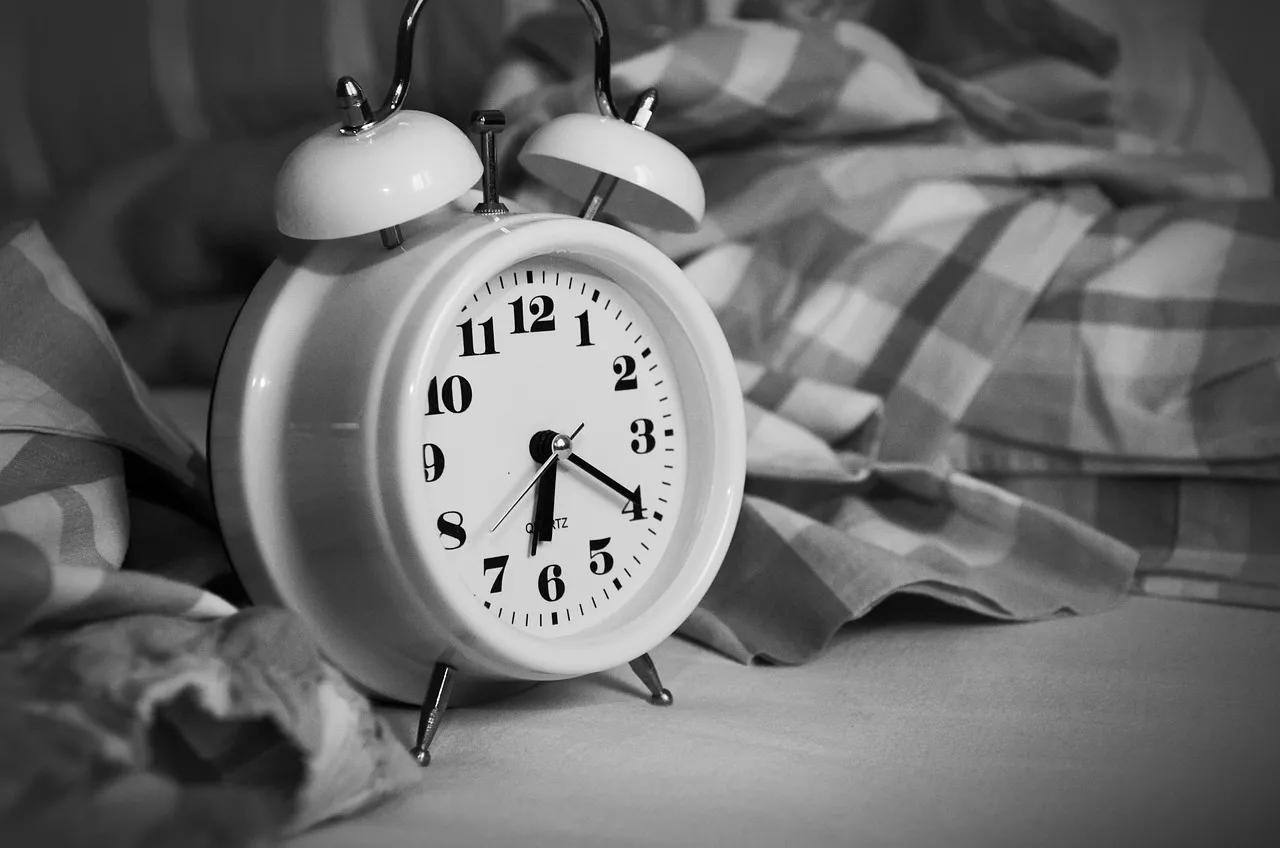
It also helps to hide or turn your clock away from view during the night. Watching the minutes pass when you cannot sleep raises anxiety and cortisol levels, which makes sleep harder to achieve. Removing the temptation to check the time is a small change that consistently helps light sleepers.

2. Your bedroom environment matters
Temperature regulation is one of the most underestimated factors in sleep quality. Your core body temperature naturally drops as you move towards sleep, and a bedroom that is too warm interferes with this process. Most sleep specialists recommend keeping the bedroom cooler than the rest of the house, somewhere between 16 and 18 degrees Celsius for most adults.
Darkness is equally important. Even low levels of ambient light can suppress melatonin production. Blackout blinds or curtains make a meaningful difference, particularly during summer months when early mornings are light well before most people need to wake up.
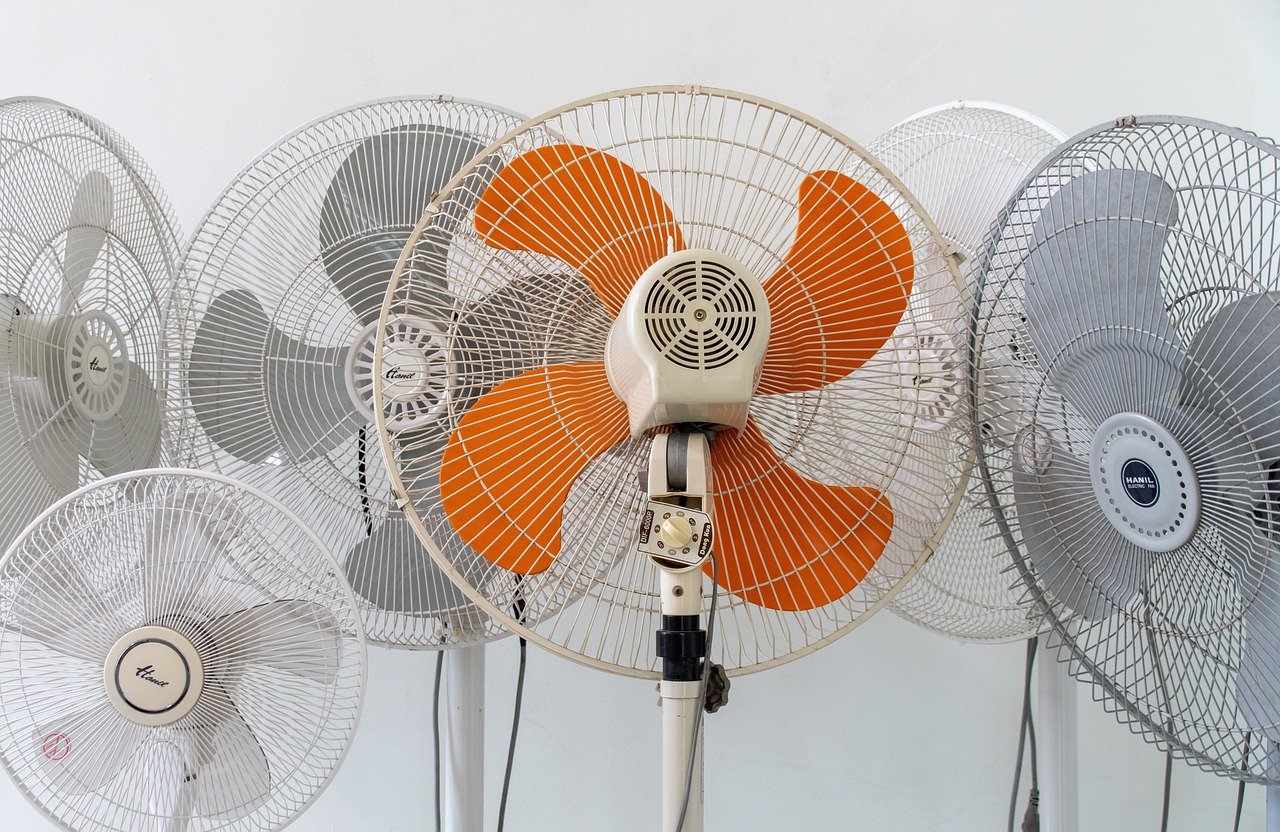
Noise disruption is the third factor. For light sleepers in noisy environments, earplugs are a practical, inexpensive solution. Some people also find that consistent background sound, such as a fan or a white noise machine, reduces the impact of unpredictable noise by masking it.
Your bedroom should be associated with sleep, and sleep only. The brain builds stimulus-response associations through repetition. When you work in bed, watch television in bed, or scroll on your phone under the covers, you teach your brain that bed is a place of activity and alertness. Over time, simply getting into bed stops triggering the drowsiness response because the association has been diluted. Keeping the bedroom for sleep means that getting in becomes a reliable signal that sleep is coming, and the body responds accordingly.
3. Caffeine, alcohol and nicotine
Caffeine
Caffeine has a half-life of roughly five to six hours in most adults, and some people metabolise it more slowly than that. As a practical guideline, the Sleep Charity recommends cutting off caffeine around six to eight hours before your intended bedtime. For most people going to bed at 10 or 11pm, that means stopping after 2pm or 3pm at the latest. Remember that caffeine is not limited to coffee: tea, cola, energy drinks and even dark chocolate all contain meaningful amounts that accumulate across the day.
Alcohol
Alcohol is a sedative and many people feel it helps them fall asleep. The problem is what happens a few hours later. As alcohol is metabolised, it becomes a stimulant, causing lighter, more fragmented sleep in the second half of the night. It also suppresses REM sleep, the stage most associated with emotional processing and memory consolidation. Regular evening drinking consistently reduces sleep quality even when it does not appear to cause obvious waking.
Nicotine
Nicotine is a stimulant and its effects on sleep are often overlooked because they are less visible than those of caffeine or alcohol. Smoking close to bedtime raises heart rate and alertness and makes falling asleep harder. People who smoke also tend to experience lighter sleep overall and are more likely to wake during the night as nicotine levels drop and mild withdrawal begins. Avoiding nicotine in the two hours before bed, and during any night waking, reduces this disruption.
Food and timing
Eating a heavy meal within two to three hours of bedtime forces your digestive system to keep working when your body is trying to wind down. This can cause discomfort, indigestion and disrupted sleep. Equally, going to bed hungry can cause waking during the night. The balance to aim for is satisfied but not full. If you are prone to night waking and are eating late, adjusting your evening meal time is one of the quickest changes you can make.
4. Warm drinks before bed
A warm, non-caffeinated drink in the wind-down period before bed is genuinely useful, and the science behind it is straightforward. Drinking something warm raises your core body temperature slightly, and as your body then dissipates that heat, your temperature drops, which is one of the physiological signals that triggers drowsiness. Warm milk works particularly well because milk contains tryptophan, an amino acid that the body converts to serotonin and eventually melatonin, the hormone that regulates sleep.
Herbal teas such as chamomile, valerian root and passionflower are also commonly used and have mild relaxing properties, though the evidence for these is less robust than for the temperature effect of the warm drink itself. The important distinction is what to avoid: hot chocolate and some herbal tea blends can contain caffeine or theobromine, both of which are stimulants. If you enjoy hot chocolate before bed, it is worth knowing that cocoa contains theobromine, which is a milder stimulant than caffeine but can still delay sleep onset in sensitive individuals.
We have a full guide to whether hot chocolate before bed helps or hinders sleep if you want to explore this in more detail.

Avoid caffeine 2 hours before you go to bed
Avoid late night eating which can cause indigestion


5. Screens, blue light and natural light
Evening screen use
The issue with screens before bed is twofold. Blue light from phones, tablets and laptops suppresses melatonin production, making it harder for your body to move into sleep mode. But beyond the light itself, the content you are consuming, whether social media, news, work emails or anything mentally stimulating, keeps your brain alert at exactly the moment it needs to be winding down.
Building a screen-free window of at least an hour before sleep is one of the most consistently recommended sleep hygiene practices. If that feels difficult initially, starting with thirty minutes is a realistic first step. Night mode settings on devices reduce blue light output but do not address the mental stimulation problem, so they are a partial measure rather than a complete solution.
Natural light during the day
Getting exposure to natural daylight during the morning and early afternoon helps set your circadian rhythm and promotes appropriate melatonin release at the right time in the evening. During winter months in the UK, when daylight is limited and many people travel to and from work in darkness, this becomes particularly relevant. Even fifteen minutes outside during your lunch break makes a difference. Light therapy boxes are a practical option for people with very limited daytime light exposure.
6. Building a wind-down routine
Your body does not transition instantly from alert to asleep. It needs time to down-regulate, and a consistent pre-sleep routine helps signal that transition. The specifics matter less than the consistency: what you are training your brain to recognise is a sequence of familiar cues that sleep is approaching.
Common options that work well include a warm bath or shower (the subsequent drop in body temperature as you cool down is genuinely sleep-inducing), light reading, gentle stretching or yoga, a short mindfulness or breathing practice, or simply sitting quietly with a non-caffeinated warm drink. The key is that your routine is calming, screen-free and done in roughly the same order each night.
Writing lists before bed, something we genuinely do here at John Ryan, is worth mentioning separately because it is particularly effective for people whose minds race at night. Getting your to-do list, worries or outstanding thoughts out of your head and onto paper gives your brain permission to stop cycling through them. Research from Baylor University found that writing a detailed to-do list before sleep helped people fall asleep significantly faster than journalling about completed tasks.

Napping
Napping during the day reduces your body’s sleep pressure, making it harder to fall asleep that evening. If you find napping necessary, keeping it to twenty to thirty minutes and completing it before mid-afternoon limits the disruption to your night. Long naps or late afternoon naps are consistently associated with difficulty falling asleep at bedtime.
7. Exercise and sleep
Regular physical exercise is consistently associated with better sleep quality and deeper, more restorative sleep stages. The timing, however, matters for some people. Vigorous exercise within two hours of bedtime can delay sleep onset for those who are sensitive to it, because exercise raises core body temperature and cortisol levels. If you exercise in the evening and sleep well, there is no need to change anything. If you exercise in the evening and struggle to fall asleep, moving your session to the morning or early afternoon is worth trying.
Even moderate exercise, such as a thirty-minute walk during the day, has measurable positive effects on night-time sleep quality and the depth of sleep stages. The Sleep Charity recommends leaving at least two hours between vigorous exercise and your intended bedtime as a practical minimum.

Natural light plays an important part in your sleep cycle; light boxes can help keep you in sync
Turning off your gadgets 2 hours before bed can drastically improve your sleep patterns


8. Is your mattress affecting your sleep?
If you have worked through the habits above consistently and your sleep quality is still poor, your sleeping surface deserves serious attention. A mattress that does not match your body weight, sleeping position or temperature regulation needs will undermine every other sleep hygiene effort you make.
We speak to customers every day who have been sold the wrong spring tension for their weight, or who are sleeping on a foam mattress that retains heat and disrupts their temperature regulation through the night. No amount of good pre-sleep routine compensates for spending eight hours on a surface that does not support your spine properly or leaves you waking up hot and uncomfortable.
Here is what to check about your mattress:
- Visible dips or sags in the sleeping surface, particularly where you lie most often
- Springs that can be felt through the comfort layers
- Waking up with back, hip or shoulder pain that eases during the day
- Waking consistently hot or sweating during the night
- A mattress that has not been turned or rotated regularly
- A mattress that is more than seven to eight years old
Spring tension and your weight
Spring tension is determined by your body weight, not by personal preference for firm or soft. A mattress with too soft a spring unit for your weight will not provide adequate support and will begin to sag prematurely. One with too firm a spring unit will not allow pressure relief at the hips and shoulders. Most people are sold on the basis of what feels comfortable in a showroom for thirty seconds, which tells you almost nothing about suitability.
The table below gives a guide to appropriate spring tension by weight.
| Spring Tension | Wire diameter (Gauge) | Weight Range |
|---|---|---|
| Soft | 1.2mm | Bespoke Tension (Please Call) |
| Medium | 1.4mm | Upto 16 stone |
| Firm | 1.6mm | 16 stone plus |
| Extra Firm / Orthopaedic | 1.9mm | 20 stone plus |
If you and your partner are significantly different in weight, a zip and link or split tension mattress gives each of you the correct support independently.
Comfort layers and sleeping temperature
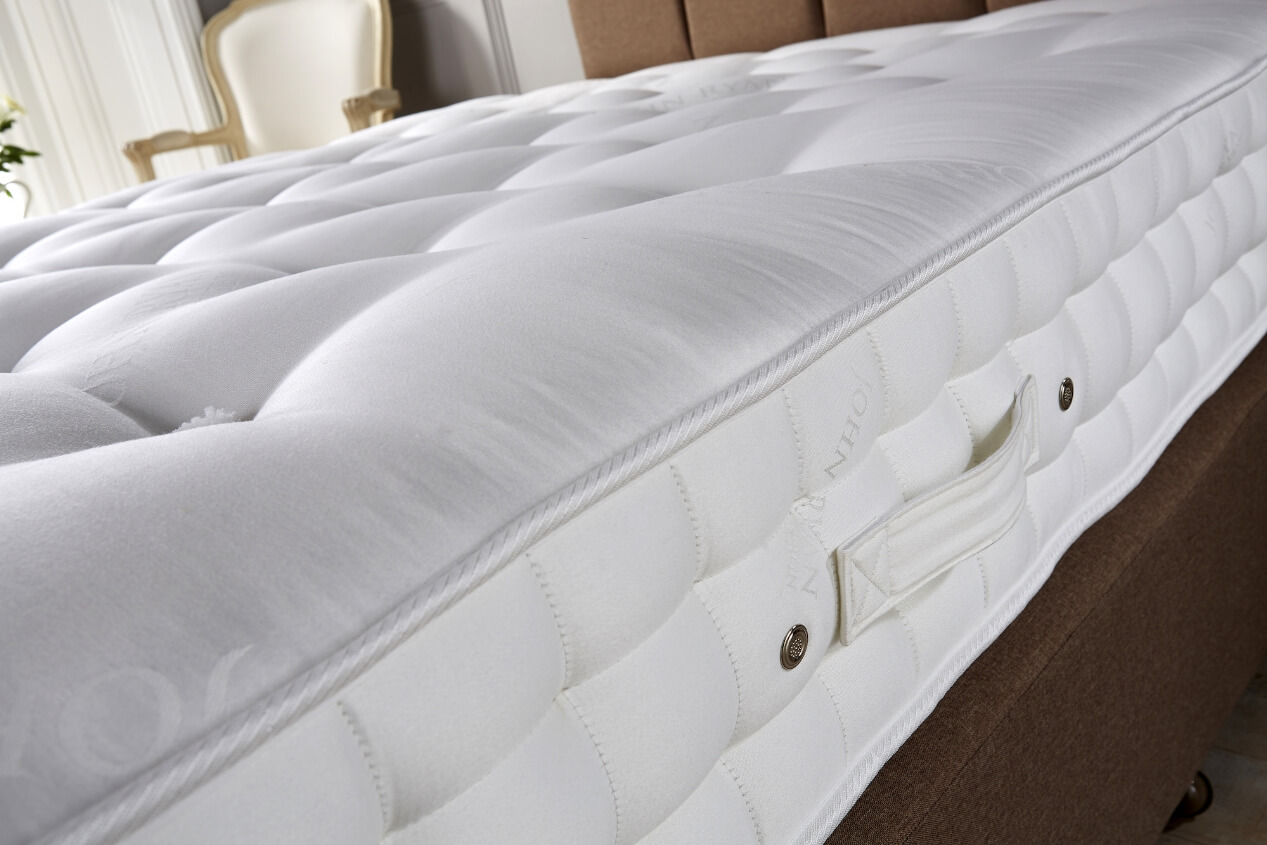
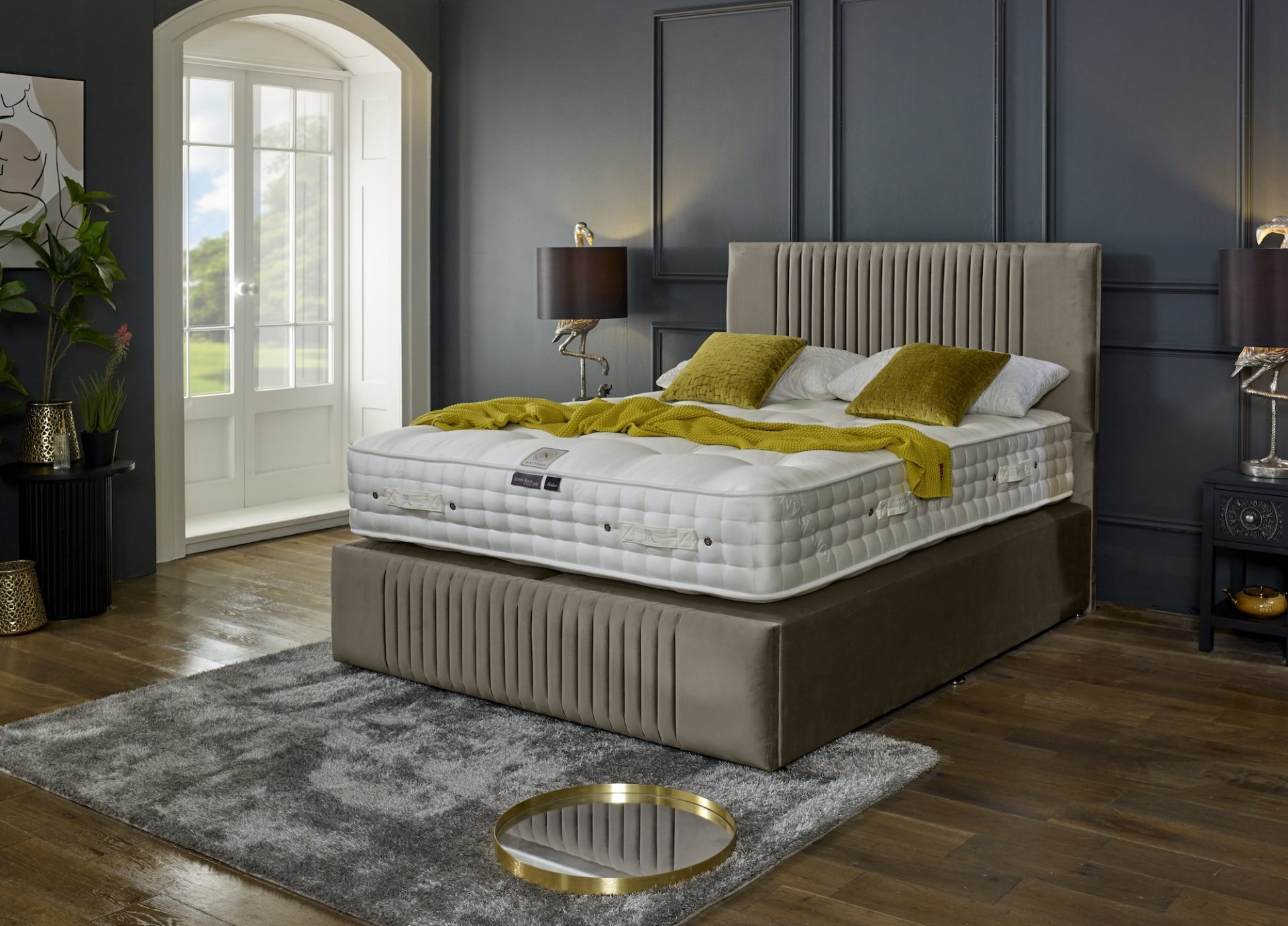
The upholstery layers above the spring unit determine feel and temperature regulation. Synthetic foam layers, including memory foam, retain heat because they have a closed-cell structure that does not allow air to circulate. If you regularly sleep hot or wake with sweating, a natural fibre comfort layer using Wool, Cotton, Horsehair or natural Latex will regulate your temperature far more effectively. These fibres are breathable, moisture-wicking and naturally thermoregulating in a way that synthetic alternatives cannot replicate.
Natural versus synthetic construction is one of the most important distinctions to understand when choosing a mattress that supports good sleep hygiene long-term.
When to replace your mattress
Entry-level synthetic and foam mattresses typically last between three and five years before the upholstery compresses and support is compromised. A well-made, double-sided pocket spring mattress with natural fibre upholstery will last significantly longer when turned regularly, often ten years or more. If your mattress is approaching or beyond this point, the investment in replacement is not a luxury purchase: it is a direct investment in your health and sleep quality.
If you would like help choosing the right mattress for your body and sleeping style, our team in Manchester is available by phone at 0161 437 4419. We make mattresses here in the UK and can talk through every specification in detail.
When sleep hygiene is not enough
Sleep hygiene addresses lifestyle factors and environmental conditions. It is not a treatment for clinical sleep disorders. If you have made consistent changes to your habits and sleep environment over several weeks and your sleep quality has not improved, or if you are experiencing symptoms such as very loud snoring, waking frequently with a choking sensation, persistent insomnia lasting more than three months, or excessive daytime sleepiness that affects your ability to function, these warrant a conversation with your GP rather than further lifestyle adjustments.
Your GP can assess whether an underlying condition such as sleep apnoea, restless legs syndrome, or depression is contributing to your poor sleep and can refer you to appropriate support, including Cognitive Behavioural Therapy for Insomnia (CBT-I), which has a strong evidence base for treating chronic insomnia and is available on the NHS.
Summary
Good sleep hygiene is a combination of consistent daily habits and a sleeping environment that genuinely supports rest. Most adults need seven to nine hours of sleep per night, and the habits below help ensure that the time you spend in bed is actually restorative. The changes that make the biggest difference are keeping a fixed sleep and wake schedule, removing screens well before bed, cutting off caffeine six to eight hours before you intend to sleep, avoiding alcohol and nicotine in the evening, building a calming wind-down routine, and keeping your bedroom cool, dark and associated only with sleep. A warm, non-caffeinated drink can support the wind-down process. Exercise during the day supports deeper sleep at night.
Underneath all of that, your mattress is the physical foundation. If it does not match your weight, position or temperature regulation needs, the habits around it can only do so much. We have been making mattresses here in the UK for over twenty-five years. If you would like to understand what would work best for you, our team is always happy to talk it through on 0161 437 4419, or you can visit our mattress shop to explore the full range.

Dreaming of the perfect nights sleep?
Ask us a question
There are over 6000 questions and answers submitted by you on all questions about mattresses and bed problems. Enter a keyword such as Vi Spring, John Lewis beds, bad back or Memory Foam and see if your question has already been answered.
If you can’t find an answer in knowledge hub, ask a new question. We aim to respond to all questions within one working day.
Newsletter
Enter your email to join our newsletter. We’ll send you occasional news and mattress expertise.