






Sleep & Well Being
March 2026Best Mattress for Hip Pain UK: A Guide from the Makers
In the vast majority of cases, it comes down to two things: your sleeping position and the comfort layer between you and the springs. Get both of those right, and the difference is significant.
We have been making mattresses here in Manchester for over 25 years and have spoken to thousands of people with hip pain. This guide explains why it happens, what to look for in a mattress, and which of our models we would recommend based on your weight and sleeping style.
Jump to:
- Why does sleeping cause hip pain?
- How your sleeping position affects your hips
- What your mattress is actually doing to your hip
- Why spring tension matters as much as comfort
- The firm mattress myth
- Why natural fibres help with hip pressure
- Can a mattress topper help with hip pain?
- Hip bursitis and what it means for your mattress choice
- Hip arthritis and sleeping
- Our mattress recommendations for hip pain
- Frequently asked questions
Why does sleeping cause hip pain?
The hip joint is the largest ball-and-socket joint in the body. It bears an enormous amount of load during the day, which is precisely why it needs genuine rest at night rather than spending eight hours under pressure from the wrong surface. When you lie on your side, the entire weight of your upper body concentrates on a relatively small area of the hip, specifically the greater trochanter, the bony prominence on the outer side of your upper thigh. If the surface underneath you does not absorb and distribute that weight properly, the pressure builds, blood flow to the area is restricted, the surrounding bursa can become inflamed, and you wake up sore.
The frustrating thing is that most people with hip pain are told to buy a firmer mattress, when the opposite is usually true. A surface that is too firm prevents the hip from decompressing. It simply pushes back against the joint throughout the night. We will come back to this in detail below.
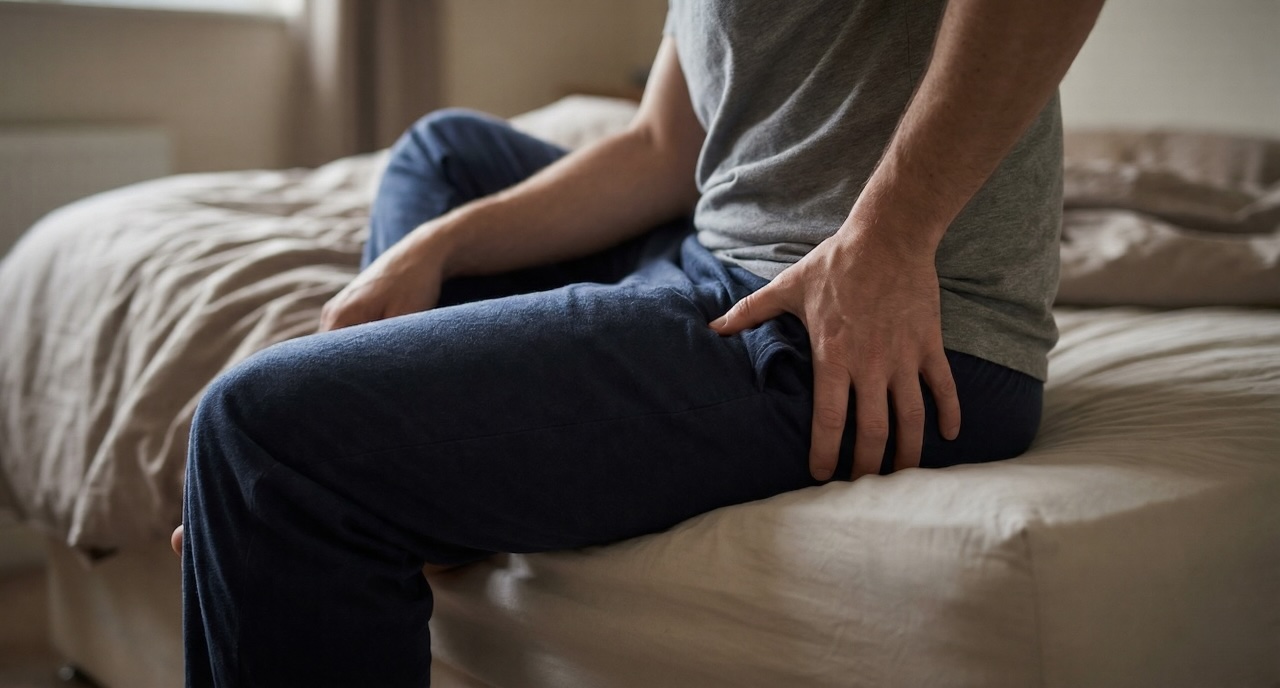
Hip pain during sleep can also be caused by or worsened by conditions such as hip bursitis, osteoarthritis, tendinopathy, and lower back-related referred pain. The underlying cause affects the type of mattress support you need, so we have covered the main conditions separately further down in this guide.
How your sleeping position affects your hips
Side sleeping is by far the most common position in the UK. It is also the position that exerts the greatest pressure on the hip joint. This does not mean you need to change the way you sleep. It means your mattress needs to be built correctly for a side sleeper at your body weight.
When you lie on your side, the ideal outcome is that your hip sinks slightly into the comfort layer while your spine remains in a straight, neutral line from your head to your tailbone. If the comfort layer is too thin or too firm, the hip cannot sink at all,l and the pressure point becomes painful. If it is too soft, the hip sinks so deeply that the spine bows downward, creating a different kind of problem altogether: lower back strain and pelvic misalignment that pull on the hip joint from the inside.

Placing a pillow between your knees when sleeping on your side can make a genuine difference in hip pain. It keeps the upper leg from dropping forward, preventing the pelvis from rotating and reducing the twisting force on the hip joint. This is not a temporary fix. Many of our customers with hip pain find that this alone significantly reduces their nighttime discomfort, even before they address the mattress itself.
Back sleeping distributes your body weight across a much wider surface area and takes direct pressure off the hip joint entirely. If you can tolerate sleeping on your back, placing a pillow under your knees reduces anterior pelvic tilt and helps support the lumbar spine. For people with hip bursitis in particular, back sleeping is often recommended as the primary position to aim for.
Sleeping on your stomach is not ideal for hip pain. It tends to force the pelvis into an anterior tilt, which compresses the hip joint anteriorly and strains the muscles of the lower back simultaneously. If you are a committed stomach sleeper, a pillow under the pelvis helps, but it is worth making a gradual effort to transition to side or back sleeping if hip pain is a persistent problem.
What your mattress is actually doing to your hip
A mattress has two jobs. The springs provide support, meaning they resist your weight and maintain tour sspine’s alignment. The upholstery layers above the springs provide comfort by cushioning pressure points where your body contacts the surface. For a side sleeper with hip pain, the comfort layer is the critical component.
The comfort layer needs to be deep enough and compliant enough to allow the hip to settle into it without the springs pushing back directly against the joint. In a well-built pocket-spring mattress with generous natural-fibre upholstery, this works very well. In a thin Foam mattress or one where the comfort layers have compressed over years of use, it does not work at all, and the hip is effectively resting against the spring unit with very little cushioning between them.
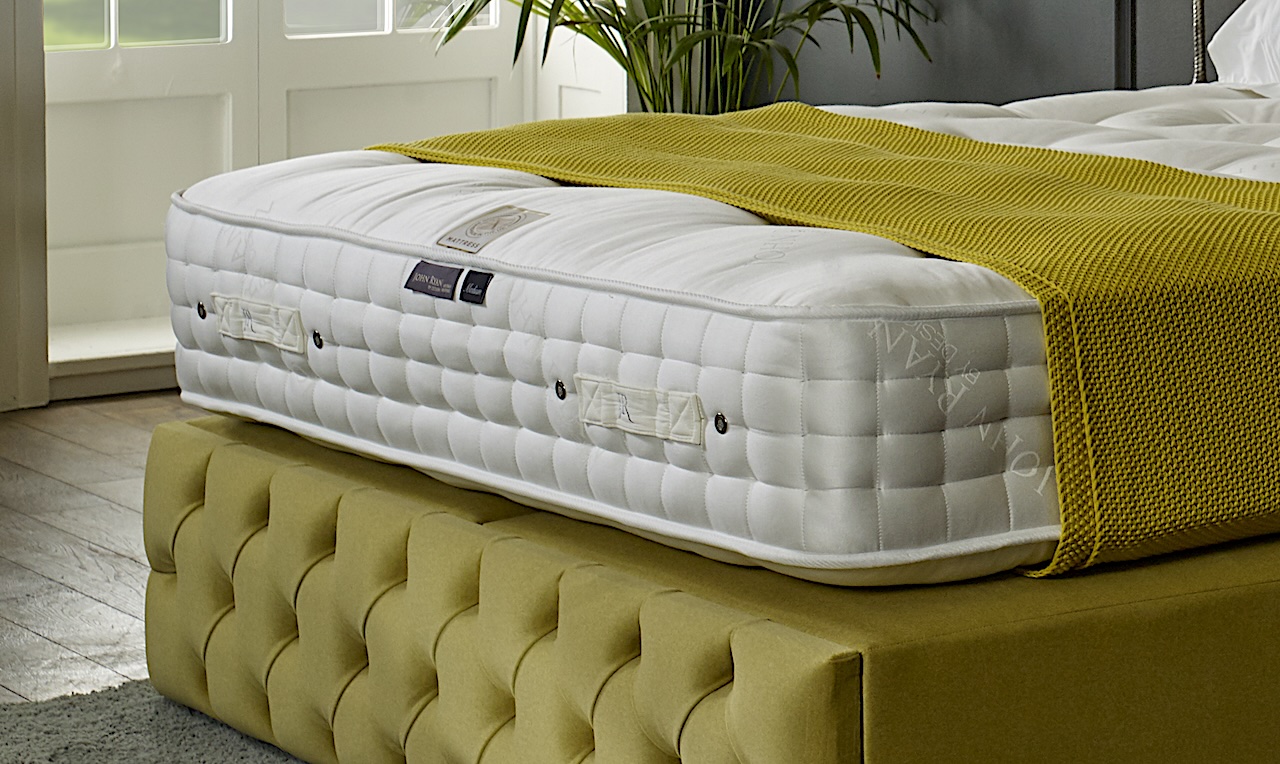
This is also why the age of a mattress matters so much for hip pain. A mattress that started its life with adequate comfort layers may have compressed to the point where it is now providing almost none. If your hip pain has developed gradually over months or years rather than appearing suddenly, and your mattress is more than seven or eight years old, the mattress compression is likely a major contributing factor, even if the mattress does not look obviously worn.
Why spring tension matters as much as comfort
This is the aspect of mattress selection that is rarely mentioned in mainstream guidance, and it is where most people go wrong, even when they buy a quality mattress.
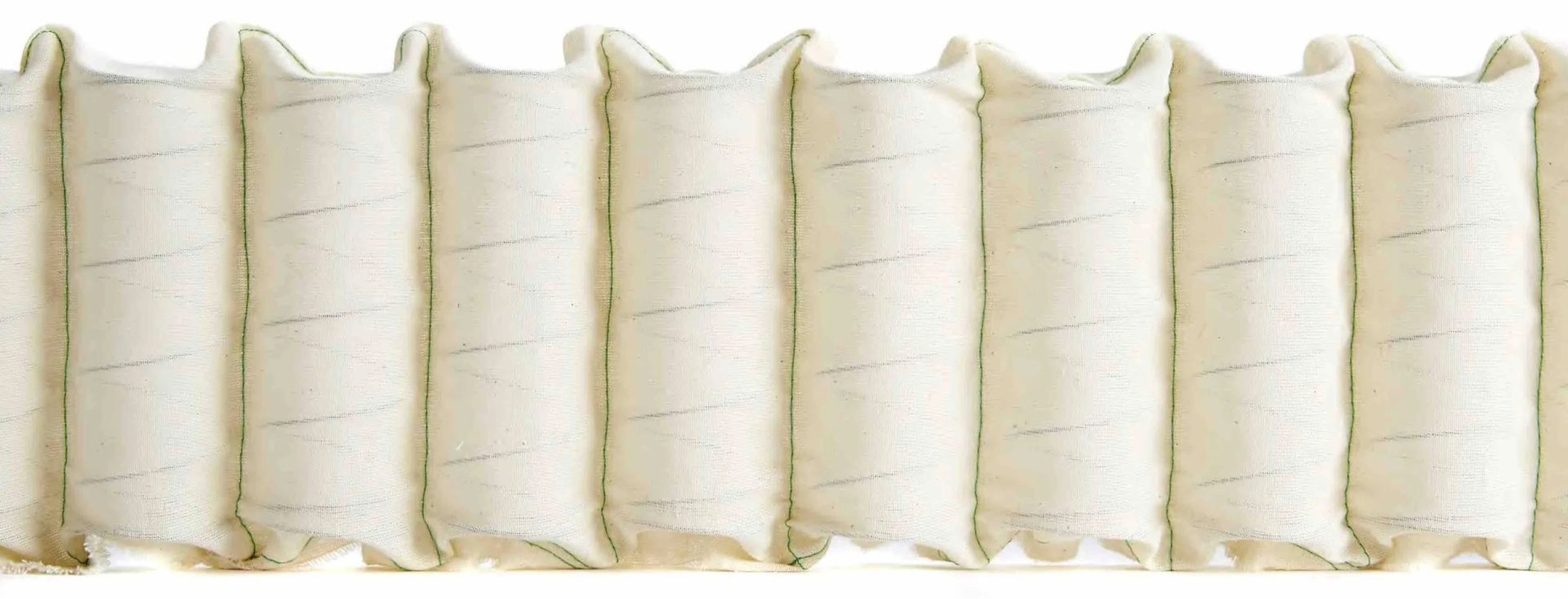
The spring tension should match your body weight. It is not a matter of personal preference. A spring correctly tensioned for your weight will allow your shoulder and hip to compress into the comfort layer at the right depth while supporting your spine from below. A spring that is too firm for your weight will not allow the hip to settle at all, regardless of how thick the comfort layers are. A spring that is too soft will let you compress all the way through the comfort layers, effectively lying on a hammocked surface that curves your spine.
We ask every customer their weight before making a recommendation, and this is why. It is the single most important variable in matching someone to the right mattress for their body. If you call us on 0161 437 4419, the first question we will ask is this, and our answer will be built around it rather than a vague preference for firm or soft.
The firm mattress myth
If you have hip pain and you have consulted anyone about it, the chances are you have been told to sleep on a firmer surface. This is one of the most persistent pieces of bad advice in the mattress industry, and it directly worsens hip pain for the majority of people who follow it.
A landmark study published in The Lancet followed 313 people with chronic pain over 90 days and found that those sleeping on medium-firm mattresses reported significantly less pain and disability than those on firm mattresses. For people with hip pain specifically, the mechanism is straightforward: a firm surface cannot provide the pressure relief the hip joint needs. It simply pushes against the greater trochanter, increases contact pressure, and worsens the pain.

The confusion arises because firmness and support are different things. A well-tensioned pocket spring mattress with deep natural fibre upholstery is supportive in that it maintains spinal alignment, but not firm in the sense of being unyielding at the surface. The distinction matters enormously for hip pain sufferers. You need support beneath and cushioning above, not hardness throughout. Our guide to mattresses for back pain covers the science behind this in more detail.
Why natural fibres help with hip pressure
The upholstery layers in a mattress are the ones that sit between your body and the springs. In a quality handmade mattress, these layers are built from natural fibres: Wool, Cotton, Horsehair, Horsetail, and similar materials. In a mass-market mattress, they are typically thin layers of synthetic Foam.
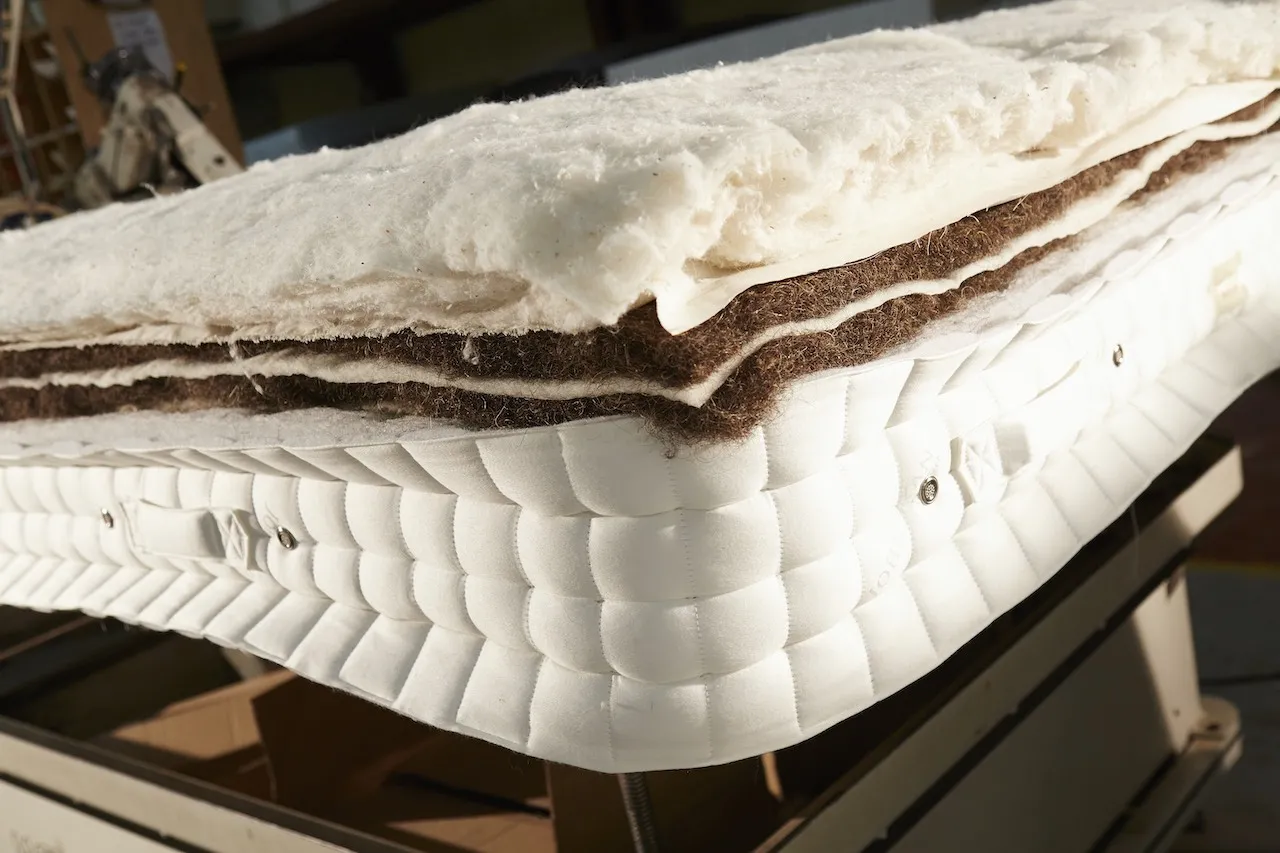
The difference for hip pain is significant. Natural fibres have a three-dimensional, crimped structure that provides cushioning while remaining resilient over time. Wool, in particular, has a natural crimp that compresses under pressure and then springs back, providing consistent cushioning night after night for years. Synthetic Foam fibres compress over time and do not recover, which is why the comfort layers in a synthetic mattress become progressively thinner and less effective as the mattress ages.
At John Ryan, we publish the GSM weight of every upholstery layer in our mattresses, which tells you exactly how much material is between you and the springs. Most retailers do not publish this information because the figures would reveal how little upholstery is actually present. A mattress claiming to be a luxury natural-fibre bed but containing only 200-300 GSM of actual fibre is not going to provide meaningful cushioning at a hip pressure point. Our Artisan range starts at considerably higher GSM figures across multiple layers, which is what makes the difference you can feel.
For reference, our GSM guide explains what these figures actually mean and how to compare them across mattresses.
Can a mattress topper help with hip pain?
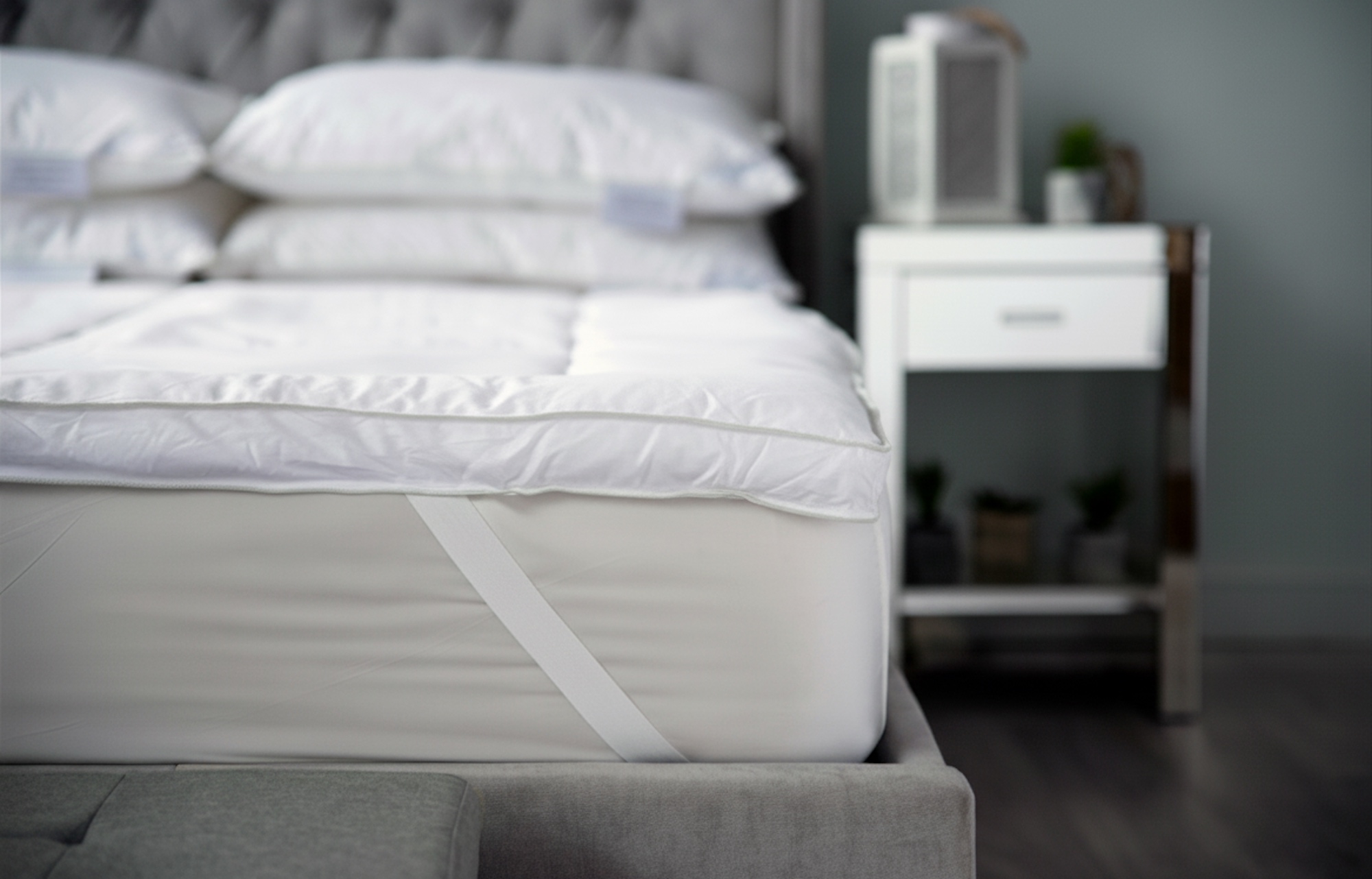
A topper can make a meaningful difference to hip pain if your existing mattress is fundamentally sound but has lost some of its surface comfort over time. It is not a fix for a mattress with structural problems, a sagging spring unit, or one that is fundamentally too firm for your bodyweight throughout, but for a mattress that was once comfortable and has worn at the surface, a deep natural fibre topper can restore the cushioning layer that has been lost.
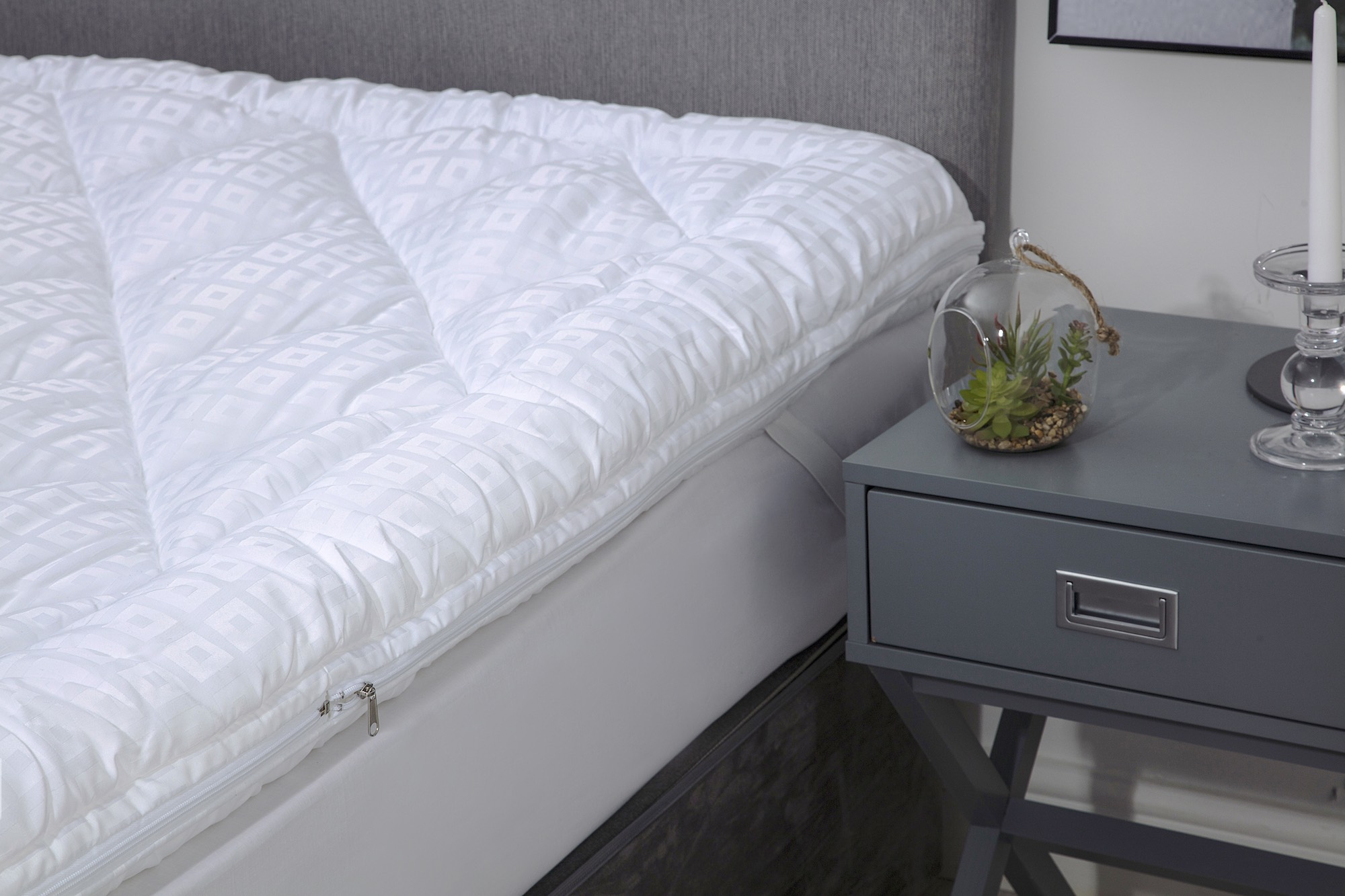
The topper needs to be deep enough to have an effect. A thin 2.5cm synthetic topper will do very little for hip pressure. A 5cm natural Latex topper or a substantial Wool and Cotton topper will provide meaningful cushioning at the pressure point. Our luxury mattress topper range is worth considering if your current mattress is otherwise supportive but has lost its surface comfort.
If your mattress is more than eight years old, is visibly sagging, or was never appropriate for your body weight, a topper will not solve the underlying problem, and a new mattress is the right answer.
Hip bursitis and what it means for your mattress choice
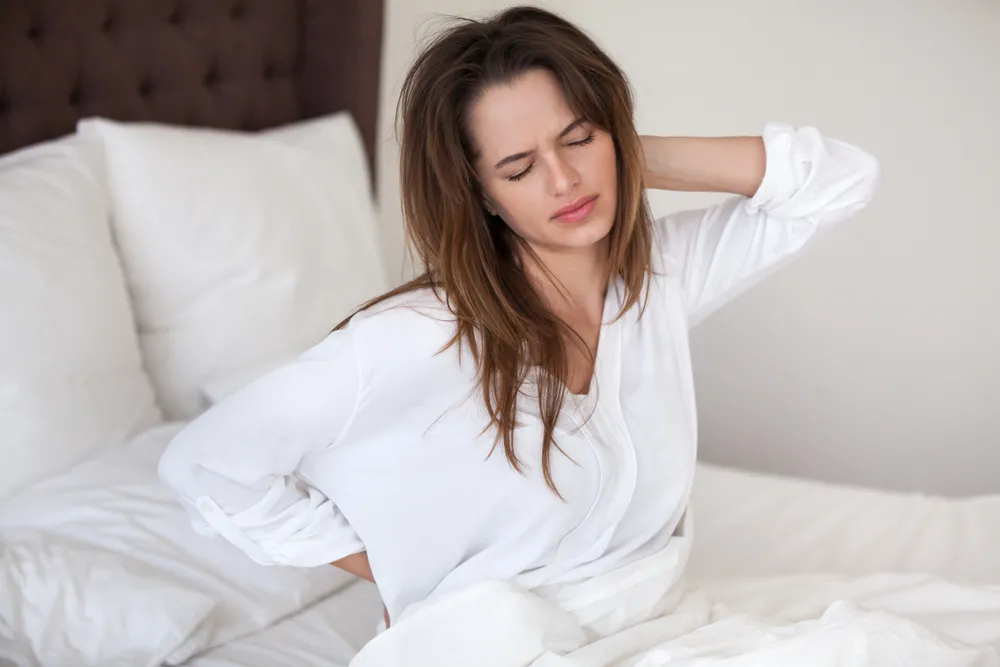
Hip bursitis is an inflammation of the bursa, the small fluid-filled sac that cushions the hip joint. It typically causes pain on the outer side of the hip, which is often worse at night and after periods of lying still. The pain can be sharp enough to wake you, and many people with bursitis find they cannot tolerate lying on the affected side at all.
For hip bursitis sufferers, the priority is removing direct pressure from the inflamed bursa entirely, where possible. Back sleeping with a pillow under the knees is the recommended position because it avoids any direct contact between the greater trochanter and the mattress surface. When side sleeping is unavoidable, the mattress needs generous cushioning at the hip to minimise the contact pressure, combined with a pillow between the knees to prevent the pelvis from rotating.
If you have bursitis and are shopping for a mattress, a softer upholstery feel than you might otherwise choose is appropriate. The tension should still match your body weight for spinal support. Still, the comfort layers should be more generous than average to absorb pressure that would otherwise be borne directly by the inflamed area.
Hip arthritis and sleeping
Hip osteoarthritis causes the cartilage within the joint to break down over time, leading to stiffness, aching, and reduced range of movement. Sleep is often difficult because getting comfortable requires moving into positions that the stiff joint resists, and lying still for long periods allows the joint to stiffen further.
For hip arthritis, the mattress priorities are similar to those for bursitis in some respects: generous cushioning to reduce contact pressure, spring tension correctly matched to body weight, and a surface that allows ease of movement. The last point matters more for arthritis than for other hip conditions. Natural Latex and natural fibre upholstery both provide an immediate rebound response that makes turning over in bed significantly easier than a slow-recovery memory Foam surface. For someone whose joints are already stiff, having to fight the mattress every time they change position results in a disturbed and tiring night.
Rheumatoid arthritis adds complexity because it can cause systemic pain, fatigue, and heat sensitivity. The temperature-regulating properties of natural fibres become more relevant here, as sleeping on a surface that traps body heat compounds the discomfort of an already inflammatory condition. Our guide to fibromyalgia and sleep covers some of the same ground on systemic pain conditions and is worth reading alongside this one if you have rheumatoid arthritis.
Our mattress recommendations for hip pain
The right model depends on your body weight and how you sleep. These are the mattresses we most commonly recommend to customers calling about hip pain. All prices are for a king-size.
Origins Natural Comfort or Origins Natural Support
The Origins Natural Comfort and Natural Support are our entry points into natural-fibre pocket-spring mattresses and represent good value for people looking to move away from synthetic Foam without committing to the full Artisan range. Both contain natural upholstery over a 1,500-pocket spring unit, priced at £1,300 in a king size. The Comfort is the softer of the two and better suited to lighter side sleepers with hip pain. The Natural Support is firmer in the upholstery and better suited to heavier back sleepers. View the Origins range.

Artisan 1500
The Artisan 1500 is our entry-level Artisan model and a significant step up in upholstery depth from the Origins Natural range. At £1,755 in a king-size, it features hand-stitched pocket springs and a natural-fibre comfort layer that provides noticeably better pressure-point cushioning than the Origins tier. It is a two-sided mattress, meaning it can be rotated and flipped to keep the comfort layers evenly distributed over time, which matters for long-term hip pressure relief as much as it does for the initial purchase. View the Artisan 1500.
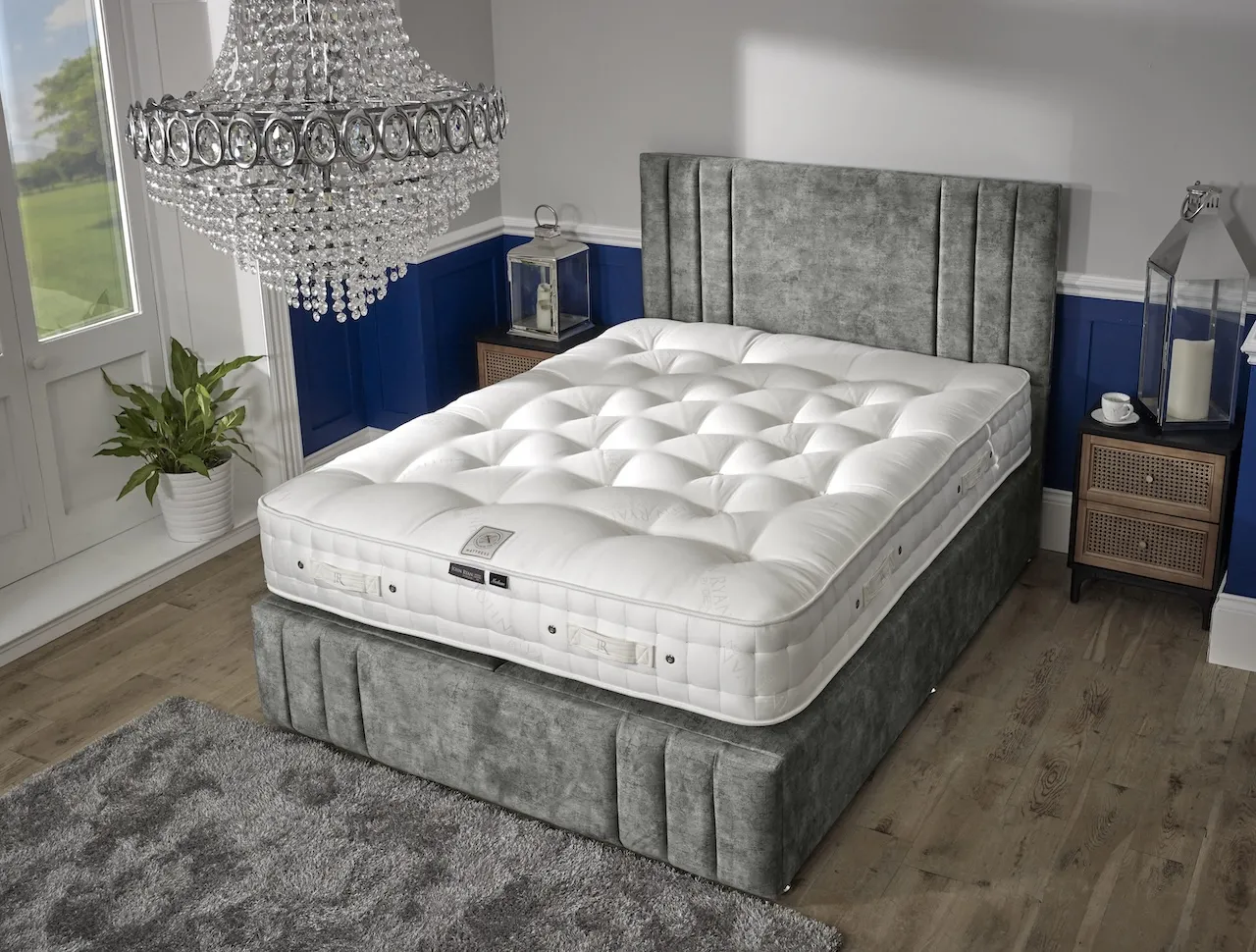
Artisan Naturals
The Artisan Naturals is the model we most consistently recommend to side sleepers with hip pain who are buying at the higher end of quality. It contains deep layers of natural Wool, Cotton, Horsehair, and Horsetail upholstery over a hand-stitched pocket spring unit, providing a substantial, resilient comfort layer that directly addresses hip pressure points. It is two-sided, hand-tufted, and available in a full range of spring tensions to match your body weight. King size from £2,180. View the Artisan Naturals.
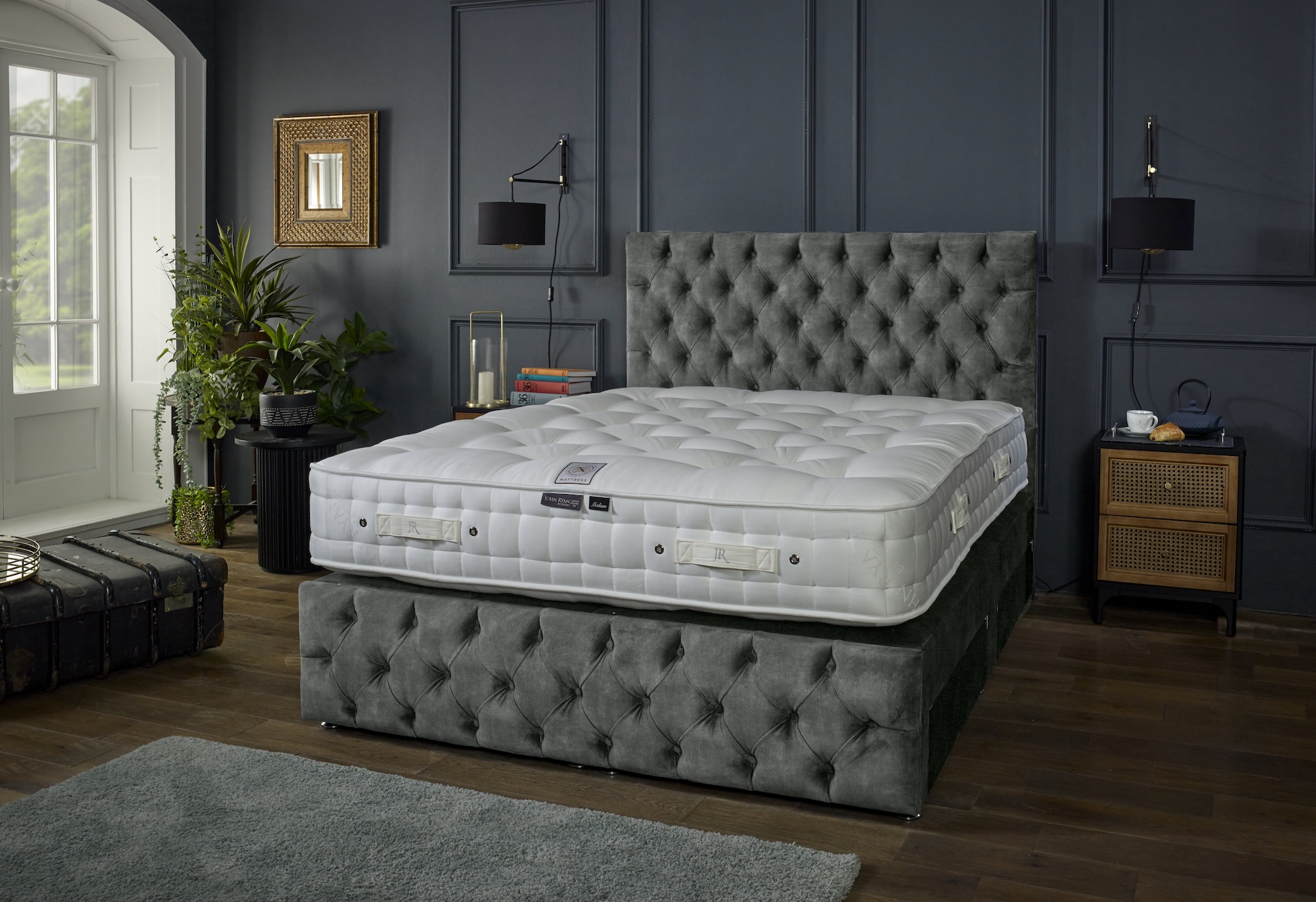
Artisan Latex
For people with hip arthritis or bursitis who need the most responsive and pressure-absorbing surface, the Artisan Latex is worth considering. The Talalay Latex comfort layer provides progressive, buoyant cushioning that responds immediately to pressure and is particularly effective for joint conditions where ease of movement matters as much as static pressure relief. It is entirely plant-based, making it suitable for those with Wool sensitivities. King size from £2,250. View the Artisan Latex.
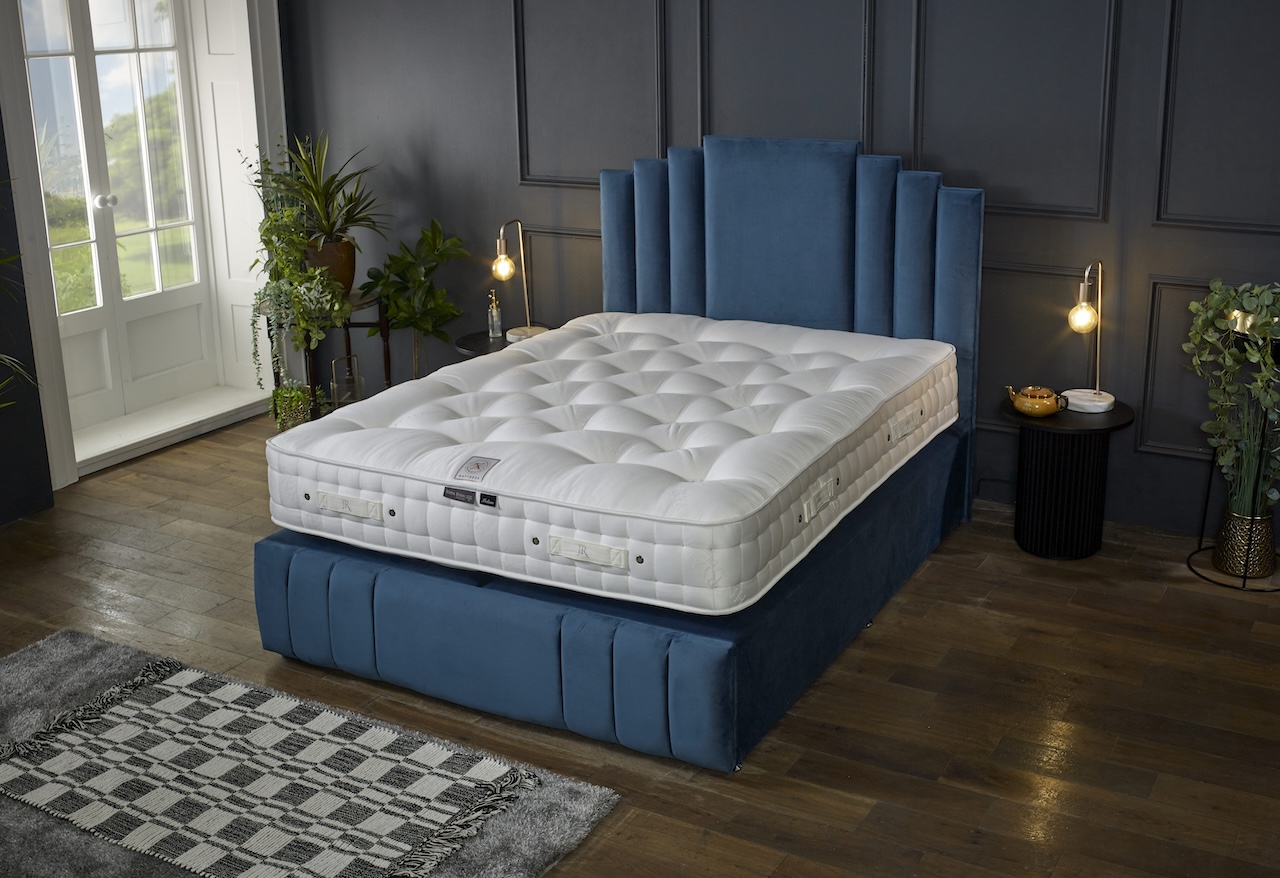
| Model | Best for | Comfort feel | King-size price |
|---|---|---|---|
| Origins Natural Comfort | Lighter side sleepers, entry-level natural fibre | Soft | £1,300 |
| Origins Natural Support | Heavier back sleepers, firmer natural fibre | Firm | £1,300 |
| Artisan 1500 | Side sleepers wanting deeper upholstery, mid-budget | Medium | £1,755 |
| Artisan Naturals | Side sleepers, hip pain focus, premium natural fibre | Medium | £2,180 |
| Artisan Latex | Hip arthritis, bursitis, ease of movement, vegan | Medium to firm | £2,250 |
If you are unsure which model and tension is right for you, call us on 0161 437 4419. We will ask about your weight, your sleeping position, and the nature of your hip pain before making a recommendation. We do not have a showroom, so our conversation is about how we make sure we get it right for you before you order.
Frequently asked questions
What is the best mattress for hip pain?
For most people with hip pain, the best mattress is a pocket-spring model with deep natural-fibre upholstery and a spring tension matched to your body weight. The upholstery needs to be generous enough to allow the hip to decompress into the surface, while the spring tension needs to be correct for your weight to maintain spinal alignment. A medium comfort feel is appropriate for most side sleepers with hip pain. Avoid overly firm mattresses, which push back against the joint rather than relieving the pressure on it.
Should I sleep on the side with hip pain or the other side?
Most physiotherapists recommend sleeping on the unaffected side, with a pillow between your knees to keep your pelvis level. Back sleeping is also beneficial for hip pain because it removes direct pressure from the joint. If you have hip bursitis specifically, sleeping on the affected side is likely to be too painful in any case and is best avoided until the inflammation reduces.
Can a mattress cause hip pain?
Yes. A mattress that is too firm does not allow the hip to decompress at the pressure point, causing the joint and surrounding bursa to be compressed for hours each night. A mattress that has worn and lost its comfort layers has the same effect, even if it was appropriate when new. A mattress with the wrong spring tension for your bodyweight can cause the pelvis to sag, pulling the hip joint out of neutral alignment. All three of these mattress problems can cause or significantly worsen hip pain.
Is a firm or soft mattress better for hip pain?
Neither extreme is right. A surface that is too firm creates unrelieved pressure at the hip joint. A surface that is too soft allows the hip to sink so deeply that pelvic alignment is lost and the joint is stressed from a different angle. A medium feel with spring tension correctly matched to your bodyweight is almost always the appropriate choice. This is different from a subjectively soft mattress: the aim is a surface that yields appropriately at the hip while supporting the spine, not one that simply feels plush.
What sleeping position is best for hip pain?
Back sleeping with a pillow under the knees is the position that places the least stress on the hip joint. Side sleeping on the unaffected side, with a pillow between the knees, is the next-best option. Stomach sleeping is the least favourable for hip pain as it places the hip joint in an anteriorly tilted position that compresses the joint and strains the surrounding musculature. Our sleeping positions guide covers this in more detail.
Will a mattress topper help my hip pain?
A topper can help if your mattress is structurally sound but has lost surface comfort over time. It needs to be deep and made from a resilient material, either natural Latex or substantial natural fibre, to make a meaningful difference at the hip pressure point. A thin synthetic topper will do very little. If your mattress is sagging, has broken springs, or was never appropriate for your bodyweight, a topper will not solve the underlying problem.
How do I know if my mattress is causing my hip pain?
The clearest indicator is whether the pain is present when you first lie down or whether it develops and worsens during the night. Pain that builds over several hours of lying in the same position is typically a pressure point issue related to your mattress or sleeping position. Pain that occurs immediately upon lying down is more likely a joint or soft-tissue issue that is independent of the mattress. If your mattress is more than eight years old, has visible dips or sags in the sleeping surface, or the pain has developed gradually over months, the mattress is very likely a contributing factor.
Dreaming of the perfect nights sleep?
Ask us a question
There are over 6000 questions and answers submitted by you on all questions about mattresses and bed problems. Enter a keyword such as Vi Spring, John Lewis beds, bad back or Memory Foam and see if your question has already been answered.
If you can’t find an answer in knowledge hub, ask a new question. We aim to respond to all questions within one working day.
Newsletter
Enter your email to join our newsletter. We’ll send you occasional news and mattress expertise.