






Sleep & Well Being
May 2026Best Mattress for Arthritis UK 2026: Reduce Morning Stiffness and Sleep Better
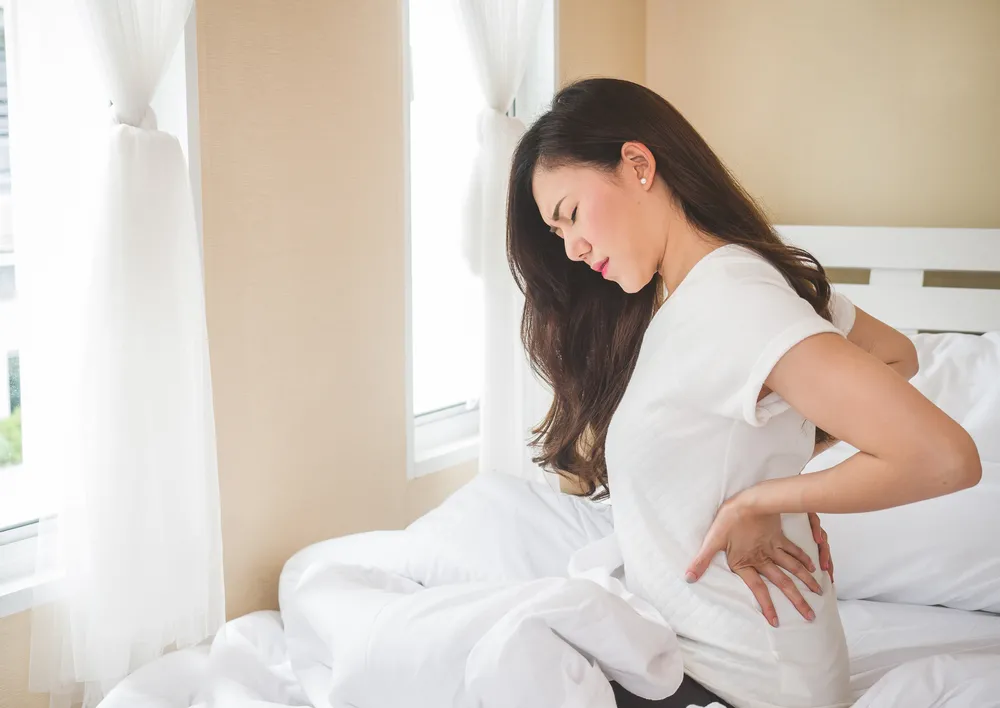
We have been making mattresses here in Manchester for over 25 years and we speak to customers managing arthritis every single week. Not because we are medical professionals, but because the mattress is one of the few variables in the arthritis and sleep equation that you can genuinely control. This guide explains how arthritis interacts with your sleep surface, what the evidence says about firmness and materials, and which of our mattresses are most likely to help, with specific recommendations by arthritis type and sleeping position.
As with all pain-related conditions, your GP, rheumatologist, or physiotherapist should be your first port of call. The guidance here focuses on the eight hours you spend lying on your mattress and how to make them work for you rather than against you. If your symptoms are severe or worsening, please speak to your healthcare team before making any decisions about your sleep setup.
The orthopaedic mattress myth: what nobody else will tell you
If you have arthritis and have been researching mattresses, the chances are that someone, whether a GP, a well-meaning family member, or a high street retailer, has told you to buy a firm or orthopaedic mattress. It is one of the most persistently repeated pieces of advice in the mattress industry and it is, for most people with arthritis, wrong.
Orthopaedic is not a regulated term. Any manufacturer can put it on any mattress regardless of construction, spring gauge, upholstery depth, or any clinical standard whatsoever. It means nothing more specific than the retailer has decided to use it as a selling point. We cover this in full in our orthopaedic mattress guide, but the short version is this: a mattress marketed as orthopaedic is typically an extremely firm surface with a minimal comfort layer, sold on the basis that firmness equals support. It does not.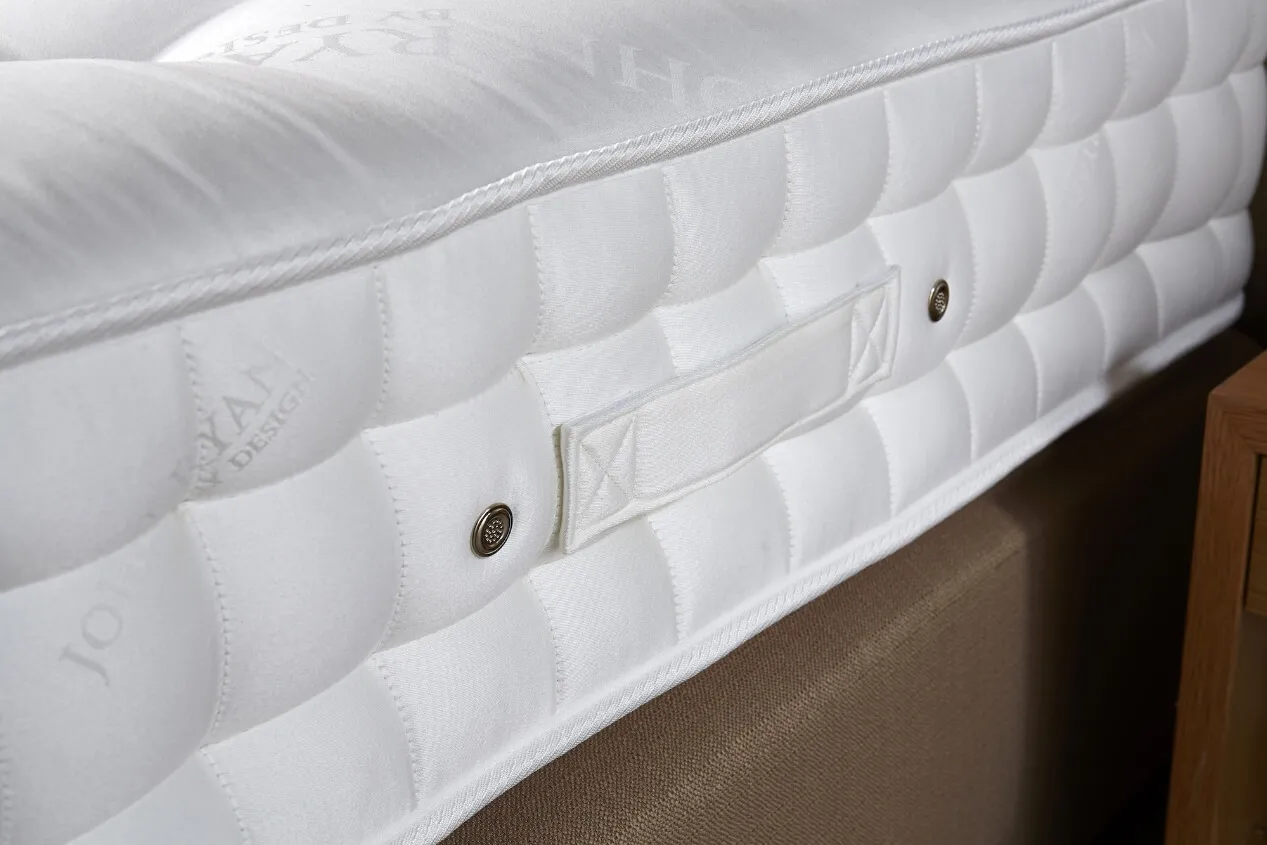
Support and firmness are not the same thing. Support means the spring unit compresses and extends correctly for your body weight, holding the spine in its natural position throughout the night. Firmness is how the surface feels to lie on, which is determined by the upholstery layers above the springs. A mattress can be extremely firm and profoundly unsupportive if the spring tension is wrong for your weight. Conversely, a medium feel mattress with the correct spring tension provides more genuine support than any orthopaedic mattress on the high street, while also cushioning the joints rather than pressing into them.
For arthritis sufferers specifically, a very firm surface concentrates pressure on inflamed joints rather than distributing it. The hip or shoulder that is already painful does not need a surface that pushes back against it with maximum resistance. It needs a surface that yields enough to relieve the contact pressure while the spring unit beneath provides the structural support. This is precisely what a well-specified natural fibre pocket spring mattress does, and it is what no orthopaedic mattress on the high street can replicate.
Versus Arthritis is clear on this point: the common recommendation to buy a firm or orthopaedic mattress may not be right for you, and whether it suits you depends on your weight, build, age, sleeping position, and the specific nature of your pain. That is not the simple answer retailers want to give you, but it is the honest one. We would rather spend ten minutes getting this right on the phone with you than sell you the wrong mattress.
What is arthritis and how does it affect sleep
Arthritis is not a single condition. It is an umbrella term covering more than 100 different diseases that affect the joints, the tissues surrounding them, and other connective tissue. The two most common forms in the UK are osteoarthritis and rheumatoid arthritis, and they behave quite differently from each other in ways that matter when choosing a mattress.
What they share is a tendency to disrupt sleep significantly. Research cited by Rest Less suggests that as many as 80% of people with arthritis have trouble falling or staying asleep. This is not simply a question of pain making it harder to drop off. The relationship runs deeper than that. Poor sleep lowers the pain threshold, meaning the same level of joint inflammation feels worse after a bad night. That worse pain then disrupts the following night’s sleep further. The cycle becomes self-reinforcing in ways that make it genuinely difficult to break without addressing the sleep environment itself.
Arthritis pain tends to be worst at two specific points in the sleep cycle. The first is when you lie down and hold a position for longer than you would when sitting or standing. The second is on waking, when joints that have been static for hours are suddenly asked to move again. Morning stiffness, that grinding, slow warm-up period in the first hour of the day, is one of the most consistent complaints we hear from customers managing arthritis. Mattress choice affects both, though in different ways that we cover below.
The National Rheumatoid Arthritis Society notes that the mattress should be comfortable, that the neck should be in a neutral position during sleep, and that both memory foam and supportive spring systems can play a role in helping people with rheumatoid arthritis sleep more comfortably. Versus Arthritis advises that a mattress should conform to and support the body to avoid excessive pressure points on joints, and that it should hold the spine correctly whether you are on your back or your side.
Types of arthritis and how they differ in their mattress needs
The two forms of arthritis that come up most consistently in our conversations with customers are osteoarthritis and rheumatoid arthritis. They have different causes, different patterns of symptoms, and different implications for mattress choice.
Osteoarthritis
Osteoarthritis is the most common form of arthritis in the UK, affecting an estimated ten million people. It develops when the protective cartilage on the ends of bones gradually wears down, causing the bones to rub against each other. It most commonly affects the knees, hips, hands, and spine. The pain tends to be worst when weight is loaded onto the affected joint, which means lying in a position that places sustained pressure on an arthritic hip or knee can cause significant discomfort during the night.
For osteoarthritis, the key mattress requirement is pressure relief at the specific joints affected. A side sleeper with hip osteoarthritis needs the hip to be cushioned rather than pressed against the surface. A back sleeper with spinal osteoarthritis needs the lumbar region to be supported in its natural curve rather than allowed to sag. The comfort layer of the mattress, the upholstery layers between you and the spring unit, is what determines how well these requirements are met.
Rheumatoid arthritis
Rheumatoid arthritis is an autoimmune condition in which the immune system attacks the lining of the joints, causing inflammation, swelling, and pain. Unlike osteoarthritis, which typically affects joints in a predictable pattern, rheumatoid arthritis can affect multiple joints simultaneously and tends to cause systemic symptoms including fatigue and, importantly for sleep, inflammation that is affected by heat.
For rheumatoid arthritis, breathability in the mattress matters as well as support. Sleeping on a surface that retains body heat can increase overnight inflammation, which worsens morning stiffness. Natural fibre upholstery, which regulates temperature rather than holding it, is more appropriate than synthetic foam for this reason. We cover this in more detail in the materials section below.
Psoriatic and other inflammatory arthritis
Psoriatic arthritis, ankylosing spondylitis, and other inflammatory forms of arthritis share the key characteristic of being inflammation-driven rather than wear-related. For all of these, the combination of a breathable natural fibre comfort layer and a well-matched spring tension for body weight is the starting point. The sleeping position guidance below is also particularly relevant, as inflammatory arthritis tends to cause morning stiffness that is directly affected by how the spine is held during the night.
How your mattress affects arthritis symptoms overnight
The mechanism by which a mattress affects arthritis is fairly straightforward once you understand it. When you lie on a mattress, the surface either supports your body in its natural alignment or it does not. If it does, the joints are held in a relatively neutral position throughout the night and the muscles surrounding them are not required to compensate for misalignment. If it does not, the muscles work throughout the night to try to maintain a position the mattress is not providing, and the joints themselves are held in angles that concentrate pressure on already inflamed surfaces.
A mattress that is too firm for your body weight and sleeping position will not allow the shoulder and hip to settle into the surface, creating concentrated pressure at those contact points and forcing the spine to angle away from the mattress. For a side sleeper with hip or shoulder arthritis this is a particularly acute problem, because the weight of the body is carried through those two narrow contact points for hours at a ti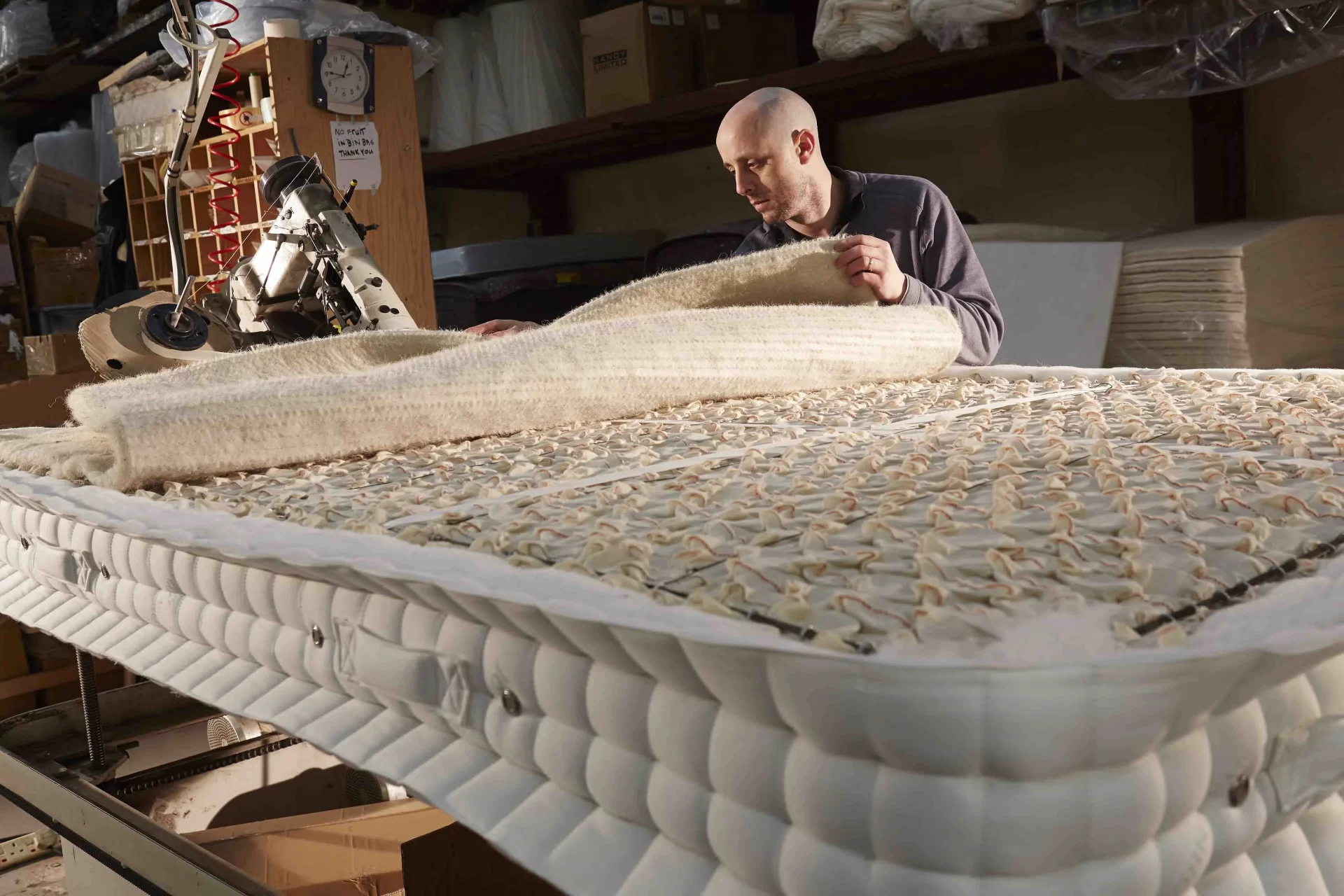 me.
me.
A mattress that is too soft allows the heavier parts of the body to sink too deeply, causing the spine to sag and the joints to be held in a bowed position. For a back sleeper with spinal arthritis or an arthritic hip, this sustained sagging is exactly the mechanism that drives morning stiffness, because the joint spends the night in a position that concentrates pressure on the inflamed tissue rather than distributing it evenly.
Research published in the Journal of Clinical Sleep Medicine supports what we observe in practice: more supportive and pressure-relieving sleep surfaces reduce focal joint stress and promote better sleep quality, which is essential for managing arthritis symptoms. The specific construction of the mattress, its spring system, upholstery depth, and fibre choice, determines how well it achieves this.
Why your mattress is making your mornings worse
Morning stiffness is the symptom we hear about most consistently from arthritis sufferers who contact us. Not necessarily the worst pain of their day, but the one that sets the tone for everything that follows. That grinding, slow warm-up period in the first hour after waking, where the joints feel locked and movement feels effortful, is one of the most disabling aspects of living with arthritis day to day.
A mattress cannot cure arthritis and we will never suggest otherwise. But the wrong mattress can directly and measurably make morning stiffness worse, and the right one can reduce it. The mechanism is straightforward. When you hold a joint in a misaligned or pressure-loaded position for seven or eight consecutive hours, the inflamed tissue surrounding that joint stiffens in response to the sustained load. It is the same principle as any inflamed joint stiffening after prolonged inactivity, but amplified by the weight bearing down on it throughout the night.
The research is consistent on this. Clinical evidence from the Journal of Chiropractic Medicine shows that medium-firm mattresses outperform both softer and firmer alternatives for arthritic sleepers, with good lumbar support reducing the overnight muscle compensation that drives morning stiffness. When the muscles do not have to work all night to compensate for misalignment, they are not fatigued and contracted on waking. When the joints are held in a neutral rather than pressure-loaded position, they are not stiffened from sustained load. Both of these translate directly into mornings that are easier than they would otherwise be.
We regularly hear from customers that the single most noticeable change after switching to a correctly specified mattress is not the overnight pain, it is the morning. The overnight pain improves too, but it is the quality of those first thirty minutes after waking that people mention first. One customer put it simply: for the first time in three years I got out of bed without having to talk myself into it. That is not an exceptional outcome. For the right person on the right mattress, it is a fairly typical one.
If you wake every morning feeling worse than you did when you went to bed, and that morning stiffness eases within an hour or two as you move around, the mattress is almost certainly a contributing factor. Pain that is worst on waking and improves with movement is the most reliable signal that what you are sleeping on is working against your arthritis rather than with it.
What firmness is best for arthritis
The clinical consensus, reflected in guidance from Versus Arthritis and supported by the research underpinning most sleep medicine recommendations, is that medium to medium-firm is the appropriate starting point for most arthritis sufferers. This gives enough resistance to maintain spinal alignment and prevent the joints from sagging into the mattress, while providing enough give to relieve pressure at the shoulder, hip, and other contact points.
However, this general principle needs to be qualified by two factors: your sleeping position and your body weight. Both of these interact with firmness in ways that determine what medium or medium-firm actually means for you specifically.
A side sleeper with hip or shoulder arthritis needs more give at the contact points than a back sleeper with lower back arthritis. The side sleeper’s requirement for the shoulder to drop into the mattress means they often do better at the softer end of the medium range, or in some cases with a genuinely soft feel. A back sleeper with lumbar or spinal arthritis needs the mattress to push back against the lower back to maintain the natural inward curve, which means they tend to do better at the firmer end of medium.
Body weight determines the correct spring tension rather than the surface feel. This is a distinction that most mattress retailers either do not make or actively obscure, because it requires an additional conversation rather than a simple sale. A lighter person and a heavier person can both need a medium feel surface, but they need different spring tensions beneath that surface to achieve it. We cover this in the spring tension section below, and our team is always available to work through this with you on 0161 437 4419 before you order.
The one firmness recommendation that comes up consistently in clinical guidance and that we would actively caution against for arthritis sufferers is an orthopaedic mattress, meaning an extremely firm surface marketed as being good for the back. Orthopaedic is not a regulated term, and a very firm surface without sufficient comfort layer depth will press against arthritic joints rather than cradling them, creating exactly the pressure concentration that makes arthritis worse overnight.
Why natural fibre upholstery matters for arthritis sufferers
The comfort layer of the mattress, the upholstery that sits between you and the spring unit, is what you are actually lying on. Its material composition determines two things that matter particularly for arthritis sufferers: how well it cushions the pressure points, and how well it regulates temperature overnight.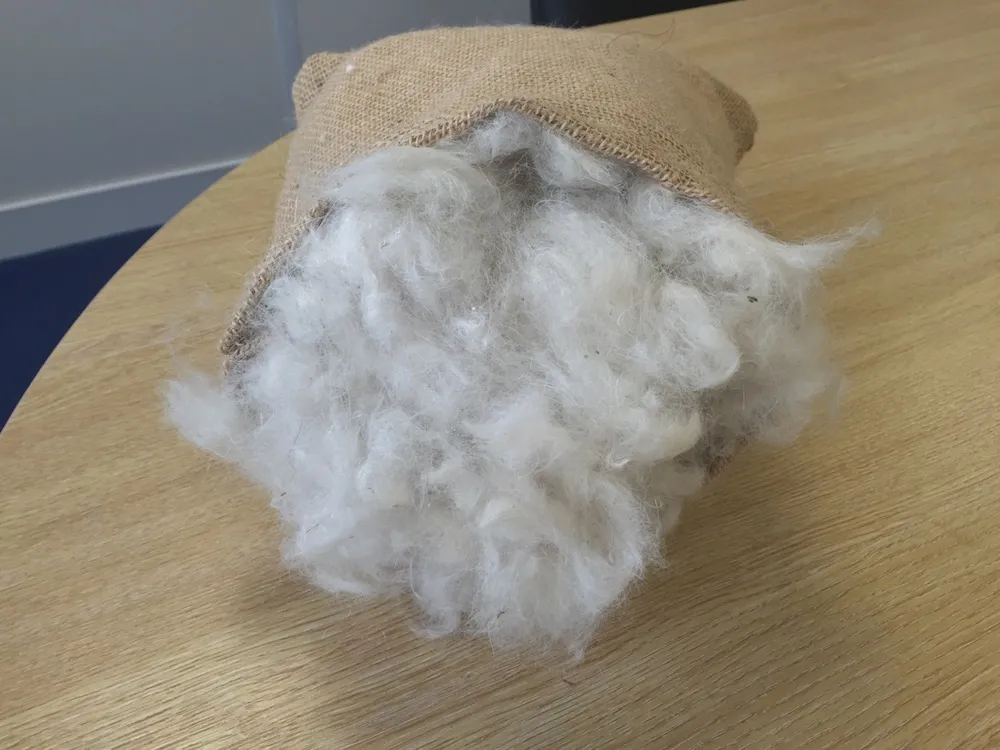
Natural fibres behave quite differently to synthetic foam in both of these respects. Wool, Mohair, Horsehair, Cotton, and Silk are all resilient materials that compress under load and return to their original shape relatively quickly. They do not conform deeply to the body the way memory foam does. Instead they provide immediate cushioning without allowing the body to sink through them, which is the outcome that arthritis sufferers generally need: enough give to relieve pressure at the joints without the deep conforming that causes the spine to sag.
The temperature regulation properties of natural fibres are also directly relevant to inflammatory arthritis. Wool in particular is hygroscopic, meaning it actively absorbs and releases moisture, which helps to maintain a stable sleeping temperature. Memory foam, by contrast, retains body heat because it is a closed-cell foam structure. For someone with rheumatoid arthritis or another inflammatory condition, sleeping hot means more overnight inflammation, and more overnight inflammation means worse morning stiffness.
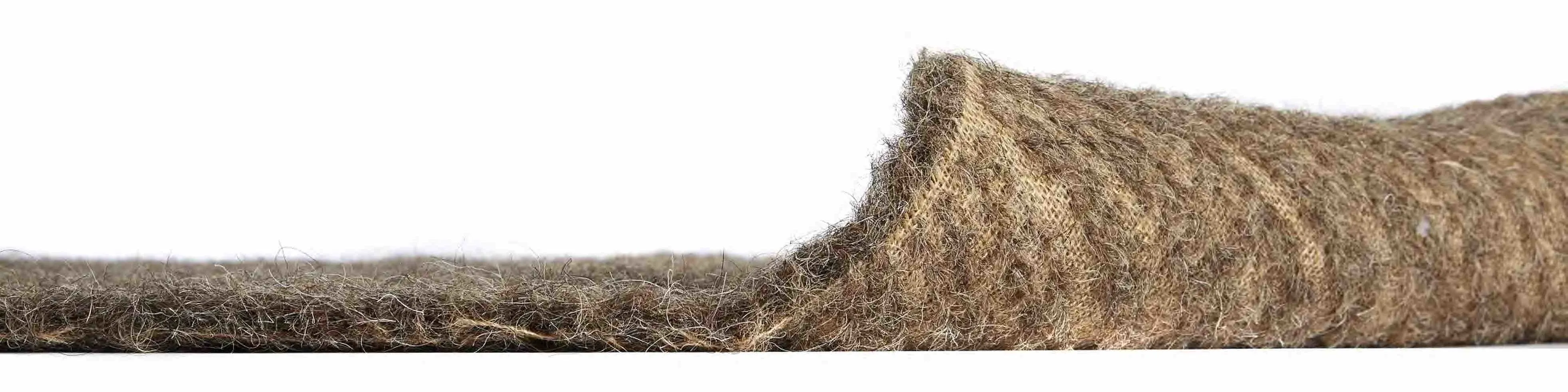
Mohair deserves specific mention for arthritis sufferers. It is one of the most naturally resilient fibres used in mattress upholstery, derived from the Angora goat, and it provides a slightly firmer response than Wool while remaining soft enough to cushion pressure points effectively. The Artisan Naturals, our most widely recommended mattress for arthritis sufferers, uses Mohair as its primary comfort fibre for exactly this reason. The resilience means the surface responds immediately to body shape without conforming too deeply, and the natural breathability prevents the heat retention that can aggravate inflammatory conditions overnight.
Horsehair provides an even firmer response in the comfort layer, which makes it more appropriate for back sleepers or front sleepers who need more resistance at the surface rather than cushioning. It is used in the Artisan Bespoke range. For side sleepers with arthritis, a Mohair-led or Wool-led comfort layer is generally more appropriate than a Horsehair-led one.
Best sleeping positions for arthritis
The best sleeping position for arthritis depends significantly on which joints are affected, which is why the guidance here is more nuanced than for sciatica or general back pain. There is no single correct answer, but there are principles that apply across most forms of arthritis.
Side sleeping is generally considered the most comfortable position for most people with arthritis, with the caveat that you should avoid sleeping on the side that has the more affected joint where possible. Sleeping on your side with a pillow between the knees is particularly recommended, as it keeps the pelvis in a neutral position and prevents the top leg from rotating forward and placing torque through the hip and lower back. For shoulder arthritis, a supportive pillow that keeps the head level with the spine rather than tilted toward the mattress is important, and lying on the less affected shoulder is preferable.
Back sleeping is the most naturally aligned position for spinal and hip arthritis when the mattress provides adequate lumbar support. The spine rests in a relatively neutral position and the weight is distributed more evenly than in side sleeping. Adding a pillow under the knees gently flexes the hips, which reduces the compression on the lumbar region and can significantly ease lower back arthritis pain during the night. For knee arthritis specifically, a pillow under the knees is one of the most consistently effective adjustments you can make to your sleep setup.
Front sleeping is the most problematic position for arthritis because it pushes the lumbar spine into extension and rotates the neck to one side, placing sustained load on the cervical spine. If you are a habitual front sleeper with arthritis affecting the neck, lower back, or hips, it is worth attempting to transition to a side or back position. A pillow placed under the lower abdomen can reduce the degree of lumbar extension as an intermediate step.

What to avoid in a mattress if you have arthritis
Memory foam as the primary comfort layer. This comes up in every arthritis and sleep discussion and it is worth addressing directly. Memory foam conforms closely to body shape by design, and that deep conforming is precisely what makes it problematic for many arthritis sufferers. It allows the heavier joints to sink in, which can feel comfortable initially but places the spine in a sagged position that drives morning stiffness over time. Memory foam also retains body heat, which is particularly unhelpful for inflammatory arthritis. Versus Arthritis notes that many people find memory foam helpful, but our experience is that this tends to be people with osteoarthritis in isolated joints rather than those with systemic inflammatory conditions. Natural fibre upholstery provides pressure relief without the deep conforming that memory foam creates.
A pillow-top mattress. Pillow-top construction adds a thick padded layer to one side of a mattress that compresses permanently and unevenly over time. For arthritis sufferers who need a consistent, reliable sleep surface, this progressive deterioration is directly counterproductive. The surface that felt appropriate in the first six months becomes a hollowed, irregular surface that holds the body in a fixed, unsupported position. All John Ryan mattresses are two-sided and can be flipped regularly to maintain an even surface throughout their lifespan. We cover the pillow-top issue in more detail in our guide to pillow-top mattresses.
A one-sided non-turn mattress. As above, a mattress that cannot be flipped will develop a body impression on one side, gradually creating a surface that holds you in a specific position rather than allowing you to find the most comfortable posture for your joints on any given night. For arthritis sufferers who may need to adjust their sleeping position during a flare-up, a consistent, even surface matters.
The wrong spring tension for your body weight. This is the most common and most correctable mistake. A spring unit that is too firm for your weight pushes back against the joints rather than supporting the body. A spring unit that is too soft for your weight allows the heavier parts of the body to sink through the comfort layer, losing all the benefits that the upholstery is designed to provide. The spring tension table in the section below is the starting point for getting this right.
Our mattress recommendations for arthritis
Every mattress below is handmade here in Manchester, uses individually pocketed springs, contains no memory foam, and is built as a two-sided mattress. All prices are for king size. Spring tension is chosen at the point of order based on your body weight, which is the most important single variable for arthritis sufferers.
Artisan Naturals (King Size: £2,180) — Medium feel, our primary recommendation for most arthritis types
The Artisan Naturals is the mattress we recommend most often to customers managing arthritis of all types. It uses 3,950GSM of natural upholstery including Mohair, Wool, and Cotton across multiple layers, over 1,600 individually calico-encased pocket springs. The medium feel places it in the range that clinical evidence most consistently identifies as appropriate for arthritis: enough give to cushion the joints, enough support to prevent the spine from sagging.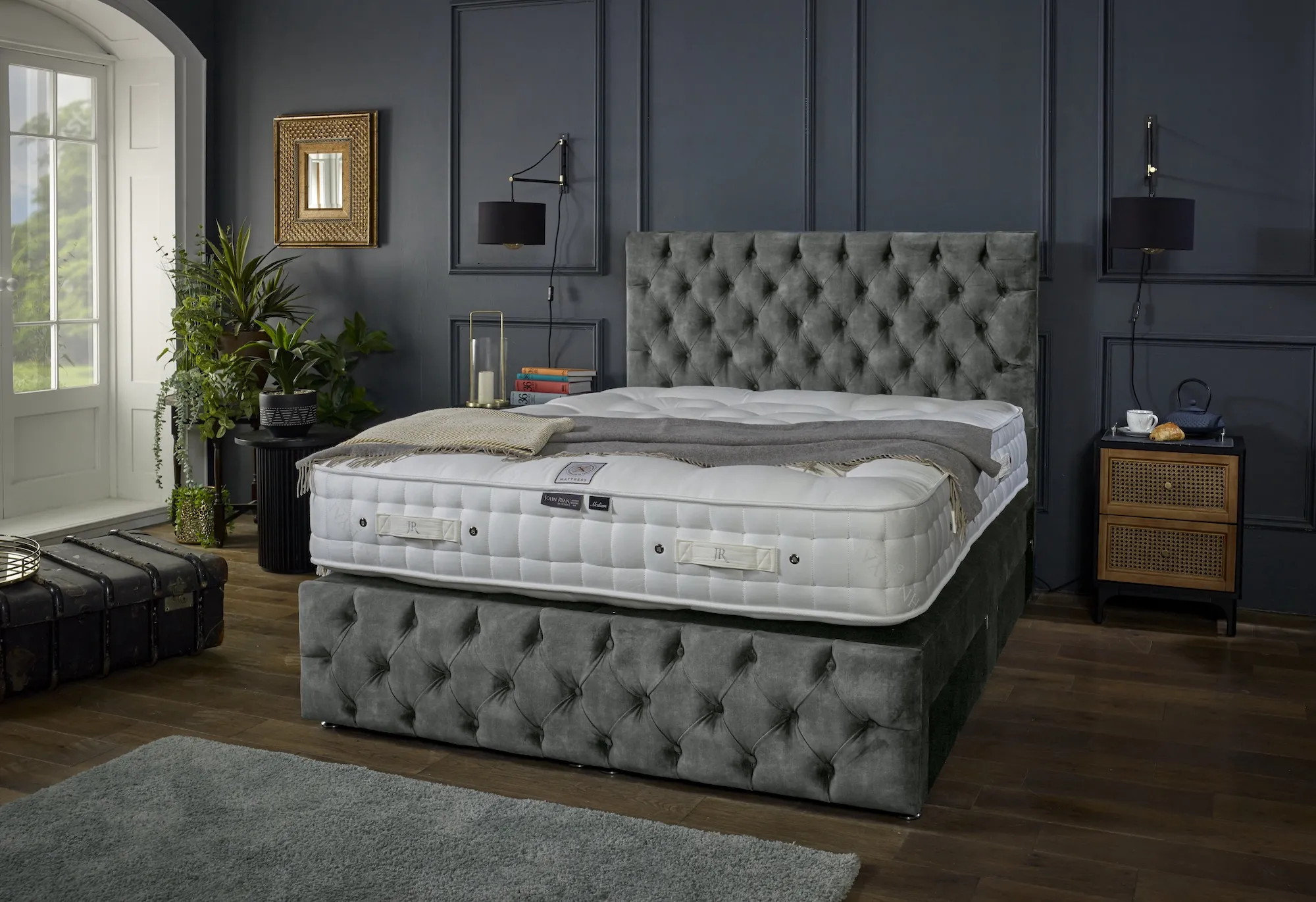
The Mohair-led comfort layer is particularly relevant for arthritis sufferers. Mohair responds immediately to body shape without the deep conforming of synthetic foam, cushioning the shoulder and hip for side sleepers while providing a resilient, breathable surface that does not retain heat overnight. For people with inflammatory arthritis who tend to sleep warm, the natural breathability of this mattress is a significant benefit over any foam-based alternative.
The Artisan Naturals is available in soft, medium, or firm spring tension matched to your body weight, and as a zip and link if you and your partner need different tensions. It is our first recommendation for side sleepers and back sleepers with arthritis of average body weight.
Artisan Latex (King Size: £2,250) — Medium feel, for pressure relief with immediate response
Natural Latex has properties that make it particularly well-suited to arthritis sufferers. It compresses under load and returns immediately to its original shape, providing pressure relief without the sustained deep conforming of memory foam. For a side sleeper with hip or shoulder arthritis, this means the joint is cushioned effectively at the contact point without the rest of the body following it down. The Latex is also naturally breathable and temperature-regulating, which matters for inflammatory arthritis.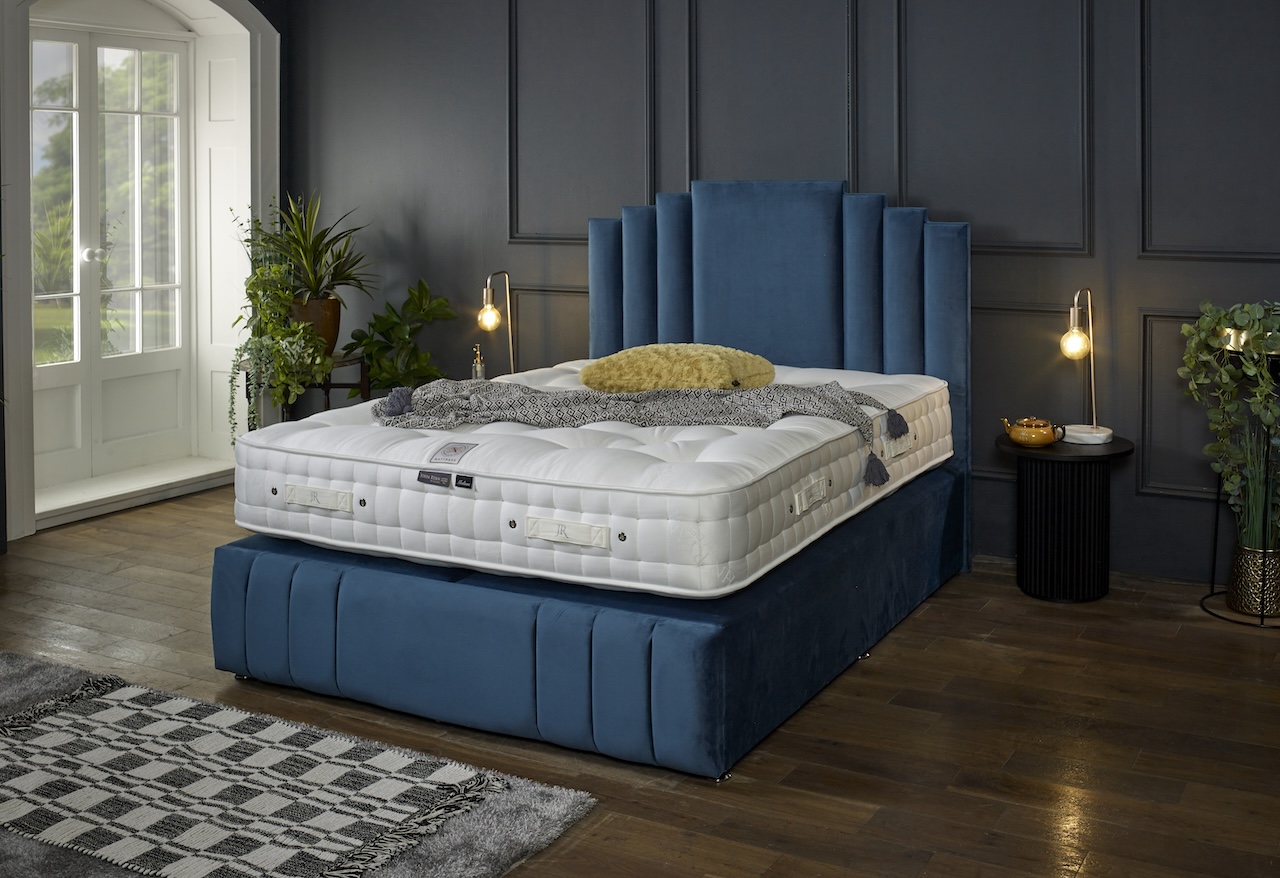
The Artisan Latex uses a layer of natural Latex within its upholstery specification over 1,600 calico-encased pocket springs. It is a particularly good choice for arthritis sufferers who have tried medium feel mattresses and found them marginally too firm at the pressure points, as the Latex provides a different quality of cushioning to fibre alone. You can read more in our guide to Latex as a comfort layer.
Artisan Bespoke 004 (King Size: £2,860) — Medium feel, for back sleepers needing precise lumbar support
The Artisan Bespoke 004 sits above the Naturals and uses 3,600GSM of 100% natural upholstery including Horsetail and Wool over 1,600 calico-encased pocket springs with a slightly tighter spring geometry. The tighter geometry means each spring responds more precisely to localised weight, which translates to more targeted support at the lumbar region. For back sleepers with spinal or hip arthritis, this precision is genuinely valuable because it allows the spring unit to push back against the lower back more accurately rather than providing generalised support across the whole surface.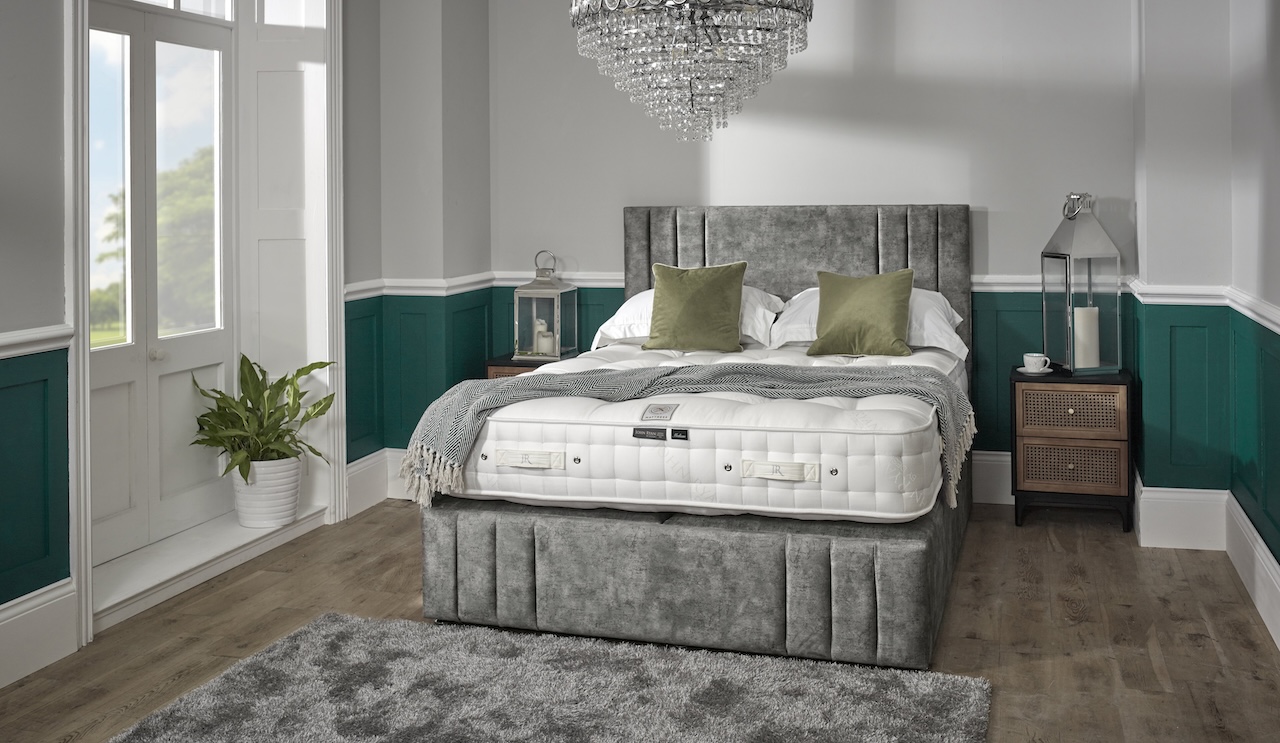
The Horsetail comfort layer provides a firmer response than Mohair, which means this mattress sits at the firmer end of its medium feel range. It is particularly well suited to back sleepers of average to heavier build who find the Artisan Naturals marginally too soft for their lumbar support needs.
Artisan Luxury (King Size: £2,955) — Soft feel, for lighter side sleepers with joint pain
The Artisan Luxury is our softest Artisan mattress and uses 4,600GSM of natural fibres including Horsehair, Wool, and Horsetail over 1,476 calico-encased pocket springs. For lighter side sleepers, typically those under around 11 stone, a medium feel mattress can still feel too unyielding at the shoulder and hip contact points because a lighter body weight does not compress the comfort layer sufficiently to access the cushioning below. The Artisan Luxury provides genuine softness at the surface that lighter arthritis sufferers need to relieve pressure at the joints without sacrificing the spring support beneath.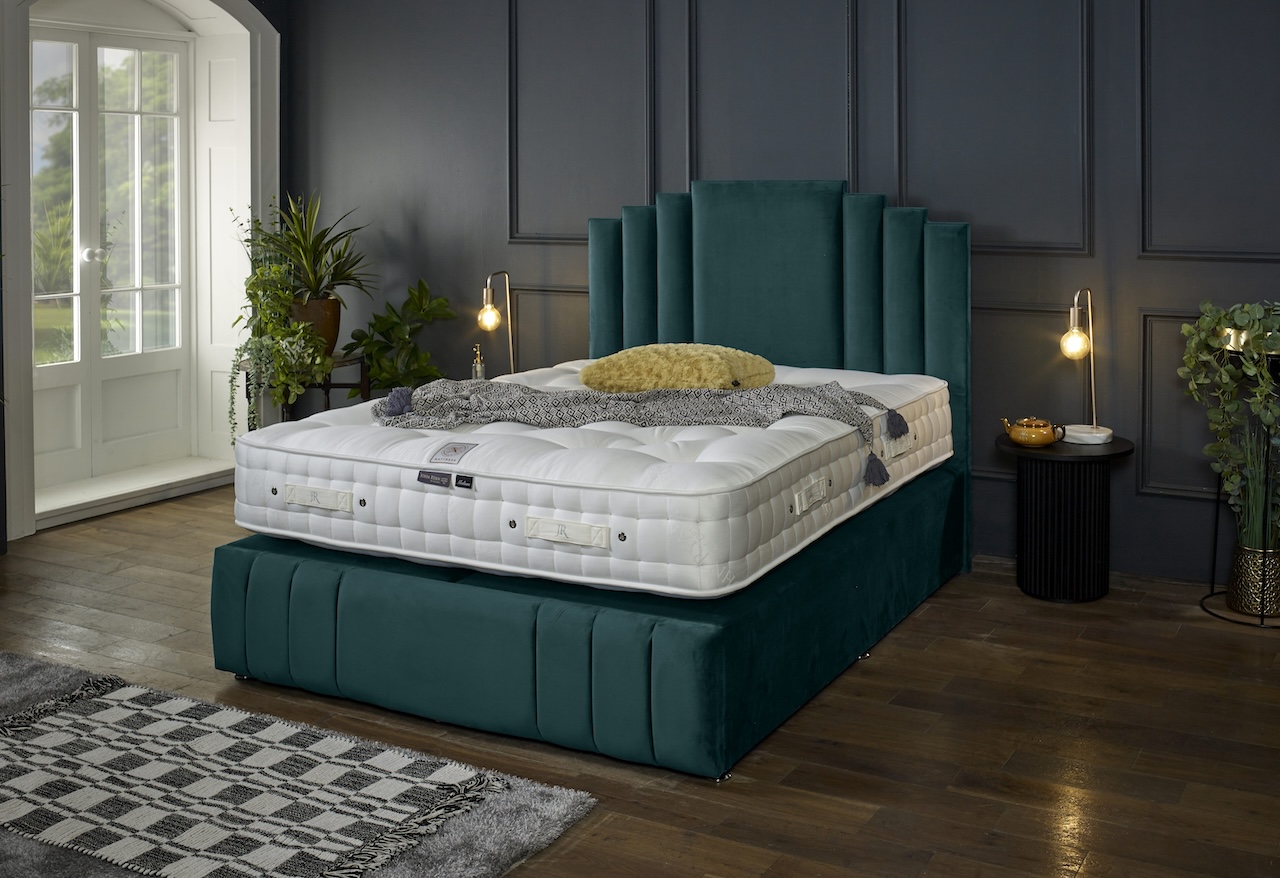
Origins Natural Comfort (King Size: £1,300) — Medium feel, budget starting point
If the Artisan range is outside your budget, the Origins Natural Comfort is the most appropriate alternative for arthritis sufferers. It contains British Wool, Cotton, Cashmere, and Silk over 1,000 pocket springs with a medium feel. The natural fibre comfort layer is less deep than the Artisan models, but the principle is the same: a resilient, breathable surface that cushions the joints without conforming deeply, over a spring unit that can be matched to your body weight. It is a considerably better choice for arthritis than any foam-based mattress at the same price point.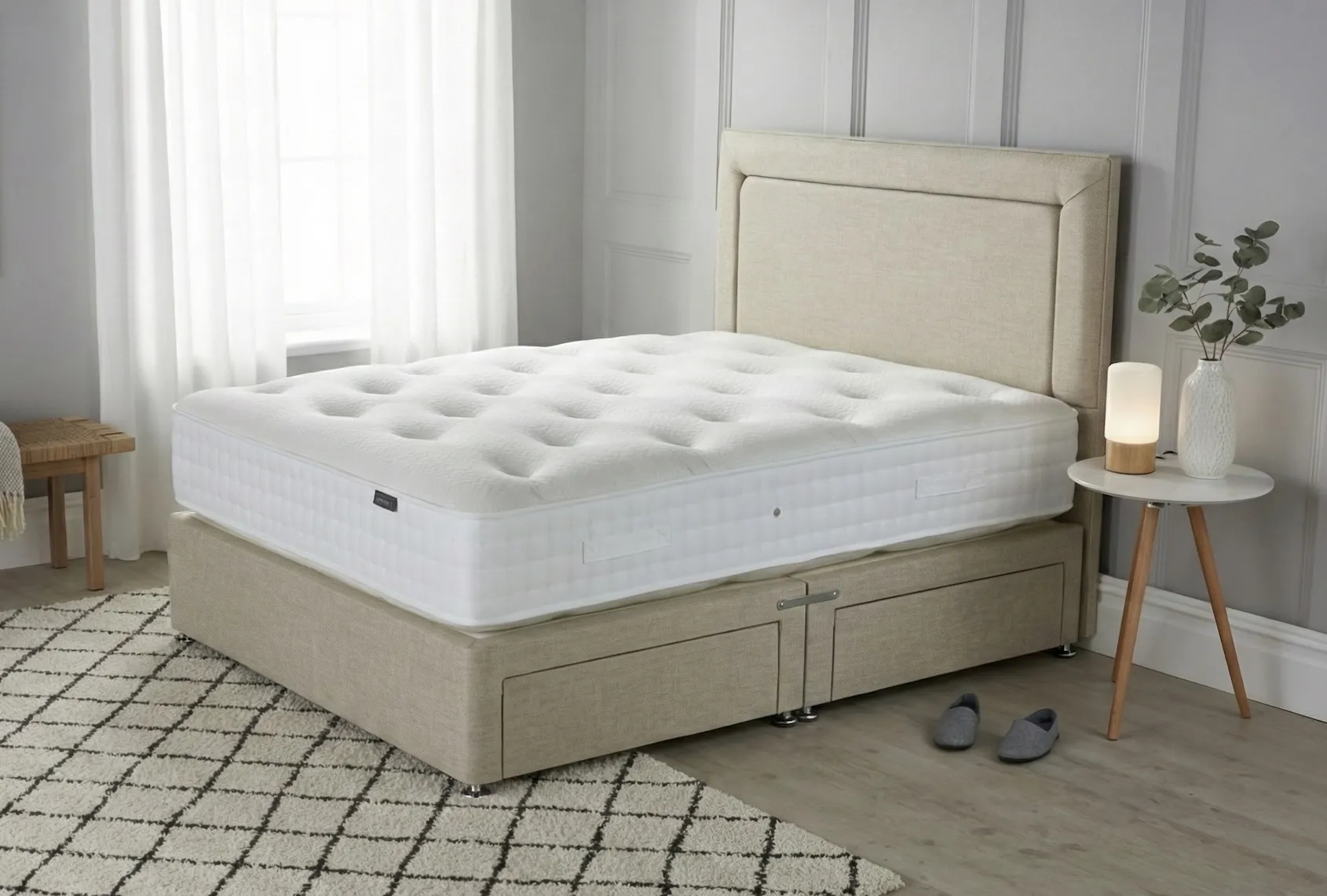
Mattress recommendations at a glance
| Arthritis type and sleeping position | Recommended mattress | Feel | King size price |
|---|---|---|---|
| Most arthritis types, side or back sleeper, average build | Artisan Naturals | Medium | £2,180 |
| Inflammatory arthritis, side sleeper, pressure relief priority | Artisan Latex | Medium | £2,250 |
| Spinal or hip arthritis, back sleeper, lumbar support priority | Artisan Bespoke 004 | Medium | £2,860 |
| Any arthritis type, side sleeper, lighter build (under 11 stone) | Artisan Luxury | Soft | £2,955 |
| Any arthritis type, budget option | Origins Natural Comfort | Medium | £1,300 |
Spring tension and body weight
We cover this principle in detail in our spring tension and body weight guide, but it deserves particular emphasis for arthritis sufferers because getting it wrong undermines everything else about the mattress. The spring tension determines how much force is needed to compress each individual spring. If that tension is too high for your body weight, the spring will not compress enough to allow the comfort layer above it to do its job, and the joints will be pressed against the surface. If it is too low, the body sinks through the comfort layer and the support below is lost entirely.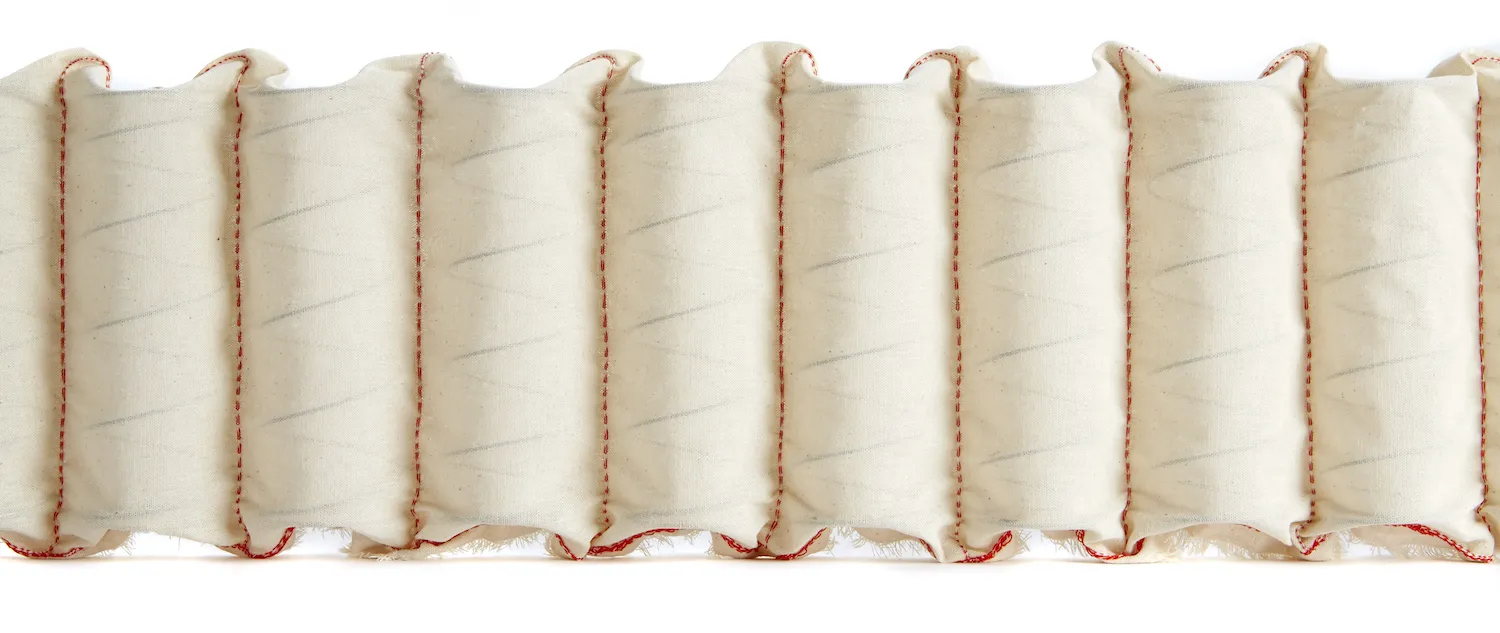
| Body weight | Recommended spring tension | Wire gauge |
|---|---|---|
| Up to 10 stone (64kg) | Soft | 1.2mm |
| 10 to 16 stone (64 to 101kg) | Medium | 1.4mm |
| 16 stone and above (101kg+) | Firm | 1.6mm |
For couples where there is a significant weight difference, a zip and link mattress allows each half to be specified with a different spring tension. This is particularly relevant where one partner has arthritis and the other does not, because the requirements may pull in different directions. All John Ryan Artisan and Origins mattresses can be made as a zip and link.
What our customers tell us
We have changed identifying details in both stories to protect privacy, but the conversations are representative of what we hear regularly.
Margaret, retired teacher from Cheshire, hip osteoarthritis. Margaret called us after three years on a firm pocket spring mattress that a high street retailer had sold her as orthopaedic support for her hips. She was waking at four every morning with hip pain and struggling through the first hour of every day. When we asked about her weight, around nine and a half stone, and her sleeping position, a side sleeper on her left, the problem was immediately clear. The firm spring tension was calibrated for someone closer to fourteen stone. For Margaret, it was far too resistant, preventing her hip from settling into the mattress and concentrating pressure on exactly the joint she needed to relieve. We recommended the Artisan Luxury in a soft spring tension. She called back five weeks later to say the four o’clock waking had stopped entirely and that her mornings were, in her words, completely different.
David, semi-retired engineer from Leeds, rheumatoid arthritis affecting hands and shoulders. David was a back sleeper on a memory foam mattress and could not understand why his shoulders and hands were worse every morning despite the mattress feeling comfortable at bedtime. When we talked it through, the issue was heat. Memory foam had been retaining his body temperature all night, and for someone with an inflammatory condition, sleeping hot meant waking with joints that had been bathed in warmth for eight hours. His spring tension was correct for his weight, so the spring did not need changing. We recommended the Artisan Naturals in his existing tension, specifically for the breathability that the Mohair and Wool upholstery provides compared to any foam surface. He reported back within a fortnight that the morning stiffness in his shoulders had reduced noticeably. One conversation, one change, a measurably better morning.
In both cases the ten-minute phone call made the difference. Neither customer would have identified the root cause from a product page alone. If you have arthritis and are uncertain which mattress is right for you, call us on 0161 437 4419 and we will have exactly the same conversation with you before you spend a penny.
Summary and next steps
Choosing the right mattress when you have arthritis is not about finding a single universal solution. It is about identifying the combination of spring tension, comfort feel, and upholstery material that suits your specific arthritis type, your sleeping position, and your body weight. The principles are consistent: a medium feel in most cases, natural fibre upholstery that breathes and cushions without conforming too deeply, a two-sided mattress that can be maintained over time, and a spring tension matched to your weight rather than your preference.
Our team speaks to people managing arthritis every week and we are happy to work through the specific combination that is likely to suit you before you order. This conversation takes ten minutes and removes the biggest source of uncertainty from the decision. Call us on 0161 437 4419 Monday to Friday, or use the contact form below and we will get back to you promptly. We do not work on commission and we will tell you honestly if a more affordable option is likely to serve you just as well.
Frequently asked questions
What is the best mattress firmness for arthritis?
Medium to medium-firm is the starting point for most arthritis sufferers, as supported by guidance from Versus Arthritis and clinical sleep research. However, the correct firmness for you depends on your sleeping position and body weight. Side sleepers with hip or shoulder arthritis often do better at the softer end of medium. Back sleepers with spinal or lumbar arthritis tend to do better at the firmer end. Body weight determines the spring tension separately from the surface feel.
Is memory foam good or bad for arthritis?
Memory foam provides pressure relief through deep conforming, which some people with isolated osteoarthritis find comfortable initially. However, for most arthritis sufferers it has two significant drawbacks. First, the deep conforming allows heavier joints to sink in, which can cause the spine to sag and worsen morning stiffness. Second, memory foam retains body heat, which can increase overnight inflammation for those with rheumatoid or other inflammatory arthritis. Natural fibre upholstery, specifically Mohair, Wool, or Latex, provides pressure relief without these drawbacks.
Is a firm mattress better for arthritis?
No, not as a general rule. A very firm surface presses against arthritic joints rather than cradling them, which can concentrate pressure at the contact points and increase pain during the night. Versus Arthritis notes that a firm orthopaedic mattress is sometimes recommended but that whether it suits you depends on your weight, build, age, sleeping position, and the type and location of your arthritis. The evidence consistently supports medium-firm rather than firm as the most broadly appropriate choice.
What type of arthritis most benefits from a mattress change?
All types of arthritis can be affected by mattress choice, but those with hip osteoarthritis, shoulder osteoarthritis, spinal arthritis, and rheumatoid arthritis affecting multiple joints tend to notice the most significant difference. This is because these conditions directly involve the areas of the body that bear the most load during sleep.
How often should I replace my mattress if I have arthritis?
A mattress that is beginning to lose its support, develop body impressions, or produce different comfort on different nights should be replaced. For arthritis sufferers the timeline matters more than for the general population because a deteriorating mattress becomes progressively worse at providing the consistent support and pressure relief that arthritic joints need. A two-sided mattress that is flipped regularly will maintain its performance considerably longer than a one-sided mattress. Our 10 Signs guide covers this in more detail at when to replace your mattress.
Can a mattress topper help with arthritis if I cannot afford a new mattress?
A natural fibre topper, specifically Wool or Latex, can add useful pressure relief to a mattress that is structurally sound but lacks sufficient comfort layer depth. However, a topper cannot correct a mattress that has the wrong spring tension for your body weight, nor can it restore a mattress that has already developed significant body impressions. If your current mattress is sinking in the middle or has a visible dip, a topper will follow the same contour and is unlikely to help significantly. A topper is most useful as an additional layer on a relatively new but firm mattress where the spring tension is correct but the surface needs softening.
Can I have different mattress specifications on each side of the bed?
Yes. All John Ryan Artisan and Origins mattresses can be made as a zip and link, allowing each half to be specified with a different feel and spring tension. This is a practical solution for couples where one partner has arthritis and needs a specific combination, and the other has different requirements. Zip and link pricing is listed on each individual mattress page.

Dreaming of the perfect nights sleep?
Ask us a question
There are over 6000 questions and answers submitted by you on all questions about mattresses and bed problems. Enter a keyword such as Vi Spring, John Lewis beds, bad back or Memory Foam and see if your question has already been answered.
If you can’t find an answer in knowledge hub, ask a new question. We aim to respond to all questions within one working day.
Newsletter
Enter your email to join our newsletter. We’ll send you occasional news and mattress expertise.