






Mattress Science
June 2026Orthopaedic mattresses for bad backs: myths & scams debunked
Updated 2026: There is plenty of false information about orthopaedic mattresses being ideal for people with bad backs. The old wives’ tale that a firm mattress will fix your bad back has long been disproven. We detail how you really should be searching for a mattress if you have a bad back, and how to avoid falling for unsuitable and incorrectly marketed orthopaedic mattresses.
If you searched for the best orthopaedic mattress, start here
Most people who land on this page searched for something like “best orthopaedic mattress UK” or “orthopaedic mattress for back pain.” That is a completely understandable search. You have a bad back, you want it to stop hurting at night, and the word orthopaedic sounds like it was made for exactly that situation. The problem is that it was not. It is a marketing term with no clinical definition, no regulatory standard, and no requirement for any manufacturer to prove their mattress does anything useful for a back complaint whatsoever.
That does not mean your underlying need is wrong. You genuinely do need a mattress that supports your spine in a neutral position, does not trap heat against inflamed tissue, and allows you to move freely through the night without resistance. Those are real, achievable requirements. They just have nothing to do with the word orthopaedic, and everything to do with spring gauge, upholstery construction, and matching the mattress to your bodyweight.
This guide explains why the label is meaningless and what to look for instead. If you want to skip straight to our specific recommendations, jump to the product section here. If you want to understand the full picture before deciding, read on. Either way, our team is available on 0161 437 4419 if you would rather talk it through directly.
Orthopaedic mattresses for bad backs: contents
- What is an orthopaedic mattress, really?
- Where did the orthopaedic mattress idea come from?
- Myths about orthopaedic mattresses for bad backs
- The unregulated truth: what the label doesn’t tell you
- Why soft, medium and firm mean nothing across brands
- How to choose a mattress for a bad back
- How your sleeping position changes everything
- Why memory foam is unsuitable for a bad back
- Heat, inflammation, and the mattress you sleep on
- Why natural fibre upholstery matters for bad backs
- The open-coil problem in orthopaedic mattresses
- Pocket spring split tension mattresses and sleep disturbance
- Our recommended mattresses for bad backs
- Frequently asked questions
What is an orthopaedic mattress, really?
Before we dismantle the myths, it is worth being clear about what the term actually means — or rather, what it does not mean.
An orthopaedic mattress is not a medically assessed, clinically tested, or professionally endorsed product. There is no industry body, regulatory authority, or standard of any kind that a mattress must meet in order to be labelled orthopaedic. Any manufacturer can attach the word to any product they choose, for any reason, with no requirement to provide evidence of back health benefits whatsoever. In practice, the term has become a convenient shorthand for extra firm, and nothing more.

Wikipedia describes the modern use of the word as largely a marketing term, and the British Sleep Council has stated plainly that any reference to a bed being orthopaedic does not mean it has been professionally assessed or recommended. It is a term used loosely by manufacturers to describe extra firm models in their range.
This matters because people with genuine, painful back conditions are actively choosing mattresses based on a label that means nothing. That is not a minor inconvenience. For someone with a bad back, sleeping on the wrong mattress will make things worse every single night, compounding the problem rather than relieving it. Our dedicated guide to the best mattress for a bad back covers the clinical research in detail, including the landmark Lancet study that definitively challenges the firm mattress orthodoxy. This article focuses on a different but equally important question: why did the orthopaedic myth take hold in the first place, and how do you see through it?
Where did the orthopaedic mattress idea come from?
Understanding how this myth started helps explain why it has been so difficult to shift. The term orthopaedic mattress emerged in the 1950s, following early studies into how joints and bones behave during rest. The thinking at the time was that the soft, saggy mattresses most people slept on, poorly constructed by today’s standards, with inadequate support and a tendency to dip heavily, were contributing to back complaints. Researchers concluded that a firmer surface would keep the spine in a more neutral position than one that allowed the heavier parts of the body to sink unevenly.
That conclusion was probably correct in its original context. In the 1950s, a firmer mattress genuinely was an improvement on the alternatives available. The problem is that mattress technology moved on considerably over the following decades. The advice did not.
Manufacturers recognised quickly that the word orthopaedic carried enormous persuasive power with back pain sufferers, and by the time clinical thinking had evolved to question the firm-is-best orthodoxy, the term was so embedded in retail marketing that dislodging it became commercially inconvenient. What had started as a reasonable response to genuinely poor mattress quality became a label that could be applied to any product, at any price point, to unlock the purchasing impulse of anyone with a bad back.
The British Chiropractic Association and the International Chiropractors Association have both since moved well beyond the firm mattress recommendation, and the landmark Lancet study published in 2003 provided clinical evidence that medium-firm mattresses produce significantly better outcomes for chronic back pain than firm ones. The marketing, however, has kept running decades ahead of the evidence.
Myths about orthopaedic mattresses for bad backs
We are delighted that the British Chiropractic Association has confirmed that there is no one solution that suits all when it comes to buying a mattress for a bad back. This revokes years of uninformed advice that recommended the firmest mattresses for those with back and neck problems. For years chiropractors and mattress companies recommended orthopaedic mattresses as the solution to restless sleep for those with a bad back. Most of this was used as a marketing tool. The argument that a super firm rigid mattress will somehow straighten out your spine is naive at best. At worst it has been pushing people towards wholly unsuitable mattresses for years, making things worse rather than better.
The International Chiropractors Association has also stressed the need to identify both comfort and support when choosing a new mattress, moving firmly away from the old rule of the firmer the better. Before we look at how to choose correctly, here are the three most persistent myths worth putting to bed once and for all.
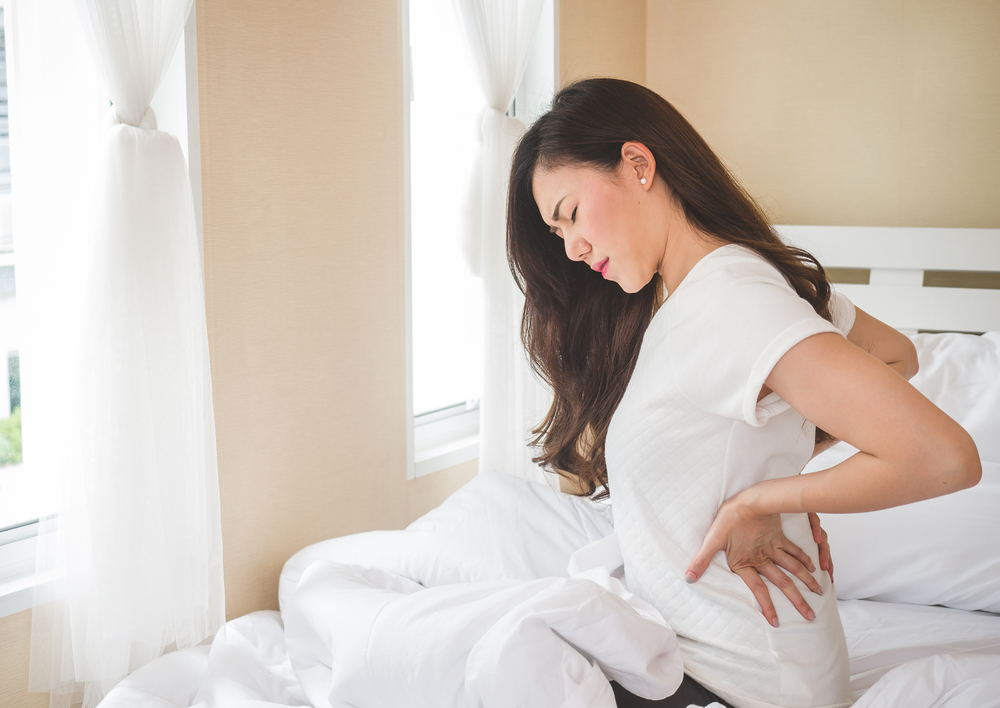
Myth 1: Orthopaedic mattresses are specially designed for bad backs
Given the multitude of possible causes of a bad back, whether genetics, accidents, or posture to name a few, there is no way that one mattress can ever be created to resolve all these issues. Orthopaedic mattresses all have one thing in common: they use extremely firm support to create a very stable but incredibly firm sleeping surface. They are practically all support with no real consideration of the comfort layers that are essential in a mattress, meaning you are sometimes held on top of the mattress rather than being supported within it. That is hardly conducive to a restful, supportive night’s sleep.
Myth 2: Orthopaedic mattresses will help you sleep better by moving less
The average person moves 30 to 40 times each night at regular intervals. There is no reason why a super firm mattress would change that. In fact, the British Chiropractors Association states that staying in one position all night can effectively overload joints or backs, causing more issues. What is required is a mattress that allows you to move easily during the night, not one that holds you in a restrictive position and creates excess pressure on joints. This is where responsive mattresses prove genuinely useful.
Myth 3: A firmer mattress keeps your spine aligned and reduces back problems
The old wisdom around firm mattresses, and some memory foam companies, was that they help keep your spine in alignment during sleep. In reality, your spine will find its own natural position, and being forced by a firmer bed to straighten itself out is not how spinal anatomy works. What you need is a mattress that supports your bodyweight so your spine can find its natural resting position. Too firm and it is forced. Too soft and you may exaggerate any back issues. This is precisely why advice on the correct support unit for your bodyweight is the first essential criteria in choosing a mattress for a bad back.
The unregulated truth: what the orthopaedic label doesn’t tell you
It is worth pausing here to look at how the orthopaedic term has been used commercially, because the scale of the misrepresentation is quite striking once you see it clearly.
In the UK, mattress manufacturers are not required by law to provide any proof of testing to support claims of a mattress being orthopaedic. No clinical trials, no independent assessments, no chiropractic endorsements. The label can be applied to any mattress, at any price point, regardless of its construction. A budget open-coil mattress and a premium pocket sprung mattress can both carry the orthopaedic label with equal legal validity, which is to say none at all.
The result is a marketplace in which people with chronic pain, who are arguably the most vulnerable and motivated buyers in the bedding industry, are being sold a clinical credential that does not exist. High street retailers have long understood that the word orthopaedic acts as a purchasing shortcut for back pain sufferers, and the term has been used accordingly. Some retailers have even created tiered ranges with names like Advanced Orthopaedic or Clinical Ortho, adding layers of invented authority to a label that already has none.
The practical implication is simple: when evaluating a mattress for a bad back, ignore the word orthopaedic entirely. It tells you nothing about spring gauge, upholstery GSM, comfort layer depth, or any of the specification details that actually determine whether the mattress is suitable for your body. Focus instead on the construction.
Why soft, medium and firm mean nothing across brands
One of the most practical problems with shopping for a mattress when you have a bad back is that the language used across the industry is entirely inconsistent. There is no agreed standard for what soft, medium, or firm actually means. One manufacturer’s firm mattress may be another manufacturer’s medium. A mattress labelled firm by a high street retailer may feel considerably softer than one described as medium by a specialist manufacturer, simply because neither term has any regulatory definition.
This matters enormously for bad back sufferers because firmness is typically the primary filter used when searching for a suitable mattress. If you have been told by a chiropractor, a forum, or a retailer to look for a firm mattress, and every manufacturer applies that word differently, you could end up with almost anything.
The only reliable way to match a mattress to your back is through spring gauge, not firmness labels. Spring wire diameter is a measurable, objective specification that tells you how much resistance the support unit offers under load. A 1.4mm gauge spring offers a predictable level of compression for a given weight. A 1.6mm gauge offers considerably more resistance. These numbers mean the same thing regardless of which manufacturer uses them. The soft, medium, and firm labels applied above those springs are marketing decisions, not engineering specifications.
This is why we always publish wire gauge alongside our mattresses and provide a weight-to-gauge matching table rather than asking you to navigate subjective firmness descriptions. When comparing mattresses for a bad back, always ask for the spring gauge. If a retailer or manufacturer cannot or will not tell you, that absence of information should itself tell you something.
How to choose a mattress for a bad back
When looking for a mattress for a bad back there are only two considerations you need to address. Support and comfort.
Support in a mattress
The first question is: what support unit is suitable for my weight? This is dictated by your body weight and height, because spring units are manufactured to accommodate different weight ranges, offering just the right amount of extension versus compression for different loads. Often this is misquoted on mattresses as the comfort label soft, medium, or firm, which is genuinely misleading. It does not mean the mattress will feel soft, medium, or firm. It simply refers to a weight range, dressed up in more palatable language.
| Bodyweight | Spring tension |
|---|---|
| Upto 16 Stone / 50-101kg | Medium (1.4mm) |
| 16 Stone / 101kg Upwards | Firm (1.6mm) |
| Available in Bespoke Products (Please Call) | Soft (1.2mm) |
Your height is important too, as it further helps establish whether you may need to move from one gauge spring to another. A very tall person of 6ft 6in at 12 stone may actually require a softer spring than you would expect, as the weight is more evenly distributed across a longer frame. Conversely, someone of 5ft at 16 stone may require a firmer gauge than their weight alone might suggest. This is where expert guidance really helps.
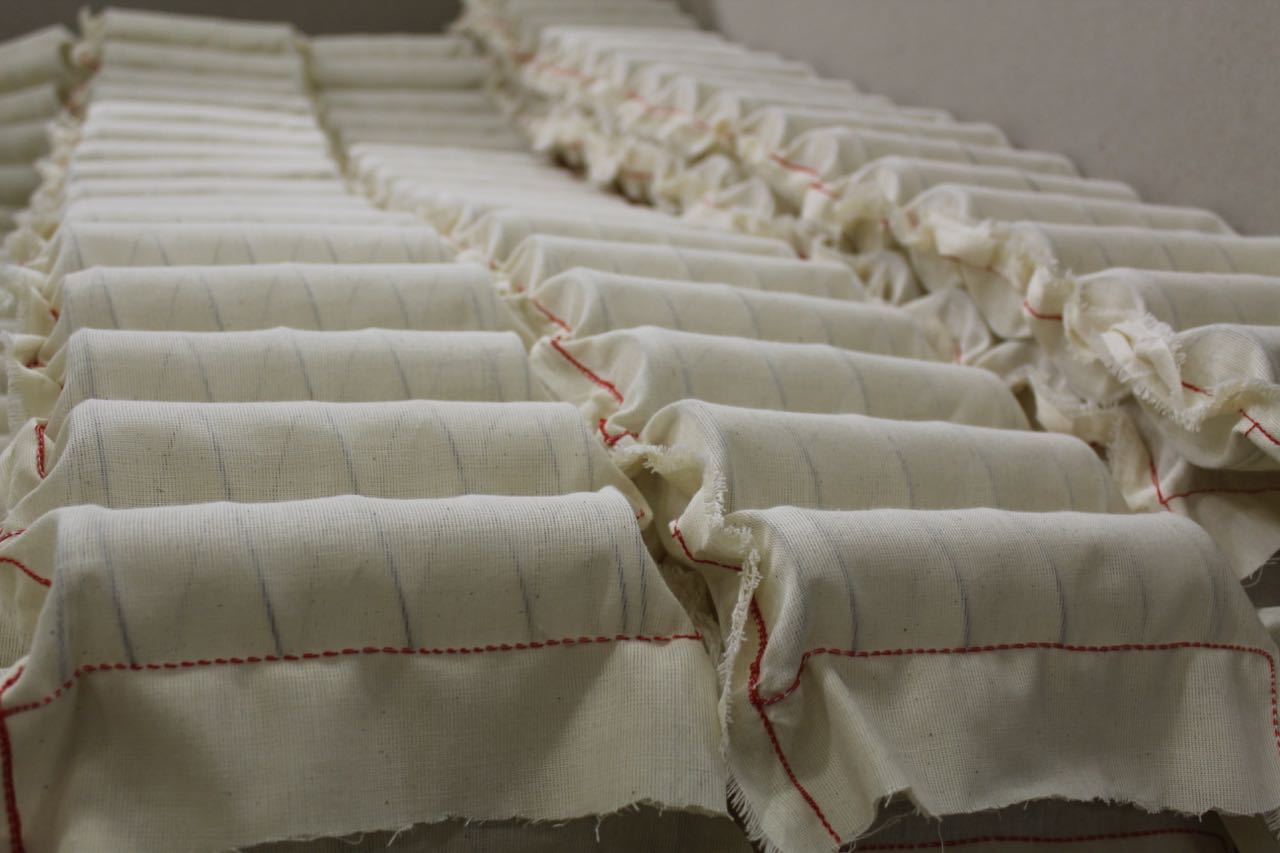
Responsivity is also a consideration with support. A solid slab of cheap foam will offer support but will not be responsive enough to allow you to move without significant effort. A quality pocket spring system that allows for independent movement whilst asleep is the ideal, adjusting based on your position throughout the night in a way that a firm static mattress simply cannot.
A quality pocket spring system that allows for independent movement whilst asleep is ideal.
| Spring Tension | Wire diameter (Gauge) | Weight Range |
|---|---|---|
| Soft | 1.2mm | Bespoke Tension (Please Call) |
| Medium | 1.4mm | Upto 16 stone |
| Firm | 1.6mm | 16 stone plus |
| Extra Firm / Orthopaedic | 1.9mm | 20 stone plus |
Comfort in a mattress
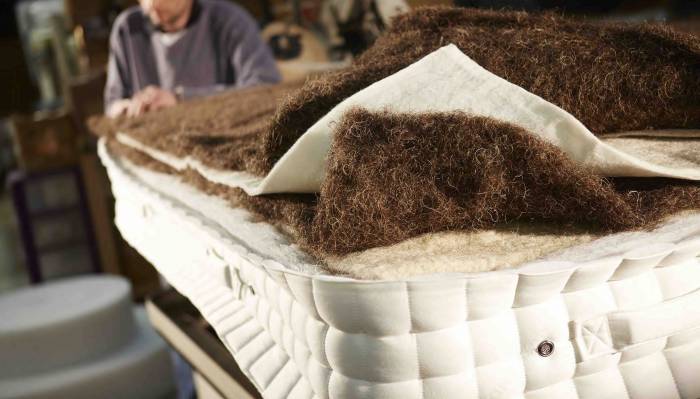
The next consideration is the comfort preference of your mattress, which is where the soft, medium, and firm categories should actually sit. Comfort is provided by the upholstery fillings and layer configurations. Most people know if they prefer a softer or firmer feel at the top of their mattress. If you are suffering from a bad back, a medium to softer feel is actually more suitable in the comfort layers, as it allows the mattress to conform around your body rather than holding you in a rigid straight line, which can aggravate back issues. The mattress needs to support you but also allow for some give so that the upholstery layers conform to you, not the other way around.
How your sleeping position changes everything
This is one of the most overlooked factors in the entire orthopaedic mattress conversation, and one that high street retailers almost never discuss, because addressing it honestly would undermine the one-size-fits-all firmness message they rely on.
Your sleeping position determines where pressure concentrates on the mattress surface, which in turn determines what kind of comfort layers and support tension your back needs. Side sleepers, back sleepers, and front sleepers have fundamentally different requirements, and the wrong mattress for your sleeping position will create spinal misalignment that accumulates over hundreds of nights.
Side sleepers are the most common and also the most poorly served by orthopaedic mattresses. Sleeping on your side places the greatest load on your shoulders and hips, and these areas need to sink into the mattress enough to allow the spine to remain level. A very firm mattress will not allow sufficient sink, creating a lateral curve in the spine and concentrating pressure on those bony points throughout the night. If you are a side sleeper with a bad back, an orthopaedic mattress is one of the least appropriate choices you could make.

Back sleepers distribute their weight more evenly and can generally tolerate a slightly firmer tension than side sleepers, though the lumbar region still needs the comfort layers to be responsive enough to cradle the natural curve of the lower spine rather than bridging over it. A mattress that is too firm for a back sleeper will leave the lumbar region unsupported, which over time is a significant contributor to lower back pain.

Front sleepers typically need a firmer overall feel to prevent the hips from sinking too deeply, which would push the lumbar spine into hyperextension. Front sleeping is generally the least recommended position for those with back pain, but if you cannot change the habit, the spring tension needs to be firm enough to keep the pelvis relatively level.

The important point here is that none of this has anything to do with the word orthopaedic. What it has everything to do with is choosing the correct spring gauge for your bodyweight and a comfort layer configuration that suits your sleeping position. Two things that a good independent mattress manufacturer will discuss with you in detail, and that a high street showroom rarely will.
Avoiding memory foam mattresses that can make your back worse
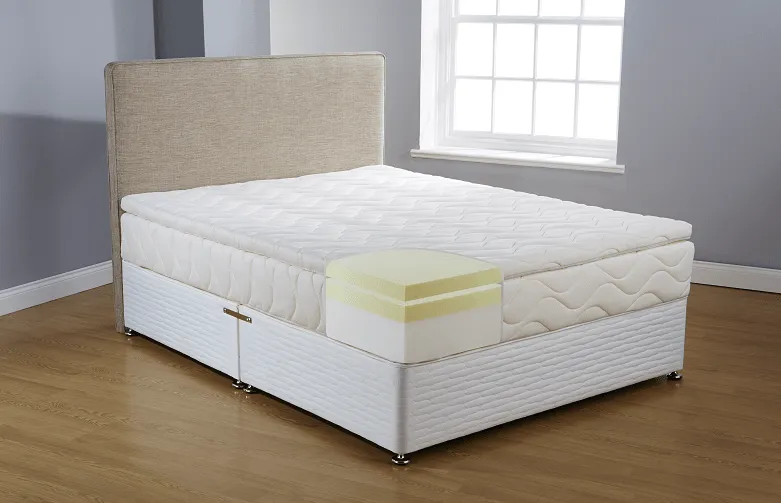
We have experienced numerous callers who have moved to a memory foam mattress to try and help their bad back, only to find it made things worse. Mark had bought a foam bed from IKEA to find it made his bad back even worse. On further inspection, this is likely down to the fact that firm foam restricts your movement whilst trapping body heat, making you not only sleep hot but become stuck in one awkward position for hours at a time.
We have had numerous complaints about well-known memory foam models that claim to allow the mattress to conform to your exact sleep position, only for sleepers to find themselves trapped in their bodily impression each night rather than being able to move freely. If you have a bad back, you need something that conforms to you but also allows for ease of movement when you need it. Memory foam and other synthetic foam mattresses are exceptionally slow to respond, which means they can hold you in a position that exaggerates your back issues rather than relieving them.
Heat, inflammation, and the mattress you sleep on
This is a connection that the mattress industry rarely discusses openly, and it is worth addressing directly if you have a bad back.
Inflammation is one of the primary drivers of back pain, and body temperature during sleep has a measurable effect on inflammatory processes. When you sleep on a material that traps heat, your core temperature stays elevated for longer during the night, which can interfere with the body’s natural overnight cooling cycle. That cooling process is important: your core temperature drops during deep sleep, which is when the most restorative tissue repair and anti-inflammatory activity takes place. A mattress that holds heat disrupts this cycle.
Memory foam is the most heat-retentive common mattress material because it softens in response to body warmth and then holds that heat against you. Even many foam mattresses marketed with cooling gel layers or ventilation channels have been shown to still sleep significantly warmer than natural fibre alternatives. For someone with an inflammatory back condition, including conditions such as ankylosing spondylitis or inflammatory arthritis that can drive referred back pain, this is not a trivial consideration.

Natural fibre upholstery materials regulate temperature actively rather than passively. Wool, in particular, is a natural thermoregulator: it wicks moisture away from the skin and releases it into the atmosphere, maintaining a more consistent sleeping temperature through the night. Cotton breathes naturally and does not retain heat in the same way synthetic materials do. Horsehair is one of the most breathable natural fibres used in mattress upholstery and is a significant contributor to the temperature-neutral sleep quality associated with traditionally constructed pocket spring mattresses.
This is also where your bedding choice matters. Sleeping under a synthetic duvet on a foam mattress compounds the heat problem significantly. A natural Wool duvet, breathable Cotton bedding, and a natural fibre mattress protector all help maintain the cooler sleeping environment that supports better pain management overnight.
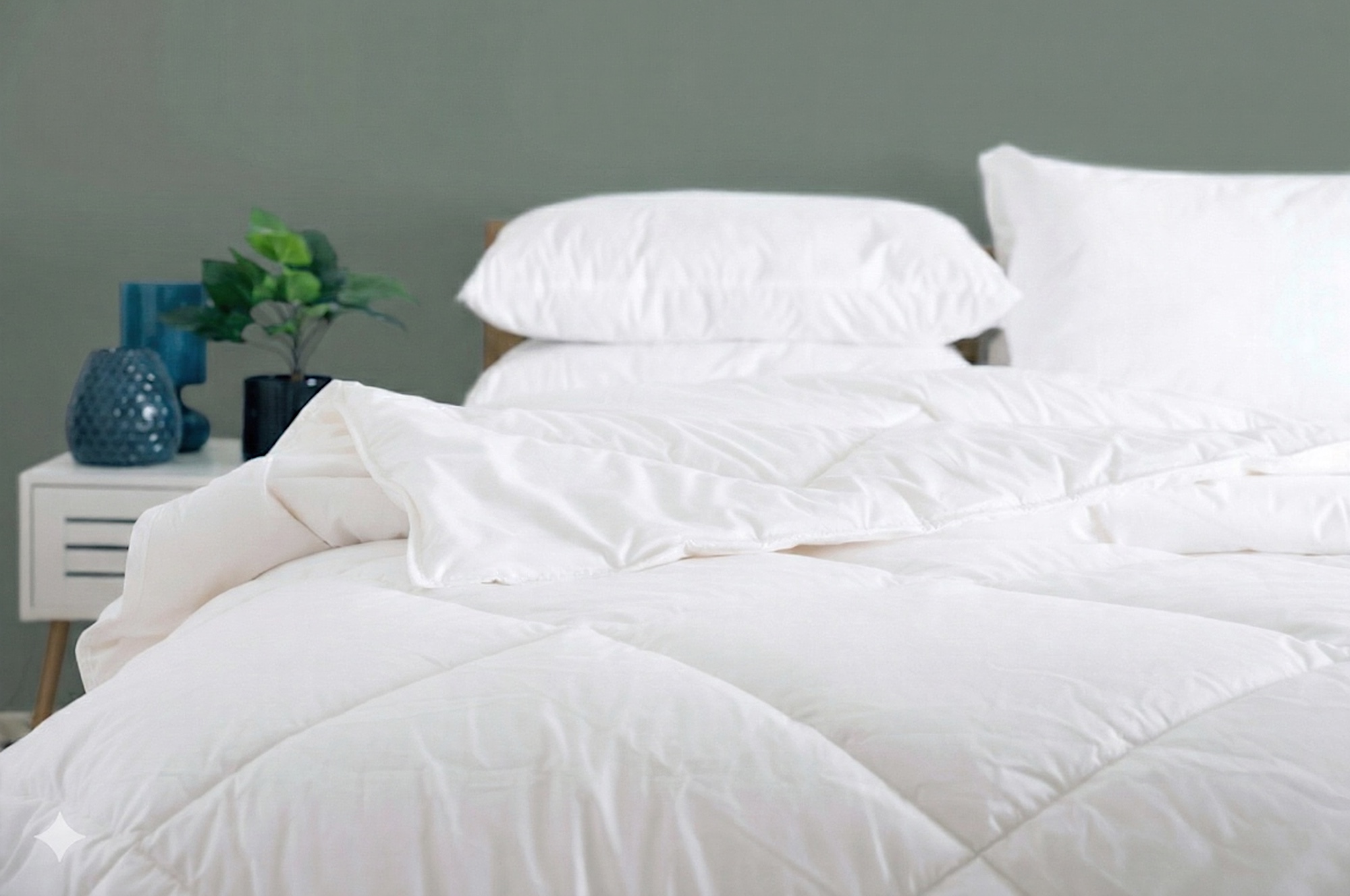
Our British Wool duvets are temperature-regulating by nature, available from £240 for a king size medium weight, and work particularly well alongside a natural fibre pocket spring mattress to keep the overall sleeping environment as cool and recovery-friendly as possible. Our Artisan Cotton bedding packs start from £150 in a king size and offer a natural, breathable layer that will not trap heat against the mattress surface.
Why natural fibre upholstery matters for bad backs
When we discuss mattress upholstery in the context of back pain, we are really talking about the comfort layer’s ability to do two things: conform to the shape of your body so pressure is distributed evenly, and recover its shape overnight so the same level of support is available the following night.
Synthetic foam layers compress over time and do not recover fully. This gradual deterioration means that the surface your back is resting on is subtly different week by week, month by month. The dip that develops in a foam mattress is not just an aesthetic issue. It represents a progressive change in the support geometry that your spine is adapting to nightly, and for someone with a pre-existing back condition, this deterioration will be felt.
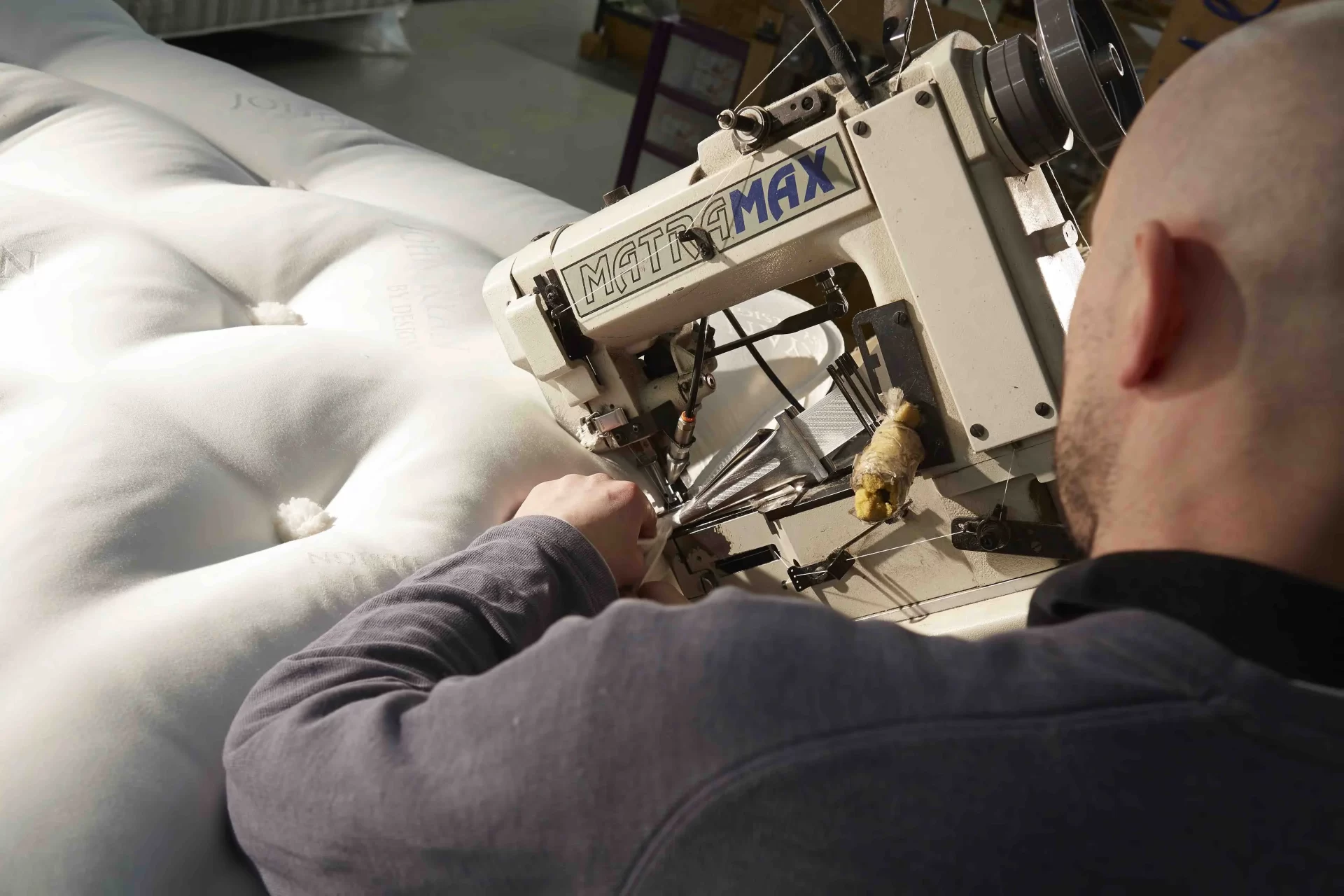
Natural fibre upholstery materials, particularly Wool, Cotton, Horsetail, and Horsehair, compress and recover differently from foam. They have a cellular structure that allows for repeated compression and spring-back, maintaining their loft and resilience over a considerably longer period. This is one of the reasons why a well-made natural fibre pocket spring mattress will typically outlast a foam or memory foam bed by many years, and why the sleep surface it provides remains more consistent throughout its life.
The GSM weight of the upholstery layers is the most transparent way to compare this quality between mattresses. GSM stands for grams per square metre and indicates how much filling material has been used per layer. Most manufacturers do not publish this information because it would make direct comparison too straightforward. We publish all GSM figures across our Artisan range, so you can see precisely what is inside each mattress before you buy.
The open-coil problem in orthopaedic mattresses
This is something that very few articles on this topic mention, and it is something we see causing real problems for people who have bought orthopaedic mattresses specifically to help a bad back.
A significant proportion of budget orthopaedic mattresses use open-coil or cage-sprung construction rather than pocket springs. Open-coil systems use a single piece of interconnected wire running throughout the mattress, which means every movement transfers immediately across the entire sleep surface. There are no independent springs to absorb or isolate movement. Every time you shift position during the night, that movement ripples through the bed — and if you share a bed, your partner’s movements ripple through to you in exactly the same way.
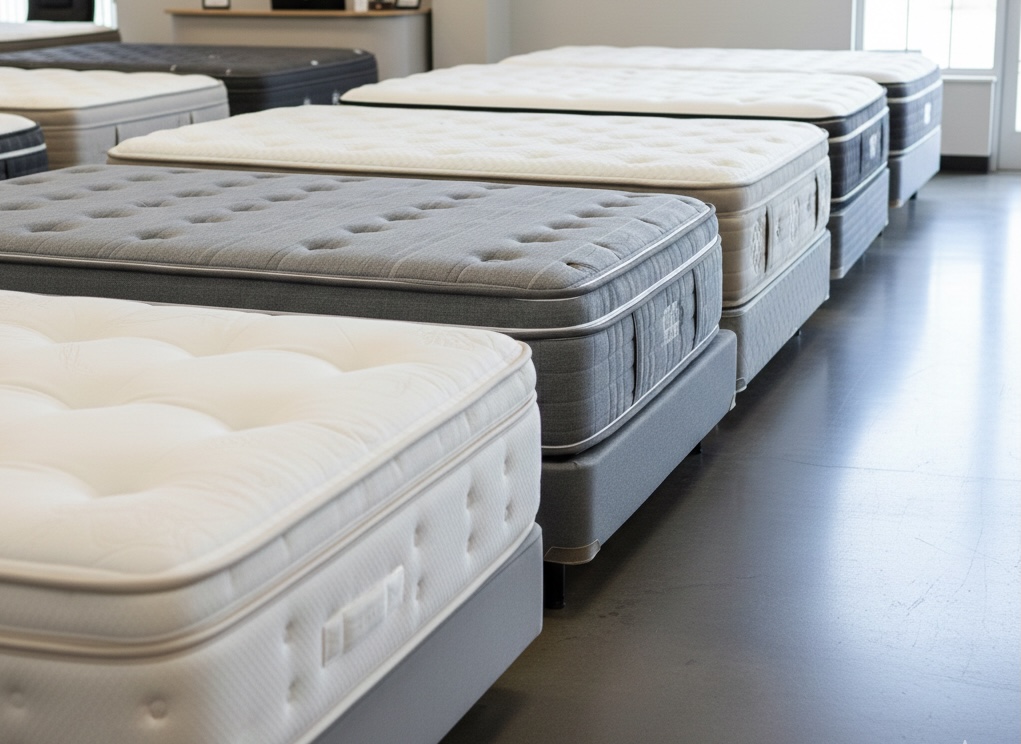
For someone with a bad back, open-coil construction is among the worst possible choices. The very thing that makes a bad back uncomfortable during sleep — being disturbed, having to make effort to move, being woken by a partner turning over — is exacerbated by open-coil springs. The fact that many orthopaedic mattresses use this construction while simultaneously being marketed as the solution to back pain is, frankly, one of the better examples of how the term has been used to sell unsuitable products.
Open-coil mattresses are also unable to adjust independently to different areas of the body. A pocket spring unit, where each spring operates individually within its own fabric pocket, can respond to the contours and weight distribution of your specific body. An open-coil system provides a uniform resistance across the whole surface regardless of whether you are lying on your side, your back, or whether pressure is concentrated at your hips or your shoulders.
When considering any mattress for a bad back, always ask what spring system is used. If the answer is open-coil, bonnell, or continuous coil, walk away regardless of what the label says. The spring system is the foundation of the mattress. No amount of upholstery depth or marketing language applied above an open-coil unit will compensate for the problems that construction creates for back pain sufferers.
Pocket spring split tension mattresses and sleep disturbance
One of the most troublesome aspects of sleeping with a bad back is disturbance from your partner. We have received hundreds of comments, particularly from light sleepers, saying that whenever their partner turns in bed the movement wakes them. This is especially true in open coil spring systems and solid foam firm mattresses such as orthopaedic models. Open coil mattresses are a one-piece spring unit, so every movement ripples through the mattress. With firm foam mattresses, any movement transfers immediately through the solid slab to the next sleeper, particularly if that movement involves considerable effort to turn as it does with memory foam.
For this reason pocket springs are always preferable, in particular calico hand-tied springs, which eliminate transference as the springs act completely independently. We have been crafting split tension pocket spring mattresses for over ten years, meaning your mattress can have one tension for one sleeper and a different tension for the other. If there is a weight difference between you and your partner, you do not have to compromise on the spring tension. You can both have the correct tension for your individual bodyweights.
This also means that if you have a bad back and need to readjust your position frequently during the night, you are far less likely to disturb your partner. Something that a one-piece firm orthopaedic mattress will never provide.
Alison’s bad back problem is a prime example of this. Her husband was significantly heavier, and they had chosen a mattress to accommodate his weight. This meant she was sleeping on far too firm a spring tension, which aggravated her back complaint nightly. Had she had the option of a split tension like our Artisan range allows, she could have had the correct medium tension for her weight while her husband had the firm tension appropriate for his. Instead, she was on a 1.6 gauge spring that was causing her considerable pain.
Our experience on the best mattress for a bad back
We have been in the industry for a long time designing mattresses and answering over 5,000 detailed questions about beds in the process. A number of people have asked about orthopaedic mattresses, often after being pointed in that direction by advertising. Andrew is one customer who believed he wanted a firm mattress that was like sleeping on the floor. Upon further discussion with him, it turned out he wanted a firmer feel in the comfort of the mattress rather than a solid board of a bed. Whilst sleeping on the floor temporarily had seemed to help his back, it was not a long-term solution and had led to other sleep discomfort issues.
Andrew was tall, and this was taken into consideration when recommending a medium feel spring tension. Even though he was 15 stone, his height meant the weight was more evenly distributed, so medium rather than firm tension was more appropriate. He would never have considered this tension independently, and would have ended up with an overly firm support unit causing discomfort. By recommending the correct support tension for his weight and height, he was able to choose a firmer upholstery feel in the comfort layers that led him to our Artisan 1500 mattress. He still got the firmer feel in the comfort of the mattress but without an unnecessarily brutal support unit underneath it.
What to ask any retailer before buying a mattress for a bad back
Most high street mattress retailers cannot answer these questions. That fact alone tells you something useful. Before committing to any mattress for a back complaint, ask the following and judge the response.
What is the spring wire gauge?
This is the single most important specification question. Wire diameter is a measurable, objective number that tells you how the spring behaves under load. A 1.4mm gauge spring is calibrated for sleepers up to around 16 stone. A 1.6mm gauge is calibrated for 16 stone and above. An extra firm 1.9mm gauge is designed for very heavy sleepers and is almost never appropriate for someone with a bad back who is of average weight. If a retailer responds with “medium,” “firm,” or “orthopaedic” rather than a wire measurement, that answer is not an answer.
How many pocket springs are in the mattress per square metre?
Spring count matters less than spring gauge but it still tells you something about the support resolution of the mattress. A higher count means each individual spring is responding to a smaller area of your body, which improves contouring around the lumbar curve. Anything below 1000 springs in a king size mattress is relatively low resolution. Our mattresses publish this figure openly on every product page.
What are the upholstery fills and at what GSM?
The comfort layers are what your body actually contacts. GSM (grams per square metre) tells you how densely packed those layers are. A mattress with 3000 GSM of natural fibre upholstery will perform very differently from one with 1200 GSM of synthetic fill, even if both carry the same firmness label. For someone with a bad back, natural fibre upholstery is preferable because it breathes rather than retaining heat against inflamed tissue. Ask for the specific materials and the GSM of each layer. If the retailer does not know, the mattress specification is not transparent enough to trust.
Is the mattress double-sided?
A double-sided mattress can be flipped, which distributes compression wear evenly across both surfaces and significantly extends the period before the comfort layers show signs of settlement. A one-sided mattress takes all the daily compression from one direction. For someone spending eight hours a night in the same position due to back pain, a mattress that allows flipping will hold its support characteristics considerably longer.
What is the returns policy?
A mattress for a bad back is not something you can assess in a showroom. The only meaningful test is sleeping on it for several weeks. Any reputable manufacturer should offer a trial period of at least 60 nights with a no-quibble return option. We offer 60 nights as standard. If a retailer is reluctant to offer a meaningful trial period on a product being sold specifically for a back complaint, that reluctance should be noted.
Our recommended mattresses for bad backs
Every mattress we make is a pocket spring mattress with natural fibre upholstery, double-sided, and available in multiple spring tensions matched to bodyweight. None of them carries the orthopaedic label. All of them are built to do what that label falsely promises. The two models below are the ones we recommend most often to people with back pain, for the reasons set out beneath each one.
King size prices are shown throughout. All sizes are available and spring tension is selected at checkout based on the weight guidance above. If you are on the cusp between tensions, or if you share the bed with a partner at a significantly different weight, call us on 0161 437 4419 before ordering and we will advise.
Origins Natural Comfort: the mid-range recommendation
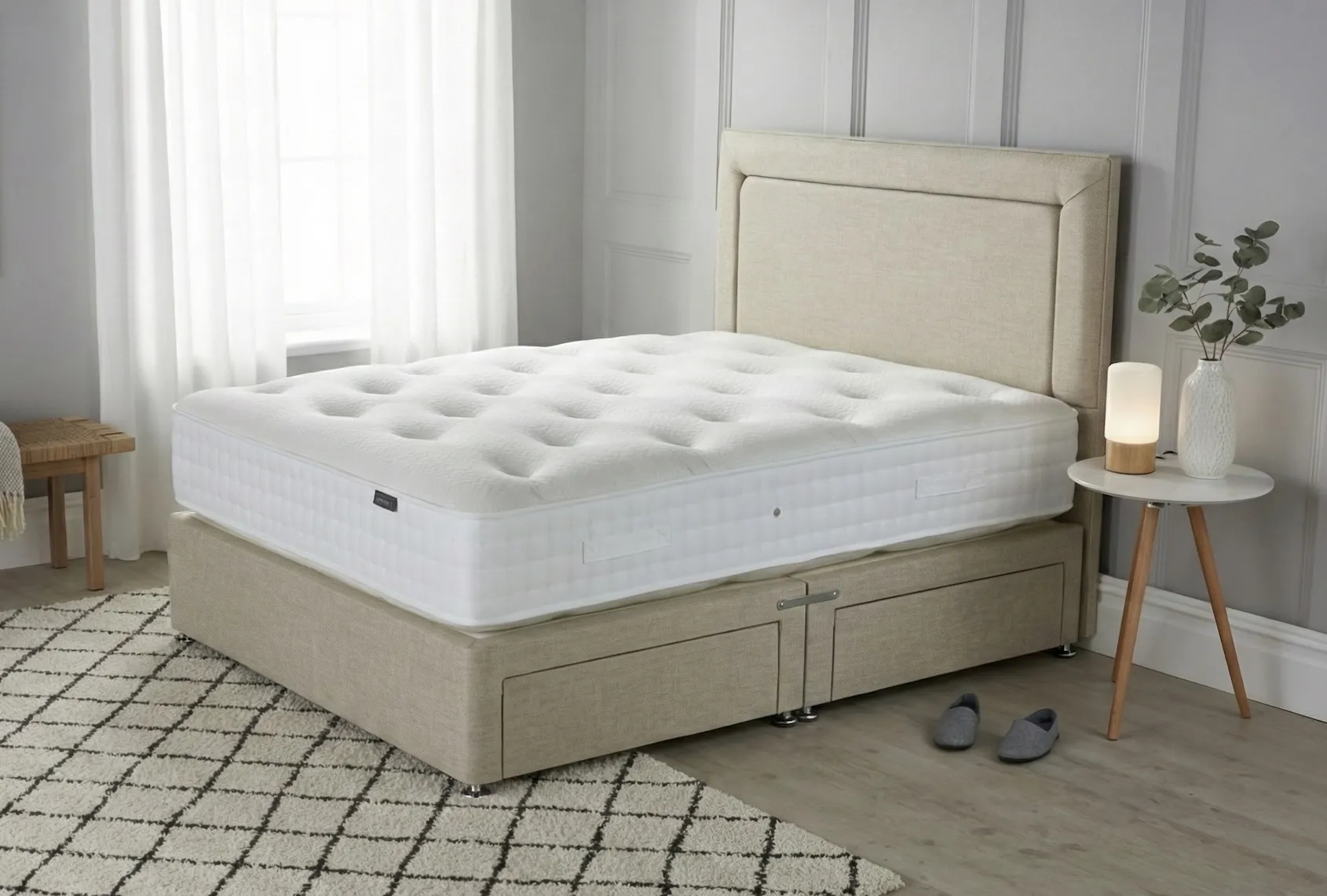
The Origins Natural Comfort is a 1000 pocket spring mattress with 65% natural fibre upholstery, including Wool, Silk, and Cashmere. It is double-sided and available in medium (1.4mm, up to 16 stone) and firm (1.6mm, 16 stone and above) tensions. The natural fibre upholstery breathes rather than retaining heat, which is relevant for anyone whose back pain is accompanied by inflammation or night sweats, since sleeping hot on a heat-retentive surface compounds muscular tension overnight.
The comfort layers in this mattress are medium in feel, which aligns with what the clinical research consistently identifies as the most appropriate surface for the majority of back pain sufferers: enough give to allow the shoulders and hips to settle without forcing the lumbar curve to bridge across a rigid surface, with the spring unit providing the underlying support that matches your bodyweight.
This is the model we recommend for side and back sleepers who are under 16 stone and want a natural fibre mattress at an accessible price point. It is also the model we most often recommend to people who have previously bought an orthopaedic mattress, found it too firm, and are looking for genuine support without the rigidity.
King size price: £1,300. View the Origins Natural Comfort.
Artisan Naturals: our most popular mattress for back pain
The Artisan Naturals is our most-sold mattress and the one where, in our own words, we stake our reputation. It is built around 1600 Calico-encased, vanadium-coated pocket springs, which are individually hand-tied and available in medium, firm, or split tensions at no additional charge. The upholstery is 85% natural fibre, including Blended British Fleece Wool and Cotton in the primary comfort layer, with 1500 GSM Mohair as the insulating layer beneath. It is double-sided with two rows of genuine hand side stitching, and it carries a 10-year guarantee.
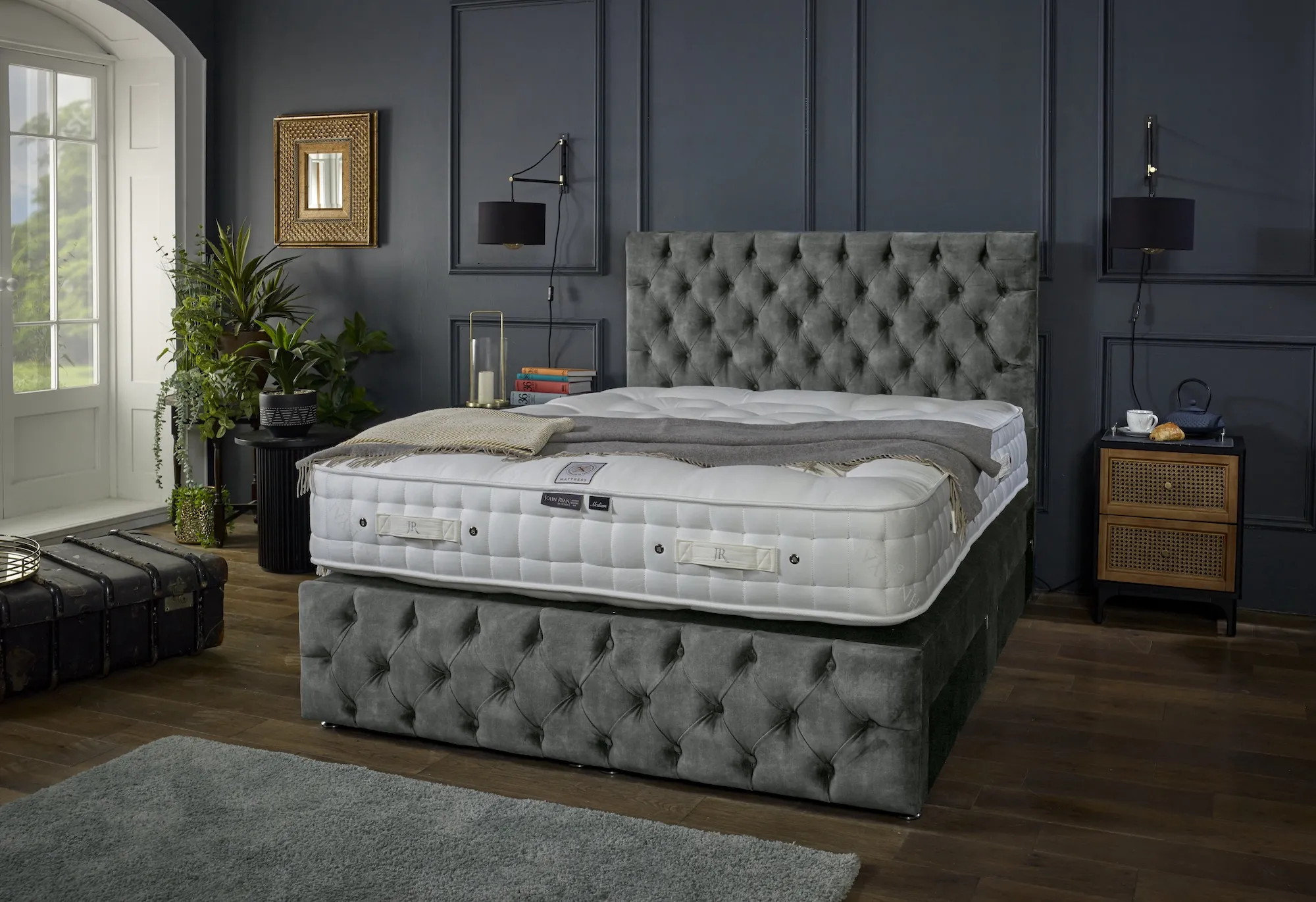
The reason we recommend this mattress specifically for back pain is the combination of high-resolution spring support and responsive natural fibre comfort layers. The Calico encasing around each spring means the springs move independently of each other rather than in groups, which gives much finer contouring around the lumbar region than open-coil or barrel-spring designs. The Mohair insulation layer adds a slightly firmer, more resilient quality to the upholstery than Wool alone, which provides a medium feel that supports rather than swallows the body.
The split tension option is worth noting for couples. If you and your partner are at significantly different weights, the Artisan Naturals can be ordered with different spring gauges on each side of the mattress at no extra cost. This is one of the most practically useful things a mattress can offer for back pain sufferers who share a bed, because the wrong tension for your weight is just as problematic as the wrong mattress entirely.
King size price: £2,180. View the Artisan Naturals.
For a deeper comparison of both models alongside the full clinical research on mattresses and back pain, see our dedicated guide: What is the best mattress for a bad back?
Firm foam and memory foam are unsuitable for bad backs
They are slow to react and can cause joint loading


Frequently asked questions about orthopaedic mattresses
Is an orthopaedic mattress good for a bad back?
In most cases, no. The term orthopaedic is entirely unregulated in the UK. Any manufacturer can apply it to any mattress without providing clinical evidence of any kind. In practice it describes an extra firm spring tension, typically a 1.9mm wire gauge, which is calibrated for very heavy sleepers of 18 to 20 stone or above. For the vast majority of back pain sufferers, this tension is far too firm, creates pressure points at the shoulders and hips, and actively worsens symptoms by preventing the spine from settling into a neutral position. The Lancet study published in 2003 found that medium-firm mattresses produced significantly better outcomes for chronic back pain than firm ones.
What is the difference between an orthopaedic mattress and a mattress for a bad back?
An orthopaedic mattress is a marketing label applied to extra firm products. A mattress that is genuinely suitable for a bad back is one matched to your bodyweight, sleeping position, and comfort preference so that your spine is held in a neutral position throughout the night and you can move freely without effort. These are two very different things. The best mattress for a bad back is not defined by its firmness label but by how well its support unit and comfort layers match your individual physiology.
What is the best type of mattress for back pain?
A pocket spring mattress in the correct tension for your bodyweight, with natural fibre upholstery layers in a medium to medium-firm comfort configuration. The pocket springs should be individually encased so they respond independently, providing contouring support around the lumbar region. Natural fibre upholstery breathes rather than retaining heat, which matters because sleeping on a heat-retentive surface can increase muscular tension around an already inflamed area. The spring wire gauge should be matched to your weight: 1.4mm for up to approximately 16 stone, 1.6mm above that.
What makes a mattress good for back pain?
Three things in combination: the correct spring tension for your bodyweight, comfort layers that allow the shoulders and hips to settle without forcing the spine into an unnatural position, and a construction that remains responsive through the night rather than forming a body impression that holds you in one place. A double-sided mattress that can be flipped also maintains these characteristics for longer than a one-sided alternative, which is relevant for anyone whose back pain means they need consistent support over many years.
Should I choose a firm or soft mattress for back pain?
Neither extreme is appropriate for most people with back pain. The most robust clinical evidence, including the landmark Lancet study by Dr Francisco Kovacs, consistently points towards medium-firm as the most beneficial for chronic back pain. A mattress that is too firm prevents the heavier parts of the body from settling, creating pressure points at the shoulders and hips that build tension in surrounding muscles overnight. A mattress that is too soft allows the hips to sink excessively, pushing the spine out of alignment. Medium-firm, correctly matched to your bodyweight through the spring tension, is the most evidence-based starting point.
What sleeping position is best for a bad back?
Side sleeping with the knees slightly bent is generally considered the most spine-neutral position for most back pain sufferers, though this depends on the specific nature of the complaint. Back sleeping is also well-tolerated provided the mattress has sufficient give in the lumbar region to support the natural curve of the lower spine. Front sleeping is generally the most problematic for lower back pain as it tends to push the lumbar spine into extension. Whatever your sleeping position, the mattress needs to be matched to it rather than the other way around.
Is memory foam bad for a bad back?
For many people, yes. Memory foam is viscoelastic, meaning it moulds under heat and pressure, which sounds beneficial but in practice tends to hold you in one position throughout the night. If you have a bad back your body needs to move and readjust freely during sleep without conscious effort. Memory foam resists that movement. It also retains body heat, which is relevant for anyone with an inflammatory component to their back pain. A responsive natural fibre pocket spring mattress allows far greater ease of movement and is significantly cooler to sleep on.
Can a mattress make back pain worse?
Yes, and this is more common than most people realise. A mattress that is too firm holds the body on the surface rather than within the upholstery layers, creating pressure at bony contact points and forcing muscles to remain tense overnight. A mattress that is too soft allows the spine to sag out of alignment. A mattress that has developed visible body impressions is no longer providing the support it was designed to give and will consistently worsen back pain until it is replaced. A topper placed over a sagging mattress does not correct the underlying problem.
Are open-coil orthopaedic mattresses bad for a bad back?
Yes, considerably so. Many budget orthopaedic mattresses use open-coil or cage-sprung construction, where a single piece of interconnected wire runs through the entire mattress. Every movement made by you or your partner transfers immediately across the whole sleep surface with no isolation whatsoever. For a back pain sufferer who needs to move and readjust freely during the night, this is a serious problem. Always check the spring type before buying any mattress for back pain. If it is open-coil, continuous coil, or bonnell, it is the wrong choice regardless of what the orthopaedic label says.
How do I know what spring tension I need for a bad back?
Spring tension should be matched to your bodyweight and height, not to your back condition. A heavier person needs a firmer spring to prevent sinking too deeply. A lighter person needs a softer spring to allow sufficient give so the shoulders and hips can settle enough to keep the spine level. This is separate from how the mattress feels to lie on: that sensation is determined by the comfort layers above the springs, not the spring gauge itself. Our team can advise on the correct tension for your specific measurements on 0161 437 4419.
Does bedding affect back pain during sleep?
More than most people realise. Sleeping under a synthetic duvet on a foam mattress compounds the heat problem considerably. Elevated sleeping temperature interferes with the body’s overnight anti-inflammatory processes and can make pain feel more acute in the morning. Switching to a natural Wool duvet with breathable Cotton bedding helps maintain a cooler, more stable sleeping environment, which supports better quality sleep and more effective overnight recovery for the musculoskeletal system.
How much should I spend on a mattress for back pain?
Enough to get a genuine pocket spring mattress with natural fibre upholstery in the correct tension for your weight. That does not require the most expensive mattress available, but it does mean moving beyond entry-level synthetic options where the spring and upholstery specifications are too basic to provide meaningful, consistent support. Our Origins Natural Comfort at £1,300 king size is the starting point we recommend for back pain sufferers wanting a properly built natural fibre mattress at an honest price. For those who want a higher spring count and more upholstery depth, the Artisan Naturals at £2,180 king size is our most recommended model for back pain and the one we stake our reputation on.
Do chiropractors recommend orthopaedic mattresses?
The British Chiropractic Association has moved well away from recommending firm or orthopaedic mattresses, stating that there is no single solution that suits all when it comes to mattresses for back pain. The International Chiropractors Association similarly emphasises matching both comfort and support to the individual rather than defaulting to the firmest available option. The earlier chiropractic advice to seek firm mattresses was based on 1950s thinking that has since been overtaken by clinical evidence, most notably the 2003 Lancet study. Any chiropractor still recommending orthopaedic mattresses as a category is working from outdated guidance.
Summary
If you are looking for a quality mattress for a bad back, our Artisan range can offer both split tensions and a wide range of comfort preferences. Take a look at our Artisan Bespoke 004 or Artisan Naturals mattress as a starting point to understand what you should expect in a mattress for a bad back. For the full detail on what clinical research says about mattress choice and back pain, including the Lancet study findings and specific guidance by back condition type, read our comprehensive bad back mattress guide.
If you have other questions, get in touch with our small expert team on 0161 437 4419 or [email protected].

Dreaming of the perfect nights sleep?
Ask us a question
There are over 6000 questions and answers submitted by you on all questions about mattresses and bed problems. Enter a keyword such as Vi Spring, John Lewis beds, bad back or Memory Foam and see if your question has already been answered.
If you can’t find an answer in knowledge hub, ask a new question. We aim to respond to all questions within one working day.
Newsletter
Enter your email to join our newsletter. We’ll send you occasional news and mattress expertise.