







Mattress Tips
August 201810 Tell Tale Signs You Need a New Mattress
The answer is usually yes, and you’ve probably known it for months. Your body has been sending signals, but like most British homeowners, you’ve been hoping the mattress would somehow improve with time. Spoiler: it won’t. A mattress that’s lost its support doesn’t regain it through wishful thinking.
This comprehensive guide examines the 10 definitive signs that your mattress has reached the end of its useful life, what’s actually happening within the layers as these problems develop, realistic lifespan expectations by mattress type, and honest recommendations for replacement options at every price point. We’re not here to sell you something you don’t need. We’re here to help you recognise when your sleep problems have a simple solution sitting right underneath you.
How long should a mattress actually last?
Industry marketing loves quoting warranty periods as if they represent the actual lifespan. A 10-year guarantee doesn’t mean you’ll get 10 comfortable years. It means the manufacturer will cover specific manufacturing defects for that period, which excludes most of what actually goes wrong with ageing mattresses.
Realistic lifespan expectations by mattress type
| Mattress Type | Construction | Realistic Lifespan | Common Failure Point |
|---|---|---|---|
| Memory Foam (one-sided) | Polyurethane Foam layers, no springs | 5-7 years | Foam breakdown, permanent body impressions |
| Hybrid (Foam + springs, one-sided) | Pocket springs with Foam comfort layers | 6-8 years | Foam compression, edge collapse |
| Budget pocket spring (one-sided) | Synthetic upholstery, spun-bond springs | 5-8 years | Upholstery compression, spring fatigue |
| Natural fibre pocket spring (two-sided) | Wool/Cotton/horsehair, calico springs | 12-15 years | Natural fibre compression (manageable with turning) |
| Premium natural Latex (two-sided) | Natural Talalay/Dunlop Latex | 15-20+ years | Gradual softening, rarely catastrophic failure |
| Open coil/cage sprung (one-sided) | Interconnected springs, cheap upholstery | 3-5 years | Spring transference, rapid compression |
The difference between one-sided and two-sided construction is enormous. A one-sided mattress concentrates all wear on a single surface with no option to redistribute pressure. A two-sided mattress can be flipped monthly, allowing both sides to recover between uses and effectively doubling the usable lifespan.
Weight also matters significantly. If you weigh over 18 stone (114kg), reduce these estimates by 20-30%. Springs work harder, upholstery compresses faster, and edge support fails sooner under heavier loads. This isn’t a criticism of your weight; it’s simply physics. A properly specified mattress matched to your body weight will last its full expected lifespan.
The “replace every 8 years” rule you see everywhere? It’s a convenient average that obscures important details. A £300 memory Foam mattress from Amazon might need replacing at year 3. Our Artisan Naturals with 3,950 GSM natural fibres and two-sided construction will comfortably deliver 12-15 years. Materials and construction methods determine longevity far more than arbitrary time frames.
Sign #1: You wake up feeling exhausted despite sleeping 7-8 hours
This is the most insidious symptom because it creeps up gradually. Six months ago, you woke feeling reasonably refreshed. Now you’re dragging yourself out of bed feeling like you’ve worked a night shift. You’re getting the hours, but not the quality.
What’s actually happening
When a mattress loses proper support, your body spends the night micro-adjusting position,n trying to find comfort. You’re not consciously aware of it, but sleep trackers reveal the truth: constant movement, reduced deep sleep phases, frequent position changes. Your body never fully relaxes because it’s too busy compensating for inadequate support.

The lower back particularly suffers. Without proper lumbar support, your spine sags out of alignment. The muscles along your back remain semi-contracted throughout the night,t attempting to stabilise your posture. This prevents the deep muscle relaxation necessary for restorative sleep. You wake up not just tired, but genuinely fatigued at a muscular level.
The telltale pattern: If you occasionally sleep somewhere else—a hotel, a friend’s spare room, even your sofa—and wake feeling noticeably more refreshed, that’s your answer. The variable is the mattress. Your body is telling you in the clearest possible terms that your bed is the problem.
We hear this constantly: “I slept brilliantly at the Premier Inn but terribly in my own bed.” That’s not because Premier Inn has magical mattresses. It’s because your body weight hasn’t compressed their mattresses for 8 years, and they still provide the support your body has lost.
Don’t accept chronic morning fatigue as normal. It isn’t. Sleep is when your body repairs itself from the day’s stresses. If you’re not waking refreshed, you’re not getting proper rest, regardless of how many hours you’re spending in bed.
Sign #2: Morning aches and pains that improve during the day
The shoulder pain disappears by mid-morning. The lower back stiffness that eases after your first coffee. The hip soreness is gone by lunchtime. If your aches follow this pattern—worst upon waking, gradually improving as you move around—your mattress is the likely culprit.

What’s actually happening
During sleep, your body relies entirely on the mattress to maintain proper spinal alignment and cushion pressure points. When support fails, specific areas bear excessive load. Your shoulders and hipsinn a side-sleeping position, or your lower back when sleeping face-up, experience prolonged pressure that restricts blood flow and causes localised inflammation.
The improvement during the day occurs because movement restores circulation, the inflammatory response subsides, and your muscles are actively supporting your spine rather than relying on passive mattress support. By bedtime, you feel fine. Eight hours later, you’re sore again. The cycle repeats nightly.
Pressure point identification by sleeping position
Side sleepers typically develop:
- Shoulder pain (especially the lower shoulder pressed into the mattress)
- Hip soreness on thedownsidee
- Numbness in the arm tucked under the pillow
- Neck strain from inadequate shoulder sink
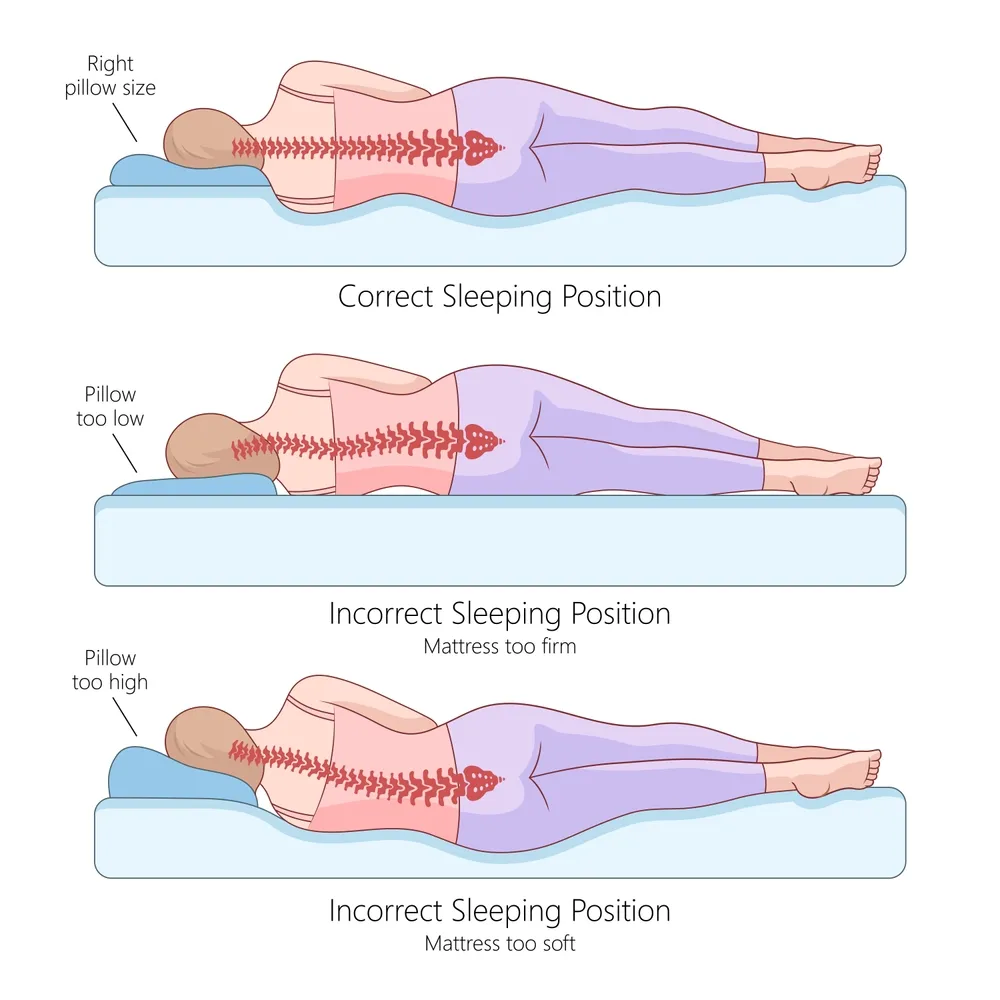
Back sleepers typically experience:
- Lower back pain from excessive lumbar gap
- Mid-back strain from inadequate support
- Pressure headaches from pillow height mismatch (compensating for mattress issues)
Front sleepers face:
- Lower back hyperextension pain
- Neck strain from head rotation
- Shoulder and rib cage compression
If you wake with pain specific to your sleeping position and that pain isn’t present at bedtime, the mattress has lost its ability to cushion those pressure points properly. This is particularly common in mattresses over 6-7 years old,d where comfort layers have compressed significantly.
Important distinction: Pain that persists all day or worsens throughout the day is likely of medical origin and requires professional assessment. Mattress-related pain follows a clear pattern: worst upon waking, steadily improving with activity, and absent by bedtime.
Sign #3: The mattress is visibly sagging or has body impressions over 2.5cm deep
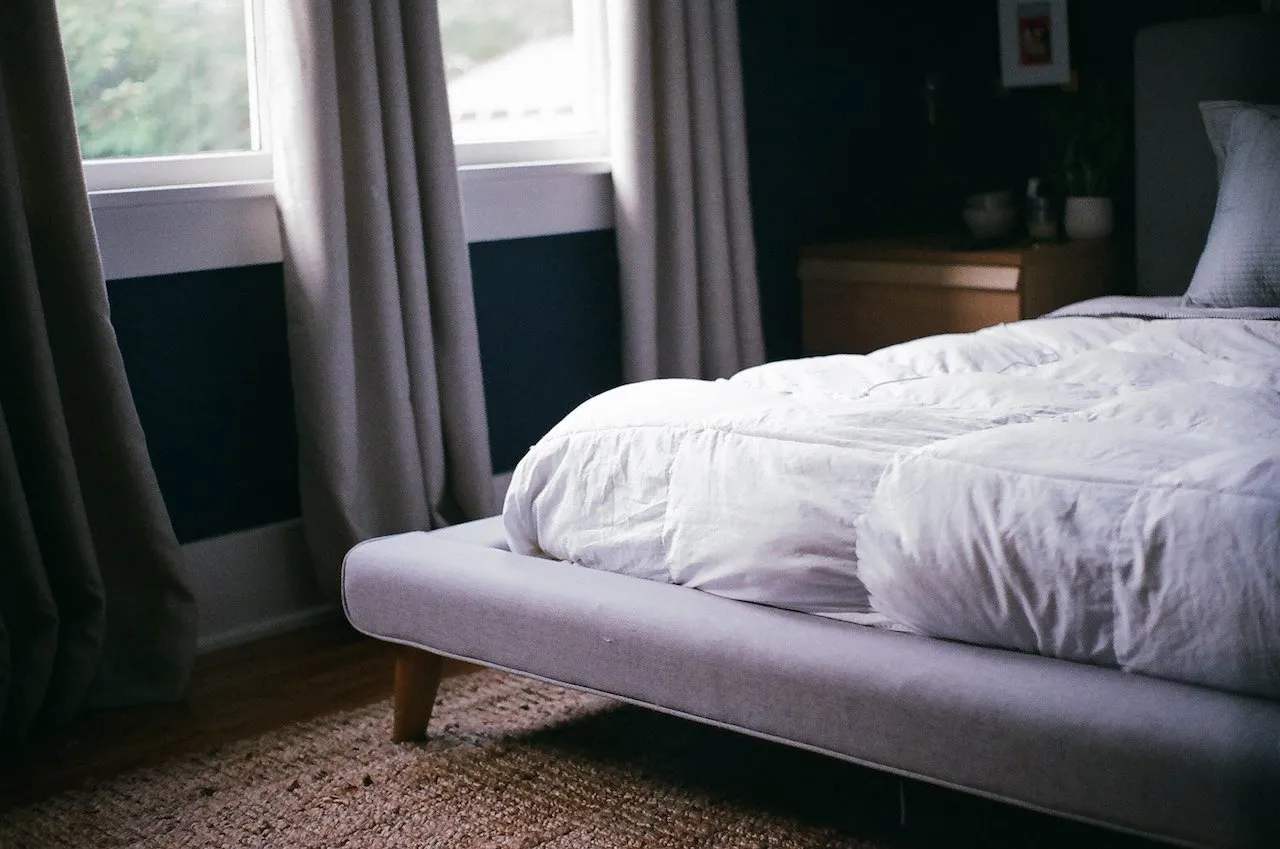
This one requires no guesswork. Strip the bedding, stand at the foot of your bed, and look along the surface in good light. If you can see dips where you sleep, your mattress has failed. Even minor sagging of 1-2 inches (2.5-5cm) indicates serious internal breakdown.
What’s actually happening
Comfort layers compress under repeated pressure. In Foam mattresses, the cell structure breaks down and loses its ability to spring back in natural fibre mattresses, Wool and Cotton fibres compact and thin out where you sleep most. Springs can also fatigue, particularly lower-quality spun-bond springs, leading to loss of tension and excessive compression.
The visible sag you see at the surface represents far greater compression internally. By the time you can see sagging, the internal support structure has been failing for months. The springs have likely fatigued, the comfort layers have compressed significantly, and the edge support has begun collapsing.
Measuring sagging properly: Place a broom handle or straight edge across the width of the mattress where you sleep. Measure the gap between the straight edge and the lowest point of the sag. Anything over 2.5cm (1 inch) indicates replacement is necessary. Many warranties specify 3.8cm (1.5 inches) as the threshold, but comfort degradation occurs well before that point.
Body impressions—the permanent outline of where you sleep—are different from natural conforming. A mattress should conform to your body when you’re lying on it, then spring back when you rise. If your body shape remains visible minutes after you’ve gotten up, the materials have permanently compressed. This is terminal. No amount of rotating, flipping (if possible), or wishing will restore the original support.
One-sided vs two-sided implications
On a two-sided mattress, visible sagging means it’s time to flip it. Both sides probably have similar wear, so you’re just trading one compressed surface for another. On a one-sided mattress (the vast majority sold today), visible sagging meansit’s time for replacement. There is no “other side” to use.
Sign #4: You feel springs poking through or experience the “bouncy castle” effect
If you can feel individual springs through the comfort layers, something has failed catastrophically. This happens in two ways: either the comfort layers have compressed so severely that spring profiles are palpable, or the springs themselves have displaced and are protruding through their containment.
What’s actually happening
Budget mattresses use minimal upholstery—sometimes as little as 400-600 GSM total. After several years of compression, this thins to perhaps 200-300 GSM in high-pressure areas. At that thickness, even functioning springs become palpable through the fabric. You feel ridges, lumps, or specific spring outlines when lying down.
Alternatively, in open-coil (cage-sprung) mattresses, interconnected springs can dislodge from their steel cage framework. Individual springs or spring segments tilt, twist, or push upward against the fabric. These mattresses also suffer from transference—any movement on one side ripples across the entire spring unit to the other side. It’s like sleeping on a waterbed that’s also somehow firm and lumpy.

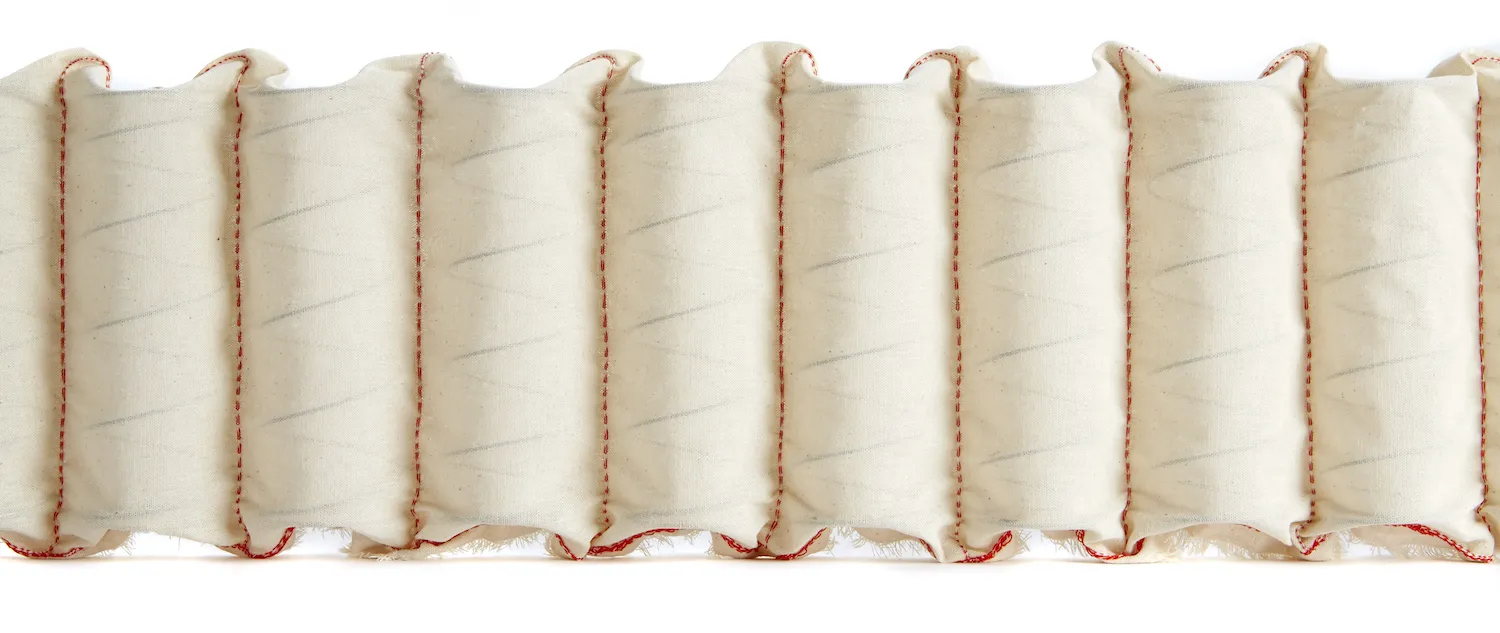
The “bouncy castle” sensation—where you or your partner moves and the whole mattress wobbles—indicates the spring unit has lost structural integrity. Open-coil springs, interconnected, transfer motion dramatically across the sleep surface. What starts as a small movement by one sleeper becomes a wave felt by the other. This is why proper pocket springs, where each spring is individually encased, cost more and perform better. They isolate motion rather than propagating it.
Pocket spring transference: Even pocket springs can develop transference issues if the spring count is too low or the springs areof low quality. A mattress with 600 pocket springs for a king-size (far too few) will show noticeable transference compared to a properly specified 1,600 spring mode,l where each spring works independently.
If you’re feeling springs or experiencing a bouncy-castle-like transfer, the mattress has reached the end of its mechanical life. This isn’t something you can fix. Springs don’t spontaneously regain their integrity. Comfort layers don’t magically thicken back up. Replacement is the only solution.
Sign #5: You and your partner keep rolling toward the middle of the bed
The “midnight cuddle” problem—except neither of you chose to cuddle. You go to sleep on your respective sides and wake up squashed together in the centre. This happens when the mattress develops a central valley from years of combined weight and use.

What’s actually happening
Most couples sleep near the centre of the bed at some point during the night. Over the years, this creates a depression in the middle where fibres compress, springs fatigue, and the mattress structure weakens. The edges retain more of their original height and support, creating a slope effect. Gravity does the rest.
For single sleepers, the valley forms wherever you sleep most. You might start the night toward one edge but wake in the centre because your body has rolled into the depression your weight has created over time. The mattress is literally shaped like a hammock now, with raised edges and a sunken middle.
Why zip & link solves this permanently: A zip & link mattress consists of two separate single mattresses that join with a zipper down the middle. Each sleeper has their own independent sleep surface. Your weight affects only your side. Your partner’s weight affects only theirs. The middle depression cannot form because there is no shared middle—just two zipped-together mattresses maintaining their independent support.
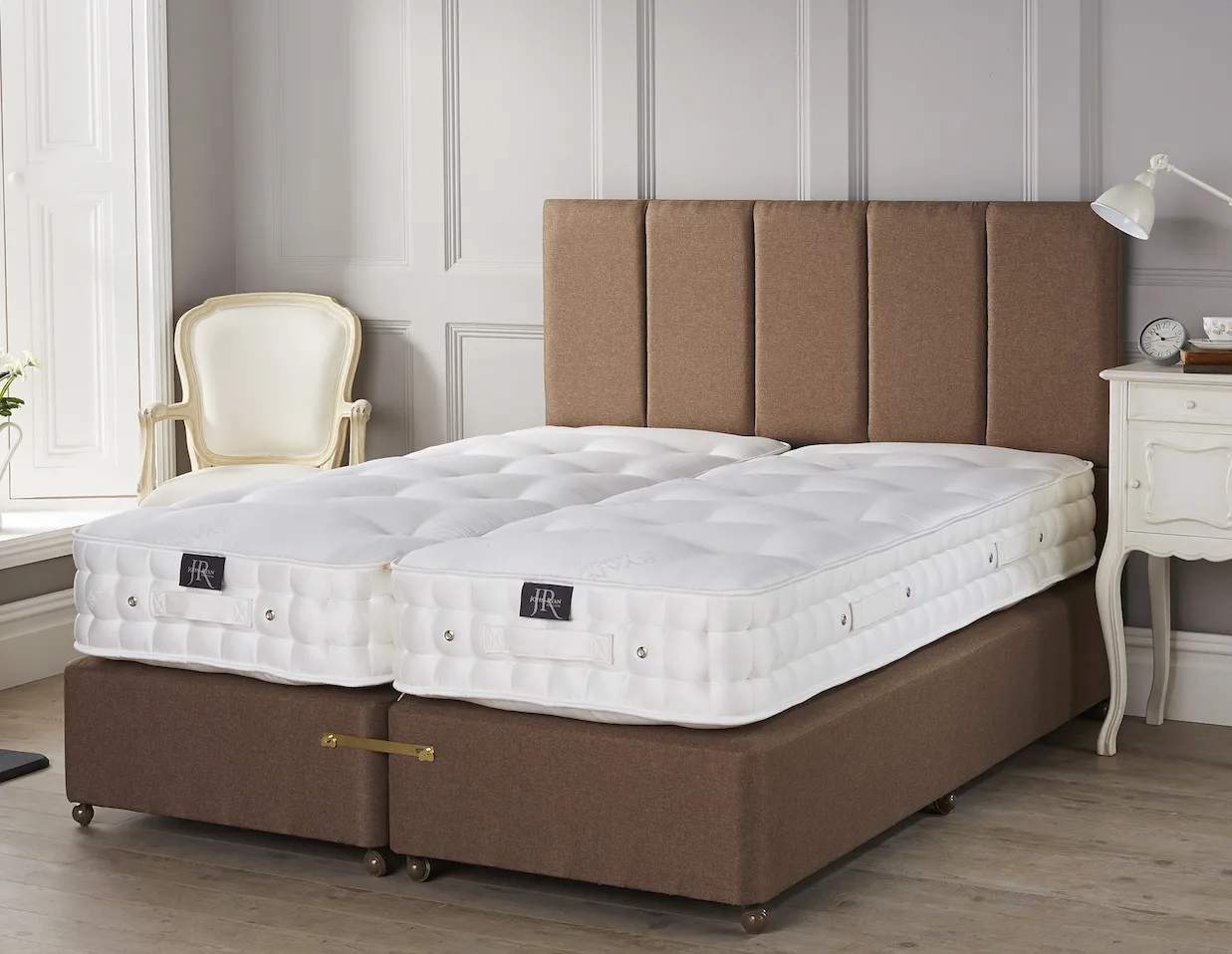
Zip & link also allows for split spring tensions. If one partner weighs 12 stone and prefers medium support,t while the other weighs 18 stone and needs firm support, each side can be specified independently. This is the proper solution to significant weight differences between partners, not adjustable bases or complicated compromises.
Why flipping doesn’t solve roll-together
If you have a two-sided mattress and flip it to the unused side, you temporarily avoid the valley. But the spring unit is the same, and it’s already fatigued in the middle. You’re just using a fresh surface of upholstery over compromised support. Within months, the problem returns as the new surface compresses into the weakened springs below.
Roll-together is a structural failure. You can’t rotate or flip it. The mattress needs replacing, or you can upgrade to a zip & link system if your budget allows.
Sign #6: Your allergies are worse in bed, or you’re waking with a stuffy nose
If you’re sneezing in bed, waking with a blocked nose, or experiencing allergy symptoms that improve during the day, your mattress might be harbouring allergens. Old mattresses become havens for dust mites, their faeces, shed skin cells, and, in damp environments, mould spores.
What’s actually happening
Over 8 years of use, a mattress accumulates approximately 4-5 kilograms of dead skin cells—a feast for dust mites. These microscopic arachnids don’t actually bite you; the allergic reaction comes from their faecal matter. Dust mite droppings contain proteins that trigger respiratory allergies, particularly in people with asthma or hay fever.
Older mattresses, particularly those that haven’t been turned regularly or protected with a proper mattress protector, can harbour hundreds of thousands of dust mites. They thrive in the warm, humid microclimate created by your body heat and perspiration. You’re essentially sleeping in a dust mite colony.
Mould and mildew
In UK homes, particularly in bedrooms without adequate ventilation, mattresses can develop mould. This is especially common on mattresses placed on solid platform bases or floors without airflow underneath. Memory Foam mattresses are particularly susceptible because they don’t breathe well, trapping moisture that creates ideal conditions for mould growth.
The health implications are significant. Prolonged exposure to dust mite allergens and mould spores can exacerbate asthma, cause chronic sinusitis, trigger eczema flare-ups, and contribute to poor sleep quality through nasal congestion and respiratory irritation.

Prevention vs replacement
If your mattress is under 5 years old and showing no other signs of failure, a high-quality mattress protector and thorough cleaning might resolve the issue. Use the vacuum’s upholstery attachment on all surfaces, sprinkle liberally with bicarbonate of soda, leave for several hours, then vacuum thoroughly. Air the mattress outside in sunlight if possible—UV radiation kills dust mites.
If your mattress is over 8 years old or showing other signs of failure, cleaning is a temporary measure. The mite population and allergen load in an old mattress are too high to be meaningful. Replacement is the proper solution, combined with immediately using a proper mattress protector on the new one.
Natural fibre advantage
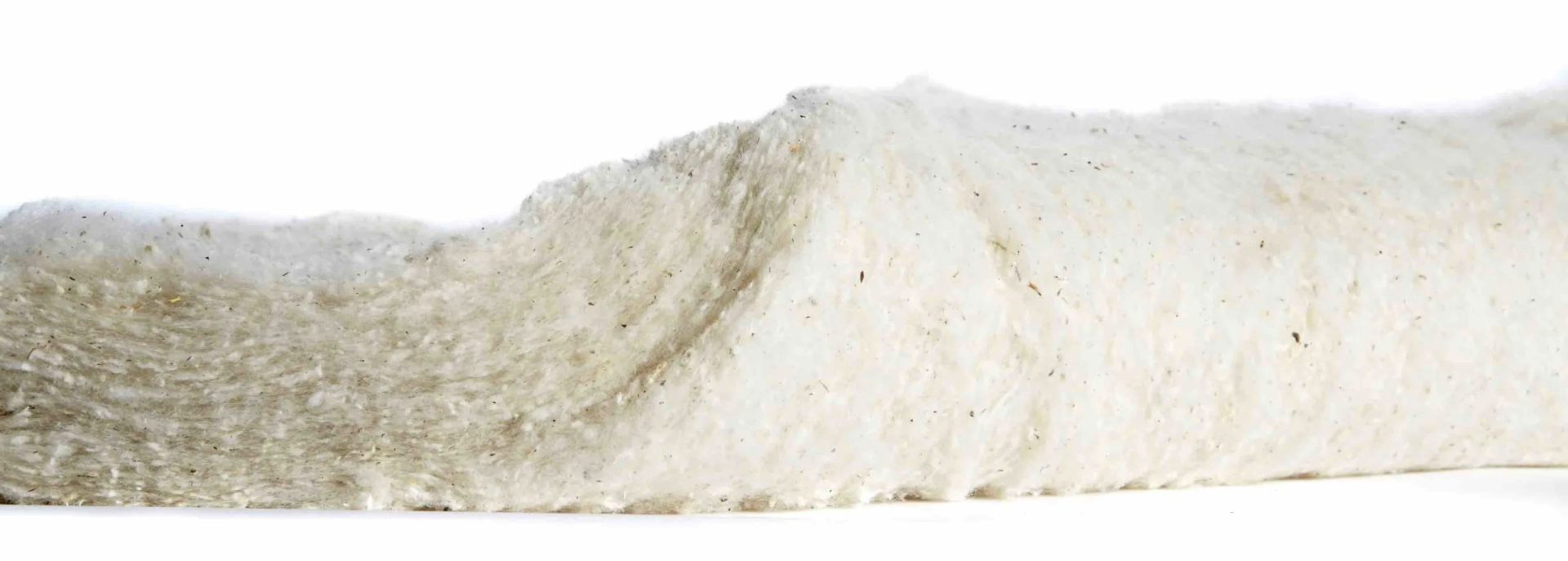
Wool is naturally resistant to dust mites due to its lanolin content and doesn’t create the warm, static environment that Foam does. Our natural fibre mattresses with British Wool upholstery layers are inherently more hypoallergenic than synthetic Foam alternatives, though they still benefit from proper protection and regular maintenance.
Sign #7: Your sleep position or body weight has changed significantly
Your mattress was specified for the person you were when you bought it. If your body has changed substantially—weight gain or loss of more than 2-3 stone, pregnancy, injury, ageing-related changes—the mattress may no longer suit your current needs even if it’s structurally sound.
Weight changes
If you’ve gained weight, the existing springs may be too soft, allowing excessive sinking and poor spinal alignment. Your body now requires firmer spring tension than what the mattress provides. Conversely, if you’ve lost significant weight, the springs might feel too firm, creating pressure points where your lighter body doesn’t generate enough forceto compress the comfort layers properly.
Spring tension should be matched to body weight, not just comfort preference. Our spring tension guidance:
| Spring Gauge | Wire Thickness | Weight Range | Feel Description |
|---|---|---|---|
| Soft (1.28mm) | Thinner wire | Up to 12 stone (76kg) | More yielding, better contouring for lighter frames |
| Medium (1.4mm) | Standard wire | 12-16 stone (76-102kg) | Balanced support for average weights |
| Firm (1.6mm) | Thicker wire | 16-20 stone (102-127kg) | Firmer support prevents excessive sinking |
| Extra Firm (1.9mm+) | Very thick wire | 20+ stone (127kg+) | Maximum support for heavier body weights |
Most high-street retailers don’t disclose spring gauge or offer options. They sell a “medium” mattress that’s actually medium for someone weighing 14 stone. If you weigh 18 stone, that “medium” will feel far too soft and fail prematurely. If you weigh 10 stone, it’ll feel uncomfortably firm.
Pregnancy
During pregnancy, your body weight increases (obviously) and is redistributed, with significantly more load on your hips and lower back. A mattress that was perfect pre-pregnancy often feels too firm on the hips and doesn’t accommodate the changed sleep positions necessitated by a growing bump. Side-sleeping with proper pillow support becomes essential, and the mattress needs to provide adequate hip cushioning without causing lower back hyperextension.

Many pregnant customers find that their existing mattress doesn’t work for their changed body. This isn’t the mattress failing mechanically; it’s a mismatch between specification and current need. After pregnancy, some women find their old mattress works again. Others find that sleep position preferences have permanently changed.
Ageing and medical conditions
As we age, our bodies become less tolerant of pressure points. Arthritis, osteoporosis, and chronic pain conditions all affect mattress requirements. A firmer mattress that felt supportive at 40 might feel punishing at 60. Joints need more cushioning. Pressure points that were manageable become genuinely painful.
Medical conditions like sciatica, fibromyalgia, or arthritis may require a softer surface that cushions rather than resists, even if the underlying support remains firm. This is where Latexx excels—it provides both pressure relief and support simultaneously in a way that springs or Foam alone cannot.
If your body has changed significantly since purchasing your mattress, it’s worth considering whether the mattress’s specifications still suit you. A structurally sound mattress that no longer matches your current physiology won’t provide proper sleep, regardless of its age.
Sign #8: The mattress is over 8 years old (or 6 years for memory Foam)
Even without obvious symptoms, age alone is a legitimate reason to consider replacement. Materials degrade over time, whether or not you notice dramatic changes. The comfort you’re experiencing today is significantly degraded from the mattress’s original performance, but the change has been so gradual that you’ve acclimatised without realising.

Why 8 years for spring mattresses?
After 8 years of nightly use (approximately 24,000 hours), most one-sided pocket spring mattresses with synthetic upholstery have lost 40-50% of their original comfort layer loft. The springs have fatigued, the upholstery has compressed, and the support characteristics have changed substantially. You might think it’s still comfortable because you’ve gradually adjusted your expectations.
The test: sleep on a brand-new mattress of similar specification for one night (a hotel, a friend’s new bed, or a showroom, if they permit it). The difference will shock you. What you’ve been tolerating as “fine” is actually a severely degraded sleep surface compared to what you originally purchased.
Why 6 years for memory Foam?
Memory Foam is polyurethane-based, and polyurethane breaks down faster than natural materials or steel springs. The cell structure collapses, the Foam loses its ability to recover its shape, and the slow-response characteristic that defines memory Foam diminishes. By year 6, most memory Foam mattresses have developed permanent body impressions and no longer provide even support across the sleep surface.

Online mattress brands offering 10-year warranties on memory Foam know that most customers won’t pursue warranty claims for gradual comfort degradation. The warranty covers catastrophic failure (springs breaking, splits in the cover), not the progressive breakdown that actually affects most users.
Two-sided natural fibre exception
Our Artisan range with two-sided construction and high GSM natural fibres lasts significantly longer. The Wool, Cotton, horsehair, and cashmere layers we use are more resilient than synthetic polyester. They can be refluffed to a degree through proper turning. The two-sided construction means each surface rests between uses.
Realistic lifespan for a two-sided natural fibre mattress with proper maintenance (monthly turning and rotation):
- Under 14 stone: 15-18 years
- 14-18 stone: 12-15 years
- Over 18 stone: 10-12 years
But even these premium mattresses don’t last forever. At some point, the wool compacts beyond recovery, the springs show fatigue, and replacement becomes necessary.
The productivity argument
Calculate the cost per night. A £1,200 mattress used for 12 years costs £0.27 per night. That same mattress replaced at year 8 costs £0.41 per night. The difference is £0.14 per night, or £51 per year.
Now consider: How much more productive would you be with genuinely restorative sleep? How much would you pay to wake refreshed rather than exhausted? How much is your back health worth? The cost difference between replacing at 8 years versus limping to 12 years is trivial compared to the impact on the quality of the lift.
Don’t trap yourself in “it’s not that bad” thinking with an old mattress. It probably is that bad. You’ve just forgotten what good sleep actually feels like.
Sign #9: You’re more comfortable sleeping elsewhere
This one’s damning. If you find yourself preferring the sofa, the guest room, or genuinely looking forward to hotel beds because you sleep better there than in your own bed, the problem is obvious. Your mattress has failed so completely that literally any alternative feels preferable.
The hotel phenomenon
Hotel chains replace mattresses every 5-7 years regardless of condition because they understand that fresh, supportive mattresses are essential to customer satisfaction. When you sleep brilliantly at a Premier Inn, Holiday Inn, or Travelodge, you’re experiencing what a properly supportive mattress feels like. You’re not experiencing anything luxurious—these are typically mid-range pocket spring mattresses in the £500-800 category. They’re just new, which is what your 9-year-old mattress no longer is.
The devastating comparison is sleeping better in a budget hotel than in your own expensive bed at home. This reveals that your £1,500 mattress from 10 years ago has degraded to the point where it performs worse than a £600 fresh mattress. Age has defeated quality.
The sofa confession
If you’ve caught yourself falling asleep on the sofa and thinking,g “I should just sleep here tonight” because you’re more comfortable there than in bed, that’s a crisis-level indicator. Sofas aren’t designed for sleeping. They don’t provide proper spinal alignment. The fact that an improper sleep surface feels better than your actual mattress tells you everything about the condition of said mattress.
Some customers actually do sleep on sofas for extended periods rather than face their failed mattress. This is self-destructive avoidance. A sofa won’t give you quality sleep long-term, and you’re compounding the problem by allowing your bad mattress to take up valuable bedroom space rent-free.
The guest bed irony
When your guests sleep in your spare room and comment positively on the mattress, but you wake up sore in your primary bedroom, the conclusion writes itself. If your guest bed is newer or better specified than your own bed, you’ve made a curious priority decision. Why are visitors sleeping better in your home than you are?
What to do about it
If you’re actively avoiding your own bed because other sleep surfaces feel better, replacement isn’t optional anymore. It’s urgent. You spend a third of your life in bed (approximately 2,900 hours per year). Tolerating a mattress so poor that you prefer alternatives is pennywise and pound-foolish. Sleep quality impacts everything: productivity, health, mood, relationships, concentration, and immune function.
Don’t wait for the mattressto fail catastrophically. It’s already failed functionally if you’re actively seeking alternatives.
Sign #10: Edge support has collapsed, and you feel unstable sitting on the bed’s perimeter
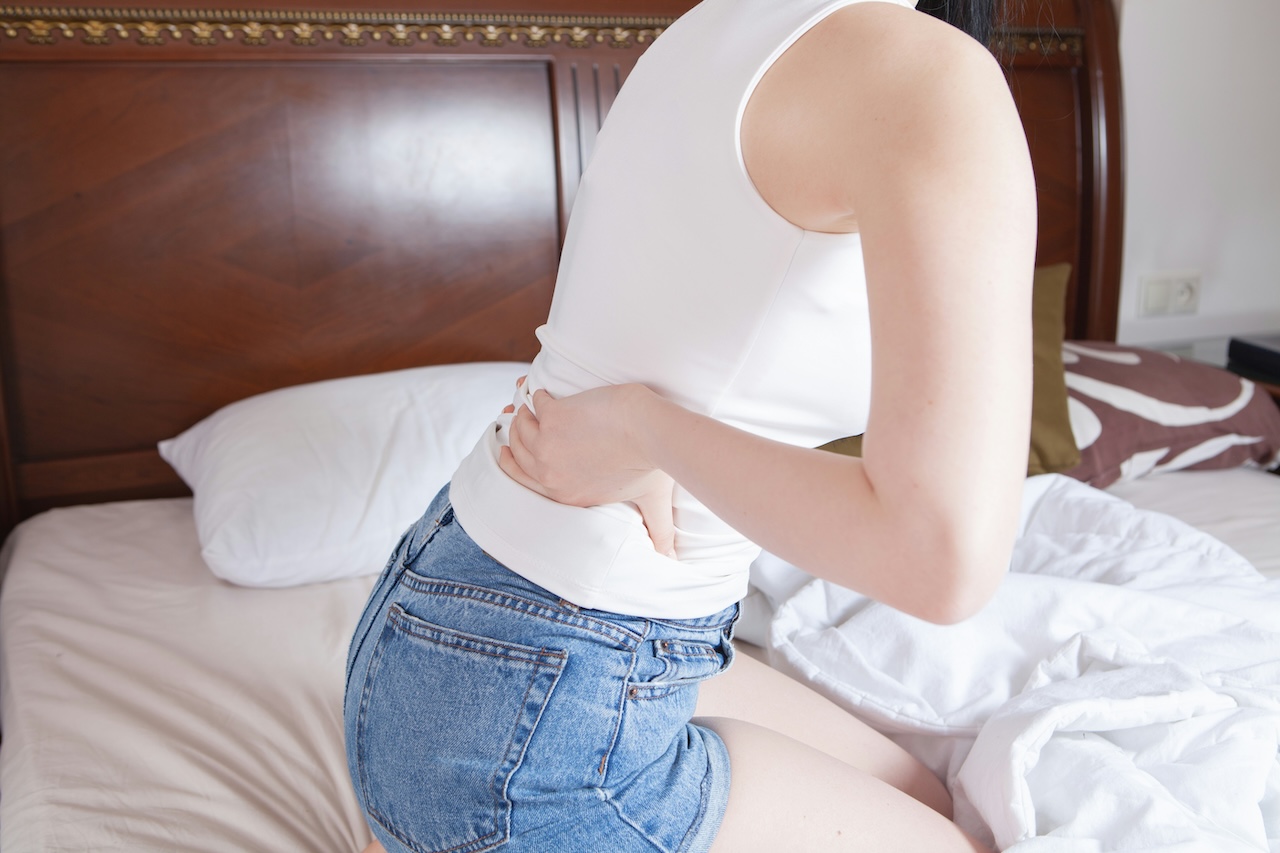
The edge support test reveals a lot about the internal mattress condition. Sit on the edge of your bed as if you’re putting on shoes. If the edge compresses excessively, you sink dramatically, or you feel unstable and likely to roll off, the edge support has failed. This indicates broader structural problems throughout the mattress.
What’s actually happening
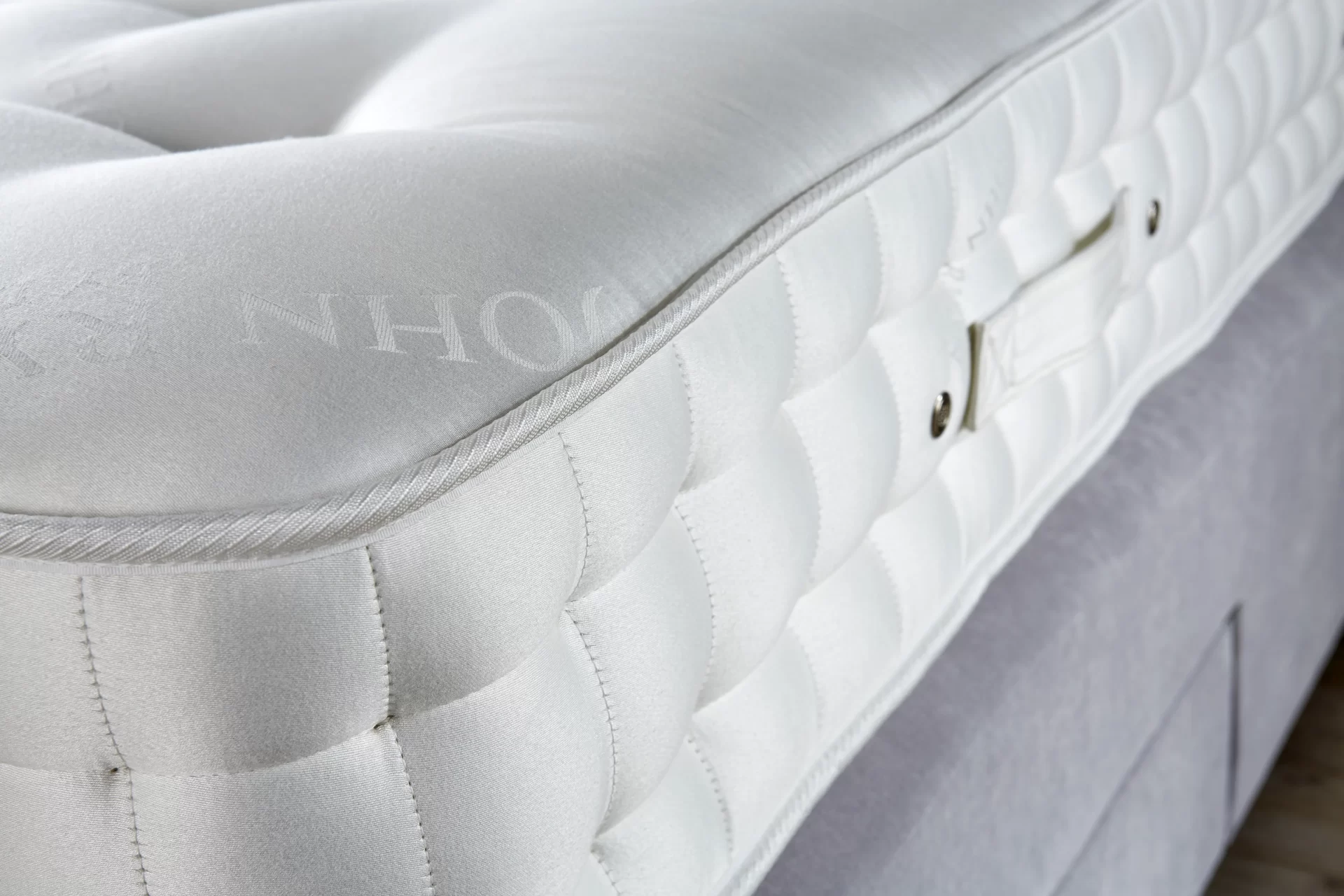
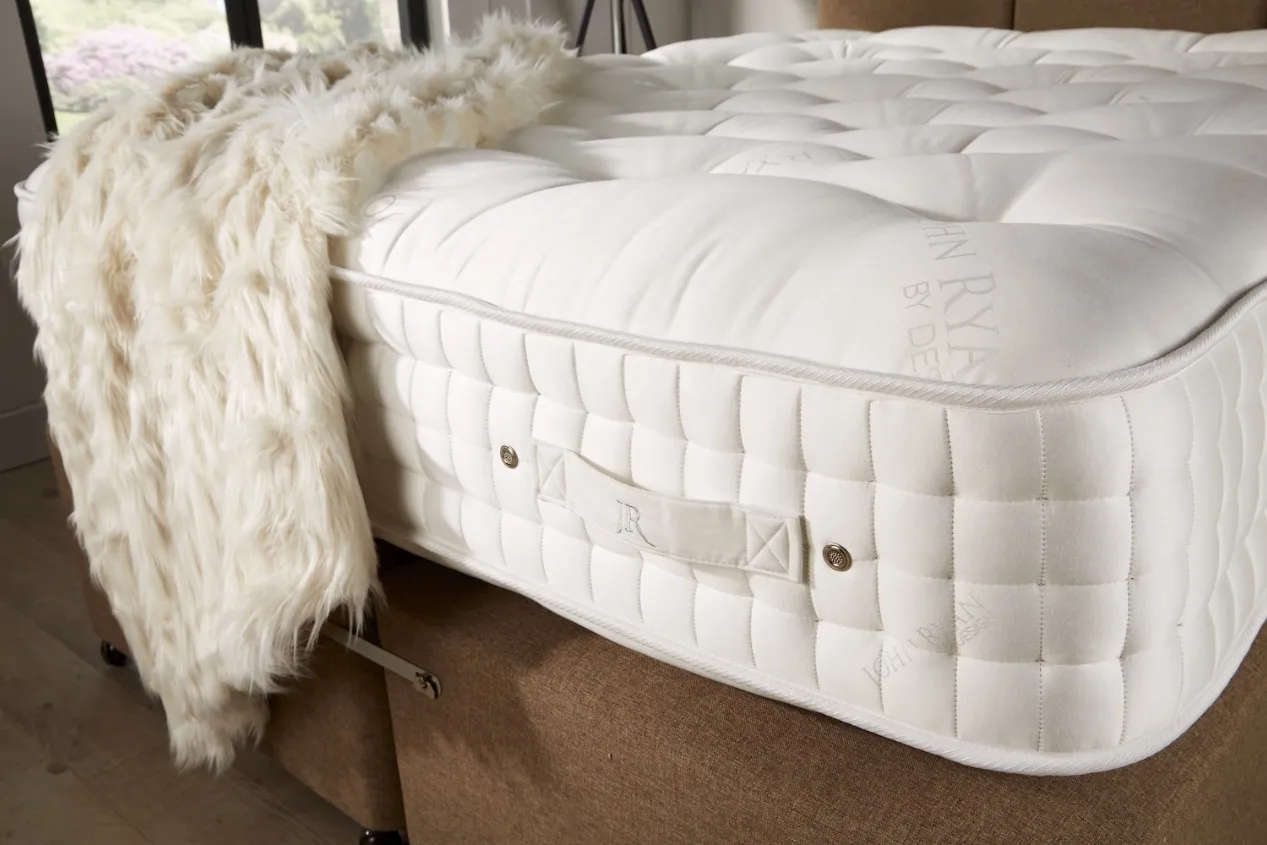
Mattress edges take enormous abuse. We sit on them when dressing, children use them as launching pads, pets walk along them, and the edge spring wires experience the most extreme compression angles. Budget mattresses often lack proper edge reinforcement entirely. Premium mattresses use edge support systems—rod edge construction, reinforced perimeter springs, or hand-side-stitching—that maintain perimeter integrity.
When edge support fails, the perimeter springs lose tension faster than the central springs. The upholstery layers compact more at the edges due to the leverage effect of hanging over the side. The result is a mattress with a stable centre but collapsing perimeter—reducing the usable sleep surface significantly.
The rollout risk
Weak edges create a genuine safety concern, particularly for elderly users, children, or anyone with mobility issues. If you’re unstable when sitting on the bed’s edge, there’s a risk of falling or sliding off unexpectedly. Getting in and out of bed should be stable and predictable. If it isn’t, the mattress is no longer performing its basic function
The shrinking mattress effect
When edges collapse, you lose 15-20cm of usable width on each side. A king-size mattress (150cm wide) effectively becomes a small double (120cm) because the outer edges aren’t sufficiently supportive for sleeping. For couples, this pushes both sleepers toward the centre, exacerbating the roll-together problem discussed in Sign #5.
Hand-side-stitching advantage
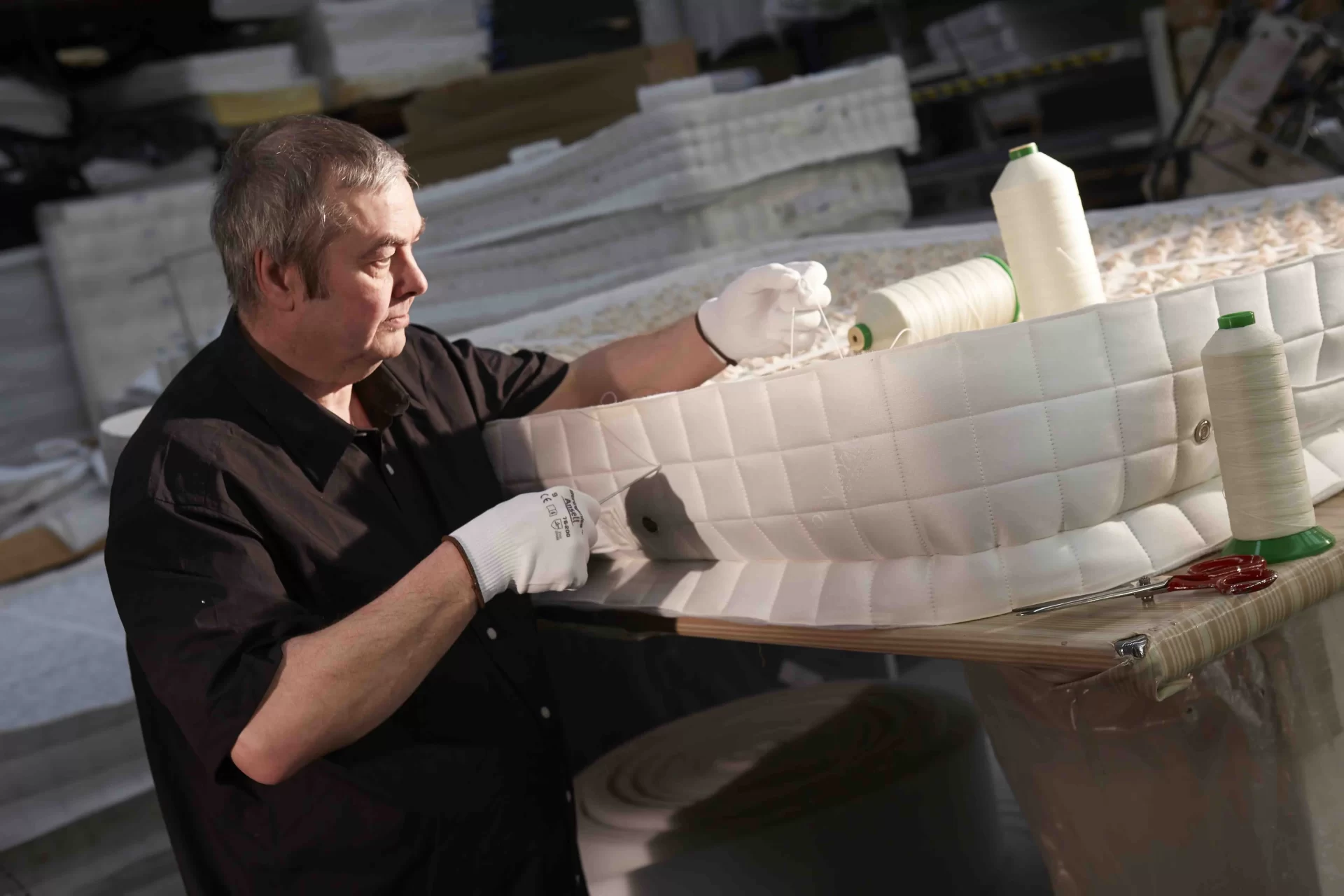
Traditional upholstered mattresses use hand-side-stitching—rows of stitching that compress and secure the edge upholstery layers to the side panels. This creates a reinforced edge that resists compression and maintains structure. Our Artisan Bespoke models feature 3-4 rows of hand-side-stitching precisely because edge support matters.
Budget mattresses either skip edge reinforcement entirely or useFoamm edge guards that compress quickly. Within 3-4 years, these edges feel noticeably weaker than the centre. Within 6-8 years, they’re often unusable.
If your mattress edges have failed, the central support structure is likely similarly degraded, even if less obviously so. Edge failure is a symptom of broader internal breakdown. Replacement is the solution.
What actually causes mattress breakdown? Understanding the mechanics
Mattresses don’t fail mysteriously. Understanding the specific mechanisms that caused degradation helps you recognise problems earlier and make better purchasing decisions next time.
Upholstery compression
The comfort layers that provide cushioning and pressure relief compress under body weight. Each night you sleep, fibres flatten, Foam cells collapse slightly, and the material thins in high-pressure areas. Natural fibres (Wool, Cotton, horsehair) compress less permanently than synthetic polyester, but all materials show some compression over time.
GSM (grams per square metre) becomes critical here. A mattress with 1,200 GSM total upholstery might compress down to 600 GSM in high-wear areas over 6-7 years. That’s lost thickness that can’t be recovered. A mattress with 3,950 GSM (like our Artisan Naturals) can lose 1,000 GSM and still have adequate cushioning. The higher the starting GSM, the longer the mattress maintains comfort.
This is why we publish full GSM breakdowns for every model. It’s not marketing waffle. It’s the single most important specification determining long-term comfort retention.
Spring fatigue
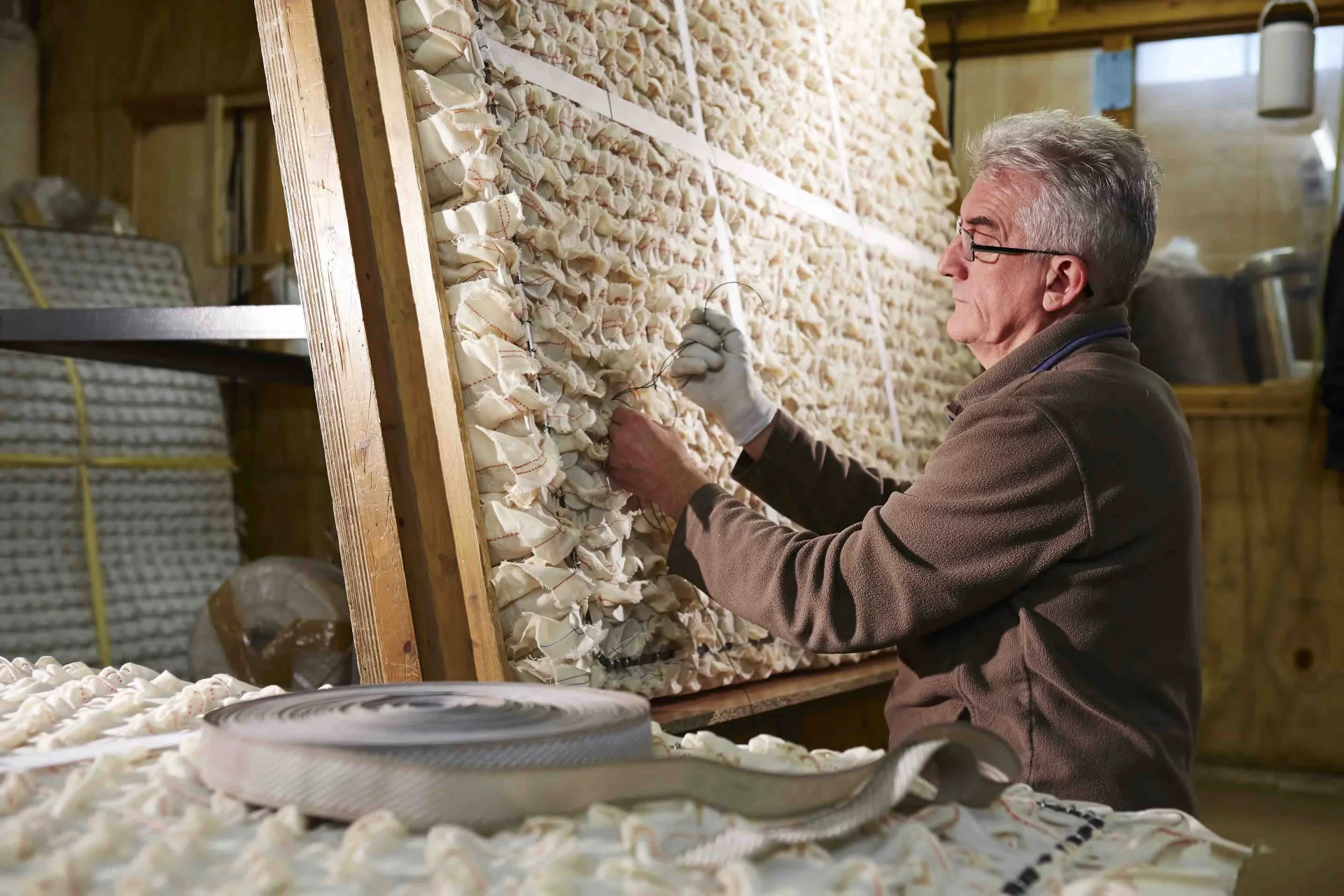
Springs are steel wires coiled that compress and decompress with each movement. Over thousands of compression cycles, metal fatigue sets in. The spring loses tension, requires less force to compress, and doesn’t rebound as completely. This shows up as reduced support and increased sinking.
Spring quality matters enormously. Calico-encased pocket springs (where each spring is individually fabric-wrapped) maintain their integrity longer than spun-bond pocket springs (where springs are glued into synthetic fabric). Open-coil cage springs, where all springs are interconnected, fatigue fastest of all because the load is unevenly distributed across the unit.
Base failure
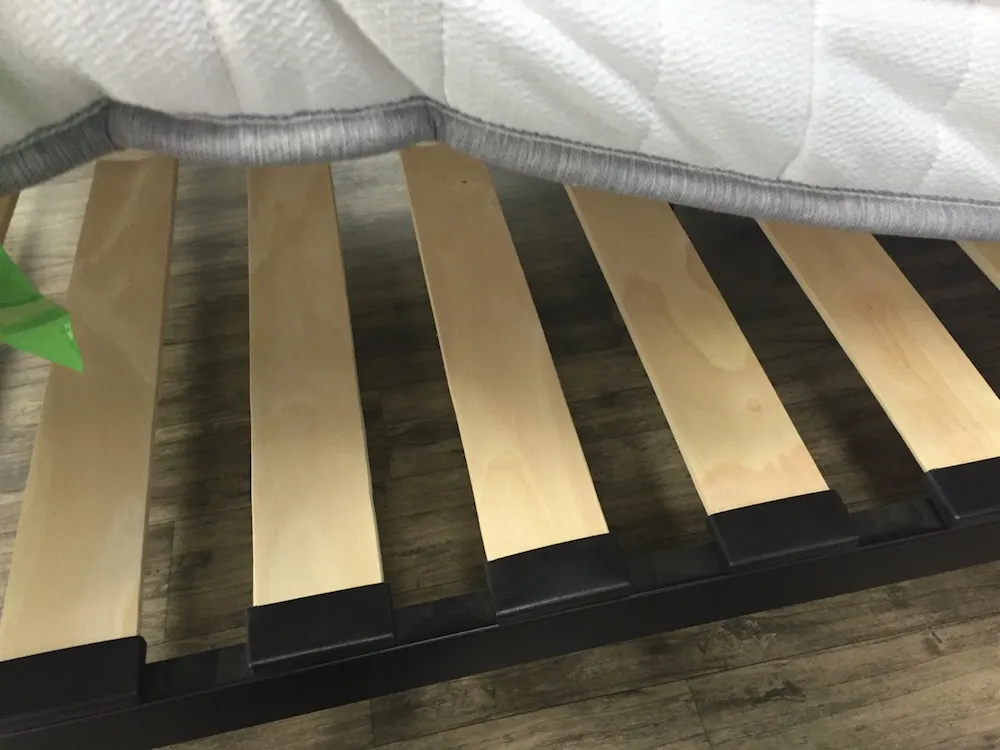
If your mattress sits on a solid platform, slatted base, or old divan base with inadequate support, the mattress itself can be fine,e but the system fails. A divan base with broken slats or compressed foundation springs will cause the mattress to sag even if the mattress springs are perfect.
Before replacing a mattress, inspect your base. Place a straight edge across the slats or base surface if there’s visible sagging in the base itself; that needs addressing, too. Otherwise, your new mattress will develop identical problems within months.
One-sided vs two-sided longevity
This cannot be overstated. A one-sided mattress puts allthe load on a single surface every single night. A two-sided mattress distributes load between two surfaces, with each surface resting between uses. This approximately doubles the useful lifespan for equivalent materials and construction.
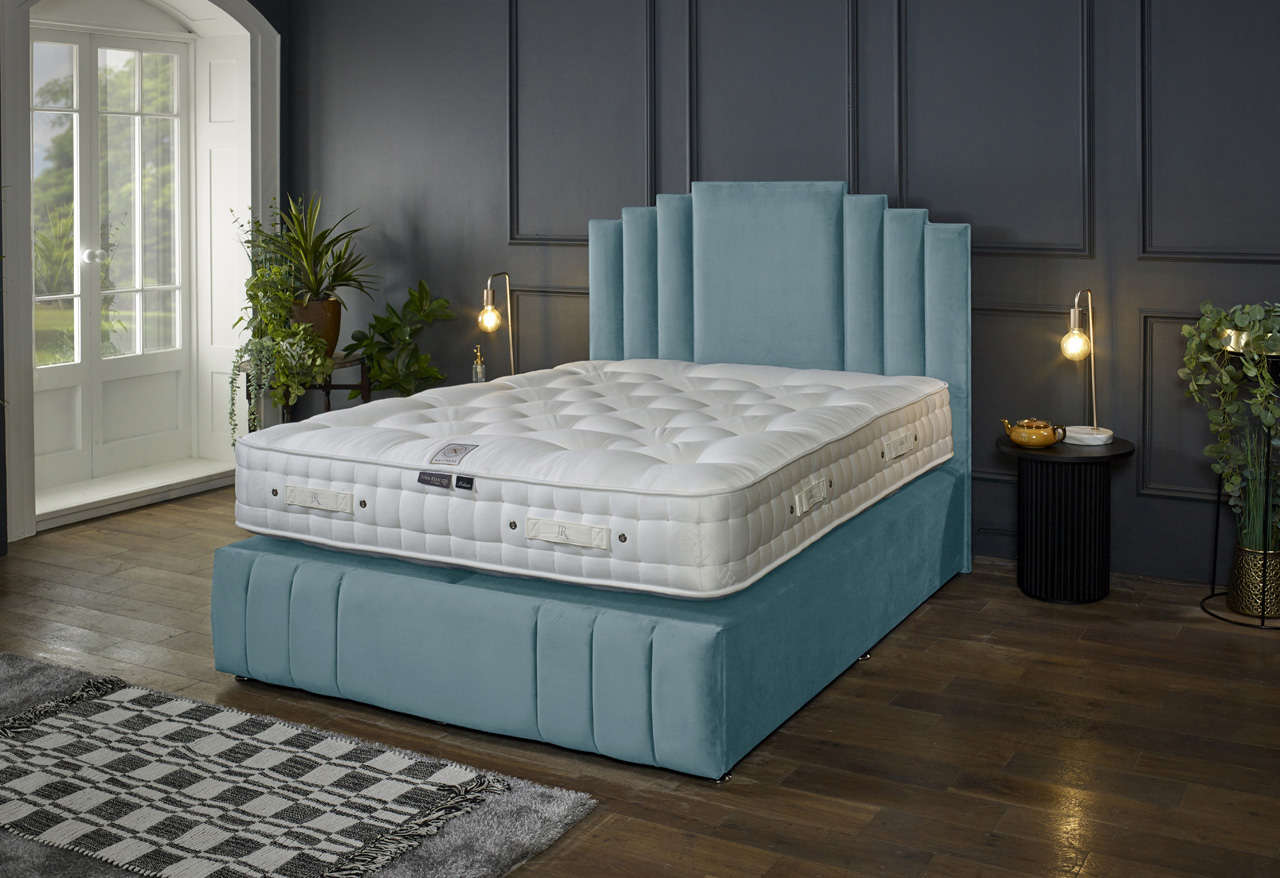
The mattress industry shifted to one-sided construction not because it benefits customers, but because it increases replacement frequency. A mattress that lasts 6 years instead of 12 years generates twice as many sales over the same period. This is why we still manufacture two-sided mattresses as standard—we care more about long-term customer satisfaction than short-term revenue maximisation.
When replacement is urgent vs when you can delay
Not all signs are created equal. Some indicate “consider replacement in the next 6-12 months.” Others mean “replace this immediately for your health and safety.”
Urgent replacement indicators
- Visible sagging over 3cm deep
- Springs protruding throughthe fabric or poking you during sleep
- Severe edge support failure, creating a fall risk
- Mould or mildew presence (health hazard)
- Severe allergic reactions on waking that improve when away fromthe bedroom.
- Sleep-related pain affecting daily function
These represent either safety hazards or serious health impacts. Don’t delay replacement when these symptoms appear.
Plan replacement soon (3-6 months)
- Mattress age 8+ years for one-sided spring, 6+ years for memory Foam
- Moderate sagging (1-2.5cm visible)
- Waking with minor aches that improve duringthe day
- Rolling together with partners is becoming frequent
- Noticeably better sleep in hotels or other beds
These indicate progressive failure. The mattress is on borrowed time,e but not yet crisis-level.
Consider replacement when convenient (6-12 months)
- Mattress age 6-8 years with no dramatic symptoms
- Body weight changed significantly since purchase
- Sleep position preferences changed
- Generally dissatisfied with sleep quality, ty but no acute problems
These are “quality of life” improvements rather than urgent needs. You can plan properly, research thoroughly, and replace on your schedule.
Extending lifespan vs accepting reality
Some customers ask whether a mattress topper can extend the life of their mattress. The honest answer: it depends on what’s failed. If comfort layers have compressed but spring support remains adequate, a quality topper can add 1-2 years of acceptable sleep. If springs have fatigued or the mattress is sagging, a topper provides a slightly more comfortable surface on a fundamentally failed support system. You’re putting a nice hat on a collapsed building.
Toppers cost £150-400 for quality options. If your mattress is already 9 years old and showing signs of failure, spending £300 on a topper for an extra year makes less sense than putting that £300 toward a proper replacement.
John Ryan’s mattress recommendations by budget and sleep needs
Right, let’s discuss actual solutions. Here are our honest recommendations by price tier, with real specifications and realistic expectations. No marketing fluff, just what works.
Budget-conscious: Under £900 (Origins Pocket 1500 – £549 Double, £725 King)
The Origins Pocket 1500 represents our entry point for proper quality. It’s not trying to compete with premium natural fibre mattresses, but it massively outperforms the £500-800 high-street alternatives most people consider.
Specifications:
- 1,500 spun-bond pocket springs (1.4mm medium gauge)
- 300 GSM wool layer
- 750 GSM very soft polyester
- 500 GSM polyester pad
- Total upholstery: 1,550 GSM
- Two-sided, fully turnable construction
- 28cm depth
- 2-year guarantee
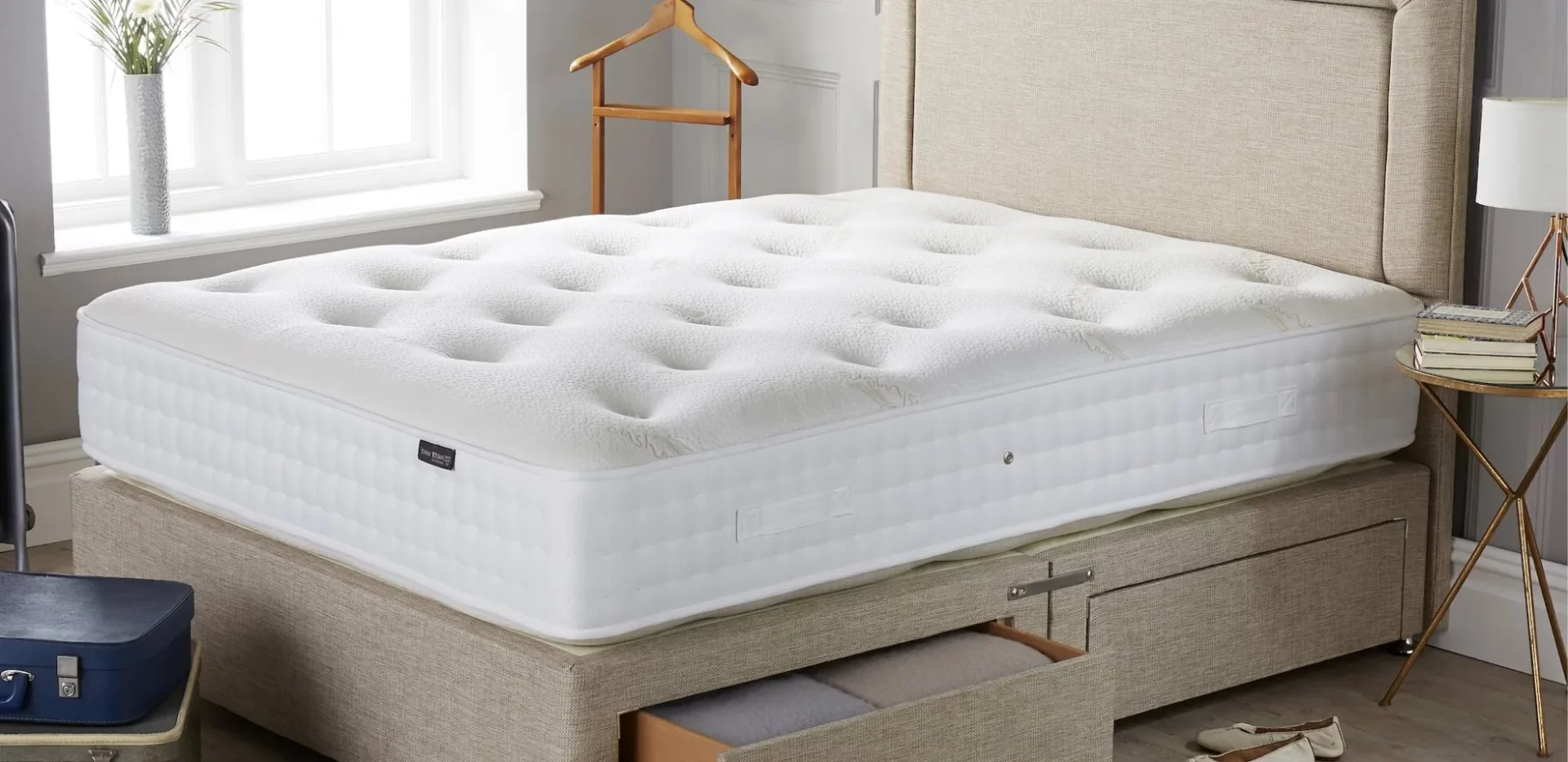
The two-sided construction alone justifies the price. You can flip this monthly and properly maintain it, realistically extending its lifespan to 8-10 years. Compared to a £600 one-sided mattress from Dreams or M&S lasting 5-6 years, the Origins costs less per year whilst providing better support throughout.
The spring gauge is a suitable medium (1.4mm) for sleepers weighing 12-16 stone. If you’re lighter or heavier, the support characteristics won’t be optimal, but at this price point, we can’t offer gauge options. For perfectly matched spring tension, you need to step up to the Artisan range.
Who this suits
- First-time buyers or students needing quality on a budget
- Guest room mattresses that won’t see daily use
- Couples under a combined weight of 28 stone with no specific health concerns
- Anyone replacing a failed budget mattress who can’t stretch to Artisan pricing.
Mid-range: £1,200-£1,600 (Artisan Naturals – £1,295 King)
The Artisan Naturals is our best-seller and the sweet spot for value. At £1,295 for a King size, it’s genuinely affordable luxury, with specifications that embarrass those of mattresses costing twice as much from high-street retailers.
Specifications:
- 1,600 calico pocket springs (1.28mm gauge, suitable for up to 16 stone)
- 1,200 GSM blended British fleece Wool and Cotton
- 1,250 GSM rebound polyCotton
- 1,500 GSM 100% pure mohair
- Total upholstery: 3,950 GSM
- 85% natural fibre content
- Two-sided, fully turnable construction
- Hand side-stitched for edge support
- 10-year guarantee
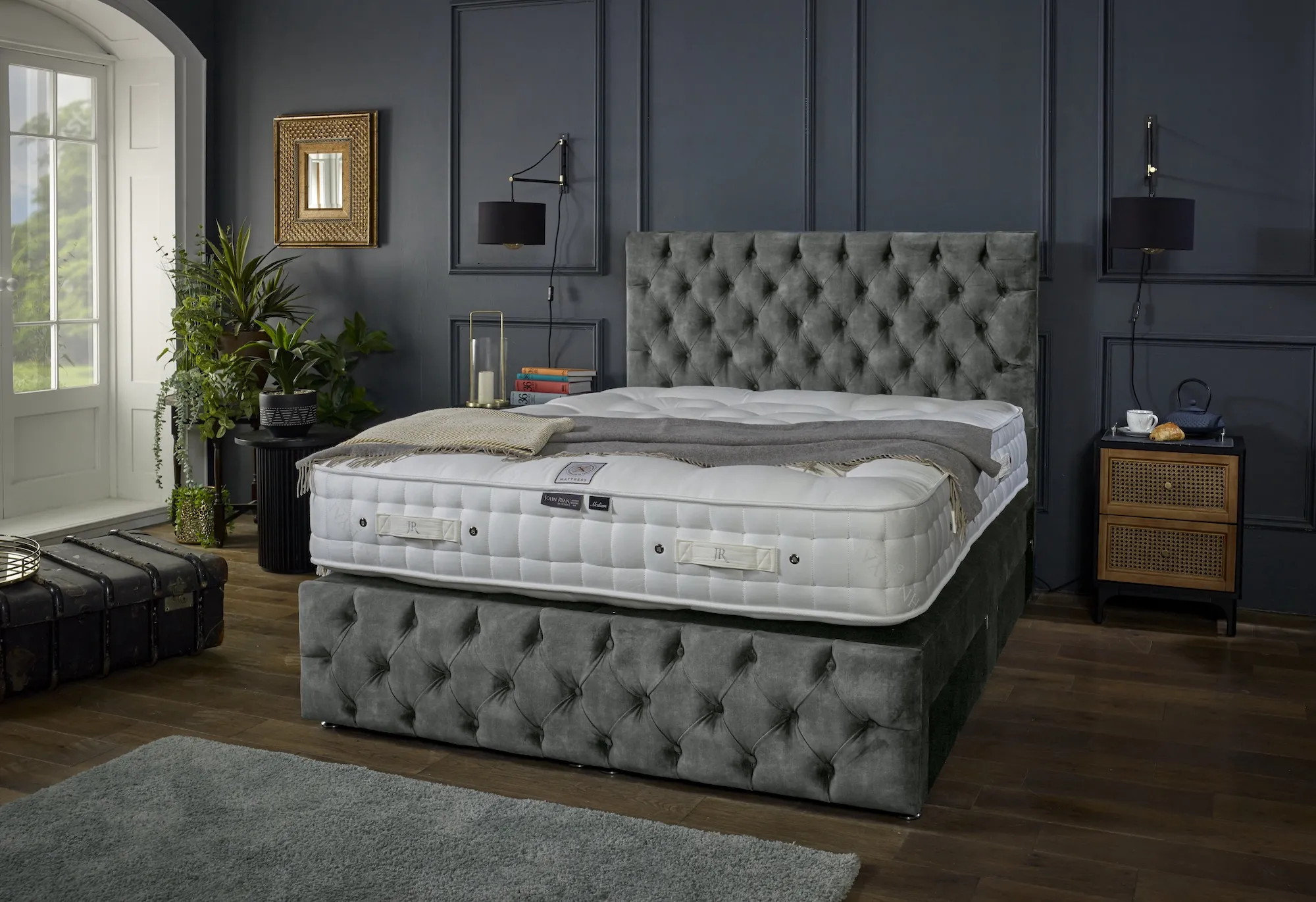
The 3,950 GSM total upholstery is over 2 times that of the Origins. This means substantially more cushioning, better pressure relief, and crucially, longer-lasting comfort. As the upholstery compresses overthe years, there’s vastly more material to start with, so comfort degradation happens far more gradually.
The calico pocket springs are individually fabric-wrapped rather than glued into synthetic mesh like spun-bond springs. This improves durability, reduces motion transfer between sleepers, and provides more precise support contouring. The calico fabric also serves as a natural barrier between the springs and the upholstery layers, preventing spring profiles from becoming palpable.
The mohair content (1,500 GSt) provides exceptional comfort. Mohair is softer than wool, naturally temperature-regulating, and extraordinarily durable. It’s a premium material typically only found in mattresses costing £2,000+. We include it at £1,295 because we manufacture directly rather than selling through retail markups.
Who this suits
- Sleepers up to 16 stone seeking long-term value
- Anyone replacing Dreams, M&S, or John Lewis mattresses and wanting proper specifications.
- Couples with no extreme weight differences
- Side sleeper needs cushioning for shoulder and hip pressure relief
- Anyone who runs hot on memory Foam and wants breathable natural fibres
- Buyers who value disclosed specifications and want to know exactly what they’re purchasing
Expected lifespan: 12-15 years with proper maintenance (monthly turning and rotation). This makes the cost per night approximately £0.24, whichcompares favourably with budget mattresses replaced every 5-6 years at £0.30-0.40 per night.
Premium: £1,700-£2,200 (Artisan Bespoke 004 – £1,585 King)
The Artisan Bespoke 004 represents the pinnacle of value in the UK mattress market. At £1,585 King, it delivers 100% natural construction with specifications that match Vispring’s £4,675 Regal Superb. That’s not marketing hyperbole. It’s verified GSM matching.
Specifications:
- 1,600 calico pocket springs (1.28mm gauge)
- 1,200 GSM British fleece Wool/Cotton blend
- 200 GSM softBambooo
- 1,200 GSM pure Horsetail
- 1,000 GSM bonded British fleece Wool and Cotton
- Total upholstery: 3,600 GSM
- 100% natural fibre content (no synthetics whatsoever)
- Two-sided, fully turnable construction
- Hand side-stitched for edge support
- 10-year guarantee
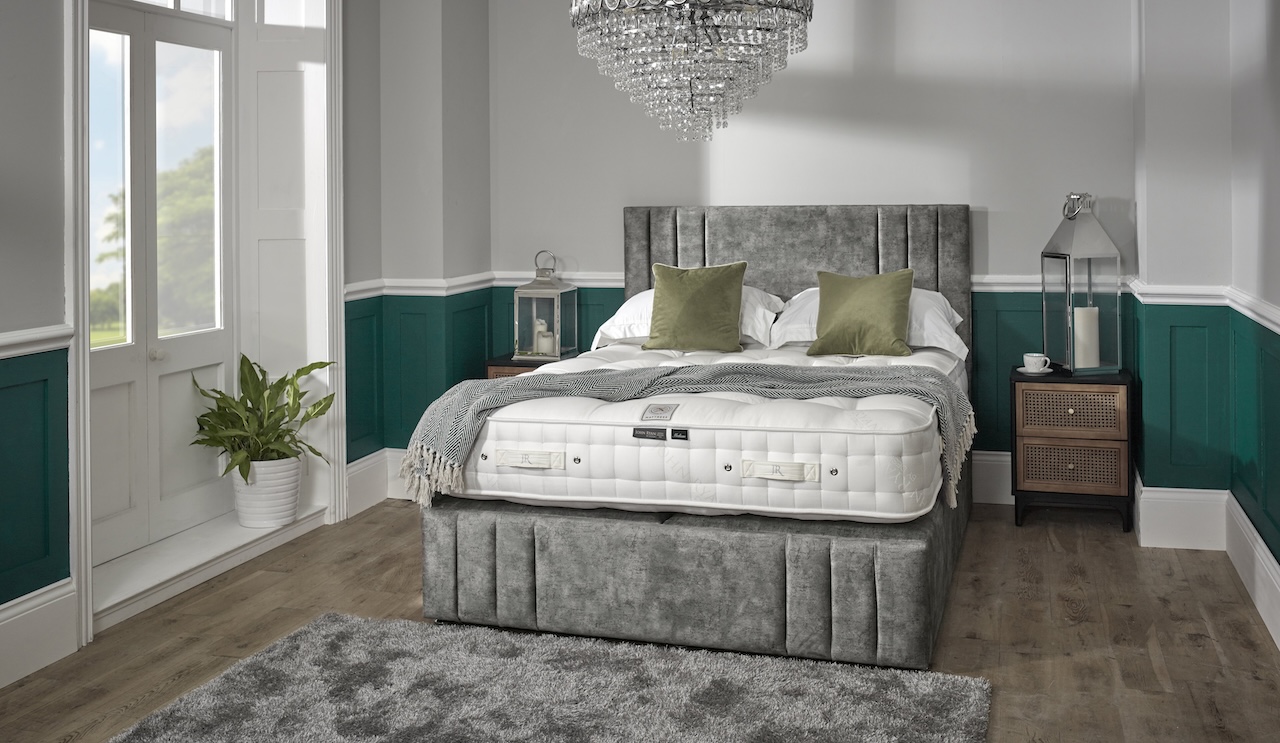
The Horsetail content deserves explanation. Horsetail (the tail hair from horses, ethically sourced) is extraordinarily resilient. It’s coarser than horsehair and provides firm, supportive characteristics that prevent excessive sinking whilst maintaining comfort. Horsetail has been used in premium upholstery for centuries because it simply doesn’t break down like synthetic polyesters.
The 100% natural content means no synthetic polyester, no memory Foam, no artificial materials. Every single fibre is natural, breathable, and biodegradable. This matters for temperature regulation (natural fibres wick moisture far better than synthetics), longevity (natural fibres are more resilient), and environmental impact (the mattress is fully biodegradable at the end of life).
Who this suits
- Buyers who want Vispring quality without Vispring pricing
- Anyone with chemical sensitivities ora preference for all-natural materials
- Warm sleepers who overheat on memory Foam
- Environmentally conscious buyers want sustainable materials
- Couples where one or both sleepers weigh up to 16 stone
- Anyone seeking maximum longevity and willing to invest appropriately
Expected lifespan: 15-18 years with proper maintenance. At £1,585, that’s £0.24 per night over 18 years.Compared to a £1,500 Dreams or John Lewis mattress lasting 6-8 years (£0.51-0.68 per night), and the Artisan Bespoke 004 is actually cheaper in total cost of ownership whilst providing vastly superior specifications throughout.
Ultra-premium: £4,000+ (Legacy Two – £4,295 King)
The Legacy Two is our flagship, and frankly, most people don’t need it. But for those who want the absolute finest British craftsmanship with rare natural materials, this is it.
Specifications:
- 2,508 dual-layer calico pocket springs (2,000 + 508)
- 1,000 GSM rare British Alpaca (not South American)
- 1,200 GSM Gold-certified Yorkshire Swaledale Wool
- 1,200 GSM British fleece Wool Cotton blend
- 1,000 GSM Horsetail support layer
- 1,000 GSM bonded British fleece Wool and Cotton
- Total upholstery: 5,400 GSM
- 100% British natural fibres (nothing imported except Bamboo)
- Two-sided, fully turnable construction
- Four rows of hand side-stitching
- 15-year guarantee (our longest)
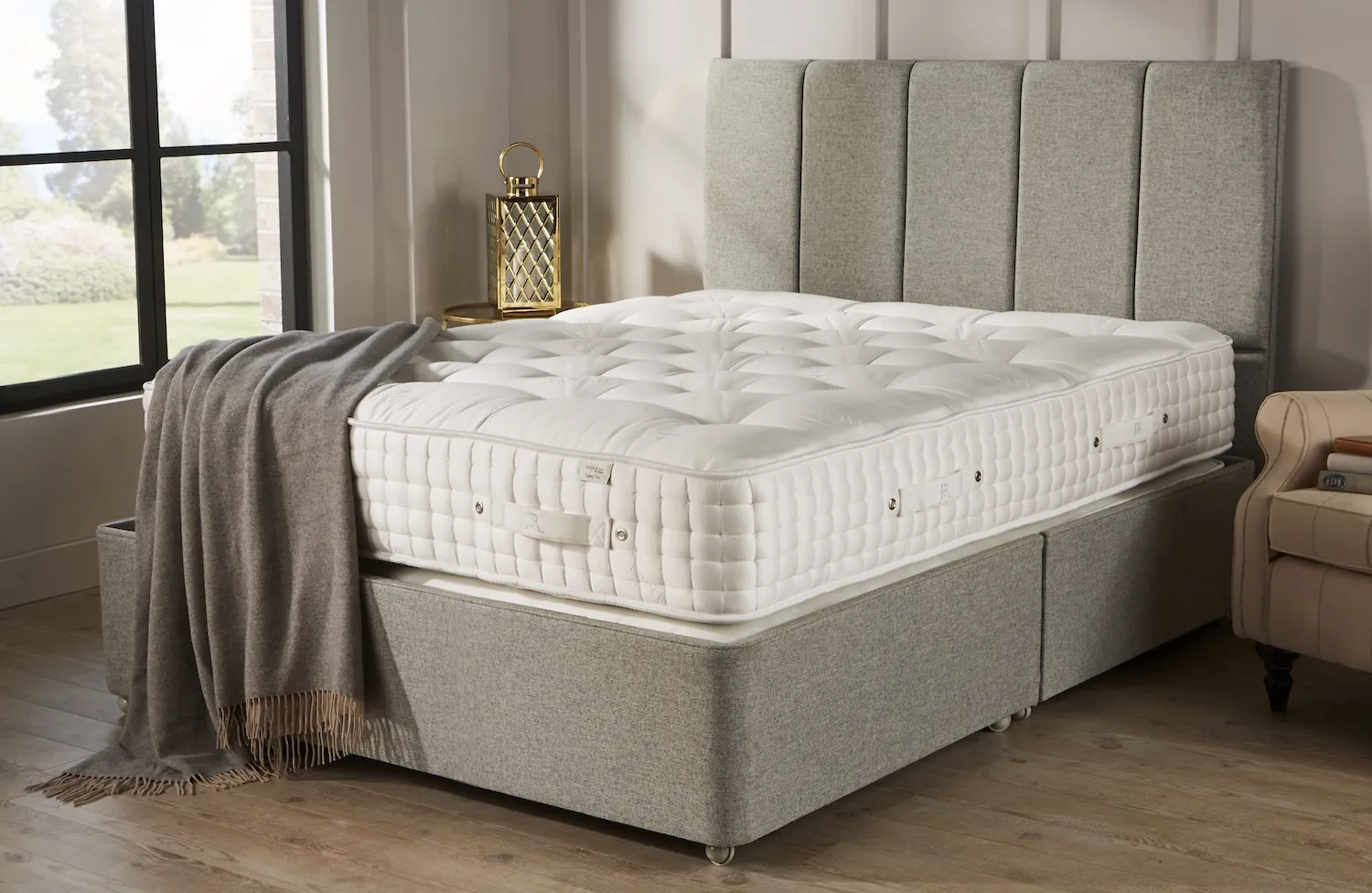
The British Alpaca warrants emphasis. MostAlpaca mattresses use South American Alpacafibre. We use British Alpaca from UK farms—extraordinarily rare, eye-wateringly expensive, and utterly exceptional for temperature regulation and softness. The Yorkshire Swaledale Wool carries Gold certification for quality and traceability.
This mattress competes with Vispring’s £13,000+ Sublime Superb tier. We price it at £4,295 because we don’t sell through showrooms with 100% retail markups. You’re getting top-tier British natural materials at direct manufacturer pricing.
Who this suits
- Buyers for whom budget is secondary to quality
- Anyone seeking the finest British craftsmanship available
- Couples with significant weight differences who can specify split tensions
- Those who appreciate rare natural materials and want maximum longevity
- Customers who sleep hot and need ultimate temperature regulation
Expected lifespan: 18-22 years with proper maintenance. At £4,295 over 20 years, that’s £0.59 per night. It’s premium pricing, but the longevity justifies it for buyers who value quality and don’t want to replace their mattress for two decades.
The cost of delaying: what poor sleep actually costs you
Let’s discuss the elephant in the room: many people delay replacing a failing mattress because of the cost. A proper mattress costs £500-2,000+ depending on specification, and that’s a significant household expense. But what does not replacing it actually cost?
Productivity loss: Studies consistently show that poor sleep quality reduces cognitive function, decision-making ability, and productivity by 20-30%. If you earn £30,000 annually, a 20% productivity loss represents £6,000 in lost economic output. You might still work your hours, but you’re performing at 70-80% capacity.
Health impacts: Chronic sleep deprivation increases risks of obesity, type 2 diabetes, cardiovascular disease, depression, and weakened immune function. The NHS spends billions annually treating conditions exacerbated by poor sleep. Your personal health costs—time off work, GP visits, prescriptions, reduced quality of life—dwarf the £1,000-1,500 investment in a proper mattress.
Relationship strain: Couples with sleep problems report higher relationship tension. One partner’s poor sleep affects both. The irritability, reduced patience, and decreased intimacy that follow poor sleep quality undermine relationship health. How much is your relationship worth? More than £1,500, presumably.

Time value: If your failing mattress costs you 30 minutes of quality sleep per night, you’re losing 182 hours annually. At an arbitrary £20/hour value of your time, that’s £3,640 in lost rest. The mattress investment pays for itself in time alone within 6 months.
This isn’t to induce guilt about your current mattress. It’s to reframe the decision. A proper mattress isn’t an expense. It’s an investment in health, productivity, and quality of life that pays returns every single night for 10-15 years.
Final thoughts from 25 years of mattress conversations
Here’s what we’ve learned from thousands of customers over two and a half decades: people delay replacing failing mattresses far longer than they should, almost always to their detriment. The most common phrase we hear? “I wish I’d done this years ago.”
The second most common phrase? “I didn’t realise how bad my old mattress was until I slept on this one.”
You’ve been tolerating substandard sleep so gradually that you’ve forgotten what good sleep feels like. Your body has acclimatised to aches. Your expectations have lowered. You’ve convinced yourself it’s “not that bad” because the decline has been incremental rather than sudden.
It is that bad. Your sleep quality affects everything—your health, your mood, your relationships, your work performance, your overall quality of life. A proper mattress isn’t a luxury purchase. It’s a health necessity that you use for 2,900 hours annually.
If you’re reading this article, you already know your mattress needs to be replaced. You’re just looking for validation. Consider this your validation. The mattress has failed. It’s not going to improve. The aches won’t mysteriously disappear. The sagging won’t spontaneously reverse. The only variable is how long you continue tolerating it before addressing the problem.
Don’t spend another six months waking up sore to delay spending £1,000-1,500 on a solution. Your future self, waking refreshed in three months, will thank you for making the decision now rather than later.
Call us on 0161 437 4419 for honest advice on which mattress best suits your specific needs. We’re not going to pressure you into our most expensive option. We’re going to ask about your weight, sleep position, any health concerns, your budget, and recommend what actually works. 25 years of making mattresses in Yorkshire have taught us that honesty builds better relationships than sales pressure ever could.
Your sleep matters. Don’t settle for less than you deserve.

Dreaming of the perfect nights sleep?
Ask us a question
There are over 6000 questions and answers submitted by you on all questions about mattresses and bed problems. Enter a keyword such as Vi Spring, John Lewis beds, bad back or Memory Foam and see if your question has already been answered.
If you can’t find an answer in knowledge hub, ask a new question. We aim to respond to all questions within one working day.
Newsletter
Enter your email to join our newsletter. We’ll send you occasional news and mattress expertise.