







Mattress Tips
February 2026Why Considering a Cheap Mattress Just isn't Worth it
The cheap mattress isn’t cheaper. It’s just more frequent.
After 25+ yearsof manufacturing mattresses in Manchester, we’ve heard countless stories from customers replacing their second or third budget mattress, finally realising that “cheap” and “affordable” are completely different concepts. Cheap means low specifications that degrade quickly. Affordable means reasonable pricing for specifications that last.
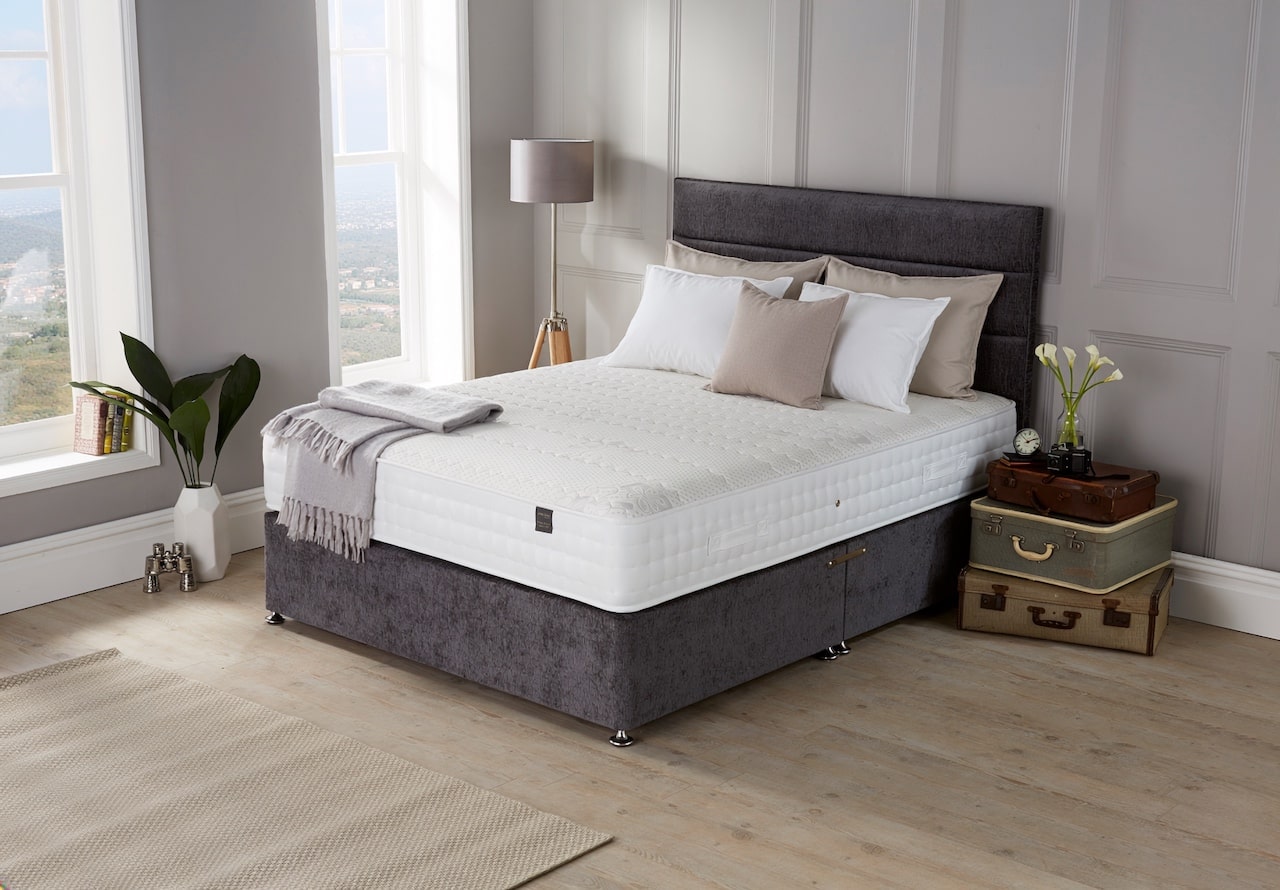
As you search around, you’ll no doubt be tempted by discounts, sales and bargains. This may lead you to look for the cheapest option. However, are cheap mattresses worth it? It’s always worth remembering that the true value of a good-quality mattress goes beyond the price tag.
At John Ryan, we know how crucial the quality of a mattress is when it comes to getting the soothing and supportive sleep that you deserve. This is why you should consider more than just going for the cheapest available when it’s time to get a new one. A new mattress means investing in far more than just where you sleep at night, and the last thing you want is to regret your mattress purchase and be uncomfortable for the next 7 years or so!
With that in mind, we wanted to go through what you’ll miss out on if you don’t think carefully about your purchase, to highlight why only considering a cheap mattress isn’t worth it in the long run.
Missing out on a mattress made in the UK
You might be tempted to go for some of the cheapest mattresses online, which often means two things.
- You’re looking at a mattress that uses low-quality, cheap fillings, or worse, recycled fibres such as shredded pre-owned clothing and materials to bulk up the mattress.s
- They will be mass-produced and imported from a long-term storage facility overseas.
Discounted beds are more often than not produced in another country, using the lowest-grade materials to keep costs down, and then sold to UK mattress retailers, who sell them at cut-rate prices.
What would you prefer: a very cheap bedt hat’s probably been sitting somewhere in storage for months? One that has no details of the fillings, GSM or support units? Or a bed built to order for you and to the highest standards right here in the UK?
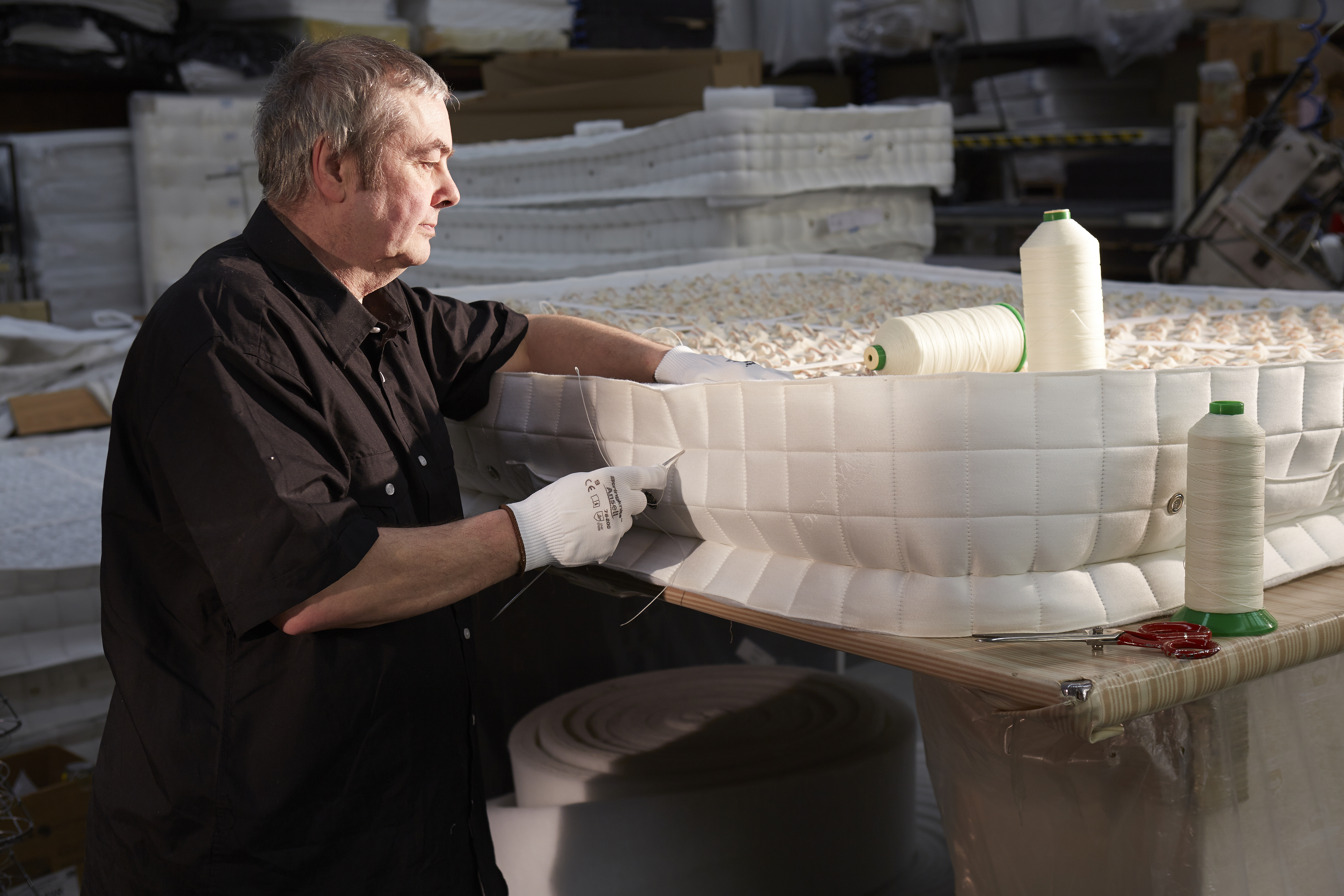
Here at John Ryan, we know how important it is to know where your mattress has come from before it arrives at your home. We pride ourselves on crafting the finest luxury mattresses from traditional British-quality materials and selling them at a realistic price. This means you get the best sleep experience, long-lasting and luxurious. Purchasing a tailor-made mattress from the UK will make a big difference to how well you sleep at night.
Also, for a true celebration of British origin and heritage, take a look at the story of all the magnificent materials we used to create the world’s finest handmade, all-natural, and most luxurious mattress – the John Ryan Legacy.
What your budget actually buys: GSM and construction reality
Forget vague descriptions. Here’s what different price points deliver in actual specifications you can verify:
| Price (King Size) | Typical GSM Range | What You’re Actually Getting |
|---|---|---|
| £300-£500 | 600-1,000 GSM | Open coil or thin Foam, synthetic fibres, one-sided. Lifespan: 3-5 years. You’ll replace it twice before a quality mattress needs to be replaced once. |
| £500-£800 | 1,200-1,800 GSM | Basic pocket springs (spunbond), predominantly synthetic upholstery, one-sided. Lifespan: 5-7 years. Develops body impressions quickly. |
| £800-£1,200 | 2,000-3,000 GSM | Decent pocket springs, mixed natural/synthetic fibres, possibly two-sided. Lifespan: 8-10 years. Entry point for reasonable longevity. |
| £1,200-£1,800 | 3,500-4,500 GSM | Quality calico springs, predominantly natural fibres (Wool, Cotton, Mohair), two-sided. Lifespan: 10-12 years. Where specifications justify pricing. |
| £1,800-£2,500 | 4,500-6,000 GSM | Premium natural fibres (Cashmere, Horsehair, Horsetail), calico springs, hand side-stitching. Lifespan: 12-15+ years. Investment-grade construction. |
The pattern is clear: double the upholstery GSM, double the lifespan. A £500 mattress with 1,200 GSM lasting 5 years versus a £1,200 mattress with 3,500 GSM lasting 12 years isn’t “spending more”—it’s getting 2.4 times the use whilst avoiding two replacement purchases.
The hidden costs nobody mentions
Cheap mattresses create expenses beyond the purchase price:
- Replacement frequency: Shopping time, delivery coordination, old mattress disposal (£30-£50 if the council won’t collect for free)
- Sleep quality degradation: Cheap mattresses don’t fail catastrophically—they decline gradually. You spend months sleeping poorly before admitting it needs replacing.
- Health impacts: Poor sleep affects productivity, mood, and immune function. The “savings” from a cheap mattress get spent on coffee, painkillers, and reduced work performance.
- Partner relationship stress: One person’s tolerance for a declining mattress differs from their partner’s. This creates ongoing friction.
Our bed geeks have spoken with hundreds of customers who “saved money” with cheap mattresses, then spent £200+ on toppers, new pillows, and back supports trying to make them comfortable. They’d have been better off buying properspecifications fromm thestarty.
Speaking of quality materials, a mattress that’s truly worth your money should be skilfully woven and crafted by experts who have the passion, knowledge and experience to create and deliver the sleep experience you deserve. If you opt for the cheapest mattress on the market, you won’t be getting a product that’s had the same level of dedicated craftsmanship. More than likely, it will be a cage-sprung mattress crudely topped with synthetic fibres or cheap heat-retentive foams.
John Ryan understands that the little details really matter, which is why every single one of our mattresses is meticulously constructed, right from the formation of their springs through to when they are sent off to our customers.
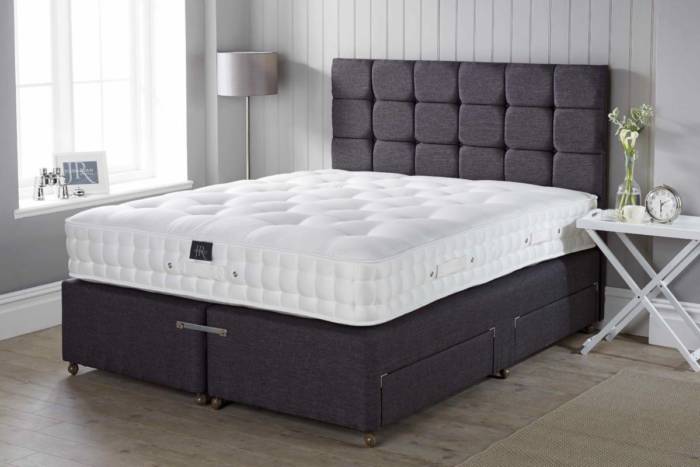
Check out the complete 21-day journey of our Luxury Artisan 1500 to see exactly what you’re getting for your hard-earned money, and how transforming your restless nights into relaxing, soothing slumber is the difference that quality workmanship can make. So, why forego all that for a cheaper mattress that’s been put together with no real effort or thought?
Consider your cost per sleep.
Speaking of an investment,it’ss always important to remember that a high-quality mattress that’s worth its price should last you at least 7 years before you need to consider replacing it. Therefore, it’s important to stop thinking about your new mattress choice as a one-off purchase. Instead, you need to work out your price per sleep to see its true value.
It helps to divide the price by the number of nights you’ll benefit from your new mattress, so the initial expensewon’tt seem so budget-busting. Don’t forget, you will use your mattress more than any other household item. So, if you take a luxurious and tailor-made mattress like our Artisan 1500, which costs £965.00, that will only work out at £137.85 per year over 7 years, and be just 37p per sleep.
Granted, you might find a cheaper, lower-quality mattress that works out to less per sleep. However, what’s the guarantee and shelf life likely to be of such a mattress? Think of the soothing, satisfying and supportive experience you could have for just a few pence more each night.
What “cheap” actually means in construction terms
Let’s pull back the cover on budget mattresses and see what you’re actually buying. This isn’t about shaming budget constraints—it’s about understanding trade-offs so you make informed decisions.
The springs: where cost-cutting starts
Budget mattresses (under £600) typically use:
- Open coil springs: All springs are connected by a single wire frame. Movement transfers across the entire mattress. Springs are often 13.5-14 gauge (too soft for most adults). Lifespan: 3-5 years before noticeable sagging
- Low-count pocket springs: 600-800 springs in a King size, often 12-13 gauge. Insufficient support density for proper spinal alignment
- Spunbond pocket springs: Springs glued into synthetic mesh rather than sewn into Calico fabric. The mesh degrades faster than the springs themselves.
Quality mattresses (£1,200+) use:
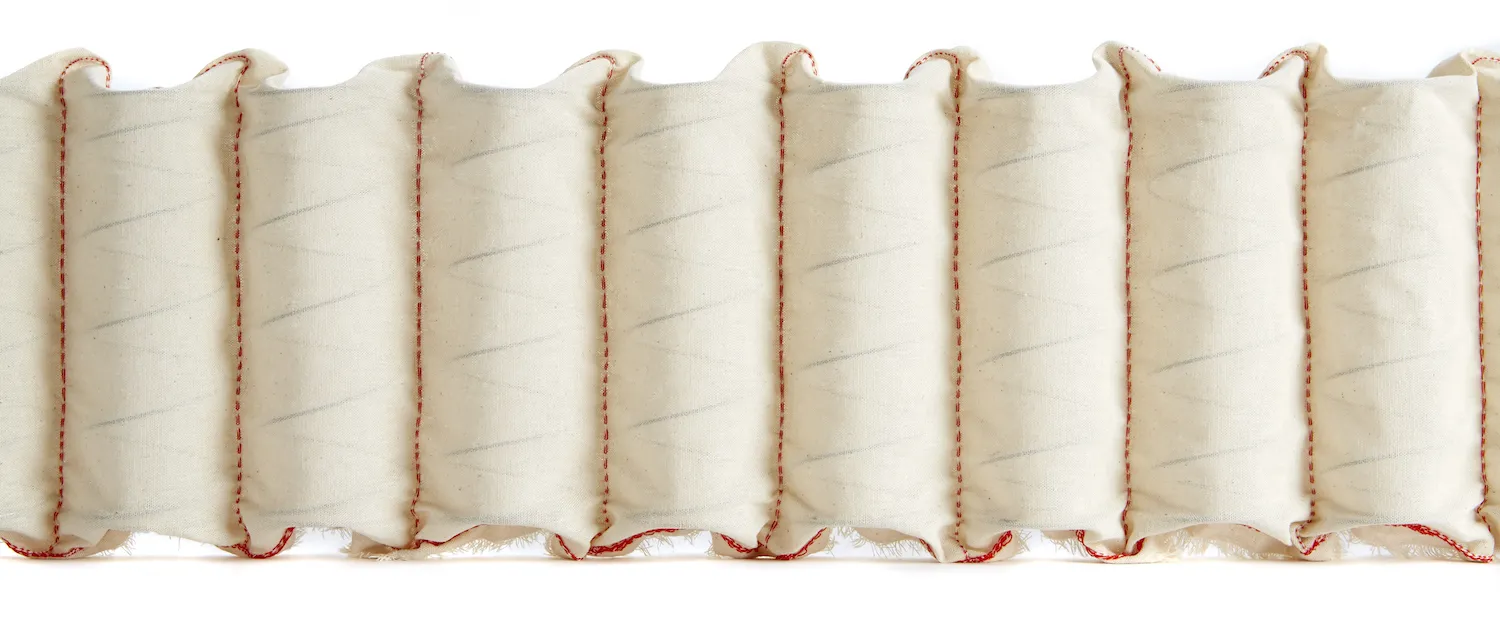
- Calico-encased pocket springs: 1,400-1,600 springs individually sewn into fabric pockets. Each spring responds independently. The Calico fabric outlasts the spring’s functional life.
- Appropriate gauge for body weight: 1.4mm for up to 16 stone, 1.6mm for 16-20 stone, 1.8mm+ for heavier sleepers. Budget mattresses rarely offer a gauge option.s
- Higher spring count density: More springmeanns more responsive support and better motion isolation for couples
The upholstery: where the real compromise happens
This is where budget mattresses truly cut corners. Springs are relatively cheap to produce. Upholstery—especially natural fibres—is expensive.
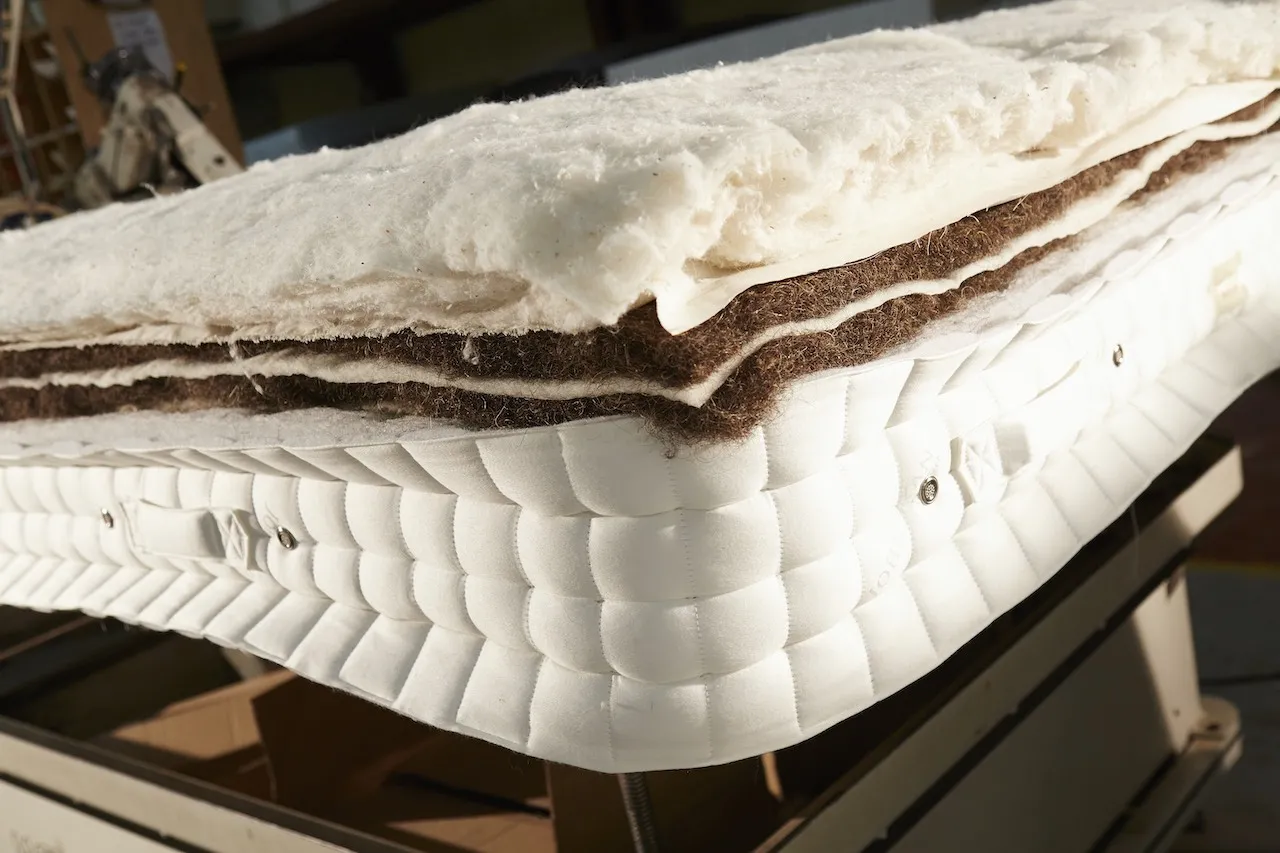
Budget mattresses use:
- Polyester wadding: 300-800 GSM of synthetic fibre. Compresses permanently under body weight, creating body impressions within 12-18 months
- Cheap Foam Low-density polyurethane, or memory Foam. Retains heat, breaks down quickly, and off-gasses unpleasant odours initially
- Minimal natural fibre: If “Wool” is mentioned, it’s typically 50-100 GSM mixed with 800+ GSM polyester—just enough to claim “natural fibres legal.”
- One-sided construction: Upholstery only on the sleep surface. You can’t flip it to distribute wear, halving the lifespan.
Quality mattresses use:
- Natural fibres in substantial quantities: 1,200+ GSM British Wool, 1,500 GSM Cotton, 1,200-1,500 GSM Mohair or Horsehair. These resist compression and breathe naturally.
- Layered construction: Multiple comfort layers with different properties—soft Wool for initial comfort, resilient Horsetail for support, Cotton for breathability
- Two-sided design: Equal upholstery on both surfaces. Rotate and flip monthly to distribute wear evenly, extending lifespan to 10-15 years
- Complete GSM disclosure: Quality manufacturers listthe exact GSM for each layer. Budget brands hide this information deliberately
The cover and finishing: visible quality indicators
Even before sleeping on a mattress, you can assess construction quality:
| Budget Construction | Quality Construction |
|---|---|
| Quilted cover with thin padding underneath | Deep, substantial quilting indicates upholstery beneath |
| No side-stitching or minimal rows | Hand side-stitching (2-4 rows) prevents edge sagging |
| Turning handles often tear from the fabric | Reinforced handles sewn through multiple layers |
| Lightweight—can be lifted easily by one person | Substantial weight from upholstery density (two people to move) |
| Uniform firmness across the entire surface | Zoned support or slight variation from layered construction |
Remember, GSM is worth more than the price
GSM (Grams per square metre) really helps you see where your money is going when purchasing a new pocket sprung mattress, because it’s the figure used to establish the mattress’s fundamental level of quality.
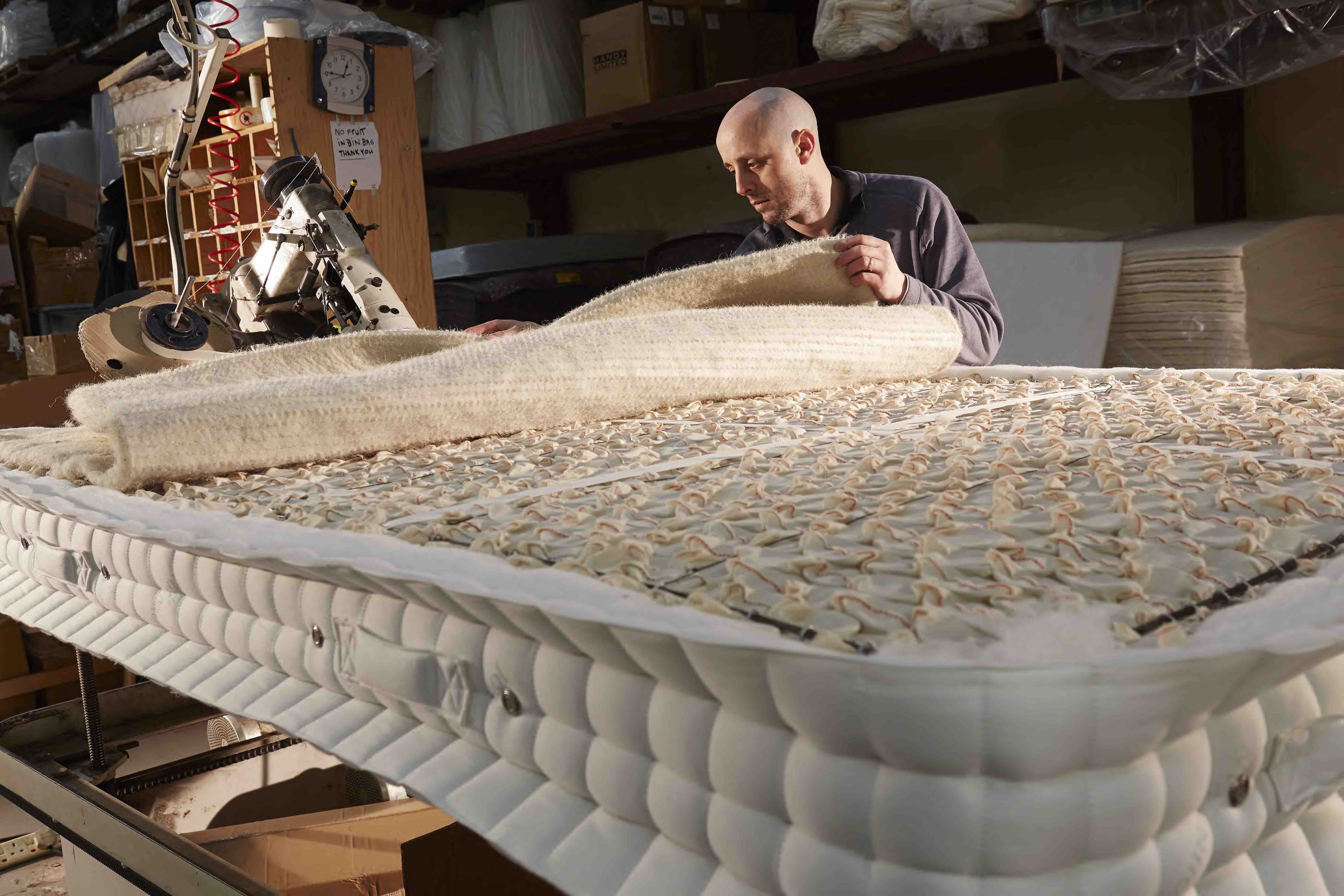
GSM refers to the actual weight per square metre of a specific upholstery component used within the mattress. The ‘combined upholstery weight GSM’ also lets you determine the weight of the entire depth of the upholstery components used on top of the mattress springs.
Essentially, if you know your GSM times table when considering a mattress, you’ll know exactly how it compares in terms of quality to other mattresses. You won’t even need to test it out physically first. Although you might see two mattresses that look similar in terms of the number of springs they contain, never take fancy descriptions at face value. Always ask about the GSM of all components used, because you might end up paying more for a much cheaper mattress, given the components used for the bulk of the upholstery.
What customers tell us about their budget mattress experiences
We speak with dozens of customers each week who are replacing their budget mattresses. Here are the patterns we hear repeatedly:
The typical budget mattress cycle
Year 1: “It’s fine, feels comfortable enough, glad I saved money.”
Year 2: “Is it just me, or does it feel slightly less supportive? Probably just getting used to it.”
Year 3: “I can definitely feel the springs now. There’s a permanent dip where I sleep. My partner rolled into my side of the bed last night. Maybe we need to rotate it more.”
Year 4: “This is genuinely uncomfortable. I wake up with back stiffness most mornings. We should probably look at replacing it soon.”
Year 5: “We’re definitely replacing this. I’m just too busy to deal with mattress shopping right now. Maybe next month.”
Year 6: Finally replaced, having slept poorly for 2-3 years of gradual decline.
The realisation: “If I’d spent £700 more initially, I’d still have 6-8 years left on a quality mattress instead of going through this process again.”
The topper trap
Here’s a conversation we have almost weekly:
Customer: “My mattress is only 3 years old, but it’s uncomfortable. Can I buy a topper instead of replacing the whole thing?”
Our response: “If the mattress springs are worn or the base is sagging, a topper just adds a thin comfort layer on top of a failed support system. You’ll spend £150-£300 on a topper, get 6-12 months of slight improvement, then still need to replace the mattress. You’re spending money twice whilst sleeping poorly the entire time.”
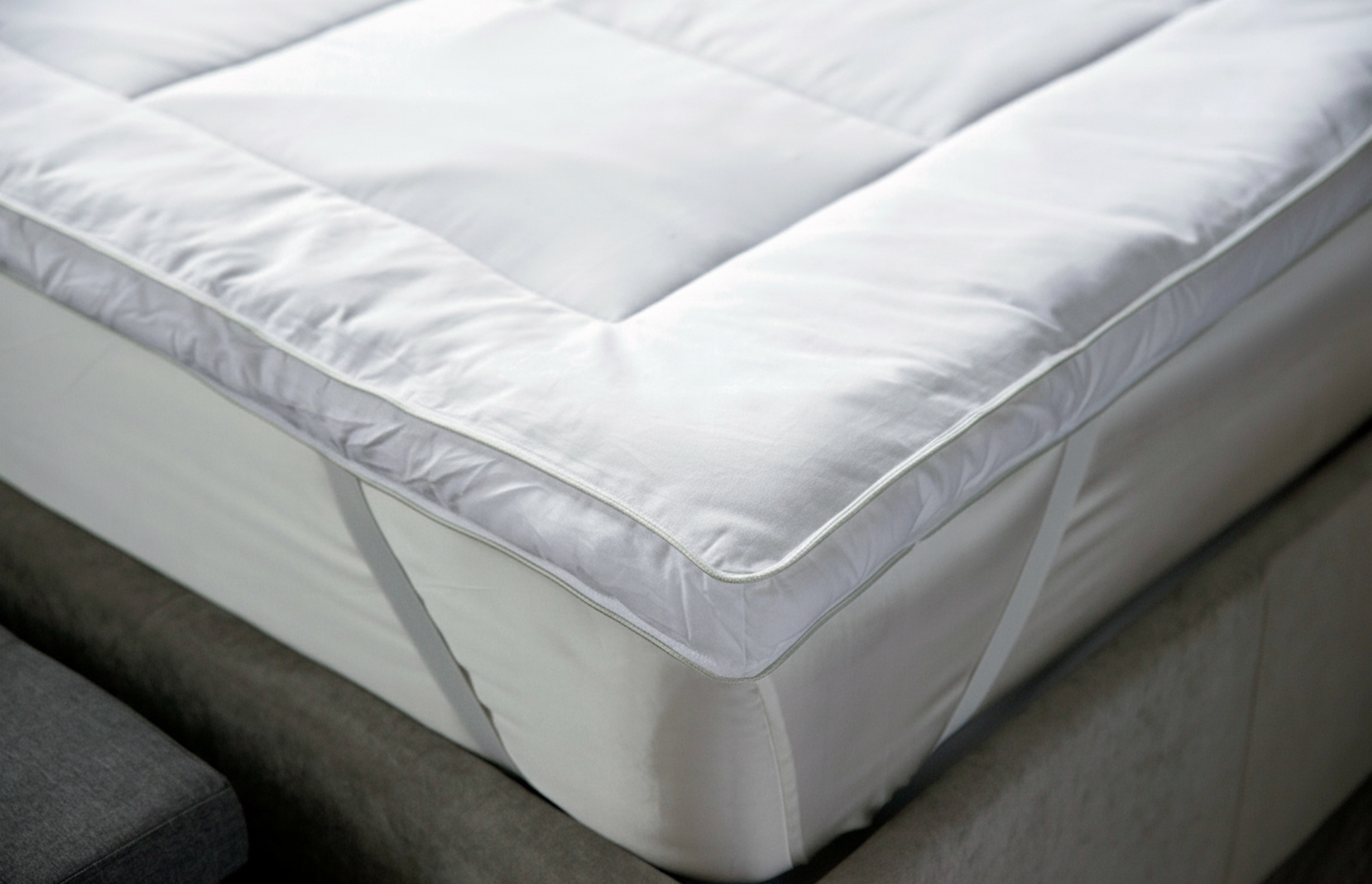
Toppers work brilliantly for adjusting comfort on quality mattresses with intact support. They’re an expensive plaster on budget mattresses with structural problems.
The memory Foam heat trap
Emma from Bristol: “I bought a £400 memory Foam mattress online. The first week was lovely—really soft and comfortable. Then summer arrived. I’d wake up at 3 am absolutely roasting, stuck in a body-shaped heat trap. Tried everything—thinner duvet, fan, window open. Nothing worked because the mattress itself retains heat. Replaced it after 18 months with an Artisan Naturals. The natural Wool and Mohair breathe properly. Haven’t overheated once in two years.”
The issue: MemoryFoam’s dense cellular structure traps body heat. Budget memory Foam uses lower-density Foam that retains even more heat than premium versions. Marketing describes this as “contouring to your body”—technically true, but it also means you’re sleeping in your own heat pocket.

You need to consider your health and wellbeing.
Subjecting yourself to a constant lack of quality sleep time and restless nights will eventually lead to serious sleep deprivation. This can lead to some serious health problems, such as having a higher risk of obesity, diabetes or heart disease. It can also diminish your memory skills and even your ability to learn new information. Forcing yourself to sleep on a low-quality, ccheaply mademattress every night will only exacerbate the problem.
Opting for a more realistically priced, higher-quality luxury mattress is like making an investment in your overall health and wellbeing for the next 7 years or so. You’ll be choosing a mattress handcrafted by expert artisans, tailored to your height and weight, and optimised to deliver the perfect blend of support and comfort you need to sleep soundly.
Your mattress should enrich your life, and the association of being “cheap” should never have any place when it comes to how you sleep.
The health cost of cheap mattresses (that nobody calculates)
Sleep deprivation from an uncomfortable mattress creates costs far exceeding the mattress price difference:
Productivity and cognitive function
Poor sleep reduces cognitive performance by 20-30%. If you earn £35,000 annually and lose even 10% productivity from inadequate sleep, that’s £3,500 in reduced work performance. Over a cheap mattress’s 4-5 year lifespan, you’ve lost £14,000-£17,500 in impaired work capacity to “save” £700 on mattress price.
The mathematics are brutal. A quality mattress doesn’t cost money—it generates returns through better sleep, sharper focus, and improved daily performance.

Relationship and partner sleep quality
Budget mattresses with poor motion isolation create partner disturbance that compounds over time. One person’s movement wakes the other. Neither achieves proper REM sleep. Both wake irritable. Small disagreements escalate because you’re both sleep-deprived.
We’ve had couples tell us that upgrading to a quality mattress with proper pocket spring motion isolation “saved our relationship.” They’re half-joking, but sleep quality genuinely affects relationship harmony.
The chronic pain cycle
Inadequate support from the budget mattresses creates or worsens:
- Lower back pain from sagging: Spine misalignment during 7-8 hours nightly accumulates into chronic issues
- Shoulder and hip pressure points: Insufficient upholstery GSM means bones press onto springs, creating inflammation
- Neck tension from compensation: Body unconsciously tenses muscles to compensate for poor mattress support
- Morning stiffness that persists: Takes 2-3 hours to “wake up” properly because your body spent all night in poor alignment
Physiotherapy, chiropractor visits, pain medication, ergonomic office equipment—people spend hundreds addressing symptoms caused by a £400 mattress they thought was saving money.
Our actually-affordable options
We don’t make “cheap” mattresses because we can’t build low-specification mattresses profitably at prices competing with bulk importers. But we do make affordable mattresses with honest specifications.
Origins Pocket 1500 (£1,050 King)
Our entry-level mattress gets rave reviews from customers who have had it for over 10 years. The Origins 1500 is properly specified at an accessible price point. It features 2 sided construction.
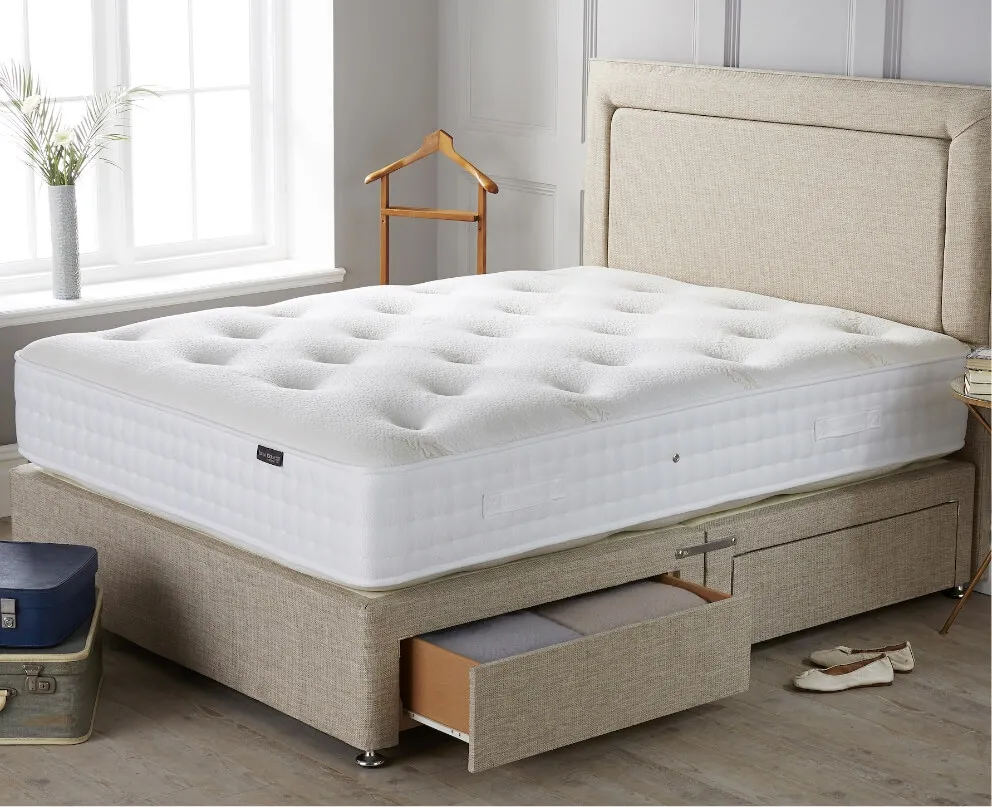
| 1. | 300GSM WOOL |
| 2. | 750GSM VERY SOFT POLYESTER |
| 3. | 500GSM POLYESTER PAD |
| 4. | ONE INCH FOAM INSULATOR LAYER |
| 5. | 1500 SPUN BOND POCKET SPRINGS |
| TOTAL: | 1550GSM |
| DEPTH: | 30-33CM |
Cost per year over 10 years: £105. Compared to a £500 budget mattress replaced twice in that period (£1,000 total, plus two delivery fees, two disposal efforts) at £100+ per year whilst sleeping on degrading specifications for years 4-5 and 9-10.
Origins Natural Comfort (£1,300 King)
Our best-value natural fibre mattress for long-term satisfaction offers a balance of natural fibres at an affordable price. Perfect for sleepers who want a deeper sink-in the top layer and to stay cooler at night than memory Foam.
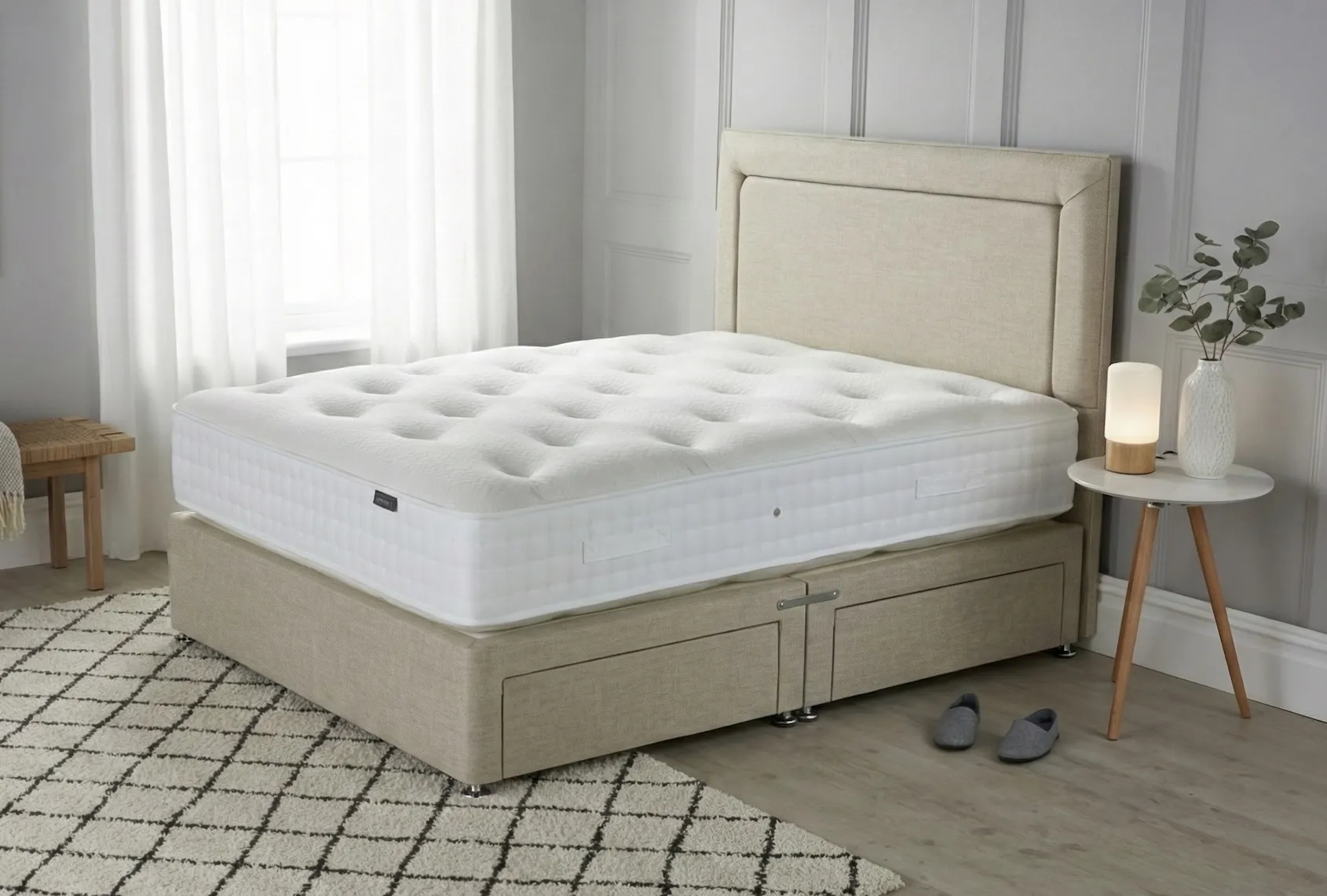
| 1. | 600GSM LAYERED COTTON REBOUND PAD |
| 2. | 500GSM BRITISH WOOL |
| 3 | 600GSM REBOUND POLYCOTTON PAD |
| 4. | 600GSM REBOUND POLYCOTTON PAD |
| 5. | 250GSM WOOL, CASHMERE, SILK, & COTTON |
| 6. | 1000 SPUN BOND POCKET SPRINGS |
| Total | 2550GSM |
| Depth | 30-33CM |
Cost per year over 15 years: £86. This is genuinely cheaper per year than budget mattresses whilst providing superior specifications throughout its entire lifespan.
Why do these represent actual affordability?
- Direct manufacturing eliminates retail markup. We don’t sell through showrooms that add 100% retail markup. You’re buying at close to manufacturing cost plus a reasonable margin.
- Complete specification disclosure. We list exact GSM breakdowns, spring specifications, and natural fibre percentages. You know precisely what you’re buying.
- 60-day genuine trial. Sleep on it for two months in your own home. If it’s not right, we’ll collect it at no cost and issue a full refund. This removes purchase risk entirely.
- Bed geek consultations. Speak with our Manchester-based team, who actually manufacture mattresses. We’ll match specifications to your body weight, sleeping position, and temperature needs—not to our sales targets.
Budget mattresses aren’t worth it because they’re not actually budget-friendly when you factor in the ownership period. Our affordable mattresses cost more upfront but less annually, whilst delivering superior sleep quality throughout their 10-15 year lifespan. That’s the difference between cheap and affordable.
For more information, get in touch on 0161 437 4419.
</2>

Dreaming of the perfect nights sleep?
Ask us a question
There are over 6000 questions and answers submitted by you on all questions about mattresses and bed problems. Enter a keyword such as Vi Spring, John Lewis beds, bad back or Memory Foam and see if your question has already been answered.
If you can’t find an answer in knowledge hub, ask a new question. We aim to respond to all questions within one working day.
Newsletter
Enter your email to join our newsletter. We’ll send you occasional news and mattress expertise.