







Mattress Care
March 2026Bedsheets and the best machine wash temperature to kill bugs
This guide will help you keep your bedsheets, mattress and bedroom super clean and will explain exactly what temperature to wash bedding at, why it matters, and what happens if you get it wrong.
It’s easy to forget about bedroom hygiene. By the time you’ve finished work or had a long day, you just want to slip into bed and fall asleep, which is precisely why it’s so important to make sure your bedroom, mattress and bedding are as clean as possible to help you rest soundly.

One of the most overlooked parts of home cleaning is washing bedding correctly. We will give some top tips to ensure your bedroom is a haven for health and relaxation with our bedding washing and cleaning guide below.
- What temperature should I wash my bedding on?
- What temperature to wash bedding by fabric type
- What temperature kills dust mites in bedding?
- What temperature should I wash a mattress topper on?
- How to revive a lumpy or sagging mattress topper
- What temperature should I wash pillows at?
- Cleaning a mattress comforter or throw
- Mattress protectors to keep your bed clean
- How often should I wash my bedding?
- Should I use biological or non-bio washing powder for bedding?
- Caring for natural fibre bedding
- Washing bedding at lower temperatures: when is it acceptable?
- Duvet cleaning tips
- How can I keep my bedroom healthy to avoid illness?
- Why is there a resurgence of bed bugs?
What temperature should I wash my bedding on?
Whilst there has been a big drive to reduce washing temperatures for clothes down to 30 degrees, bedsheets sit in a completely different category. Take, for example, the fact that you’re spending seven to nine hours each night in bed. Over a week, that’s between 49 and 63 hours where you’re in direct contact with duvets, bedding and linen.
Whilst a 30-degree machine wash may keep a t-shirt clean after a day or two of wear, it simply won’t cut it for your bedding. You probably wouldn’t wear the same top for 49 to 63 hours straight, so a 30-degree wash isn’t intensive or hot enough to reliably kill bacteria.
When washing bedding, wash at 60 degrees for a long wash of 2 hours or more to ensure that any sweat, dander, dust, or other bacteria are killed and then removed.

What temperature to wash bedding by fabric type
One of the most common reasons people end up with shrunken sheets or damaged duvet covers is washing everything at the same temperature,e regardless of what it’s made from. Different fabrics respond very differently to heat, and understanding this is the single most important thing you can do to extend the life of your bedding.
Cotton bedding is the most forgiving and by far the most common fabric you’ll find in most homes. Plain Cotton sheets, pillowcases and duvet covers can be washed at 60°C on a Cotton programme for a thorough hygienic clean, or at 40°C for a routine freshen-up between deeper washes. If your Cotton sheets are white, a regular 60°C wash also helps prevent them from going grey over time. For coloured Cotton bedding, 40°C is kinder to the dyes and still more than adequate for general cleanliness.
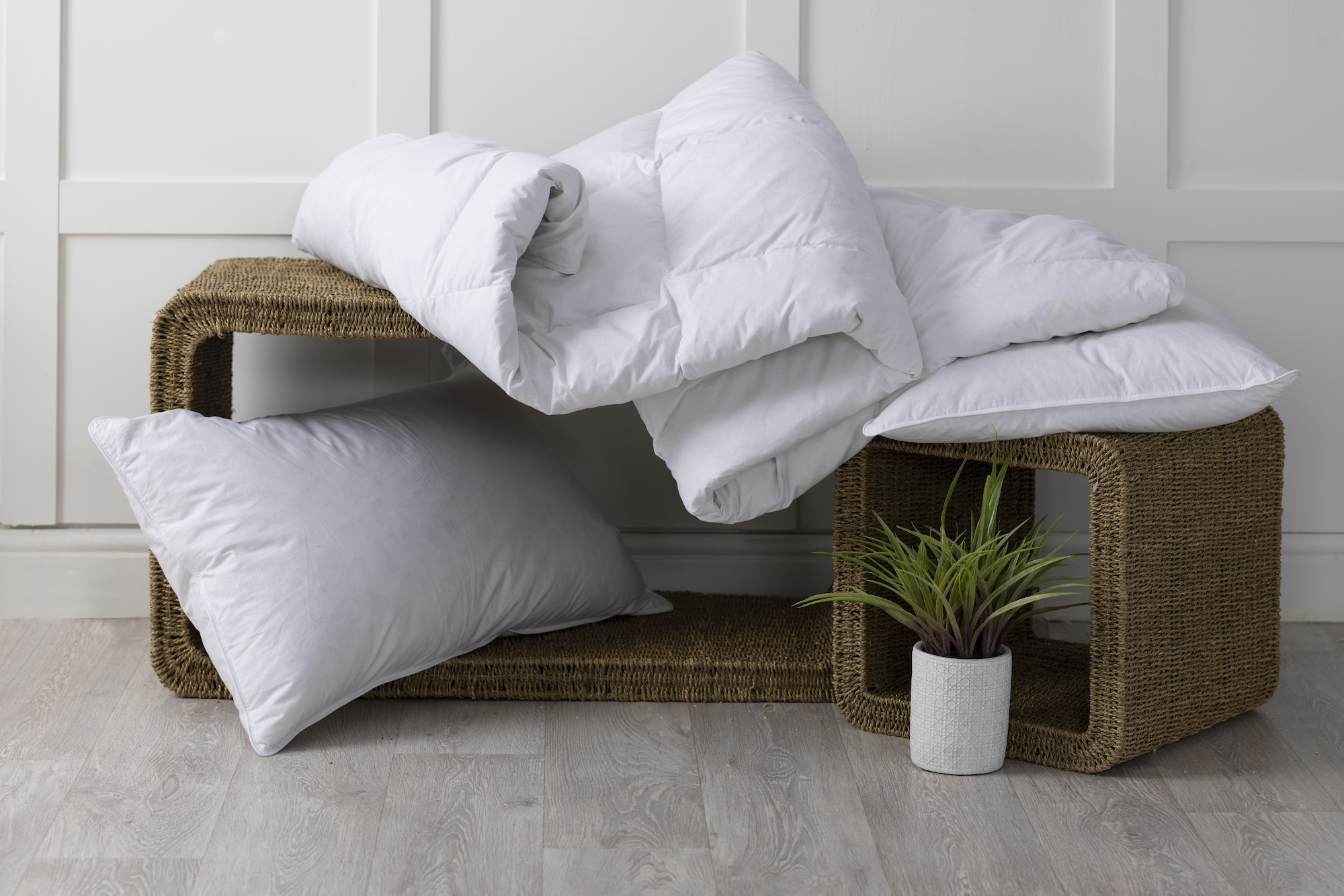
Linen bedding does best at 40°C on a gentle cycle. Linen is a naturally durable fibre, but high spin speeds and very hot washes can cause it to shrink and lose its characteristic softness. Unlike Cotton, linen should not go in on a heavy duty Cotton cycle even though both are natural fibres. A warm 40°C wash with a low-to-medium spin speed is ideal.
Wool and natural fibre bedding, including Wool-filled duvets and toppers, needs particular care. Most Wool items should be washed at 30°C or 40°C maximum on a dedicated Wool or delicates cycle with a very low spin speed. High temperatures cause Wool fibres to felt and shrink irreversibly. Always check the care label on Wool-filled products before putting them in the machine, as the outer casing fabric and the inner filling may have different care requirements, and some Wool-filled products are dry-clean only.
Silk bedding is the most delicate of all. Silk pillowcases and sheets should be washed at no more than 30°C, always on a delicates or silk cycle, and ideally in a mesh laundry bag to prevent snagging. Biological detergent is a firm no for Silk, as the enzymes can break down the protein-based fibres. Use a dedicated silk or delicate-wash product, and never tumble-dry silk bedding.

Bamboo and bamboo-blend bedding sits comfortably at 30°C to 40°C on a gentle cycle. Like Silk, Bamboo is sensitive to high temperatures and aggressive wash cycles, which can reduce its natural breathability over time. A mild detergent and low spin speed will keep Bamboo bedding feeling soft wash after wash.
What temperature kills dust mites in bedding?
If you or anyone in your household suffers from allergies, asthma or eczema, the question of dust mites in bedding becomes far more pressing than simply keeping sheets looking clean. Dust mites are microscopic creatures that live in bedding, mattresses and upholstery, feeding on shed skin cells. They don’t bite, but the proteins in their droppings are among the most common triggers of allergic reactions and respiratory symptoms in the bedroom.
The critical temperature for killing dust mites is 60°C. According to Allergy UK and published clinical research, all house dust mites are killed at water temperatures of 55°C and above, with 60°C recommended as the wash temperature to ensure complete eradication. This is why the guidance throughout this article consistently recommends 60°C for regular bedding washes rather than the more energy-efficient 40°C that many people default to.
The nuance worth understanding is this: washing at lower temperatures, such as 30°C or 40°C, will temporarily wash the allergen away because dust mite allergen dissolves in water. However, any mites that survive will simply begin producing more allergen within a short period. If allergy management is your goal, lower-temperature wash is genuinely insufficient,nt regardless of how good your detergent is.
For allergy sufferers, the practical regime should be weekly 60°C washes for all sheets and pillowcases, monthly 60°C washes for mattress protectors, and the use of allergen-barrier covers over mattresses, pillows and duvets. If your Wool or natural fibre duvet cannot be washed at 60°C, placing it in a tumble dryer on a hot setting for at least 30 minutes can also kill mites. Sunlight is another natural ally here, as UV exposure helps kill bacteria and mites, which is why line-drying bedding outdoors on a sunny day offers genuine hygienic benefits beyond simply getting things dry.
One important caveat: if your bedding’s care label specifies a maximum wash temperature below 60°C, always follow that instruction. A damaged or shrunken duvet cover that has been washed at too high a temperature is not a fair trade for killing dust mites. In these cases, the better approach is to use certified allergen-barrier covers and wash those at 60°C instead.
What temperature should I wash a mattress topper on?
Mattress toppers benefit from a good wash every month or so to remove any sweat or dirt, keeping your bed lovely and clean for the perfect night’s sleep.
Mattress toppers often need to be washed at a lower temperature because they contain high-loft fillings such as Wool, soft polyester or chipped Foam. If you wash these at a high 60-degree temperature, they can shrink and warp.
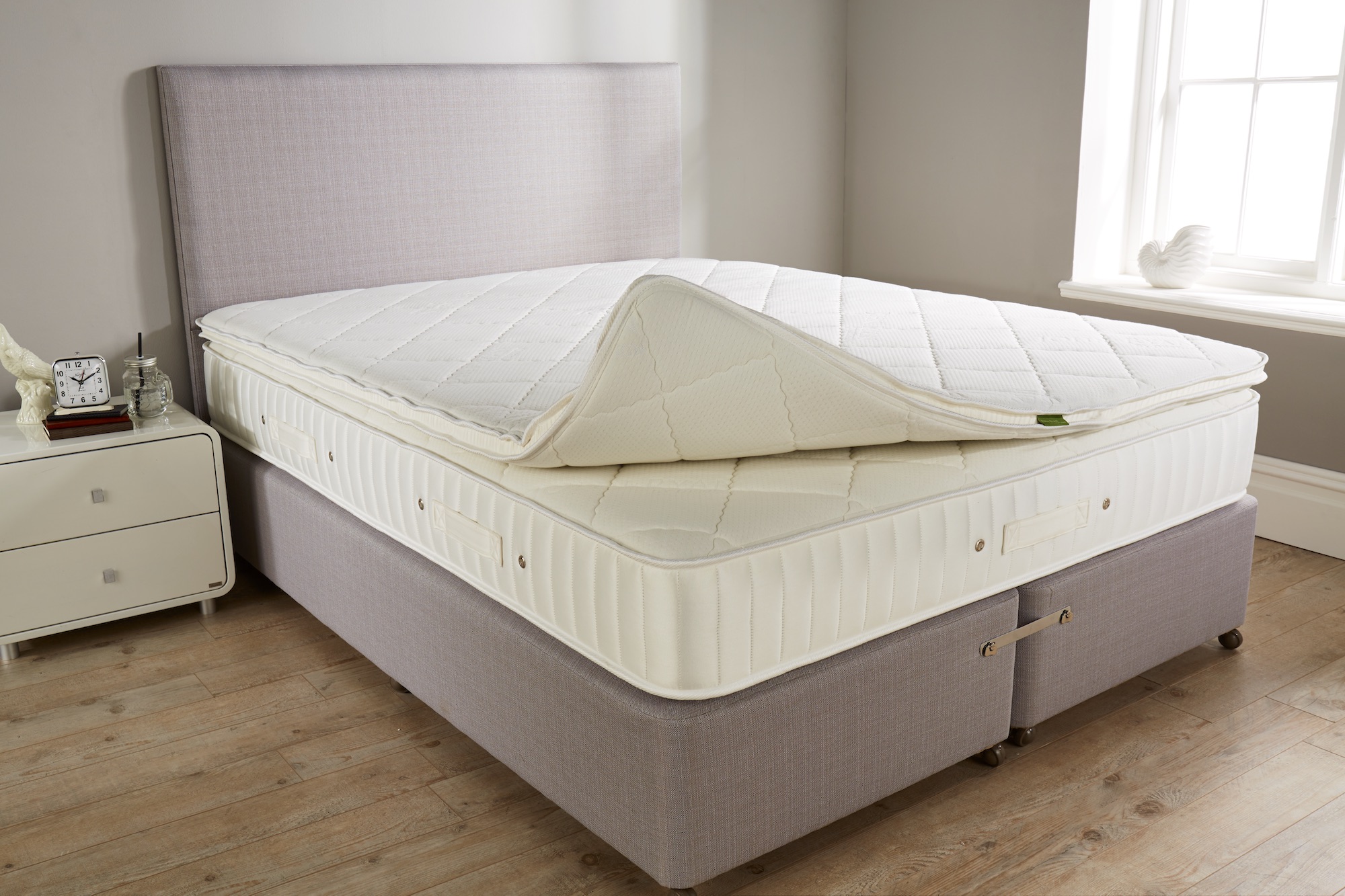
The best temperature to clean a mattress topper is 40 degrees on a short cycle with a low spin speed. High washing machine spin speeds can cause the fibres to shift and move about within the topper. A shorter cycle reduces the risk of fibres warping or shrinking during the wash.
How to revive a lumpy or compressed mattress topper
If you have a polyester mattress topper that has compressed or turned lumpy, there is a cure. Put your topper on a 40-degree wash after checking that it’s machine-washable and not dry-clean-only. Then put it in a tumble dryer on a gentle heat or warm air setting for 30 minutes to re-fluff it.
The gentle action of the dryer will help shake out the contents of the mattress topper and better spread them back into an even position. This can remove lumps and bring your topper back to life, saving you money and reducing the amount of bedding going to landfill.
What temperature should I wash pillows at?
Pillows are arguably the most neglected item in a bedroom cleaning routine. Yet they’re also among the most important from a hygiene perspective, given they’re in direct contact with your face for 7 to 9 hours each night. Most people wash their sheets regularly but leave their pillows for months at a time, where dust, sweat, skin oils, nd bacteria really accumulate.
Most synthetic fibre and hollow fibre pillows can be machine-washed at 60°C on a gentle cycle, provided you check the care label first. Always wash two pillows together to keep the drum balanced, as washing a single pillow can cause the machine to vibrate excessively and may affect the fill distribution inside the pillow.
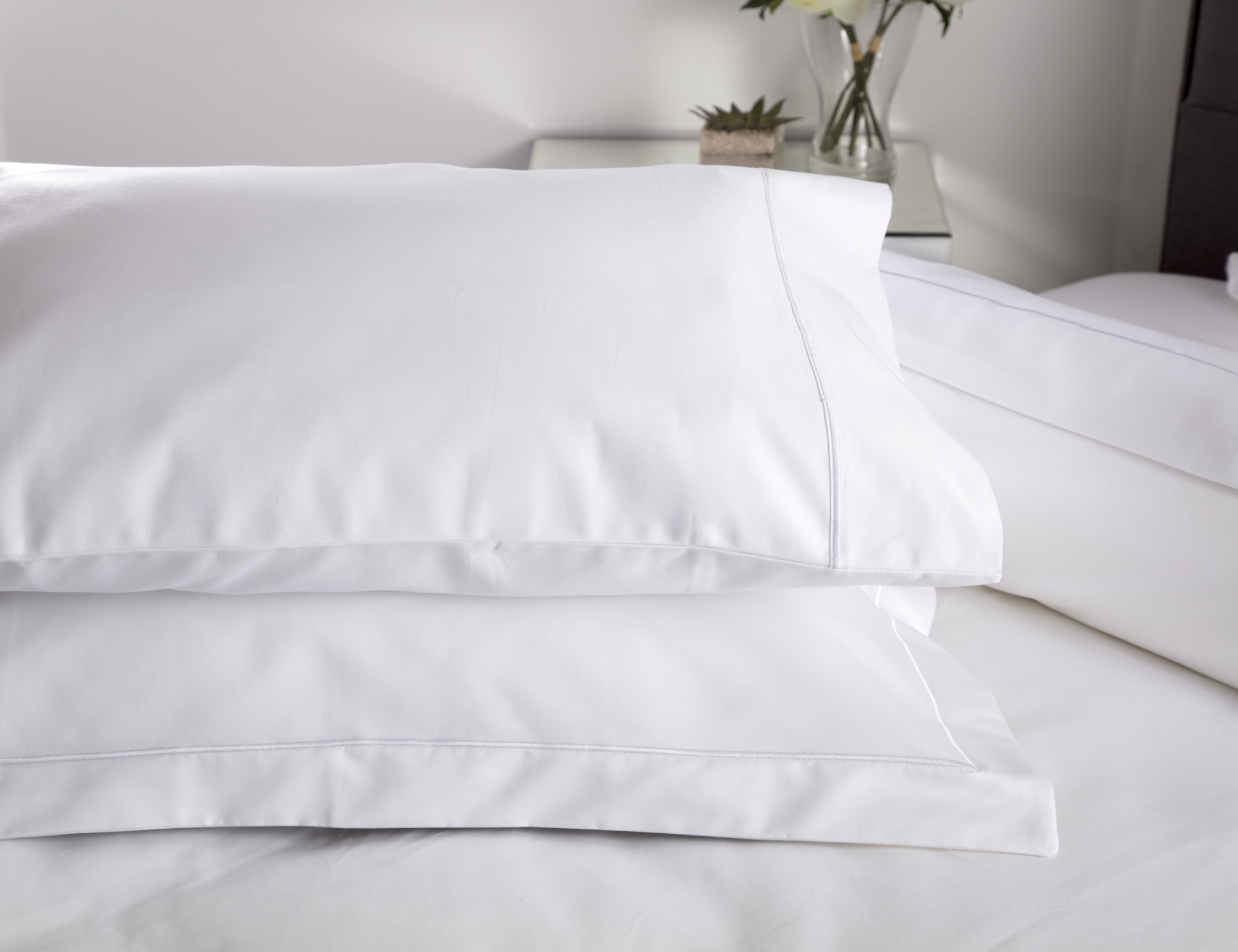
Down and feather pillows require more care and are typically best washed at 40°C on a delicates cycle, with an extra rinse cycle to make sure all detergent is thoroughly removed from the clusters. Damp feather fill left with detergent residue can develop an unpleasant odour, so an extra rinse is time well spent. After washing, tumble dry down pillows on a low heat with a couple of clean tennis balls or dryer balls to help break up any clumps and restore the loft.
Memory Foam pillows cannot be machine-washed at all, as the washing machine’s agitation and moisture will damage the Foam structure irreversibly. Spot-clean memory Foam with a damp cloth and mild detergent, then allow to air-dry completely before use. As a general rule, pillows should be washed every 3 to 4 months and replaced entirely every 1 to 2 years, as even thorough washing cannot remove the full accumulation of dust mites and allergens that build up within the fill over time.
Cleaning a mattress comforter or throw
Mattress comforters differ from toppers in that a comforter is a thicker blanket placed on top of your bedding to keep you warm. They are more commonly found in the USA. In the UK, we call these blankets or bed throws, which are a more decorative layer of bedding used to style your bedroom or add more warmth to your sheets or duvet.
Mattress comforters or throws often have very specific cleaning instructions. Some decorative comforters or throws require dry cleaning, so always check the care label before washing. Given that a comforter sits on top of the mattress and bedding rather than directly against your skin, it doesn’t need as thorough a cleaning as a sheet or pillowcase. For the most part, if your mattress comforter is machine-washable, a 30-degree quick wash followed by a line dry is enough to keep it clean and fresh.

Using a mattress protector to keep your bedroom clean
Another top tip is to make sure you’re using a mattress protector. We cannot stress this enough. Given that everyone sweats and perspiresate night, this is the only sensible way to avoid sweat and fluids soaking into the mattress, breeding bacteria and other potential allergens that could end up disturbing your sleep or, worst case, making you ill.
You cannot put your mattress in the washing machine, so the next sensible step is to use a removable mattress protector that can then be washed at 60 degrees, acting as a barrier between any fluids and your lovely mattress. This not only keeps your bedroom cleaner and helps you establish a healthier sleep routine, but also prevents sweat from corroding your mattress spring unit or damaging your upholstery fibres.

Mattress protectors are relatively inexpensive and should be washed weekly alongside your bedding. Replace your mattress protector every year to keep your mattress looking and feeling as good as new.
The benefits of a mattress protector
- Mattress protectors stop your mattress from becoming stained or damaged from sweat and bodily fluids.
- Protectors can bemachine-washedd helping to keep your mattress hygienically clean.
- Mattress protectors extend the life of your mattress by acting as a barrier to moisture.e
- Mattress protectors can keep your mattress smelling fresh far longer than going without one.
How often should I wash my bedding?
The first thing to say is that it depends on how often you sleep in your bed. With different lifestyles and work schedules, some people may spend only part of their week at home, so personal judgment comes into play.
As a rule of thumb, your bedding should be washed every seven nights of sleep.
Remember those 49 to 63 hours of contact over seven nights? That’s why, every seventh night, you should wash your bedding without fail. If you’re short on time, prioritise the sheet you lie on directly before worrying about the duvet cover. However, to ensure all bacteria are killed and your bedroom is genuinely clean, washing all sheets and airing your duvet is essential.

Should I use biological or non-biological washing powder when cleaning my bed sheets?
Biological and non-biological washing powders are two types of laundry detergents that differ in their formulation and usage. When it comes to washing bedding, there is a clear preference for biological washing powder, which is far more effective at breaking down stains, sweat and blood that may be found on bedsheets and mattress toppers.
The main difference between them is the presence or absence of enzymes. These are natural proteins that help break down stains and dirt. Here are the key differences to consider when choosing your bedding detergent.
Enzymes: Biological washing powders contain enzymes that break down proteins, starches, and fats, making them highly effective at removing tough stains like blood, grass, and food. Non-biological washing powders do not contain enzymes and rely on other chemical ingredients for stain removal.
Sensitivity: Biological washing powders may cause skin irritation or allergic reactions in some people, especially those with sensitive skin, due to enzymes. Non-biological washing powders are generally considered gentler on the skin and are often recommended for those with sensitive skin or allergies.
Temperature: Biological washing powders are typically designed to work best at 40°C and above, where the enzymes are most active. Non-biological washing powders can usually be used at lower temperatures, but won’t remove sleep stains as effectively. Importantly, if you wash above 60°C with a biological powder, you risk deactivating the very enzymes that make it work, so the sweet spot for bio detergent is 40°C to 60°C.
Eco-friendliness: Non-biological washing powders are generally considered more environmentally friendly as they contain fewer enzymes and other chemicals. However, needing to wash bedding more times with a non-bio detergent to achieve the same result can be a false economy for the environment.
Odour: Biological washing powders may have a stronger scent because enzymes break down organic compounds, such as sweat and urine, found on bedsheets. Non-biological washing powders may have no scent or a mild, non-chemical scent.
Stain removal: Biological washing powders are generally more effective at removing tough protein-based stains, such as sweat, saliva, and skin oil, than non-biological washing powders.
Always read and follow the instructions on your washing powder packaging. The best option for the cleanest sheets overall remains biological washing powder at 40 degrees or higher, up to 60 degrees.

Caring for natural fibre bedding: what temperature is safe?
Natural fibre bedding, including Wool duvets, Cotton toppers and natural fibre pillows, has become increasingly popular as people move away from synthetic alternatives. We make a range of Cotton bedding here in the UK, including our Origins, Artisan and Luxury Artisan collections, and one of the most common questions we are asked is how to wash natural bedding without damaging it.
The golden rule for natural fibres is that gentler settings are nearly always better for temperature and spin speed. Our Cotton bedding ranges are designed to be washed at 40°C on a Cotton cycle, which is sufficient to keep them clean and hygienic under normal use. For white Cotton bedding that needs a deeper hygiene wash, 60°C remains safe for most pure Cotton items, but always check the specific care label on your product first.
Wool-filled duvets and toppers are a separate consideration. Wool is a remarkably self-regulating fibre that resists odour and stays fresher for longer than synthetic alternatives, which means it needs washing less frequently in the first place. When a Wool duvet does need washing, the care label should always be your first reference point, as construction methods vary. Many Wool-filled products are dry clean only, while others can be washed carefully at 30°C on a Wool cycle. Never use biological detergent on Wool, as the enzymes that make bio powders so effective on Cotton will actively damage Wool fibres.
For any natural fibre bedding, avoid fabric softener entirely. Natural fibres like Cotton, Wool and Linen have their own inherent softness and breathability that fabric softener can coat and diminish over time. A good quality mild detergent in the correct quantity is all you need. Using too much detergent, regardless of the temperature, leaves residue on natural fibres that can make them feel stiff or irritate sensitive skin.
Washing bedding at lower temperatures: when is it actually acceptable?
There is a genuine tension between hygiene best practice and the desire to reduce energy bills and environmental impact. The debate between 40°C and 60°C washes comes up frequently, and the honest answer is that it depends on your priorities and circumstances.
If you are in good health, have no allergies, change your bedding every week, wear pyjamas in bed and use a mattress protector that is washed separately. A 40°C wash for your sheets and duvet cover is quite reasonable for routine maintenance. At 40°C with a high-quality biological detergent, the enzymes work most effectively, breaking down sweat, skin oils, and the proteins found in common allergens. A biological detergent at 40°C can be more effective for stain and odour removal than a non-biological detergent at 60°C, which surprises many people.
However, if someone in the household has been ill, if there are allergy or asthma sufferers, if your bedding has not been washed for more than a fortnight, or if you tend to sweat heavily during the night, then 60°C is the right choice. The same applies if you share your bed with a pet. A cold or 30°C wash for bedding, while useful for very delicate fabrics, is generally not sufficient for regular hygiene maintenance. At 30°C, bacteria are not reliably killed, and the wash relies entirely on detergent action to remove allergens, which it does only temporarily.
One practical middle ground that many people find works well is alternating: a 40°C wash for the routine weekly change, and a 60°C wash once a month for a thorough hygiene reset. This balances running costs and fabric longevity with genuine cleanliness, and is particularly sensible when combined with a good mattress protector washed at 60°C every week.
How to air your duvet
If you use a duvet in a cover, a weekly airing is also advisable. This helps remove any dampness that may have built up in a warm bedroom and lets any dust fall away from the duvet, which can then be vacuumed up as part of your regular bedroom cleaning routine.
You can either hang it over a bannister or simply give it a good shake with a window open and then leave it hanging over a chair for an hour or so. The easiest way to do this is while you’re washing your bedding. A clothes horse or drying rack can be useful here, too.
By ventilating your bedroom with an open window, you’re helping to keep the duvet dry and free from the bacteria that love damp, warm conditions.
How can I keep my bedroom clean to avoid illness?
We are often asked whether someone’s bedroom could be making them ill, mainly due to allergies or respiratory problems during the night. Waking up wheezing, coughing or with generally disturbed sleep could well be down to your mattress’s cleanliness.
A lax cleaning regime in the bedroom can lead to an increase in dust, bacteria, dampness and other unwanted conditions, none of which are ideal for sleep or wellbeing. We have written a detailed article here on how to keep your bedroom clean in four easy steps.
Keeping your bedroom healthy can be achieved relatively easily by taking the following steps:
- Vacuum your mattress monthly on both sides with a small vacuum attachment to remove dust and dead skin cells
- Use a mattress protector which can be washed at 60 degrees to kill bedroom bacteria
- Turn and rotate your mattress monthly to keep it well-aired and extend its life
- Clean under your bed frame or divan regularly, a step most people forget entirely
- Use a biological detergent where possible on a 60-degree wash for sheets and pillowcases
Why is there a resurgence of bed bugs?
With recent reports of a global resurgence of bed bugs, many people are understandably panicking about infestations in their homes. There has been a flurry of headlines documenting this worldwide outbreak, but why are they seemingly everywhere all of a sudden?
According to pest control experts, the reason for the increase in reports of bed bugs is likely to be a spike in international travel post-pandemic, alongside a rise in second-hand furniture sales, a fall in people being able to afford pest control because of the cost-of-living crisis, and a hotter-than-usual recent period, as bed bugs thrive in warmer conditions. Bed bugs are also becoming more resistant to the insecticides traditionally used to exterminate them.
Data from the British Pest Control Association and Rentokil show that bed bug infestations in Britain have risen by 65% year-on-year, with roughly 12,000 bed bug-related callouts each year. This was before the Paris outbreak. Bed bugs have long been a problem in major cities worldwide, with Paris launching its anti-bedbug campaign three years ago after noticing a significant increase in the insects.
How do bed bugs travel?
Reports of bed bugs usually rise in summer as people travel more. Bed bugs latch onto humans, clothes and suitcases and can travel from place to place this way. The bugs tend to come out at night, attracted to the heat and body odour of a person sleeping, and they can sense where someone is by the carbon dioxide in their breath.
Bed bugs can spread rapidly, with female adults laying up to 10 eggs per day and between 200 and 500 in their lifetimes. Despite their name, they are not only found in beds. They can often be found under cracks in skirting boards, behind wallpaper, in furniture, or even in electrical sockets and fittings. Unfortunately, as insects become resistant to insecticides, prevention is key.
How do I prevent a bed bug infestation?
If you keep your bedroom, bedsheets and mattress clean and hygienic, you are less likely to suffer from an infestation. Follow the tips provided in this guide to clean your sheets effectively and protect your mattress from sweat, dirt and other bodily fluids.
If travelling, keep your suitcase off the bed and store it on a luggage rack if one is provided. Check the mattress and sheets thoroughly for bed bugs before sleeping in a hotel room, and make sure you pack a spare bag to seal your dirty clothing in once worn. If possible, keep your room cool at night, as, according to the British Pest Control Association (BPCA), the ideal temperature for an adult bed bug to thrive is between 70 and 90°F. Using hard-cased luggage where possible will also help, as bed bugs find it more difficult to latch onto hard materials.
Upon returning home from travelling, unpack your clothes away from your bedroom, ideally on hard floors, as bed bugs may be harder to spot on carpet. Wash all your clothes, even those you didn’t wear, on the hottest cycle the fabric allows. Then check your suitcase thoroughly for any evidence of an infestation before storing it away.
Summary
Bedroom cleanliness and hygiene really do make a difference, not only to your sleep but to your health in general. By washing bedding every 7 sleeps at 60 degrees, you can help reduce allergens and potential respiratory issues in the bedroom. Choosing the right temperature for each fabric type means your bedding lasts longer and stays genuinely clean, not just appearing clean. Using a mattress protector will help keep both you and your mattress in excellent condition by acting as a barrier against sweat and the bacteria that would otherwise grow within your mattress over time. Lastly, vacuuming, dusting, and airing your bedroom regularly will help ensure a relaxing night’s sleep.
If you need more mattress help when choosing a new bed, why not give our small, friendly team a call on 0161 437 4419 or drop us a message below?

Dreaming of the perfect nights sleep?

Ask us a question
There are over 6000 questions and answers submitted by you on all questions about mattresses and bed problems. Enter a keyword such as Vi Spring, John Lewis beds, bad back or Memory Foam and see if your question has already been answered.
If you can’t find an answer in knowledge hub, ask a new question. We aim to respond to all questions within one working day.
Newsletter
Enter your email to join our newsletter. We’ll send you occasional news and mattress expertise.