







Mattress Construction
March 2026Bespoke Mattresses UK: The Complete Guide to Truly Personalised Sleep
The reality is rather different. The core thing a bespoke mattress actually does give each sleeper support calibrated specifically to their body weight, firmness preference, and sleeping position is achievable without stepping inside a Knightsbridge showroom. This guide explains how it is achievable, what you are actually paying for at every price point, and where the genuine engineering differences lie.
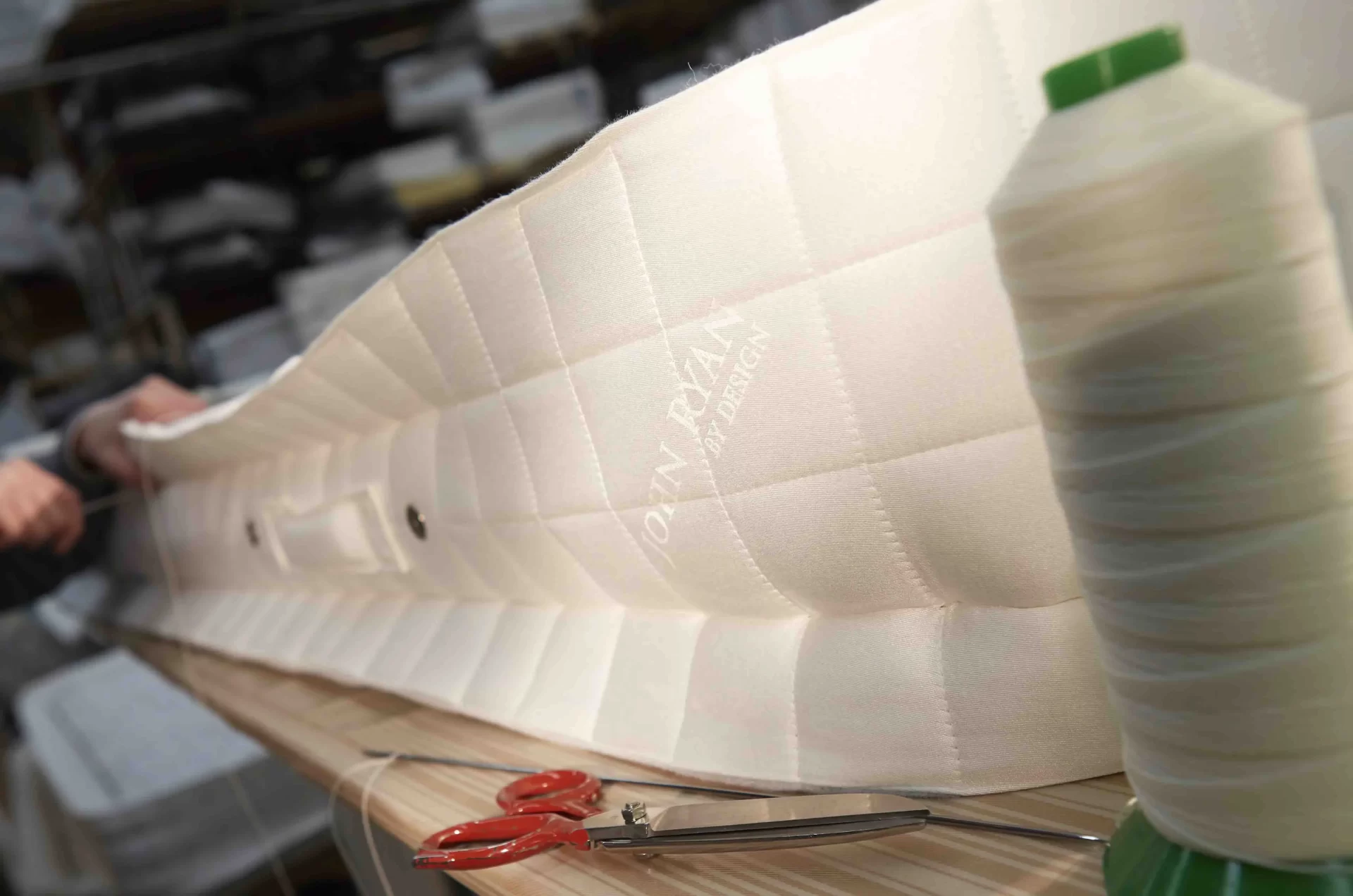
We have spent over 25 years making mattresses here in Manchester. We know what goes into a truly personalised sleep surface because we build them. We also know that the bespoke mattress market is one of the most misleading corners of the UK bedding industry, and that consumers researching it deserve straight answers.
Contents
- What is a bespoke mattress?
- True bespoke vs semi-bespoke: understanding the difference
- The Vispring bespoke process explained
- Who actually needs a bespoke mattress?
- The £1,500 alternative: how zip and link achieves the same result
- Split tension: bespoke support by another name
- Custom sizing and non-standard dimensions
- John Ryan bespoke options
- Price comparison: bespoke for every budget
- Frequently asked questions
What is a bespoke mattress?
The word bespoke comes from the tailoring trade. A bespoke suit is cut from scratch to your exact measurements, every seam, every dart, every panel shaped around the specific geometry of your body. No two bespoke suits are identical, and no generic sizing chart is involved. That is the origin of the word, and it is a useful reference point when evaluating what the mattress industry actually means by it.
A genuinely bespoke mattress would, by that definition, be constructed from scratch around the specific requirements of the individual sleeping on it. The spring tension would be calculated from their body weight.
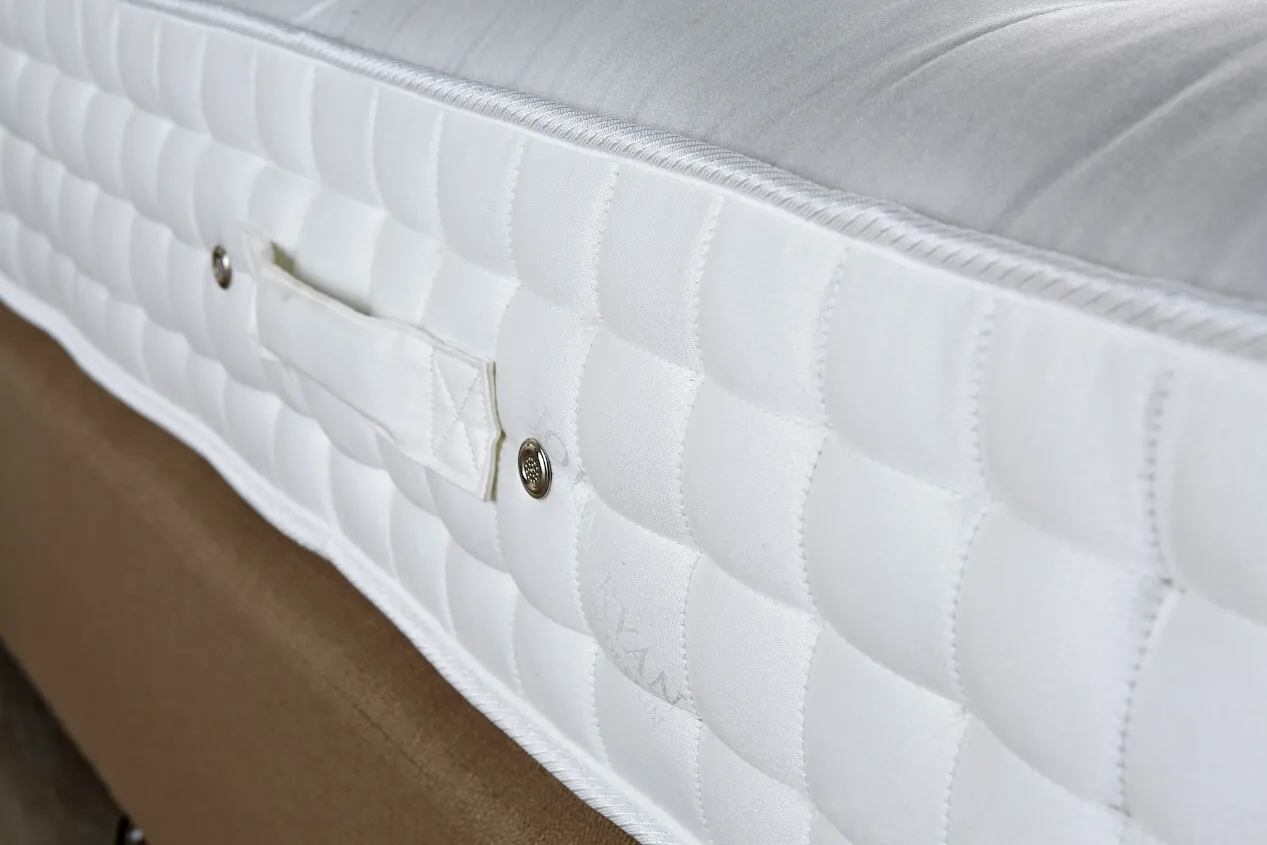
The upholstery layers would be selected to suit their preferred sleep position and any relevant medical considerations. The dimensions would reflect the exact space available in their bedroom. The firmness on each side of the mattress, if it is shared, would be engineered independently for two different people with different bodies.
That level of personalisation does exist in the UK market. It is what manufacturers like Vispring, Savoir Beds, and a small number of independent makers genuinely offer. It is also expensive and time-consuming, and it requires you to visit a showroom, speak with a specialist, and often wait several weeks for delivery.
For most couples with different support requirements, the practical outcome of all that process a mattress with different spring tensions on each side can be achieved far more directly and at a fraction of the cost.
The first question worth asking is therefore not “where can I buy a bespoke mattress?” but rather “what specific sleep problem am I trying to solve?” Because the answer to that question very often points toward a solution that the high-end bespoke market would never suggest to you.
True bespoke vs semi-bespoke: understanding the difference
When you are researching the bespoke mattress market in the UK, you will encounter three broadly distinct categories of product, and the language used to describe them is often interchangeable in ways that serve retailers more than consumers.
True bespoke: made to individual specification
True bespoke mattresses are built from scratch to a customer specification developed through a detailed in-person consultation. The spring unit is selected from a range of tensions, gauges, and configurations. The upholstery layers are hand-chosen based on the customer’s body weight, sleeping position, thermal preferences, and any relevant physical conditions. The dimensions can be entirely non-standard. In the UK, this category includes Vispring’s made-to-order process, Savoir Beds, and some independent manufacturers. Prices start at around £8,000 for king-size and rise into five figures for flagship models.
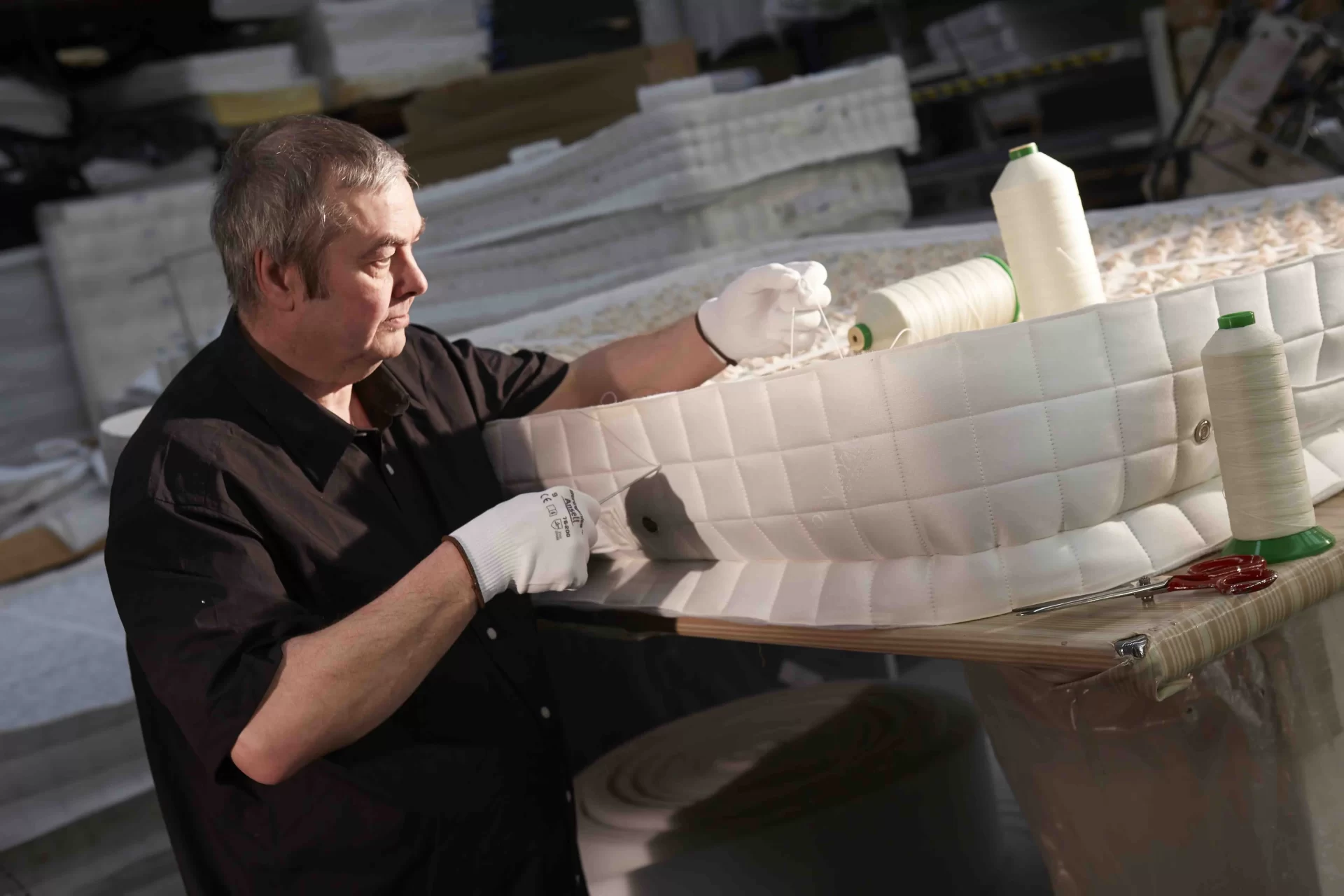
The defining characteristic of true bespoke is that the product does not exist until the order is placed. It is not a standard mattress selected from a range; it is a mattress built around the consultation outcome. Lead times of four to twelve weeks are typical.
Semi-bespoke: configured from standard components
Semi-bespoke mattresses, sometimes called “made to order,” are built from a library of standard components configured to meet customer requirements. The spring unit typically comes in two or three tension options, the dimensions can often be adjusted within defined parameters, and the upholstery selection may be limited to a handful of pre-approved combinations. This category includes most of the premium natural-fibre mattresses sold by UK direct manufacturers, including several of our own models from the Artisan range. Prices typically range from £1,200 to £4,000 for a king-size.
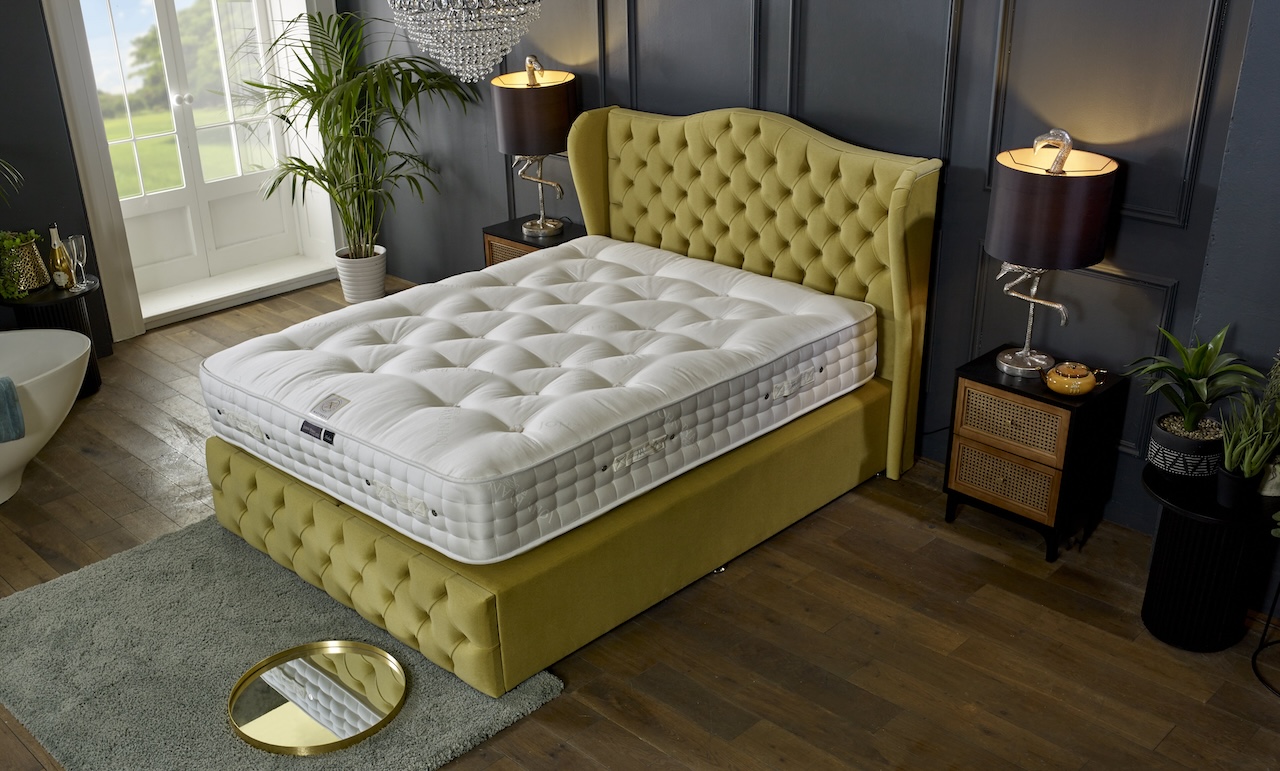
Semi-bespoke offers meaningful personalisation at a manageable price point. The trade-off is that the number of possible configurations is finite; you are selecting from a menu rather than writing the menu yourself.
Mass customisation: options within a standard product
The third category is what most high street retailers and many online brands actually sell, even when they use the word “bespoke” in their marketing. A mattress with a firm or medium option is not bespoke. A mattress with a choice of two fabric covers is not bespoke. Selecting your size at checkout is not bespoke. These are configuration choices within a mass-produced product, and they represent the least personalised end of the spectrum, regardless of how the marketing describes them.

The distinction matters because the premium attached to the word “bespoke” in the mattress market has become completely decoupled from the manufacturing reality behind it. A mattress described as bespoke, made in identical batches and then given a customer-name label at the warehouse, is not bespoke in any meaningful sense. Understanding which category a product actually belongs to is the most useful thing you can do before spending money.
The Vispring bespoke process explained.
Vispring is the most recognisable name in the UK bespoke mattress market, and their process is worth examining in detail, both because it represents a genuine example of high-quality personalised manufacturing and because understanding what you are actually paying for at their price points makes the alternatives easier to evaluate.
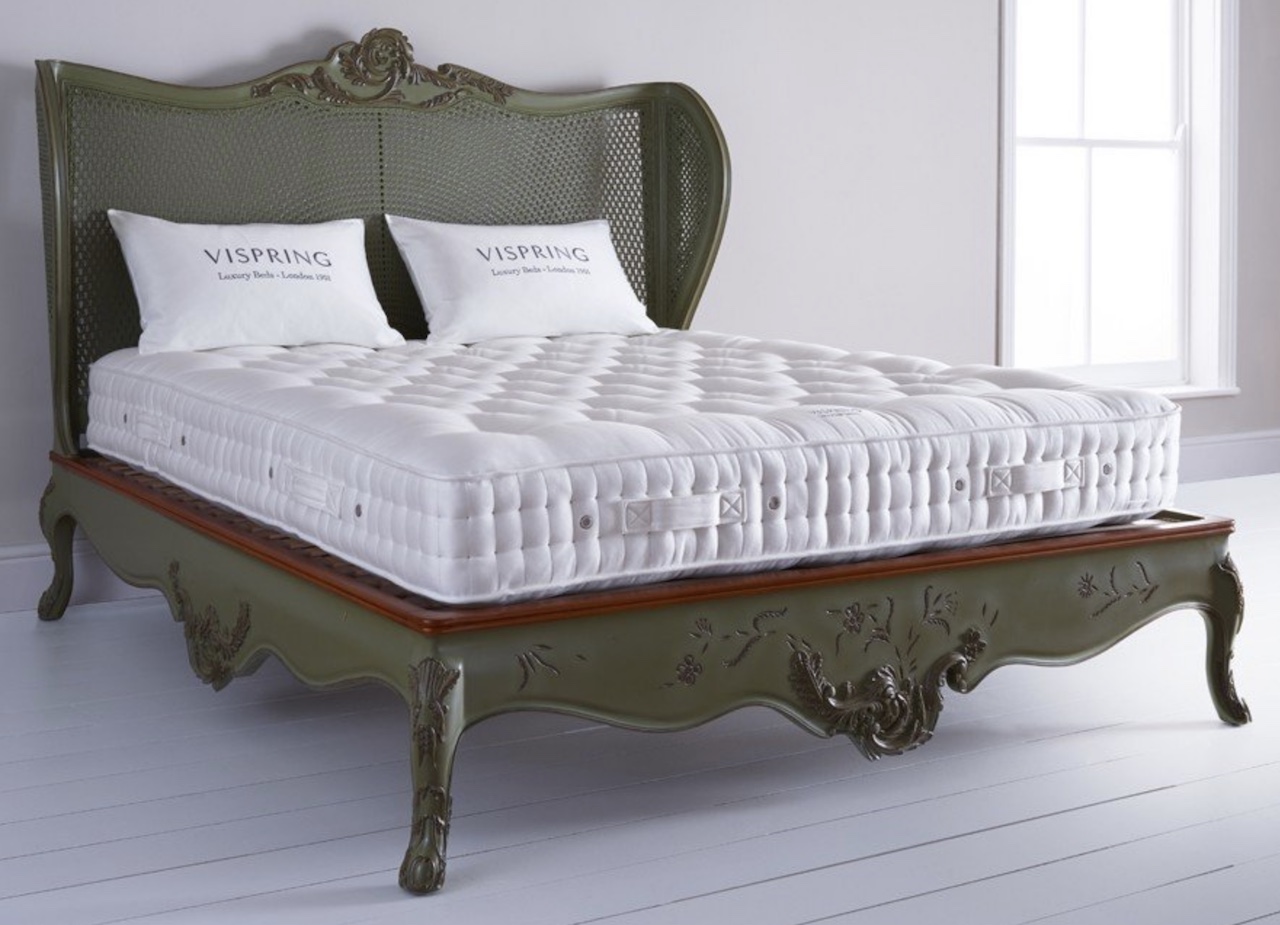
Founded in Plymouth in 1901, Vispring was the company that introduced the pocket spring to the UK market. Every mattress they make is still built by hand in Devon, using calico-encased vanadium steel pocket springs arranged in a hand-nested honeycomb configuration. All models are two-sided and fully turnable. Their 30-year guarantee, the longest in the UK market, is a genuine signal of confidence in long-term durability.
Spring selection across the range
One of Vispring’s most-cited advantages is the breadth of its spring programme. The brand works with a considerable number of spring configurations across its range, varying in gauge, diameter, height, and tension profile. Their entry models use a single layer of springs; their Luxe Collection models use double- or triple-spring layers with different gauges interleaved to create a more sophisticated response curve.
For customers ordering bespoke through a Vispring showroom, spring selection is part of the consultation. The specialist will assess body weight, preferred sleep position, and whether the mattress is for one or two sleepers. From that consultation, specific spring configurations will be recommended, and for king size and above, split tensions between the two sides are available as standard, not as a premium upgrade.
Upholstery and natural fibre selection
Vispring’s material progression across the range moves from Wool and Cotton in the entry-level Elite, through Horsehair additions in the Classic Collection, to Cashmere, Silk, Mohair, Moosburger Austrian Horsetail, and, in the flagship Diamond Majesty, vicuña, the rarest natural textile in the world. Each of these materials has different thermal, resilience, and pressure-distribution properties, and the hand-selection process at the showroom level involves matching these properties to the individual customer’s stated preferences.

The upholstery quantities remain largely undisclosed in published specifications, which is one of the substantive criticisms of Vispring’s current marketing approach. Verified layer weights are available for some models. The Herald Superb, for example, uses approximately 1,000 GSM bonded Wool/Cotton, 1,200 GSM Horsehair, and 1,200 GSM blended Wool/Cotton, but Vispring no longer publishes a comprehensive GSM breakdown across the range.
Custom sizing options
Vispring can produce mattresses to non-standard dimensions, which is one area where true bespoke genuinely earns its name. Antique bed frames, period properties with alcove beds, and converted loft spaces often require mattresses that no standard size will accommodate. For those customers, the ability to specify exact centimetre dimensions is a genuine practical requirement, not a luxury indulgence. Lead times for non-standard sizes are typically four to six weeks, and the premium for custom dimensions varies by model.
What does a bespoke Vispring cost
Vispring’s pricing in 2026 covers an exceptionally wide range. Their entry-level Elite starts at £1,870 for a king-size, a price that reflects genuine handmade construction but does not include any of the premium natural fibres the brand is best known for. To access Horsehair upholstery, you need to move to the Baronet Superb at £2,635. The Regal Superb, which many consider the sweet spot of the Classic Collection, is currently priced at £4,675 in king size.
For customers wanting the full bespoke consultation experience with premium fillings, the Tiara Superb, the entry point to the Luxe Collection, with its double spring layer, is priced at £8,470 in king size. The flagship Signatory Superb reaches £13,400. The Diamond Majesty, which uses Royal Alpaca and, in some configurations, vicuña, starts at £45,310 for a double and reaches £85,585 for a Large Emperor.

That pricing range tells you something important: Vispring’s retail model depends heavily on showroom infrastructure, specialist staff, and the premium attached to an aspirational brand. The manufacturing process for their Classic Collection models hand-nested pocket springs, natural fibre upholstery, and two-sided construction, is not categorically different from the process used by a small number of direct UK manufacturers. The price difference reflects the business model around the product as much as the product itself.
The showroom requirement
One aspect of the Vispring experience that is rarely discussed is the practical requirement to visit a showroom. Vispring sells exclusively through physical retail partners, And So To Bed, John Lewis, specialist independent bed retailers, and their own showrooms. There is no option to order direct, and no option to purchase without engaging with a retail intermediary who has their own margin requirements built into the price you see.
That retail markup is typically 40 to 60% of the final retail price. It is the structural reason why a Vispring mattress costing £4,675 contains manufacturing costs that are a small fraction of that figure. Whether the showroom experience justifies the premium is a genuinely personal decision, but it is one that should be made with full awareness of what is driving the pricing.
Who actually needs a bespoke mattress?
The honest answer is that a smaller proportion of people need true bespoke than the luxury bedding market would have you believe. Most people who think they need a bespoke mattress actually need one of two things: a mattress with split tensions between the two sides, or a mattress in a non-standard size. Both of those requirements can be met with semi-bespoke or zip-and-link solutions at significantly lower prices.
That said, there are genuine scenarios where true bespoke is the right answer.
Extreme weight differences between partners
When two people sharing a bed have a weight difference greater than three stone (roughly 19 kilograms), the spring tension requirements for each sleeper can diverge significantly. A person weighing 10 stone and a person weighing 17 stone have fundamentally different support requirements, and a standard double-sided mattress in any single tension profile will compromise at least one of them.
Split tension, where each side of the mattress has a different spring configuration, is the correct engineering solution to this problem. Vispring offers it; so does our zip-and-link system, which we will cover in detail below.
Medical conditions requiring specific support profiles
Certain spinal conditions, hip replacements, and pressure care requirements can justify a genuinely detailed consultation around spring tension and upholstery composition. If a physiotherapist or consultant has given you specific guidance about the support profile you need, a proper bespoke consultation may be worth the investment, particularly if the recommendation is unusual enough that standard product ranges cannot accommodate it.
Non-standard dimensions
Antique beds, period property alcoves, cabin beds, caravans, and boat berths frequently require mattresses that no standard UK size will fit. If your frame measures 147cm x 193cm, or 165cm x 205cm, or any other dimension outside the standard range, true bespoke or made-to-measure is the only option. Most direct manufacturers, including JohnRyanan, can accommodate non-standard sizes within defined parameters.

Different firmness preferences in a shared bed
The single most common reason people seek bespoke mattresses is also the one most directly addressed by split-tension and zip-and-link solutions. If one partner prefers a firm feel, and the other prefers medium, or if one is a side sleeper requiring more give at the shoulder and hip. In contrast, the other is a back sleeper requiring flatter support, and a split-tension configuration delivers precisely the personalisation you are looking for. It does not require a £8,000 investment to achieve it.
The £1,500 alternative: how zip and link achieves the same result
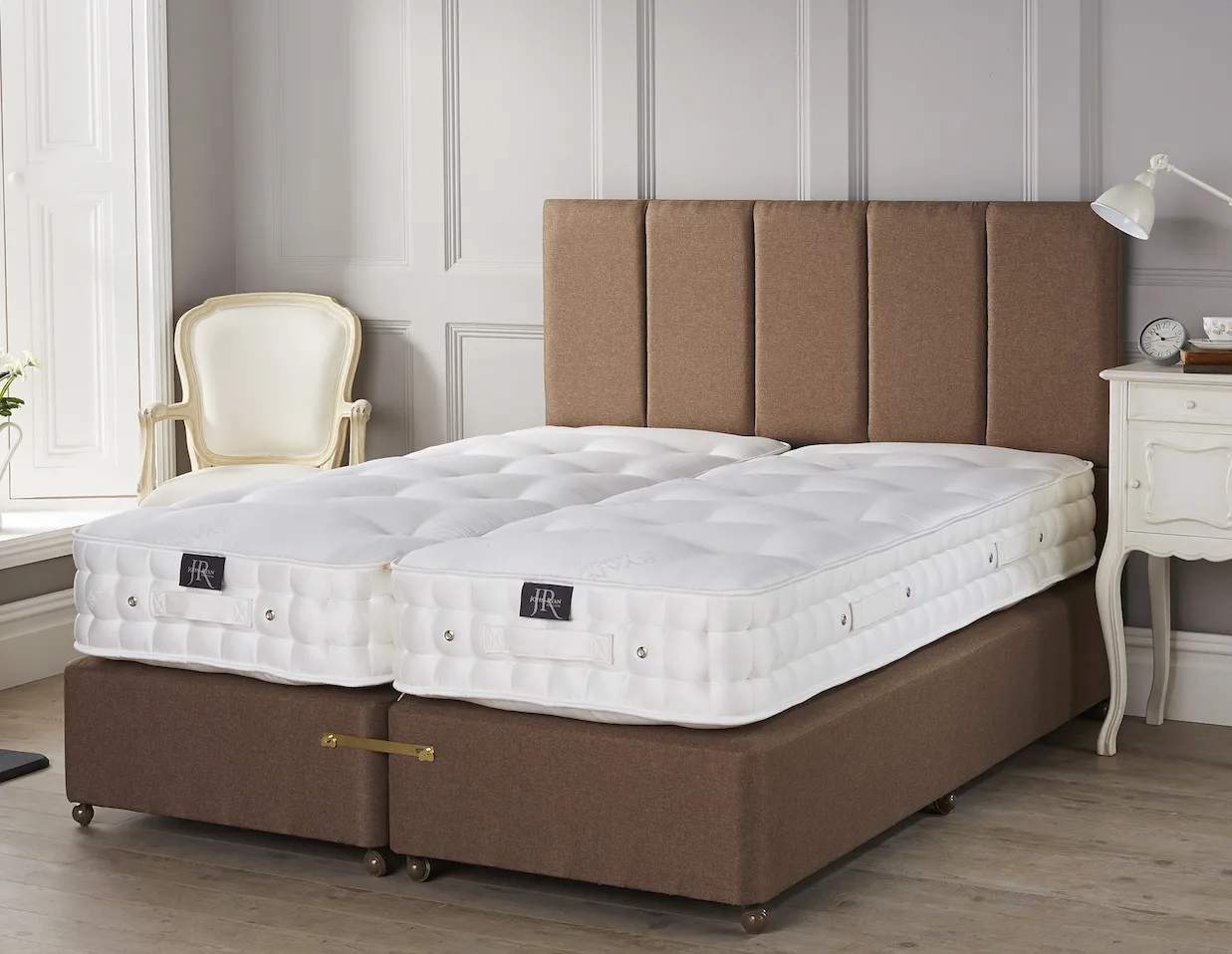
A zip-and-link mattress consists of two independent single mattresses joined along their shared edge by a heavy-duty zip fastening. From the perspective of someone lying on one, it feels like a single mattress; there is no gap, no ridge, and no movement between the two halves. From an engineering perspective, it is two completely separate sleep surfaces that happen to share a bed frame.
That separation is precisely what makes it the most practical answer to the most common reason people seek bespoke mattresses. When each half of a zip and link is built to a different spring tension, the result is functionally identical to what a Vispring bespoke consultation produces for a couple with different support requirements.
Partner A sleeps on a medium-tension spring unit specified for their body weight and sleep position; Partner B sleeps on a firm-tension spring unit specified for theirs. The two halves zip together to form a single sleeping surface: no compromise, no averaging, no guesswork.
How it compares to the Vispring bespoke process
The substantive difference between a Vispring split-tension king-size and a zip-and-link configuration from our Artisan range is not the functional outcome; it is the construction approach, the upholstery specification, and the price. Both deliver independently calibrated support to each sleeper. Both use calico pocket springs. Both are available in two-sided construction. Both can be specified with premium natural-fibre upholstery, including Wool, Cotton, Horsehair, Horsetail, and Cashmere.
Where they differ is in the number of possible spring configurations, the degree of individualisation within each configuration, the brand heritage, and, most significantly, the price. A Vispring king-size with split tensions starts at around £1,870 for the entry-level Elite and rises to £4,675 for the Regal Superb.
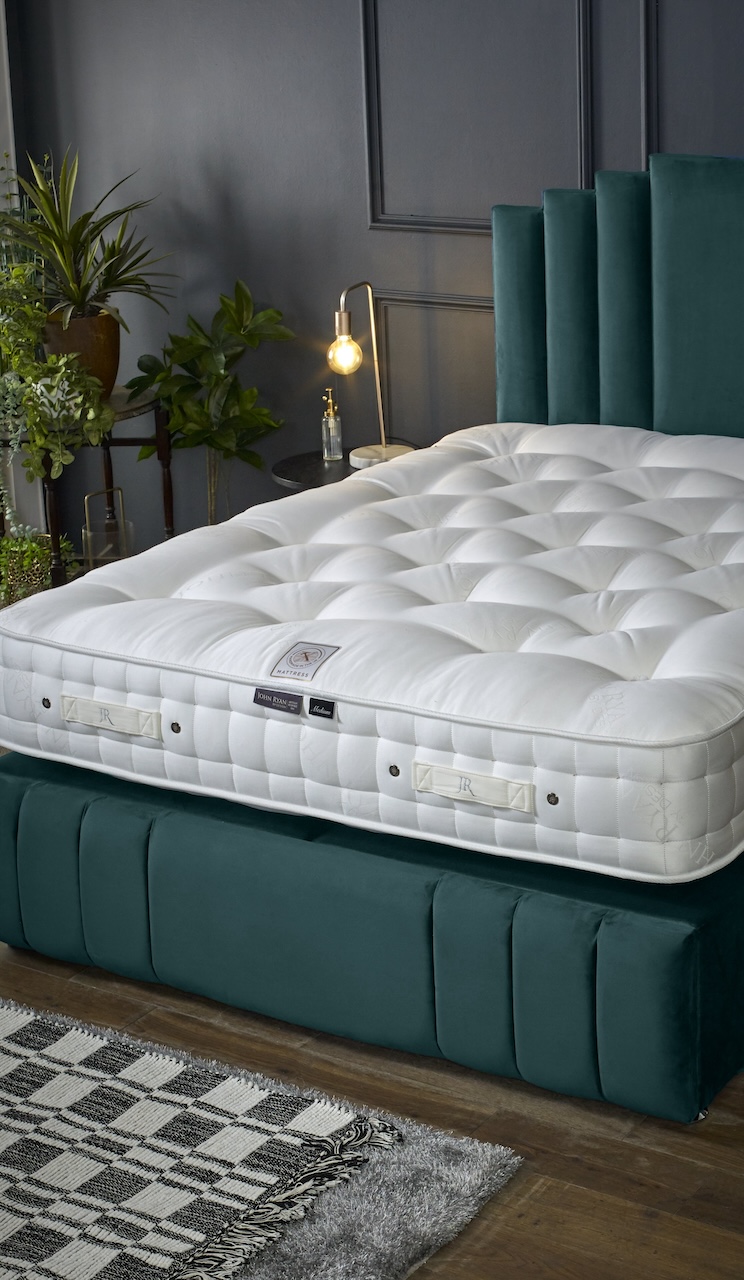
A zip-and-link pair from our Artisan range starts at £2,360 for the Artisan 1500, rising to £3,565 for the Artisan Bespoke 004. Both are separate mattresses with independently specified spring tensions, full natural-fibre upholstery including Horsetail and Wool, two-sided construction, and a 10-year guarantee. The savings against a comparable Vispring are typically 40 to 65%.
Motion isolation: an underrated advantage of zip and link
One of the less-discussed benefits of the zip-and-link format is the complete motion isolation it provides. Because the two halves are structurally independent, movement on one side cannot transmit to the other.
A partner getting up at 5 am, turning over in the night, or simply having a restless period does not disturb the other sleeper at all. In a traditional shared mattress, even a premium Vispring spring and upholstery movement transmits across the surface to some degree.
In a zip and link, it cannot. For light sleepers or couples with significantly different sleep schedules, this is a meaningful quality-of-life improvement.
The valley problem: solved by design
One of the most common reasons couples replace a mattress is the development of a central valley. This depression forms in the middle of the bed over time, where the combined weight of both sleepers has most heavily compressed the springs and upholstery. Over the years, this creates a slope effect that causes both sleepers to roll toward each other, disrupting sleep and accelerating further deterioration at the point of most concentrated wear.
A zip-and-link configuration eliminates this failure mode by design. There is no shared middle. Each sleeper’s weight acts only on their own half of the mattress. The edge where the two halves meet is supported by the zip fastening and the frame beneath, not by the spring unit of either mattress. In our experience, valley formation is one of the leading causes of early mattress replacement and zip and link is the structural solution.

Split tension: bespoke support by another name
The phrase “split tension” refers to a zip-and-link configuration in which each half is built to a different spring tension. It is not a premium add-on or a complicated upgrade. It is simply the natural consequence of commissioning two separate mattresses, one to the specification appropriate for Sleeper A, and one to the specification appropriate for Sleeper B and joining them together.
In our experience, the most requested split-tension combinations are medium and firm, reflecting the most common pairing of a lighter and a heavier sleeper sharing a bed. The second most common is soft and medium, which typically reflects a weight pairing where both sleepers are relatively light but have different firmness preferences.
We do not prescribe a single correct combination, as it depends on body weight, sleeping position, and personal preference. Still, we guide customers through the selection process using a spring-tension guide based on weight and position.
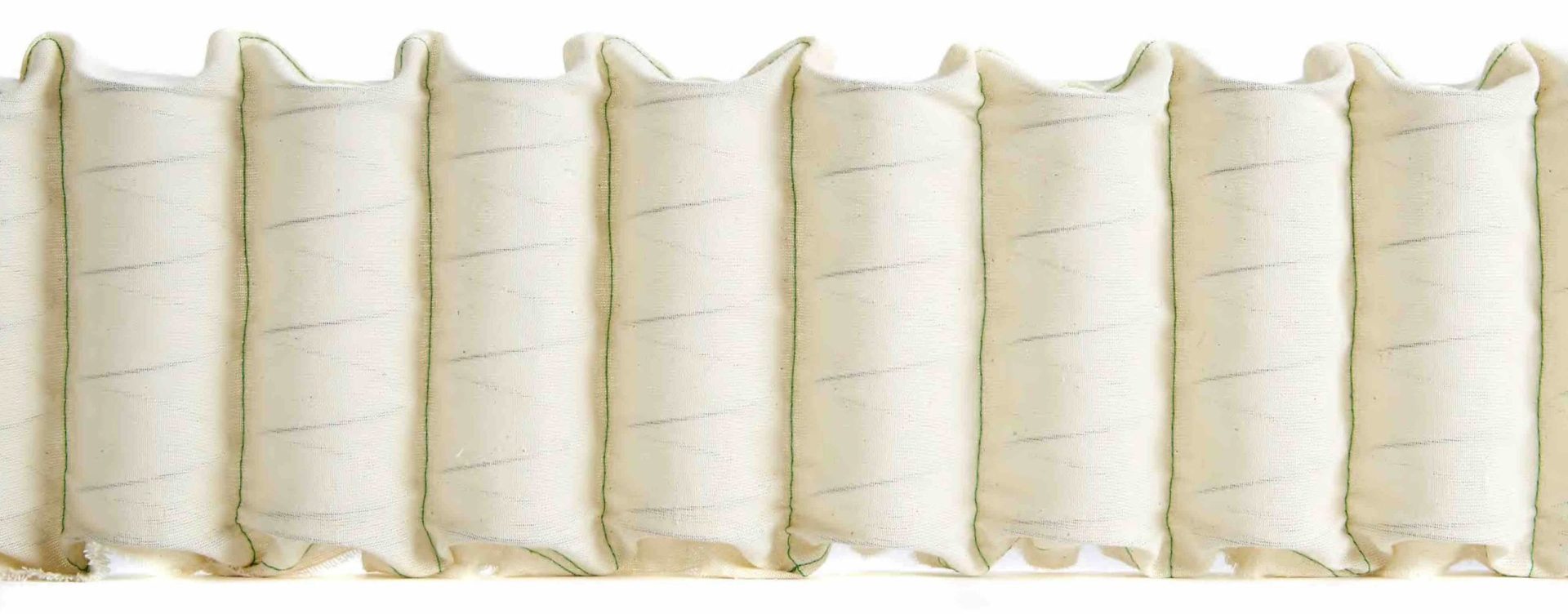
What is worth understanding is that the spring tension you need is primarily a function of your body weight, not your subjective preference for “soft” or “firm.” A lighter sleeper who prefers what feels like a firm mattress is not feeling the springs’ firmness; they are feeling the upholstery’s compression differential.
At lighter weights, even a medium-tension spring unit feels relatively supportive because the springs are not being compressed to a significant proportion of their working range. Getting the spring tension right for your actual weight is the single most important decision in the specification process, and it is one that a good consultant, whether at a Vispring showroom or on our customer service team, should lead you through honestly.
Custom sizing and non-standard dimensions
The UK mattress market operates around a handful of standard sizes: 3ft single (90x190cm), 4ft small double (120x190cm), 4ft6 double (135x190cm), 5ft king (150x200cm), and 6ft super king (180x200cm). For the vast majority of beds sold in the UK today, one of those five dimensions will fit.
There is, however, a meaningful minority of situations where standard sizes do not work. Antique iron bedsteads from the Victorian and Edwardian eras were built to imperial dimensions that map imperfectly onto the modern metric standard. Period properties, particularly those with fitted alcove beds or built-in bed boxes, may have recesses that are neither standard in width nor standard in length. Continental beds brought to the UK frequently have different dimension conventions.
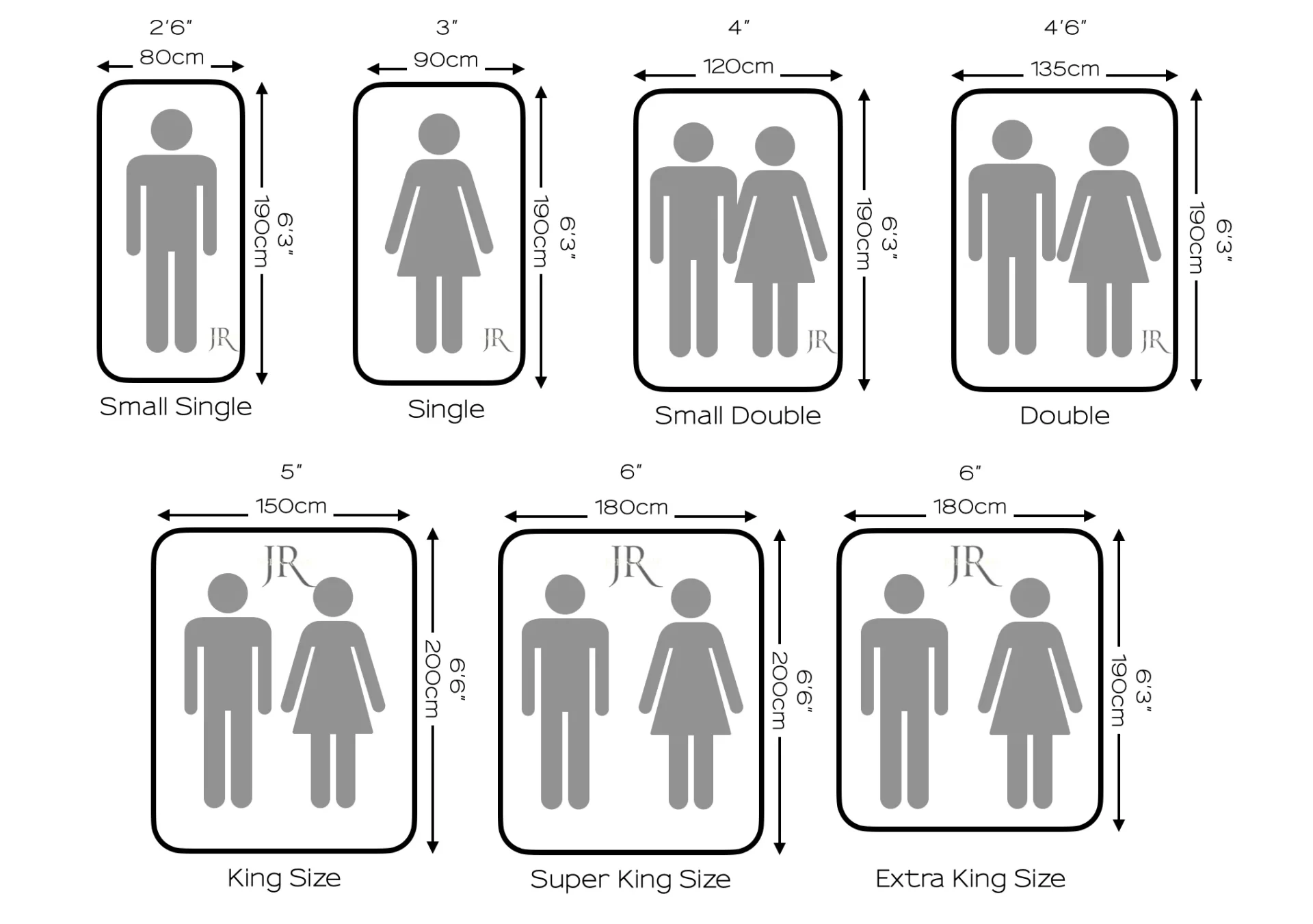
For these situations, made-to-measure is the practical route. Most UK mattress manufacturers that work with natural-fibre pocket-spring constructions, including John Ryan, can accommodate non-standard dimensions within defined parameters, with lead times typically two to four weeks. The price premium for custom sizing is generally modest: the spring unit tooling for non-standard dimensions has a fixed cost that spreads across the final price, and the manual construction process is not significantly more complex for a 147cm-wide mattress than for a standard 150cm mattress.
The process becomes genuinely bespoke and more expensive when the dimensional requirements are highly unusual (for example, a circular bed or a mattress with a non-rectangular footprint), or when the customer requires matching bases, headboards, and bed frames, all built to the same non-standard specification. In those cases, the coordination involved across multiple trades does justify the premium. For a mattress that is simply 5cm narrower than a standard king, it generally does not.
John Ryan bespoke options
We offer a range of personalisation options across our Artisan range that collectively cover the vast majority of reasons someone might seek a bespoke mattress. None of them requires a showroom visit, none involve the retail markup built into the Vispring and Savoir Beds pricing structures, and all are supported by our 60-day trial period.
Zip and link in all Artisan models
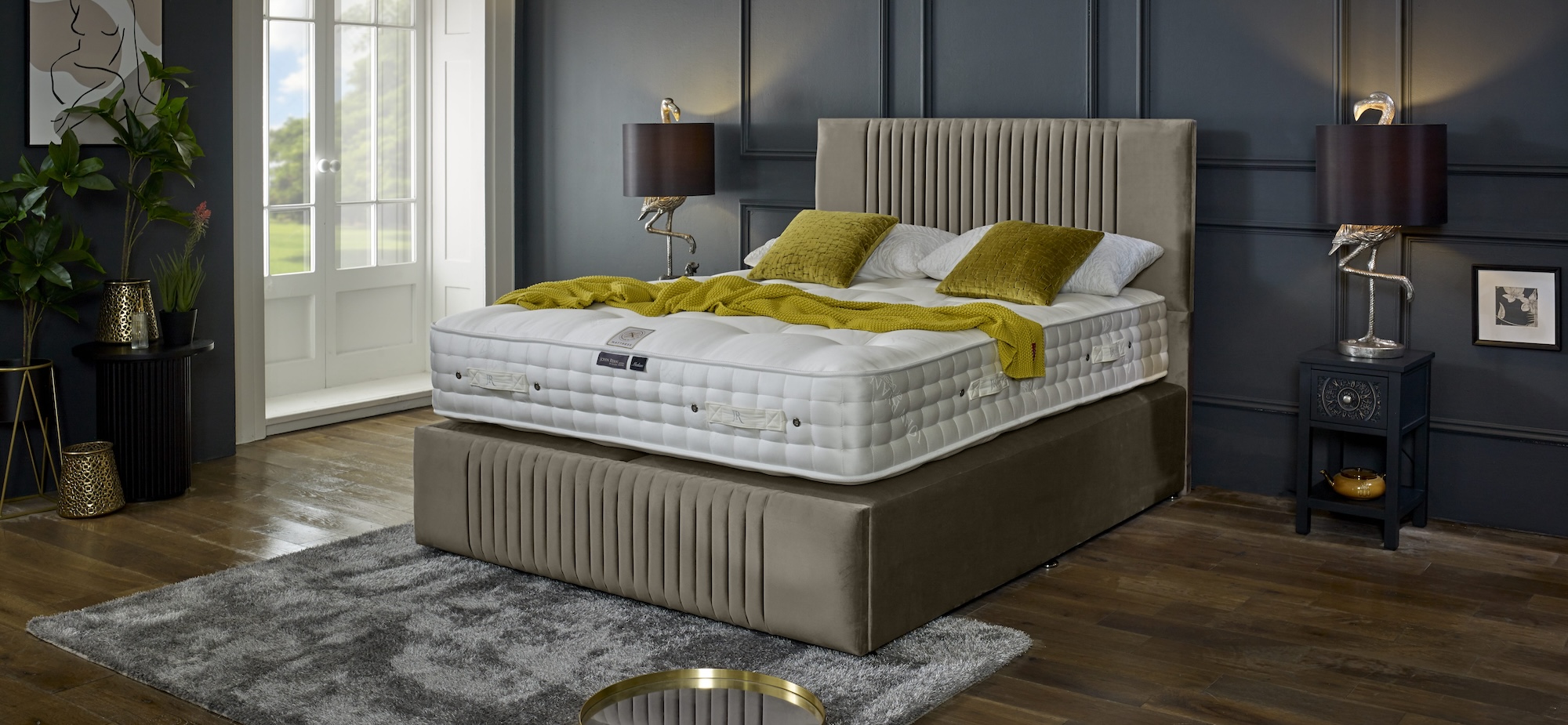
Every mattress in our Artisan range is available as a zip-and-link pair. This means you can configure two separately tensioned halves in any Artisan model, from the Artisan 1500 (king-size zip-and-link pair from £2,360) through to the Artisan Sublime (king-size zip-and-link pair from £6,345). Each half is a complete, independently constructed mattress with its own spring unit, upholstery layers, and two-sided construction. The zip-and-link fastening is heavy-duty, flat, and undetectable through bedding.
Spring tension options matched to body weight.
Each model in the Artisan range is available in a choice of spring tensions: medium, firm, and, for some models, extra firm. The appropriate tension for your weight is determined by our spring tension guide, which maps body weight to the tension profile that maintains proper spinal alignment throughout the night. Ordering a split tension zip and link involves simply specifying a different tension for each half of the pair at checkout, no consultation fee, no showroom visit required.
Size flexibility
We can accommodate non-standard dimensions in most Artisan models. If your bed frame does not match a standard UK size, please get in touch with our team directly before ordering. We will confirm what is possible for the specific model you are interested in, provide an accurate price, and give you a realistic lead time. Non-standard sizes typically carry a modest premium over the standard size price.
The John Ryan guarantee
All Artisan range mattresses carry a 10-year guarantee. This reflects our confidence in the construction quality and the natural-fibre upholstery composition, both of which are built to last significantly longer than those of a typical synthetic Foam mattress. The two-sided construction means both sleep surfaces are used over the mattress’s life, effectively doubling the usable upholstery compared with a one-sided equivalent. Our 60-day trial period means that if a mattress arrives and the spring tension is not correct for your weight or position, we will work with you to find a solution.
Price comparison: bespoke support at every budget
The following table sets out the price of a king-size zip-and-link pair for each Artisan model, alongside the most comparable Vispring option. All John Ryan prices are verified from our current price list. Vispring prices are as published across UK retailers in early 2026.
| John Ryan Model | King Zip & Link (pair) | Comparable Vispring | Vispring King Price | Saving |
|---|---|---|---|---|
| Artisan 1500 | £2,360 | Vispring Elite | £1,870 | N/A to JR adds split tension functionality* |
| Artisan Naturals | £3,035 | Vispring Baronet Superb | £2,635 | Full split tension vs single tension Vispring |
| Artisan Bespoke 004 | £3,565 | Vispring Regal Superb | £4,675 | £1,110 (24%) to with split tension included |
| Artisan Luxury | £3,825 | Vispring Devonshire | £3,160 | JR adds Horsehair + Horsetail, not in Devonshire |
| Artisan Bespoke | £4,180 | Vispring Herald Superb | £3,870 | JR adds split tension and Cashmere insulator |
| Artisan Bespoke 002 | £4,530 | Vispring Shetland Superb | £6,325 | £1,795 (28%) |
| Artisan Bespoke 003 | £5,920 | Vispring Tiara Superb | £8,470 | £2,550 (30%) |
| Artisan Sublime | £6,345 | Vispring Sublime Superb | £13,885 | £7,540 (54%) |
| Legacy Two | £6,695 | Vispring Signatory Superb | £13,400 | £6,705 (50%) |
*At the entry level, the Vispring Elite is priced below the Artisan 1500 zip and link pair. The comparison is not like-for-like: the Vispring Elite is a single-tension king-size mattress, while the Artisan 1500 zip-and-link pair comprises two independently tensioned mattresses with split-tension capability. For couples with different support requirements, the Artisan 1500 zip-and-link pair offers functionality the Elite cannot.
The value case becomes compelling in the mid and upper ranges. The Artisan Bespoke 004 zip-and-link pair, with 100% natural-fibre construction (including Horsetail and Wool), two-sided, and a 10-year guarantee. It costs £3,565 in king size. The Vispring Regal Superb, considered the best value in their Classic Collection, costs £4,675 for a single-tension king-size. To add split tension to a Vispring king, you are still paying the full Regal Superb price. The John Ryan pair delivers split tension as standard and costs £1,110 less.
At the upper end of the range, the savings widen significantly. The Artisan Sublime zip-and-link pair at £6,345 is compared against a Vispring Sublime Superb at £13,885, a saving of £7,540 (54%), for a product that includes British Alpaca and Organic Flax upholstery not present in the Vispring equivalent.
Frequently asked questions
What is the difference between a bespoke mattress and a zip-and-link mattress?
A bespoke mattress is built from scratch to a specification developed during an in-person consultation, typically at a showroom. A zip-and-link mattress consists of two separate single mattresses joined by a heavy-duty zip, each of which can be specified with a different spring tension. For couples with different support requirements, the most common reason people seek a bespoke mattress is that the functional outcome of a split-tension zip-and-link is essentially identical to a bespoke consultation, at a significantly lower cost.
Do I need a bespoke mattress if my partner and I have different firmness preferences?
Not necessarily. In most cases, a split-tension zip-and-link mattress is the right solution. Each half is built with spring tension appropriate to that sleeper’s body weight and position, and the two halves zip together to form a single sleeping surface. You do not need to visit a showroom or pay a premium for the bespoke label to achieve independently calibrated support for each sleeper.
How much does a bespoke mattress cost in the UK?
True bespoke mattresses from established UK manufacturers typically start at around £8,000 for king-size (Vispring Tiara Superb, the entry point to their Luxe bespoke Collection) and rise to over £80,000 for flagship models. Semi-bespoke natural fibre mattresses with split-tension options, such as our Artisan zip-and-link range, are available from £2,360 for a king-size pair, rising to £6,695 for the Legacy Two.
Is Vispring worth the money for a bespoke mattress?
Vispring’s construction quality, including genuine calico pocket springs, natural fibre upholstery, two-sided construction, and a 30-year guarantee, are all realadvantages. Whether the price premium over direct manufacturers with equivalent specifications is justified depends partly on how much value you place on the showroom experience, brand heritage, and the length of the guarantee. The substantive manufacturing difference between Vispring’s Classic Collection and a well-specified direct manufacturer is narrower than the price difference suggests.
Can John Ryan make a mattress to a non-standard size?
Yes. Most models in our Artisan range can be produced to non-standard dimensions. Contact our team directly with your exact measurements before ordering, and we will confirm what is achievable for the specific model, the price, and the lead time.
What does split tension mean?
Split tension refers to a zip-and-link configuration in which each half of the mattress is built to a different spring tension. One half might be medium-tension for a lighter sleeper; the other might be firm-tension for a heavier sleeper. Each sleeper gets support calibrated to their own weight and position rather than a compromise between the two.
How do I know which spring tension I need?
Spring tension selection is primarily determined by body weight, with slight adjustments for sleeping position. Back and front sleepers generally need slightly firmer tension than side sleepers of the same weight, because side sleeping requires more give at the shoulders and hips. Our spring tension guide maps weight ranges to tension recommendations for each sleeping position. As a broad rule of thumb: under 11 stone medium; 11 to 16 stone medium or firm, depending on position; over 16 stone firm or extra firm.
What is the weight difference between partners that justifies a split tension mattress?
As a guideline, a weight difference of more than three stone between partners typically warrants split tension. At that differential, the spring tension that is correct for the lighter sleeper will be insufficient to support the heavier one properly, and a tension that supports the heavier sleeper adequately will be too firm for the lighter one. Below three stone, a shared tension in the appropriate mid-range for the two weights is usually workable.

Dreaming of the perfect nights sleep?
Ask us a question
There are over 6000 questions and answers submitted by you on all questions about mattresses and bed problems. Enter a keyword such as Vi Spring, John Lewis beds, bad back or Memory Foam and see if your question has already been answered.
If you can’t find an answer in knowledge hub, ask a new question. We aim to respond to all questions within one working day.
Newsletter
Enter your email to join our newsletter. We’ll send you occasional news and mattress expertise.