







Mattress Care
February 2026Dust mites in mattresses: How to fix
If you wake up with a blocked nose, itchy eyes, or that familiar sneezing fit before you’ve even had your first cup of tea, there’s a reasonable chance dust mites are playing a significant role in your sleepless nights. They are the most common indoor allergen in the UK, and your mattress is their favourite address.
We have been making mattresses here in the UK for over 25 years. In that time, we’ve heard from thousands of customers who retailers have told that buying an “anti-dust mite” or “hypoallergenic” mattress will solve their allergy problems overnight. We want to be straight with you: that claim is, at best, an oversimplification, and at worst, outright misleading marketing.
This guide covers what dust mites actually are, what the science says about reducing them, and what mattress and bedding choices genuinely make a difference to your sleep.
In this guide:
- What are dust mites, and why do mattresses attract them?
- How many dust mites are actually in your mattress?
- Sleep issues caused by dust mites: what to look for
- The truth about anti-dust mite and hypoallergenic mattresses
- Does memory Foam actually help with dust mites?
- Why natural fibre mattresses are a better long-term choice
- The best mattresses for dust mite allergy sufferers
- Your practical dust mite reduction routine
- Bedding choices that make a genuine difference
- When to replace your mattress
- Frequently asked questions
1. What Are Dust Mites and Why Do Mattresses Attract Them?
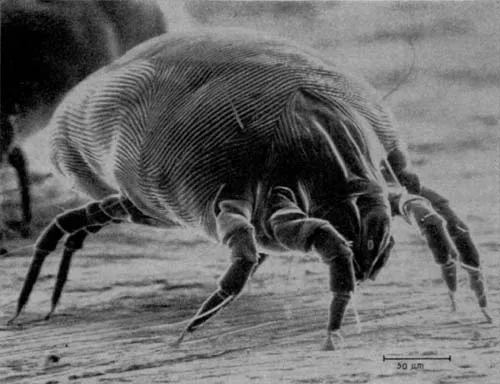
Dust mites are microscopic arachnids, relatives of spiders and ticks, measuring just 0.25 to 0.3 millimetres in length. They are completely invisible to the naked eye. A female dust mite can live for up to 70 days, and during the final weeks of her life, she will lay between 60 and 100 eggs. The male livesfor onlyf 10 to 19 days. Those numbers alone explain why populations in an unprotected mattress can grow remarkably quickly.
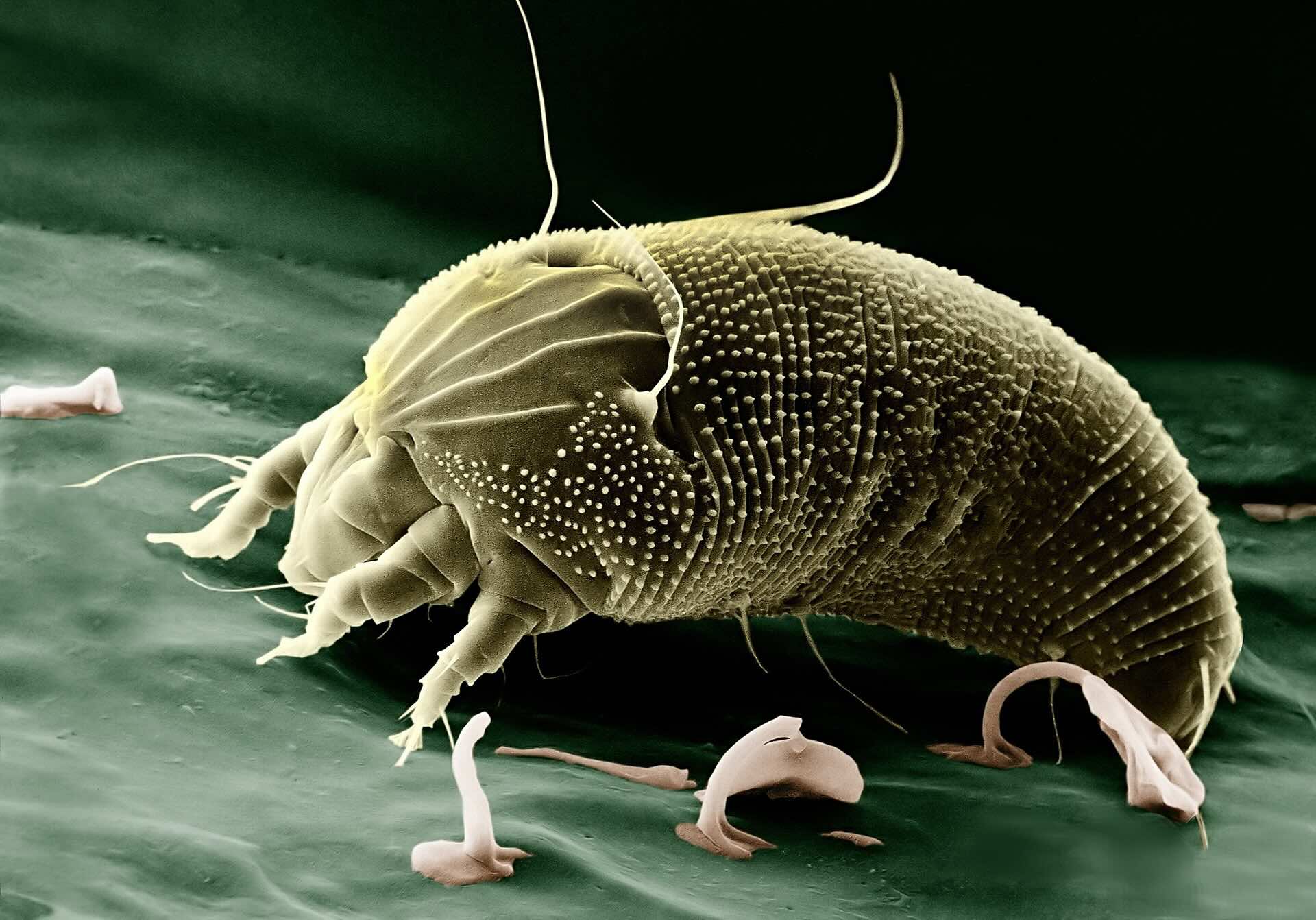
Dust mites do not bite or burrow into your skin. The allergic reaction so many people experience is caused not by the mites themselves, but by their faecal particles and shed exoskeletons.
These tiny protein fragments become airborne when you move around in bed, and once inhaled, they trigger the immune response that causes sneezing, congestion, and itching, making sleeping so uncomfortable for allergy sufferers.
Dust mites survive on moisture and dead skin cells, both of which mattresses provide in abundance. The average person sheds approximately 1.5 grams of dead skin every day, and a significant proportion of that ends up in the bed.
When you factor in the warmth and humidity generated by your body over eight hours of sleep, a mattress that is not properly protected and maintained becomes, quite simply, an ideal habitat.

Why UK Homes Are Particularly Vulnerable
The UK climate creates near-perfect conditions for dust mite population growth. Dust mites thrive at temperatures between 20 and 30°C and prefer humidity levels above 50%. Our temperate weather, combined with well-insulated modern homes that retain moisture, means the conditions inside a typical UK bedroom fall right in that sweet spot for most of the year. The peak season for dust mite reproduction runs from May through to September, though in a heated bedroom, they will remain active throughout winter.
2. How Many Dust Mites Are Actually in Your Mattress?
The figures here are significant enough to state plainly. Studies have found that between 100 and 500 dust mites can live in a single gram of dust. A mattress that has been in use for several years, without a protective cover and without regular cleaning, can harbour hundreds of thousands of mites.
Research from the University of Manchester has estimated that an average used mattress may contain anywhere from 100,000 to 10 million dust mites, depending on age, material, and maintenance history.

An older mattress accumulates about 4 to 5 kilograms of dead skin cells over 8 years of use. That is an enormous food source, and it explains why the dust mite population in a neglected mattress can escalate to a degree that is very difficult to reverse through cleaning alone. Once a mattress reaches that point, replacement is often the most practical solution rather than a treatment.
The Problem Gets Worse With Age
A mattress in its first year, with a good quality protector in place, will contain a fraction of the mite load you’d find in one that is seven or eight years old. This is why mattress hygiene habits established from day one matter so much. The cleaning habits you build around a new mattress determine how hospitable it becomes over the years that follow.
3. sleep Issues Caused by Dust Mites: What to Look For
Not everyone who shares a bed with dust mites will notice them. For people without a dust mite allergy, the mites themselves do not cause direct harm. However, approximately one in five adults in the UK has some degree of sensitivity to dust mite allergens, and for those people, the effects on sleep quality can be substantial.
The most common symptoms of a dust mite allergy include persistent sneezing, a blocked or runny nose, itching or watering of the eyes, skin irritation and eczema flare-ups, and in more serious cases a tightening of the chest or worsening of asthma symptoms. The tell-tale pattern is that symptoms are worst first thing in the morning, often improving as you move away from the bedroom and the allergens in the bedding settle.
If your nose is always blocked in bed but clears up once you’ve been up and about for an hour, that is a fairly reliable indicator that something in your sleeping environment is the trigger.
The Link Between Dust Mites and Disruptedsleepp
Beyond the immediate allergic response, dust mite allergens contribute to poor sleep quality even in people who do not experience obvious allergy symptoms. Nasal congestion increases airway resistance, which can promote mouth breathing, snoring, and, in some cases, mild sleep-disordered breathing. Chronic low-level inflammation triggered by allergen exposure can also disrupt sleep architecture, reducing the amount of deep, restorative sleep you achieve each night. If you regularly feel unrefreshed despite apparently getting enough hours in bed, your sleeping environment is worth investigating.
When to Seek Medical Advice
If allergy symptoms are severe, persistent, or significantly affecting your quality of life, we would always recommend speaking to your GP. A skin-prick test or blood test can confirm whether you have a dust mite allergy and how severe it is. A confirmed diagnosis opens the door to medical management options, including antihistamines, nasal corticosteroids, and, in some cases, immunotherapy. No mattress or cleaning routine is a substitute for proper medical care when symptoms are serious.
4. The Truth About Anti-Dust Mite & Hypoallergenic Mattresses
This is where we need to push back firmly on a significant amount of misleading marketing. The term “anti-dust mite mattress” is widely used by many brands and retailers, creating the false impression that buying a particular type of mattress will resolve a dust mite problem at its source. In reality, there is no such thing as a completely anti-dust-mite mattress once it is in use in a real bedroom.

The claim has a kernel of truth in laboratory conditions. Synthetic materials like memory Foam and polyester do not provide the organic matter that dust mites feed on, so in a sterile testing environment, they are genuinely less hospitable to mites than natural fibres. The mattress industry has extrapolated this into a sales claim that the same principle applies in your bedroom. It does not hold up.
Why the Hypoallergenic Claim Falls Apart in the Real World
The moment a synthetic mattress is in your bedroom, it is covered with bedding and exposed to dead skin cells, perspiration, and ambient humidity. The surface of even the densest memory Foam mattress will accumulate the organic debris that dust mites require to survive. They are not living inside the mattress material itself. They are living on the surface of the mattress, in the bedding layers above it, in your pillows, in the duvet, in the carpet beneath the bed, and in any soft furnishing in the room.
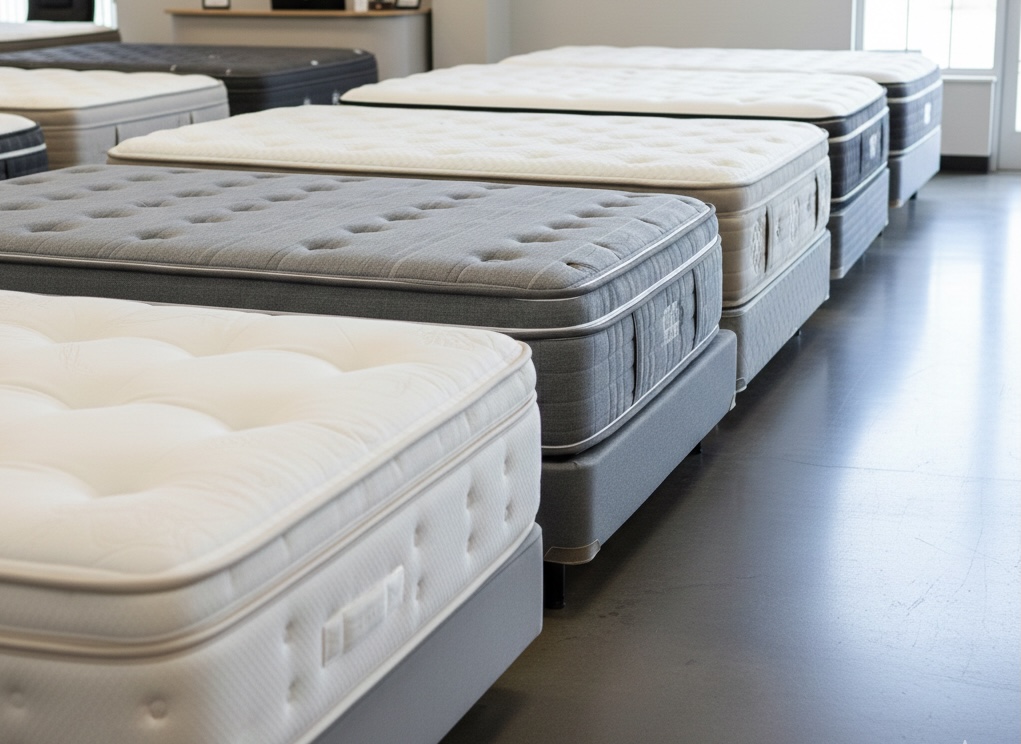
Buying a memory Foam mattress on the basis that it will eliminate your dust mite problem is a bit like buying a stainless steel kitchen worktop to eliminate bacteria. The worktop itself may be less porous than wood, but bacteria still live on its surface the moment food comes into contact with it. The solution is hygiene, not the material.
The same argument applies to Latex mattresses. Latex has genuine antimicrobial properties and a denser structure than open-cell Foam, but again, in real-world use, the surface conditions that dust mites require are present regardless of what the mattress is made from.
What “Hypoallergenic” Actually Means on a Mattress Label
In UK mattress marketing, “hypoallergenic” most commonly means that the materials used do not contain common allergens, such as Latex proteins, or undergo chemical treatments. It is a statement about the materials in isolation, not a guarantee about performance in a real bedroom environment. Reading the small print is always worthwhile. A mattress described as hypoallergenic will still require the same maintenance and hygiene routine as any other mattress if you want to keep allergen levels under control.
Regular ventilation and turning of your mattress can help keep your bedroom fresh
A hot wash of your bedding on a weekly basis can help reduce dust mites


5. Does Memory Foam Actually Help With Dust Mites?
The honest answer is: marginally, and not in the way manufacturers imply. The dense, closed-cell structure of memory Foam does mean that mites cannot readily penetrate the mattress material itself, which prevents the deep-seated infestations you can get in an older traditional mattress with looser fibre filling. In that narrow sense, a memory Foam mattress may be slightly easier to keep on top of from a dust mite perspective.
However, there is a significant trade-off that is rarely mentioned. Memory Foam is heat-retentive and does not breathe well. It traps the warmth and moisture your body generates overnight, creating a warm, damp microclimate at the mattress surface. That microclimate is exactly what dust mites need to survive and reproduce. You may be reducing their ability to burrow deep, but you are simultaneously creating ideal surface conditions for them to thrive.
Memory Foam also tends to trap perspiration more readily than natural fibre mattresses, which means the mattress surface becomes significantly warmer and damper than it would on a breathable, natural fibre mattress. For hot sleepers in particular, a memory Foam mattress can actually make dust mite management harder in practice, not easier.
6. Why Natural Fibre Mattresses Are a Better Long-Term Choice for Allergy Sufferers
We would be doing you a disservice if we simply told you that natural fibre mattresses are immune to dust mites. They are not. However, they do offer a genuinely different set of properties that make managing dust mite populations easier, and they address the environment in which mites thrive rather than just the mattress material in isolation.
Wool’s Natural Properties
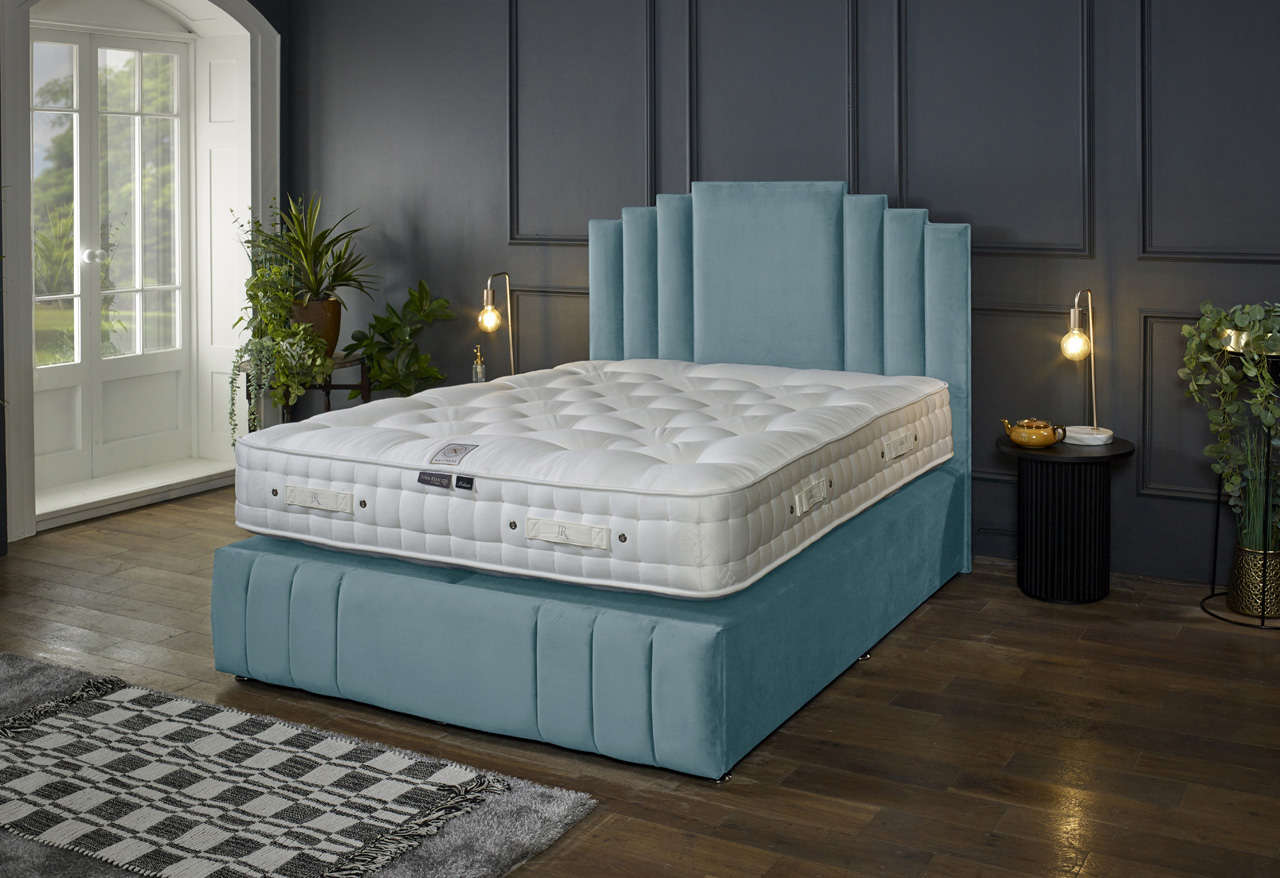
British Wool, which we use throughout our Artisan range, contains lanolin, a natural waxy substance that is inherently resistant to mould, mildew and certain microorganisms.
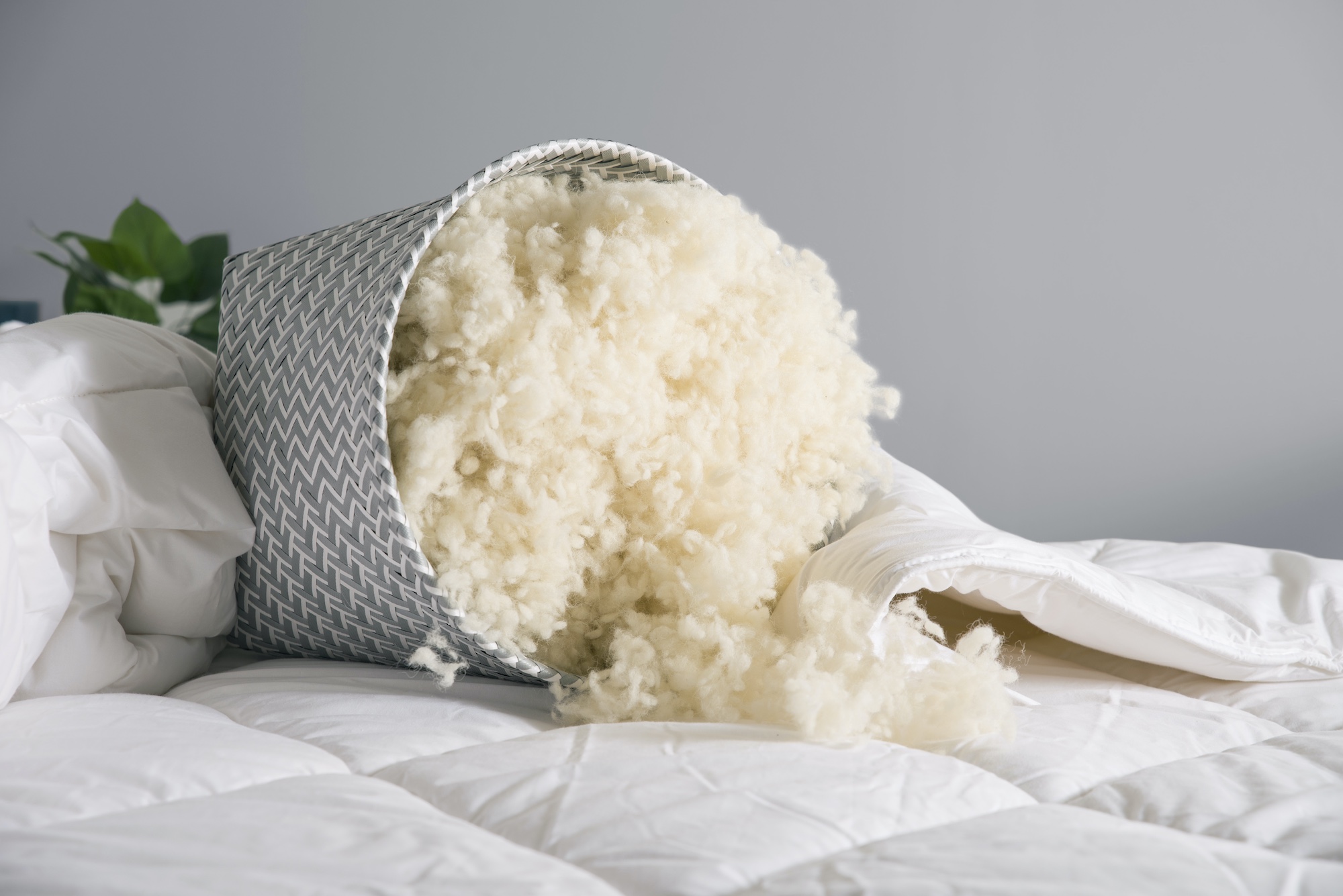
Wool fibres can absorb up to 30% of their own weight in moisture without feeling damp, and crucially, they release that moisture back into the surrounding air rather than retaining it. This moisture-wicking action keeps the sleeping surface significantly drier than synthetic Foam alternatives, directly disrupting the humid microclimate that dust mites depend on.
Wool fibres also maintain a more stable temperature at the sleep surface. Rather than trapping heat as memory Foam does, Wool actively regulates temperature by absorbing excess body heat when you are warm and releasing it back when you cool down. This thermoregulation keeps the sleeping surface within a temperature range less favourable to dust mite reproduction.
Cotton, Horsehair and Breathability
Cotton and Horsehair, both of which feature in our higher-specification Artisan mattresses, provide additional breathability, further reducing humidity at the sleep surface. Horsehair in particular is a hollow fibre with exceptional spring and air permeability, providing ventilation through the comfort layers that synthetic foams simply cannot match.
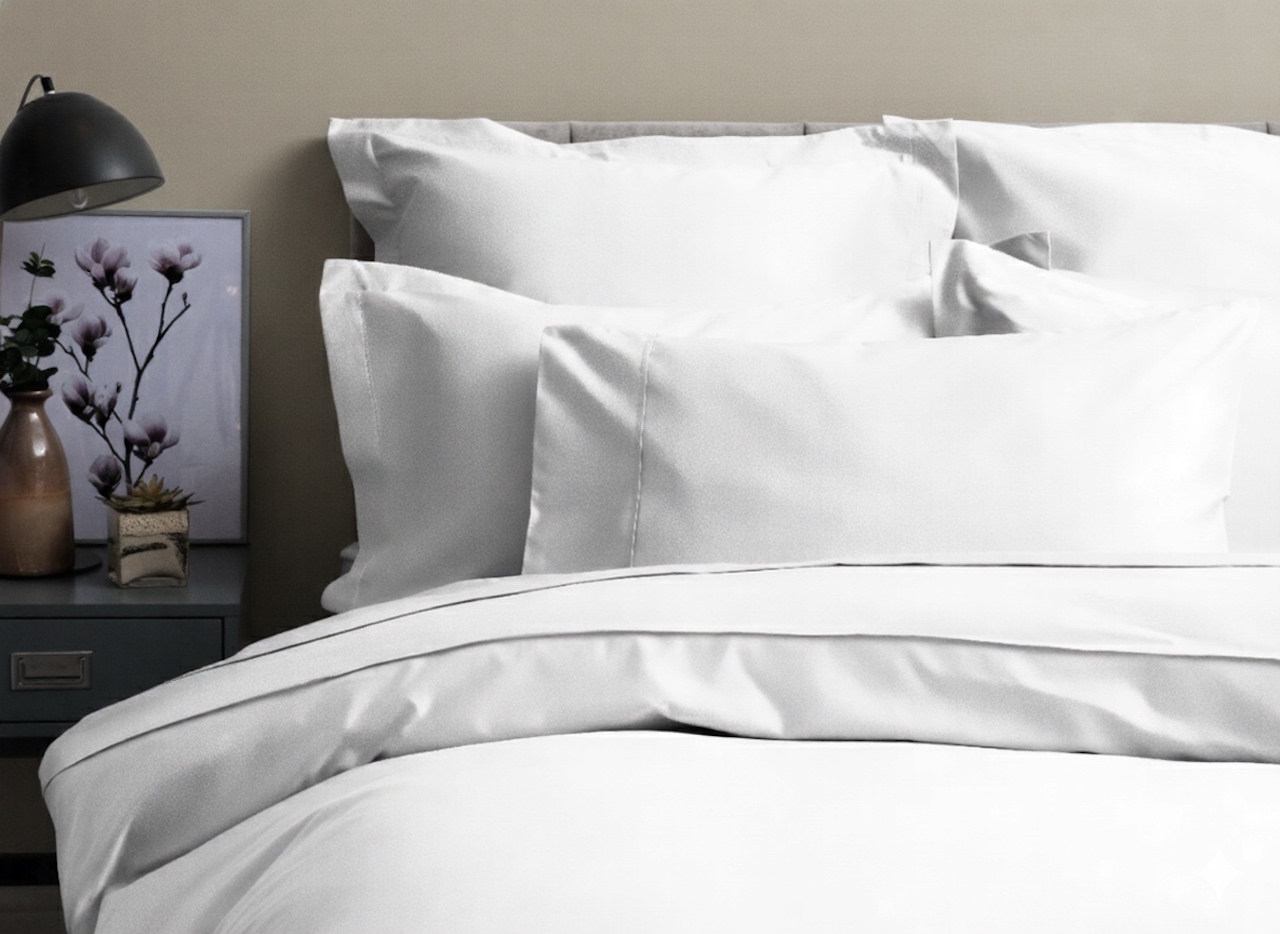
These materials have been used in quality mattresses for well over a century, not out of tradition for its own sake, but because they create a genuinely healthier sleep environment.
Two-Sided Construction and Air Circulation
All of our mattresses are made to be turned regularly, which is another factor in long-term dust mite management. When you flip a two-sided mattress, the side that has been accumulating moisture from your body overnight is exposed to the open air, allowing it to dry out thoroughly before you sleep on it again.
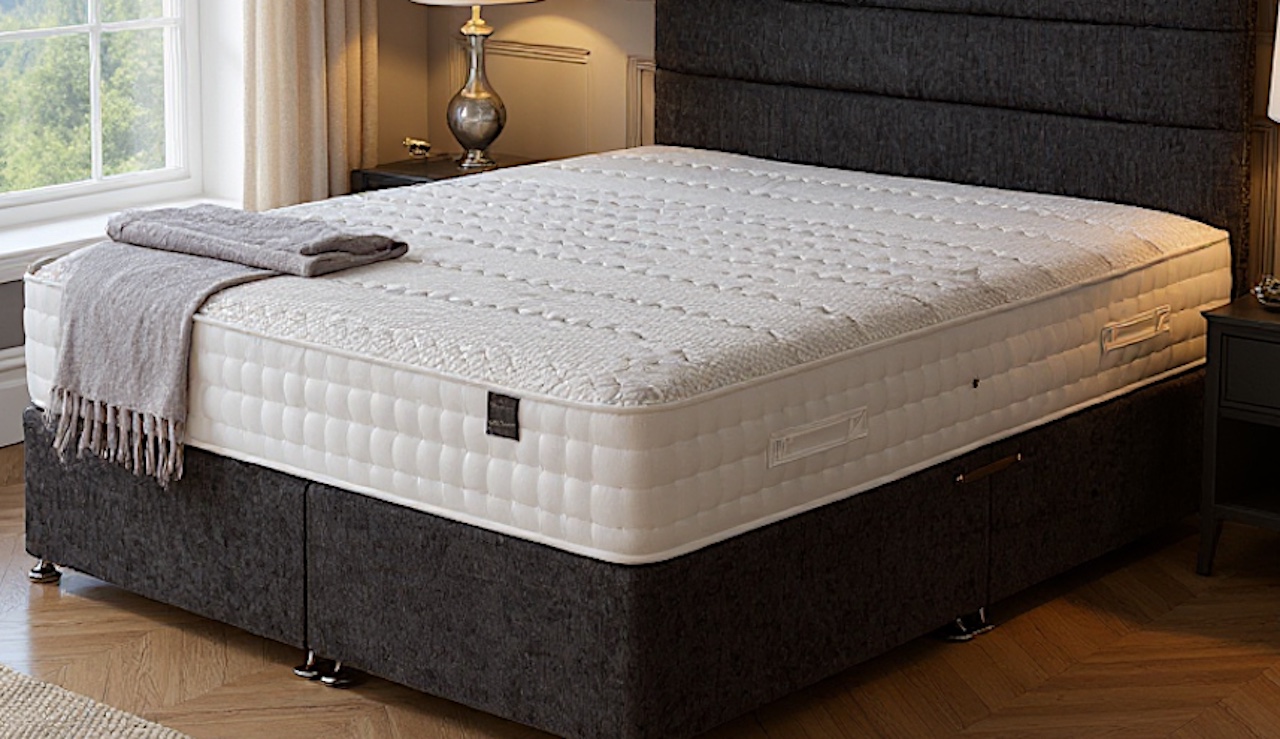
A one-sided mattress, which cannot be flipped, never gives the sleep surface this opportunity to breathe. The underside remains in contact with the base permanently and, particularly on platform bed frames with limited airflow, can become a reservoir for moisture and allergens that you never have the opportunity to address.
The Best Mattresses for Dust Mite Allergy Sufferers
If you are looking to reduce your long-term exposure to dust mite allergens, the practical combination of a breathable natural fibre mattress, a quality mattress protector, and a consistent hygiene routine will outperform any “anti-dust mite” marketing claim. Here are the John Ryan mattresses we would most confidently recommend to allergy-conscious customers, with king-size prices from our November 2025 price list.
Origins Natural Comfort — from £1,300 (King)
The Origins Natural Comfort is our entry point into natural fibre construction, combining a pocket spring unit with Wool and Cotton upholstery layers. The breathable construction helps regulate moisture at the sleep surface and provides a more hygienic environment than a comparable synthetic mattress in the same price bracket.
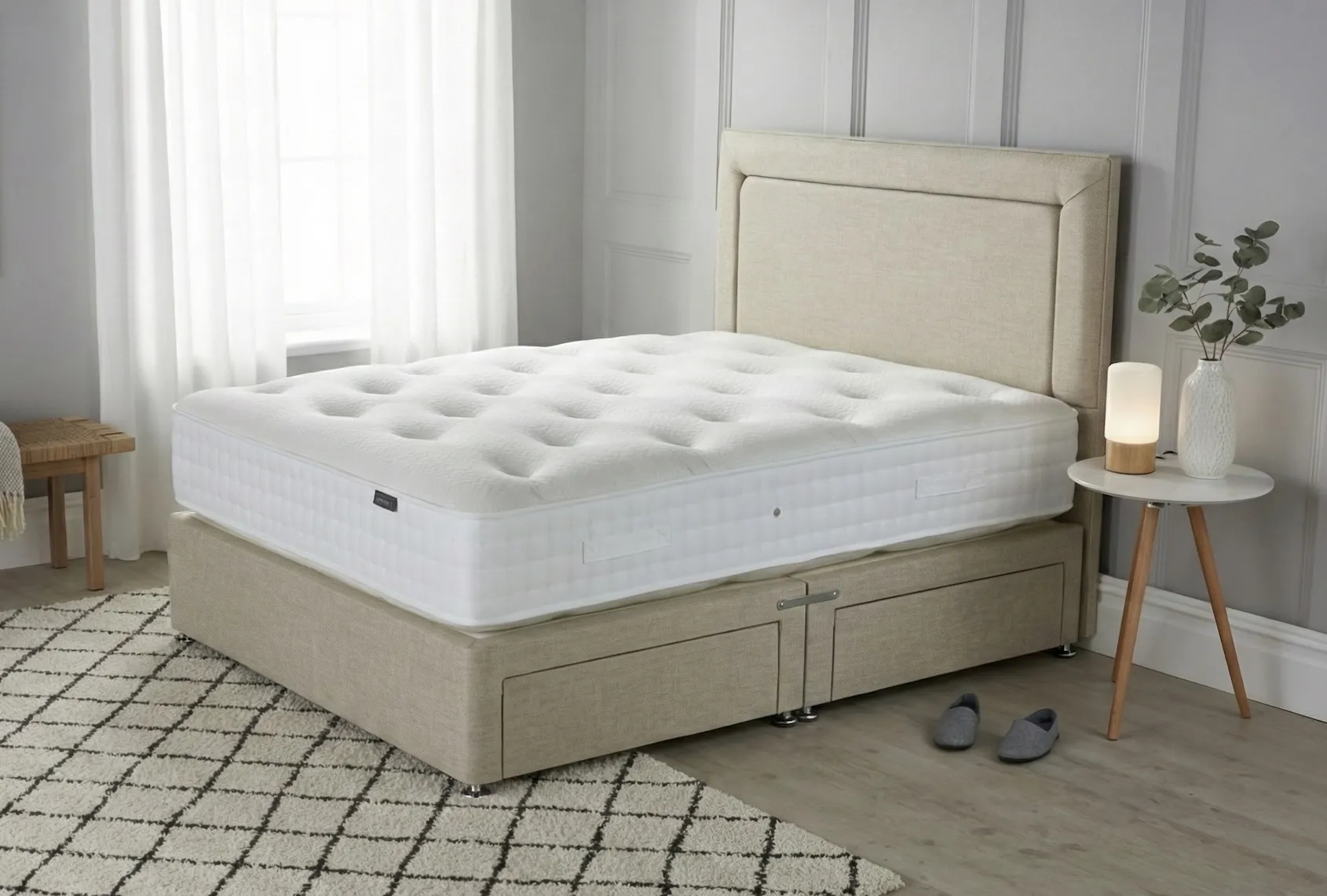
It is a two-sided mattress designed to be turned, and at £1,300 in king size, it represents genuine value for a naturally constructed bed.
Artisan Naturals — £2,180 (King)
The Artisan Naturals is our most popular recommendation for customers who prioritise breathability and natural fibre content. It uses a blend of British Wool, Cotton, and natural fibres across its upholstery layers, with full GSM specification published on our website. Hence, you know exactly what you are buying.
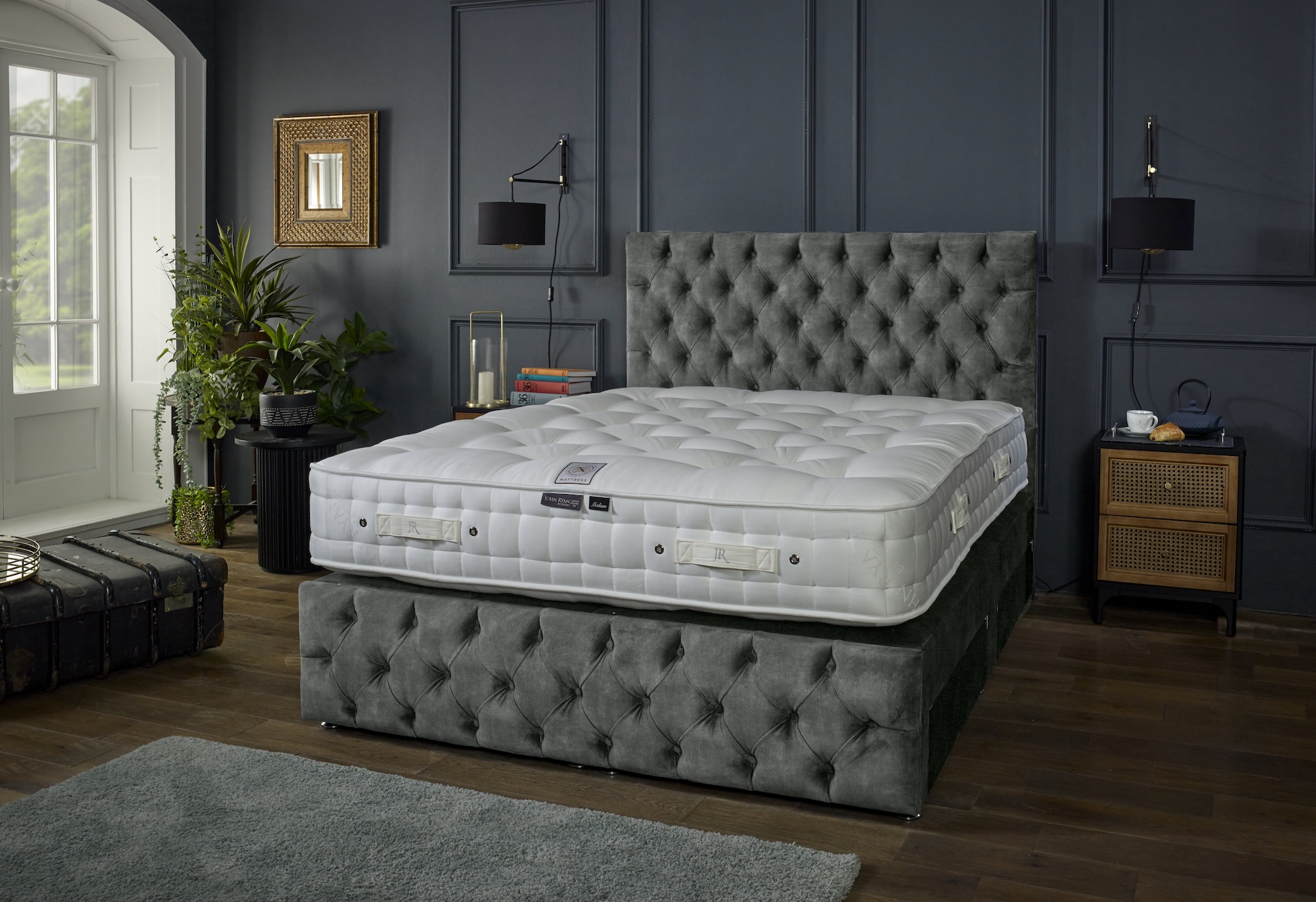
At £2,180 in king size, it sits in the mid-range of our Artisan collection, and its two-sided construction means it will last significantly longer than a comparable one-sided mattress when turned and maintained properly.
Artisan Bespoke — from £2,860 (King)
For customers where allergy management is a significant concern and long-term investment value matters, the Artisan Bespoke range starts at £2,860 in king size. It features our highest natural fibre content, including hand-teased Wool and Horsehair layers that maximise both breathability and comfort.

These mattresses are built to last 12 to 15 years with proper care, which, over that ownership period, works out to a cost per night that compares very favourably with cheaper alternatives that require more frequent replacement.
A Note on Latex Mattresses
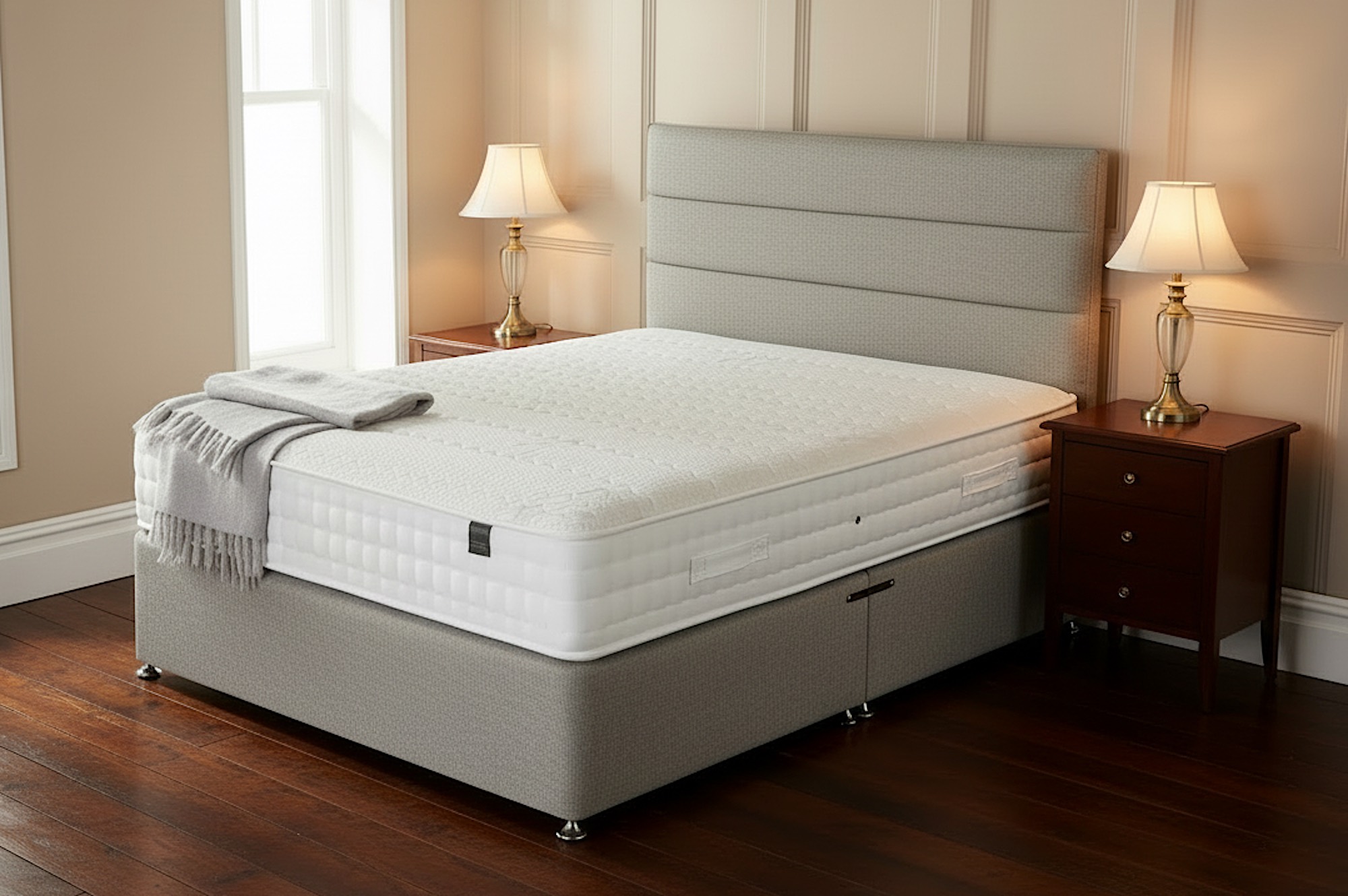
OuLatexex’s range starts at £1,520 for a king-size bed (Origins Latex Comfort). Natural Latex does have genuine antimicrobial properties and a naturally denser structure than Foam. If you have a confirmed Latex protein allergy, you should avoid these; for most allergy sufferers, they are a reasonable option, particularly when combined with a good-quality protector.
8. Your Practical Dust Mite Reduction Routine
No mattress, however well-made, will manage dust mite populations on its own without a consistent hygiene routine. The good news is that the steps required are straightforward, and once they become habit, they take very little effort. The science behind each recommendation is well established.
Weekly: Bedding and Temperature
Washing your bedding at 60°C is the single most effective individual action you can take. Studies confirm that dust mites cannot survive a wash at this temperature, and the allergens they produce are also removed. If your bedding cannot be washed at 60°C due to fabric care requirements, tumble drying on a high heat setting for at least 15 minutes achieves a similar result. A weekly routine is the minimum; if symptoms are severe, washing sheets twice weekly is worth considering.

After washing, ensure your bedding is completely dry before returning it to the bed. Damp bedding re-introduced to the mattress simply recreates the humid environment you are trying to eliminate. Line drying outside in sunlight is ideal when the weather permits, as UV radiation reduces surface allergen levels.
Monthly: Mattress Maintenance
Turn or rotate your mattress monthly. For a two-sided mattress like all of ours, a full flip is ideal. This gives each side regular exposure to open air and helps even out any compression in the upholstery layers. When you strip the bed to turn the mattress, vacuum the surface with an upholstery attachment before making it back up. Use slow, overlapping passes to give the vacuum time to draw surface debris out rather than pushing it deeper into the fabric.

After vacuuming, leave the mattress uncovered for 30 to 60 minutes, if possible, before replacing the bedding. Open a window during this time. The airflow and any available sunlight from the window will further reduce surface moisture.
Keep Bedroom Humidity Below 50%
Dust mites struggle to survive at relative humidity below 50%. Most UK bedrooms run at 55-65% humidity, particularly in winter when windows are kept closed, and central heating is running. A digital hygrometer costs a few pounds and will tell you exactly where your bedroom sits.
If humidity is consistently above 50%, a small dehumidifier running for a few hours each day can make a meaningful difference. Keeping a window cracked open in the morning to let moisture escape after a night’s sleep is a simple,d free starting point.
The Bed-Making Habit Worth Reconsidering
A study from Kingston University found that an unmade bed dries out more effectively than one made immediately after getting up. Pulling your duvet back and leaving the mattress and bedding exposed for 20 to 30 minutes each morning allows the moisture accumulated overnight to evaporate.
It feels counterintuitive to leave the bed unmade, but from a dust mite management perspective, the logic is sound. The mites that depend on that retained moisture are significantly less comfortable in a drier environment.
HEPA Vacuuming
Investing in a vacuum cleaner with a true HEPA filter makes a material difference to allergen levels in the bedroom. A standard vacuum without HEPA filtration can expel fine allergen particles back into the room air as it operates, effectively redistributing rather than removing them. A HEPA-filtered machine traps particles down to 0.3 microns, which includes dust mite faecal matter.

Vacuuming carpets, rugs and soft furnishings in the bedroom weekly, not just the mattress, is important because these surfaces are significant secondary habitats for dust mites.
9. Bedding Choices That Make a Genuine Difference
Your mattress is only part of the picture. The bedding you use directly affects both the dust mite environment and the allergen load you are exposed to each night. There are a few specific choices worth making deliberately.
Mattress Protectors: Non-Negotiable
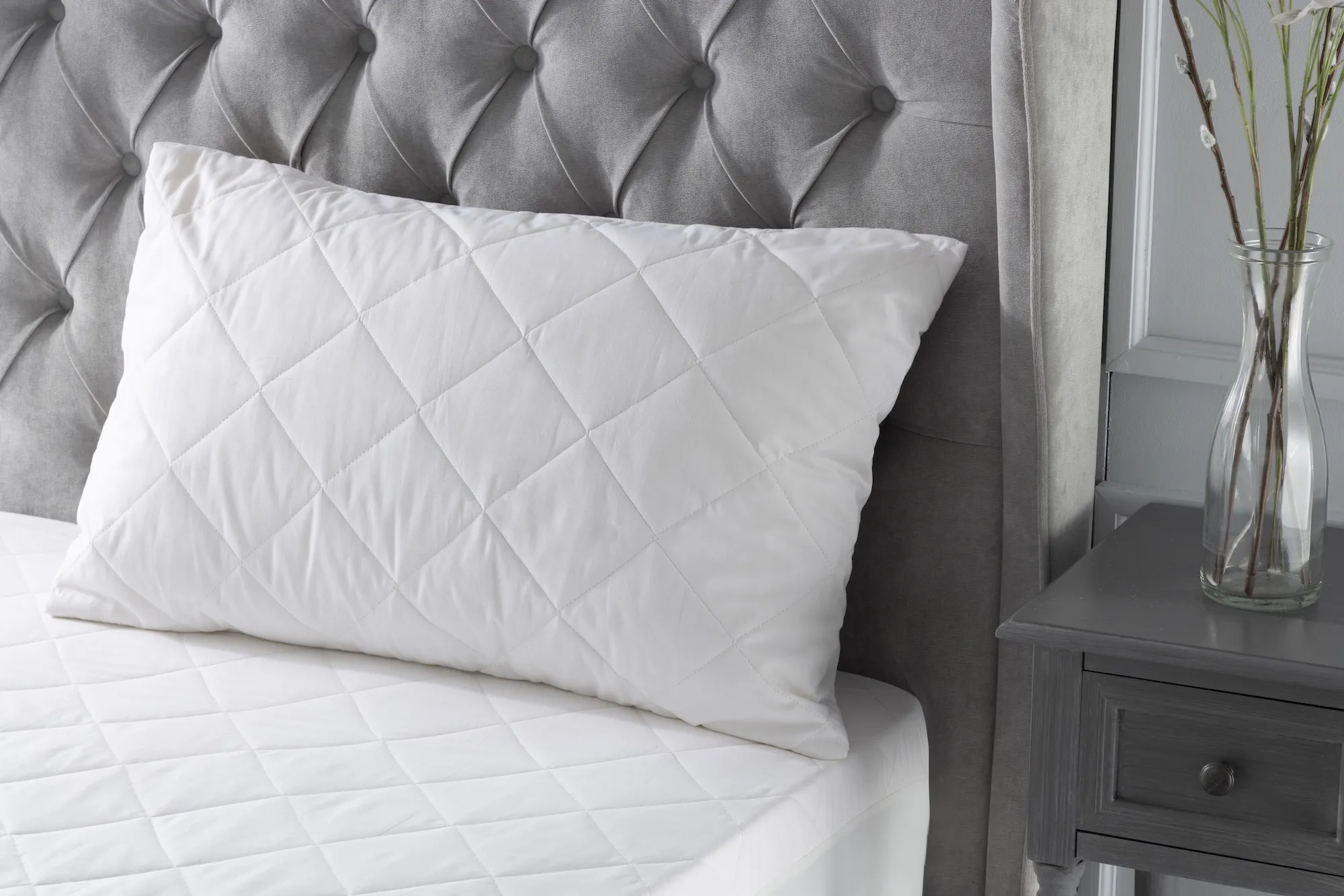
A good quality mattress protector is the single most effective way to protect your mattress from dust mite accumulation. Our 100% Cotton Quilted Mattress Protector is priced at £55 in king size and provides a washable barrier between you and the mattress surface.
Washing the protector weekly at 60°C, along with your other bedding, means the mite load never builds to a level that penetrates the mattress itself. If you already have a mattress and want to start managing dust mites properly, a protector ia good place to start.
Natural Fibre Duvets
Synthetic duvets, despite being marketed as “hypoallergenic”, present the same problem we discussed with synthetic mattresses: they may start in a hygienic state, but in use, they accumulate the same organic debris that supports dust mite populations as any other duvet.
Natural Wool and Duck Down duvets are also washable at appropriate temperatures and, in the case of Wool, have the same moisture-wicking properties that make Wool mattress fillings beneficial.
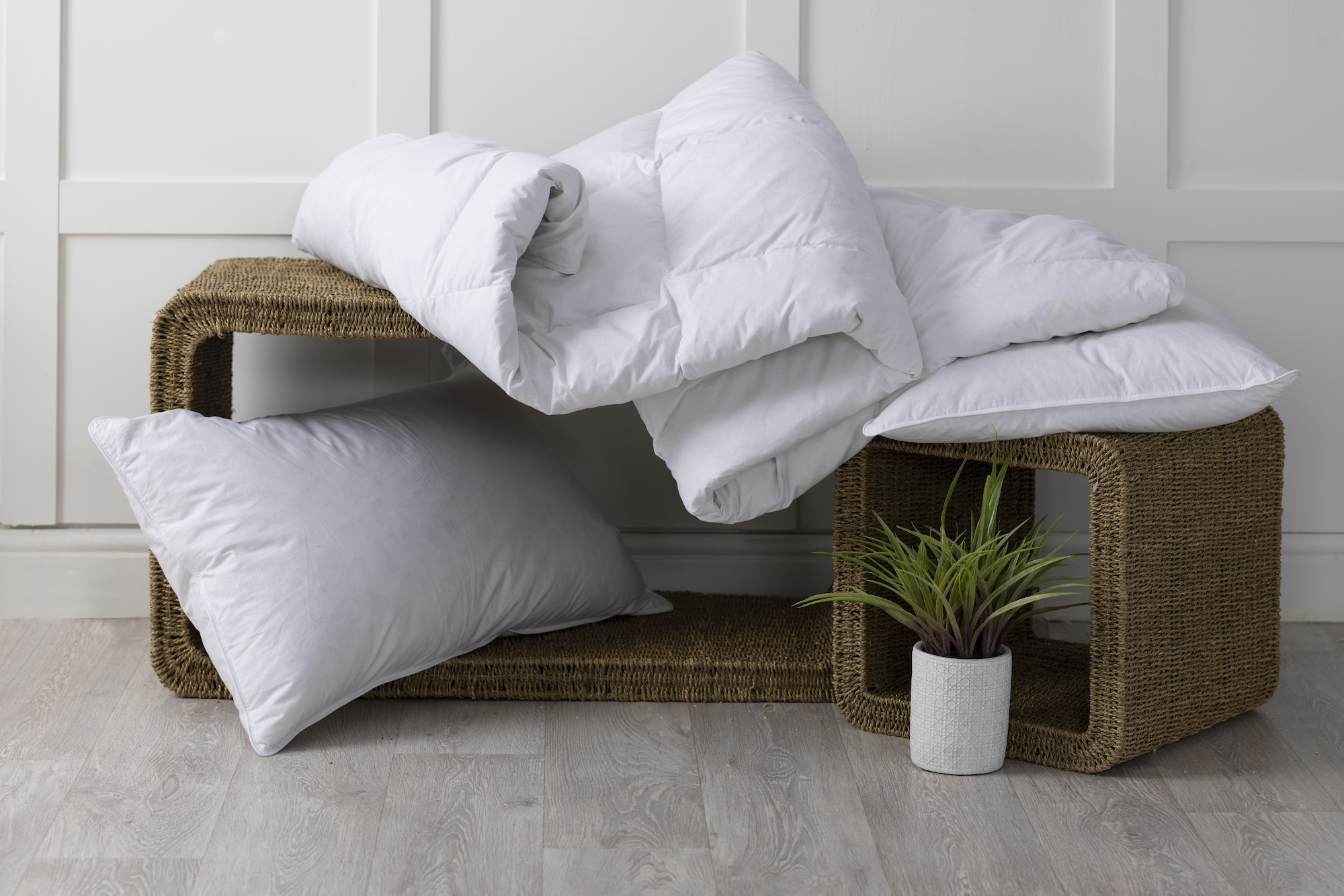
Our 100% Natural Wool Duvet is available in lightweight (£240, king) and mediumweight (£285, king) options. Wool actively regulates temperature and wicks moisture, so you wake up drier than with a synthetic alternative. A drier sleeping environment is less hospitable to dust mites throughout your entire bed, not just the mattress.
If you prefer a Down duvet, our Duck Down Duvets are available in 10.5 tog (£140, king) and 13.5 tog (£160, king). Natural Down clusters provide excellent breathability and, unlike synthetic fills, do not retain heat or moisture.
Natural Fibre Pillows
Pillows are often overlooked in dust mite cdiscussions but they are among the most significant allergen reservoirs in the bed. You breathe directly into your pillow for eight hours, creating exactly the warm, moist conditions dust mites favour. Research has found that pillow weight can increase by as much as 10% over 2 years of use, simply due to the accumulation of dust mite bodies and waste.
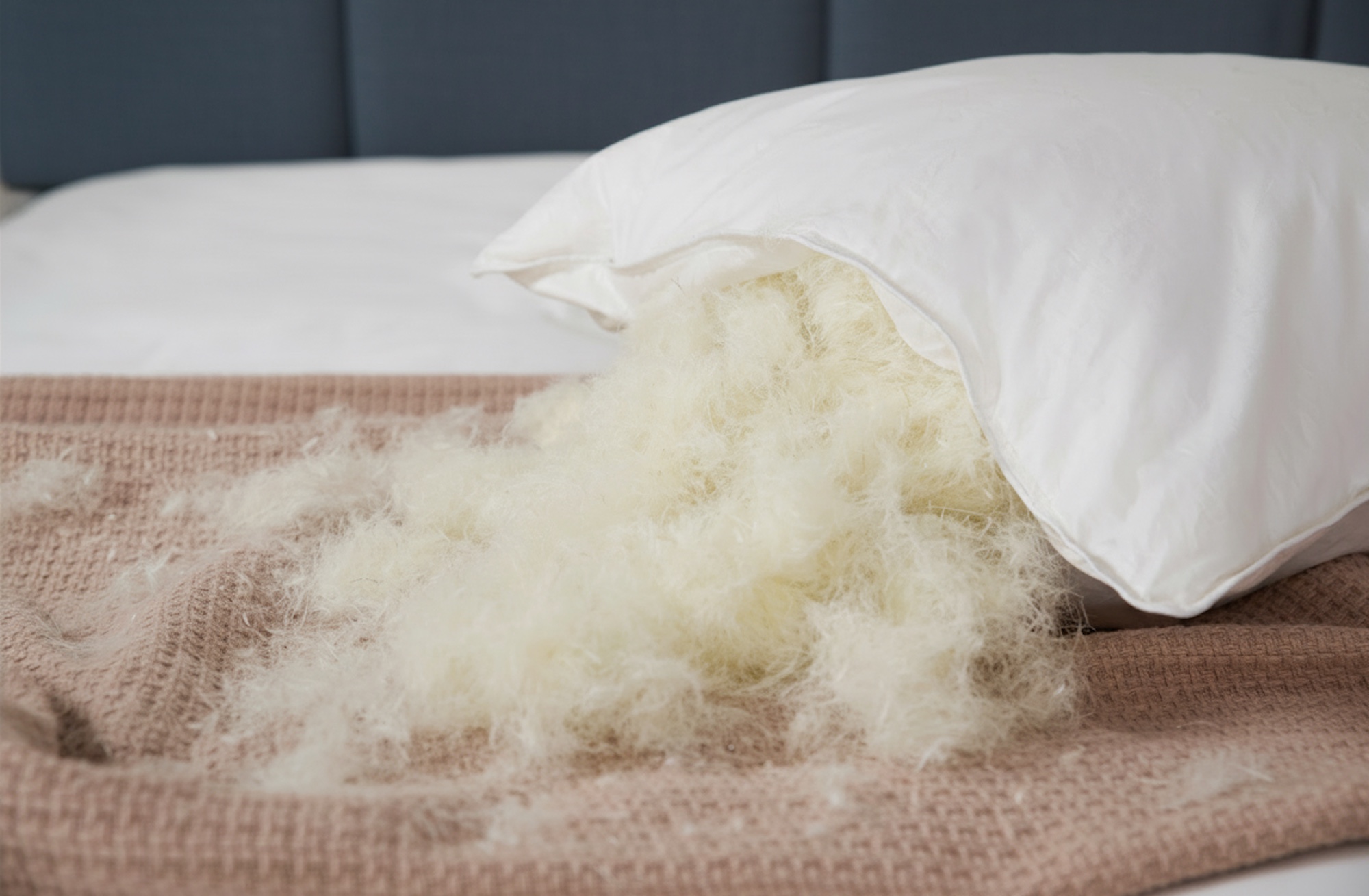
Our 100% Natural Wool Pillow (£80 each) and Goose Feather and Down Pillow (£120 each) are both made from breathable natural materials and come with pillow protectors (£20 each) recommended as standard. The protectors should be washed weekly along with your pillowcases. Pillows themselves should be replaced every one to two years, regardless of how well they have been maintained, as the allergen load in a pillow after two years is difficult to meaningfully reduce through washing alone.
Cotton Sheets and Washability
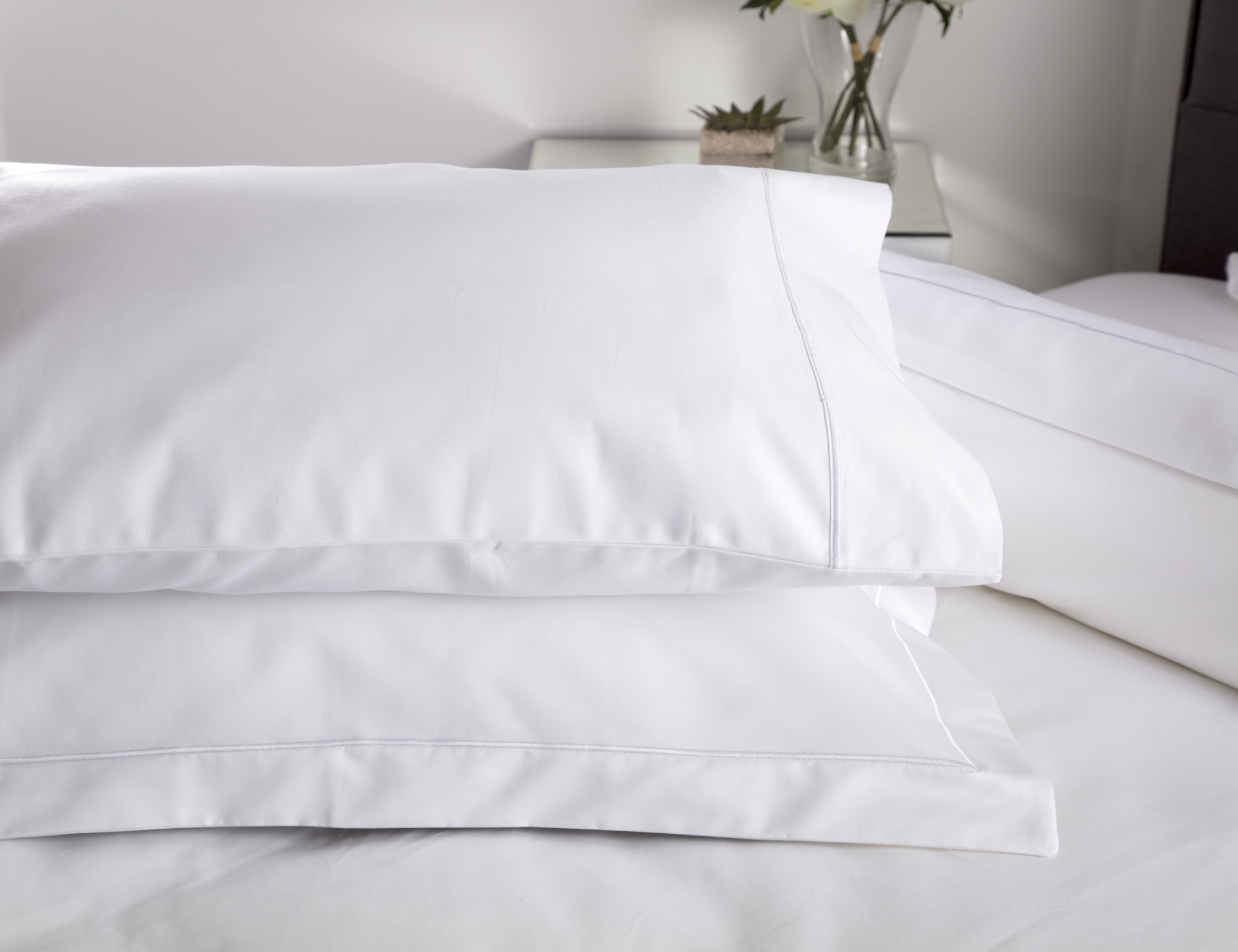
The washability of your sheets matters as much as what they are made from. Our Extra Deep Fitted Pima Cotton Sheet (£55, king) and Cotton bedding packs are designed to wash well at 60°C without shrinking or losing quality. Pima Cotton’s longer fibres produce a tighter weave than standard Cotton, which provides a more effective surface barrier against allergens while remaining breathable and comfortable to sleep on.
10. When to Replace Your Mattress
If your mattress is more than eight years old and you are experiencing significant allergy symptoms in bed, it is worth being realistic about whether cleaning and hygiene measures alone can solve the problem. An old mattress that has been without a protector for years will have accumulated an allergen load throughout its upholstery layers that surface cleaning cannot adequately address. The mites and their waste are woven into the fabric of the mattress at a depth that a vacuum cleaner cannot reach.
Most retail mattresses have a lifespan of 7-10 years.
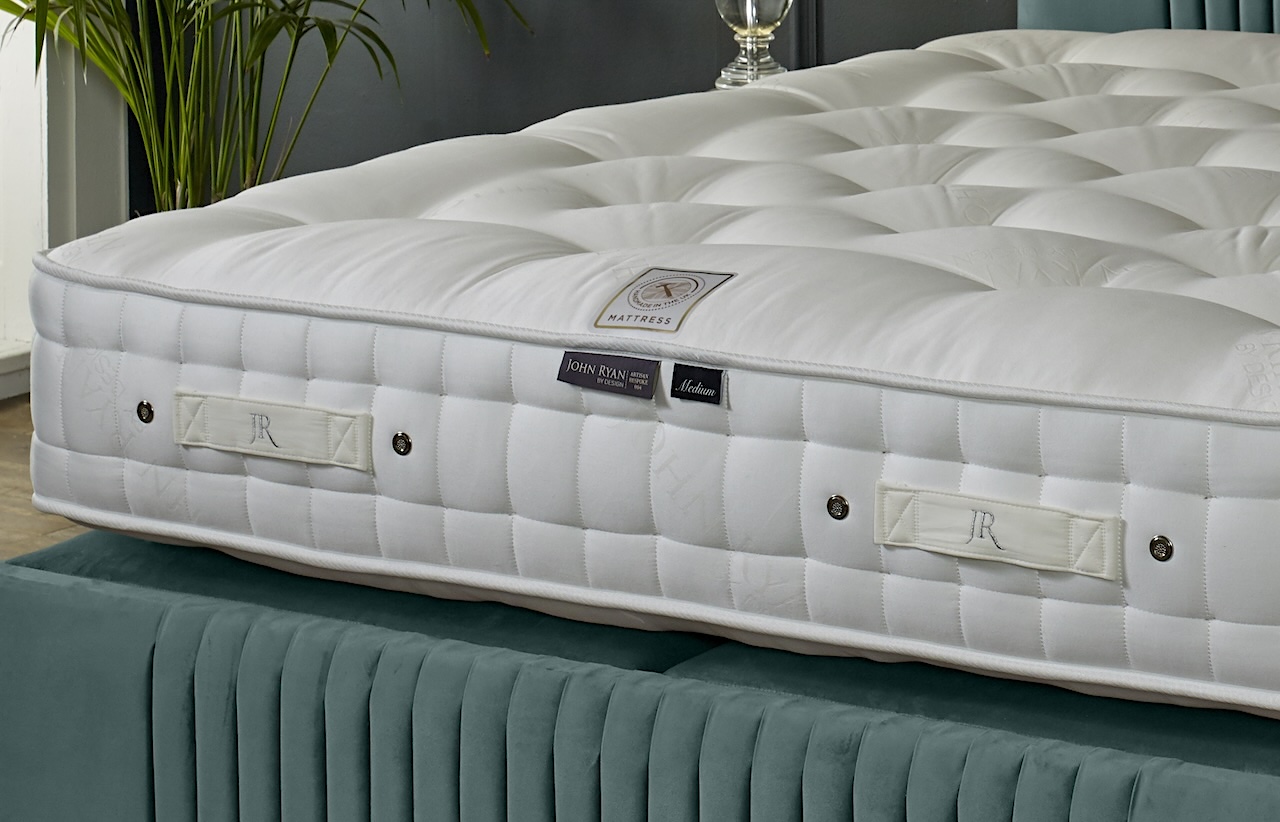
Replacement, combined with installing a proper protector on the new mattress from day one, is often the most practical path to genuinely improved sleep for long-term allergy sufferers. It is also worth considering that our two-sided, natural fibre mattresses, maintained properly from the start, are designed to last 12 to 15 years.
The cost per night over that ownership period is considerably lower than it might initially appear, and the health benefits of sleeping on a consistently cleaner, more breathable mattress across that time are real.
11. Frequently Asked Questions About Dust Mites in Mattresses
Can you ever fully eliminate dust mites from your mattress?
No, not permanently. Dust mites are present in virtually every home in the UK, and complete elimination is not realistic. The practical aim is to reduce the population to a level at which allergen exposure no longer causes symptoms. A consistent hygiene routine, combined with a quality mattress protector and breathable bedding, achieves this for the vast majority of allergy sufferers.
How do I know if I have a dust mite allergy?
The classic signs are allergy symptoms that are worst first thing in the morning and improve as you spend time away from the bedroom. Sneezing, nasal congestion, itchy eyes and skin irritation that follow this pattern are strongly suggestive. A confirmed diagnosis from your GP via a skin prick test or blood test is the only reliable way to know for certain.
Is it true that not making your bed helps with dust mites?
There is genuine science behind this. Pulling the duvet back and leaving the bed exposed for 20 to 30 minutes each morning allows overnight moisture to evaporate, reducing the humidity that dust mites depend on. You do not need to leave the bed permanently unmade, but the brief airing habit is a simple and effective part of a dust mite management routine.
What temperature kills dust mites in bedding?
A wash at 60°C or above kills dust mites and removes their allergens. A shorter high-heat tumble dry cycle of at least 15 minutes achieves a similar effect for items that cannot be washed at 60°C. Cold washes do not reliably kill dust mites, even with detergent.
Is a memory Foam mattress better for dust mite allergies?
Not as straightforwardly as the marketing suggests, memory Foam’s dense structure means mites cannot burrow deep into the mattress. Still, it traps heat and moisture at the surface, creating conditions that are actively favourable for dust mites. A breathable natural fibre mattress with a quality washable protector, combined with a regular hygiene routine, is a more effective long-term strategy than choosing a mattress material in isolation.
How often should I replace my mattress if I have a dust mite allergy?
A well-maintained mattress with a protector in place from day one can comfortably last 10 to 12 years. An older mattress without adequate protection may harbour allergens that are difficult to reduce through cleaning, in which case earlier replacement is warranted. Our two-sided natural fibre mattresses are designed to last 12 to 15 years when turned and maintained properly, which reduces the frequency of replacement over a lifetime of sleeping.
Do natural fibre mattresses attract more dust mites than synthetic ones?
Natural fibre mattresses were historically considered more susceptible to dust mite infestations because the organic materials provide a more hospitable environment in the deepest layers. However, the breathability of natural fibres creates a significantly drier sleep surface, which is less favourable for mite reproduction than the warmer, moister environment of synthetic Foam. With a quality protector in place, a natural fibre mattress is not at a meaningful disadvantage compared to a synthetic one and offers considerably better sleep quality in return.
What is the best mattress protector for dust mite allergies?
A 100% Cotton, fully encasing, washable mattress protector that can be laundered at 60°C is the practical gold standard for most households. Specialist allergen-barrier protectors with very tightly woven microfibre fabrics are available for cases where allergies are severe. Still, for most people, a well-chosen Cotton protector that is washed weekly as part of a consistent routine will be more than adequate.
Can dust mites cause asthma attacks?
Yes. Dust mite allergens are among the most significant known triggers of asthma in the UK. The proteins found in dust mite faecal matter and shed exoskeletons cause airway inflammation in sensitised individuals that can provoke asthma attacks. Managing your sleeping environment is therefore ofparticularly importantf you or someone in your household has asthma. Speak to your GP or asthma nurse about a full environmental management plan if this applies to you.
Further reading from our knowledge hub:
- Mattress mould: how it happens and how to treat it
- Mattress care and maintenance: the full guide
- Hypoallergenic mattresses explained
- The best temperature to wash bedding
- Clean bedroom checklist
Summary
Trying to eradicate dust mites is, in reality, a losing battle. A robust cleaning regime will help reduce the lifecycle and impacts of dust mites. Clean covers are rare; replace frequently, and mattress maintenance will help reduce any impact. The same goes for mouldy mattresses; ensuring rooms are not humid and well ventilated should help keep your mattress in perfect shape. If you need more advice, please call us on 0161 437 4419.

Dreaming of the perfect nights sleep?
Ask us a question
There are over 6000 questions and answers submitted by you on all questions about mattresses and bed problems. Enter a keyword such as Vi Spring, John Lewis beds, bad back or Memory Foam and see if your question has already been answered.
If you can’t find an answer in knowledge hub, ask a new question. We aim to respond to all questions within one working day.
Newsletter
Enter your email to join our newsletter. We’ll send you occasional news and mattress expertise.