







Mattress Choices
March 2026Side Sleeper Mattress Advice & Guidance
Side sleeping is the most popular sleeping position in Britain, and for good reason. Done correctly, with the right mattress underneath you, it supports spinal alignment, reduces snoring, and keeps your joints comfortable throughout the night. The wrong mattress puts excessive pressure on your shoulders and hips, leaves you waking up stiff and sore, and drags your spine out of alignment for hours at a time.
This guide covers everything a side sleeper needs to know, from the health benefits and genuine drawbacks to how spring tension and upholstery GSM affect your comfort and which mattresses from our range are best suited to your sleeping position. We have expanded this guide significantly to address the most common questions we receive from side sleepers, including advice on pillows, mattress protectors, couples with different sleeping positions, and how your body weight changes the firmness equation.

Sleeping on your side: mattress guide contents
- Benefits of sleeping on your side
- Drawbacks of sleeping on your side
- Does side sleeping cause shoulder pain?
- Spinal alignment and zoned support explained
- Firmness and body weight: what side sleepers need to know
- Best type of mattress for a side sleeper
- Mattress upholstery for side sleepers explained
- Spring tension guide for side sleepers
- Side sleepers and couples: split tension options
- Pillow advice for side sleepers
- Why a mattress protector matters for side sleepers
- Recommended mattresses for side sleepers
- Frequently asked questions
Benefits of sleeping on your left or right side
Sleeping on your back has long been cited as the ideal sleeping position, but the research on side sleeping is more favourable than many people realise. Studies suggest that more than half of adults spend most of their sleep time on their side, and for many, it is simply the most natural and comfortable position to settle into.
Side sleeping, when properly supported, offers several genuine advantages over back or stomach sleeping. The key phrase here is “properly supported,” which is where mattress choice becomes so important. A mattress that is too firm will push back against the contours of your body rather than accommodate them, which is the source of most side-sleeper complaints.
Side sleepers benefit from:
- Reduced snoring and improved airway opening during sleep
- Reduced symptoms of sleep apnoea
- Less lower back and joint discomfort when the spine is properly aligned
- Fewer nighttime fibromyalgia pain episodes
- Better digestion when sleeping on the left side, specifically
- Greater comfort during pregnancy, particularly in the later stages
Sleeping on your side helps keep the airways open, which is why rolling a snoring partner onto their side tends to work. The vibrations that cause snoring come from partially closed airways, and side sleeping naturally helps open these up. If you want to understand more about this, our detailed sleep apnoea guide covers it in full.
Left-side sleeping in particular has been associated with improved digestion. The stomach sits naturally on the left side of the body, and sleeping on the left allows gravity to assist gastric emptying rather than working against it. This is not a mattress consideration as such, but it is worth understanding when choosing which side to favour.
Drawbacks of sleeping on your side
Side sleeping does have drawbacks, but in almost every case, those drawbacks are a symptom of the wrong mattress rather than an inherent problem with the sleeping position itself. The most common complaints we hear from side sleepers are shoulder soreness, hip pain, and the uncomfortable “dead arm” sensation that comes from poor pressure distribution throughout the night.
When a mattress is too firm, it cannot accommodate the broader areas of your body at the shoulders and hips. Those points then bear the full brunt of your bodyweight, compressing against a surface that will not yield. Over the course of er a full night of sleep, this sustained pressure leads to pain and restricted circulation. A mattress correctly specified for your weight and sleeping position will allow your shoulder to sink into the comfort layers while providing support through the narrower areas of your waist and torso.

Common side sleeping drawbacks include:
- Sore or stiff shoulders on waking
- Hip pain from insufficient pressure relief
- Dead arm or restricted circulation in the lower arm
- Excess movement during the night from tossing and turning
- Excess heat build-up on the contact side
- Pelvic rotation pulls the lower back out of alignment
Pelvic rotation is worth highlighting specifically because it is often overlooked. When a mattress is too firm, and the hip cannot sink into the surface, the pelvis rolls forward slightly to compensate, which drags the lower spine into an unnatural curve. This is a common cause of lower back pain in side sleepers who assume the problem must be something else entirely.
Does sleeping on your side cause shoulder pain?
Sleeping on your side should not cause shoulder pain if you have chosen the correct mattress and upholstery. The issue is almost always one of mattress specification rather than sleeping position. When we speak to customers who are experiencing shoulder pain as a side sleeper, the conversation almost always leads back to either a mattress that is too firm for their body weight, upholstery layers that are too shallow, or a mattress that has been slept on one-sided for so long that the comfort layers have compressed unevenly.

If you are waking with sore shoulders or hips, the first thing to check is your spring tension relative to your body weight. A spring that is too firm for your weight will resist rather than accommodate your body, placing the full pressure load on your shoulders and hips instead of distributing it across the contact area. This is one of the most common mismatches we see, particularly in couples where a shared mattress has been chosen based on one partner’s weight rather than both.
The depth of the upholstery comfort layers, measured in GSM, also plays a significant role. Shallow upholstery on a firm spring unit is the worst combination for a side sleeper. The comfort layers need enough depth to cushion the shoulder and hip contact points before the spring unit takes over for support. Our recommended mattresses for side sleepers all carry sufficient GSM in the comfort layers to achieve this.
If you are experiencing persistent shoulder pain, always seek medical advice. A mattress change can make a significant difference, but it is not a substitute for professional assessment.
| Bodyweight | Spring tension |
|---|---|
| Upto 16 Stone / 50-101kg | Medium (1.4mm) |
| 16 Stone / 101kg Upwards | Firm (1.6mm) |
| Available in Bespoke Products (Please Call) | Soft (1.2mm) |
Spinal alignment and zoned support explained
One of the most important concepts for any side sleeper to understand is how spinal alignment works when you are lying on your side. In an ideal sleeping position, your spine should maintain the same gentle natural curve it has when you are standing upright. The problem for side sleepers is that the body is not a uniform shape. The shoulder and hip extend beyond the waist, so a flat, uniformly firm surface cannot support the whole body evenly.
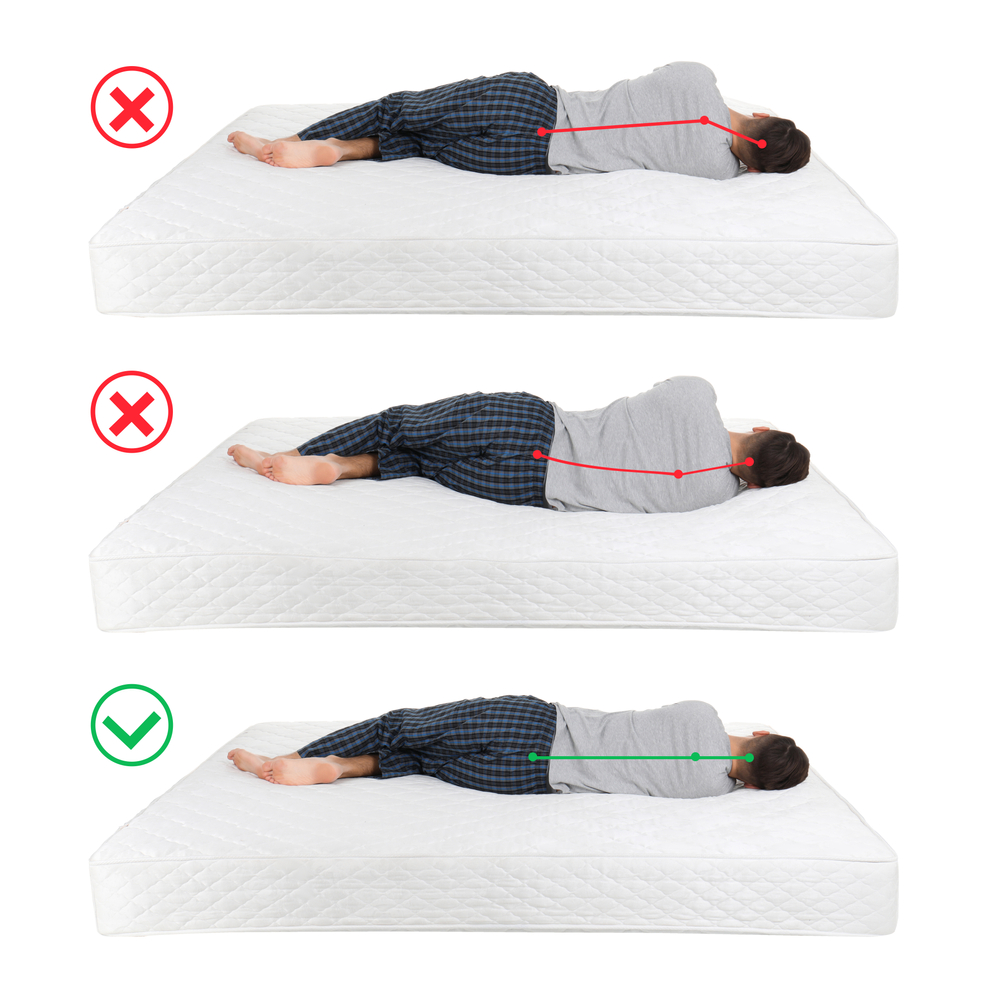
The shoulder needs to sink into the mattress by several centimetres to keep the upper spine level. At the same time, the narrower waist, which does not carry as much weight, needs to be supported upward to fill the gap between the hip and shoulder. If the mattress is too firm to allow this shoulder and hip sinkage, the spine bows upwards at the shoulder. If the mattress is too soft and both the shoulder and hip sink too deeply, the spine sags downwards in the middle.
Getting this balance right is why the combination of correct spring tension and adequate upholstery GSM matters so much for side sleepers. The spring tension needs to be appropriate for your body weight so that the mattress provides genuine support.
The comfort layers above the spring unit need sufficient depth to cushion pressure points and allow the shoulder to sink to the correct depth. This is not a one-size-fits-all equation, which is why we treat selecting the right spring tension for your weight as a genuine decision, not a marketing exercise.
Some mattresses use zoned spring arrangements, where different spring gauges are used in different areas of the mattress to provide more give at the shoulder zone and more support at the hip and waist. While zoned construction can help, the more reliable approach is to ensure the overall spring tension and upholstery combination is correctly matched to the sleeper’s weight. A correctly specified traditional mattress will outperform a poorly specified zoned mattress for most side sleepers.
Firmness and body weight: what side sleepers need to know
Firmness is one of the most misunderstood aspects of mattress buying, and the confusion is compounded by the inconsistent way different manufacturers use terms like “soft,” “medium,” and “firm.” At John Ryan, firmness is directly linked to spring wire gauge, which is a measurable, consistent specification rather than a marketing description.
For side sleepers, the general principle is that a softer spring tension and more forgiving comfort layers are needed compared to back or stomach sleepers of the same body weight. This is because the pressure on the shoulder and hip contact points is significantly greater for a side sleeper than for someone lying flat. The broader the contact area, the more the pressure is distributed. For a side sleeper, the contact area is comparatively narrow, so the pressure at those points is higher.
As a guide to spring tension by body weight for side sleepers:
| Bodyweight | Spring tension |
|---|---|
| Upto 16 Stone / 50-101kg | Medium (1.4mm) |
| 16 Stone / 101kg Upwards | Firm (1.6mm) |
| Available in Bespoke Products (Please Call) | Soft (1.2mm) |
The table above reflects the standard guidance, but for side sleepers, we would generally suggest leaning towards the softer end of the tension range appropriate for your weight, or choosing a mattress with deeper comfort layers rather than upgrading to a firmer tension. If you are between two tension options, read our detailed spring tension guide before making a decision.
Body weight also affects how quickly comfort layers compress. Heavier sleepers will experience faster upholstery settlement, which is one reason the two-sided construction of our Artisan and Legacy mattresses is particularly valuable. Being able to flip and rotate the mattress means both sides of the comfort layers are used equally, significantly extending the mattress’s useful life and maintaining consistent support for longer.
Best type of mattress for a side sleeper
The best type of mattress for a side sleeper is a pocket spring mattress with generous natural fibre upholstery and a soft-to-medium tension appropriate for your body weight. This combination delivers the three things a side sleeper needs most: independent spring response that reacts to the body’s contours rather than moving as a single unit, comfort layers with enough depth to cushion the shoulders and hips, and breathable natural fibres that regulate temperature rather than trapping heat against the body.
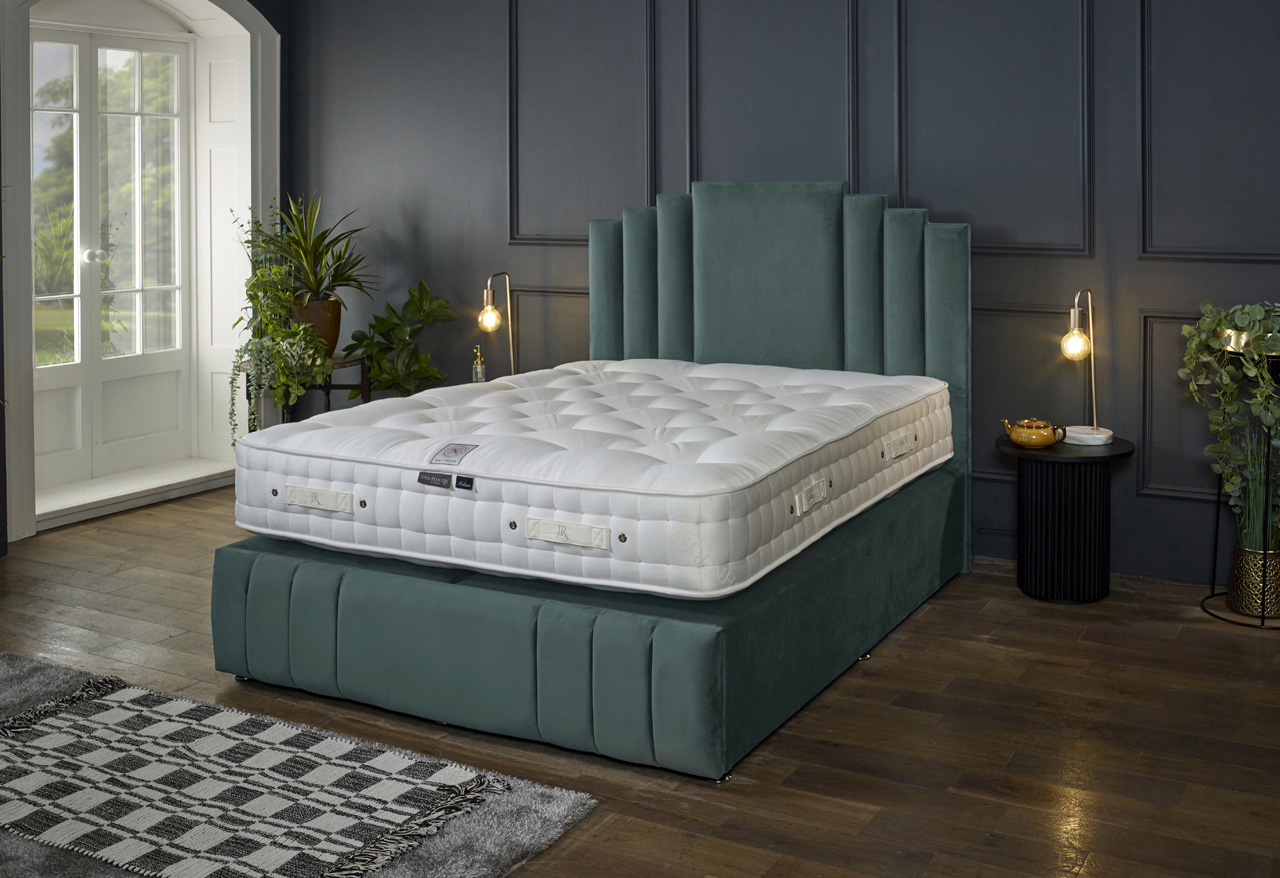
Natural fibre mattresses using Wool, Cotton, Mohair, or Horsehair are significantly better suited to side sleeping than memory Foam or synthetic fibre mattresses. Memory Foam is particularly problematic for side sleepers because it traps heat at the contact points, responds slowly to movement, and can feel restricting when you need to change position during the night.
The concentration of warmth on the sleeping side is also a common cause of disturbed sleep for side sleepers using Foam mattresses.
Mattress type comparison for side sleepers:
| Mattress Type | Pressure Relief | Temperature Regulation | Responsiveness | Side Sleeper Suitability |
|---|---|---|---|---|
| Pocket spring with natural fibres | Excellent | Excellent | Excellent | Best choice |
| Pocket spring with synthetic upholstery | Good | Moderate | Good | Good entry-level option |
| Latex (natural) | Very good | Good | Very good | Strong alternative |
| Open coil spring | Poor | Moderate | Poor | Not recommended |
| Memory Foam | Good initially | Poor | Poor | Not recommended |
| Hybrid (Foam and spring) | Moderate | Moderate | Moderate | Adequate but not optimal |
Natural Latex warrants specific mention because it behaves differently from memory Foam, despite both being described as foam-based materials. Natural Latex is highly responsive, bouncing back quickly when pressure is removed, and it does not trap heat in the same way. For side sleepers who want the contouring feel of a foam-type material with genuine breathability, our Artisan Latex mattress (king size £2,250) combines a Talalay natural Latex layer with Cotton and Coir upholstery and a calico-encased pocket spring unit for excellent pressure relief.
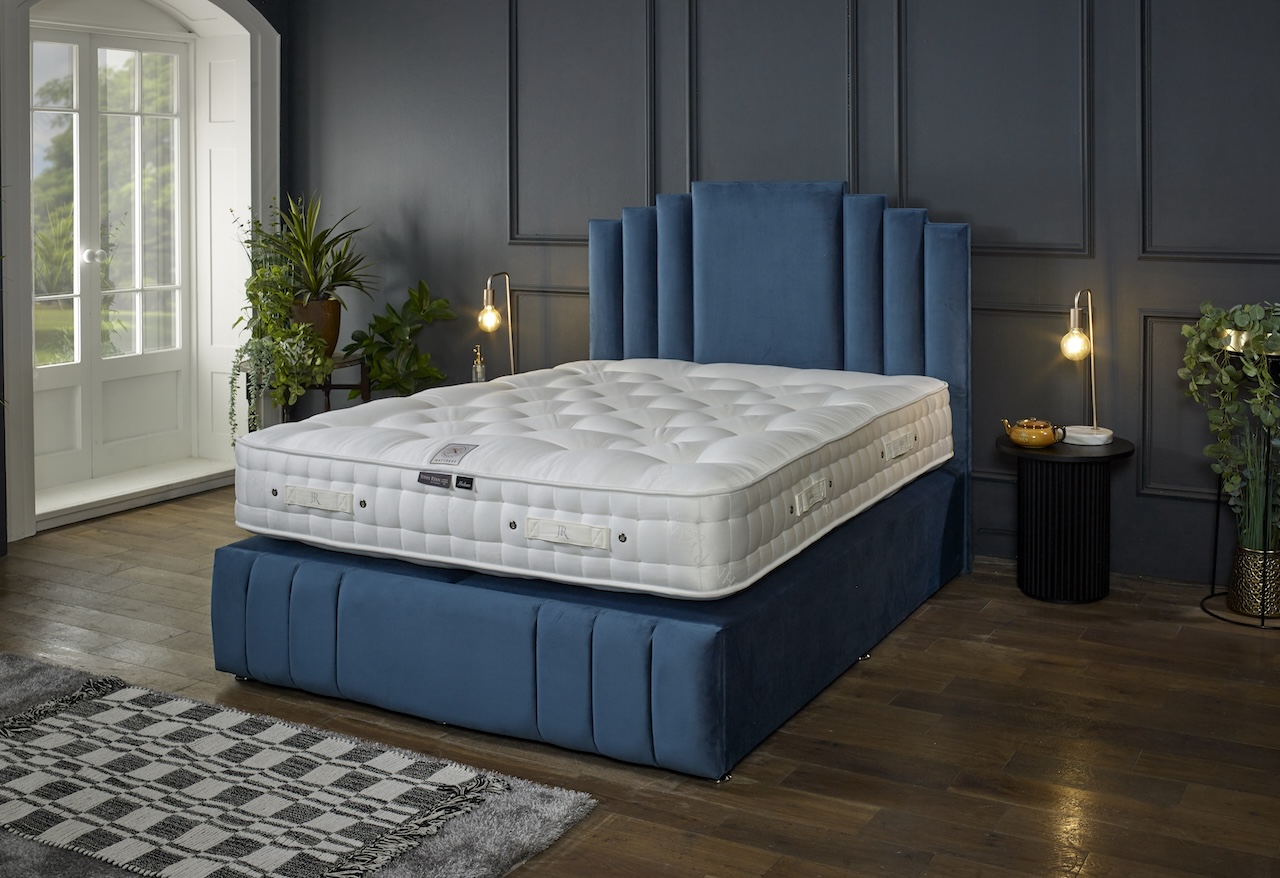
Is a Hybrid mattress good for a side sleeper? Hybrid mattresses combine Foam layers with a spring unit. While this is an improvement over all-foam mattresses, the Foam upholstery layers in most hybrids are synthetic and do not regulate temperature as effectively as natural fibres. For most side sleepers, a natural-fibre pocket-spring mattress outperforms a Hybrid at the same price point.
Mattress upholstery for side sleepers explained.
Understanding which upholstery fibres are best suited to side sleeping is one area where we can offer genuinely specialist guidance. The upholstery layers sit above the spring unit and are responsible for cushioning your body, distributing pressure, and regulating temperature throughout the night. For a side sleeper, these layers matter more than in almost any other sleeping position, because you are relying on them to support the shoulders and hips.
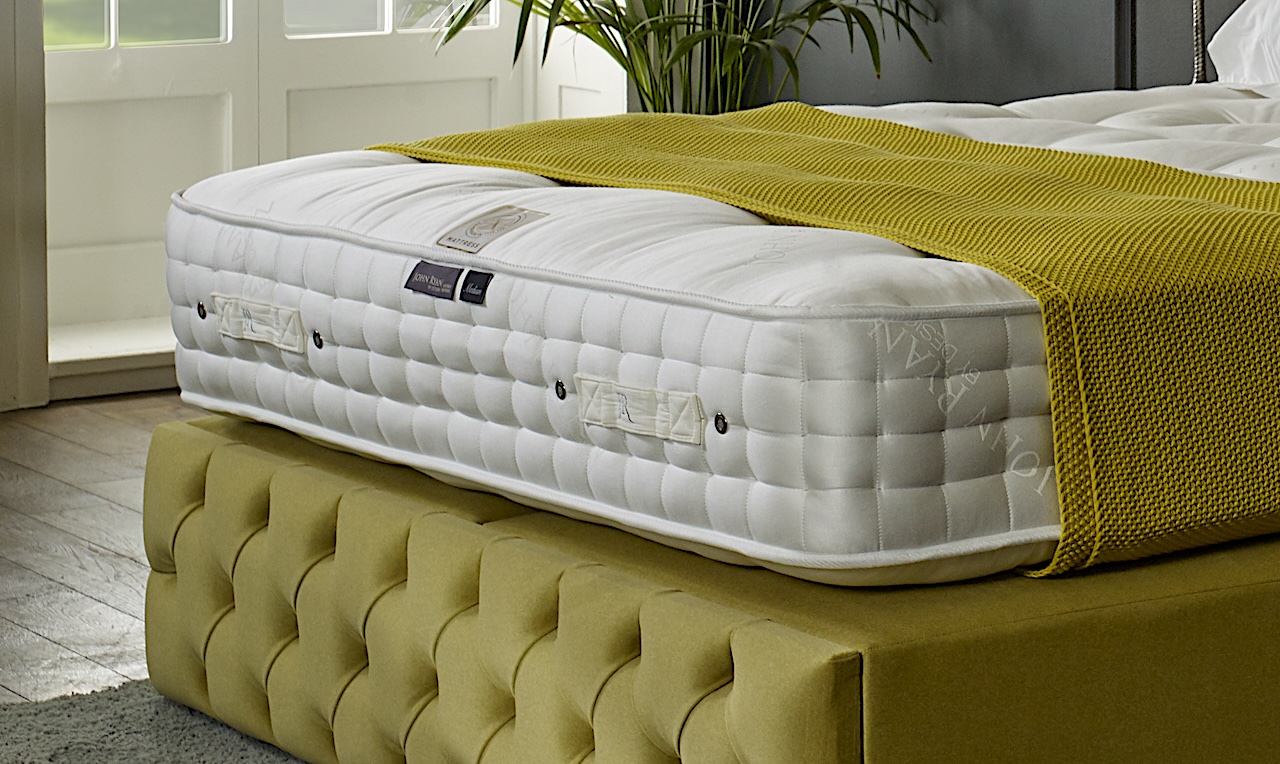
The softer the fibre, generally speaking, the more forgiving it is for a side sleeper. However, softness alone is not the goal. The upholstery needs to be soft enough to cushion pressure points, but also resilient enough to spring back rather than become permanently compressed. This is where natural fibres consistently outperform synthetic alternatives. Wool, Cotton, Mohair, and Horsehair all have natural resilience and moisture-wicking properties that synthetic polyester cannot replicate.
| Upholstery Layer | Fibre Type | How it will feel? | Price Point |
|---|---|---|---|
| Polyester | Synthetic | Soft | Cheap |
| White Fibre | Synthetic | Soft/Medium | Cheap |
| Polycotton | Synthetic/Natural Blend | Soft/Medium | Mid Price |
| Wool (Pure) | Natural | Soft/Medium | High-End |
| Cotton (Pure) | Natural | Soft | High-End |
| Bamboo | Natural | Super Soft | Expensive / Exclusive |
| Alpaca | Natural | Soft | Expensive / Exclusive |
| Cashmere (Pure) | Natural | Soft | Expensive / Exclusive |
| Vicuna | Natural | Super Soft | Expensive / Exclusive |
One aspect of upholstery that other mattress retailers rarely discuss is how GSM figures translate into real-world comfort. GSM stands for grams per square metre and represents the weight density of each upholstery layer.
A higher GSM in a natural fibre layer means more material, more cushioning, and generally more comfort for a pressure-sensitive side sleeper. Our full GSM guide explains this in detail, but as a practical reference, the Artisan Naturals carries 3,950 gsm of upholstery across its layers, while the Artisan Luxury carries 4,600 gsm. The difference is tangible and directly relates to how well each mattress cushions the shoulder and hip contact points.
Spring tension guide for side sleepers
Choosing the correct spring tension is the single most important decision a side sleeper can make when buying a mattress. The spring unit provides the foundational support layer, and if it is too firm for your body weight, no amount of upholstery on top of it will fully compensate. You will still feel resistance at the pressure points, because the spring is effectively pushing back against your shoulder and hip rather than yielding to accommodate them.
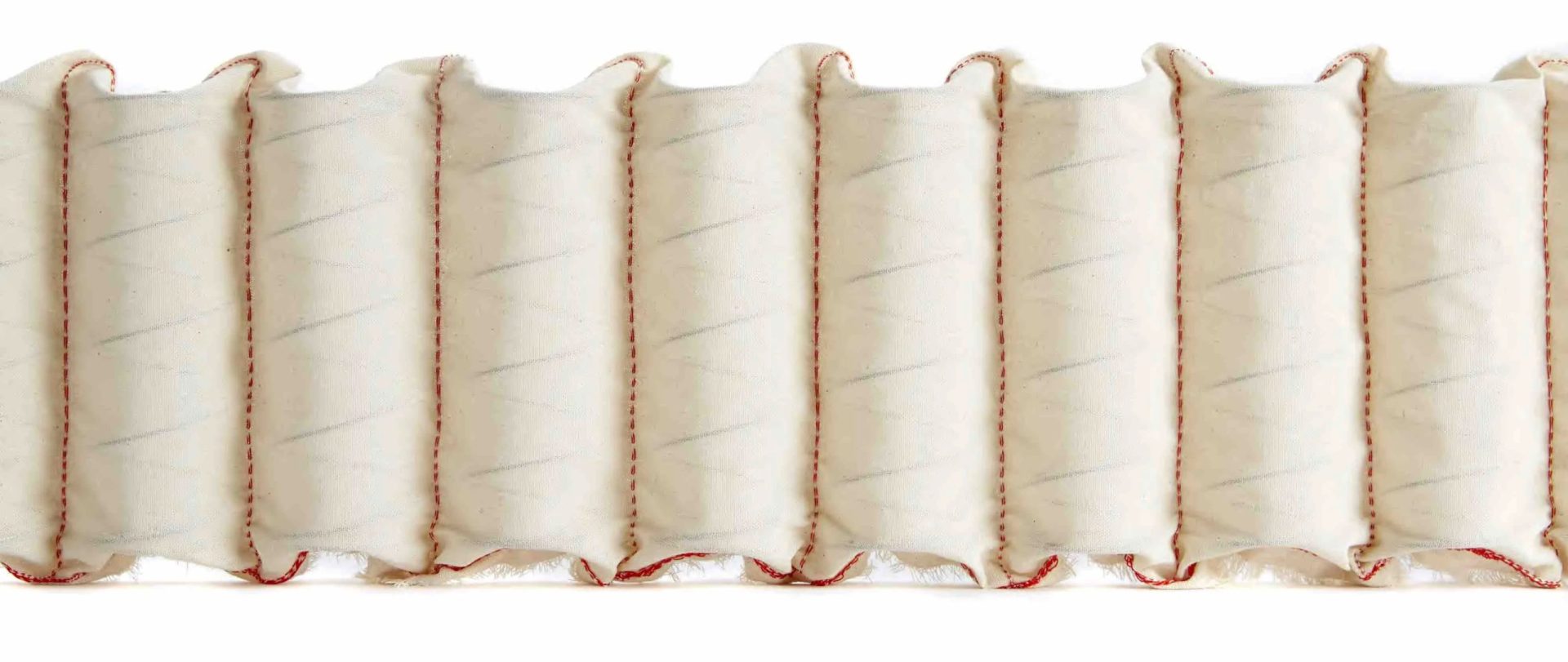
At John Ryan, spring tensions are specified by wire gauge. A lower wire gauge number indicates a thicker wire and a firmer spring. A higher gauge number indicates a thinner wire and a softer spring. This is a consistent, measurable specification that does not vary between manufacturers, unlike descriptive terms like “medium” or “medium-firm,” which can vary enormously.
Side sleepers and their recommended spring gauges by body weight:
| Body Weight | Recommended Tension | Wire Gauge | Notes for Side Sleepers |
|---|---|---|---|
| Under 10 stone | Soft | 1.2mm | Deeper upholstery important to prevent bottoming out |
| 10 to 14 stone | Medium | 1.4mm | Most common specification: lean soft end if between sizes |
| 14 to 17 stone | Firm | 1.6mm | Generous upholstery GSM essential to cushion pressure points |
| 17 stone and above | Extra firm | 1.8mm | Consider deeper comfort layers; a two-sided mattress is recommended |
For side sleepers who fall at the boundary between two tension bands, we would generally recommend choosing the softer option and ensuring the upholstery layers are deep enough to provide the required cushioning. The most common mistake is choosing a tension that is one step too firm because the customer has been told, “Firm is better for support.” For side sleepers, an appropriately soft spring combined with quality natural fibre upholstery is far more supportive than an overly firm spring that resists the body’s natural contours.
Side sleepers and couples: split tension options
Couples in which both partners sleep on their sides but have significantly different body weights face a specific challenge. A single tension that is correct for the heavier partner will almost certainly be too firm for the lighter one, and vice versa. This is a genuinely common scenario and one that is handled poorly by most high-street retailers, who tend to recommend a single “medium” compromise that often suits neither sleeper properly.

Our solution for couples with different weight requirements is a zip-and-link mattress, where two separately specified mattresses are joined with a zip connector to create a single sleeping surface. Each half can be made with a different spring tension, so the heavier partner has the right support while the lighter partner has the softer comfort their pressure points need. For a side-sleeping couple, this is often the most effective option available.
Motion transfer is also a consideration for side sleepers sharing a bed. Pocket springs, because each spring operates independently, provide significantly better motion isolation than open-coil or continuous-coil spring systems. When one partner moves during the night, the disturbance is absorbed by the springs immediately around that movement rather than travelling across the mattress. Natural fibre upholstery adds a damping layer. This is one of the practical advantages of investing in a quality pocket spring mattress for couples who are both light sleepers or who have different sleep schedules.
For couples considering a split-tension king-size mattress, our mattress selection guide covers the zip-and-link option in detail, including how to assess the right tension for each side. Our team is also available to talk through this directly if you want guidance specific to your situation.
Pillow advice for side sleepers
The right mattress can do a great deal for a side sleeper, but pillow height is equally important for maintaining spinal alignment from the neck down. When you lie on your side, your neck needs to be supported at the same height as your upper spine. If your pillow is too flat, your neck bends downwards. If it is too high or too firm, your neck is pushed upwards. Either deviation can create tension that leads to neck pain, shoulder stiffness, and disrupted sleep.
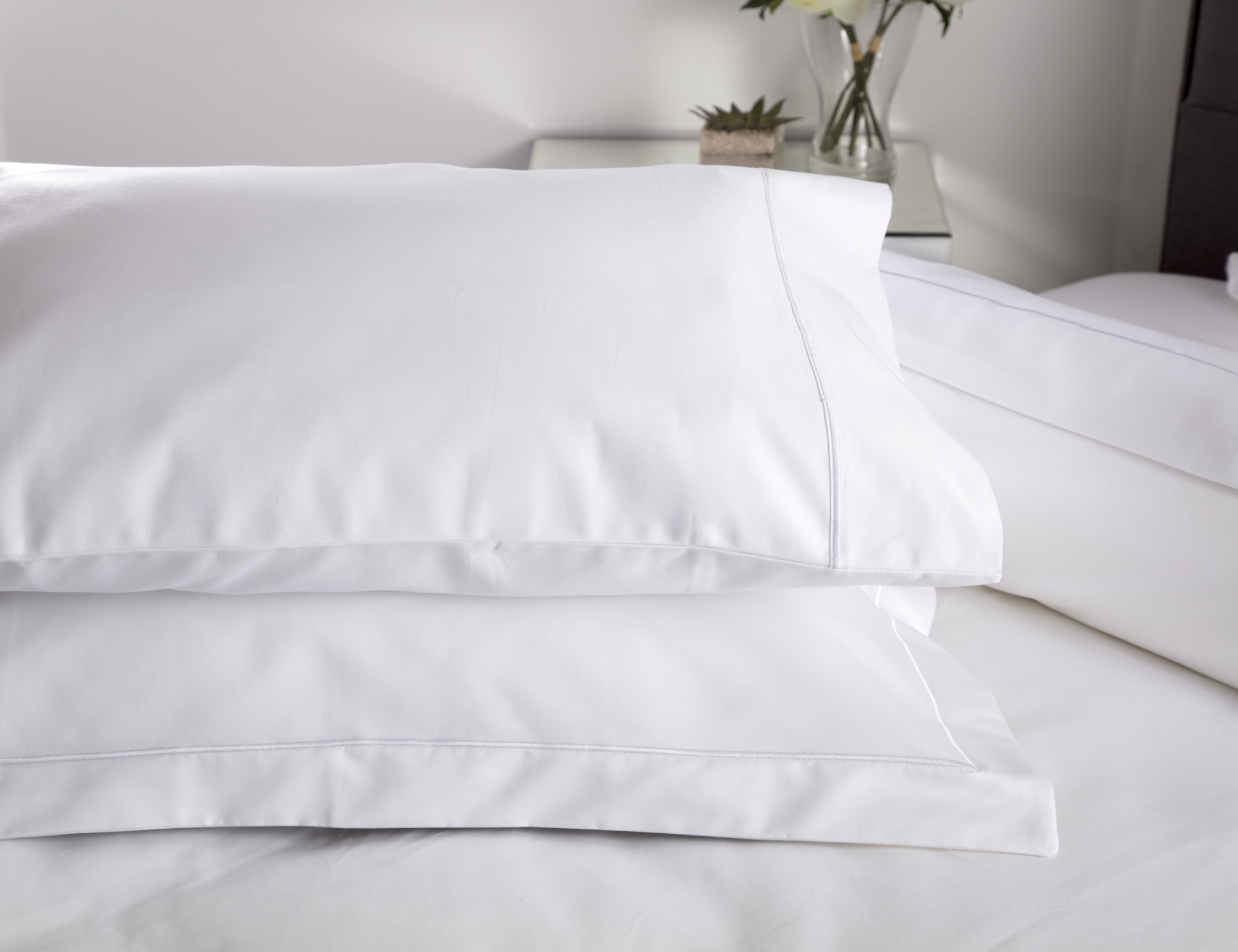
As a general guide, side sleepers need a firmer, higher-loft pillow than back sleepers. The distance between your ear and the edge of your shoulder is the rough measurement you are trying to fill. Broader-shouldered sleepers need more loft. Narrower-shouldered sleepers need less. Most side sleepers do well with a medium- to high-loft pillow that holds its shape through the night rather than flattening under sustained pressure.
Pillow loft guidance for side sleepers:
| Build | Recommended Pillow Type | Loft Height |
|---|---|---|
| Narrow shoulders / lighter build | Medium, supportive fill | 10 to 13cm |
| Average build | Medium to firm, resilient fill | 12 to 15cm |
| Broad shoulders / larger build | Firm, high-loft fill | 15cm and above |
Some side sleepers also find it helpful to place a second pillow between their knees. This reduces pelvic rotation by keeping the hips, knees, and ankles aligned, which in turn reduces strain on the lower back and sacroiliac joints. It is a small adjustment that can make a meaningful difference, particularly for those experiencing lower back discomfort.
Our 100% Natural Wool Pillows are a good choice for side sleepers who want a breathable, naturally temperature-regulating option that holds its shape without the synthetic fill that compresses quickly and needs to be replaced regularly. Each pillow is sold individually at £80.
Why a mattress protector matters for side sleepers
Side sleepers concentrate body heat and moisture at specific contact points rather than distributing them across the whole mattress surface. Over time, this focused heat and moisture penetration can degrade the natural-fibre upholstery layers, particularly Wool and Cotton, which are sensitive to prolonged damp. A quality mattress protector creates a barrier between the sleeper and the upholstery layers, preserving the performance of the comfort layers for longer and maintaining the hygiene of the sleep surface.

This is particularly relevant if you have invested in a natural fibre mattress. The Wool and Cotton layers that make those mattresses so comfortable for side sleepers are also the layers most vulnerable to moisture ingress from perspiration. A protector does not diminish the feel of the mattress in the way a thick, crinkly waterproof cover might. A well-made quilted Cotton protector adds a small amount of extra comfort while still doing its protective work underneath.
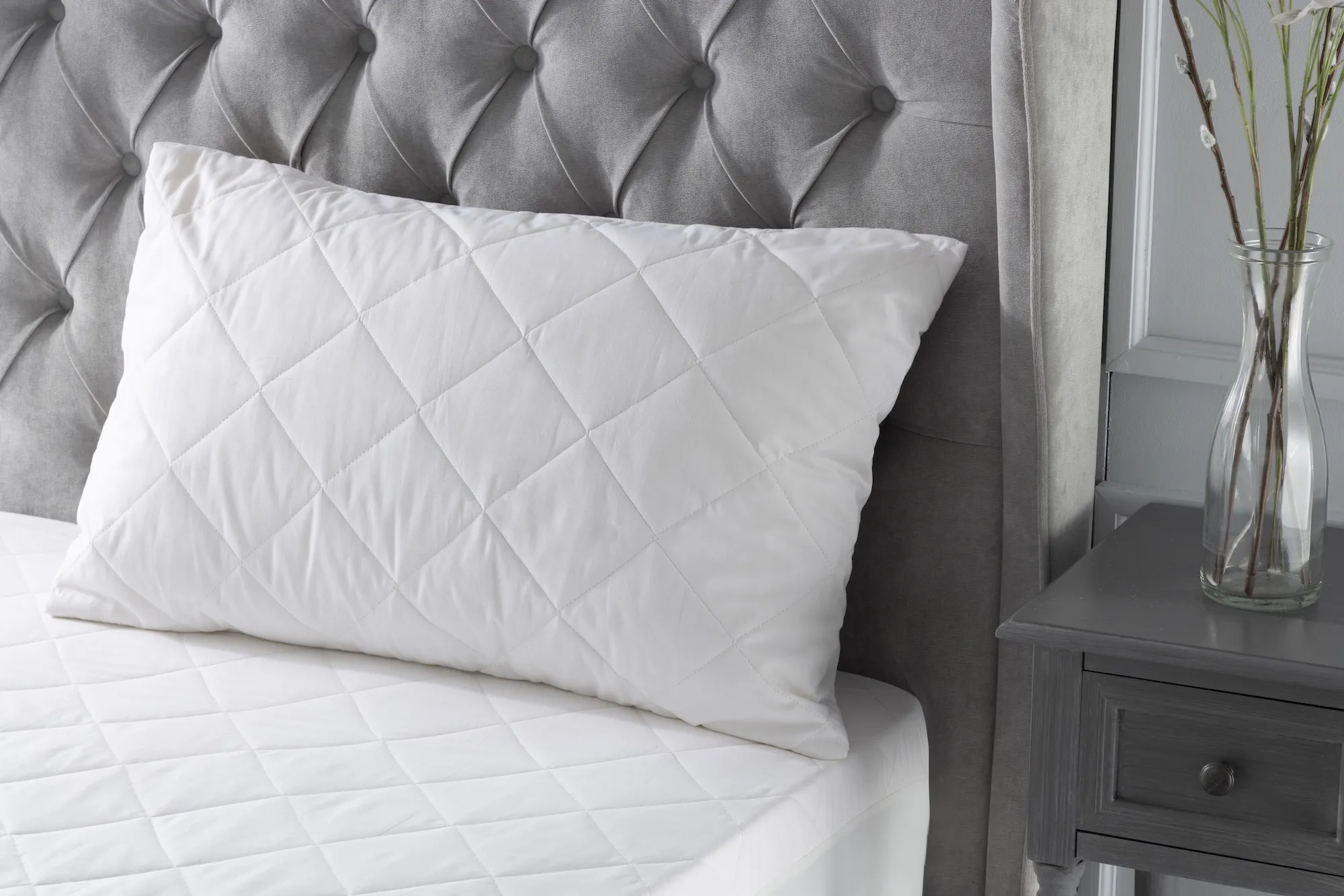
Our 100% Cotton Quilted Mattress Protector is priced at £55 in a king size and fits over the mattress cleanly without affecting the feel of the comfort layers beneath. It is machine washable, which matters for practical long-term hygiene maintenance.
We also offer Cotton Pillow Protectors at £20 each, which provide the same level of protection for your pillows. For a side sleeper who tends to sleep with their face relatively close to the pillow surface, a pillow protector is a simple addition that meaningfully extends the useful life of a quality pillow.
Recommended mattresses for side sleepers
We have three main recommendations for side sleepers at different price points. All three are handmade in the UK using pocket spring units, and each is available in the correct spring tension for your body weight rather than a single compromise specification. Prices shown are for king-size.
Origins Pocket 1500: best entry-level choice for side sleepers
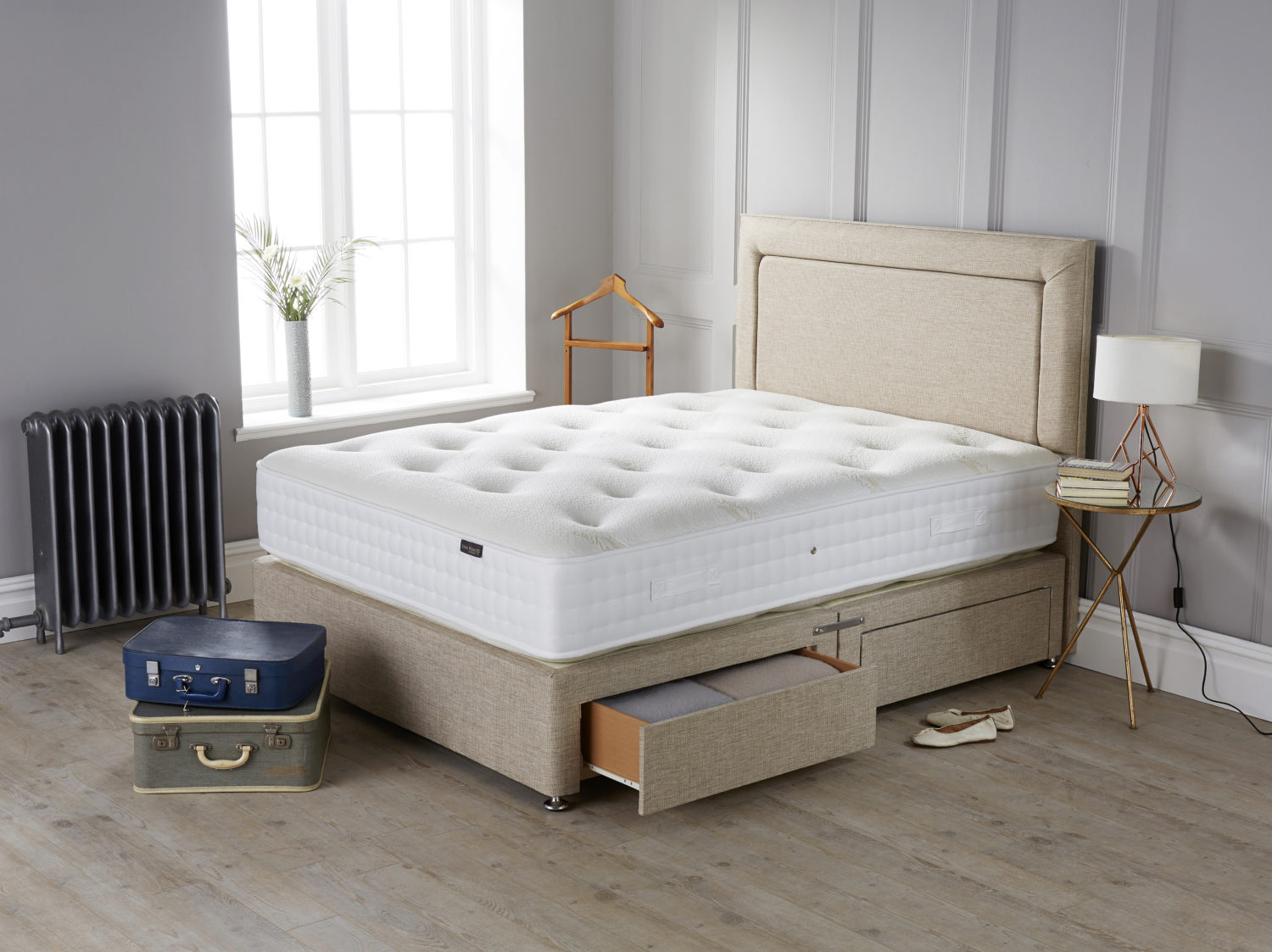
The Origins Pocket 1500 is our best-selling entry-level pocket spring mattress and an excellent starting point for side sleepers who want a well-specified UK-made mattress without the price point of the Artisan range. It combines a 1,500 pocket spring unit with 1,550 gsm of upholstery, including 300 gsm of Wool in the comfort layers, which gives it greater pressure-relieving capability than a purely synthetic mattress at the same price.
The medium feel makes it well-suited to most side sleepers in the 10 -4 stone range. It is available in soft, medium, and firm tensions, so the spring can be matched to your weight rather than defaulting to a single option—king-size price: £1,050.
Artisan Naturals: best mid-range choice for side sleepers
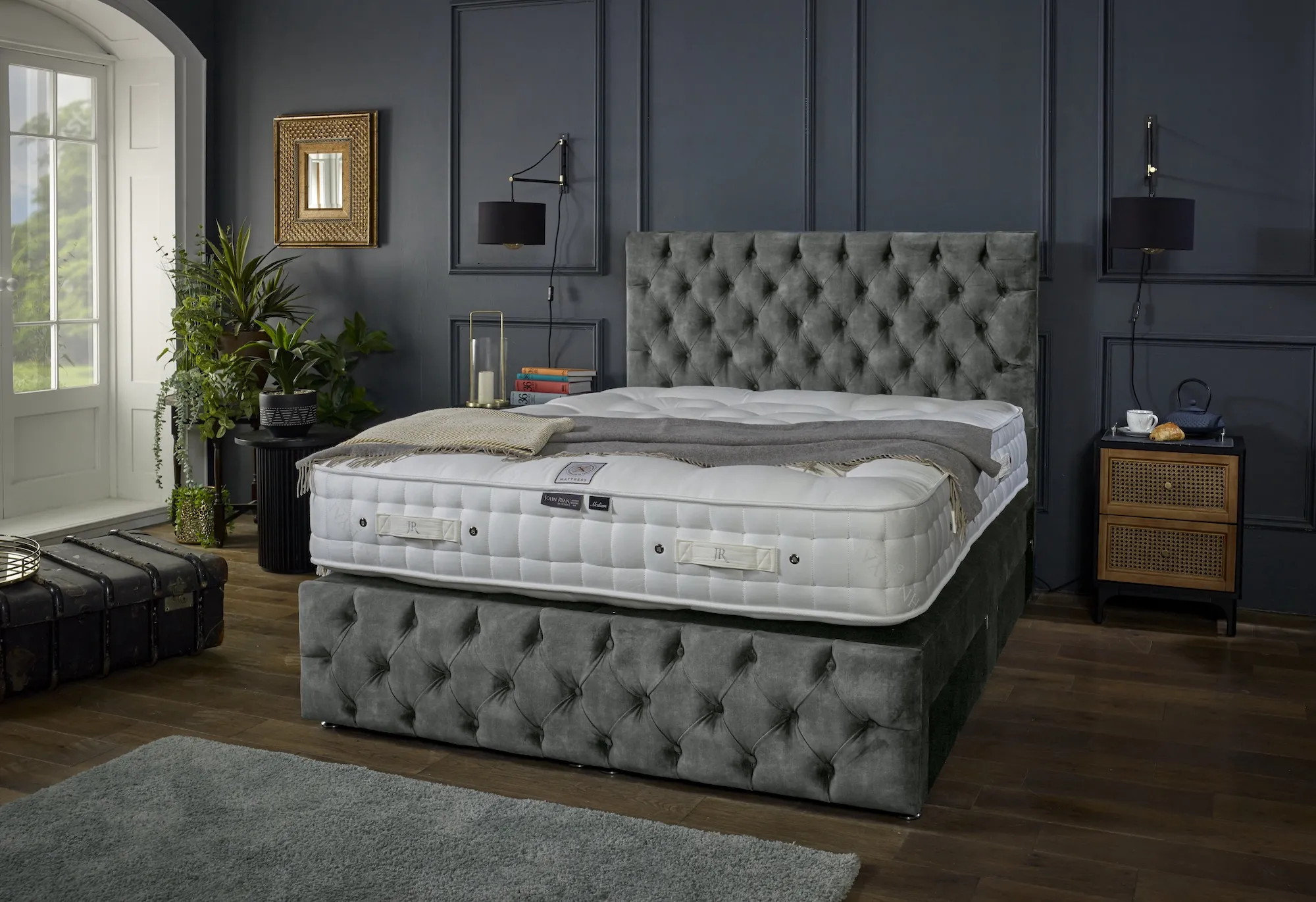
The Artisan Naturals is our most popular mattress model and for very good reason. It carries 3,950gsm of natural fibre upholstery across four layers: 1,200gsm blended British Fleece Wool and Cotton, a hairproof cambric cover, 1,250gsm rebound poly Cotton, and 1,500gsm of 100% pure Mohair. That Mohair layer, in particular, provides exceptional softness and pressure relief at the shoulder and hip contact points that side sleepers rely on.
The spring unit is 1,600 hand-tied calico encased vanadium pocket springs, available in soft, medium, or firm depending on body weight. The combination of a deep, natural upholstery stack and a properly specified spring unit makes this one of the best-performing mattresses for side sleepers at any price point —not just within our own range. King—size price: £2,180.
Artisan Luxury: the best premium choice for side sleepers who prefer a softer feel
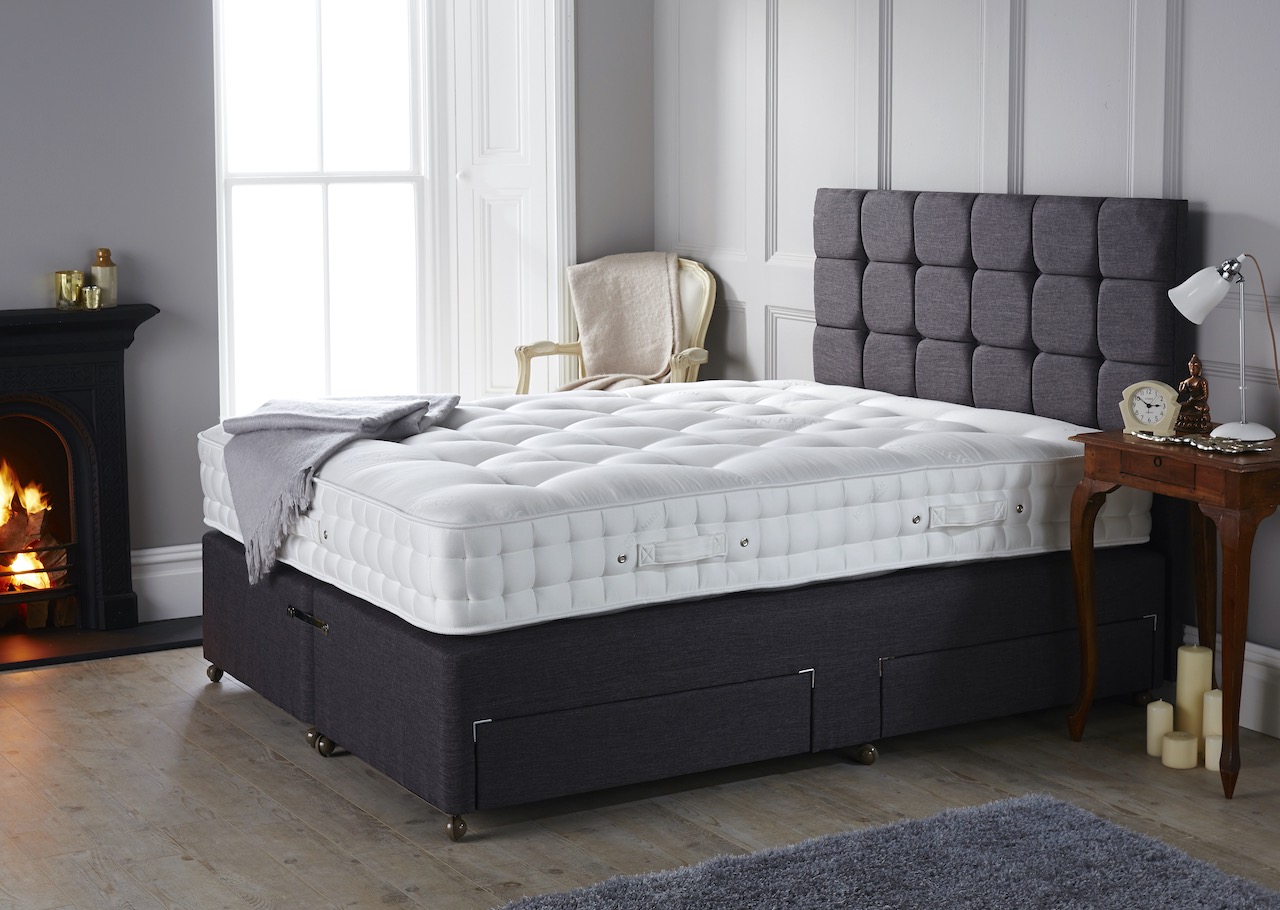
The Artisan Luxury is the right choice for side sleepers who know they prefer a genuinely soft sleeping surface and want the most forgiving comfort layers we make. It carries 4,600gsm of 100% natural upholstery across five layers: 1,200gsm blended Wool and Cotton, a hairproof cambric cover, 1,200gsm pure Horsehair, 500gsm pure Wool, 1,200gsm pure Horsetail, and a further 500gsm Wool layer beneath.
The Horsehair and Horsetail combination is particularly effective for pressure relief because both fibres have a natural crimp that creates a cushioning air pocket structure.
The spring unit uses 1,476 hand-tied calico encased vanadium pocket springs in three tensions based on body weight. This is a two-sided mattress, meaning you can flip and rotate it to maintain consistent performance across both surfaces over the long term. For a side sleeper who invests in this level of mattress, the two-sided construction is a meaningful practical advantage—king-size price: £2,955.
Side sleeper mattress comparison
| Mattress | Spring Count | Total Upholstery GSM | Key Fibres | Feel | King Size Price |
|---|---|---|---|---|---|
| Origins Pocket 1500 | 1,500 | 1,550gsm | Wool, Polyester | Medium | £1,050 |
| Artisan Naturals | 1,600 | 3,950gsm | Wool, Cotton, Mohair | Medium | £2,180 |
| Artisan Luxury | 1,476 | 4,600gsm | Wool, Horsehair, Horsetail | Soft | £2,955 |
Other sleeping positions explained
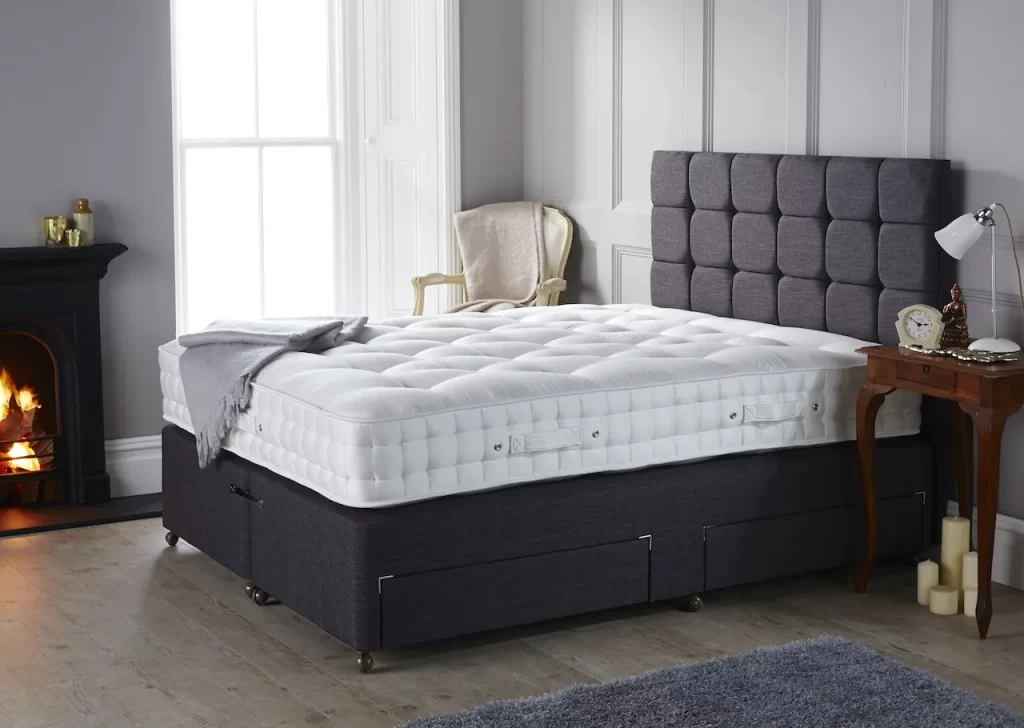
Side sleeping is the most common sleeping position
Side sleepers require slightly softer mattress upholstery compared to other sleeping positions

Frequently asked questions about side sleeper mattresses
What sort of mattress should a side sleeper use?
A side sleeper needs a pocket spring mattress with a soft-to-medium spring tension appropriate for their body weight, combined with generous natural-fibre comfort layers of at least 1,500 gsm. The mattress needs to allow the shoulder and hip to sink into the comfort layers while the spring unit provides support through the narrower waist area. Memory Foam and open-coil spring mattresses are not well-suited to side sleeping for different reasons: memory Foam traps heat and responds too slowly. In contrast, open-coil springs do not provide an independent spring response at pressure points.
Is memory Foam good for side sleepers?
Memory Foam can provide good initial pressure relief for side sleepers because it moulds to the body shape. However, it retains heat, which tends to concentrate at the shoulder and hip contact points and can disrupt sleep. It also responds slowly to movement, which makes turning over during the night feel laboured. For most side sleepers, a natural-fibre pocket-spring mattress with the correct tension provides better all-round performance than memory Foam, particularly for temperature regulation throughout the night.
How firm should a mattress be for a side sleeper?
Side sleepers generally need a softer specification than back sleepers of the same body weight. The pressure on the shoulder and hip contact points is higher for a side sleeper because the contact area is narrower, so the spring needs to accommodate the body rather than resist it. As a guide, side sleepers in the 10 to 14 stone range typically do best on a medium tension spring. Those under 10 stone often benefit from a soft tension. Those over 14 stone can use a firmer spring tension but need deeper upholstery layers to cushion pressure points adequately.
How thick should a mattress be for a side sleeper?
A minimum depth of around 25cm is generally recommended for side sleepers to ensure there is enough material above the spring unit to cushion the shoulder and hip. Most quality pocket spring mattresses sit between 25cm and 35cm in depth. Depth alone is not the key measure: what matters is the GSM of the comfort layers sitting above the spring unit. A 30cm mattress with deep, high-quality natural-fibre upholstery will outperform a 35cm mattress with thin synthetic layers for side-sleeping comfort.
Can my mattress cause hip or shoulder pain?
Yes, a mattress that is too firm for your body weight is one of the most common causes of hip and shoulder pain for side sleepers. When the spring tension is too firm, it resists the body rather than accommodating it, placing sustained pressure on the contact points rather than distributing it across the surface. The result over a full night of sleep is restricted circulation and pressure-related pain. If you are waking with hip or shoulder pain, the first thing to check is whether your spring tension is correctly matched to your body weight, and whether the upholstery layers are deep enough to cushion the pressure points effectively.
How many pillows should a side sleeper use?
Most side sleepers do best with one good-quality, high-loft pillow rather than multiple thinner ones. The goal is to fill the gap between your ear and the outer edge of your shoulder, keeping the neck in line with the spine. Stacking two flat pillows can work, but it tends to create an inconsistent surface that shifts during the night. A single pillow with sufficient loft and resilience is more reliable. Some side sleepers also benefit from a second pillow between the knees to reduce pelvic rotation and lower back strain.
Does it matter which side you sleep on, left or right?
For most people,e it makes no significant difference which side they sleep on in terms of musculoskeletal comfort. The key variable is mattress specification rather than side choice. Left-side sleeping is sometimes recommended for digestion because the stomach sits naturally on the left side of the body, but this is not relevant to mattress choice. If one shoulder consistently causes more discomfort than the other, it is worth considering whether that shoulder has a pre-existing condition that a specialist should assess, rather than assuming it is purely a mattress issue.
Are pocket springs better than open coil springs for side sleepers?
Yes, significantly. Pocket springs operate independently of one another, meaning each spring responds to the weight and pressure applied directly above it. This produces a more contouring, body-shaped support surface that is better suited to the uneven contact profile of a side sleeper. Open coil springs are joined together and move as a single unit, so pressure applied at one point affects the entire spring system. For side sleepers, this creates a less accommodating surface with more resistance at the pressure points. Pocket springs are the appropriate choice for anyone who regularly sleeps on their side.

Dreaming of the perfect nights sleep?
Ask us a question
There are over 6000 questions and answers submitted by you on all questions about mattresses and bed problems. Enter a keyword such as Vi Spring, John Lewis beds, bad back or Memory Foam and see if your question has already been answered.
If you can’t find an answer in knowledge hub, ask a new question. We aim to respond to all questions within one working day.
Newsletter
Enter your email to join our newsletter. We’ll send you occasional news and mattress expertise.