






Mattress Upholstery, Memory Foam & Hybrid Foam
October 2025Natural vs Synthetic Mattresses: What's Right For You?
It influences your sleep temperature, the longevity of your mattress, the environmental impact of your purchase, and even your long-term health. At John Ryan By Design, we’ve spent decades working with both natural and synthetic mattresses, and we believe in being utterly honest about the advantages and limitations of each approach.
The reality is that both natural and synthetic materials have their place in mattress construction, but understanding what you’re actually getting for your money requires cutting through an enormous amount of marketing nonsense and getting to the genuine facts.
Understanding Natural Mattresses UK
When we talk about natural mattresses, we’re referring to mattresses upholstered predominantly with fibres that come directly from animals or plants, without synthetic processing. Natural fibre mattresses incorporate materials such as:
- Wool, cotton, horsehair, silk, cashmere, mohair, and alpaca (animal fibres)
- Bamboo, hemp, coir, and natural latex (plant-based materials)
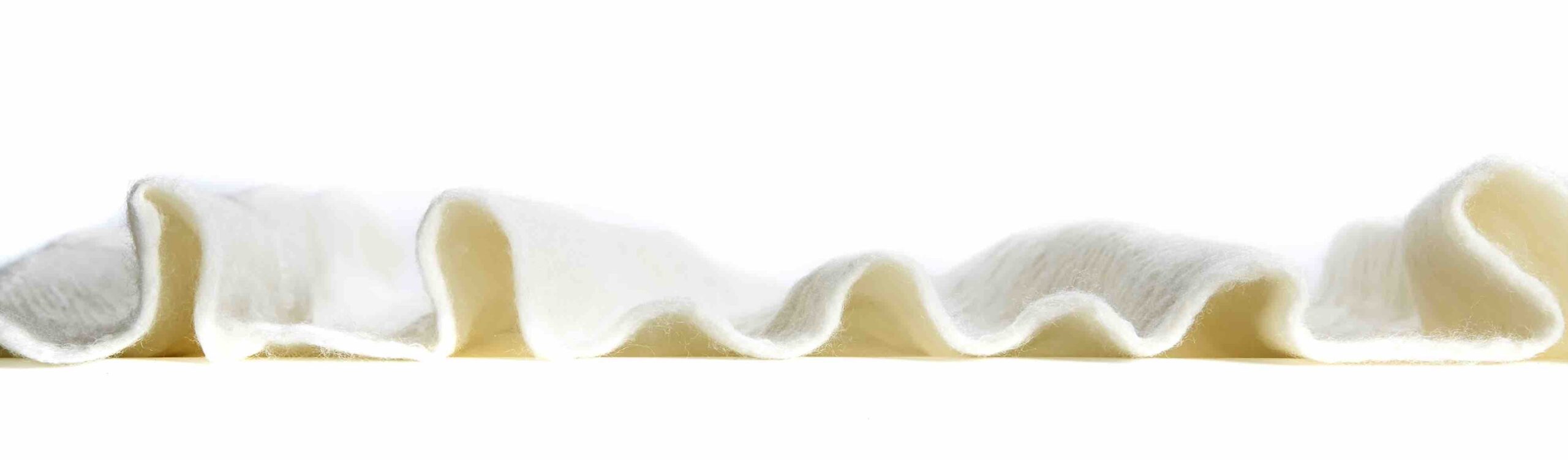
These materials have been used in quality mattress construction for centuries, and there’s a very good reason they’ve stood the test of time. Natural fibres offer properties that synthetic materials simply cannot replicate, no matter how advanced the manufacturing process becomes.
The fundamental advantage of natural mattresses lies in breathability and temperature regulation. Natural fibres work in harmony with your body’s natural temperature control systems. Throughout the night, the average adult loses approximately half a pint of moisture through perspiration, and natural fibres actively wick this moisture away from your body and allow it to evaporate.

This creates a drier, more comfortable sleep environment. Wool, for instance, can absorb up to 30% of its own weight in moisture without feeling damp to the touch, making it extraordinarily effective at keeping you comfortable regardless of the season.
In winter, natural fibres trap warm air close to your body, whilst in summer they allow heat to dissipate freely. This natural temperature regulation is something that synthetic foams, which are designed to trap heat in order to mould to your body, can never achieve.
Beyond temperature regulation, natural fibres offer remarkable durability when properly used in mattress construction. A well-made natural fibre mattress can easily last 15 to 20 years or even longer with proper care, far exceeding the typical lifespan of synthetic alternatives. This longevity comes down to the inherent properties of natural materials.
Wool has a natural crimp that allows it to compress and spring back repeatedly without losing its loft. Horsehair acts like millions of tiny springs, maintaining its resilience for decades. Natural latex, derived from rubber tree sap, offers extraordinary durability whilst remaining responsive to pressure.
These materials don’t simply compress and stay compressed the way synthetic foams do. Instead, they recover their original form, which is why a properly maintained natural fibre mattress can provide consistent comfort for so many years.
| Natural Fibre | Key Properties & Benefits | Expected Lifespan |
|---|---|---|
| Wool | Excellent breathability and temperature regulation. Absorbs 30% of its weight in moisture without feeling damp. Natural crimp allows compression and recovery. Naturally fire retardant and hypoallergenic. Works in all seasons. | 15-20+ years |
| Horsehair | Acts like millions of tiny springs, providing exceptional resilience. Maintains support for decades. Premium material offering superior longevity. Excellent breathability and moisture management. | 20+ years |
| Cotton | Soft, breathable, and widely available. Good temperature regulation. Works well in comfort layers. Affordable natural option that provides decent moisture wicking. | 15+ years |
| Cashmere | Luxurious feel with superior insulation. Excellent breathability and moisture wicking. Lightweight yet provides exceptional warmth. Premium luxury material. | 15-20 years |
| Mohair | Prevents compression into springs. Excellent insulating layer with outstanding resilience. Superior breathability and temperature control. Highly durable natural fibre. | 15-20 years |
| Silk | Luxury feel with smooth texture. Naturally hypoallergenic. Good breathability and comfort. Often used as a premium surface layer. | 12-18 years |
| Natural Latex | Derived from rubber tree sap. Highly responsive and durable. Maintains support exceptionally well over time. Excellent breathability with good temperature regulation. Natural resilience. | 20+ years |
| Coir | Made from coconut husks (sustainable by-product). Provides firm support. Affordable natural option. Good durability for support layers. | 12-15 years |
The Reality Behind Best Natural Mattresses
It’s crucial to understand that not all mattresses marketed as “natural” actually contain substantial amounts of natural fibres. This is one of the most misleading practices in the mattress industry, and it’s something we feel passionately about exposing.
Would it shock you to know that many mattresses described as natural fibre mattresses may contain only 1% to 3% actual natural fibre? The rest is polyester and other cheap synthetics.
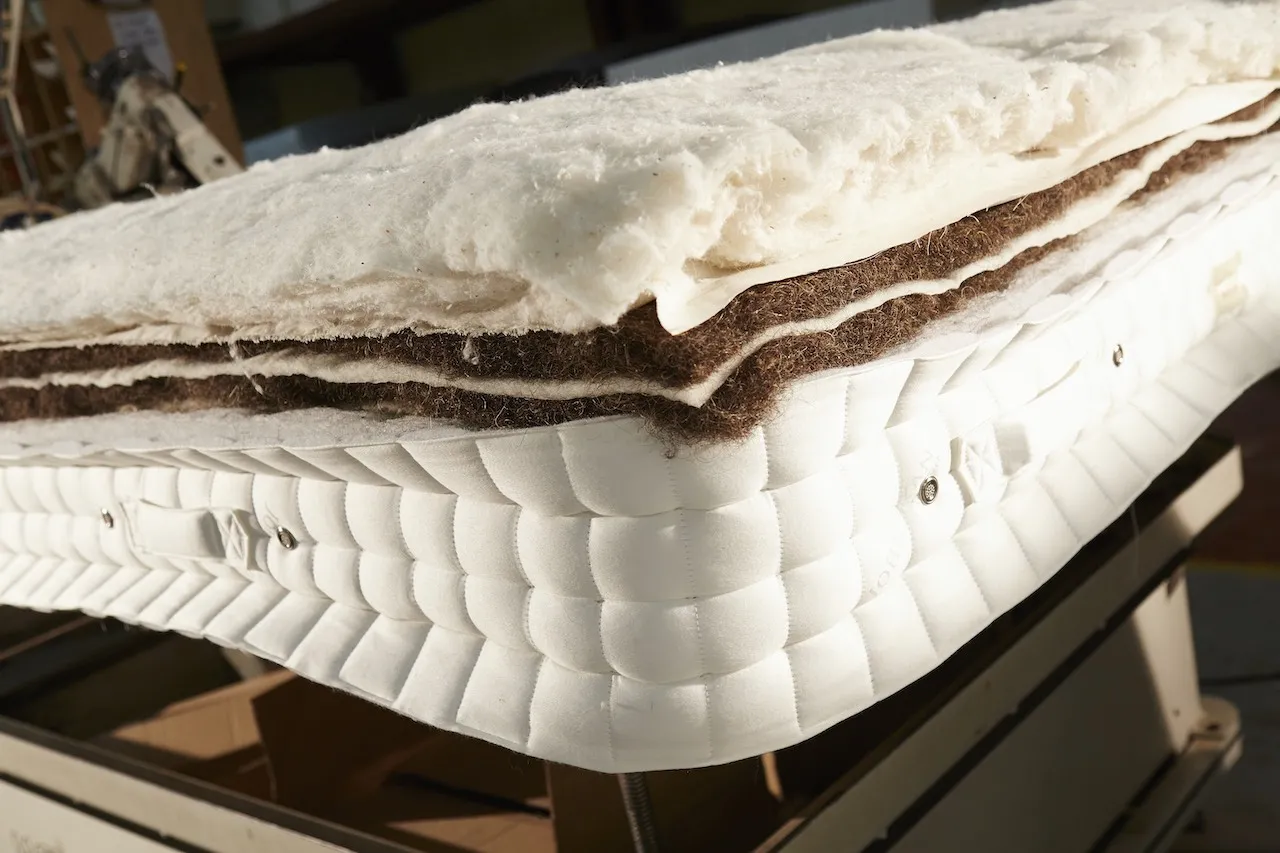
When a retailer uses descriptions like “contains silk, cashmere and wool,” they’re often talking about token amounts blended with much cheaper materials. This is why understanding GSM (grams per square metre) is absolutely essential when shopping for natural mattresses.
GSM tells you exactly how much material is actually in your mattress. A mattress might claim to contain cashmere, but if there’s only 50 GSM of it blended with 950 GSM of polyester, you’re not getting a cashmere mattress. You’re getting a polyester mattress with a hint of cashmere for marketing purposes.
Unfortunately, most retailers won’t tell you the GSM breakdown because it would expose how little natural fibre content their “natural” mattresses actually contain. At John Ryan By Design, we list the exact GSM weight and composition of every single upholstery layer in our mattresses, and we’d encourage you to demand the same level of transparency from any retailer you’re considering. If they can’t or won’t tell you, that should tell you everything you need to know about what they’re selling.
Understanding Synthetic Mattresses
Synthetic mattresses use man-made materials like polyester, polyurethane foam, memory foam, and synthetic latex in their upholstery layers. These materials dominate the mass-market mattress industry because they’re significantly cheaper to produce than natural fibres.
The key benefits of synthetic materials include:
- Lower upfront cost compared to natural alternatives
- Consistent manufacturing quality and availability
- Resistance to allergens and dust mites
- Ease of production and distribution
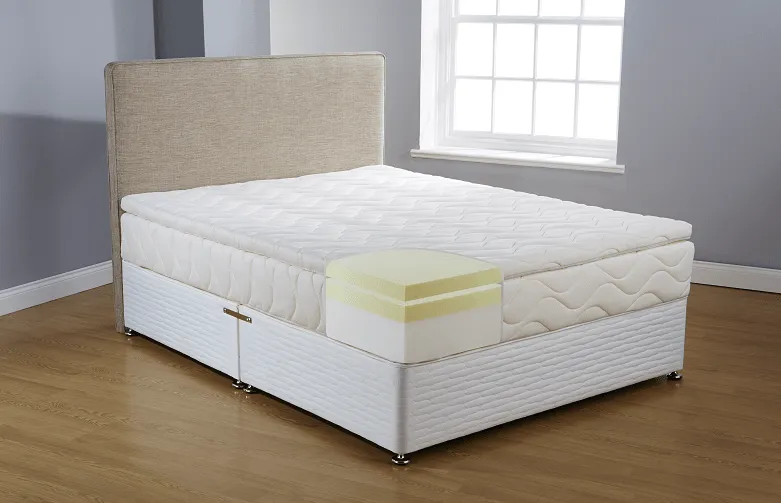
A polyester mattress topper costs a fraction of what wool or horsehair costs, which is why bed-in-a-box companies can sell entire mattresses for a few hundred pounds. There’s nothing inherently wrong with synthetic materials when they’re used honestly and in sufficient quantities. The problem comes when they’re marketed deceptively or used in such minimal amounts that the mattress provides neither adequate support nor acceptable longevity.
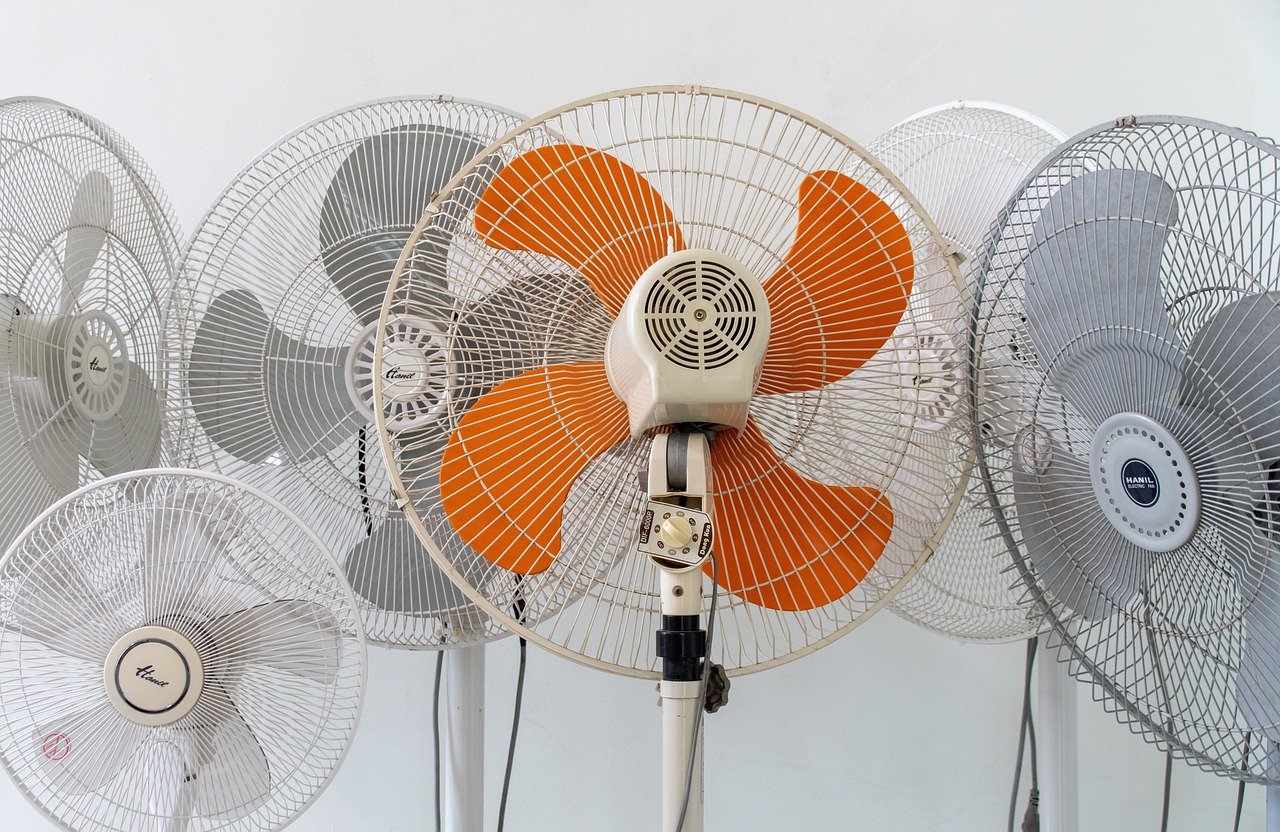
The primary limitation of synthetic materials is their inability to regulate temperature effectively. Memory foam, in particular, is designed to soften when it absorbs your body heat, which means it actively traps heat rather than allowing it to dissipate. Polyester batting doesn’t wick moisture the way wool does, so perspiration tends to accumulate rather than evaporate.
| Synthetic Material | Key Properties & Limitations | Expected Lifespan |
|---|---|---|
| Polyester | Affordable and widely used. Poor breathability compared to natural fibres. Doesn’t wick moisture effectively. Moderate heat retention. Compresses over time. Most common synthetic filling. | 5-7 years |
| Memory Foam | Excellent pressure relief with conforming “hug” sensation. Very poor breathability. Traps heat to soften and mould to body. Not suitable for hot sleepers. Requires adjustment period. Compresses permanently over time. | 5-7 years |
| Gel Memory Foam | Similar to memory foam with gel additives. Marketing overstates cooling benefits. Gel warms up within hours. Still traps significant heat. Slightly better than standard memory foam but not comparable to natural fibres. | 5-7 years |
| Polyurethane Foam | Cheaper alternative to memory foam. Less conforming feel. Poor to moderate breathability. Moderate heat retention. Can compress permanently. Often used in budget mattresses. | 5-7 years |
| Synthetic Latex | More responsive than memory foam with less heat trapping. Better durability than other synthetics but inferior to natural latex. Moderate breathability. Doesn’t maintain support as long as natural latex. | 7-10 years |
| Open-Cell Foam | Better airflow than traditional foam but still retains more heat than natural materials. Moderate breathability. Good pressure relief. Still compresses over time like other synthetic foams. | 5-7 years |
| Copper/Graphite Infused Foam | Additives provide marginal cooling improvement. Marketing significantly exaggerates benefits. Still poor breathability. High heat retention. Premium pricing doesn’t justify minimal performance gain over standard foam. | 5-7 years |
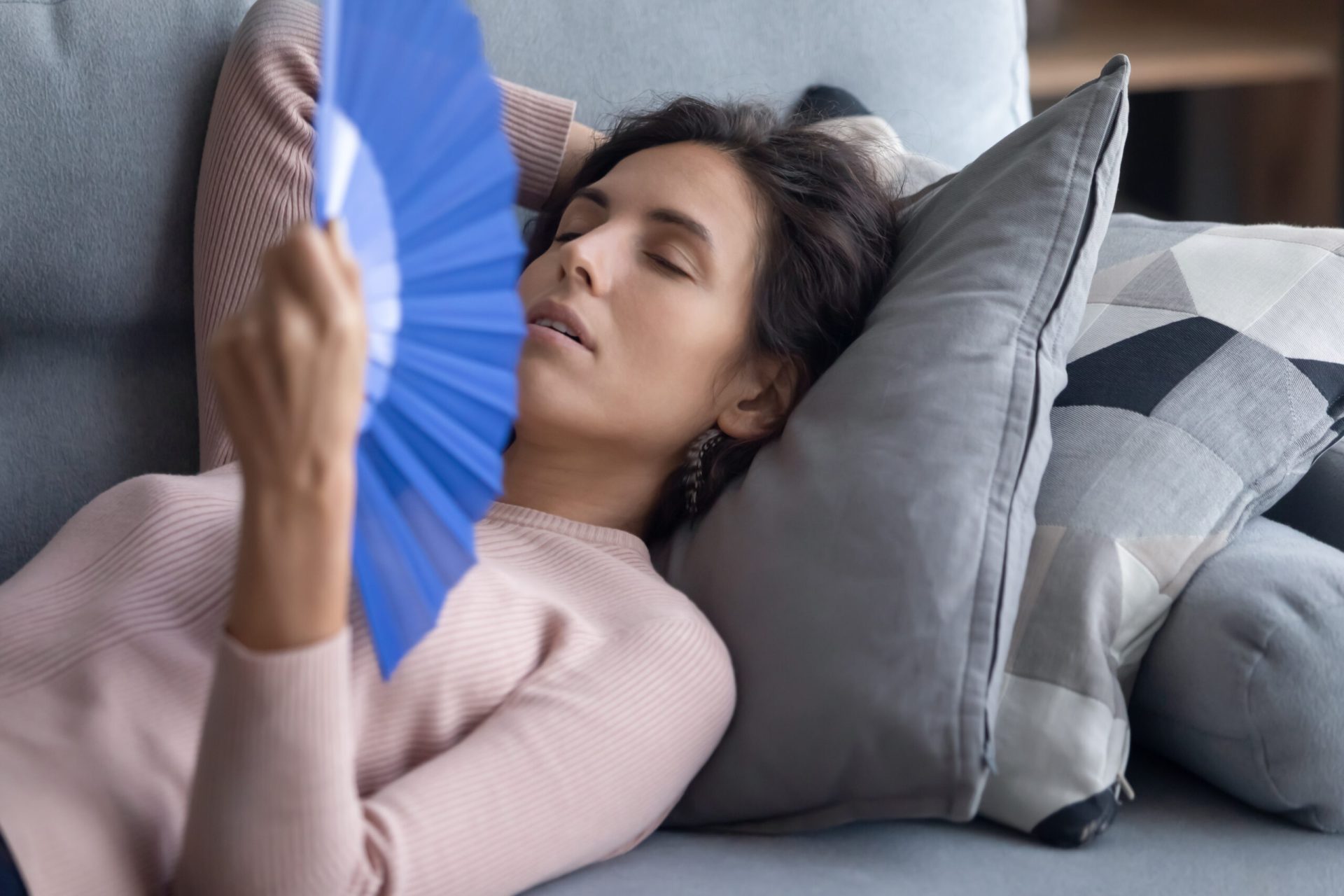
For hot sleepers, this can make synthetic mattresses genuinely uncomfortable. You’ll often hear people complain about waking up hot and sweaty on memory foam mattresses, and there’s a good reason for that. It’s simply how the material works.
 Synthetic foams also tend to compress permanently over time. Unlike natural fibres that spring back after compression, most synthetic foams gradually lose their resilience and develop body impressions. This is why synthetic mattresses typically need replacing after 5 to 7 years, whereas natural fibre mattresses can last 15 to 20 years.
The apparent cost savings of synthetic mattresses can be illusory when you factor in replacement frequency. If you’re replacing a £500 synthetic mattress every 5 years, you’ll spend more over 20 years than if you’d bought a £2000 natural fibre mattress that lasts two decades.
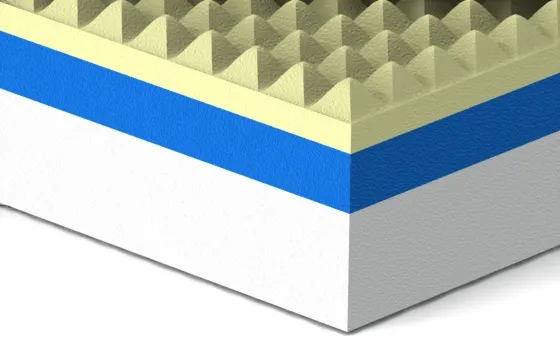
That said, quality matters enormously in synthetic mattresses just as it does in natural ones. A synthetic mattress with 1500 GSM or more of quality polyester upholstery and a proper pocket spring system can provide decent comfort and value. The problem is that many cheap synthetic mattresses contain shockingly little upholstery.
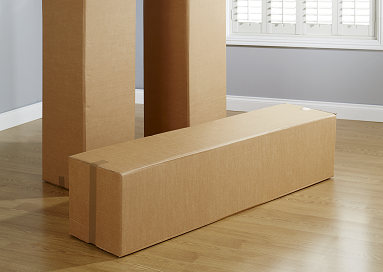
Bed-in-a-box mattresses often contain just a few centimetres of foam with minimal support. They feel comfortable in the first few months, but they compress quickly and provide neither the support nor the longevity that justifies even their modest price. This is why GSM specifications matter just as much for synthetic mattresses as they do for natural ones.
Environmental and Health Considerations
Beyond performance differences, there are significant environmental and health factors to consider when choosing between natural and synthetic mattresses. Natural fibres are renewable, biodegradable, and often by-products of other industries. Wool comes from sheep that are sheared annually as part of normal farm management.
Coir derives from coconut husks that would otherwise be waste. Natural latex comes from rubber trees that continue producing sap for 25 to 30 years. At the end of their life, natural fibre mattresses can often have components recycled or will biodegrade naturally.
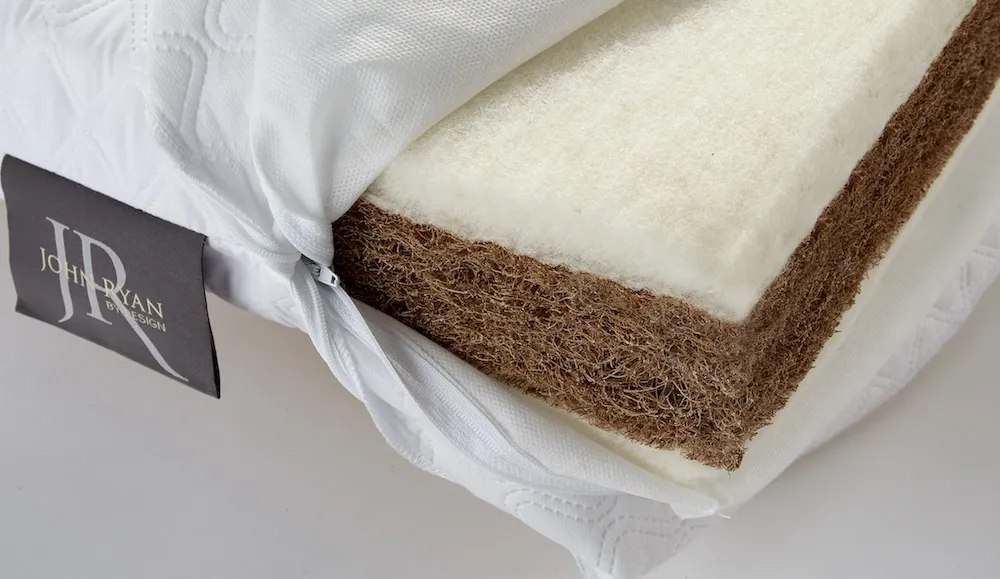
Synthetic mattresses, by contrast, are petroleum-based products that don’t biodegrade. In the UK, 7 million mattresses are discarded annually, with 75% ending up in landfill where they persist for decades. The production of synthetic foams also involves chemical processes that can have environmental impacts.
For environmentally conscious consumers, natural fibres represent a significantly more sustainable choice. However, we recognise that environmental considerations must be balanced against budget realities and individual needs.
From a health perspective, natural fibres offer several advantages. They’re naturally hypoallergenic and resistant to dust mites without requiring chemical treatments. Wool, in particular, has natural fire-retardant properties, which means genuinely wool-rich mattresses often don’t require the chemical fire retardants that are mandated for synthetic mattresses in the UK.

Modern fire retardant chemicals are generally considered safe, but some people prefer to avoid them entirely when possible. Natural fibres also don’t off-gas the way some synthetic foams can. Whilst modern foams are much better than older formulations, some people remain sensitive to the chemical odours that new synthetic mattresses can emit.
What About Memory Foam and Gel?
Memory foam deserves special mention because it’s become ubiquitous in the mattress industry, and there’s an enormous amount of marketing hype around it. Memory foam was originally developed by NASA in the 1960s for aircraft cushions. The material responds to body heat and pressure, softening to conform closely to your body shape.
This can provide excellent pressure relief, which is why memory foam is often recommended for people with joint pain or pressure point issues. However, the heat-trapping properties that make memory foam conform to your body also make it the worst possible choice for hot sleepers.
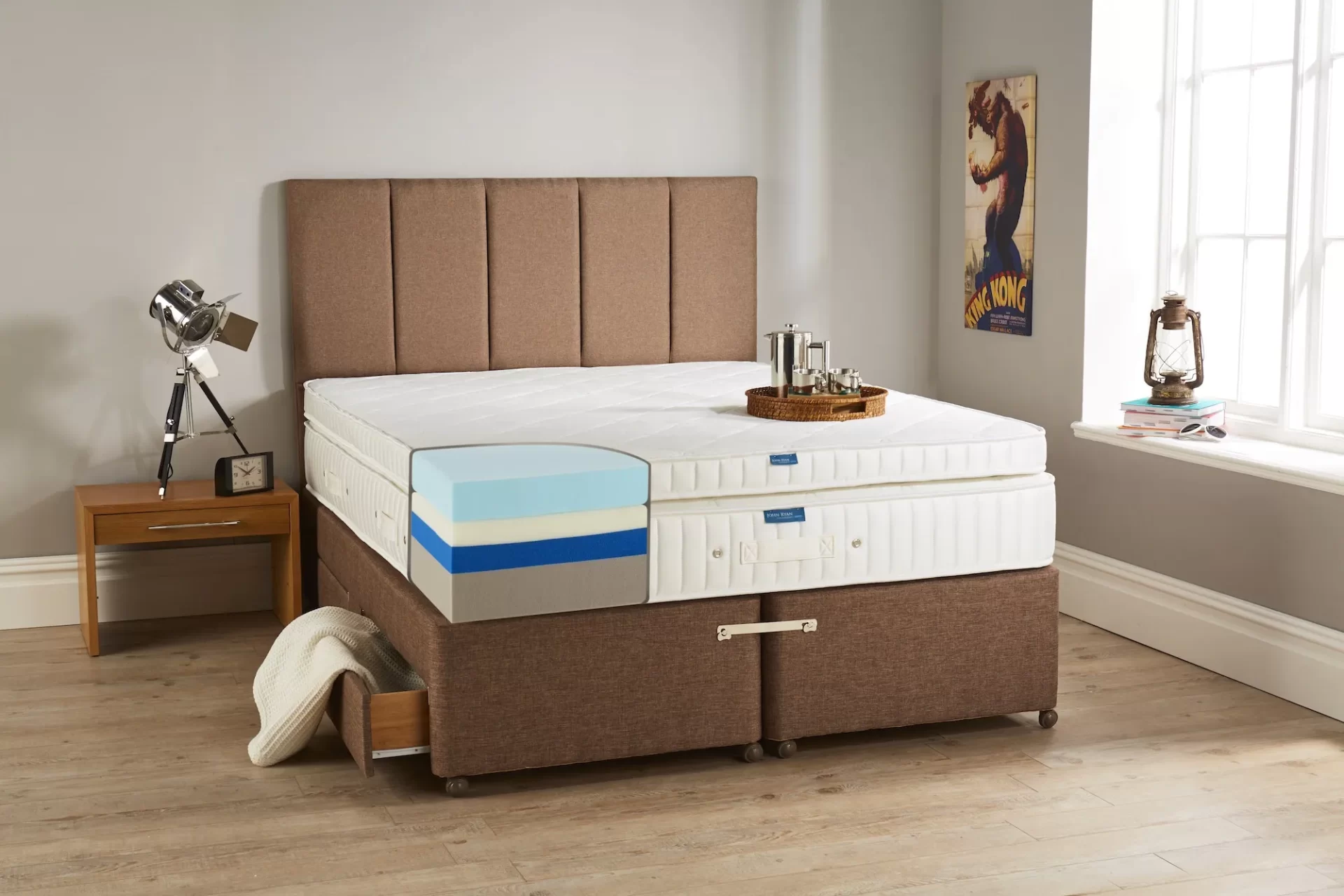
Memory foam needs to absorb your body heat to work properly, which means it actively prevents heat dissipation. Manufacturers have tried various solutions, including:
- Gel-infused memory foam
- Open-cell structures
- Copper or graphite additives
- Perforated foam layers
These modifications help marginally, but they don’t fundamentally change the nature of memory foam. If you sleep hot, no amount of gel infusion will make memory foam as cool as natural fibres. The gel itself doesn’t stay cool; it simply takes slightly longer to warm up.
Within an hour or two of sleeping, gel memory foam is just as warm as regular memory foam. Marketing around “cooling gel” is one of the most overblown claims in the industry.
Memory foam also has a characteristic feel that not everyone enjoys. It provides what’s often called “hug” or “conforming” support, where you sink into the mattress rather than resting on top of it. Some people love this sensation; others find it claustrophobic or feel trapped.
There’s also an adjustment period when switching to memory foam, as the material responds differently to movement compared to traditional spring mattresses. If you’re considering memory foam, we’d strongly recommend trying one in person for at least 15 to 20 minutes to see whether you find the sensation comfortable.
Ultimate Natural Collection Mattresses Approach
When we developed our natural fibre mattress collection at John Ryan By Design, we wanted to create mattresses that truly justified the term “natural” whilst remaining accessible to sleepers who might be priced out of ultra-luxury brands. The result is our Artisan range, which represents what we consider the ultimate natural collection mattresses for combining quality, craftsmanship, and honest value.
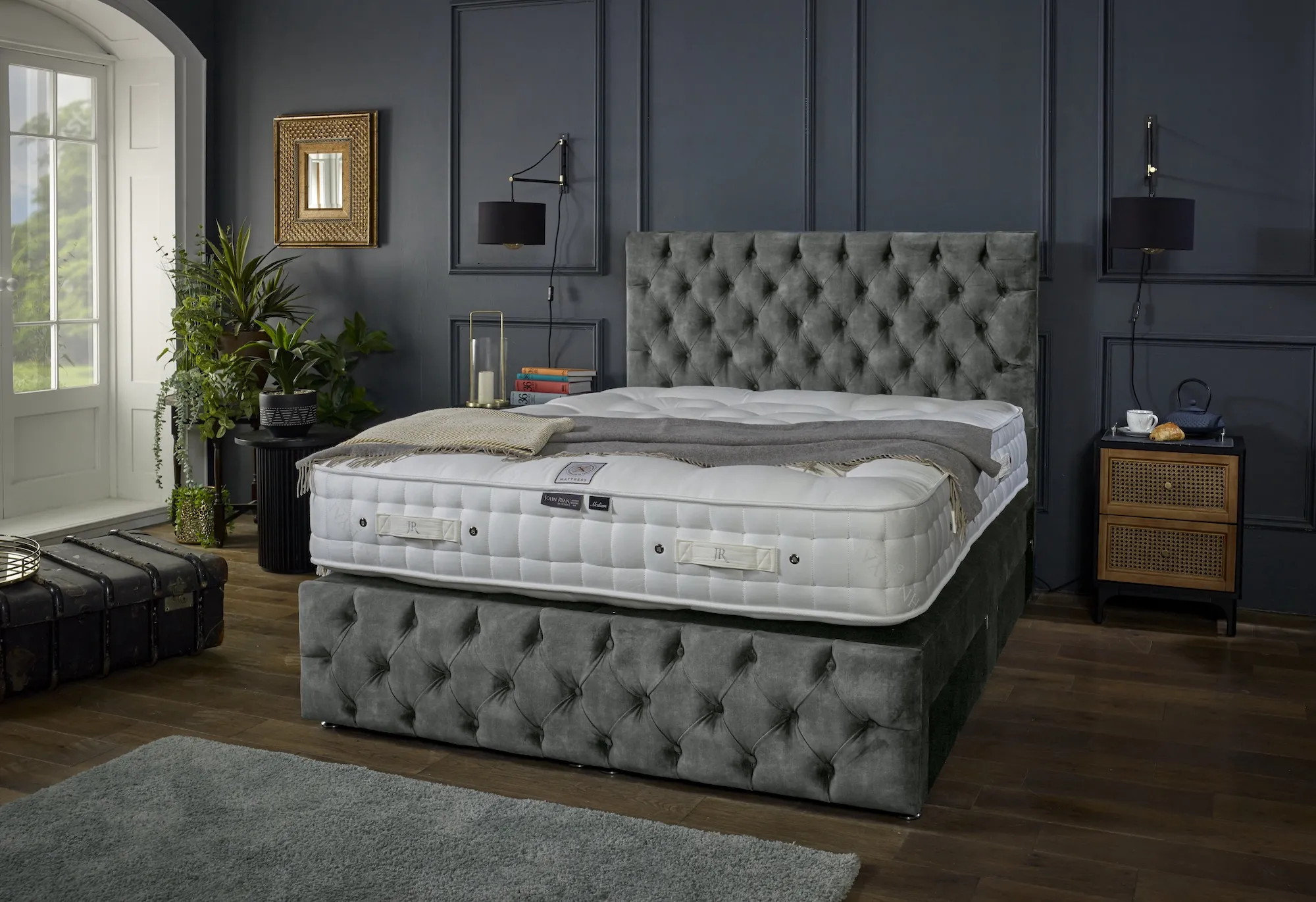
Each mattress in this range is handcrafted in Yorkshire by skilled artisans using traditional techniques such as hand-side stitching and genuine tufting. More importantly, each model contains substantial quantities of high-quality natural fibres, with complete transparency about exactly what’s inside.
Our Artisan Naturals serves as the entry point to genuine natural fibre mattresses, containing 85% natural fibres with 3,950 GSM of total upholstery. The construction includes:
Artisan Naturals
| 1. | 1200GSM BLENDED BRITISH FLEECE WOOL AND COTTON |
| 2. | HAIRPROOF CAMBRIC COVER |
| 3. | 1250GSM REBOUND POLY COTTON |
| 4. | 1500GSM 100% PURE MOHAIR |
| 5. | 1600 CALICO ENCASED POCKET SPRINGS [49MM ] [1.28MM ] |
| TOTAL: | 3950GSM |
| DEPTH: | 27-30CM |
| CHEMICAL FREE COVER |
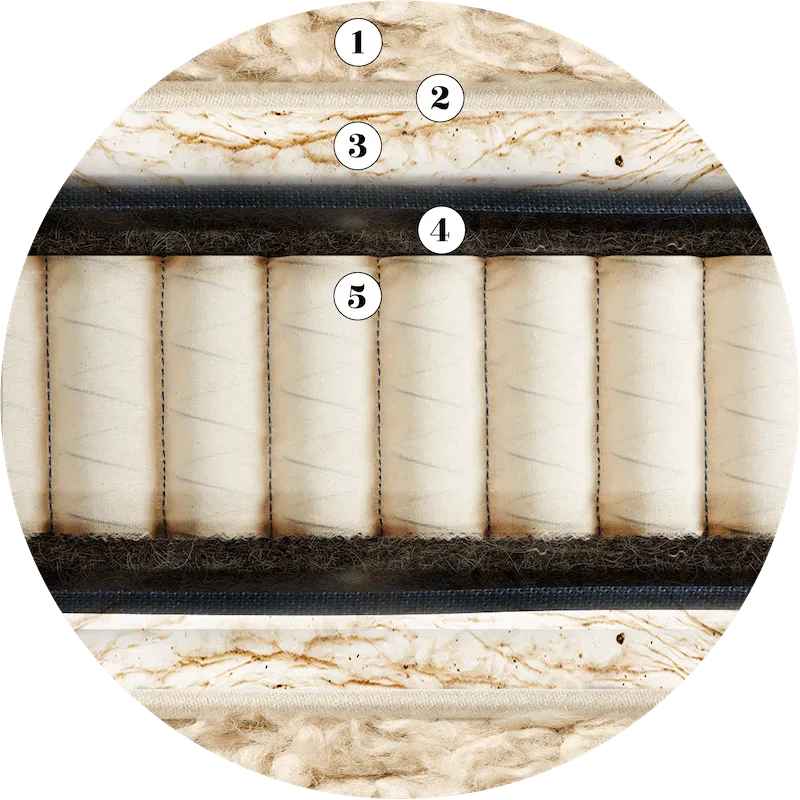
The mohair provides excellent breathability and helps prevent the softer comfort layers above from compressing into the spring unit. The result is a mattress that offers genuine natural fibre comfort at a price point that doesn’t require remortgaging your house.
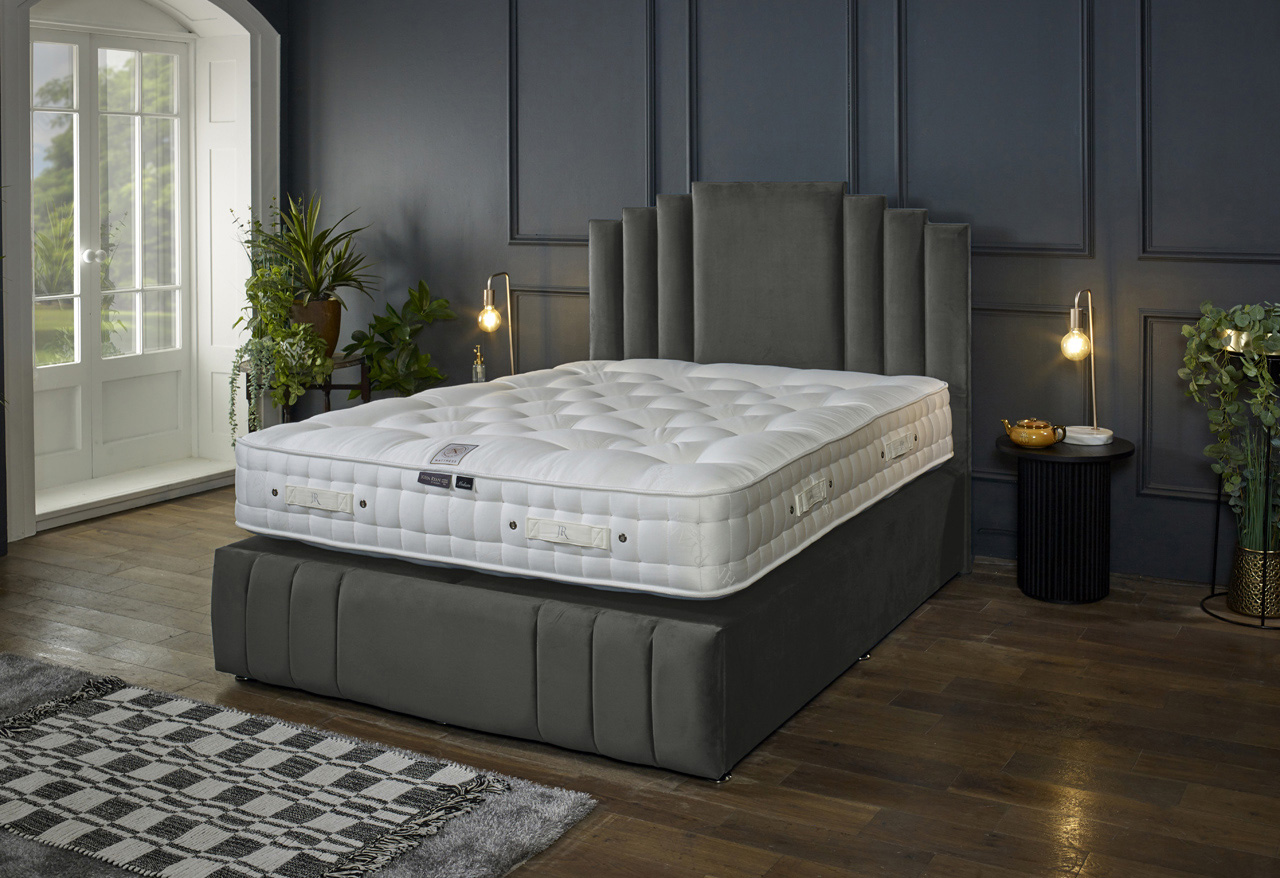
For sleepers who want even more luxurious natural materials, our Artisan Luxury and Artisan Bespoke models incorporate 100% natural fibres including horsehair, horsetail, and cashmere. The Artisan Luxury features 4,600 GSM of natural fibres, including 1200 GSM of pure horsehair that acts like millions of tiny springs, providing remarkable support and resilience.
The Artisan Bespoke goes even further with 5,100 GSM of natural fibres, including 1000 GSM of white cashmere as an insulating layer, making it our most luxurious model. These specifications aren’t just impressive numbers; they represent genuine quality and craftsmanship that you can feel every single night.
You can explore all the details about the natural fibres we use in our comprehensive A-Z guide to natural fibres.
Making the Right Choice for Your Needs
So how do you decide whether a natural or synthetic mattress is right for you? The answer depends on several factors, including your budget, sleeping preferences, and priorities around environmental impact and longevity.
If you’re a hot sleeper who wakes up sweaty and uncomfortable, natural fibres should be at the top of your consideration list. The breathability and moisture-wicking properties of wool, cotton, and other natural materials will transform your sleep experience in ways that synthetic alternatives simply cannot match.
Similarly, if you want a mattress that will last 15 years or more with proper care, natural fibres are the clear choice. The inherent resilience of materials like horsehair and natural latex means they maintain their support properties far longer than synthetic foams.
If environmental considerations matter to you, natural fibres again come out ahead. They’re renewable, biodegradable, and in many cases by-products of other industries. At the end of a natural mattress’s life, many of its components can be recycled or will biodegrade naturally, whereas synthetic foam mattresses typically end up in landfills where they persist for decades.
In the UK alone, 7 million mattresses are discarded annually, with 75% ending up in landfill. Choosing natural materials is a meaningful way to reduce your environmental footprint.

However, we recognise that budget constraints are real, and not everyone can afford a premium natural fibre mattress. If your budget is limited, we’d always recommend a quality synthetic mattress with substantial upholstery and pocket springs over a cheaply made “natural” mattress with token amounts of natural fibre padding.
Our Origins range demonstrates that synthetic materials, when used properly with adequate GSM quantities and honest construction, can provide good value and reasonable comfort. The key is understanding exactly what you’re buying.
Demand transparency about materials and weights. Avoid any retailer who can’t tell you the GSM breakdown or who uses vague marketing language about “luxury fibres” without specifics.
The Hybrid Approach and Man-Made Alternatives
There’s also a middle path that deserves consideration. Hybrid mattresses combine natural and synthetic materials strategically to provide good performance at more accessible price points. This approach can work well when done honestly and with quality materials.
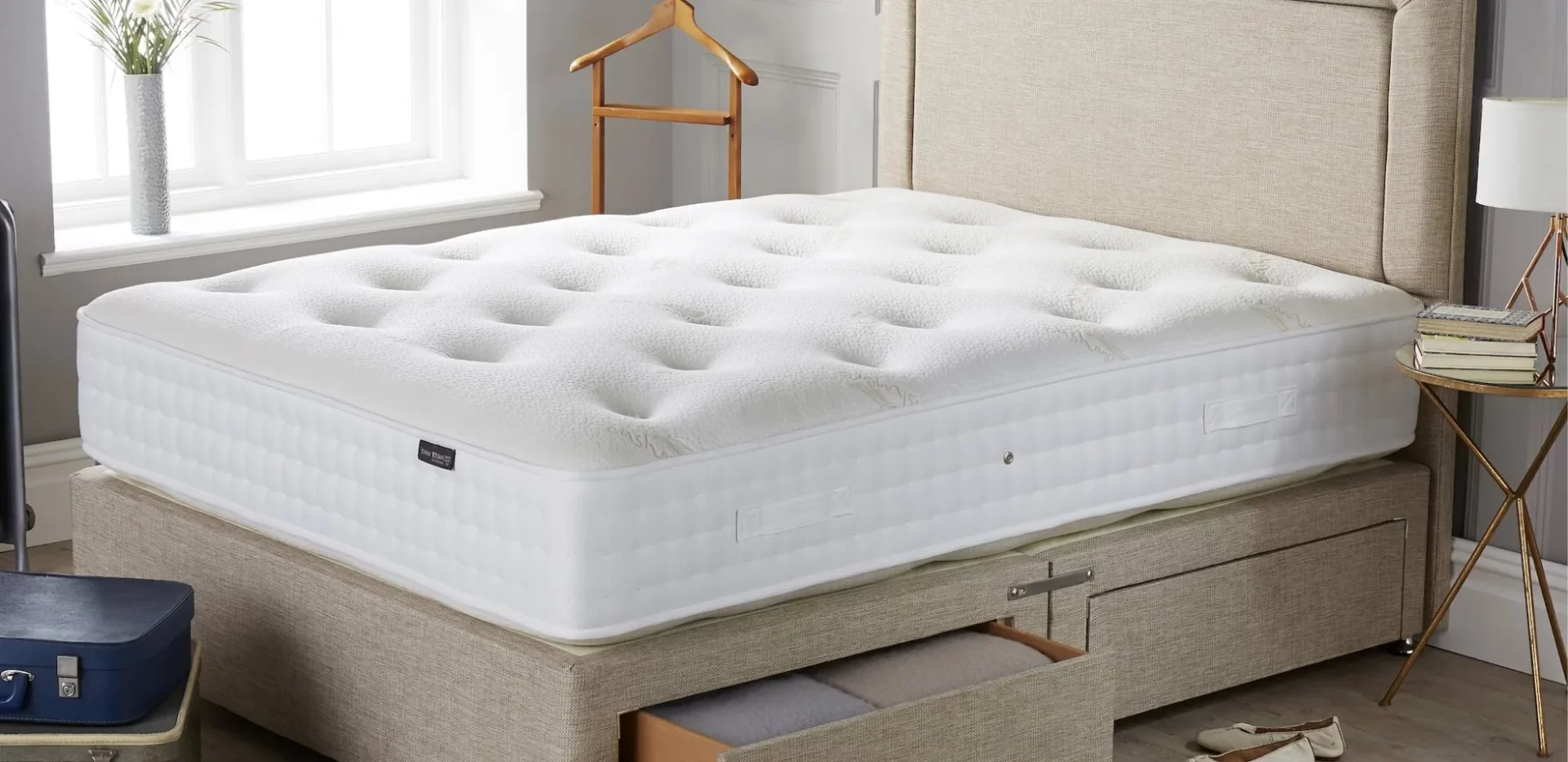
For instance, our Origins Pocket 1500 uses 300 GSM of wool and silk blend in the top comfort layer for breathability and luxury feel, but uses 750 GSM of premium soft polyester below this for substantial cushioning and support. This combination provides many of the temperature regulation benefits of natural fibres in the layer that matters most, the one you’re sleeping directly on, whilst using cost-effective synthetics in the support layers where their properties are less critical.
The crucial distinction is between thoughtful hybrids that use substantial quantities of quality materials and deceptive products that use token amounts of natural fibres purely for marketing purposes. A mattress with 300 GSM of wool in a blend with 1500 GSM of polyester isn’t really a natural fibre mattress; it’s a synthetic mattress with a thin natural top layer.
But if that’s honestly represented and priced accordingly, it can still represent reasonable value. What we object to is retailers charging premium natural fibre prices for what is essentially a synthetic product with minimal natural content. This practice is rampant in the industry, which is why understanding GSM figures is so important.
You can learn more about this in our guide on all about natural fibres.
For those who want to understand exactly what different synthetic materials offer, we’ve also created a comprehensive A-Z guide to synthetic fibres that explains the properties, costs, and appropriate uses of materials like polyester, memory foam, synthetic latex, and others.
Being informed about both natural and synthetic options puts you in the strongest position to make a choice that aligns with your needs and values. There’s no single “right” answer that applies to everyone, but there is a right approach: demanding transparency, understanding what you’re actually buying, and setting realistic expectations based on materials and construction quality.
The Verdict on Natural vs Synthetic
Having worked with both natural and synthetic mattresses for decades, our position at John Ryan By Design is clear. Natural fibres represent the gold standard in mattress upholstery when quality, durability, breathability, and sleep comfort are the priorities. There is simply no synthetic alternative that can match the temperature regulation, moisture-wicking, and long-term resilience of properly used natural materials like wool, horsehair, natural latex, and cotton.
The higher upfront cost of natural fibre mattresses is justified by their superior performance and dramatically longer lifespan. When you’re spending a third of your life on your mattress, investing in the best possible sleep surface makes sense both financially and for your overall health and wellbeing.
However, we also recognise that quality synthetic mattresses have their place, particularly for budget-conscious sleepers who understand what they’re buying and set appropriate expectations. The key word there is “quality.” A cheap foam mattress from a bed-in-a-box company might seem like good value at £400, but if it’s sagging within two years and making you uncomfortably hot every night, you haven’t saved money. You’ve wasted it.
If your budget limits you to synthetic options, consider these guidelines:
- Invest in a mattress with substantial upholstery (at least 1000 GSM)
- Choose pocket springs rather than open coils
- Look for some natural fibre content in the top layer
- Ensure it’s two-sided so you can turn it monthly to distribute wear
- Be realistic about its lifespan (plan for 5 to 7 years rather than 15 to 20)
The worst possible approach is buying a mattress marketed as “natural” that contains only token amounts of natural materials blended with cheap synthetics. These products give you neither the cost benefits of honest synthetic construction nor the performance benefits of genuine natural fibres. They’re the worst of both worlds, and unfortunately, they’re everywhere in the industry.
This is why we’re so insistent about transparency and exact specifications. When you buy any mattress from John Ryan By Design, whether it’s our natural fibre Artisan range or our man-made Origins range, you know exactly what you’re getting.
Every single upholstery layer is listed with its exact GSM weight and material composition. We don’t hide behind vague marketing language or token amounts of premium materials. We believe you deserve to know precisely what you’re sleeping on and what you’re paying for.
If you have questions about whether natural or synthetic materials are right for your specific needs, or if you’d like help evaluating the specifications of mattresses you’re considering, our team at John Ryan By Design are always happy to provide honest, expert guidance. Call us on 0161 437 4419, and we’ll help you understand exactly what you’re buying and whether it represents genuine value for your money.
Dreaming of the perfect nights sleep?
Ask us a question
There are over 6000 questions and answers submitted by you on all questions about mattresses and bed problems. Enter a keyword such as Vi Spring, John Lewis beds, bad back or Memory Foam and see if your question has already been answered.
If you can’t find an answer in knowledge hub, ask a new question. We aim to respond to all questions within one working day.
Newsletter
Enter your email to join our newsletter. We’ll send you occasional news and mattress expertise.