






Mattress Science
September 2026Chemical Free & Non Toxic Mattresses: An Honest UK Guide
We have been making handmade pocket spring mattresses here in the UK for over 25 years, and questions about mattress chemicals arrive in our inbox most weeks. They usually come from people expecting a yes or no answer.
The honest position is more useful than either. No mattress sold legally in the UK for adult use is entirely free of chemistry, because UK fire safety law requires a fire retardant element in every one of them. What varies enormously is how much chemistry is present, where it sits, and whether the manufacturer will tell you.
This guide explains what the claims mean, where chemicals actually live inside a mattress, what the certifications cover, and the questions that get a straight answer out of any retailer.
The Short Answer
A chemical free mattress, in the strict sense, does not exist in the UK. The Furniture and Furnishings (Fire) (Safety) Regulations 1988 require fire retardancy in the fillings of every adult mattress sold here, and BS 7177 governs the finished construction.
What you can control is how much chemistry is present and where. The three biggest variables are whether the mattress contains polyurethane foam, whether the fire retardancy is synthetic or plant based, and whether the layers are bonded with adhesive or hand tufted.
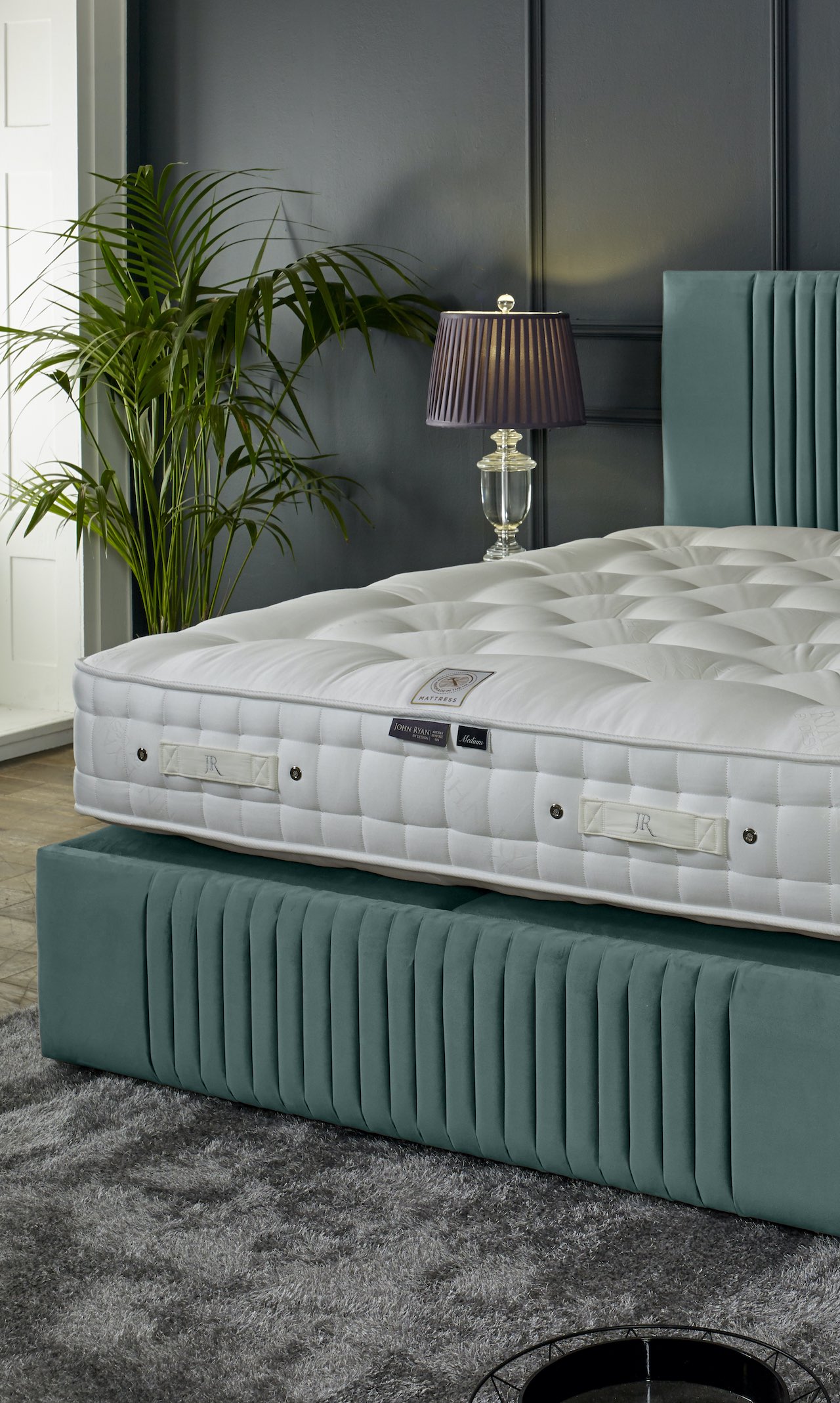
A natural fibre pocket spring mattress with a plant based fire retardant cover, hand tufted rather than glued, is as close to chemical free as UK law permits. Ours start at £2,180 for a king size.
On This Page
- What “chemical free” and “non toxic” actually mean
- Why UK law puts chemistry in every adult mattress
- Where the chemicals in a mattress actually sit
- Fibreglass and UK mattresses
- The certifications worth knowing
- How to check a mattress before you buy it
- How we handle chemicals in our own mattresses
- Which of our mattresses to consider
- Your bedding sits closer to you than your mattress
- The questions people ask most
- Questions our customers have already asked
- Chemical free and non toxic mattress FAQs
What “Chemical Free” and “Non Toxic” Actually Mean
Neither term is regulated. There is no British Standard for a non toxic mattress, no certifying body that issues a “chemical free” seal, and no trading standards definition that a manufacturer has to meet before printing either phrase on a product page.
That leaves the words doing whatever work the marketing department wants them to do. One brand uses “chemical free” to mean the cover has no synthetic fire retardant coating. Another uses it to mean the foam meets an emissions threshold. A third uses it because it reads well.
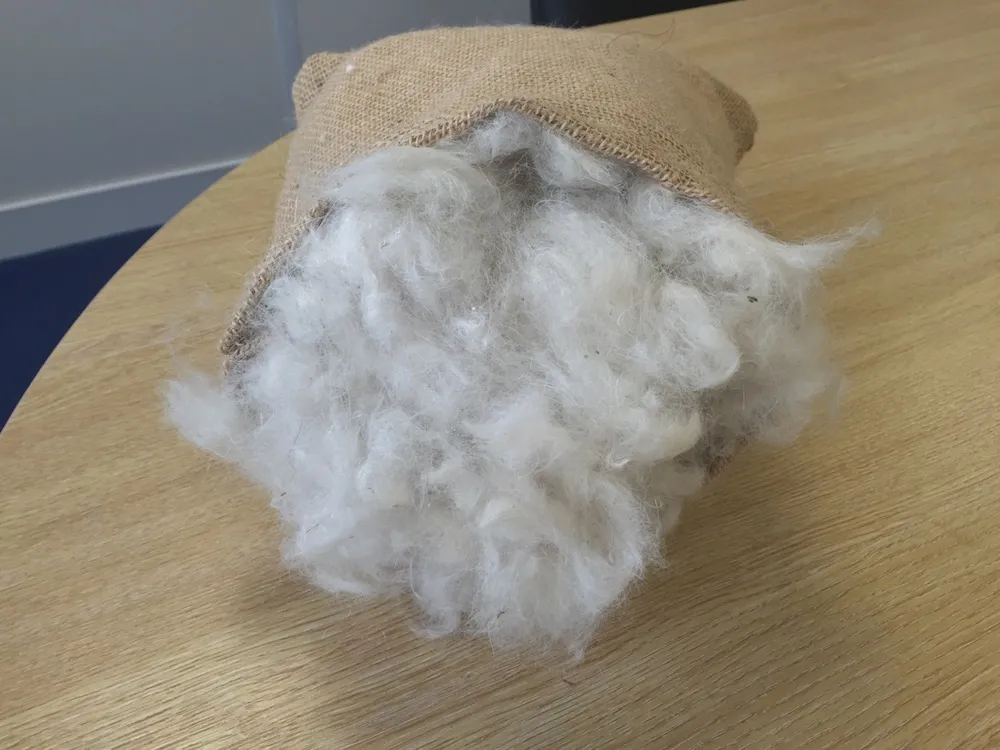
Taken at face value, “chemical free” is also scientifically meaningless. Wool is a chemical. Cotton is a chemical. Water is a chemical. What people actually mean when they search for it is a mattress with as few petrochemical derived, synthetically treated or off gassing components as possible, which is a reasonable thing to want and a much easier thing to verify.
The same applies to “non toxic”. Every mattress sold in the UK must be safe under the General Product Safety Regulations 2005, so in the narrow legal sense every compliant mattress on the market is already non toxic. The phrase is doing emotional work rather than factual work.
Latex is where the labelling gets worst
Latex shows the problem more clearly than any other material, because the trade uses several names that sound natural and mean very different things. The table below is the one we give customers when they ask.
| Latex Type | Natural % | Synthetic % | Other |
|---|---|---|---|
| 100% Natural Latex | 100 | 0 | |
| Natural Latex | 1-99% | 1-99% | Always ask the exact blend ie 80/20 |
| Graphite Latex | 30% | 70% | |
| Pure Latex | 20% | 80% | |
| Synthetic Latex | 0 | 100% |
“Pure Latex” is 20% natural and 80% synthetic. “Graphite Latex” is 30% natural. Only 100% Natural Latex is what most people assume they are buying, and the only way to know which you are being offered is to ask for the exact blend in numbers.
Our advice is to stop asking whether a mattress is chemical free and start asking what is in it. A manufacturer who lists every layer by weight and material is telling you far more than one who prints a reassuring badge.
Why UK Law Puts Chemistry in Every Adult Mattress
This is the part most articles on non toxic mattresses skip, and it changes how you should read every claim you encounter.
Mattresses supplied in the UK must comply with the Furniture and Furnishings (Fire) (Safety) Regulations 1988, as amended. Fillings of every type, including foam, Latex, non foam fibres and composites, have to pass the ignition resistance tests set out in the Schedules to those Regulations.
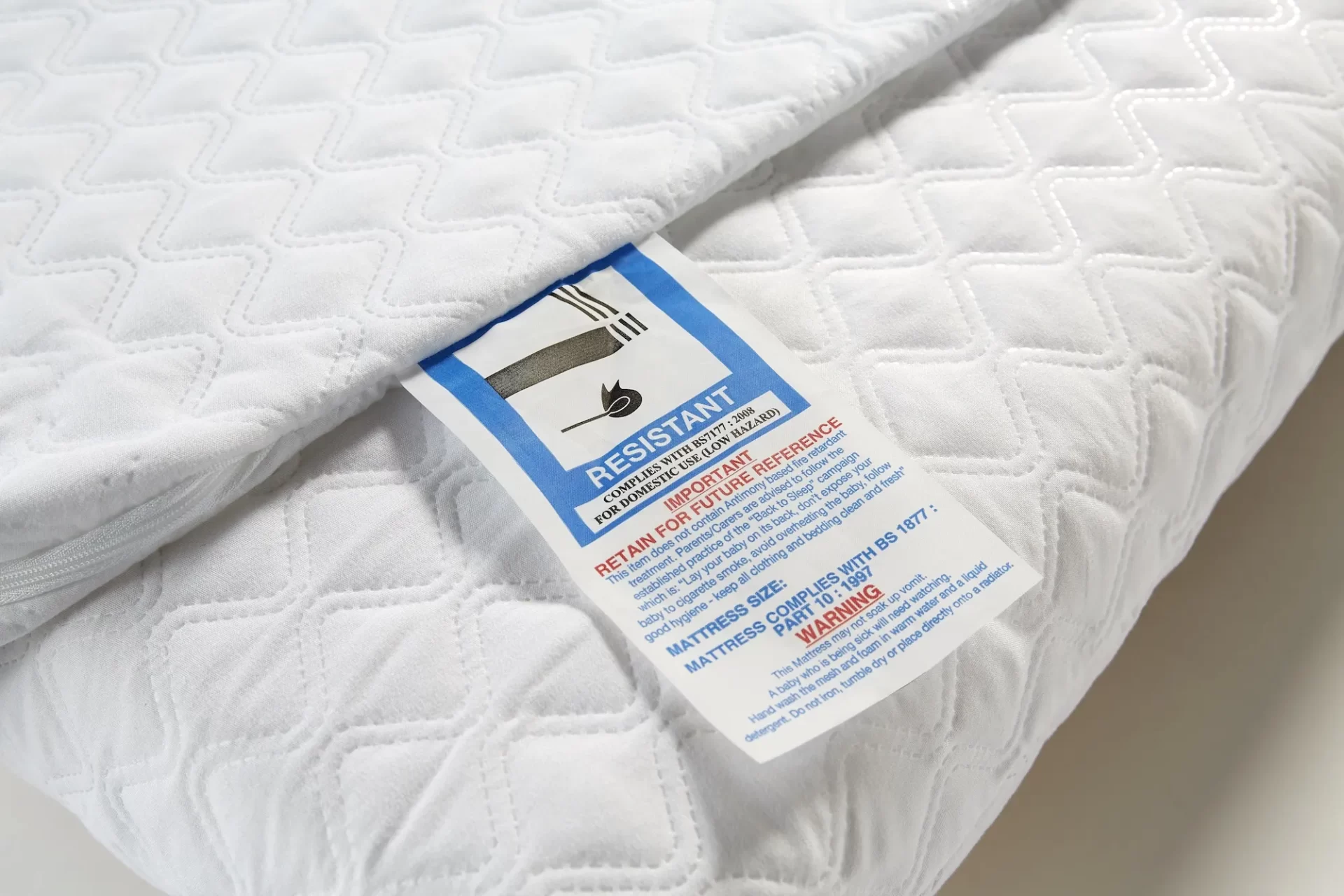
Separately, under the General Product Safety Regulations 2005, the finished mattress must be safe. Manufacturers demonstrate that by passing the relevant hazard rating of BS 7177, the British Standard covering resistance to ignition of mattresses, mattress pads, divans and bed bases. For domestic use that is the Low Hazard rating, tested with a smouldering cigarette and a simulated match flame under EN 597 parts 1 and 2.
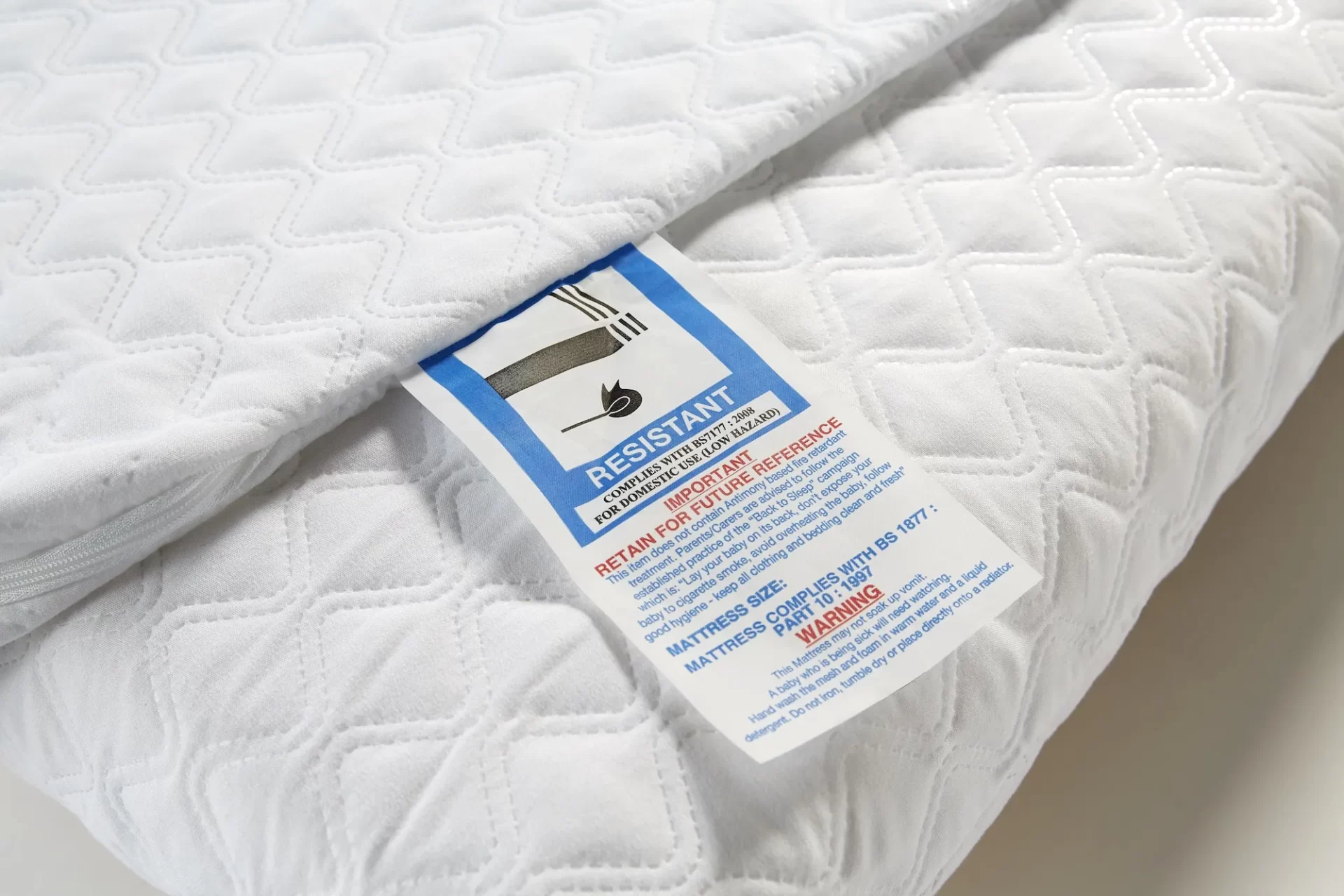
The practical consequence is straightforward. No retailer in the UK can legally sell you an adult mattress with no fire retardancy whatsoever, whether that retardancy comes from a treated cover, an additive in the foam, a naturally flame resistant fibre such as Wool, or a barrier layer. Anyone telling you otherwise is either misunderstanding the law or hoping you will not check.
Our full explanation of how the testing works, and how our own covers are treated, sits in our guide to fire retardant methods and compliance in mattresses.
The 2025 change that tells you what the regulator thinks
On 30 October 2025, the Furniture and Furnishings (Fire) (Safety) (Amendment) Regulations 2025 came into force and removed a list of baby and children’s products from the scope of the 1988 Regulations. Mattresses intended for babies and children, where the length is under 170cm and the width under 75cm, are now outside those flammability requirements.
The Office for Product Safety and Standards gave a specific reason. The change was made to reduce the risk of exposing babies and young children to chemical flame retardants at a significant stage of their development, because the fire risk for those products was judged lower than the chemical exposure risk.
That is the UK regulator stating, in writing, that chemical flame retardant exposure is a real consideration and worth weighing against fire risk. It applies only to small children’s products, and adult mattresses remain fully in scope, but it is a useful piece of context when a retailer waves away your question about what their cover is treated with.
If you are buying for a nursery, this is the one area where the regulator has explicitly weighed chemical exposure against fire risk and come down on the side of chemical exposure. Our own natural cot mattress and the comparable models sit side by side below.
| Layers | Boori Natural Pocket Sprung Cot Mattress | Little Green Sheep Organic Cot Bed | Silent Night | John Ryan Natural Cot Mattress |
|---|---|---|---|---|
| 1 | 100% Cotton Cover (Non removable) | Single Cotton Cover | Unknown cover fabric | 2 Pinsonic microfibre zip off covers |
| 2 | 100% British Wool (No GSM) | Wool layer (No GSM) | AirStream™ 50% Recycled Foam Free Fibres (No GSM) | Hair proof water resistant cover |
| 3 | 2 Layers Spun bond pocket springs (No count given) | Coir & latex layer (No GSM) | Spun bond pocket springs (No count given) | 500GSM Lambs Wool |
| 4 | Coir (No GSM) | NA | NA | 3750GSM Coir sprayed with latex |
| Cover Washable? | No | Yes (Unknown temperature) | Yes at 40 degrees | Yes at 60 degrees |
| Total Depth | 10cm | 10cm | 10cm | 10cm |
| Retail Price | £299.99 | £199.99 | £249.99 | £165 |
Where the Chemicals in a Mattress Actually Sit
Chemistry in a mattress is not evenly distributed. It concentrates in four places, and knowing which is which lets you judge a specification sheet quickly.
It also helps to know which upholstery materials are synthetic before you read a specification sheet, since the names are not always self explanatory.
| Upholstery Layer | Fibre Type | How it will feel? | Price Point |
|---|---|---|---|
| Polyester | Synthetic | Soft | Cheap |
| White Fibre | Synthetic | Soft/Medium | Cheap |
| Recycled Fibre / Eco Fibre | Synthetic | Medium | Cheap |
| Memory Foam | Synthetic | Medium/Firm | Mid Price |
| Igel / Hybrid Foam | Synthetic | Medium/Firm | Mid Price |
| Polycotton | Synthetic/Natural Blend | Soft/Medium | Mid Price |
| Linen | Synthetic/Natural Blend | Medium | Mid Price |
| Wool (Pure) | Natural | Soft/Medium | High-End |
| Cotton (Pure) | Natural | Soft | High-End |
| Silk | Natural | Soft | Expensive |
| Horsehair | Natural | Medium | High-End |
| Mohair | Natural | Medium/Firm | High-End |
| Hemp | Natural | Medium | High-End |
| Latex (100% Natural) | Natural | Medium/Firm | High-End |
| Coir | Natural | Firm | High-End |
| Flax | Natural | Firm | High-End |
| Coarse Cashmere | Natural | Firm | High-End |
| Bamboo | Natural | Super Soft | Expensive / Exclusive |
| Horsetail | Natural | Firm | Expensive / Exclusive |
| Alpaca | Natural | Soft | Expensive / Exclusive |
| Cashmere (Pure) | Natural | Soft | Expensive / Exclusive |
| Vicuna | Natural | Super Soft | Expensive / Exclusive |
1. The foam
Polyurethane foam, including memory foam, is petrochemical derived and accounts for the overwhelming majority of chemical content in a typical mass market mattress. Memory foam involves roughly 61 different chemical compounds in its manufacture, and it is foam that produces the distinctive smell people notice when a rolled mattress is first unwrapped.
That smell is volatile organic compounds, or VOCs, leaving the material. Emissions drop over time but do not stop when the smell does, and warmer bedrooms increase the rate. We cover this in detail in our guide to memory foam off gassing and mattress toxins, along with what memory foam is actually made of.
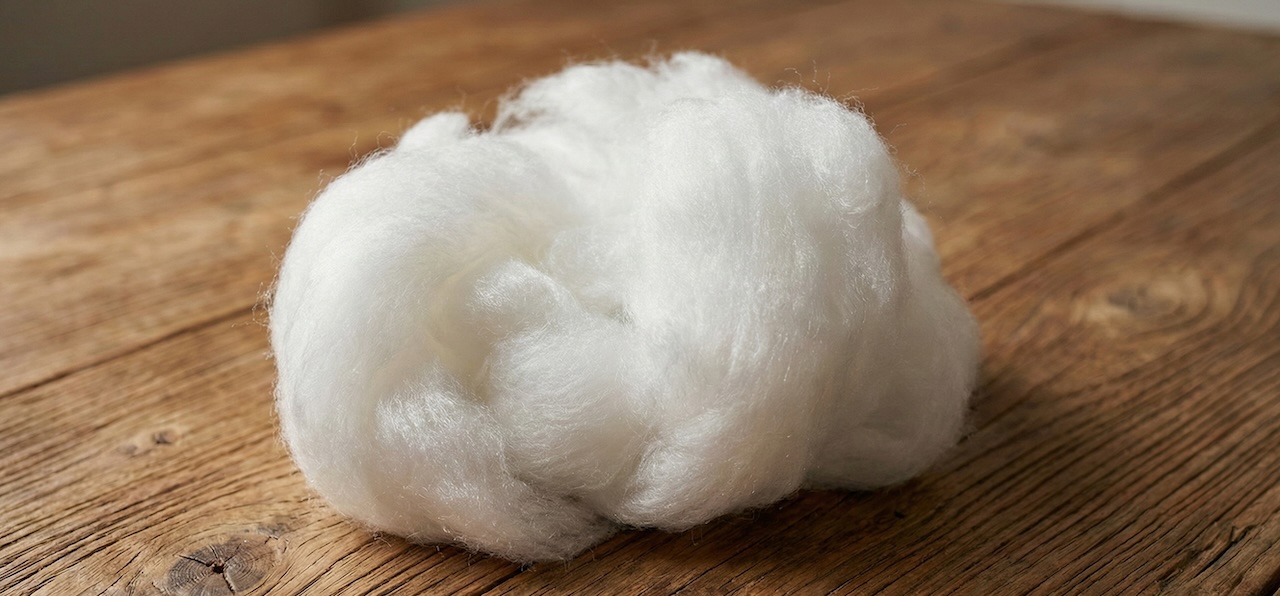
If reducing chemical content is your priority, this is the single largest lever available to you. A pocket spring mattress with natural fibre upholstery has a completely different chemical profile to a foam bed, before you have examined anything else.
2. The fire retardant treatment
The second concentration is the fire retardancy required by law. In foam mattresses this is often an additive mixed into the foam during production, with TCPP among the compounds used in the UK for exactly this purpose. In non foam mattresses it is more commonly a back coating applied to the ticking.
Plant based and bio based alternatives now exist and perform to the same standard. The tests do not care where the retardancy comes from, only that the finished construction passes.
3. The adhesives
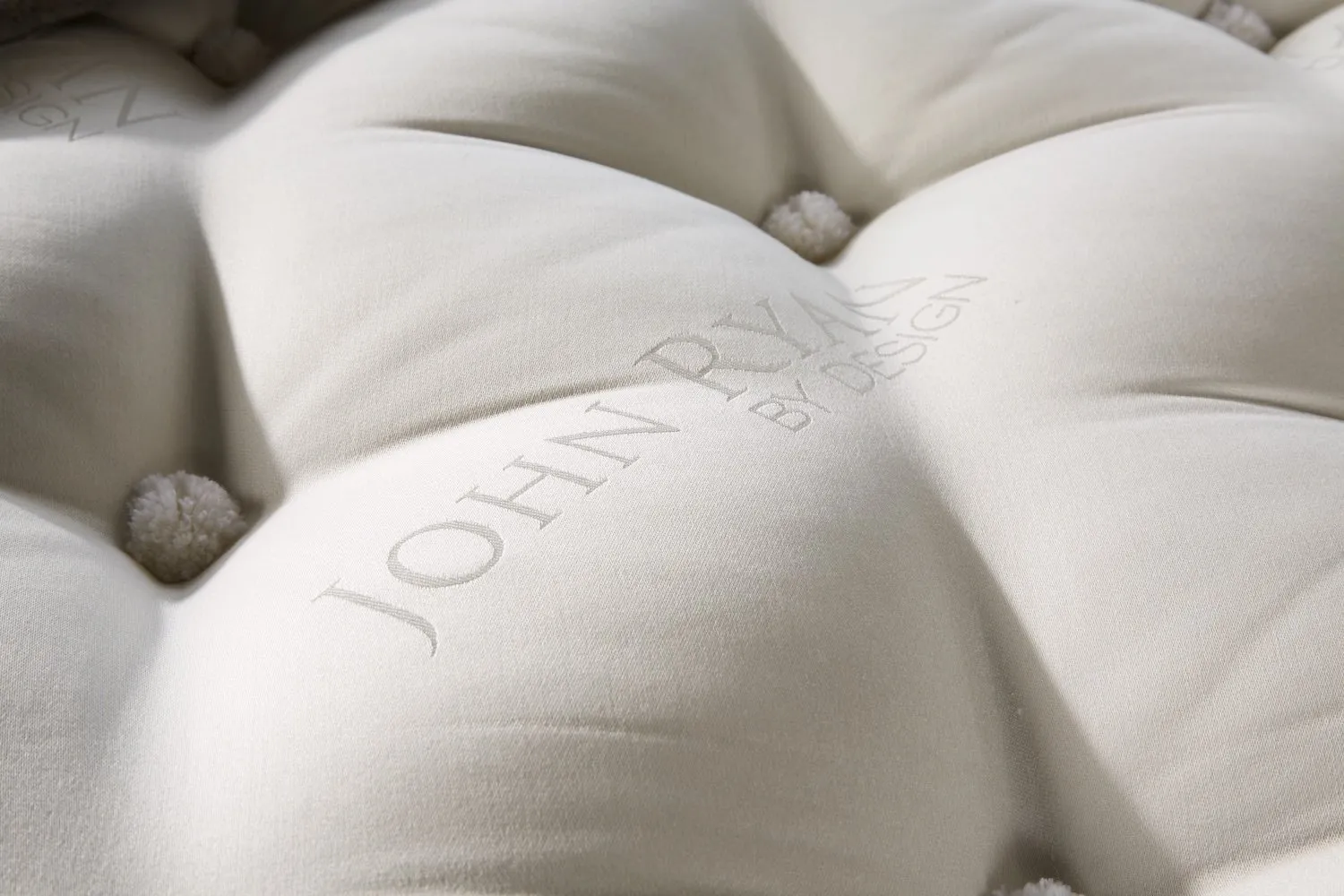
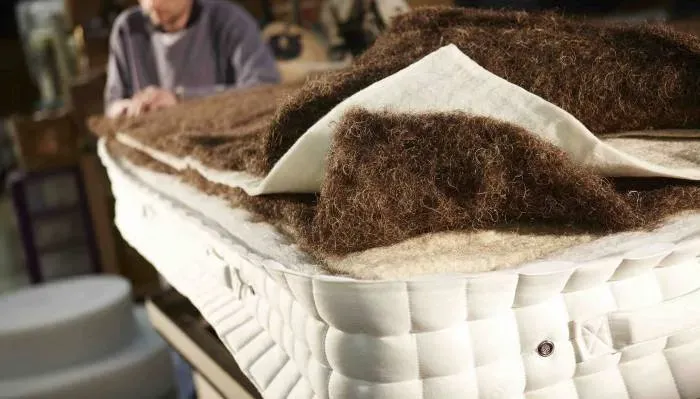
Foam layered mattresses are usually bonded together with spray adhesives, which are a chemical input in their own right and a source of VOCs that rarely appears in marketing copy. Traditionally built mattresses avoid this by hand tufting, where the upholstery layers are compressed and held by woollen tufts passing right through the mattress.
We are candid about the fact that adhesives can be present in mattress manufacture generally. A hand tufted construction removes the need for them between comfort layers, which is one of the practical reasons traditional building methods appeal to people worried about chemical content.
4. The cover and its finishes
The ticking is the layer closest to you, separated only by your bedding. It carries the fire retardant treatment in most non foam mattresses, and it may also carry dyes, softeners and easy care finishes.
Easy care and crease resistant treatments on textiles have historically used formaldehyde based resins, which is worth knowing when you are choosing sheets as well as mattresses.
Fibreglass: A Largely American Problem That Still Reaches UK Buyers
Fibreglass fire barriers caused a wave of alarm on social media, and the videos almost all came from the United States. Some manufacturers there use a woven glass fibre sheath under the cover as a cheap way of meeting federal flammability rules, and it becomes an irritant if the cover is unzipped and removed.
UK manufacturers overwhelmingly meet BS 7177 by other means, usually a fire retardant back coating on the ticking or an additive within foam, so a mattress made in Britain is very unlikely to contain it. The risk that does reach UK buyers comes through cheap imported foam mattresses sold via online marketplaces, where the manufacturing origin is often unclear.
If you own a budget foam mattress with a zipped cover and want to check, read the law label for “glass fibre”, “glass wool” or “fire barrier”, and do not remove the inner cover. If you are buying, asking the retailer directly for the fire barrier material is a fair question and the answer should come back without hesitation.

The Certifications Worth Knowing, and What Each One Covers
Certifications are the only part of this conversation with independent verification behind it, so it pays to know what each actually tests.
- OEKO-TEX Standard 100 tests textile components for a long list of harmful substances, and certification is granted per component or per article rather than to a brand.
- GOTS (Global Organic Textile Standard) covers organic fibre content and the processing chemistry used along the supply chain.
- GOLS (Global Organic Latex Standard) does the equivalent job for Latex.
- CertiPUR applies to polyurethane foam and sets limits on certain substances and VOC emissions. The European CertiPUR and the American CertiPUR-US are separate schemes with different criteria, so check which one a claim refers to.
Two things are worth holding on to. A certification held by one component does not certify the whole mattress, which is how a bed with a certified cover and uncertified foam ends up sounding cleaner than it is. And an absent certification is not proof of a problem, because certification is expensive and small UK makers often publish full material breakdowns instead.
Our view has always been that a complete, honest specification listing every layer by weight and material beats a badge. That is why we publish the GSM of every upholstery layer in every mattress we make.
How to Check a Mattress Before You Buy It
Five questions will tell you more than an afternoon of reading marketing copy. Any manufacturer worth buying from will answer all of them in a single email or phone call.
- What are the upholstery layers, by material and GSM, from the top down?
- How is the mattress made fire retardant, and is the treatment synthetic or plant based?
- Are the layers bonded with adhesive, or hand tufted?
- Does the mattress contain polyurethane foam of any kind, including as an insulator pad?
- Where is it made, and what certifications does it hold, at component or finished product level?
Evasiveness on any of these is itself the answer. A manufacturer who will not tell you what is inside their mattress has decided the information would not help them sell it.
How We Handle Chemicals in Our Own Mattresses
We would rather tell you precisely what we do than claim a phrase we cannot define.
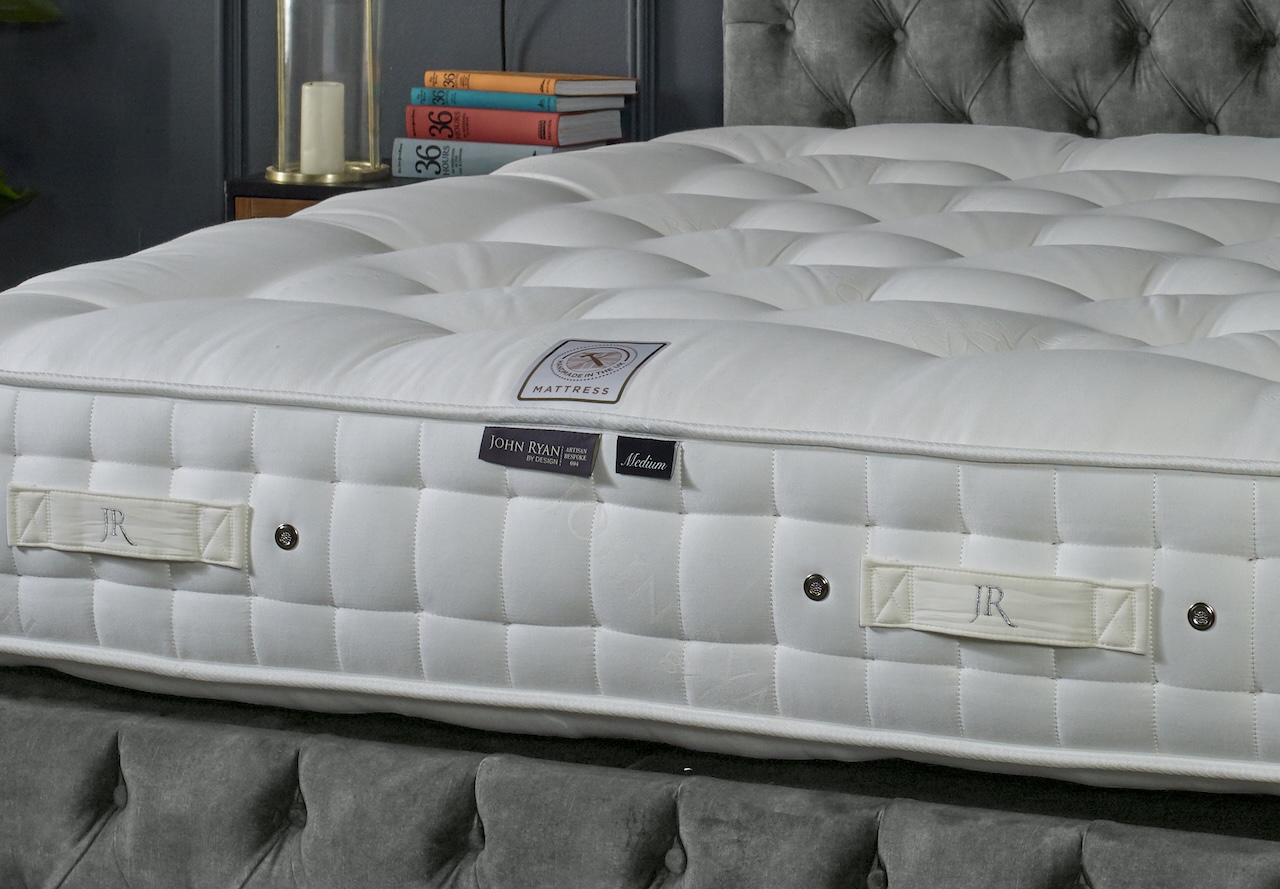
Every mattress in our Artisan, Latex and Legacy ranges uses a woven cover finished with a plant based fire retardancy method rather than a synthetic chemical spray or coating. Our fabric weaver developed the bio based compound in house, and it meets BS 7177 to EN 597 parts 1 and 2. That is a chemical free cover in a specific, checkable sense, and we say so on each product page.
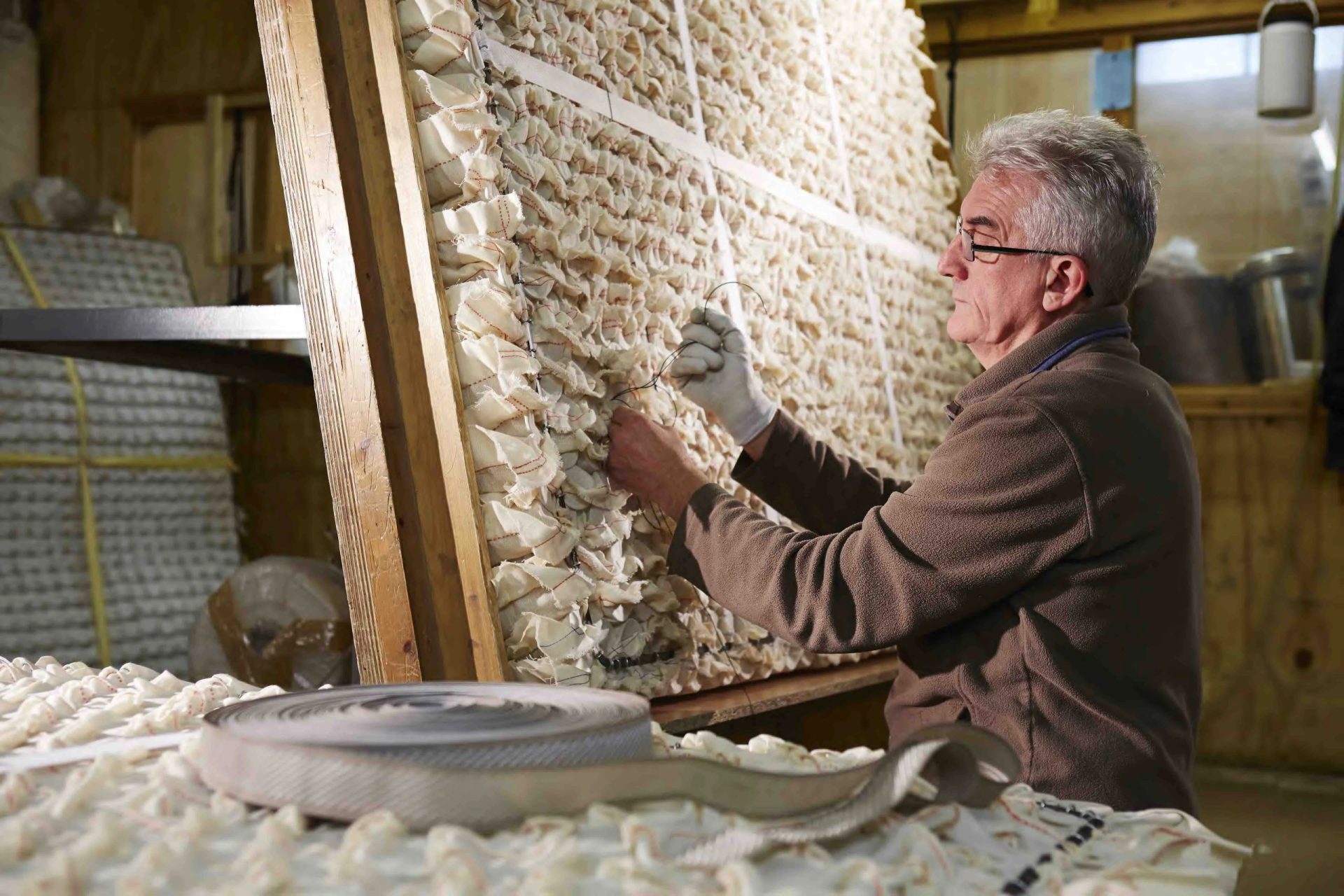
Our mattresses are hand side stitched and hand tufted with woollen tufts, so the comfort layers are held mechanically rather than glued. They are also built to order, which means they spend far less time compressed and wrapped in plastic than a rolled mattress sitting in a warehouse, and less time wrapped means less accumulated off gassing when the mattress arrives with you.
The Origins range is different and we will not pretend otherwise. Those models use polyester and foam insulator layers, and the plant based cover treatment applies to the Artisan, Latex and Legacy ranges rather than to Origins. If chemical content is your leading concern, the Origins range is not where we would point you.
Which of Our Mattresses to Consider
Prices below are for a king size, which is our reference size across the range.
Artisan Bespoke 004, £2,860 king size
A 100% natural fibre mattress and the one we recommend most often to people whose priority is material content. The 3600GSM of upholstery runs 1200GSM Blended British Fleece Wool and Cotton, a Hairproof Cambric cover, 200GSM soft Bamboo, 1200GSM pure Horsetail and 1000GSM bonded British Fleece Wool and Cotton, over 1600 calico encased pocket springs.
There is no foam and no polyester anywhere in it. Two rows of genuine hand side stitching, hand tufted, chemical free cover, ten year guarantee. You can see the full build on the Artisan Bespoke 004 product page.
Artisan Latex, £2,250 king size
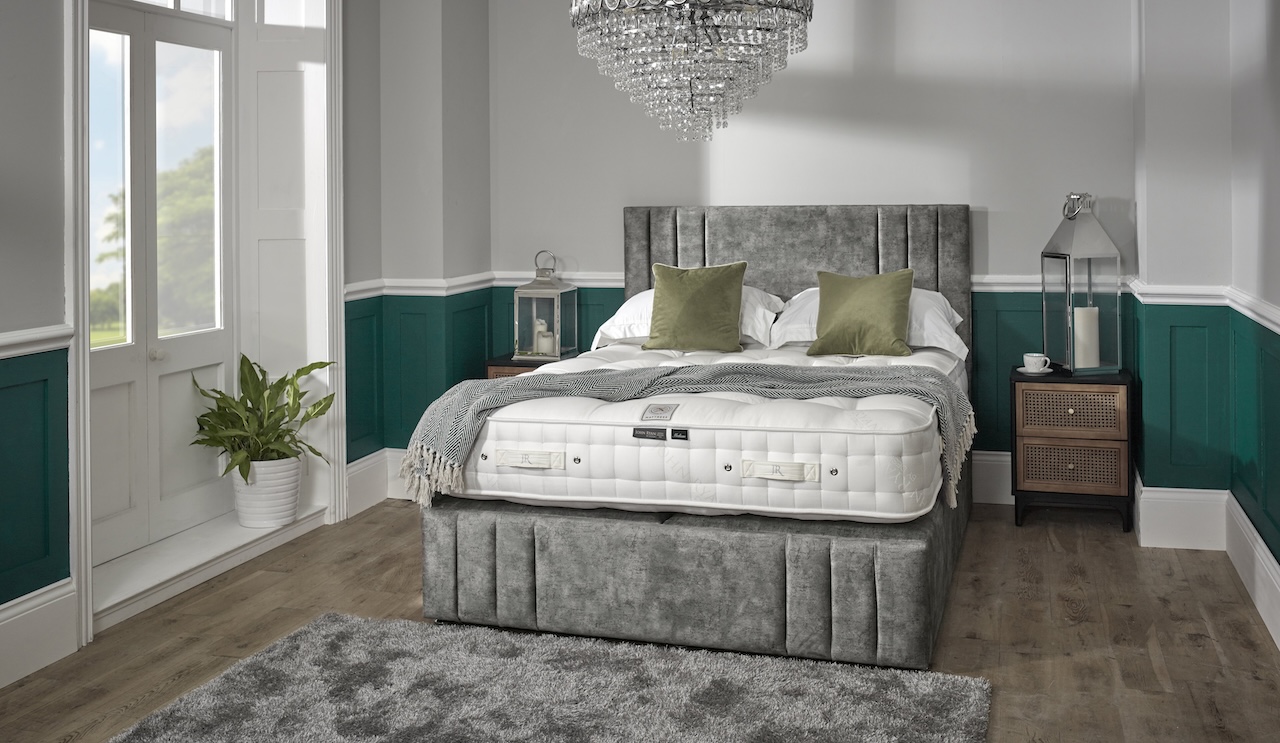
The UK’s first 100% plant based vegan mattress, and the answer for anyone who wants natural fibres with no animal derived materials. The 3150GSM build uses 200GSM Bamboo, 1500GSM rebound Cotton, 3cm of 100% natural Talalay Latex, 450GSM organic Flax and 1000GSM coconut fibre Coir as an insulator, on 1500 calico encased pocket springs.
These are the plant derived upholstery fibres available to a mattress maker working without animal products or foam.
| Upholstery Layer | Fibre Type | How it will feel? | Price Point |
|---|---|---|---|
| Cotton (Pure) | Natural | Soft | High-End |
| Hemp | Natural | Medium | High-End |
| Latex (100% Natural) | Natural | Medium/Firm | High-End |
| Coir | Natural | Firm | High-End |
| Flax | Natural | Firm | High-End |
| Bamboo | Natural | Super Soft | Expensive / Exclusive |
Full details are on the Artisan Latex product page, and our vegan mattress buying guide explains how to tell a plant based bed from a synthetic one wearing the label.
Artisan Naturals, £2,180 king size
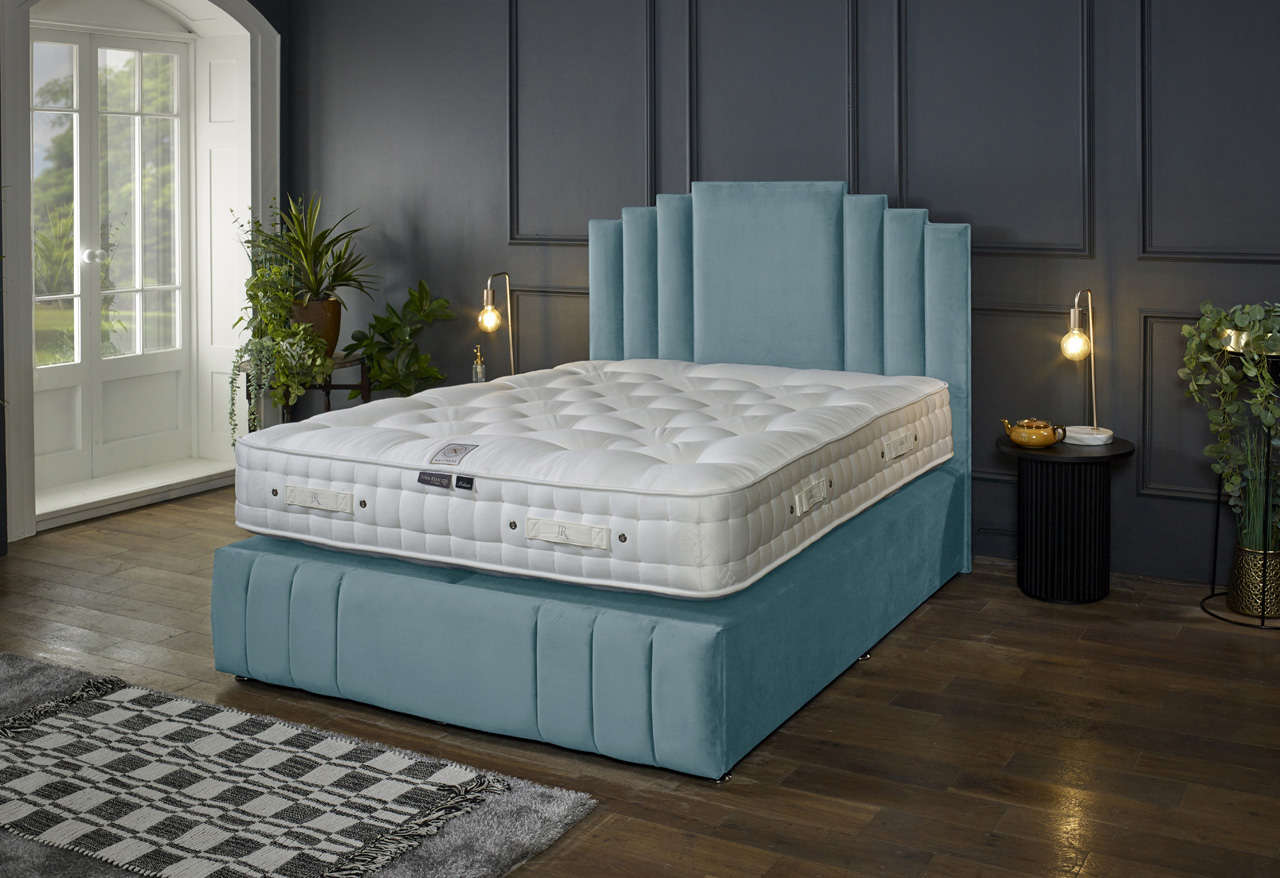
Our most popular natural fibre model, at 3950GSM and roughly 85% natural fibre content. The layers are 1200GSM Blended British Fleece Wool and Cotton, a Hairproof Cambric cover, 1250GSM rebound poly Cotton, 1500GSM 100% pure Mohair and 1600 calico encased pocket springs.
We flag the rebound poly Cotton layer deliberately. It is the reason this model is 85% natural rather than 100%, and if that matters to you the Bespoke 004 above is the model to move up to. Full build detail is on the Artisan Naturals product page, or browse the whole range in our natural fibre pocket sprung mattresses.
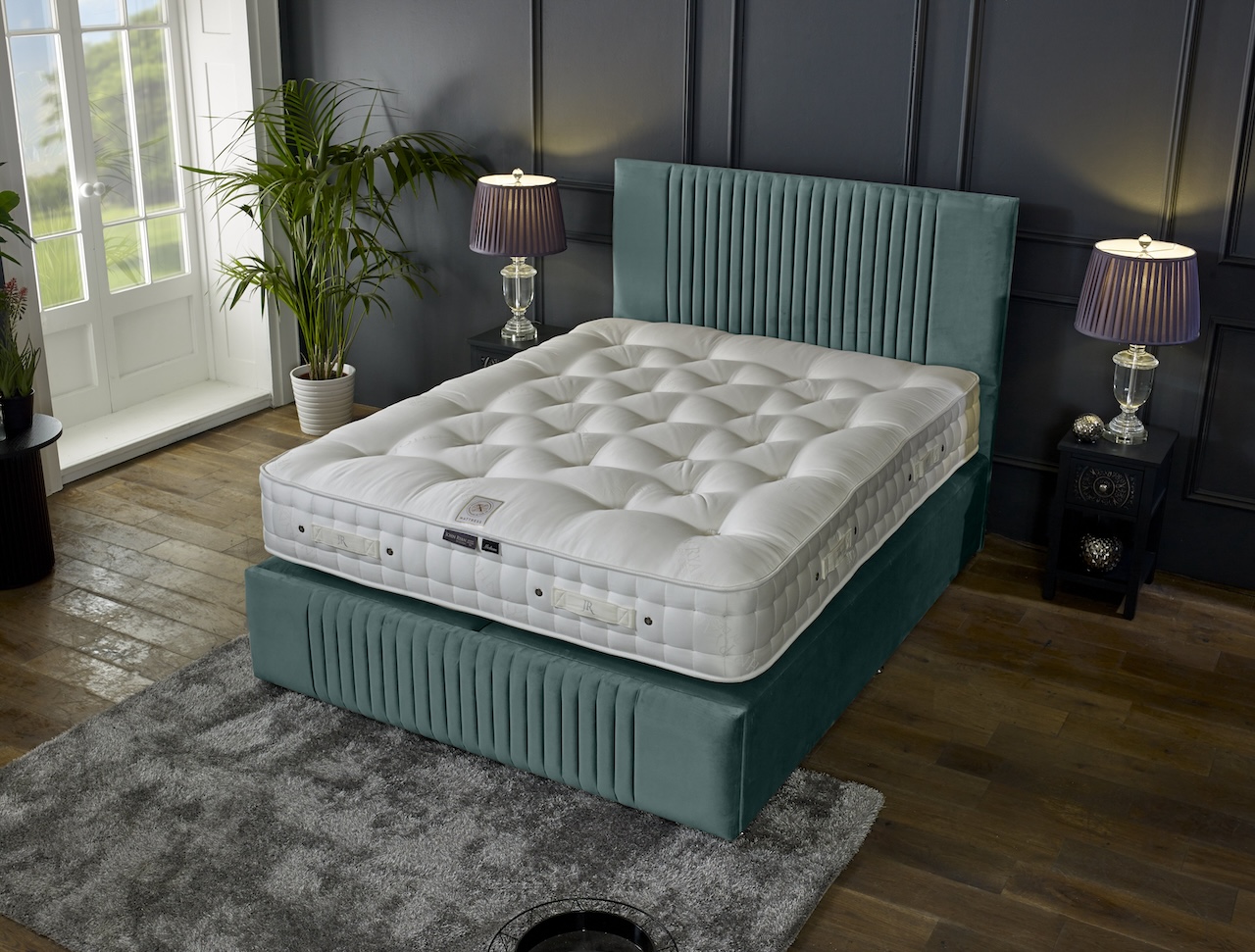
Legacy Two, £5,550 king size
Our fully traceable mattress, built from 1000GSM British Alpaca, 1200GSM Swaledale Wool, 1200GSM Horsetail and 1000GSM organic Flax across 5400GSM of upholstery, on a 2508 twin tier calico pocket spring unit. Every fibre is sourced from independent UK natural fibre artisans. The Legacy Two product page carries the full traceability detail.
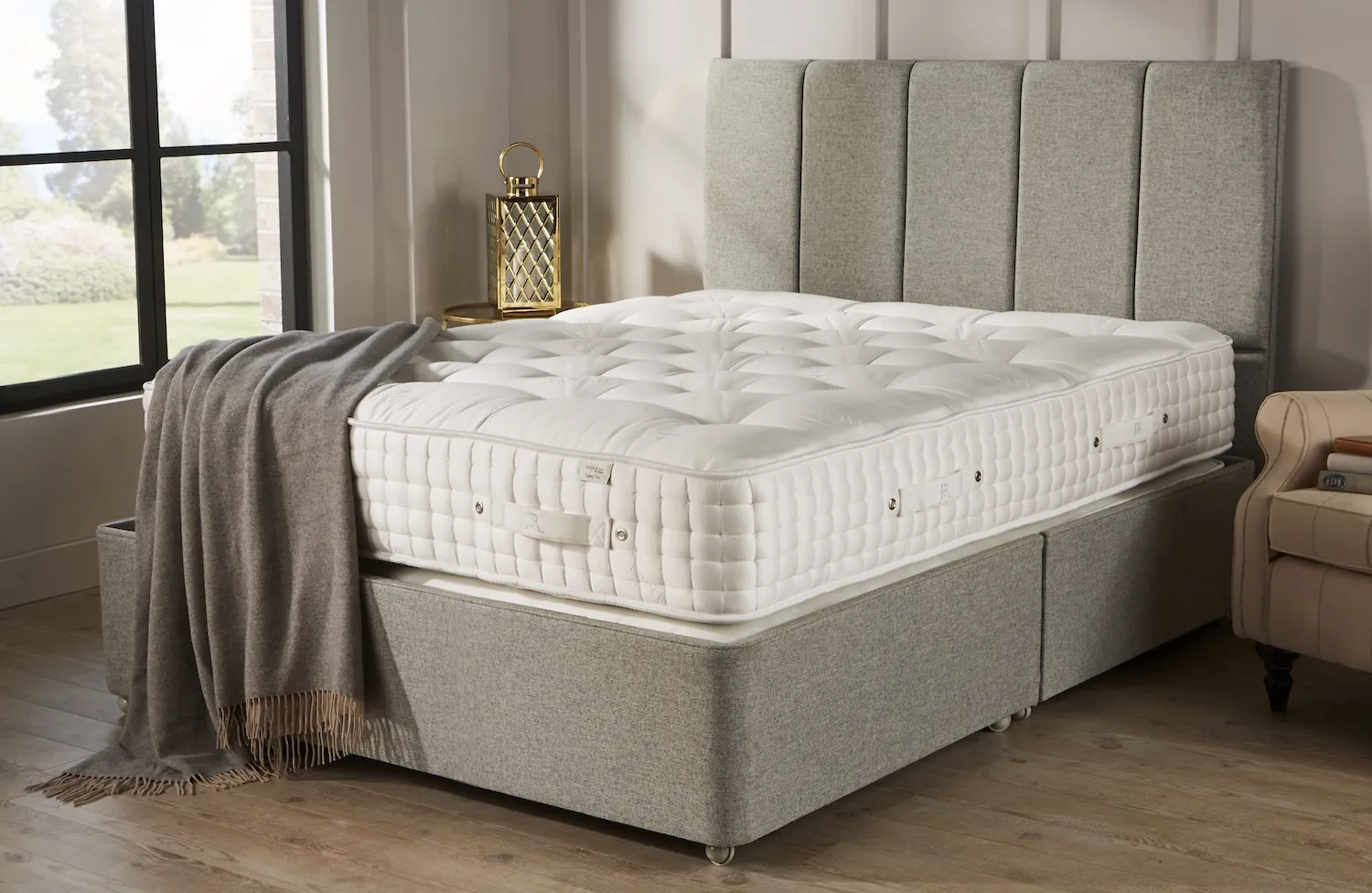
If your budget sits lower
For the “affordable non toxic mattress” search that brings many people here, we will be straight with you. The Origins Natural Comfort at £1,300 king size brings natural fibres into the upholstery, with 500GSM British Wool and a 250GSM blend of Wool, Cashmere, Silk and Cotton across 2550GSM total, but it also contains rebound polycotton pads and does not carry the plant based cover treatment.
The Artisan 1500 at £1,755 king size carries the chemical free cover but uses synthetic fillings. The first model where both the cover treatment and the fillings line up is the Artisan Naturals at £2,180 king size, and that is an honest floor rather than an upsell. Our guide to why natural fibre mattresses cost more explains where the money goes.
Your Bedding Sits Closer to You Than Your Mattress Does
People spend months researching mattress chemistry and then put a polyester duvet and crease resistant sheets on top of it. Bedding is the layer actually touching your skin for eight hours a night, and it is far cheaper to change.
Our natural bedding range follows the same thinking as the mattresses. The 100% natural Wool duvet is £240 king size in the lightweight and £285 king size in the mediumweight, with Wool’s own moisture management doing the work that synthetic wadding does chemically.
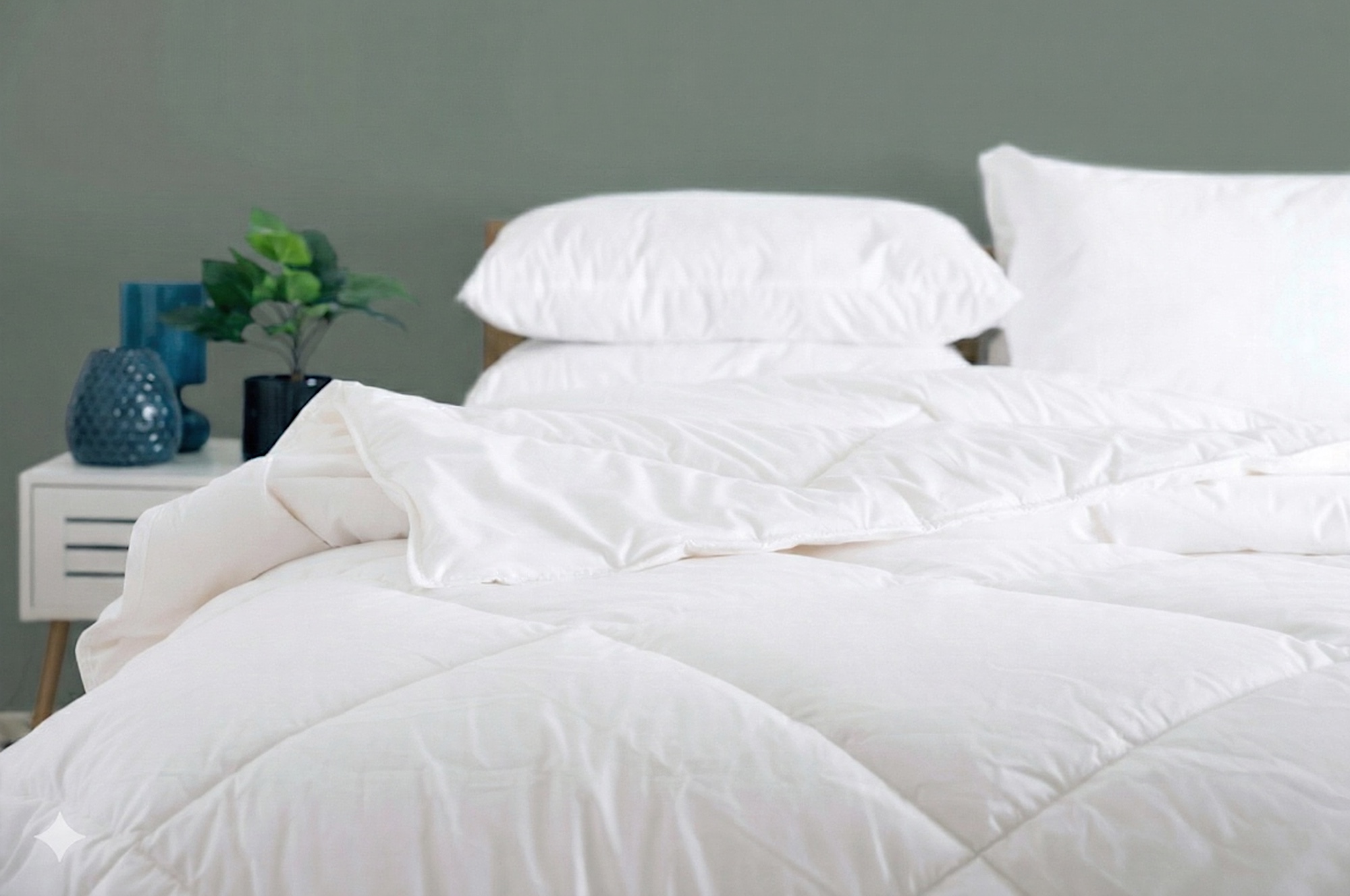
The 100% Cotton quilted mattress protector is £55 king size and does more for chemical exposure than most people expect, because it is the washable barrier between you and the mattress ticking. Our Origins Cotton bedding pack is £110 king size and the Artisan Cotton bedding pack is £150 king size, both woven Cotton rather than polycotton blends.
For choosing between weaves, thread counts and fabrics, our guide to choosing natural bedding covers goes into the detail, and our guide to the best natural fibre duvets and pillows in the UK covers the fillings.
Understanding the Fibres Themselves
Once you have decided that reducing synthetic content matters to you, the next question is which natural fibres do what, because they are not interchangeable.
Wool regulates temperature and is naturally flame resistant. Horsetail and Horsehair act as secondary spring layers and give a mattress its resilience. Coir and organic Flax provide firm insulation above the spring unit. Bamboo and Cotton sit in the upper comfort layers for breathability.
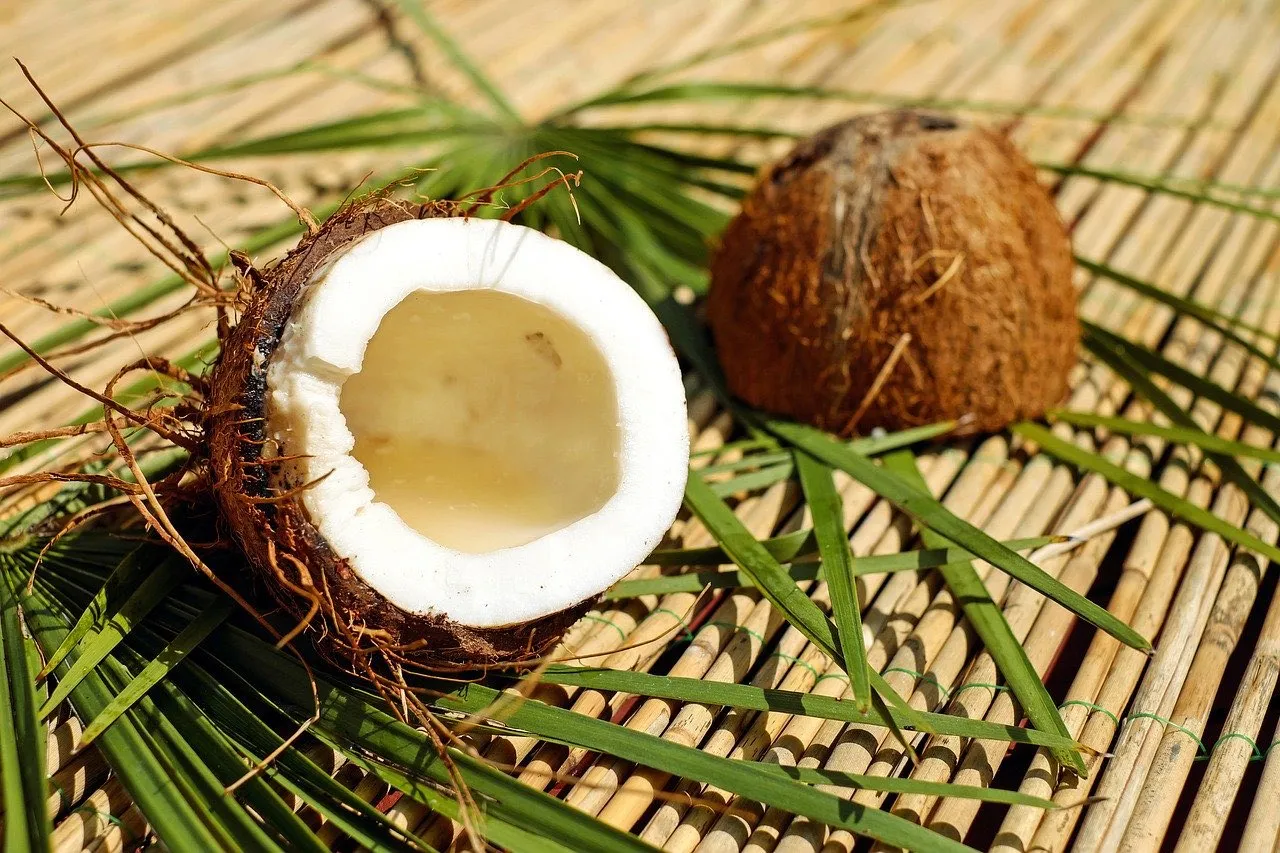
Our A to Z of natural fibres for mattresses covers every fibre we work with, and our guide to natural plant fibres in mattresses focuses on the plant derived options. If you are weighing up the category as a whole, read things to think about when choosing a natural fibre mattress and our take on what an organic mattress really means.
Questions Our Customers Have Already Asked
Our Ask the Community forum has thousands of answered questions, and mattress chemistry comes up constantly. These threads carry real answers to real situations rather than generalities.
- Can you buy a mattress free from fire retardant in the UK?
- Treatments of fire retardant substances in mattresses
- UK flame retardants: which are considered safe?
- Artisan 1500: what flame retardant chemicals are used?
- Questions about fire retardants in mattresses
- Questions about organic mattresses
- Do mattress toppers have fire retardant labels?
If your situation is not covered, ask the community and we answer within one working day.
The Questions People Ask Most
What is the safest mattress for your health?
Framed as a materials question, the answer is a pocket spring mattress with natural fibre upholstery, a plant based fire retardant cover and no polyurethane foam. That combination gives the lowest volatile organic compound profile available under UK fire regulations.
Framed as a sleep question, the safest mattress is the one that supports your spine correctly for your weight and sleeping position, because poor support causes problems you will feel every morning. Both things matter and they are not in conflict, since the spring tension can be matched to you whatever the fillings are.
What are the best non toxic mattress brands in the UK?
A handful of UK makers build to this brief, ourselves among them, alongside names such as Cottonsafe, Naturalmat and Abaca. We are a manufacturer rather than a review site, so rather than rank our competitors we would point you at the five questions above and suggest you put them to any brand on your shortlist.
The brands worth your time are the ones that answer all five without hesitating. Anyone who responds with a badge rather than a materials list has told you something.
Are IKEA mattresses chemical free?
Every mattress IKEA sells in the UK meets the same fire safety standard ours do, so the honest answer on safety is yes. Chemical content is a separate question, and it comes down to what is inside each model rather than to the retailer.
We keep a breakdown of the range because customers ask about it regularly.
| Model Name | Mattress type | Comfort rating | Support Details (Kingsize) | Upholstery/Comfort Specs |
|---|---|---|---|---|
| HIDRASUND | Natural & Synthetic Fibre | Medium/Firm | 653 Pocket Springs + 774 Micro Springs | Wool wadding, Latex & Cotton. |
| HOKKÅSEN | Synthetic Fibre & Foam | Firm | 555 Spunbond Pocket Springs & 483 mini-springs | 50kg Memory foam & Polyester wadding |
| HÖVÅG | Synthetic Fibre | Firm | 570 Spunbond Pocket Springs | Reflex foam 30kg & Polyester Wadding |
| HYLLESTAD | Synthetic Fibre | Firm | 570 Spunbond Pocket Springs | 50kg Memory foam, 30kg Reflex foam & Polyester wadding |
| HAMARVIK | Synthetic Cage Sprung | Firm | Bonell Spring Unit | 30kg Reflex foam & Polyester wadding |
| HUSVIKA | Synthetic Cage Sprung | Ultra Firm | Bonell Spring Unit | 33kg Reflex foam & Polyester wadding |
| MORGEDAL | Memory Foam / Synthetic | Medium/Firm | Polyurethane foam 33 kg (Support) | Polyurethane memory foam 50 kg (Comfort layer) |
| MALFORS | Solid Foam | Firm | 30kg Reflex foam | Polyester quilted cover |
Seven of the eight models are built on polyurethane foam, reflex foam or polyester wadding, which is where the chemical content in any mattress concentrates. The HIDRASUND is the exception, combining Wool wadding, Latex and Cotton over a pocket spring unit, so if you are shopping that range and chemical content is your priority, that is the model to look at.
The same reading applies across the budget end of the market generally. Mattresses built to a low price point are built around foam, because foam is the cheapest way to get there. Read the law label, ask what the fillings are by weight, and the answer stops being a matter of opinion.
Why does my new mattress smell of chemicals, and is that smell toxic?
That smell is volatile organic compounds leaving the materials, and it is strongest in foam mattresses that have been compressed and sealed in plastic for weeks before reaching you. Airing the room and leaving the mattress uncovered for a few days reduces it considerably.
The smell itself is not a reliable measure of what is being released, since emissions continue after they drop below the level a human nose can detect. Our guide to off gassing and mattress toxins covers the detail. A natural fibre mattress can have its own smell when new, usually an earthy note from the Wool, which settles within a week or so.
Chemical Free and Non Toxic Mattress FAQs
Is there such a thing as a truly chemical free mattress in the UK?
No adult mattress sold legally in the UK is entirely free of chemistry, because the Furniture and Furnishings (Fire) (Safety) Regulations 1988 require fire retardancy in the fillings and BS 7177 governs the finished construction. What you can choose is how that retardancy is achieved, whether the mattress contains polyurethane foam, and whether the layers are glued or hand tufted.
Are natural mattresses automatically non toxic?
No. A mattress can contain natural fibres and still carry a synthetic fire retardant coating on its ticking, use spray adhesives between layers, or include a foam insulator pad. Ask for the full layer breakdown rather than relying on the word natural.
Do UK mattresses contain fibreglass?
It is overwhelmingly an American practice, driven by different flammability rules. UK manufacturers typically meet BS 7177 using a fire retardant back coating on the ticking or an additive in foam. The exposure for UK buyers comes mainly through cheap imported foam mattresses sold on online marketplaces, so check the law label for “glass fibre” or “fire barrier” if you are uncertain.
Does off gassing stop once the smell goes?
Not necessarily. The absence of a detectable smell means emissions have fallen below the threshold at which people can smell them. VOC emissions from polyurethane foam decline over time but can continue for months, and warmer bedrooms increase the rate.
Which certification should I look for?
OEKO-TEX Standard 100 for textile components, GOTS for organic fibre content, GOLS for organic Latex, and CertiPUR for polyurethane foam. Check whether a certification covers the finished mattress or a single component, because the two are often presented as though they are the same thing.
What is the cheapest low chemical mattress you make?
The Artisan Naturals at £2,180 king size is the first model where both the plant based cover treatment and predominantly natural fillings come together. Below that, the Origins Natural Comfort at £1,300 king size brings natural fibres into the upholstery but does not carry the plant based cover treatment.
Are baby and children’s mattresses treated differently now?
Yes. Since 30 October 2025, mattresses intended for babies and children under 170cm long and 75cm wide have been removed from the scope of the Furniture and Furnishings (Fire) (Safety) Regulations 1988, on the basis that the chemical exposure risk outweighed the fire risk for those products. They must still be safe under the General Product Safety Regulations 2005.
Talk to Us Before You Buy
If you are trying to reduce the chemical load in your bedroom, we would rather talk you through the specifications than sell you something that does not match what you are after. We will tell you what is in each model, what the cover is treated with, and where the compromises sit.
Call our small expert team on 0161 437 4419, Monday to Friday, 9am to 5pm. There is no sales script and no pressure, just people who have been building these mattresses for a long time.

Dreaming of the perfect nights sleep?
Ask us a question
There are over 6000 questions and answers submitted by you on all questions about mattresses and bed problems. Enter a keyword such as Vi Spring, John Lewis beds, bad back or Memory Foam and see if your question has already been answered.
If you can’t find an answer in knowledge hub, ask a new question. We aim to respond to all questions within one working day.
Newsletter
Enter your email to join our newsletter. We’ll send you occasional news and mattress expertise.