







Mattress Help
January 2026Dreams Mattresses UK: The complete 2026 buyer's guide
Dreams’ market dominance masks corporate complexity
Dreams positions itself as the “UK’s No.1 specialist bed retailer,” a claim supported by significant market share and store footprint. Since August 2021, the company has been owned by Somnigroup International (formerly Tempur Sealy International), acquired for £340 million—a tenfold increase from the £35 million Sun Capital paid to rescue it from administration in 2013.
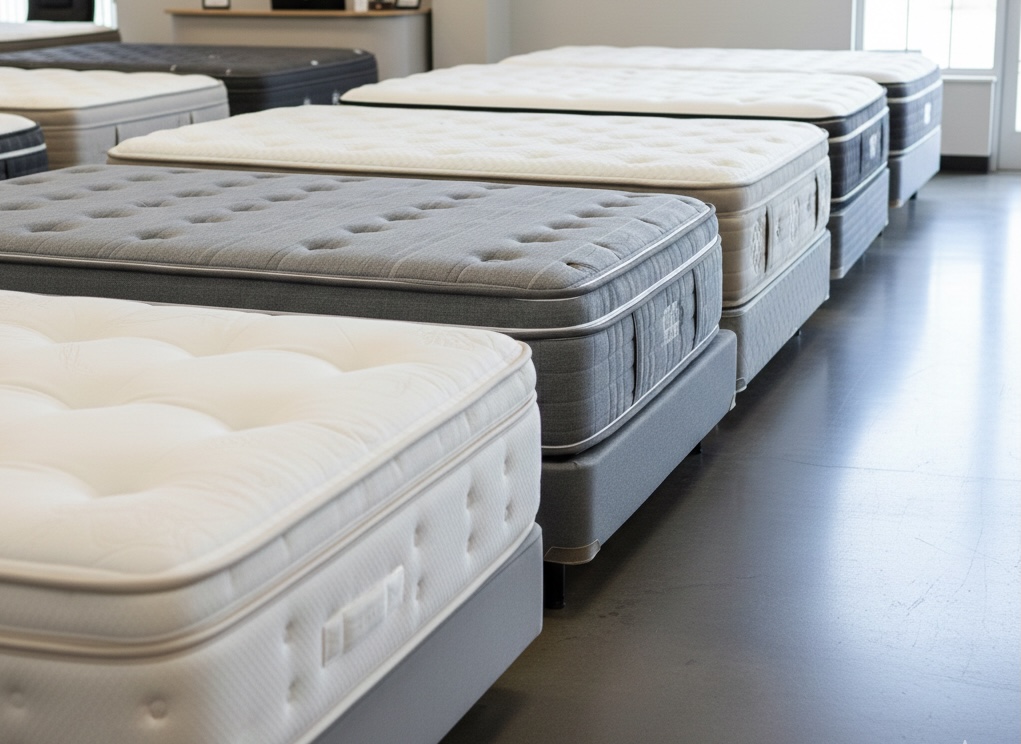
This ownership matters for consumers. Dreams functions as both manufacturer and retailer, operating a factory in Oldbury, West Midlands, producing approximately 290,000 mattresses annually. Yet many customers don’t realise they’re buying from a Tempur Sealy subsidiary when staff recommend TEMPUR mattresses as “premium” options. Dreams is, unsurprisingly, the “UK’s No.1 TEMPUR retailer.”
Financial performance doesn’t translate to customer value
The company’s FY 2024 results showed turnover of £412.5 million with underlying EBITDA of £59.3 million. Dreams employs approximately 2,340 staff across its 208 stores and 11 delivery centres, with headquarters (cheekily named “Bedquarters”) in High Wycombe. Recent expansion includes four new stores in 2025 and a premium concept store in East Sheen, London.
Dreams stocks mattresses from multiple brands, including Silentnight, Sealy, Relyon, and Sleepeezee, alongside its own-brand ranges: Dreams Workshop (budget), Dream Team (mid-range), TheraPur (hybrid), and Flaxby (premium).
Notably absent is Hypnos, the Royal Warrant-holding manufacturer known for chemical-free fire retardancy—available instead through competitor Furniture Village.
The specification disclosure problem spans all price tiers
The most significant issue with Dreams mattresses isn’t necessarily quality; it is that customers cannot verify their quality because Dreams doesn’t disclose their mattresses’ full technical specifications. Something that specialist mattress manufacturers readily disclose. Understanding GSM (grams per square metre) is crucial when comparing mattresses, yet Dreams refuses to provide this fundamental information across most of its range.
The Entry Range (£149-£599): Basic construction with hidden details
The Workshop Range, sometimes known as the Essentials range, comprises Dreams Workshop mattresses using traditional open-coil springs. Dreams discloses comfort grades, UK manufacturing, and basic spring types. What Dreams omits: spring gauge (wire thickness determining durability), GSM weights of filling layers, foam density where present, fire retardant chemicals used, and fabric composition percentages.
The Dreams Workshop Sanderson is notably the only budget model offering two-sided construction—the rest are single-sided, meaning you cannot flip them to even out wear. As we explain in our article on the no-turn mattress scam, single-sided construction dramatically reduces mattress lifespan.
The Mid-Range (£299-£1,199): More springs, same secrecy
The mid-range includes Dream Team mattresses with pocket springs. The Dream Team Fakenham advertises 1,015 pocket springs in king size, and the popular Dream Team Gold Prescot boasts 4,789 springs. Dreams provides spring counts, mattress depths, and some filling types (British wool, Platinum 3D polyester).
However, Dreams still avoids spring gauge, GSM weights, memory foam density (only depths given, not kg/m³), wool weight specifications, and fire retardant methods. All mid-range mattresses are single-sided. The Dream Team Gold Prescot (King: £699-£899, reduced from £1,199) features 4,789 pocket springs, memory foam layers, Thermoswitch temperature-regulating cover, and 30cm depth. It carries a 4.8/5 rating from 24 reviews, but key omissions remain: memory foam density, spring gauge, and fire retardant type.
The Premium Range (£799-£3,999): Flaxby offers relative transparency
The Flaxby Collection, manufactured by Harrison Spinks exclusively for Dreams, represents the retailer’s most transparent offering. Spring counts are prominently featured (2,475 to 14,950 springs), hand-tufted construction confirmed, hand side-stitching specified, and crucially foam-free, glue-free, and FR chemical-free construction.
Flaxby uses British wool, Yorkshire-grown hemp and flax, cotton, cashmere, and mohair in upper-tier models. Yet even here, Dreams omits GSM weights, spring gauge, layer depths, and natural material quantities. The £1,999+ Flaxby range remains single-sided, which specialist manufacturers consider a durability compromise at this price point.

What transparency actually looks like
The comparison to specialist manufacturers is stark. A £1,200-1,500 mattress from a transparent manufacturer would typically disclose a spec similar to the following at today’s prices:
- 500GSM wool
- 600GSM rebound polycotton (50/50 blend)
- 300 GSM Bamboo or Horsehair
- Spring gauge options (1.28mm soft, 1.4mm medium, 1.6mm firm, 1.9mm extra firm)
- Total GSM count
- Chemical-free cover specifications
- Two-sided construction
Dreams provides none of this detail, even for premium products. When manufacturers hide specifications, you’re forced to buy blind. Which is something we have always been very much against.
Current Dreams models reveal inconsistent value propositions
Dreams Flaxby Nature’s Dawn: Premium price, partial disclosure
The Dreams Flaxby Nature’s Dawn (King: £1,599) uses approximately 2,475 pocket springs with DNAir technology, British wool, cotton, hemp, and flax fibres, with a chemical-free damask cover. It’s foam-free, hand-tufted, and UK-made with a 7-year guarantee. The Flaxby range is made by Harrison Spinks for Dreams.
The All Seasons variant (6,000 springs, two-sided with winter/summer surfaces, 10-year guarantee) represents Dreams’ best specification disclosure. However, spring gauge and GSM weights remain undisclosed, meaning you still can’t properly compare this £1,599 mattress to alternatives or verify you’re getting value for money.
Both these mattresses have been recently discontinued, with the current Flaxby equivalent being the Flaxby Oxtons Guild at £1699. Again, the listing is vague with no GSM.
- Tufted sleep surface
- Certified British wool comfort layer
- Hemp layer
- Supportive micro pocket springs
- Recyclable Cortec™ quad core
- A layer of comforting polyester
- Supportive base fabric
Dreams Revived Cove: Synthetic “eco” positioning
The Dreams Revived Cove (approximately £1,200-1,400) targets eco-conscious buyers with SEAQUAL YARN covers made from recycled ocean plastic and recycled polyester filling. It features approximately 3,300 pocket springs in a double size.
Critics note that the 100% synthetic construction somewhat undermines the environmental positioning. The very firm rating limits suitability for side sleepers, and once again, no GSM weights or spring gauge specifications are provided.
Dream Team Gold Prescot: Popular but opaque
The Dream Team Gold Prescot (King: £1,199, currently on sale at various retailers for £699-£879) is Dreams’ bestselling mid-range hybrid, featuring an innovative Thermoswitch temperature-regulating cover that uses liquid crystal technology to detect and cool overheating areas. The king size contains 4,789 individually wrapped pocket springs combined with memory foam layers and recyclable Platinum 3D™ polyester (described as giving “the feel of a million tiny springs”). At 30cm depth with a medium comfort grade, it’s UK-handcrafted and carries a 4.8/5 rating from 24 reviews.
The Thermoswitch cover is quite interesting as a concept as its thermal colour visibly changes as it absorbs excess heat, providing both functional cooling and visual feedback. The soft-touch knitted fabric is antibacterial, and the mattress design combines pressure-relieving memory foam with breathable Platinum 3D™ layers for what Dreams describes as “adaptive support that moulds to your sleep style.”
What Dreams still won’t tell you: Memory foam density (measured in kg/m³), spring gauge thickness, GSM weights of any upholstery layers, fire retardant type, exact composition percentages of the Platinum 3D™ polyester, or how much memory foam versus polyester versus springs comprise the 30cm depth. Without knowing the memory foam density, you cannot assess whether this is high-quality 50kg/m³+ foam that will maintain support for years, or budget 30-40kg/m³ foam that will compress significantly faster.
The single-sided compromise: Despite the £1,199 price point, the Prescot is single-sided with rotation-only maintenance. You cannot flip it to even out wear, which fundamentally limits lifespan compared to two-sided mattresses at similar prices. Dreams’ own care instructions specify head-to-toe rotation “regularly” but provide no flipping option, which means once one side compresses, that’s permanent.
Warranty reality check: The standard 1-year guarantee is supplemented by a 100-night comfort guarantee (exchange only, £49-£95 collection fee, requires mattress protector purchase). The option to extend to an 8-year Bedcover Service Plan exists but requires additional payment, and coverage ends after the first replacement. Thus requiring you to purchase warranty protection twice for a single mattress purchase period.
The Prescot represents Dreams’ best effort at specification disclosure within their mid-range, providing spring counts and depth measurements. However, the systematic omission of density, gauge, GSM, and composition data means you’re still buying based on marketing language (“feel of a million tiny springs”, “adaptive support”) rather than verifiable specifications. At £699 on sale, it competes with transparent alternatives offering full disclosure and two-sided construction.
Discontinued and unavailable models
Two requested models proved problematic: Kaymed mattresses are no longer sold through Dreams (now available through Mattress Online and independent retailers), and the Dreams Opulessence Connoisseur appears to be discontinued. However, historical auction listings from 2013 show RRP of £1,999. Dreams frequently rebrands ranges, making model tracking difficult and historical comparison impossible.
Customer complaints reveal systematic quality patterns
The disparity between Dreams’ Trustpilot rating (4.8/5, 106,744 reviews) and its Reviews.io rating (1.7/5, 379 reviews) tells a story. Trustpilot captures predominantly positive sales and delivery experiences; Reviews.io captures post-purchase quality complaints. Both represent genuine customer experiences, but long-term mattress performance issues only surface after purchase.

A) Sagging and settlement: A consistent timeline
Sagging and settlement emerge as the most documented concerns in online reviews and forums of Dreams mattresses, with consistent timelines across multiple models:
- 3 weeks: Pillow-top settling reported on £1,400 Dreams Resplendant
- 6-8 months: Significant dips (3cm measured) on Anniversary Pocket Sprung
- 3.5 years: Memory foam mattress “shaped like a banana” (Kaymed from Dreams)
- TheraPur ActiGel 2600 (£1,699): Multiple complaints of sagging and surface bobbling within months
The Hyde & Sleep sub-brand (Dreams-owned) shows particularly poor durability, with Reviews.io rating of 1.15/5 from 72 reviews and sagging reported at 15 months.
This pattern of premature sagging isn’t surprising given the predominance of single-sided construction. Our comprehensive guide on settlement and indents in mattresses explains why two-sided mattresses last significantly longer—you can flip them to even out wear, doubling effective lifespan.
B) Pillow-top failures: A design flaw, not user error
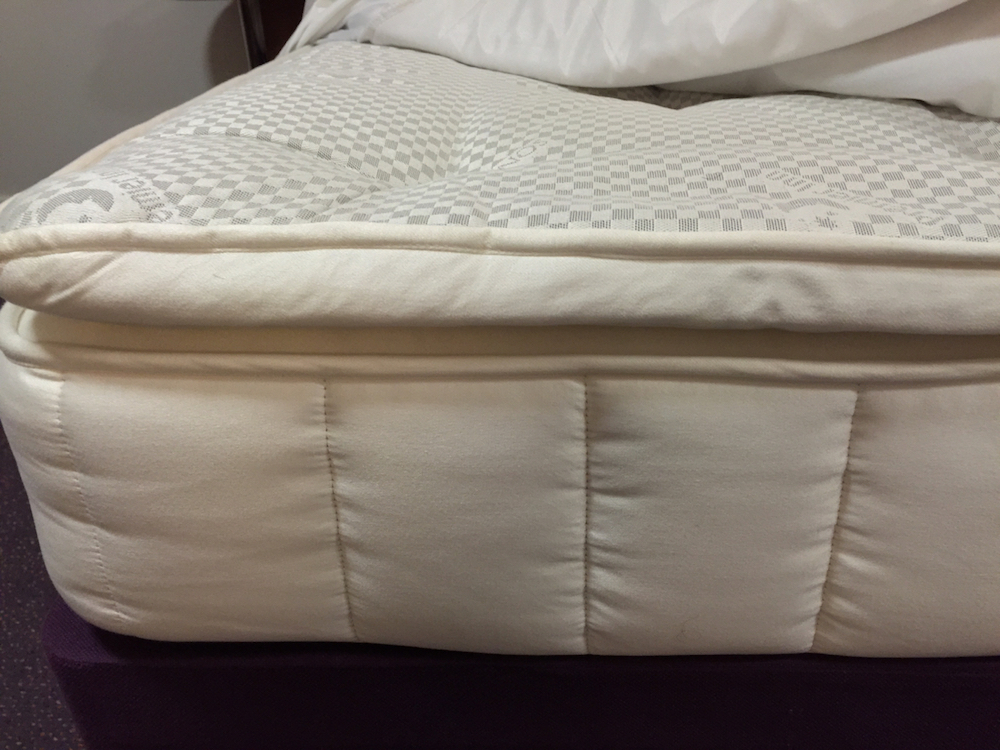
Pillow-top failures represent a design-level concern. Independent mattress specialists note: “Pillow-top mattresses can severely reduce the lifespan of your bed, and once they compress, that’s it, you’re stuck with it.” Documented failures include the Flaxby Master Guild 4450, Dreams Resplendant, and Dreams Solstice.
Combined with one-sided construction, pillow-top compression becomes a terminal fault rather than manageable wear. We’ve written extensively about why you should avoid pillow-top mattresses; the construction method fundamentally limits longevity regardless of price point.
C) Heat retention: Memory foam’s persistent problem
Heat retention in memory foam mattresses is acknowledged by Dreams itself: “These mattresses are known to retain body heat more than other types.” Customer complaints about Tempur and Silentnight memory foam products describe waking “covered in sweat” with “soaked bedding.”
Dreams’ solution—selling CoolTouch TEMPUR products—adds cost rather than addressing the fundamental issue. Natural fibre mattresses with breathable materials don’t suffer from this problem, which is why we’ve always advocated for natural fillings over synthetic foams.

D) Chemical odours: The off-gassing problem
Chemical odours appear across multiple reports. MoneySavingExpert forum posts describe “nasty chemicals” requiring two weeks of off-gassing with windows open. A December 2025 Trustpilot review confirms: “It stank of nasty chemicals. It took a fortnight to finish off gassing.”
Delivery crews reportedly dismiss concerns, stating “the smell would go away in a couple of hours.” This suggests the use of chemical fire retardants and synthetic materials that release volatile organic compounds (VOCs). Something Dreams doesn’t seem to disclose in product specifications.
Dreams’ warranty represents an industry outlier
Dreams’ 1-year standard guarantee is significantly below industry norms. Manufacturers confident in their products offer longer warranties. We do wonder why Dreams would give some of their range such a low basic guarantee?
| Retailer | Standard Guarantee |
|---|---|
| Dreams | 1 year |
| Bensons for Beds | 5 years free |
| Furniture Village | 20 years structural |
| Hypnos | 10 years |
| IKEA | Up to 25 years proportional warranty |
| Nectar/DreamCloud | Lifetime* with caveats |
| John Ryan By Design | 5-15 years depending on model |
The 100-Night Comfort Guarantee: Read the fine print
The 100-Night Comfort Guarantee sounds generous, but it carries significant limitations:
- Exchange only (no refunds)
- £49-£95 collection fee
- Requires Dreams mattress protector purchase
- Minimum 30-night trial before exchange
- Only one exchange permitted
- Excludes clearance items
Crucially, in-store purchases have no return rights, with only exchange being possible, which some customers discover only after attempting returns. Compare this to online mattress brands offering 60-night trials with free returns, and the “generous” guarantee looks less impressive.
Extended warranty: Another cost on top
Extended warranty (Bedcover Service Plan) extends coverage to 5-8 years but is an additional paid service with undisclosed pricing. Critically, once a warranty replacement is made, the Bedcover contract ends, requiring the purchase of a new extended warranty for the replacement mattress. You’re essentially paying twice for protection on a single purchase period.
Our guide on mattress guarantees compared shows how other manufacturers approach warranty claims fairly.
Sleep Match technology offers partial value
Dreams’ proprietary Sleep Match system uses pressure mapping across a diagnostic bed during a 3-minute scan. The technology performs 1,000+ scientific calculations using 18 statistical measurements, backed by 25 patents. Since 2017, Dreams has created 2.2 million customer profiles.
What is Dreams Sleep Match?
Sleep Match measures body pressure points, weight distribution, and spinal alignment, outputting colour-coded recommendations matched to Dreams’ mattress range. The service is free with no purchase obligation, which is genuinely useful compared to showroom staff making guesses based on brief conversations.
What Sleep Match cannot measure
What Sleep Match cannot measure matters equally:
- Upholstery texture preferences (soft wool vs firm horsehair feel)
- Sleeping temperature regulation needs
- Long-term material durability
- Partner compatibility beyond pressure mapping
- Health conditions requiring medical advice
- Personal comfort preferences that develop over weeks, not minutes
The technology addresses support mechanics, but comfort remains subjective. Maybe explaining why the 100-night exchange exists even for “scientifically matched” purchases. Most positive Sleep Match reviews appear in sponsored content and paid blog partnerships, with limited independent verification of recommendation accuracy.
The system may also steer customers toward higher-priced options, particularly TEMPUR products. Remember, Sleep Match doesn’t reveal what’s actually inside the mattress—the GSM weights, spring gauges, and material quality that determine long-term performance.
Fire retardant disclosure remains opaque across most ranges
UK mattresses must comply with BS 7177:2008+A1:2011, requiring either chemical treatment or natural fire-resistant barriers. The UK has the highest use of chemical fire retardants in Europe, with methods including organophosphates, chlorinated compounds (TCPP/TRIS), and antimony trioxide on covers.
Dreams does not publicly disclose fire retardant methods for its own-brand mattresses, i.e., what do they use: chemical spray, impregnated covers, wool, plant-based FR treatments like higher-end manufacturers (Dreams Workshop, Dream Team, TheraPur, Hyde & Sleep). This represents a significant transparency gap given increasing consumer concern about bedroom chemical exposure and potential health impacts from long-term chemical contact.
The Flaxby exception: Chemical-free by design
The Flaxby range is the exception, explicitly marketed as “FR chemical treatment-free” using natural wool barriers and inherently flame-resistant fibres. This is possible because Flaxby mattresses are foam-free—chemical FR is typically required in foam compositions. The natural wool itself provides fire resistance without added chemicals, meeting BS 7177 standards through material selection rather than chemical treatment.
The Hypnos gap: A strategic omission
Dreams’ decision not to stock Hypnos, the Royal Warrant-holding manufacturer that pioneered chemical-free mattresses over 12 years ago, represents a notable competitive gap. Hypnos is available through Furniture Village, meaning customers seeking verified chemical-free options must look beyond Dreams.
This omission is particularly puzzling given Dreams’ ownership by Somnigroup International, which has the resources to stock premium, chemical-free alternatives.
Dreams vs John Ryan By Design: Direct alternatives by price point
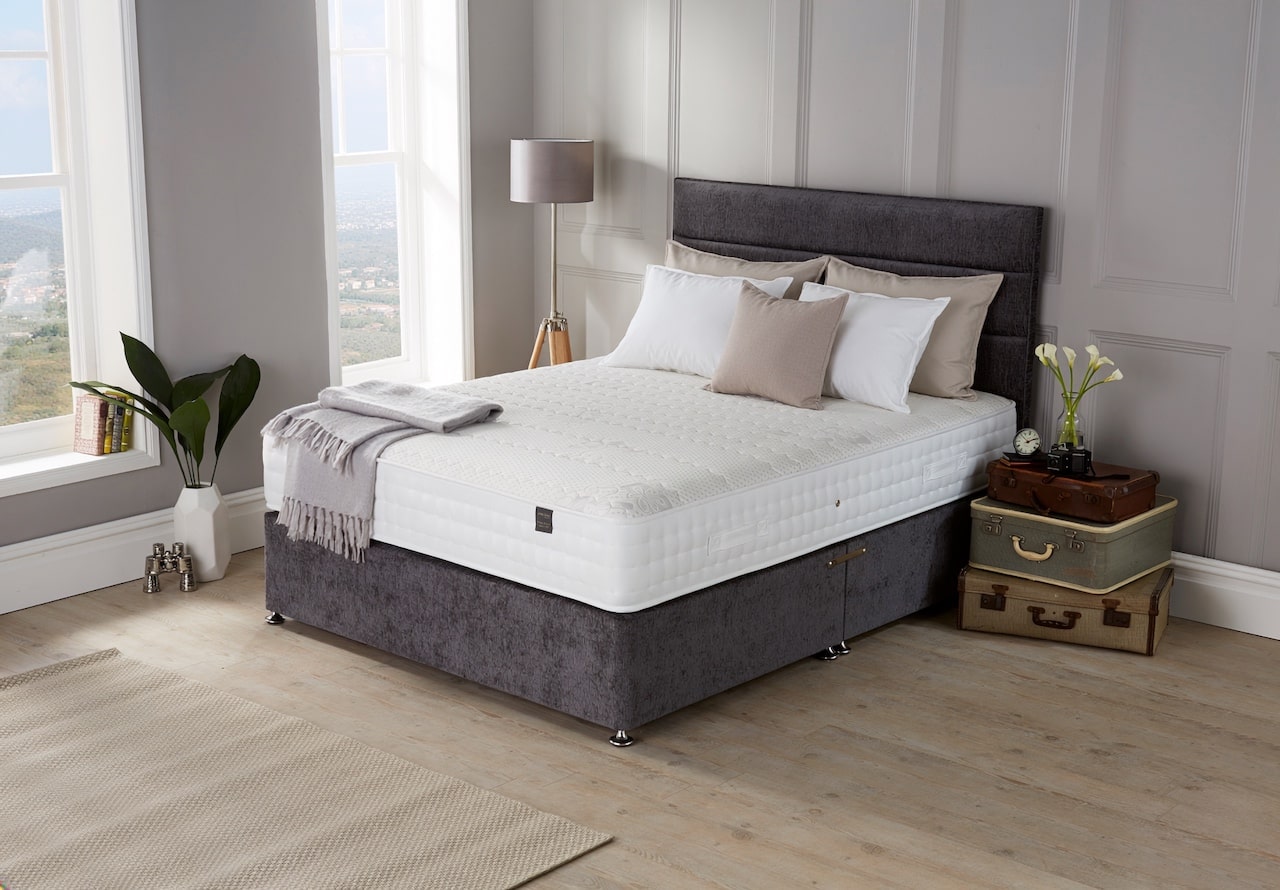
When customers ask us about Dreams mattresses, we can offer transparent alternatives at every price point. The difference? You know exactly what you’re buying, you get proper guarantees, and you can flip your mattress to double its lifespan. Below are some examples for comparison. Prices are based on a kingsize.
| Dreams Model | Price | John Ryan Alternative | Price | Key Advantages |
|---|---|---|---|---|
| Flaxby Masters Guild 4450 Pillow Top Mattress | £1799 | Origins Naturals | £1,300 | 2500GSM of fibres disclosed, pocket springs, two-sided, 7-year guarantee, 65% natural fibres |
|
Dream Team Gold Falmouth 8000 Pocket Wool |
£1,799 | Artisan 1500 | £1,755 | 53% natural fibres (not synthetic), 1200GSM Cashmere, 1200GSM Polycotton, hand side-stitching. 10-year guarantee |
|
Flaxby Master’s Guild 16150 Pocket Sprung Mattress |
£3,199 | Artisan Bespoke 004 | £2,860 | 3600 GSM disclosed, two-sided with dual firmness option (king size zip & link ans above), hand side-stitching. 10-year guarantee |
Why our alternatives offer better transparency
The price differences are minimal, but the transparency differences are enormous. With John Ryan mattresses, you get:
- Full GSM disclosure: Every layer’s weight specified, so you can verify quality
- Spring gauge options: 1.28mm (soft), 1.4mm (medium), 1.6mm (firm) based on your body weight
- Two-sided construction: Flip monthly to double lifespan (except foam/latex models)
- Extended guarantees: 5-15 years depending on model (not 1 year)
- No pillow-top traps: Removable toppers available separately in our bedding section here, if desired
- UK manufacture: Yorkshire factory with 25+ years experience
Our Origins range targets Dreams’ mid-range pricing with superior specifications. Our Artisan range competes with Flaxby but with full transparency and proper guarantees.
When Dreams makes sense (and when it doesn’t)
Dreams’ genuine advantages
To be fair, Dreams does offer some legitimate benefits:
- High-street accessibility: 208 stores nationwide means you can see mattresses in person
- Same-day delivery: Available in some locations for urgent replacements
- Brand variety: Stock multiple manufacturers under one roof
- Sleep Match technology: Free pressure mapping provides useful baseline data
- Finance options: Interest-free credit available (though be wary of the debt trap)
If you absolutely must try before you buy and cannot travel to a specialist showroom, Dreams offers convenience. The Sleep Match system, despite its limitations, provides more guidance than untrained showroom staff at some competitors.
When you should also look elsewhere to compare
Dreams may not be the right choice if you:
- Want to know what’s actually inside your mattress (GSM weights, spring gauges, material compositions)
- Expect a warranty that reflects the price you’re paying (1 year is industry-worst)
- Value long-term durability over short-term showroom appeal
- Prefer two-sided construction that you can flip for even wear
- Want chemical-free fire retardancy across all price points (not just premium Flaxby)
- Need specialist advice rather than sales staff with quotas to meet
The lack of specifications prevents informed comparison shopping. When you’re spending £800-£1,600 on a mattress, you deserve to know what you’re actually buying. Dreams’ refusal to disclose GSM weights and spring gauges suggests they may well know that direct like-for-like comparisons may not favour their products.
Competitor positioning reveals Dreams’ strategic trade-offs
Dreams vs Bensons for Beds
Against Bensons for Beds (267 stores), Dreams offers longer comfort trials (100 nights vs 40) and higher Trustpilot ratings. However, Bensons provides 5-year free warranty versus Dreams’ 1-year—a significant advantage. Both operate in-store diagnostic systems (Sleep Match vs SleepPro), though neither replaces proper specification disclosure.
Dreams vs Furniture Village
Against Furniture Village, Dreams loses comprehensively on warranty (20-year structural guarantee), premium brand access (Hypnos exclusive partnership), and chemical-free options. Dreams wins only on a specialist bed focus with their Sleepmatch diagnostic technology. For premium buyers, Furniture Village’s Hypnos partnership offers genuinely chemical-free construction that Dreams cannot match outside Flaxby, alongside higher-end models for choice.
Dreams vs online brands (Emma, Simba, Nectar)
Against online brands (Nectar, Emma, Simba), Dreams loses on warranty (lifetime vs 1-year), trial periods (up to 365 nights vs 100), and exchange fees (none vs £49-95). Dreams wins on in-store testing and immediate availability. However, the 1-year warranty becomes particularly stark when Nectar offers lifetime coverage.
Dreams vs specialist manufacturers
Against specialist manufacturers (John Ryan By Design, Vispring, Hypnos), Dreams loses comprehensively on specification transparency, warranty length, two-sided construction availability, and material quality verification. Dreams wins only on high-street accessibility and store presence.
For informed buyers who’ve done their research, specialist manufacturers offer substantially better value. You pay similar or slightly higher prices but receive vastly superior specifications, transparency, guarantees, and long-term durability.
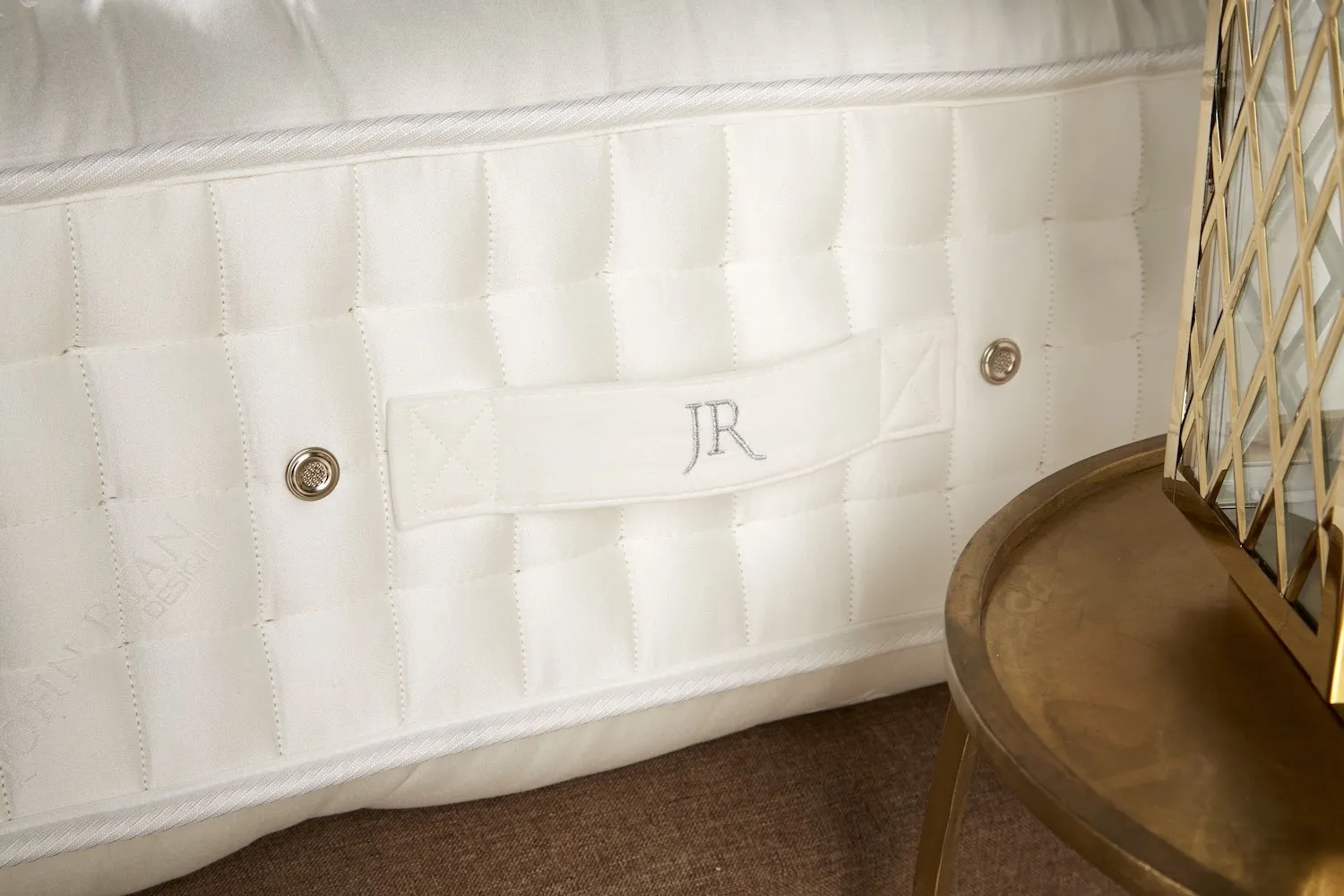
Better alternatives by budget: What to buy instead
Under or around £1000: Origins Pocket 1500 vs Dreams Workshop
If you’re shopping Dreams’ Workshop range, consider our Origins Pocket 1500 at £1050. You get:
- 1550 GSM total upholstery (disclosed, not hidden)
- Two-sided construction (flip for even wear)
- 1500 Spunbond Pocket Springs in 2 tensions
- 5-year guarantee (not 1 year)
- British manufacturing with 25+ years of expertise
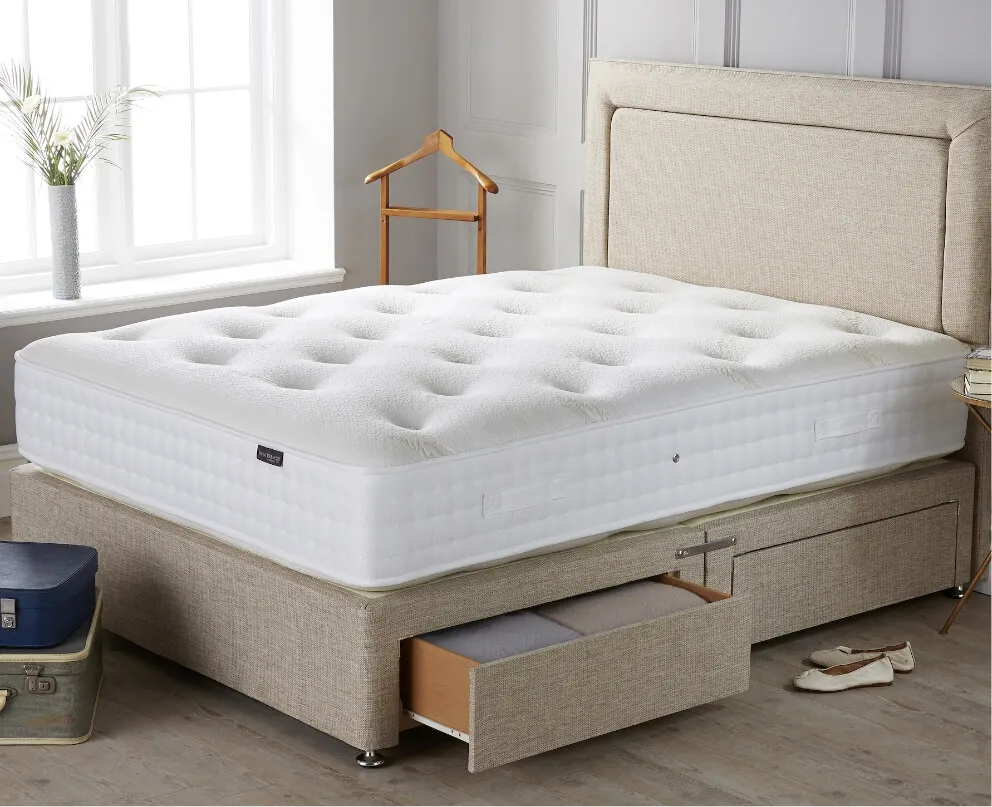
Dreams’ Essentials range uses open-coil springs (cheaper, less supportive) and single-sided construction (half the lifespan). The Origins Pocket 1500 offers pocket spring support, two-sided durability, and full specification transparency at a competitive price.
£800-£2000: Artisan 1500 vs Dreams mid-range
If you’re considering Dreams’ midrange offerings or models, our Artisan 1500 at £1,755 provides:
- 4300 GSM total (Dreams won’t disclose theirs)
- 500GSM WOOL
- 1200GSM REBOUND POLY COTTON (50/50 BLEND)
- 1400GSM POLYESTER
- 1200GSM CASHMERE HAIR PAD AS INSULATOR
- 53% natural fibre content
- Two-sided construction
- 10-year guarantee (not 1 year)
- 1500 Pocket springs with gauge options
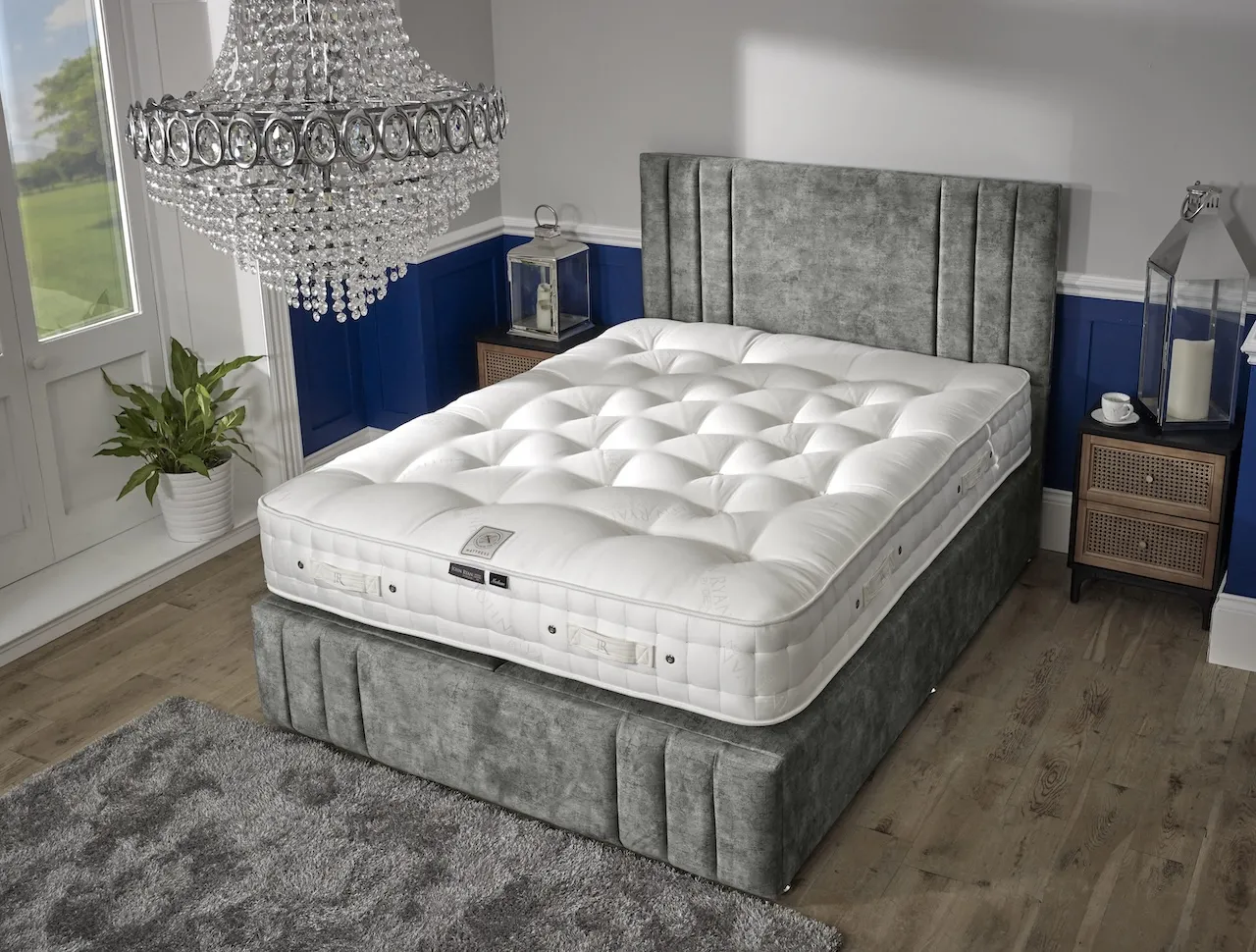
The price difference buys you transparent specifications, a proper guarantee, and natural fibres that breathe properly (no memory foam heat retention).
£2000+: Artisan Bespoke vs Dreams Premium/Flaxby
If you’re considering Dreams’ Flaxy higher-end range, our Artisan Bespoke range offers comparable or superior specifications with full transparency:
- Artisan Luxury (£2,250): 3150 GSM, double horsehair layers, softest natural feel
- Artisan Bespoke 004 (£2,860): 3600GSM, 100% natural medium feel, Bamboo and Horsetail
- Artisan Bespoke 002 (£3,3375): 3600 GSM, 100% natural, dual spring, horsehair and horsetail layers
All Artisan Bespoke models come with 10-year guarantees, two-sided construction, full GSM disclosure, and spring gauge options matched to your body weight. Flaxby’s 7-year guarantee and single-sided construction (even at premium prices) represent compromises you need to consider.
Our zip & link option provides genuine bespoke support—split tensions for partners with different weights. Dreams doesn’t offer this level of customisation even in Flaxby’s premium range.
The Yorkshire alternative: Why we do things differently
Transparency as standard, not premium
We’ve built our business on the principle that customers deserve to know what they’re buying. Every mattress specification includes:
- GSM weight of every single layer
- Spring gauge options (1.28mm, 1.4mm, 1.6mm)
- Exact fibre compositions (not vague “blends”)
- Fire retardant method (plant-based treatment on viscose covers)
- Country of origin for all materials
- Construction method (hand-tufted, side-stitched)
This is how we believe the industry should work. Dreams’ decision to leave out specifications across most of its range suggests a different business model to ours on consumer education with mattress purchasing.
Guarantees that reflect confidence, not legal minimums
Our guarantee structure reflects genuine confidence in long-term durability:
- Origins range: 5 years (entry level, honest about longevity expectations)
- Artisan range: 10-15 years (Natural fibre, hand-made, premium construction warrants extended coverage)
Dreams’ 1-year standard guarantee across all ranges—including £1,599 Flaxby models—suggests they know these mattresses won’t perform long-term but don’t want the liability. A manufacturer confident in their product offers coverage that reflects realistic lifespan expectations.
Education over sales tactics
We’ve written over 330 articles in our knowledge hub explaining mattress construction, comparing manufacturers, exposing industry tricks, and helping customers make informed decisions. Our detailed guides on understanding GSM, managing settlement, and avoiding no-turn traps get thousands of visitors monthly from people researching Dreams, Bensons, John Lewis, and other retailers.
This content helps you compare properly, something Dreams’ lack of specification makes it harder for you to do. When you call our team, you speak to people who’ve spent 25+ years making mattresses, not salespeople with monthly quotas. We’ll tell you if a competitor’s product suits you better because long-term reputation matters more than individual sales.
Final verdict: Accessibility at the cost of transparency
Dreams succeeds as a retailer due to convenient locations, professional delivery, innovative Sleep Match technology, and strong logistics, which justify its market leadership position. For customers prioritising in-store testing, immediate availability, and high-street accessibility, Dreams offers genuine advantages over online-only alternatives.
However, the company’s approach to specification disclosure, warranty terms, and product construction raises legitimate concerns for informed buyers. The 1-year warranty, systematic GSM/spring gauge concealment, predominance of single-sided mattresses, and opaque fire-retardant information across most ranges will facilitate those customers wanting to know more about the mattress they are investing in.
The Flaxby exception proves the rule
The Flaxby range, with its chemical-free construction, Harrison Spinks partnership, and 7-year guarantee, demonstrates that Dreams can offer transparency when commercially motivated. That this transparency doesn’t extend to lower-priced ranges where customers arguably need it most reveals a strategic choice: specification hiding maximises profits by preventing informed comparison.
Why you need to know whats in your mattress
When you’re spending £800-£3000 on a mattress that should last 10+ years, hidden specifications aren’t just a minor annoyance. These missing specifications are a barrier to informed purchasing. Dreams’ lack of disclosure of GSM weights and spring gauges forces customers to buy blindly, trusting sales staff rather than being able to make decisions based on technical comparisons.
Our recommendation:
If you’re considering Dreams mattresses, we recommend:
- Demand full specifications (GSM weights, spring gauges, fire retardant type)
- Compare the 1-year warranty to competitors’ 5-10 year coverage
- Calculate cost-per-night, including realistic lifespan expectations
- Consider whether showroom convenience justifies specification opacity
- Explore transparent alternatives before committing
Dreams will continue dominating UK bed retail through store presence and marketing spend. Whether they deserve your custom depends on how much you value knowing what you’re actually buying.
If you’d like to discuss alternatives to any Dreams mattress, call our team on 0161 437 4419. We’ll provide honest comparisons, full specifications, and recommendations based on your actual needs. You might still choose Dreams for convenience, but you’ll make that choice with your eyes open rather than buying blind.

Dreaming of the perfect nights sleep?
Ask us a question
There are over 6000 questions and answers submitted by you on all questions about mattresses and bed problems. Enter a keyword such as Vi Spring, John Lewis beds, bad back or Memory Foam and see if your question has already been answered.
If you can’t find an answer in knowledge hub, ask a new question. We aim to respond to all questions within one working day.
Newsletter
Enter your email to join our newsletter. We’ll send you occasional news and mattress expertise.