







Sleep & Well Being
February 2026How to Cool Down at Night in Bed: Complete Guide for Hot Sleepers UK 2026
Being a hot sleeper is no joke, and it can make bedtimes a real struggle to stay cool. Sleepers may have their legs out of the bed, fans on full blast, and still feel too warm to get a good night’s sleep.
The 60-Second Cool-Down: Immediate Relief for Hot Sleepers
If you’re reading this at 2 a.m., drenched in sweat, you need solutions now, not theory. Here’s what actually works when you’re overheating in bed right this moment.
Fill a hot water bottle with cold water and ice, then place it at your feet or against your inner wrists where blood vessels run close to the skin. This drops your core temperature within minutes because you’re cooling the blood before it circulates. It sounds bizarre using a hot water bottle for cooling, but it’s the most effective immediate solution we’ve found in 25 years of advising customers.
Run cold water over your wrists for 30 seconds before returning to bed. The veins in your wrists carry blood close to the surface, and cooling them creates an immediate drop in temperature that radiates through your body. Combine this with damp hair, and you’ve bought yourself another hour of comfortable sleep whilst your bedroom cools properly.
Dampen a thin Cotton pillowcase and place it over your regular pillow. Not soaking wet, just damp enough to feel cool against your face and neck. The evaporation creates a genuine cooling effect that lasts 20-30 minutes, usually long enough for you to fall asleep. Cotton breathes far better than synthetic alternatives, which is why this technique fails with polyester pillowcases.
These are emergency measures, not permanent solutions. If you’re using these techniques more than occasionally, your mattress, bedding, or bedroom conditions need to be properly addressed. Natural fibre mattresses and bedding prevent the problem rather than requiring you to manage it nightly.

Q: How do I cool down immediately in bed when I’m too hot? A: Fill a hot water bottle with cold water and ice, and place it at your feet or wrists. Run cold water over your wrists for 30 seconds before bed. Use a damp Cotton pillowcase over your regular pillow for evaporative cooling lasting 20-30 minutes.
Q: What is the best mattress type for hot sleepers? A: Natural fibre mattresses with pocket spring support are coolest because they allow airflow and wick moisture. Memory Foam and synthetic Foam mattresses trap heat by design. Natural materials like wool, Cotton, and horsehair actively regulate temperature.
Q: What duvet keeps you coolest at night? A: British wool duvets (4-7 tog) or lightweight duck down duvets regulate temperature better than synthetic alternatives at any tog rating. Natural fibres breathe and release heat, whilst synthetics trap it regardless of tog level.
Q: What bedroom temperature is best for sleeping? A: 16-18°C (60-65°F) is ideal for sleep. Most UK bedrooms run at 21-23°C, which is too warm and forces your body to work harder cooling itself, disrupting sleep quality.
Q: Do Cotton sheets actually keep you cooler? A: Yes. 100% Cotton sheets wick moisture away and allow air circulation. Polyester-blend sheets trap heat and moisture against your skin even at high thread counts. The fibre type matters more than thread count for cooling.
How to stay cool in bed
Here are our top 10 tips to help you overcome the challenges of being a warm sleeper and stay cool and comfortable in bed at night.
- Choose the coolest mattress type.
- Eating before bedtime will make you warmer
- Choosing the correct bedding to reduce heat
- Checking your heating schedule during the night
- Increasing airflow for ventilation
- Switch off electronic devices
- Pick the right mattress size
- Picking breathable mattress support
- Stay Hydrated
- Avoid late-night exercise
1. Have you picked the coolest mattress?
Did you know that memory Foam and synthetic Foam mattresses, like the boxed rolled ones you see online, actually retain heat? Yes! They indeed keep hold of the heat your body produces, which allows them to mould. This can become unbearable for warm- and hot-sleepers, especially during the summer months. If you’re a warm sleeper, then a Natural Fibre mattress is the coolest type to help wick away moisture and heat, keeping you cooler. They are also far more resilient, less likely to sag, and less likely to degrade.
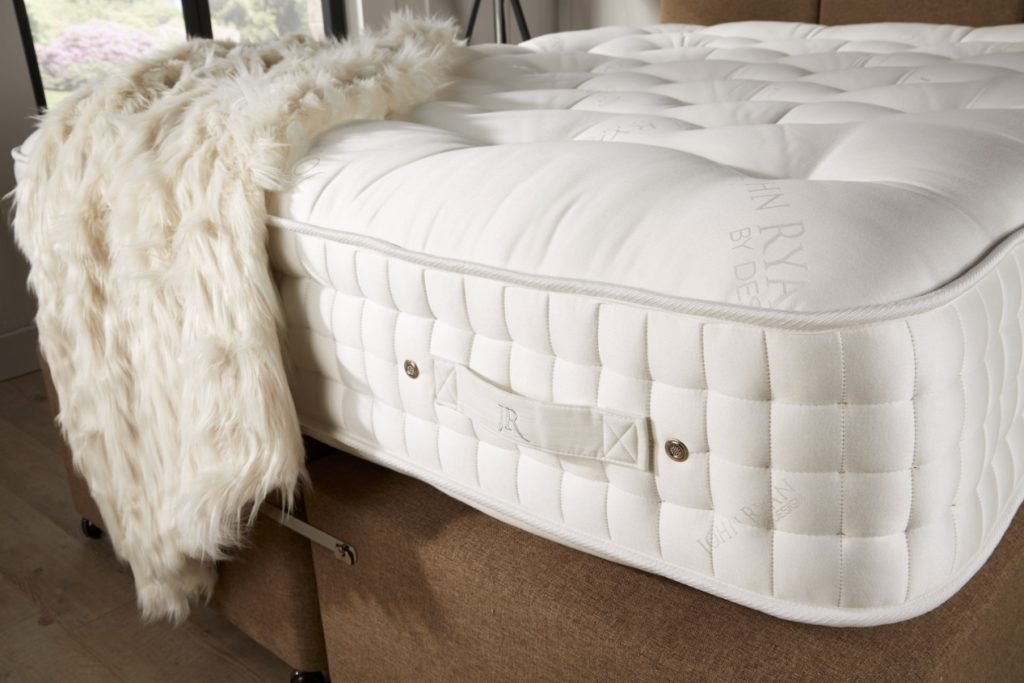
We’ve spoken to thousands of people who have suffered from Foam mattresses keeping them awake at night due to heat. If you’re already a warm sleeper, then Natural Fibres should always be chosen over man-made synthetic fibres.s
2. Are you eating just before bedtime?
If so, you could unknowingly suffer from gustatory sweating. This is where you start sweating and feeling hot after eating. If you’re eating just before bedtime, you could inadvertently make yourself warmer before getting into bed. It’s always advisable to have a one- to two-hour gap between your last meal and bedtime to let your digestive system settle. This can also prevent indigestion and discomfort while trying to gfall asleep

3. Choose natural fibre bedding to keep cool
Polyester-blend bedding has made mattress covers far cheaper and readily available. Did you know that polyester is one of the least breathable bedding fabrics? Meaning that if you get hot, it keeps the heat trapped beneath it. If you’re looking to stay cool at night, then a cotton-rich or natural fibre blend would be preferable. They may cost more, but you really do get what you pay for, and it can help keep you far cooler. The same goes for your duvet. Make sure you choose the lowest tog duvet you can find, and consider natural fillings such as wool and goose down if possible. These are far more breathable and high wicking, meaning a cooler night’s sleep all round, and make them a worthwhile investment over white fibre bedding.

Why Your Duvet Matters More Than You Think
The duvet you sleep under can negate every benefit of a breathable mattress. We’ve watched countless customers invest in natural fibre mattresses specifically for temperature regulation, then smother them with synthetic polyester duvets that trap heat and moisture. It’s like buying a sports car and then filling the fuel tank with treacle.
British wool duvets actively regulate temperature rather than simply insulating. Wool fibres have a crimped structure, creating tiny air pockets that trap warm air when you’re cold and release excess heat when you’re warm. This isn’t marketing hyperbole, it’s basic wool science that shepherds have relied on for millennia. Our British Wool Duvet contains 300gsm of pure Devon wool in the lightweight option, providing a tog equivalent of 4-7 that dynamically adjusts to your body temperature. Warm sleepers consistently report that this solves their duvet overheating issues completely.
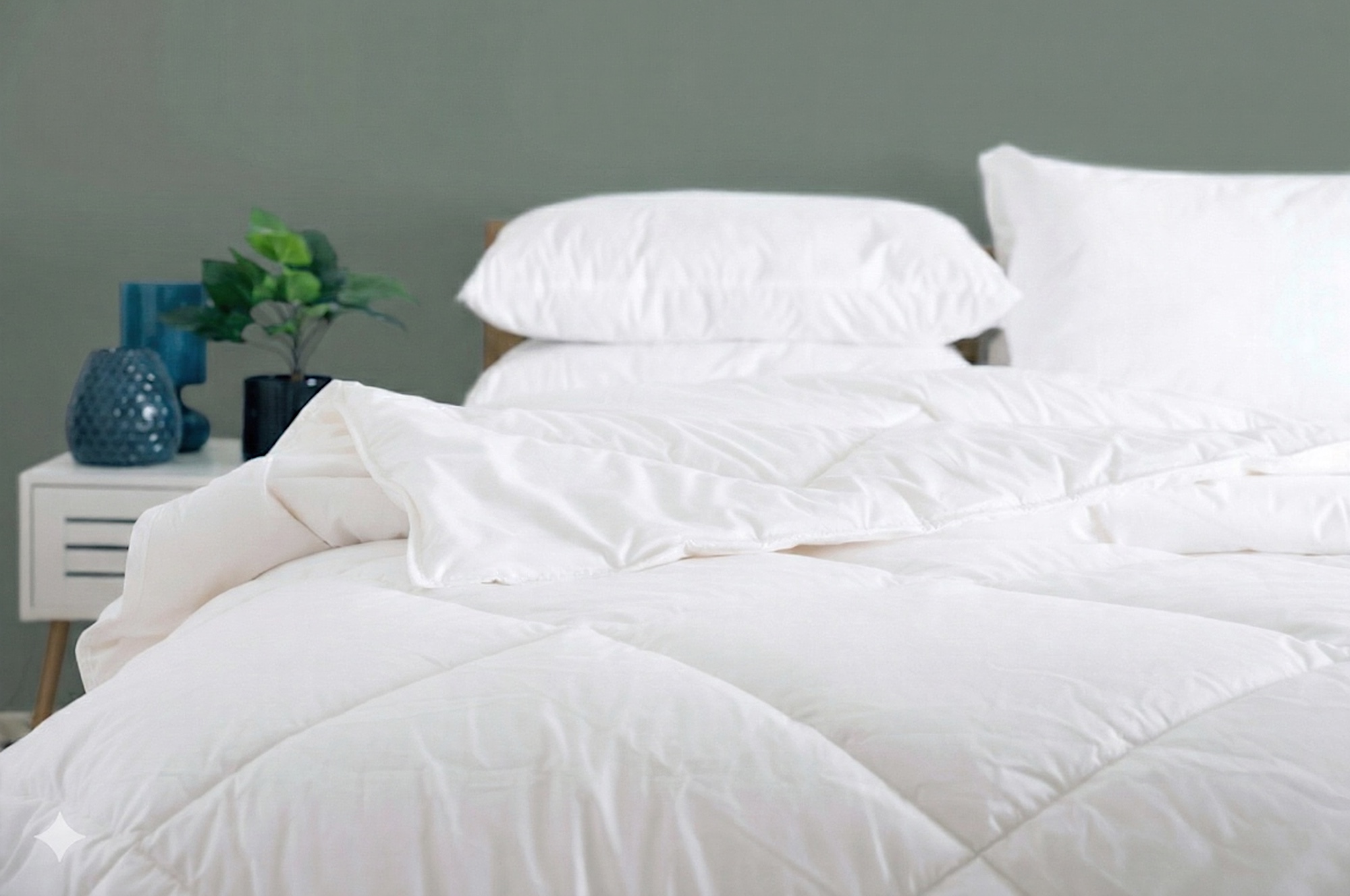
Duck down and feather duvets offer exceptional breathability at slightly higher warmth levels. Our Duck Down & Feather Duvet combines 85% duck down and 15% duck feathers for optimal insulation without the suffocating feel of synthetic duvets. The natural filling breathes properly, allowing moisture to escape rather than condensing against your skin. Available in 10.5 tog (spring/autumn) and 13.5 tog (winter), these duvets cost more initially but last 10-15 years, compared with 2-3 years for synthetic alternatives.
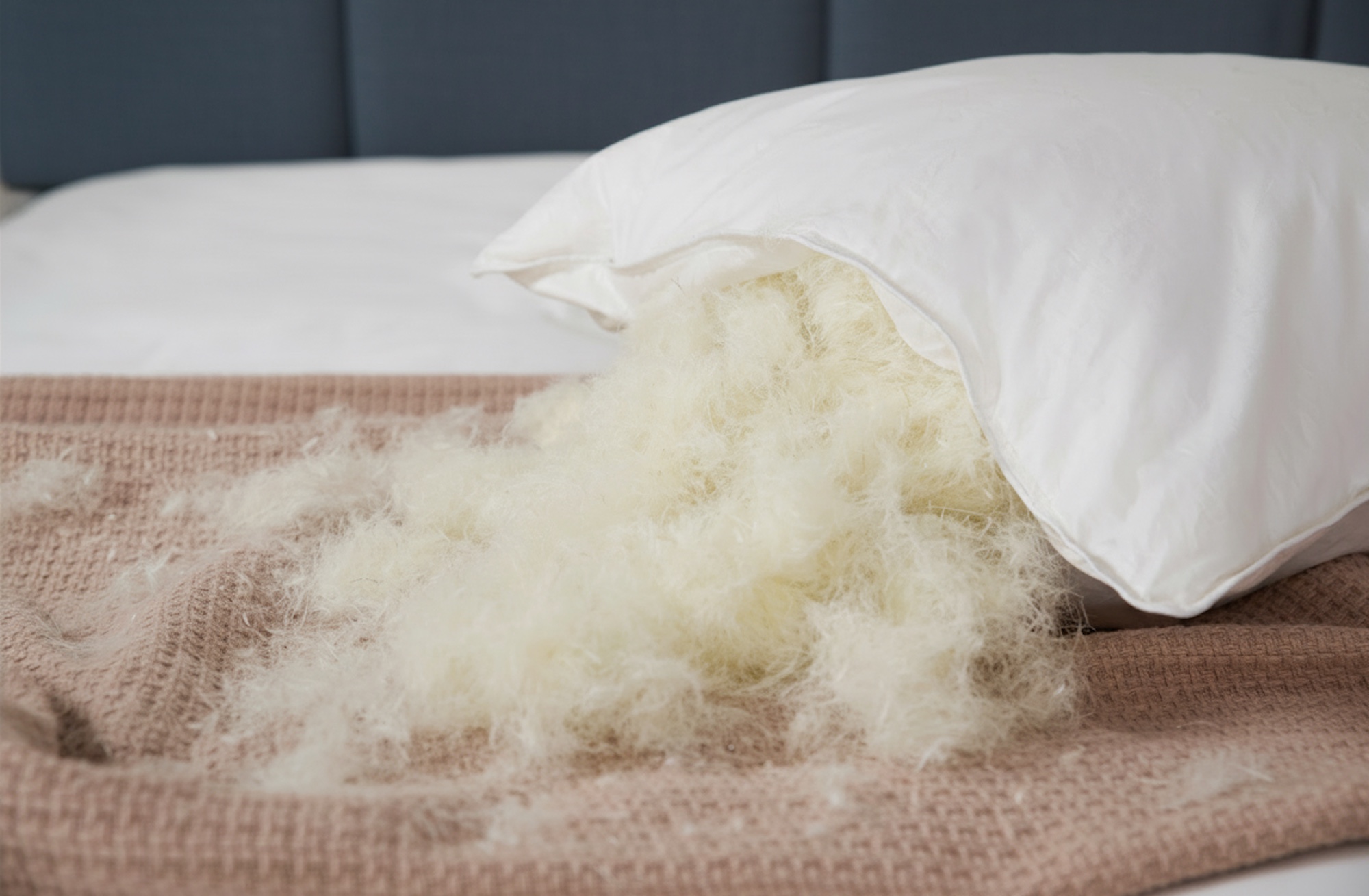
Synthetic duvets trap moisture and heat by design. Polyester fibres don’t breathe; they insulate. When you perspire during the night (everyone releases half a pint of moisture during eight hours of sleep), that moisture has nowhere to go. It sits between you and the duvet, creating that clammy, overheated sensation that wakes you at 3 a.m. No amount of “breathable technology” changes the fundamental properties of plastic fibres.
What about tog ratings? Lower isn’t always better for warm sleepers. A 4.5 tog synthetic duvet can sleep hotter than a 10.5 tog natural down duvet because the synthetic traps heat whilst the down releases it. Tog measures insulation, not breathability. This is why we recommend natural fibre duvets with appropriate tog ratings rather than simply suggesting the lowest synthetic tog available.
Duvet covers matter too. Pair your natural fibre duvet with our 100% Cotton bedding sets for maximum cooling benefit. The Origins range offers 500-thread-count Cotton at accessible prices; the Artisan range features premium Pima Cotton; and the Luxury Artisan range offers 1000-thread-count Egyptian Cotton. All three breathe exponentially better than polyester-cotton blends sold by most high street retailers.
Cotton Bedding: The Difference Between Sleeping Cool and Sleeping Hot
Thread count means nothing if the fibre is wrong. You can buy 1000-thread-count polyester sheets that sleep hot and clammy, or 300-thread-count 100% Cotton sheets that sleep cool and fresh. The fibre itself determines breathability, not the weave density. We’ve tested hundreds of bedding samples over 25 years, and Cotton consistently outperforms every synthetic alternative for temperature regulation.
Our Origins Cotton Bedding Pack includes 500-thread-count 100% Cotton sheets, duvet covers, and Oxford pillowcases, starting at £75 for single sizes. This represents the entry point into genuine Cotton bedding without polyester blends that high street retailers market as “cotton-rich” (usually 52% Cotton, 48% polyester). Pure Cotton wicks moisture away from your skin, promotes airflow, and stays noticeably cooler throughout the night.
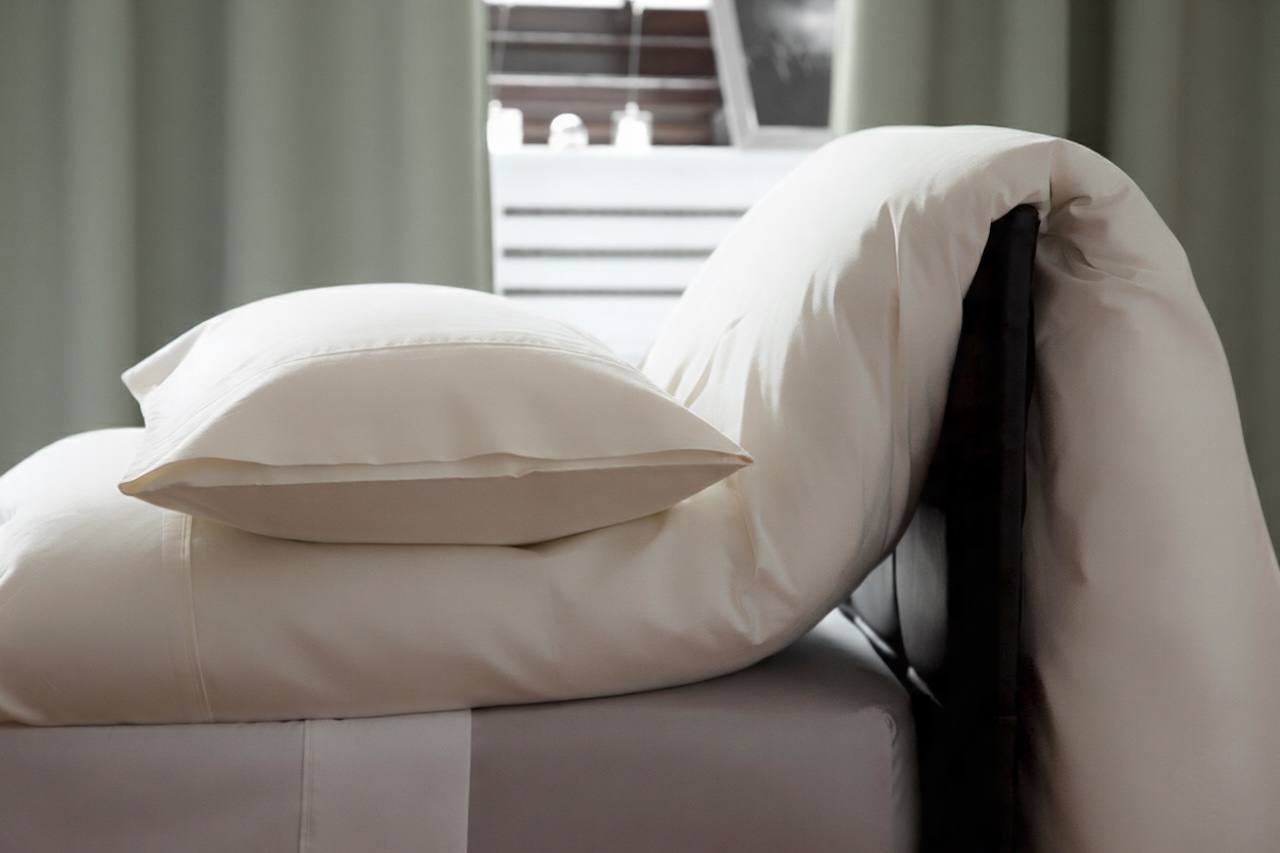
The Artisan Pima Cotton Bedding Pack steps up to 450-thread-count premium Pima Cotton from £90. Pima Cotton’s extra-long staple fibres create fabric that’s simultaneously stronger, softer, and more breathable than standard Cotton. If you’ve invested in an Artisan natural fibre mattress, pairing it with Pima Cotton bedding creates a complete cooling sleep system where every layer works together.
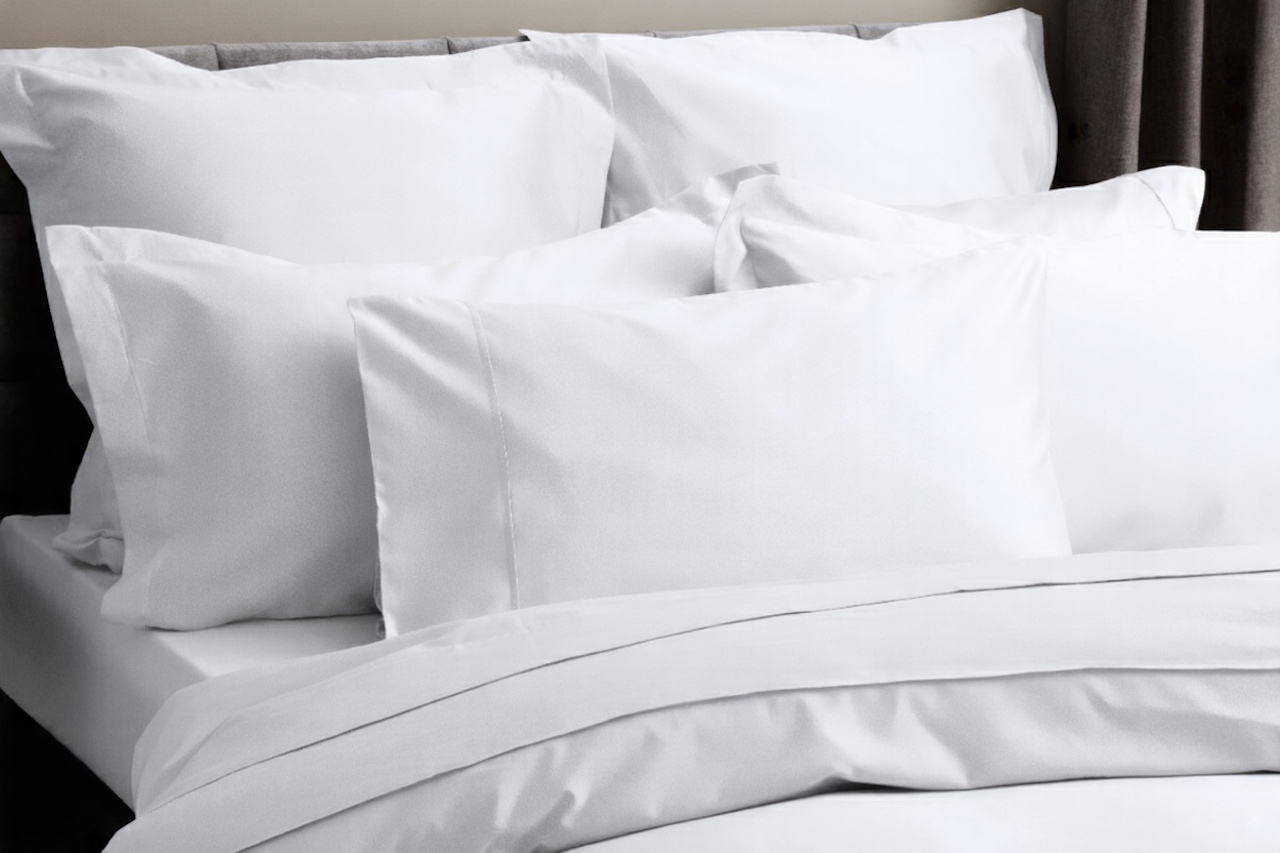
The Luxury Artisan Egyptian Cotton Bedding Pack offers 1000-thread-count Egyptian Cotton from £155, representing the absolute finest natural bedding available. Egyptian Cotton’s extraordinarily long fibres produce fabric with unmatched silkiness and breathability. These sheets feel noticeably cooler in summer whilst maintaining comfort in winter, a property that synthetic fabrics cannot replicate. These sheets are pure luxury, and once you’ve tried them, no other bedding will ever come close!
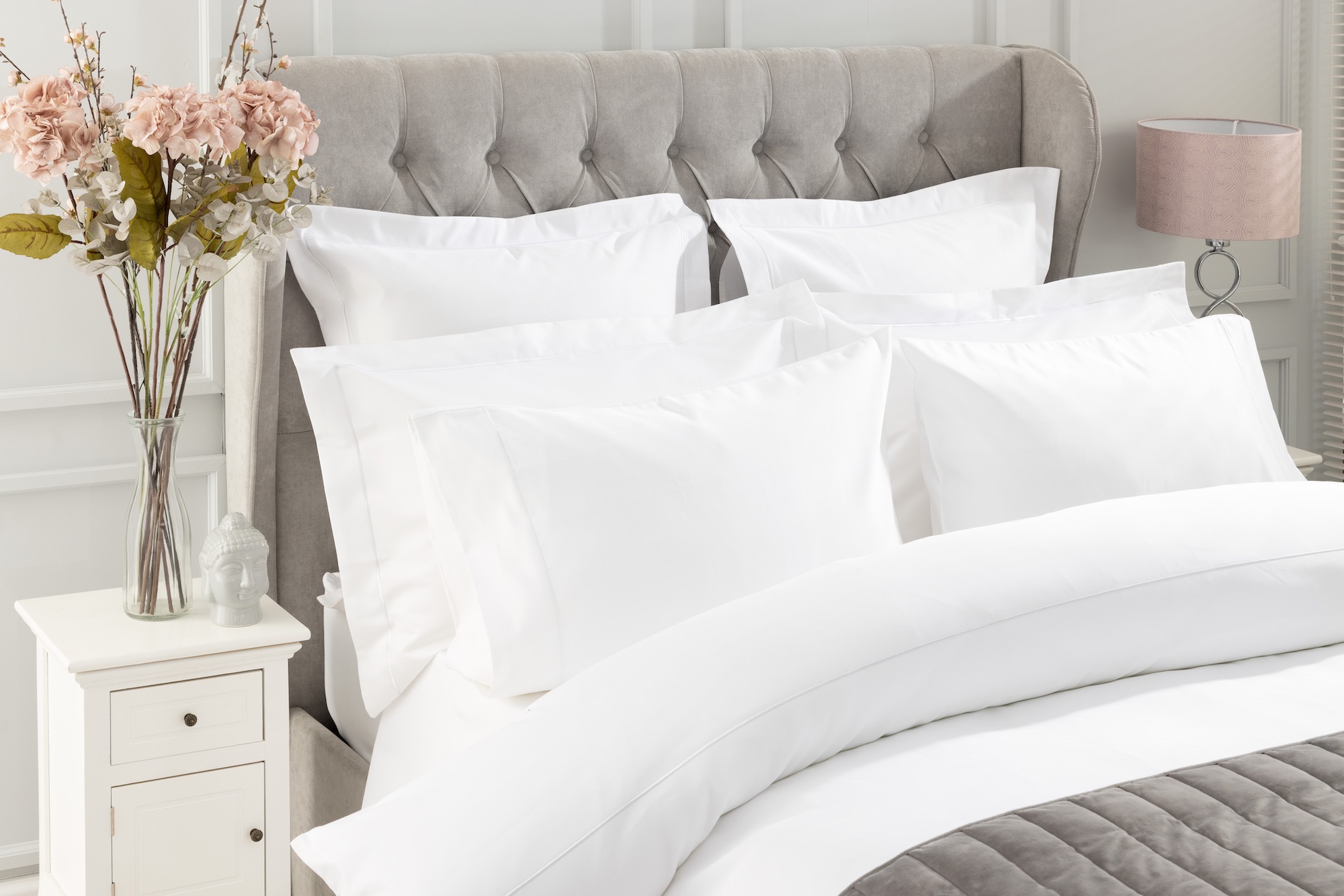
What about fitted sheets for deep mattresses? Our <a href=”https://johnryanbydesign.co.uk/product/extra-deep-fitted-pima-cotton-sheets/”>Extra Deep Fitted Pima Cotton Sheets</a> feature 38cm depth to properly fit mattresses up to 35cm deep. Standard high-street fitted sheets max out at 30cm depth and either don’t fit natural fibre mattresses properly or pull too tight, restricting breathability. Proper fit matters because bunched sheets create hot spots and discomfort.
Mattress protectors can sabotage cooling efforts. Plastic-backed synthetic protectors are waterproof but also airproof, trapping heat and moisture beneath them. Our 100% Cotton Quilted Mattress Protector guards against spills and dust mites whilst maintaining breathability. It’s naturally anti-allergenic, machine washable, and works with your natural fibre mattress rather than against it.
4. Check your central heating or Nest heating schedule
Is your heating or Nest thermostat coming on in the middle of the night? You’d be surprised just how many times we hear from customers that they’re waking up with the hot sweats, and when they check, their heating is set for the night. If you’re a really warm sleeper, then make sure your bedroom radiator thermostat is turned off to prevent heat from waking you up.
The ideal bedroom temperature for sleep is 16-18°C (60-65°F), significantly cooler than most UK homes are set to. Your body temperature naturally drops as you fall asleep, and a cool environment facilitates this process. Overheated bedrooms force your body to work harder to cool itself, disrupting sleep quality even if you don’t wake fully.
Check your central heating or Nest thermostat schedule carefully. Many people set heating to come on at 6 a.m. for morning warmth, not realising their bedroom radiator is still pumping heat at 4 a.m. when they’re trying to sleep. If you’re a warm sleeper, turn off your bedroom radiator entirely during sleeping hours. You can always add an extra blanket if needed, but you cannot cool an overheated room quickly.

Smart thermostats pose particular problems because they “learn” your preferences and often default to maintaining a consistent temperature. Manually override bedroom heating between 10 p.m. and 7 a.m. The slight chill when you first get into bed actually helps you fall asleep faster, and natural fibre duvets warm up quickly from your body heat without overheating later.
Room thermometers reveal surprising truths. Most people dramatically underestimate their bedroom temperature. A £10 thermometer from Argos often shows bedrooms sitting at 21-23°C when people believe they’re around 18°C. Measure actual temperature rather than guessing, then adjust accordingly.
Winter presents particular challenges because UK homes are often overheated. Dropping your bedroom temperature to 16°C while the rest of your house sits at 21°C requires discipline, but the improvement in sleep quality is immediate. Combine cooler temperatures with our lightweight wool duvet, and you’ve solved the winter overheating problem once and for all.
5. Ensure good mattress airflow
If you’re a warm sleeper, then providing good ventilation during the night is key. Leave a window ajar at night to allow cooler air to circulate. Opening a window an hour before bed can help ensure your mattress is cool when you get into it. Fans can help keep you cool, but they can also increase noise in the bedroom, which can lead to disruptive sleep. It’s better to ensure the bedroom is cool before you go to bed by running fans for an hour or so beforehand. Then switch them off when you get into bed.
Natural fibre mattresses will help keep you far cooler during the night
Changing your bedding from polyester to cotton can have a dramatic improvement on sleep temperatures
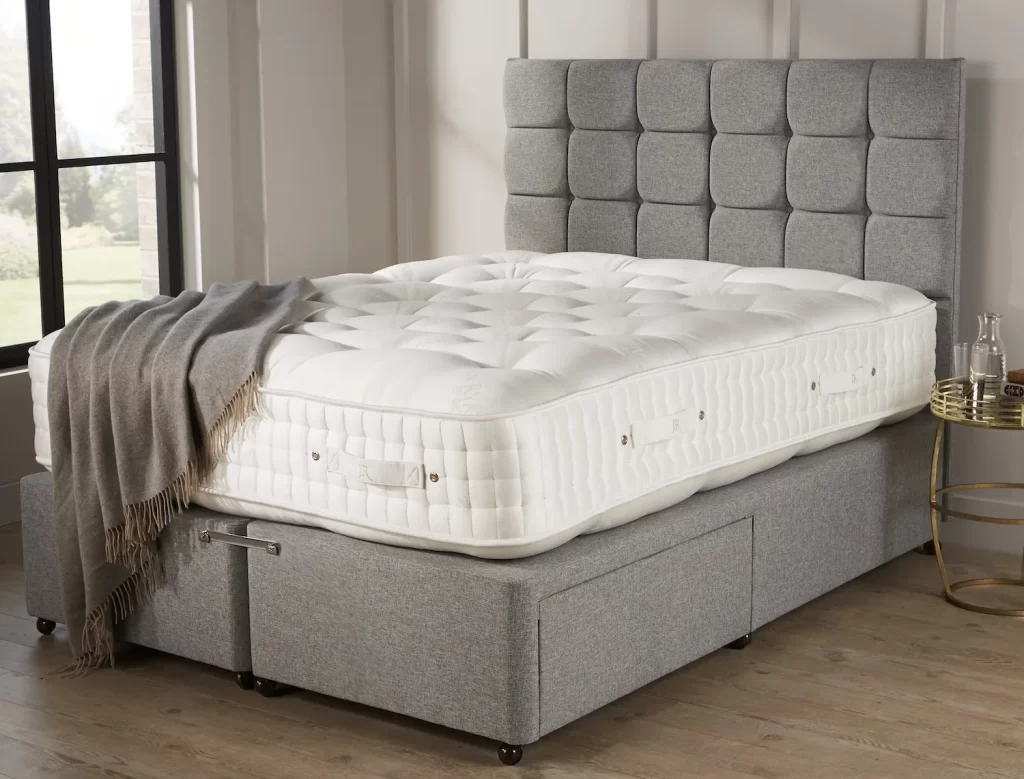

6. Switch off electronics before bedtime
Did you know that all those chargers, Tv’s and electronic devices in your bedroom are emitting small amounts of heat? We advise moving as many electronics out of the bedroom to help keep it cooler at night. Also, it’s a good practice to limit the amount of blue light phones and laptops emit just before bed, as it can overstimulate your brain, making it harder to fall asleep.
7. Choose the correct mattress size
If you’re sharing a bed with a partner, do you have enough space in your current mattress to allow each other ‘breathing space’? If your room size allows it,t a larger mattress can result in a cooler night’s sleep as there is more airflow between you and your partner. Zip-and-link mattresses can be an excellent choice, allowing both of you your own spring tension and reducing transfer during the night. Both of which can lead to disturbed sleep!
We have a handy guide to every mattress size so you can choose the one that’s best suited to your bedroom. The bigger the mattress, the more room you will have to stay well-ventilated and cool at night.
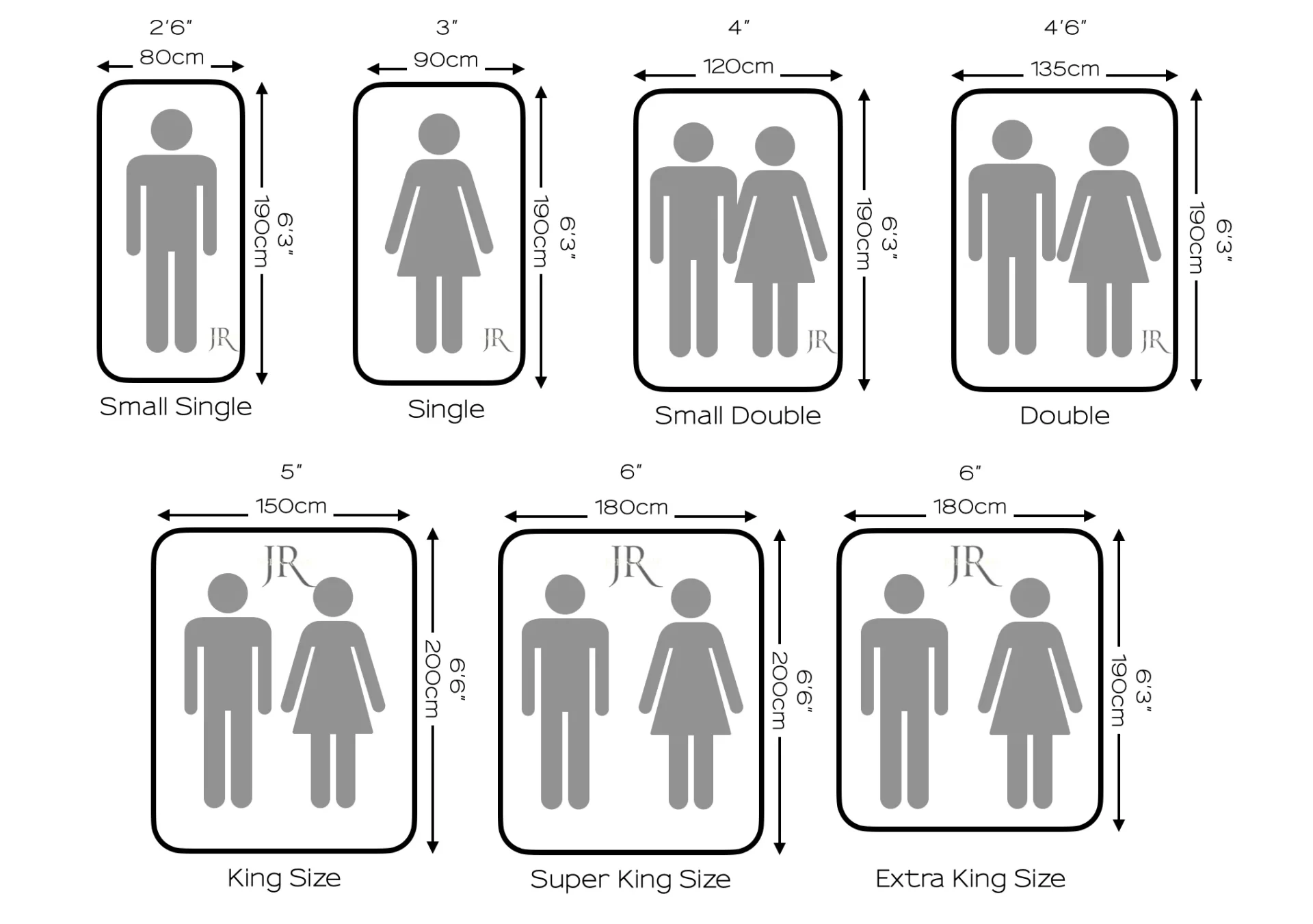
| Mattress Size | Dimensions |
|---|---|
| Small Single | 2’ 6” x 6’3” (80cm x 190cm) |
| Single | 3′ x 6’3″ (90cm x 190cm) |
| Small Double | 4″ x 6’3 (120cm x 190cm) |
| Double | 4’6″ x 6’3″ (135cm x 190cm) |
| Continental Double | 4’7” x 6’6” (140cm x 200cm) |
| King | 5′ x 6’6″ (150cm x 200cm) |
| Continental King | 5’3″ x 6’6″ (160cm x 200cm) |
| Extra King | 6’0 x 6’3 (182cm x 190cm) |
| Super King | 6′ x 6’6″ (180cm x 200cm) |
8. Do you have the most breathable mattress support?
The type of mattress support you have will also affect the temperature of your bedroom at night. Foam mattresses may be initially cheaper than their pocket spring rivals, but they do retain an awful lot of heat. As the support layer is usually Foam too, air gets trapped and heats up, keeping you red-hot at night. Where possible, a pocket-sprung mattress can really help keep you cool at night by allowing proper airflow through your mattress. A pocket-sprung mattress will also be far more breathable than a synthetic memory Foam model. Air can pass through the pocket springs far more readily than Foam.
9. Stay hydrated before bedtime
Staying hydrated before bed can ensure your body has everything it needs to stay cooler during the night. If you’re dehydrated, then your body temperature will increase. This is because your body does not have enough fluid to sweat properly and regulate core temperature. Therefore, your temperature will rise. We recommend keeping a glass of water byyoure bedside table to stay well-hydrated throughout the night.
10. Avoid late-night exercise
If you’re a night owl, you may be used to working out late at night to keep up with your fitness schedule. However, this can play havoc with your core temperature, leading to late-night overheating. If possible, it’s always better for your body and sleep routine to exercise first thing in the morning.

The Complete Cooling Sleep System: How It All Works Together
Treating hot sleeping as an isolated problem misses the bigger picture. Your mattress, duvet, sheets, protector, and bedroom environment all interact. Getting one element right whilst ignoring others delivers marginal improvement. Getting the entire system right permanently improves your sleep quality.
Layer One: Start with the foundation: your mattress
Memory Foam and synthetic Foam mattresses retain heat by design because heat-activated materials allow them to mould to the body. Natural fibre mattresses with pocket spring support allow proper airflow through the mattress core, whilst wool, Cotton, and horsehair upholstery layers actively wick moisture away. Our Artisan natural fibre range provides 85-100% natural content specifically for temperature regulation.
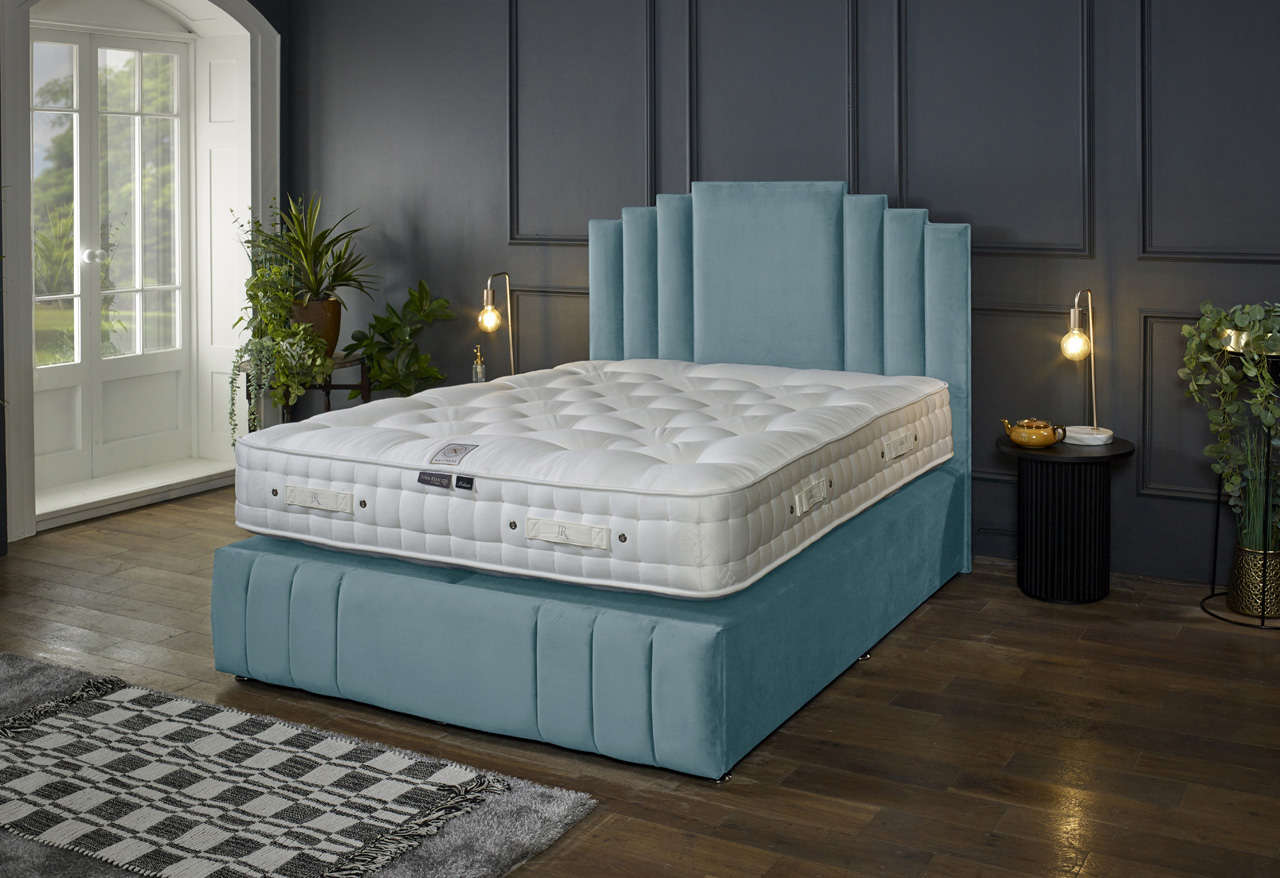
Layer two: your mattress protector
Synthetic waterproof protectors trap heat and moisture between you and your mattress. Our 100% Cotton protector maintains breathability whilst guarding against spills. This single change often reduces night sweating noticeably.

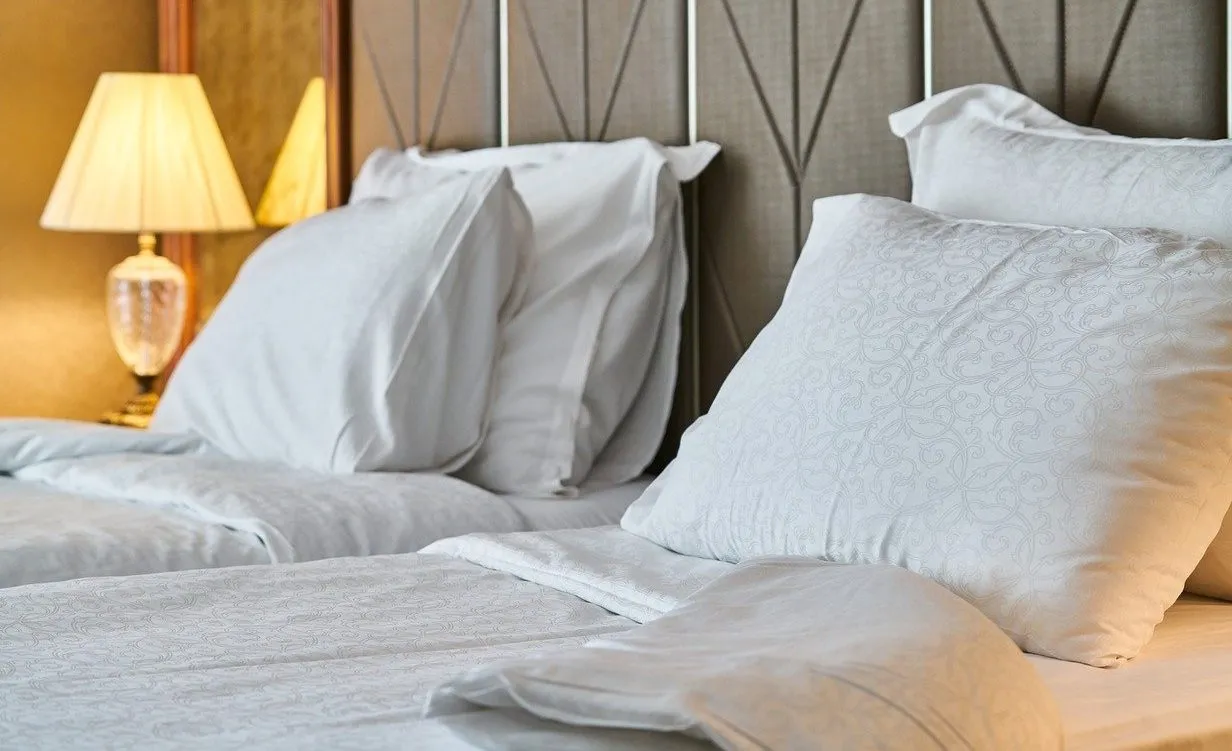
Layer three: your sheets
100% Cotton fitted sheets and flat sheets allow moisture to evaporate rather than pooling against your skin. Our Origins, Artisan, and Luxury Artisan Cotton bedding ranges provide options at every price point, all dramatically cooler than polyester-blend alternatives.
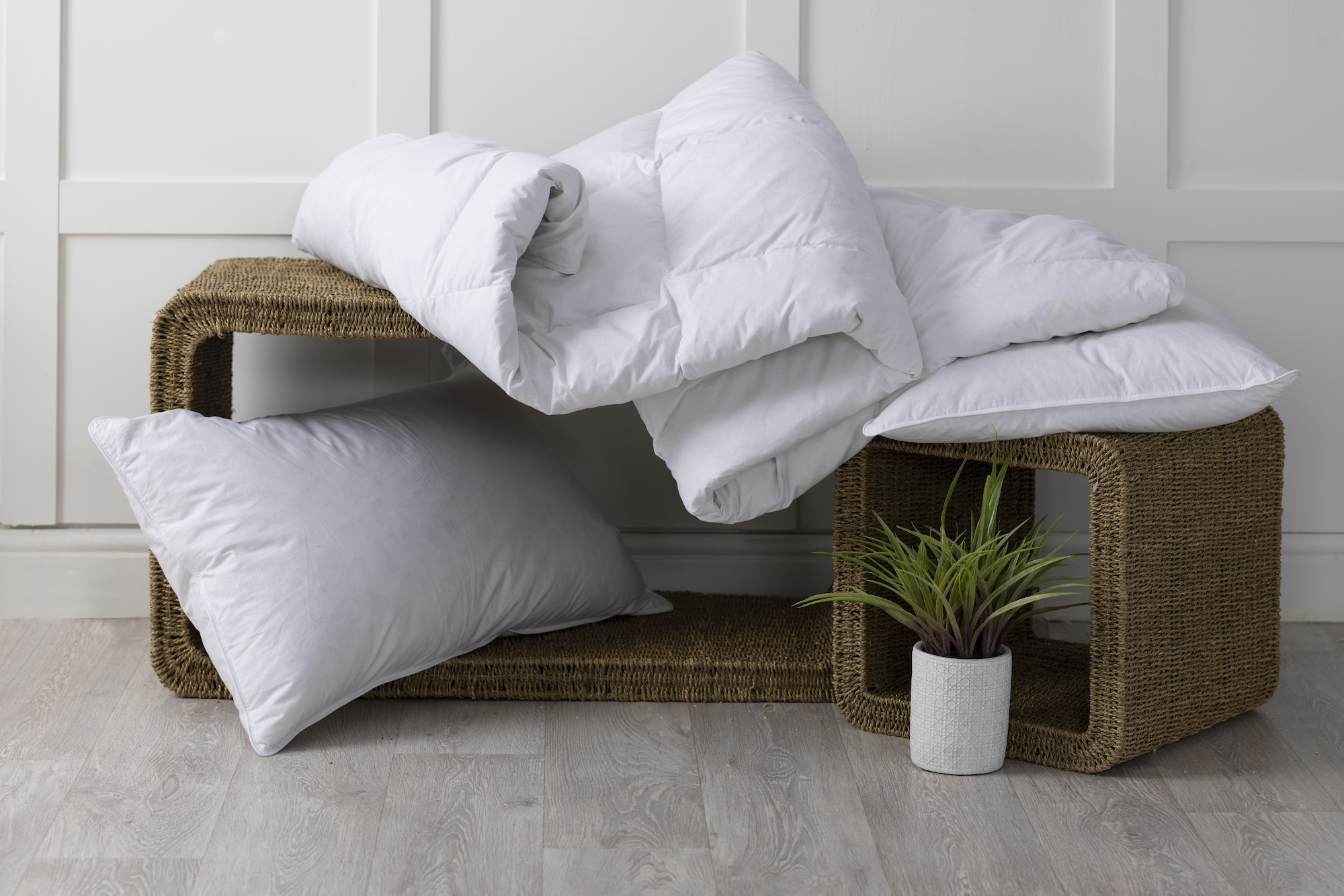
Layer four: your duvet
Natural British wool or duck down and feather duvets breathe well and actively regulate temperature. Synthetic duvets insulate without breathing, creating the classic 3 am overheating wake-up.
Layer five: your pillows
Often overlooked, synthetic pillows trap heat around your head and neck. Natural fibre pillows (wool, duck down, or cotton) maintain cooler sleep. We’ll be expanding our pillow range throughout 2026 to complement our duvet collection.
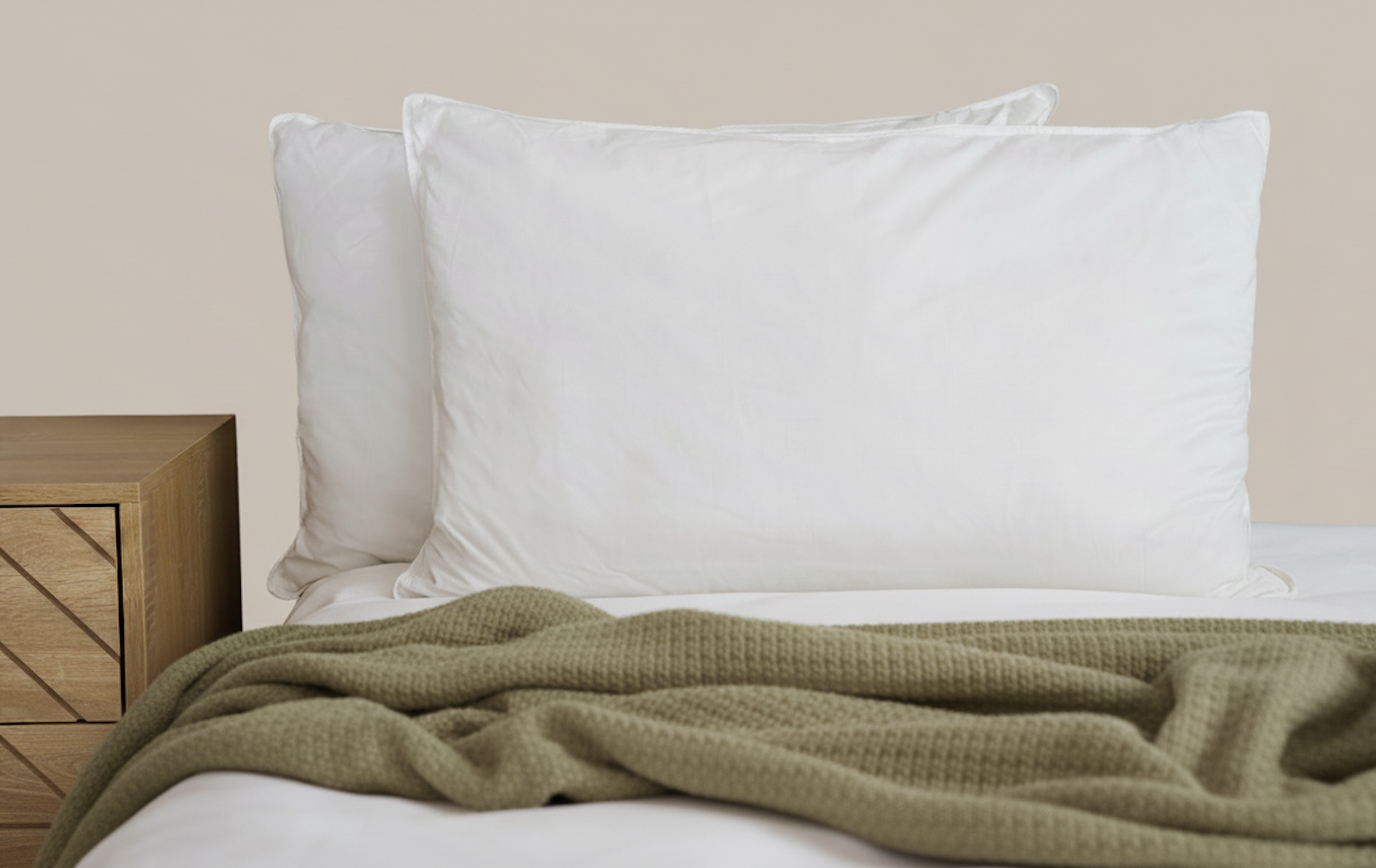
The bedroom environment supports or sabotages everything. Cool ambient temperature (16-18°C), good ventilation, minimal heat-generating electronics, and darkness all contribute. But even in perfect environmental conditions, a heat-trapping Foam mattress and synthetic bedding cannot be overcome.
The investment required varies by budget. You can start with Cotton sheets (£75-155) and a breathable protector (£35), then progress to a natural fibre duvet (£90-170), before ultimately investing in a natural fibre mattress (£855-4,700). Each step delivers noticeable improvement, though the mattress change typically provides the most dramatic difference because you’re addressing heat retention at the source.
Summary
If you’re a warm or hot sleeper, falling asleep can be really difficult. The biggest areas for improvement are avoiding memory Foam mattresses and opting for Natural Fibres in your mattress and bedding. Ensuring the bedroom is cool before you go to bed, staying hydrated, and not eating just before bedtime can also dramatically improve your sleep temperature.
If you have more questions,s why not ask our expert team below?

Dreaming of the perfect nights sleep?
Ask us a question
There are over 6000 questions and answers submitted by you on all questions about mattresses and bed problems. Enter a keyword such as Vi Spring, John Lewis beds, bad back or Memory Foam and see if your question has already been answered.
If you can’t find an answer in knowledge hub, ask a new question. We aim to respond to all questions within one working day.
Newsletter
Enter your email to join our newsletter. We’ll send you occasional news and mattress expertise.