






Mattress Tips
September 2026Mattress Depth Guide: How Thick Should a Mattress Be?
The standard mattress depth in the UK is between 20 and 30cm, or roughly 8 to 12 inches, and the average mass-market mattress measures around 25cm. Traditional handmade pocket sprung mattresses usually sit deeper, at 27 to 35cm, because of the volume of upholstery built around the spring unit. This is a huge sleep variance, and something that we have been trying to educate bed buyers on for over a decade. Whilst usually less is more when it comes to higher-end mattresses, they are nearly all over the 25cm mark; as a starting point, most of the very best natural fibre beds will be 28-35cm. Minimum!
After more than 25 years of making mattresses here in the UK, we find depth is one of the most misread figures on any mattress specification. It tells you whether your fitted sheets will fit and how high your bed will sit, but on its own it tells you very little about what is inside.
In this guide
- What is the standard mattress depth in the UK?
- Average mattress depth by mattress type
- Does mattress depth change between sizes?
- What makes up the depth of a mattress?
- Is a thicker mattress better?
- Does mattress depth affect sleep quality?
- How deep are John Ryan mattresses?
- Is 20cm, 25cm or 30cm a good mattress depth?
- How thick should your mattress be?
- How to measure mattress depth
- Mattress depth and your bedding
- Will a mattress lose depth over time?
- Mattress depth FAQs
What is the standard mattress depth in the UK?
Width and length are fixed for each UK bed size, so a king size is always 150cm by 200cm. Depth has no fixed equivalent measurement, which is why you will see figures ranging from under 15cm to well over 35cm quoted on retailer websites. And beware, sleeper: sometimes this includes the mattress cover or fabric in the overall GSM or ‘content of the mattress’, scandalous really, given it’s just the cover. We only list and count what’s inside the covers as the mattress upholstery.
Which? makes the same point in its UK mattress size guide, noting that the mattresses it has tested range from under 12cm to almost 70cm deep. In practice, though, most adult mattresses sold in the UK fall between 20 and 30cm, and that is what people mean by a normal or standard mattress depth. But should you choose a thinner mattress or a thicker, heavier one? It sounds like lighter may be easier, but in reality that means you’re missing out on a ton of comfortable fillings (not to mention that a thinner mattress will compress and lose its height quickly).
Mattress depth sizes at a glance
These are the depth bands we use when talking customers through their options. The inch figures are rounded to the nearest half inch.
| Depth band | Centimetres | Inches | Typical use |
|---|---|---|---|
| Shallow | Under 20cm | Under 8in | Children’s beds, bunk beds, day beds, guest beds |
| Standard | 20 to 30cm | 8 to 12in | Most adult mattresses, foam, hybrid and pocket sprung |
| Deep | 30 to 35cm | 12 to 14in | Traditional pocket sprung with generous upholstery |
| Extra deep | Over 35cm | Over 14in | Multi-tier spring units, deep quilted tops, integrated toppers |
Average mattress depth by mattress type
The way a mattress is built has more influence on its depth than anything else. A spring unit needs a certain height to work, and every layer of filling added above and below it takes the total up. Don’t forget that all two-sided mattresses have the same fillings on both sides. If you’re looking at a one-sided mattress, you’re really just buying ‘half a bed’ in some instances. So do take notes!
The ranges below are typical of what we see across the market. Individual models will fall outside them in both directions.
| Mattress type | Typical depth |
|---|---|
| Children’s and bunk bed mattresses | 10 to 18cm |
| Budget open coil | 18 to 23cm |
| Rolled foam and hybrid | 20 to 28cm |
| Traditional pocket sprung, man-made fillings | 25 to 33cm |
| Handmade natural fibre pocket sprung | 27 to 35cm |
Budget open coil mattresses sit at the shallow end because they carry a thin comfort layer over a basic spring unit. Our guide to the difference between open coil and pocket sprung mattresses explains why that construction is cheaper to make and quicker to wear.
Rolled and boxed mattresses are limited by the compression process itself. A spring unit that has to be squashed flat, rolled and posted can only be so tall, so these mattresses rarely reach the depth of a traditionally made bed.
Does mattress depth change between sizes?
No, well it shouldn’t anyway. A given mattress model is the same depth whether you buy it as a single, a king or a super king, because the spring unit and upholstery layers are identical across every size. Only the width and length change.
The same applies to zip and link mattresses, where both halves are built to the same depth so they sit level once zipped together. If you need the width and length of every UK size, our UK mattress sizes guide lists them all in centimetres, feet and inches.
What makes up the depth of a mattress?
When we make a mattress, its finished depth comes from four things. Understanding them is the easiest way to judge whether a quoted depth is backed by substance.
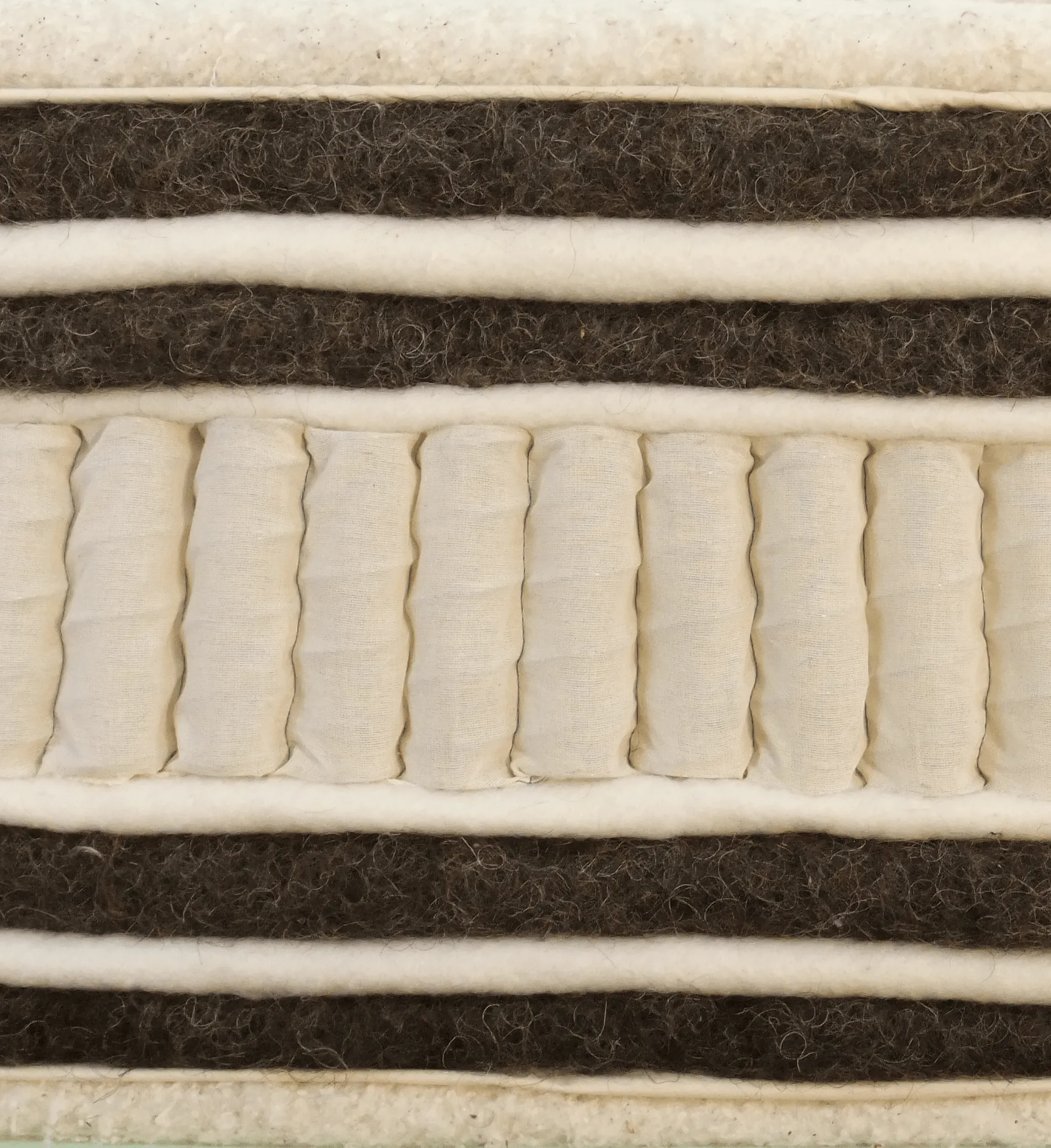
The spring unit
The springs form the core of the mattress and account for a large share of its height. Two-tier spring units, where a layer of smaller springs sits on top of the main unit, add further height and a more progressive feel.
Spring height is a subject of its own, and our community answer on pocket spring height goes into detail. For how the springs themselves work, see our pocket spring mattress guide.
The upholstery layers
This is where 50% (25% on the spring unit and the remaining on bed detailing) of your focus should go, as these fillings will provide the ultimate feel of the bed and indicate if it’s going to be a breathable bed (natural fibres) or one that will trap heat (memory foam and synthetics).
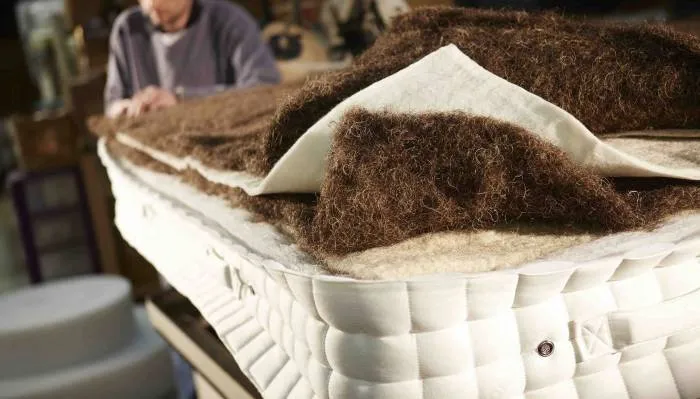
Above and below the springs sit the fillings such as: Wool, Cotton, Horsetail, Mohair, Bamboo, and the like in a natural fibre mattress, or polyester pads and Foam in a man-made one. Our guide to mattress upholstery covers each filling in turn. In a nutshell, the more natural the fibres, the longer-lasting, breathable, and high-end the mattress will be. If you see lots of ‘white fibre’, we’re talking polyester and potential heat retention.
A two-sided mattress has upholstery on both sides, which adds depth and lets you turn it over. Our Origins Pocket Reflex 1000, for example, has the same fillings on each side and costs £990 in a king size.
A one-sided mattress has filling only on the top face. That saves material and cost, and it is one reason we are wary of the claims explained in our article on the no-turn mattress.
Tufting and side stitching
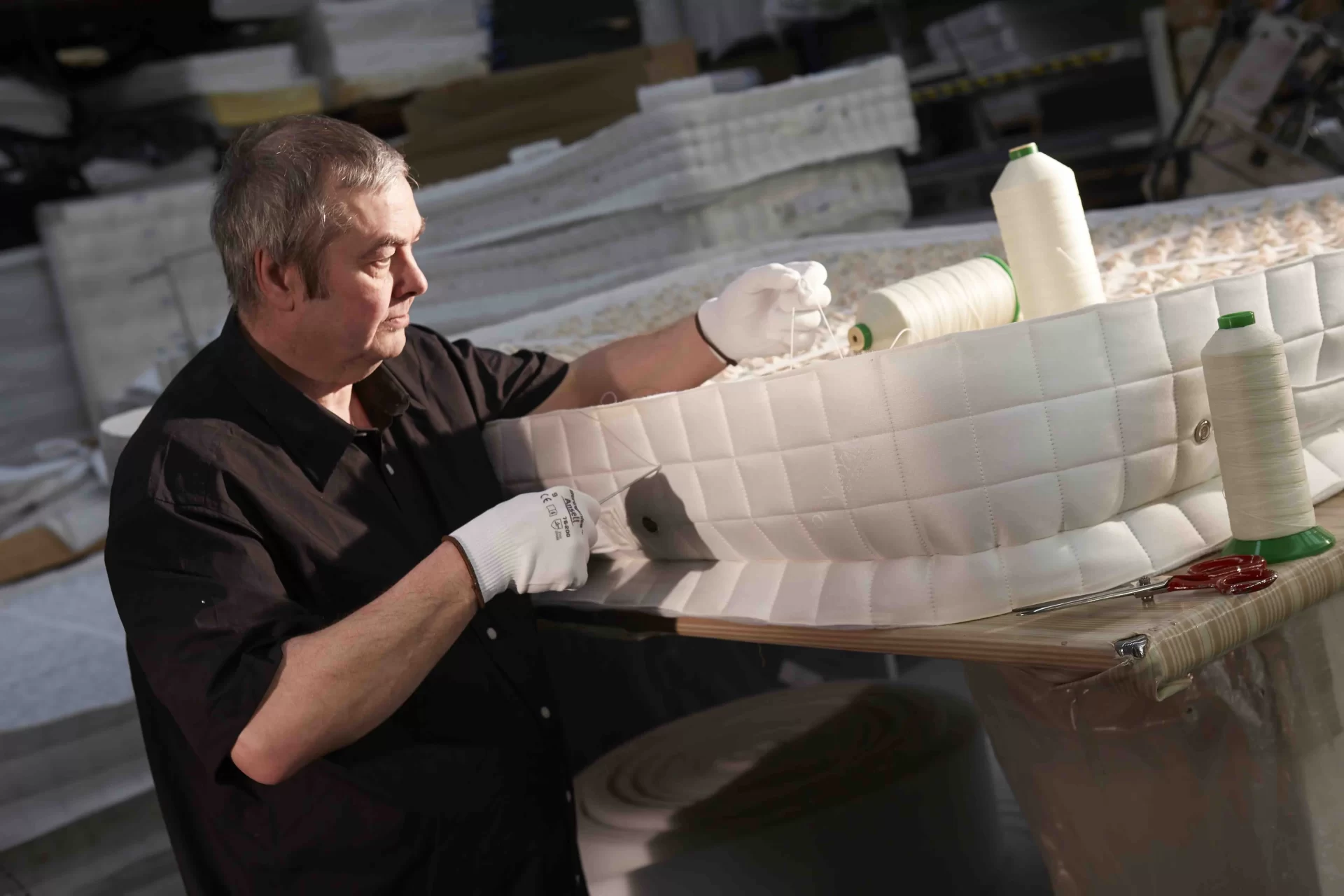
Before tufting, our mattresses stand 20 to 35% taller than their finished depth, so a mattress that ends up at 30cm starts out at roughly 36 to 40cm. In the factory it is squeezed down on a compression rig, and each tuft is then put in by hand while the rig holds it at the finished height. It’s a real site to behold watching a skilled artisan craftsperson compress and then tuft a mattress.
We still find it fascinating to watch. The whole mattress visibly sinks as the rig closes, and once the tufts are in, the upholstery stays locked at that height.
That is what the tufts are for. They secure the fillings so they cannot shift, which reduces undue settlement later on, and the tighter the tufting and the more rows of side stitching, the more densely those fillings are packed.
This is why our Artisan range measures slightly less deep than our Origins range despite containing considerably more upholstery. Mattress tufting explained covers the process in full.
The cover, and whether it is counted
Some manufacturers include the cover fabric and the height of its quilting in their quoted depth, which can add 1 to 3cm to the figure. We find this a bit shady and it helps them exaggerate their bed depths, tut tut! We quote our depths without the cover, so a John Ryan mattress will measure very slightly deeper once it arrives.
Is a thicker mattress better?
Not by default. Depth is sometimes a reasonable proxy for how much material is inside a mattress, but it is an unreliable one, because a few centimetres of Foam or a thickly quilted top panel can add height while adding very little weight or support. So you need to know whats in the mattress not just the depth.
We have cut open several memory Foam mattresses on our YouTube channel, and the same thing comes up each time. Much of the quoted height turns out to be wadding and polyester, none of which is breathable.
Our own range makes the same point from the other direction. The Origins Comfort measures 30 to 33cm with 1,250gsm of upholstery and costs £890 in a king size, while the Artisan Naturals measures 27 to 30cm with 3,950gsm and costs £2,180 in a king size.
The Artisan Naturals is the shallower of the two, yet it carries more than three times the weight of upholstery per square metre. The figure that tells you what you are paying for is the GSM of the fillings, not the depth in centimetres.
Most high street brands do not publish GSM, which makes comparison difficult. Our mattress GSM guide explains what the numbers mean and what to ask for when a retailer only gives you a depth.
Does mattress depth affect sleep quality?
Depth affects sleep quality indirectly by influencing the amount of support and cushioning it provides. Naturally a thinner bed will have less cussioning, support and flexibility for moving at night. A deeper mattress has room for more upholstery above and below the springs, and it is that upholstery that decides how the mattress feels and how well it spreads your weight.
When a mattress is too thin for the person sleeping on it, the problems we hear about are consistent. People start feeling the springs through the mattress, pressure builds at the shoulders and hips, and the fillings compact into dips far sooner than they should.
Each of those leads to more tossing and turning and more broken sleep. A shallow mattress rarely feels uncomfortable on the first night, but it tends to wear into discomfort much faster.
Depth is only one part of the picture, though. Spring tension, firmness, how well the fillings manage temperature, your bodyweight and your sleeping position all matter as much, as do factors away from the bed such as your circadian rhythm.
How deep are John Ryan mattresses?
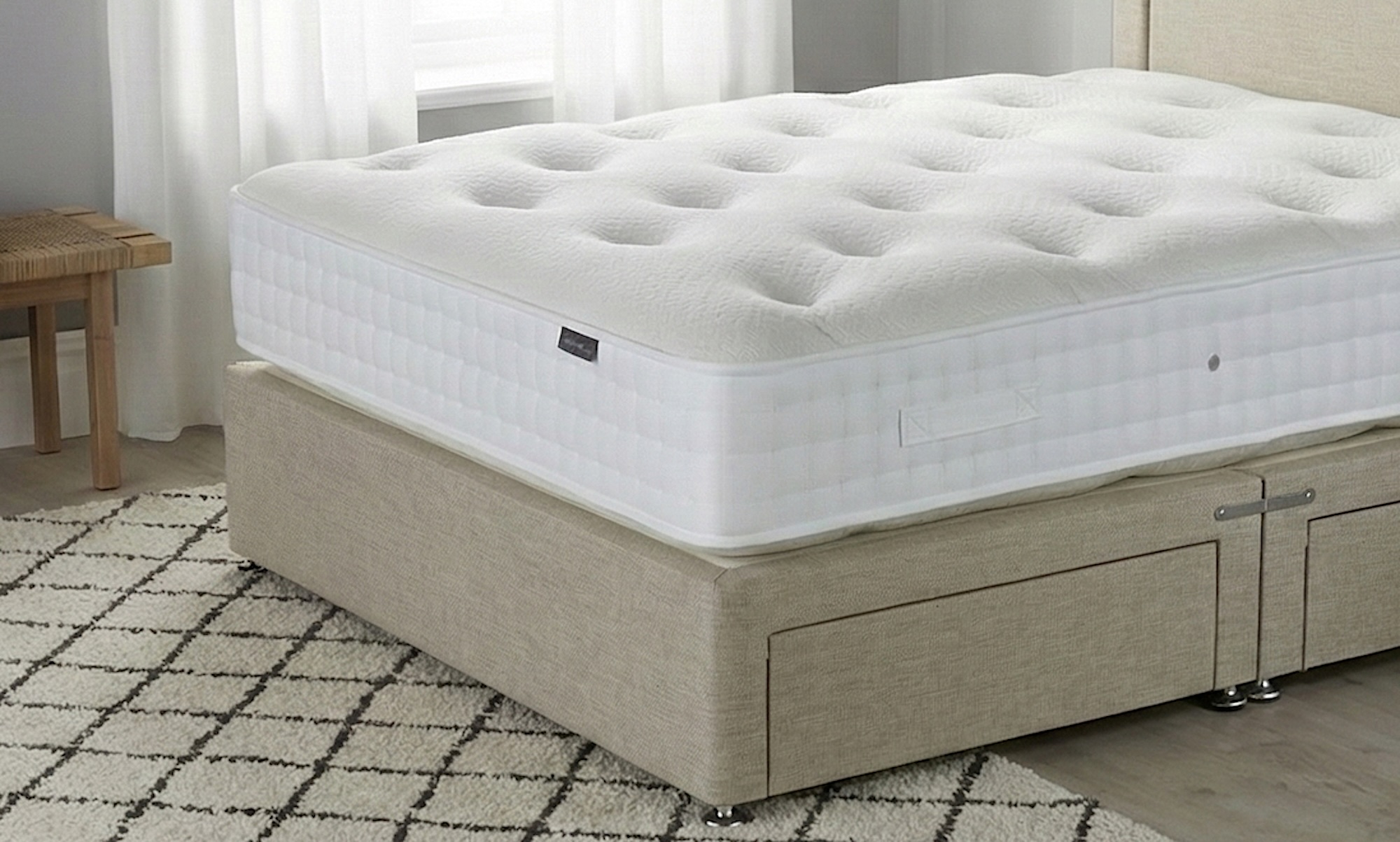
Our Origins mattresses are 30 to 33cm deep and our Artisan mattresses are generally 27 to 30cm, with the Artisan Sublime at 33 to 35cm. Every model is the same depth across all sizes, and every depth below is measured without the cover.
| Mattress | Depth | Total GSM | King size |
|---|---|---|---|
| Origins Comfort | 30 to 33cm | 1,250gsm | £890 |
| Origins Pocket Reflex 1000 | 30 to 33cm | 1,660gsm | £990 |
| Origins Pocket 1500 | 30 to 33cm | 1,550gsm | £1,050 |
| Origins Naturals Support | 30 to 33cm | 2,550gsm | £1,300 |
| Artisan Naturals | 27 to 30cm | 3,950gsm | £2,180 |
| Artisan Latex | 27 to 30cm | 3,150gsm plus 3cm Talalay Latex | £2,250 |
| Artisan Bespoke 004 | 27 to 30cm | 3,600gsm | £2,860 |
| Artisan Sublime | 33 to 35cm | 5,400gsm | £5,160 |
| Legacy Two | 30 to 33cm | 5,400gsm | £5,550 |
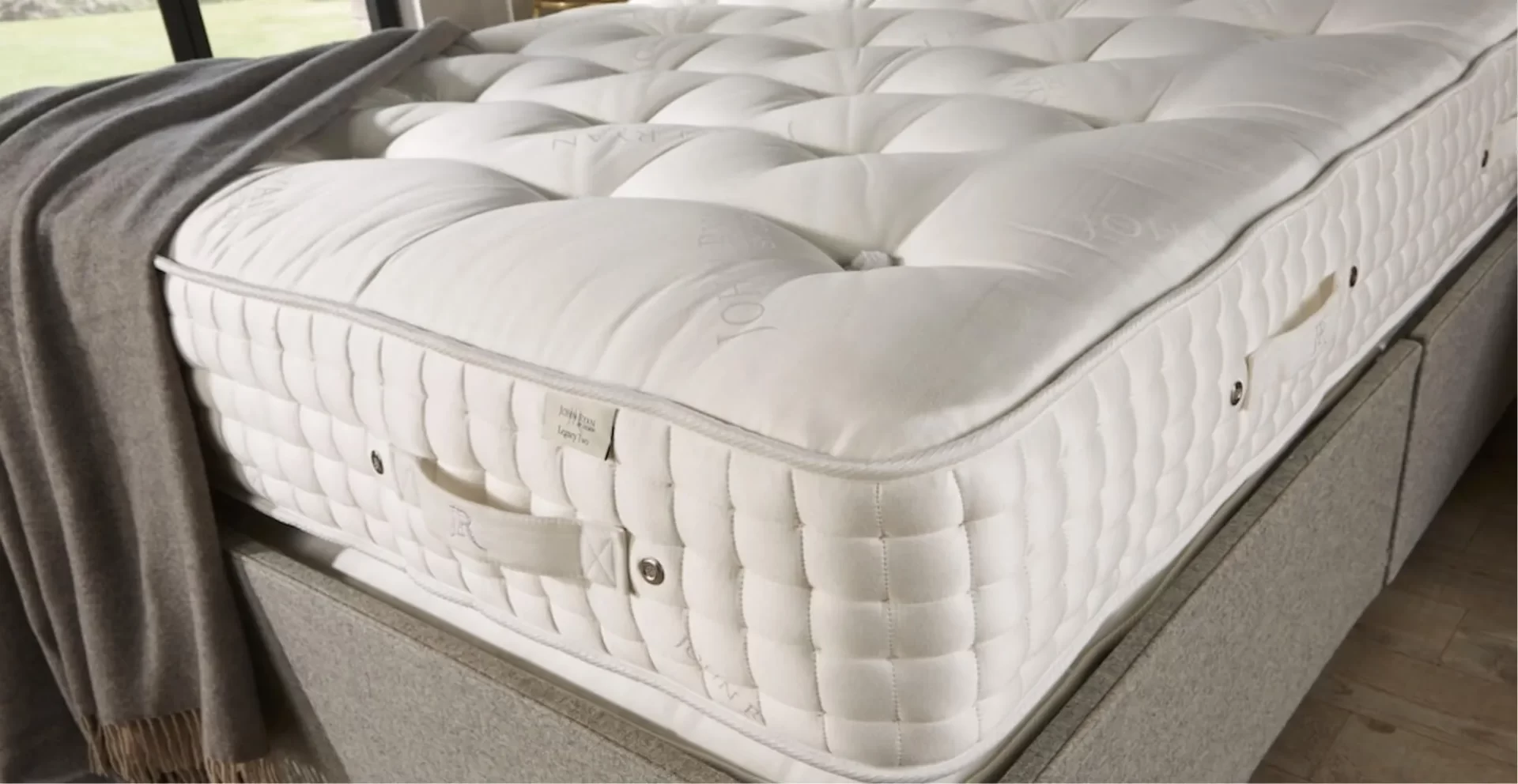
The Artisan Sublime and Legacy Two both use a two-tier calico encased pocket spring unit, which accounts for their extra depth. You can browse the full Origins range and Artisan range for layer by layer specifications.
Is 20cm, 25cm or 30cm a good mattress depth?
These three figures come up in almost every conversation we have about depth. Each suits a different situation.
Is 20cm deep enough for a mattress?
For a child’s bed, a bunk bed or an occasional guest bed, 20cm is perfectly adequate. For an adult sleeping on it every night, 20cm leaves limited room for both a proper spring unit and a useful amount of upholstery, and most mattresses at this depth are one-sided.
A 20cm mattress can still be comfortable for a lighter adult, but it will generally wear faster than a deeper, two-sided construction. For an adult bed used every night, we suggest looking at 23cm (9 inches) or more.
The same caution applies to many rolled and boxed mattresses. If a mattress can be compressed flat enough to post, it is usually light on fillings, and compression and sagging tend to set in sooner.
Is 25cm a deep mattress?
No, 25cm is the average mattress depth in the UK and sits in the middle of the standard range. It is deep enough for a reasonable spring unit with comfort layers above it, and it will fit most standard fitted sheets and bed frames without any adjustment.
Is 30cm too deep for a mattress?
Rarely. A 30cm mattress sits at the top of the standard range and is typical of a well-upholstered pocket sprung mattress. The practical checks are whether your fitted sheets have deep enough pockets, whether the mattress will cover too much of your headboard, and how high the finished bed will be to get into.
How thick should your mattress be?
The right depth depends less on a number and more on who is sleeping on it and what it sits on. These are the factors we talk through with customers on the phone.
Your bodyweight
Heavier sleepers compress the upholstery further and load the springs harder, so they benefit from a deeper, more substantial build. That said, spring tension matched to your bodyweight matters more than depth. Our guide to the best mattress for heavy people covers this in detail.
Your sleeping position
Side sleepers need enough upholstery above the springs for the shoulder and hip to sink in without meeting resistance. A shallow mattress with a thin comfort layer is the most common cause of shoulder pressure we hear about.
We speak to plenty of customers who assume a thinner mattress is the sensible choice because it will be easier to turn. Many are astonished to learn that a deeper 30 to 35cm mattress is often what eases shoulder and hip pain, because the extra upholstery gives those pressure points somewhere to sink into.
Turning a deeper mattress once a month does take a little more effort. For most people with shoulder or hip pain, that is a small price for a better night. Read our side sleeper mattress advice for more.
Your bed frame and base
Bed frames with a raised side rail or lip need a mattress deep enough to sit comfortably above it, otherwise the edge of the frame presses into you when you sit or roll to the side. A slatted frame, a divan and a platform base will each change how the mattress feels, which our guide to mattress bases explains.
If you are keeping an existing ottoman bed, check the maximum mattress weight its gas struts are rated for before you order. Most ottomans we come across are rated to around 60kg, while a quality mattress can weigh anywhere from 40 to 80kg depending on its size and fillings. Our ottoman bed base guide covers what to look for.
Getting in and out of bed
The finished height of your bed is the base plus the mattress. As a guide, you should be able to sit on the edge with your feet flat on the floor and your knees roughly level with your hips.
This matters most for anyone with joint pain or reduced mobility. If you are pairing a deep mattress with a tall divan, measure the combined height before you buy.
How to measure mattress depth
Measuring your current mattress is the quickest way to check sheet sizes or compare it with a replacement. Take the measurement from the side of the mattress rather than across the top.
- Remove all sheets, the mattress protector and any topper.
- Measure vertically at the side border, from the bottom edge where the mattress meets the base to the top edge.
- Avoid measuring over a tuft or the raised centre of the sleeping surface.
- Measure in two or three places and use the largest figure.
- Add the thickness of your topper and protector if you are buying fitted sheets.
For the standard mattress depth in inches, divide the centimetre figure by 2.54. A 25cm mattress is almost exactly 10 inches, and a 30cm mattress is just under 12 inches.
Mattress depth and your bedding
Fitted sheets are where depth causes the most day-to-day frustration, which is why we advise every customer to buy extra-deep fitted sheets before their John Ryan mattress arrives.
Skip that step and the first night tends to go the same way. You stretch your old sheet over one corner, then the next, and just as you reach the fourth, the first pings off like a catapult. Get it on eventually and there is a good chance you will wake at 3am with it rolled round your ankles.
A sheet that is too deep has the opposite problem and bunches underneath, though that is far easier to live with.
Always work from the total depth of the mattress, protector and topper combined, then allow a few centimetres for the sheet to tuck under. A 30cm mattress with a 6cm topper needs a sheet pocket of at least 36cm.
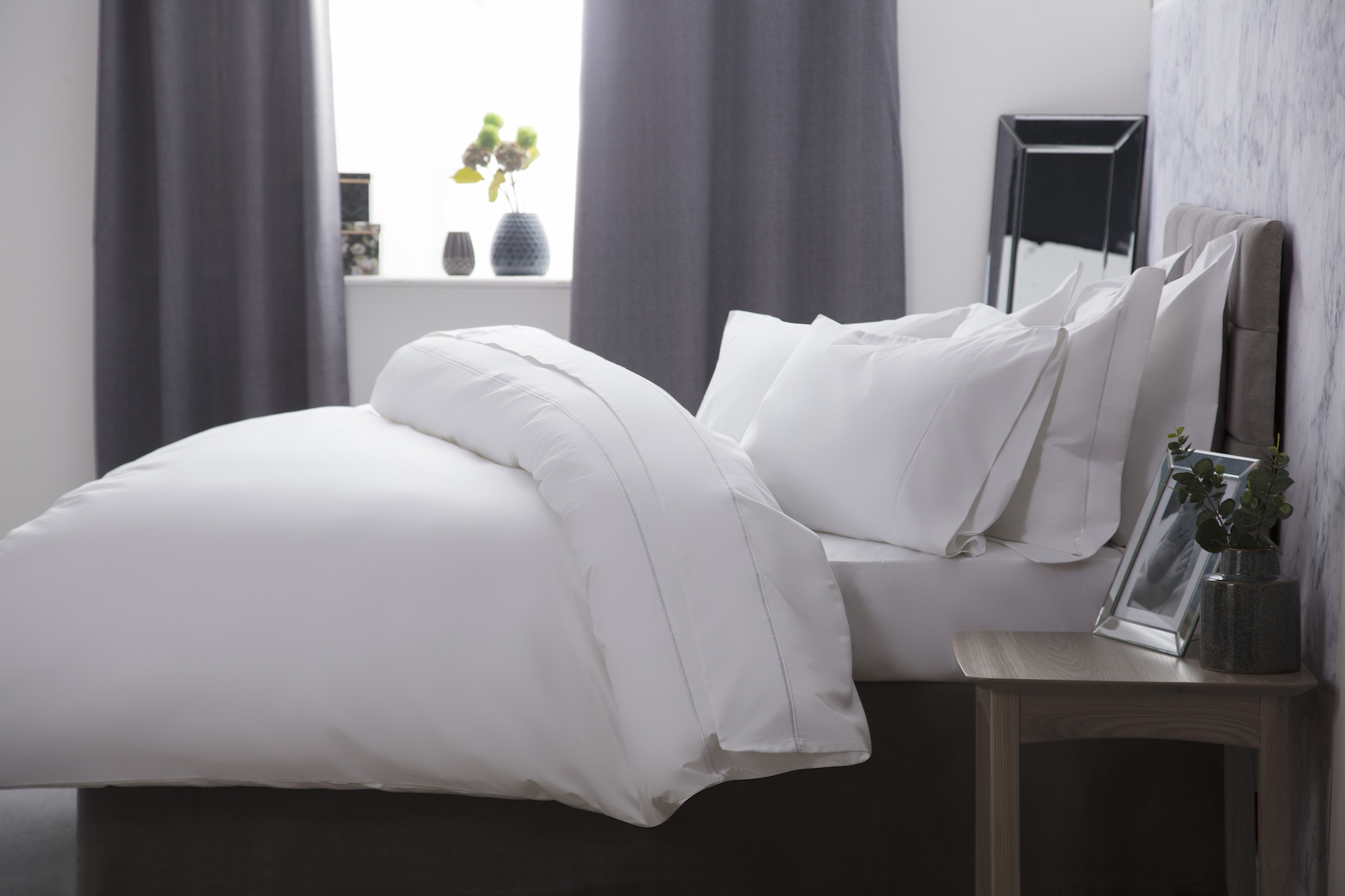
Our Extra Deep Fitted Pima Cotton Sheet has a 38cm pocket and costs £55 in a king size. Our 100% Cotton Quilted Mattress Protector is cut to the same 38cm depth and is also £55 in a king size.
Toppers add depth too. Our 6cm Mulberry Silk topper is £240 in a king size and our 10cm Microfibre topper is £110 in a king size, both available in our bedding range.
For more detail on each, see our guides to fitted sheets for a deep mattress, choosing a mattress protector and mattress toppers.
Will a mattress lose depth over time?
A little, and that is normal. Natural fibre fillings bed in over the first few weeks as they shape themselves to your body, and you may notice shallow body impressions where you sleep.
Turning and rotating a two-sided mattress regularly spreads that settling evenly across both faces. Our guide to settlement and indents in mattresses explains how to tell normal bedding in from a fault.
Vacuum-packed mattresses work the other way round. They arrive compressed and need time to recover their full height after unboxing, so measure them once they have fully expanded.
Mattress depth FAQs
What is the standard mattress depth in cm?
The standard mattress depth in the UK is 20 to 30cm. Mattresses under 20cm are considered shallow and those over 30cm are considered deep.
What is the average mattress depth in the UK?
The average mattress depth in the UK is around 25cm, or 10 inches, which is what most people mean by a normal mattress depth. Traditional handmade pocket sprung mattresses are typically deeper, at 27 to 35cm.
Is a thicker mattress better?
Not necessarily. Depth can be added cheaply with Foam or a thick quilted cover, so the weight of upholstery, measured in GSM, is a far better guide to quality than depth alone.
Does mattress depth affect sleep quality?
Yes, indirectly. A deeper mattress has room for more upholstery, which spreads your weight, reduces pressure points and resists sagging for longer. A thin mattress with little filling tends to cause more broken sleep as it wears.
Are all mattress sizes the same depth?
Yes, for any given model. A single, double, king and super king of the same mattress share the same depth because they use the same spring unit and upholstery layers.
How deep is a John Ryan mattress?
Our Origins mattresses are 30 to 33cm deep and our Artisan mattresses are generally 27 to 30cm, with the Artisan Sublime at 33 to 35cm. We quote all depths without the cover.
What depth fitted sheet do I need for a 30cm mattress?
Choose a sheet with a pocket of at least 32 to 35cm for a 30cm mattress on its own, and add the thickness of any topper or protector you use on top.
What is the minimum depth for an adult mattress?
Around 20cm is the practical minimum for an adult mattress, and we suggest 23cm (9 inches) or more for nightly use. Below that there is little room for a supportive spring unit and meaningful upholstery.
Need help choosing the right depth?
If you are unsure whether a mattress will suit your bed frame, your sheets or your sleeping position, we are happy to talk it through. We make every mattress by hand here in the UK and can advise on depth, tension and fillings before you order.
Call us on 0161 437 4419, contact us online, or read our full guide on how to choose a mattress.

Dreaming of the perfect nights sleep?

Ask us a question
There are over 6000 questions and answers submitted by you on all questions about mattresses and bed problems. Enter a keyword such as Vi Spring, John Lewis beds, bad back or Memory Foam and see if your question has already been answered.
If you can’t find an answer in knowledge hub, ask a new question. We aim to respond to all questions within one working day.
Newsletter
Enter your email to join our newsletter. We’ll send you occasional news and mattress expertise.