







Memory Foam & Hybrid Foam
February 2026What are the differences between Tempur and other memory foams?
Are you looking for a Tempur mattress but wondering what the difference is between Tempur and Memory Foam? You’re not alone! This article will aim to simplify things for you. We’ll explain exactly what Tempurpedic Foam is and whether it’s suitable for you or a memory Foam alternative.
Is Tempur the same as memory Foam? This remains the most frequently asked question, and it’s become even more relevant now that Tempur has completely restructured its range.
The Cloud, Sensation, Original, and Hybrid models that dominated for years have been discontinued. In their place sits a simplified PRO SmartCool collection and a new budget Ease range launched in September 2025. With prices ranging from £1,099 to £3,099 for a King size, and competitors like Emma, Simba, and our own Origins range offering similar comfort at half the cost, understanding what you’re actually paying for has never been more important.
This updated guide examines what’s changed with Tempur’s 2026 lineup, whether SmartCool technology has finally solved the heat retention problem, and what the actual specification differences are between Tempur’s “proprietary” Foam and standard memory Foam alternatives.
Jump to:
- Is Tempur the same as Memory Foam mattresses?
- What does a Tempur mattress feel like?
- How does memory Foam’s firmness work?
- Tempur mattress models explained.
- How to Compare Tempur Beds
- How are Tempur mattresses made?
- Cheaper Tempur mattress alternatives
- Why does Tempur get so hot?
- Problems with Tempur mattresses
- Why Natural Fibres Resolve Tempur Foam Problems
- FAQ
1. Tempur vs. Memory Foam – Are They the Same?
TempurFoam was the original memory Foam of the 1990s. Tempur researched and developed the Foam we now call “memory fFoam as part of the NASA space missions for seat coverings (to allow astronauts to be comfortably held in space). Tempur fiercely defends its brand, given the millions of dollars it has invested in research and development for its mattress Foam. Tempur will not refer to itsFoamm as “memory Foam,” but as “Tempurpedic Foam.” They have their own patented recipes for their ‘viscoelastic polyurethane’ mattress Foam. So whilst all memory Foam mattresses technically are ‘Tempurpedic’ (i.e. they react to heat and pressure), only Tempur can use this term as it’s their brand.
Tempur Foam isn’t available anywhere other than at Tempur retailers and is patented. However, the feel of Tempur is practically identical to that of cheaper Memory Foam alternatives made with viscoelastic Foam, which is why they are so often compared.
Here’s the straight answer that Tempur’s marketing doesn’t want to be too clear about: yes, Tempur is memory Foam. Specifically, it’s viscoelastic polyurethane Foam – the same fundamental material used in all memory Foam mattresses from Emma to Casper to the cheap £200 versions on Amazon.
Tempur fiercely defends its brand positioning. They will not refer to their Foam as “memory Foam” but as “TEMPUR Material” or “Tempurpedic Foam”. This is branding, not chemistry. The material behaves much like other high-quality memory foams: it responds to heat and pressure, progressively conforms to the body’s shape, and slowly recovers when weight is removed.
The key differences between Tempur and competitors:
- Foam density: Tempur runs approximately 85 kg/m³ (though they won’t officially confirm it). Most UK memory Foam mattresses use a density of 55-70 kg/m³. Higher density means more material per cubic meter, which generally correlates with better durability and pressure relief.
- Manufacturing process: Tempur manufactures in Denmark with 67+ quality control checks. Many competitors manufacture in the UK or import from China with less rigorous QC.
- Proprietary formulation: Tempur’s exact chemical composition is a trade secret. They claim their open-cell structure provides better breathability than standard memory Foam, though independent testing shows minimal practical difference.
- Price premium: Tempur charges £2,000-£3,000 for mattresses that cost £300-£800 in materials and manufacturing. You’re paying for brand, marketing, retailer margins, and those original R&D costs from 30 years ago.
The uncomfortable truth for Tempur: the feel of their Foam is practically identical to that of cheaper memory Foam alternatives made with high-density viscoelastic Foam. This is why comparisons are inevitable.
2. What should a Tempurpedic Foam Mattress Feel Like?
So we know that Tempur-Pedic mattresses are made of viscoelastic polyurethane Foam. The Polyurethane Foam Association says, “viscoelastic Foam is typified by its slow recovery after compression. When a weighted object (e.g., the human body) is placed on viscoelastic Foam, the Foam progressively conforms to the object’s shape. After the weight is removed, the Foam slowly returns to its initial shape. Due to this gradual recovery, viscoelastic Foam can also be described as slow recovery Foam” The feel of Tempur mattresses has been described with the following descriptors by different owners:
- Soft slow sink
- Weightless sinking
- Spongey sink sensation
- Warm soft sand
- Weightless sleep
Comfort is subjective, but we believe the above descriptions accurately reflect how the Tempur mattress range feels.
These descriptions are accurate for how high-density memory Foam feels – not just Tempur, but any quality memory Foam mattress. The “warm soft sand” description is particularly telling: memory Foam softens with heat, which is both a feature (moulds to your body) and a drawback (can sleep hot).
3. How firmness works in memory Foam
Tempur’s firmness options (Soft, Medium, Medium-Firm, Firm) relate to the support core density, not the top comfort layer. All Tempur models use a similar-density material in the top layer – what changes is the firmness of the deeper support Foam, which prevents you from sinking too far.
This is critically important: even the “Soft” Tempur feels firm initially, particularly in cold rooms. Memory Foam requires 30+ days to break in as your body heat gradually softens the material. Many customers report it took months before their Tempur felt comfortable.
4. Tempur Mattress Models
Tempur underwent a complete product line overhaul between 2023 and 2024, consolidating from four distinct ranges (Cloud, Sensation, Original, Hybrid) into a streamlined two-tier structure. The old naming system using depth numbers (Cloud 27, Sensation 25, Original 21) has been replaced entirely.

Models discontinued since our original 2020 article:
- TEMPUR Cloud (Supreme, Elite, Luxe) – replaced by PRO SmartCool “Soft”
- TEMPUR Original (Supreme, Elite, Luxe) – replaced by PRO SmartCool “Medium-Firm”
- TEMPUR Sensation (Supreme, Elite, Luxe) – replaced by PRO SmartCool “Firm”
- TEMPUR Hybrid (Supreme, Elite) – completely discontinued with no direct replacement
New additions as of January 2026:
- TEMPUR Ease range (September 2025) – entry-level at £1,099-£1,399 King
- TEMPUR PRO SmartCool collection with four firmness options (Soft, Medium, Medium-Firm, Firm)
- SmartCool Technology is now standard across the PRO range
- Retailer exclusives: John Lewis CoolQuilt versions at a £500-700 premium, Dreams Pro Air variants
Current Tempur range with King-size pricing
TEMPUR Ease Collection (entry level):
| Model | Height | King Size RRP | Typical Sale Price |
| Ease 20 | 20cm | £1,199 | £1,099 |
| Ease 22 | 22cm | £1,299 | £1,199 |
| Ease 25 | 25cm | £1,499 | £1,399 |
All Ease models feature 3cm TEMPUR Adapt Material regardless of height – you’re paying more for deeper base Foam, not more pressure-relieving material. Critically, the Ease range is eligible only for 14-day statutory returns, not the 100-night trial available on PRO models.
TEMPUR PRO SmartCool Collection (flagship):
| Model | Height | Firmness Options | King Size RRP | Typical Sale Price |
| PRO | 21cm | Soft, Medium, Medium-Firm, Firm | £2,299 | £2,199 |
| PRO Plus | 25cm | All four options | £2,599 | £2,499 |
| PRO Luxe | 30cm | All four options | £3,099 | £2,999 |
The PRO range includes SmartCool covers and qualifies for the 100-night trial (with a mandatory 60-night minimum before you can return). John Lewis sells exclusive CoolQuilt versions at a £500-700 premium with 2cm extra depth and enhanced quilting.
5. How to compare Tempur Mattresses
To compare Tempur and memory Foam mattresses, you need to know the following details about each mattress you’re considering.
- How many layers and components does the mattress have?
- What are the depths of each of the mattress layers?
- What are the densities and associated firmness ratings for the foams?
There is also the base layer, Reflex Foam, to consider, which, confusingly, will have a different density rating: typically 30-33kg. Conversely, this is firmer than Memory Foam because of its different chemical composition! Confused? Bear with us!
Memory Foam typically has a density of 40kg (soft) to 85kg (firm), and there is some tolerance in manufacturing, so an 85kg Foam could be anywhere between 80kg and 90kg in reality. Reflex Foam is a much denser Foam, so its firmness is usually measured between 30-33kg, as an 85kg piece of Reflex would feel like a slab of marble!
Once you have this detail, you can start assessing the mattress’s quality and overall feel.
To be able to compare, you need to know the exact depth and density of the Foam
These are details that the likes of Tempur, Eve and Casper don’t disclose for some reason


6. How Are Tempurpedic Mattresses Made?
Tempur mattresses are made using the standard Foam construction method of ‘layering up’ foams. These layers usually start with a firmer base, such as reflex or support Foam, and then get progressively softer as they approach the top of the mattress. The layers are usually stuck together with an adhesive spray, unlike a natural fibre mattress (where wool tufts are used, not glue). Below is what a layered mattress looks like. The white reflex Foam sits at the bottom, and then there are layers of memory Foam from firmer to softer.
Unfortunately, this method means that all the Tempur mattresses are one-sided and cannot be turned over. We have discussed why this is a real drawback in our detailed article here. In summary, it means your mattress is at a higher risk of mattress settlement, as you can’t turn it over to even out the initial wear.
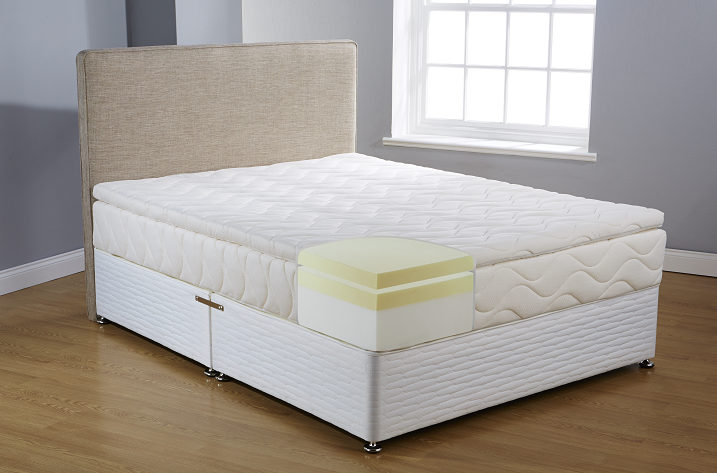
Typical Tempur construction (PRO Plus model as example):
From bottom to top:
- Base layer: ~15cm of firm reflex/support Foam (30-33 kg/m³)
- Transition layer: ~5cm of medium-density TEMPUR Support Material
- Comfort layer: ~3-5cm of high-density TEMPUR Material (estimated 85 kg/m³)
- Cover: SmartCool quilted fabric with phase-change materials
The layers are adhesive-bonded, sprayed with glue, and pressed together. This differs fundamentally from natural fibre mattresses, where wool tufts mechanically hold layers together without adhesive.
Critical drawback: one-sided construction
This layered, glued construction means all Tempur mattresses are one-sided only. You cannot turn them over. We’ve written extensively about why this is a significant problem, but here’s the summary:
One-sided construction means that all compression, all body impressions, and all wear occur on a single surface. You cannot flip the mattress to even out this wear or extend its lifespan. Settlement and body impressions develop faster in one-sided mattresses, and when they do, there’s no remedy except replacement.
Our two-sided mattresses can be flipped monthly, distributing wear across both surfaces. This typically extends lifespan from 7-8 years (one-sided) to 12-15 years (two-sided). Over that timespan, you save money even if the initial purchase price is higher.
At £2,500-£3,000 for a mattress that lasts 8-10 years at most due to its one-sided construction, Tempur’s value proposition weakens considerably.
7. Cheaper memory Foam alternatives to Tempur
We get asked all the time what the best cheaper alternative to a Tempur mattress is. Our advice is always the same: aim for the best-quality mattress for your budget. Once you’re looking to spend over £750 on a mattress, we advise you to move away from Memory Foam, as there are far better natural fibre sprung alternatives that address its drawbacks.
However, if you’re on a really tight budget, then entry-levelMemory Foam mattresses may be a suitable alternative to Tempur models. The cheaper end of the market typically sells £350 mattresses, maybe using much softer 40kg density Foam at a depth of 2cm, with a lower hardness rating, which is far softer. They can offer products at this price because they are probably offering low-quality, cheaper Memory Foams, some of which may be imported from outside the UK. You then have everything in between. Obviously, if you’re buying a cheap mattress, it’s not going to last more than a couple of years or have the quality support/comfort you potentially need. However, we do appreciate that everyone is at a different price point.
Comparing Tempur to other memory foams: What you need to know
To properly compare Tempur against Emma, Casper, Nectar, Simba Hybrid, or any memory Foam mattress, you need three pieces of information:
How many layers and what are the depths?
A mattress described as “25cm deep” tells you nothing about construction quality. What matters is:
- How much of that depth is cheap base Foam vs. expensive comfort Foam?
- Are there transition layers preventing “bottoming out”?
Example comparison:
Tempur PRO Plus (25cm, £2,499):
- Estimated: 3-5cm comfort layer + 5cm transition + 15cm base = 25cm total
- They won’t confirm exact depths
Emma Original (25cm, £349-399 King):
- Disclosed: 4cm Airgocell Foam + 4cm memory Foam + 17cm base Foam = 25cm total
- Full specification transparency
The Emma actually discloses more comfort Foam depth than Tempur (8cm vs estimated 3-5cm), yet costs £2,100 less. This is why specification transparency matters.
What are the Foam densities?
Memory Foam density typically ranges from 40 kg/m³ (soft/cheap) to 85 kg/m³ (firm/premium). There’s manufacturing tolerance, so an “85 kg/m³” Foam could actually be 80-90 kg/m³.
Base Foam (also called reflex Foam or support Foam) uses different chemistry, so density ratings differ. Base Foam typically rates 30-33 kg/m³, with 30 kg/m³ being firmer than 85 kg/m³ memory Foam. Confusing, but that’s Foam chemistry.

Tempur vs competitors on density:
| Brand | Density Disclosed? | Estimated Density |
| Tempur | ✗ No (“trade secret”) | ~85 kg/m³ |
| Emma Original | ✓ Yes | 55 kg/m³ memory Foam |
| Simba Hybrid | Partial | 60-65 kg/m³ (estimated) |
| Nectar | Partial | 70 kg/m³ (estimated) |
| Casper | ✗ No | 55-60 kg/m³ (estimated) |
Higher density generally means:
- Better pressure relief
- Better durability (resists compression longer)
- Higher heat retention (denser = less airflow)
- Higher cost
Tempur’s estimated 85 kg/m³ justifies a premium over competitors at 55-60 kg/m³. But does it justify £2,000 more? That’s the question.
What are the ILD/IFD firmness ratings?
ILD (Indentation Load Deflection) measures the force required to compress Foam by 25% of its thickness. This is the industry standard for comparing firmness.
Examples:
- ILD 10-12: Very soft (plush pillow tops)
- ILD 14-16: Soft to medium
- ILD 18-22: Medium
- ILD 24-28: Medium-firm
- ILD 30+: Firm
Tempur does not publish ILD ratings. This makes it essentially impossible to compare their “Soft,” “Medium,” and “Firm” options with competitors’ without physically testing them side-by-side.
For context, most memory Foam mattresses use ILD 12-14 for comfort layers and ILD 26-32 for base layers. We estimate Tempur’s comfort layers run ILD 14-16 (based on feel comparisons), but we cannot verify this.
8. Why do Tempur mattresses get so hot?
If you Google Tempur mattress reviews, you quickly find that people either love them or hate them. Most of the complaints are related to heat retention. This is true of all viscoelastic foams. They will all retain heat. It’s part of what helps them soften pressure and heat as the Foam warms up. So if you’re a warm sleeper, you probably want to avoid Tempurpedic and memory Foam altogether. We recommend looking at a Natural Fibre mattress, which is far cooler and more breathable than synthetic foams.
It also leads to the second issue of people feeling ‘stuck’ in bed at night. As they sink into the Foam, which holds them when they come to move, some people struggle. As the Foam is slow to react, it can make turning during the night really difficult and frustrating for many.

9. Problems with Tempur Mattresses
The biggest niggle that all reviewers and mattress experts have about Tempur is the lack of transparency with how their beds are made and the compostion. This continues to frustrate us more than anything else about Tempur. After 25 years of making mattresses in Yorkshire, we believe customers spending £2,000-£3,000 deserve to know exactly what’s inside their mattress.
What Tempur discloses:
- ✓ Mattress heights in cm
- ✓ Layer depths (cm) for TEMPUR material
- ✓ Firmness ratings (Soft/Medium/Medium-Firm/Firm)
- ✓ SmartCool/CoolQuilt cover technology
- ✓ “Made in Denmark”
What Tempur refuses to disclose:
- ✗ Foam density (kg/m³) – their official position: “We do not specifically measure density. Our proprietary formula is a trade secret”
- ✗ ILD/IFD ratings (indentation force deflection – the industry standard firmness measure)
- ✗ Base Foam specifications
- ✗ Total mattress weight
- ✗ Detailed chemical composition
- ✗ Fire-retardant treatment method
Industry estimates suggest TEMPUR Material runs around 85 kg/m³ based on feel comparisons and competitor analysis. This is significantly denser than typical UK memory foams at 55-70 kg/m³, which justifies some price premium. But without confirmed specifications, you’re buying blind.
How Tempur compares to our specification transparency
For the Artisan Naturals at £2,180 King, we publish every single specification:
- Total GSM: 3,950
- Layer 1: 1,200 GSM Blended British Fleece Wool & Cotton
- Layer 2: Hairproof Cambric Cover
- Layer 3: 1,250 GSM Rebound Poly Cotton
- Layer 4: 1,500 GSM 100% Pure Mohair
- Layer 5: 1,600 Calico Encased Pocket Springs (49mm height, 1.28mm gauge wire)
- Expected lifespan: 12-15 years with proper turning
- Natural content: 85% by weight
- Fire retardant: Plant-based treatment on viscose cover
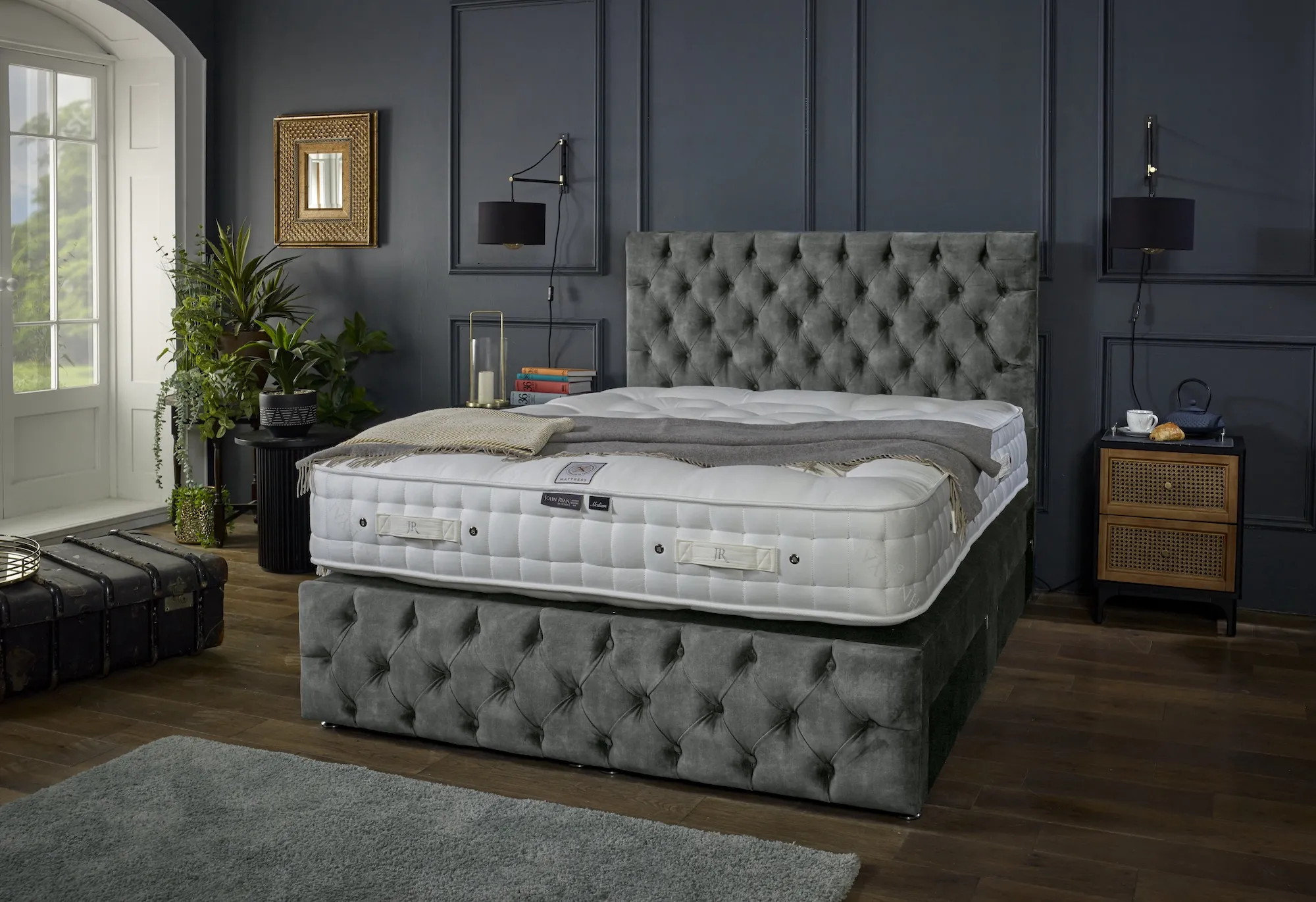
Every component, every density, every depth, every gauge. Because if you’re spending over £1,000 on something you’ll use for 20,000+ hours over a decade, you deserve to know what’s inside it.
At £2,500+ for a Tempur PRO Plus, the lack of specification disclosure is indefensible.
10. Why natural fibre and Latex alternatives make sense
After 25 years of making mattresses, we’ve learned that memory Foam solves one problem (pressure relief through contouring) while creating several others (heat retention, inability to turn, synthetic materials, firmness variability with temperature).
Natural alternatives address these drawbacks:
Natural fibre mattresses (wool, Cotton, horsehair, cashmere)
Advantages over memory Foam:
- Naturally breathable (wool wicks moisture, regulates temperature)
- Can be turned (two-sided construction standard)
- Doesn’t change firmness with temperature
- Natural, sustainable materials
- Longer lifespan (15-20 years typical)
- No off-gassing or chemical smell
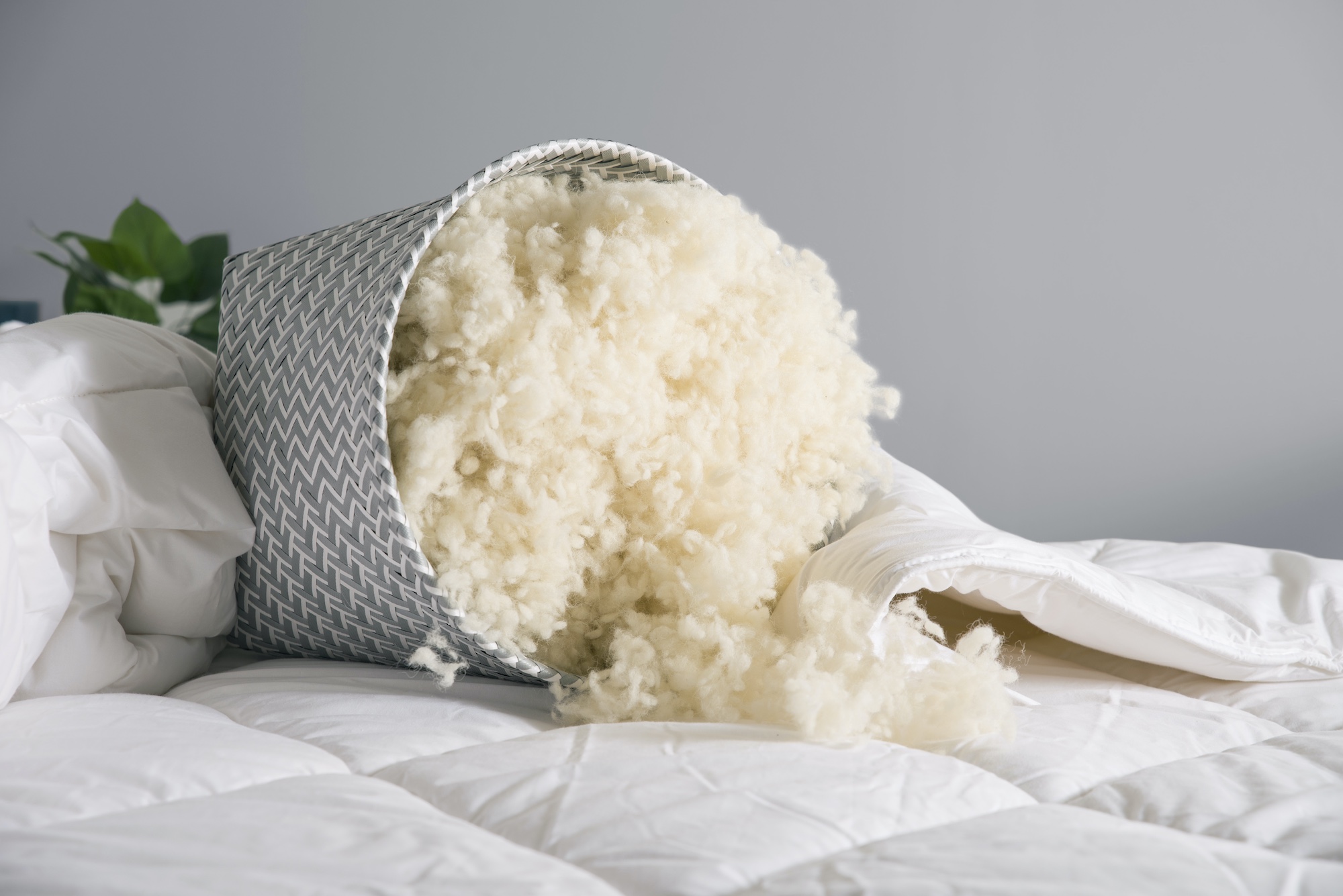
Our Artisan Naturals (£2,180 King) delivers a progressive sink similar to memory Foam, but through natural fibre compression rather than heat-activated Foam. It breathes properly, can be turned monthly, and uses 85% natural content.
Latex mattresses (natural Talalay or Dunlop Latex)
Advantages over memory Foam:
- Responds to pressure instantly (not heat-dependent)
- Naturally breathable open-cell structure
- Exceptional durability (15-20+ years)
- Naturally antimicrobial and hypoallergenic
- Temperature-neutral (feels the same in winter and summer)
- 100% plant-based materials available
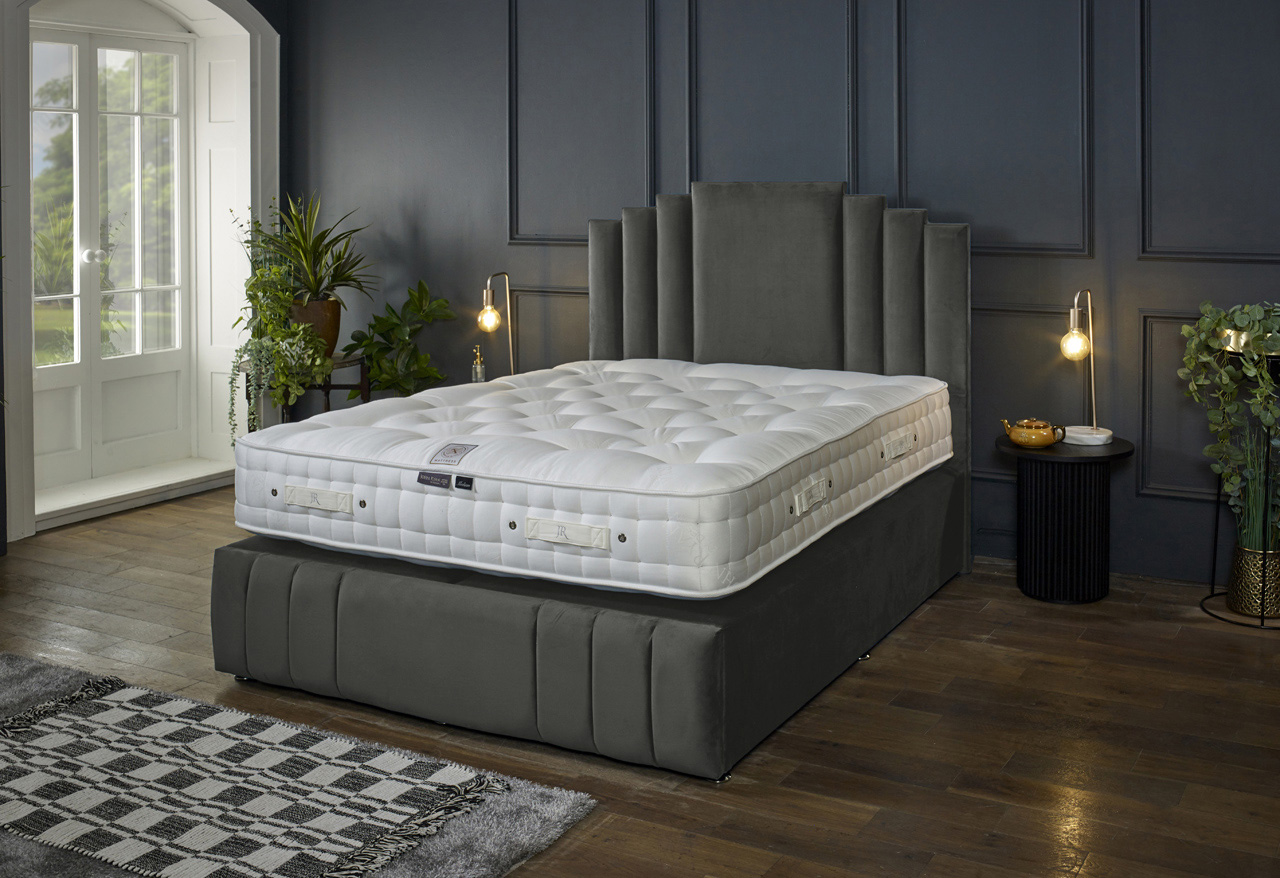
Our Artisan Latex (£2,250 King) provides pressure relief similar to memory Foam but without heat dependency or temperature sensitivity. The natural Latex responds instantly to movement, making position changes effortless.
Hybrid mattresses (pocket springs + comfort layers)
Advantages over pure Foam:
- Springs provide airflow channels (cooler sleeping)
- Instant responsiveness (no “stuck” feeling)
- Better edge support
- Can combine pocket springs with natural fibres or Latex
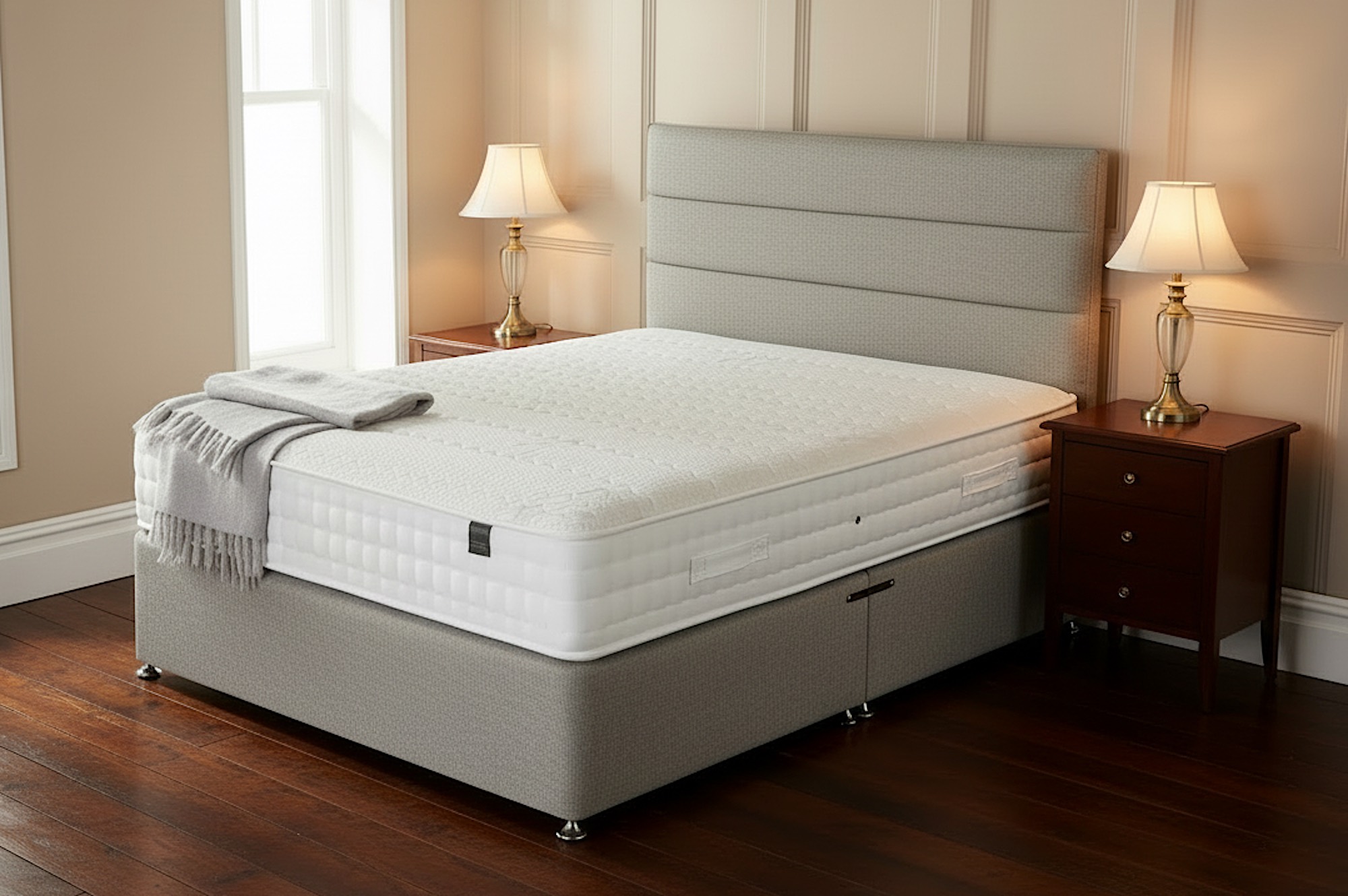
Our Origins range (£890-£1,050 King) uses pocket springs with natural and synthetic upholstery layers, providing excellent pressure relief at entry-level pricing.
Cost per night: The real value comparison
One thing we love to do here at John Ryan by Design is to calculate the cost of each mattress over its realistic lifespan, and to dissect each layer within every mattress. As this is the only way to compare beds and determine which mattress best suits your needs.
| Mattress | King Price | Realistic Lifespan | Cost Per Night | Cost Per Year |
| Tempur PRO Plus | £2,499 | 8-10 years | £0.68-£0.85 | £249.90-£312.38 |
| Tempur PRO Luxe | £2,999 | 8-10 years | £0.82-£1.03 | £299.90-£374.88 |
| Emma Original | £399 | 6-7 years | £0.16-£0.18 | £57.00-£66.50 |
| Simba Hybrid | £719 | 7-8 years | £0.25-£0.28 | £89.88-£102.71 |
| Origins Pocket 1500 | £1,050 | 10-12 years | £0.24-£0.29 | £87.50-£105.00 |
| Artisan Naturals | £2,180 | 12-15 years | £0.40-£0.50 | £145.33-£181.67 |
| Artisan Latex | £2,250 | 15-20 years | £0.31-£0.41 | £112.50-£150.00 |
The Artisan Latex costs less than half as much per night as the Tempur PRO Luxe, with a longer expected lifespan. Over 15 years:
- Tempur PRO Luxe: £2,999 + £2,999 replacement at year 10 = £5,998 total
- Artisan Latex: £2,250 + £0 replacement = £2,250 total
- Savings: £3,748 over 15 years
The “you spend a third of your life in bed” argument justifies investing in quality. It doesn’t justify paying £3,750 over the odds for poor temperature regulation and one-sided construction.
11. Frequently Asked Questions
Is Tempur better than regular memory Foam?
Tempur uses denser memory Foam (estimated 85 kg/m³) than most competitors (55-70 kg/m³), which provides better pressure relief and potentially longer durability. However, this doesn’t justify the £2,000+ price premium. Quality memory Foam mattresses like Emma or Simba deliver 90% of Tempur’s performance at 30% of the cost.
Why won’t Tempur disclose Foam density?
Tempur claims their exact formulation is a “proprietary trade secret”. In reality, competitors could analyse Tempur Foam in a lab within days if they wanted to. The specification hiding prevents customers from making informed comparisons and recognising that Tempur’s Foam, while good quality, isn’t dramatically different from premium alternatives.
Has SmartCool solved the heat retention problem?
Partially. SmartCool improves surface cooling through phase-change cover materials, making Tempur cooler than previous generations. However, 10-15% of reviewers still report overheating because the underlying Foam continues to trap heat. If you’re a naturally warm sleeper, SmartCool makes Tempur tolerably warm rather than solving the problem entirely.
Why can’t I turn my Tempur mattress?
Tempur uses a layered Foam construction glued together, making them one-sided only. This is a cost-saving measure (requiring less material) disguised as a “low maintenance” feature. The inability to turn concentrates all wear on one surface, reducing lifespan to 7-10 years versus 12-15 years for two-sided alternatives.
What’s the difference between Tempur Ease and Tempur PRO?
Ease models (£1,099-£1,399 King) use 3cm TEMPUR Adapt Material with standard covers and only 14-day statutory returns. PRO models (£2,199-£2,999 King) use Advanced TEMPUR Material, SmartCool covers, and 100-night trials. The PRO range offers better pressure relief, cooling, and crucially, a proper trial period. Never buy Ease – the lack of a trial period makes it impossible to test properly.
How does Tempur compare to John Ryan Latex mattresses?
Our Artisan Latex (£1,500 King) provides similar pressure relief to Tempur but responds to pressure rather than heat, making it temperature-neutral and instantly responsive. Latex is naturally breathable (no heat retention), exceptionally durable (15-20+ years), and can be turned monthly. You save £999 compared to Tempur PRO Plus while getting superior breathability, longer lifespan, and 100% plant-based materials.
Is the 10-year Tempur guarantee worth anything?
The warranty only covers indentations exceeding 0.75 inches (1.9cm), meaning significant comfort degradation can occur before qualifying for claims. Multiple customers report claims denied due to minor cover stains, inappropriate bed bases, or measurements just below the threshold. Compare this to our 10-year guarantees on the Artisan range with fair, customer-focused assessment when issues arise.
Why are Tempur mattresses so expensive?
You’re paying for: (1) Original R&D costs from 30 years ago, (2) Premium brand positioning and worldwide marketing, (3) Retailer margins (30-40% markup), (4) Danish manufacturing with extensive quality control, and (5) Higher-density Foam materials. The materials and manufacturing cost £300-£800. The rest is margin and brand premium.
What’s the best cheaper alternative to Tempur?
Under £1,000: Emma Original (£349-399) or our Origins Pocket 1500 (£855) offer excellent pressure relief, with longer trial periods and full transparency.
£1,000-£1,500: Our Artisan Naturals (£1,295) delivers superior breathability, two-sided durability, 85% natural content, and full specification disclosure.
£1,500-£2,000: Our Artisan Latex (£1,500) provides pressure relief that matches Tempur without heat dependency, with a 15-20+ year lifespan and natural materials.
All include proper trial periods (60-200 nights) and honest guarantees without exclusionary fine print.
Mattress Buying Guide
We know all of this Tempur mattress information can be overwhelming. However, it really is in your best interests to understand the options before spending your hard-earned cash on a new bed.
Do you need more help deciding whether a Tempur mattress or a memory Foam model is the best for you? We have our handy beginner’s guide on all you need to know before buying a mattress. Ryan explains in detail just what you need to look out for to get the very best mattress for your budget.
Summary
Tempur is a really successful brand within the Tempur-Pedic mattresses line. However, you’re also paying for their worldwide marketing budgets and retailer concessions. Every mattress brand tries to have its own unique selling point with a barrage of luxury, sumptuous, and qualitative descriptions, but remember, if you want hard, cold facts, you can compare.
The only sensible way to compare Memory Foams is to use the datasheets for each Foam. The difficulty is that manufacturers won’t usually release them. If you’re struggling to find out more about certain memory Foam or Tempur-Pedic mattresses, why not get in touch with our small, friendly team of experts? We can help guide you to find the most suitable mattress.

Dreaming of the perfect nights sleep?
Ask us a question
There are over 6000 questions and answers submitted by you on all questions about mattresses and bed problems. Enter a keyword such as Vi Spring, John Lewis beds, bad back or Memory Foam and see if your question has already been answered.
If you can’t find an answer in knowledge hub, ask a new question. We aim to respond to all questions within one working day.
Newsletter
Enter your email to join our newsletter. We’ll send you occasional news and mattress expertise.