







Memory Foam & Hybrid Foam
February 2026Who is who in the foam mattress world: Memory Foam Beds Uncovered 2026
This update examines what’s actually happening with each major brand in 2026: who’s still standing, who’s been bought out, who’s facing regulators, and, critically, what you’re actually getting for your money, given that Foam specifications remain frustratingly opaque.

Jump to:
- Which mattress companies are facing legal action for fake sales?
- Emma Mattress Reviews & Issues
- Simba mattress moves to Canada
- Eve mattresses bailed out by Bensons
- Casper leaves the UK
- Nectar mattress warranty issues
- Leesa ceases trading
- OTTY beds
- Dormeo
- Brook + Wild Rebranded
- Why is Hybrid Foam so popular?
- What to watch out for when buying a Foam bed
- Memory & Hybrid UK Mattress Brands
- Alternative mattresses to bed-in-a-box
Fake Sale Prices Called Out in Court
The Competition and Markets Authority has finally lost patience with “sale” prices that never seem to end. Emma Sleep faces a High Court trial on June 3 2026, for allegedly misleading consumers with countdown timers, fake urgency claims, and reference pricing that bore little resemblance to reality. The CMA found that mattresses were advertised with “was/now” discounts, even though only a tiny fraction ever sold at the higher price.
This isn’t just Emma’s problem. Simba agreed to modify its practices via undertakings in August 2024 after similar concerns. From April 2025, the CMA gained new powers under the Digital Markets, Competition and Consumers Act to impose fines up to 10% of global turnover, a threat that’s concentrating minds across the industry.
Emma has already admitted liability in Australia for similar practices, where the ACCC found 58 of 74 advertised products were never actually sold at the “strikethrough” price. When regulators on two continents reach the same conclusion, that tells you something about the business model.
Emma Sleep: Market leader with mounting questions
Emma claims to be the world’s largest direct-to-consumer sleep brand, with global revenues exceeding $1 billion and operations across 35+ countries. In the UK, they’ve opened physical stores in Manchester Arndale and London Westfield, selling through John Lewis, Amazon, Argos, and their website.
King-size pricing (January 2026):
- Emma Original: From £349 (flagship 5-layer hybrid)
- Emma Original Pro: From £499 (with ThermoSync cooling)
- Emma Original Elite: From £659 (premium 7-layer)

Trial period: 200 nights, free collection and return
Warranty: 10 years, covering sagging greater than 2.5cm only. Manufacturing: Claims UK production in Derby, though the parent company is German
Emma Mattress Trustpilot Reviews
A sobering 3.1 out of 5 stars from 52,000+ reviews, ranking #90 of 91 in the Mattress Shop category. The 23% one-star reviews tell a consistent story: sagging after 2-3 years, difficulties with returns and refunds, and customer service that relies heavily on chatbots. The company responds to 99% of negative reviews, though the responses appear templated.
The Foam specifications are telling. Emma specifically states they use “lower density” open-core foams, marketed as a benefit for breathability and weight. The uncomfortable truth: lower density typically means faster wear and shorter lifespan. Without published density figures in kg/m³, consumers can’t make informed comparisons.
Simba Sleep: No longer British-owned
The big news that slipped under most consumers’ radar: Simba was acquired by Sleep Country Canada in June 2025 for C$115 million (approximately £67 million). Fairfax Financial Holdings, a Canadian insurance conglomerate, now owns Sleep Country itself. The “British bed-in-a-box brand” is now answering to Toronto.
The acquisition followed CMA pressure on pricing practices and what Mordor Intelligence described as “customer-acquisition costs above 30% of revenue challenge e-commerce profitability.” Mordor Intelligence: When marketing costs eat a third of every sale, something has to give.

Current range andking-sizee pricing (January 2026):
- Hybrid® (1,900 springs): £899 RRP, £719.20 sale
- Hybrid® Pro (4,800 springs): £1,299 RRP, £974.25 sale
- Hybrid® Luxe (5,700 springs): £1,699 RRP, £1,274.25 sale
- Hybrid® Ultra (7,300 springs): £2,299 RRP, £1,724.25 sale
Trial period: 200 nights (30 nights only for refurbished) Warranty: 10 years with significant exclusions
The warranty small print matters: Simba voids coverage for anyone weighing over 18 stone (114kg)—a detail buried in terms and conditions that affects a significant portion of the population. Monthly rotation is mandatory for the first three months, then quarterly thereafter.
Trustpilot score: A healthier 4.3/5 from 58,000+ reviews, though common complaints mirror competitors: sagging after 2-5 years, warranty claims dismissed because inspectors find mattresses “compliant,” and an over-reliance on chatbots over human service.
Credit where due: Simba’s UK manufacturing credentials are genuine, with assembly in Derbyshire, springs made from British steel in Leeds, and Foam sourced from Middleton. They achieved B Corp certification in 2023, which is a legitimate achievement.
Eve Sleep: Rescued from administration, now under Bensons
Eve Sleep’s journey from a £140 million IPO valuation in 2017 to administration in 2022 and a rescue for £600,000 tells you everything about the economics of this sector. That’s less than 0.5% of peak valuation.
Bensons for Beds (backed by Alteri Investors) acquired the brand, intellectual property, and website on October 17 2022. Eve continues trading online at evesleep.co.uk and through Bensons’ physical stores, reportedly seeing “significant sales growth” and trading profitably under new ownership.
Current Eve range (January 2026)
- Eve Original: £652 (double)
- Eve Original Hybrid: £699 (double)
- Eve Premium Hybrid: £978 (double)
- Wunderflip range: Dual-sided with soft/firm options
Trial period: 200 nights (free returns up to 40 nights; small fee 40-200 nights) Warranty: 10 years
Trustpilot: A respectable 3.9/5 from 15,000+ reviews with 74% five-star ratings—markedly better than Emma’s profile. Multiple Which? Best Buy awards suggest the product itself isn’t the problem.
The Eve story is instructive: a well-funded, pure-play Direct-to-Consumer (D2C) brand couldn’t scale profitably. Integration with an established retailer providing physical distribution and an existing customer base appears to have saved it for now.
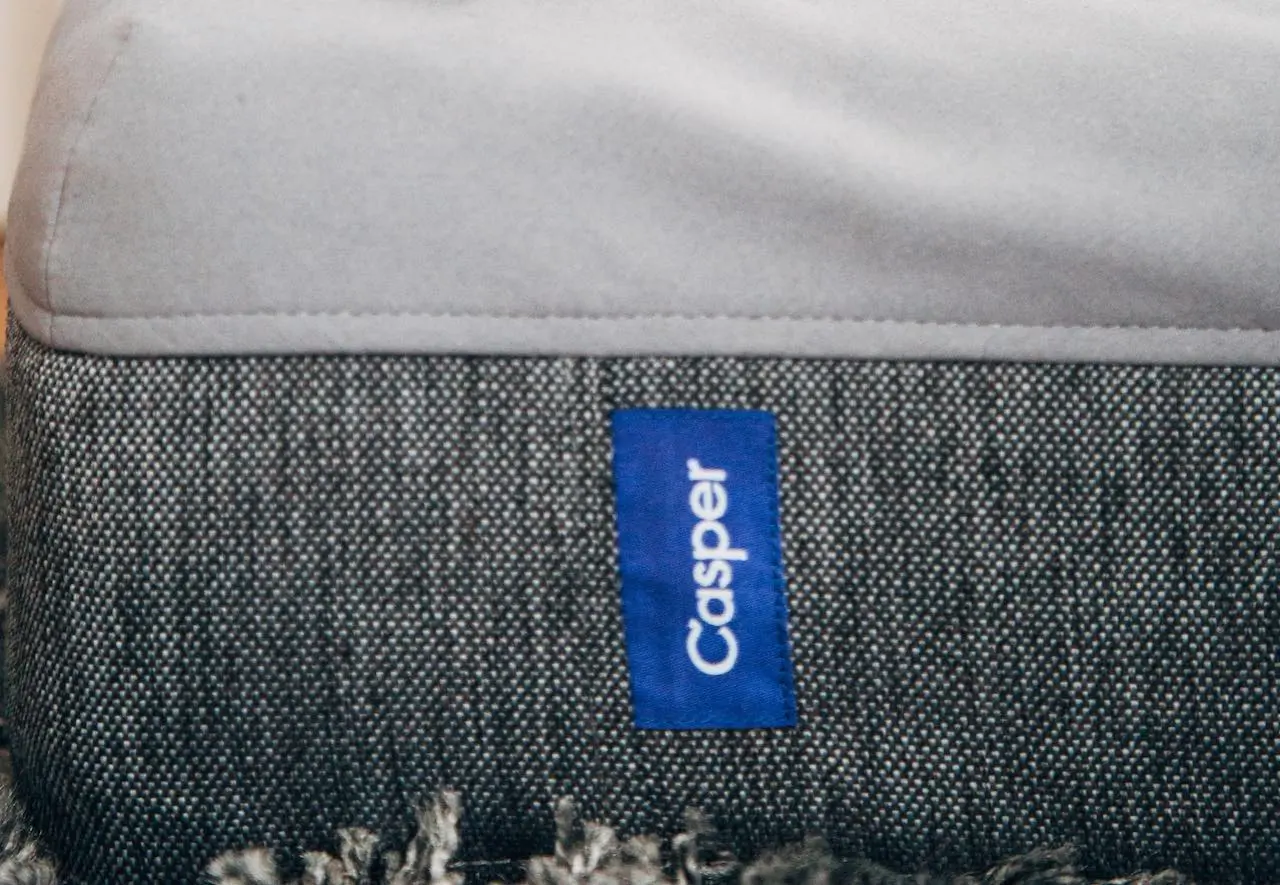
Casper: Exited the UK; legacy customers are struggling
Casper left the UK market in April-May 2020, laying off 78 employees globally and retreating to focus on profitability in North America. The COVID-19 pandemic accelerated a decision that was coming anyway; Casper’s IPO had already seen its valuation slashed by 50%+ before listing.
Current UK availability: Limited stock through Mattress Online only, with “once it’s gone, it’s gone” warnings. Mattress Online offers a 60-night trial (not Casper’s original 100 nights).
Trustpilot warning: A poor 2.2/5 stars, with the company not replying to negative reviews. Recent complaints focus on warranty claims being ignored and difficulty reaching UK support (now handled by a US-based team). If you have a Casper mattress warranty claim, expect frustration.
Casper itself was taken private by Durational Capital Management in 2022, then acquired by Carpenter Co. (a polyurethane Foam manufacturer) in October 2024. The “lifestyle brand” pivot failed; they’re now just another mattress retailer.
Nectar Sleep: Forever warranty, but check the small print
Nectar remains one of the more aggressive marketers, with its 365-night trial (almost twice that of competitors) and “Forever Warranty” as headline offers. Ashley Home acquired its parent company, Resident Home, in Q1 2024, for approximately $1 billion, described as “the most successful DTC mattress exit in history.”
King size pricing (January 2026): Approximately £450-700 at sale prices (constant promotions make “RRP” meaningless). Product range: Classic Memory Foam, Premier Memory Foam, Essential Hybrid, Premier Hybrid
Trial period: 365 nights confirmed Warranty: Lifetime, but the threshold is 4cm visible indentation— a recurring complaint point since mattresses rarely sag that visibly when unoccupied
Trustpilot: 3.8/5 from approximately 15,000 reviews, ranking #90 of 94 in Mattress Shops
Customer complaint patterns: Sagging after 18 months to 5 years, warranty claims rejected because indentation doesn’t meet the 4cm threshold, strong chemical smell during off-gassing, and mattresses sleeping hotter than expected.
Critical note on UK vs US products: The UK Nectar does NOT use gel memory Foam (unlike the US version), and UK foams don’t carry CertiPUR-US certification. You’re not getting the same product as American reviewers describe.
Regulatory history: Parent company Resident Home has been fined by the US FTC multiple times (2018, 2021, 2022-23) for falsely claiming Chinese-made mattresses were “assembled in the USA” and other violations. They’re officially a “repeat offender” for Made in USA labelling violations. This history doesn’t directly affect UK products, but suggests a company culture worth noting.
Leesa: No longer operating inthe UK
Leesa ceased UK trading on May 1 2020— the website displays only a notice directing enquiries to insolvency practitioners Cowgill Holloway Business Recovery LLP. Another US brand that couldn’t make European economics work.
When operating, Leesa had solid reviews (4.2/5 on Trustpilot) and genuine social impact credentials (donating mattresses to homeless shelters). The 100-night trial and 10-year warranty were competitive. UK manufacturing was in Derbyshire.
None of that mattered when the numbers didn’t add up.
OTTY Sleep: Independent and UK-made in Leeds
OTTY remains a genuine UK independent, manufacturing in Leeds, with a small team. Chinese conglomerate Healthcare Co. (behind Mlily) took a minority stake in 2020, but the company continues to operate under its original management.
OTTY SleepKing-size pricing (January 2026)
- Aura Hybrid (entry): ~£400 sale
- Original Hybrid (flagship): £639.99 sale
- Pure+ 4000 (premium): ~£665 sale
- Natural Evolve: ~£1,050 sale
Trial period: 100 nights Warranty: 10 years (5 years on Natural Origin)
Trustpilot: An impressive 4.6/5 from approximately 10,800 reviews—the best score among major bed-in-a-box brands
What OTTY does right: They actually disclose specifications. The Original Hybrid uses 2,000 pocket springs at 16cm tall (claiming the longest in the UK bed-in-box market), with 3cm cool blue gel memory Foam and 3cm standard memory Foam above a high-density base. That’s more transparency than most competitors offer.
Recent issues: ArrowXL courier problems in December 2025-January 2026 caused delivery chaos. OTTY has since switched couriers, but check recent reviews if ordering.
Warranty caution: Steel bed frames or thin steel supports can void coverage if sagging occurs. Rotation is mandatory monthly for the first year, quarterly thereafter.
Dormeo: Italian engineering, new ownership
Dormeo’s Octaspring technology—Foam “springs” cut into an eight-sided pattern for breathability—maintains its differentiation. The brand changed hands in 2024, with Studio Moderna (the Slovenian parent) acquired by Viva Fresh. UK operations continue under the Dormeo name.
Dormeo King-size pricing (January 2026):
- Memory Classic: ~£250-350 (entry)
- Memory Plus: ~£350-450 (Which? Best Buy)
- Octasmart Classic: ~£500-700
- Octaspring 9500: £2,299-2,699 (range-topping)
Trial periods: 60-200 nights depending on model. Warranty: 15 years (Memory range), 18 years (Octasmart), 20 years (Octaspring)
Trustpilot: 4.0/5 from 43,000+ reviews
Manufacturing: Primarily Italy, with some UK production. The Italian heritage is genuine.
Common complaints: DX courier delivery issues, sagging/dipping after 2-4 years, and warranty disputes requiring extensive documentation. The Octasmart toppers, in particular, attract complaints of becoming “lumpy and misshapen.”
Brook + Wilde: Rescued from liquidation
This is the cautionary tale. The original Brook and Wilde Limited went into liquidation in August 2023 after delivery failures and unfulfilled orders left customers stranded. The brand was rescued by Comfortex, a Manchester-based manufacturer, and relaunched as “Brook + Wilde Sleep Limited”.
Critical warning
Warranties from the original company are NOT honoured by the new entity. If you bought before August 2023, you’re on your own.
Brook + Wild King size pricing (January 2026):
- Lux: ~£799 with codes (entry)
- Elite: ~£699 with 50% offers
- Ultima: £2,299 RRP
- Perla: £2,895 RRP (flagship 14-layer)
Trial period: 200 nights Warranty: 10 years (from the new company only)
Unique selling point: Firmness choice—soft, medium, or firm options (unusual in bed-in-a-box). UK manufacturing now via Comfortex in Oldham.
Trustpilot confusion: The old company profile shows ~3.1/5; the new company profile shows ~4.1/5 based on 114+ reviews. Exercise caution when interpreting either.
Panda London: The Bamboo specialist
Panda stands out for actually backing up sustainability claims with certifications. Their bamboo-infused foams and fabrics are certified to OEKO-TEX Standard 100, CertiPUR, BS 7177 UK fire safety, EU REACH compliance, and ZDHC-compliant dyes. However, Bamboo Foam is a relatively new concept, and, call us cynical, but we’ve seen so many things mixed with foams to try and make these synthetic sponges more natural. Our biggest question is: why not just choose a mattress with actual Bamboo natural fibre, without the Foam?!
Panda Mattress King size pricing (January 2026):
- Hybrid Bamboo: ~£622 (30% off from £889) T3
- Hybrid Bamboo Pro: ~£973 (30% off from £1,390)
Trial period: 100 nights Warranty: 10 years
Trustpilot: An excellent 4.7-4.8/5 from 6,000+ reviews—the highest rating among mattress brands surveyed
Manufacturing: UK-made mattresses, London headquarters
Honest limitation: Only one firmness option (medium-firm, rated 7/10). If you need soft or extra-firm, look elsewhere.
Why don’t bed-in-a-box companies say what’s in their beds?
Here’s the uncomfortable truth:h the bed-in-a-box industry doesn’t want you to understand that, without Foam density figures, comparing mattresses is nearly impossible.
Foam density (measured in kg/m³ or lbs/ft³) determines durability and lifespan more than almost any other factor. A mattress using 40kg/m³ density Foam at 2cm depth will perform entirely differently from one using 60-85kg/m³ density—but if neither company publishes the figures, how would you know?
The density-durability relationship is well established: Foam at 1.5 lb/ft³ loses five times as much height as 2.2 lb Foam after 80,000 compressions. Most bed-in-a-box brands use the 1.6-1.8 lbs/ft³ range. Premium territory starts at 2.0+ lbs/ft³.
OTTY publishes spring specifications (2,000 springs, 16cm height). Simba discloses spring counts per model (1,000 to 7,300). But Foam density—the single most important specification for longevity—remains industry-wide secret.
Traditional specialist manufacturers like Harrison Spinks and Vispring publish GSM (grams per square metre) of fillings, spring counts, and material compositions. The contrast with bed-in-a-box marketing is stark.
What hybrid dominance tells us about Foam
The market has voted with its wallet. Hybrid mattresses now hold 58% market share, driven by three problems pure Foam couldn’t solve: heat retention, edge support, and durability.
Memory Foam’s heat-trapping properties were a recurring complaint across all brands reviewed. Hybrids, with airflow through coil systems, address this. Sleep Foundation Edge support—where Foam mattresses allow 4.38″ sinkage versus springs—matters for couples and anyone who sits on the bed edge. However, anhy Foam mattress is going to be markedly warmer than a pocket sprung and natural fibre model. The only difference between Hybrid and beds in a box is that the manufacturing costs are significantly lower, as the core materials of Foam are much cheaper to produce than, say, wool, Cotton, Bamboo, or Alpaca!
The shift represents a tacit admission that the original bed-in-a-box proposition—pure Foam, compressed in a box—had fundamental limitations. Every major brand now leads with hybrid models.
Market reality versus marketing
The National Bed Federation’s June 2024 consumer survey found bed-in-a-box brands captured 7% of mattress purchases. National bed specialists like Dreams and Bensons each hold approximately 20%. National furniture/homeware stores (IKEA, John Lewis, M&S) account for another 20%. Local independents: 15%.
Online marketplaces (Amazon, eBay) have actually declined from 13% to 9%. The “disruption” narrative overstated reality.
Average mattress prices climbed 8.4% to £645 in 2025, suggesting consumers increasingly value quality over rock-bottom pricing. IBISWorld: The race to the bottom may be ending.
Customer acquisition costs exceeding 30% of revenue explain why profitability has eluded most bed-in-a-box brands. When a third of every sale goes to Google and Facebook rather than to materials and manufacturing, something structural is broken in their mattress manufacturing business model.
Practical guidance for 2026
Trial periods compared:
- Nectar: 365 nights (industry-leading)
- Emma, Simba, Eve, Brook + Wilde: 200 nights
- OTTY, Panda, Dormeo (some models): 100 nights
Warranty thresholds (the hidden catch):
- Emma: 2.5cm visible sagging Amazonaws
- Nectar: 4cm visible sagging
- Simba: Undefined “significant dipping” plus 114kg weight limit
- All require rotation compliance and an appropriate bed base
UK manufacturing verified:
- OTTY: Leeds
- Simba: Derbyshire (springs in Leeds)
- Emma: Claims Derby
- Nectar: Derbyshire Nectar Sleep
- Panda: UK-made Tom’s Guide
Companies that exited or failed:
- Casper: Left UK May 2020
- Leesa: Ceased UK trading May 2020
- Eve Sleep: Administration 2022, rescued by Bensons
- Brook + Wilde: Liquidation August 2023, The Sleep Guy rescued by Comfortex
Trustpilot rankings (highest to lowest):
- Panda: 4.7-4.8/5
- OTTY: 4.6/5
- Simba: 4.3/5
- Dormeo: 4.0/5
- Eve: 3.9/5
- Nectar: 3.8/5
- Emma: 3.1/5
- Casper: 2.2/5 (no longer actively trading)
Memory & Hybrid Foam Brands in the UK
TEMPUR
The biggest by far is the Tempur-Sealy brand, based in the USA but with country-specific outlets worldwide. Before the acquisition, Tempur was known as Tempur-Pedic International Inc. The acquisition with Sealy took place on September 27 2012. Making the largest bed company in the world. The press release in the States gives more details on the sheer size of Tempur. They were clear that both Tempur and Sealy would operate separately, especially given that they are in different market segments.
Name & Registered Office:
TEMPUR UK LIMITED
CAXTON POINT
PRINTING HOUSE LANE
HAYES
MIDDLESEX
UB3 1AP
Company No. 02748033
Press release: Lexington, Ky and Trinity September 27, 2012 Newswire –Tempur-Pedic International Inc. (“Tempur-Pedic” or the “Company”) (NYSE: TPX), the leading manufacturer, marketer and distributor of premium mattresses and pillows worldwide, and Sealy Corporation (NYSE: ZZ), a leading global bedding manufacturer, today announced that they have signed a definitive agreement to create a $2.7 billion global bedding provider.
The combination brings together two highly complementary companies with iconic brands and significant opportunities for global innovation and growth. Founded in 1992, Tempur-Pedic is the leading manufacturer, marketer and distributor of premium mattresses and pillows made from its proprietary TEMPUR® pressure-relieving material in over 80 countries under the Tempur® and Tempur-Pedic® brand names. Sealy, with roots dating back to 1881, is a leader in the manufacturing and marketing of a broad range of high-quality mattresses and foundations with a portfolio of well-known bedding brands, including Sealy®, Sealy Posturepedic®, and Stearns & Foster®.
The Boards have approved the transactions involving the Directors of both companies. Stockholders holding approximately 51% of Sealy’s outstanding common stock have executed a written consent approving the transaction. No additional shareholder approvals are required to complete the transaction. Tempur-Pedic will acquire all of the outstanding common stock of Sealy for $2.20 per share, representing a premium of approximately 23 per cent to Sealy’s 30-day average closing price on Wednesday, September 26, 2012. In addition, Tempur-Pedic will assume or repay all of Sealy’s outstanding convertible and non-convertible debt, for a total transaction value of approximately $1.3 billion. The transaction, which is subject to customary closing conditions, including regulatory approvals, is expected to close during the first half of 2013.
Tempur-Pedic Chief Executive Officer Mark Sarvary commented, “This is a transformational deal that brings together two great companies, each with globally recognised brands. Tempur-Pedic and Sealy together will offer products for almost every consumer preference and price point, distribution across all key channels, in-house expertise in most key bedding technologies, and a world-class research and development team. In addition, our global footprint will span over 80 countries. The shared know-how and improved efficiencies of the combined company will result in tremendous value for our consumers, retailers and shareholders.”
Tempur-Pedic and Sealy will operate independently. Larry Rogers, Chief Executive Officer of Sealy, who has been with the company for 33 years, will remain CEO and report to MMrSarvary.
Sealy Chief Executive Officer Larry Rogers said, “The complementary product and market fit of these two companies deliver a unique opportunity to create the first full-spectrum, global bedding company that addresses all market segments and consumer preferences. Together, we believe that we can deliver more value than either business could on its own by leveraging our strong combined assets.” – Taken from Business Insider Article Here.
SILENT NIGHT
Silent Night is another key player in the UK Foam market. This brand encompasses Silent Night, Rest Assured, Lay-Z-Spa, Sealy Posturepedic, mattress.co.uk, and the Pocket Sprung bed company.
Name & Registered Office:
SILENTNIGHT GROUP LIMITED
LONG ING BUSINESS PARK
LONG ING LANE
BARNOLDSWICK
LANCASHIRE
UNITED KINGDOM
BB18 6BJ
Company No. 07525259
Silent Night is run by Sealy under license in the UK, even though it is now technically owned by Tempur. This is as much as we know at this stage in this complex company.
DUNLOPILLO
Dunlopillo is one of the more prominent Latex bed brands in the UK. It is a brand run by Steinhoff UK Beds Ltd. They have recently rebranded their Latex mattress range (2013).
Name & Registered Office:
STEINHOFF UK BEDS LIMITED
5TH FLOOR FESTIVAL HOUSE
JESSOP AVENUE
CHELTENHAM
GLOUCESTERSHIRE
ENGLAND
GL50 3SH
Company No. 08431253
The following brands are also under Steinhoff Uk Beds Ltd.
STEINHOFF
Relyon [Brand] (Steinhoff)
Dunlopillo [Brand] – Bought from Hilding Anders April 2013
Sprung Slumber [Brand] (Steinhoff)
Slumberland [Brand] – Bought from Hilding Anders April 2013
Staples [Brand] – Bought from Hilding Anders April 2013
Horatio Myers [Brand] – Bought from Hilding Anders April 2013
JENSEN
Jensen is part of the Hilding Anders Group and is a Swedish brand of luxury mattresses that traditionally encompassed the Scandinavian geography. Now Jensen sells their beds worldwide. Dating back to 1947, they are now more recently known for adjustable ‘lifestyle’ beds.
HILDING ANDERS UK PLC
c/o KPMG LLP
8 SALISBURY SQUARE
LONDON
EC4Y 8BB
Company No. 01542147
BENSONS
Homestyle operations, an arm of Steinhoff, run Bensons. Bensons is the UK’s biggest bed store with 270 stores (approx). It started in 1950 as a general store, and then in 1972 it opened its first dedicated bed store. In 2012, it launched its comfort station to clarify the different tensions in its mattresses and make them easier to assess.
Bensons for Beds (Homestyle Operations)
Name & Registered Office:
HOMESTYLE OPERATIONS LIMITED
5TH FLOOR FESTIVAL HOUSE
JESSOP AVENUE
CHELTENHAM
GLOUCESTERSHIRE
UNITED KINGDOM
GL50 3SH
Company No. 00619357
DREAMS
Dreams is by far the biggest success story in the UK, from its humble beginnings as Mike Claire opened a sofa bed shop in 1985 to over 200 stores in 2009. In April 2013, Dreams PLC went into pre-packaged administration and was purchased by Sun European Partners. It is one of the most recognised bed chain retailers in the UK.
Name & Registered Office:
DREAMS LIMITED
KNAVES BEECH BUSINESS CENTRE 14 DAVIES WAY
LOUDWATER
HIGH WYCOMBE
BUCKINGHAMSHIRE
ENGLAND
HP10 9YU
Company No. 08428347
ERGOFLEX
Ergoflex is relatively new to the scene, offering just one model of a firm MemoryFoam mattress. They are an ‘internet only’ business.
Name & Registered Office:
ERGO FLEX LIMITED
2 MALING COURT
UNION STREET
NEWCASTLE UPON TYNE
UNITED KINGDOM
NE2 1BP
Company No. 06187613
Incorporated: 27/03/2007
BREASLEY
Breasley Consumer Products Ltd (UK) – Breasley is a Foam manufacturer that makes a range of household products, including mattresses. They will manufacture ‘off the peg’ models for other companies and brands, sometimes these are known as white label products.
WATER LANE
WIRKSWORTH
DERBY
DERBYS
DE4 4AA
Company No. 02695651
[Manufacturers for many own-label retailers]
Breasley
Salus
Accolade
Flexcell
Amor
Postureform
Incorporated 10/03/1992
BRITISH VITA / VITAFOAM
British Vita or Vita Foam have been around for over 50 years. Held as the UK Experts in the Foam field, they manufacture high-quality foams. In particular, Memory and Hybrid Foams, alongside Reflex and industrial-grade foams. They adhere to strict FR regulations and conduct in-house testing of the density and hardness of their foams.
Name & Registered Office:
VITA CELLULAR FOAMS (UK) LIMITED
TIMES PLACE
45 PALL MALL
LONDON
SW1Y 5JG
Company No. 00621497
Incorporated 20/02/1959
Best Alternatives to Bed in a Box Foam Mattresses
Here’s what the bed-in-a-box brands don’t advertise: nearly every Foam mattress they sell is one-sided construction. You cannot flip it. All compression occurs on a single surface. When it sags, you’re done.
Our Origins range takes the opposite approach. Every model is two-sided and turnable (except Latex variants). You flip it monthly for the first six months, then quarterly thereafter. This simple design choice doubles effective lifespan—you’re spreading wear across both surfaces rather than pounding one side into submission.
Let’s compare what you actually get for your money.
Origins Pocket 1500 vs Emma Original: The £300 question
Emma Original (King): £349 sale price
- One-sided construction (cannot flip)
- Foam specifications undisclosed
- Expected lifespan: 6-8 years
- 200-night trial, 10-year warranty (2.5cm sagging threshold)
- Cost per Night over 7 years: 13.7p
Origins Pocket 1500 (King): £1,050
- Two-sided, fully turnable construction
- 1,500 spun-bond pocket springs (1.4mm medium gauge)
- 1,550 GSM total upholstery: 300 GSM wool, 750 GSM very soft polyester, 500 GSM polyester pad
- Expected lifespan: 10-12 years (doubled through turning)
- 60-day trial, 2-year guarantee
- Cost per Night over 11 years: 26.1p
The Emma costs £701 less upfront. Over a decade, you’ll buy it twice (£698 total). The Origins Pocket 1500 lasts the full period whilst offering proper spring support rather than all-foam construction. The transparency of the specification alone makes the comparison worthwhile.
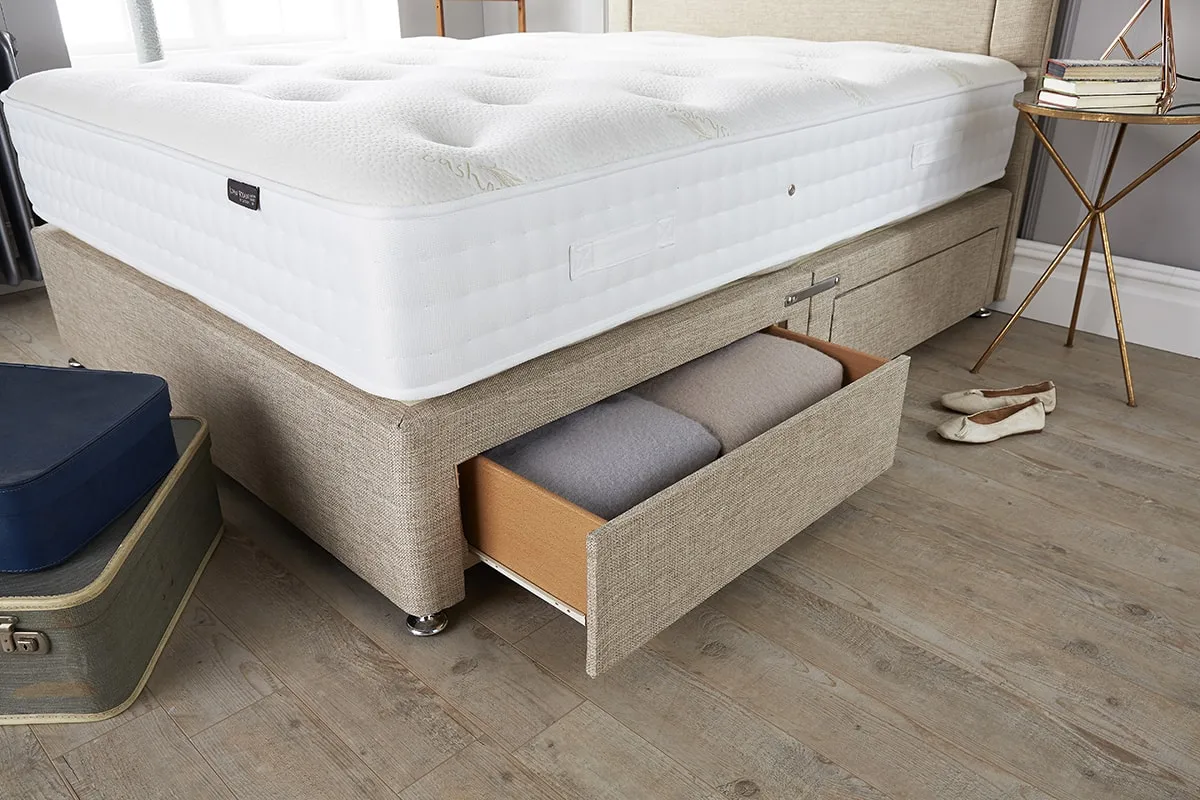
What that extra £701 actually buys you:
- 1,500 springs versus foam-only support
- Two-sided design extending lifespan 60-80%
- Published GSM specifications (not trade secrets)
- 300 GSM wool layer for temperature regulation
- UK manufacturing in Yorkshire with 25+ years of experience
Origins Naturals Comfort vs Simba Hybrid: Natural fibres at half the price
Simba Hybrid® (King): £719.20 sale (from £899 RRP)
- 1,900 pocket springs
- One-sided construction
- Foam specifications undisclosed
- Spring gauge undisclosed
- 10-year warranty (voided if you weigh over 18 stone)
Origins Naturals Comfort (King): £1,300
- 1,000 spun-bond pocket springs
- Two-sided construction
- 2,550 GSM total upholstery:
- 600 GSM layered Cotton rebound pad
- 500 GSM British wool
- 600 GSM rebound polycotton pad (2 layers)
- 250 GSM wool, cashmere, silk, and Cotton blend
- No weight restrictions on warranty
- Chemical-free cover with plant-based fire retardancy
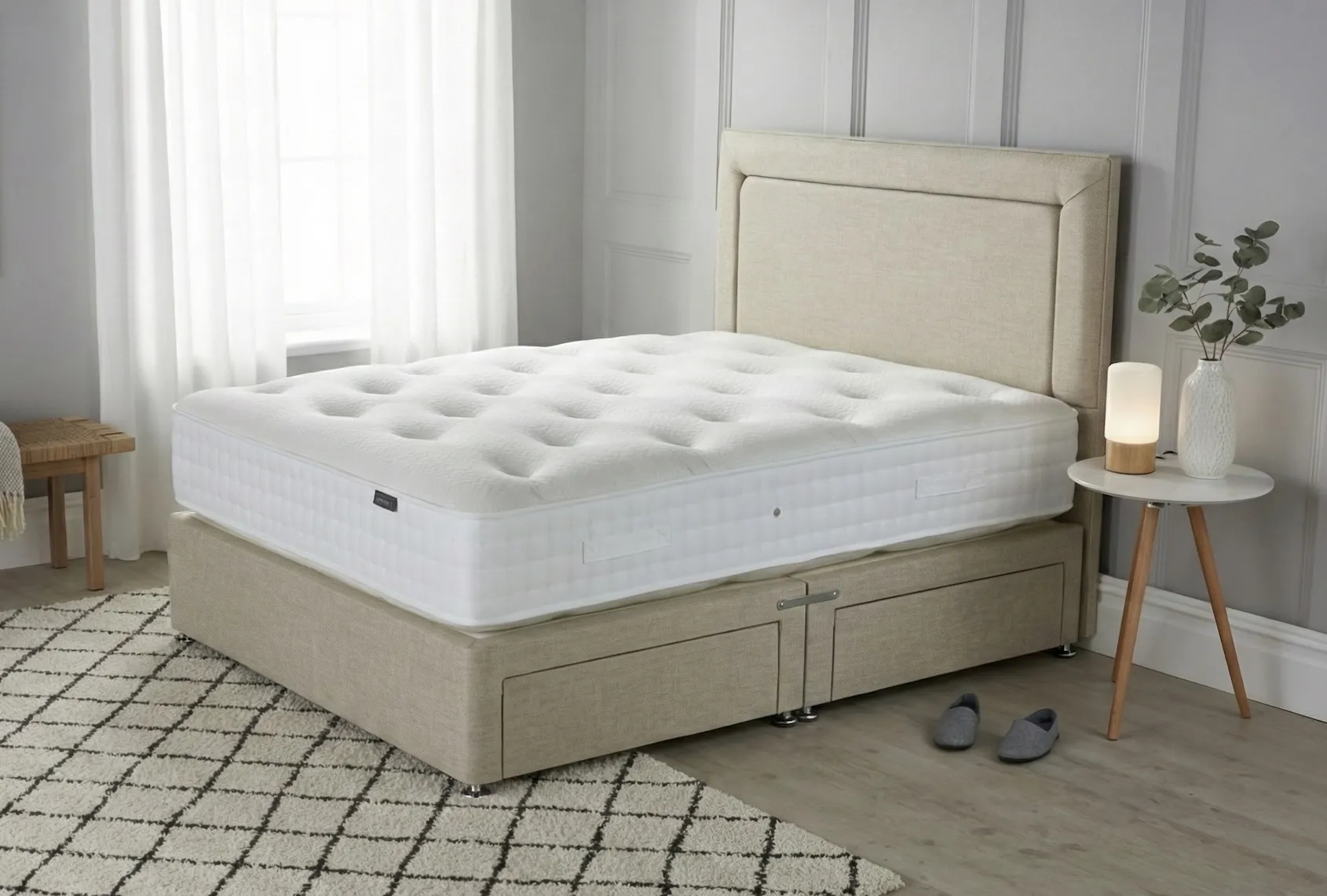
The Simba has more springs (1,900 vs 1,000), but those numbers mean nothing without spring gauge disclosure. A 1.6mm gauge spring at 1,000 count can outperform 2,000 springs at 1.2mm gauge. Simba won’t tell you. We publish it: 1.4mm gauge spun-bond construction.
The Origins Naturals Comfort costs £580.80 more. You get 2,550 GSM of disclosed upholstery, including 500 GSMof British wool, versus Simba’s undisclosed Foam specifications. You get a two-sided construction that doubles the lifespan. You get transparency.
Origins Latex Comfort vs Nectar Premier Hybrid: The Latex alternative
Nectar Premier Hybrid (King): Approximately £550-700 at sale prices
- Gel-infused memory Foam (UK version does NOT use US gel Foam)
- One-sided construction
- Foam density undisclosed
- 365-night trial (industry-leading)
- Lifetime warranty (4cm sagging threshold)
Origins Latex Comfort (King): £1,520
- Two-sided construction
- Natural Latex comfort layer (breathable, responsive, durable)
- 1,000 spun-bond pocket springs (1.4mm gauge)
- Total upholstery includes: Latex, Cotton rebound pads, British wool
- 60-day trial, 2-year guarantee
- Expected lifespan: 12-15+ years (Latex durability + two-sided design)
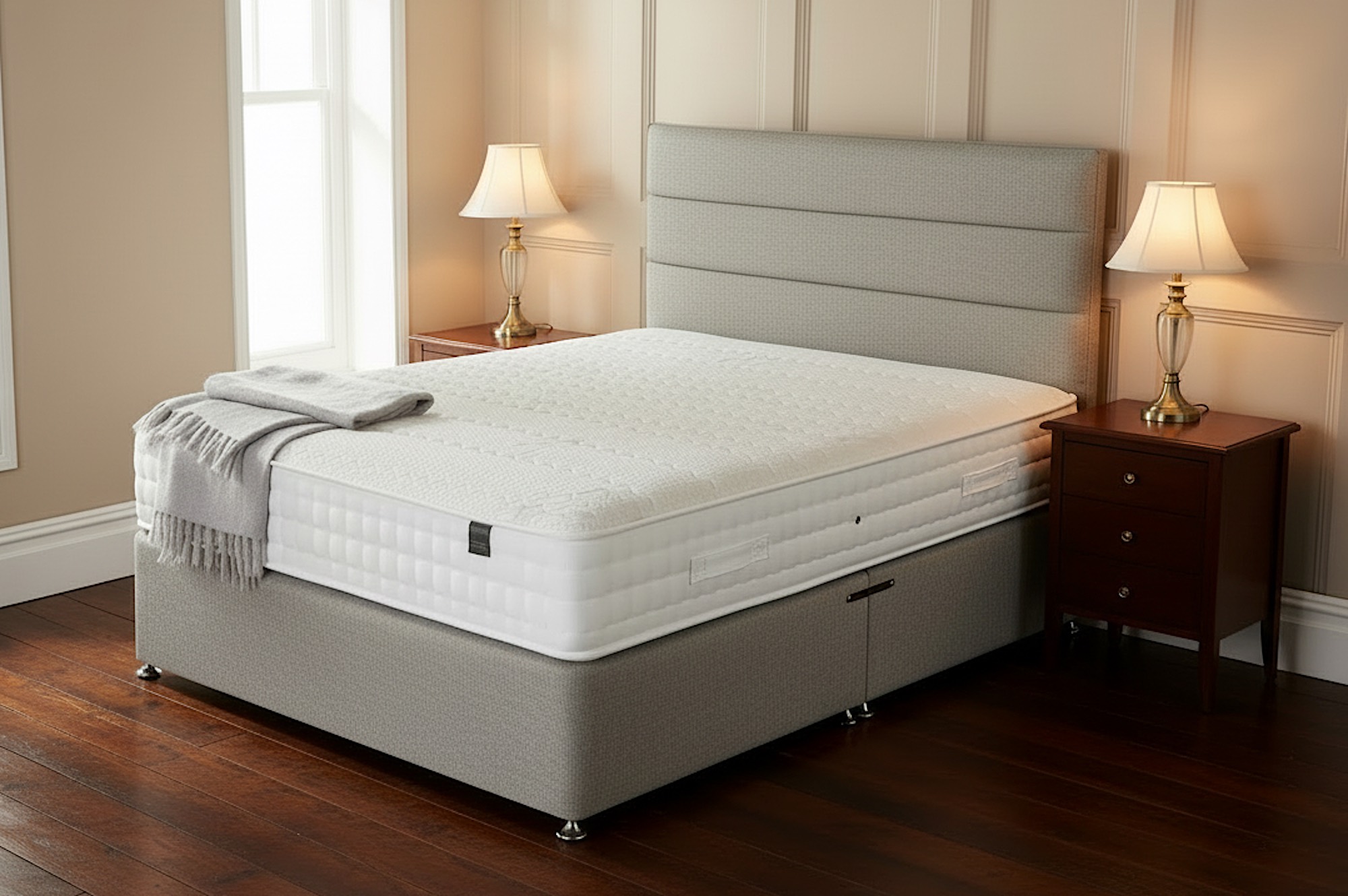
Nectar’s 365-night trial is genuinely industry-leading. But the “Forever Warranty” has a 4cm sagging threshold—mattresses rarely sag that visibly when unoccupied, and you’ll be uncomfortable long before you qualify for a claim.
Natural Latex responds to pressure rather than body heat, stays cooler than memory Foam, and lasts 15-20+ years. Combined with two-sided construction, the Origins Latex Comfort will outlast two Nectar mattresses while providing superior temperature regulation throughout.
The specifications that matter (and brands won’t publish)
We’ve been manufacturing mattresses. For 25+ years, here’s what actually determines longevity and comfort:
Foam density (kg/m³): Determines how quickly Foam compresses and loses support. Most bed-in-a-box brands use 40-50 kg/m³ density. Premium starts at 60 kg/m³. No one publishes these figures.
Spring gauge (mm): Wire thickness determines support. 1.28mm = soft, 1.4mm = medium, 1.6mm = firm. Match to body weight for proper support. Bed-in-a-box brands won’t disclose this.
GSM (grams per square metre): Total weight of upholstery materials. A 1,500 GSM mattress has vastly different comfort and durability from a 3,000 GSM mattress. We publish every layer’s GSM. Competitors hide it.
One-sided vs two-sided construction: This single design choice determines whether your £800 mattress lasts 6 years or 12 years. One-sided is cheaper to manufacture and ship (thinner packaging). Two-sided is better for customers.
Why the bed-in-a-box brands went one-sided
The honest answer for why these types of mattresses took off so quickly in the mattress and sleep world is shipping costs and marketing. A one-sided mattress compresses into a smaller box, reducing freight charges and making “free delivery” economically viable. The vacuum-packed roll arriving at your door is brilliant marketing—it feels futuristic and convenient.
The cost? You sacrifice half the mattress’s potential lifespan. When those comfort layers compress after 5-7 years, there’s no second side to turn to. The mattress is finished. You buy another one. Which, coincidentally, works rather well for companies whose growth depends on repeat purchases.
Traditional mattress manufacturers never went one-sided. It’s cheaper to make, yes, but it’s worse for customers. We’ve chosen to stick with two-sided construction because durability matters more than fitting into a smaller box.
Summary
As you can see, there are plenty of subsidiaries and partners when considering bed brands. It can be a murky world figuring out who actually owns which mattress brand. We also have more details on the sprung mattress construction method and bands of beds, which can be read here. The good news is that at John Ryan By Design, we don’t make mattresses for anyone else. We don’t sell our mattresses in retailers or under other labels. You can only buy them from us. Why not get in touch to have a chat about our range?

Dreaming of the perfect nights sleep?
Ask us a question
There are over 6000 questions and answers submitted by you on all questions about mattresses and bed problems. Enter a keyword such as Vi Spring, John Lewis beds, bad back or Memory Foam and see if your question has already been answered.
If you can’t find an answer in knowledge hub, ask a new question. We aim to respond to all questions within one working day.
Newsletter
Enter your email to join our newsletter. We’ll send you occasional news and mattress expertise.