







Mattress Help, Tricks Of The Trade
March 2026How to Choose a Mattress: the ultimate guide to buying a mattress
Updated March 2026. In October 2024, the Competition and Markets Authority took formal enforcement action against a major bed-in-a-box brand for exactly these tactics. The only way to cut through all of it is to understand what you are actually buying. This guide gives you that understanding, drawing on 25 years of manufacturing experience making handmade pocket-sprung mattresses here in the UK.
Unlike most online mattress guides, we do not use affiliate links and have no financial incentive to recommend one product over another. Everything below applies whether or not you buy from us.
Jump to a section
- What type of mattress should you choose?
- How to choose the right firmness
- Mattress choice by sleeping position
- How much should you spend?
- Understanding pocket springs
- Know what is inside your mattress: GSM explained
- Natural vs synthetic upholstery
- Construction quality: what to look for
- Choosing a mattress for health conditions
- Couples and different sleep needs
- UK mattress sizes: complete guide
- Bed-in-a-box vs handmade: an honest comparison
- Bed base compatibility
- Mattress care and when to replace
- Your UK consumer rights
- How to compare mattresses side by side
- Frequently asked questions
1. What type of mattress should you choose?
Before thinking about price, brand, or firmness, you need to understand what you are actually choosing between. There are five main mattress types sold in the UK, and they differ significantly in how they feel, how long they last, and what they are made from.
Pocket spring mattresses
A pocket-sprung mattress contains individual springs, each enclosed in its own fabric pocket. Because every spring moves independently, the mattress responds to your body shape rather than pushing back against it as a single unit. Pocket springs are the best long-term support system available, outlasting Foam and open-coil beds by a significant margin. The quality of the spring unit itself, covering wire gauge, coil count, and the presence or absence of a calico encasing, is what separates a genuinely good mattress from one that will fail in three years. We cover this in full in section five.
Open-coil and bonnell spring mattresses
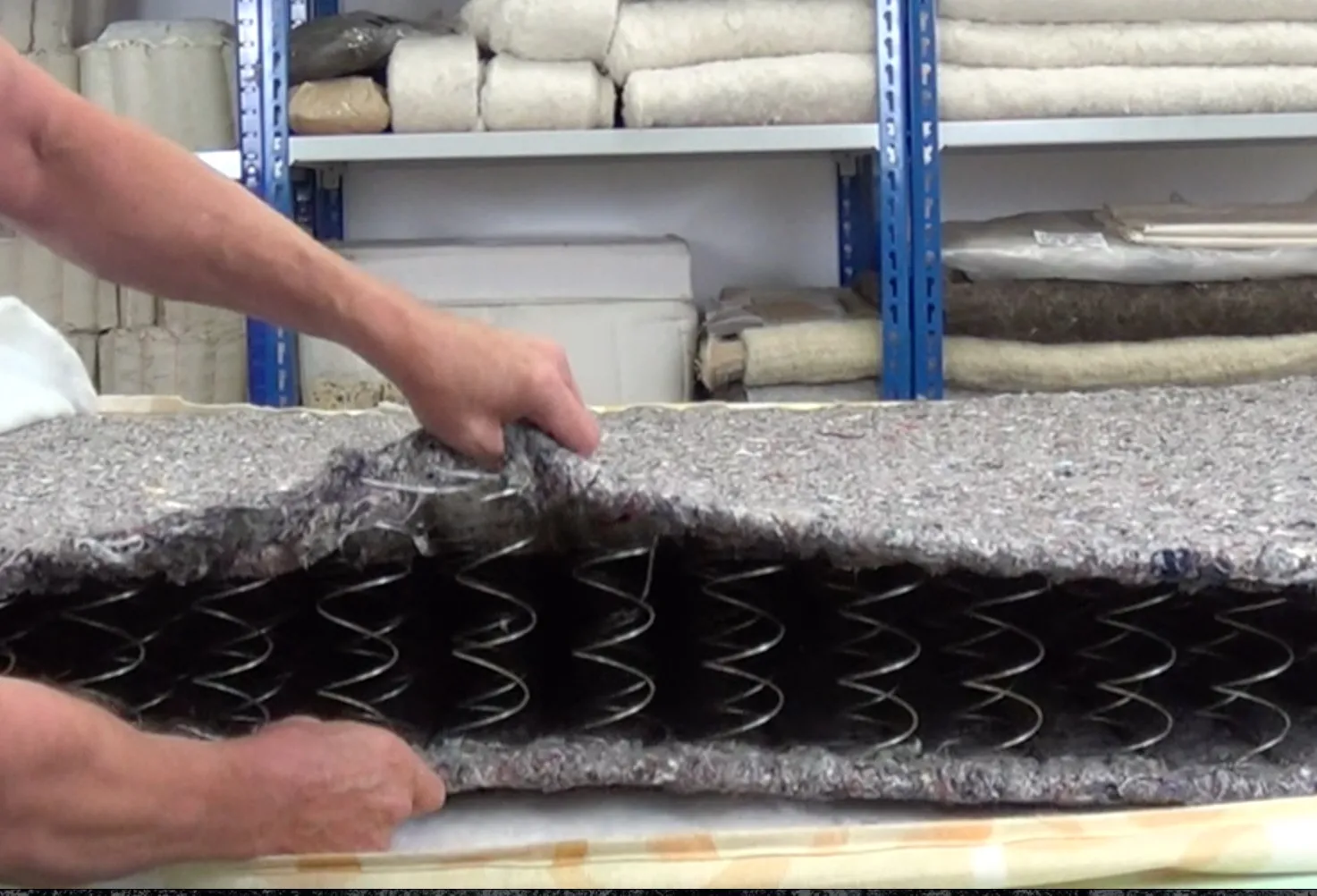
Open-coil mattresses use a single continuous wire formed into interconnected springs. They are the cheapest spring construction available and are usually found in mattresses priced below £400. Because the springs are linked together, movement on one side of the mattress is felt across the whole surface, which is a significant problem for couples. They also compress unevenly over time. Unless the budget is a hard constraint, open-coil mattresses are generally not worth considering for regular adult use. For an occasionally used guest bedroom, they are adequate; for your main bed, they are a false economy.
Memory Foam mattresses
Memory Foam responds to body heat and pressure, slowly moulding to your shape and returning to its original form when you move. Many sleepers find the initial feel comfortable. However, memory Foam retains heat, a well-documented problem that manufacturers address with varying degrees of success through cooling gel layers and ventilation channels. Memory Foam also restricts natural movement during sleep, which can be a problem for combination sleepers who change position frequently. It is made from petroleum-derived polyurethane, ages relatively quickly compared to natural-fibre mattresses, and cannot be easily recycled. The lifespan of most Foam mattresses under regular use is five to seven years.

Hybrid mattresses
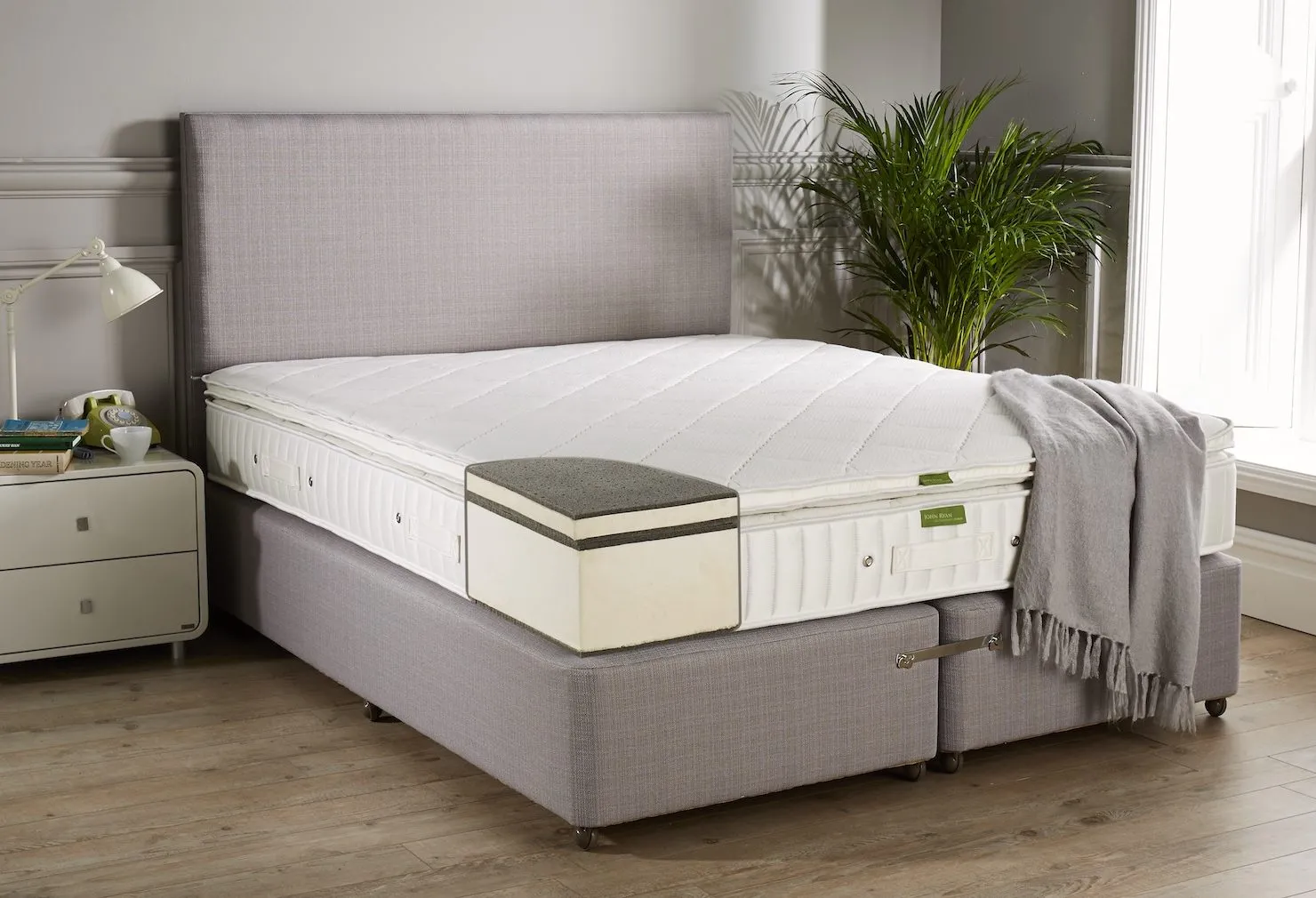
A Hybrid combines a pocket-spring support layer with Foam, Latex, or natural fibre comfort layers above it. The principle is sound: springs for support and durability, a softer layer for immediate pressure relief. In practice, the quality of Hybrid mattresses varies enormously depending on how substantial both layers actually are. Many mid-range models use minimal Foam over a basic spring unit and offer little advantage over a pure pocket-spring mattress. When evaluating a Hybrid, ask for the depth and specifications of each layer rather than accepting marketing descriptions such as “responsive Foam” or “luxury comfort layer.”

Latex mattresses
Natural Latex is derived from the sap of the rubber tree. It has a responsive, slightly springy feel quite different from memory Foam, pushing back against your weight rather than slowly conforming to it. It is naturally resistant to dust mites and mould, which makes it a useful option for allergy sufferers. Latex is durable and breathes better than synthetic Foam. The distinction between natural and synthetic Latex matters considerably because synthetic or blended Latex uses petrochemical substitutes that perform less well and age more quickly. If you are considering a Latex mattress, look for Talalay- or Dunlop-processed natural Latex, and confirm the genuine natural percentage. Our Artisan Latex uses 100% natural Talalay Latex as its comfort layer.
Open-coil vs pocket spring: a quick comparison
| Feature | Open Coil | Pocket Spring |
|---|---|---|
| Motion transfer | High (whole mattress moves) | Low (springs act independently) |
| Body contouring | Poor | Good |
| Typical lifespan | 3 to 5 years | 8 to 12 years (two-sided) |
| Price range | Under £400 (double) | £500 and above (double) |
| Suitability for couples | Poor | Good |
For a much deeper look at mattress types, including the differences between individual spring systems, see our full guide to mattress types explained.
2. How to choose the right firmness
Firmness is probably the area where most people make an expensive mistake. The single most important thing to understand is this: spring tension and comfort feel are not the same thing, and confusing the two is the number one cause of buying the wrong mattress.
Spring tension refers to the resistance of the springs themselves, specifically how hard or easy they are to compress. It is primarily determined by the gauge, or thickness, of the wire used. Comfort feel is determined by the upholstery layers above the springs: the depth, density, and composition of the materials that cushion you before your weight ever reaches the springs. A mattress can have very firm springs but feel soft because of deep natural fibre layers on top. It can equally have soft springs but feel relatively firm because the upholstery layers are thin.

Body weight is your primary guide for spring tension
The following table gives a general guide. These are the wire gauges we use across our ranges, verified against the Institute of Spring Technology’s guidance for pocket-spring construction.
| Spring Tension | Wire Gauge | Recommended Body Weight |
|---|---|---|
| Soft | 1.2mm | Bespoke (please call us) |
| Medium | 1.4mm | Up to 16 stone |
| Firm | 1.6mm | 16 stone and above |
| Extra Firm | 1.9mm | 20 stone and above |
If you are lighter than 16 stone and sleeping on springs that are too firm, your weight will not be sufficient to compress them properly. You will end up sleeping on top of the mattress rather than being supported by it, which can lead to pressure points at the hips and shoulders. Heavier sleepers on springs that are too soft will bottom out through the comfort layers, causing the unsupported feeling often blamed on the mattress being worn out, when in reality the spring was simply wrong for the person’s weight from the beginning.
Comfort firmness: a consumer-friendly scale
Most retailers use a 1-to-5 scale (extra-soft through extra-firm). For practical purposes, the feel of a mattress falls across three broad categories:
| Feel | What it means | Typically suits |
|---|---|---|
| Soft | Deep, cushioning feel with significant sink | Side sleepers, lighter builds, those who prefer a cradling sensation |
| Medium | Balanced support with moderate cushioning | Most sleepers, combination sleepers, couples with different needs |
| Firm | Minimal give, flatter sleeping surface | Back sleepers, stomach sleepers, heavier builds, and those with certain back conditions |
Remember that “firm” as a feel and “firm” as a spring tension are separate specifications. When speaking to any retailer, always clarify which one they mean.
3. Mattress choice by sleeping position
Your sleeping position affects which parts of your body are under the most pressure during the night, and therefore what the mattress needs to do for you. This is a significant factor that most people never consider when buying.
Side sleepers
Side sleeping is the most common position in the UK. When you lie on your side, your hips and shoulders are the widest points and press into the mattress surface. If the mattress is too firm for your weight, these pressure points cannot sink sufficiently, and the spine is forced into lateral curvature rather than remaining straight. Side sleepers generally benefit from a mattress with softer upholstery layers to allow proper shoulder and hip articulation. The spring tension should still be appropriate for your body weight; a lightweight side sleeper needs soft springs and soft upholstery, while a heavier side sleeper may need firm springs but will still benefit from a softer top surface.

Back sleepers
Back sleeping requires the mattress to support the natural lumbar curve without allowing the lower back to either sink too deeply or remain unsupported. A medium-to-firm surface is usually recommended. A mattress that is too soft causes the lumbar region to sink, placing strain on the lower back over several hours. A mattress that is too firm fails to accommodate the natural inward curve of the spine and creates pressure on the sacrum. Back sleepers often do well with a firm spring tension combined with a modest but supportive upholstery layer.

Stomach sleepers
Stomach sleeping is generally considered the least spine-friendly position because it places the lumbar spine in extension throughout the night. If you sleep this way, a firmer mattress reduces the degree to which the pelvis sinks, which limits the amount of extension placed on the lower back. A softer mattress exacerbates the problem. Stomach sleepers should favour a firm to extra-firm spring tension with a relatively thin comfort layer.

Combination sleepers
If you move between positions during the night, your priority is a mattress that transitions comfortably and does not create resistance when you shift position. Memory Foam is problematic here because its slow response can feel restrictive. Pocket-spring mattresses with natural fibre upholstery layers tend to respond quickly and accommodate movement well. A medium tension is usually the best starting point for combination sleepers, with upholstery matched to your body weight.
4. How much should you spend on a mattress?
Setting your budget for a new mattress is absolutely key to your purchase decision. However, you cannot feasibly do this if you do not know what your money actually gets you. You should aim to buy the best bed you can afford. Given that you spend roughly eight hours a night in your bed, spending as much as you can will pay dividends and ensure you buy a mattress that lasts.
The table below provides a realistic breakdown of what your money buys in the UK market today. Figures reflect double-mattress pricing; king-size adds approximately 20-25 per cent.
| How much to spend on a double mattress? | What can I expect for my money? |
|---|---|
| Under £500 | Will not get you much at best a 13.5 gauge open coil/cage sprung with a thin polyester layer or a solid foam mattress. |
| £500 | Entry level spunbond springs with some form of synthetic upholstery. Usually one sided mattresses. |
| £750 | The beginnings of a basic pocket springs unit with 800 – 1000 count. No substantial amount of filling other than foams and synthetic materials. Two sided models. |
| £1000 | Should get you away from most low ranges and into the mid-range pocket spring models. |
| £1250 | Should get you a decent pocket sprung mattress with some Natural Fibre content. |
| £1500 | Should get you many manufacturers mid-range models with Natural Fibres |
| £1500-£2000 | Should get you a Hand Made primarily Natural Fibre Quality Mattress |
| £2000+ | You should expect 100% Natural Fibres and Traditional Hand Made Construction Method. |
| £5000+ | A Bespoke Hand Made Sleep System, High-end Spring Units & Featuring the Worlds Most Luxurious Natural Fibres. |
Most people buying in the £500 to £800 range would be better served saving a little longer and buying once at the £1,000 to £1,500 level. A mattress in that bracket, properly cared for and turned regularly, should provide eight to ten years of good sleep. A £600 mattress that needs replacing in four years costs you significantly more over the same period.
Be especially wary of perpetual discounts and inflated reference prices. The CMA’s 2024 enforcement action against a major online mattress brand concerned exactly this practice, whereby prices appeared to be discounted from a reference price that was never genuinely charged. If a mattress is always on sale, the sale price is the real price.
For a deeper look at what each price band gets you, see our full guide: How much should you spend on a mattress?
5. Understanding pocket springs
It is essential to know what spring type and tension you require for your body weight. Many people confuse spring tension with mattress feel, which makes them more likely to buy the wrong spring tension and end up with an uncomfortable mattress. Pocket springs are the best support system for a mattress, significantly outlasting open-coil and Foam beds.
Spring count
Spring count is the most heavily marketed spring specification and also one of the least meaningful in isolation. The minimum number of pocket springs you should look for in a king-size mattress is 1,000. Below that, the spring density is insufficient to provide proper point-by-point support. You should also avoid anything above 3,000 springs, as counts above this threshold are almost always achieved using micro-springs, which are small, low-gauge springs that inflate the headline number without providing proportionally better support and are primarily a marketing device.
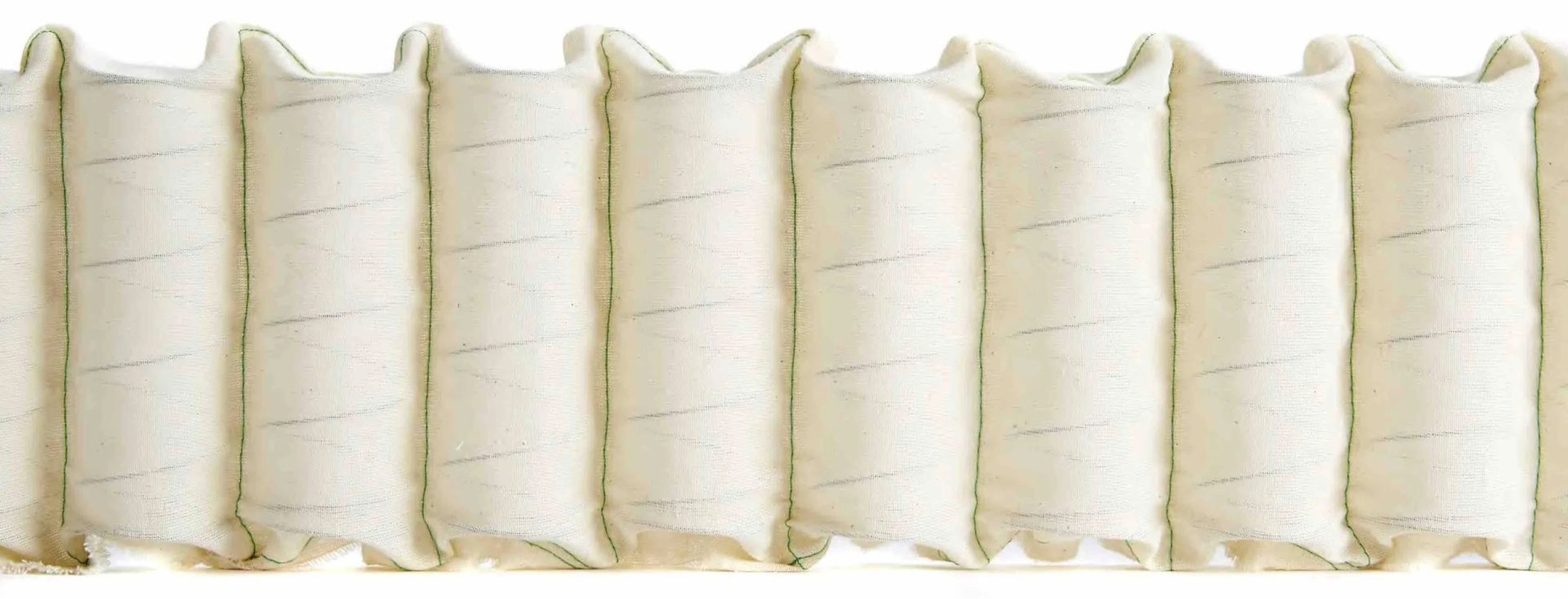
A mattress with 1,600 well-gauged, calico-encased pocket springs is significantly superior to one with 4,000 micro-springs, despite what the headline number implies.
| Spring Tension | Wire diameter (Gauge) | Weight Range |
|---|---|---|
| Soft | 1.2mm | Bespoke Tension (Please Call) |
| Medium | 1.4mm | Upto 16 stone |
| Firm | 1.6mm | 16 stone plus |
| Extra Firm / Orthopaedic | 1.9mm | 20 stone plus |
Wire gauge and coil height
Wire gauge determines how much load a spring can bear. A 1.4mm wire is appropriate for most adult weights up to around 16 stone in a medium tension. A 1.6mm wire is used for firm tensions and heavier individuals. Coil height affects the depth of compression available before the spring bottoms out; a taller spring generally allows for more gradual, progressive compression. The best pocket springs are individually encased in natural calico fabric, which allows each spring to move freely and independently while protecting it from the upholstery layers above.
Springs are also one of the real quality differences you can use to separate one manufacturer from another. This article will show you how to spot quality springs from cheap mass-produced ones.
6. Know what is inside your mattress: GSM explained
Next up is spotting decent upholstery in a mattress. This is done by knowing the GSM (grams per square metre) of upholstery, which is the single most useful number you can obtain when evaluating a mattress and precisely why the vast majority of UK manufacturers and retailers refuse to publish it.
Take one mattress that lists its contents as containing a Wool layer. If you do not know how much is inside, you cannot possibly know whether it represents good value. It may be 200gsm or 2,000gsm of Wool and the difference is vast.
The very minimum is 1,000 grams per square metre of total upholstery in a king-size mattress. Anything less than this indicates a lightly filled mattress,s regardless of how the contents are described on the label. Quality mid-range mattresses typically contain 2,500 to 4,000gsm. Our top-tier handmade mattresses contain between 4,600gsm and 5,600gsm of natural fibre upholstery, and we publish the full GSM breakdown for every layer of every mattress we make.
For a full explanation of how to use GSM when evaluating any mattress, see our complete GSM guide.
7. Natural vs synthetic upholstery
There are only two parts that go into making a mattress: the springs and the upholstery. Once you grasp the basics of upholstery,ry your job is halfway done. Be warned: not all is as it seems, and mattress brands often try to mislead you by using blended fibres and low natural-fibre percentages.
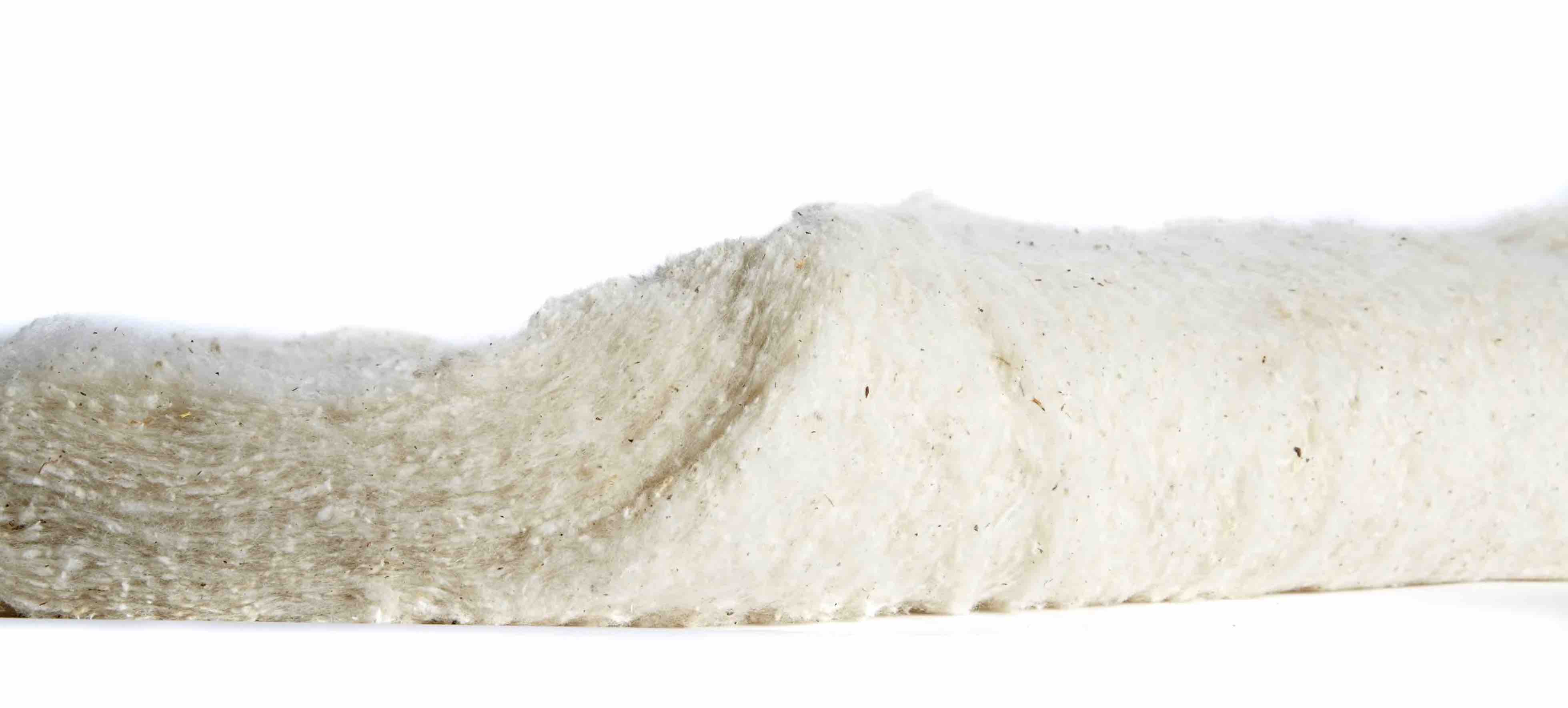
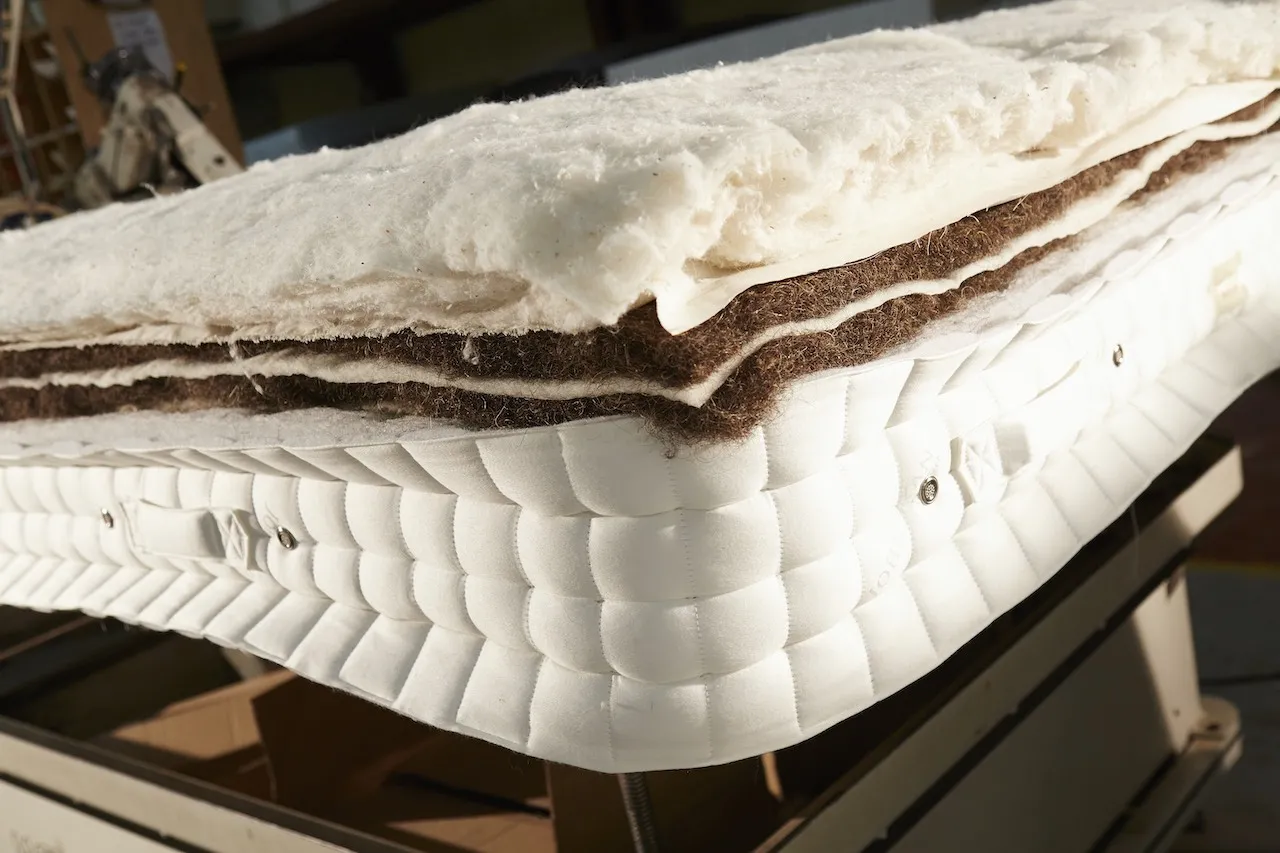
You have two choices with mattress upholstery. The first is synthetic entry-level materials like Foam, polyester, and white fibres. The second is natural fibres such as Horsetail, Wool, Cotton and Bamboo. Wherever possible, you should opt for natural fibres, as they are more breathable, last longer, and offer greater resilience for a perfect night’s sleep. True natural fibre mattresses are not available for under £1,000, and any that claim to be will contain only 1 to 5 per cent actual natural fibres, blended with cheaper synthetic alternatives.
The fibres and upholstery within a mattress dictate the overall comfort feel of the mattress. This is where most people mistake the spring tension for comfort. You need to know exactly which upholstery layers are present and in which order they appear to understand how a mattress will feel and respond to your body.
Natural fibre properties at a glance
| Natural Fibre | Key Properties |
|---|---|
| Wool | Temperature regulating, moisture wicking, resilient, naturally fire resistant |
| Cotton | Breathable, hypoallergenic, soft hand feel, good moisture absorption |
| Horsehair / Horsetail | Exceptionally resilient and durable, resists compression, excellent air circulation |
| Mohair | Soft, resilient, excellent moisture management |
| Cashmere | Extremely soft, lightweight, naturally temperature-regulating |
| Alpaca | Hypoallergenic, soft, very low moisture retention, excellent thermal regulation |
| Bamboo | Naturally antibacterial, moisture-wicking, soft |
| Natural Latex | Resilient, anti-dust-mite, breathable, pressure-relieving |
Natural fibres are significantly more resilient than synthetic alternatives because they compress and recover repeatedly over many years rather than taking a permanent set. This is the primary reason a well-made natural fibre mattress outlasts a Foam mattress by a considerable margin.
For a full explanation of each fibre type, see our guide to mattress upholstery.
8. Construction quality: what to look for
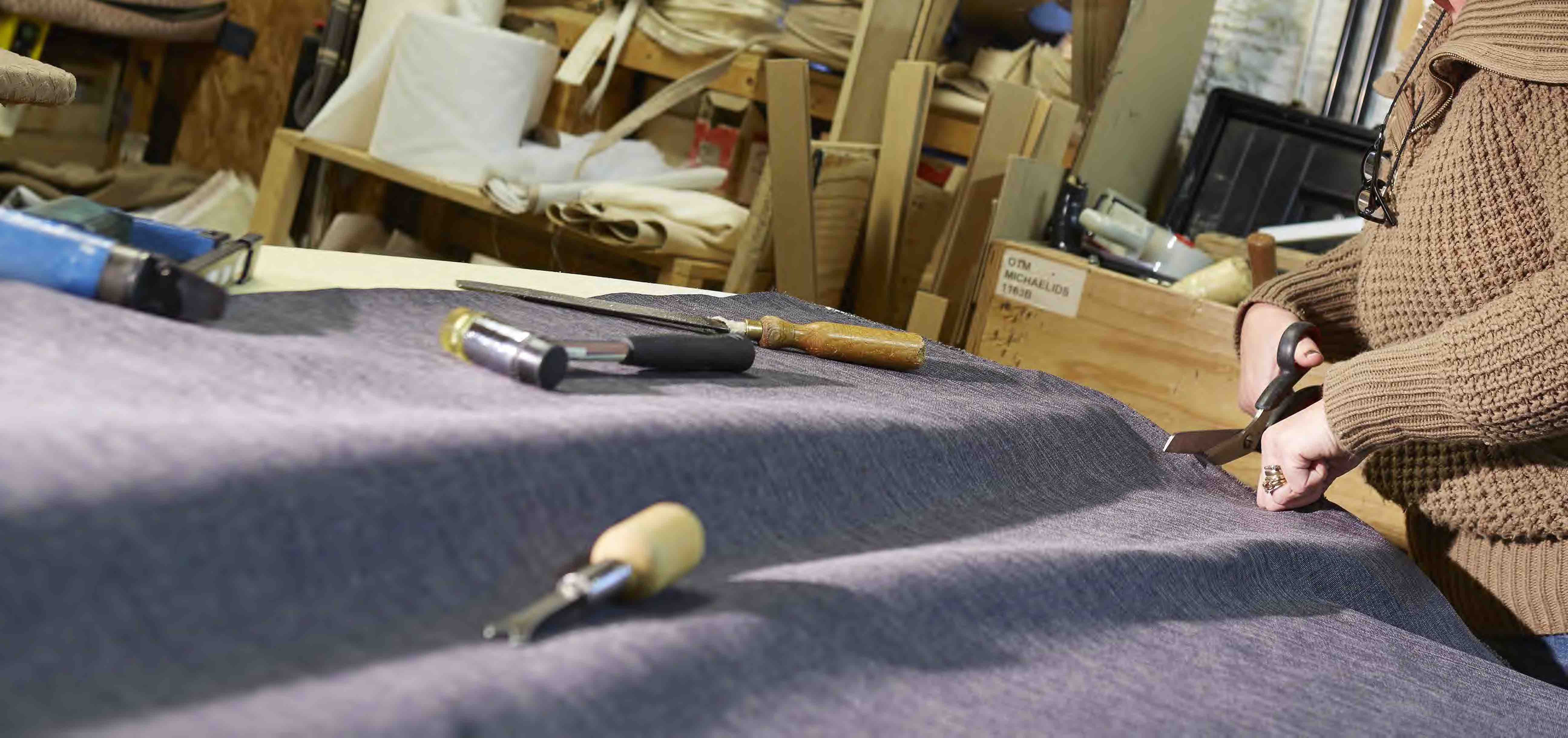
The construction method used to assemble a mattress determines how long it will hold its shape and how comfortable it remains over its lifespan. There are significant differences between handmade and machine-made mattresses that are worth understanding before you buy.
Two-sided vs one-sided mattresses
A two-sided mattress is one of the most underused quality indicators available to a UK mattress buyer, and one of the most consequential. A two-sided mattress has upholstery on both sides and can be turned periodically, distributing wear evenly and significantly extending the mattress’s working life. One-sided mattresses should usually be avoided where possible, as they will settle and dip far quicker than two-sided models. One-sided construction reduces manufacturing costs; the “convenience” of not turning it is a marketing reframe of a quality reduction. Every mattress we make at John Ryan is two-sided.
Hand tufting
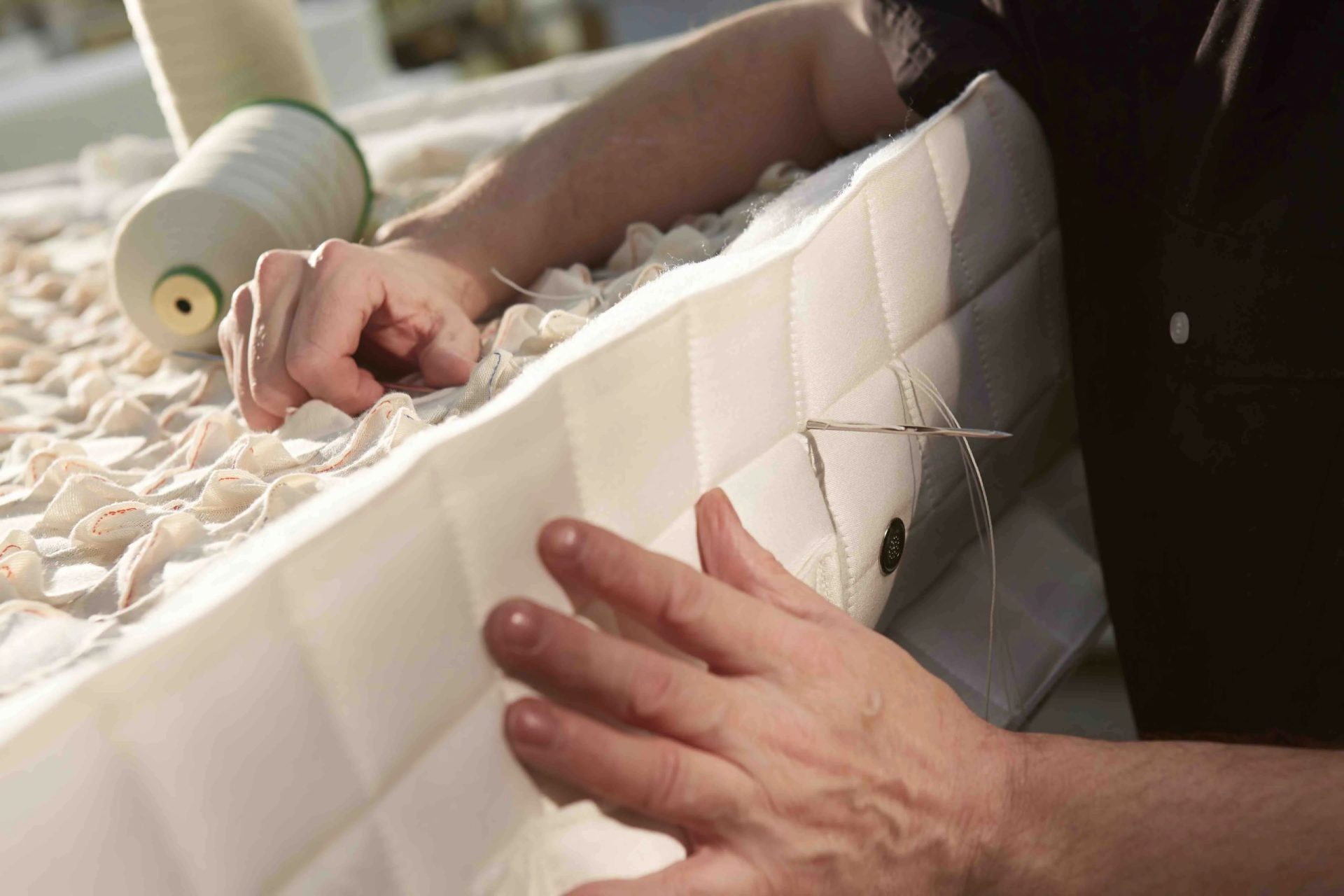
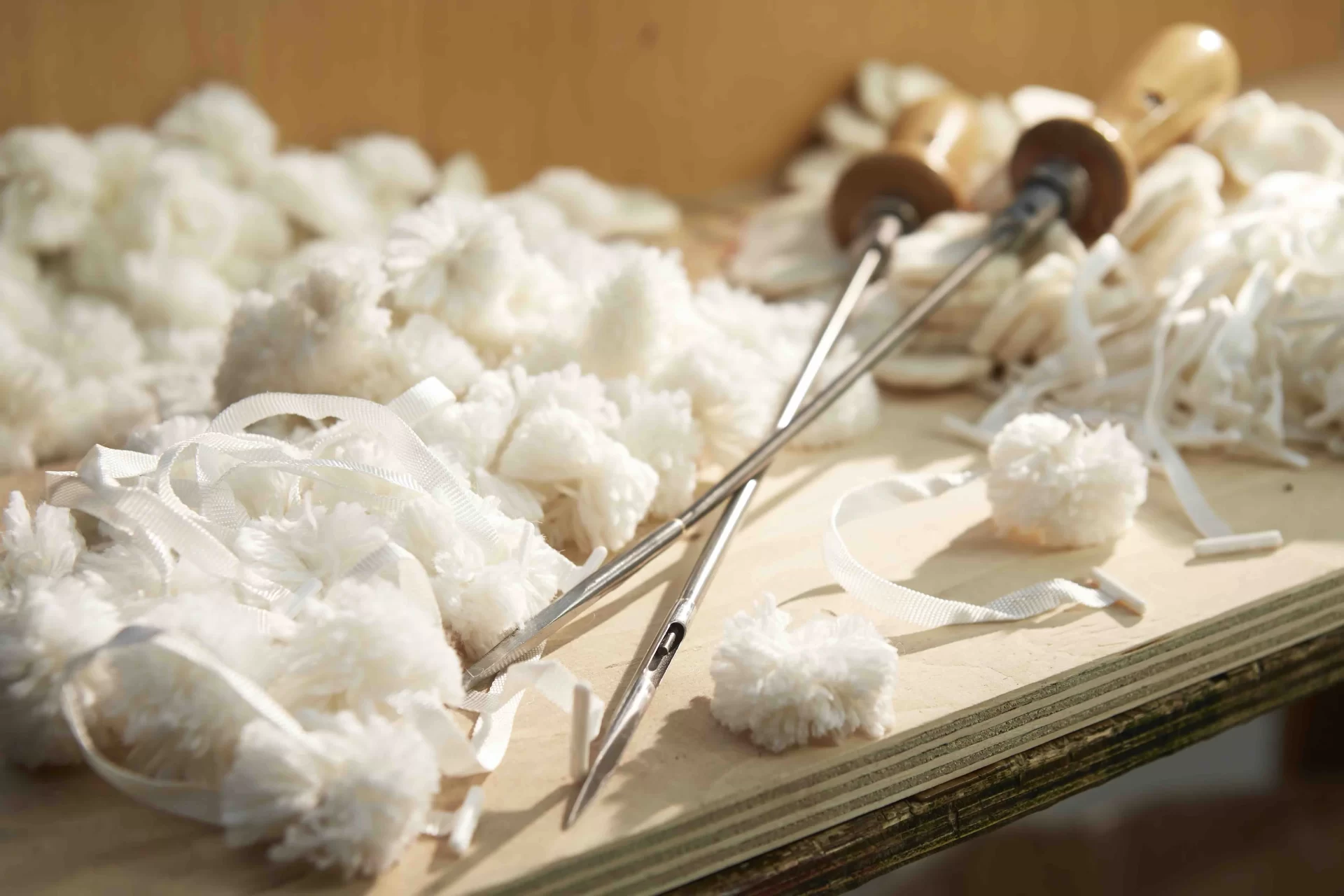
Tufting is a high-quality sign that the fillings are securely held in place, preventing them from shifting over time. Properly executed, tufting prevents the fillings from migrating, balling up, or compressing unevenly. Always check that tufts pass all the way through the mattress and emerge on both sides, because a tuft that only penetrates partway is purely decorative and provides no functional benefit. Tufted Damask fabric covers are a quality indicator, while quilted covers are far cheaper and indicate an entry-level mattress.
Hand side stitching and tape edge
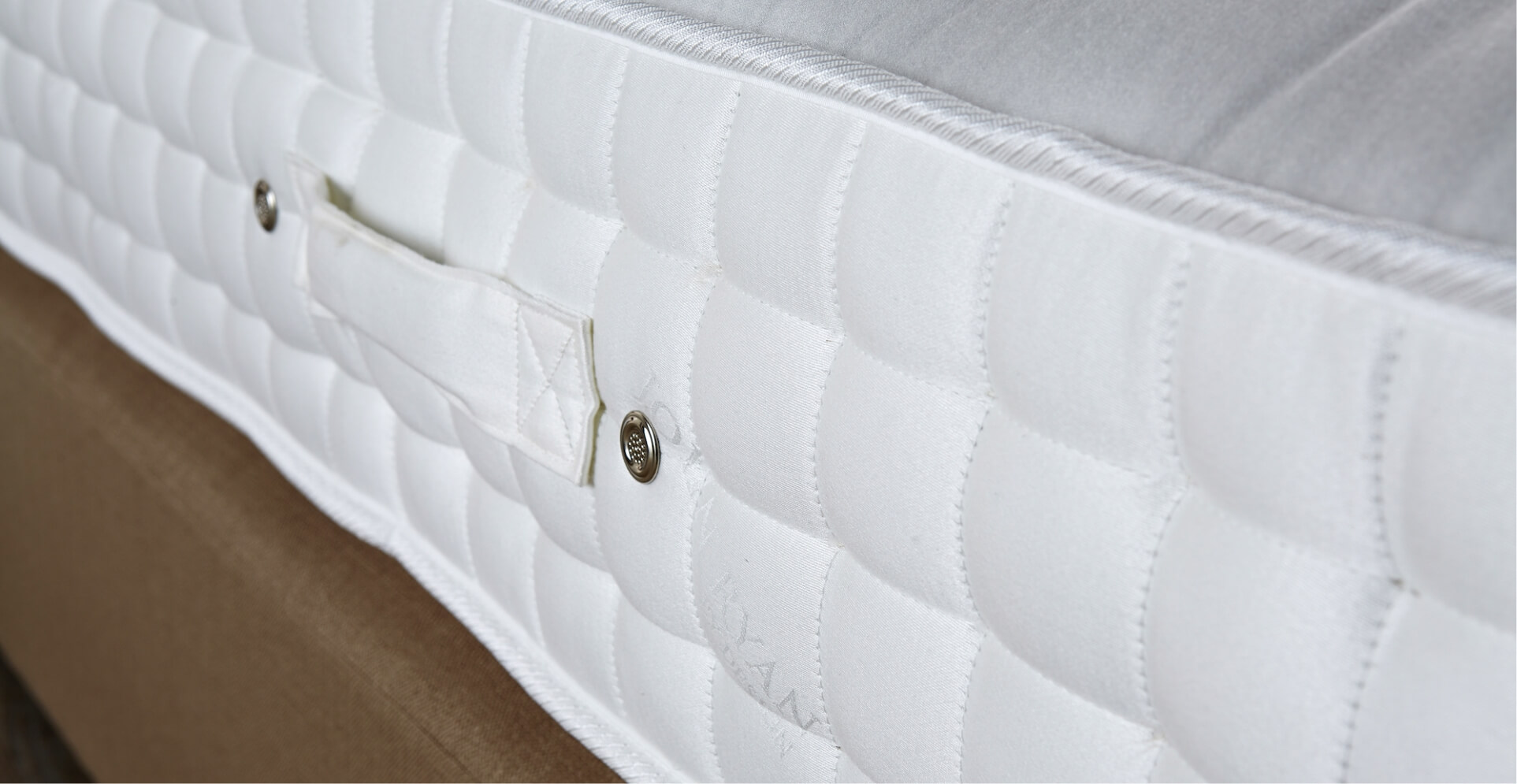
Hand-stitched panels on the hand side are far more robust than machine-finished borders. When you sit on the edge of a well-made mattress, it should not bulge. This creates a firm, durable perimeter that maintains the structural integrity of the full sleeping surface. Pillowtop mattresses will fail far more quickly than any other mattress type and are a poor construction method. Once the pillowtop compresses, you cannot remove it, and the mattress is ruined. Tape edging, applied by hand, creates a far more resilient border finish than the quilted and turned edge found on machine-made mattresses, so look for a visible tape edge on the perimeter as a quick quality indicator in any showroom.
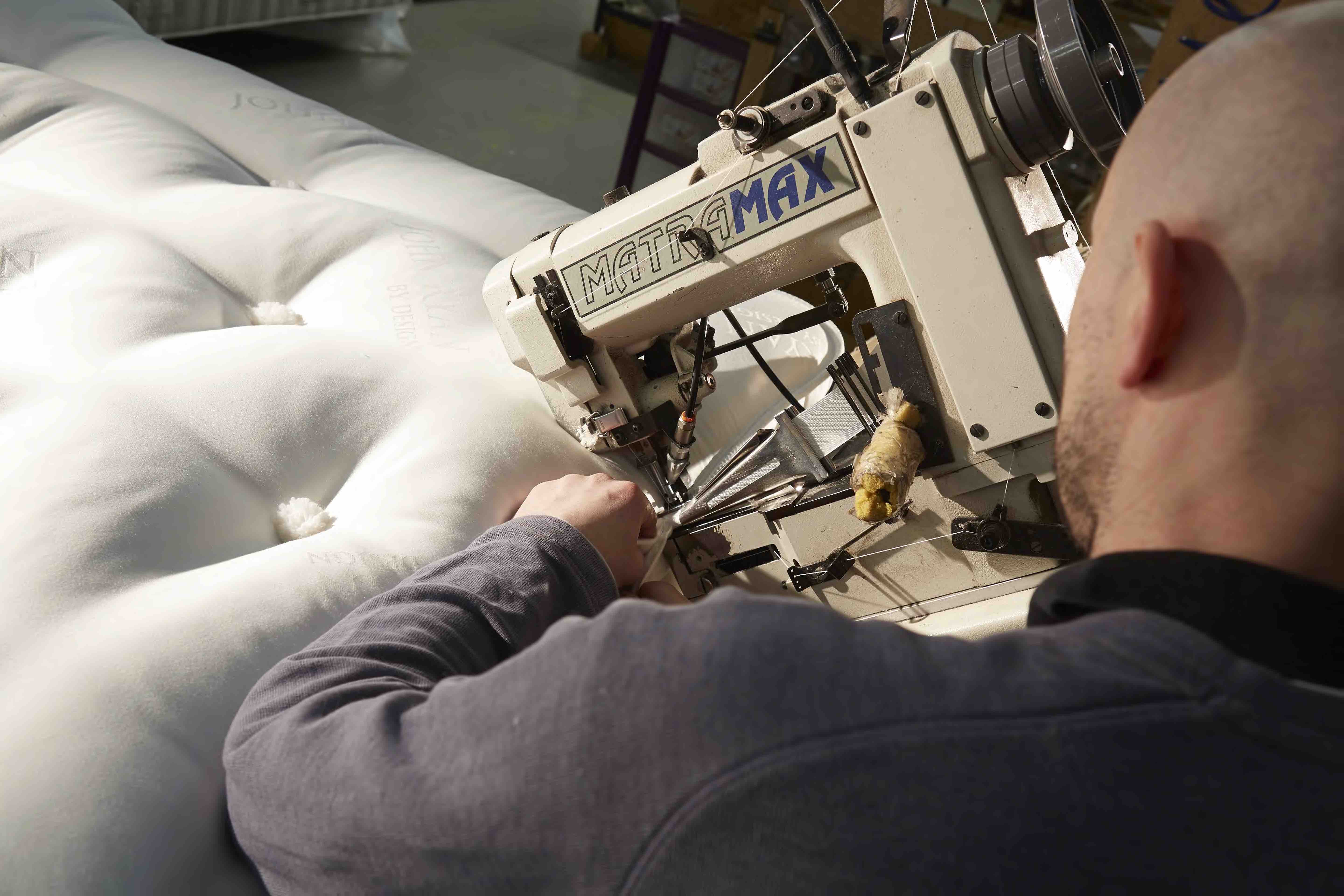
Mattresses with stitched handles are far easier to turn, and perimeter support is essential to stop you rolling off the edge of the bed. Zip-off covers will not fit in most washing machines and can be a false benefit. Avoiding excessive spring counts of 4,000 or more is wise, as these mattresses almost certainly contain micro-springs, which are a poor choice for support regardless of the headline number.
For a comprehensive breakdown of construction methods with examples, see our guide to mattress construction.
9. Choosing a mattress for health conditions
Health and lifestyle factors are frequently the most important considerations when choosing a mattress, yet most generic buying guides treat them as an afterthought. This section covers the most common scenarios.
Back pain
Back pain is the most-searched health-related mattress query in the UK. The evidence base is more nuanced than most mattress marketing suggests. A 2003 study in The Lancet found that medium-firm mattresses were associated with better outcomes for chronic low back pain than firm mattresses, contradicting the long-held view that firmer is always better. The right mattress for back pain depends on the type of pain, the sufferer’s body weight, and their sleeping position. For most people with non-specific lower back pain, a medium-tension pocket-spring mattress with sufficient natural fibre upholstery to accommodate body contours while maintaining spinal alignment will provide the best outcome. See our full guide to mattresses for bad backs for details on specific conditions.
Allergies and dust mites
Dust mites are present in virtually all domestic mattresses. It is not the mite itself but the proteins in its waste that trigger allergic responses. Natural Latex is inherently inhospitable to dust mites due to its cellular structure. Wool creates an environment less conducive to mite proliferation. Mattresses labelled “hypoallergenic” are not required to meet any regulated standard in the UK, and the term is legally meaningless in this context. A quality natural fibre mattress with a fitted Cotton mattress protector is a more genuinely effective approach than relying on a marketing label.

Hot sleepers
Mattress materials heavily influence temperature regulation during sleep. Memory Foam and dense synthetic fillings trap body heat. Natural fibres, particularly Wool, Cotton, and Horsehair, actively regulate temperature through moisture wicking and air circulation. If you find yourself sleeping hot, the single most effective mattress change is moving from a synthetic or Foam mattress to one with substantial natural-fibre upholstery. A Wool-filled mattress can absorb up to a third of its own weight in moisture before feeling damp, making it significantly more effective at managing night sweats than any synthetic alternative.
Heavier sleepers
Heavier individuals exert more sustained pressure on a mattress, compressing the upholstery layers more deeply and cycling the springs through a greater range of motion. The practical implications are straightforward: choose a higher spring tension (firm or extra-firm), prioritise resilient natural-fibre upholstery rather than Foam, and strongly favour two-sided construction to distribute wear across both faces. A two-sided mattress with firm springs and Horsehair upholstery will outlast a one-sided Foam mattress under the same load by a considerable margin.
Joint pain and arthritis
Joint pain sufferers, including those with arthritis, osteoarthritis, and fibromyalgia, typically benefit from a mattress that provides genuine pressure relief at joints while maintaining overall spinal alignment. A mattress that is too firm creates uncomfortable pressure points at the hips, knees, and shoulders. Medium-tension springs with a substantial, resilient natural-fibre comfort layer tend to work well for joint conditions, as they provide adequate support. At the same time, the upholstery absorbs pressure at individual contact points.
10. Couples and different sleep needs
Buying a mattress for two people adds complexity that single-sleeper guidance cannot address. The most common scenarios are partners with significantly different body weights, partners who prefer different firmness levels, and partners where one is a lighter sleeper disturbed by the other’s movement.
Motion transfer
Pocket-spring mattresses, particularly those with individually encased springs and a higher spring count, provide far better motion isolation than open-coil or solid Foam mattresses. For couples in which one partner is significantly disturbed by the other’s movement, a quality pocket-spring mattress with individually encased springs is the best overall solution. Memory Foam provides reasonable motion isolation, but at the cost of the heat and movement-restriction problems already discussed.
Different body weights and the zip-and-link solution
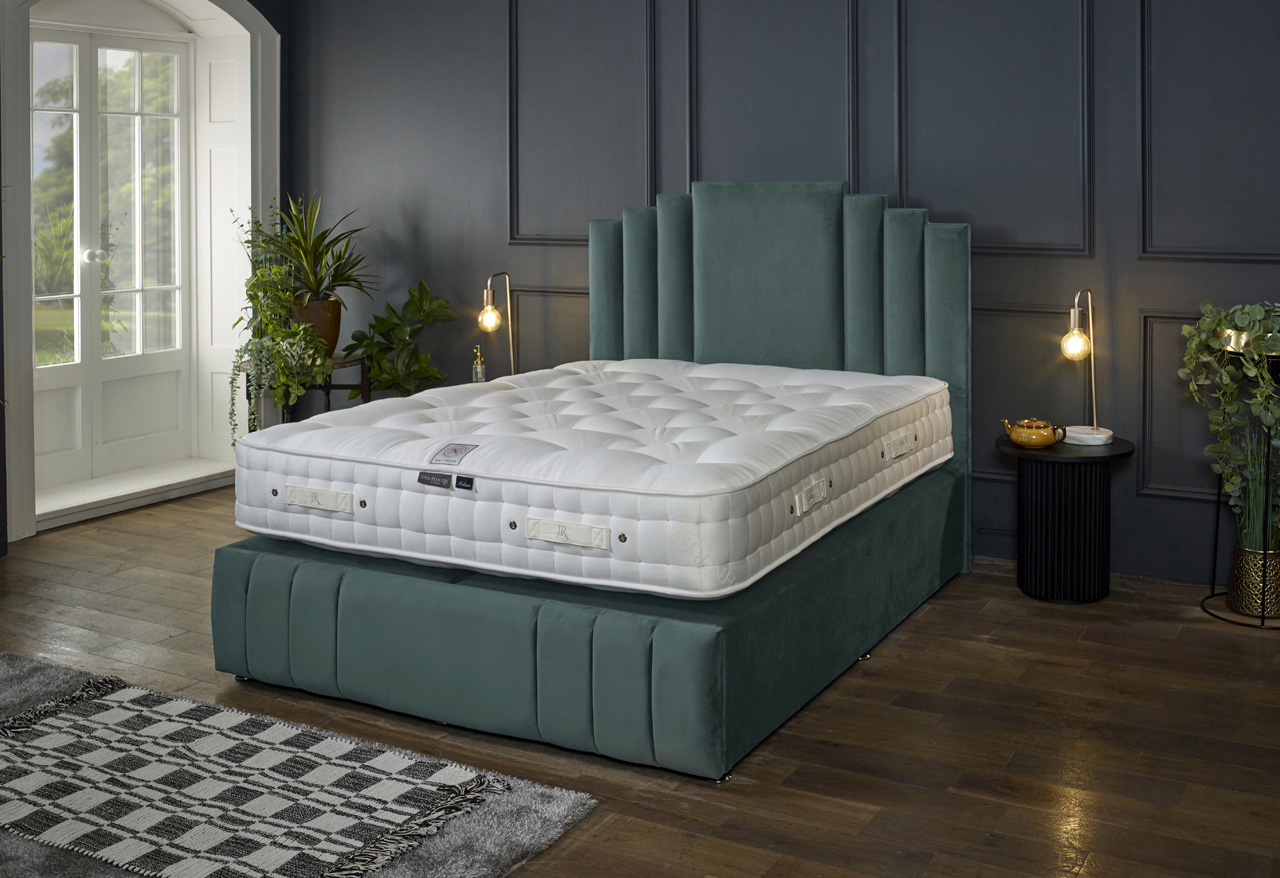
When two partners have significantly different body weights, say one person at 10 stone and another at 18 stone, a single spring tension will always represent a compromise. The cleanest solution is a zip-and-link mattress, where two separate mattresses of different tensions are zipped together. We offer split tension in zip-and-link format across several ranges. A zip-and-link is not a workaround; it is the most technically sound solution for two people with meaningfully different requirements who share a bed.
11. UK mattress sizes: complete guide
UK mattress dimensions are not fully standardised across all retailers. The following table covers the standard UK sizes; all measurements have a small manufacturing tolerance of approximately ±2 cm.
| Size | Width × Length (cm) | Width × Length (imperial) | Notes |
|---|---|---|---|
| Small Single | 75 × 190cm | 2’6″ × 6’3″ | Children’s rooms, bunk beds |
| Single | 90 × 190cm | 3’0″ × 6’3″ | Standard single adult bed |
| Small Double | 120 × 190cm | 4’0″ × 6’3″ | Spare rooms; tight for two adults |
| Double | 135 × 190cm | 4’6″ × 6’3″ | Gives each person 2’3″, the same as a baby in a cot |
| King Size | 150 × 200cm | 5’0″ × 6’6″ | Recommended minimum for most adult couples |
| Super King | 180 × 200cm | 6’0″ × 6’6″ | Maximum standard UK size: 90cm per person |
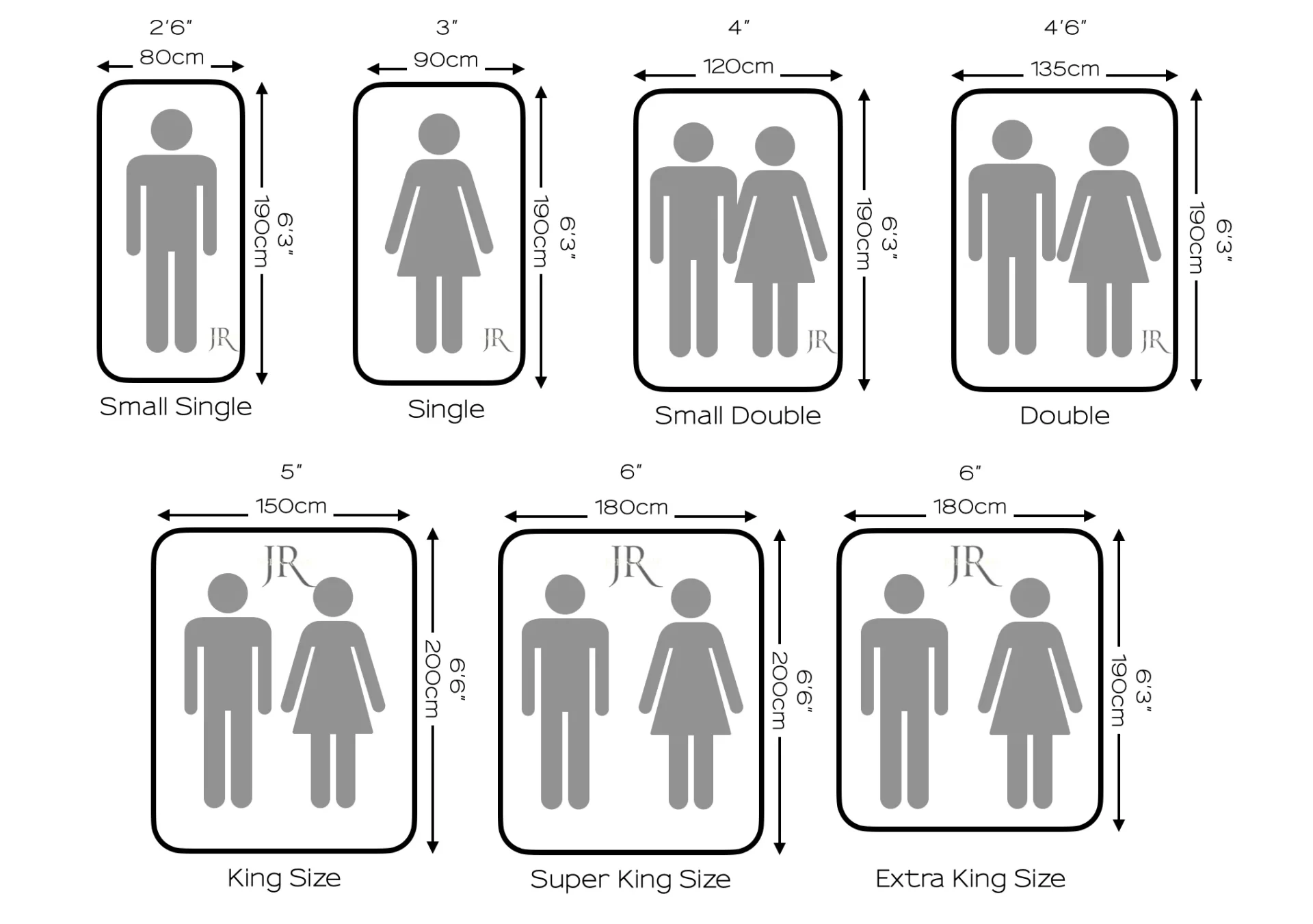 Anyone over 5 feet 10 inches tall should consider a king or super king mattress, as the standard 190cm length of a single or double leaves no meaningful clearance. A standard UK double gives each person sharing it just 67.5cm of width, which is narrower than a single bed. This is worth bearing in mind if two adults are currently sharing a double and sleeping poorly, because the size itself may be the problem before any discussion of mattress quality is relevant.
For detailed guidance on sizes, including zip-and-link and extra-king options, see our full mattress sizes guide.
12. Bed-in-a-box vs handmade: an honest comparison
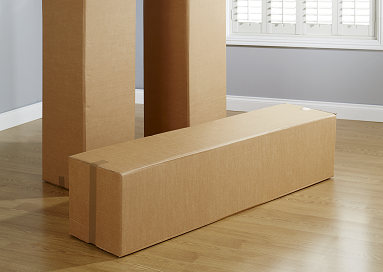
Bed-in-a-box brands such as Emma, Simba, Nectar, Casper, Eve, and others have grown considerably since they entered the UK market around 2015. They offer genuine convenience: ordered online, compressed and rolled into a box, delivered the next day. It is worth being clear about what that convenience involves.
Virtually all bed-in-a-box mattresses are foam-based, comprising layers of memory Foam, reflex Foam, and sometimes a small pocket-spring layer, compressed into a roll format. The compression process requires the mattress to be made from materials that withstand compression without permanent damage, which excludes most natural fibre constructions. The convenience of compression delivery and the quality of handmade natural fibre construction are largely mutually exclusive. You cannot hand-tuft a mattress that needs to be rolled up.
The 100-night, 200-night, or 365-night sleep trials offered by these brands are frequently cited as a major advantage. They are a genuine benefit, but most returns involve collection logistics, and some brands charge collection fees. John Ryan’s 60-day guarantee is a full money-back refund with free collection and not an exchange. Most Foam mattresses have a realistic working lifespan of five to seven years under regular use, while a handmade two-sided pocket-spring mattress with natural fibre upholstery, turned regularly, should last ten to fifteen years. When comparing cost-per-night across the realistic lifespan of each type, handmade natural fibre mattresses almost always represent better long-term value than Foam alternatives at similar price points.
13. Bed base compatibility
The base your mattress sits on directly affects how the mattress performs and how long it lasts. A pocket-spring mattress requires support across its full surface, not just around the perimeter.
Slatted bases are compatible with pocket-spring mattresses provided the slats are no more than 7cm apart and are sufficiently rigid not to flex under load. Wider gaps allow the springs and upholstery to push through, causing premature wear. For pocket-spring mattresses, a rigid slatted base with 6-7cm gaps is the preferred configuration. A platform-top divan (solid top) provides uniform support across the full mattress surface and is ideal for pocket-spring mattresses. Avoid placing a pocket-spring mattress directly on the floor, as restricted airflow beneath the mattress creates conditions favourable for condensation and mould.
For a detailed guide to base types and compatibility, see our article on mattresses for slatted bed bases.
14. Mattress care and when to replace
A quality mattress is a significant investment, and how you care for it directly affects how long it performs well.
A two-sided mattress should be rotated head-to-foot and turned top-to-bottom every three months for the first year and every six months thereafter. This distributes wear evenly across both faces and through the full surface area. Even if the only change you make following this guide is to turn your mattress twice a year, it will meaningfully extend its lifespan. A fitted Cotton mattress protector is strongly recommended from day one, as it slows the penetration of perspiration and debris into the upholstery layers. Do not use a waterproof plastic protector on a natural-fibre mattress, as it traps moisture and heat, negating the thermoregulatory properties of the fillings.
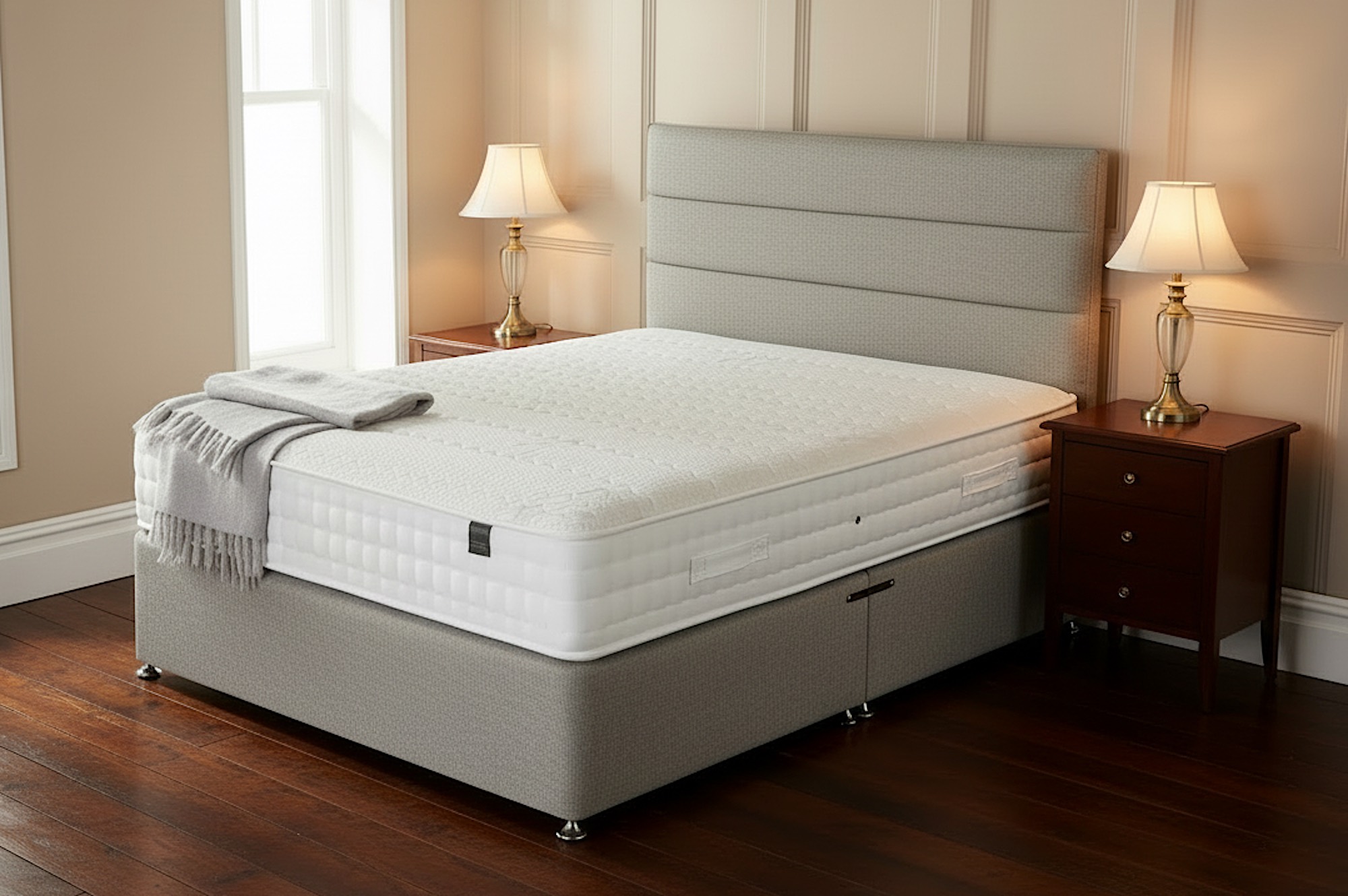
The NBF recommends considering replacement every seven years as a general guide. Signs that replacement is overdue include visible sagging or body impressions deeper than 1.5-2cm, springs that are perceptibly felt through the surface, persistent morning stiffness that resolves during the day, and waking more tired than when you went to bed. A quality two-sided pocket-spring mattress with natural-fibre upholstery, well cared for, will comfortably exceed the seven-year benchmark and last ten to fifteen years.
15. Your UK consumer rights when buying a mattress
This is a section that no major mattress retailer will spell out for you. Understanding your rights before you buy offers meaningful protection.
If you buy a mattress online, you are protected by the Consumer Contracts Regulations 2013, which give you a 14-day cooling-off period during which you can cancel the order and return the mattress for any reason, including after it has been used. In-store purchases do not carry the same statutory right. The Consumer Rights Act 2015 protects you if the mattress is faulty or not as described, but not if you change your mind. John Ryan’s 60-day guarantee applies to all purchases regardless of how they are made, and covers comfort-based dissatisfaction with a full refund rather than an exchange.
If you pay for a mattress costing more than £100 using a credit card, Section 75 of the Consumer Credit Act 1974 makes the credit card company jointly liable with the retailer for any breach of contract or misrepresentation. For any mattress purchase over £100, using a credit card rather than a debit card adds a meaningful layer of consumer protection at no additional cost.
The term “orthopaedic mattress” has no legal definition or regulated standard in the UK. Any manufacturer can apply the word “orthopaedic” to any product, so treat it as a marketing label rather than a functional specification. The same applies to “medically recommended,” “clinically proven,” and “back care approved.”
16. How to compare mattresses side by side
When you are wondering how to choose a mattress and are faced with 5,000 or more models, you really do need to make like-for-like comparisons. This section guides you through comparing like-for-like models, which is not particularly easy when manufacturers and retailers do not provide the information you need.
The key to comparing is knowing the spring type, tension, mattress upholstery GSM, fibre layering, and construction methods. Retailers will do their best to hide all of this from you. A retailer who freely provides full specifications is demonstrating confidence in their product; one who obscures them is usually concealing something that would work against the sale.
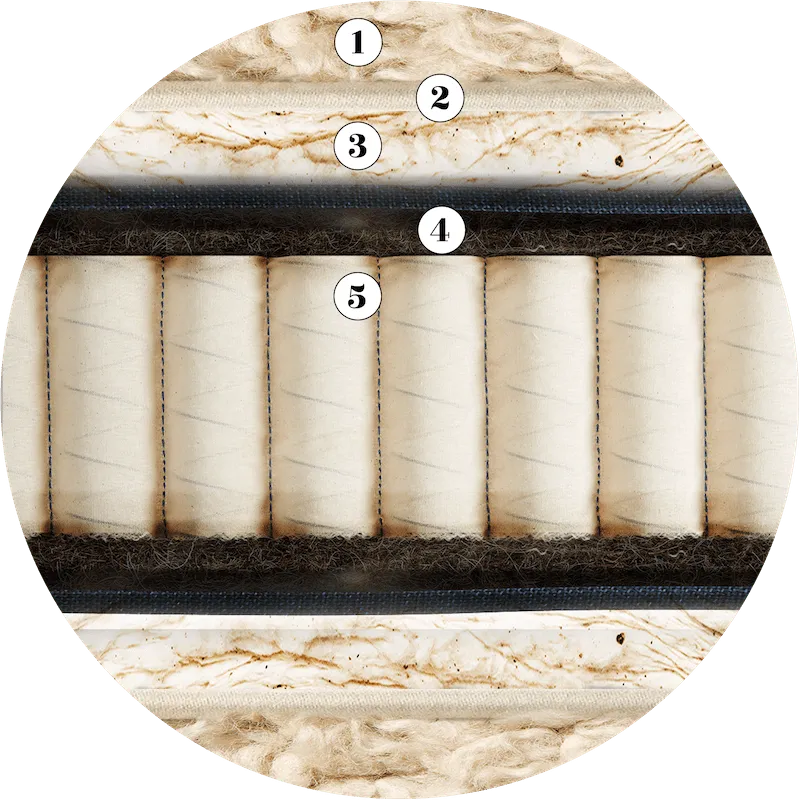
Below is an example of how to compare two mattresses side by side. The detail that becomes visible when specifications are published shows you exactly what your money is buying.
| John Ryan By Design Artisan Naturals | Vi Spring Regal Superb | |
|---|---|---|
| 1 | 1200gsm Blended British Fleece Wool and Cotton. | 900gsm Blended real Shetland Isle Fleece Wool and Cotton |
| 2 | Hairproof Cambric Cover | Hairproof Cambric Cover |
| 3 | 1250gsm Rebound Poly Cotton | 1200gsm long stranded Horsetail blended with British Fleece Wool |
| 4 | 1500gsm 100% Pure Mohair | 1000gsm Bonded British Fleece Wool and Cotton |
| 5 | 1600 Calico encased Pocket Springs [ 49mm ] [1.28mm ] | 1720 Calico encased Pocket Springs [48mm ] [1.28mm ] |
| Total GSM | 3950gsm | 3100gsm |
The comparison exercise works equally well when looking at two mattresses at the same price point from different retailers. Once you know what to ask for, the differences and the evasions become obvious quickly.
John Ryan mattresses: where to start
If you are looking for a starting point within our own range, the following gives a brief orientation by budget and need. All prices shown are king-size.
| Model | King Size Price | Best suited to |
|---|---|---|
| Origins Pocket 1500 | £1,050 | Entry-level with genuine pocket springs; a good first step into quality |
| Origins Natural Comfort | £1,300 | Natural fibre introduction; 2,550gsm of natural upholstery including British Wool and Cashmere blend |
| Artisan Naturals | £2,180 | Premium natural fibre with Mohair and Wool; 3,950gsm total; hand-tufted two-sided |
| Artisan Bespoke 004 | £2,860 | Horsehair upholstery with Wool and Cotton; 3,600gsm; calico-encased 1,600 springs |
| Artisan Luxury | £2,955 | 4,600gsm natural fibre: Horsehair, Horsetail, Wool, Cotton, Bamboo; hand-tufted |
| Legacy Two | £5,550 | Our finest model; British Alpaca, Swaledale Wool, Horsetail, Organic Flax; 5,400gsm; 2,508 two-tier calico-encased springs |
Every mattress is handmade to order at our facility in Manchester. We offer a 60-day full money-back guarantee with free collection and no restocking fees, not an exchange. If you would like help choosing the right model, tension, or size for your specific situation, call our team on 0161 437 4419 or use the ask a question feature below.
17. Frequently asked questions
How do I know which mattress firmness I need?
Start with your body weight and sleeping position. Up to around 16 stone, a medium spring tension suits most people. Above 16 stone, a firm tension is usually needed. Side sleepers generally benefit from softer upholstery layers; back and stomach sleepers from firmer ones. Remember that spring tension and comfort feel are separate specifications, so it is possible to have a firm spring with a soft upholstery surface.
What is the difference between spring tension and mattress firmness?
Spring tension refers to the resistance of the springs inside the mattress and is primarily determined by the wire gauge. The depth and density of the upholstery layers above the springs determine firmness as a comfort feel. The two are independent. A mattress with firm springs but deep natural fibre upholstery can feel quite soft on top. Always ask which specification is being described when a retailer uses the word “firm.”
How often should I replace my mattress?
The NBF advises considering replacement around the seven-year mark. A quality two-sided pocket-spring mattress with natural fibre upholstery, properly cared for and turned regularly, can comfortably last ten to fifteen years. A one-sided Foam mattress will typically need replacing after five to seven years. The most reliable sign that a mattress needs replacing is consistent poor sleep and morning stiffness with no other obvious cause.
Is memory Foam or pocket spring better?
They serve different purposes, and both have genuine advantages. Pocket-spring mattresses provide better long-term support, breathe better, and last longer under regular use. Memory Foam provides excellent pressure relief and motion isolation but retains heat, restricts movement, and ages more quickly than natural fibre alternatives. For most UK buyers prioritising longevity and thermal comfort, a quality pocket-spring mattress with natural-fibre upholstery represents better value over time.
What is the minimum spring count I should look for in a king-size mattress?
A minimum of 1,000 pocket springs in a king-size mattress. Be cautious of counts above 3,000, which are almost always achieved using micro-springs that inflate the headline number without providing proportionally better support. A 1,600-count mattress with calico-encased springs and an appropriate wire gauge will outperform a 4,000-count micro-spring mattress in practice.
Can I return a mattress if I do not find it comfortable?
Online purchases give you a statutory 14-day cooling-off period under the Consumer Contracts Regulations 2013, regardless of whether the mattress has been used. In-store purchases do not carry the same statutory right. John Ryan’s 60-day guarantee applies to all purchases regardless of how they are made and covers comfort-based dissatisfaction with a full refund.
Are expensive mattresses worth the money?
At certain price points, yes. The key is specification transparency. A £2,000 mattress with published GSM data, calico-encased springs, hand-tufted, two-sided construction, and a genuine guarantee is likely to be excellent value. A £2,000 mattress with no GSM disclosure and a complex exchange-only returns policy may not be.
What does “orthopaedic mattress” mean?
Nothing is legally regulated in the UK. No official standard controls the term, and it can be applied to any mattress by any manufacturer. Treat it as a marketing label rather than a functional specification. If you are looking for a mattress to support a back condition, the relevant specifications are spring tension appropriate for your weight, upholstery depth and type, and construction method.
What is a Hybrid mattress?
A Hybrid mattress combines a pocket-spring support core with a Foam or Latex comfort layer above it. Quality varies widely in this category. At the top end, hybrids combine good spring systems with substantive Latex or natural Foam layers. At the lower end, a thin layer of memory Foam over a basic spring unit may be described as a Hybrid without offering the meaningful benefits of either construction type. Ask for the depth and specification of each component.
How do I choose a mattress for two people with different weights?
The cleanest solution is a zip-and-link mattress, where two separate mattresses made in different tensions zip together to form a single sleeping surface with no gap in the middle. This allows each person to have the spring tension appropriate for their body weight without either partner compromising. We offer zip-and-link options across multiple ranges.
What size mattress should I buy?
For a couple, a king-size (150 × 200cm) is the recommended minimum. A standard double gives each person only 67.5cm of width. If one or both partners are over 5 feet 10 inches tall, the 200cm length of a king is also important. For a single adult wanting a proper sleeping surface, a small double provides considerably more space than a standard single without requiring a much larger room.

Dreaming of the perfect nights sleep?
Ask us a question
There are over 6000 questions and answers submitted by you on all questions about mattresses and bed problems. Enter a keyword such as Vi Spring, John Lewis beds, bad back or Memory Foam and see if your question has already been answered.
If you can’t find an answer in knowledge hub, ask a new question. We aim to respond to all questions within one working day.
Newsletter
Enter your email to join our newsletter. We’ll send you occasional news and mattress expertise.