







Sleep & Well Being
July 2025Mattresses for the Menopause: Complete Sleep Solutions for Better Nights
The truth is, menopause creates a perfect storm of sleep challenges that mass-produced mattresses cannot address. Hot flushes demand superior temperature regulation, hormonal changes affect how your body processes comfort and support, and increased sensitivity to chemicals and synthetic materials can turn your bedroom into a source of irritation rather than restoration. This is why generic “mattresses in a box” from companies like Eve and Simba, and their equivalents, often fail for menopausal women – they’re designed for average bodies with average needs and retain more heat than natural fibres, which is key for the specific physiological changes that menopause brings.
Understanding How Menopause Changes Your Sleep Needs
Menopause doesn’t just affect your hormones – it fundamentally alters how your body regulates temperature, processes comfort, and responds to different materials. The declining estrogen levels that characterise menopause affect your body’s thermostat, making temperature regulation unpredictable and often uncomfortable. One moment you’re freezing, the next you’re throwing off covers in the midst of a hot flush that can last anywhere from minutes to hours.
Your sleep architecture changes, too.
The deep, restorative sleep phases that are crucial for physical recovery become increasingly elusive, making the quality of your sleep environment even more critical. Joint stiffness and muscle aches that often accompany menopause require different support than you’ve ever needed before. Your skin becomes more sensitive, and many women develop new sensitivities to synthetic materials and chemicals that previously didn’t bother them.
What’s particularly frustrating is that these changes happen gradually, often leaving women struggling with increasingly poor sleep without understanding why their previously comfortable mattress has become a source of nightly discomfort. The memory foam mattress that felt luxurious in your forties can become a heat trap in your fifties. The synthetic materials that were tolerable before menopause can become irritating to newly sensitive skin.
How Menopause Changes Sleep
- • Hormonal disruption – Declining estrogen levels disrupt your body’s natural thermostat, making temperature regulation unpredictable and unstable
- Hot flushes and night sweats – Sudden temperature spikes can jolt you awake multiple times per night, followed by difficulty cooling down and returning to sleep
- Altered sleep architecture – Deep sleep phases, essential for physical recovery, become more elusive just when your body needs restorative rest most
- Changed body weight distribution – Shifting centre of gravity and weight patterns require different mattress support than you’ve ever needed before
- Increased joint sensitivity – New stiffness and muscle aches create pressure points that standard mattresses cannot adequately address
- Heightened chemical sensitivity – Previously tolerable synthetic materials and memory foam can now trigger headaches, stuffiness, or nausea
- Gradual but compounding changes – These sleep disruptions develop slowly over time, often leaving women puzzled about why their reliable sleep routine has become a nightly struggle
The Temperature Regulation Challenge
Hot flushes are perhaps the most notorious menopause sleep disruptor, but the temperature challenges go far beyond those intense heat episodes. Your baseline body temperature becomes less stable, meaning you need bedding that can respond to rapid temperature changes rather than materials that trap heat or fail to provide adequate warmth when needed.
Memory foam becomes your enemy during menopause. This petroleum-based material responds to body heat by becoming softer, which means the warmer you get during a hot flush, the more you sink into the mattress, creating a heat trap exactly when you need cooling relief. It’s a vicious cycle that can turn what should be brief temperature fluctuations into prolonged periods of discomfort.
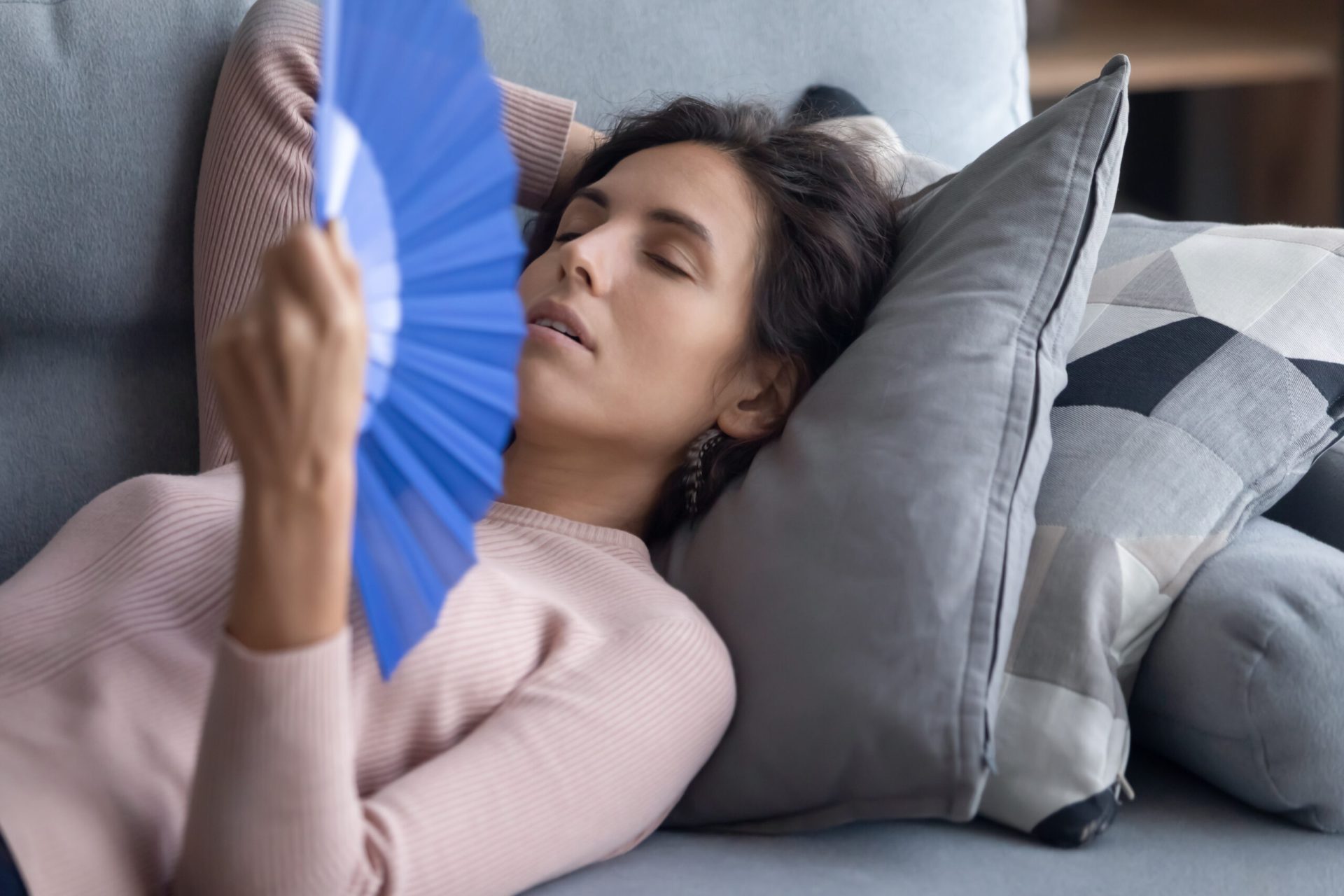
Synthetic materials like polyester fills and foam layers compound the problem by preventing proper air circulation. These materials don’t breathe the way natural fibres do, creating a microclimate around your body that retains heat and moisture. When you’re already dealing with unpredictable temperature regulation, sleeping on materials that work against your body’s cooling mechanisms is a recipe for disrupted sleep.
Why Handmade Mattresses Excel for Menopausal Women
The fundamental difference between handcrafted mattresses and mass-produced alternatives becomes most apparent when dealing with the complex needs of menopause. Our handmade approach allows us to select and combine materials specifically for their breathability, temperature regulation, and comfort properties rather than choosing materials based on cost-effectiveness or manufacturing convenience.
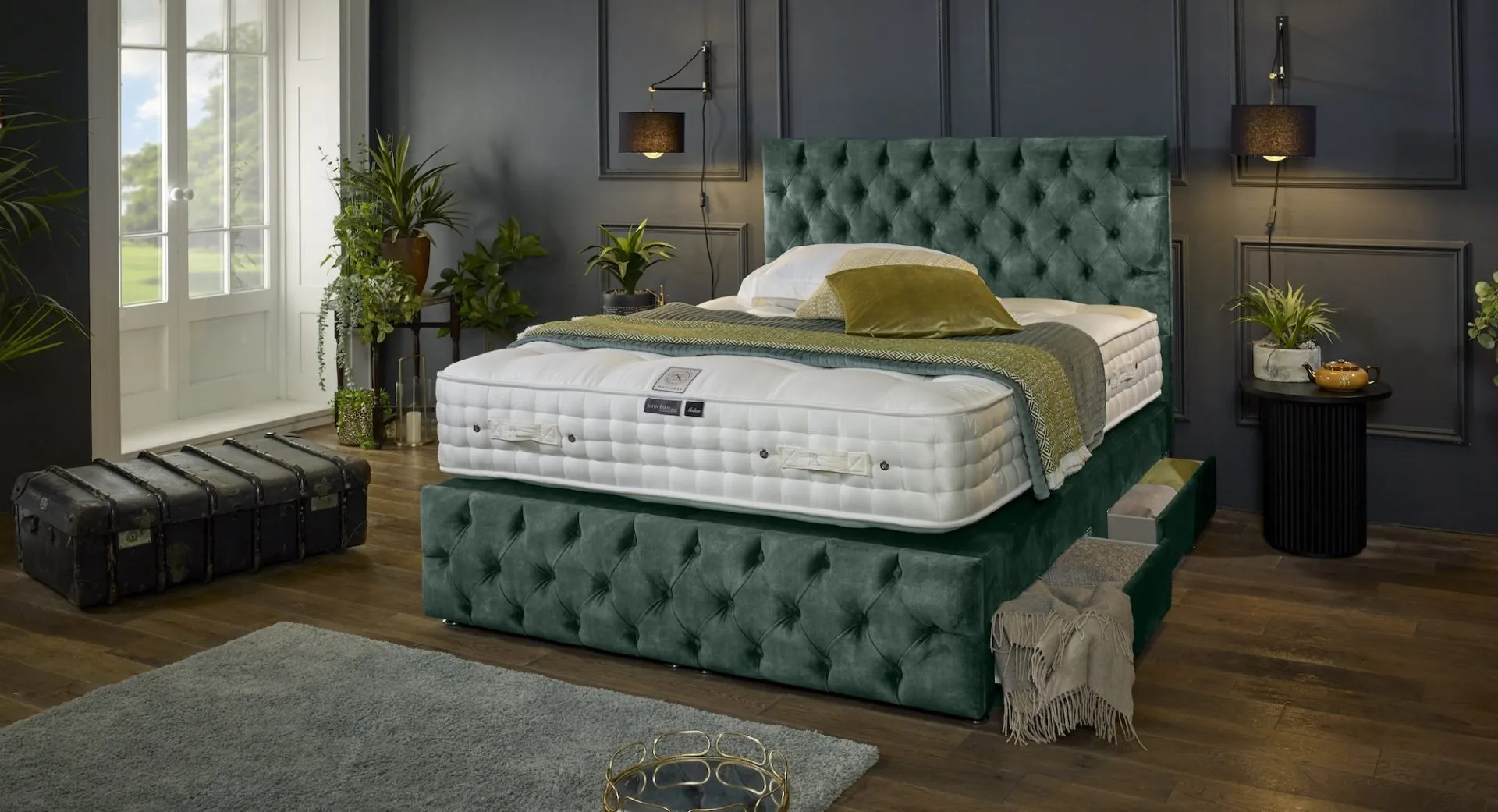
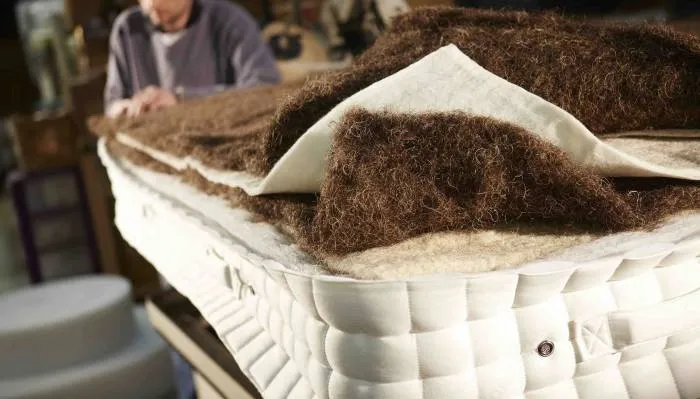
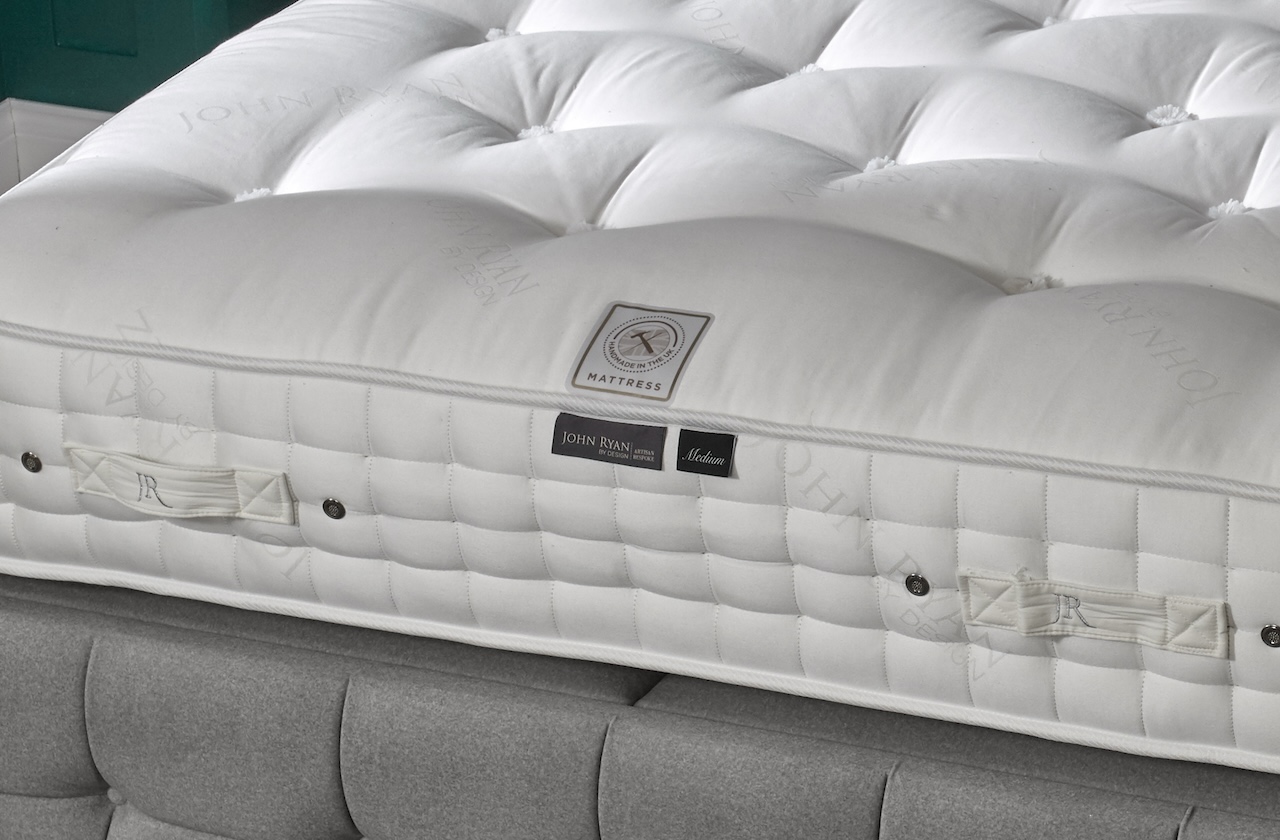
Each of our handcrafted mattresses is built with individual attention to material placement and combination. The natural fibres we use – wool, cotton, horsehair, and cashmere – are selected not just for comfort but for their specific physical properties that benefit menopausal sleep. Wool naturally regulates temperature by wicking moisture away from your body while providing insulation when needed. Cotton provides breathability and softness that synthetic materials simply cannot match. Horsehair creates air channels that allow heat to escape and cool air to circulate.
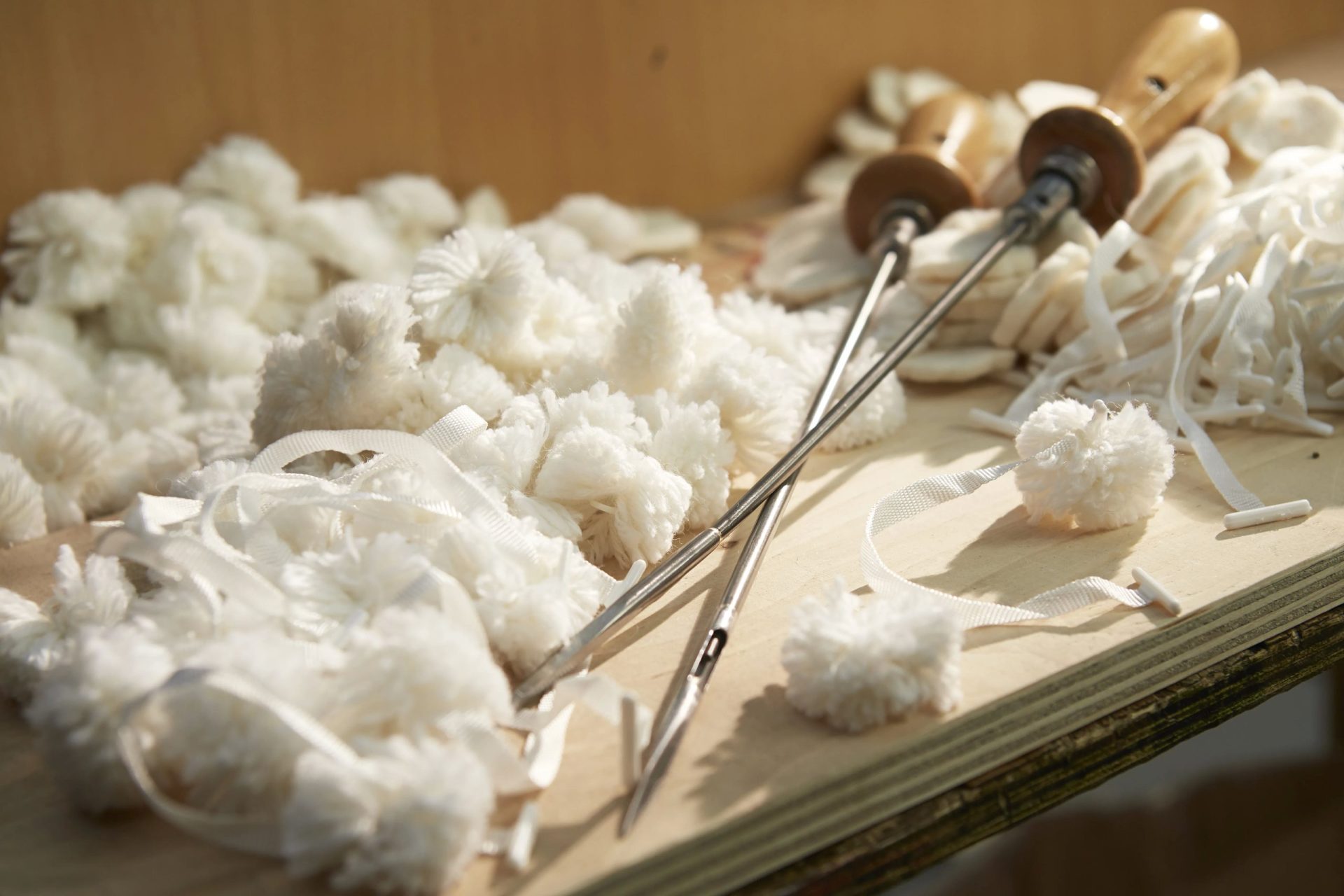
The hand-tufting process we use ensures these materials stay properly positioned and maintain their beneficial properties over time. Machine-made mattresses often use adhesives and synthetic bonding methods that can break down, create chemical off-gassing, and reduce the natural breathability of the materials. Our traditional hand-tufting method preserves the integrity of each material while creating a unified sleeping surface that adapts to your body’s changing needs.
One of our recent customers, Margaret from Birmingham, shared her experience: “After struggling with night sweats for three years, I was desperate. The memory foam mattress I’d loved before menopause had become unbearable. Within two nights of sleeping on my new John Ryan mattress, the difference was remarkable. I still get hot flushes, but the natural fibres help me cool down quickly instead of staying overheated for hours.”
The Precision of Individual Consultation
Mass market mattress companies operate on the assumption that one or two firmness levels can serve millions of customers. This approach becomes particularly inadequate during menopause when your support needs may change dramatically. Weight fluctuations, joint sensitivity, and altered sleep positions all affect what type of support will be most beneficial for your individual situation.

Our consultation process takes into account not just your current weight and preferred sleep position, but how menopause has changed your comfort requirements. Many women find that the firmness level they preferred before menopause no longer serves them well. Joint sensitivity may require softer pressure relief, while changes in weight might necessitate different spring tension. Temperature sensitivity might make certain natural fibres more suitable than others.
During consultation, we also consider partner needs, which become particularly important during menopause when temperature preferences may diverge significantly. Our zip and link mattresses allow different specifications on each side of the bed, ensuring both partners get the support and temperature regulation they need without compromise.

Sarah from Yorkshire told us: “The consultation was eye-opening. I thought I needed a firmer mattress because of back pain, but the John Ryan team explained how my weight distribution had changed during menopause and recommended a medium tension with different comfort layers. They were absolutely right – the targeted support has eliminated my morning stiffness while still providing the cooling I need for hot flushes.”
The Breathable Fibre Advantage
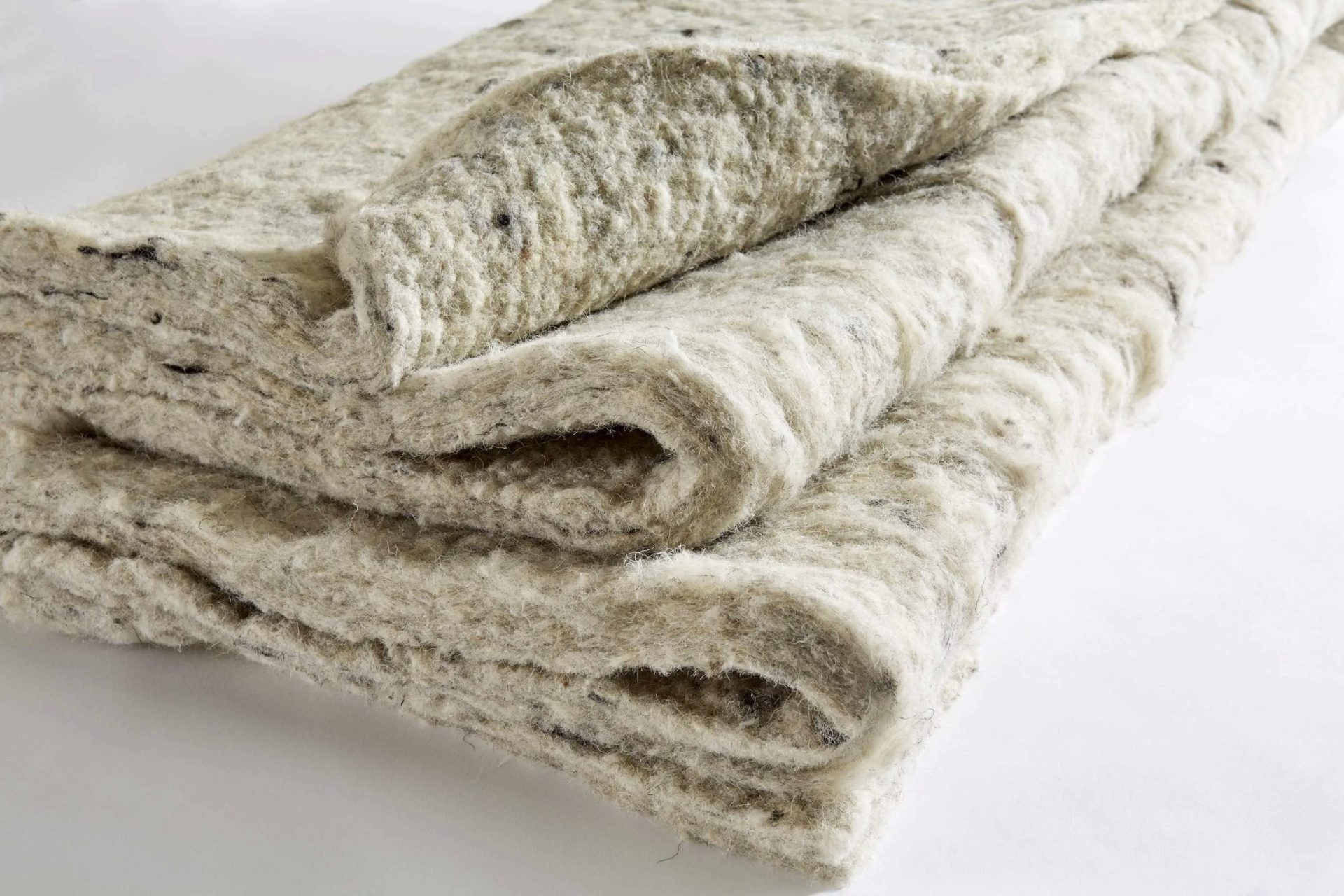
Natural fibres possess physical properties that synthetic materials simply cannot replicate, and these properties become crucial during menopause. Wool fibres have a natural crimp that creates tiny air pockets, allowing for both insulation and ventilation as needed. The hygroscopic nature of wool means it can absorb up to 30% of its weight in moisture without feeling damp, then release that moisture gradually to help regulate your body temperature.
Cotton’s cellular structure allows air to flow freely through the material, providing the breathability essential when your body is working to cool itself during hot flushes. The natural wicking properties of cotton help move moisture away from your skin, preventing the clammy feeling that can follow temperature spikes.
Horsehair has hollow fibres that create natural ventilation channels throughout the mattress. This isn’t marketing hyperbole – it’s the physics of natural materials working to create optimal sleeping conditions. The resilience of horsehair also means these ventilation properties are maintained over time, unlike synthetic materials that can compress and lose their beneficial characteristics.
The contrast with synthetic materials is stark. Polyester fills, commonly used in cheaper mattresses, are essentially plastic fibres that don’t breathe and can trap heat and moisture. Memory foam, being petroleum-based, has no natural ventilation properties and relies entirely on synthetic cooling technologies that often fail or diminish over time.
Linda from London shared her transformation: “I’d been waking up drenched in sweat for months. The night I first slept on my John Ryan mattress with natural fibres, I had a hot flush around 2 AM but was able to cool down and get back to sleep within minutes instead of lying awake overheated for hours. The difference in my energy levels the next day was incredible.”
Why Memory Foam Fails Menopausal Women
Memory foam’s fundamental properties work directly against the physiological needs of menopausal women. The material’s signature characteristic – softening in response to body heat – becomes a liability when your body temperature is already unpredictable and often elevated. As you warm up during a hot flush, the memory foam becomes softer, causing you to sink deeper into the mattress and creating an insulating effect that traps heat around your body.
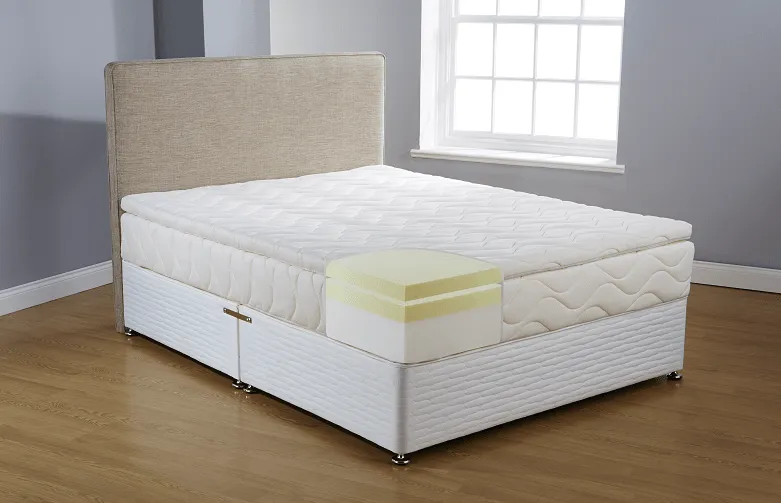
The slow response time of memory foam compounds the problem. When you need to change positions to find cooling relief, memory foam’s delayed recovery means you’re fighting against the material rather than moving freely. This can turn what should be minor position adjustments into major sleep disruptions, often waking you fully just when you need to maintain sleep continuity.
Memory foam’s synthetic composition also means it off-gases volatile organic compounds throughout its lifespan. While these chemicals might not have bothered you before menopause, the increased sensitivity that many women experience during this transition can make these odours overwhelming or even nausea-inducing. The closed-cell structure of memory foam prevents proper air circulation, meaning any odours or chemical emissions become concentrated in your immediate sleep environment.
The heat retention properties of memory foam become particularly problematic when dealing with menopause symptoms. While manufacturers often add cooling gels or other technologies to combat this issue, these solutions are typically superficial and lose effectiveness over time. The fundamental problem remains: memory foam is designed to retain and respond to body heat, which is exactly what menopausal women need to avoid.

Claire from Manchester experienced this firsthand: “My expensive memory foam mattress became my enemy during menopause. Every hot flush felt amplified because I’d sink into the foam and couldn’t cool down. Switching to John Ryan’s natural fibre mattress was like getting my bedroom back. The responsive surface lets me move freely, and the breathable materials actually help with temperature regulation instead of fighting against it.”
The Box Mattress Deception: Why Eve and Simba Miss the Mark
The fundamental concept behind “mattresses in a box” companies like Eve and Simba is convenience and speed, rather than necessarily prioritising optimal sleep quality for specific life stages or using traditional mattress manufacturing methods. These companies achieve their compressed packaging and lower prices by using synthetic materials and simplified construction, which directly contradicts what menopausal women need for comfortable sleep.
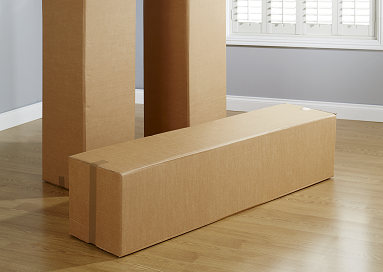
The compression process required for box mattresses necessarily excludes natural fibres that don’t compress well or that lose their beneficial properties when vacuum-packed. Instead, these mattresses rely heavily on synthetic foams and polyester fills that can be compressed and re-expand but lack the breathability and temperature regulation properties essential for menopause sleep comfort.
The one-size-fits-most approach of box mattress companies means they typically offer only a few firmness options designed to appeal to the broadest possible market. This approach overlooks the fact that menopause creates highly individual and often fluctuating comfort needs that generic solutions cannot effectively address.
The direct-to-consumer model, while convenient, eliminates the personal consultation that becomes crucial during menopause when your sleep needs may be changing in ways you don’t fully understand. Online questionnaires and algorithms cannot replace the expertise needed to match individual physiology with appropriate materials and construction methods.
Box mattresses also rely heavily on trial periods and return policies, essentially acknowledging that their one-size-fits-most approach will fail for many customers. For menopausal women dealing with disrupted sleep, the weeks or months of poor rest while “trying out” an unsuitable mattress can have significant impacts on health, mood, and quality of life.
Jennifer from Bristol discovered this limitation: “I tried two different box mattresses thinking the problem was just bad luck with the first one. Both were too hot and didn’t provide the support I needed after menopause changed my body. The John Ryan consultation opened my eyes to why generic mattresses weren’t working – my needs had become too specific for mass-market solutions. The handcrafted mattress they created has been perfect for over two years now.”
The Science of Natural Temperature Regulation
Understanding why natural fibres excel at temperature regulation helps explain why they’re particularly beneficial during menopause. Wool fibres have a complex structure with scales and natural crimp that creates microscopic air pockets. These pockets act as insulation when your body needs warmth but also allow heat to escape when your body temperature rises. This dynamic response is impossible to replicate with synthetic materials.
The hygroscopic properties of wool mean it actively manages moisture without feeling wet or clammy. During a hot flush, wool can absorb the perspiration while allowing air circulation to help cooling. As your body temperature normalises, the wool gradually releases the absorbed moisture, helping maintain a comfortable sleep environment.
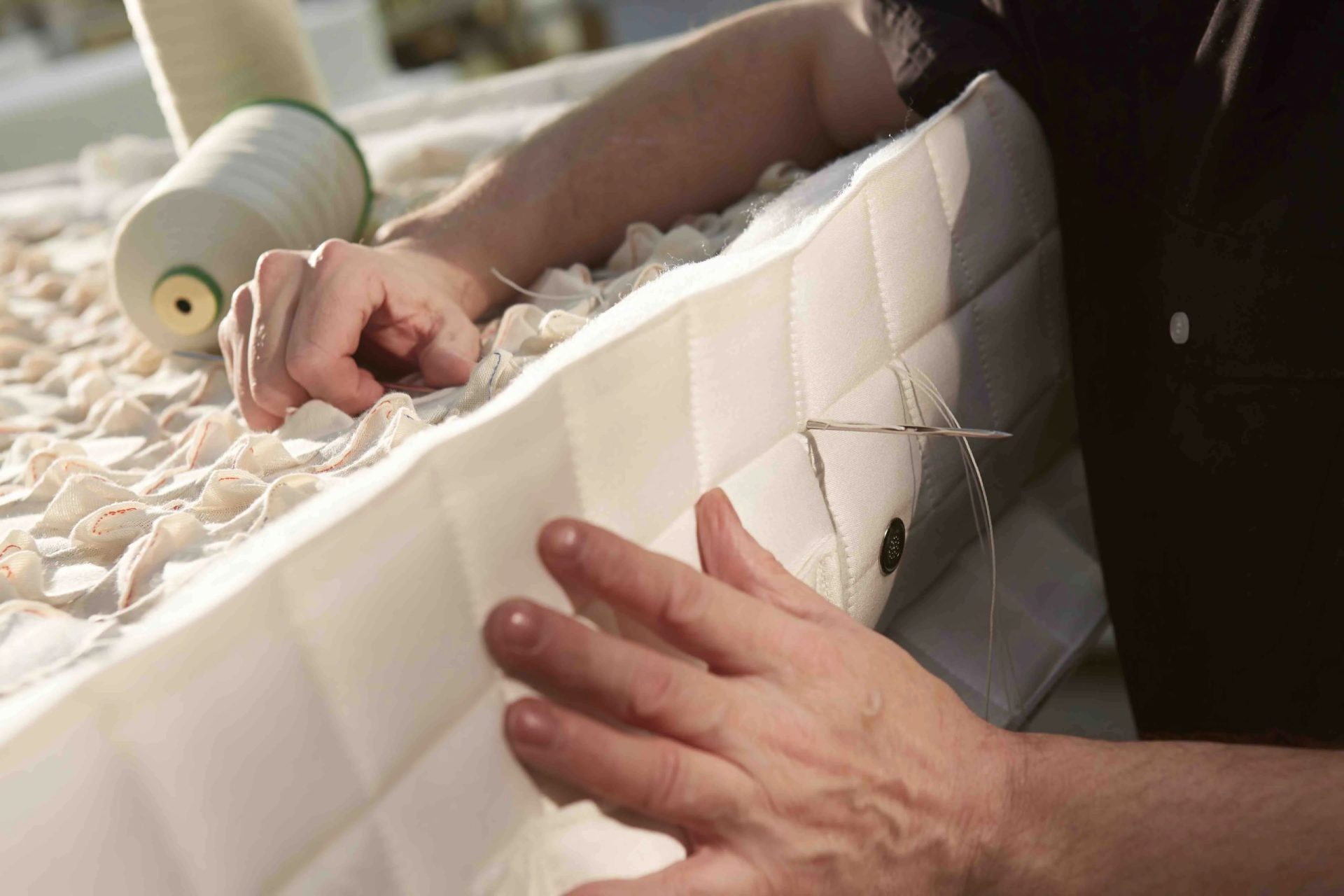
Cotton’s cellular structure creates natural air channels that facilitate continuous air circulation. Unlike synthetic materials that can only move air across their surface, cotton allows air to flow through the material itself, creating more effective cooling when needed.
The combination of different natural fibres in our handcrafted mattresses creates a synergistic effect where each material’s beneficial properties are enhanced. Wool provides dynamic temperature regulation, cotton adds breathability and moisture management, and horsehair creates structural ventilation channels throughout the mattress core.
This natural temperature regulation system doesn’t rely on external technologies or treatments that can fail or diminish over time. The beneficial properties are inherent to the materials themselves and are maintained through proper construction and care.
Mary from Edinburgh experienced this natural regulation: “The difference is remarkable – I can actually feel the mattress working with my body instead of against it. During hot flushes, I feel the cooling effect almost immediately, and when I’m cold, the same materials provide perfect warmth. It’s like having a mattress that adapts to exactly what I need moment by moment.”
The Consultation Advantage: Personalised Solutions for Individual Needs
The complexity of menopause symptoms and their impact on sleep quality make professional consultation essential rather than optional. Our consultation process begins with understanding how menopause has specifically affected your sleep patterns, comfort preferences, and physical needs. This information is crucial because menopause affects every woman differently, and generic solutions rarely address individual symptom patterns effectively.
We assess not just your current weight and preferred sleeping position, but how these may have changed since menopause began. Weight distribution often shifts during menopause, potentially requiring different spring tensions than you previously needed. Joint sensitivity may have developed or increased, necessitating different comfort layer combinations. Temperature regulation issues may make certain natural fibre blends more suitable than others.
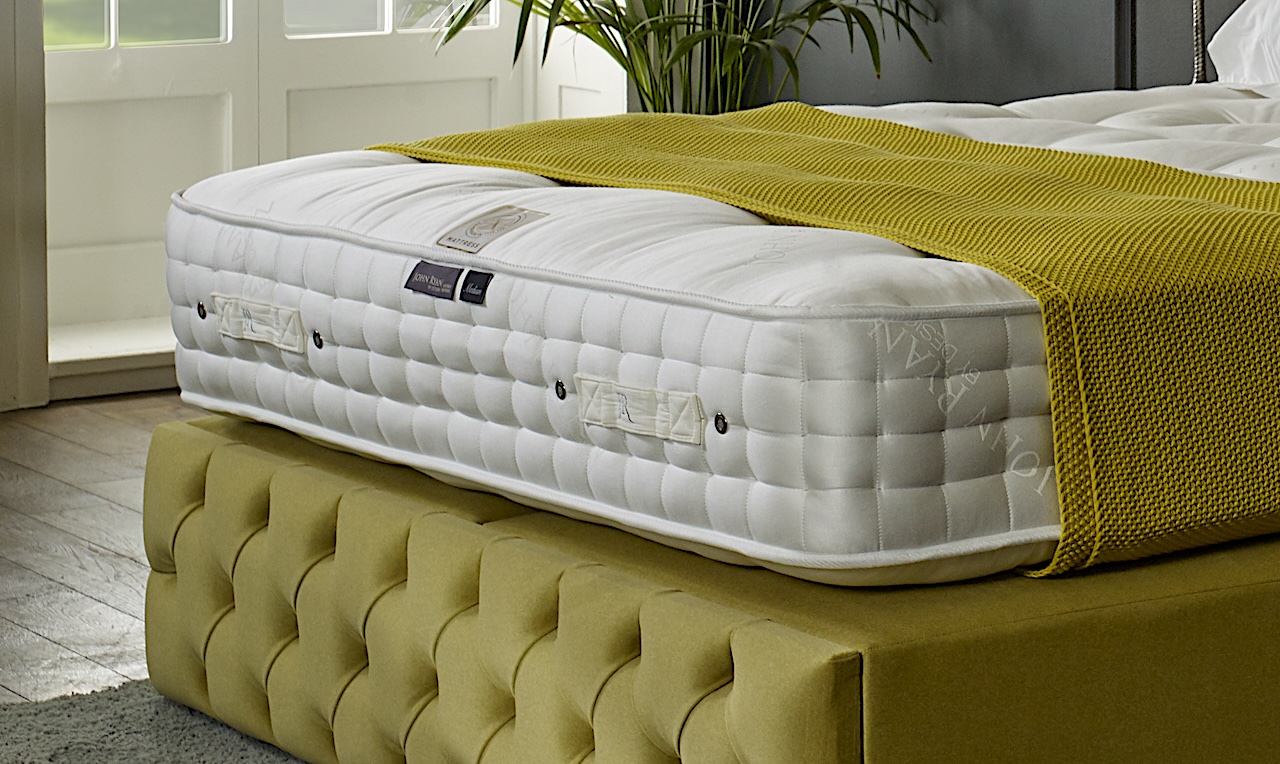
The consultation also addresses partner compatibility, which becomes particularly important during menopause when temperature preferences and movement sensitivity often change. Our zip and link mattresses allow different specifications on each side of the bed, ensuring both partners achieve optimal comfort without compromise.
We also provide guidance on complementary sleep environment optimisations that work synergistically with the right mattress. Room temperature recommendations, bedding material suggestions, and sleep position guidance all contribute to creating the optimal environment for menopausal sleep quality.
The ongoing relationship doesn’t end with mattress delivery. We’re available for follow-up consultations as your needs continue to evolve during menopause. Sometimes, minor adjustments to bedding or sleep environment can provide significant improvements, and our expertise remains available to help optimise your sleep quality over time.
Patricia from Leeds valued this comprehensive approach: “The consultation wasn’t just about selling me a mattress – it was about understanding my specific menopause challenges and creating a complete solution. The team’s recommendations about room temperature and bedding materials were just as valuable as the perfect mattress they created for me. Having ongoing support as my symptoms evolved has been invaluable.”
Real Customer Experiences: Transformative Results
The transformation that menopausal women experience when switching from synthetic to natural fibre mattresses is often dramatic and immediate. Helen from Glasgow shared: “I’d been struggling with menopause sleep issues for over two years, trying everything from cooling pillows to expensive sheets. Nothing worked until I got my John Ryan mattress. The natural fibres made an immediate difference – I’m sleeping through the night again and waking up refreshed instead of exhausted.”
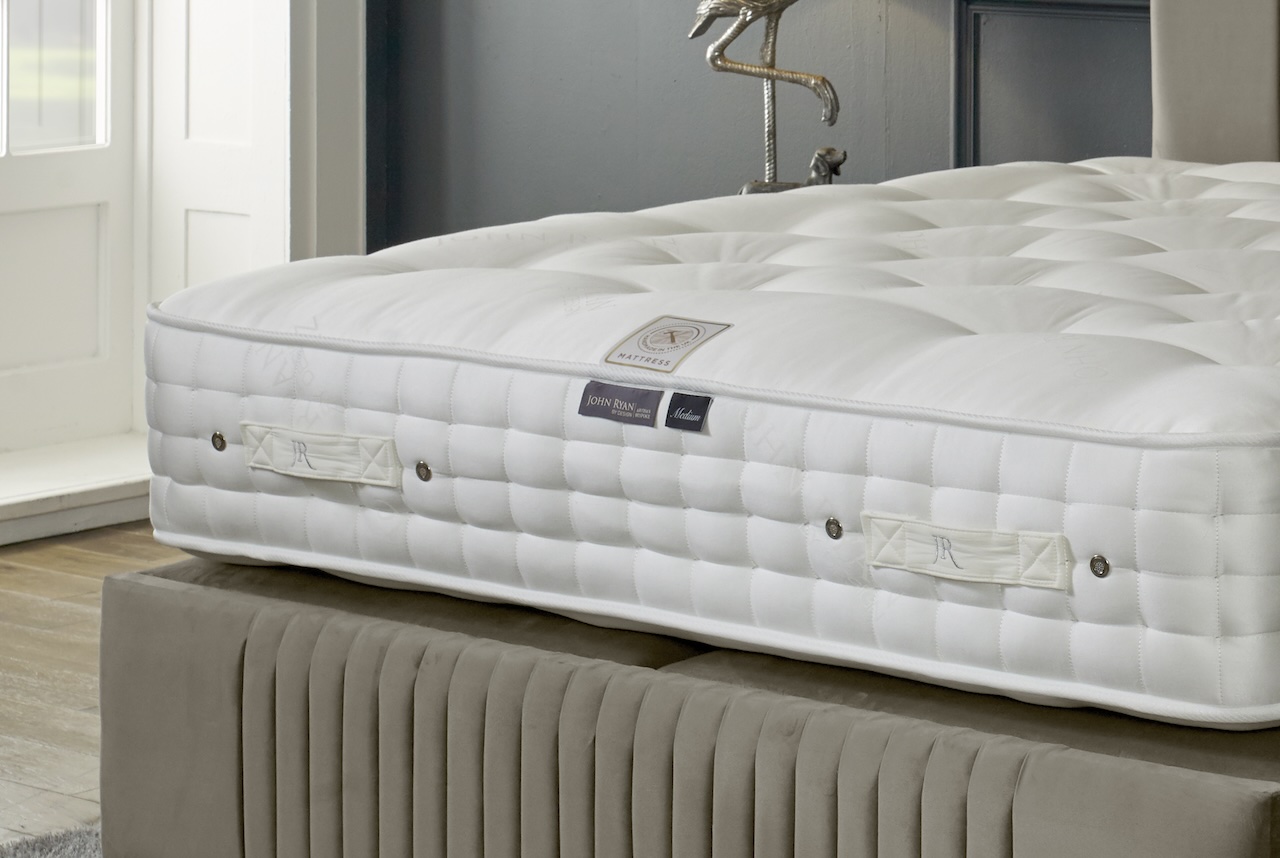
Temperature regulation improvements are consistently the most noticeable change. Susan from Cardiff told us: “The hot flushes haven’t stopped, but they no longer dominate my nights. The breathable natural fibres help me cool down quickly instead of staying overheated for hours. I’m getting the deep sleep I desperately needed.”
Joint comfort often improves significantly as well. Rachel from Norwich experienced this: “Menopause brought joint stiffness I’d never experienced before. The pressure relief from natural fibres combined with proper spring tension has eliminated my morning aches. I actually look forward to bed now instead of dreading another uncomfortable night.”
The elimination of chemical sensitivities provides relief many women didn’t even realise they needed. Diana from Bristol discovered: “I thought my increased sensitivity to odours was just part of menopause I had to endure. Switching to a chemical-free natural fibre mattress eliminated headaches and stuffiness I didn’t even connect to my bedding. The air in my bedroom feels cleaner and fresher.”
Long-term satisfaction remains consistently high because natural materials maintain their beneficial properties over time. Angela from Liverpool, sleeping on her John Ryan mattress for five years, reports: “The temperature regulation and comfort are just as good now as when the mattress was new. With my previous synthetic mattresses, I noticed declining performance after just a couple of years. This investment has literally paid for itself in improved sleep quality.”
Investment in Long-term Sleep Health
When evaluating the cost of a handcrafted natural fibre mattress, it’s essential to consider the long-term value proposition rather than just the initial price. Menopause can last several years, and the cumulative impact of poor sleep during this period affects every aspect of health and quality of life. The investment in proper sleep support pays dividends in energy levels, mood stability, cognitive function, and overall wellbeing.
Quality handcrafted mattresses using natural materials typically last 15-20 years or more with proper care, compared to 5-7 years for synthetic alternatives. When calculated on a cost-per-year basis, the investment often compares favourably to repeatedly replacing cheaper mattresses that fail to provide adequate comfort or durability.
The health benefits extend beyond just better sleep. Improved temperature regulation can reduce the severity and frequency of hot flushes over time. Better spinal support can prevent or alleviate the joint pain that often accompanies menopause. Elimination of chemical exposure supports overall wellness during a time when your body is already managing significant hormonal changes.
The consultation process ensures you’re investing in exactly the right specification for your individual needs rather than hoping a generic solution will work. This targeted approach maximises the return on your investment by ensuring the mattress will continue serving your needs effectively throughout menopause and beyond.
Many customers find that the improved sleep quality leads to reduced reliance on sleep aids, pain medications, or other interventions they’d been using to manage menopause symptoms. The cumulative savings from these reductions often offset a significant portion of the mattress investment.
Catherine from Exeter calculated her savings: “Between the sleep medications I no longer need, the massage treatments that became unnecessary, and the energy to exercise regularly again, this mattress has saved me money while dramatically improving my quality of life. Best investment I’ve made in years.”
Beyond the Mattress: Creating the Optimal Menopause Sleep Environment
While the right mattress forms the foundation of good menopause sleep, creating the optimal environment requires attention to complementary factors that work synergistically with natural fibre bedding. Room temperature becomes critically important during menopause, with most women finding optimal comfort between 16-18°C (60-65°F). This cooler environment works with breathable natural fibres to provide the best possible temperature regulation.
Bedding material choices should complement your natural fibre mattress. Natural materials like cotton, linen, or wool maintain the breathability and temperature regulation benefits while synthetic sheets can negate many of the mattress’s advantages. The investment in natural fibre bedding pays dividends in comfort and sleep quality.
Air circulation in the bedroom becomes more important during menopause. Ceiling fans or well-positioned room fans can work with your breathable mattress to create optimal air movement for temperature regulation. However, avoid creating direct drafts that might cause temperature swings in the opposite direction.
Light management takes on increased importance as menopause can affect circadian rhythm stability. Blackout curtains or eye masks help maintain proper sleep-wake cycles, while avoiding blue light exposure in the hours before bedtime supports natural melatonin production that may be disrupted during menopause.
Humidity control can significantly impact comfort, particularly for women experiencing night sweats. Dehumidifiers in humid climates or humidifiers in dry conditions help maintain the 40-50% relative humidity range that optimises both comfort and the performance of natural fibre materials.
Making the Decision: Your Path to Better Sleep
If you’re struggling with menopause sleep challenges, the decision to invest in proper sleep support becomes not just about comfort but about reclaiming your quality of life. The combination of expert consultation, handcrafted construction, and natural materials specifically addresses the physiological changes that menopause brings rather than hoping generic solutions will somehow work.
The consultation process begins with a conversation about your specific challenges and how menopause has affected your sleep patterns. This information guides the selection of appropriate spring tensions, natural fibre combinations, and construction methods that will serve your individual needs most effectively.
We encourage including your partner to the consultation if you share a bed, as menopause often affects both partners’ sleep quality. Our zip and link solutions can address divergent support needs while maintaining the intimacy and convenience of a shared sleep surface.
The investment timeline should consider that menopause symptoms can persist for several years, making the cost-per-night of quality sleep support quite reasonable when viewed over the mattress’s expected lifespan. Many customers find that improved sleep quality provides returns in energy, mood, and overall well-being that far exceed the financial investment.
Our delivery and setup service ensures you don’t have to handle heavy mattresses yourself, and our aftercare support means you have access to guidance as your needs continue to evolve during menopause.
Conclusion: Reclaiming Restorative Sleep During Menopause
Menopause presents unique sleep challenges that require specialised solutions rather than generic approaches. The combination of unpredictable temperature regulation, changing support needs, and increased sensitivity to synthetic materials makes natural fibre mattresses not just preferable but essential for optimal comfort during this transition.
Handcrafted construction, utilising traditional methods, preserves the beneficial properties of natural materials while ensuring durability and long-term performance. The personalised consultation process ensures you receive exactly the right specification for your individual needs rather than hoping mass-market solutions will somehow work.
If you’re ready to stop enduring poor menopause sleep and start experiencing the comfort and support that natural fibres provide, we’re here to help. Our consultation process will identify exactly the right solution for your individual needs and ensure you get the restorative sleep that supports your wellbeing during menopause and beyond.
Contact our expert team at 0161 437 4419 to discuss your menopause sleep requirements. Because quality sleep during menopause isn’t a luxury – it’s essential healthcare that natural fibre expertise can deliver.
Dreaming of the perfect nights sleep?
Ask us a question
There are over 6000 questions and answers submitted by you on all questions about mattresses and bed problems. Enter a keyword such as Vi Spring, John Lewis beds, bad back or Memory Foam and see if your question has already been answered.
If you can’t find an answer in knowledge hub, ask a new question. We aim to respond to all questions within one working day.
Newsletter
Enter your email to join our newsletter. We’ll send you occasional news and mattress expertise.