






Mattress Help, Mattress Choices
May 2026Soft, medium or firm mattress tensions explained.
Updated 2026: Getting the right tension, or firmness, for your mattress really is the first thing you need to establish when buying a new mattress. Not all mattresses are the same, and more often than not, people choose the spring tension, thinking it will give them the true feel of the mattress, which is completely wrong.
The mattress spring tension is based solely on your body weight, which is where most people make mistakes. It is the fibres on top that create the feel of the mattress.
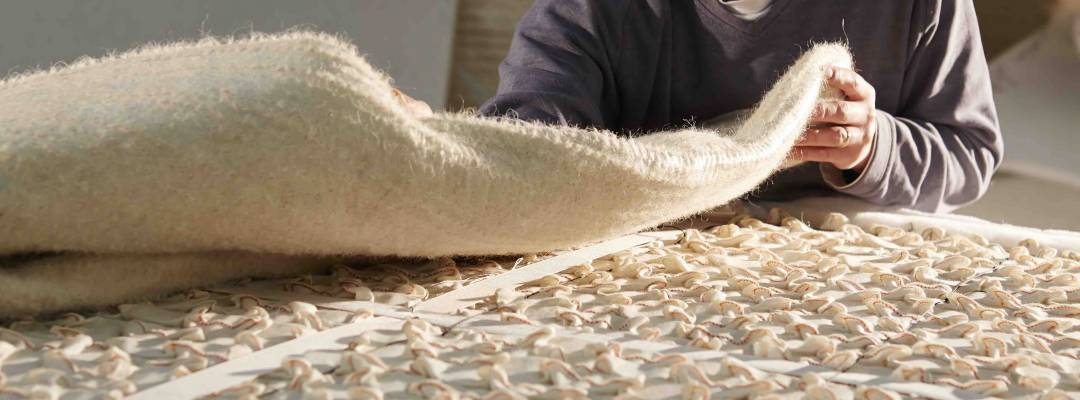
The true mattress feel is not just based on the spring tension but more importantly, the fillings layered on top. Click to view handmade mattresses.
Mattress firmness is often poorly described by mattress retailers. They often confuse comfort and spring tensions on their mattress listings but there is an easy way to ensure you get the right support and comfort from your mattress. We give you our expert guide on how to avoid picking the incorrect mattress.
- How to choose the right mattress spring tension
- Mattress fillings as the comfort layer
- What makes a soft mattress?
- What is a medium feel mattress made of?
- What is inside a firm mattress?
- How to tell if a mattress is too soft or firm
- How to soften a firm mattress
- How to make a soft mattress firmer
- Frequently asked questions
1. How to choose the right mattress spring tension
Firstly, in the mattress industry, there is no precise industry-wide definition of soft, medium or firm. You will see all sorts of sliding scales and ratings, but without knowing what exactly is inside that mattress, it is just a guess. This is because most of the time retailers are using the spring tension to explain the relative firmness of the mattress, which is incorrect. Most mattress firmness ratings are based on the upholstery layers on top of the spring unit. So when you are looking for a medium-firm mattress, you need to be looking at that upholstery as well as the spring tension to work out the right mattress for you.
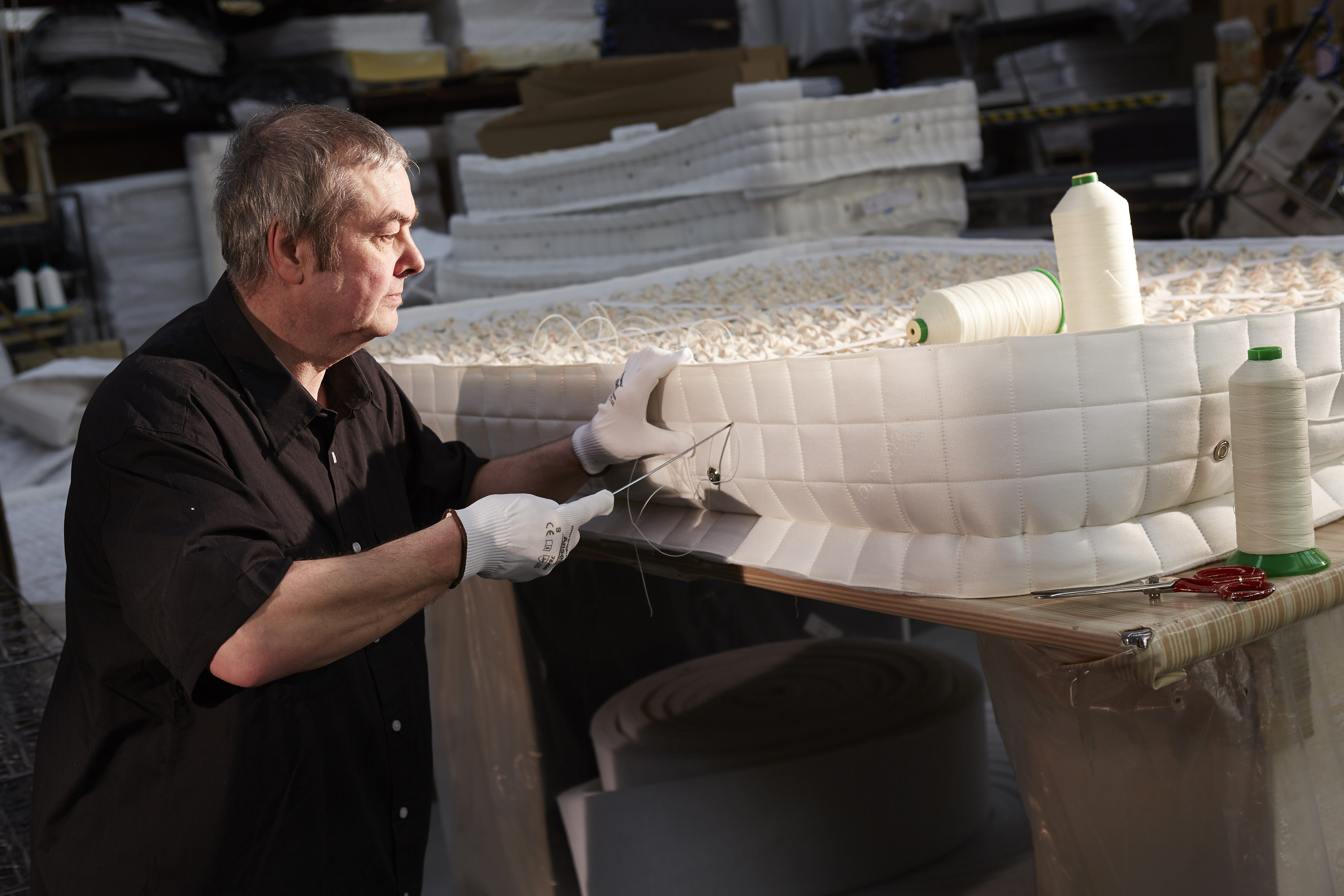
Spring tensions of a mattress are usually described as Soft, Medium or Firm. This gives the illusion that the mattress itself will feel this way. This is incorrect. These three tensions are directly linked to your body weight, which is where most people make mistakes. The very first question you need to ask is which spring gauge is best for my body weight. This means you will have exactly the amount of support you need during the night. In a high-end mattress, different spring tensions will be available, allowing you to select either a soft, medium or firm spring depending on your body weight.
Spring tension guide by body weight
The table below shows the spring wire gauges we use across our ranges and the body weights each tension is designed to support. These are the same gauges verified against Institute of Spring Technology guidance for pocket spring construction.
| Spring Tension | Wire Gauge | Recommended Body Weight |
|---|---|---|
| Soft | 1.2mm | Bespoke tension (please call us) |
| Medium | 1.4mm | Up to 16 stone (101kg) |
| Firm | 1.6mm | 16 stone and above (101kg+) |
| Extra Firm | 1.9mm | 20 stone and above (127kg+) |
Another thing to bear in mind is that mattress tension is also relative to the size of the mattress. A single mattress will be firmer than a double mattress, a lot firmer than a king size and much firmer than a super king, and vice versa. The bigger the span of the mattress the softer it will feel. So, going out to buy a mattress bigger or smaller than the one you are looking to replace will have a direct influence on the mattress tension. This is where you may need specialist advice and we can help prevent you from guessing.
The size of the mattress will influence how firm it feels. A smaller single mattress will feel firmer than a super king even in the same spring tension.
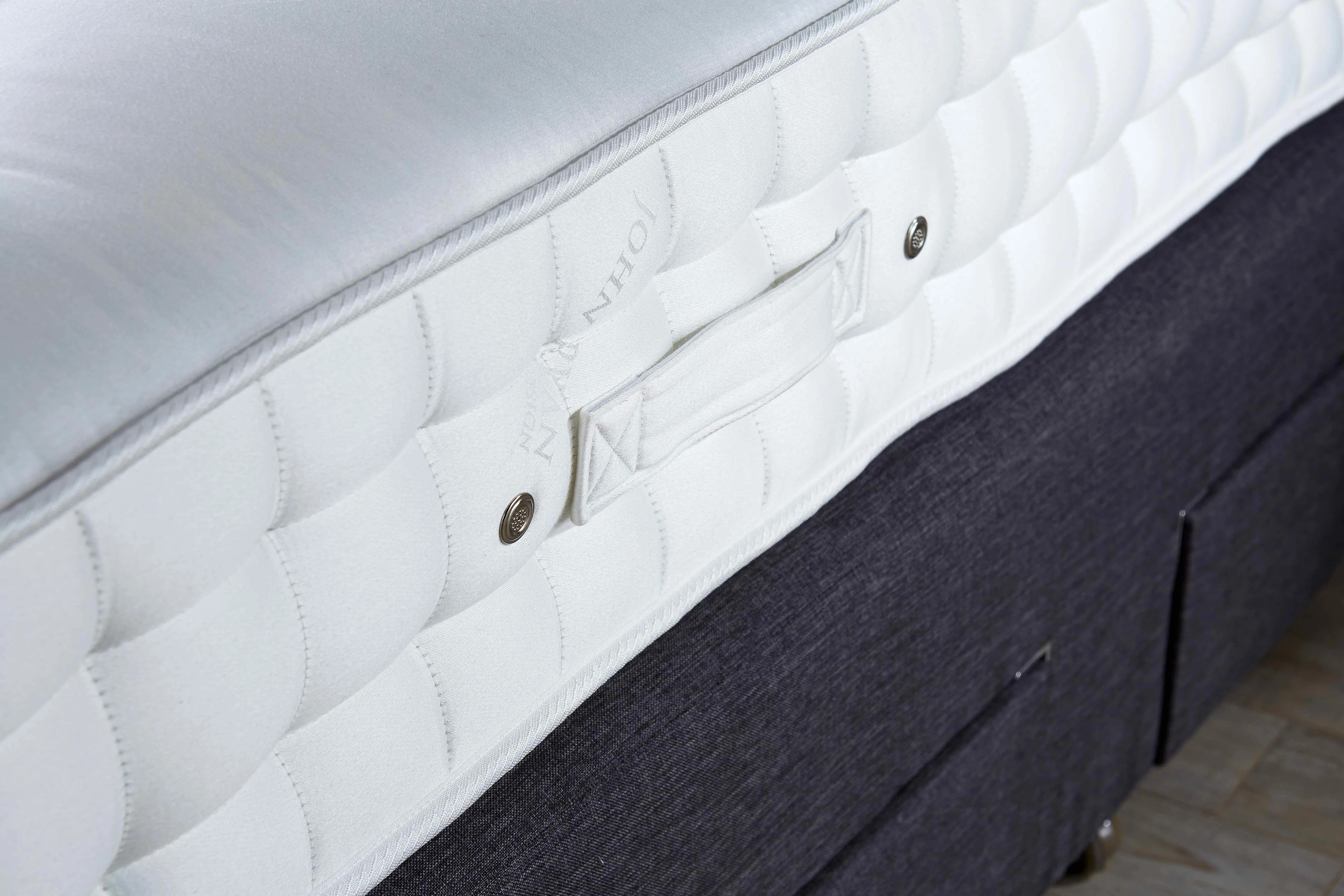
There is also the fabric to consider. Mattresses that have a final layer of Latex or foam will always have a soft knitted fabric to face the mattress, whereas a final layer of polyester will usually have a damask (woven fabric) to face the mattress. When manufacturers want the mattress to have a softer overall tension they use a knitted fabric rather than a Damask. However, care needs to be taken with cheaper polyester knitted fabrics compared to Damask. A viscose Damask is far more breathable and hardwearing than any knitted or quilted cover.
How firm should my mattress be?
Your mattress firmness should be dictated firstly by your weight. Always choose a spring tension that meets your weight using our spring tension guide above. The comfort layers should provide your preferred feel of the mattress, whether soft, medium or firm, but never choose the spring tension for this.
As a rule of thumb, the following tensions will suit these common sleeping positions:
- Side sleepers should choose a softer tension
- Back sleepers should choose a firmer tension
- Front sleepers should choose a medium tension
For a full breakdown of how sleeping position interacts with firmness and spring tension, see our complete guide to the best mattress for each sleeping position.
Mattress firmness vs mattress support
There is a clear misunderstanding in the bed industry about perceived firmness and support. Often the two words are used interchangeably. We cannot stress enough how these two words have very distinct meanings and are not the same thing.
The support unit of your mattress is nearly always dictated by your weight and height. This is because spring units are manufactured with certain load or weight tolerances, meaning they are made to take a certain amount of weight to load (compress) and unload (extend) correctly.
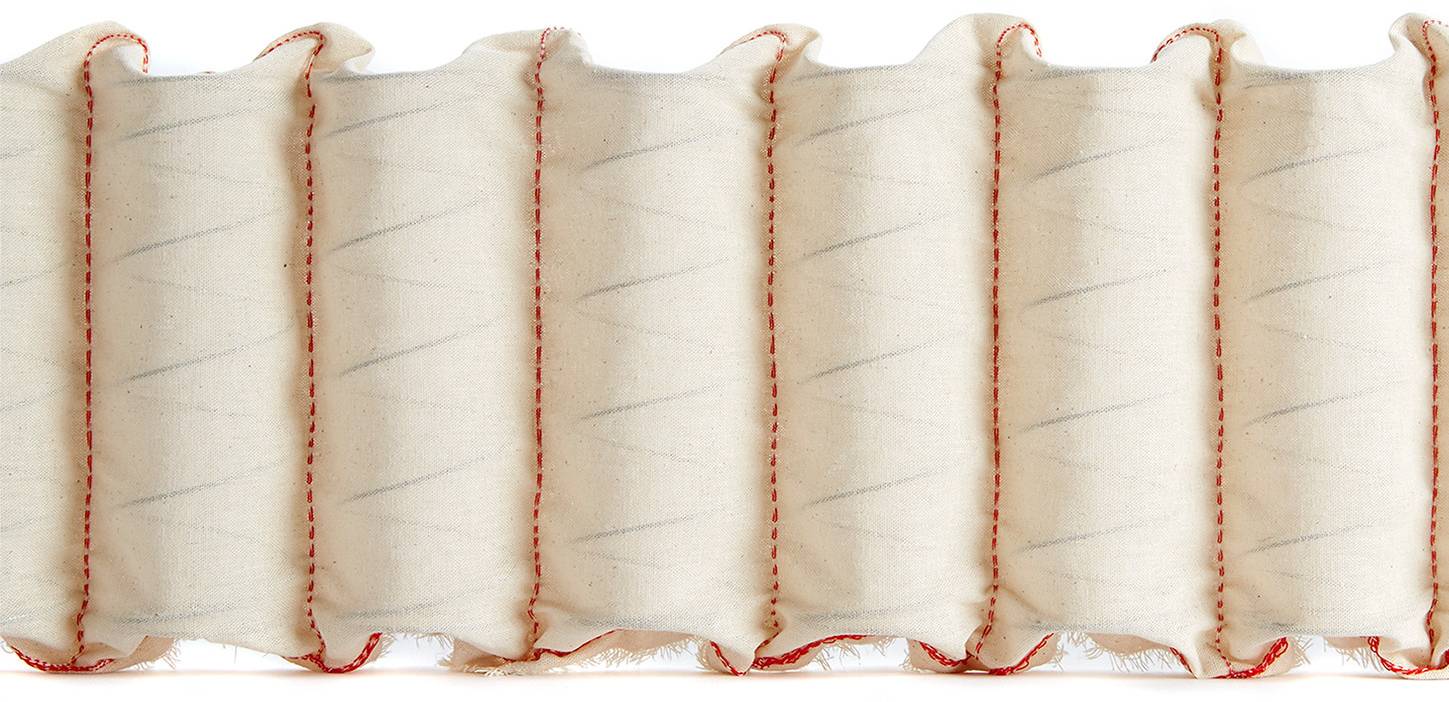
If you choose a spring unit made for a weight tolerance that your body weight does not fit, you will either end up with a firmer spring than you need, which means it will not compress as it should, or too soft a spring meaning it compresses too far. Whilst it is your choice to go for a super firm spring, it really will be overkill and prevent the mattress from accommodating you properly.
Most people mistakenly confuse the spring tension with how the mattress will feel
It is essential that you know the weight limit that can be applied to the spring to work out if it is going to be suitable for you. Even if you want the firmest mattress possible, a spring that is too firm for your body weight will never give you proper support. You will merely rest on the top of it. The spring unit’s sole purpose is to compress and extend to accommodate your weight, lumps, bumps, elbows and wriggling needs.
Unfortunately, there is no standard soft, medium or firm spring tension accepted across the industry (with the exception of orthopaedic springs which are all 1.94mm 12 gauge). Each manufacturer will have their own definition. Our medium springs accommodate sleepers from around 10 stone up to 16 stone in the Origins range, with some give and take for those slightly outside that range.
Ask the mattress retailer what the spring tolerance is
You simply must ask mattress manufacturers what the spring weight tolerance is. Below we have listed our spring tolerances across three tensions. This should give you an idea of the kind of detail you should expect from any retailer. With this, there are exceptions which are rare, so if in doubt please get in touch with us.
| Artisan Spring Tension | Weight Range |
|---|---|
| Soft | Available as a Bespoke Product (Please Call) |
| Medium | Upto 16 stone / 101kg |
| Firm | Over 16 stone / 101kg |
How to tell if a mattress is too soft or firm
You will quickly find out if a mattress is too soft or too firm by the quality of sleep you have on it each night. If a mattress is too soft or firm, you will quickly start to experience any of the following symptoms:
- Disturbed sleep
- Turning over frequently during the night
- Stiffness in shoulders, hips or back
- Discomfort on pressure points during the night
- Restless sleep
- Feeling like you are sinking excessively
- Sensations like sleeping on a board
- Difficulty getting out of bed due to cramps
When you experience any of these symptoms consistently it is time to check both the spring tension and the upholstery firmness of your mattress, then either tweak it to soften it or consider replacing your mattress.
A note on “too firm” versus “too soft”: these two problems feel similar because both cause poor spinal alignment, but they have different causes and different fixes. A mattress that is too firm resists your body rather than accommodating it, creating pressure at the shoulders and hips. A mattress that is too soft allows your heavier areas to sink too deeply, causing the spine to sag. Identifying which applies to you is the first step before reaching for a topper or a new mattress.
2. Mattress fillings as the comfort layer
Once you have established whether the spring support unit is suitable for you, the mattress upholstery layers on top of the spring unit will give you a better idea of the perceived overall firmness. These are also known as the comfort layers of a mattress.
It is the mattress upholstery that creates what comfort firmness the sleeper prefers, not the spring.
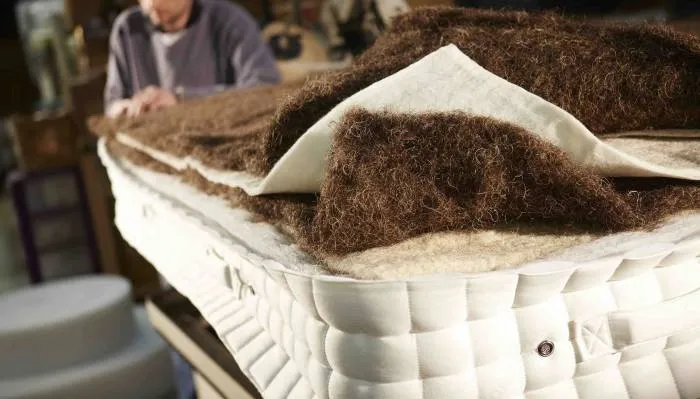
The upholstery or mattress filling layers provide the choice on the overall firmness you require from your mattress. This is where most people make mistakes. By focusing on the spring unit alone they pay little attention to the type, GSM (how much each layer weighs) and blend of the mattress fillings.
This is where the real choice lies. You can have two medium tension springs, suitable for say a 13 stone sleeper, in two mattresses but topped with different upholstery layers that will give one a medium feel and another a much softer or firmer feel.
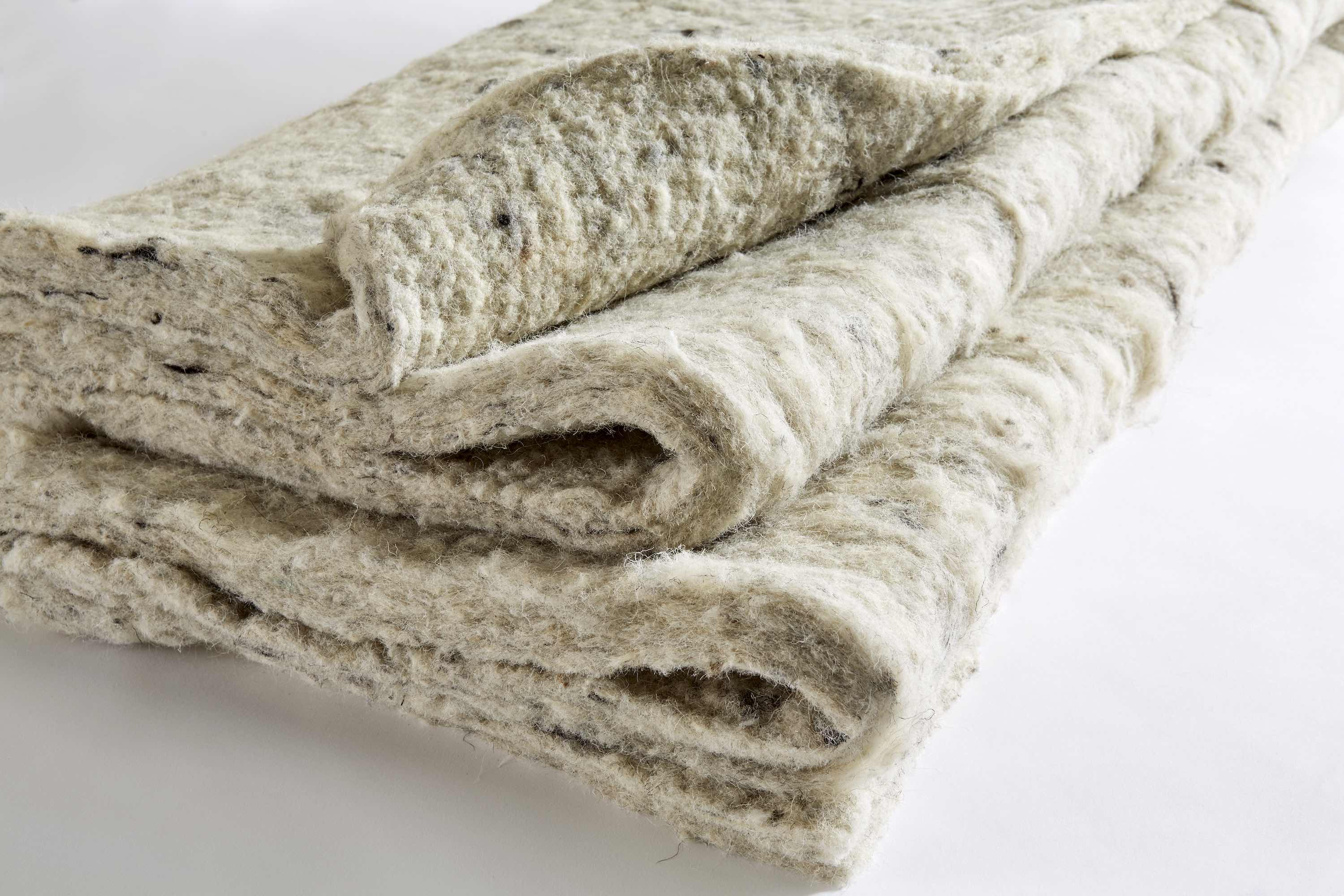
As a practical guide to how different fibres affect the feel of a mattress:
- Foams, for example in our Origins Reflex, give a firmer feel in the upholstery layer.
- British Fleece Wool and Cotton in the top layer of the Artisan Luxury will give a really soft feel to the mattress.
- Horsehair will give a firmer feel in the comfort layers, as in our Artisan Bespoke.
- Alpaca fibre and Bamboo are among the softest fibres available, as used in our Artisan Bespoke 003.
Yes, the support unit plays a part, but this is really set by your weight, whereas the upholstery can give you the option of either a softer or firmer feel in the top layer, the layer you are immediately lying on.
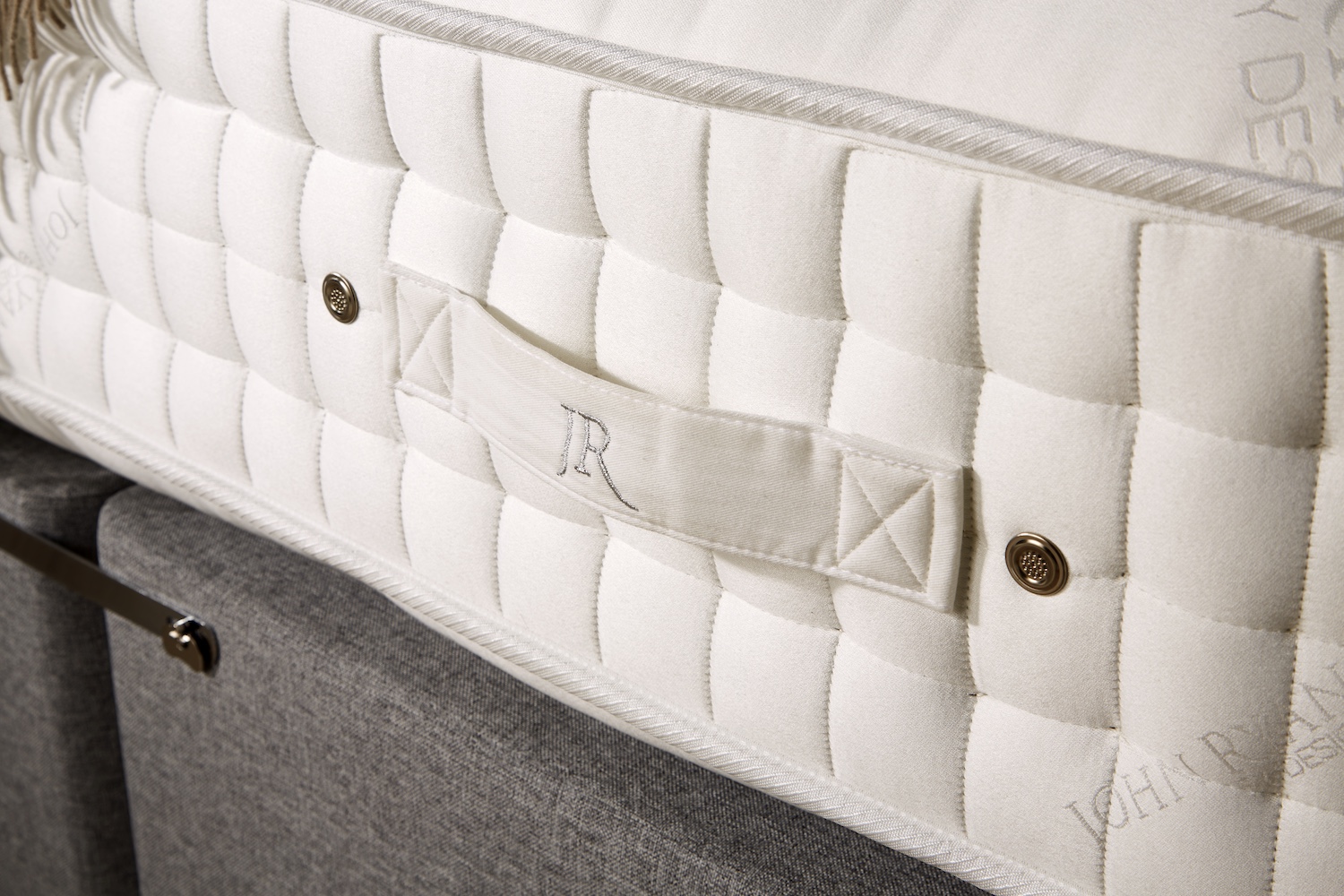
Each of our product descriptions in the shop gives an idea of how the mattress will feel for your body weight. We believe we are the only UK retailer to publish the full GSM breakdown for every layer of every mattress we make. Below is an example for the Origins Pocket 1500 and what the perceived firmness will feel like at different body weights.
| Upholstery Layer | Fibre Type | How it will feel? | Price Point |
|---|---|---|---|
| Polyester | Synthetic | Soft | Cheap |
| White Fibre | Synthetic | Soft/Medium | Cheap |
| Recycled Fibre / Eco Fibre | Synthetic | Medium | Cheap |
| Memory Foam | Synthetic | Medium/Firm | Mid Price |
| Igel / Hybrid Foam | Synthetic | Medium/Firm | Mid Price |
| Polycotton | Synthetic/Natural Blend | Soft/Medium | Mid Price |
| Linen | Synthetic/Natural Blend | Medium | Mid Price |
| Wool (Pure) | Natural | Soft/Medium | High-End |
| Cotton (Pure) | Natural | Soft | High-End |
| Silk | Natural | Soft | Expensive |
| Horsehair | Natural | Medium | High-End |
| Mohair | Natural | Medium/Firm | High-End |
| Hemp | Natural | Medium | High-End |
| Latex (100% Natural) | Natural | Medium/Firm | High-End |
| Coir | Natural | Firm | High-End |
| Flax | Natural | Firm | High-End |
| Coarse Cashmere | Natural | Firm | High-End |
| Bamboo | Natural | Super Soft | Expensive / Exclusive |
| Horsetail | Natural | Firm | Expensive / Exclusive |
| Alpaca | Natural | Soft | Expensive / Exclusive |
| Cashmere (Pure) | Natural | Soft | Expensive / Exclusive |
| Vicuna | Natural | Super Soft | Expensive / Exclusive |
What makes a soft mattress?
Soft mattresses are usually made up of softer upholstery fibre fillings. These fillings are highly compressible and offer a cradling, enveloping feel rather than a flat, firmer surface. Wool, Alpaca, Cotton and soft polyester on their own will make for a very soft feel mattress. These are usually layered with other fibres to provide some resilience beneath the surface softness.
A soft mattress is most suitable for lighter sleepers, typically those under around 11 stone, and for side sleepers who need the shoulder and hip to sink sufficiently into the comfort layer for the spine to remain level. A soft mattress on the wrong spring tension for your body weight will feel like you are sleeping in a hammock rather than being supported.
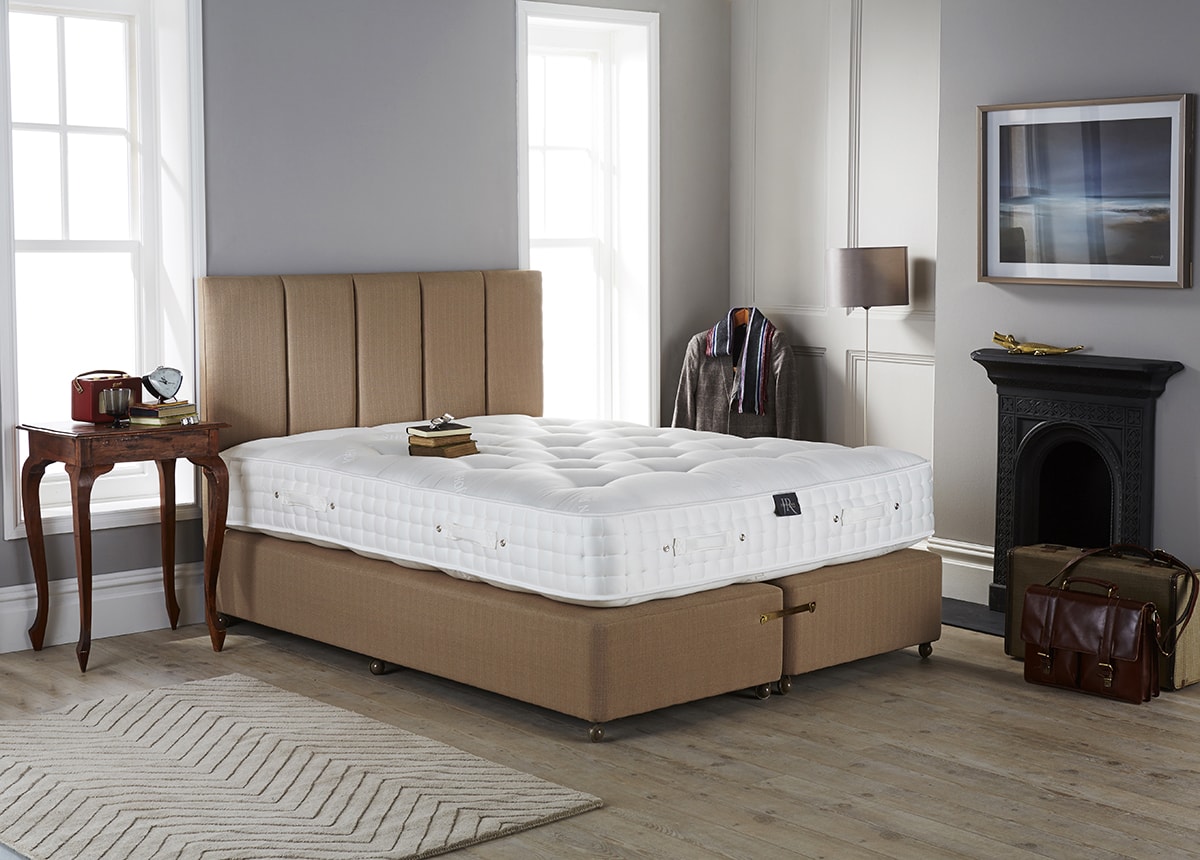
We have two genuinely soft mattresses in our ranges. The Origins Comfort 1000 is our entry-level pocket spring model with a soft feel at £890 king size. The Artisan Luxury is our handcrafted calico pocket spring model with 4,600GSM of 100% natural upholstery including Horsehair, Horsetail and Wool, at £2,955 king size. Both have genuinely soft upholstery in the top comfort layers ensuring that deep sink and soft feel that lighter side sleepers in particular benefit from.
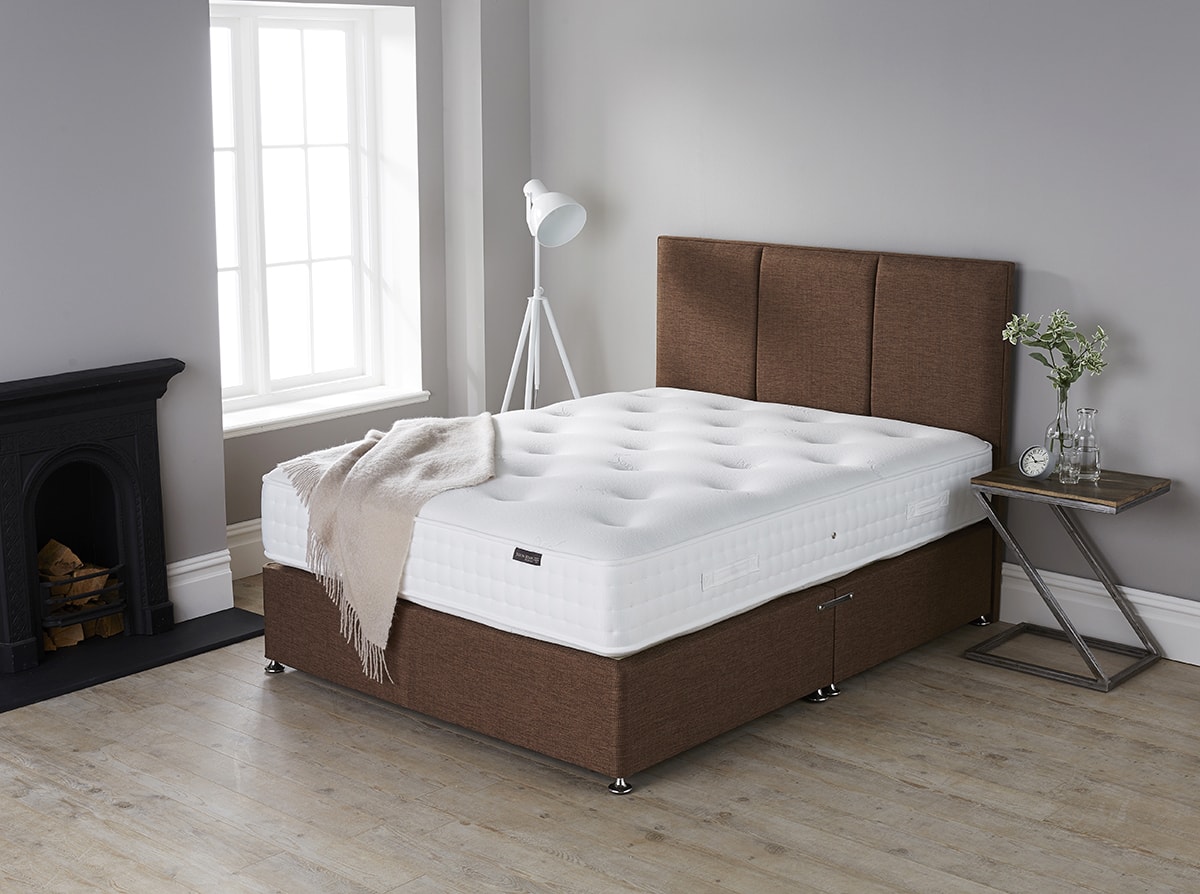
What is a medium feel mattress made of?
The most popular mattress feel is medium. It is the good all-rounder in terms of feel: not too soft and not too firm, and genuinely suited to the widest range of sleepers and body weights. A 2003 study published in The Lancet found that people with chronic lower back pain reported significantly better outcomes on a medium-firm mattress compared to a firm one, which confirms what we have observed over 25 years of helping customers choose mattresses.
Medium feel mattresses blend softer fibres like Wool with more resilient ones such as Coir, Horsehair, Mohair and other fibre blends. These firmer layers offer support alongside the spring unit, providing that medium feel where you sink slightly but are supported more than on a soft mattress.
Our medium feel mattresses include the Artisan Naturals (£2,180 king size), our best-selling model with 3,950GSM of natural upholstery including Mohair and Wool over 1,600 calico-encased pocket springs. The Artisan Bespoke 004 (£2,860 king size) sits above the Naturals with 3,600GSM of natural fibres including Horsetail and Wool over 1,600 calico-encased springs with a slightly tighter spring geometry. All of these mattresses are available in a soft, medium or firm spring tension which is dictated by your weight.
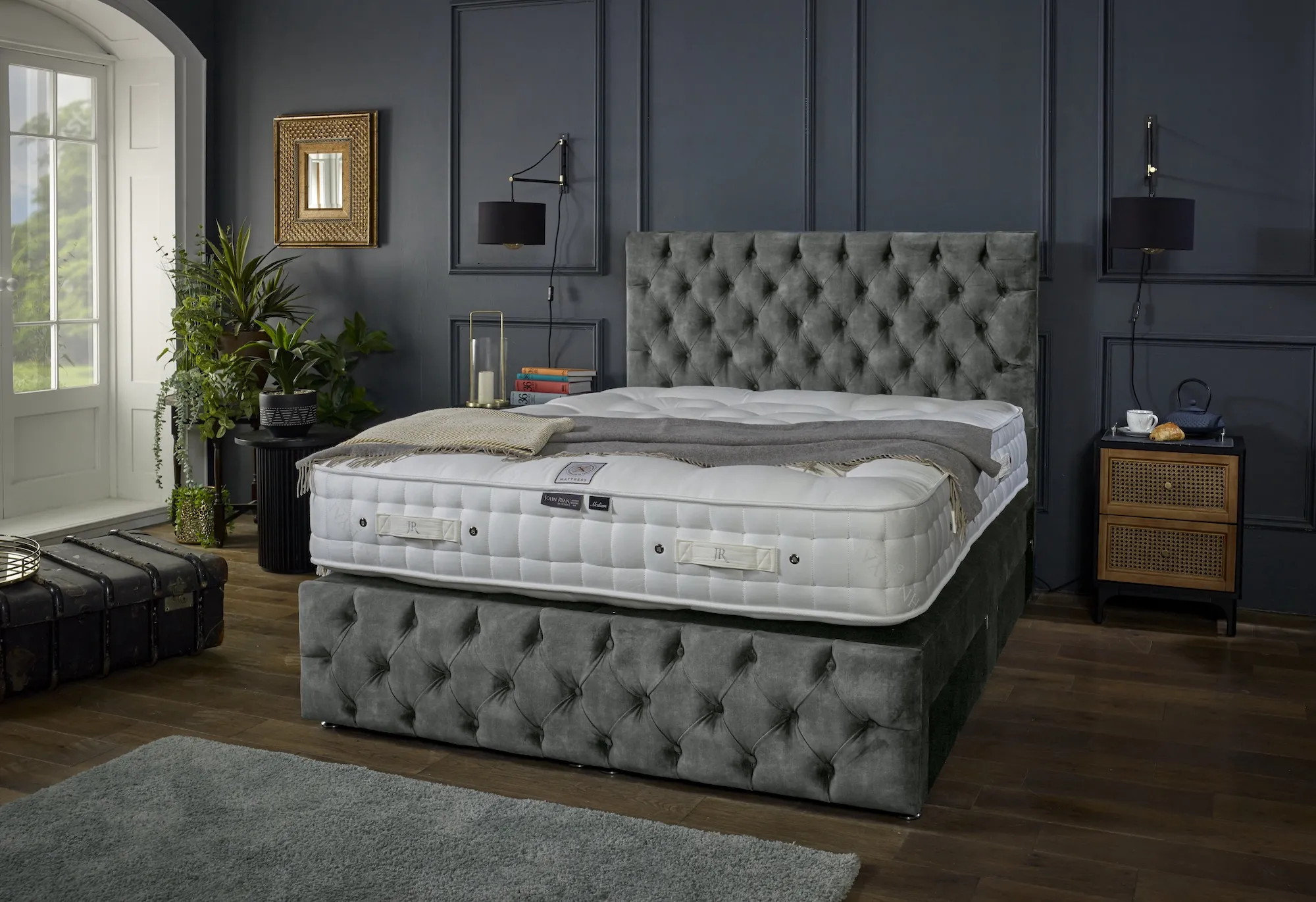
What is inside a firm feel mattress?
Firm feel mattresses use predominantly robust natural fibres such as Horsetail, Flax, polycotton, reflex foam and dense upholstery layers. This provides noticeably more support than softer Wool-based fillings to give a mattress that firmer feel. For most people a firm feel mattress can cause backache if they are not used to it, so unless you have always had a firm mattress you may want to consider a medium feel first.
It is worth being clear that a firm feel from the upholstery is different from a firm spring tension. You can have a firm upholstery feel on a medium spring tension, which is entirely appropriate for a back or front sleeper of average body weight who wants a flatter, more supportive surface without needing a heavier gauge spring.
Firm feel mattresses typically contain dense polyester, high density foam, Coir, Horsehair, Flax and woven hemp pads in the upholstery layers. Our Artisan Bespoke (£3,145 king size) is our firmest handcrafted calico pocket spring model with 5,100GSM of natural upholstery. The Resilience 2 (£2,110 king size) is our firmest foam-based model, well suited to heavier sleepers or those who specifically want a very solid, flat sleeping surface. Bear in mind these are general descriptions and your weight plays a part in how firm you will perceive these.
Ultra firm or ultra-soft mattresses
There are some people who really do prefer a rock-hard mattress (ultra-firm) or an all-engulfing ultra-soft mattress. If this is you, let us know your preference, making it easier for our team to select a product within your price range that will be suitable for you. Our Resilience 2 is our firmest mattress and is ideal for either people over 18 stone or lighter sleepers who want a super solid but two-sided mattress.
How to soften a firm mattress
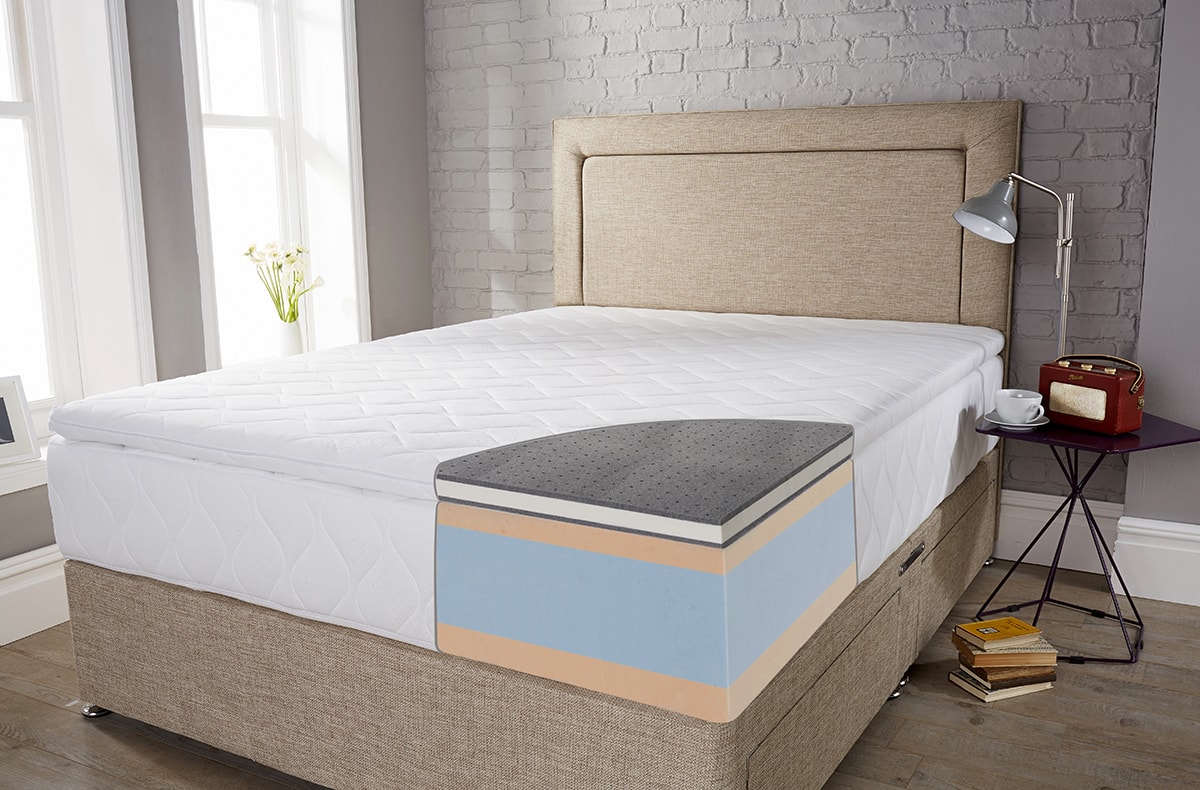
If your mattress is too firm and causing you sleepless nights the good news is you can soften a firm mattress relatively easily. The best way is by using mattress toppers and protectors, which add extra comfort layers that help give a softer feel to the surface. This is a practical way to adjust the feel without replacing the entire mattress, though it will not change the spring unit beneath.
The best toppers to soften a firm mattress are:
- Super soft polyester toppers
- Soft Wool toppers
- Goose down toppers
- Duck down toppers
- Natural Latex 5cm deep toppers
- Multiple white fibre (polyester) quilted toppers
Is there a limit to the number of mattress toppers you can add to a bed?
The quick answer is no. We have advised some customers with very firm beds, in particular on yachts or motorhomes, to use multiple toppers on custom-made unusually sized firm mattresses where replacement is costly. The biggest drawback with adding two or even three toppers is keeping them in place. Check that your mattress toppers have corner straps making it easy to fit them to the mattress and stop them from moving. Alternatively, you can buy clips with elastic straps that connect to each side of the topper to keep them in place.
How to make a soft mattress firmer
The only way to firm up a softer mattress is to board over the sprung mattress base using a layer of MDF or plywood over the springs or slats. You do this by adding the board directly on top of the bed base to firm up the support layer beneath the mattress.
If you are already on a platform top base, then unfortunately, there is no way to firm up a mattress through the base. You can only ever make a mattress softer using toppers, pads and protectors, never firmer. If your mattress is genuinely too soft for your body weight, replacing it with the correct spring tension is the only lasting solution.
Retailers want you to make a quick decision just on spring tension alone
However its mattress fillings that will provide the overall feel or firmness of the mattress.
Frequently asked questions
What is the difference between spring tension and mattress feel?
Spring tension refers to the gauge of the wire in the pocket springs and is determined by your body weight. Mattress feel (soft, medium or firm) is determined by the upholstery layers above the springs. A mattress can have firm springs but feel soft because of deep natural fibre upholstery on top, or have soft springs but feel relatively firm because the comfort layers are thin. Always check both when buying a mattress.
What firmness mattress should I choose?
Start with your body weight to choose the correct spring tension, then choose your upholstery feel based on your sleeping position. Side sleepers typically do best with a softer upholstery feel and a softer spring tension for their weight. Back sleepers tend to prefer a medium to firm feel. Front sleepers generally suit medium to firm. For a full breakdown, see our guide to the best mattress for each sleeping position.
Is a firm mattress better for your back?
No, not as a general rule. A 2003 randomised controlled trial published in The Lancet found that people with chronic lower back pain reported significantly better outcomes on a medium-firm mattress than on a firm one. The long-held belief that firm equals better for backs is not supported by clinical evidence. The correct spring tension for your body weight, combined with appropriate upholstery depth for your sleeping position, is what matters. See our guide to mattresses for back pain for more detail.
How do I know if my mattress is the wrong firmness?
The most reliable sign is morning stiffness or pain that improves as the day progresses. Pain that is worst on waking and eases within an hour or two is almost always mattress-related rather than a medical issue. Specific pressure point pain at the shoulder or hip for a side sleeper usually indicates a mattress that is too firm. Lower back pain in a back sleeper usually points to a mattress that is either too soft or that the spring tension is too light for the sleeper’s body weight.
Can I change the firmness of my mattress without replacing it?
You can make a mattress softer by adding a topper. You can make a mattress very slightly firmer by boarding over a sprung base beneath it. You cannot meaningfully firm up a mattress that has the wrong spring tension for your weight, and you cannot make a mattress softer at the spring level. If the spring tension is wrong, replacing the mattress is the correct solution.
What is a split tension mattress?
A split tension mattress has two different spring tensions across a single sleep surface, one for each side of the bed. This allows two people of different body weights to each have the correct spring tension for their weight without compromising. All our Artisan range mattresses can be made with a split tension. For couples where the weight difference is very significant, a zip and link mattress allows each half to be a completely different specification.
Summary
When choosing a mattress firmness, identify the spring tension based on your body weight first, then focus on the mattress fillings to establish how firm the mattress will feel overall. Retailers want you to base this on spring tension alone because it is quicker and easier for them to sell a mattress that way. However, doing it this way is completely wrong and the chances are you will end up with an uncomfortable mattress.
Our expert team can help you in calculating what spring tension you require for your body weight and how the upholstery layers will feel. Get in touch for tailored help on 0161 437 4419 or drop us a message below.

Dreaming of the perfect nights sleep?
Ask us a question
There are over 6000 questions and answers submitted by you on all questions about mattresses and bed problems. Enter a keyword such as Vi Spring, John Lewis beds, bad back or Memory Foam and see if your question has already been answered.
If you can’t find an answer in knowledge hub, ask a new question. We aim to respond to all questions within one working day.
Newsletter
Enter your email to join our newsletter. We’ll send you occasional news and mattress expertise.