






Bed Size Guide: Choosing the Right Mattress for Your Room
Updated 2026: Buying a mattress that’s the wrong size for your room is one of the most common and most avoidable mistakes people make, whether that means a bed that barely leaves room to open a wardrobe or one that looks lost in a large room. This guide focuses specifically on matching mattress size to room size. For the full breakdown of every UK mattress size in centimetres and inches, see our bed sizes guide.
Choosing the Right Mattress Size for Your Room
- How to work out the best mattress for your room size
- Minimum room sizes per mattress size
- Single mattress minimum bedroom size
- Double mattress minimum bedroom size
- King size mattress minimum bedroom size
- Super king size mattress minimum bedroom size
- Extra king size mattress minimum bedroom size
- Getting your bedding right for the size you choose
How to Work Out the Best Mattress for Your Room Size
Choosing the right mattress size for your bedroom can impact your comfort and sleep quality just as much as the mattress itself. There is nothing worse than buying a new mattress that barely fits the room, or that leaves you squeezing past the wardrobe every morning.
The most popular mattress size in the UK is king size (150cm x 200cm), which gives two sleepers enough width to turn and move without disturbing each other, particularly if paired with a pocket spring mattress that reduces motion transfer between sleepers. If you’ve already decided a king size is right for you and want the full case for upgrading from a double, our guide to king size beds covers that in detail. If you’re weighing king against super king specifically, our king versus super king guide is the one to read.
Here are the steps worth working through before you buy.
1. Measure your bedroom
Measure the length, width and height of your bedroom, along with the position of doors, windows and any furniture that has to stay put. Draw the room to scale on paper, then cut out the bed size to the same scale so you can see exactly where it will sit and whether there’s enough space left around it.

2. Consider your sleeping preferences
Think about whether you sleep alone or with a partner, how much you move around during the night, and whether any health conditions affect your sleep. These factors shape the ideal size as much as the room itself does.
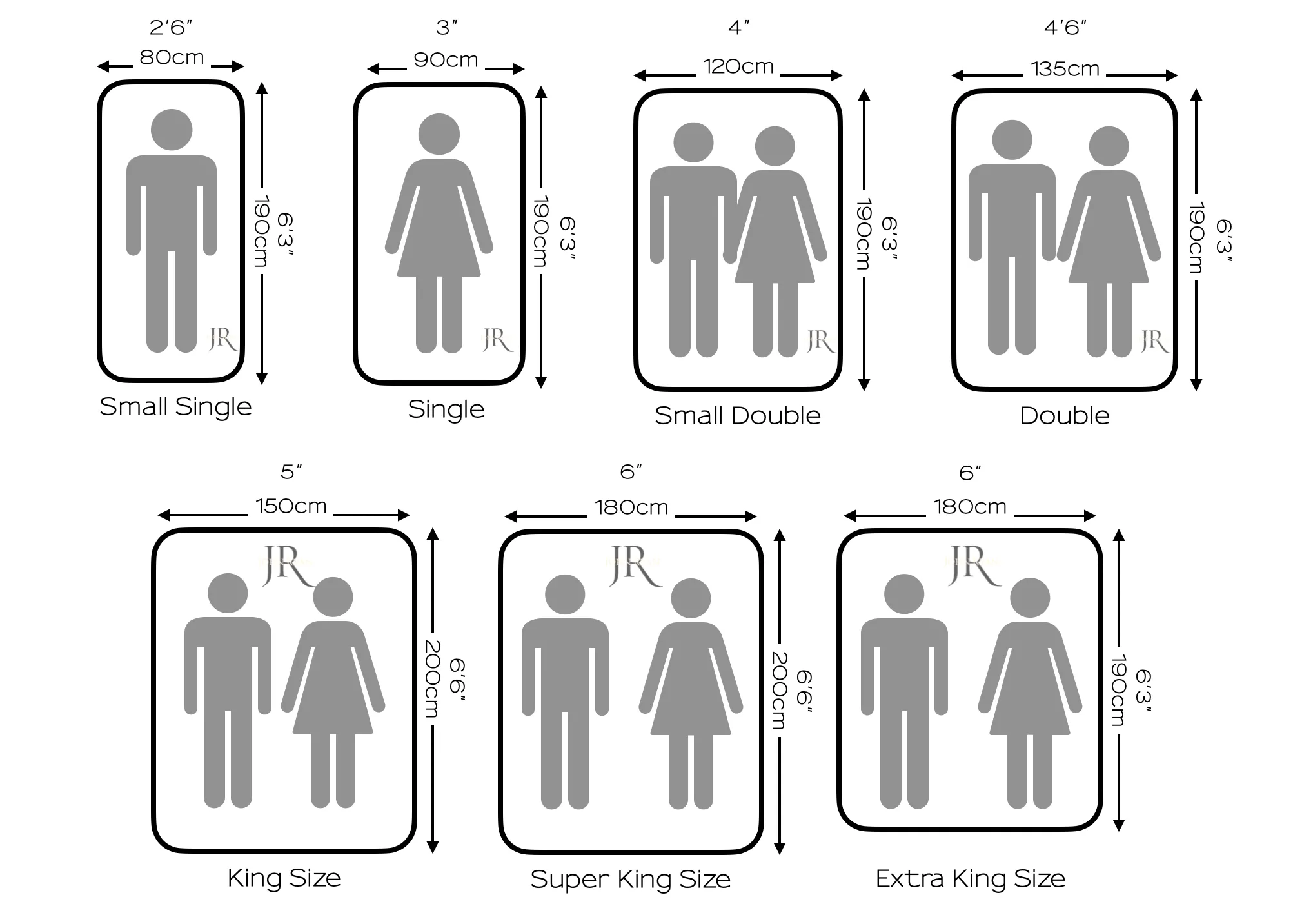
3. Check the mattress dimensions
Familiarise yourself with standard UK mattress sizes, single through to super king. Our full table of dimensions is in the bed sizes guide, alongside the same reference image below.
4. Allow for additional space
Bedside tables, dressers and wardrobe doors all need their own clearance. Factor the whole room’s layout and function in, not just the footprint of the bed itself.
5. Test it out
Where possible, visit a showroom and lie down on a few different sizes so you get a proper feel for the dimensions, not just the number on a label. A useful quick test with a partner: lie side by side with your hands behind your head and elbows out. If your elbows touch each other or hang off the mattress edge, you need a wider bed.
Minimum Room Sizes for Each Mattress Size
The figures below assume 60cm of clearance down both sides of the bed, enough to walk past comfortably and make the bed without a wrestling match, plus 75cm at the foot for wardrobe and drawer access. These are the same clearance figures used across our size guides, so treat them as the reliable minimum rather than a rough guess.
| Mattress Size | Minimum Bedroom Size (ft) | Minimum Bedroom Size (M) |
|---|---|---|
| Single | 7 feet by 10 feet | 2.1 meters by 3 meters |
| Double | 10 feet by 10 feet | 3 meters by 3 meters |
| King Size | 9 feet by 9 feet | 2.7 meters by 2.7 meters |
| Super King Size | 12 feet by 12 feet | 3.7 meters by 3.7 meters |
| Extra King Size | 12 feet by 12 feet | 3.7 meters by 3.7 meters |
Working out what size of mattress can fit in your bedroom saves drama trying to squeeze in a mattress that won’t fit
Always consider enough space to move around the bed and open furniture, windows or doors


What’s the Minimum Bedroom Size for a Single Bed?
A single mattress is 90cm wide by 190cm long. Add 60cm clearance to each side and 75cm at the foot, and you need a room of at least 7ft by 10ft (2.1m by 3m) to fit it comfortably with basic furniture.
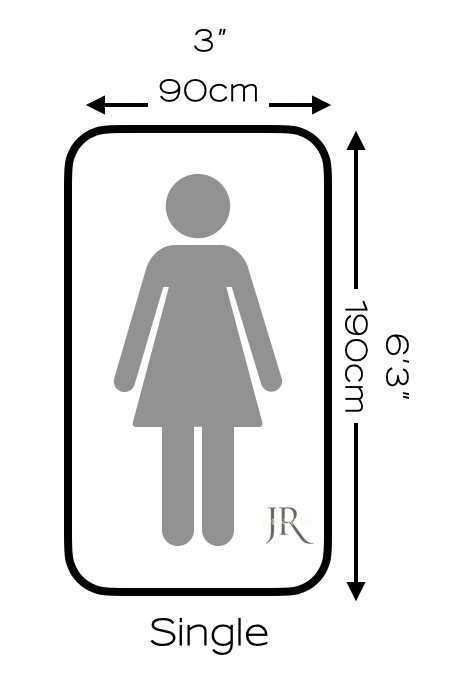
That figure will vary depending on how the room is laid out and what else it needs to accommodate, so treat it as a starting point rather than a strict rule.
What’s the Minimum Room Size for a Double Bed?
A double mattress is 135cm wide by 190cm long. With the same clearance allowances, you need a room of at least 9ft by 9ft (2.7m by 2.7m) to sit comfortably with space to move and basic furniture around it.
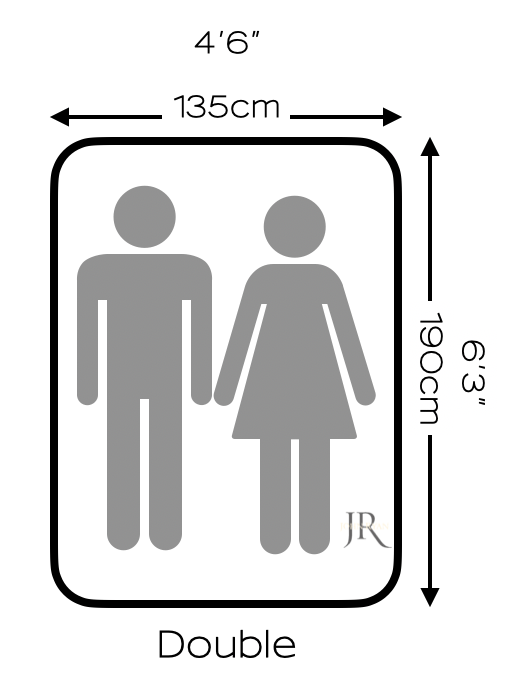
As with any size, check this against your own furniture and movement needs before committing.
What’s the Minimum Bedroom Size for a King Size Mattress?
A king size mattress is 150cm wide by 200cm long. Working through the same 60cm side and 75cm foot clearances, a comfortable minimum works out at 3.5m by 3.5m (roughly 11ft6in by 11ft6in), a little more generous than you might expect from the mattress dimensions alone, since the extra width eats into the clearance either side faster than a double or single does. The bigger practical concern with king size and above is often getting the mattress up the stairs and around any tight hallways rather than fitting it in the room itself.
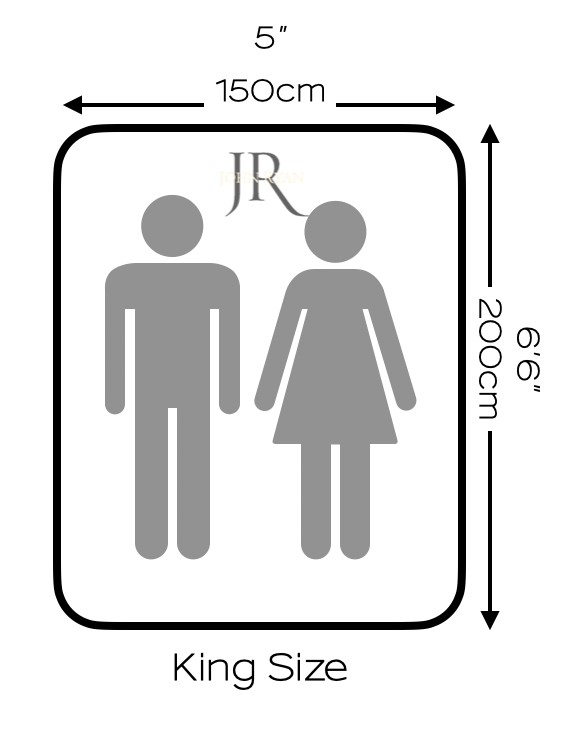
This is exactly why a zip and link mattress is worth considering at king size and above. Two halves are far easier to move and to turn regularly than one large mattress.
What’s the Minimum Room Size for a Super King Mattress?
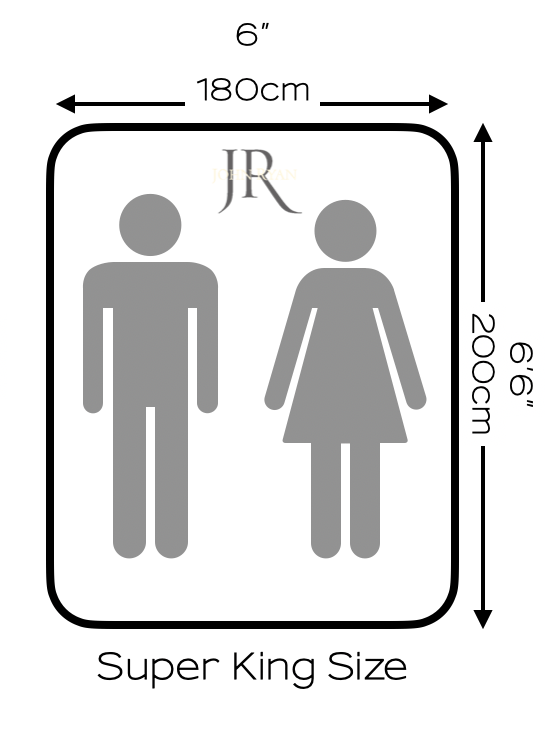
A super king mattress is 180cm wide by 200cm long. The same clearance allowances put the comfortable minimum at 3.8m by 3.8m (roughly 12ft6in by 12ft6in).
A zip and link super king is nearly always the more practical choice, both for getting it up the stairs and for keeping up with regular turning and rotation. A one piece super king mattress can weigh upwards of 65kg, which two people will need to manage together every month.
What’s the Minimum Room Size for an Extra King Mattress?
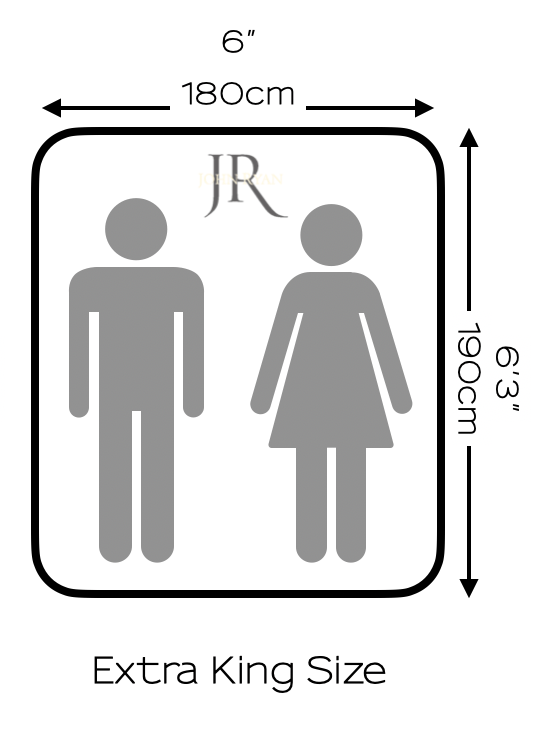
Extra king is the same width as a super king but 10cm shorter in length, so it needs a broadly similar 3.8m by 3.7m minimum, though in practice a room this size with an extra king in it will feel considerably fuller. Extra king is only available as a zip and link unless ordered as a bespoke one piece.
Getting Your Bedding Right for the Size You Choose
Once you’ve settled on a size, it’s worth planning the bedding alongside it rather than as an afterthought, since ill fitting sheets are one of the most common complaints we hear after a size upgrade. Our mattresses run deeper than most off the shelf models, so a standard fitted sheet often won’t sit properly. Our own extra deep fitted Pima cotton sheets are cut for exactly this, and a 100% cotton quilted mattress protector is worth adding from day one to protect the investment, particularly on a natural fibre mattress you want to last well over a decade.
If your room truly can’t stretch to the size you’d ideally want, upgrading the mattress you already have is sometimes the more realistic route. Our 100% natural latex topper softens an existing mattress and adds meaningful pressure relief without needing any extra floor space at all, which is worth knowing before you assume a size upgrade is the only option.
How to Choose a Mattress in the UK
Choosing a mattress is a personal decision, and there’s more to it than picking a budget and buying whatever meets it. Type, materials, support and your own sleeping preferences all matter, and our guide to how much you should spend on a mattress and our guide to edge support are both worth reading alongside this one if you’re still deciding on more than just the size.
Summary
Getting the size right is one of the most important parts of buying a new mattress, and it’s almost entirely avoidable to get wrong once you’ve measured the room properly and checked it against your sleeping preferences and the minimum sizes above. Take the time to do this before you buy rather than after, and pair whatever size you choose with bedding cut to fit it properly.
If you’d like help shortlisting the right mattress for your room, give our small expert team a call for free advice on 0161 437 4419.
How to choose a mattress in the UK
Choosing a mattress can be a subjective and personal decision, as individual preferences and needs can vary. We’ve been helping people in the UK choose the very best mattress for over three decades now. It’s not just a case of setting a budget and then buying whatever meets that. It’s about a mix of mattress type, materials, support, sleeping preference, and finally dodging some of the pitfalls.
Luckily, our site has hundreds of bed-buying guides to help you cut through the confusion. Our video below will teach you in a matter of minutes how to pick a mattress and the additional bed-buying advice below!
Here are some general tips on how to choose a mattress:
1. Determine your bed budget
Mattresses come in a wide range of prices, so it’s important to establish a budget beforehand. Consider the long-term investment and value of a mattress, as it can affect your comfort and sleep quality for years to come.
2. Consider your sleep preferences
Think about your preferred sleep position (back, stomach, side) and any specific requirements or health considerations you may have, such as back pain or allergies. Different types of mattresses (e.g., memory foam, innerspring, latex) can offer varying levels of support, firmness, and comfort, so choose one that suits your individual needs.

3. Research different mattress types
Educate yourself about the different types of mattresses available in the market, such as memory foam, innerspring, latex, and hybrid mattresses. Each type has its pros and cons, so research and understand the features and benefits of each type to make an informed decision.
4. Consider mattress size
Think about the size of the mattress that will fit comfortably in your bedroom and accommodate your sleeping needs. Standard mattress sizes include single, double, kingsize, super king etc. Consider the dimensions of your bed frame, room size, and any other furniture in the room when determining the appropriate mattress size.
5. Read reviews and check guarantee or warranties
Look for customer reviews and ratings of mattresses to get an idea of customer satisfaction and durability. Also, check the mattress warranties, which can vary in coverage and length, to ensure you understand the terms and conditions.
6. Ask about return/exchange policies
Inquire about the return/exchange policies of the mattress retailer or manufacturer in case you are not satisfied with the mattress after purchase. Make sure you understand the return/exchange process and any associated fees or conditions.

7. Take your time
Don’t rush the decision. Take your time to research, review, and compare different mattresses before making a final decision. Remember that choosing the right mattress can significantly impact your sleep quality and overall well-being.
Summary
Choosing the right size mattress is a really important part of buying a new mattress. By ensuring you get the right size based on your sleeping preferences, room size and bedroom layout, you can create a relaxed bedroom that helps bring the best night’s sleep.
Doing your research before rushing out to buy a new bed will also save you from falling for an unsuitable bed. We always recommend you take the time to read this article to help select the very best mattress and avoid these pitfalls.
If you need further help in shortlisting suitable new mattresses, give our small expert team a call for free advice on 0161 437 4419.

Dreaming of the perfect nights sleep?

Ask us a question
There are over 6000 questions and answers submitted by you on all questions about mattresses and bed problems. Enter a keyword such as Vi Spring, John Lewis beds, bad back or Memory Foam and see if your question has already been answered.
If you can’t find an answer in knowledge hub, ask a new question. We aim to respond to all questions within one working day.
Newsletter
Enter your email to join our newsletter. We’ll send you occasional news and mattress expertise.