






Mattress Help, Mattress Construction, Springs
June 2026The Definitive Guide to Pocket Spring Mattresses
What to look for in a pocket spring mattress: the short version
If you are comparing pocket spring mattresses and want the key criteria before committing to a longer read, here is what genuinely matters and what does not.
Spring gauge matters more than spring count. Wire diameter is a measurable specification that tells you how the spring behaves under your bodyweight. A 1.4mm gauge spring is engineered for sleepers up to around 16 stone. A 1.6mm gauge is for 16 stone and above. This is a fixed engineering fact, not a marketing claim. Spring count, by contrast, is frequently inflated and much less useful as a quality indicator on its own.
Calico encasing beats synthetic bonding. The best pocket springs are housed in individual calico fabric pockets stitched together by hand. This construction allows each spring to flex fully and independently, and breathes far better than springs glued together with polyester bonding. If a retailer cannot tell you how their springs are encased, that absence of information is itself informative.

Two sides are better than one. A double-sided mattress distributes wear across both surfaces and lasts significantly longer than a one-sided equivalent. Most high street mattresses are one-sided. Ask directly whether the mattress can be flipped.
Upholstery GSM is the other half of the equation. A superior spring unit paired with thin, cheap upholstery will not perform well. Natural fibre fills at a meaningful GSM, Wool, Cotton, Cashmere, Mohair, are what determine how the mattress feels and how long it holds its comfort. Always ask for the fill specification alongside the spring count.
Trial period and guarantee reflect the manufacturer’s confidence. A manufacturer who builds honestly will offer a meaningful trial period and a minimum ten-year guarantee. A short trial period on a product being sold as quality should give you pause.
Everything below this point explains the reasoning behind these points in depth. If you want to skip straight to our mattress recommendations, see the John Ryan range here.
Our recommended pocket spring mattresses
If you have already decided that a pocket spring mattress is the right choice and you want a direct recommendation before reading the full guide, the table below gives our honest starting point by budget. All prices are for king size. Every model listed is handmade here in Manchester, uses individually pocketed springs, and is available in soft, medium or firm spring tension matched to your body weight. None contain memory foam.
| Budget | Mattress | Spring Type | Total Upholstery | Feel | King Size Price |
|---|---|---|---|---|---|
| Entry level | Origins Pocket 1500 | Spunbond pocket springs | 1,550GSM | Medium | £1,050 |
| Natural fibre introduction | Origins Natural Comfort | Spunbond pocket springs | 2,550GSM | Medium | £1,300 |
| Mid range | Artisan 1500 | Spunbond pocket springs | 4,300GSM | Firm | £1,755 |
| Mid range | Artisan Tailored Pocket 2000 | Double tier spunbond pocket springs | 3,950GSM | Medium | £1,915 |
| Premium | Artisan Naturals | Calico encased pocket springs | 3,950GSM | Medium | £2,180 |
| Premium | Artisan Bespoke 004 | Calico encased pocket springs | 3,600GSM | Medium | £2,860 |
| Luxury | Artisan Luxury | Calico encased pocket springs | 4,600GSM | Soft | £2,955 |
The single most important decision after choosing a model is selecting the correct spring tension for your body weight. Up to 16 stone, a medium tension (1.4mm wire gauge) is appropriate for most sleepers. Above 16 stone, a firm tension (1.6mm) is usually needed. Choosing the wrong tension is the most common reason people find a new mattress uncomfortable within weeks of buying it. If you are unsure, call us on 0161 437 4419 and we will work through it with you before you order.
The rest of this guide explains in detail why pocket springs outperform every other support system, what separates a calico spring from a spunbond spring, how upholstery GSM affects comfort, and how to avoid the most common mistakes when buying. If you want the full picture before committing, it is worth reading. If you are ready to buy now, browse our full pocket spring range here.
Jump To:
- What is a pocket sprung mattress?
- What are the benefits of a pocket sprung mattress?
- What are the disadvantages of pocket springs?
- What are the tensions of a pocket spring?
- How many pocket springs should I get in my new mattress?
- Pocket spring counts explained
- Types of pocket spring
- One Sided vs Two Sided Mattresses
- Mattress upholstery and pocket springs
- Is a pocket sprung mattress good for a bad back
- Sleeping Positions & Springs
- Pocket springs vs memory foam
- Hybrid Pocket Springs
- Guide to pocket spring mattresses
- Which is best: a pocket sprung or open coil mattress?
- How many pocket springs do I need in my mattress?
- Best bed base for a pocket sprung mattress?
- Tailored spring gauges – soft, medium or firm?
- Beds for Couples
- Pocket Spring wire diameter explained
- How are pocket springs made?
- What is the length of a pocket spring?
- What is a Vanadium spring?
- Other types of Pocket springs – Cortec, Revolution & Micro Springs
- Whats the lifespan of a pocket sprung mattress?
- How to care for your mattress
- FAQ
How many pocket springs should I get in my new mattress?
It’s not as simple as the more pocket springs a mattress has, the better it is! The minimum number of pocket springs you should be looking for in a kingsize mattress is 1000.
- 1000-1500 pocket springs in a kingsize is the optimal amount for most mattresses.
- Around the 1000 mark is the ideal spring count in a kingsize mattress.
- The maximum in a single layer of pocket springs is 2000.
- 600 is the minimum number of pocket springs in a mattress.
- Spring counts 2000+ mean multiple layers of pocket springs.
Although 600 is the minimum amount, these springs will need to be significantly larger and less adaptive than the standard sized pocket springs to fit the same size bed. These larger springs offer a cruder level of support compared to regular pocket spring sizes found in 1000-2000 pocket sprung mattresses.
You may see spring counts in the thousands and these should be taken with a pinch of salt. Usually, the more springs you find in a mattress the smaller these springs are. At a certain point, this becomes useless as they are too small to function properly! Above this and you’re looking at dual layers of springs or the dreaded micro springs. It’s not necessarily just a case of more springs meaning that a mattress will mould to you more accurately. A well-made mattress with 1000 pocket springs in it can suit you better than one with 2000 (especially if that 2000-count mattress uses sub-optimal build techniques like foam encapsulation).
When looking for a mattress, the number of springs you should expect for each price point are:
- £500-£1000 Mattress / 1000 Synthetic pocket springs
- £1000-£2000 Mattress / 1500 Calico pocket springs
- £2000+ Mattress / 1500-2000 Calico Encased Vanadium coated pocket springs
Pocket Spring Counts Explained
It has become a trend in recent years for mattress manufacturers to increase the number of springs listed in their mattresses. A pocket spring count should purely reflect how many springs are in a mattress, but sometimes you may find springs in a bed base being used to top up this figure. Habits like this are tapping into the consumer’s belief that the higher the spring count the more value they are getting for their bed purchase.
It’s worth understanding that there is only so much space in a mattress, and to achieve these ridiculously high spring counts (i.e. 6,000 plus) the manufacturers are simply using sheets of miniature springs layered on top of each other and reducing upholstery. They are also placing springs within springs to artificially inflate the number of springs on the label.
Thankfully, this approach has not been adopted by the most respected mattress manufacturers here in the UK. However, we continue to see more and more mattress models adopting this farcical approach to bed making.
Pocket spring counts are always based on the number of springs in a king size mattress: 150 x 200 / 5’0 x 6’6. Even when a single mattress is described as having 1000 pocket springs, for example, it won’t. It will have proportionately less based on its size. A super king size mattress will have proportionately more.
Some retailers have started to give the exact count of a particular size which throws a fly into the ointment when you are doing like-for-like comparisons. Always be aware of the count in a king sized mattress and you just can’t go wrong. The least number of pocket springs you can get in a mattress is 600.
This level of spring count will be in starter or budget ranges of pocket sprung mattresses. This is a good example of the value of a pocket sprung unit. Obviously, the retail price will be low, but the quality level of mattress will be significantly better than any mattress utilising an open coil or continuous coil retailing for a similar price.
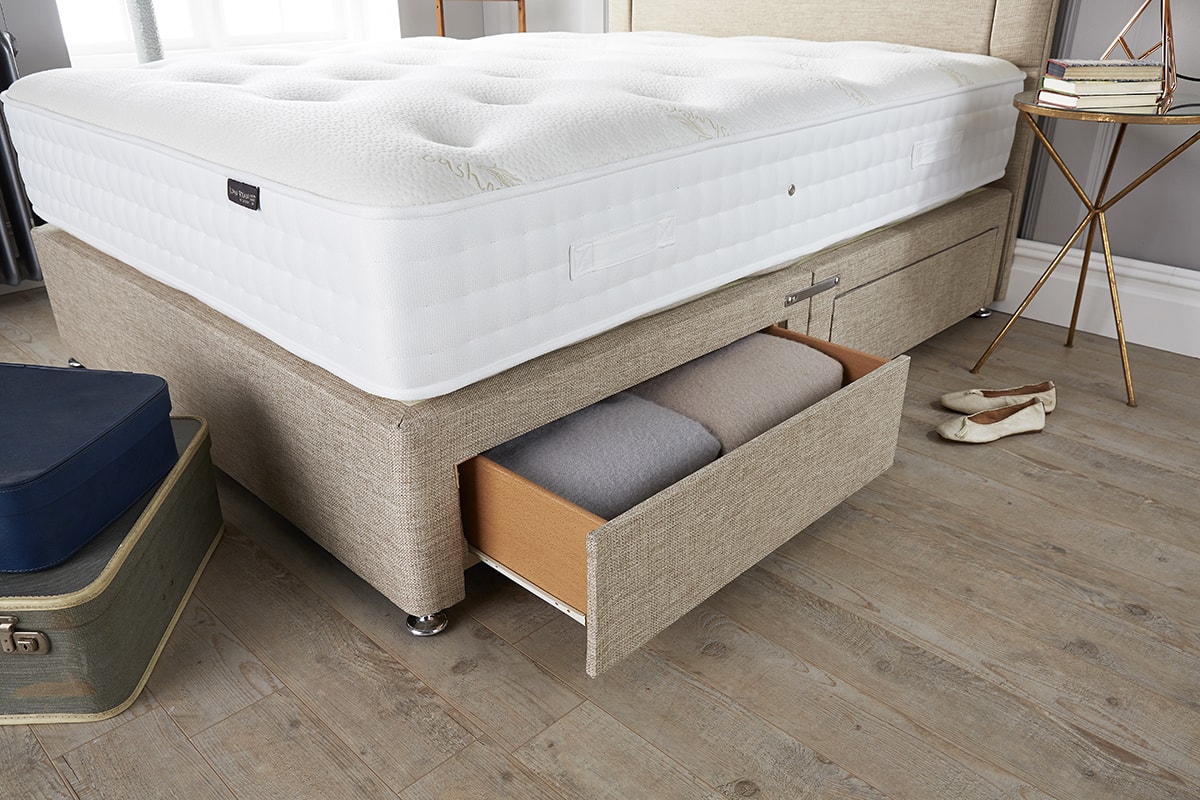
Our Mattress collection only uses Premium Pocket Springs, if you want to see more please visit our shop to start browsing. We have never sold (and will never sell) a cage sprung contraption, and would highly recommend that you do not buy one.
Types of Pocket Spring Mattress
We have always advocated for high-quality handmade pocket sprung mattresses over mass-produced bags of springs such as open coil mattresses, but there’s still a minefield of information about pocket springs which we aim to summarise for you. We like to keep things simple, so we have summarised two types of pocket springs below.
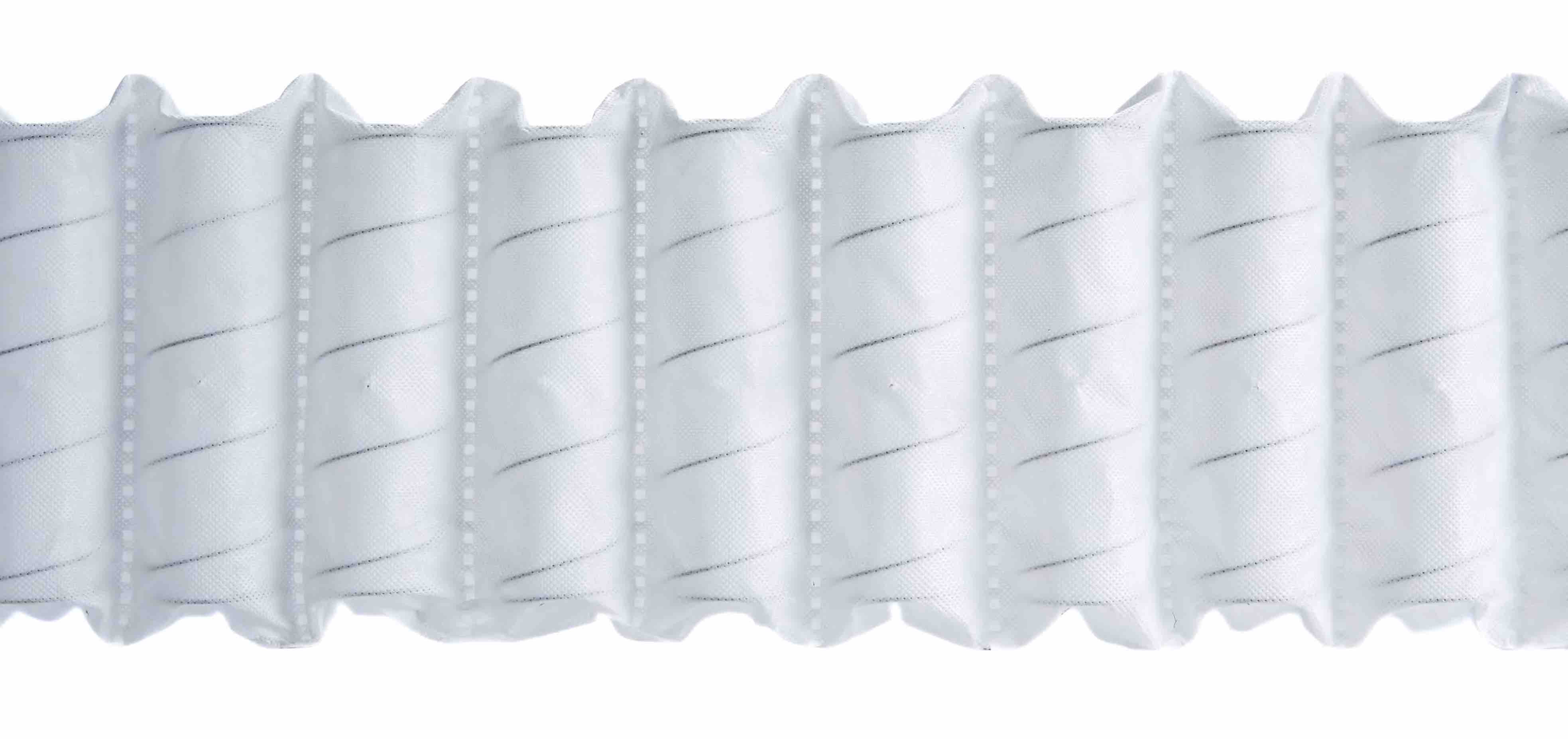
1. Synthetic Spun Bond Pocket Springs
Synthetic spun bond springs – the entry-level spring unit. Glued together with a polyester style material. The least breathable and responsive, but still a million times better than any cage sprung or open coil nightmare.
2. Calico Pocket Springs
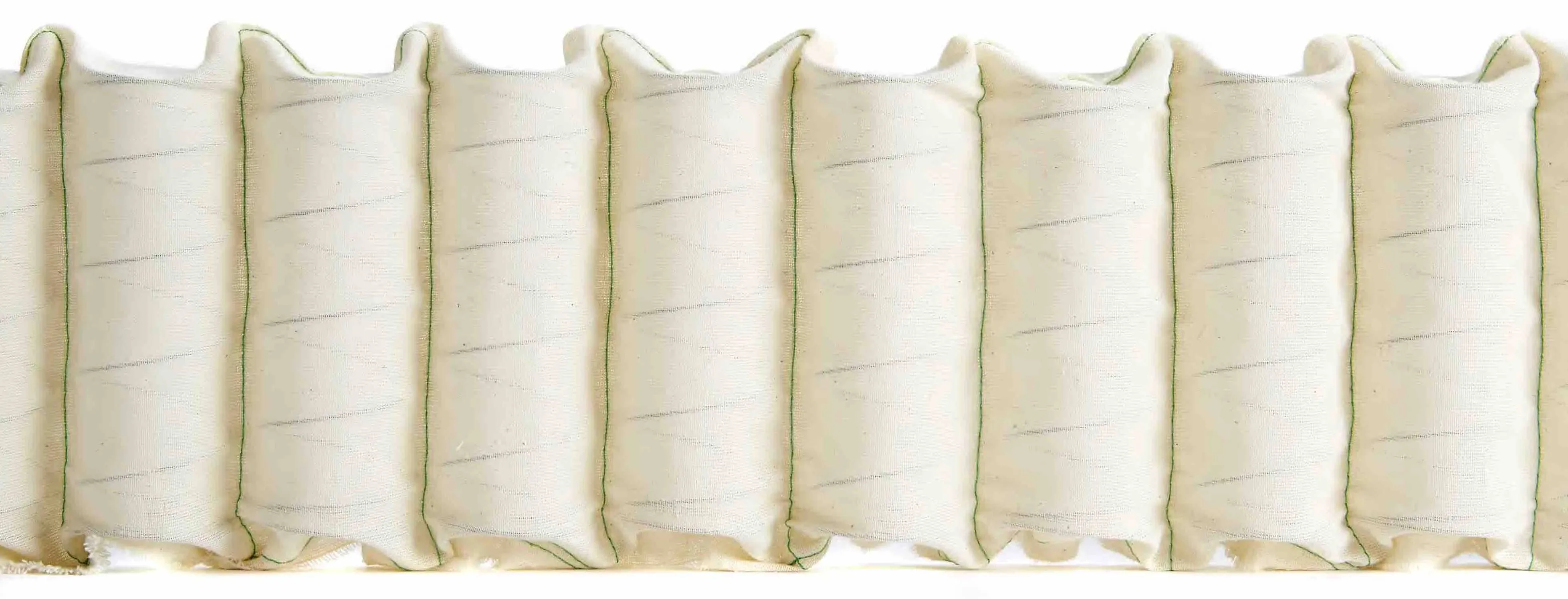
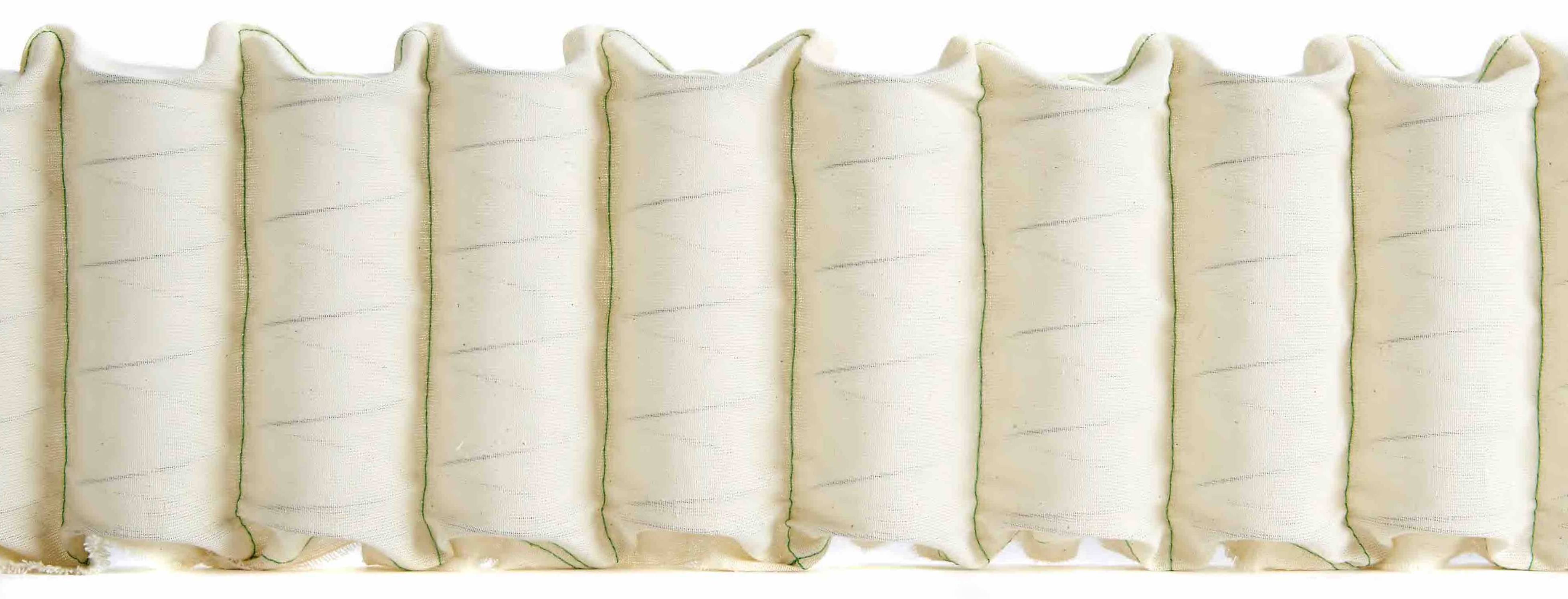
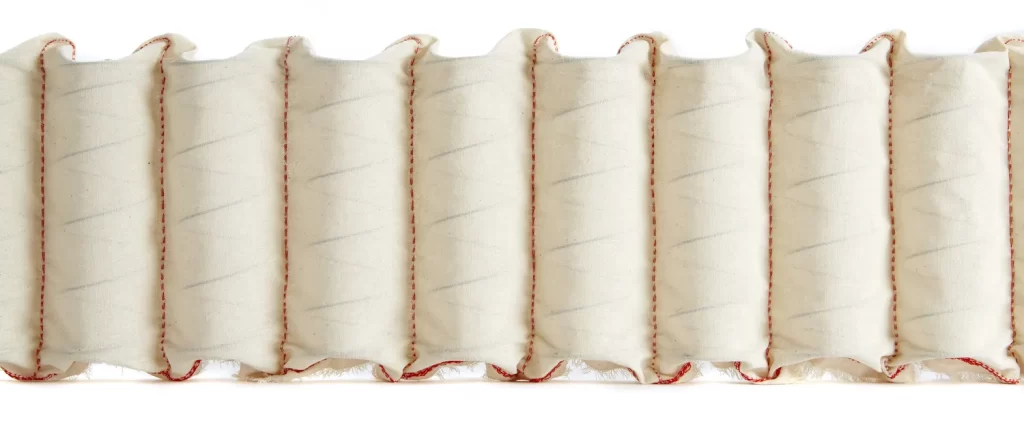
Calico encased pocket springs are encased in a breathable natural calico cover which is then stitched together. Highly responsive and much more breathable.
Hybrid pocket sprung mattresses do exist, with pocket springs being used in combination with memory foam or gel. Some people like the moulded feeling of memory foam with a more supportive pocket sprung base, whilst others look to gel to provide similar benefits, but with a better level of breathability. However, in our experience, you just can’t beat natural fibre fillings.
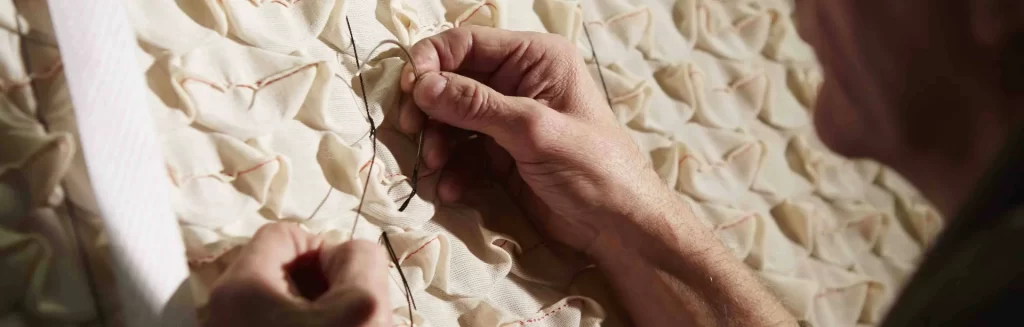
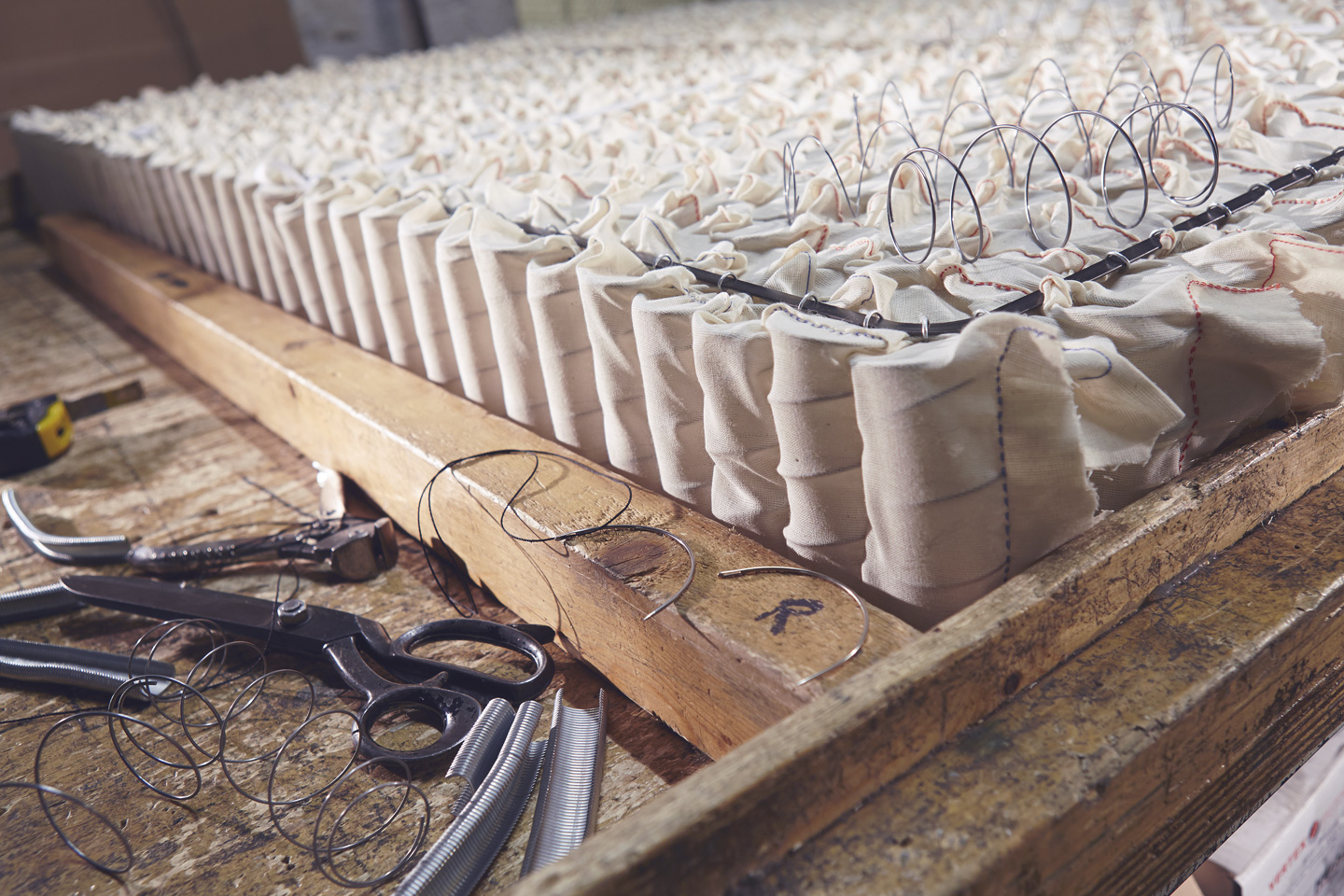
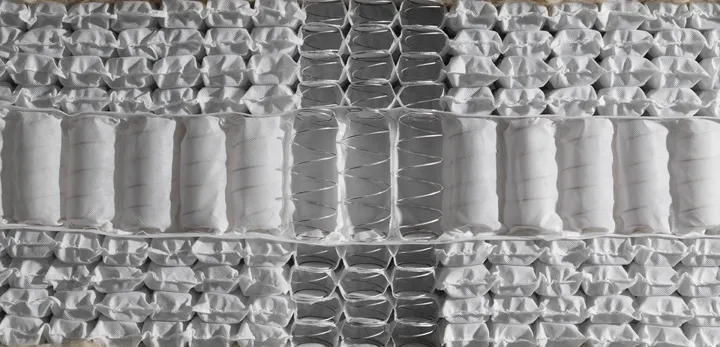
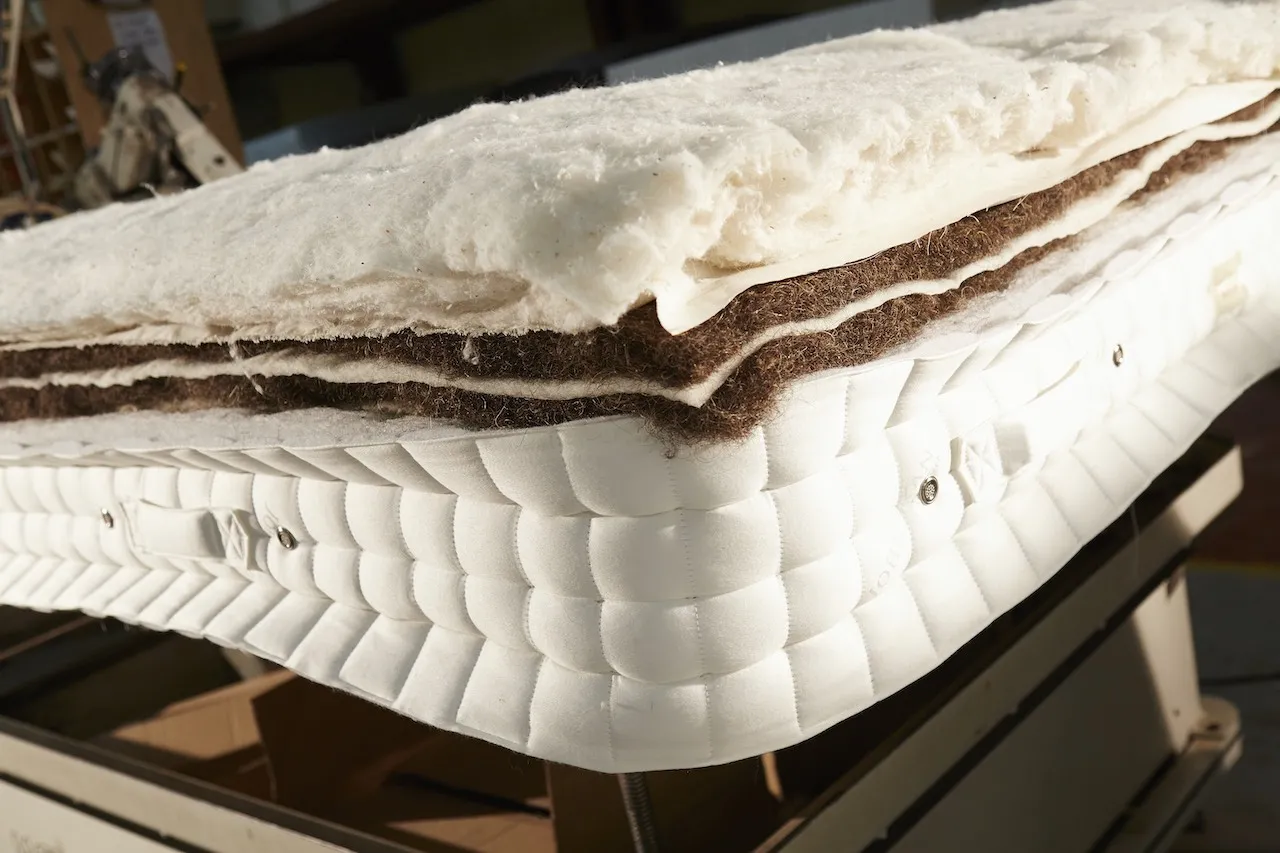
Speaking purely about the springs, Calico pocket springs are quite simply the highest quality spring you can get in a mattress. All the high-end manufacturers, such as Savoir beds and Vispring, will use calico pocket springs in their top end ranges. Each spring is housed in a calico cover; this provides more flexibility than the synthetic spun bond counterparts, meaning the springs can flex easily and breathe more than cheaper pocket sprung units. The calico pocket springs are sewn together and are only attached to adjacent springs with lengths of twine stringing them together. This is always done by hand by a skilled craftsman.
All the high-end manufacturers, such as Savoir beds and Vispring, will use calico pocket springs.
Zoned pocket springs: what it means and what it is worth
You will see the word “zoned” used frequently in pocket spring mattress marketing. It refers to mattresses where the spring unit has been divided into sections, typically five to seven, with different spring tensions or densities in each zone. The idea is that the shoulders need more give, the lumbar region needs more support, and the legs need less of either.
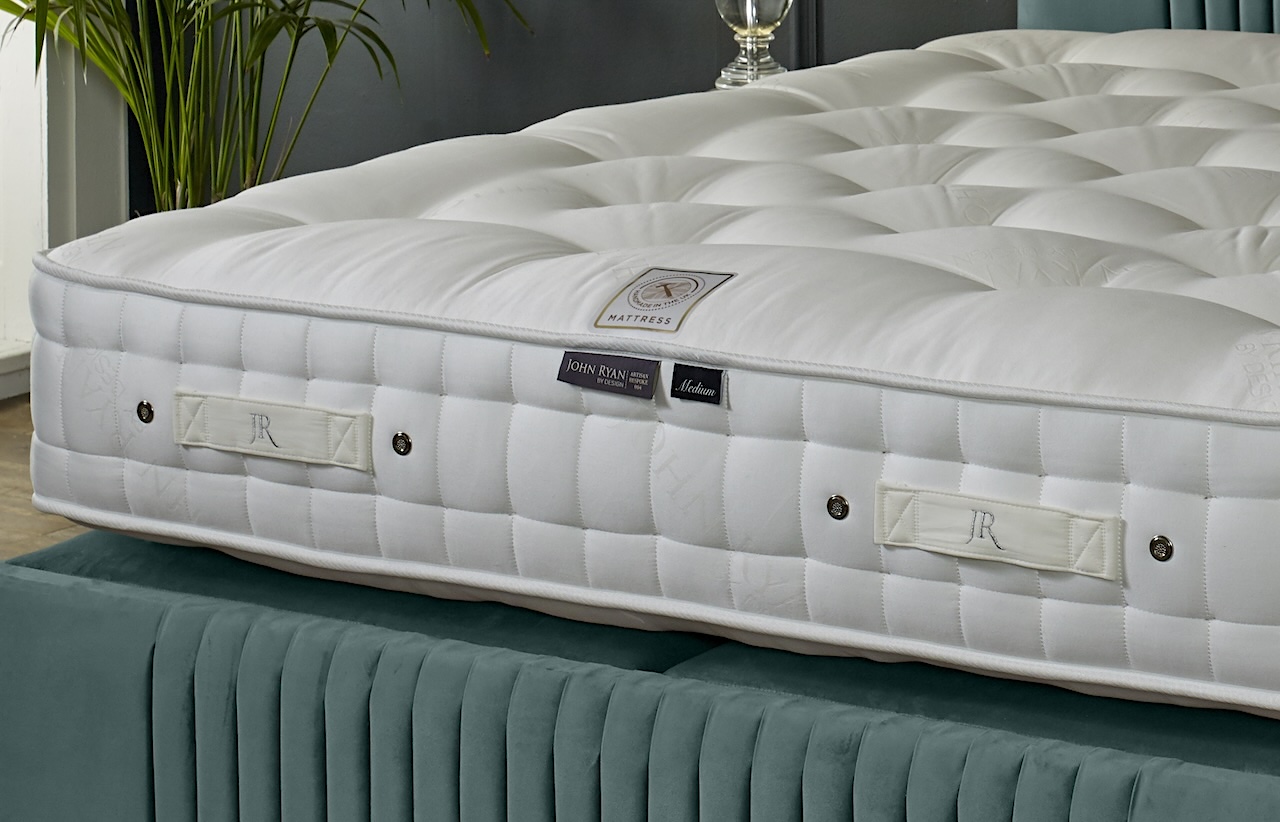
The concept is sound in principle. The execution in mass-market mattresses is frequently less impressive than the marketing suggests. Zoned spring units are a manufacturing technique, and like spring counts, the number of zones tells you very little about how well the zones are calibrated for your specific body. A mattress with seven zones and a spring gauge matched to no one in particular may well perform worse for your back than a mattress with no labelled zones but the correct wire gauge for your weight.
The most effective form of zoning is matching the spring tension to the bodyweight of the person sleeping on it. A 1.4mm gauge spring engineered for someone up to 16 stone will compress at the correct rate for that person’s shoulders and hips to sink to the right depth while the lighter areas of the body, the waist and legs, remain supported. A 1.6mm gauge spring does the same for heavier sleepers. This is genuine, measurable, weight-specific support. It cannot be replicated by a generic zone map designed for no specific person.
For couples with significantly different bodyweights, this matters considerably. A split tension mattress, with a different spring gauge on each side, is a more meaningful solution than any number of factory-defined zones on a shared spring unit. We offer split tensions across our Artisan range at no additional charge, because we think it is the right approach for couples rather than a premium add-on.
When a retailer references zoning, the right question is: what spring gauge are the zones, and how does that match my bodyweight? If they cannot answer that with a specific number, the zones are a design feature rather than a functional one.
One-sided vs two-sided pocket spring mattresses: why it matters more than you think
This is one of the most important things we can tell you, and almost nobody in the industry talks about it honestly. The vast majority of pocket spring mattresses sold in the UK today are one-sided. That means they have a sleep surface on the top and a base layer on the bottom that is never intended to be slept on. You can rotate them head to foot, but you cannot flip them.
This became the industry standard roughly two decades ago. The reason had nothing to do with sleep quality. It was a cost decision. A one-sided mattress uses half the upholstery of a two-sided one. It is cheaper to make, quicker to produce, and the shorter usable lifespan generates repeat purchases. The fact that one-sided mattresses have become the norm does not mean they are better.
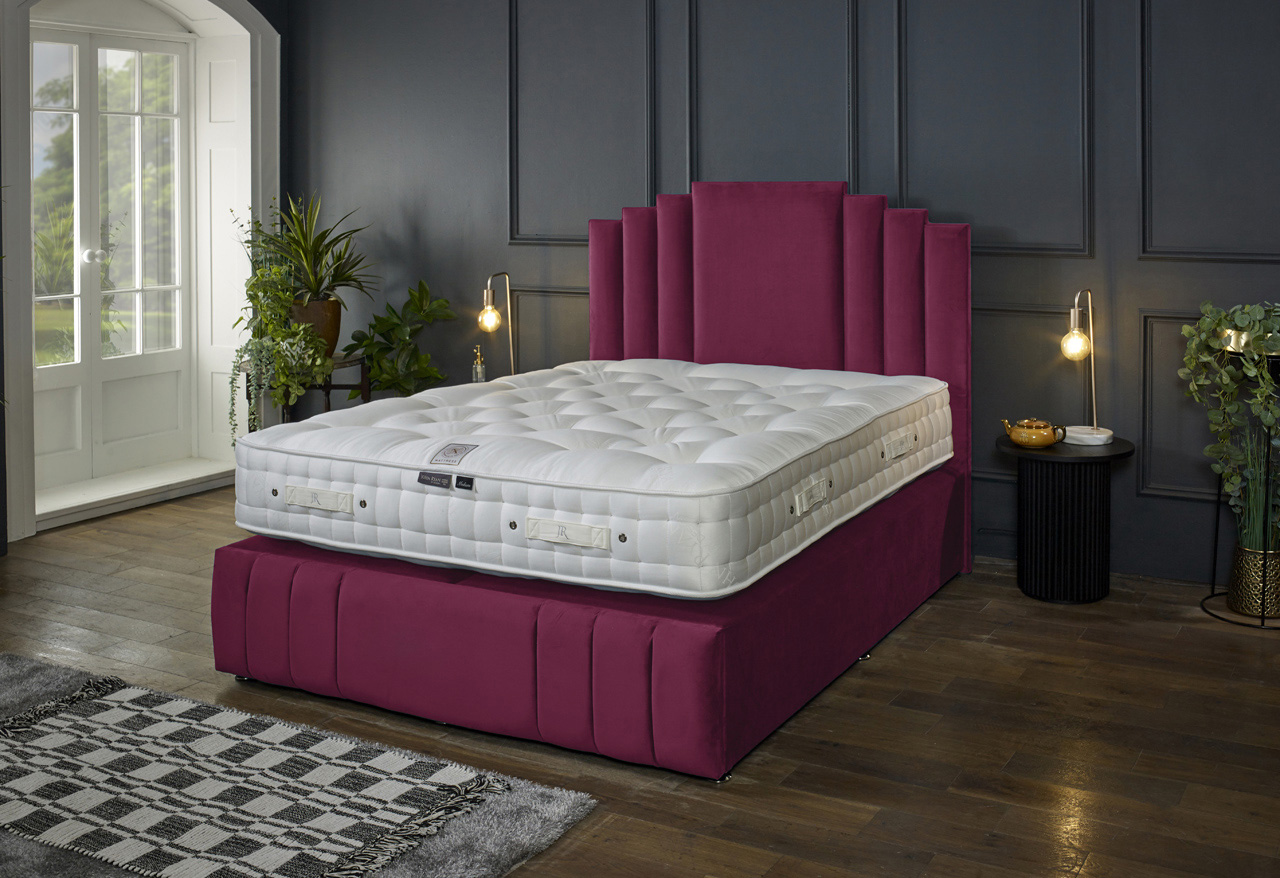
A two-sided mattress, properly flipped and rotated on a regular schedule, will last significantly longer than a one-sided equivalent because the upholstery compression is shared across both surfaces rather than concentrated in one. This is not a marginal difference. A well-made two-sided mattress can reasonably be expected to last ten years or more with proper care. A one-sided mattress of equivalent specification, with all settlement concentrated on a single surface, will typically show its age considerably sooner.
Every mattress in our Artisan range and Origins range is double-sided. It is a fundamental part of how we build mattresses and an honest reflection of what we think good value looks like. When you are comparing mattresses, it is a question worth asking directly: can this be flipped? If the answer is no, ask yourself why.
We cover flipping and rotation in more detail in the care and maintenance section below.
Pocket springs must be matched with suitable upholstery
For instance, there is no use having a super-duper all singing all dancing pocket spring unit when it is not backed up by an element of substantial upholstery.
As you browse through the internet looking for your perfect mattress you will soon see that, in most cases, great swathes of text are focused on how good the pocket springs are in any particular model, the science behind the design and how you will sleep like a baby. All of this will be relatively pointless if equal space is not designated to the rest of the mattress, the upholstery, the detailing and so forth.
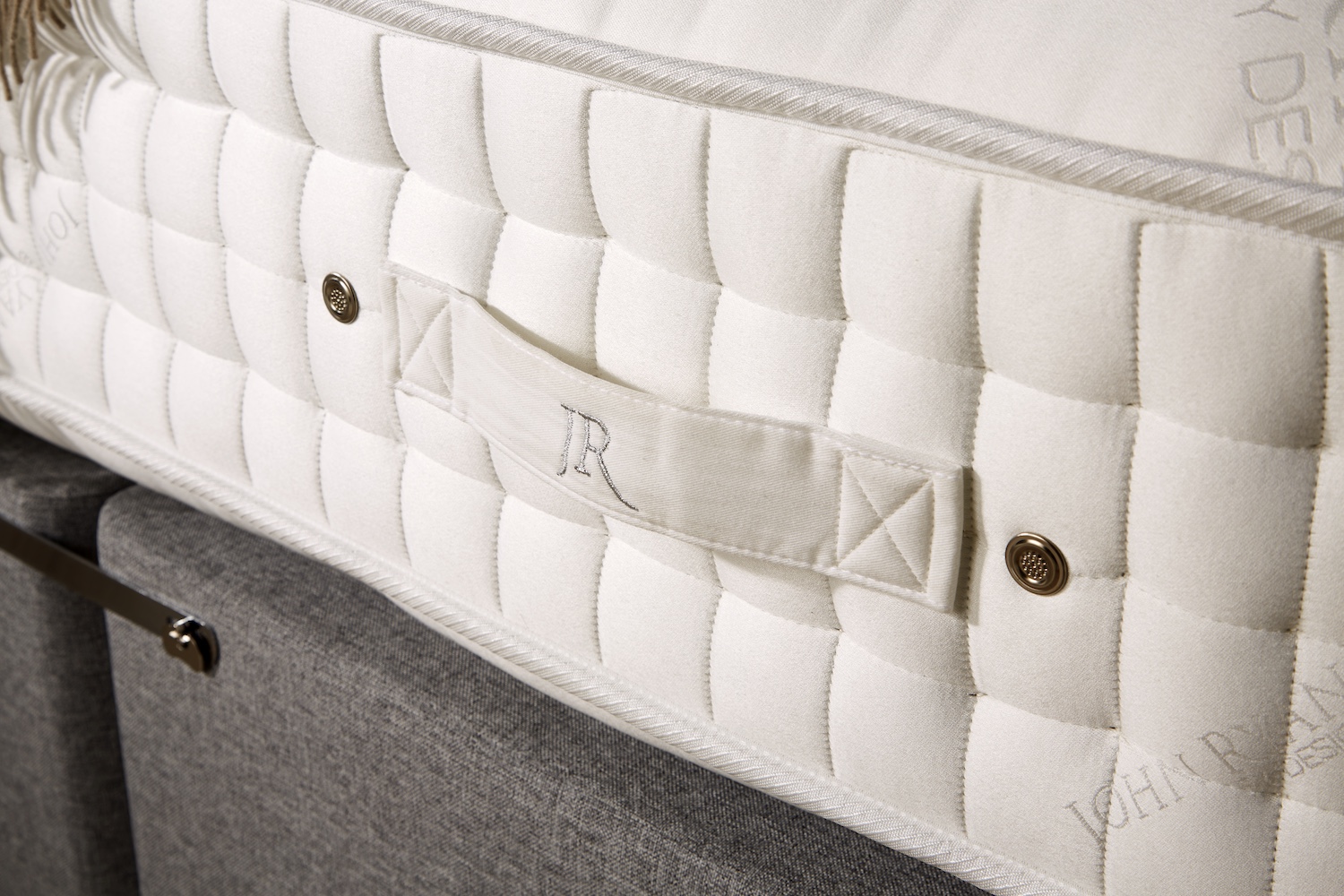
The fact of the matter is that a standard pocket sprung unit, which forms the basis of many mattresses, will be suitable for practically everyone. This is especially true when compared to a cage sprung or open coil mattresses, which should be avoided at all costs. Standard spun-bond pocket springs are not overly expensive and will offer you all the support you will require.
You need to be careful when just viewing spring counts; they can be misleading
The most springs you can fit in a single layer king size mattress is 2000
Natural vs synthetic upholstery: what actually goes on top of the springs
We have explained why upholstery matters as much as the spring unit beneath it. Now it is worth being direct about what the best upholstery actually is, and what the industry often substitutes instead.
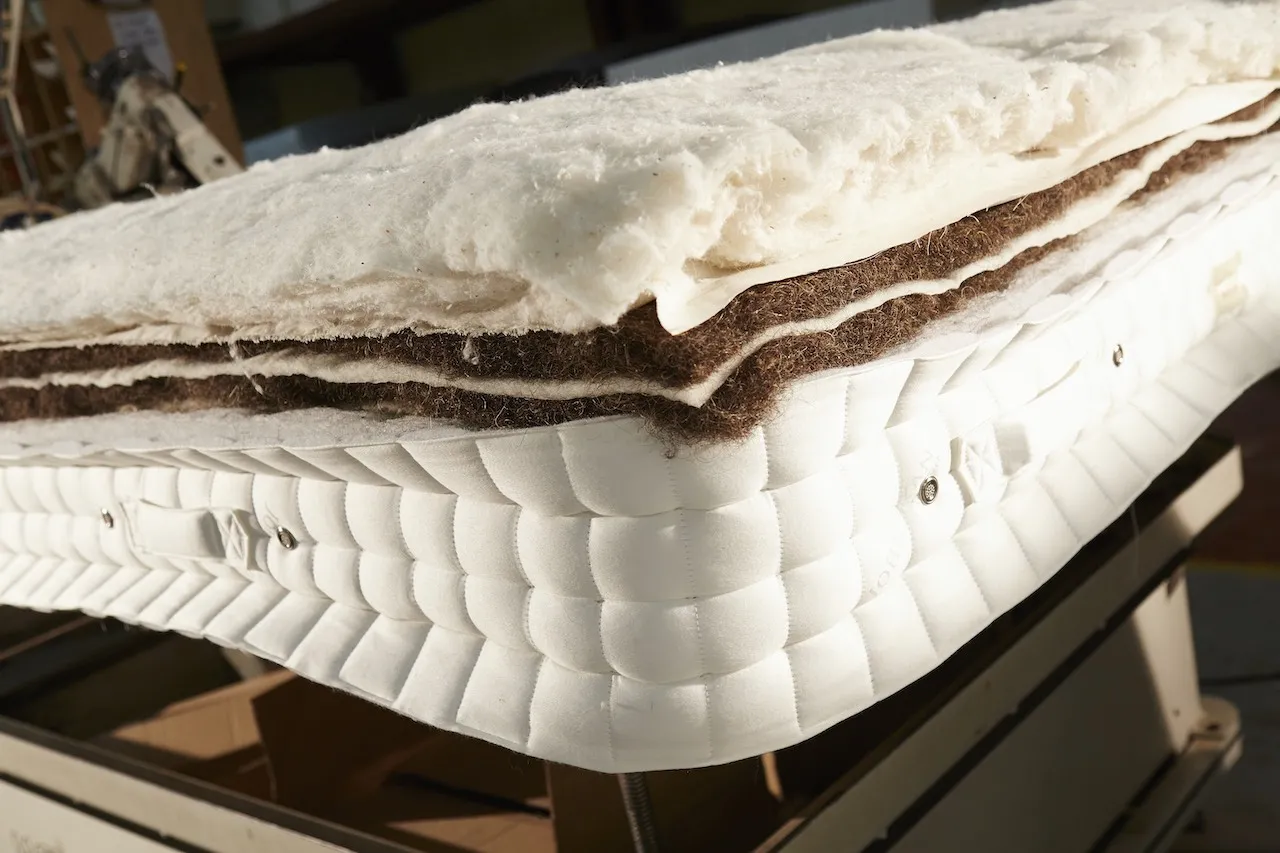
The fillings used to upholster a pocket spring mattress sit between the spring unit and the sleep surface. They are responsible for how the mattress feels, how it breathes, how it responds to body heat, and how well it holds up over years of use. A 1500-spring mattress with 500gsm of cheap polyester wadding will perform very differently from a 1500-spring mattress with 1,500gsm of natural Wool, Cotton, and Horsehair. The springs are almost identical. Everything else is not.
Natural fibres — Wool, Cotton, Horsehair, Horsetail, Silk, Cashmere, Mohair, Alpaca, and Latex — are the benchmark for quality upholstery, and each has specific properties that synthetic alternatives simply cannot replicate.
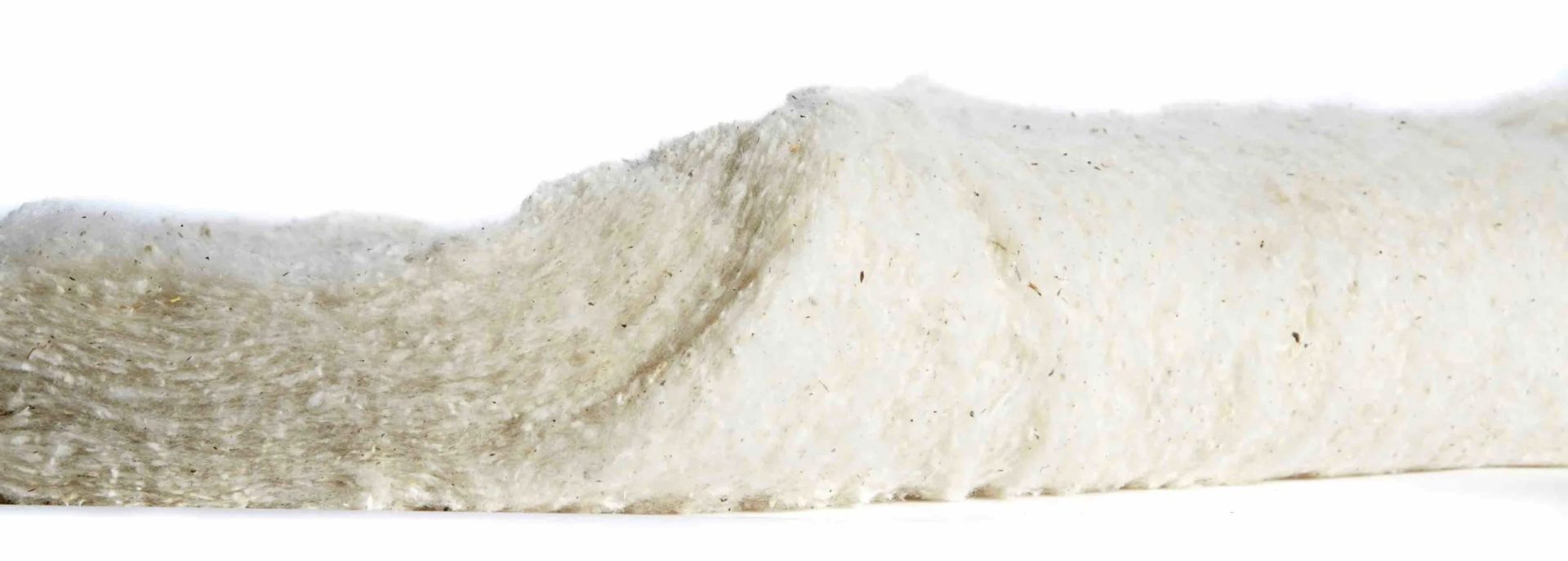
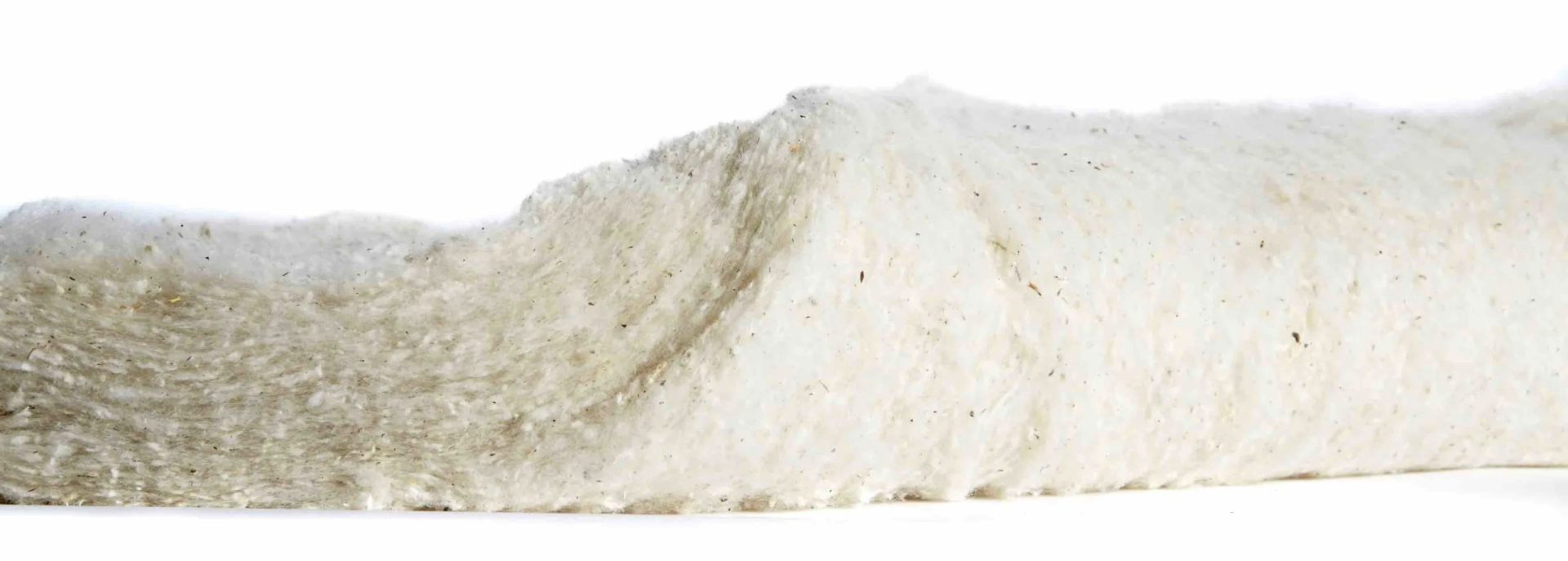
Wool is the most versatile of all mattress fillings. It is naturally temperature-regulating, wicking moisture away from the body during sleep while retaining warmth. It compresses under body weight and recovers well, which makes it particularly durable over the long term. It is naturally resistant to dust mites and allergens, which is a meaningful benefit for anyone with sensitivities.
Cotton provides a cool, clean sleep surface and a firmness that makes it ideal as a base layer beneath softer fillings. It is breathable, hypoallergenic, and hardwearing. It is used throughout our Origins and Artisan ranges as a foundational upholstery layer.
Horsehair and Horsetail are among the most resilient natural fibres used in mattress making. They compress and spring back exceptionally well, which means they resist the body impressions that cause cheaper upholstery to feel worn and sunken over time. They also have natural antibacterial properties. Their use is largely confined to premium hand-built mattresses precisely because they are expensive and require skilled craftsmanship to work with effectively.
Silk, Cashmere, Mohair, and Alpaca are used in the upper comfort layers of our most luxurious models. They provide an exceptional sleep surface — soft, temperature-regulating, and with a feel that simply has no synthetic equivalent. They are present in smaller quantities than base fillings like Wool and Cotton, but their contribution to the overall comfort of the mattress is disproportionate to their weight.
Latex is worth a separate mention because it sits between natural and synthetic in most people’s minds. Natural Latex, derived from rubber tree sap, is genuinely exceptional: highly responsive, naturally antimicrobial, and extremely durable. It is a very different proposition from synthetic foam, and we use it in our Artisan Latex range.
Synthetic polyester and foam comfort layers are cheaper, faster to produce, and easier to work with at scale. They will also compress more quickly, retain more heat, and degrade faster than natural alternatives. When a mattress is marketed primarily on its spring count and the upholstery is listed only in vague terms like “luxury fillings” or “premium foam layers,” it is usually worth asking what those fillings actually are and how much of them is present. We publish the full GSM weight of every upholstery layer in every mattress we make. Our GSM guide explains why this matters and what to look for when comparing mattresses.
Generally, and this certainly does not apply in all cases, manufacturers tend to go down the soft / medium/ firm route and use the firmer springs on the 1000 counts to softer springs on the 2000 counts. The theory is that 2000 pocket springs do not have to be as supportive as 1000. The support will be there, but spread out over a greater number of springs.
Is a pocket sprung mattress good for a bad back?
We often get asked this question. A pocket sprung mattress could certainly help you to sleep sounder if you suffer from back problems. The fact that each spring reacts individually means that your spine will be far better supported than it would be on an open coil mattress.
However, there are lots of other considerations to take into account when it comes to alleviating back pain. These range from the firmness of the mattress in question, to comfort layers and even the best sleeping positions for lower back pain.
Considering an orthopaedic mattress can also help, as they’re designed to reduce the stress that’s placed on your back, neck and joints. We’ve previously looked at the best orthopaedic mattresses for back pain sufferers, and have already explained that the long-standing assumption that firmness is “good for bad backs” isn’t quite correct. Just like pocket springs alone don’t necessarily make an optimal mattress for a bad back, factors like spring tension are actually far more important that simple questions around “soft or firm”.
Which pocket spring mattress suits your sleeping position?
Pocket springs work well for every sleeping position, but the spring tension and upholstery depth that suits a side sleeper is quite different from what a front or back sleeper needs. Getting this right makes a meaningful difference to how supported and comfortable you feel, particularly if you have a consistent sleeping position rather than moving around significantly during the night.
Side sleepers
Side sleeping is the most common position in the UK, and it places the greatest demand on a mattress in terms of pressure relief. When you lie on your side, your shoulder and hip are the widest points of contact. A mattress that is too firm will not allow these points to sink in sufficiently, placing the spine in a lateral curve that causes discomfort across the lower back and shoulder over time. Side sleepers generally benefit from a medium tension spring unit paired with a generous depth of softer upholstery — Wool, Cotton, and softer natural fibres that cradle those pressure points rather than resisting them.

If you are a side sleeper of lighter build, a medium tension spring (1.4mm wire gauge, up to 16 stone) is almost always the right foundation. Heavier side sleepers should consider whether a firmer spring tension is appropriate to prevent excessive sinkage, particularly at the hip.
Back sleepers
Back sleepers generally require a mattress that supports the natural lumbar curve without allowing the lower back to sag. This means the spring tension needs to offer enough resistance to prevent the heavier pelvis from sinking too deeply while the lighter lumbar region is still supported. A medium to firm spring tension suits most back sleepers, with a comfort layer that is substantial enough to feel comfortable but not so deep that it undermines the spinal alignment the springs provide.

Back sleeping is actually the position in which a well-matched pocket spring mattress performs most consistently well. The independent spring movement means each spring supports the contour of the body directly above it, which suits the varied pressure distribution of back sleeping particularly effectively.
Front sleepers
Front sleeping places the spine in extension, which means excessive softness in the mattress can worsen rather than relieve back and neck discomfort. Front sleepers typically benefit from a firmer spring tension and a thinner comfort layer that keeps the pelvis from sinking and the spine from hyperextending. If you sleep predominantly on your front, it is worth being cautious about choosing a mattress primarily on the basis of how soft it feels when you press it in the shop. That initial sensation may not translate to a comfortable night in your actual sleeping position.

Pocket Springs vs Memory Foam
If you’re prone to overheating in your sleep, then the ventilation that’s offered by a pocket spring mattress is much better than memory foam. Memory foams retain heat, so can easily lead to a hotter than normal night’s sleep.
Additionally, sufferers of sore joints or people who move around a lot in their sleep are also better served by pocket springs. Memory foam may let you sink into a bed, but pocket springs distribute your body weight a lot more evenly. This promotes healthier sleeping positions and keeps your spine in much better alignment.
Ultimately, there are plenty of better alternatives to memory foam mattresses. Some people certainly like memory foam mattresses, and if you’re on a tight budget they may have a place. However, in most circumstances we certainly wouldn’t recommend them over durable, natural materials.
Pocket spring mattresses and sustainability: the honest position
The environmental case for a well-made pocket spring mattress over a synthetic foam alternative is straightforward, and it is one we are happy to make plainly because it is based on the actual materials involved rather than marketing certification badges.
Memory foam and synthetic foam mattresses are manufactured from petroleum-derived polyurethane. The production process is energy-intensive, involves the release of volatile organic compounds, and the end product does not biodegrade. When a foam mattress reaches the end of its life, it typically goes to landfill, where it can persist for hundreds of years. Every synthetic foam mattress sold compounds this problem.
A pocket spring mattress built with natural fibre upholstery is a fundamentally different proposition. The steel in pocket springs is recyclable. Natural fibres including Wool, Cotton, Cashmere, Mohair and Horsehair are renewable, biodegradable, and require no petrochemical processing. Wool in particular is a remarkable natural material: it regulates temperature, resists moisture, and is completely compostable at the end of its life. The calico cotton covers used to encase our pocket springs are likewise a natural, breathable material with no synthetic treatment.
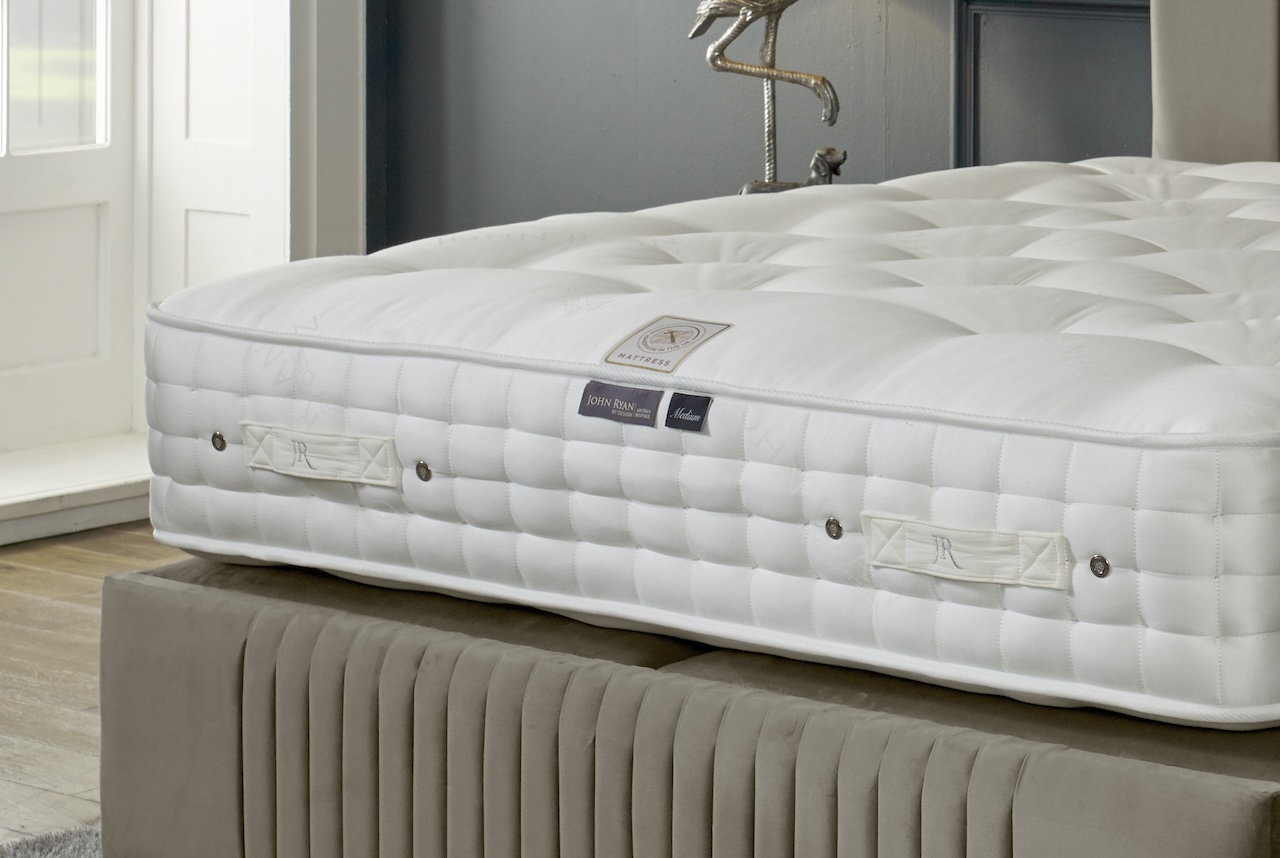
There is also a durability argument with direct environmental relevance. A well-made double-sided natural fibre pocket spring mattress, properly cared for, should last ten years or more. A synthetic foam mattress typically needs replacing in five to seven years, and a cheap one considerably sooner. The environmental cost of manufacturing, transporting, and disposing of two or three mattresses over the same period that one quality pocket spring mattress would serve is not trivial.
We do not carry environmental certification badges on our products. We carry natural materials, honest construction, and a guarantee that reflects our confidence in how long the mattress will perform. If you want to know exactly what is inside any mattress in our range, including the fibre types and their GSM, that information is on every product page. We publish it because we think buyers deserve to know what they are sleeping on.
What is a hybrid pocket spring mattress?
The word “hybrid” has become ubiquitous in mattress marketing over the past several years. It refers, in most cases, to a mattress that combines a pocket spring unit with one or more layers of foam typically memory foam or latex foam as the primary comfort layer. The idea is that you get the support and breathability of pocket springs with the pressure-relieving properties of foam. That sounds reasonable in theory.
In practice, the picture is more complicated. Most hybrid mattresses sold by direct-to-consumer brands use synthetic foam comfort layers of modest depth over relatively basic spring units. The springs provide a support core that is genuinely better than an all-foam mattress, but the foam upholstery sits at a price point that does not compare favourably with what natural fibres deliver at the same cost.
The original “hybrid” concept — a pocket spring unit combined with natural fibre comfort layers has been the standard construction method of quality British mattress makers for well over a century. Wool, Cotton, Horsehair, and Silk over a calico pocket spring unit is a hybrid in every meaningful sense of the word. It simply predates the marketing term by about a hundred years, and it performs considerably better over a long lifespan than synthetic foam alternatives.
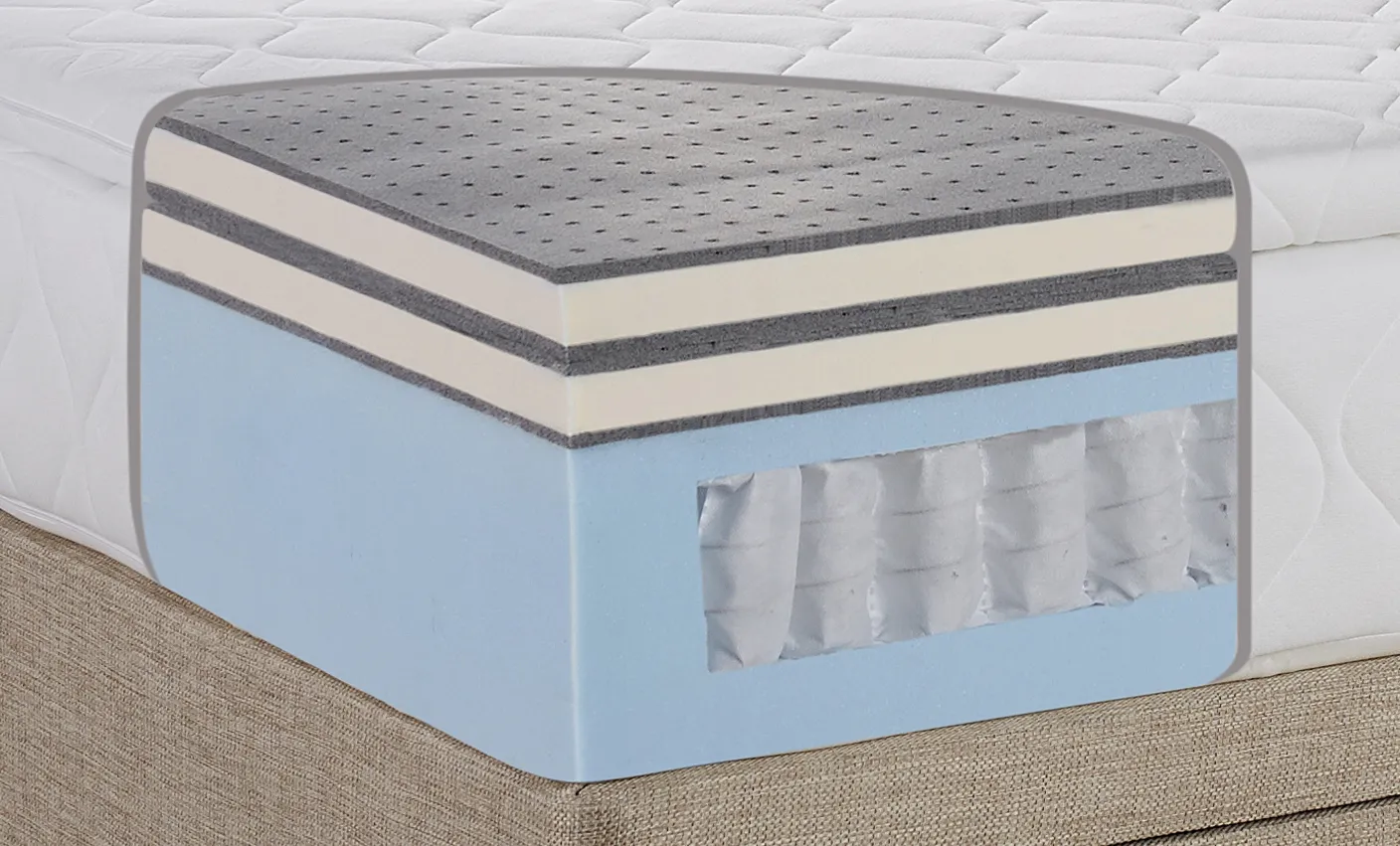
There is one circumstance in which a foam hybrid makes a reasonable case for itself: natural Latex combined with pocket springs. Natural Latex is a genuinely high-performing material — responsive, durable, naturally antimicrobial, and breathable in a way that memory foam is not. Our Artisan Latex range uses natural Latex alongside calico pocket springs and natural fibre upholstery, which we consider a meaningful upgrade rather than a marketing exercise.
If you are currently comparing hybrid mattresses from DTC brands, the questions worth asking are: what exactly the foam layers are made from, how deep they are, how long the spring unit is warranted for, and what happens to the mattress in 8 years when the foam comfort layer has softened significantly. Quality pocket spring mattresses built with natural fibres can be refurbished; most foam hybrids cannot.
Guide to pocket spring mattresses
A good thing to bear in mind is that a 1000 / 1500 / 2000 pocket sprung unit will be broadly similar from about 90% of all manufacturers. It is what is placed on top of the units (upholstery) that makes the difference in Price and in quality.
Total spring counts usually come in at 600 / 800 / 1000 / 1200 / 1400 / 1500 / 2000 pockets per unit.
The lower spring counts will have a larger diameter spring. The higher spring counts will have a smaller diameter spring. One of the most prolific questions we get asked, and one that’s abundant on internet forums, is “how many springs are best?”. As you’ll have picked up from what we’ve already written, this may be a simple question but the answer is not! The response to this question should always be followed up with “best for what?”
Which is best: a pocket sprung or open coil Mattress?
Pocket springs are king when it comes to bed choices. If you are torn between two similar mattresses, one open coil and one pocket sprung, the pocket sprung mattress will always win hands down! Like I said above, the minimum 600 pocket count is far superior to any open coil or continuous coil mattress you can get. It is so unlikely an open coil/continuous coil mattress will have a quality level of upholstery attached, and all these fall within the low-end range of mattresses.
How many pocket springs do I need in my mattress?
You should aim for at least 1000 pocket springs in a mattress: up to 2000 in a single layer.
If you look at the complete range from Rest Assured, for example, you will see that the bulk of their mattresses utilise a 1400 pocket spring unit. This count will suit the majority of users: not too firm and not too soft.
A bigger person (such as my 20st Rugby Player friend) will gain more benefit from a 2000 unit. His weight will be equalised over a greater number of springs. The springs will not be fully compressed, but allowed to ‘move’ with him. If he was on a 1000 pocket unit, for example, the weight is distributed over a lesser number of springs. My ten stone friend will be quite happy on 1000 pockets.
You’re probably now thinking that if a 1000 spring unit is firm, then why would that suit our ten stone friend? Good point. The Firm spring unit only has 1000 springs and at a gauge of, say, 1.5mm. The 2000 spring unit at Soft will have a gauge of 1.2. This difference in spring gauge is fractional and nominal between two individual pockets. They will both compress easily under the pressure of your hands. As the number of springs increases, as in a complete unit, it takes more pressure to compress them.
This is only half the story, though! The other difference between 1000 springs and 2000 springs is the tension of the spring itself. There is no hard or fast rule on what gauge wire is used on a particular spring count: A 2000 unit can utilise a firm spring (e.g. 1.5mm) or it can utilise a soft spring (e.g. 1.2mm). And it is this reason alone why the question above cannot be answered with any degree of precision. It is so unlikely a retailer will know what gauge wire is used on any particular unit contained in a particular mattress.
What is the best bed base for a pocket spring mattress?
The base you place a pocket spring mattress on is not a secondary consideration. A well-made pocket spring mattress placed on an unsuitable foundation will underperform relative to its specification, and in some cases will wear unevenly as a direct consequence of the base beneath it. This is a subject the industry tends to gloss over because talking about bases means potentially complicating a mattress sale.
Slatted bases
Slatted bases are the most common foundation for pocket spring mattresses in UK homes, and they work well provided the slats meet a couple of basic criteria. The gaps between slats should not exceed approximately 7cm. Wider gaps than this allow the spring unit to push through partially, which causes uneven wear and can damage the spring edge over time. The slats themselves should flex gently under load rather than being completely rigid, as some flex helps the mattress respond naturally to body weight.

Solid, unyielding slats can compress the spring unit unnecessarily. If your slatted base has gaps wider than 7cm or slats that have bowed, warped, or broken, it is worth addressing this before buying a new mattress. A new mattress on a poorly maintained base is a waste of the investment in the mattress.
Divan bases
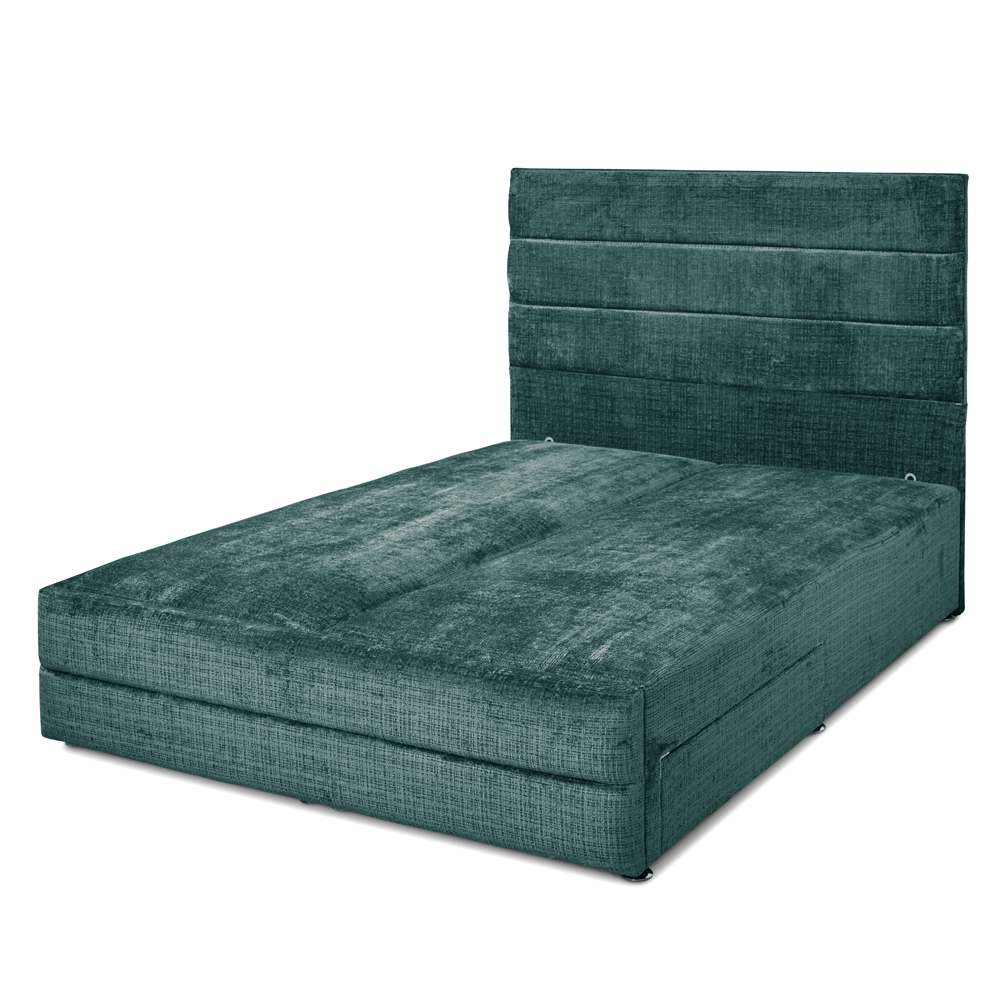
A good quality divan with a firm platform top is an excellent base for a pocket spring mattress. The solid, even surface supports the spring unit consistently across its entire footprint, which promotes even wear and stable support. Avoid divans with a sprung-edge top if you are pairing them with a premium calico pocket spring mattress — two spring units stacked together can interfere with each other’s response. A platform top divan removes that variable entirely.
Adjustable bases
Adjustable bases — the kind that raise the head or foot of the bed — are compatible with some pocket spring mattresses, but not all. The mattress needs to be both flexible enough to bend at the articulation points without damaging the spring unit and robust enough to retain its structure when flat. Not every pocket spring mattress is suited to an adjustable base. If this is something you are considering, it is worth speaking to us directly so we can confirm compatibility with the specific model you are looking at.
Our full range of bed bases is designed specifically to complement our mattress range. If you are purchasing a new mattress and base together, we can advise on the pairing that will perform best for your specific requirements.
Tailored Pocket Spring Gauges – Soft, Medium or Firm?
Once you move away from cheaper mass-produced springs, you then have the option of tailored spring gauges. This means that (depending on your weight) you can choose a soft, medium or firm spring. As a result, you have the potential for split tension mattresses and zip and links. So if you and your partner are different weights, then you can have different tensions to suit each of you.
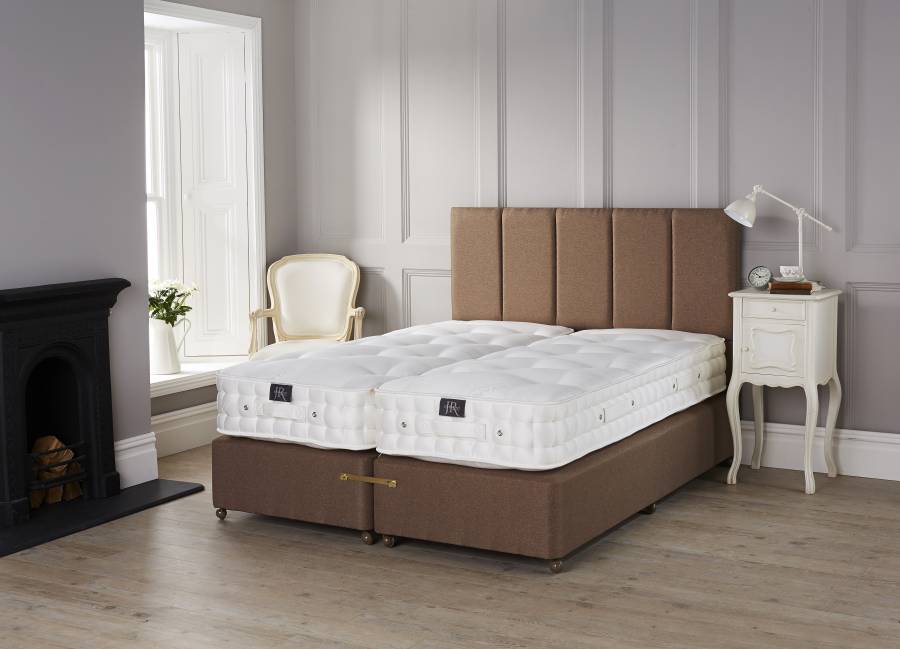
A split tension mattress is a one-piece mattress where one side has one spring tension and the other side has a different spring tension.
Zip & link mattresses are two separate mattresses that can have completely different spring tensions. They zip together as a one-piece mattress.
Pocket spring mattresses for couples: split tension, zip and link, and managing different needs
Pocket spring mattresses are particularly well suited to couples, and not just because of the motion isolation that individual spring movement provides. The real advantage for couples lies in the ability to have different spring tensions across a single sleep surface — something that is simply not possible with foam, Latex-only, or open coil mattresses.
The scenario is extremely common: two people of different body weights sharing a bed. Standard mattress guidance is built around spring tension being matched to body weight, so a 10 stone person and a 20 stone person have meaningfully different requirements. A single tension that suits one will almost certainly compromise the other. Pocket springs, and specifically calico pocket springs with tailored gauges, allow this to be addressed directly.

A split tension mattress is a single mattress with two different spring gauges — one for each side. It looks, feels, and behaves like one mattress. You cannot feel the transition between the two sides because there is not really one; each side simply responds to the person lying on it with the appropriate level of resistance. This is available across our Artisan range.
A zip and link mattress takes this further. It is two completely separate mattresses joined by a zip along the centre seam. Each mattress can be a completely different model, tension, and specification. If one partner needs a firm calico spring unit with a relatively shallow upholstery profile and the other wants a soft spring with a deeper, more cushioning comfort layer, a zip and link delivers that. They sleep together as one bed, but each person is on their own tailored mattress.
Beyond tension differences, the motion isolation of a quality pocket spring unit means that movement on one side of the bed does not significantly disturb the other sleeper. Each spring operates independently, so the ripple effect that an open coil or interconnected spring system creates simply does not occur. If one partner is a restless sleeper or works shifts and comes to bed at a different time, this is a real and practical benefit.
Pocket Spring wire diameter explained
Spring wire diameter is sometimes shown on product descriptions (not to be confused with spring gauges). It shows you how thick the wire is for that spring unit. The thicker the spring wire, the firmer the support you will get from it, as it’s harder to compress. The gauge refers to the torsion, push-pull measurement which tells you how resilient/firm a mattress spring is. An example of this is an orthopaedic mattress, which has a gauge of 12 and is very firm.
We have a handy table that allows you to see the spring wire diameter we use in our range and the tension that the spring is set at. We also, unlike many competitors, allow you to see what the weight tolerance is for these springs. This is crucial when working out the support you need and we detail this more in the article on soft, medium & firm.
| Spring Tension | Wire diameter (Gauge) | Weight Range |
|---|---|---|
| Soft | 1.2mm | Bespoke Tension (Please Call) |
| Medium | 1.4mm | Upto 16 stone |
| Firm | 1.6mm | 16 stone plus |
| Extra Firm / Orthopaedic | 1.9mm | 20 stone plus |
How are pocket spring mattresses made?
In most mattresses, you will come up against the pocket sprung unit itself, which will be relatively similar. In this country they are produced in large factories, such as Leggett and Platt, Charles Blythe and the like. There are also imports, with the most regarded being Agro gmbh (Germany). Currently, the most prolific imports of pocket sprung units come from Turkey and South Africa.
Some manufacturers have the equipment and facility to produce their own pocket springs. Such manufacturers include Vispring/Harrisons and, of course, the manufacturer we use who makes our Artisan range: all completely made in Britain.
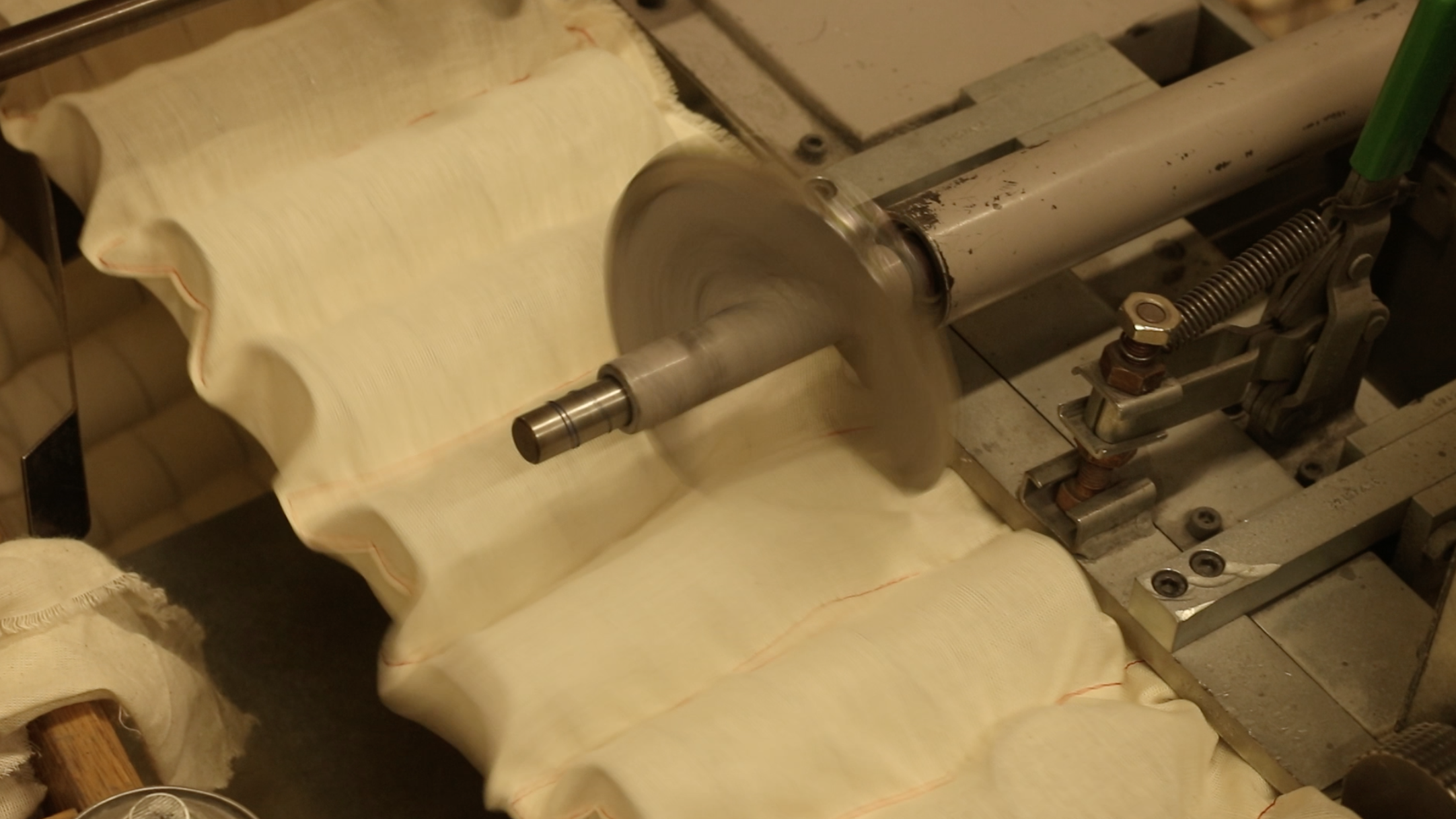
Each one of our Artisan Calico Encased Pocket Springs is made by a specialist piece of machinery. Each individual pocket spring is formed and then inserted into a calico sleeve which is then machine-stitched shut. Once each length of pocket springs have been formed, they are then hand-cut so each strip forms one piece. Cheaper synthetic pocket springs may be glued together (instead of stitching) to reduce the time required to make them.
What’s the length of a pocket spring?
This is another very good question. The expectation that a quality pocket spring will be 16cm is usually standard in high-end mattresses. Each is usually between 6 and 9 turns. Again, anything above 6 turns is almost superfluous. Retailers have made springs longer for marketing, but 9 turn 20cm springs are actually really unstable.
We use the same spring type as Vispring. 6 Turns, 16cm long and in 3 different wire gauges. All our Artisan springs are Calico encased and vanadium coated. We avoid shorter micro springs as they compress far too quickly and offer far less support (other than inflating the spring count for manufacturers).
What’s a Vanadium pocket spring?
Vanadium is used in the steel forging process and provides strength to the metal, which assists when it is then formed into a pocket spring. It also has a low oxidisation value, meaning it doesn’t corrode as quickly as other metals. As a result, these pocket springs don’t rust.
We use Vanadium on our calico pocket springs that are found in the higher end Artisan models. Vanadium is often found in metal alloys and top-end tools to give strength and durability against corrosion. It is used within our springs to ensure they are of the highest quality, giving an enhanced lifespan and longevity. Most manufacturers couldn’t tell you what is in their spring wire; you will probably just get shrugged shoulders. However, here at John Ryan we can share with you the exact composition of our calico vanadium pocket springs.
| Chemical Composition of Steel Wire | C | Mn | Si | P | S | Cu | V (Vanadium) |
|---|---|---|---|---|---|---|---|
| Percentage Contained | 0.71 | 0.54 | 18 | 0.12 | 0.014 | 0.190 | 0.5/0.9 |
Other types of Pocket springs – Cortec, Revolution & Micro Springs
Just before 2020, the mattress market saw a flood of new ‘spring innovations’, which were all there to tempt you to certain brands’ mattresses. Spring technology has pretty much remained the same for over a hundred years. The simple spring mechanism works by compressing and extending based on a load applied to it (i.e. a sleeper loading the spring when they lie on a mattress).
There’s only so much innovation you can do with a spring, such as changing its shape or size. It will have some influence, but is it enough to spend hundreds of pounds more on a new mattress? We take a look at a few of the newer spring types so you can make your own mind up.
Cortec Pocket Springs: Cortec springs by Harrison Spinks are an elongated pocket spring. That means they are thinner and taller than regular pocket springs. Cortec springs are not glued together but heat-sealed into rows, meaning they are glue-free. You don’t need glue to bond them together as they can concertina together by being folded in their rows. Imagine a roll of paper labels and how each one can be folded back on each other or torn off. This is the same layout as the Cortec spring. They are still synthetic coated pocket springs and, unlike our Calico ones, they are not vanadium coated, so won’t be as impervious to rusting over time.
Revolution Pocket Springs: This is again another innovation from Harrisons which involves placing a smaller spring within a regular-sized pocket spring. So you have two springs in one. We’ve trialed these and not found a huge amount of comfort difference between the two. We also do have reservations about how sure they are that the smaller internal spring won’t get stuck or trapped in the larger spring.
Micro Mattress Springs: These are the latest in spring count hype. Micro springs are tiny synthetic pocket springs that come in rows of 1000. This means you can add a few layers to suddenly boost the overall spring count of a mattress. We really don’t rate micro springs as they compress almost instantaneously, making them redundant in our tests. We can only imagine that retailers are now using HD or micro springs simply to up the spring count in the battle to have the higher figure. However, this simply means less upholstery for you. The more layers of springs you place in a mattress, the less room there is for the upholstery comfort layers. Bear this in mind!
How long does a pocket spring mattress last?
This is one of the most commonly asked questions about mattresses, and it rarely gets a straight answer. The honest version is: it depends entirely on what you buy and how you look after it.
| Mattress type | Spring type | Upholstery | Expected lifespan |
|---|---|---|---|
| Budget | Synthetic spunbond | Polyester comfort layers | 5 to 7 years |
| Mid-range (1000 to 1500 springs) | Spunbond or entry calico | Some natural fibre upholstery | 8 to 10 years |
| Premium (calico, double-sided) | Vanadium calico | Substantial natural fibre depth | 15 years or more |
The spring unit itself is rarely the part that wears out first in a quality mattress. Springs made from vanadium-coated steel wire, properly tensioned and supported by an appropriate base, are extraordinarily durable. It is the comfort layers above the springs that age first. In a mattress using natural fibres — Wool, Horsehair, Cotton — these layers compress gradually and evenly over time, which is entirely normal. In a mattress using synthetic foam layers, the degradation tends to be more pronounced and considerably less reversible.
Signs that a pocket spring mattress has reached the end of its useful life include a visible or palpable sag at the centre or edges that does not recover when the mattress is unloaded, persistent discomfort or waking with stiffness that was not present when the mattress was new, and visible surface damage to the ticking or upholstery layers. If the springs themselves are creaking or can be felt through the comfort layers, that is a more serious indicator that the spring unit has been compromised, often by an unsuitable base.
The cost-per-night calculation is worth running when you are comparing mattresses at different price points. A £1,050 Origins 1500 king size mattress lasting ten years costs around 29p per night. An £2,180 Artisan Naturals king size mattress lasting fifteen years costs around 40p per night. In both cases, the nightly cost of a quality pocket spring mattress is genuinely modest relative to its contribution to sleep quality and overall health. We explain this in more detail in our guide on how much to spend on a mattress.
The John Ryan pocket spring mattress range: what to choose and why
We make pocket spring mattresses here in Manchester and have done for over 25 years. Every mattress in our range is double-sided, built on calico-encased pocket springs, available in multiple spring tensions matched to bodyweight, and filled with natural fibres throughout. The prices below are king size. All sizes are available, and split tensions for couples are included at no extra cost.
Origins range: the starting point
The Origins range uses 1,000 to 1,500 pocket springs on a spun-bond synthetic encasing at entry level, moving to calico-encased springs in the natural fibre models. All Origins mattresses are double-sided and available in medium and firm tensions.
The Origins Comfort (king size £890) is the starting point: 1,000 pocket springs, synthetic encasing, a clean straightforward construction for anyone who wants a quality pocket spring mattress without natural fibre upholstery. Good for guest bedrooms or as a first proper mattress upgrade from a budget open-coil bed.
The Origins 1500 (king size £1,050) moves up to 1,500 springs in a synthetic encasing. Our best-selling entry model and the right choice for anyone who wants a higher resolution spring unit at an accessible price.
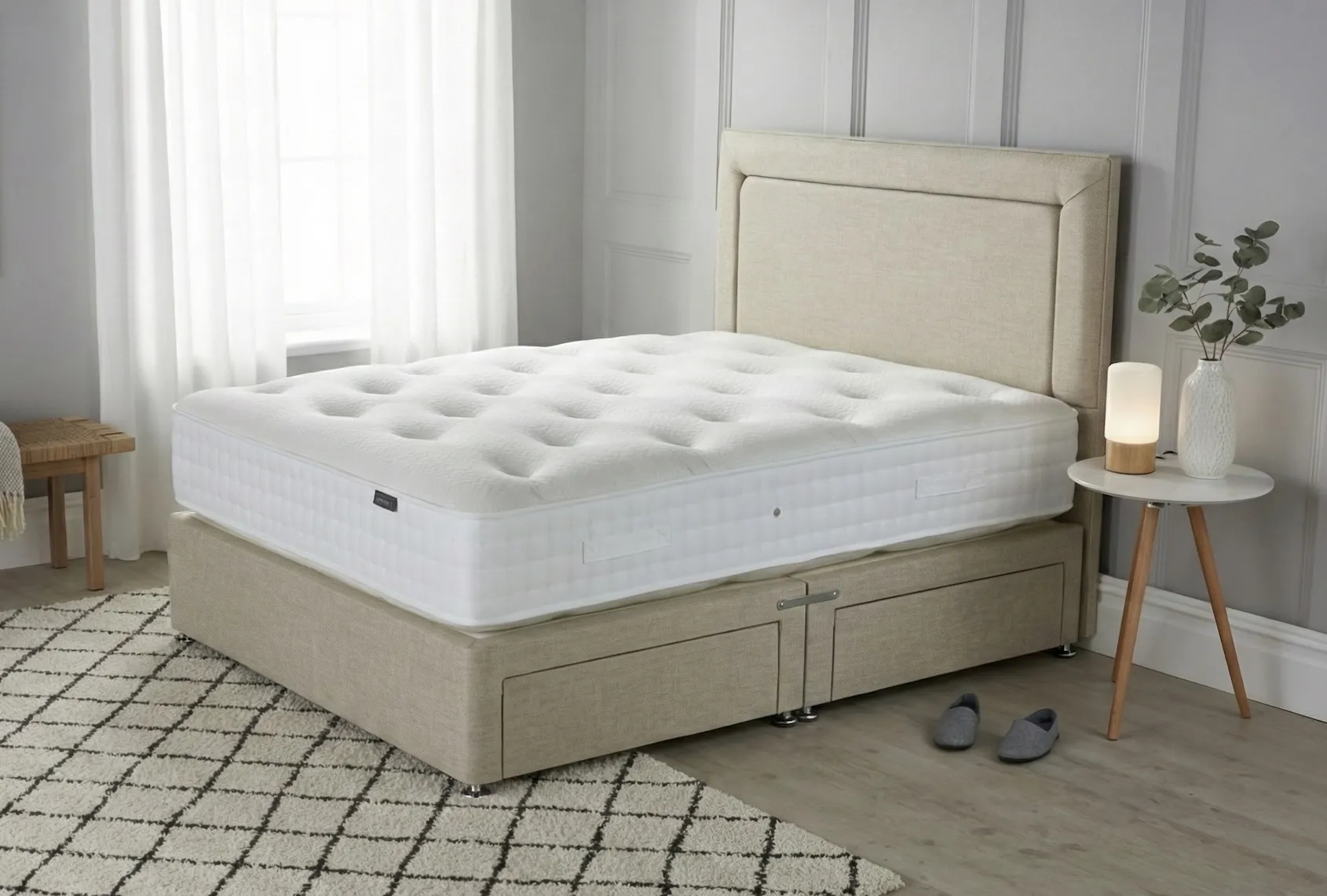
The Origins Natural Comfort (king size £1,300) is where natural fibres enter the range. 1,000 calico-encased pocket springs with 65% natural fibre upholstery including Wool, Silk and Cashmere. This is the model we recommend most often to people making their first move from a synthetic foam mattress into natural fibre construction. The difference in breathability and comfort longevity is significant.
Artisan range: handmade, natural fibre, long-term investment
The Artisan range is where John Ryan’s full manufacturing capability is applied. All Artisan mattresses use calico-encased, vanadium-coated pocket springs hand-tied during assembly. All are double-sided with hand side stitching, all carry a ten-year guarantee, and all are available in soft, medium, or firm tensions with split tension at no additional charge.
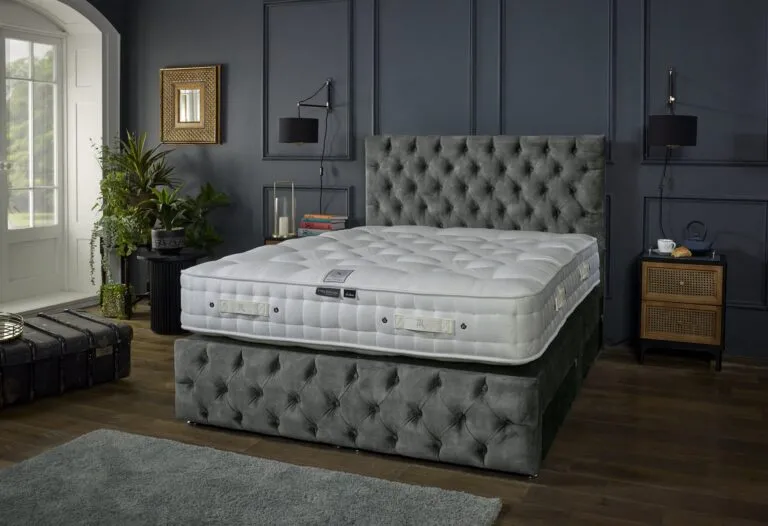
The Artisan Naturals (king size £2,180) is our most popular mattress and the one we stake our reputation on. 1,600 calico-encased vanadium-coated pocket springs with 85% natural fibre upholstery, including Blended British Fleece Wool and Cotton in the primary comfort layer and 1,500 GSM Mohair as the insulating layer beneath. Two rows of genuine hand side stitching. This is the mattress we would choose for a master bedroom where longevity and comfort in equal measure are the priority.
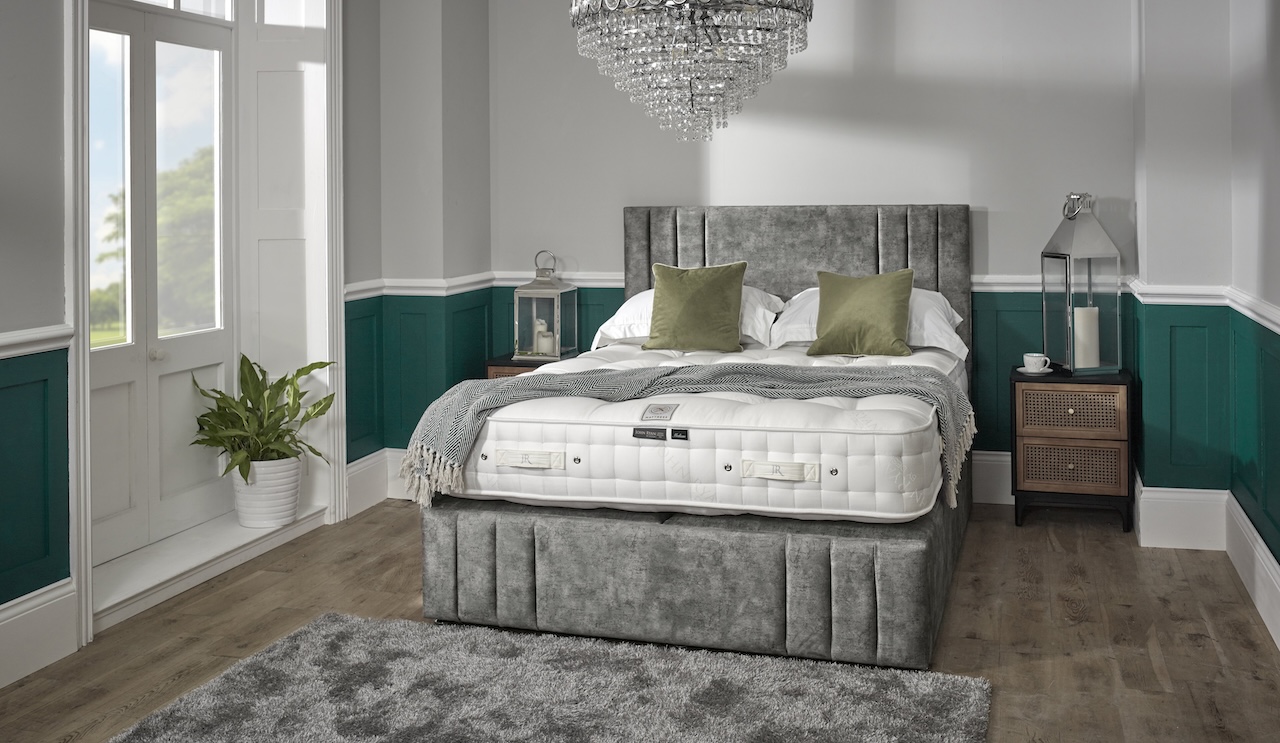
The Artisan Bespoke 004 (king size £2,860) steps up to 5,100 GSM of 100% natural fillings with Horsetail, Horsehair and Cashmere giving the comfort layers a distinctively firmer, more resilient feel than the softer Naturals. Suited to back sleepers and anyone who prefers a mattress that feels upholstered and supported rather than cushioned and soft.
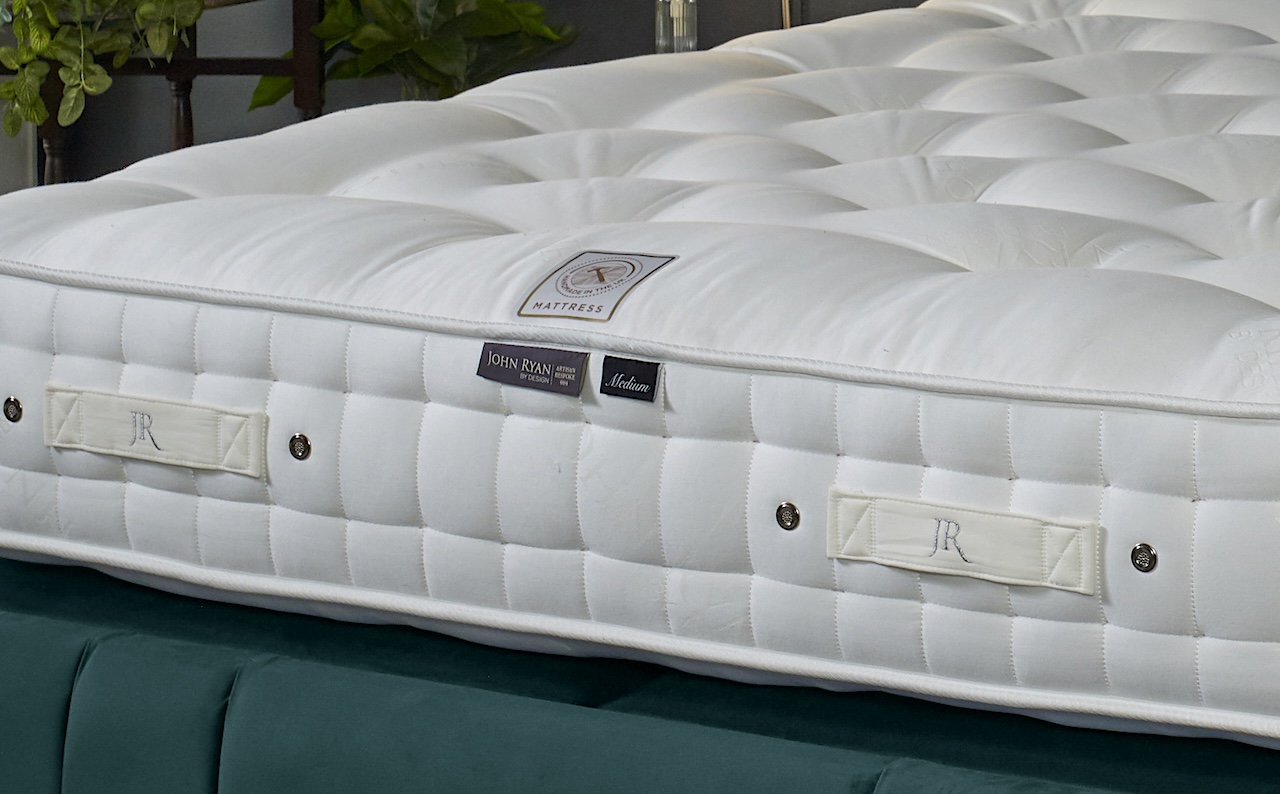
The Artisan Luxury (king size £2,955) is the softest mattress in the Artisan range: 4,600 GSM of Horsehair, Wool, and Blended Wool and Cotton upholstery, with a feel that the closest competitor we have found is the Vi-Spring Devonshire, though our specification exceeds it on natural fibre content. Suited to side sleepers and lighter-weight sleepers who want a deeply cushioned surface with a responsive pocket spring support underneath.
If you are unsure which model or spring tension is right for your weight, sleeping position, and budget, our team is available on 0161 437 4419. We will not push you toward a more expensive mattress than you need. If a £890 Origins Comfort is the right answer for your situation, that is what we will tell you.
How to care for a pocket spring mattress: flipping, rotating, and protecting
A quality pocket spring mattress is built to last, but how long it actually lasts is directly influenced by how it is maintained. The good news is that caring for a pocket spring mattress is not complicated. It requires a small amount of regular attention rather than any specialist knowledge.
Flipping and rotating
If your mattress is double-sided — as all of ours are — it should be both flipped and rotated on a regular schedule. For the first three months, we recommend doing this every two to four weeks as the mattress beds in and the upholstery begins to settle. After that, flipping and rotating every two to three months is sufficient for the majority of its life.
Flipping means turning the mattress over so the surface that was facing down is now facing up. Rotating means turning it 180 degrees so the head end becomes the foot end. Doing both in rotation ensures that every part of the upholstery is used and settled evenly, which is the primary driver of long-term comfort and longevity. A one-sided mattress cannot be flipped, which is why two-sided construction is so significant for long-term value.
Using a mattress protector
A good quality mattress protector is one of the most practical investments you can make alongside a new mattress. It keeps the ticking and upper comfort layers clean, protects against moisture from sweat, and makes it easy to maintain a hygienic sleep surface without any special cleaning of the mattress itself. Our 100% Cotton Quilted Mattress Protector is breathable and machine washable, which means it can go through a regular wash without affecting the temperature regulation that natural fibre mattresses provide. Cotton protectors at £55 for a king size are a sound investment relative to the mattress they protect.

Airing and ventilation
Pocket spring mattresses, particularly those with natural fibre upholstery, benefit from regular airing. Pulling back the bedding for thirty minutes in the morning rather than making the bed immediately allows moisture from overnight sleep to evaporate naturally. This is particularly relevant in colder months when condensation can accumulate more readily. It takes almost no time and makes a genuine difference to how fresh the mattress remains over years of use.
Cleaning
The surface of a pocket spring mattress should be vacuumed lightly every month or two to remove dust and keep the ticking fresh. For any spills or staining, spot clean with a mild detergent and cold water as promptly as possible, working inward from the edges of the stain rather than rubbing outward. Allow the mattress to dry thoroughly before replacing bedding. A pocket spring mattress should never be soaked or steam-cleaned directly, as excessive moisture can damage the natural fibre upholstery layers and, in extreme cases, affect the spring unit. For more detail, our mattress care and maintenance guide covers the full process.
Frequently asked questions about pocket spring mattresses
What is a pocket spring mattress?
A pocket spring mattress is a mattress whose support unit is made up of individual steel springs, each housed in its own fabric pocket. Because each spring is separately encased rather than interconnected with adjacent springs, they compress and rebound independently of each other. This independent movement allows the mattress to respond to different areas of the body simultaneously, distributing bodyweight more accurately than a single-unit spring system. Pocket springs are the support structure beneath the comfort layers of upholstery; the two elements together determine how the mattress performs.
How many pocket springs should a mattress have?
For a king-size mattress, a minimum of 1,000 pocket springs is a reasonable starting point for most sleepers. Spring counts between 1,000 and 1,600 cover the vast majority of quality pocket spring mattresses. Counts above 2,000 in a single layer are not possible without reducing individual spring diameter to a point where each spring loses meaningful function; very high counts typically indicate layered springs or micro springs, which perform differently and not necessarily better. Spring count also always refers to the king size, regardless of which size you buy: a single mattress of the same model will have proportionally fewer.
Is a pocket spring mattress good for a bad back?
Yes, provided the spring tension is matched correctly to the sleeper’s bodyweight. A pocket spring mattress with the correct gauge wire for your weight will hold the spine in a neutral position throughout the night, allowing the shoulder and hip to sink into the comfort layers while the lighter areas of the body remain supported. The landmark Lancet study published in 2003 found that medium-firm mattresses produced significantly better outcomes for chronic back pain than firm ones, and pocket spring mattresses with natural fibre upholstery in a medium-firm configuration are precisely what that research describes. An incorrectly matched spring tension, too firm or too soft for the sleeper’s weight, will not perform well for back pain regardless of the spring type.
What is the difference between a pocket spring and an open coil mattress?
In an open coil or bonnell spring mattress, the springs are connected together into a single unit. When one spring compresses, it pulls on the adjacent springs, meaning every movement on one part of the mattress affects the entire sleep surface. In a pocket spring mattress each spring operates independently, so movement on one side of the bed does not transfer to the other. Open coil springs also offer cruder support because the entire unit compresses under load rather than individual springs responding to individual areas of the body. Pocket springs provide meaningfully better support, motion isolation, and breathability than open coil alternatives at any comparable price point.
What is the difference between calico pocket springs and synthetic pocket springs?
Synthetic pocket springs are encased in a polyester spun-bond material and typically glued or heat-bonded to adjacent springs. Calico pocket springs are encased in a breathable natural cotton calico fabric, stitched together and hand-tied. Calico encasing allows the springs to flex more freely and to breathe more effectively, making them the superior construction. All high-end mattress manufacturers, including Vi-Spring and Savoir, use calico pocket springs in their premium ranges. Our Artisan range uses calico-encased vanadium-coated springs throughout.
What does vanadium coating on pocket springs mean?
Vanadium is a metallic element used as a coating on high-quality spring wire to increase its resistance to fatigue and corrosion. A vanadium-coated spring retains its elasticity and rebound properties for longer than an uncoated spring because the coating protects the steel from the micro-stresses of repeated compression and extension over years of use. It is a specification detail that reflects genuine longevity rather than a marketing claim. Our Artisan range uses vanadium-coated calico pocket springs throughout.
Is a 5,000 pocket spring mattress better than a 2,000?
Not necessarily, and often no. Spring counts above 2,000 in a single layer are not physically achievable in a standard mattress: the springs would be too small to function properly. Counts of 5,000 or more involve multiple layers of springs or very small micro springs, both of which behave differently from a standard pocket spring unit. The marketing value of a high spring count is significant, which is why manufacturers use it. The performance value is considerably less straightforward. A well-made 1,600 spring mattress with correctly gauged wire and quality calico encasing will outperform a poorly made 5,000 spring mattress in almost every meaningful respect.
Should I get a soft, medium or firm pocket spring mattress?
The spring tension should be chosen based on your bodyweight, not your comfort preference. A medium tension spring with a 1.4mm wire gauge is engineered for sleepers up to approximately 16 stone. A firm tension spring with a 1.6mm gauge is for 16 stone and above. The feel of the mattress at the surface is determined by the upholstery layers above the springs, not the spring gauge itself. If you want a softer feel, choose softer comfort layers. The spring tension should be matched to your weight as an engineering decision. Choosing a spring tension based on feel alone is one of the most common and expensive mistakes in mattress buying.
How long does a pocket spring mattress last?
A well-made double-sided pocket spring mattress with quality natural fibre upholstery, properly maintained, should last between eight and twelve years. A one-sided mattress of equivalent specification, with all wear concentrated on a single surface, will typically show its age sooner. The longevity of any pocket spring mattress depends on four things: the quality of the spring unit, the quality and depth of the upholstery, whether the mattress can be flipped, and how consistently it is rotated and cared for. Our Artisan range carries a ten-year guarantee, which reflects our confidence in how the mattress is built.
What is the best base for a pocket spring mattress?
A pocket spring mattress performs best on a firm, flat, well-supported base. A solid platform base or a slatted base with slats no more than 7cm apart provides the right foundation. A sprung divan base adds additional give beneath the mattress, which can feel comfortable but adds an element that is harder to predict or control in terms of overall support. Avoid placing a pocket spring mattress on a base with worn, broken, or widely spaced slats, as the springs will compress unevenly and the mattress will wear prematurely. Our guide to mattresses and slatted bases covers this in detail.
Summary
If you want the best of the best, you need to be looking for calico pocket springs. If your budget constrains you, a spun-bond pocket spring unit with at least 1000 pocket springs per kingsize will get you a mid-range mattress. There is also a post on this site about the anomalies of soft, medium, or firm mattresses. It’s worth a read, particularly if you are struggling with how on earth a mattress can be described as such. If you have different body weights, we can create split tension mattresses or zip-and-link beds tailored to your weight.
Lastly, if you want to get really informed about the details of pocket springs and the different tiers, gauges and latest developments, you can read the detailed arguments on the John Ryan By Design site. To start, view some of the best handmade mattresses in our shop, where we use only the highest-quality pocket springs and coverings. Still struggling? Then why not call our small expert team based here in Manchester on 0161 437 4419 to see if we can help?
As we’ve said, the most pocket spring units you can get into a king-sized mattress on one layer is 2000. Mattresses described as having more than this are utilising double-layer construction techniques, or they are utilising a suspension pocket sprung unit, or they are using mini springs to increase the count. When looking at descriptions, if you see a specification with more than 2000 pocket springs you really do have to examine how this was achieved.
As we have said in previous posts, the only differentiating factor between many mattress manufacturers is the nature of the springs used. Fundamentally, the springs will more often than not be similar, but how they are constructed will provide enough difference to achieve the elusive brownie points that will sway you into thinking that their product is somehow better than the competition.

Dreaming of the perfect nights sleep?
Ask us a question
There are over 6000 questions and answers submitted by you on all questions about mattresses and bed problems. Enter a keyword such as Vi Spring, John Lewis beds, bad back or Memory Foam and see if your question has already been answered.
If you can’t find an answer in knowledge hub, ask a new question. We aim to respond to all questions within one working day.
Newsletter
Enter your email to join our newsletter. We’ll send you occasional news and mattress expertise.