







Mattress Construction
March 2026Mattress Types Explained: how to choose your next bed
Updated 2026: When it comes to buying a mattress, there seems to be a limitless choice of models, materials, spring counts, mattress covers, fibres, gels, foams and the like.
We often hear from people that the more they try to research in showrooms and online, the more confused they get when buying a new bed.
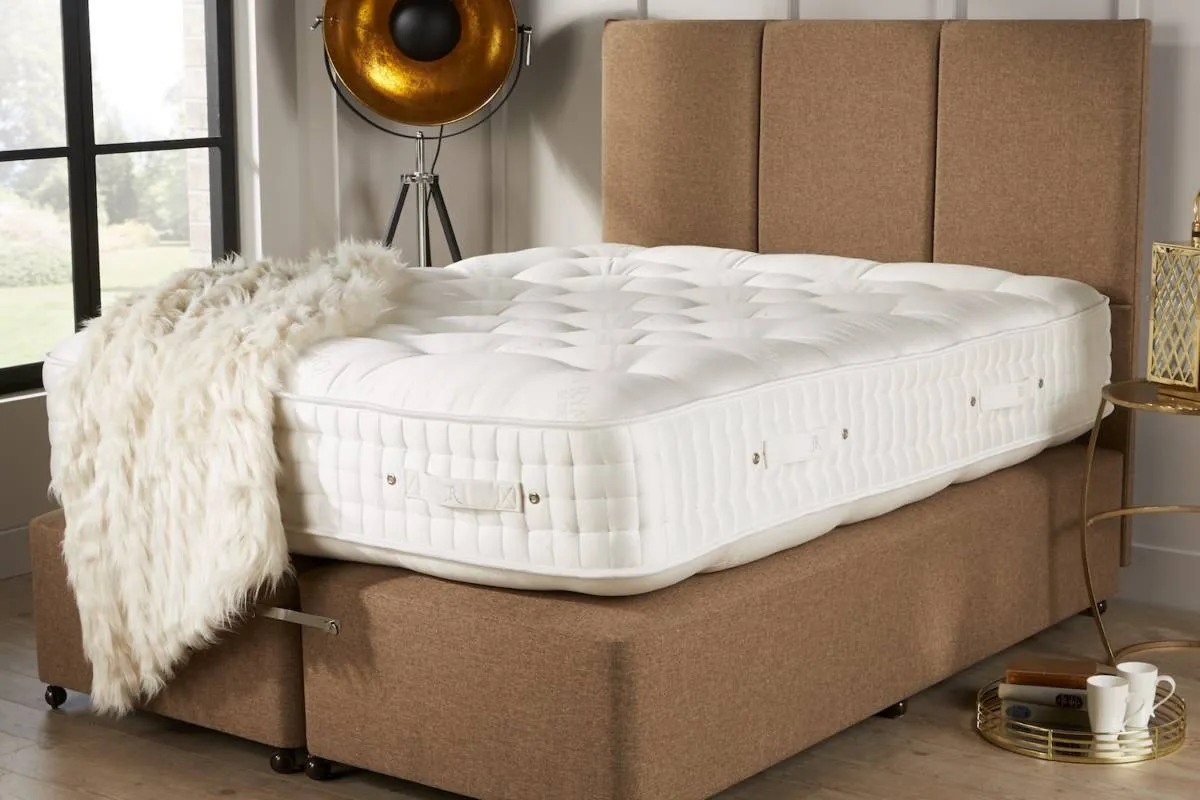
Most mattress retailers will hide away key information. Details that, if available, may make you think twice about buying their mattresses. We’re going to share all these hidden mattress details to help you choose the absolute best mattress for your budget and sleep needs.
This article will help explain the basics, so you know exactly which type of mattress will suit your sleeping requirements, cutting down on showroom visits and helping you avoid a potentially expensive mattress mistake. All price guides are based on a king size mattress model.
Different Mattress Types Explained
There are several types of mattresses you will encounter when buying a new bed. In order of quality and variety, we have the open coil, continuous coil, memory Foam, mattress in a box, Hybrid Foam, gel Foam, Latex, and, lastly, the most adaptable and best-performing of all, the pocket sprung mattress.
We have also included a section on what makes a mattress genuinely sustainable, which is an increasingly important consideration for buyers in 2026.
- Open Coil / Traditional Bonnell Spring Mattresses
- Continuous Coil / Miracoil Mattresses
- Memory Foam / Mattress in a Box
- Hybrid Foam Mattresses
- Gel Foam Mattresses
- Latex Mattresses
- Pocket Sprung Mattresses
- Orthopaedic Mattresses: What the Label Actually Means
- Zip and Link Mattresses
- Sustainable and Natural Fibre Mattresses
- Which Mattress Type is Best for Your Sleeping Position?
- Mattress Types at a Glance: Comparison Table
- Which Type of Mattress Should I Buy?
- Mattress Types to Avoid
- Bed and Mattress Types Explained for Bases
- Summary
- Frequently Asked Questions
1. Open Coil or Traditional Spring Mattresses
We’re going to start with the very cheapest mattress construction method, the open coil.
If you’re paying less than £300 for a mattress, the spring unit will likely be the cheapest possible. The Open Coil or Cage Sprung mattress is made for the very specific, cheap entry-level mattress market. They may also go by the names Bonnell coils, Offset coils, Continuous wire coil, Miracoil, Posturetech, Traditional Coil, and similar names.
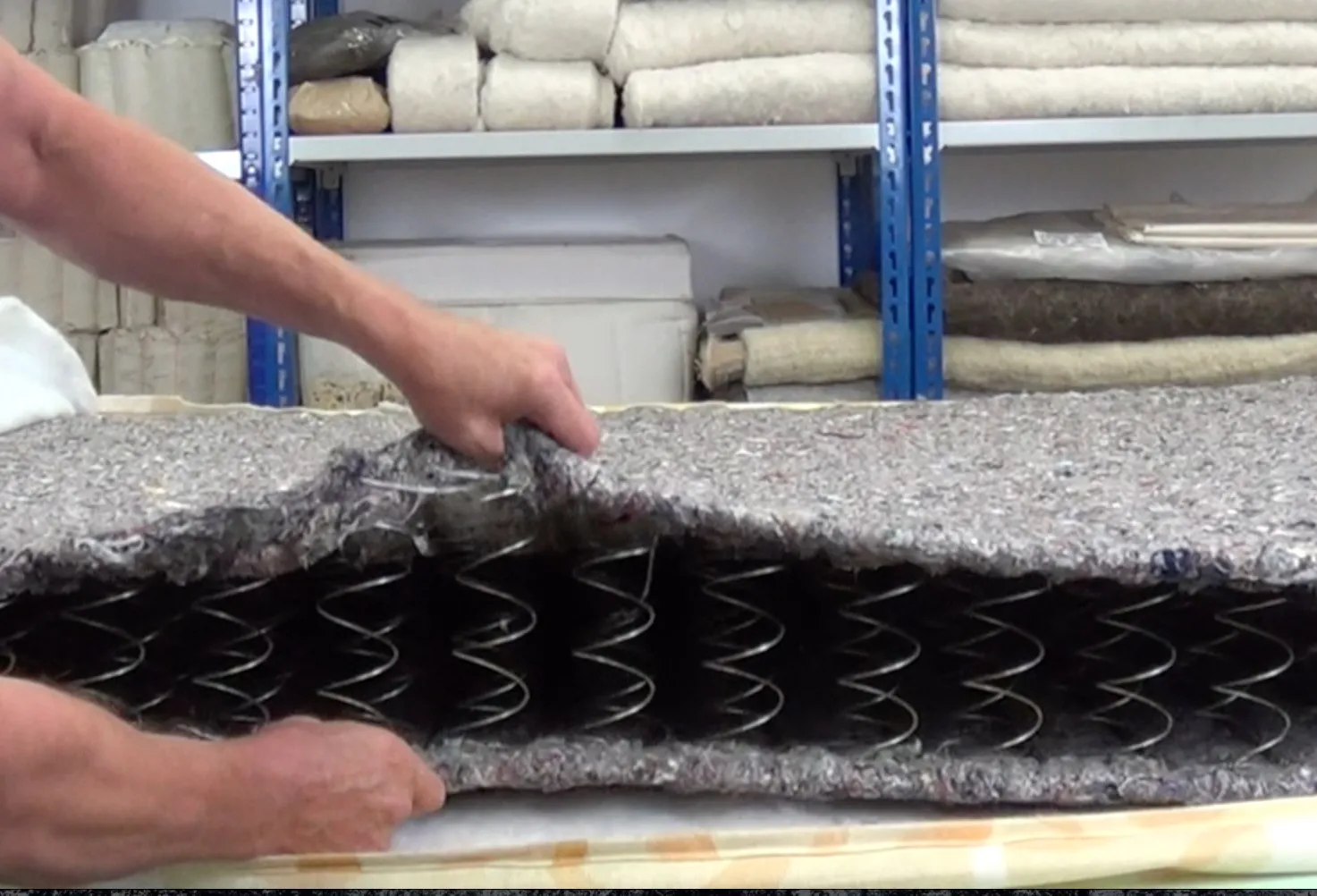
They feature an open-coil spring unit, which is a single continuous piece of wire formed into a spring. They are quick and cheap to make, but offer the least support in a mattress.
If you remember those bouncy beds as a child, the type that shook and wobbled whenever you moved, then this is essentially how a cage-sprung mattress works. We have written extensively about avoiding these spring units, with much more detail here.
Open Coil Price Point: Most open-coil, cage-sprung, or Bonnell-spring mattresses are between £99 and £300. If you’re paying more than this, you should be choosing a different mattress type.
Benefits of an Open Coil Bed:
- Very cheap to make and buy
- Lightweight, you can lift them single-handedly
- One size fits all
Drawbacks of an Open Coil Bed:
- Weak support
- Bouncy with high transference throughout the bed as you move
- Very thin upholstery means you’ll more than likely feel the springs
- No tailoring for your bodyweight or sleeping preference
Open Coil Lifespan: 2 to 3 years before upholstery is completely compressed.
2. Continuous Coil and Miracoil Mattresses
Continuous coil mattresses are among the most common spring systems found in mid-street retail and are often sold under brand names such as Silentnight’s Miracoil, as well as similar systems at Bensons and Dreams.
It is worth covering these separately because many shoppers encounter them on the high street and mistake them for something more sophisticated than they are.
A continuous coil system consists of a single strand of wire looped back and forth across the entire mattress to form rows of springs. Unlike open coil, which uses individual hourglass-shaped coils connected by a border wire, continuous coil forms a network of interconnected rows.

The result is a spring unit that is slightly more stable than a traditional open coil but still moves as a connected unit rather than independently. When one spring reacts, the surrounding springs react with it. This is fundamentally different from pocket springs, where each spring is housed independently and responds only to the pressure applied directly to it.
In practice, this means continuous coil mattresses still suffer from the roll-together problem familiar to couples, still provide limited zone-specific support, and still pack minimal upholstery to meet their price point.
The Miracoil system specifically is designed for Silentnight’s divan ranges and is engineered to be one-sided, meaning it cannot be turned, only rotated end to end.
Continuous Coil Price Point: Typically £200-£500 for king size on the high street. This is reasonable for what they are, but if you’re being upsold one for £700 or £800 based on a branded spring name, it is worth reconsidering.
Continuous Coil Lifespan: 3-5 years. As one-sided mattresses with relatively shallow upholstery, they compress unevenly over time. You cannot rotate the comfort out of the issue because there is no second sleep surface to retreat to.
3. Memory Foam Mattresses / Mattresses in a Box
Memory Foam and mattress-in-a-box types are entry- to mid-price-point mattresses, typically priced around £300 to £600, designed to use layers of synthetic Foam to create a one-sided mattress.
Memory Foam has been around for over 25 years and is a material that you either love or hate. It works by slowly moulding to your body in bed, using an open-cell Foam formula that traps heat and, in turn, softens. Tempur is probably the most famous of all the memory Foam style mattresses.
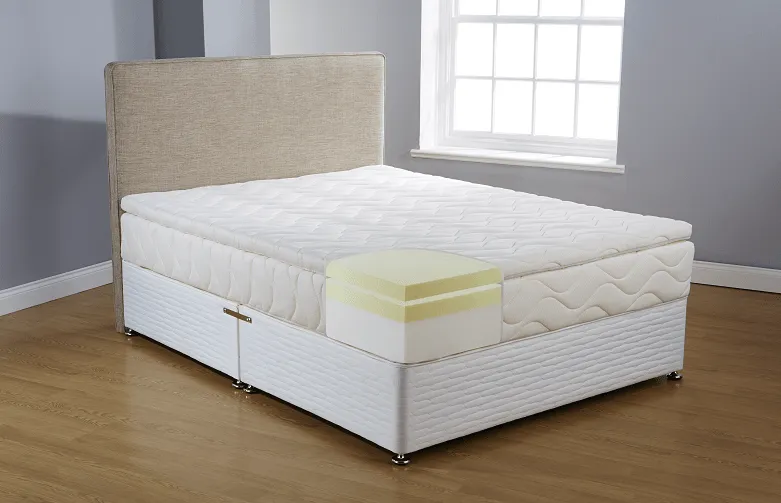
Memory Foam comes in several densities and firmness and hardness ratings, which allow you to determine whether it is on the firmer or softer end of the feel. Sadly, most retailers won’t give you this information anymore, so you’re left guessing. Have a look at the type of detail you should expect to see from retailers if they say so.
| Foam Grade | Density Min KG/M3 | Density Max KG/M3 | Hardness Min (n) | Hardness Max (n) |
|---|---|---|---|---|
| Vasco 40kg | 38 | 42 | 40 | 60 |
| Vasco 60kg | 58 | 62 | 70 | 100 |
| Laygel 60kg | 57 | 63 | 100 | 150 |
| Coolblue 70kg | 65 | 70 | 70 | 100 |
| Reflex 300 | 30 | 32 | 100 | 130 |
| Reflex 300F | 30 | 32 | 130 | 160 |
It’s great for people who are cold sleepers and like to stay in one position throughout the night. The mattress-in-a-box companies like Eve, Simba, Casper and Emma have capitalised on the ease of delivery, as these mattresses can be boxed and rolled, unlike pocket spring models. However, you probably want to read about the drawbacks of rolling a mattress and the damage it can do here.
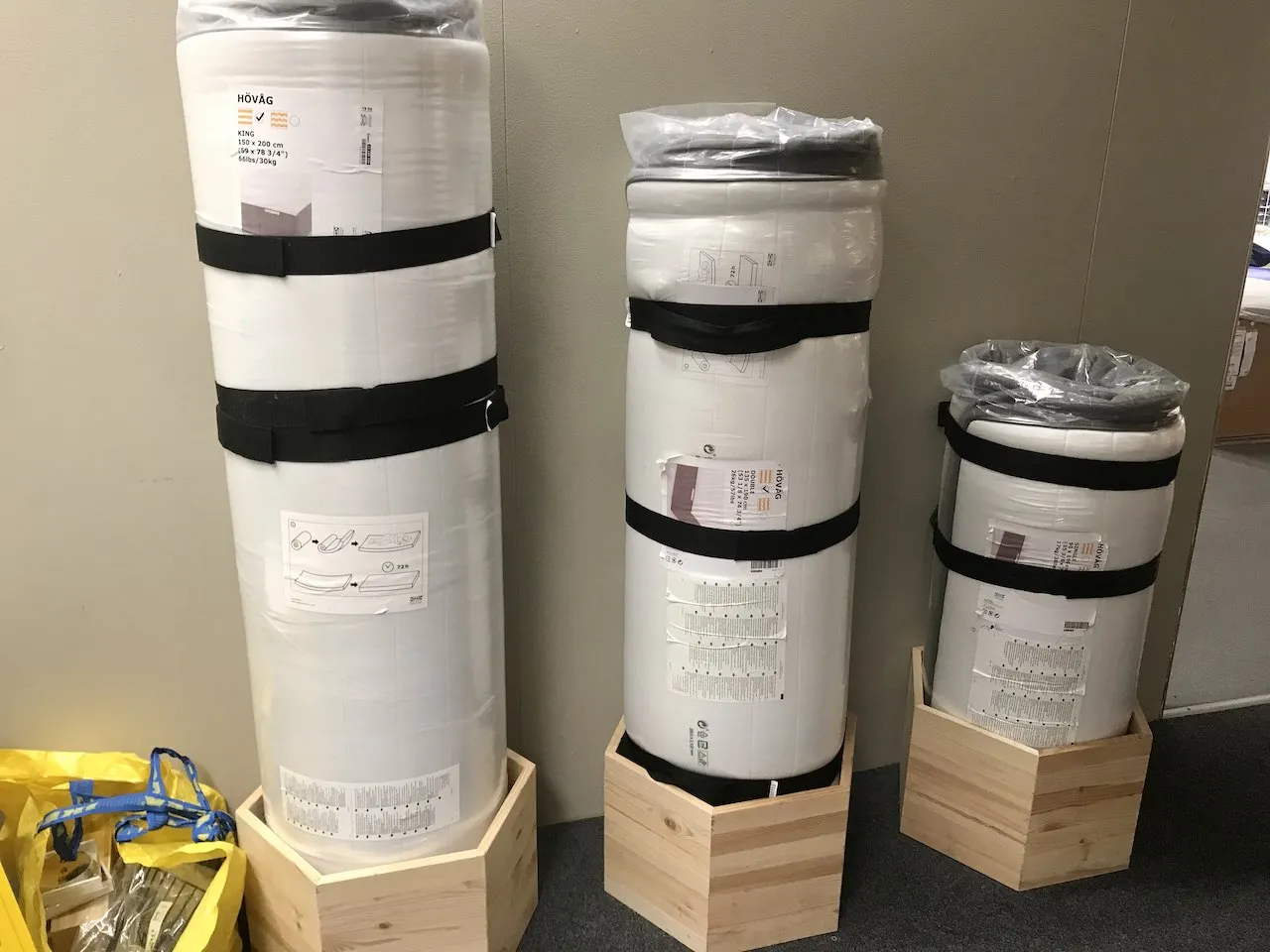
The bed-in-a-box category, popularised by brands such as Emma, Eve, OTTY and the original Casper, grew rapidly through the 2010s and early 2020s on the strength of disruptive pricing and generous trial periods. In reality, these are almost always memory Foam or Hybrid Foam mattresses that have been vacuum-compressed and rolled to fit inside a cardboard box.
The convenience is genuine. The limitations are equally genuine. Because the compression process constrains the spring heights used in rolled mattresses, you rarely get the same depth or quality of pocket spring unit found in a traditionally made mattress. Foam Hybrid bed-in-a-box models, such as the Emma Hybrid or OTTY, are an improvement over pure Foam. Still, they remain one-sided and are subject to the same lifespan limitations. The purchase share of rolled mattresses in the UK fell from around 26% to under 24% between 2023 and 2025 as consumers became more familiar with the trade-offs. If convenience is your primary driver, they serve a purpose. If longevity and support quality are the priority, a traditionally made pocket spring mattress is a better investment.
Memory Foam Price Point: You should aim to spend between £300 and £600 on a memory Foam mattress. Anything more than this and you should be looking at either Natural Latex or a Pocket Sprung model, both of which are two-sided and will last far longer.
Benefits of a Memory Foam Bed:
- Holds you in one position during the night, good for deep sleepers
- Pressure relief as they absorb joints easily, like elbows and hips
- Low transference and isolation between sleepers
- Can be boxed and rolled for convenient delivery
Drawbacks of a Memory Foam Bed:
- Weak support for heavier sleepers
- Heat-retentive, so warmer sleepers need to avoid
- The least breathable of all upholstery types
- Chemically made synthetic foams have issues with off-gassing
- One-sided, so it will show wear far quicker than a two-sided mattress
Memory Foam Mattress Lifespan: 3 to 5 years before the Foam may start to sag or show permanent indentation. Usually, because they are all one-sided, and the constant heat degrades the Foam pretty quickly. To extend the life, always use a separate memory Foam topper which can be easily replaced.
4. Hybrid Foam Mattresses
Hybrid mattresses combine newer upholstery styles and were developed in response to issues and complaints about memory Foam. They retail from around £400 to £700.
A Hybrid mattress may feature a cooler Foam, such as Coolblue, Laygel, or Igel, to help address the heat issue associated with other memory foams. They may also include pocket spring systems such as FEPS (Foam Encapsulated Spring Units) or castellated foams cut into ridges, shapes or matrix patterns.
They aim to bring you the best of both pocket springs and the more contemporary Foam pressure-relief beds. Again, we would recommend that you consider how you’re going to address the one-sided nature of these models, as they usually cannot be turned. Adding a separate topper can help extend the lifespan of these models.
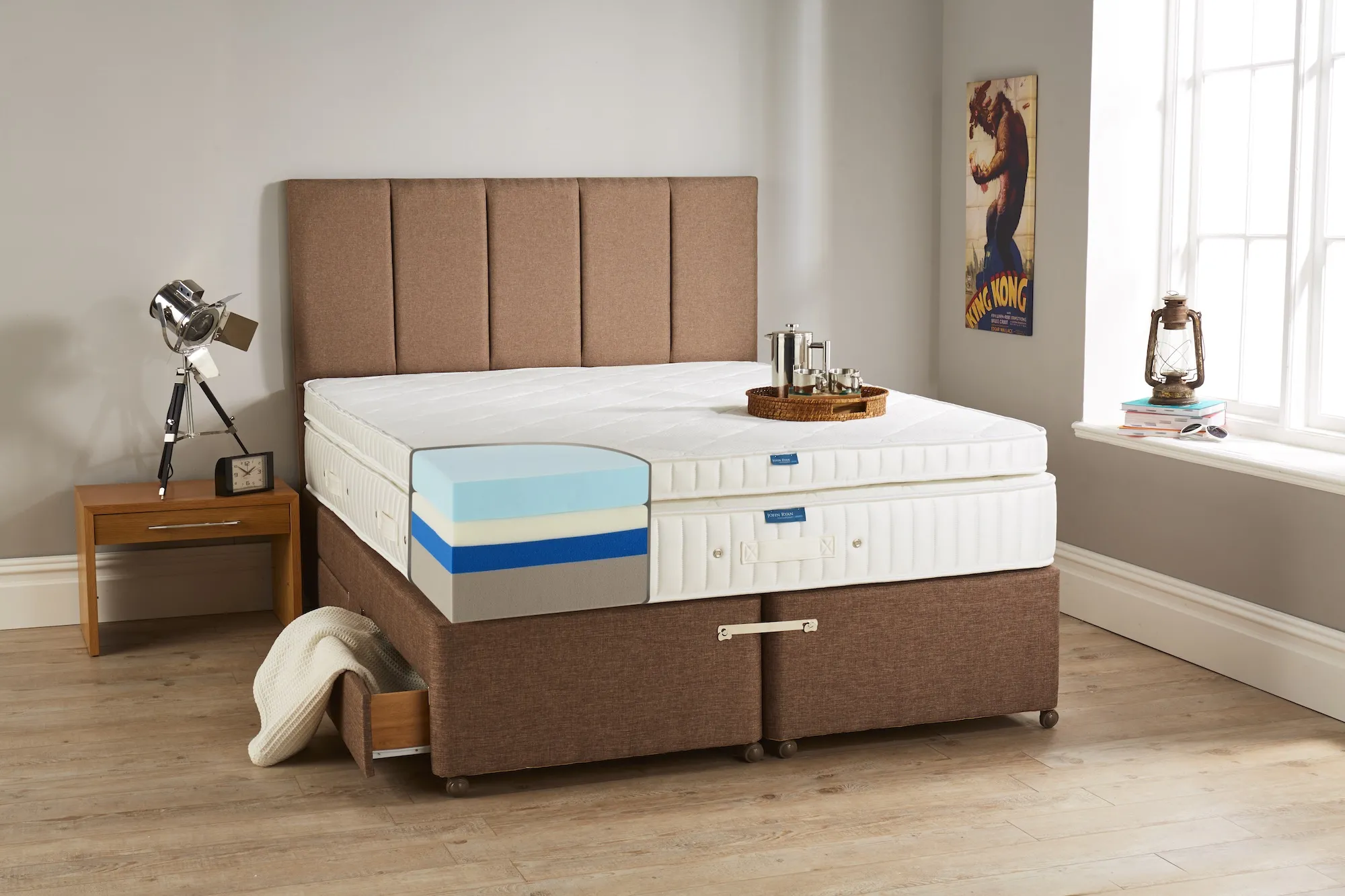
Hybrid Foam Price Point: Similarly to memory Foam, the price point for these mattresses is around £400 to £700. If you’re paying more than this, you should also consider Pocket Spring and Natural Latex models for your comparison beds.
Benefits of a Hybrid Foam Bed:
- Highly progressive in terms of a soft sink, but quick to return to their original shape
- Pressure relief for hips, shoulders and backs
- Benefits of cooler foams and spring units
- Can create deep sink mattresses
Drawbacks of a Hybrid Foam Bed:
- Stillheat-retentive compared to Natural Fibres
- Are nearly always one-sided, meaning shorter lifespan
- The mix of very different materials can create uneven settlement over time
- Chemically made synthetic foams have issues with off-gassing
Hybrid Foam Mattress Lifespan: 5 to 7 years before the Foam may start to sag or show permanent indentation marks on the bed. Always use a separate Foam or natural-fibre topper, which can be easily replaced after a few years to extend its lifespan.
5. Gel Foam Mattresses
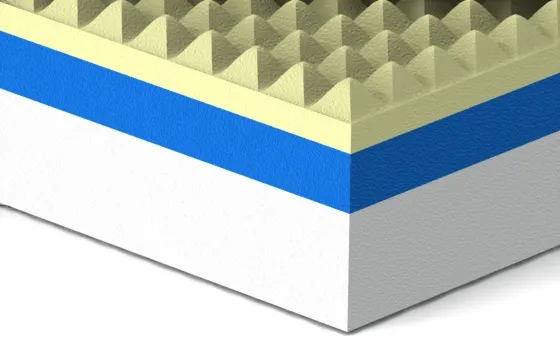
Gel mattresses represent a direct attempt by Foam manufacturers to address the most common complaint about memory Foam: that it sleeps too hot. They sit in roughly the same price bracket as Hybrid and mid-range memory Foam, typically between £400 and £800, and are marketed prominently in high street chains as a cooler, more responsive alternative.
The gel is introduced into the Foam in one of two ways. The first is gel infusion, where liquid gel is mixed into the Foam during production, creating tiny gel beads throughout the material. The second is a separate gel layer, where a distinct panel of gel material is placed above or below the main Foam layer.
Both approaches initially absorb heat, which is why they feel noticeably cool to the touch in a showroom. The honest limitation is that once the gel layer has absorbed your body heat, it has nowhere to displace that warmth. Unlike a breathable natural fibre or an open-structured pocket spring unit, gel Foam does not allow heat to travel away from the body. It simply delays the inevitable.
Gel foams that incorporate phase change materials (PCM) are a more advanced development. PCM gels actively transition between solid and liquid states to absorb and release heat, creating a more sustained cooling effect than basic gel infusion. They remain, however, considerably warmer than a well-specified natural-fibre pocket-sprung mattress.
Gel mattresses do earn their place for a household that wants the pressure-relief profile of memory Foam but finds standard Foam genuinely too warm. They are a meaningful step up for warm sleepers who are set on staying within the Foam category. If your budget stretches to £1,000 or more, however, it is worth comparing gel models directly with a natural Latex or entry-level natural-fibre pocket-sprung mattress before committing.
Gel Foam Price Point: £400 to £800 for a king size, depending on whether the gel is infused or a separate PCM layer. Premium gel hybrids can reach £900 to £1,200.
Gel Foam Mattress Lifespan: 5 to 7 years, consistent with other Foam types. The gel itself does not degrade, but the surrounding Foam will compress over time, just like any one-sided synthetic mattress.
6. Latex Mattresses
Latex mattresses are where you start to move away from synthetic, heat-retentive models and into a more sophisticated choice at a price of £ 1,000 or more. That is, if you manage to choose a 100% Natural Latex mattress.
The industry around Latex mattresses is rather elusive in using synthetic, chemically created Latex Foam without always making it clear. When choosing a Latex mattress, you really do need to do your homework to find as close to 100% Natural as you can. The more synthetic the Latex blend,d the more heat it will retain, often whilst also sporting the price tag you would expect to see on a 100% Natural model.
Natural Latex is a fantastically progressive material that offers a slow sink without any of the slow-to-respond issues of Memory or Hybrid foams. It is also far more breathable and requires only pressure, rather than heat, to mould, making for a more comfortable night’s sleep.
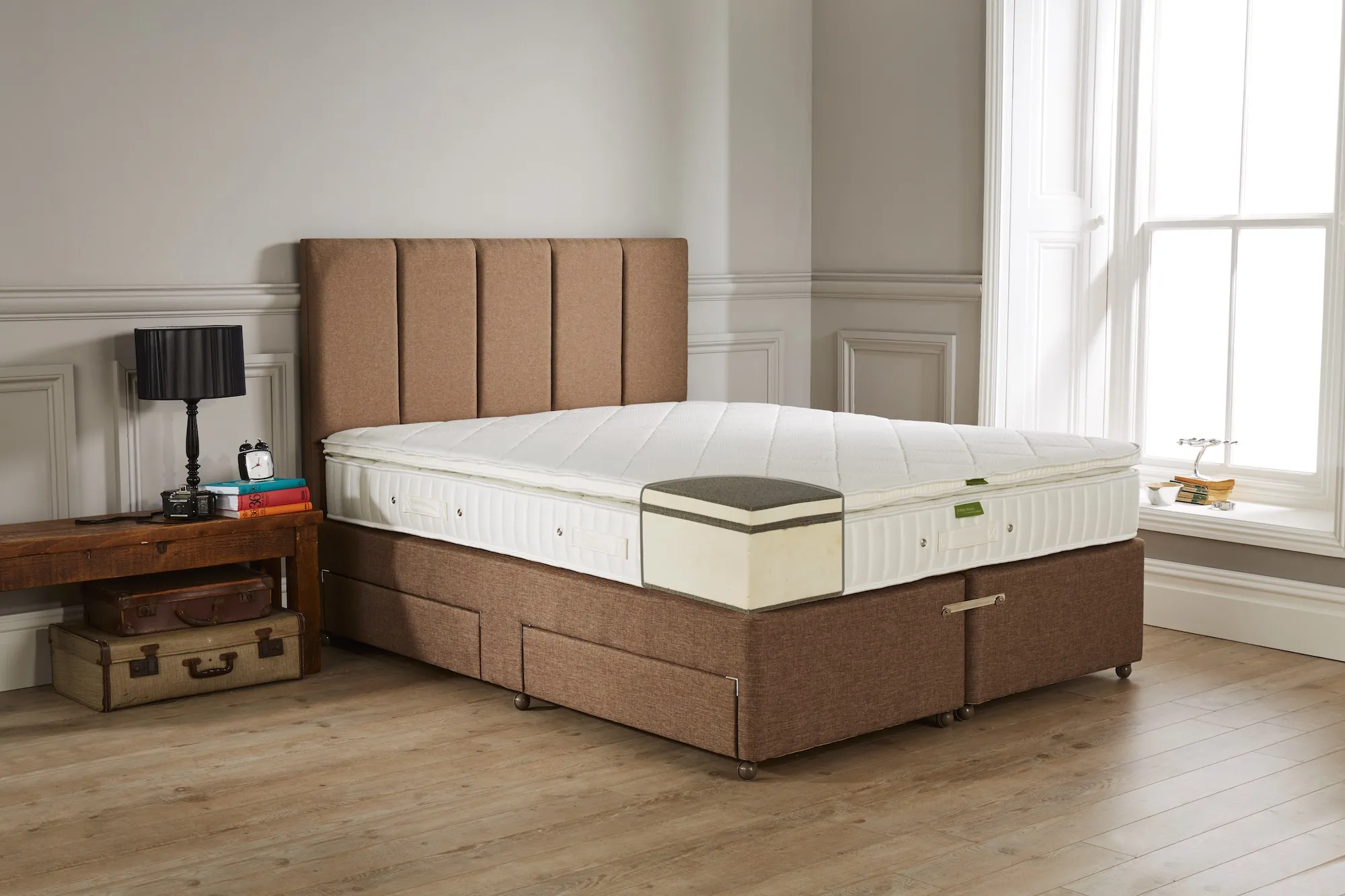
Solid core Latex mattresses are great for people with sports injuries, sensitive pressure points or those needing a deep sink to accommodate aches and pains. As they are so responsive, turning during the night is really easy, and they have very low transference of movement between sleepers.
They have an incredible lifespan, with some people having them for up to 25 years if turned and looked after carefully. They are incredibly heavy, though, so a top tip is to choose one that has been tape-edged and has side handles. Zip-off polyester and quilted covers simply can’t support the weight of a Natural Latex mattress during turns and will stretch and tear over time.
John Ryan Natural Latex Options: Our Artisan Latex is priced from £2,250 in a king size and uses a 100% Natural Latex comfort layer over calico-encased pocket springs. The Origins Latex range starts at £1,520 for a king-size mattress, offering the benefits of natural Latex at a more accessible price point.
Price Point of Latex Mattresses: For a 100% Natural Latex mattress, you’re looking at £1,000-£1,500 for entry-level solid-core models. If you see a Latex mattress for under £1,000, it is more than likely a synthetic Latex blend, which is more heat-retentive and won’t last as long.
Benefits of a Latex Mattress:
- Highly responsive and progressive with a soft sink and firmer support
- Great for sports or injuries as they hold you, but allow ease of movement when needed
- Long-lasting
- Isolates movement very effectively
- Can accommodate a large weight range for sleepers
Drawbacks of a Latex Mattress:
- Relatively expensive compared to other foams
- Heavy to lift, turn and rotate
- The market is flooded with synthetic Foam versions, making it hard to identify true Latex model.s
- Still warmer than a Natural Fibre mattress
Natural Latex Foam Mattress Lifespan: 10 to 25 years if well looked after and turned frequently. It is also worth bearing in mind that weight fluctuations will affect mattress longevity. It is all dependent on the consistency of your monthly mattress maintenance.
7. Pocket Sprung Mattresses
Pocket Spring mattresses are probably the most widely suited of all mattress types, retailing from £500 to £1,000 plus. This is because they offer the most flexibility in support, comfort layers, and durability. Nothing has ever outperformed pocket springs in tests and online mattress reviews, which is why we have saved the best until last.
pocket-sprung mattress consists of a spring support system, topped with different layers of upholstery. Pocket springs are individually housed and then wrapped in either natural calico or polyester.
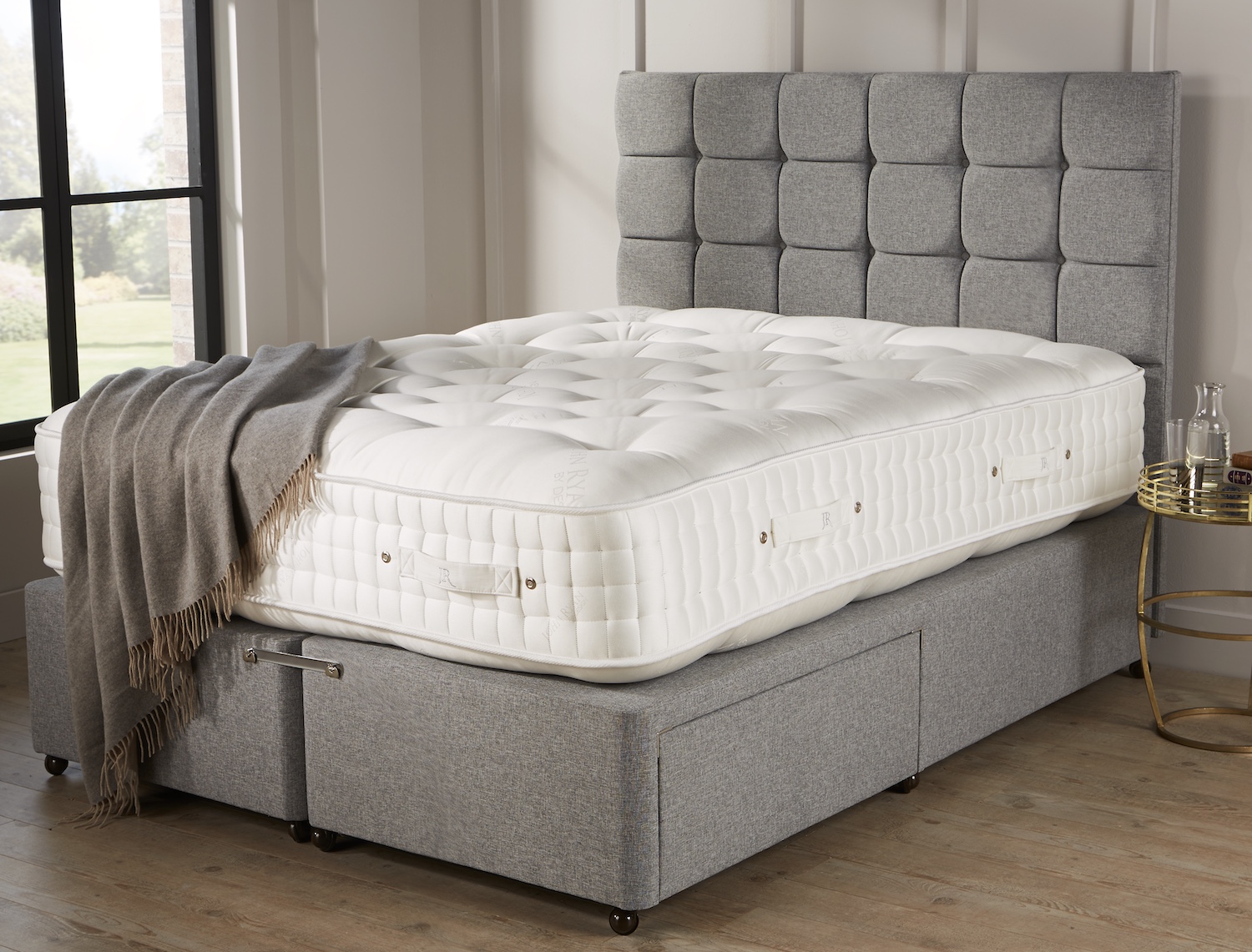
Each pocket spring can react independently of the next spring, unlike the dreadful Bonnell coil, meaning far more selective support where you need it. Pocket springs also significantly reduce transference and movement between sleepers, eliminating roll-together.
As they are independent, you can also choose a variety of spring tensions based on the spring wire’s thickness, known as the spring gauge. It means you can have a spring tension specifically designed to work with your bodyweight.
In fact, the biggest issue sleepers have is choosing a spring tension based on how they want the mattress to feel, which is completely the wrong approach. The spring tension should be chosen based on your weight. It is the top upholstery layers that will provide the overall mattress feel.
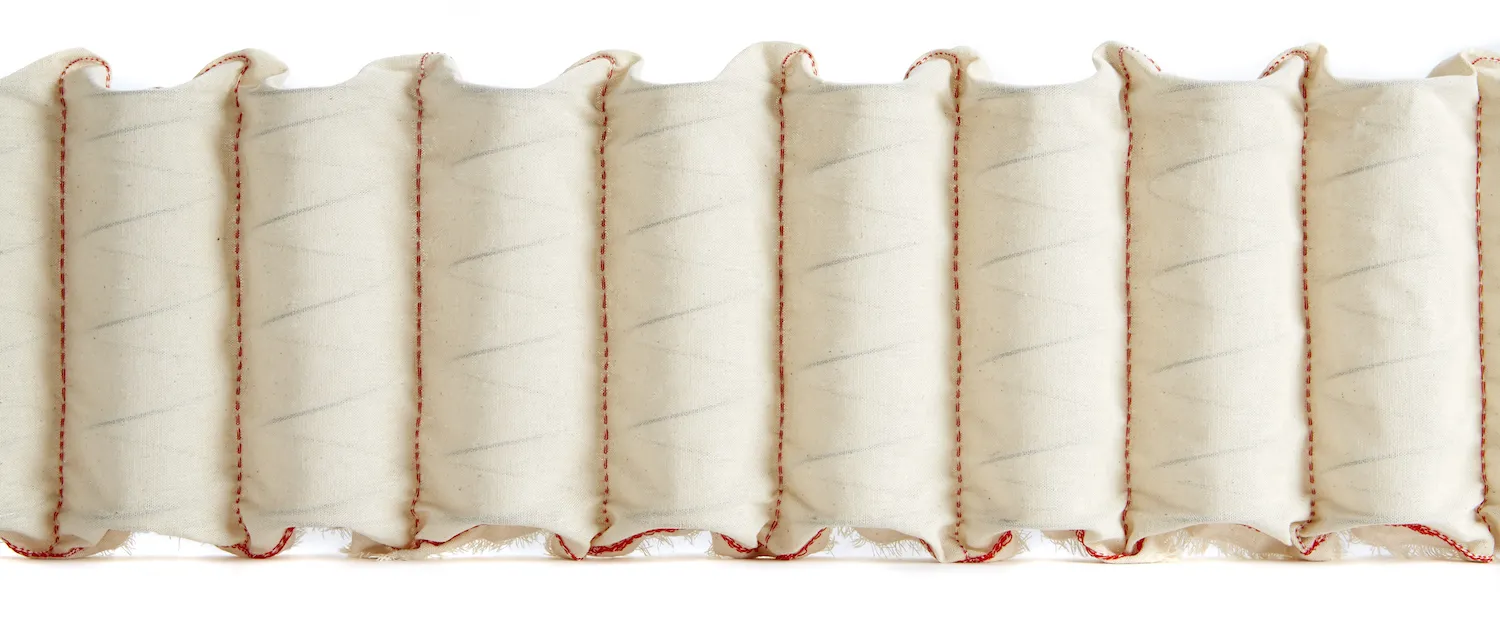
If you and your partner have different weights, you can choose a Split Tension or a Zip and Link pocket spring mattress, where each half is a different tension. Meaning you can finally say goodnight to compromises and both have the correct support in bed.
Types of Mattress Springs
There are three main types of mattress springs to choose from when buying a new mattress.
- The open coil (discussed above as the worst spring)
- The Micro or HD spring (tiny, usually pointless springs used to inflate the spring count)
- Pocket springs (the original and best mattress spring type)
Your budget will usually determine which type of mattress spring you choose. Care must always be taken with the number of springs and not confuse that number with a metric for mattress quality.
For example, a 5,000-spring mattress can only contain just over 2,000 normal-sized pocket springs, so the 3,000 additional springs must be HD or micro springs used to bulk up the numbers. As a mattress can only be so deep, around 32 to 35cm usually, these micro springs take the place of much-needed upholstery. So you get more springs but less upholstery, which therefore means less comfort during the night.
Spring tensions based on your bodyweight:
| Spring Tension | Wire diameter (Gauge) | Weight Range |
|---|---|---|
| Soft | 1.2mm | Bespoke Tension (Please Call) |
| Medium | 1.4mm | Upto 16 stone |
| Firm | 1.6mm | 16 stone plus |
| Extra Firm / Orthopaedic | 1.9mm | 20 stone plus |
Pocket springs come in two main types:
For mid-level mattresses priced from £500 to £1,000, spunbond pocket springs are the most likely option to keep the mattress within this price range. Calico-encased springs are found on mattresses priced at £1,300 and above, usually reserved for 100% natural-fibre handmade mattresses.
Calico springs are far more breathable and respond more quickly than synthetic stitch-bond springs, as the fabric is far softer. Cheaper mattress models will glue their pocket springs together, whereas the highest-quality mattress makers will tie the springs together by hand with a needle and then side-stitch them to the edges of the mattress.
Upholstery also comes in two forms:
- Synthetic upholstery such as Polyester, White Fibre, Foam and such
- Natural Fibre Upholstery such as Wool, Alpaca, Horsetail, Bamboo, Coir, etc
The most important thing to know when buying a mattress is the upholstery inside. The only way you can do this is by knowing the GSM (grams per square metre). This shows the amount of each filling the mattress contains.
Without knowing this, some retailers may only be using a fraction of the upholstery and blending it with cheap synthetic polyester. You can read more about how to calculate the GSM of mattress upholstery here.
Pocket spring mattresses should all be two-sided; there is simply no reason to accept a one-sided model when paying £1,000 or more. There is also plenty of other mattress details you need to read up on in this guide.
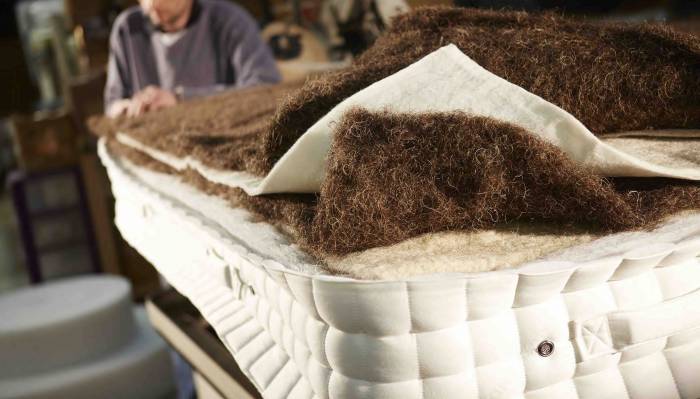
Price point of Pocket Spring mattresses: For a synthetic spun-bond spring and polyester-based fibre,s you’re looking at £500 to £1,000. For a calico pocket spring and natural fibre model, these start at around £1,300.
John Ryan Pocket Spring Recommendations: The Origins 1500 is an excellent entry point at £1,050 in a king size, offering 1,500 calico-encased pocket springs with natural upholstery layers. For a full natural fibre handmade mattress, the Artisan Naturals starts at £2,180 in a king size and the Artisan Bespoke 004 at £2,860 in a king size for those wanting deep natural fibre GSM counts and the finest calico springs available.
Benefits of a Pocket Sprung Mattress:
- Offers unparalleled support from independent springs
- Fully turnable
- Removes roll together
- Natural fibres provide the coolest sleep experience
- Tailored support based on your exact bodyweight
- Completely customisable
- Long-lasting
Drawbacks of a Pocket Sprung Mattress:
- Can be expensive when moving to the high end
- High GSM models can be heavy to lift, turn and rotate
Pocket Spring Mattress Lifespan: 3 to 25 years, depending on the upholstery and construction method. Careful maintenance, turning and rotating will ensure the longest lifespan of your mattress.
8. Orthopaedic Mattresses: What the Label Actually Means
Orthopaedic is one of the most misused words in the mattress industry. You will see it applied to everything from a £199 open-coil mattress at a discount retailer to a £2,000 pocket-sprung model from a premium brand, with no consistent definition and no regulatory standard to back it up.
In the UK, any manufacturer can label any mattress as orthopaedic without meeting any clinical or technical criteria whatsoever. It is a marketing term, not a specification.
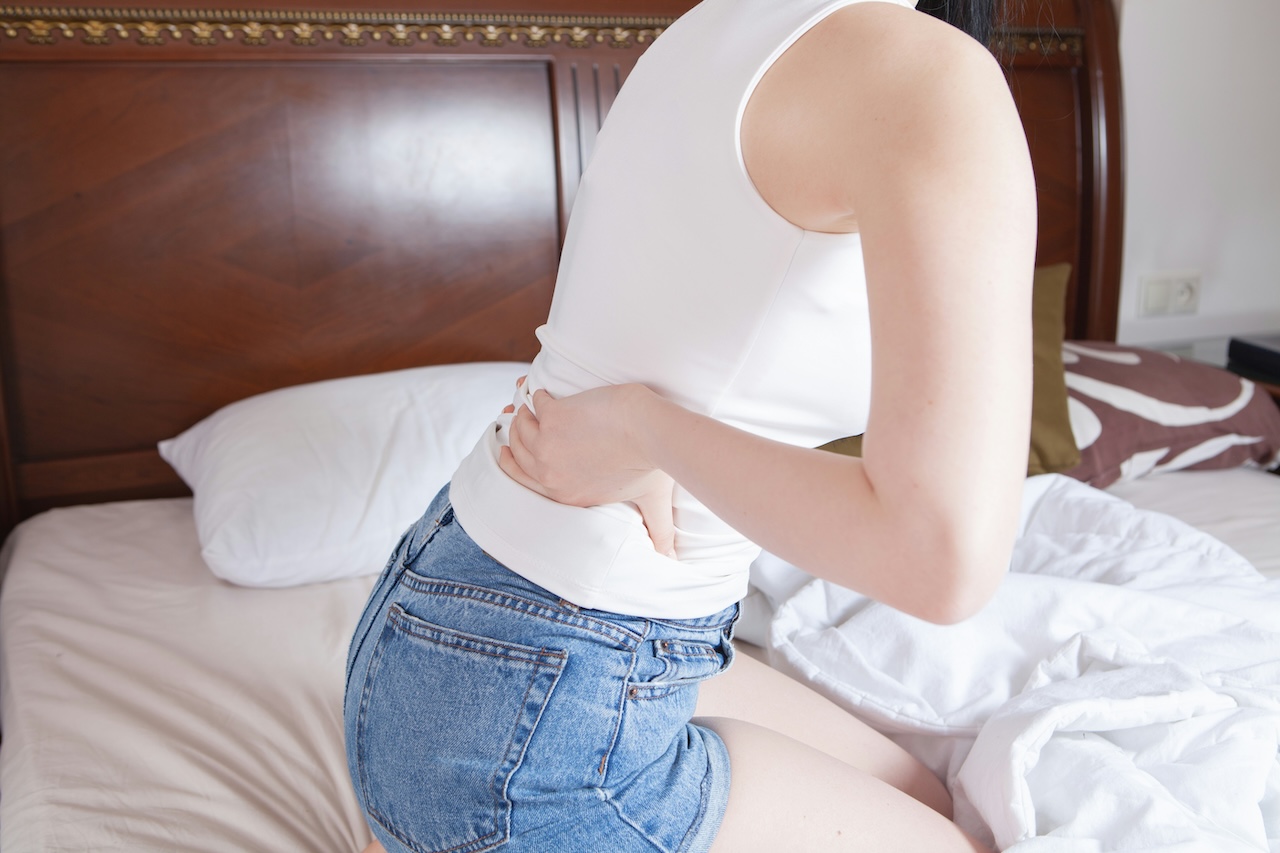
The word is generally intended to convey that the mattress is firmer than average, offering stronger support for the back and joints. The logic is sound in principle, as sleeping on a surface that maintains spinal alignment is genuinely beneficial for many people with musculoskeletal issues. The problem is that the label tells you nothing about how the mattress achieves this, what materials are used, or how long those materials will continue to provide the claimed support.
What actually matters for back support is not the label but the spring gauge and upholstery specification. A properly specified pocket spring mattress, chosen with the correct spring tension for your body weight, will deliver genuine postural support. A firm spring tension (1.6mm wire gauge for sleepers over 16 stone) in a two-sided pocket-sprung mattress will deliver far better and more durable support than anything labelled simply as orthopaedic without a published specification to back it up.
If you suffer from back pain and are looking for mattress guidance, we have written a detailed guide to mattresses for a bad back,s which covers the clinical evidence and what to look for in a mattress specification rather than a marketing label.
9. Zip and Link Mattresses
Zip and link mattresses deserve a mention in any mattress types guide because they address a problem that affects a significant proportion of couples: the need for different spring tensions in the same bed.
Where one partner is considerably heavier or lighter than the other, a single uniform spring tension will inevitably represent a compromise for at least one sleeper. The firmer tension adequate for the heavier person will feel unforgiving to the lighter person; the softer tension comfortable for the lighter person will allow the heavier partner to sink past the point of proper spinal support.
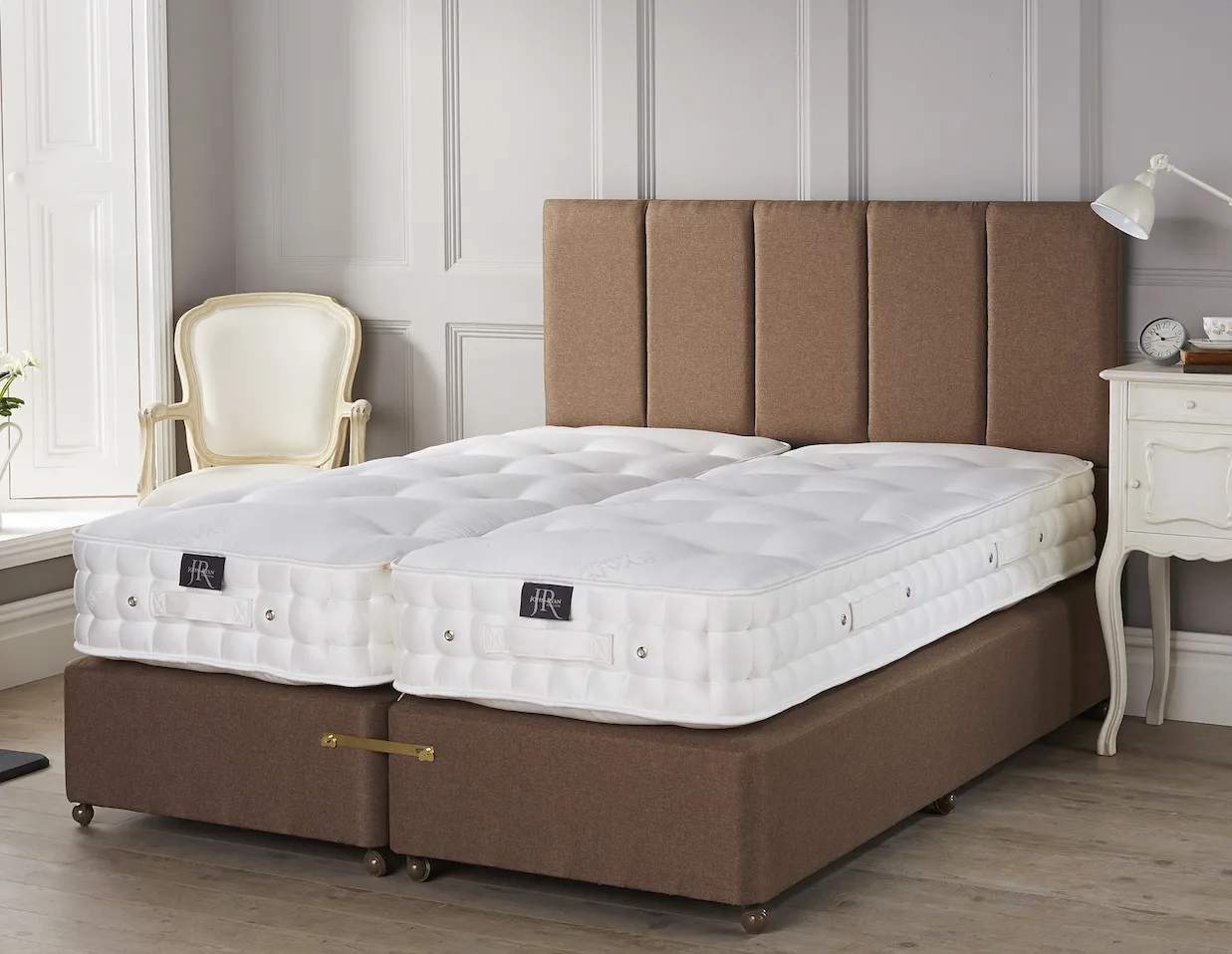
A zip-and-link mattress resolves this entirely. Two separate mattresses, each with its own spring tension and upholstery specification, are made to link together along their length using a zip or clip system. In everyday use, they function as a single mattress with a seamless sleeping surface.
When you need to launder the mattress cover or travel the mattress through tight spaces such as narrow staircases, they separate easily.
We manufacture our zip and link mattresses to the same calico pocket spring and natural fibre specification as our standard handmade ranges. King-size zip-and-link configurations start at £1,210 in the Origins 1500 and £2,360 in the Artisan 1500. You can read our complete zip and link guide here.
10. Sustainable and Natural Fibre Mattresses
Sustainability has become a genuinely significant consideration for mattress buyers in 2026, and it is an area where much of the marketing language used by mainstream brands bears very little resemblance to reality. Terms such as eco-friendly, green, and even natural are used with remarkable looseness.
Understanding what actually constitutes a more sustainable mattress requires looking beyond the label to the materials and certifications behind it.
SyntheticFoamm mattresses, whether memory Foam, Hybrid or gel, are derived from petrochemicals. Polyurethane Foam, the base material in almost all synthetic mattresses, is manufactured from isocyanates and polyols, both of which are petroleum derivatives. The vast majority of Foam mattresses are not recyclable through any mainstream end-of-life route. Most are landfilled, incinerated, or, at best, shredded for use as carpet underlay.
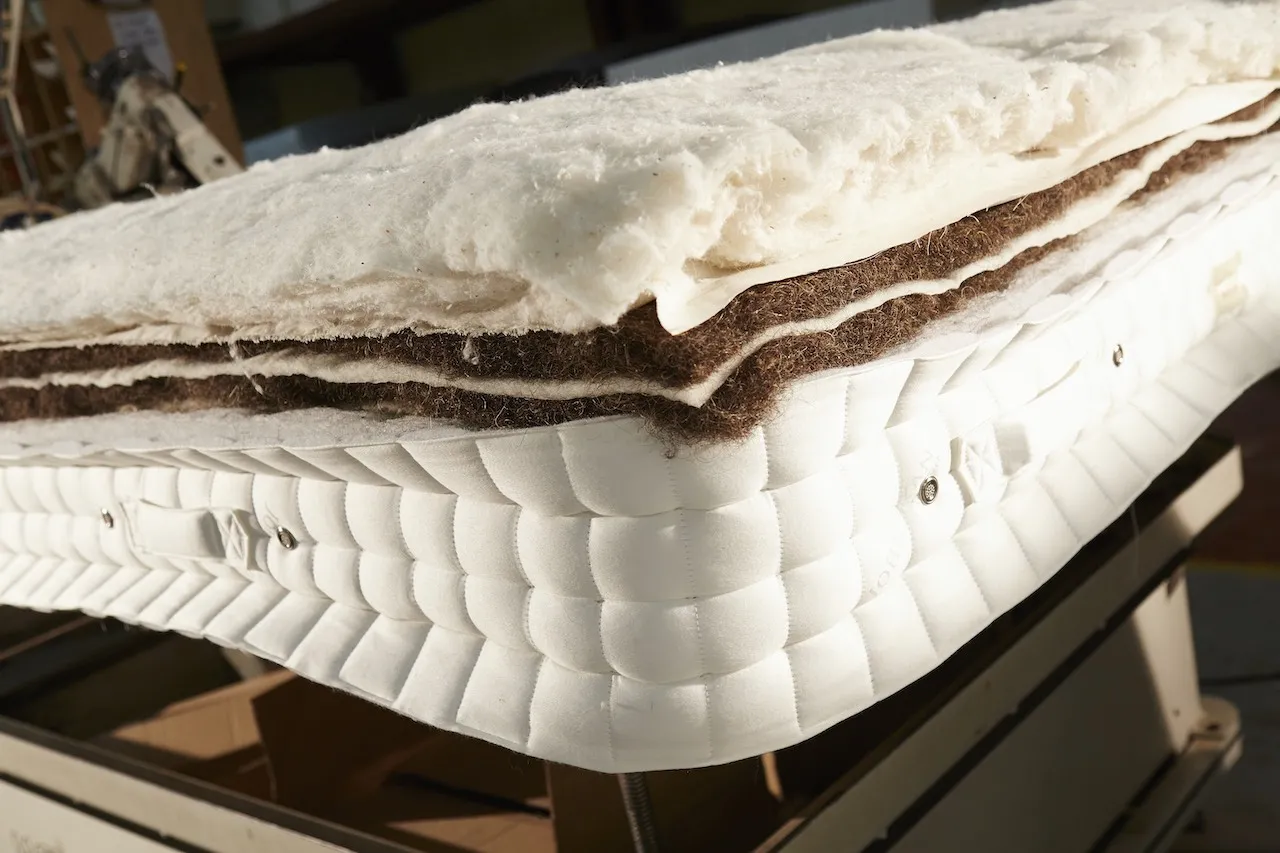
Natural fibre pocket sprung mattresses take a fundamentally different approach. The upholstery layers in a quality natural fibre mattress are composed of materials such as Wool, Cotton, Horsetail, Horsehair, silk, Silk, Cashmere, and natural Latex. These are renewable biological materials.
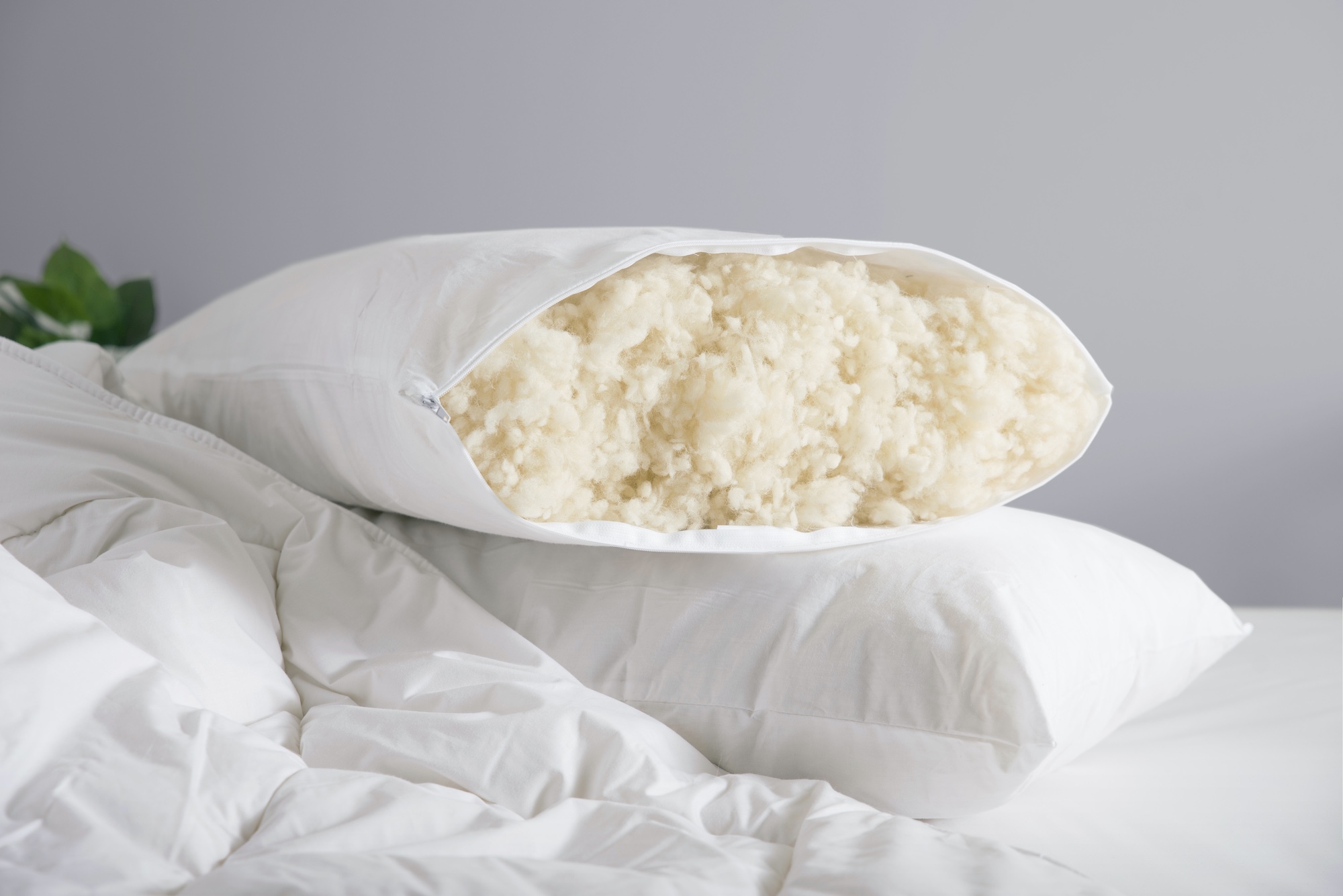
Wool, in particular, is one of the most environmentally sophisticated fibres available. It is naturally fire-retardant (eliminating the need for chemical flame-retardant treatments), moisture-wicking, temperature-regulating, biodegradable, and sourced from a farming cycle that requires no petrochemical inputs. The pocket springs in a quality mattress are recycled steel at the end of life. The Cotton ticking and calico spring casings are biodegradable.
Certifications to look for when assessing a mattress’s sustainability credentials include GOTS (Global Organic Textile Standard) for organic fibre content, GOLS (Global Organic Latex Standard) for natural Latex, and OEKO-TEX Standard 100, which certifies that all components of the mattress have been tested for harmful substances. Be aware that some certifications apply only to a specific layer or component rather than the finished mattress, so it is worth asking the manufacturer to clarify precisely what is certified.
Synthetic Foam mattresses typically require chemical flame-retardant treatments to meet UK fire safety regulations (BS 7177). Natural Wool achieves the same compliance naturally, which is why a genuine natural fibre mattress does not need these chemical treatments. This matters because certain flame-retardant compounds, particularly those in the PFAS family (per- and polyfluoroalkyl substances, sometimes called “forever chemicals”), are under growing scientific scrutiny for their long-term health and environmental effects. Natural-fibre mattress with Wool upholstery sidesteps this concern entirely.
Longevity is itself a sustainability argument. A well-maintained two-sided natural-fibre pocket-sprung mattress with high GSM upholstery counts can last 15 to 25 years. A one-sided Foam mattress, replaced every 5 to 7 years, represents two to four manufacturing cycles and two to four disposal events over each sleeping lifespan. The initial investment in a well-made natural fibre mattress frequently makes more environmental and economic sense over any meaningful time horizon.
11. Which Mattress Type is Best for Your Sleeping Position?
Your sleeping position is one of the most important factors in choosing the right mattress, and it is also one of the most commonly misunderstood. People frequently choose a mattress based on how it feels to lie on in a showroom for 30 seconds, which bears almost no relationship to how that mattress will support their body over 8 hours of sleep.
The relationship between sleeping position and mattress specification is actually quite logical once you understand what the mattress needs to do.
Side sleepers need a mattress that allows the hips and shoulders, the two widest points on the body, to sink into the comfort layers so the spine can remain in a straight, horizontal line. If the mattress is too firm, the hips and shoulders cannot sink, and the spine arches upward at the waist. If it is too soft, the hip sinks further than the shoulder, and the spine bows downward. A medium-to-soft-tension pocket-sprung mattress with sufficient upholstery depth is the most suitable choice for most side sleepers. Natural fibre layers such as Wool and Cotton provide the progressive sink needed for shoulder and hip accommodation without the heat-retention problems of Foam.

Back sleepers need a mattress that supports the lumbar region without allowing the pelvis to sink too deeply. A medium-to-firm tension pocket-sprung mattress is appropriate for the majority of back sleepers. The mattress needs to be firm enough to maintain the natural lumbar curve without the lower back hanging unsupported. A mattress that is too soft allows the pelvis to sink past the point of neutral spinal alignment, placing the lumbar spine in a position of continuous extension throughout the night.

Stomach sleepers are working against the spine’s natural curves and, as a result, require a firmer mattress than those in other sleeping positions. The aim is to prevent the pelvis from sinking, which would further accentuate the lumbar area. A firm-to-extra-firm tension pocket-sprung mattress is the correct specification.
Stomach sleeping is the sleeping position most associated with morning back and neck pain. If you find yourself consistently waking with discomfort, transitioning to a side-sleeping position is genuinely worth attempting.

Combination sleepers, those who move between positions during the night, benefit most from a medium tension mattress with responsive upholstery. Natural Latex and high-quality natural fibre pocket sprung mattresses excel here because their responsive materials adapt quickly to positional changes without the slow-to-respond lag of dense memory Foam.
| Sleeping Position | Recommended Tension | Best Mattress Type | Key Consideration |
|---|---|---|---|
| Side sleeper | Soft to medium | Natural fibre pocket sprung | The hip and shoulder must sink freely |
| Back sleeper | Medium to firm | Natural fibre pocket sprung | Lumbar support is critical |
| Stomach sleeper | Firm to extra firm | Pocket sprung or natural Latex | Prevents pelvic sink and lumbar extension |
| Combination sleeper | Medium | Natural Latex or pocket sprung | Responsiveness matters more than firmness |
| Heavier build (over 16 stone) | Firm to extra firm | Calico pocket sprung, high GSM | Deeper springs and denser upholstery are required |
12. Mattress Types at a Glance: Comparison Table
| Mattress Type | Support Quality | Heat Retention | Durability | Turnable | King Size Price Range |
|---|---|---|---|---|---|
| Open coil | Basic | Low | 2 to 3 years | Sometimes | £99 to £300 |
| Continuous coil | Basic to moderate | Low | 3 to 5 years | No (rotate only) | £200 to £500 |
| Memory Foam | Moderate | High | 3 to 5 years | No | £300 to £600 |
| Gel Foam | Moderate | Medium to high | 5 to 7 years | No | £400 to £800 |
| Hybrid Foam | Moderate to good | Medium | 5 to 7 years | No | £400 to £700 |
| Natural Latex | Excellent | Low to medium | 10 to 25 years | Yes | £1,000 to £2,500 |
| Pocket sprung (synthetic upholstery) | Excellent | Low to medium | 5 to 10 years | Yes | £500 to £1,000 |
| Pocket sprung (natural fibre) | Outstanding | Very low | 10 to 25 years | Yes | £1,300 to £5,000+ |
13. Which Type of Mattress Should I Buy?
Understanding the types of mattresses available is one thing. Applying that knowledge to your specific situation is where most people get stuck. Here is a straightforward guide based on the most common buying scenarios we encounter after 25 years of making mattresses here in the UK.
If you sleep hot
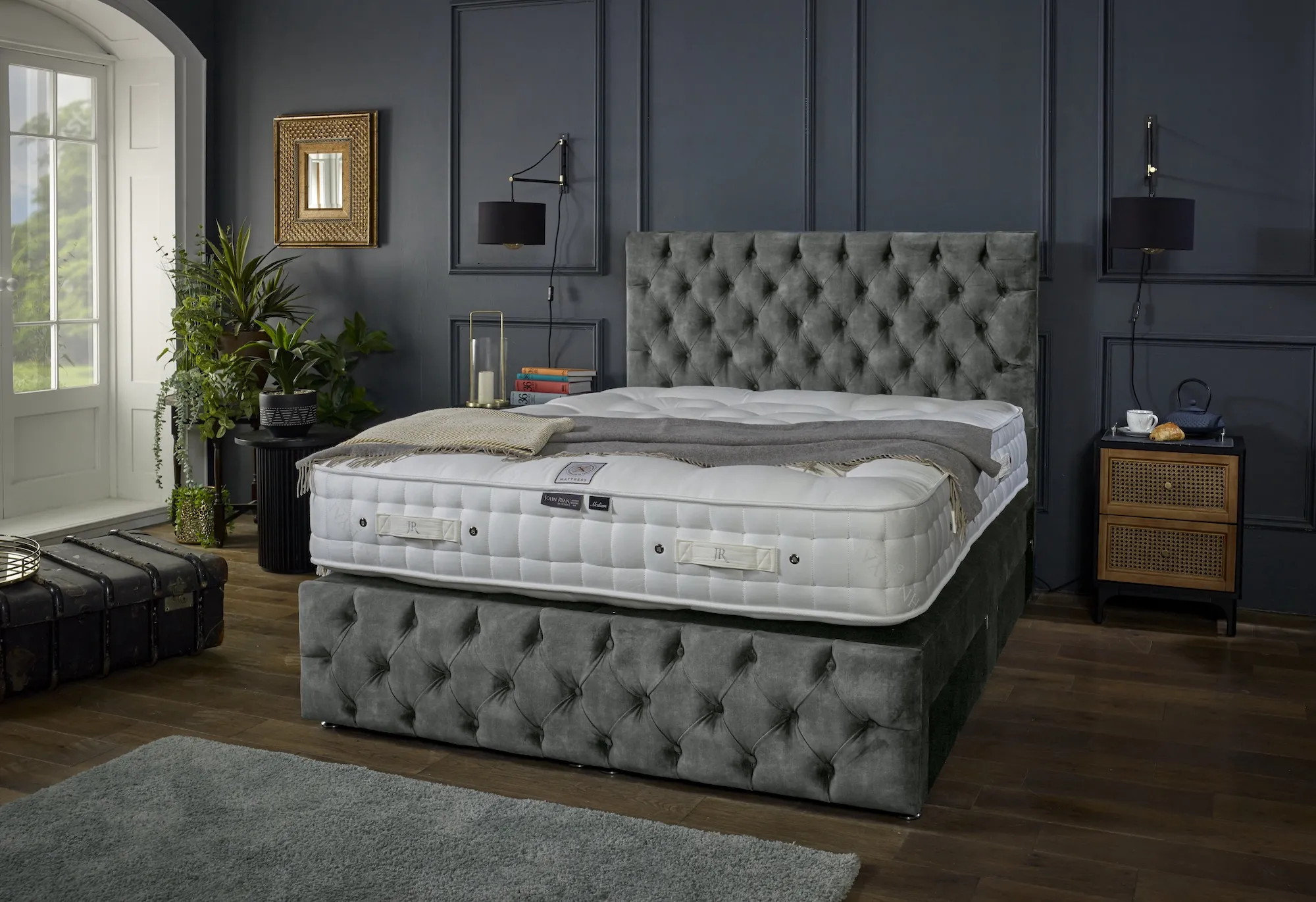
Steer well clear of memory Foam and gel hybrids, despite what showroom sales staff may tell you. The only mattress type that will make a meaningful difference to your sleep temperature is one with genuine natural fibre upholstery, specifically Wool, Cotton, Horsehair or Horsetail, over calico-encased pocket springs. Natural fibres are inherently breathable and moisture-wicking in a way that no synthetic material replicates.
Our Artisan Naturals, at £2,180 in a king size, is particularly well suited to warm sleepers.
 https://johnryanbydesign.co.uk/product/artisan-naturals/
If you suffer from back pain
The priority is correct spring tension for your bodyweight, two-sided construction so the mattress can be maintained over time, and a natural fibre comfort layer that allows postural movement during the night without restricting it. Our detailed mattress for bad backs guide covers this comprehensively.
The Origins Natural Support at £1,300 in a king size is a well-specified entry point for back-pain sufferers on a sensible budget.

If you and your partner are significantly different weights
Either a split-tension pocket-sprung mattress or a zip-and-link solution is the correct answer. Do not be sold a compromise single tension on the basis that a medium or medium-firm will suit both of you, because it almost certainly will not.
Our zip and link configurations allow each half to be specified independently, starting at £1,210 for a king-size Origins 1500 combination.
If you are a heavier sleeper (over 16 stone)
The spring gauge is critical. A standard medium-tension spring (1.4mm wire gauge) is rated at approximately 16 stone. Consistently exceeding this will accelerate spring fatigue and upholstery compression.
A firm (1.6mm) or extra-firm (1.9mm) spring tension combined with deep natural fibre upholstery layers is the correct specification. Read our “Mattresses for heavier sleepers” section for more details.
If your budget is under £700
AHybridd Foam or a mid-range pocket-sprung mattress with synthetic upholstery is a reasonable short-term choice. The Origins 1500 at £1,050 in a king size is the lowest entry point at which we would confidently recommend a John Ryan mattress for long-term use, as it is the first model in the range to use calico-encased springs with meaningful upholstery depth.
If sustainability matters to you
The answer is straightforward: choose a two-sided natural-fibre pocket-sprung mattress over any synthetic Foam alternative. The longevity, materials, absence of chemical flame retardants, and end-of-life story are all demonstrably superior. A mattress you maintain for 20 years is inherently more sustainable than three Foam mattresses replaced over the same period.
If you move around a lot during the night
Avoid dense memory Foam, which works against positional changes rather than accommodating them. Natural Latex or a responsive natural-fibre pocket-sprung mattress will move with you rather than trapping you.
14. Mattresses You Definitely Want to Avoid Buying
Now, to make sure you don’t get stung by a few mattress types in your search for a new mattress. These models have been repeatedly cited over our 25 years in the bed industry as the most consistently disappointing mattresses to buy.
Pillowtop Mattresses
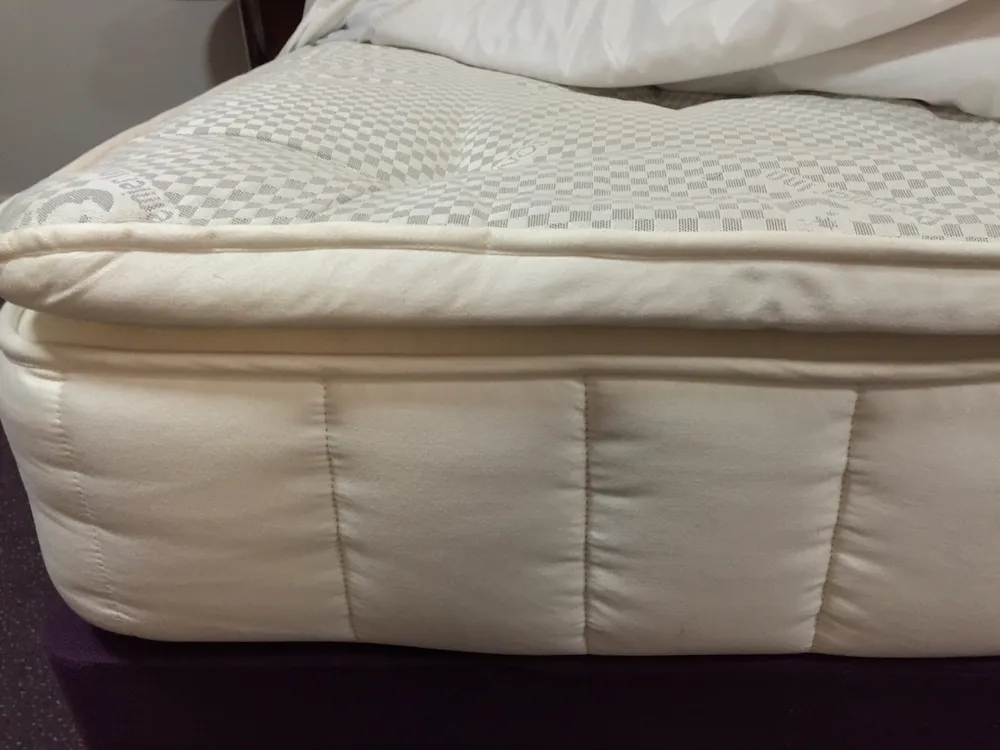
The Pillowtop mattress craze has swept the country, yet it seems. These mattresses feature a permanently stitched topper, which is sometimes also glued to the top of the mattress. They feel lovely in showrooms as this soft top layer allows you to sink into the cloud-like surface.
However, these pillow tops not only make the mattress one-sided but also fail really quickly. This is because you can’t take them off to turn or rotate them. The fillings are usually very soft polyester, meaning they sag alarmingly quickly, and as there’s no way to even this out, you’re stuck with a lumpy, uncomfortable mattress.
Have a look at our review of the Premier Inn mattress here to see what a pillowtop mattress looks like.
Voucher Site, Shopping Channel or Online Auction Mattresses
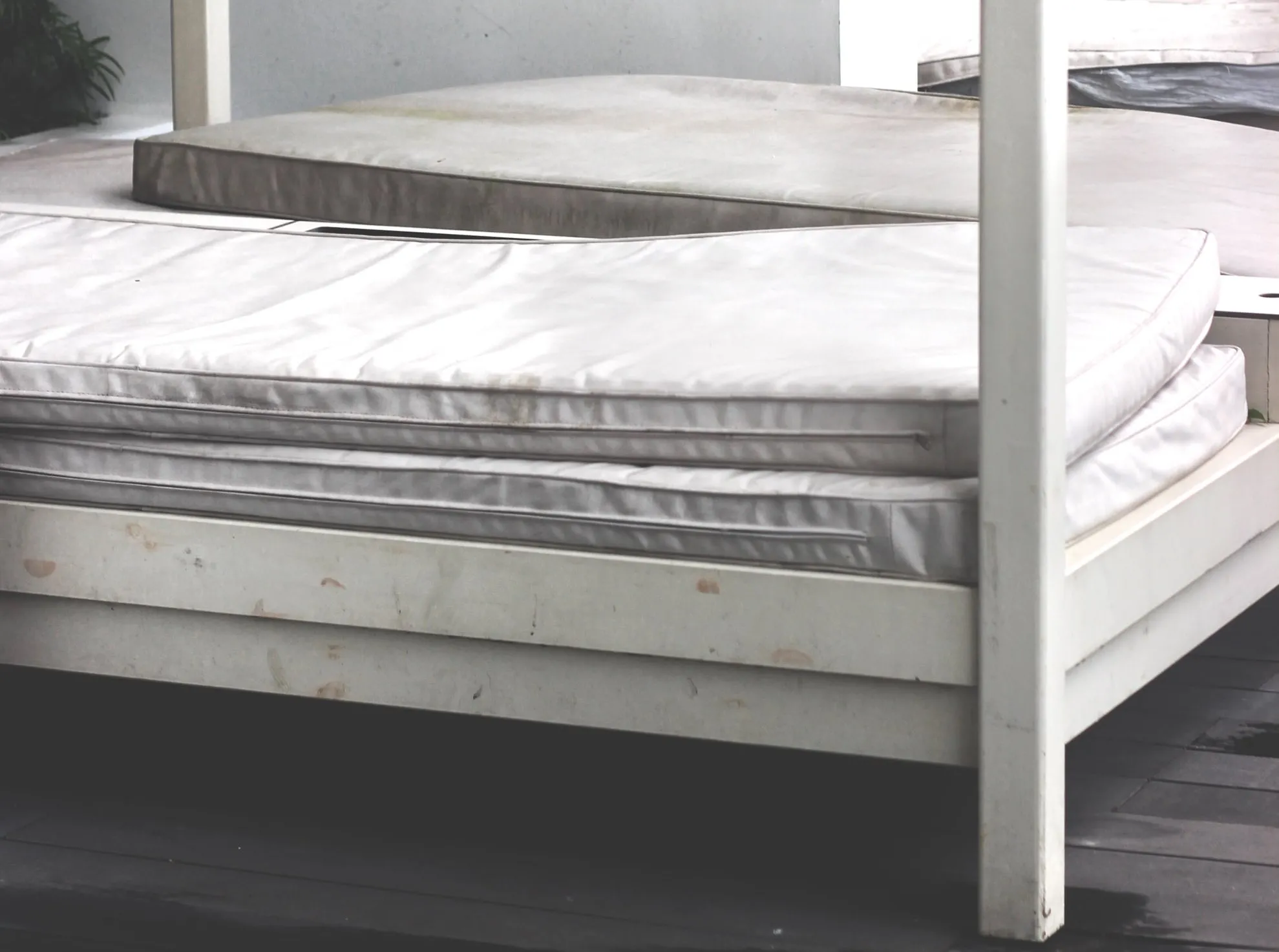
We hear a lot from people who have used voucher sites, discount auction sites, and late-night TV infomercials to buy a bargain bed. These models are usually 60 to 80% off the RRPwithg beds for as little as £80.
You need to be careful with these deals as the RRP has nearly always been hyperinflated, meaning the mattress was never worth the original amount. Most of these models give no real descriptions, so that you can end up with any old rubbish. These cheap mattresses are, at best, very low-grade Foam or cage-sprung models with recycled fibre that are being offloaded.
We’ve had numerous people buying cheap mattresses from eBay who receive a completely different model from the one pictured. When they try to return it, the seller has disappeared. If it sounds too good to be true,e it usually is. So always sleep on it before making that decision. If you get stuck, just give us a call, and we can advise on the specification of such mattresses.
15. Bed and Mattress Types Explained for Bases
Lastly, we need to discuss what type of base your mattress is going onto. All bed bases are the same, right? Well, as confusing as the mattress world, the world of bed bases can be just as murky. Let’s take a look at what a mattress base is and what its features are.
A mattress base, also known as a foundation or bed base, is a support system designed to provide a stable, sturdy platform for a mattress. It typically consists of a wooden or metal frame covered with fabric, unless slatted, and sits directly underneath the mattress.
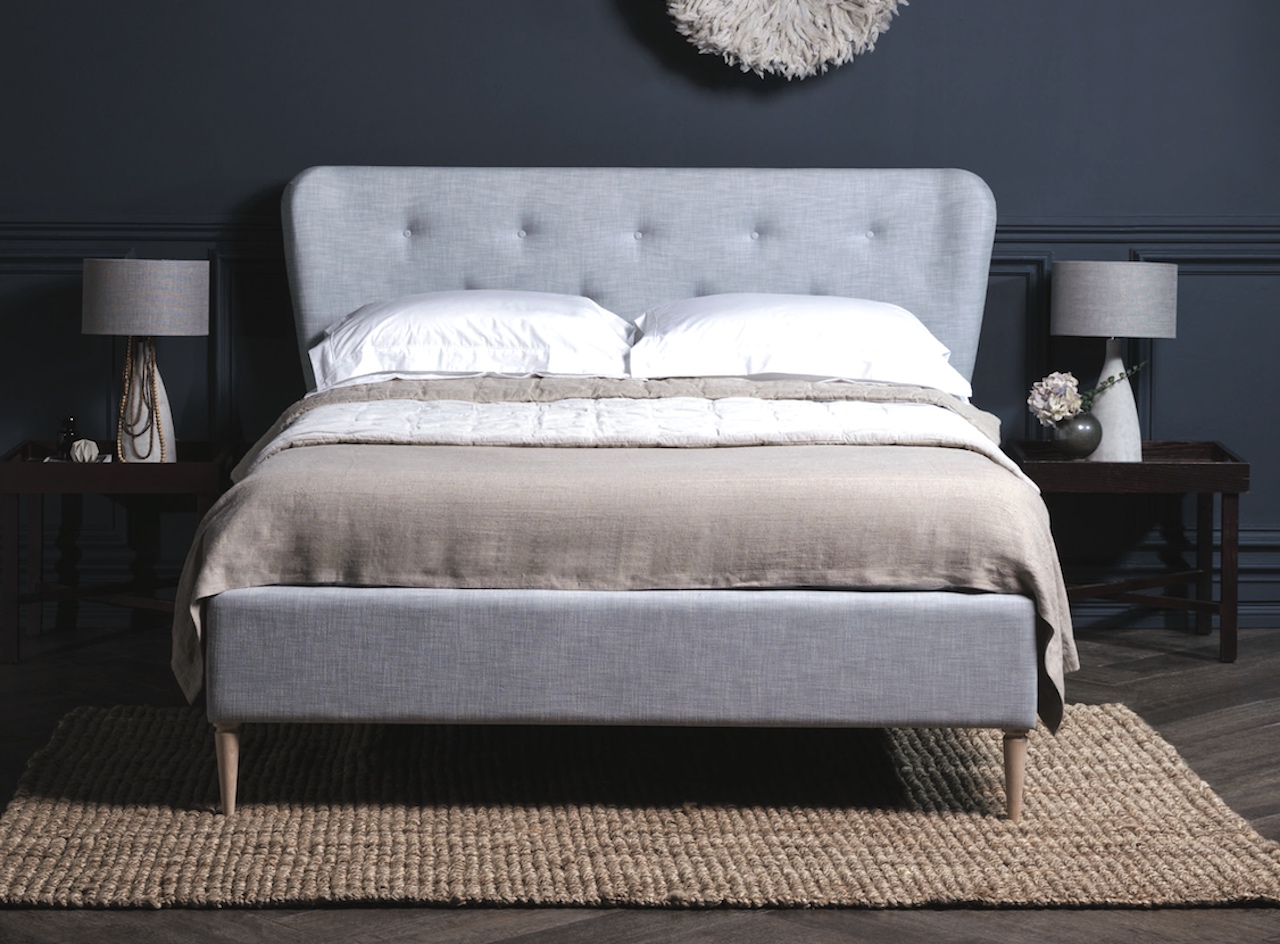
The main purpose of a mattress base is to provide support and stability for the mattress, which can help to increase its lifespan and prevent sagging. It also helps to distribute weight evenly across the mattress, which can improve overall comfort and reduce pressure points while sleeping.
Additionally, a mattress base can help absorb shock and reduce noise from movement during sleep.
There are several different types of mattress bases available, in ascending order of quality they are:
- Slatted bases
- Box springs
- Platform beds
- Adjustable bases
- Bed frames
- Ottoman bases
- Divan bases
- Sprung edge bases
Each bed base type has unique features and benefits, and the best option for you will depend on your individual needs and preferences.
Adjustable bases, which allow the head and foot of the bed to be elevated mechanically, have grown in popularity among older sleepers and those managing conditions such as acid reflux or poor circulation. Not all mattress types are compatible with adjustable bases.
Memory Foam and flexible Latex mattresses are generally well-suited because they can bend without damage. Standard pocket-sprung mattresses with a solid border frame are not designed to flex and should not be used on an articulated adjustable base. If you are considering an adjustable base, it is worth discussing mattress compatibility with your retailer before purchasing either component.
The key part when choosing the best mattress type for your bed base is to ensure the base is sturdy enough to support the mattress and, if possible, doesn’t have slats with gaps larger than 2 inches. If it does, it’s advisable to board over these slats to prevent the mattress from being damaged when it’s forced through the gaps as you sleep.
Frequently Asked Questions
What are the main types of mattresses available in the UK?
The main types of mattresses available in the UK are open-coil, continuous-coil, memory Foam, gel Foam, Hybrid Foam, natural Latex, and pocket-sprung. Pocket-sprung mattresses are the most versatile and best-performing of these types, available in both synthetic upholstery versions from around £500 and premium natural-fibre versions from £1,300 upwards in a king size.
What is the difference between memory Foam and pocket sprung?
Memory Foam is a solid block of synthetic Foam that moulds to your body using heat, holds you in position, and is always one-sided. Pocket-sprung mattresses use individually housed springs that respond independently to your body, can be specified to your weight, are almost always two-sided, and can be topped with natural or synthetic upholstery. Pocket-sprung mattresses consistently outperform memory Foam in breathability, durability, and long-term postural support.
Which type of mattress is best for back pain?
The most important factors for back pain sufferers are the correct spring tension for their body weight and a two-sided construction. A medium- or firm-tension pocket-sprung mattress, chosen according to your weight rather than showroom feel, is what the evidence consistently points to. Avoid memory Foam if you are a restless sleeper or wake frequently, as its slow response time can work against natural positional movement during the night.
How often should you replace a mattress?
This depends on the mattress type. An open coil or cheap memory Foam mattress may need replacing every 3 to 5 years. A mid-range Hybrid or pocket-sprung mattress will typically last 5 to 8 years. A well-maintained two-sided natural-fibre pocket-sprung mattress with high-GSM upholstery can last 15 to 25 years with regular turning and rotation. If you are waking with aches you did not have when you went to bed, or if you can see a body impression in the mattress that does not recover when you get up, it is time to consider a replacement.
What type of mattress sleeps the coolest?
A pocket-sprung mattress with natural-fibre upholstery, particularly Wool, Horsetail, Horsehair, or Cotton, is the coolest type of sleeping mattress available. Natural fibres are inherently breathable, moisture-wicking and temperature-regulating in ways that no synthetic material matches. Memory Foam is the warmest of all mattress types. Gel Foam initially improves on standard memory Foam, but does not offer the sustained breathability of natural fibres.
Are expensive mattresses worth it?
The honest answer is that the relationship between price and quality is real but non-linear. Spending £500 to £800 more in the mid-range to move from a one-sided synthetic mattress to a two-sided natural-fibre model makes a significant, measurable difference to both sleep quality and mattress longevity. A £2,000 natural-fibre mattress that lasts 20 years costs around 27 pence per night. A £600 memory Foam mattress, replaced every 5 years, costs around 33 pence per night and generates four times the waste.
What is the difference between a pocket sprung and a continuous coil mattress?
A continuous coil mattress uses a single strand of wire looped into interconnected rows across the entire mattress. When any point of the mattress is compressed, the surrounding springs move with it. A pocket-sprung mattress houses each spring in its own fabric sleeve, so each spring reacts independently to the pressure applied directly to it. The result is far more precise, body-contoured support, better isolation of movement between sleeping partners, and the ability to specify different spring tensions for couples with different body weights.
What does orthopaedic mean on a mattress label?
Orthopaedic, as used on mattress labels, has no regulatory definition in the UK. Any manufacturer can apply this term to any mattress, regardless of its specifications. It is generally used to indicate that a mattress is firmer than average, on the basis that firmer support is associated with better spinal alignment. However, the label alone tells you nothing about the spring gauge, the upholstery specification, or whether the mattress is two-sided. Always look past the label and ask for the full specification.
What is a zip-and-link mattress?
A zip-and-link mattress consists of two separate mattresses, each individually specified, joined along their length using a zip or clip system. They function as a single mattress during use but can be separated for handling or when different spring tensions are needed for two sleeping partners. They are particularly well-suited to couples with significantly different body weights, allowing each partner to be supported at the correct tension rather than a compromise single tension across the whole bed.
16. Summary
It can be really tricky knowing where to start when buying a new mattress. Understanding the various mattress types should better arm you with what to expect when shopping for a mattress.
If you start your mattress search knowing how much to spend and what to expect, you’re less likely to be duped by sales tactics or pushy salespeople.
One key takeaway is always to ask exactly what’s inside the mattress you’re looking at, whether that’s in a shop or online. If a retailer can’t tell you, then walk away. You should always be able to find out what’s inside any quality mattress. That is why we disclose all of our GSMs, spring types and mattress details to help you compare mattresses on a like-for-like basis.
If you need further help in shortlisting suitable new mattresses, give our small expert team a call for free advice on 0161 437 4419.

Dreaming of the perfect nights sleep?
Ask us a question
There are over 6000 questions and answers submitted by you on all questions about mattresses and bed problems. Enter a keyword such as Vi Spring, John Lewis beds, bad back or Memory Foam and see if your question has already been answered.
If you can’t find an answer in knowledge hub, ask a new question. We aim to respond to all questions within one working day.
Newsletter
Enter your email to join our newsletter. We’ll send you occasional news and mattress expertise.